Hydrogen Truck Startup Nikola’s Valuation Jumps To $3 Billion With Investment From CNH Industrial
The title of this post is the same as that of this article on Forbes.
This is the first paragraph.
Nikola Motor, an Arizona startup that wants to shake up the trucking world with zero-emission hydrogen and battery-powered semis, is making progress toward a $1 billion fundraising goal to get its technology on the road as CNH Industrial committed to a quarter of that amount.
Note that CNH is the company, that owns Iveco.
If you read the whole article, you will find the following.
- Nikola Motor have a simple model based on hydrogen-powered trucks and a network of zero-carbon hydrogen filling stations.
- They are backed by large well-known companies like Bosch.
- Hydrogen-powered trucks should be lighter in weight than battery-powered ones like the Tesla Semi.
Given the financial backing seems to be flowing to Nikola Motor and the simple business model, I feel the company’s objectives may be attained.
Would Nikola Motor’s Business Model Work In The UK?
Consider.
- UK heavy trucks may be smaller than some American big rigs, but are very similar, if not the same to those used all over Europe, with the driver’s seat on the other side.
- Many large users of heavy trucks, deliver goods from a large distribution centre, seaport or airport.
- The UK’s power network is generally reliable and is increasingly powered by renewable sources.
- Parts of the UK are developing a hydrogen network.
Because of our electrical grid and hydrogen availability, Nikola Motor’s filling station concept in a densely-populated smaller UK, might be a modified version of that used in the wide-open spaces of North America.
I can’t see any reason why if Nikola Motor’s hydrogen-powered trucks are successful in North America, they wouldn’t be successful in the UK.
A Zero-Carbon Distribution System For A Large Retailer
Retailers like Asda, Marks & Spencer, Sainsbury, Tesco and many others distribute product to their stores by heavy truck, usually from a large distribution centre in the middle of the country.
Tesco even make a lot of fuss about creating less CO2, by moving goods up and down the country by rail.
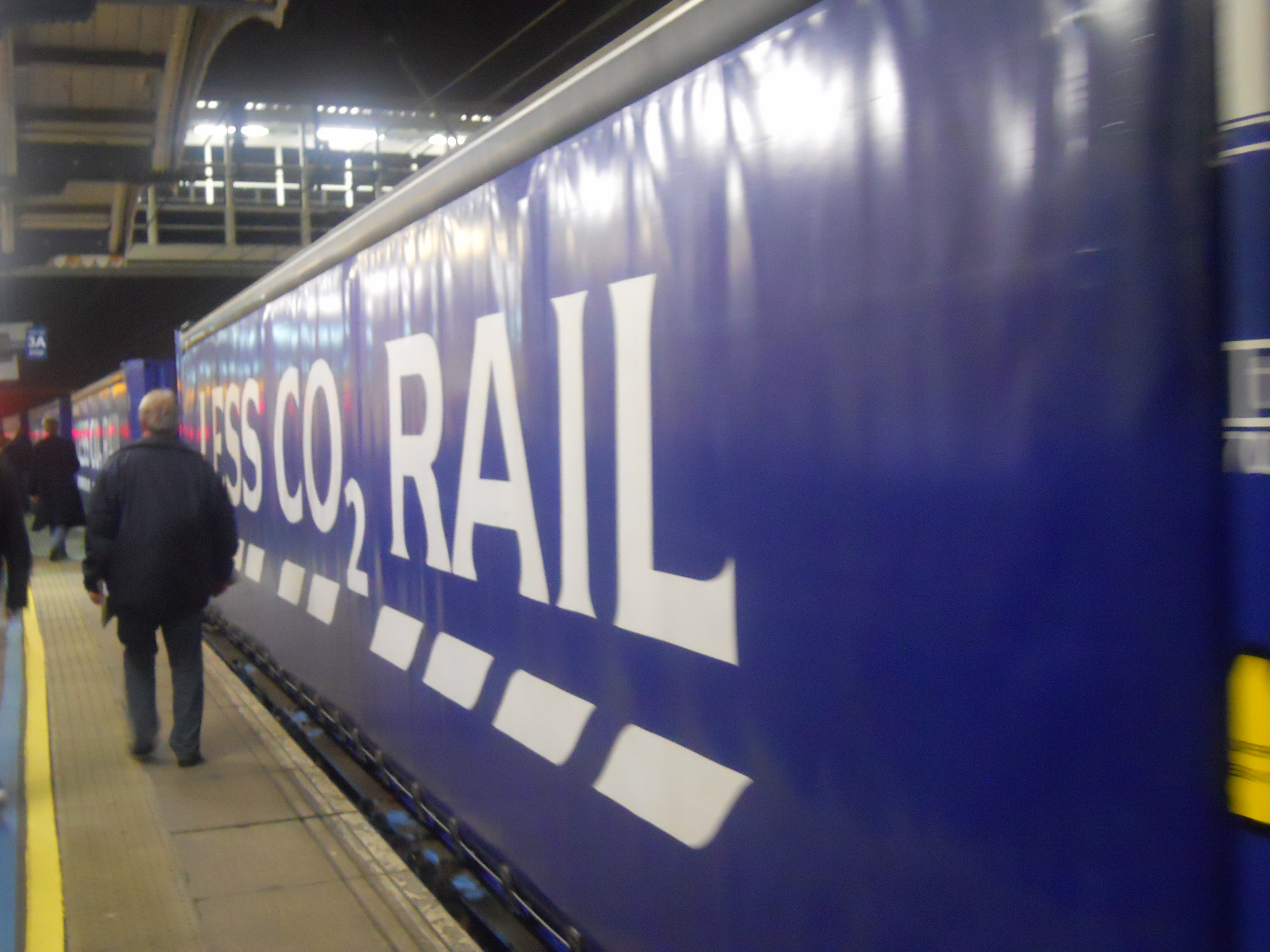
A Tesco-Branded Train
Because of retailers’ centralised model based on trucks from a distribution depot, using hydrogen-powered trucks, would not require a great change in the method or operation.
- Diesel traction would be replaced by hydrogen traction.
- The depot would have a hydrogen filling station, either using locally-created or piped hydrogen.
- Trucks would leave the depot with enough hydrogen to do a full delivery without refuelling and return to base.
But think of the advertising, if all the company’s heavy trucks displayed proudly that they were hydrogen-powered and emitted no CO2.
As supermarkets are like sheep and follow each others’ good ideas, if it worked for the first company, it wouldn’t be long before several others went down the hydrogen-powered route.
Would Hydrogen P{ower Work With Other Vehicle Fleets?
Many vehicles that I see in London and other large cities are members of large fleets based in those cities.
- Buses
- Taxis
- Delivery vans
- Cement trucks.
- Refuse trucks.
If cities are going to effectively ban diesel, there are only two alternatives battery and hydrogen.
Some vehicles will be better suited to battery power, especially if they could be charged overnight at the central depot, but other like double-deck buses and cement trucks may be better suited to hydrogen.
Cement trucks could be a niche market, where Nikola Motor could produce a very attractive package of trucks and a filling station.
Conclusion
If Nikola Motor is successful in the next few years, they could prove that hydrogenpowered vehicles are not a novelty, but a serious zero-carbon alternative, that is affordable.
Farringdon Station – 3rd September 2019
These pictures show the Barbican station end of the Crossrail entrance at Farringdon station.





I showed this entrance in Farringdon Station – 7th July 2018.
The London Cablet
I took these pictures outside Carluccio’s in Smithfield.





It is called the London Cablet.
Construction Of The Luton Direct Air-Rail Transit (DART) Has Started
The Luton DART will connect Luton Airport to Luton Airport Parkway station.
This map from the London Luton Airport web site shows the route.

It is comprehensive with three planned stations.
- Luton Airport Parkway station.
- Central Terminal
- as it is planned to build a stop at the Mid-Stay car park, at a later date.
Note how the DART runs along the Airport side of the Midland Main Line before crossing over into the Airport on the Gateway Bridge, which is shown as an inset on the map.
These pictures show the construction of the DART underway at Luton Airport Parkway station.




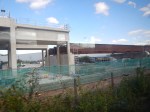


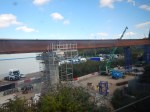
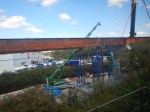
It certainly looks substantial.
According to Wikipedia, it will open in 2021.
The New Bathgate Depot
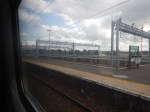
As I passed through Bathgate station, I took these photographs of the new Bathgate depot.


This Google Map shows the station with its extension car parking and the depot.
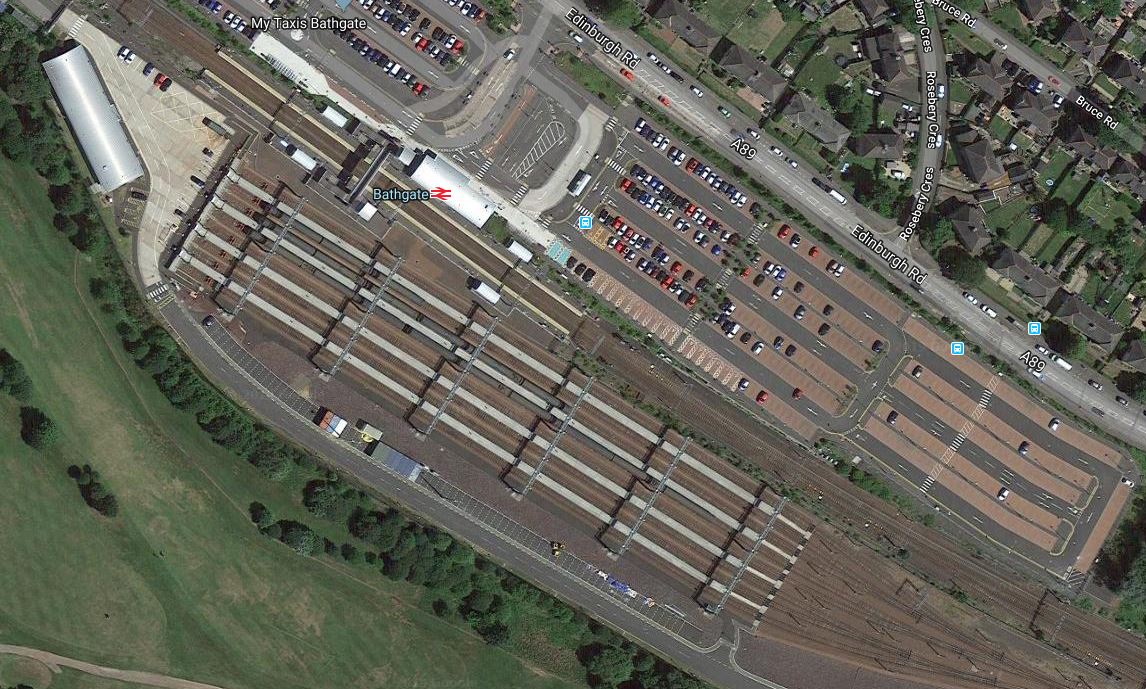
Note how the layout is so much simpler, than most depots in the UK, which were designed over a hundred years ago.
Is This A Massive Endorsement For The City Of London?
This Google Map is dominated by the new Goldman Sachs building in the City of London.
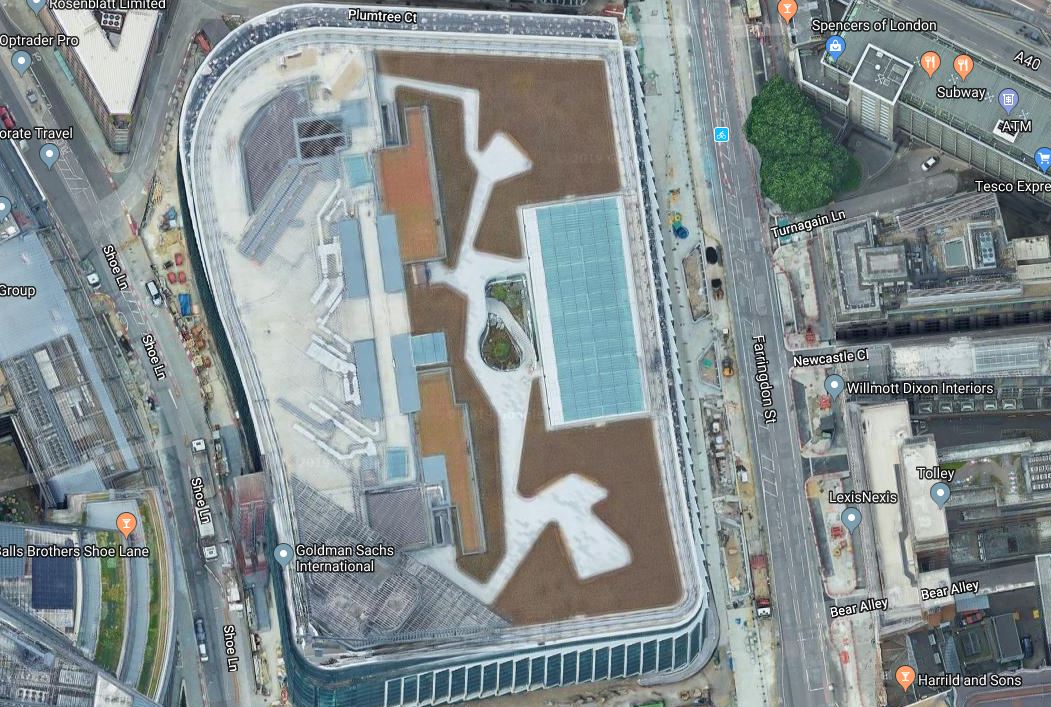
Make what you want of the building and its significance for the City.
But is it an endorsement of a strong future or a monument to a glorious past?
Location, Location, Location
One property developer once said, these were the three most important things about a property.
This Google Map shows the location with respect to Farringdon station.
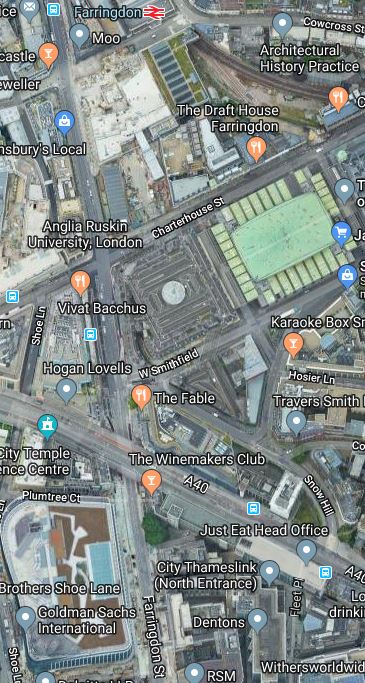
The station, which is at the top of map, will be the best connected in Central London as it will be the crossing of Crossrail and Thameslin. That probably won’t be important to some of the employees of Goldman Sachs, but the building apparently has favoured bicycle spaces over car parking.
Note just to the South of Farringdon station, two of the large buildings of Smithfield Market. These two are very much under-used and plans exist to convert part of them into the new Museum of London.
But a lot of the area between Goldman Sachs and Farringdon is under-developed and will the Goldman Sachs decision, lead to more development of offices, hotels and residences in this part of London at the West of the actual City?
Terminal Six At Heathrow And Terminal Three At Gatwick
I often joke, that this area, will become extra terminals at Heathrow and Gatwick Airports, with an easy link to the trains to Scotland and the Continent just a short taxi ride, bicycle ride or one stop on the Underground up the road at Kings Cross and St. Pancras.
A Walk From Smithfield To The Goldman Sachs Building
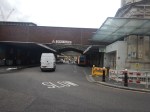
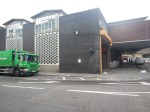
These are some pictures I took on the way.
The New Museum Of London Site














Holborn Viaduct








The Goldman Sachs Building












I’m sure that if I can walk to and from Farringdon station at seventy-two, then a lor of people working in the building will use the railway to get to and from work.
Conclusion
Have Goldman Sachs decided to build their new offices at the Crossroads of the World?
LNER To Put Lincoln On The Rail Map
This article on Rail Magazine is entitled LNER To Run New Azumas To Lincoln.
The article says that from October 21st, 2019, the service between London and Lincoln would be.
Southbound
- HST – 0730
- Azuma – 1118
- Azuma – 1323
- Azuma – 1526
- Azuma – 1714
The only current service; the HST takes four minutes under two hours.
Northbound
- Azuma – 1006
- Azuma – 1206
- Azuma – 1406
- Azuma – 1606
- HST – 1906
The only current service; the HST takes three minutes under two hours.
In both directions Azumas appear to be a few minutes slower in the timetable.
But these improved services are not all, as this is a paragraph, which sums up further changes after December 2019.
A sixth daily weekday service will be introduced as part of the December timetable (leaving London at 0806 and returning at 2025), along with five additional Saturday services. Azumas will start serving Lincoln on weekends from December 7.
Lincoln will get a large increase in the number of direct services to and from London.
- The weekday service will be approximately one train every two hours.
- The weekday service will be boosted, by extra services which will require a change at Newark, Peterborough or Retford.
- Lincoln will be getting more weekend services.
There must be other large towns and cities served by LNER, who wish they could have a service as good as Lincoln’s.
Onwards To Grimsby And Cleethorpes
Under Proposed Services And Future Changes, in the Wikipedia entry for Cleethorpes station, this is said.
Informed sources close to LNER reported in June 2019, that LNER would like to extend a number of trains from Lincoln Central to Cleethorpes in the future, but it would take time to do this as the route will need to be checked to see whether the Azuma trains are cleared to use the route.
Consider.
- The distance between Lincoln and Cleethorpes is forty-seven miles.
- The trip takes five minutes over the hour, with four stops.
- I would feel that it is feasible that Kings Cross and Cleethorpes could be a few minutes under three hours using an Azuma.
TransPennine Express also has a stabling, cleaning and refuelling facility at Cleethorpes. Would they be able to accommodate an overnight Azuma?
As an example, the current HST service could become the following Azuma-operated service.
- Leave Cleethorpes around 0630.
- Call at Lincoln at 0730.
- Arrive in Kings Cross at 0926.
- Evening return from Kings Cross at 1906.
- Call at Lincoln at 2103.
- Arrive at Cleethorpes around 2200.
The train could be cleaned and refuelled at Cleethorpes or it could take a trip to and from the main Azuma base at Doncaster Carr, which is just over an hour away from Cleethorpes.
I could see LNER running a couple of services in each direction every day, if the demand is there.
Splitting And Joining
LNER seem to be proposing to increase services on the East Coast Main Line.
One problem will be the number of paths available to and from London.
Could this be solved by services splitting and joining trains en route, so that one service from Kings Cross serves two destinations?
As a simple example, Lincoln and Hull services could work together.
- Each city would get a five-car service to and from London.
- Services would run South of Newark as ten car trains.
- Services would split and join at Newark North Gate station.
- Services would run North of Newark as five car trains.
- Only the Hull service would need a path North of Newark on the East Coast Main Line.
- The Lincoln service would be on the Newark and Lincoln Line.
The number of paths needed between London and Newark would not be increased, from the current requirement.
I noted earlier that some Lincoln services run by Azumas will be a few minutes slower than those run by HSTs. Could this be because LNER are planning to run Lincoln services in conjunction with other services, by using splitting and joining at Newark?
As some Lincoln services have a longer stop than others at Newark, perhaps timings have been arranged for possible splitting and joining.
It should also be noted, that the design of Kings Cross station, has pedestrian access in the middle of a ten-car train, courtesy of a step-free footbridge. This makes joining the front train easier.
Surely, the ultimate service could be to combine Lincoln and Hull services, so that both cities got a two-hourly or even hourly London service, courtesy of a split and join at Newark.
Conclusion
Lincoln is getting an excellent, more frequent service to and from London.
Extending some services from Lincoln to Grimsby and Cleethorpes could be the icing on the cake!
C
Acton Main Line Station – 2nd September 2019
These pictures show Acton Main Line station.
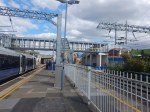
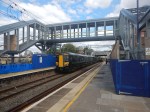
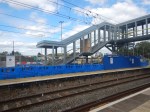
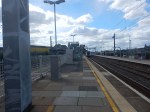
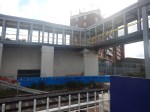
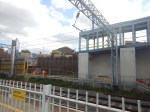
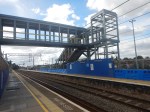
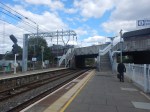
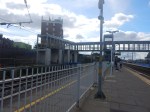

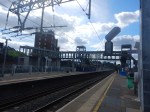
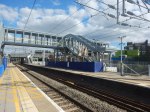
These improvements are promised in Wikipedia.
- New station building with a larger ticket hall with level access from Horn Lane
- Step-free access between street level and all platforms via a new footbridge with stairs and two lifts
- Platforms 2–4 extended to enable 10-car trains to stop
- Improved passenger facilities including a new canopy on platform 4, along with information and security systems.
There is still work to do.
West Ealing Station – 2nd September 2019
These pictures show West Ealing station.
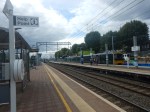

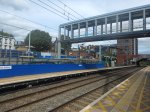
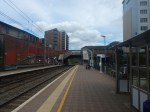
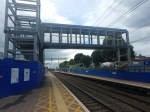
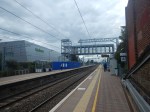

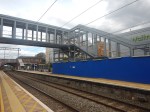
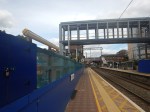

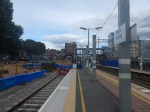
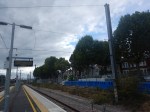
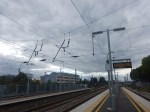
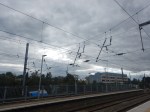
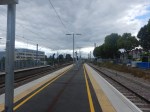
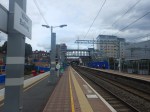
Some observations.
The Big Hole
A big hole is being dug on the North side of the station.
- This is the side where the entrance will be giving access from the road at the side of the station.
- There are no stairs or lift tower on this side.
- There looks to be foundations in the hole!
Could these support the stairs and lift and the entrance on this side of the station? I suspect the answer is an affirmative!
Bay Platform 5 Electrification
Platform 5 is not electrified, but two gantries are at the Western end of the platform and these could easily be fitted with wires.
Perhaps at the Eastern end, the wires will be fixed to the station building, as they have been at Abbey Wood station.
An electrified bay platform would be ideal for charging a battery-electric train, that was working the Greenford Branch.
- In How Much Power Is Needed To Run A Train At 125 mph?, I calculated that to overcome air resistance and keep a high speed train at 125 mph needs around three k|Wh per vehicle mile.
- I know that, trains on the Greenford Branch will be going a lot slower than 125 mph, so I will treat the three kWh figure as a maximum value.
- The maximum size of train will be two cars.
- The Greenford Branch is two-and-a-half miles long, so a round trip is five miles.
\Multiplying all the numbers together gives a maximum energy requirement for the cruise of thirty kWh.
I think that it should be possible to design a two-car battery-electric train with sufficient range to handle the Greenford Branch.
In Will The Class 230 Trains Be Coming Home?, I speculated that the Greenford Branch could be run by a small fleet of Class 230 trains.
Could this be right? Probably not!
But!
- The diesel version is already in service at Bedford.
- They are the right loading gauge and weight.
- Two cars would be an ideal length.
- They could have upwards of two hundred kWh of energy storage.
- They can be fitted with a pantograph for charging or a Vivarail fast charger could be used.in one or both stations.
If the battery version were to be thought too risky, the diesel version, as at Bedford could be used.
Judging by their performance at Bedford, they would probably do a quality job.
Energy Vault Receives $110 Million From SoftBank For Gravity-Assisted Power Storage
The title of this post is the same as that of this article on Forbes.
Energy Vault is a company, that is developing gravity-assisted power storage.
You don’t invest £110million in a company, even if you are as rich as Softbank, unless you are certain, that you’ll get a return!
So I suspect Energy Vault may have a working system for storing energy
Read the article and see what your think! It also links to a video.
This is an interesting quote from the company.
We knew we needed to be around three to four cents levelized cost per kWh ($30 – $40 per MWh) to add to PV or wind in order to be competitive below fossil. This took a lot of innovation.
I shall be following the company.
 The Anonymous Widower