Is The United States Catching Railway Mania?
This article on Global Rail News is entitled Brightline Looks To Replicate Model In Other US Regions.
This is the first two paragraphs.
Brightline, the United States’ only privately-owned, operated and maintained intercity passenger railway, has revealed it is looking to replicate its model in other areas of the country.
The announcement comes less than six months after Brightline’s first service was launched between Fort Lauderdale and West Palm Beach, Florida, and weeks after the service was extended to Miami.
Brightline must be doing alright!
Especially, as they are going to start construction of their extension from West Palm Beach to Orlando.
Talking to an American friend today, she said that Orlando to Miami is a long drive. I wouldn’t know, as I’ve only been to Florida twice and that was to Key West with C and a conference near a couple of theme parks. On the latter trip, I got to see the Space Shuttle take off!
Brightline’s concept seems sensible.
- Higher-speed diesel-electric train.
- Trains consist of two SCB-40 locomotives and four coaches initially.
- Speeds up to 125 mph.
- Level disabled access
- Wi-fi
- Orlando to Miami is planned in three hours.
- 7-12 services per day.
The concept has echoes of an InterCity 125, built to modern standards.
If we can find several routes to run InterCity 125 trains, surely Brightline’s plan to duplicate the Florida service can find many places in the wide expanses of the United States.
But this is not the only rail project, that I’ve covered on this blog lately.
The Texas Bullet Train
I covered the Texas Bullet Train in August 2017.
- This will run between Dallas and Houston.
- A speed of 205 mph
- A journey time of 90 minutes.
- Based on Japanese Shinkansen technology.
- Could start in 2020.
See Texas Central Railway on Wikipedia for more details.
Vivarail D-Train To Be Tested In US Cities
On the face of it to use a Vivarsil Class 230 train in the United States seems a crazy idea.
Wikipedia says this about the concept.
During March 2018, it was announced that plans were being developed to take a Class 230 to the United States, in order to demonstrate how they could provide a low-cost rolling stock option for new passenger services.
The idea would be to run them on freight lines with temporal separation from freight trains.
The Rise Of Metro, Light Rail And Trams In The United States
I haven’t been to the United States this century and in those days, Metro, light rail and tram systems were fairly thin on the ground.
In those days, I drove and I think I’ve only ridden on systems in Boston and New York.
What surprised me, was that Wikipedia now lists about over a hundred rail transit systems around the United States, several of which are expanding.
Even cities built for the car, like Dallas, Houston and Los Angeles have systems.
Temporal Separation In Salt Lake City
The TRAX light rail system in Salt Lake City, is a system with three lines, forty-five miles of track and fifty stations.
This is a paragraph from Wikipedia.
TRAX uses former Denver and Rio Grande tracks as well as street trackage to service Salt Lake City. Between the hours of midnight and six in the morning, Union Pacific freight trains use much of the trackage, up to just past 2500 S to service a number of industries along the line.
How many other areas in the United States can use techniques like this?
Conclusion
Perhaps the United States is going through a Modern equivalent of Railway Mania.
This time though, it is not driven by a frenzy of get rich quick investors, but more by the following.
- Serious investors like Pension Funds looking for places to put money to get a return for thirty to forty years.
- Brightline talks of city-pairs, where it is too-far to drive and too close to fly, like Orlando-Miami and Dallas-Houston.
- Dallas-Houston will link two cities with light rail networks. Others will follow this model, if it’s successful.
- Increasing highway and airport congestion must help rail.
But the biggest driver could be the new technology coming on stream from the rail industry, which makes setting up systems easier, less disruptive and more affordable.
Ryanair To Open New Base at London Southend Airport
The title of this post, is the same as that of this article in the Guardian.
The title gives most of the story, although the article says that flights won’t start until April 2019.
The article also contains this classic example of Ryanair-speak from their airline’s chief commercial officer, David O’Brien.
O’Brien said disruption from European air traffic control strikes, primarily in France, could be the “worst ever” for airlines, which cancelled 1,100 flights in May. “Your tourist going from Britain down to Spain is screwed by a couple of hundred French air traffic controllers,” he said.
The Wikipedia entry for Southend Airport gives these places as Ryanair’s destinations.
Alicante, Bergamo, Bilbao, Brest, Corfu, Cluj-Napoca, Dublin, Faro , Košice, Málaga, Palma de Mallorca, Reus and Venice.
This is a paragraph from the article.
Southend’s deal with Ryanair will double passenger numbers at an airport that only reopened six years ago. Its rapid expansion is set to continue, according to the chief executive of its owners, the Stobart Group. “We have a clear and focused strategy to grow our airport to welcome over 5 million passengers a year by 2022,” he said.
That number of passengers would put Southend Airport in the top dozen airports in the UK.
It’s a bit different to when I learned to fly at the Airport in the 1970s.
In those days, the only commercial traffic was the odd Carvair ferrying five cars and a score of passengers across the Channel.
I think Southend Airport will continue to grow for the following reasons.
- Planes to and from the Airport can avoid the busy airspace over London.
- The location and the prevailing Westerly winds, allows pilots on some routes to bring the planes straight in, saving a lot of time.
- Being early encourages passengers to use the Airport again and tell their friends.
- Southend Airport station is less than a hundred metres away.
- The City pf London is about an hour away.
- Currently, the train service is three trains per hour (tph) between Liverpool Street and Southend Victoria stations.
- Greater Anglia is getting new Class 720 trains and trains to the Airport may be increased in frequency.
- Crossrail and Greater Anglia will bring increasing numbers of passengers to Shenfield station for trains to the Airport.
I think it ls inevitable, that as the traffic at the airport grows, that Crossrail will be extended to Southend Airport and Southend Victoria stations.
The Third Track Between Northumberland Park And Lea Bridge Stations – 12th June 2018
The third track between Northumberland Park and Lea Bridge stations is substantially complete, as these pictures show.
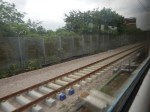
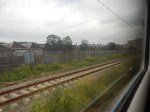
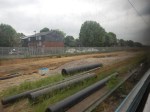
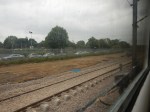
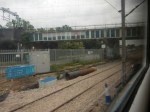
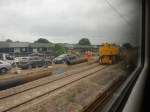
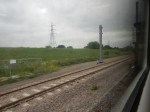
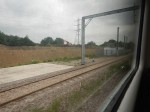
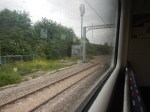
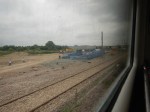
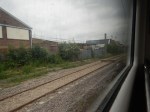
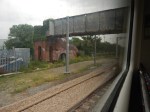
Now that the track is laid, it becomes apparent, that with a bit of a squeeze, a fourth track could be laid.
Electrification Progress
Progress also seems to be being made with the overhead gantries.
Yet again, there seems to be better performance in electrification, where it is carried out on a new or totally rebuilt line.
This may be only a single track, but it is all new, with no buried Victorian unknowns.
Raising The Bridges
Steel footbridges, that are so numerous in South Wales, are notable by their rarity and where they do exist, they were raised or built to a safe height, when the West Anglia Main Line was electrified in 1969.
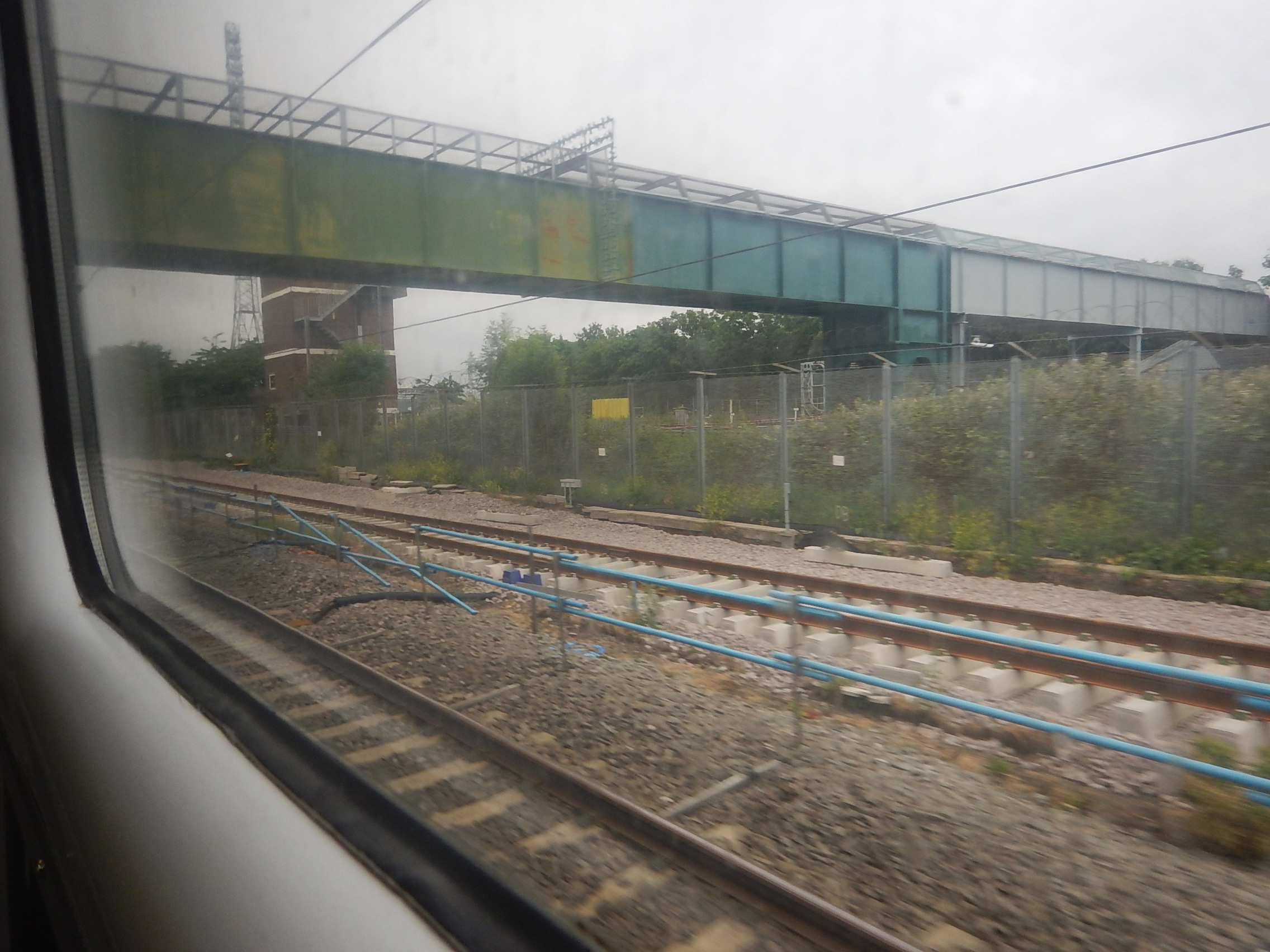
This bridge spans both the West Anglia Main Line and the Victoria Line‘s Northumberland Park Depot.
I walked across it in March 2017 and there are some pictures in From Tottenham Hale To Northumberland Park.
The only bridge that could be a problem, is the road bridge at Tottenham Hale station.
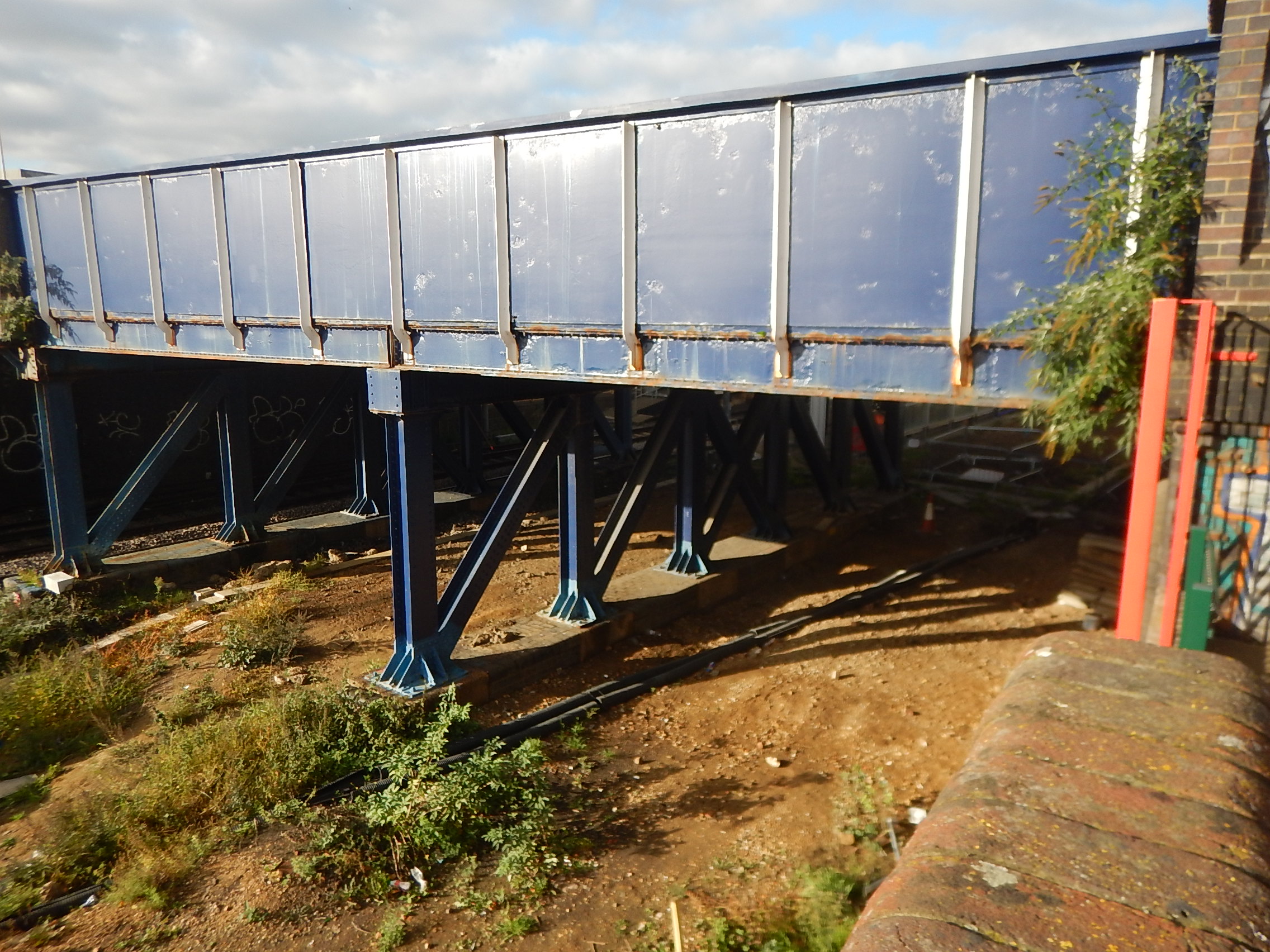
It might be possible to squeeze one electrified track underneath.
I suspect methods that will be used on the South Wales Metro, that I wrote about in How Can Discontinuous Electrification Be Handled?, could be used to electrify this section.
At some point, this bridge looks like it will have to be rebuilt.
Northumberland Park Station – June 12th 2018
The new Northumberland Park station is coming on and has allowed the temporary footbridge to go somewhere else!
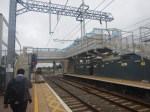
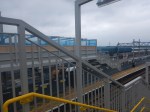
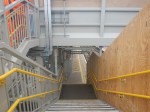
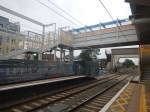
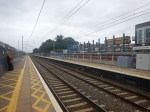
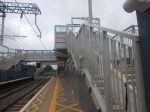
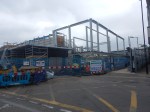
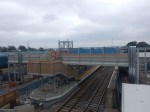
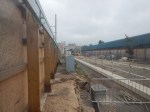
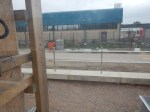
The level crossing will not be reinstated and I was wondering how pedestrians and others will cross the railway. There is still an old bridge on the other side to the station, but it doesn’t look to be in the best condition.
I then saw the two staircases in the new station.
So will there be two separate routes across the railway in one bridge?
This image from Network Rail, shows the station from the Eastern side.
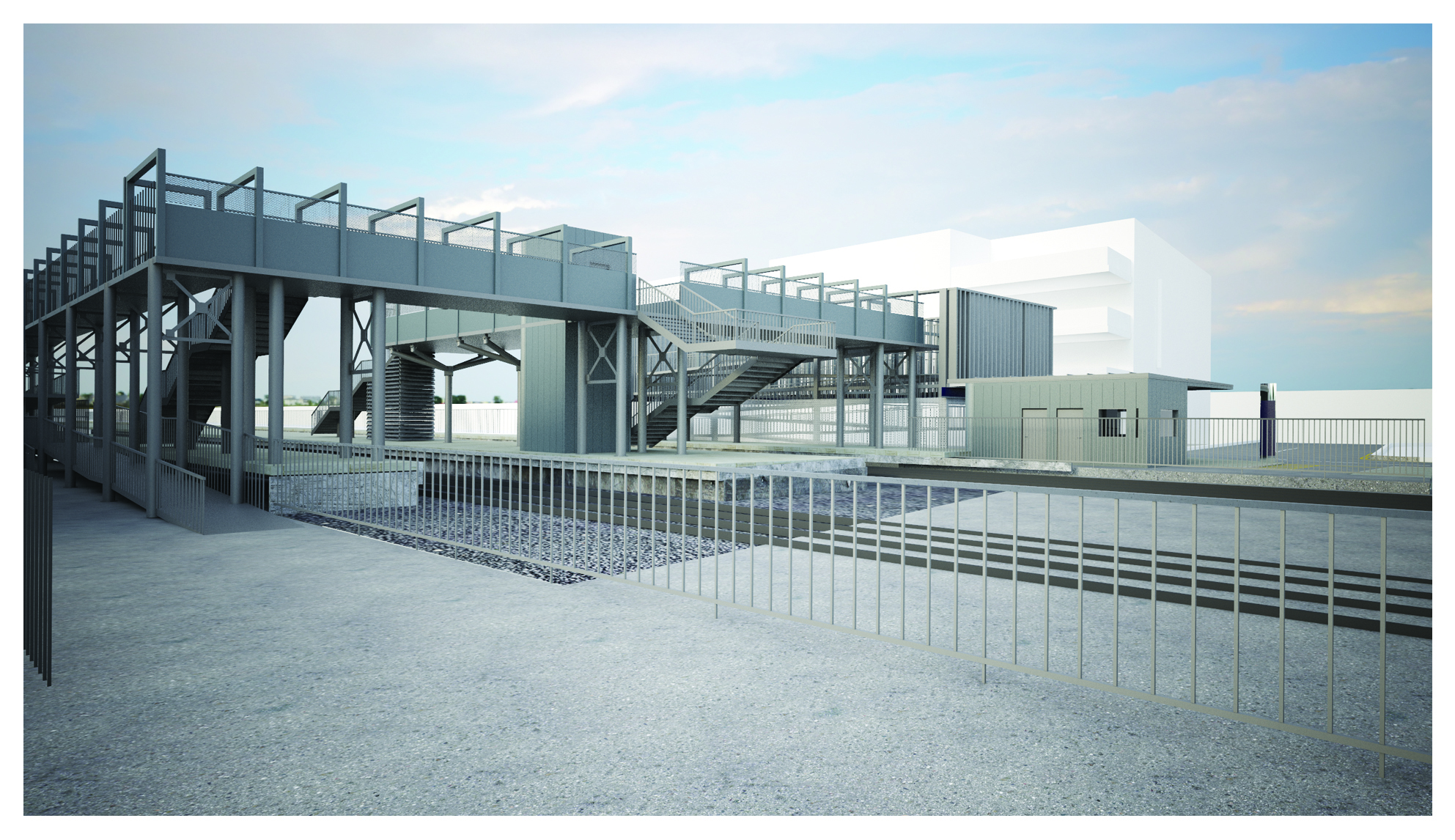
There appears to be the following.
- Two bridge sections, with the one on the far side connected to the low station buildings.
- Two sets of stairs and a lift giving access from the bridge to the current Platform 1 and new platform behind it, that will become an island platform.
- Two tracks this side of the island platform.
- With the two tracks on the other side of the island platform, this means the station will be ready for four-tracking of the West Anglia Main Line.
- A set of steps leading down from the near rend of the footbridge, this side of the extra tracks.
I have wondered for some time, when the West Anglia main Line is four-tracked and/or Crossrail 2 is built, which pair of tracks will be the fast lines.
In the interim it is obvious, that the third rack, which will run between Meridian Water and Lea #bridge stations, will run on the near side of the island platform.
My only question is will it only handle trains towards Stratford or will the line be bi-directional?
But when the line is fully four-tracked, I think that the lines from West to East will be as follows.
- Northbound Slow (Current Platform 2) – Local trains and Crossrail 2
- Southbound Slow (Current Platform 1) – Local trains and Crossrail 2
- Northbound Fast – Stansted and Cambridge services
- Southbound Fast – Stansted and Cambridge services
I have put the slow lines on the West, as these are the platforms with the best access and few if any, fast services will stop in the station.
Crossrail 2 could of course change everything.
But I suspect that Northumberland Park station is being rebuilt, so that it will work with the most likely arrangement of tracks.
Serial Cooking – Goat’s Cheese, Strawberry And Basil Salad
I found this unusual salad in a book called The Salad Bowl by Nicola Graimes.








Don’t go easy on the pepper!
Nexus Invites Bidders To Build New Metro Fleet
The title of this post, is the same as that of this article on Rail Magazine.
Reading the article, it appears that the contract will be awarded, by the end of 2019.
After writing Comparing Stadler Citylink Metro Vehicles With Tyne And Wear Metro’s Class 994 Trains, I think it is highly likely that Stadler will be in pole position, with a member of the Citylink family.
Comparing Stadler Citylink Metro Vehicles With Tyne And Wear Metro’s Class 994 Trains
As the Class 994 trains of the Tyne and Wear Metro, are being replaced, it will be interesting to compare them with the proposed Stadler Citylink Metro Vehicles for the South Wales Metro.
New Trains For The Tyne And Wear Metro
Under Proposed New Fleet in the Wikipedia entry for Tyne and Wear Metro Rolling Stock this is said.
In November 2017, the Chancellor Philip Hammond announced that the government would provide £337 million towards the new fleet. The proposed new fleet would consist of 84 trains to replace the existing 90 train fleet, as Nexus believe that the improved reliability of the newer trains would allow them to operate the same service levels with fewer trains. These are proposed to have longitudinal seating instead of the 2+2 bench seating arrangement of the present fleet, and a full width drivers cab instead of the small driving booth of the existing trains. The proposed new fleet is planned to have dual voltage capability, able to operate on the Metro’s existing 1.5 kV DC electrification system and also the 25 kV AC used on the national rail network, to allow greater flexibility. Battery technology is also being considered.
Note.
- A dual-voltage capability will be required.
- Battery capability would be ideal for short movements and regenerative braking.
- In my, view longitudinal seating needs a walk-though capability.
- Currently, trains are two-car units and generally work in pairs.
- Trains can work in formations of three and four units, but the ability is not used.
If trains generally work in pairs would it be more affordable to have four-car trains?
Comparing Stadler Citylink Metro Vehicles With The Current Tyne And Wear Class 994 Trains
In the following I will assume that the Stadler Citylink Metro Vehicles are similar to Class 399 tram-trains, as they are both members of the Stadler Citylink family.
Train Width And Height
The width and height of the two vehicles are as follow.
- Class 994 train – 2.65 x 3.45 metres
- Class 399 tram-train – 2.65 x 3.60 metres
There’s not much difference here.
Train Length And Sections
- Class 994 train – 55.6 metres and two sections.
- Class 399 tram-train – 37.2 metres and three sections.
- South Wales Metro’s Metro Vehicle – 40 metres (?) and three sections.
It should be noted that Citylink tram-trains in Valencia have four and five sections.
Having used the Class 378 trains, with their walk-through capability and longitudinal seating, on the London Overground for at least seven years, I believe there is no other way to design a high-capacity metro train.
So the Tyne and Wear Metro’s new trains could be 110 metres long and four walk-through sections.
- This train would be the same length as two current trains working as a pair, which they generally do!
- The design reduces the number of cabs.
- Passengers distribute themselves along the train better.
- Passengers can move to the convenient point to disembark at their destination.
- On train staff are more prominent.
If in the future, the trains need more capacity, extra cars can be added.
Train Capacity
- Class 994 train – 64 seats and 188 standing.
- Class 399 tram-train – 88 seats and 150 standing
- South Wales Metro’s Metro Vehicle – 129 seats and 128 standing
This works out as.
- Class 994 train – 9 passengers per metre.
- Class 399 tram-train – 6.4 passengers per metre.
- South Wales Metro’s Metro Vehicle – 6.4 passengers per metre.
Are we creating trains, that give passengers more space?
Doors
The Class 994 trains have two double-doors on each side of all cars.
But with Stadler Citylink vehicles, it appears the number is flexible.
- Sheffield’s three-car Class 399 tram-trains have four double-doors on each side of the train.
- Visualisations of the proposed Stadler Citylink Metro Vehicles, show a double-door in each of three cars.
- Karlsruhe’s version only appear to have a double-door on the two end cars on one side only.
It would appear that the customer gets what they want.
Maximum Speed
- Class 994 train – 80 kph
- Class 399 tram-train – 100 kph
- Karlsruhe’s Citylink tram-trains – 80 kph
There is no speed given for South Wales Metro’s Stadler Citylink Metro Vehicles, but they are replacing diesel trains with a 120 kph maximum speed.
As tram-trains share tracks with faster trains, I would expect that a maximum speed of at least 100 kph is needed.
Power Supply
- Class 994 train – 1500 VDC
- Class 399 tram-train – 750 VDC and 25 KVAC
- South Wales Metro’s Stadler Citylink Metro Vehicle – 25 KVAC and battery.
I also suspect thst the Class 399 tram-train and other members of the Citylink family, can run for a few metres on battery power in order to bridge the gap between different voltages.
It is worth noting that future vehicles for the Tyne and Wear Metro will need to access both 1500 VDC and 25 KVAC. A possible battery capability is also mentioned.
I suspect that Stadler could easily produce a Citylink to work on all these common European voltages.
- 750 VDC
- 3000 VDC
- 15 KVAC
- 25 KVAC
All except 3000 VDC are already in service in Gerrmany, Spain or the UK.
So the Tyne and Wear Metro’s unusual 1500 VDC shouldn’t be a problem.
Minimum Curve Radius
Wikipedia says this about the minimum curve radius for a Class 994 train.
The vehicles have a minimum curve radius of 50 m (55 yd), although there are no curves this tight except for the non-passenger chord between Manors and West Jesmond.
This page on Wikipedia, says that the Karlsruhe Citylink tram-trains can handle a minimum cure radius of twenty-two metres.
Conclusion
I am led to the conclusion, that a version of the Stadler Citylink Metro Vehicle similar to those of the South Waes Metro, could be developed for the Tyne and Wear Metro.
My specification would include.
- Length of two current Class 994 trains, which would be around 111 metres.
- Walk through design with longitudinal seating.
- Level access between platform and train at all stations.
- A well-designed cab with large windows at each end.
- Ability to use overhead electrification at any voltage between 750 and 1500 VDC.
- Ability to use overhead electrification at 25 KVAC.
- Pantographs would handle all voltages.
- A second pantograph might be provided for reasons of reliable operation.
- Ability to use onboard battery power.
- Regenerative braking would use the batteries on the vehicle.
Note.
- Many of these features are already in service in Germany, Spain or Sheffield.
- The train would be designed, so that no unnecessary platform lengthening is required.
- As in Cardiff, the specification would allow street-running in the future.
- Could battery range be sufficient to allow new routes to be developed without electrification?
I also feel that the specification should allow the new trains to work on the current network, whilst the current trains are still running.
Electrostars Are Going Digital
This article on the Railway Gazette is entitled Electrostar ETCS Contract Awarded.
Hopefully, this will mean that as more lines become part of the Digital Railway, Electrostars can all be fitted accordingly.
It should be noted that all the major train leasing companies seem to be part of the deal.
Radyr Station
Radyr station is a junction station on the Cardiff Valley Lines.
These pictures show the station.
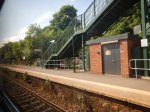
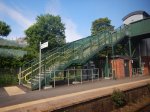

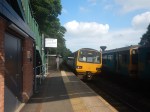
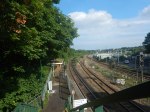
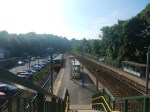
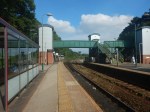
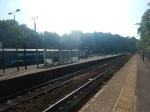
It certainly has a massive modern step-free bridge.
This Google Map shows the station.
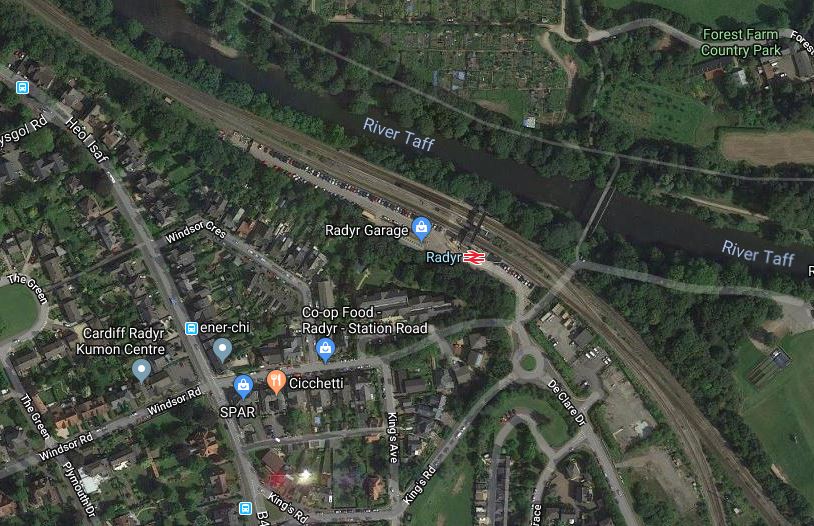
Note.
- The platforms are long.
- South of the station, the tracks split into two, with the City Line going in a more Southerly direction.
Currently services at the station are as follows in trains per hour (tph).
- Two tph North to Aberdare
- Two tph North to Merthyr Tydfil
- Two tph North to Treherbert
- Six tph South to Cardiff Queen Street and Cardiff Central stations via Cathays.
- Two tph between Radyr and Coryton stations via the City Line, and Cardiff Central and Cardiff Queen Street stations.
In 2023 the service will be upgraded.
- Four tph North to Aberdare
- Four tph North to Merthyr Tydfil
- Four tph North to Treherbert
- Six tph South to Cardiff Queen Street and The Flourish stations via Cathays.
- Two tph South to Cardiff Queen Street and The Cardiff Central stations via Cathays and back via the City Line.
- Two tph South to Cardiff Queen Street and The Cardiff Central stations via the City Line and back via Cathays.
- Two tph South to Cardiff Queen Street via Cathays.
All services will be run by new Stadler Citylink Metro Vehicles.
Note.
- No services will start at Radyr station.
- No station will get a less frequent service.
- There will be a doubling of services through Radyr station.
- There will be level access between platform and vehicles at all stations.
- If required the new vehicles can run in pairs to increase capacity.
I also suspect this is only the start and that capacity will be increased on some lines.
Train Depot In Taffs Well, While Newport Factory Named As Preferred Bidder For New Diesel Trains
The title of this post, is the same as that of this article on Walesonline.
The interesting part is the holistic thinking, where a new depot is to be built at Taff’s Well, where the station is also to be modernised, with the addition of a Park-and-Ride.
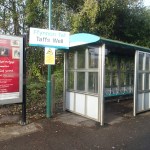
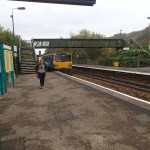
Taff’s Well station is a very outdated affair, as these pictures show.
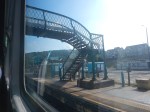

Note.
- The station could certainly do with a new step-free bridge.
- The train frequency is also being raised from six to twelve trains per hour (tph)
- Six tph will go to The Flourish.
- There will also be a new two tph service on the City Line.
- All trains will be new Stadler Citylink Metro Vehicles.
That Park-and-Ride will certainly be needed.
As Taff’s Well station will be at the heart of the tram-train network, it is most certainly a good place for the depot.
The article also says that enhanced stabling facilities will be built at Treherbert and Rhymney stations.
Enhancements At Rhymney
Rhymney station is the terminal of the Rhymney Line.
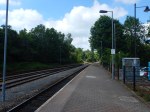
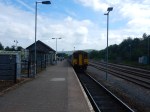
These are my pictures of the station.
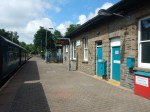
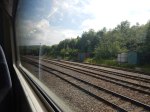
This Google Map gives an aerial view.
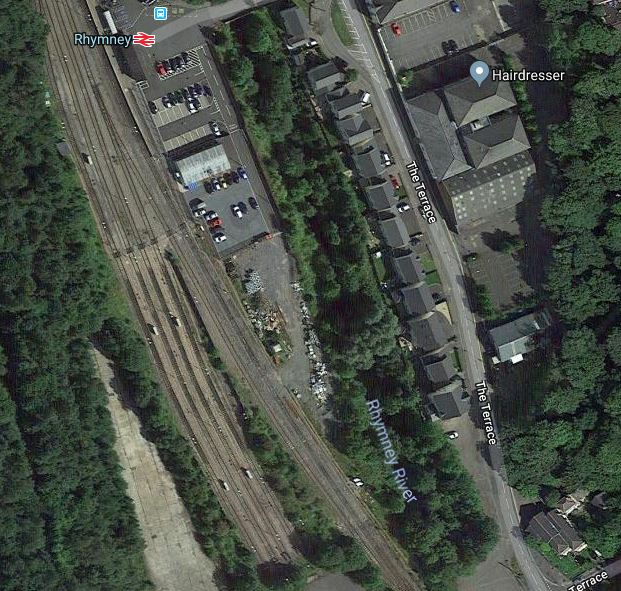
In addition to the enhanced stabling, the station will also be upgraded to accommodate more and longer Tri-Mode Stadler Flirts.
There’s certainly a lot of space for the stabling.
Enhancements at Treherbert
Treherbert station is the terminal of the Rhondda Line.
I took these pictures of the station in 2014.
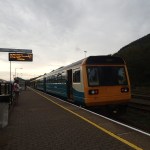
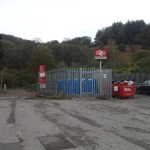
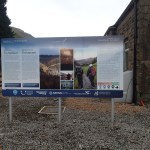
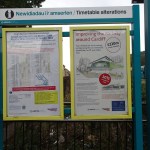
This Google Map shows an gives view.
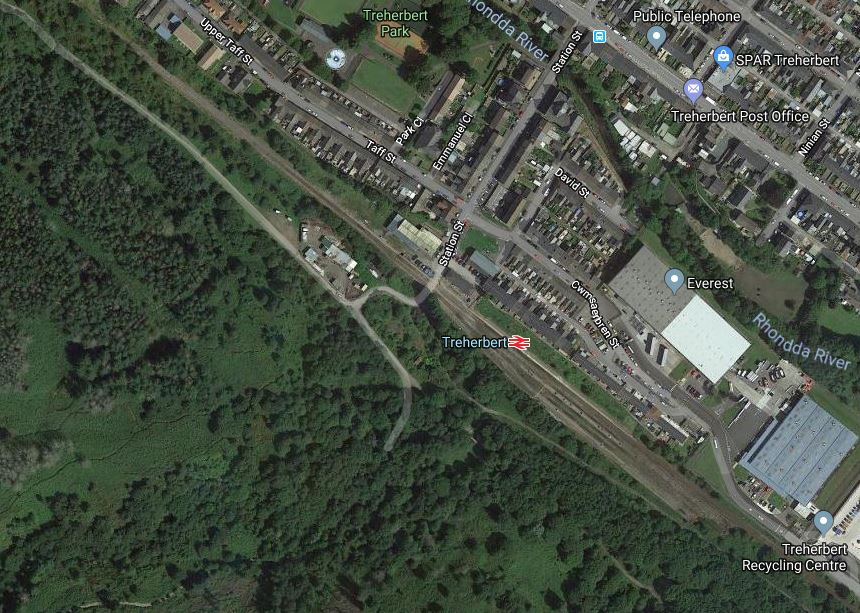
There certainly would appear to be space for the enhanced stabling.
 The Anonymous Widower