Back To The Future With BYD Double-Deck Buses
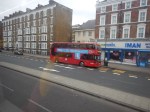
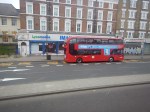
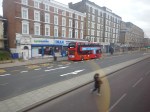
Arriva run the 141 bus route for transport for London and today they must have been short of buses, as this older Wrightbus on a heritage number plate had been pressed into service.
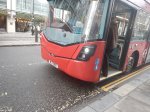
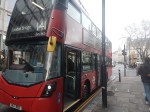
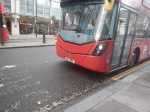

The four pictures of an older Wrightbus hybrid bus, were taken on Moorgate this morning, when it was substituting for a newly-delivered BYD battery-electric bus on route 141.
As I tapped in, I made a remark to the driver about reliability of the Chinese buses and he smiled a knowing smile.
As an engineer and designer, I would list the design faults on the BYD double-deck buses as follows.
- The batteries don’t give the buses a long enough range.
- The buses don’t handle cold weather very well.
- The step into and out of the bus is too high for elderly people and is not the same as other London buses.
- The seating is more comfortable in AlexanderDennis, Evo-Seti and Wrightbus buses.
- The seats are also too narrow.
- The seats at the back downstairs are pokey, because of the position of the batteries.
- There is no rear view downstairs, which makes using the Mayor’s promoted Hopper Fare, which lets you take unlimited bus and tram journeys for £1.75 within one hour of your first tap-in, more difficult.
- The stop displays are unreliable.
- The buses don’t have enough seats for the 141 route.
But perhaps most importantly, few passengers have a good word for the buses.
Toyota And VDL Groep To Convert Heavy-Duty Vehicles Into Hydrogen Fuel Cell Trucks
The title of this post, is the same as that of this article on Hydrogen Fuel News.
This is the first paragraph.
Toyota Motor Europe (TME) and Dutch VDL Groep have teamed up to covert VDL’s existing heavy-duty trucks into hydrogen fuel cell trucks using Toyota’s fuel cell modules, with a goal to accelerate decarbonizing the road logistics sector while also breaking into Europe’s zero-emission heavy duty H2 trucks market.
Note.
- According to their Wikipedia entry, VDL Groep seem to manufacture buses, coaches, chassis modules and vehicle components.
- In Ricardo Supports Toyota To Develop Its First UK-Based Hydrogen Light Commercial Vehicle, I wrote about conversion of the Toyota Hilux to hydrogen.
- There are a large number of companies all over the world, who will convert vehicles to hydrogen.
- It could be argued that Wrightbus and Alexander Dennis, have designed hydrogen buses, that could be conversions of existing designs.
- Cummins are selling diesel engines, that can be converted to hydrogen.
Could these points indicate, that one of the main routes to the decarbonisation of the heavier end of the commercial vehicle sector will be conversion of existing vehicles to hydrogen fuel?
And will this lead to smaller conversion kits to decarbonise vehicles like Land Rovers, Range Rovers, larger BMWs, Jaguars and Mercedes?
If you consider, that when I was growing up in the 1950s, you rarely saw a small diesel vehicle and how diesel came to grab a large market share, due to good engineering and some misguided tax changes from Gordon Brown, I don’t think it is unreasonable to believe that good engineering and perhaps well-thought out tax changes could create an affordable route to decarbonise a large proportion of vehicles.
If I was still driving and lived away from dreaded ULEZs, then I would be keeping my reliable diesel Jaguar estate.
Riding The X140 Bus Between Heathrow Airport And Harrow Bus Station
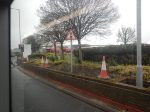
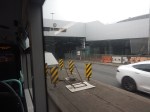
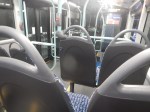
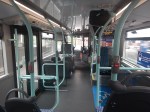
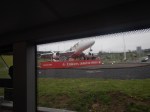
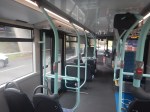
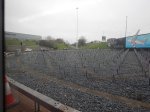
I did this journey, which will be part of the Superloop, in better weather than yesterday, and was able to take these better pictures.
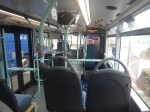


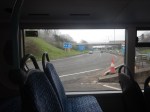
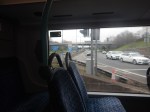

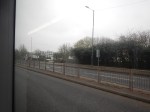
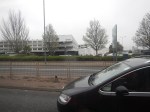
























Note.
- The roads were much better than yesterday’s trip and were mostly two lanes each way, with large roundabouts at junctions.
- I suspect the bus was going at between 30 and 40 mph most of the way.
- There was still quite a lot of traffic.
- It is a distance of about 15 miles.
- The timetable says that buses run every 10-13 minutes.
- The X26 buses run between about six in the morning at midnight.
- There are twelve intermediate stops.
- Harrow-On-The-Hill station is next to Harrow Bus station.
- Heathrow Central connects to Heathrow Express, the Elizabeth and Piccadilly Lines.
- Hayes and Harlington connects to the Elizabeth Line and GWR’s local services.
- Northolt station connects to the Central Line.
- Northolt Park station connects to Chiltern.
- South Harrow station connects to the Piccadilly Line.
- Harrow-On-The-Hill connects to the Metropolitan Line and Chiltern
The journey took 49 minutes, which is only a minute longer than the timetable.
I have a few thoughts.
Passenger Numbers
These were my observations on my journey that started at about 11:30 on a dry day.
- Few got on at Heathrow Central, but I suspect we had just missed a bus.
- By Hayes & Harrington station, the bus was about a quarter full.
- At South Harrow station it must have been about three-quarters full.
- At Harrow bus station all the lower-deck seats were taken.
I would expect that the loading I saw fits with TfL’s expectations.
The Bus
The bus was one of the latest ADL battery-electric buses.
- It had a strong performance.
- It had wi-fi and phone charging.
- It was probably less than a year old.
- It was a lot better than yesterday’s bus!
At present not all buses on the route are battery-electric, as some are still older hybrids.
Travelling To Heathrow From The Northern Reaches Of The Metropolitan Line
Many people travel to and from Heathrow either for work or because they are flying.
- But it is not an easy journey from the Northern reaches of the Metropolitan Line.
- I believe the X26 bus could be a viable way to get to the airport for many.
- There would be a change at Harrow-on-the-Hill, but the station is at least step-free.
- It would avoid parking fees.
- Fares could be less than fuel costs.
The only big drawback, is that the X26 bus is not twenty-four hours.
More And More Frequent Buses Would Help
I believe that the Superloop should be a 24-hour service, as a lot of things go on at airports in the middle of the night.
I’ve just found out that there is an N140 bus that covers the route.
I also think, that as with the Overground, services should be at least four buses per hour.
The Big Beast In Your Electric Bus
This article on electrive.com is entitled BAE Systems Takes Orders For 340 Hybrid Drive Systems.
This is the first paragraph.
The Southeastern Pennsylvania Transportation Authority (SEPTA) has selected BAE Systems to supply up to 340 hybrid electric drive systems for its new fleet of low emission transit buses. BAE Systems will provide 220 electric drive systems to New Flyer of America, with an option for 120 additional systems, over the next three years.
The article also reveals that the company is working with AlexanderDennis.
The system appears to be hybrid, with a lot of intelligent choosing of when to use a polluting engine.
Riding The Latest Alexander Dennis Electric Double-Decker Bus
This morning, I had a first ride in one of the latest Alexander Dennis electric double-decker buses.


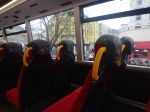
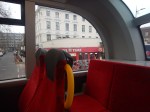
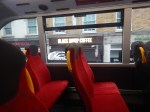
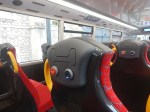


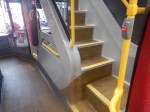
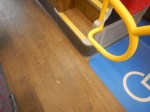
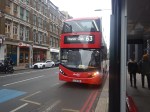
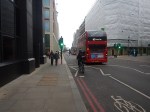
Note.
- The bus is definitely an improvement on previous electric models, that I have ridden on routes 43 and 212.
- Bus route 63 goes between Kings Cross and Honor Oak.
- If you want to go South from King’s Cross, the bus is caught at Stop D in front of the station.
- I’ve never seen a bus before with a wooden floor. Was it real or fake?
- The stop buttons were in the back of the seat in front. I’ve never seen this before.
- The are charging points for mobile phones.
Overall the standard of finish seemed high, but then it was in the new Wrightbus hydrogen buses I’ve ridden lately.
Wrightbus Boss Eyes All-Island Green Transport Plan
The title of this post, is the same as that of this article on the Irish Independent.
This is the introductory paragraph.
THE new owner of manufacturer Wrightbus says 12,000 buses on the island of Ireland as well as trains could be replaced with hydrogen engines to usher in a new era of environmentally friendly transport.
These points are made in the article.
- Jo Bamford, who is the owner of Wrightbus, plans to decarbonise all buses and trains on the island.
- A hydrogen infrastructure would need to be setup.
- The Enterprise train between Belfast and Dublin would be run by hydrogen.
- Jo Bamford has yet to talk to the Irish Government.
- Wrightbus is seeking a £500m subsidy from the UK Government to built 3,000 hydrogen-powered buses by 2024.
- This would bring 1,500 jobs to Ballymena.
- The ydrogen-powered buses, will be the same price as diesel.
- New Whightbus hydrogen buses will be on the streets of London and Aberdeen later this year.
This is one of the last paragraphs of the article.
He (Jo Bamford) said that the impact of the Covid-19 lockdown on the environment, with a clearer sky and cleaner air resulting from the fall in traffic, could be an inspiration for greener transport.
It may be an ambitious plan, but then you would expect ambition to be flowing in large quantifies in the veins of someone from the family, that gave us JCB.
Will Hydrogen Double-Deck Buses Become Commonplace?
There are now three different designs of hydrogen-powered double-deck bus in design, if not production.
- AlexanderDennis – See New Facility To Power Liverpool’s Buses With Hydrogen
- Optare – See New Hydrogen Double-Decker Bus Launched
- Wrightbus
There is also the hydrogen-powered version of the Van Hool ExquiCity tram-bus, that I wrote about in Ballard-Powered Fuel-Cell Tram-Buses From Van Hool Now In Revenue Service In France.
There are some big players making large investments in hydrogen-powered buses. I suspect at least three and possibly all four will succeed.
Designing A Hydrogen-Powered Vehicle
Two hydrogen-powered vehicle designs have impressed me this week.
- The Optare design, where the battery of an electric bus was replaced by a hydrogen power system.
- The mining dump-truck, that I wrote about in Thirsty High-Rollers … Mining’s Heavy Haulers Prime Candidates For Hydrogen Conversion.
Both designs use the existing electric transmission and seem to have been relatively straightforward for experienced engineers who are working in the field.
I wouldn’t be surprised to see other suitable vehicles redesigned for hydrogen power.
 The Anonymous Widower