The Victorian Roof At Farringdon Station
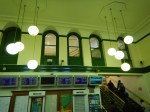
Farringdon Station is Grade II Listed and has a Victorian roof dating from 1865. The roof is not a grand but a very practical affair.
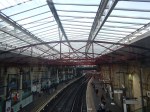
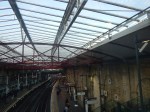
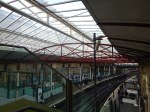
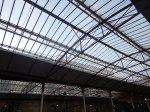
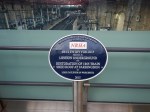
As the pictures show, it won a Railway Heritage Board Award in 2015.
I wonder if Barbican station had a similar roof, as you can still see the remains of crudely cut off trusses, not unlike the those remaining at Farringdon station.
If the Barbican station roof should ever be recreated, perhaps something like the one, I wrote about in The New Roof At Crystal Palace Station could be used.
The two stations could be a tribute to Ancient and Modern
Draft Hackney Central And Surrounds Masterplan
Last week, I went to a consultation about the Draft Hackney Central And Surrounds Masterplan in the Narrow Way by HackneyCentral station.
If you want to see the full version of the masterplan it is available at www.hackney.gov.uk/spd.
About Myself
As this article will be sent to the Council Planning Department, I’ll say a little bit about myself.
- Widowed, in my seventieth year and living alone.
- I’m coeliac, which I inherited from my father.
- I always describe my politics as left-wing Tory and very radical.
- As someone, who has helped create two high class technology businesses sold for millions of pounds, I’m very entrepreneurial.
- My father and three of my grandparents were all born within the triangle based on the Angel, Dalston Junction and Highbury Corner.
- My father was the least racist person, I’ve ever met. I hope his attitude has rubbed off on me!
- My two grandfathers were of part-Jewish and part-Huguenot ancestry respectively.
- As my two grandmothers families came from Northants and Devon, I usually describe myself as a London mongrel.
- My late wife and myself partly brought our three sons up in the Barbican.
- My middle son talks of that time in a tower block with affection, so I’m not against well-designed tower blocks.
After a stroke, left me unable to drive, I returned to my roots.
My Views On The Masterplan
I like lots of things about it. And especially these!
- The prominence given to new workspace, shops and the creation of jobs.
- The creation of new housing, where I’m only against bad tower blocks.
- The opening up of the railway viaduct, so it becomes a feature. Network Rail get a lot of stick, but they know how to look after railway brickwork.
- The creation of a public square at the bottom of the Narrow Way.
- The creation of more pedestrian streets.
- Better use of the bus garage site.
- Improvement of Bohemia Place.
It wouldn’t be me, to not put in my own wish list.
The Overground
Truth be told, I don’t think Transport for London, thought the Overground would be the success, it has turned out to be. So the designers did the minimum they felt they could get away with and would satisfy their political masters!
But the London Overground’s success has been repeated in places like the Borders Railway, Electrification in Liverpool, new stations in Leeds and the Todmorden Curve, and it is now proven in the UK, that if you give the population a good train service, they’ll use it.
Now that the walkway has connected Hackney Central and Hackney Downs stations and other improvements to the complex are in the pipeline, I think that serious consideration should be given to creating a second entrance to Hackney Central from Graham Road.
Failing that, pedestrian routes should be improved, so that access to the cluster of buildings around the Town Hall and the Empire is easier.
Hackney Central As A Meeting Point
Once the public square is created at the bottom of the Narrow Way, use of the area as a meeting point should be encouraged.
Consider.
- Hackney Central is where two rail lines cross.
- The London Overground through Hackney Downs gets new trains in 2018.
- There are several bus routes passing through the area.
- Bohemia Place and the railway arches must have potential for specialist shops and cafe/restaurants like Leon.
- Leon was started by a Hackney resident.
Who said it’s all about location?
Learning From Other Cities And Towns
I travel extensively, in the UK and Europe and see both good and bad examples of how to develop cities and towns.
Recently, I went to Blackburn and I was totally surprised at the transformation since I last visited a few years ago.
A Landscaped square had been created between the station and the cathedral.The square is surrounded by a PremierInn, a new office block, a small bus station on one side and a pedestrian way to a supermarket on the other.
Hackney could do similar or even better.
Sculpture
My uncle was a very good sculptor and I feel it is a crime that works of art like large bronzes are kept in store because security and insurance is a problem.
However, there are places where they could be placed with little fear of theft or damage. And that is at carefully selected locations on the platforms of railway stations.
So why not?
Hackney Downs certainly has space for one, but the platforms at Central are too narrow!
Information
When I was on holiday in Iceland, every building with a historic connection, had full information displayed outside.
Is Hackney’s information up to scratch?
Other Thoughts
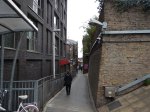
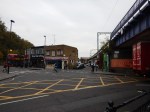
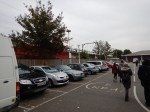
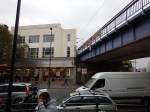
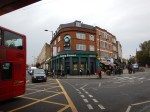
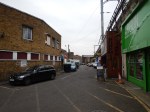
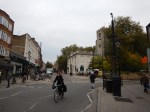
This is a series of pictures with comments.



Conclusions
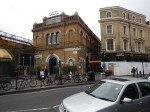
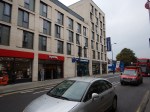
Hackney Central has some interesting buildings on which to develop the area. Unfortunately, there is some bad examples of boring architecture.
Some sites definitely have potential.
- Could the top floors of the Iceland building, be converted into a Southern station entrance, with perhaps a cafe and a couple of shops that travellers like?
- Bohemia Place could be a nice oasis with cafes, workshops and individual shops, a bit like the Box Park at Shoreditch High Street station.
- Bohemia Place will be better, when the arches under the railway are opened up.
- The right architect could do a fine job on the M & S Building.
- The car park at Hackney Central station might be much better as a bus interchange.
In my view the key is Bohemia Place, as this could be a magnet for people of all ages, races and classes to come and shop and refresh themselves.
Manchester Oxford Road Station
Manchester Oxford Road Station, is that rare animal, a modern station with a Grade II Listing.
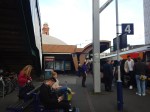
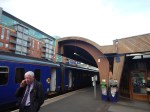
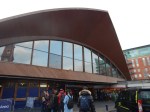
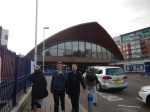
Probably, the most significant thing about the listing of Manchester Oxford Road station, is that there are few stations, built in the 1960s, worthy of any merit.
A Walk Around White Hart Lane Station
I took these pictures as I walked around the area between White Hart Lane station and Tottenham Hotspur‘s White Hart Lane stadium.
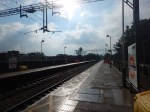
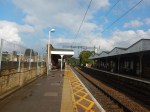
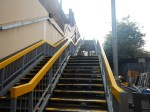
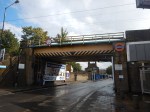
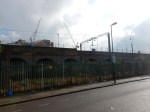
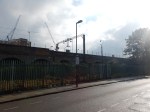

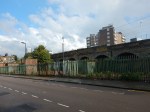
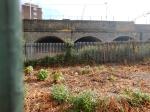
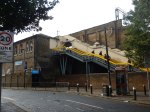
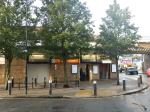
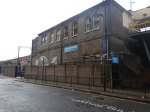
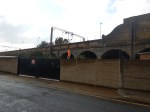
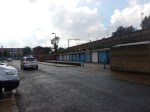


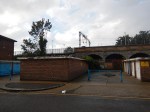
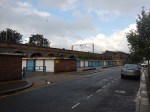
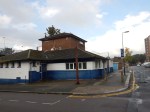
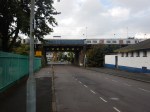
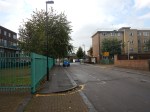
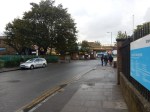

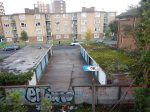
Looking at the station, I come to a few conclusions.
- It certainly isn’t fit for serving a 61,000-seater football stadium.
- The access to the platforms with staircases and no lifts or escalators is terrible and not much better than it was when I used it regularly in the early 1960s.
- The platforms look like, they might be able to handle a twelve-car train.
- The platforms are on top of what looks to be a solid well-built viaduct.
- Walking away from White Hart Lane towards the South, there would appear to be few important buildings alongside the viaduct.
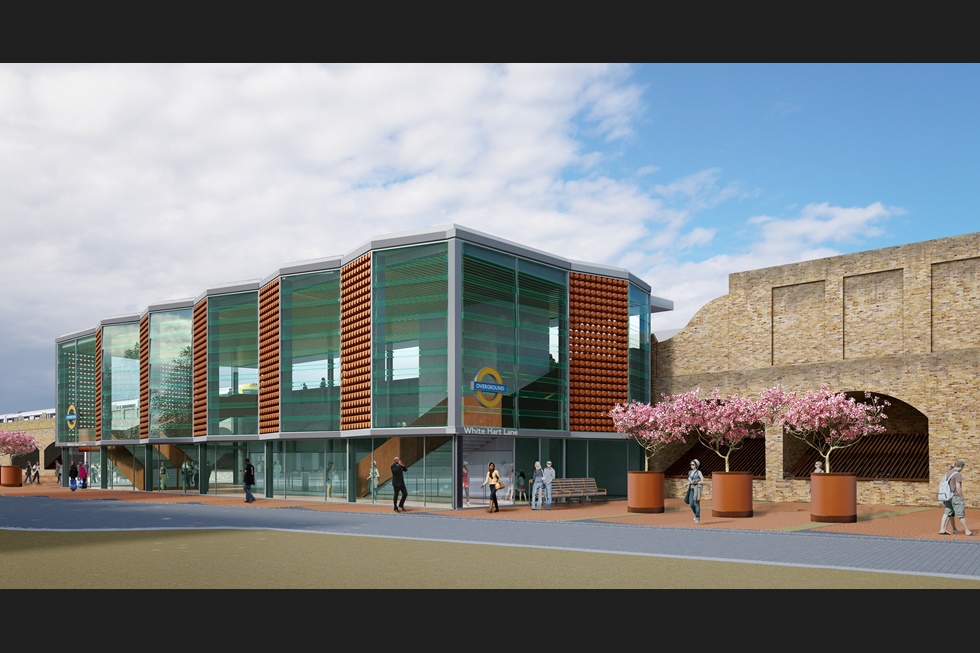
I think this all leads to a unique situation you don’t often find in the rebuilding of a station. It would appear that if you clear the land on both sides of the railway along Penshurst Road and Love Lane, you can create a station that encloses the railway and gives access underneath. A similar situation was exploited at Haggerston and Hoxton stations to create very passenger-friendly stations.
This visualisation from the Architects Journal shows the station from the East.
I’ll repeat my nearest picture.
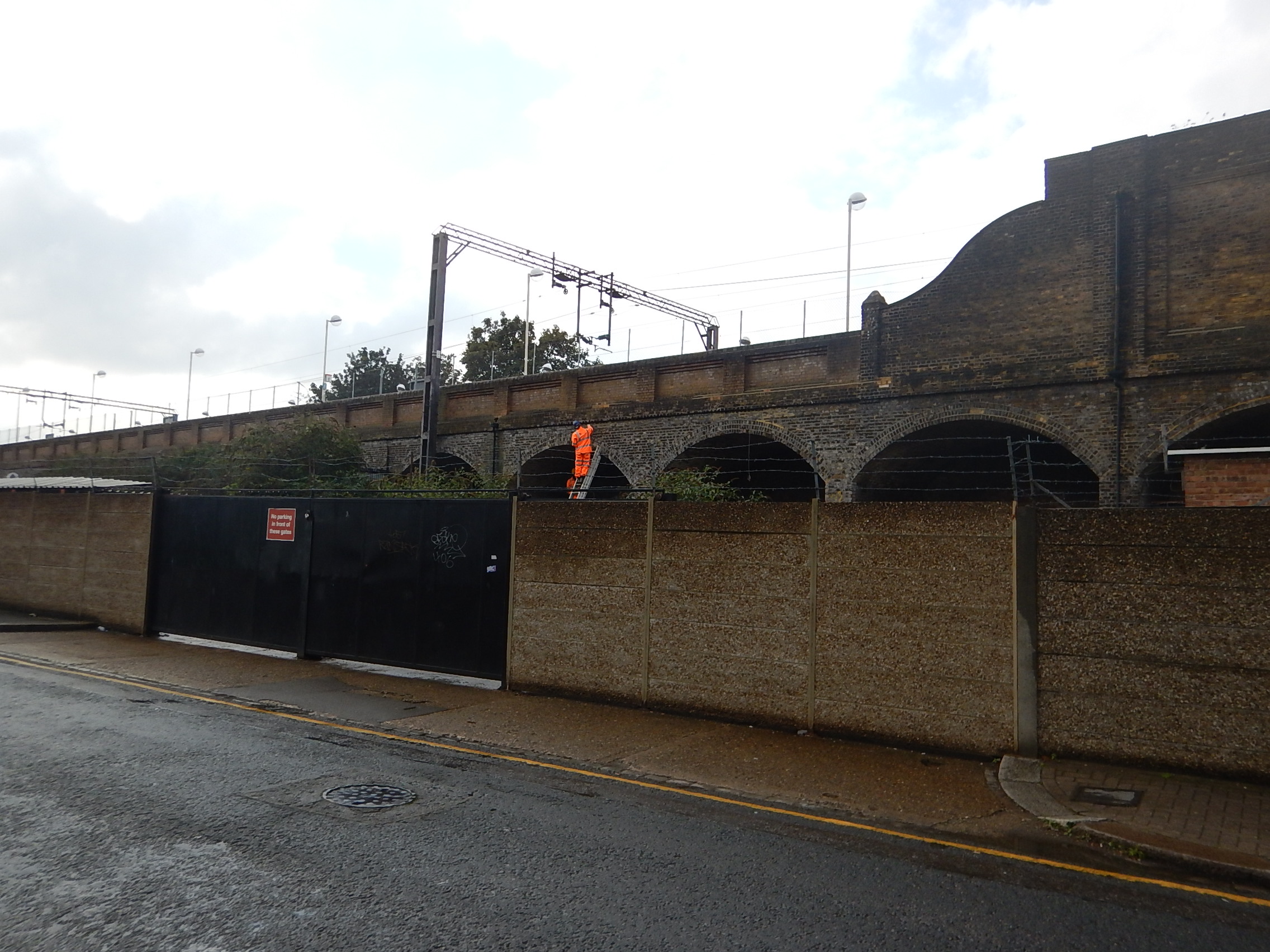
I think that it looks good.
Note that the rightmost arch, which is partially hidden in the second picture, is the rightmost arch in the visualisation.
If you look at the other pictures in the Architects Journal, it would appear that the two staircases go up in two sections to the platforms, in a similar way to they do in several of the Overeground’s rebuilt stations.
At least in common with London’s two other big club grounds at Arsenal and West Ham, White Hart Lane is served by several Underground and rail stations.
This station certainly, looks like it will handle its share.
I think there could be controversy, as there have been reports that Tottenham Hotspur would like to sell naming rights to the stadium and possibly the station, as other clubs have.
Renaming the stadium would probably not be controversial, but renaming the station could well be. It will certainly be expensive, as Transport for London would have to change a large quantity of maps.
As someone, who supports Ipswich, I don’t care.
The Crossrail Mile End Park Ventilation Shaft Is Revealed
The hoardings have been partially removed from the Crossrail Mile End Park Ventilation Shaft.
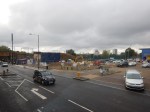
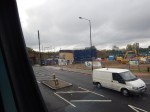
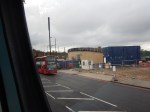
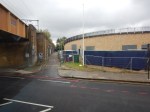
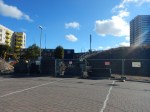

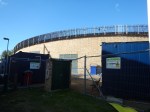
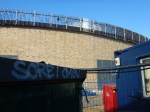
The top line of pictures were taken from the top of a 277 bus, whilst the others were taken a day later from the ground.
It’s certainly starting to look like the visualisation.

This humble ventilation and evacuation shaft could be one of the most-copied features of Crossrail.
Is This How To Do Small Business?
Opposite Ed’s Shed in De Beauvoir Town is an old factory block of indeterminate age, with little architectural merit.


So what is happening?
It is being turned into a series of units for small businesses called the De Beauvoir Block.
Surely, we need more initiatives like this?
I should say, that although De Beauvoir Town is mainly residential, tucked into lots of the nooks and crannies , there are small business units.
Like the De Beauvoir Block, many have been created by the landowner, the Benyon Estate.
The estate are not distant, like many of the owners of large parts of our cities, but seem to want to create a vibrant and prosperous community.
After all, modern economics says they would make more money by flattering the block and building tower blocks of buy-to-leave flats.
The biggest tragedy of the area is that parts of De Beauvoir Town were demolished in the 1960s to build anonymous local authority housing, some of which has already been rebuilt.
The good thing though, is that there are still more nooks, crannies and factories to do some more creative development.
Ed’s Shed
This house is in the heart of De Beauvoir Town, which is the area of London, where I live on the Northern edge.
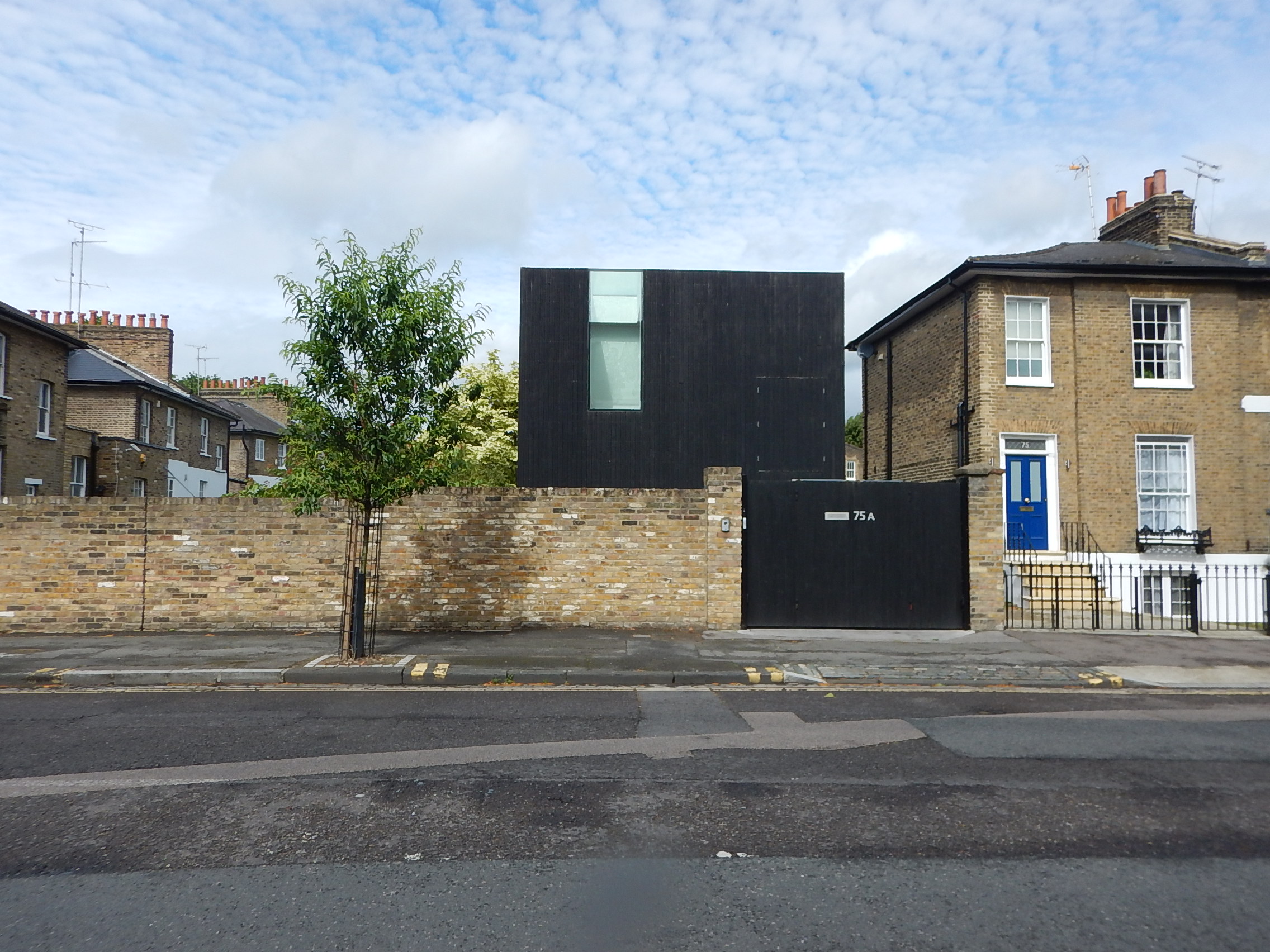
Ed’s Shed
It is an unusual modern house to sit amongst all the Georgian ones. It is not the only one in the Conservation Area.
It’s called Ed’s Shed and there is a web site.
I like it!
Why don’t we get more adventurous modern houses? Architects are creating the future and we don’t want uniformity!
Edinburgh Haymarket Station Gets It Right
Edinburgh Haymarket station is another example of Network Rail’s stations with a wide bridge over the tracks, like Leeds, Derby and most spectacularly Reading. London Bridge will join the club in the next couple of years.
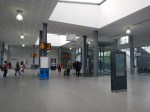
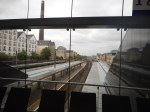

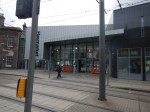
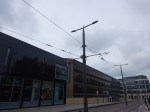
As most trains stop at both Waverley and Haymarket stations in Edinburgh, I think passengers will ask themselves, why they would ever use the truly dreadful Waverley station?
- Access to the trams at Waverley means using endless steps and escalators to get to Princes Street and then an uncovered walk to the tram.
- Trams at Haymarket are just a short level walk outside.
- Taxi drop at Waverley is difficult with more steps. It’s on the level at Haymarket.
- Tickets to Edinburgh allow you to go to either station.
- Coming from the West and needing the tram, will passengers increasingly change at Edinburgh Park station?
Don’t fall into the trap of getting off at Edinburgh Waverley, which now always seems to be called just Edinburgh.
My only reservation about Haymarket is the station’s size.
Is it big enough for an important rugby match at Murrayfield, where the savvy will arrive at Haymarket and take a tram?
And will it be big enough, when the trams are extended, as they surely will be?
It’s Not April The First
This story could be titled Architect Benedict O’Looney Discovers Lost Victorian Waiting Room In Peckham.
But in their article the BBC has used Peckham Rye station’s ‘lost’ waiting room to re-open after 50 years.
This is said.
It was once considered to be one of the grandest station waiting rooms in South London, but for decades the space at Peckham Rye railway station was bricked up and forgotten about.

Abbey Wood Station – 9th June 2016
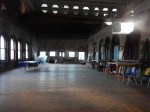
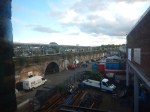
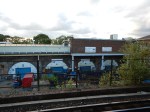
I took these pictures at Abbey Wood station.

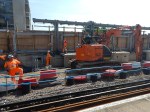


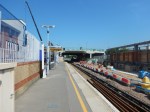
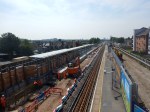

If you look at the various pictures I have taken over the past months of this station, the station is progressing and the builders seem to be managing to always have a working station amongst all the construction work.
Certain factors have helped in this important aim.
- The previous station was unloved by everyone and had absolutely no architectural merit.
- There are no heritage issues.
- Good design of a temporary step-free pedestrian bridge, that appears to be morphing into a permanent one, has aided passengers.
- There always seems to be cheery staff on hand for lost and puzzled passengers.
- Traffic is heavy in the area, but not unmanageably so.
But I think most importantly, the Crossrail portal is some distance away from the station, keeping the two projects effectively separate.
Compared to some station rebuilds, I’ve encountered in the past, so far it has been a textbook example of good project management.
 The Anonymous Widower