The Tallest Timber Residential Structure In The World
You’d have thought that this would be somewhere like Japan, Scandinavia or perhaps Canada, but despite it’s name, the Stadthaus is in Murray Grove in the London Borough of Hackney.
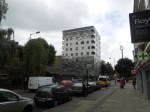


Wikipedia says this about the building.
It is thought to be the tallest timber residential structure in the world.It was designed in collaboration between architects Waugh Thistleton, structural engineers Techniker, and timber panel manufacturer KLH.
Stadthaus is the first high-density housing building to be built from pre-fabricated cross-laminated timber panels. It is the first building in the world of this height to construct not only load-bearing walls and floor slabs but also stair and lift cores entirely from timber.
I like it and it shows how modern buildings don’t have to be constructed using traditional methods. It was also constructed in just 49 weeks and residents moved in ahead of schedule.
So as we need more housing and we need it quickly, perhaps we should build more houses and flats using these methods.
The End Of Television As I Knew It!
On the way to see Ipswich at QPR yesterday, I walked past the old BBC Television Centre at the White City.
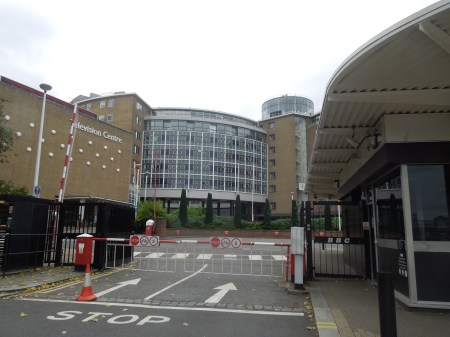
The End Of Television As I Knew It!
It is all rather sad to see such an iconic building on the way down!
Walking To The Tate Liverpool
After visiting St. George’s Hall, I walked down to the Tate Liverpool, having lunch at Carluccio’s on the way. I took these pictures on the way.



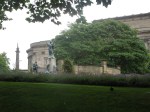

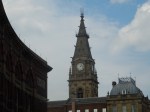


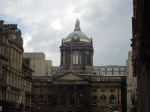
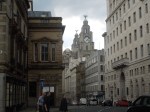
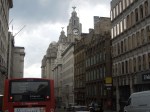
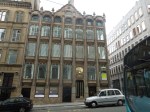
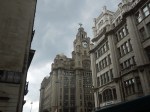

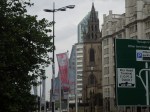
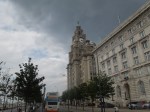
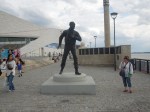

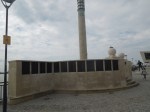
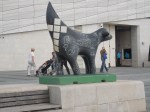
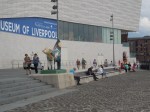
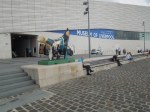


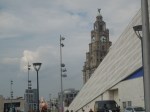
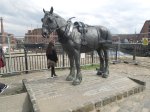


They show how much public art and the number of clocks there are in the city.
I think it is true to say that you could spend a couple of days looking at all the public art in Liverpool.
A Great Victorian Masterpiece Gets Exposed
St. George’s Hall in Liverpool is one of the UK’s greatest buildings. In 1969 the architectural historian Nikolaus Pevsner expressed his opinion that it is one of the finest neo-Grecian buildings in the world.
Until the 18th of August, it is a must-visit building, as they are exposing the magnificent Minton floor. It’s reported here on the BBC.
Crazy Practical Plumbing
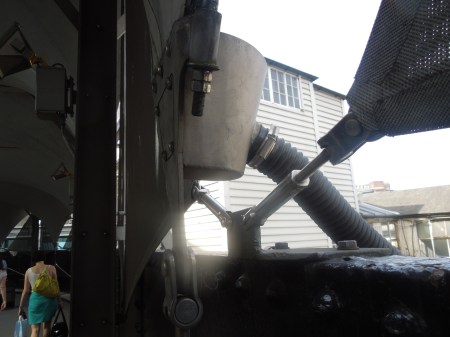
I took this picture on the pedestrian bridge over Paddington station.
Crazy Practical Plumbing
It’s amazing what you can do with flexible rubber hose and a couple of jubilee clips! But then you’ve got to make sure the rain from the roof, goes down the drain and not where people walk.
This is an example of the sort of design I like! It’s clever, stylish, practical and above all affordable!
The Windows Are In
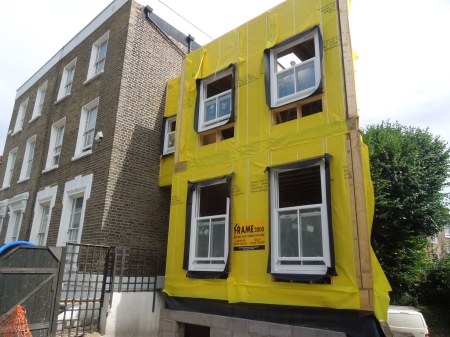
I passed the new wooden frame house yesterday and took this picture.
The Windows Are In
All seems to be going well and the house is attracting a lot of curious looks from passers-by.
Richard Rogers At The Royal Academy
I went to see the Richard Rogers exhibition at the Royal Academy yesterday.
It was really worth visiting, with lots of drawings, models and quotes from the architect, of the Pompidou Centre, the Lloyds Building, the Millennium Dome and many others.
They also had a wall for ideas, about what you would like to see done to improve London. I couldn’t resist adding my four pennyworth about my plan to reduce chaos in Oxford Street, by building a first floor level walkway above the buses and traffic.
I also followed someone else in moaning about the lack of public clocks in London. Especially when you compare it with Liverpool.
But one particular idea occurred to me. Why not give all those who live in London, who don’t drive or who have returned their driving licence, a Freedom Pass?
It is definitely, a must-see exhibition.
The Mary Rose And The Vasa Compared
In many ways comparing these two preserved ships is a bit like being asked to judge between two great actors, artists or musicians, who is the best.
In some ways to appreciate either, you must see the other one, as I have done in the last few weeks.
The Vasa is obviously more complete and in a better state, due to being a hundred or so years younger and being in the less destructive waters of the Baltic. Compare my pictures of the Vasa with those of the Mary Rose.
One big difference, is that when the Vasa sunk, it was almost an empty ship as it had not been fully victualled, whereas the Mary Rose was a ship full of supplies and artefacts, so it gives valuable insight into Tudor life. The two museums reflect this difference.
In some ways though it is best to almost consider the Vasa and the Mary Rose as two separate galleries in the same museum. Add in HMS Victory and HMS Warrior, with perhaps a visit to HMS Belfast and you have an almost complete living history of warship design.
In some ways though, those that work on both the Mary Rose and the Vasa are very close and a lot of the preservation techniques have been used on both vessels. If we ever find and raise another ancient wooden ship, we probably have the knowledge and competence to show it to everyone’s advantage.
The design and architecture of both museums may also find applications in other areas of archaeology, where we need to show delicate items.
From Poplar To Canary Wharf
I walked from Poplar Station to Canary Wharf, taking pictures of the Docklands Light Railway and the building of the Crossrail station at Canary Wharf.
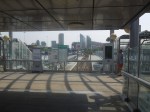
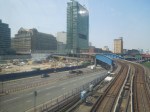

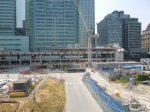
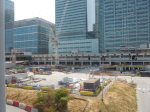
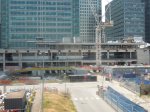
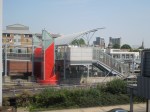

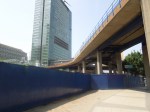
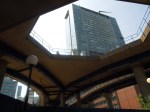
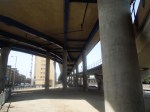
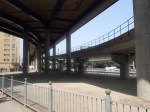
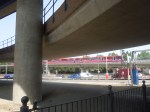

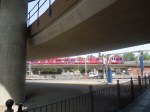

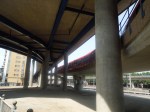
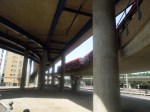


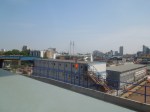

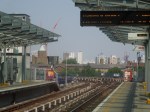
It’s going to be an architectural masterpiece when it’s finished. Or I certainly hope so!
One of the great things about using the Docklands Light Railway is that on a hot day like yesterday, it is a great way to explore the Eastern parts of London. Most of the stations have lifts and give good views of what is going on. The area is steeped in history and some great architecture from the old to the very modern.
The ticketing system is effectively, hop-on and hop-off, so you just use your Oyster once or buy a paper ticket and you’re away.
Someone needs to write a proper tourist guide to the Docklands Light Railway.
How To Build A Fake House
They were putting this up as I walked past this morning.
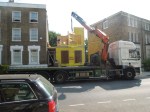
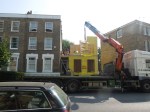


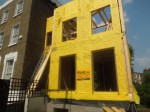
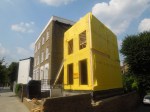
I went back last night to take a few more pictures and spoke to the contractor. He told me, it will look like the surrounding houses when it’s finished and that Hackney Council were very co-operative.
We don’t have too many eye-sores around here, but I’ve seen places in London and other cities, where a house in say a terrace is well past its renovate-by-date and surely this technique might be a much more affordable way to create a new house.
It will be interesting to see what it looks like when it’s finished.

