Chiltern Railways 2030 Vision
The title of this post, is the same as that of this page on the Chiltern Railways web site.
It looks a positive vision and must have been written with input and/or approval from Chiltern Railways’s new American owners.
This is an extract from the page.
It covers how investing in our fleet is:
- The Right Route for people by driving forward improvements in punctuality, level of crowding, frequency and seating capacity.
- The Right Route for connections by making it easier for people to travel by train to the places they need to go, and bring people and businesses closer together through a stronger network.
- The Right Route for our environment by reducing carbon emissions and helping customers to use their cars less across our route.
- The Right Route for innovation by helping create jobs and economic activity across our route and the national supply chain.
- The Right Route for the future of our communities by helping reach communities reach their full potential as more people move to towns, villages and cities across the route.
We plan to work closely with the Department for Transport to agree the scope and funding for new trains between London and Aylesbury soon.
I talk about the new Aylesbury trains in Chiltern Railways New Trains For Aylesbury.
Chiltern Railways New Trains For Aylesbury
This page on the Chiltern Railways web site, is entitled Chiltern Railways 2030 Vision.
This is an extract from the page.
It covers how investing in our fleet is:
- The Right Route for people by driving forward improvements in punctuality, level of crowding, frequency and seating capacity.
- The Right Route for connections by making it easier for people to travel by train to the places they need to go, and bring people and businesses closer together through a stronger network.
- The Right Route for our environment by reducing carbon emissions and helping customers to use their cars less across our route.
- The Right Route for innovation by helping create jobs and economic activity across our route and the national supply chain.
- The Right Route for the future of our communities by helping reach communities reach their full potential as more people move to towns, villages and cities across the route.
We plan to work closely with the Department for Transport to agree the scope and funding for new trains between London and Aylesbury soon.
These trains run to Aylesbury and/or Aylesbury Vale Parkway stations.
- London Marylebone and Aylesbury via High Wycombe – 43.5 miles (70 km.) – 17 stops
- London Marylebone and Aylesbury via Amersham – 38.8 miles (62.4 km.) – 10 stops
- London Marylebone and Aylesbury Vale Parkway via Amersham – 41.2 miles (66.3.) – 11 stops
- Princes Risborough and Aylesbury – 7.2 miles (11.6 km.) – 2 stops
Note.
- The longest round trip is under 150 km.
- Trains terminating at Aylesbury Vale Parkway take around twenty minutes to go from Aylesbury to Aylesbury Vale Parkway and back to Aylesbury, which is more than enough time to charge a battery-electric train.
- It is mainly single-track between Aylesbury Vale Parkway and Aylesbury stations.
- Princes Risborough shuttles seem to wait be at Aylesbury station for about ten minutes, which is more than enough time to charge a battery-electric train, for the short route.
- Direct Marylebone services via Amersham 80 miles (appear to be at Aylesbury long enough to charge a battery-electric train.
It looks to me that if Aylesbury and Aylesbury Vale Parkway stations and the track between the two stations were to be electrified, that a battery-electric train with a range in excess of 87 miles (140 km.) can run all services to Aylesbury and Aylesbury Vale Parkway stations.
Is there a battery-electric train with a range of say 150 km?
This page on the Hitachi Rail website is called Battery Commuter Trains.
If you download the fact sheet, it says that their four-car battery-electric train has a range of 150 km.
I suspect that other manufacturers can also produce a four-car battery-electric train has a range of 150 km, that would suit Chiltern’s needs.
Electrification At Aylesbury
I estimate that only about four miles of single-track electrification will be needed at Aylesbury.
The cost of this can surely be bundled in with the cost of the new trains.
Conclusion
It looks to me, that with a few miles of electrification at Aylesbury, Hitachi can deliver trains, that will electrify services to both Aylesbury stations.
Chiltern Sets Out New Fleet Ambitions
The title of this post is the same as that of an article in the September 2023 Edition of Modern Railways.
These are the first three paragraphs.
Chiltern Railways deserves to be the next operator to order new trains, its Managing Director Richard Allan has told Modern Railways.
On 7 August the operator published a tender notice seeking proposals for the supply of between 20 and 70 new or converted low-emission trains. This followed the unveiling on 19 July of its ‘RightRoute’ vision setting out the case for investment in new trains, which was presented to stakeholders and parliamentarians in Westminster.
Chiltern is prioritising replacement of its Class 165 DMU fleet, which comprises 89 vehicles. It carried out a pre-market engagement exercise last Autumn, and Mr. Allan said the view is that a battery train would be suitable for the Marylebone to Aylesbury route, either operating solely on battery power or additionally picking up power from the London Underground four-rail system South of Amersham.
These are my thoughts.
Electrification At Amersham
This OpenRailwayMap shows the electrification at Amersham station.
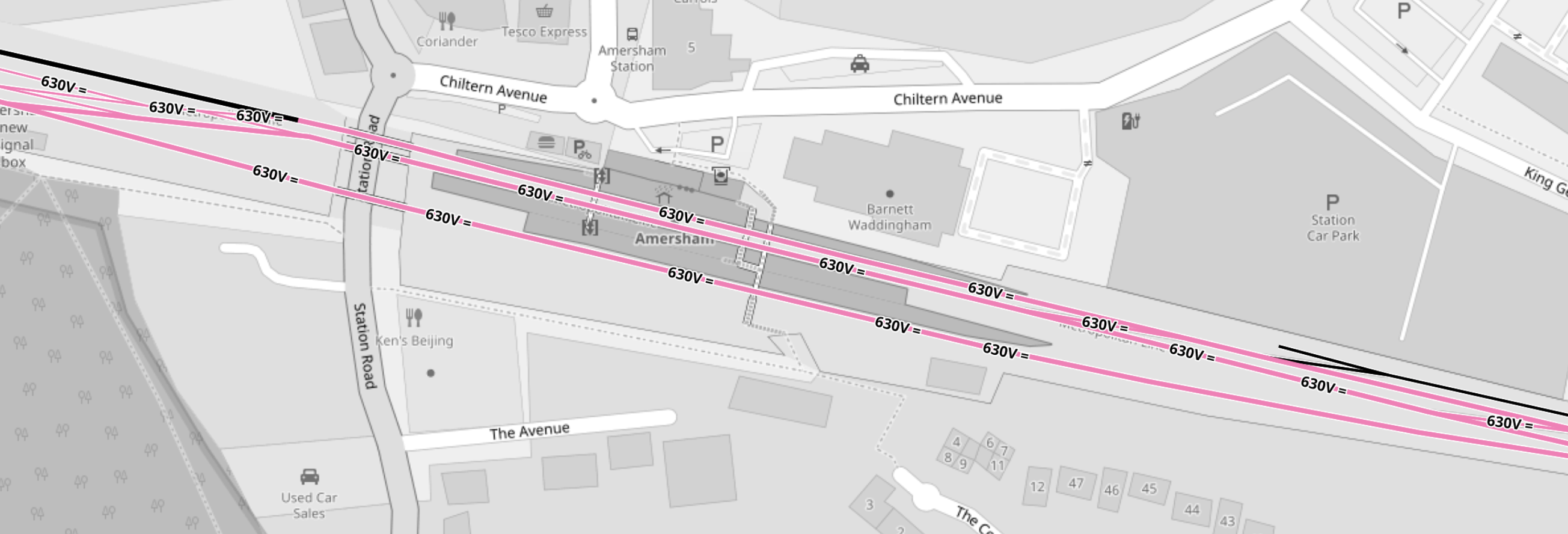
Note.
- Tracks shown in pink are electrified with the London Underground four-rail system.
- Tracks shown in black are not electrified.
- All three platforms are electrified.
The track layout allows both Chiltern and London Underground trains to pass through Amersham station on electrified lines.
Electrification Between Amersham And Harrow-on-the-Hill
This OpenRailwayMap shows the electrification at Northwood station.
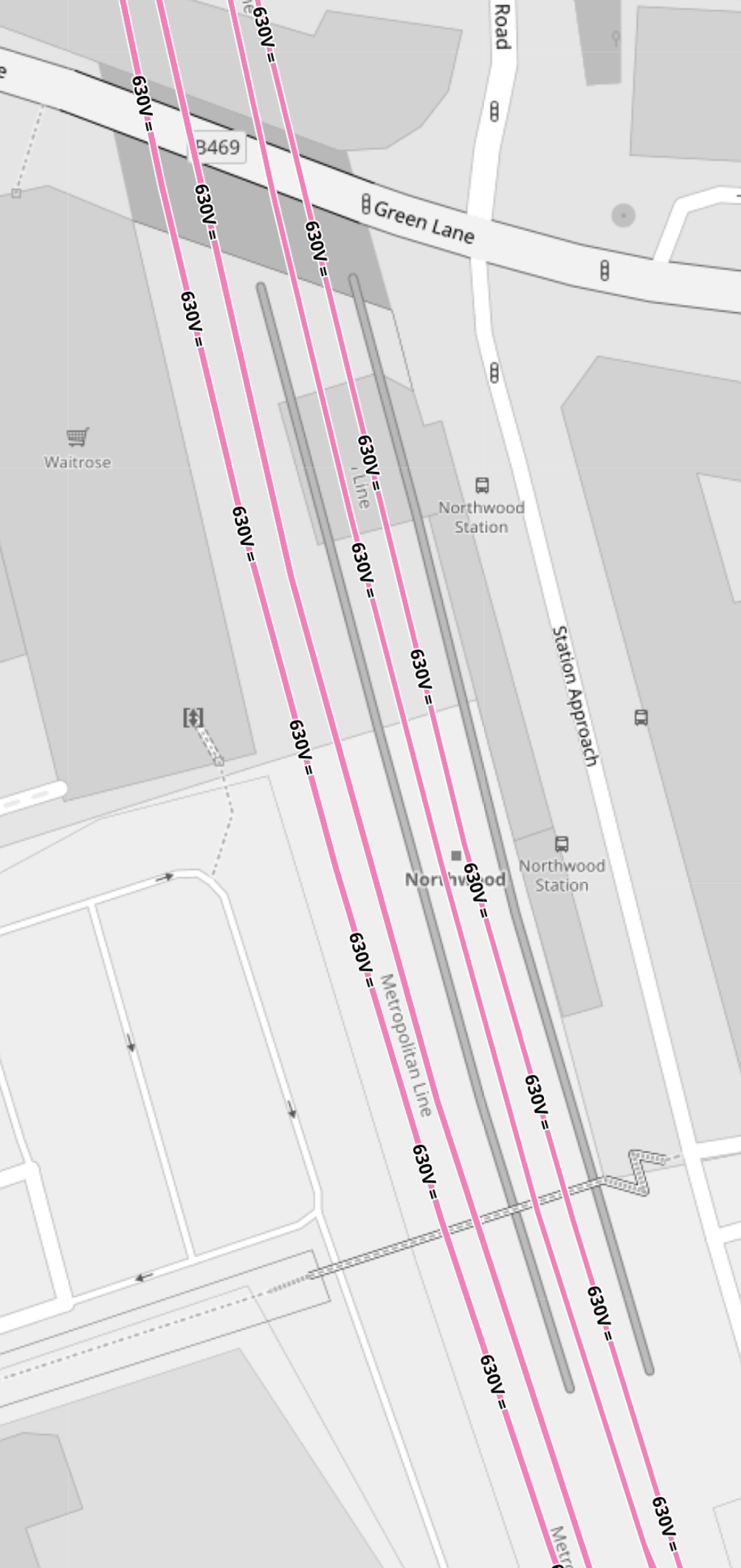
Note.
- Tracks shown in pink are electrified with the London Underground four-rail system.
- All four platforms are electrified.
- Some sections are only double-track.
All tracks between Amersham And Harrow-on-the-Hill stations are electrified.
Electrification At Harrow-on-the-Hill
This OpenRailwayMap shows the electrification at Harrow-on-the-Hill station.
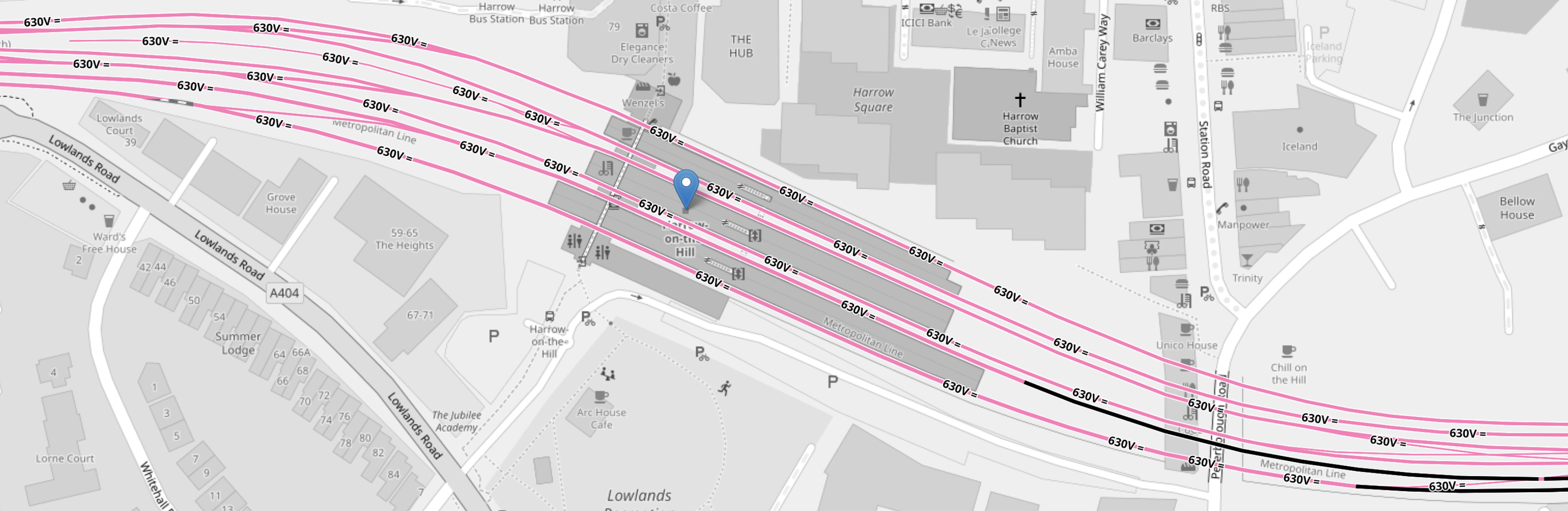
Note.
- Tracks shown in pink are electrified with the London Underground four-rail system.
- Tracks shown in black are not electrified.
- All six platforms are electrified.
The track layout allows both Chiltern and London Underground trains to pass through Harrow-on-the-Hill station on electrified lines.
Electrification Between Harrow-on-the-Hill And Finchley Road
Willesden Green station is typical of the stations on this section
This OpenRailwayMap shows the electrification at Willesden Green station

Note.
- Tracks shown in pink are electrified with the London Underground four-rail system.
- Tracks shown in black are not electrified.
- The two tracks South of the station are the Chiltern tracks.
- All Chiltern Trains along this route use these two separate tracks, that are not electrified.
Stations with this layout include Northwick Park, Preston Road, Wembley Park, Neasden, Dollis Hill, Willesden Green, Kilburn and West Hampstead.
The Chiltern Tracks Alongside The Metropolitan Line
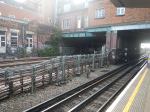
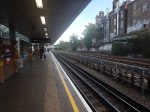
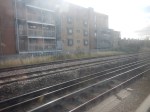
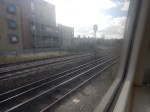
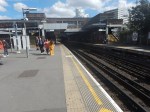
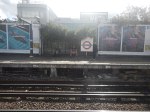
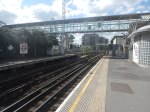
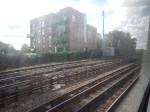
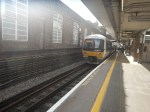
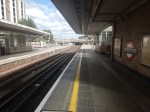
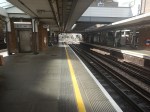
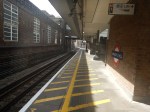
I took these pictures as I journeyed from West Hampstead to Harrow-on-the-Hill.

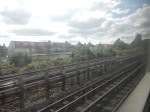


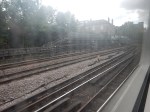
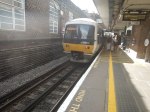
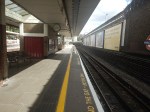
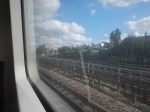

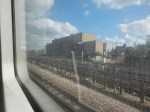
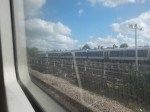
Note.
- The Chiltern Tracks are those farthest from the train without electrification.
- There also seemed a lot of graffiti, where the tracks weren’t electrified.
- Platforms 1 and 2 at Harrow-on-the-Hill station are electrified and used by Chiltern’s diesel trains.
Finding a Jubilee or Metropolitan Line train with clean enough windows for photography was difficult.
Distances Between Stations
These are the distances, times and electrification, between selected stations, between Marylebone and Aylesbury Vale Parkway.
- Marylebone and Harrow-on-the-Hill – 9.2 miles – 13 minutes – Not Electrified
- Harrow-on-the-Hill and Amersham – 14.3 miles – 24 minutes – Electrified
- Amersham and Aylesbury – 15.3 miles – 23 minutes – Not Electrified
- Aylesbury and Aylesbury Vale Parkway – 2.3 miles – 7 minutes – Not Electrified
Note.
- The 24 minutes between Harrow-on-the-Hill and Amersham, should be enough to fully-charge the batteries.
- Harrow-on-the-Hill to Marylebone and return is 18.5 miles.
- Amersham to Aylesbury Vale Parkway and return is 35.2 miles.
As Merseyrail’s Class 777 trains have achieved 83.9 miles on battery power, I am fairly sure that Marylebone and Aylesbury Vale Parkway could be achieved by a battery electric multiple unit, that has been designed for the route.
Rolling Stock
Bombardier built the Class 378 Electrostar train, so that it would run on the London Underground four-rail system to Richmond. so I’m sure that Alstom could build Aventras, that could use the Underground electrification.
I’m also sure that other UK trains manufacturers and suppliers like CAF, Hitachi, Siemens and Stadler have the expertise.
The article mentions between twenty and seventy trains. The number probably depends on the train length.
I think we’ll see some interesting bids.
Train Charging Issues
The main charging will be done between Harrow-on-the-Hill and Amersham using the London Underground four-rail system already installed for the Metropolitan trains between London and Amersham and Chesham.
As the electrification will be powering six trains per hour in both directions between Harrow-on-the-Hill and Amersham and charging the batteries on the Chiltern trains, I wouldn’t be surprised to find, that the power system will be uprated.
I also suspect, that the trains could have the ability to use 25 KVAC overhead electrification, as this could allow short lengths of electrification to be used to charge the trains at terminal stations.
Speed Issues
If you look at the speeds and times, you get the following.
- Current Chiltern Class 165 trains are 75 mph trains.
- Current Underground S Stock trains are 62 mph trains.
- Chiltern take 33 minutes between Amersham and Marylebone.
- Trains in both services run every half hour.
- There is also an every half hour service between Chesham and Aldgate, which means there are six trains per hour between Chalfont & Latimer and Harrow-on-the-Hill.
- I suspect Chiltern set the timetable, by going through first with the slower Amersham and Chesham services following.
- This means that if the new Chiltern trains are 100 mph trains, it shouldn’t make much difference to the operation of the trains.
But the faster Chiltern trains could knock eight minutes off the time between Amersham and Harrow-on-the-Hill stations.
In an ideal world, where TfL had more money, faster Underground trains would allow more services to the area.
Leamington Spa Services
Chiltern Railways run two local services from Leamington Spa station.
- One service goes to Stratford-on-Avon, which is a distance of 15.3 miles.
- The other service goes to Birmingham Moor Street, which is a distance of 22.7 miles.
- Both services are run by Class 165 diesel trains.
- Both services have a frequency of one train per two hours.
I suspect that these services could be run using battery-electric trains with charging at Leamington Spa.
Timescale
This is said about timescale.
Under the plans set out in its ‘RightRoute’ prospectus, Chiltern wants to agree scope and funding for new trains this year and launch the first new trains by 2027 between London and Aylesbury, and upgrade infrastructure and trains on the West Midlands route between 2028 and 2035.
West Midlands Route
This is said about the West Midlands route.
Mr Allan said that after ‘165’ replacement consideration would be given to the best solution for the main line between London and the West Midlands, including whether this would involve partial or full electrification, with a rolling stock solution to succeed the Class 168 DMUs and loco-hauled sets to be devised accordingly. Chiltern’s Interim Engineering & Safety Director Tim Sayer told Modern Railways one potential option the Government and Network Rail are keen on is third party funding of electrification, which could be built into a manufacturer’s contract for new stock.
Note.
- I must admit that I like the idea of bundling rolling stock and electrification in one contract.
- After all, rolling stock and maintenance have been bundled together for some years and it seems to work.
- I disclose some of Hitachi’s thinking in Solving The Electrification Conundrum, which is based on an article in Modern Railways.
I wonder if Hitachi will come up with a solution something like this.
- A number of five-car battery-electric trains.
- High quality interiors.
- They would serve Birmingham Moor Street, Oxford and Stratford-on-Avon.
- Short lengths of electrification in terminals and perhaps at strategic locations in the middle. Banbury?
- Automation as needed.
It could be a service that’s a viable alternative to High Speed Two for some passengers.
Charging At London Marylebone Station
I recently took these pictures at Marylebone station.
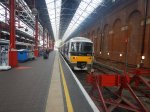

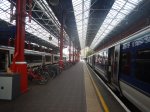
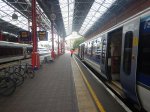
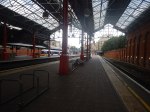

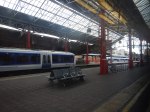
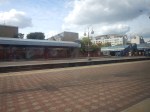


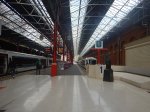
Note.
- It is a surprisingly spacious station and I feel that Furrer+Frey or some other specialist company could add some form of charging to the platforms.
- In its simplest form it would be a short length of 25 KVAC overhead electrification.
- Charging would be performed using the train’s pantograph.
It appears that the turnround time in Marylebone is typically twelve minutes or more, which should be adequate to fully charge a train.
Charging At Oxford Station
These pictures show the bay platforms at Oxford station, where Chiltern services terminate.
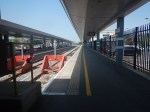
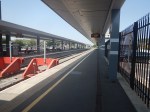
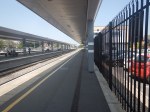
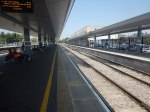
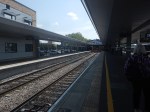
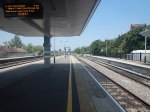
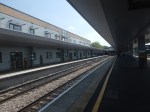
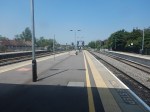
I wouldn’t be surprised, if these two platforms were designed for future 25 KVAC overhead electrification.
Marylebone And Oxford Services
Marylebone and Oxford are only 66.7 miles apart and I believe that a battery electric train would be able to shuttle between the two terminals, charging as required after each journey.
Charging At Birmingham
These pictures show the bay platforms at Birmingham Moor Street station, where some Chiltern services terminate.
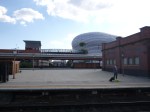
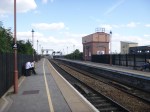
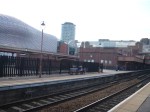
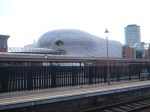
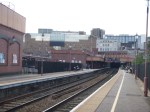
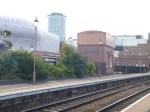
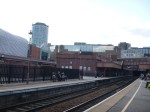

Note.
- Currently, Birmingham Moor Street station has two through platforms and two bay platforms.
- None of the platforms are electrified.
- Some plans include adding two more bay platforms to the station.
- Electrifying the bay platforms 3 and 4, would allow the charging battery electric trains from London.
The two through platforms could also be electrified to help Birmingham’s local trains decarbonise and allow London services to reach Birmingham Snow Hill station.
Marylebone And Birmingham Services
Consider.
- Marylebone and Birmingham Moor Street are only 111.7 miles apart.
- Birmingham Moor Street and Birmingham Snow Hill stations are only 0.6 miles apart.
- Birmingham Moor Street and Birmingham Snow Hill stations could be easily connected by an electrified line.
- Stadler are talking of battery-electric trains having a range of over 125 miles.
- It might be sensible to electrify Banbury to give the batteries a top up.
I believe that a battery electric train would be able to shuttle between Marylebone and Birmingham, charging as required after each journey.
Conclusion
It seems a sound plan!
East-West Rail: Aylesbury Spur
This map from East West Rail shows the complete route of the East West Railway between Oxford and Cambridge.

Note the spur to Aylesbury, which is shown dotted, which the legend says means it is a Potential Future Section of the EWR.
The papers in the area have different views.
- This article on Bucks Herald is entitled Aylesbury Spur Excluded From Government’s Latest East West Rail Route Outline.
- This article on Buckinghamshire Live is entitled East West Rail Aylesbury ‘Spur’ Plans Remain On The Table As Route Announced For £5bn Project.
So what do I feel about the Aylesbury Spur?
Train Services
In the Wikipedia entry for the East West Railway, it is stated that there will be an hourly service between Aylesbury and Milton Keynes Central stations, that would call at Aylesbury Vale Parkway, Winslow and Bletchley.
Wikipedia also states that there will be no Marylebone and Milton Keynes or Aylesbury and Manchester Piccadilly services.
I am surprised that a Marylebone and Milton Keynes service is ruled out, for these reasons.
- A Marylebone and Milton Keynes service would give Winslow a direct service to London.
- Aylesbury Vale Parkway has an hourly service from Marylebone, which could be extended to Milton Keynes Central to create the service.
- Aylesbury Vale Parkway and Marylebone have as many as three trains per hour (tph) in the Peak. Does this make timetabling of an hourly Marylebone and Milton Keynes service difficult?
The Wikipedia entry for Aylesbury Vale Parkway, says this about a Marylebone and Aylesbury Vale Parkway service.
It was proposed that, if services are extended to the north, trains between Milton Keynes Central and Marylebone would run via High Wycombe and not Amersham.
This dates from 2012.
But.
- There may be troubles with the timings of a Marylebone and Milton Keynes service between Aylesbury Vale Parkway and Milton Keynes.
- A separate Aylesbury and Milton Keynes service would give a half-hourly service between Aylesbury Vale Parkway and Aylesbury, whereas an extended service only gives the current hourly service.
This Google Map shows Aylesbury Vale Parkway station.

Note.
- The station only has a single bay platform.
- It appears that there is a step-free walk between the car park and the platform.
- There is no bridge or need for one.
- There is a single through line at the station on the opposite side to the car park, which is mainly used by trains going to the landfill at Calvert.
It looks from this map, that if the single platform were widened to an island platform, that both terminating and through trains could call in the station.
Perhaps though the modifications at Aylesbury Vale Parkway are too complicated or expensive?
The ruling out of the Aylesbury and Manchester Piccadilly service is probably easier to understand.
Consider.
- Milton Keynes Central will have a two tph service to Oxford and was planned to have an hourly service from Aylesbury.
- Milton Keynes Central has an hourly Avanti West Coast service to Manchester Piccadilly via Rugby, Stoke-on-Trent, Macclesfield and Stockport.
- Milton Keynes Central has an hourly Avanti West Coast service to Liverpool Lime Street via Crewe and Runcorn.
- Milton Keynes Central has a two-hourly Avanti West Coast service to Edinburgh Waverley via Rugby, Coventry, Birmingham International, Birmingham New Street, Sandwell and Dudley, Wolverhampton, Stafford, Crewe, Warrington Bank Quay, Wigan North Western, Preston, Lancaster, Oxenholme Lake District, Penrith, Carlisle, Haymarket
- Milton Keynes Central has a two-hourly Avanti West Coast service to Preston via Rugby, Coventry, Birmingham International, Birmingham New Street, Sandwell and Dudley, Wolverhampton, Stafford, Crewe, Warrington Bank Quay and Wigan North Western. Five trains per day (tpd) are extended to Glasgow and two tpd are extended to Blackpool North.
Note.
- A train running between Aylesbury and Manchester Piccadilly would probably need to be a 125 mph electric train, which would mean electrifying the East West Railway.
- A change at Milton Keynes Central would give access to trains for nearly all North-West England and Southern Scotland.
But because of all the connectivity at Milton Keynes Central, it surely puts pressure on providing an Aylesbury and Milton Keynes Central service.
The Track
It is possible to follow the track North from Aylesbury Vale Parkway until it joins the East West Railway to the West of Winsford station.
This Google Map shows the junction, just North of the hamlet of Calvert..
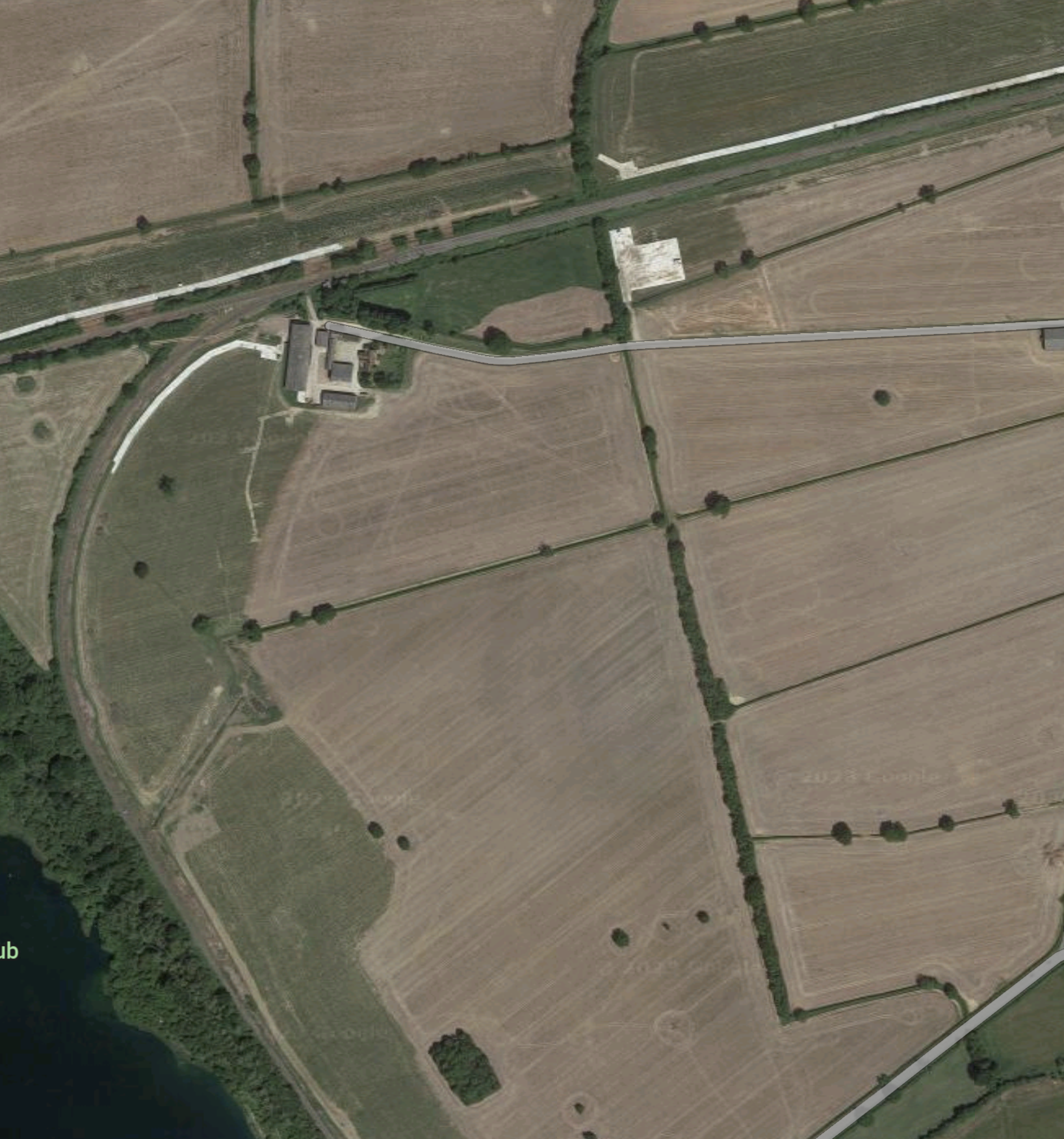
Note.
- The East West Railway going across the top of the map.
- The single track railway to Aylesbury Vale Parkway coming North and then turning East to join the East West Railway.
- The railway from Aylesbury Vale Parkway is still used by trains taking landfill.
The Wikipedia entry for Calvert, says this about the landfill site.
Another of the clay pits is now a landfill site. Waste is collected from Bristol, Bath and London each day and transported using rail via Aylesbury to Calvert. The site has a power station capable of producing 14 MWe of electricity from landfill gas, coming from the decomposition of organic matter to convert it into renewable electricity MW.
Looking at the map and the traffic on Real Time Trains, it would appear that there would be enough capacity for both the freight and an hourly passenger train between Aylesbury and Milton Keynes.
There is also the slight problem, that High Speed Two will be going through the area, as this map shows.
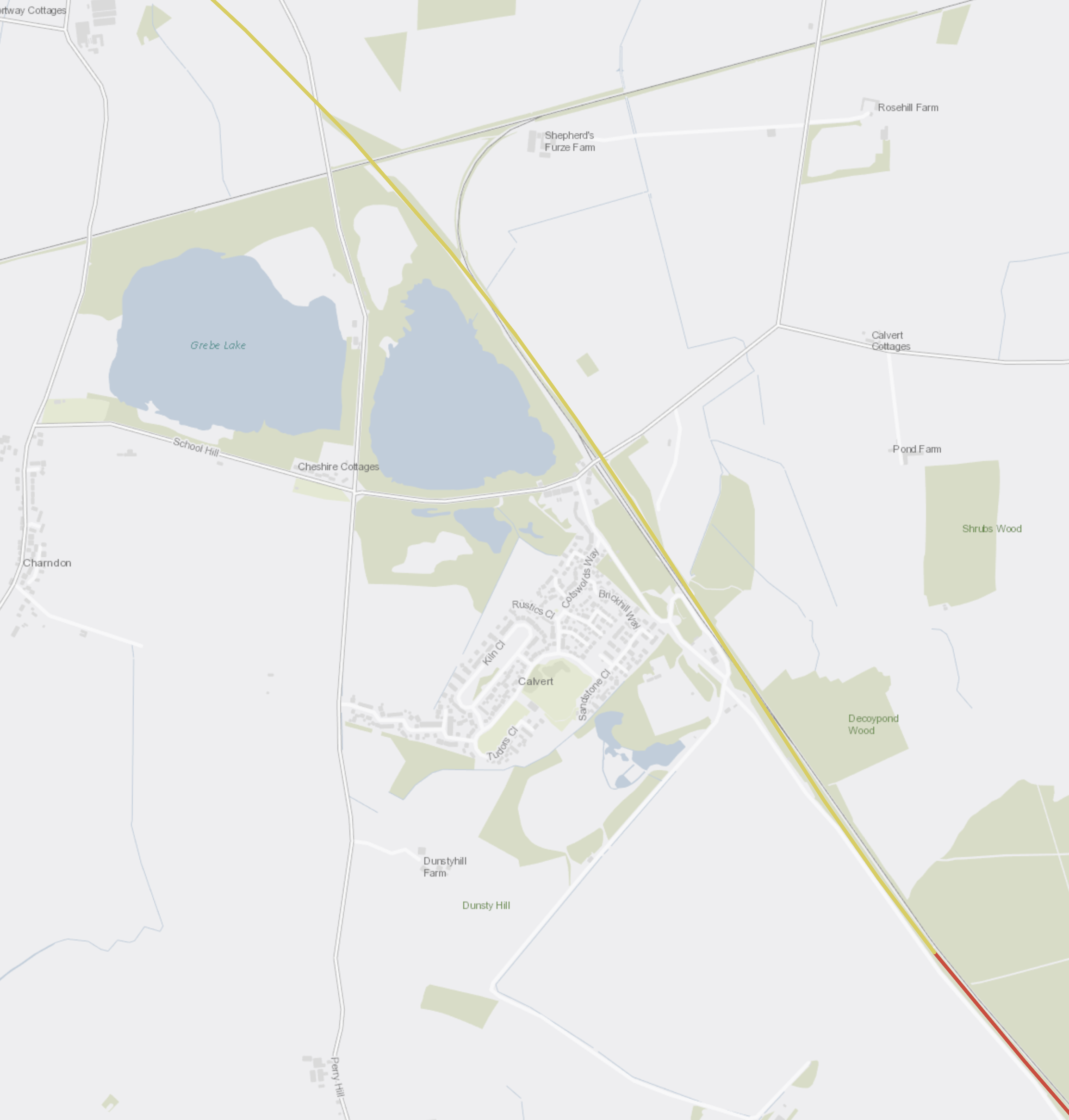
Note.
- High Speed Two is shown in yellow (cutting) and embankment (red).
- High Speed Two appears to run either on the same route or alongside the route to Aylesbury.
- The East West Railway goes across the top of thye map.
- The chord that connects the Aylesbury Spur to the East West Railway can clearly be seen.
- The Aylesbury Spur will run along the same route as High Speed Two.
- Aylesbury Vale Parkway will be just off the South-East corner of the map.
This page on the High Speed Two web site is entitled Boost for Oxford-Cambridge Connections As HS2 Builds Key East West Rail Bridge, describes the installation of a bridge to take the East West Railway goes over High Speed Two.
This picture is from High Speed Two.
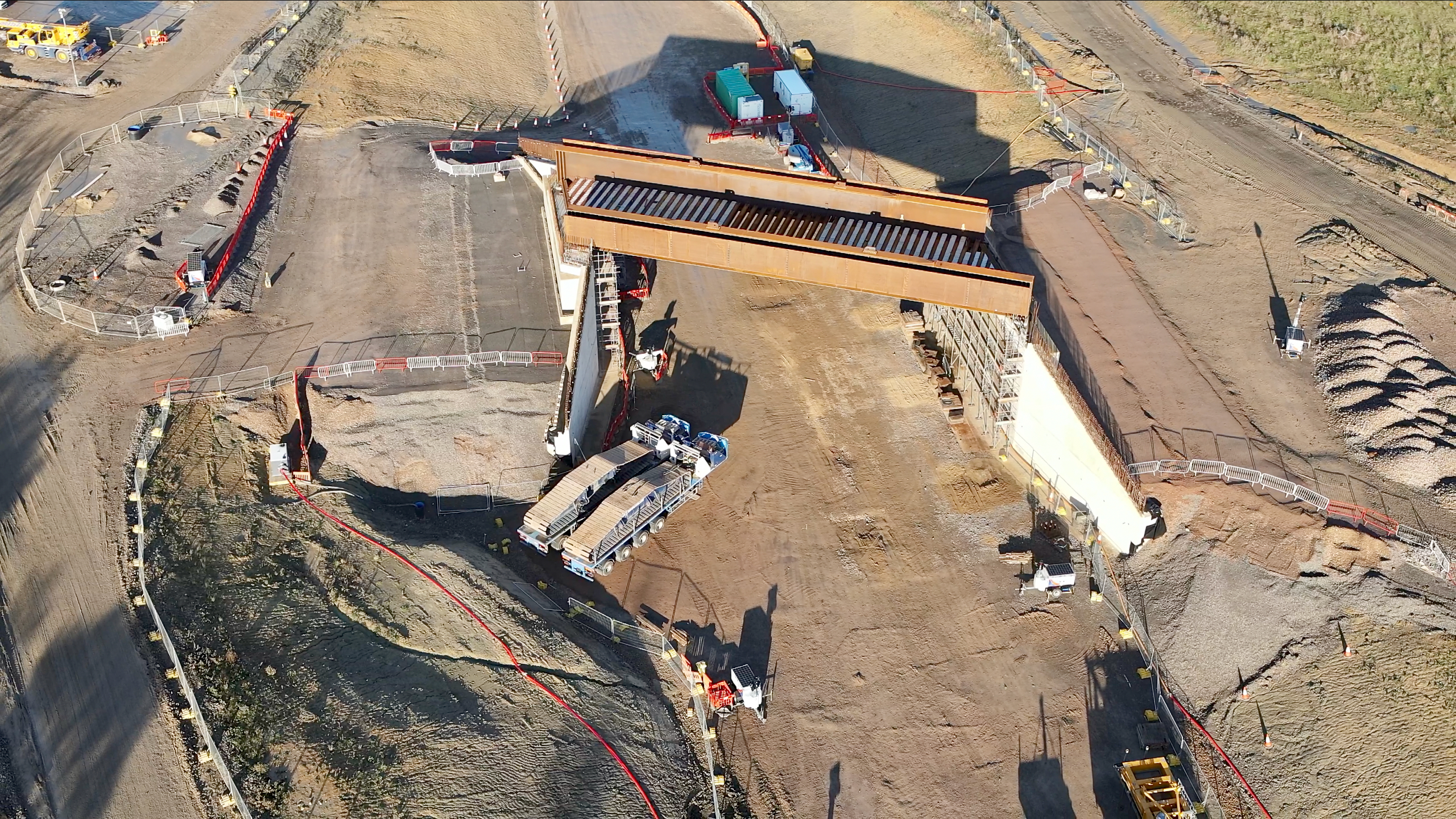
As the landfill at Calvert will still need to be filled, I suspect that High Speed Two will leave the route between Aylesbury Vale Parkway and the East West Railway as a fully-serviceable railway, when they tidy up and leave this section of their route.
It looks to me, that once these tasks are complete.
- High Speed Two relay all the tracks between Aylesbury Vale Parkway and the East West Railway.
- The junction between the Aylesbury Spur and the East West Railway is completed.
- Aylesbury Vale Parkway station is updated.
The Aylesbury Spur as needed by the East West Railway to run passenger services between Aylesbury and Milton Keynes Central could be complete.
And all because of High Speed Two and a landfill site.
Conclusion
I am drawn to the conclusion, that the Aylesbury Spur would not be a difficult railway to build and because it links to the important interchange station at Milton Keynes Central, it could be delivered soon after High Speed Two are finished in the area.
It also appears that Avanti West Coast have already aligned their services with the East West Railway.
Could Chiltern Go Battery-Electric?
In the October 2022 Edition of Modern Railways, there is an article, which is entitled Chiltern Considers Turbo Future, with a sub-title of Battery Replacement Could Be On The Cards.
These are the first two paragraphs.
In early September Chiltern Railways was preparing to launch a market sounding exercise to consider options for the future of the Class 165 Turbo DMU fleet.
The operator has 28×2-car and 11×3-car ‘165s’. which operate alongside its more modern Class 168 DMUs and its loco-hauled sets. The market sounding exercise will consider two options for the future of the fleet – some sort of hybrid conversion, or outright replacement.
The Class 165 Trains
The Class 165 trains were built in 1990-1991.
- Maximum Speed – 75 mph
- Prime Movers – One per car, Perkins 2006-TWH
- 2-car Trains – 28
- 3-car Trains – 11
One is being converted to a diesel/battery hybrid.
The Class 168 Trains
The Class 168 trains were built in 1998-2004.
- Maximum Speed – 100 mph
- Prime Movers – One per car, MTU 6R 183TD13H
- 2-car Trains – 9
- 3-car Trains – 8
- 4-car Trains – 11
One has been converted to a diesel/battery hybrid.
Conversion To Hybrid Operation
If this proves to be feasible, it will surely be the more affordable of the two options.
But it does leave Chiltern with a mixed fleet with two types of train with different maximum speeds and these lengths.
- 2-car Trains – 37
- 3-car Trains – 19
- 4-car Trains – 11
Would a fleet of similar trains, with perhaps a maximum speed of 100 mph, be better operationally?
Battery-Electric Operation
The Modern Railways article introduces the concept of battery-electric operation with this paragraph.
If a replacement fleet is considered the best option for the Turbo units, the replacements could take the form of a straight battery EMU, taking advantage of recent advances in ‘fast charge’ technology.
The article also says this about battery technology and electrification.
There is optimism that advances in battery technology will provide a smooth pathway to decarbonise Chiltern’s operations – the company serves the only non-electrified London terminus.
In the longer-term, it is hoped electrification from Birmingham to Banbury as part of a strategy to decarbonise CrossCountry and freight services would enable Chiltern to run a battery EMU on London to Birmingham duties, running under battery power as far north as Banbury and switching to overhead wires from there, both powering the unit and enabling the batteries to be recharged.
The Modern Railways article looked at each route and I will do this in more detail.
London Marylebone And Aylesbury via High Wycombe
London Marylebone and Oxford would be under battery operation for 40 miles.
Trains would be charged at London Marylebone and Aylesbury stations.
London Marylebone And Aylesbury Vale Parkway
London Marylebone and Oxford would be under battery operation for 41 miles.
Trains would be charged at London Marylebone and Aylesbury Vale Parkway stations.
It might be better to electrify between Aylesbury and Aylesbury Vale Parkway stations.
London Marylebone And Banbury
London Marylebone and Oxford would be under battery operation for 69 miles.
Trains would be charged at London Marylebone and Banbury stations.
Leamington Spa And Birmingham Moor Street
Assuming the Birmingham and Banbury section of the route is electrified, this route will be electrified.
London Marylebone And Birmingham Moor Street Or Birmingham Snow Hill
Assuming the Birmingham and Banbury section of the route is electrified, this route can be considered to be in two sections.
- London Marylebone and Banbury – Battery operation – 69 miles
- Banbury and Birmingham – Electric operation – 42 miles
Trains would be charged at London Marylebone station and on the electrified section.
London Marylebone And Gerrards Cross
London Marylebone and Oxford would be under battery operation for 19 miles or 38 miles both ways.
Trains would be charged at London Marylebone station.
London Marylebone And High Wycombe
London Marylebone and Oxford would be under battery operation for 28 miles or 56 miles both ways.
Trains would be charged at London Marylebone station.
London Marylebone And Oxford
London Marylebone and Oxford would be under battery operation for 66.8 miles.
Trains would be charged at London Marylebone and Oxford stations.
London Marylebone And Stratford-upon-Avon
Assuming the Birmingham and Banbury section of the route is electrified, this route can be considered to be in two sections.
- London Marylebone and Banbury – Battery operation – 69 miles
- Banbury and Hatton Junction – Electric operation – 26 miles
- Hatton Junction and Stratford-upon-Avon – Battery operation – 9 miles
Trains would be charged at London Marylebone station and on the electrified section.
Chiltern’s Mainline Service
Chiltern’s Mainline service between London and Birmingham is run by either a Class 68 locomotive pulling a rake of six Mark 3 coaches and a driving van trailer or two or three Class 168 trains.
As the locomotive-hauled train is about eight coaches, it could surely be replaced by two four-car multiple units working together.
I believe that if Chiltern obtained a fleet of four-car battery electric trains, this would be the most efficient fleets for all their routes.
Charging At London Marylebone Station
I took these pictures at Marylebone station today.
Note.
- It is a surprisingly spacious station and I feel that Furrer+Frey or some other specialist company could add some form of charging to the platforms.
- Charging would probably performed using the train’s pantograph.
It appears that the turnround time in Marylebone is typically twelve minutes or more, which should be adequate to fully charge a train.
Conclusion
Both solutions will work for Chiltern.
But I prefer the new battery-electric train, which has some crucial advantages.
- Battery-electric trains will be quieter than hybrid trains.
- Marylebone station has a noise problem and battery-electric trains are very quiet.
- Chiltern have ambitions to built new platforms at Old Oak Common and to serve Paddington. This could be easier with a battery electric train.
Rhe only disadvantage is that Banbury and Birmingham would need to be electrified.
Running Battery Electric Trains Between London Marylebone And Aylesbury
This post was suggested by Fenline Scouser in a comment to Vivarail Targets Overseas Markets, where they said.
I have long thought that one UK application that would make sense is the Marylebone – Aylesbury via Harrow on the Hill service, the intermediate electrified section lending itself to full recharge on each trip. ? stabling facility at Aylesbury with overnight charging.
It does look to be an idea worth pursuing.
Current And Future Services
Currently, the services between London Marylebone and Aylesbury are as follows.
- London Marylebone and Aylesbury via High Wycombe
- London Marylebone and Aylesbury via Amersham
- London Marylebone and Aylesbury Vale Parkway via Amersham
All services are one train per hour (tph)
In the future, it is planned to extend the Aylesbury Vale Parkway service to Milton Keynes, according to information I found on the East West Rail web site.
- It looks like the service will go via High Wycombe, Saunderton, Princes Risborough, Monks Risborough, Little Kimble, Aylesbury, Aylesbury Vale Parkway, Winslow and Bletchley.
- The service will have a frequency of 1 tph.
- Time between Milton Keynes and Aylesbury is quoted as 33 minutes.
- Time between High Wycombe and Milton Keynes is quoted as 63 minutes.
Will this leave the Marylebone and Aylesbury are as follows?
- 1 tph – London Marylebone and Aylesbury via High Wycombe.
- 2 tph – London Marylebone and Aylesbury via Amersham
Passengers between London Marylebone and Aylesbury would have the same service.
Distances
These are a few distances, of which some have been estimated.
- London Marylebone and Harrow-on-the-Hill – 9.18 miles.chains
- Amersham and Harrow-on-the-Hill – 14.27 miles.chains – Electrified
- Aylesbury and Amersham – 15.23 miles.chains
- London Marylebone and High Wycombe – 28.11 miles.chains
- Aylesbury and High Wycombe – 15.28 miles.chains
- Aylesbury and Aylesbury Vale Parkway – 2.25 miles.chains
- Aylesbury Vale Parkway and Calvert – 8.19 miles.chains
- Aylesbury and Milton Keynes – 16.40 miles.chains – Estimated
Note that there are eighty chains to the mile.
Hitachi’s Regional Battery Train
Hitachi’s Regional Battery Train, is the only battery electric train intended for the UK network for which a detailed specification has been released.
This infographic from Hitachi gives the specification.

Note that ninety kilometres is fifty-six miles.
I would suspect that battery trains from other manufacturers, like Bombardier, CAF and Stadler, will have a similar specification.
Battery Electric Trains Between London Marylebone And Aylesbury
I’ll take each possible route in turn.
London Marylebone And Aylesbury Via Amersham
The three sections of the route are as follows.
- London Marylebone and Harrow-on-the-Hill – 9.23 miles – Not Electrified
- Harrow-on-the-Hill and Amersham – 14.34 – Electrified
- Amersham and Aylesbury – 15.29 miles – Not Electrified
Note.
- The total distance is 38.85 miles
- A typical service takes just under twenty minutes to travel between Harrow-on-the-Hill and Amersham. This should be enough to fully charge the batteries.
- A train going South from Harrow-on-the-Hill could reach London Marylebone and return.
- A train going North from Amersham could reach Aylesbury and return.
I am fairly confident, that a battery electric train, with the range of a Hitachi Regional Battery Train could work this route.
London Marylebone And Aylesbury Vale Parkway Via Amersham
The four sections of the route are as follows.
- London Marylebone and Harrow-on-the-Hill – 9.23 miles – Not Electrified
- Harrow-on-the-Hill and Amersham – 14.34 – Electrified
- Amersham and Aylesbury – 15.29 miles – Not Electrified
- Aylesbury and Aylesbury Vale Parkway – 2.31 miles – Not Electrified
Note.
- The total distance is 41.16 miles
- A typical service takes just under twenty minutes to travel between Harrow-on-the-Hill and Amersham. This should be enough to fully charge the batteries.
- A train going South from Harrow-on-the-Hill could reach London Marylebone and return.
- A train going North from Amersham could reach Aylesbury Vale Parkway and return.
I am fairly confident, that a battery electric train, with the range of a Hitachi Regional Battery Train could work this route.
London Marylebone And Aylesbury Via High Wycombe
The two sections of the route are as follows.
- London Marylebone and High Wycombe- 28.14 miles – Not Electrified
- High Wycombe and Aylesbury – 15.35 miles – Not Electrified
Note.
- The total distance is 43.50 miles
- There is no electrification to charge the trains.
A battery electric train, with the range of a Hitachi Regional Battery Train will need charging to work this route.
However, with charging at both ends, this would be a route for a battery electric train.
At the London Marylebone end, there are two possible solutions.
- Electrify the station traditionally, together with perhaps the tracks as far as Neasden, where the routes split. Either 750 VDC third-rail or 25 KVAC overhead electrification could be used.
- Fit fast charging systems into all the platforms at the station.
Note.
- Turnround times in Marylebone station are typically nine minutes or more, so using a charging system should be possible.
- Power for the electrification should not be a problem, as the station is close to one of London’s central electricity hubs at Lisson Grove by the Regent’s Canal.
The final decision at Marylebone, would be one for the engineers and accountants.
At the Aylesbury end, it should be noted that much of the under twenty miles of track between Princes Risborough and Aylesbury and on to Aylesbury Vale Parkway and Calvert us single-track.
So why not electrify from Princes Risborough and Calvert, where the route joins the East West Railway?
The electrification in Aylesbury station could also be used to top-up trains going to London via Amersham.
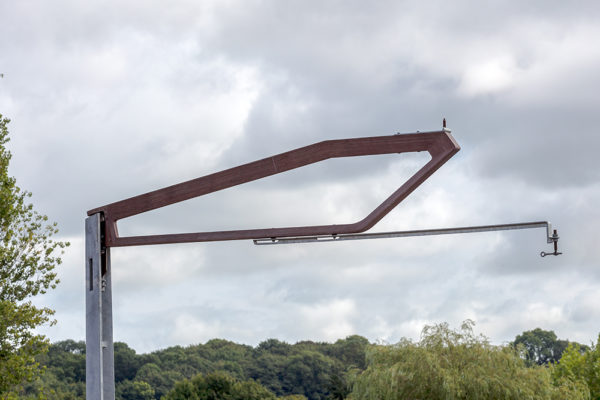
I would use 25 KVAC overhead electrification, using lightweight gantries like these, which use laminated wood for the overhead structure.
There is also a video.
Electrification doesn’t have to be ugly and out-of-character with the surroundings.
London Marylebone And Milton Keynes Via High Wycombe, Aylesbury and Aylesbury Vale Parkway
The three sections of the route are as follows.
- London Marylebone and High Wycombe- 28.14 miles – Not Electrified
- High Wycombe and Aylesbury – 15.35 miles – Not Electrified
- Aylesbury and Milton Keynes – 16.50 miles – Partially Electrified
Note.
- The total distance is sixty miles
- There is some electrification to charge the trains between Bletchley and Milton Keynes.
A battery electric train, with the range of a Hitachi Regional Battery Train should be able to work this route, if they can work London Marylebone and Aylesbury, with charging at Aylesbury.
Milton Keynes Central is a fully-electrified station.
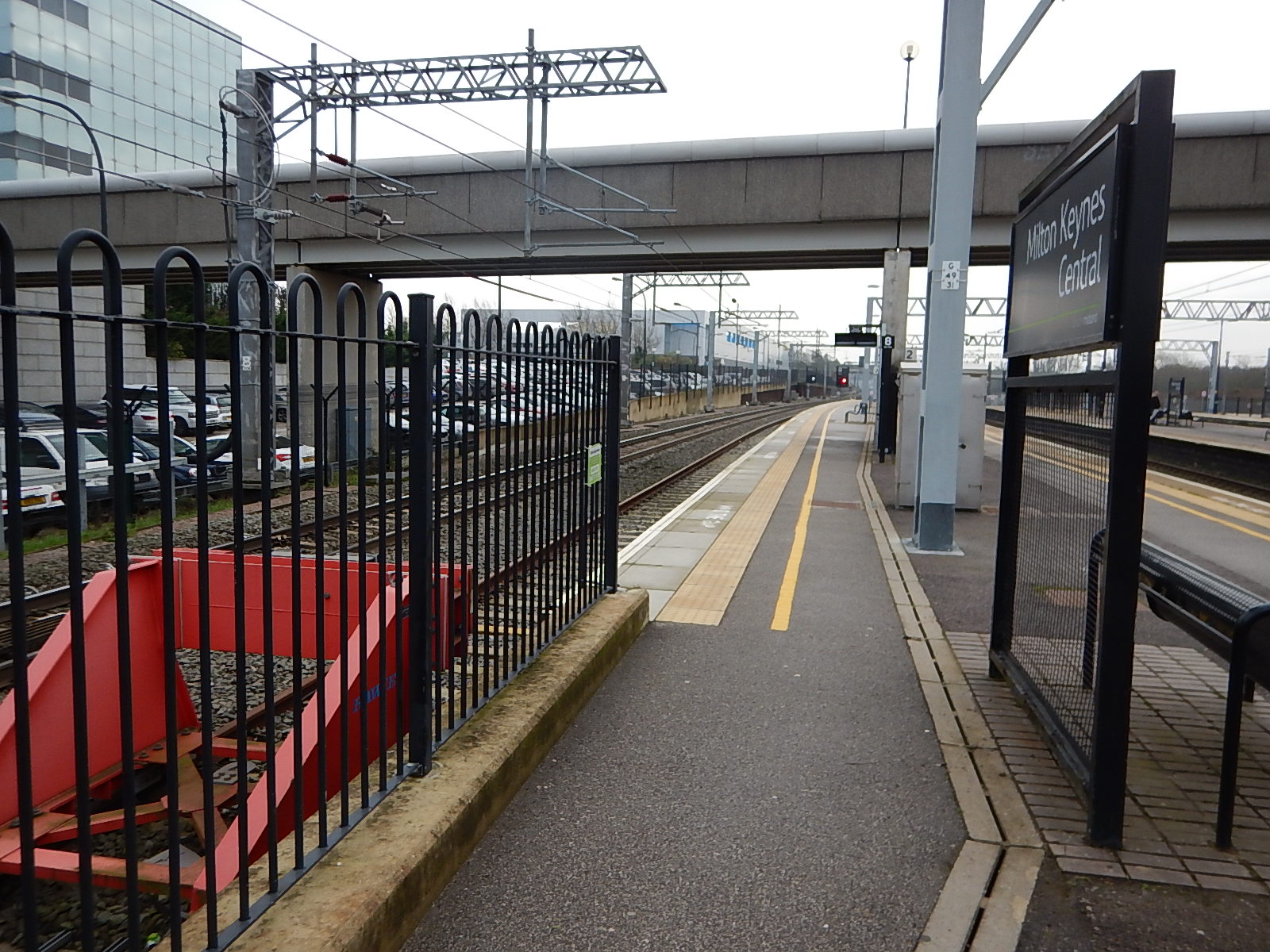
The picture shows Platform 2A, which is South-facing electrified, five-car platform, which could be used by the Chiltern service.
Train Specification
Consider.
- Chiltern Railway’s workhorse is a Class 168 train, which is a diesel multiple unit of up to four cars, with a 100 mph operating speed.
- The longest leg without electrification could be London Marylebone and Aylesbury via High Wycombe, which is 43.5 miles.
- Hitachi’s Regional Battery Train has a range of fifty-six miles.
- As there is a need to work with London Underground electrification, a dual-voltage train will be needed.
So a battery electric train with this specification would probably be ideal.
- Four cars
- Ability to work with both 750 VDC third-rail and 25 KVAC overhead electrification.
- 100 mph operating speed.
- Battery range of perhaps 55 miles.
Could the specification fit a battery-equipped Class 385 train, which will probably be built for Scotland?
Conclusion
I am convinced that battery electric trains can run between London Marylebone and Aylesbury, Aylesbury Vale Parkway and Milton Keynes stations.
The following would be needed.
- A battery electric range of perhaps fifty-five miles.
- Some form of charging at Marylebone and Aylesbury stations.
I would electrify, the single-track route between Princes Risborough and Aylesbury Vale Parkway.
 The Anonymous Widower