A Planned Trip To Belfast
I’m thinking about going over to Belfast for a couple of days to have a look at the transport systems in the city and the wider Northern Ireland.
I have several things, I would like to do.
- Ride in the latest Wrightbus hydrogen and battery-electric buses.
- Ride in a Glider. I also intend to go to Pau to ride in a hydrogen-powered version of these Van Hool Equicity articulated buses, but Belfast is nearer.
- Perhaps, if I have enough time, I’ll visit a few touristy bits.
- Do a bit of research into offshore wind farms in Northern Ireland.
Has anybody got any advice?
UK On Track To Reach 4,000 Zero Emission Bus Pledge With £200 Million Boost
The title of this post, is the same as that of this press release from the Government.
These are the main points of the press release.
- Nearly 1,000 more zero-emission buses to be funded in towns and cities across the country, bringing the total funded in England to 2000 so far under this government.
- A further 600 zero-emission buses have been funded in Scotland, Wales and Northern Ireland.
- Comes as consultation launched on ending sale of all new non-zero emission buses from 2025 to 2032.
- Government continues taking unprecedented action to hit net zero and level up transport across the country.
Areas to get the new buses include.
- Blackpool
- Greater Manchester
- Hertfordshire
- Norfolk
- North Yorkshire
- Nottingham
- Oxfordshire
- Portsmouth
- South Yorkshire
- West Midlands
- West Yorkshire
- York
I would also like to see the government fund trials for the conversion of suitable buses to zero carbon. I certainly believe that London’s New Routemaster buses could be converted to hydrogen.
106 Solaris Zero Emission Buses Headed To ÖBB Postbus’ Fleet In Austria
The title of this post, is the same as that as this article on Sustainable Bus.
This is the body of the story.
Up to 106 zero emission buses are headed to Austria, where ÖBB Postbus is going to deploy them starting from 2022 – 2025. Solaris has signed another framework agreement with the Austrian bus company Österreichische Postbus AG. It stipulates a possibility to deliver up to 106 battery-electric and hydrogen buses that would be deployed throughout Austria. The models offered include Urbino 9 LE electric and Urbino 12 hydrogen buses.
Solaris Bus and Coach is a Polish company, that is a subsidiary of CAF.
The Big Beast In Your Electric Bus
This article on electrive.com is entitled BAE Systems Takes Orders For 340 Hybrid Drive Systems.
This is the first paragraph.
The Southeastern Pennsylvania Transportation Authority (SEPTA) has selected BAE Systems to supply up to 340 hybrid electric drive systems for its new fleet of low emission transit buses. BAE Systems will provide 220 electric drive systems to New Flyer of America, with an option for 120 additional systems, over the next three years.
The article also reveals that the company is working with AlexanderDennis.
The system appears to be hybrid, with a lot of intelligent choosing of when to use a polluting engine.
Riding The Latest Alexander Dennis Electric Double-Decker Bus
This morning, I had a first ride in one of the latest Alexander Dennis electric double-decker buses.
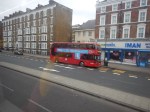
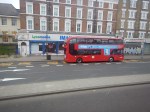
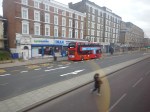
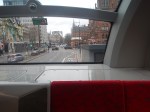

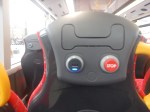
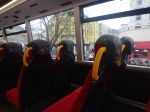
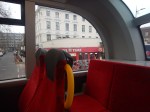
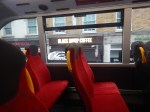
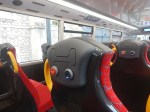
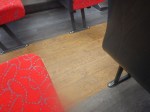
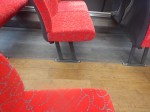
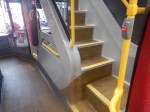
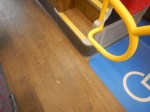
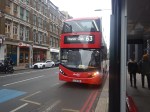
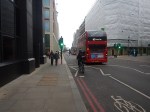
Note.
- The bus is definitely an improvement on previous electric models, that I have ridden on routes 43 and 212.
- Bus route 63 goes between Kings Cross and Honor Oak.
- If you want to go South from King’s Cross, the bus is caught at Stop D in front of the station.
- I’ve never seen a bus before with a wooden floor. Was it real or fake?
- The stop buttons were in the back of the seat in front. I’ve never seen this before.
- The are charging points for mobile phones.
Overall the standard of finish seemed high, but then it was in the new Wrightbus hydrogen buses I’ve ridden lately.
Equipmake & Beulas Join Forces With Go-Ahead London: In-Service Trials Of New Double Deck Electric Bus To Begin Q1 2022
The title of this post, is the same as that of this press release on the the Equipmake web site.
I was alerted to the bus by an item on BBC Breakfast this morning. It was before seven, so it should be easy to find on iPlayer.
These two paragraphs describe the bus.
Designed and developed in the UK, Equipmake’s Zero Emission Drivetrain (ZED) offers operators three modular battery pack options of up to 543kWh – the largest capacity battery of any two-axle double decker electric bus in the world. This delivers an unmatched electric driving range of up to 300 miles, which is more than sufficient to ensure the Jewel E can easily complete an entire duty cycle without the need to stop and recharge. Equipmake’s modular design enables operators the flexibility to scale the amount of battery throughout the life of a bus future-proofing it for a range of routes and distances.
The Jewel E is set to be manufactured in 2022 at an all-new facility in Norfolk. The vehicle body is produced by Beulas in Girona, Spain, a company with more than 87 years of experience in the sector. The vehicle chassis has been specifically designed for the Equipmake Zero Emission Drivetrain (ZED) by Agrale in Buenos Aires, Argentina, a leading truck and Bus chassis manufacturer established in 1962.
Apparently, there’s a lot of Formula One expertise in the design.
Could The Pantograph Make A Return To London’s Buses?
The title of this post, is the same as that of this article on Ian Visits.
Reading Ian’s article, the plan is for the 358 bus route to be converted into an electric bus route, where the buses are charged at both ends of the route during the turn round.
The Feasibility Of A Battery-Electric Route 358
This morning, I took a train to Crystal Palace station and then took a 358 bus to Orpington station before coming home.
These were my thoughts.
Crystal Palace Parade
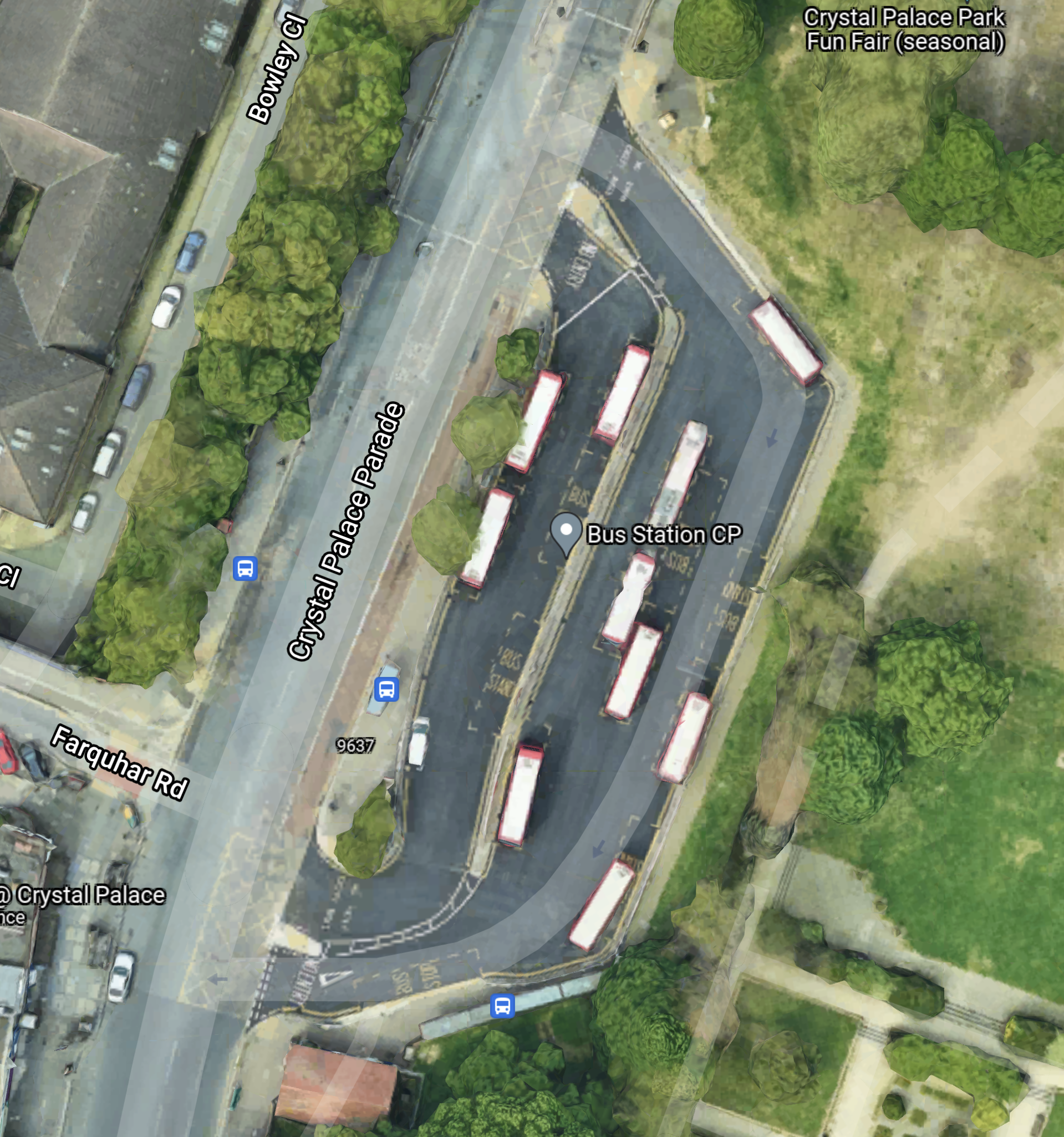
The buses actually leave from Crystal Palace Parade where there are several bus stops in a bus station.
This Google Map shows the bus station.
I also took these pictures.
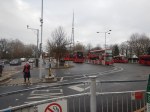
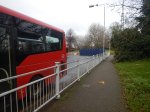
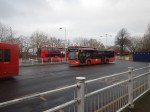
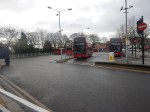
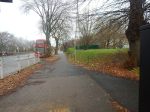

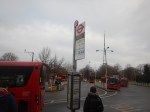
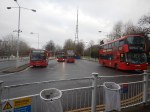
Note.
- There is certainly a lot of space to put a charger.
- As there is the main Crystal Palace television transmitter close by, I suspect that power is not a problem.
There didn’t appear to be any sign of work relating to a charger.
Orpington Station
This Google Map shows Orpington station.
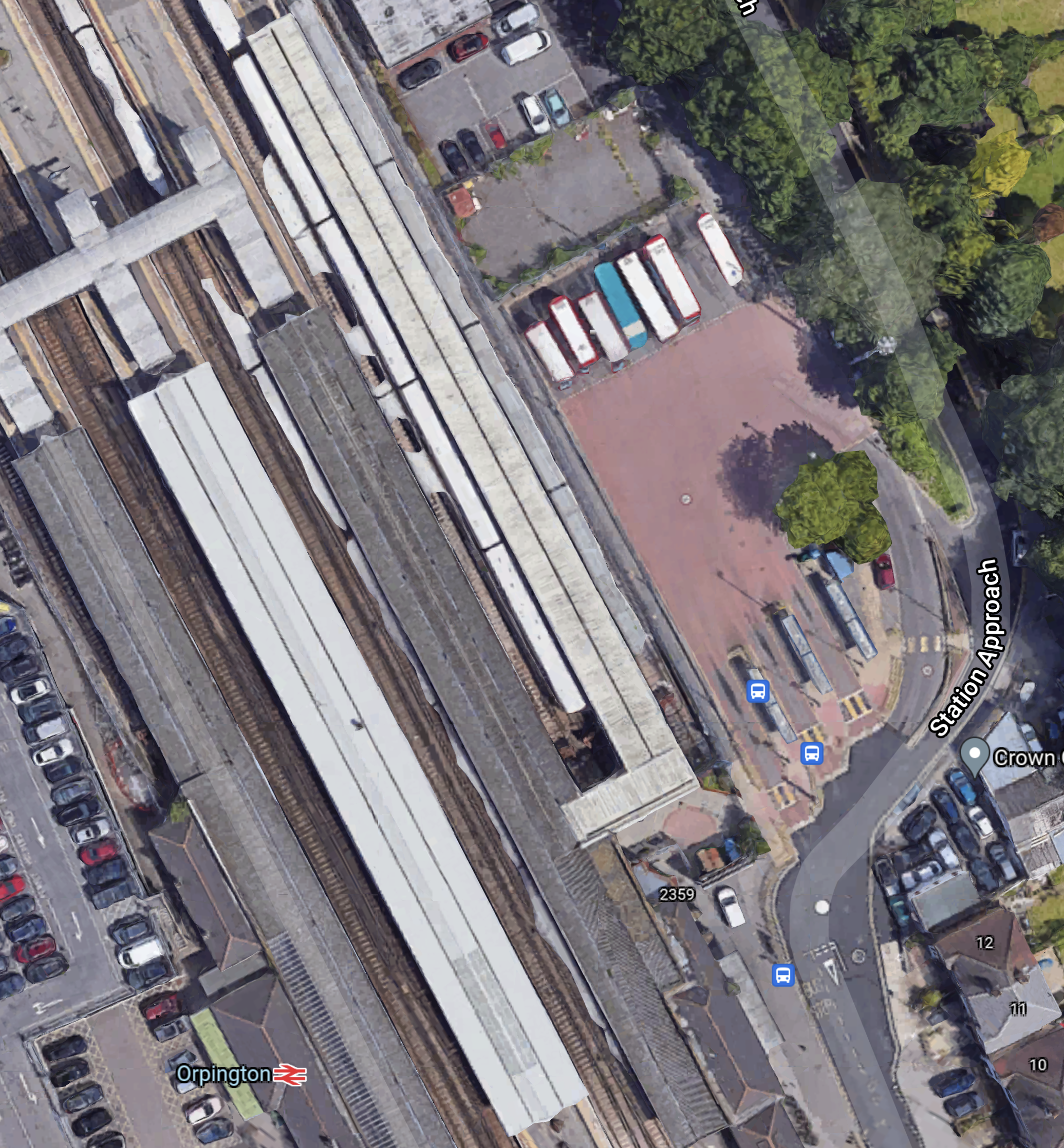
Note.
- The bus station is on the East side of the station.
- Buses are lined up at the Northern end of the bus station.
- Orpington station is step-free.
I took these pictures.
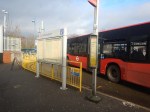
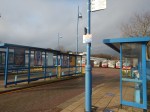
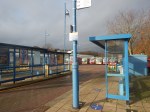
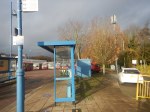
As at Crystal Palace there appeared to be no work in progress to install a charger.
The Route
The route is mainly flat with hills or inclines at the following places.
- There is a steep hill up to Crystal Palace Parade.
- There are hills at Bromley and Farnborough.
- There is a steep incline up to Orpington station.
At times, the bus was running at just under forty mph.
I suspect that Transport for London will have to be careful with specifying the battery size.
The Buses
This is the ie tram product page on the Irizar web site.
This is a video of the twelve metre ie tram.
It looks rather smart and purposeful.
The Charger
The image on Ian Visits could be one of Furrer + Frey’s chargers shown in this doocument on their web site.
Conclusion
It looks a viable zero-carbon bus route, but as no work is visible, has it been cancelled because of TfL’s financial problems?
When It Comes To Buses, Will Hydrogen Or Electric Win?
The title of this post, is the same as that of this evcellent article on WIRED.
The WIRED article is a serious comparison between the merits of battery and hydrogen-powered buses.
The writer of the article talked to two people, who should know.
- James Dixon, who is a Research Fellow in the Transport Studies Unit and Environmental Change Institute at Oxford University
- Neil Collins, who is Managing Director of Wrightbus.
I think the philosophy of Wrightbus with four basic zero-carbon buses could be right.
- Streetdeck Hydroliner FCEV – A hydrogen-powered double-deck bus.
- Streetdeck Electroliner BEV – A battery-powered double-deck bus.
- GB Kite Hydroliner FCEV – A hydrogen-powered single-deck bus.
- GB Kite Electroliner BEV – A battery-powered single-deck bus.
This surely is a basis for satisfying customers, who like to buy what they feel is best for their networks and passengers.
This paragraph from the Wired article, illustrates how terrain and climate might favour one bus or the other.
Still, hydrogen may be a better option in a city with lots of hills, like Hong Kong, where it’s also very warm and humid, says Collins. “That’s going to be a problem for electric buses, because the cooling and the hills are just going to drain the batteries,” he says. “But if the city is relatively flat, and the journey times are relatively short, and it’s not either significantly warm or significantly cold, battery electric can do a very good job.”
In addition, you wouldn’t choose hydrogen buses, if supply of hydrogen was difficult.
Could this be why Jo Bamford, who is the owner of Wightbus, has established a company to help bus operators with the transition to hydrogen. I wrote about it in New Company Established To Help Transition Bus Fleets To Hydrogen.
I have also heard stories of garages in city centres, where it is not possible to get enough power to charge a garage full of battery buses. Some of these garages are in residential areas, which perhaps may not welcome tankers of hydrogen going through to supply the buses with hydrogen.
Perhaps, the solution for garages like this is to relocate the garage to a site, which fulfils one of these conditions.
- Good connections to the motorway and trunk road network, so that hydrogen can be brought in by truck.
- A high-capacity electricity supply to either charge battery electric buses or generate hydrogen using an electrolyser.
Buses would operate according to this daily cycle.
- Buses would either be charged or refuelled with hydrogen overnight.
- They would position to a convenient place to start their daily diagrams.
- At the end of the day, they would return to the garage.
Note.
- Battery-electric buses may need to be topped-up during the day.
- Hydrogen buses with their longer range should be able to service routes further away.
- Routes would be arranged, so that hydrogen buses would not need to be topped up.
The big advantage of a remote bus garage is that the city centre site could be redeveloped to pay for the new buses and garage.
Northern Ireland Spends £100m On Clean Buses
The title of this post, is the same as that of this article on Electrive.
If Wrightbus can’t rely on the Northern Irish government to buy their buses, who can they?
Wrightbus Presents Electric & Fuel Cell Single-Decker Buses
The title of this post, is the same as that as this article on Electrive.
This is the first paragraph.
The Northern Irish bus manufacturer Wrightbus is introducing a new single-deck bus with battery and fuel cell propulsion. The new models of the GB Kite series in the Hydroliner FCEV and Electroliner BEV variants can each accommodate up to 90 passengers and are scheduled to go into series production in 2022.
This means that Wrightbus now have single and double-deck zero emission buses with both battery and fuel cell propulsion.
These are my thoughts.
High Commonality
There may be four different buses, but they have a surprising amount in common.
In this press release on the Wrightbus web site, which is entitled Wrightbus To Showcase Two New Zero-Emission Buses, there is this paragraph.
Both buses share an 86% parts commonality with their Double Deck sisters which delivers significant benefits to operators in terms of reducing complexity and costs for fleet maintenance.
Vehicle manufacturers have been looking for high commonality for many decades and it is amazing that Wrightbus have achieved such a figure.
We mustn’t forget the advantages, Wrightbus will get from such commonality in terms of production, product support and the supply of parts and sub assemblies.
Passenger Capacity
The passenger capacity of the four buses are as follows.
- Double-decker – Hydrogen – 86
- Double-decker – Battery – 95
- Single-decker – Hydrogen – 90
- Single-decker – Battery – 90
Note.
- These figures come from the Wrightbus web site.
- The site says that the figures for the single-decker buses depend on bus length and specification.
Does the similar capacity of all the buses give operators more flexibility?
Range
The range of the four buses are as follows.
- Double-decker – Hydrogen – 350 miles
- Double-decker – Battery – 200 miles
- Single-decker – Hydrogen – 640 miles
- Single-decker – Battery – 300 miles
Note.
- These figures come from the Wrightbus web site or the press release for the new single-deck buses.
- These ranges are claimed by Wrightbus as best-in-class.
- But surely the range of 640 miles for a single-deck zero-carbon hydrogen bus opens up some interesting and unusual routes.
- Single-deck buses appear to have a longer range than their double-deck sisters.
There is also a degree of battery size flexibility in the battery-electric buses to suit an operator’s routes.
Single-deck battery-electric buses are available with these battery sizes and charging times.
- 340kWh – 2 ½ hours @ 150kW
- 454kWh – 3 hours @ 150kW
- 567kWh – 3 ½ hours @ 150kW
And these are the figures for the double-deck battery-electric buses.
- 340kWh – 2 ½ hours @ 150kW
- 454kWh – 3 hours @ 150kW
Note.
- Both single- and double-deck buses can use the two smaller batteries.
- I would assume that they are similar and it’s all part of the commonality.
- Both buses can also be fitted with a pantograph to charge the batteries, when the routes present an opportunity.
Could the largest battery be fitted to the double-deck bus? Perhaps at some point, but I suspect, that currently, a weight limitation applies.
The Fuel Cell
This sentence from the Electrive article, describes the fuel cell system of the hydrogen bus.
The fuel cell solo bus model is very similar in design. Instead of the pure BEV drive, the GB Kite Hydroliner FCEV has a Ballard FCmove fuel cell with 70 kW or 100 kW and a small supplementary battery with 30 or 45 kWh on board.
It appears, there is flexibility in the power.
Forsee Batteries From France
This paragraph from the Electrive article, talks about the batteries.
Incidentally, Forsee Power is acting as the supplier of the batteries for the BEV buses. The Bamford Group, new parent of Wrightbus, had extended the partnership with the French battery manufacturer in October 2020 with a new contract for several hundred battery systems per year. Forsee Power announced the introduction of extra-thin battery modules earlier this year and directly named Wrightbus as the launch customer for the modules of the new Slim series. Whether these batteries are now already being installed in the two Electroliners is not specified. However, the high storage capacity of the 567-kWh top battery leads us to assume this, at least for the solo bus model.
Forsee’s slimline batteries seem a major advance in the powering of vehicles like buses.
It certainly looks like extra-thin is beautiful, where batteries are concerned.
Conclusion
This is a formidable line-up of four zero-carbon buses, that can be tailored to an operator’s needs.
When linked tom Jo Bamford’s company; FUZE, which I wrote about in New Company Established To Help Transition Bus Fleets To Hydrogen, Bamford’s deck of cards look even stronger.
Will Jo Bamford do for the bus industry, what his grandfather did for diggers? I wouldn’t bet against it!
 The Anonymous Widower