Overhauls for LNER’s Remaining Class 91s And Mk 4s
The title of this post, is the same as that of this article on Rail Magazine.
This is the introductory paragraph.
Eversholt Rail, which owns the trains, has confirmed that 12 London North Eastern Railway Class 91s and the remaining Mk 4 coaches will undergo overhauls at Wabtec Rail, Doncaster.
It had been expected, that LNER would purchase more trains, as I wrote about in More New Trains On LNER Wish List.
The article gives more details of the trains to be retained.
- Twelve Class 91 locomotives, seven rakes of Mark 4 coaches and two spare coaches will be retained.
- They will be confined to routes between London Kings Cross and Bradford, Leeds, Skipton and York.
How many trains will be needed to cover these routes?
- Trains take two hours and fifteen minutes between London Kings Cross and Leeds and run at a frequency of two trains per hour (tph)
- Trains take two hours and twenty-one minutes between London Kings Cross and York and run hourly.
- I suspect that a round trip to Leeds or York can be five hours.
So a crude analysis says, that will mean fifteen trains will be needed,
But some of these trains will be extended past Leeds.
These are, electrification status and the times and distances between Leeds and the final destinations.
- Bradford – Electrified – 22 minutes – 13.5 miles
- Harrogate – Not Electrified – 40 minutes – 18 miles
- Huddersfield – Not Electrified – 33 minutes – 17 miles
- Skipton – Electrified – 45 minutes – 26 miles
It appears that the following is true.
- Trains serving Harrogate and Huddersfield must be worked by bi-mode Class 800 trains.
- Trains serving Bradford and Skipton could be worked by InterCity 225 trains or an all-electric nine-car Class 801 train.
Note.
- Some times are those taken by LNER services and some are estimates from TransPennine Express.
- I have assumed 8-10 minutes for the Split-and-Join at Leeds and included it in the times.
- Class 800 trains seem to take around ten minutes to turnround at Harrogate.
- Times between London Kings Cross and Doncaster will decrease by a few minutes, with the addition of digital in-cab signalling on the route, which will allow 140 mph running by InterCity 225s, Class 800 trains and Class 801 trains.
I estimate that it will be possible for an InterCity 225, Class 800 train or Class 801 train to do a round trip between London Kings Cross and Bradford, Harrogate, Huddersfield or Skipton in six hours.
The round trip between London Kings Cross and York will be the five hours, I estimated earlier.
Wikipedia also says this.
LNER expects to introduce two-hourly services to Bradford and a daily service to Huddersfield in May 2020 when more Azuma trains have been introduced.
So would the pattern of trains to Leeds/York be as follows?
- One tph – One pair of five-car Class 800 trains to Leeds, of which some or all split and join at Leeds, with one train going to and from Harrogate and the other going to and from Huddersfield.
- One tph per two hours (tp2h) – An InterCity 225 or nine-car Class 801 train to Leeds, of which some or all are extended to Bradford.
- One tp2h – An InterCity 225 or nine-car Class 801 train to Leeds, of which some or all are extended to Skipton.
- One tph – An InterCity 225 or nine-car Class 801 train to York.
I estimate that it will be possible for an InterCity 225, Class 800 train or Class 801 train to do a round trip between London Kings Cross and Bradford, Harrogate, Huddersfield or Skipton in six hours.
This would need the following trains.
- Six pairs of five-car Class 800 trains for the Harrogate and Huddersfield services.
- Six full size all electric trains, which could be an InterCity 225, a nine-car Class 801 train or a pair of five Class 801 trains, for Bradford and Skipton services.
- Five full size all electric trains, which could be an InterCity 225, a nine-car Class 801 train or a pair of Class 801 trains, for York services.
So why have LNER changed their mind and are retaining the InterCity 225?
Are InterCity 225 Trains Already Certified For 140 mph Running?
I wouldn’t be surprised, if a large part of the certification work for this had been done for 140 mph running and for it to be allowed, it needs digital in-cab signalling to be installed on the East Coast Main Line.
The Wikipedia entry for the InterCity 225 says this about the train’s performance.
The InterCity 225 has a top service speed of 140 mph (225 km/h); during a test run in 1989 on Stoke Bank between Peterborough and Grantham an InterCity 225 reached 162 mph (260.7 km/h). However, except on High Speed 1, which is equipped with cab signalling, British signalling does not allow trains to exceed 125 mph (201 km/h) in regular service, due to the impracticality of correctly observing lineside signals at high speed.
The Wikipedia entry for the East Coast Main Line says this about the future signalling.
A new Rail operating centre (ROC), with training facilities, opened in early 2014 at the “Engineer’s Triangle” in York. The ROC will enable signalling and day-to-day operations of the route to be undertaken in a single location. Signalling control/traffic management using ERTMS is scheduled to be introduced from 2020 on the ECML between London King’s Cross and Doncaster – managed from the York ROC.
A small fleet of InterCity 225 trains could be the ideal test fleet to find all the glitches in the new signalling.
Are InterCity 225 trains Already Certified To Run To Bradford and Skipton?
If they are, then that is another problem already solved.
A Fleet Of Seven Trains Would Cover Bradford And Skipton Services
Six trains are needed to run a one tp2h service to both Bradford and Skipton, so they could fully cover one tp2h to Bradford and occasional trains to Skipton with a spare train and one in maintenance.
Using InterCity 225s To Bradford and Skipton Would Not Require A Split-And-Join At Leeds
The number of trains that would Split-and-Join at Leeds would be only two tph instead of four tph, which would be simpler with less to go wrong.
Not Enough Five-Car Bi-Mode Class 800 Trains
LNER’s full fleet of Azumas will be as follows.
- 13 – Nine-car bi-mode Class 800 trains.
- 10 – Five-car bi-mode Class 800 trains.
- 30 – Nine-car electric Class 801 trains.
- 12 – Five-car electric Class 801 trains.
This would appear to be a major problem, if Harrogate and Huddersfield were to be served hourly by Class 800 trains, existing services are to be maintained or even increased to Hull and Lincoln and extra services are to be added to Middlesbrough and perhaps Nottingham and other destinations.
The InterCity 225s only help indirectly, if they provided the London Kings Cross and Bradford and Skipton services.
Conversion Of Class 800 and Class 801 Trains To Regional Battery Trains
Hitachi have launched the Regional Battery Train, which is described in this Hitachi infographic.

For LNER, they will be useful for any Journey under about 90 kilometres or 56 miles.
The trains should be able to serve these routes.
- Leeds and Harrogate and back – 36 miles
- Leeds and Huddersfield and back – 34 miles
- Newark and Lincoln and back – 33 miles
- Northallerton and Middlesbrough and back – 42 miles
Whilst Class 800 trains and Class 801 trains are converted, the InterCity 225 trains would act as valuable cover on services like London to Leeds and York.
Conclusion
I think it is a good plan.
Beeching Reversal – Restoration Of A Daily Train Service On The Keighley & Worth Valley Railway
This is one of the Beeching Reversal projects that the Government and Network Rail are proposing to reverse some of the Beeching cuts.
The route starts at Keighley station, which is shown in this Google Map.

Keighley station is effectively a double station.
- The Northern pair of platforms are the electrified Airedale Line, which runs between Leeds and Bradford Forster Square stations in the East to Skipton station in the North-West.
- Curving up from the South is the Keighley and Worth Valley Railway, which runs through the Worth Valley to Oxenhope station.
The basic plan appears to be to run daily passenger services on the heritage railway between Keighley and Oxenhope via Haworth.
But there is a lot more than meets the eye.
Commuter Use
The Wikipedia entry of the Keighley and Worth Valley Railway has a section called Commuter Use, where this is said.
On weekends – in particular Saturday mornings, local residents who live in Oxenhope, Haworth, Oakworth and Ingrow catch the early morning diesel service to Keighley, returning later on steam hauled services. During the weekday outside of the summer months, locals instead use the local bus services.
It then says that studies have been done to investigate the railway’s use as a commuter route.
Heritage Use
There are attractions in the area to attract everybody.
In addition to the major centres of Leeds and Bradford, these stations are worth a visit for the sites they serve.
Haworth for the Brontes
Saltaire for the World Heritage Site of Salts Mill and the Hockneys.
Skipton for the Settle and Carlisle Railway.
LNER To Skipton
LNER run a single daily service to Skipton, that calls at Keighley and Shipley and it is rumoured on Wikipedia, that they would like to run more services.
My feeling, is that the company wants to run pairs of five-car Class 800 or Class 801 trains to Leeds, where they will split and go on to places like Bradford, Harrogate, Huddersfield and Skipton.
Skipton And Colne
This project appears to be a favourite of Governments, as I suspect it solves problems across the North. I last wrote about it in May this year in Colne – Skipton Reopening Moves Closer.
Short Breaks In Yorkshire
Is Yprkshire and Leeds and Bradford in particular, making a bit for the short break market?
It all fits!
What Needs To Be Added To The Keighley And Worth Valley Railway?
If the railway is going to run a regular commuter or tourist service on the route between Keighley and Oxenhope, the following issues must be covered.
Rolling Stock
The railway has an extensive collection of rolling stock, which include a couple of diesel multiple units, that should be able to handle the service.
I would think, that if they wanted something more modern with a heritage feel, that a battery electric version of one of Vivarail’s Class 230 trains would fit the bill. They could run using Vivarail’s Pop-up Metro concept.
Stations
The stations on the railway seem to be in good condition, but I’m sure to handle commuters for Leeds and Bradford, there may be some updating required.
Ticketing
There must be through ticketing.
Conclusion
I don’t feel that this would be the most expensive of schemes, as the major expense of an interchange station between the Keighley and Worth Valley Railway and the Airedale Line is already built.
LNER Services To Double Between Bradford And London
The title of this post is the same as that as this press release from LNER.
This is the introductory paragraph.
London North Eastern Railway (LNER) is pleased to confirm it will be doubling the number of Azuma weekday services between Bradford Forster Square and London King’s Cross from Monday 18 May 2020.
The timetable is as follows.
Southbound
- Leave Bradford Forster Square at 06:30 and arrive London Kings Cross at 08:59
- Leave Bradford Forster Square at 08:43 and arrive London Kings Cross at 11:31
Northbound
- Leave London Kings Cross at 16:33 and arrive Bradford Forster Square at 19:29
- Leave London Kings Cross at 18:33 and arrive Bradford Forster Square at 21:29
All services appear to call at Shipley between Leeds and Bradford Forster Square.
The press release doesn’t say if the trains split and join at Leeds station, but the timings are generous enough, if it is needed.
I wonder, if there will be more services between London and Bradford Forster Square in a few months. It probably depends on the level of success.
Could Battery-Electric Hitachi Trains Work LNER’s Services?
Before I answer this question, I will lay out the battery-electric train’s specification.
Hitachi’s Proposed Battery Electric Train
Based on information in an article in Issue 898 of Rail Magazine, which is entitled Sparking A Revolution, the specification of Hitachi’s proposed battery-electric train is given as follows.
- Based on Class 800-802/804 trains or Class 385 trains.
- Range of 55-65 miles.
- Operating speed of 90-100 mph
- Recharge in ten minutes when static.
- A battery life of 8-10 years.
- Battery-only power for stations and urban areas.
- Trains are designed to be created by conversion of existing Class 80x trains
For this post, I will assume that the train is five or nine-cars long. This is the length of LNER‘s Class 800 and 801 trains.
LNER’s Services
These are LNER services that run from London to the North of England and Scotland.
I shall go through all the services and see how they would be affected by Hitachi’s proposed battery-electric Class AT-300 train.
London Kings Cross And Edinburgh
- The service runs at a frequency of two trains per hour (tph)
- Some services extend to Aberdeen, Stirling and Inverness and are discussed in the following sections.
This service can be run totally using the existing electrification.
London Kings Cross And Aberdeen
- The service runs at a frequency of four trains per day (tpd)
- Intermediate stations are York, Darlington, Newcastle, Berwick-upon-Tweed, Edinburgh, Haymarket, Inverkeithing, Kirkaldy, Leuchars, Dundee, Arbroath, Montrose and Stonehaven.
- Currently, the electrification goes 394 miles to Haymarket.
The service is 524 miles long and takes seven hours and four minutes.
To ascertain, if the Hitachi’s proposed battery-electric Class AT-300 train, could run this route, I’ll display the various sections of the route.
- London Kings Cross and Haymarket – 394 miles – Electrified
- Haymarket and Inverkeithing – 12 miles – Not Electrified
- Inverkeithing and Kirkcaldy – 13 miles – Not Electrified
- Kirkaldy and Leuchars – 25 miles – Not Electrified
- Leuchars and Dundee – 8 miles – Not Electrified
- Dundee and Arbroath – 17 miles – Not Electrified
- Arbroath and Montrose – 14 miles – Not Electrified
- Montrose and Stonehaven – 24 miles – Not Electrified
- Stonehaven and Aberdeen – 16 miles – Not Electrified
Note.
- Haymarket and Dundee is a distance of 58 miles
- Dundee and Stonehaven is a distance of 55 miles
So could the service be run with Fast Charge systems at Dundee, Stonehaven and Aberdeen?
I think it could, but the problem would be charging time at Dundee and Stonehaven, as it could add twenty minutes to the journey time and make timetabling difficult on the route.
Perhaps, an alternative would be to electrify a section in the middle of the route to create an electrification island, that could be reached from both Haymarket and Aberdeen.
The obvious section to electrify would be between Dundee and Montrose.
- It is a distance of 31 miles to electrify.
- I have flown my virtual helicopter along the route and it could be already gauge-cleared for electrification,
- Dundee station has been recently rebuilt.
- Haymarket and Dundee is a distance of 58 miles.
- Montrose and Aberdeen is a distance of 40 miles.
- Pantographs could be raised and lowered at Dundee and Montrose stations.
With this electrification and a Fast Charge system at Aberdeen, I believe that Hitachi’s proposed battery-electric Class AT-300 train could run between London Kings Cross and Aberdeen.
As an alternative to the Fast Charge system at Aberdeen, the route of Aberdeen Crossrail between Aberdeen and Inverurie could be electrified.
- This would enable battery-electric Class 385 trains to run between Inverurie and Montrose.
- The route through Aberdeen is newly-built, so should be gauge-cleared and reasonably easy to electrify.
It should also be noted that if battery-electric trains can run between Edinburgh and Aberdeen, then these services are also possible, using the same trains.
- Glasgow and Aberdeen
- Stirling and Aberdeen
All passenger services between Scotland’s Cenreal Belt and Aberdeen appear to be possible using battery-electric trains
London Kings Cross And Stirling
- The service runs at a frequency of one tpd
- Intermediate stations are York, Darlington, Newcastle, Berwick-upon-Tweed, Edinburgh, Haymarket, Falkirk Grahamstown
This service can be run totally using the existing electrification.
London Kings Cross And Inverness
- The service runs at a frequency of one tpd
- Intermediate stations are York, Darlington, Newcastle, Berwick-upon-Tweed, Edinburgh, Haymarket, Falkirk Grahamstown, Stirling, Gleneagles, Perth, Pitlochry, Kingussie and Aviemore.
- Currently, the electrification goes 429 miles to Stirling, but I have read that the Scottish government would like to see it extended to Perth, which is 462 miles from London.
The service is 581 miles long and takes eight hours and six minutes.
To ascertain, if the Hitachi’s proposed battery-electric Class AT-300 train, could run this route, I’ll display the various sections of the route.
- London Kings Cross and Haymarket – 394 miles – Electrified
- Haymarket and Falkirk Grahamsrown – 23 miles – Electrified
- Falkirk Grahamsrown and Stirling – 11 miles – Electrified.
- Stirling and Gleneagles – 17 miles – Not Electrified
- Gleneagles and Perth – 16 miles – Not Electrified
- Perth and Pitlochry – 28 miles – – Not Electrified
- Pitlochry and Kingussie – 44 miles – Not Rlectrified.
- Kingussie and Aviemore – 12 miles – Not Rlectrified.
- Aviemore and Inverness – 34 miles – Not Electrified
Note.
- The distance between Dunblane, where the electrification actually finishes and Perth is only 28 miles, which shouldn’t be too challenging.
- All the sections North of Perth are well within range of a fully charged train.
- Some sections of the route are challenging. Look at the video I published in Edinburgh to Inverness in the Cab of an HST.
- Hitachi run diesel Class 800 trains to Inverness, so they must know the power required and the battery size to run between Perth and Inverness.
I also believe that the Scottish Government, ScotRail, the Highland tourist industry and Hitachi, would all put their endeavours behind a project to get battery-electric trains between Perth and Inverness.
It would send a powerful message, that if battery-electric trains can run on one of the most scenic rail lines in the world without electrification, then nowhere is out of reach of battery trains.
Looking at the figures, I am convinced that a series of Fast Charge systems at stations like Pitlochry, Kingussie and Aviemore could supply enough power to allow a nine-car version of Hitachi’s proposed battery-electric Class AT-300 train to work the route.
This battery-electrification, would also enable battery-electric Class 385 trains to work the route.
If all this sounds a bit fanciful and over ambitious, read the history of the North of Scotland Hydro-Electric Board, which brought electricity to the area in the 1940s and 1950s.
This battery-electrification is a small project compared to what the Hydro-Electric Board achieved.
I can see a time, when similar techniques allow battery-electric trains to run these lines from Inverness.
- Far North Line – 174 miles
- Inverness and Kyle of Lochalsh – 82 miles
- Inverness and Aberdeen – 108 miles
The Far North Line would probably need two or three Fast Charge systems at intermediate stations, but the other lines would probably only need one system, somewhere in the middle.
I think that this analysis for London and Inverness shows that all parts of England, Scotland and Wales can be served by modern battery-electric trains.
It would also appear that the cost of the necessary Fast Charging systems, would be much more affordable than full electrification, North of Perth.
I estimate that less than a dozen Fast Charging systems would be needed, North of Perth.
- Some electrification might be needed in Inverness station.
- Electrification between Inverurie and Aberdeen could help.
- There’s no shortage of zero-carbon electricity from wind and hydro-electric power.
A couple of years ago, I speculated in a post called London To Thurso Direct.
Could it happen on a regular basis in the summer months?
London Kings Cross And Leeds
- The service runs at a frequency of two tph
- Intermediate stations are Stevenage, Peterborough, Grantham, Doncaster and Wakefield Westgate
This service can be run totally using the existing electrification.
London Kings Cross And Harrogate
- The service runs at a frequency of six tpd
- Intermediate stations are Stevenage, Grantham, Doncaster and Wakefield Westgate
- Leeds and Harrogate is a distance of nineteen miles and is not electrified.
- Hitachi’s proposed battery-electric Class AT-300 train should be able to go from Leeds to Harrogate and back, using battery power alone.
- Batteries will be charged using the electrification at and around Leeds.
This service can be run totally using the existing electrification.
London Kings Cross And Bradford Foster Square
- The service runs at a frequency of one tpd
- Intermediate stations are Stevenage, Peterborough, Grantham, Doncaster and Wakefield Westgate
- Leeds and Bradford Forster Square is a distance of fourteen miles and electrified.
This service can be run totally using the existing electrification.
London Kings Cross And Skipton
- The service runs at a frequency of one tpd
- Intermediate stations are Stevenage, Peterborough, Grantham, Doncaster and Wakefield Westgate
- Leeds and Skipton is a distance of twenty-six miles and electrified.
This service can be run totally using the existing electrification.
London Kings Cross And Lincoln
- The service runs at a frequency of one train per two hours (1tp2h)
- Intermediate stations are Stevenage, Peterborough, Grantham and Newark North Gate
- Newark North Gate and Lincoln is a distance of sixteen miles and not electrified.
- Hitachi’s proposed battery-electric Class AT-300 train should be able to go from Newark North Gate to Lincoln and back, using battery power alone.
- Batteries will be charged using the electrification between Newark North Gate and London Kings Cross.
This service can be run totally using the existing electrification.
London Kings Cross And York
- The service runs at a frequency of 1tp2h
- Intermediate stations are Stevenage, Peterborough, Grantham and Newark North Gate, Retford and Doncaster
This service can be run totally using the existing electrification.
London Kings Cross And Hull
- The service runs at a frequency of one tpd
- Intermediate stations are Stevenage, Peterborough, Grantham and Newark North Gate, Retford and Doncaster
- Temple Hirst Junction and Hull is a distance of thirty-six miles and not electrified.
- Hitachi’s proposed battery-electric Class AT-300 train should be able to go from Temple Hirst Junction and Hull and back, using battery power and a Fast Charge system at Hull.
- Batteries will also be charged using the electrification between Temple Hirst Junction and London Kings Cross.
This service can be run totally using the existing electrification.
Consider.
- The train runs seventy-two miles to get to Hull and back on lines without electrification..
- Hitachi state that the trains maximum range on battery power is sixty-five miles.
- Hull Trains and TransPennine Express also run similar trains on this route, that will need charging at Hull.
So rather than installing a Fast Charge system at Hull, would it be better to do one of the following.
- Create a battery-electric AT-300 train with a bigger battery and a longer range. A One-Size-Fits-All could be better.
- However, the larger battery would be an ideal solution for Hull Trains, who also have to reverse and go on to Beverley.
- Electrify the last few miles of track into Hull. I don’t like this as electrifying stations can be tricky and getting power might be difficult!
- Electrify between Temple Hirst Junction and Selby station and whilst this is done, build a solution to the problem of the swing bridge. Power for the electrification can be taken from the East Coast Main Line.
I’m sure a compromise between train battery size and electrification can be found, that creates a solution, that is acceptable to the accountants.
Conclusion
I think it could be possible, that LNER could use a fleet of all-electric and battery-electric AT-300 trains.
From Bradford To Skipton
I took the train from Bradford Forster Square station to Skipton station.
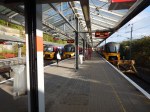



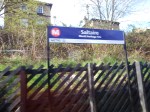

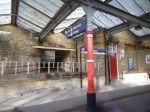


It is a route on which there are interesting things to see,
Saltaire
Everything must come second to the World Heritage Site at Saltaire.
Shipley Station
Shipley station is an unusual concept in that the station is built in the middle of a triangular junction.
This Google Map shows the station
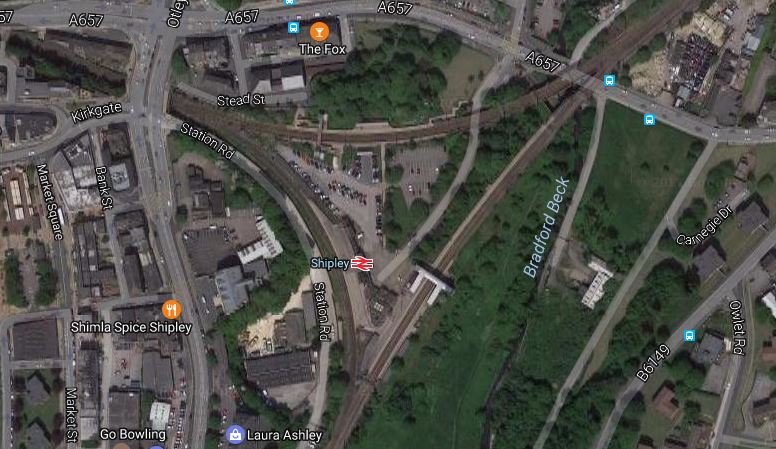
It has five platforms and four lifts.
Keighley Station
Keighley station is the interchange with the Keithley and Worth Valley Railway, which is a heritage railway running steam and vintage diesel trains.
There is a section called Commuter Use in the Wikipedia entry for the Keithley and Worth Valley Railway.
This is said.
As a privately owned heritage railway, the line does not specifically serve commuters; however, a study by Ove Arup & Partners funded by Metro looked at the feasibility of a daily commuter service between Oxenhope and Keighley in 2009.[16] After the first stage of the study was released, Metro stated concerns about a lack of funding and available rolling stock, meaning that services are unlikely to run in the short to medium term
Given that we live in an era of innovative rolling stock, why not run a battery train between Keithley and Haworth?
Arrival In Bradford Interchange Station
After Low Moor Station, I went onto Bradford, where I stayed in the City Centre Premier Inn, which has an address close to Little Germany.
Bradford has two City Centre stations; Interchange and Forster Square, with about a fifteen-minute walk between them
These pictures show my arrival in Bradford Interchange station.

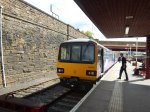

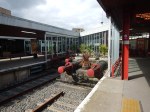
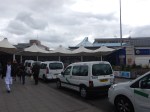
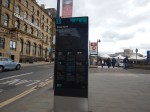
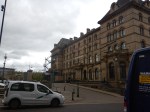

Both stations have frequent services to Leeds, but if you are going, coming or visiting anywhere else make sure you pick the right station.
I discussed Bradford’s problem in Why Does Bradford Have Two Stations? and came to the solution that some form of high tech people mover would be best.
I said this.
But what about some eco-friendly battery buses, as the distance is under a kilometre.
It could be run triangularly if necessary between the two stations and the shopping centre, with a charging station at each angle.
 The Anonymous Widower