Scotland To Get New Intercity Fleet
The title of this post is the same as that of this press release from Transport Scotland.
These eight paragraphs make up the body of the press release.
The Scottish Government announced today that procurement will begin to replace the trains in its Intercity fleet.
The procurement will seek a replacement for the High Speed Train (HST) fleet of 25 trains which operates on its InterCity routes between Glasgow, Edinburgh, Aberdeen, and Inverness.
Cabinet Secretary for Transport, Fiona Hyslop said:
“Resilient, reliable ScotRail services are key to encouraging more people to choose to travel by train for work, leisure and learning.
“Over 4 million passengers travelled on InterCity trains between our key cities in the last year – we want to encourage even more people to do so. This procurement will enable us to replace the current Intercity fleet with trains which provide improved facilities and accessibility.
“Any replacement fleet is expected to be more energy efficient and therefore will significantly reduce emissions, reduce operating costs and be more in line with current passenger expectations, including for accessibility. The procurement process ensures Scottish suppliers will be able to offer to provide their services to potential bidders.
“This latest milestone in our rolling programme of decarbonisation will ensure the reliability of our Intercity routes for the long-term, making Scotland’s railway a more attractive and greener travel choice.”
Further details on this announcement will be shared when the contract is awarded in 2025. It is also expected that the refreshed Decarbonisation Action Plan will be published in Spring 2025, and this will detail updated targets for replacing ScotRail’s existing diesel fleets.
It is a press release full of good intentions, but very few facts.
Is this what Scots get from their political party?
I have a few questions.
Will The Trains Be Built In The UK?
This must surely give some advantages, but will it get the best trains at the best price?
What Will Be The Number And Capacity Of The Trains?
Transport Scotland could go for a like for like number and capacity replacement.
- But there have been capacity problems in Scotland, which have meant using diesel Class 153 trains as baggage cars.
- They might also want to add extra services.
- Will they replace the train lost at Stonehaven?
They could add a few options.
Other Companies May Need Similar Trains
Consider.
- GWR will need to replace their similar Castles.
- CrossCountry will need new trains.
- Grand Central will need new trains.
- South Western Railway may need new trains for services between Cardiff and Devon.
- Transport for Wales may need new trains.
Hull Trains and Lumo have recently ordered a selection of new Hitachi Class 802 and 803 trains, which I wrote about in Fourteen New Trains To Drive First Rail Open Access Growth.
I can see an argument for buying more Hitachi Class 80x trains, as it will surely save Great British Railways costs in the long time.
Should The New Trains Be A Forever Solution?
When British Rail electrified to Brighton, Crewe, Edinburgh, Glasgow, Leeds, Liverpool, Manchester, Newcastle, Norwich, Portsmouth, Southampton, Weymouth and many other places from London, they saw it as a mode of traction, that would be used forever.
As the trains wore out or got outdated, they would be replaced with trains, which at least could run using the same mode of traction.
Generally, on electrified routes, when British Rail’s electric trains have been replaced, they have been replaced by more modern new electric trains.
The one major exception was on the East Coast Main Line where some InterCity 225 trains were replaced with Hitachi Class 800 and Class 802 diesel bi-mode trains.
But as the Class 800 and Class 802 diesel bi-mode trains were also replacing InterCity125 trains, they were a pragmatic replacement.
The Hitachi trains can be considered a Forever Solution, as bi-mode trains will always be able to work some routes that will never get electrified.
But Hitachi are developing the successor to their diesel bi-mode train, which is the tri-mode train, capable of running on electrification, diesel or battery power.
- Diesel power-packs can be swapped for battery packs.
- The battery packs have the same weight and power as a diesel power-pack.
- Existing diesel bi-mode trains can be converted to tri-mode or battery-electric bi-mode trains.
- A range of over forty miles on a single battery pack has been demonstrated.
Could Hitachi tri-mode trains be The replacements for the Inter7City trains?
Will Some Trains Have A Battery Electric Capability?
I very much believe so, as some routes in Scotland could be decarbonised by battery-electric trains.
What Top Speed Would The Trains Have?
Most of the routes in Scotland, where new modern quality rolling stock is needed, has a top speed of less than 100 mph, but in places the top speed is 125 mph.
I suspect, if trains can run at 125 mph in the places, where it is allowed, could probably save a few minutes on journey times.
Take the Borders Railway.
- The electrification runs out at Brunstane. Batteries would be charged between Edinburgh and Brunstane using the existing electrification.
- To go from Brunstane to Tweedbank and return to Brunstane is 63 miles.
- To work the Borders Railway would need a battery range of 63 miles.
I suspect every route in Scotland could have an electrification strategy for use with battery-electric trains. Some of which would have short lengths of extra electrification.
What Lengths Would The Trains Be?
In my example I used the Borders Railway.
A typical service is run by a three-car Class 170 train or two such trains running as a pair.
Perhaps, a single four- or five-car train could work the service all day and still provide enough capacity?
Conclusion
I believe, that Scotrail services could be electrified line-by-line.
Some lines would need more or longer trains and an update to the electrification.
Three New Battery-Only Revolution Very Light Rail Vehicles
This title of this post, is the same as that as this press release from Eversholt Rail Group.
These are the three bullet points.
- Eversholt Rail funding three brand-new Revolution Very Light Rail vehicles for passenger trials and ongoing operation.
- Manufactured in the UK by Transport Design International.
- Battery-only propulsion, providing zero-emissions operation.
These three paragraphs fill out the story.
Innovative new lightweight passenger trains that will help decarbonise Britain’s railways are to be trialled after a new deal was announced this week.
The new Revolution Very Light Rail vehicles will run entirely on battery power and could be carrying passengers within three years. A new system of lineside fast charging will mean the whole operation has zero emissions.
Some of Britain’s major rail operators are already showing interest in the RVLR vehicles as they seek to fulfil promises to make rail ‘cleaner’.
This is also said about looking for routes, to trial the new vehicles.
Eversholt Rail and TDI are working with key stakeholders across the UK rail industry to agree routes and services where operators can run passenger-carrying trials using these new vehicles. These trials will generate actual passenger demand data to support business cases for long-term deployment of RVLR vehicles as well as providing further passenger and operator feedback on their design and capabilities.
I have some thoughts and questions.
What Is The Top Speed?
A lot of questions like this are answered by this article on Rail Engineer, which is entitled Very Light Rail – A Revolution.
These can be ascertained from this comprehensive article.
- Top Speed – 65 mph
- Seats – 56
- Wheelchair space
- PRM TSI accessibility compatible
- Tare Weight – 24.8 tonnes
- USB Charging
For comparison these figures relate to a PRM-compliant Class 153 diesel train.
- Top Speed – 75 mph
- Seats – 59
- Tare Weight – 41.2 tonnes
This picture shows one of the Class 153 trains at Matlock Bath station.
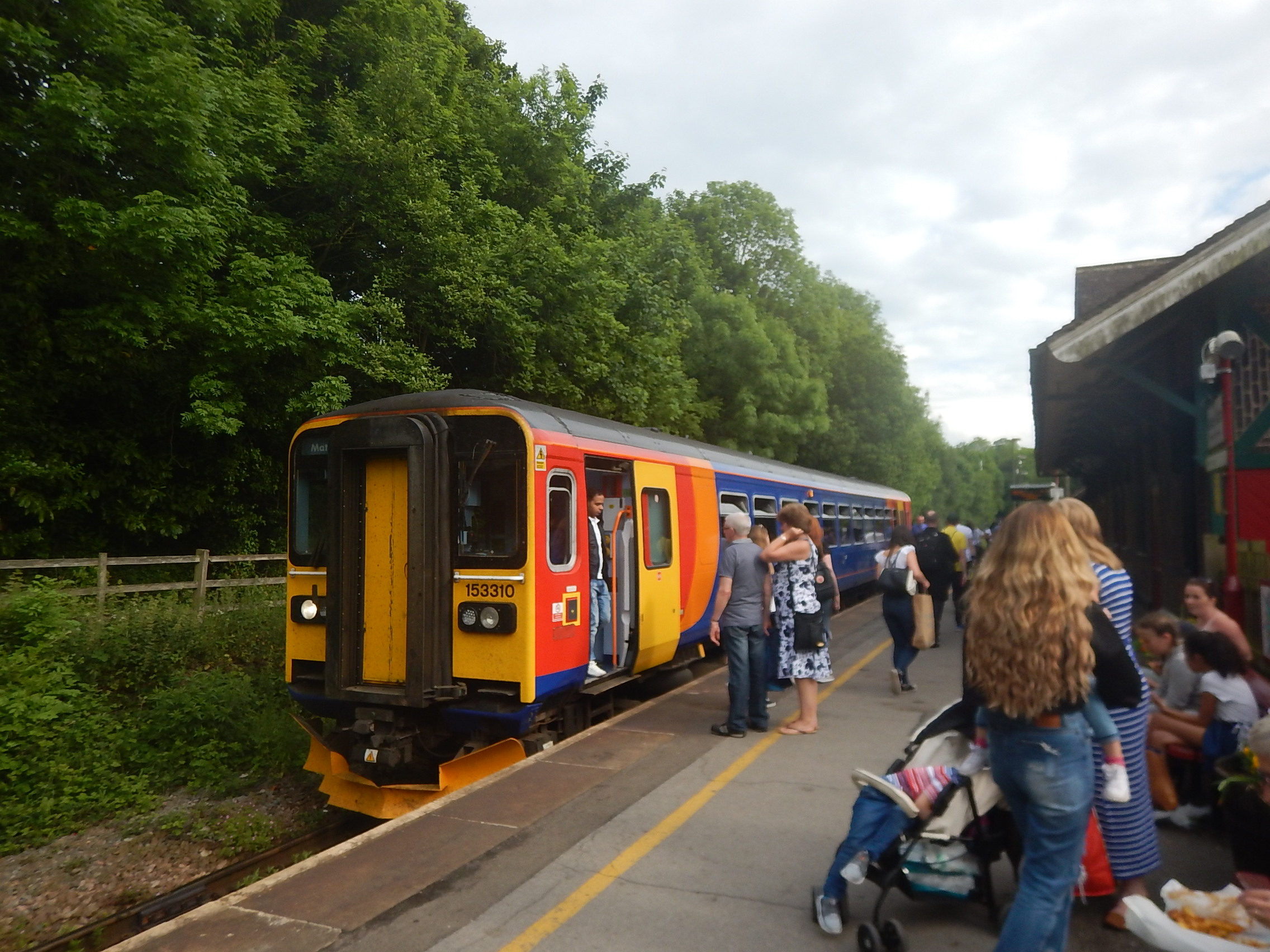
There are still around thirty in service in the UK.
Can Two Revolution VLRs Run As A Two-Car Train?
From the pictures on the web, the trains have buffers and space for a coupler, so until someone says they must always run as single units, I’ll assume they can at least run as a pair.
Can A Revolution VLR Recharge Its Batteries Using Conventional 25 KVAC Overhead Electrification?
One route, that is a possibility for running using Revolution VLR must surely be the Greenford Branch, which connects to the electrified Great Western Main Line at West Ealing station.
In this and at several other places on the network, it could be easier to charge the trains using the existing overhead electrification or an extension of it.
Another possibility; the Marston Vale Line is also electrified at both Bedford and Bletchley.
In New Mobile Rail Charging Facility For Long Marston, I talked about how Siemens are developing a mobile charger, which initially will be deployed at Long Marston.
It could be very useful for efficient operation, if the batteries on a Revolution VLR could be charged in a number of places, which included conventional electrification.
If charging only happened, whilst trains were stationary, a lightweight pantograph and appropriate electrical gubbins might be sufficient.
Can A Revolution VLR Replace A Class 153 Train?
I suspect on some routes this will be possible, but on others, the speed or hill-climbing requirements might be too stiff for the lightweight train.
But, if I was designing a train like the Revolution VLR, I’d make sure it fitted as many markets as possible.
The picture was taken at Matlock Bath station on the Derwent Valley Line, which is a single track with a fifty mph limit and an uphill climb. I suspect that the Revolution VLR would be designed to handle the uphill part of the route, but would the train be able to handle the speed of the Midland Main Line to Derby.
The Revolution VLR would probably attract more passengers, so it might be necessary to double up the service by running a pair.
Can A Pair Of Revolution VLRs Replace A Class 150 Train?
I don’t see why not!
Could The West London Orbital Use Revolution VLRs?
This might be a proposed route that could use Revolution VLRs.
The two routes would be.
- West Hampstead and Hounslow.
- Hendon and Kew Bridge.
Both services would use the Dudding Hill Line and serve Neasden, Harlesden, Old Oak Common and Acton, with a frequency of four trains per hour (tph).
Although this service could be run using conventional multiple units, it might be more affordable to use Revolution VLRs charged on sections of line that are already electrified.
Could the Greenford Branch Use Revolution VLRs?
The Greenford Branch would be a classic application and trains could be charged by fitting a charger in the bay platform at West Ealing station.
In An Automated Shuttle Train On The Greenford Branch Line, I did a rough calculation to see if an automated shuttle could achieve four tph.
Four tph might be too ambitious, but automatic trains shuttling along a branch line might be an affordable way to provide zero-carbon trains with an adequate capacity.
- The driver would drive the train using the sort of remote control used for drones.
- The driver would sit in a convenient place on the train, with CCTV to help them see everything.
- When the train was ready to leave, the driver would push a button to tell the train to move to the next station.
- On arrival at the next station, the doors will open.
- The process would repeat along the line.
If this method of operation sounds vaguely familiar, the Victoria Line has used it since 1067.
Although the Victoria Line drivers always sit in the front.
But on a line with no other trains running at the same time, all they need is a good view of the doors.
Branch lines that could be run in this way could include.
Bodmin Parkway and Bodmin General
Brockenhurst and Lymington Pier
Grove Park and Bromley North
Lancaster and Morecambe
Liskeard and Looe
Lostwithiel and Powey
Maidenhead and Marlow
March and Wisbech
Par and Newquay
Plymouth and Gunnislake
Romford and Upminster
Sittingbourne and Sheerness-on-Sea
Slough and Windsor Central
Southall and Brentford
St. Erth and St. Ives
Truro and Falmouth Docks
Twyford and Henley-on-Thames
Watford Junction and St. Albans Abbey
West Ealing and Greenford
Wickford and Southminster
Wymondham and Dereham
Very Light Rail – A Revolution
The title of this post, is the same as that of this article on Rail Engineer.
It is a good explanation of what very light rail is all about and the design concepts behind the first vehicle, which is called Revolution.
My feeling is that Any Very Light Rail vehicle should be able to run a short branch line route as capably as a Class 153 train.
But hopefully with better passenger and driver comfort and facilities.
- The speed of Revolution is 65 mph and that of a Class 153 train is 75 mph, so is that close enough?
- I would hope that Revolution has better acceleration as it has an electric transmission.
- Revolution has 56 seats and a wheelchair space and is PRM-compliant, whereas the Class 153 train has a few more seats and only some are PRM-compliant.
- Revolution has wi-fi and power sockets and most Class 153 trains don’t.
The quality of the seats and the view from the trains will probably be the tie-breaker.
The article doesn’t say, but surely they would find more applications, if they could run in pairs, do they might be able to replace a two-car Class 150 train.
Reading the whole article gives me the impression, that the designers have done thorough job to design a lightweight train, that both passengers and drivers will like.
I will reserve my judgement until I see and ride one of these trains.
An Automated Shuttle Train
In An Automated Shuttle Train On The Greenford Branch Line, I proposed an automated shuttle on the Greenford branch.
The Greenford Branch Line has the following features.
- It is 2.5 miles long.
- It is double-track.
- It is not electrified.
- There is a single platform station at both ends with three intermediate stations.
- The service frequency is two tph.
- Trains take 11-12 minutes to go between the two terminals.
- Freight trains also use the line.
To run the ideal four tph, trains would need to do a round trip between West Ealing and Greenford in fifteen minutes.
Suppose the Revolution vehicle was automated with the driver having a supervisory role.
- The train would shuttle between West Ealing and Greenford, leaving each station, when it was ready, so as many trips as possible were performed.
- On seeing a green signal, the driver would tell the train to proceed top the other station, if they knew it to be safe.
- If a freight train needed to come through, the shuttle train would stay in either West Ealing or Greenford stations out of the way protected by the signalling, until the freight train had cleared the track.
- Freight trains and the shuttle would never be on the same piece of track at the same time, which would greatly aid safety.
I suspect that at least three trains would go between the two stations in every hour, with perhaps four in the Peak.
Werrington Dive-Under – 8th September 2021
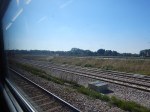
I had gone to Peterborough to take pictures of the Werrington Dive Under, from a train between Peterborough and Spalding.
I took these pictures going Peterborough and Spalding.
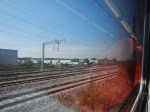
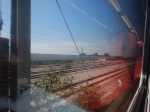
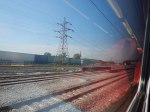
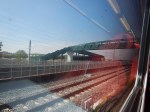
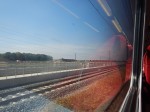
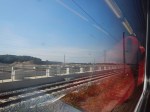
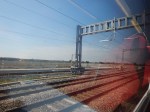
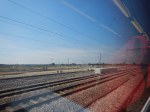
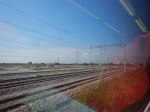
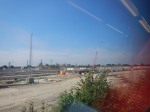



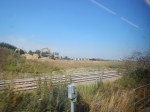
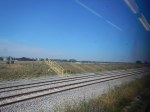
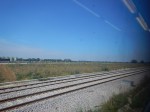
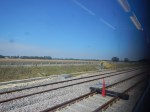
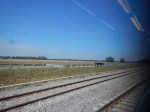
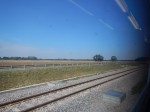
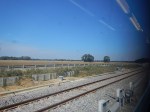
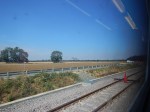
My train between Peterborough and Spalding stations took the following route.
- The Class 158 train was a great improvement on the Class 153 train, I took in From Peterborough To Lincoln in 2015.
- It started in Platform 1b at Peterborough station.
- It then crossed over to the Down Fast line to go North.
- Finally, it slowed to cross the Up Fast and Up Slow lines to go towards Spalding.
- It is surely not an efficient and the safest way to run a railway.
Think about turning right on a busy dual carriageway, by going through a gap in the central reservation.
This diagram shows the new track layout of Werrington Junction.
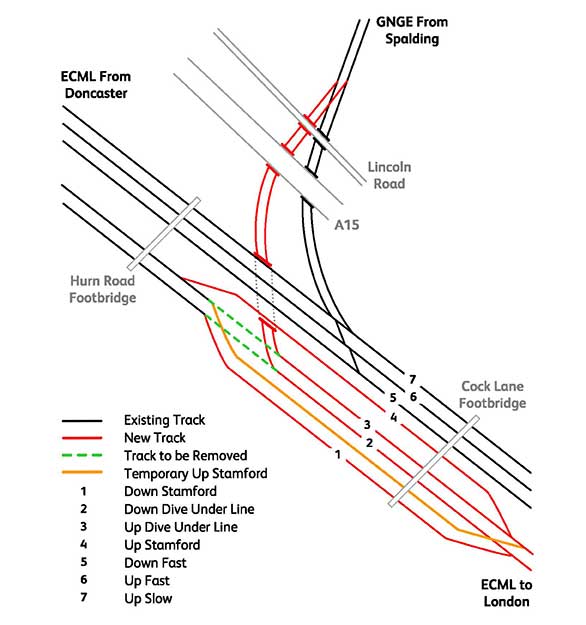
Note.
- My train was going North on Line 5, so it had to use the two crossovers to get to the lines to Spalding.
- The Up Stamford (Line 4) can be seen in the pictures after the two lines have disappeared into the dive-under.
It’s a pity the first of my pictures aren’t better, but the sun was in the wrong direction.
I took these pictures going Spalding and Peterborough.
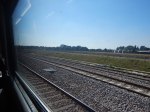
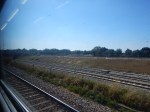
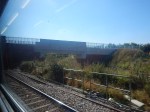
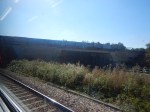
Note.
- The train used the Up Slow (line 7) to go between Werrington Junction and Peterborough station.
- The last two pictures show the Class 158 train in Platform 1b at Peterborough station.
At least this time, the train didn’t cross the Fast lines.
Will Passenger Trains Use The Werrington Dive-Under?
I’m very sure they will!
- On the Western side of Peterborough station, there are four platforms 4 to 7 and an avoiding line for freight trains going North.
- It appears that all of these lines can access the Down Stamford (Line 1) and Up Stamford (Line 4) to go to Werrington Junction.
- At Werrington Junction, trains either take the route to Stamford or use the dive-under for Spalding.
It looks to me, that if the trains to and from Spalding terminated in one of the Western platforms, then they could use the Stamford Lines to access the dive-under and they wouldn’t cross the Fast Lines of the East Coast Main Line on the flat.
Greengauge 21’s Suggestion, That Thameslink Be Extended To Spalding
In the study by Greengauge 21, which is entitled Connecting East Lincolnshire, this is said.
As noted the Spalding-Peterborough line should be a strong candidate for electrification because of its freight potential, and if so it could also accommodate an extension of Thameslink services from London and the South East to Spalding where interchange would be made with a Spalding–Boston–Louth–Grimsby express bus using the A16.
This proposal may be possible, if instead of using the dive-under, the Thameslink trains were able to use the Up Slow (line 7) to go both ways between Werrington Junction and Peterborough station.
As in the near future, full digital signalling will apply through Peterborough, this shouldn’t be a problem.
Electrification Of The Werrington Dive-Under?
Consider.
- There is a gap of around ninety miles in the freight route between the comprehensive electrification at Peterborough and Doncaster stations on the Great Northern and Great Eastern Joint Line (GNGE).
- There are dozens of level crossings.
- The route goes through the centre of Lincoln, where there are two level crossings.
There are two ways of decarbonising the route.
- Full electrification
- Using hydrogen-powered freight locomotives.
Both solutions have their proposers and opponents.
I favour hydrogen-electric hybrid locomotives, that can use electrification where it exists, as it reduces the infrastructure cost on overbridges and in freight depots.
- Hydrogen-powered locomotives have a go-anywhere capability.
- There are also a lot of routes in the UK, where freight trains currently run and it would take a long time to electrify all of them.
- As rail freight companies would have to purchase a lot of new locomotives, I can see them opting for hydrogen-electric hybrid locomotives.
But there are others, who think the only way is full electrification.
London And Lincolnshire By Electric Train
Passenger trains are not a problem, as Alstom, CAF, Hitachi, Stadler and others have demonstrated battery ranges of over fifty miles.
LNER are currently serving Lincoln from London using Hitachi bi-mode Class 800 trains, which use diesel for the 16.5 miles between Newark and Lincoln.
Hitachi’s proposed Intercity Tri-Mode Battery Train, is described in this Hitachi infographic.

I believe it would be possible to handle London and Lincoln via Newark without using diesel.
It also looks like it will be possible to convert the LNER’s current Class 800 trains into Intercity Tri-Mode Battery Trains.
But I doubt their range would sufficient to go between London and Lincoln via Peterborough, Spalding and Sleaford, unless there were to be a charging system at Lincoln.
But surely though, the ideal train for Lincolnshire would be a train that ran between London and Cleethorpes via Peterborough, Spalding, Sleaford, Lincoln, Market Rasen and Grimsby Town.
- Peterborough and Lincoln is 56.9 miles.
- Lincoln and Cleethorpes is 47.2 miles.
- The service could be timed for a convenient interchange with the other Lincolnshire train services.
- The service could run perhaps a few times per day.
With charging systems at Lincoln and Cleethorpes, similar to the Hitachi ABB Power Grids system that I described in Solving The Electrification Conundrum, this service could be run by an Intercity Tri-Mode Battery Train.
Peterborough And Lincolnshire By Electric Train
If you could run between Peterborough and major places in Lincolnshire, as part of a London service, I also suspect that a well-designed Peterborough and Lincolnshire service could serve Lincolnshire almost equally well.
It might use Platform 5 to terminate at Peterborough.
- This is paired with Platform 4, which is the platform generally used by LNER trains from London, so there would be a cross-platform interchange going North.
- Going South, there would be a need to use the footbridge.
How many people would use an hourly cross-TransLincs service?
Mule Trains Between Liverpool And Norwich
I have done two trips to Liverpool in the last week.
On Saturday, I saw this collection of one-car Class 153 trains with a two-car Class 156 train thrown in.
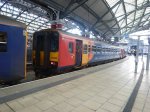

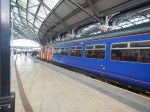
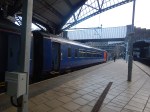
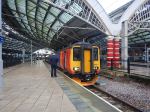


They were forming one of East Midlands Railway‘s Liverpool and Norwich services.
And then yesterday, I had to travel between Liverpool and Sheffield and this was the collection of trains that took me.
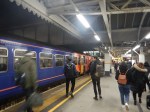
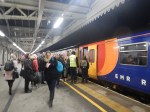


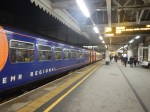
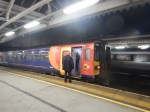
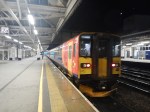
So what was it like?
It started badly, with the driver announcing that because of the late arrival due to an undisclosed problem with the incoming train, that we would be leaving ten minutes after the planned departure time of 1551. He also indicated that our late departure meant that we would be stuck behind one of Northern’s services.
In the end, despite the gloomy faces of passengers we left twelve minutes late at 1603.
It was a bit like one of those classic films, where an ancient train escapes in the nick of time, with a lot of important and assorted passengers.
The asthmatic Cummins diesels under the train could be heard straining.
- But the driver was at the top of his game and the train was running smoothly towards Manchester at close to 75 mph, which is the maximum speed of a Class 153 train.
- At Manchester Piccadilly, the driver had pulled back two minutes.
- There were obviously, no problems on the Dove Valley Line and the driver pulled back another minute before Sheffield, to arrive nine minutes late.
Looking at Real Time Trains, the train ran well until March (The place, not the month!), but there was some form of delay there and sadly it was thirty-four minutes late into Norwich.
The Train Was Clean
I should say there was nothing wrong with the train except for its design and age. It was also as clean as you can get one of these trains. The toilet, that I used was better than many I’ve used on trains and worked as it should.
Customer Service
East Midlands Railway had loaded a trolley and a steward and in the two hours I was on the train, he came through twice. The only problem for me, that he had no card machine, but I did find a fiver in my briefcase.
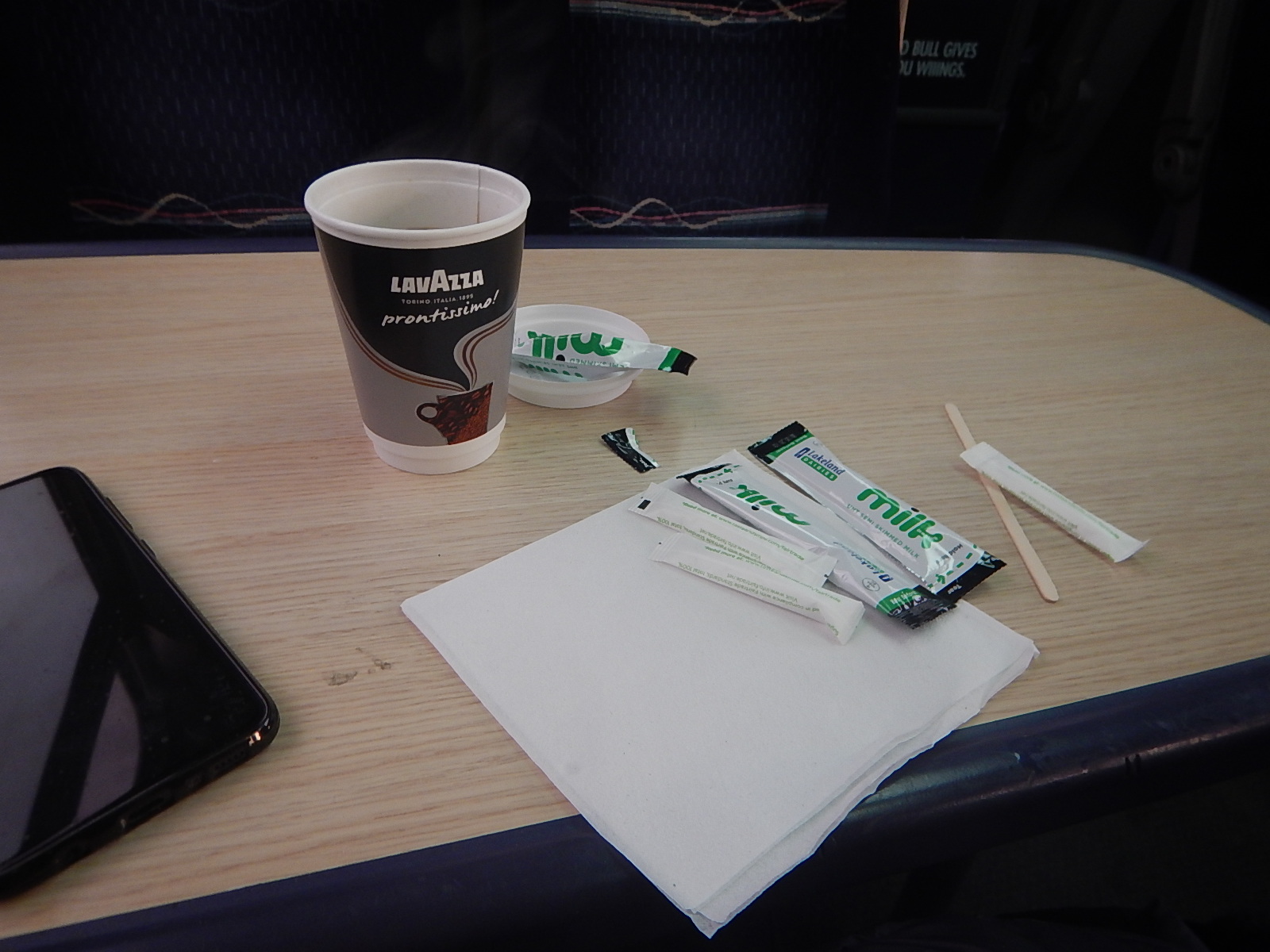
At least it was very drinkable. Even, if I hate those plastic tubs of milk, as they are difficult to open with one good hand.
Where Did Two Cars Go?
I had been fairly certain, that we had started with six cars, but we only arrived in Sheffield with four Class 153 trains.
I suspect that the trouble that delayed the train, concerned two cars and these were left on the naughty step or the end of Platform 6 in Liverpool Lime Street station.
Being Fair To East Midlands Railway
This service used to be run by a four-car formation of two-car Class 158 trains, but these have been causing trouble lately and they will be replaced by Class 170 trains cascaded from other operators.
But because of late arrivals of new trains the much better Class 170 trains haven’t arrived yet.
The driver, steward and other staff did a good job and I feel that the steward enjoyed it. No-one was abusive and stories were just exchanged, as we climbed across the Pennines in what by Sheffield was a very crowded train.
Class 153 trains may have been built as a stop-gap for short branch lines, but you couldn’t fault their performance.
Unless of course, one caused the delay at March, by expiring in a cloud of blue smoke.
Other Observations
These are other observations.
Scheduled Journey Times
On my journey the scheduled times were
- Liverpool and Manchester Oxford Road – forty-seven minutes.
- Liverpool and Sheffield – one hour and forty-eight minutes.
- Liverpool and Nottingham – two hour and forty minutes.
- Liverpool and Norwich – Five hours and twenty-seven minutes
The train considering the configuration, nearly achieved them.
It’s probably the motoring equivalent of doing the journey in a Morris Minor!
The Nine Stops Were Executed Perfectly
There were nine stops on my journey and eight took less than a minute, with Sheffield taking four, as the driver and crew changed.
A modern train like a Class 755 train, with fast acceleration and level boarding could probably save up to three minutes a time on each stop.
The Route Is A Genuine 75 mph Railway In Good Condition
I was checking the speed of the train on parts of the route and the driver had his motley crew at a steady 75 mph for long periods.
- The train was riding well, indicating to me, that both trains and track were in reasonably good condition.
- Note that 75 mph is the maximum speed of a Class 153 train.
- The train recovered three minutes on the late departure from Liverpool.
I can see a faster train and improvements to the route, some of which are underway, could reduce the journey time by a few minutes.
Could Merseyrail’s New Class 777 Trains Work To The Bay Platform At Oxford Road?
Merseyrail’s new Class 777 trains will have the following performance.
- A possible range of perhaps 40-50 miles on battery power.
- An operating speed of 75 mph.
- An acceleration rate of 1.1 m/sec², which is faster than a Class 153 or Class 170 train.
- Fast stops due to regenerative braking, fast acceleration and level boarding.
As Liverpool Lime Street to Oxford Road is thirty four miles of which nine is electrified, I suspect that these new trains could extend Merseyrail’s Northern Line service from Hunts Cross to Manchester Oxford Road.
- Two trains per hour (tph), but I’m sure four tph would transform the area.
- I doubt any track modifications would be needed.
But would Liverpool and Manchester be able to sort out the local politics?
The Future Of The Liverpool And Norwich Service
This service will probably be spilt into two services.
- Liverpool Lime Street and Derby, which could be run by TransPennine Express or Northern Trains.
- Derby and Norwich, which would be run by East Midlands Railway.
As to the trains to be used, consider the following.
The Liverpool and Derby leg would probably need six trains, with the same number needed for Derby and Norwich, or twelve in total.
Currently, eleven or twelve is needed for the longer service.
Sections of the route like through Manchester and between Grantham and Peterborough are electrified.
There are even sections of route, where 125 mph running is possible.
Run reliably to an hourly frequency, I think that this service could attract passengers, especially, as it would serve Derby and extra stops like Ilkeston and Warrington West could be added.
This leads to the following trains being possibilities.
Class 802 trains – 125 mph bi-mode train of which TransPennine Express have 19 trains.
Class 185 trains – 100 mph diesel train of which TransPennine Express have 51 trains.
Class 810 trains – 125 mph bi-mode train of which East Midlands Railway have ordered 33 trains.
Class 755 trains – 100 mph diesel train of which Greater Anglia have 38 trains, which are based at Norwich.
Alstom Breeze hydrogen trains could be ideal for Liverpool and Derby.
Note.
- Greater Anglia and East Midlands Railway are both subsidiaries of Abellio.
- Developments of Class 755 trains could include battery and hydrogen versions.
- I suspect that 125 mph trains may be required for both legs, to maximise capacity on the East Coast Main Line and Midland Main Line.
The trains will certainly get better.
Did Someone Try To Steal The Electrification?
I arrived at Ipswich station to come back to London at 09:30 this morning and finally arrived home at 15:00. The journey had taken at least four times longer than it should.
This article on Railnews, which has a subtitle of Overhead Line Damage Disrupts Great Eastern, explains the problem.
The wires between Colchester and Marks Tey stations were damaged at around four in the morning and trains didn’t run again until about 1700.
This is a paragraph that adds more details.
overhead line damage was discovered between Colchester and Marks Tey. Network Rail workers reported shortly before 04.45 that overhead line equipment was tripping, and a train driver reported ‘visible damage’ to the power lines.
I eventually came home by this route.
- I took a train to Class 153 train to Cambridge.
- Another electric train took me to to Tottenham Hale,.
- It was then two buses home.
It was a completely wasted day.
What puzzles me is that the damage to the wires appears to have happened, when no trains were running. So that seems to indicate they either just fell down for no apparent reason or someone was up to no good.
Years ago, I did some work for British Rail and they talked about all sorts of groups getting up to all sorts f tricks to steal copper. signalling cable.
The crooks would even repeatedly cut fibre optic signalling cables, in the hope it would be replaced by copper, so they could nick that!
I shall await the report of what happened yesterday with interest!
Greater Anglia Were Short Of Trains
I took this picture, when I arrived at Ipswich.

It shows the Ipswich to Cambridge service that gives a good connection to the train from London. For several years, it has been a smart three-car Class 170 train. This is a rwo-car Class 156 train.
- Greater Anglia were also apologising for the connecting Lowestoft service being just a one car; Class 153 train.
- It appeared to me, that Greater Anglia has sent nearly all of their Class 170 trains to Wales.
- And yet again, Greater Anglia are looking after their Norwich customers and heaping all the inadequate rolling stock on Ipswich.
- Are the new Class 755 trains and their drivers ready?
It looks to me, to be a management cock-up.
Train For Cambridge Anybody?
This was my train to Cambridge.

As I said, it was normally a three-car Class 170 train, but this is an inadequate Class 153 train, which went they ran between Ipswich and Cambridge generally ran in pairs.

Gerald Fiennes and Delia Smith at Dullingham
At least I only had to wait ten minutes at Cambridge for my Tottenham Hale train.
Greater Anglia’s Response
The staff at Ipswich did their best, but there did seem to be a biit of bad leadership from somewhere as at one point, it was announced that a London train would be running and I don’t think it did.
To make matters worse, as we ran into Cambridge, we passed two brand new Class 755 trains in the sidings. Are they parked their ready to start the service?
This article on the East Anglian Daily Times is entitled We’re Completely Stuck – it’s A Joke’ – Rail Passengers’ Anger At Train Chaos.
It shows a large degree of management failure.
Planning For The Future
The electrification on the Great Eastern Main Line appears to be notoriously unreliable.
Network Rail must get it better! But they don’t seem to be doing a good job, as I have had pain getting to Ipswich for six years, whilst they are updating the wires!
I believe that the best insurance for the train services would be to do the following, as soon as possible.
- Increase services on the Ipswich and Cambridge route to two trains per hour (tph) using four-car Class 755 trains. One would be direct and the other would have a change at Ely.
- Increase services on the Norwich and Cambridge route to two tph using four-car Class 755 trains. One would be direct and the other would have a change at Ely.
- Start running the London and Lowestoft service using four-car Class 755 trains.
- Make sure that, it is possible to run routes with pairs of Class 755 trains.
- Ensure, that Class 755 trains can run London and Norwich via Cambridge.
As an example yesterday, a six-car Class 755 formation formed of two three-car trains shuttling between Ipswich and Cambridge, would probably have solved the problem.
But I do think that East Anglia’s rail problems might be best served by running a new direct service between London Kings Cross and Norwich.
As I have said several times, the Kings Cross and Cambridge and/or Kings Lynn service needs to be upgraded to 140 mph trains to make the most of the 140 mph running on the Southern section of the East Coast Main Line.
So why not run the following services?
- Hourly between Kings Cross and Kings Lynn via Cambridge.
- Hourly between Kings Cross and Norwich via Cambridge.
The trains could be Hitachi AT-300 trains with a battery capability sufficient to take the train North of Ely.
Conclusion
Did someone try to steal the electrification?
I will await the answer as to what happened with interest.
Industry Urged To Decide On Alternative Technology
The title of this post, is the same as that of this article on Rail Magazine.
This is the first paragraph.
The rail industry needs to decide on the right approach to alternative technology as soon as possible, to ensure the industry can continue to reduce emissions.
Speaking to the All-Party Parliamentary Rail Group, Anthony Perratt of the RSSB, outlined how there was a huge opportunity to replace ageing Sprinter trains with new units powered by alternative energy sources like batteries and hydrogen.
The Size Of The Opportunity
Sprinter trains in service of stored in the UK include.
- Class 150 – 135 x two-car, 2 x three-car
- Class 153 – 70 x one-car
- Class 155 – 7 x two-car
- Class 156 – 114 x two-car
- Class 158 – 147 x two-car, 21 x three-car
- Class 159 – 30 x three-car
These add up to 516 trains, with a total of 1035 cars.
In the Wikipedia entry for the Class 710 train, this is said.
TfL announced that it had placed a £260m order for 45 four-car Bombardier Aventra EMUs.
This works out at nearly £1,500,000 for each car of a modern train.
This means that replacement of the Sprinters, with new independently-powered trains, would be project of the order of £1.5billion.
That is a market, that would be very much desired by a train builder.
Battery, Diesel Or Hydrogen Power?
Diesel power is probably not a good idea, if it can be avoided.
The following points about hydrogen- and battery-powered trains should be noted.
- Most hydrogen-powered trains are battery-powered trains, with a hydrogen fuel-cell to recharge the batteries.
- Battery technology is improving fast.
- Systems to rapidly charge batteries will be available in a couple of years.
- Battery-powered trains can use existing electrification to charge the batteries.
- Hydrogen-powered trains may need a large tank for the hydrogen, which limits passenger capacity.
- Hydrogen-powered trains need a refuelling structure, which may be more difficult to install, than a charging system for battery trains.
I feel that innovative engineers will be able to find ways to enable battery-powered trains on routes that need independently powered trains.
Conclusion
I don’t think, that we’ll see many long-term applications of hydrogen-powered trains in the UK.
ScotRail Finds A Use For The Unloved Class 153 Trains
Class 153 trains are the unloved members of British Rail’s Sprinter family. I occasionally use one on excursions to Felixstowe, but they are cramped, noisy and slow.
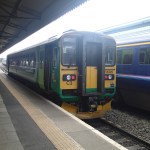
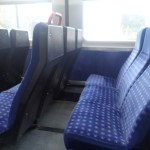
As the pictures show, some are not in bad condition and to be fair, some train operators have tried hard to provide a better level of service.
Greater Anglia still has five Class 153 trains in service and the fact that they will be replaced by three-car Class 755 trains by the end of 2020. You don’t increase capacity by that amount, unless the current one-car trains are overcrowded or you know that there is a lot of untapped demand on the route.
If on the Felixstowe Branch, a doubling of capacity would have been sufficient, then surely a refurbished two-car Class 150, 156 or 170 train, would have been a more than adequate replacement.
Currently, there are seventy of these trains in service and many of them, like those in East Anglia are being replaced with new or refurbished trains.
Greater Anglia’s five units are going to Wales, where they will join another eight on rural lines in West Wales. Nothing has ben said about how they will be used, but they could be used singly, in pairs or in multiple with Class 15x or Class 17x trains.
So they could be useful to the Welsh in providing extra capacity.
In the November 2018 Edition of Modern Railways, Alex Hynes of ScotRail talks about how a number of Class 153 trains will be used to add bicycle space to trains on some of Scotland’s scenic routes. Alex Hynes is quoted as saying.
The interior format is yet to be fixed, but is likely to include a large amount of space given over to bicycles. Bike tourism is a growing area and the aim would be to allay fears about whether or not you’d get your bike on a train by providing plenty of space. Part of the vehicle might be given over to a lounge car layout to make the most of the magnificent views on these routes.
Transport Scotland sees the scenic routes as a key part of the rural economy for the part they play in stimulating tourism.
Our inspiration is to get “158s” on the West Highland route.
So it looks like ScotRail could be running Class 158/Class 153 pairs to provide increased capacity on the West Highland Line.
Wikipedia says this about the use of the Class 153 trains on the West Highland Line.
These single car units are to be completely adapted to accommodate bikes, skis and other outdoor equipment.
They will be attached to the Class 156s either as centre cars, or as extra coaches at either end.
If ScotRail’s scheme is a success, I suspect more of the Class 153 trains could end up doing the same task, in Wales, the South West and North of England.
It should also be noted, with respect to bicycle tourism, that ScotRail’s shortened HSTs will hopefully retain their bicycle swallowing abilities in the back ends of the power cars, thus enabling bicycle tourists to do the longer Scottish journeys with ease.
My one worry about bicycle tourism in Scotland and Wales is not concerned with trains internally, but with getting there from other parts of the UK with a heavily-loaded bicycle.
With the replacement of the HSTs and InterCity 225 from the London to Edinburgh and London to Wales and the West routes, will the new Class 800 trains have enough bicycle capacity? The bicycle storage on these trains look to be a good design for a racing bicycle, but some of the heavily-loaded bicycle tourists I’ve seen in Suffolk, would find them inadequate.
This article in The Guardian is entitled New High-Speed Trains Go Slow On Provision For Cyclists.
The article is critical.
I wonder what provision has been made for bicycles on the new rolling stock for the Caledonian Sleeper?
Porterbrook Targets OffLease DMU Class 153s As ‘Capacity-Busters’
The title of this post is the same as that of an article in Issue 851 of Rail Magazine.
I wrote about my visit to the new Kenilworth station in Kenilworth Station – 1st May 2018.
I travelled between Coventry and Kenilworth stations in a well-turned out Class 153 train.
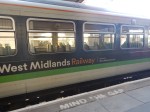
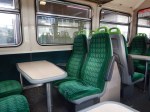
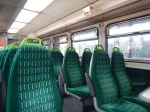
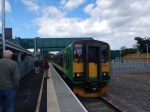
The pictures show it is no scrapyard special.
As the article says, Porterbrook own thirteen of these trains and they are looking at ways of using them profitably for a few more years.
The article suggests these uses.
- Reforming them as two-car Class 155 trains, which is how they were built.
- Inserting them into other DMUs.
- Converting them to luggage/cycle-carrying vehicles.
When I was at Oxenholme Lake District station on Monday, a Class 153 train, was being used to convert two-car Class 156 train into a three-car train, to increase capacity on the Windermere Branch Line.
Many of the Class 153 trains are due to be replaced in the next few years and as there are seventy in total, there will need to be a lot of good ideas.
Route Development
For a start, there is the job the single Class 153 train is doing at Kenilworth, which is route testing and development.
- Drivers are being trained on the route.
- Systems are being tested.
- Passengers have a train service, they can use.
On the Kenilworth route, it doesn’t matter if it is too small a train, as in a couple of months a ten-year-old Class 172 train should be available to double the capacity.
Stand-In Trains
East Anglia has a problem with trains being severely damaged in level-crossing accidents.
Pairs of Class 153 trains could be used as stand-in trains on many branch lines.
Network Rail Uses
Don’t underestimate the uses that Network Rail will find for the trains!
Conclusion
I think that some of the uses will e very innovative.
 The Anonymous Widower