Options For High Speed To Hastings
The May 2017 Edition of Modern Railways has an article entitled Kent Capacity Constraints Highlighted.
One sub-section is entitled High Speed To Hastings and it lists options as to how high-speed services could be run to Hastings via Ashford International station and the Marshlink Line.
Before I list the options, I’ll list a few facts and questions about the current service to Hastings, the various lines and stations.
Ashford International Station
This Google Map shows Ashford International station.
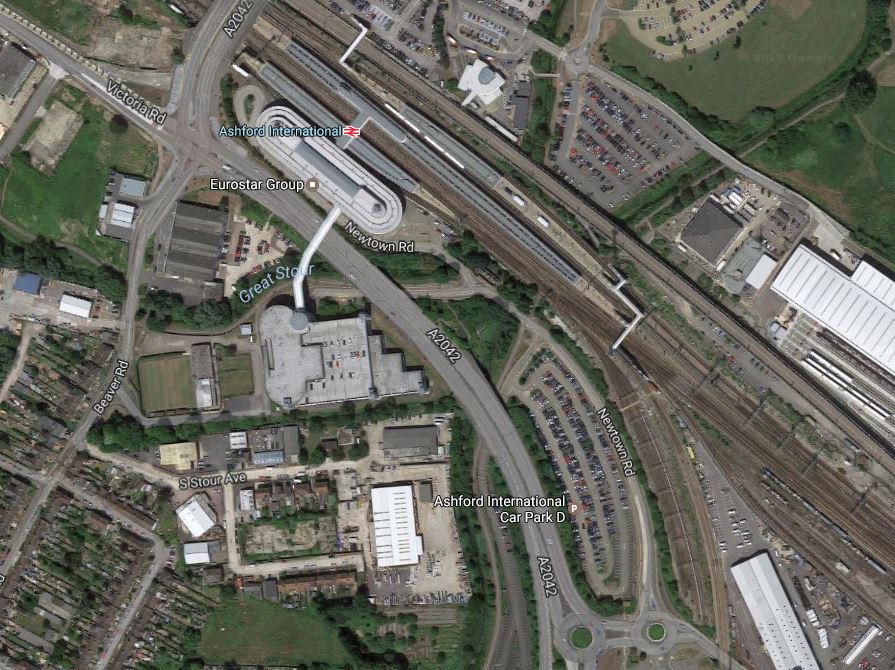
Note the Marshlink Line goes off the map to the East of the two small roundabouts at the bottom.
The biggest factor that needs to be considered is that some form flyover or dive-under may be needed so that trains can run between the Marshlink Line and the two platforms on the North side of the station, where Highspeed services to and from St. Pancras International call.
Will All Highspeed Services Using The Marshlink Line Stop At Ashford International Station?
Consider the following.
- Passengers might like to go between places on the South Coast, like Hastings and Brighton, and Europe, by changing at Ashford International station
- If a voltage change were needed, Ashford International station is already used for this purpose.
I would think it unlikely that services would not stop at Ashford International station.
Class 395 and Class 80x Trains
The Class 395 trains and the various forms of Class 800 trains are all members of Hitachi’s A-Train family.
The Class 395 trains have the following features.
- Dual voltage
- 6-car sets.
- 140 mph on HS1
- 100 mph on DC Lines
- Automatic coupling and uncoupling.
The Class 800 and Class 802 trains have the following features.
- Electro-diesel
- 25 KVAC only.
- 5- and 9-car sets.
- 140 mph on HS1 (Stated in Modern Railways)
- 100 mph on diesel power only.
- Automatic coupling and uncoupling (assumed)
The only difference between Class 800 and Class 802 appears to be the size of the full tanks and manufacturing site.
I would think it unlikely, that Hitachi could not produce a Class 80x train with the following features.
- Electro-diesel
- Dual voltage
- 6-car sets
- 140 mph on HS1
- 100 mph on diesel power only.
- 100 mph on DC Lines
The trains could even have a Class 395 style interior.
Looking at the Class 395 and Class 80x trains, I suspect that these trains could be built, so that they could automatically couple and uncouple with each other.
This coupling ability would be important.
- Hastings and Thanet services could couple and uncouple at Ashford International.
- Class 80x trains could be used instead of Class 395 trains for operational reasons.
- It would make it easier to rescue a stalled train.
There is also this document on the IEP Trains web site, which is entitled Technical & Build Specifications Of The IEP Trains, contains a lot of useful information.
- Five-car electro-diesel trains have three power units.
- Nine-car electro-diesel trains have five power units.
- Electric trains have a small generator that can be used to slowly move a train stranded by overhead power failure to a safe place for passengers to disembark.
Nothing is said about batteries, but Hitachi have run battery trains in Japan.
I would be very surprised, if the A-train family was not designed, so that it could incorporate batteries, when the technology has been sufficiently developed
The Current London To Hastings Timings
Fastest timings I can find are as follows.
- London Cannon Street to Hastings – 1 hour 48 minutes
- London Charing Cross to Hastings – 1 hour 51 minutes
- London St. Pancras to Hastings – 1 hour 36 minutes, which a change at Ashford International
- London Victoria – 2 hours 1 minute.
I think the surprising time is the one with a change at Ashford International.
It takes 37 minutes between St. Pancras and Ashford International and 40 minutes from Ashford International to Hastings, but passengers are allowed nineteen minutes to change trains.
Could Timings On The Marshlink Line Be Improved?
The Marshlink Line has a maximum operating speed of just 60 mph, whereas the East Coastway Line between Hastings and Brighton has an oiperating speed of 90 mph.
Other improvements are needed to improve the timings and oiperation of the line.
- Removal of a couple of level crossings.
- Provision of a passing loop at Rye.
- Some platform lengthening to handle the longest trains that would use the line.
It doesn’t appear impossible to reduce St. Pancras to Hasting timings by several minutes.
Are More Class 395 Trains Needed For Other Routes?
I ask this question, as if they are, then surely a combined order for new trains would be better value.
The Various Options
I shall now look at the various options mentioned in the article in turn.
Option 1 – Electrify Ashford To Hastings At 25 KVAC
This would cost between £250million and £500million.
It would allow the current Class 395 trains to work through to Hastings and as far as Brighton or even Southampton if required.
Voltage changeover would take place at a convenient station, such as Ore.
But how would various groups react to 25 KVAC catenary being strung up all over Romney Marsh?
Option 2 – Electrify Ashford To Hastings At 750 VDC
This would cost between £100million and £250million.
As with Option 1, it could use the current Class 395 trains.
Option 3 – Use Class 802 Electro-Diesel Trains
Class 802 trains could be an interesting option.
Consider.
- According to the Modern Railways article, Class 802 trains would have the same 140 mph performance, as the Class 395 trains on HS1.
- Both trains are Hitachi A trains.
- Class 802 trains would run on diesel between Ashford International and Hastings.
- Class 802 trains would probably be fitted with third-rail equipment to work onward from Hastings.
- No electrification of the Marshlink Line would be required.
- St. Pancras to Hastings could be under seventy minutes.
- Three trains would be needed to provide an hourly service to Hastings.
- A crude estimate gives that one six-car Class 802 train would cost around £12.5million.
I think this option has a big advantage in that if it were possible to run twelve-car trains from St. Pancras to Brighton via Eastbourne, Hastings, Ebbsfleet International and Stratford International stations, the route might offer valuable alternative routes.
Option 4 – Use Class 395 Or Class 801 Trains With Batteries
Either of Class 395 or Class 801 trains could probably be fitted with batteries with sufficient range to take the train between Ashford and Hastings.
Consider.
- Both trains would have 140 mph performance on HS1.
- Trains would run on batteries between Ashford International and Ore.
- The Marshlink Line is not the most taxing of railways, with only six stops.
- Trains would probably be fitted with third-rail equipment to work onward from Hastings.
- No electrification of the Marshlink Line would be required.
- St. Pancras to Hastings could be under seventy minutes.
- To ensure sufficient battery power to bridge Hastings to Ashford, trains could if necessary reverse at Seaford or Brighton.
As with Option 3, it has the advantage of providing an alternative London to Brighton service.
Conclusions
All options require the following to be done.
- Create an efficient connection between HS1 and the Marshlink Line.
- Improve the operating speed on the Marshlink Line.
- Remove a couple of level crossings on the Marshlink Line.
- Create a passing loop at Rye.
- Perform some platform lengthening.
As Options 1 and 2 require electrification and cost more, I would feel they are unlikely to proceed.
The choice between Options 3 and 4 would depend on what Hitachi offer and what the required number of trains cost.
Option 3 based on a Class 802 train would definitely work and could probably be proven with a test run of one of the GWR or VTEC Class 800 prototypes.
But these Class 800/801/802 trains are designed so that the diesel engines can be removed, when they are no longer needed. So could Hitachi replace the diesel engine with a battery pack charged at either end of the route on the 25 KVAC of HS1 or the 750 VDC of the East Coastway Line between Hastings and Brighton.
It’s all about selling trains and a company that had a 140 mph or 225 kph high-speed electric train, that could do perhaps 25 miles or 40 kilometres on batteries, would have a valuable addition to their product range.
How Will Virgin Trains East Coast Use Class 800/801 Trains?
The following two sections give Virgin Trains East Coast (VTEC) current and future fleets.
Current Fleet
VTEC have a current fleet comprising the following locomotives and coaches.
- 32 – Class 43 locomotives
- 117 – Mark 3 coaches
- 31 – Class 91 locomotives
- 302 – Mark 4 coaches
- 31 – Driving van trailers
The Class 43 locomotives and the Mark 3 coaches are formed into InterCity 125 trains.
- Two locomotives and nine coaches per set.
- 125 mph capability
- Diesel-powered
Which gives thirteen diesel trains.
The Class 91 locomotives and Mark 4 coaches are formed into InterCity 225 trains.
- One locomotive, one driving van trailer and nine coaches per set.
- 140 mph capability
- Electric-powered.
- Ability to run London to Edinburgh in under four hours.
Which gives thirty-one electric trains.
Adding the two figures together gives a total of forty-four nine-car trains.
Future Fleet
VTEC’s future fleet will include.
- 10 – Five-car Class 800 electro-diesel trains.
- 13 – Nine-car Class 800 electro-diesel trains.
- 12 – Five-car Class 801 electric trains.
- 30 – Nine-car Class 801 electric trains.
Adding these together counting the five-car trains as half gives fifty-four nine-car trains.
Or ten more nine-car trains!
In addition six to eight InterCity225 trains could be retained in service to run limited stop trains between London and Edinburgh.
This increase in capacity can only me good for passengers, with more services and destinations.
Questions About Class 800/801 Trains
What is the capacity of a nine-car Class 800/801 train?
I can’t find this on the Internet and I suspect it hasn’t been decided.
Wikipedia gives the capacity of an InterCity 225 train as 406 Standard and 129 First Class seats.
It should also be noted that the car length in a Class 800/801 is twenty-six metres, as opposed to the twenty-three metres of the InterCity 225.
I would hope good design can make excellent use of this space.
Will two Class 800/801 trains be able to work as a pair?
I suspect the answer to this is yes, as the closely-related Class 395 trains regularly do this.
The most common use would be to run two five-car trains as a ten-car set.
This would be a 260 metre long train, which is perhaps fifteen metres longer than an InterCity 225 train.
Some lengthening of platforms may be necessary, but it probably isn’t a major problem.
Will coupling and uncoupling of a pair of Class 800/801 trains be automatic?
In The Impressive Coupling And Uncoupling Of Class 395 Trains, I linked to videos of the closely-related Class 395 trains, doing just this in under a minute.
I would be very surprised if two Class 800/801 trains couldn’t do the same.
Will a Class 800 train and a Class 801 train be able to work as a pair?
There may be circumstances, where this is needed on electrified lines, so I would be very surprised if this is not possible.
At what station will a Class 800/801 train be able to call?
The nine-car trains are 234 metres long and a pair of five car trains will be 260 metres long, so platform length will mean they can’t call at a lot of smaller stations.
But a five-car train will be only 130 metres long, which will be shorter than a pair of four-car multiple-units working together, which are regularly seen on the UK’s rail network.
So the five-car trains will probably be able to serve a surprising number of stations.
Will Class 800/801 trains have a faster turn-round time?
If you look at the times of trains between London and Leeds, this things happen.
- A few minutes after a train leaves the platform at Leeds and Kings Cross, the next incoming service arrives.
- It then waits in the station for nearly half-an-hour before going back.
Effectively, an hour must be added to each Out and Back journey between London and Leeds.
This time will enable.
- Passengers to unload and load.
- Train to be prepared.
- Crew to be changed if required.
Any delay of a few minutes can hopefully be recovered.
Train preparation time will probably be better with the Class 800/801 trains, as hopefully automation and better design will speed the process.
But cutting this thirty minutes substantially would probably require passengers to be marched around like the Brigade of Guards, which is of course not possible.
Hopefully, the new trains will be designed, so that ingress and egress for all passengers will be easier and faster but at some stations like Leeds, the station layout is more of a bottleneck than the train.
A few minutes reduction in turn-round time might be possible, but nothing that would mean a train doesn’t occupy a platform for half-an-hour.
How long will A Class 801 train take between London and Edinburgh?
Currently the fastest journey time using an InterCity 225 is around four hours and twenty minutes, but they have done it in under four hours in test runs.
For marketing reasons, I suspect that VTEC would like to dip under four hours with the fastest trains.
As the Class 800/801 trains have a similar 140 mph performance to the InterCity 225, I suspect that four hours will also be possible.
But the big difference will be that the Class 800/801 trains will probably have faster stop times at any intermediate stations.
So I suspect that the average journey time between London and Edinburgh will drop.
How Will VTEC Use Class 800/801 Trains?
Returning to my original question, I’ll now attempt to answer it in the next few sections.
London-Edinburgh Services
I think we can assume the following.
- There will be at least two trains per hour (tph)
- Trains will usually be nine-car trains.
- Class 800 trains will not normally use diesel power on the route.
- Some trains could be two five-car trains running as a pair.
- A proportion of trains will do the trip in under four hours.
- Intermediate stops as now will be optimised to the passenger traffic.
- Intermediate stops will be faster.
I also think, that the InterCity 225 sets will be improved, so they can match the times of the Class 800/801 trains.
I think that once improved signalling on the East Coast Main Line is working and allowing running faster than 125 mph, we could be seeing trains being able to go from London to Edinburgh and back in under nine hours, assuming a thirty minute turn-round at both ends of the route.
This would mean that a dedicated London to Edinburgh fleet of just eighteen trains would be required to run a two tph service. Three tph would need another nine trains.
Speed up the trains so, that a round trip can be done in eight hours and sixteen trains are needed for the two tph service, with eight more trains needed to up the service to three tph.
Under Future in the Wikipedia entry for Virgin Trains East Coast, this is said.
If VTEC’s application to operate extra limited stops services to Edinburgh is successful, it is proposing to operate these by retaining six to eight InterCity 225 sets.
Interesting! So will some or all hours see a third train between London and Edinburgh.
Are the thirty-year-old InterCity 225 trains, showing the same survival instincts of their ten-year-older predecessors; the InterCity 125s?
London-Aberdeen And London-Inverness Services
Currently times on these routes from London are as follows.
- London-Aberdeen – seven hours and four minutes – three trains per day
- London-Inverness- eight hours and four minutes – one train per day
So what times could a Class 800 achieve on these routes?
Times North of Edinburgh with an InterCity 125 are as follows.
- Edinburgh to Aberdeen takes two hours and thirty-six minutes – Fastest ScotRail takes two hours sixteen minutes.
- Edinburgh to Inverness takes three hours and thirty-one minutes – Fastest ScotRail takes three hours nineteen minutes.
I suspect that a Class 800 train running on diesel power could match the InterCity 125 times and approach the ScotRail times.
But as they would be running on electric power to and from London in four hours, times could be as follows.
- London-Aberdeen – six hours and sixteen minutes
- London-Inverness – seven hours and nineteen minutes
So over half-an-hour could be saved on both routes.
Currently trains leave London at these times.
- 10:00 – Aberdeen
- 12:00 – Inverness
- 14:00 – Aberdeen
- 16:00 – Aberdeen
Note that there is probably no 18:00 train, as that would arrive in Aberdeen at 0110.
That is probably too late, but a well-driven Class 800 train, might get to Aberdeen around 00:30, which could be acceptable.
There is also the possibility of running a pair of five-car Class 800 trains to |Edinburgh, where they split with one train going to Aberdeen and the other to Inverness.
If the 16:00 train were to split, the Inverness portion would finish its journey before midnight.
A schedule like this from London could be possible.
- 10:00 – Aberdeen and Inverness
- 12:00 – Inverness
- 14:00 – Aberdeen and Inverness
- 16:00 – Aberdeen and Inverness
- 18:00 – Aberdeen
Both Northern cities would get four trains per day from London, because of two factors.
- The ability to run on electric power between London and Edinburgh, which knocks time off that section of the route.
- The ability to split and join trains at Edinburgh, which saves paths on the East Coast Main Line.
It should be noted that any electrification North from Edinburgh will help.
Stirling to Edinburgh and Glasgow could be electrified by 2019 or 2020.
- Trains would run to the South of Stirling on electric power.
- Any splitting going North and joining going South would take place at Stirling.
- Trains would still stop at Edinburgh to load and unload passengers.
- Crew change currently takes place at Edinburgh, but that could happen at Stirling.
With a well-executed stop at Stirling, electric power between Stirling and Edinburgh and a few other improvements could we see the following?
- London-Aberdeen – six hours
- London-Inverness – seven hours
It would certainly please VTEC’s Marketing Department.
Services To St. Andrews
The Open Championship was last held at St. Andrews in 2015, so by the next time it is held at the Home of Golf, it is likely that a station will have been built for the town.
This new station must be able to accept Class 800/801 trains, which during a major event might need to run to the area.
This reasoning must apply to lots of places either on or within fifty miles of the East Coast Main Line.
London-Leeds Services
Leeds is generally served by 2 tph from London in around two hours ten minutes.
These are usually nine-car InterCity 225 trains, with a couple of InterCity 125 trains, that go to places like Harrogate, which are not electrified.
As the speed limits on the East Coast Main Line are increased as trains are fitted with in-can signalling, I suspect that VTEC’s Marketing Department will be pushing for times between London and Leeds to be under two hours.
I can’t believe that VTEC will not extend services from Leeds by making use of five-car trains running to Leeds as a pair, where they would divide and join.
I am assuming that Class 800/801 trains can join as well as the closely-related Class 395 trains, which do so it in under a minute.
Places that could be served include.
- Bradford
- Harrogate
- Horsforth
- Huddersfield
- Ilkley
- Keighley
- Shipley
- Skipton
Note.
- Some stations like Harrogate and Horsforth are not electrified, so would need Class 800 electro-diesel trains.
- Five-car trains could serve a lot of stations on the Leeds-Bradford Metro network, thus opening up the possibility of services to places like Headingley for the cricket and rugby and Saltaire for the culture.
- Could a five-car Class 800 electro-diesel train run over the Settle and Carlisle Line to Carlisle and Scotland?
- Extending some services from Leeds may mean that platform space is released at the station.
I think that the possibilities to extend services from Leeds using the five-car Class 800/801 trains are large.
London-Edinburgh Via Leeds
On the West Coast Main Line, some Scottish services from London, go via Birmingham and Wolverhampton.
So if there was a fully electrified route from Leeds to York, then some Scottish trains could go via Leeds.
At present, I don’t think this is possible with an electric train, as part of the route from Leeds to York is not electrified.
The electrification should be well underway by now, but there is no sign of it.
Other Extended Services
What can be done at Leeds can surely be done at other places.
If the two trains can couple and uncouple within a minute, that means that a pair of trains can arrive in a station and go through the following sequence.
- 00:00 -A joined pair of Class 800/801 trains arrive in the station and load and unload passengers.
- 00:03 – Close the train doors
- 00:04 – Start the automatic decoupling process.
- 00:05 – The first train leaves the platform.
- 00:08 – After three minutes the second train leaves the platform.
I believe that the stop could be under ten minutes and the trains would be a safe three minutes apart, as they left the station.
So where could trains be split?
- Newark or Peterborough for Lincoln and Nottingham
- Doncaster for Hull and Sheffield
- York for Scarborough and Harrogate
- York for Middlesbrough and Sunderland
- Newcastle for Ashington and Sunderland
Note.
- Trains could go in a loop to serve several stations.
- Sunderland could be on such a loop.
- As trains would only be five cars, they could stop at most stations in need of a service.
- Stations like Peterborough, Doncaster, York and Newcastle with more than one through platform in each direction would probably be preferred stations for split and join.
- No electrification is needed away from the East Coast Main Line.
Obviously, passenger needs and traffic patterns will decide, where the trains split and join.
Conclusions
The big conclusion will be that more places will receive long distance services to London and the places in between.
But these trains will really put the squeeze on smaller operators like Hull Trains and Grand Central Trains, as VTEC will be serving their station.
A Design Crime – Stratford International Station
I went to Canterbury today and took the Highspeed service from Stratford International station.
These are pictures I took at the station.


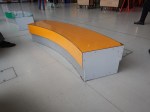
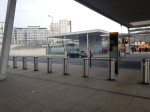

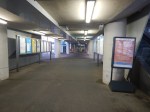
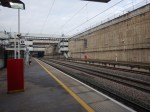
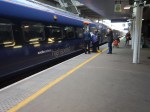
Most stations have the odd design issue, but Stratford International has a whole warehouse that’s full of them.
International In Name, But Not Trains
Stratford International station must be the only station in the world, which is billed as an International station, where all trains are domestic.
That to me is fraud!
Should I report the station to the Police?
Connecting With Stratford Station
I travelled to the station via the domestic Stratford station, which meant I had to walk the best part of a mile through the Eastfield Shopping Centre, which was mainly closed as it was earl;y in the morning.
Surely the connection could have been designed to be a shorter walk.
It’s not even straight through the Shopping Centre, but you have to double back after going right through almost to John Lewis.
It’s just designed so you pass as many shops as possible. I was wanting to use a train, not buy something.
This Google Map shows the two Stratford stations.
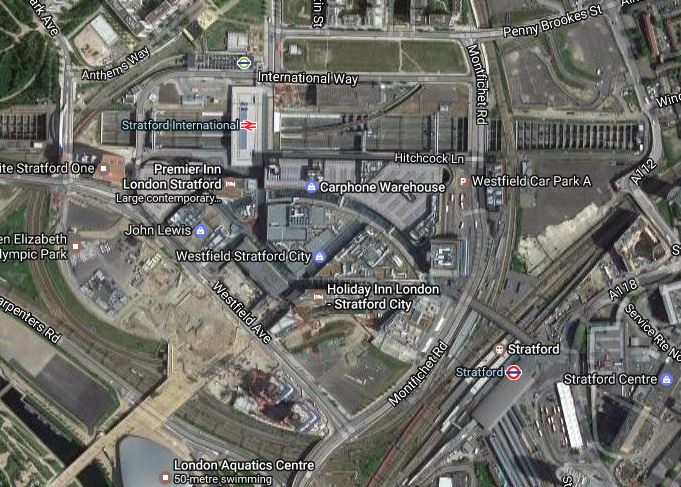
Topsy could have designed it better. Even when she was about five!
Surely something better can be done.
The Link To The Docklands Light Railway
You could use the Docklands Light Railway, but then that introduces more changes into to your journey.It is the route recommended by the National Rail Journey Planner.
But the DLR station is on the other side of a road, rather than inside Stratford International station.
The Link To Crossrail
It’s only going to get worse when Crossrail opens, as passengers wanting to go to between say Paddington and East Kent will be drawn to Stratford, only to discover the struggle through Eastfield to Stratford International.
The alternative route via Abbey Wood will be slower and will probably mean extra changes.
There will be one better route available from Crossrail to Stratford International, when the new line opens and that will be to go to Canary Wharf station and, take the short walk to Poplar DLR station. A trip on London’s unique Docklands Light Railway will take you direct to Stratford International station. The DLR always delivers when the chips are down, just as it did in the 2012 Olympics.
No Place To Wait Before The Platforms
Except for a few uncomfortable seats designed by a sadist and what looks to be a comfortable cafe, there is no place to wait on the station concourse before going to the platforms.
A few comfortable seats would be welcome.
The Bleakest Platforms In The UK
That is being charitable, as in all my traels across Europe, even in say a very cold Eastern Europe, any set of platforms as unwelcoming.
Perhaps I should try Siberia!
Appalling Train Access For The Disabled
Considering that the Class 395 trains are the only ones to use the platforms, the disabled acess using a ramp is so nineteenth century.
I joked about the quality of this to a member of staff and they said that in the rush hour, they are sometimes assisting as many as four passengers.
It’s probably lucky that the HighSpeed service is not an intense one, as with this level of disabled access, there would be train delays.
Conclusion
The station and line is a disgrace and especially for the disabled.
Considering it was only built a few years ago, everybody concerned should hang their heads in shame.
What would I do?
- Where the DLR goes under the main line platforms at Stratford station, between the two subways, I’d extend the DLR platforms underneath and provide direct access between the two levels. This must be possible and would enable passengers to change between main line, Crossrail and Central Line services with the DLR between Canary Wharf and Stratford International.
- Try and improve the connection to the DLR at Stratford International
- Replace or modify the Class 395 trains/pltform interface with something fit for purpose, that had level access to the platforms, so wheelchair passengers could just roll in.
- Do something about the bleakness of the station.
I’d also increase the number of Highspeed services through the station, so that all destinations got at least two direct trains per hour from Stratford.
I would also add some extra new destinations like Eastbourne and Hastings.
Will Passengers Step Up Into Scotland’s New Trains?
Obviously, I’ve not seen a new Class 385 train in the metal yet, but I despair at this picture.
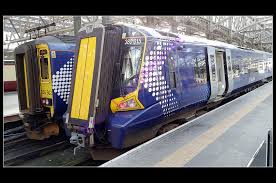
As I wrote in A Design Crime – Class 395 Train Platform Interface, which is about another Hitachi product; the Class 395 train, it appears that the train-platform interface is no better.
It could be that the train was not in one of the platforms that it will actually serve, but if the Overground and its Class 378 trains were able to get it substantially right in 2010, then surely new trains and a rebuilt railway should be tip-top.
A Design Crime – Class 395 Train Platform Interface
I took these pictures of the step you need to ascend to get into a Class 395 Train.
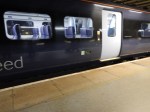
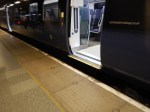
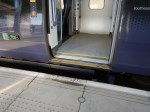
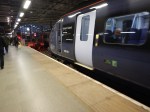
All of these pictures, were taken on platforms that were specifically built for the trains and no other train type calls at these station.
Perhaps my biggest gripe with these terrible doors, is that there is no wide door, which you would need for a large wheelchair.
These trains may have a high top speed, but they’re not designed for quick safe stops.
The Class 395 trains were built in Japan around 2009 and the Class 378 trains for the Overground were built around the same time.
Compare these pictures taken on the Overground with those above.
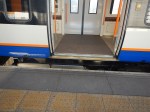
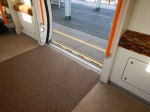
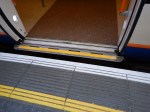
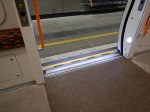
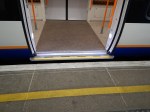
Note that the first two pictures were taken in a platform used by other train, so the access isn’t quite as good.
Perhaps Japanese railways don’t allow people in wheelchairs to use trains.
If they do, how come we get trains as wheelchair-unfriendly as the Class 395 train, which need a ramp to get the wheelchair on and off the train.
The Impressive Coupling And Uncoupling Of Class 395 Trains
Class 395 trains seem to be fairly unique amongst trains running on the UK network, in that they can couple and uncouple automatically.
Under Design in the Wikipedia entry for the seven-year-old Class 395 train, this is said.
Each 6-car unit can work in multiple with another, creating 12-car trains. Coupling is automated and is designed to take less than 60 seconds.
This YouTube video, which is entitled Javelin Coupling, shows two trains coupling automatically.
And this YouTube video is called 395022 and 395009 Divide and Depart at Ashford International.
It is all very impressive.
- This is the gold standard, against which all train couplings and uncouplings should be judged.
- There is no trackside intervention by any staff.
- The trains have been doing this since 2009 in the UK.
I particularly liked how the doors appeared and faired around the coupling, as the first train in the second video drove away.
Seamless Interchangeability
At several places on the UK rail network, two trains running as a pair will split, with one train going to one destination and another going to another.
I wrote about trains splitting and joining in Trains Uncoupling and Coupling at Cambridge.
In the past, UK railways used to use the concept of slip coaches, so that coaches could be dropped from an express without stopping. But the last time it was used in the UK was in September 1960 at Bicester North station.
I have just read this article on the Rail Engineer web site, which is entitled Seamless Interchangeability.
The article talks about a concept of dynamic coupling, where trains are automatically coupled and uncoupled at line speed.
It also talks about the issues this would raise.
As a Control Engineer, I’m fairly certain, that it would be very easy to create a system, where say an eight-car Kings Lynn train could split just before Cambridge station, with the front four-car train going to Kings Lynn and the other four-car train stopping in Cambridge station.
It could either be done using two drivers or by driver-less trains. Although the unions would have a lot to say about the latter.
I also believe that if the trains could uncouple, then coupling at line speed would also be possible.
So what is the point?
An Example From The Brighton Main Line
To make full use of the capacity available, Southern serve Littlehampton and Ore, with a train that divides at Haywards Heath. It is a well-proven technique that has been used for decades.
Automatically splitting the two trains at line-speed, can give journey time advantages.
Take the 19:47 from Victoria, which arrives at Haywards Heath at 20:30 as an example.
The following is taken from the timetable.
- The front portion to Ore leaves at 20:34.
- The rear portion to Littlehampton leaves at 20:36.
- Stops at East Croydon and Gatwick Airport take about a minute.
This leads to the following, if the two trains split immediately after stopping at Haywards Heath and before the trains take different directions after Keymer Junction where the East Coastway Line divides from the Brighton Main Line, a few miles South.
- The Ore train performs a one-minute stop instead of one of four minutes, thus saving three minutes.
- The Littlehampton train performs a one-minute stop instead of one of six minutes, thus saving five minutes.
- The platform at Haywards Heath is only occupied for a minute, as opposed to six.
- The Littlehampton and Ore portions must be capable of providing enough capacity for their route.
For those worried about driver-less trains, the driver of the second train for Littlehampton, would probably step up at the previous stop at Gatwick Airport or at Haywards Heath.
But the outcome would be a small increase in capacity on the line, due to the platform at Haywards Heath being occupied for five minutes less.
Coming North, take the 09:47 from Littlehampton as an example.
The following is taken from the timetable.
- The first train arrives at Haywards Heath at 10:35 and leaves at 10:45.
- The second train arrives at Haywards Heath at 10:41.
The pattern of the trains would be different.
- Whatever was the front portion of the train would go through Keymer Junction first
- The train forming the rear portion would be the next train through the junction.
- The rear portion could catch the front portion and the two trains would be automatically coupled together before Haywards Heath.
- The joined train would stop at Haywards Heath for a minute.
- The driver of the second train could step-down at Gatwick Airport or Haywards Heath.
In some ways the mathematics involved in the coupling, are not unlike those for a fighter jet connecting with a tanker aircraft. Except that speeds are a lot lower and there is no need to control direction only closing speed.
Haywards Heath station would be occupied for up to nine minutes less, thus creating capacity.
This simplistic analysis, shows how automatically coupling and uncoupling trains at line speed can create capacity and decrease journey times.
- Journey time from Victoria to Ore would be reduced by three minutes.
- Journey time from Victoria to Littlehampton would be reduced by five minutes.
- In the Down direction the platform at Haywards Heath station would be occupied for just one minute instead of six.
- Journey time from Littlehampton to Victoria would be reduced by nine minutes.
- Journey time from Ore to Victoria would be reduced by three minutes.
- In the Up direction the platform at Haywards Heath station would be occupied for just one minute instead of ten.
Obviously strategies would have to be developed for various eventualities including.
- Unsuccessful coupling or uncoupling.
- Late trains.
- Signalling and train failures.
- Leaves on the line.
- Extreme weather.
But as during all coupling and uncoupling operations, both trains would have a driver in the cab, keeping an expert eye over the procedure and each train could be driven independently, I think all safety issues could be overcome, to the satisfaction of all parties.
If you read the full article, you’ll see that there are some much more exciting possibilities, than the simple ones I have outlined here.
But I do believe that line speed uncoupling and coupling of trains with a driver in the cab of both trains involved, can be a very powerful tool in creating capacity on the UK’s railways.
The Great Eastern Main Line
I know the Great Eastern Main Line well and several trains are coupled and uncoupled regularly on this line.
As Greater Anglia has ordered new five-car Aventra trains and nearly all platforms can take 12 -car trains, running these trains in pairs and coupling and uncoupling appropriately, is probably in their plans for the line.
As on the Brighton Main Line, could coupling and uncoupling at line speed, unlock capacity on the line?
A few weeks ago, I caught a train from Chelmsford to Manningtree, that divided at Colchester, with the front four-car train going to Clacton and the rear four-car train going to Harwich.
The 16:44 from Liverpool street is a train that divides at Colchester, when it arrives at 17:40. These timinings are from the timetable.
- The Clacton portion of the train leaves at 16:44.
- The Harwich portion of the train leaves at 16:47.
As the Sunshine Coast Line for Clacton leaves the Great Eastern Main Line immediately after Colchester station, it would appear that the two trains must uncouple during the stop at Colchester.
Surely, an improved and well-designed automatic uncoupling system could separate the trains faster, saving minutes on both services.
Towards London, two trains leave Harwich and Clacton at 07:16. The timetable shows.
- The Harwich train arrives at Colchester at 07:47 and leaves at 07:54.
- The Clacton train arrives at Colchester at 07:50 and leaves at 07:54.
Surely, an improved coupling system, could join the trains faster, saving minutes on both services.
The time savings will not be as great as those at Haywards Heath, but automatic coupling and uncoupling must be a worthwhile feature of the new trains.
|As Bombardier are adding automation to the Aventra, could they be adding the ability to automatically couple and uncouple trains, both in the station and at line speed?
The West Coast Main Line
I have seen Class 221 Trains, join at Crewe, but I don’t think this is done any more.
However, with the need for direct services from London to places like Blackpool, Burnley and Huddersfield, the ability to be to couple and uncouple trains quickly must be something that would be useful to make optimal use of the valuable train paths on the line.
The East Coast Main Line, Midland Main Line, Great Western Main Line And South West Main Line
If the West Coast Main Line could benefit, then surely these lines could as well.
Class 800/801 Trains
The Class 395 train is very much related to the Class 800 and Class 801 trains, that are being built by Hitachi for the East Coast Main Line, Great Western Railway and other routes.
In The Impressive Coupling And Uncoupling Of Class 395 Trains, I talked about the design of the coupling system for the Class 395 trains.
I would be very surprised if this feature was not incorporated in the Class 800 and Class 801 trains.
So will we be seeing two five-car Class 800/801 trains dividing and joining at a convenient station and then running as a ten-car train to and from London?
Class 385 Trains
What about the Class 385 trains for Scotland?
- These are another version of Hitachi’s A-Train, like 395s, 800s and 801s.
- These will come in two lengths; three-car and four-car.
- Edinburgh-Glasgow services will need at least two units to be coupled together.
- The trains are being introduced from Autumn next year.
It seems to me, that Scotrail are acquiring a very flexible fleet that can run in various lengths.
Will they have the ability of the 395s to couple and uncouple in under a minute?
And if they do, will Scotrail use this ability to adjust train formation to the traffic?
Aventras
There are three definite orders for Bombardier’s new Aventra train at the present time.
- Class 345 trains for Crossrail.
- Class 710 trains for London Overground.
- Five and ten car units for Greater Anglia.
All trains are fixed formations in a mixture of lengths.
Will Aventras have similar coupling and uncoupling performance to Hitachi’s Class 395 trains?
I suspect normally, the Crossrail trains will never be coupled together, as where are platforms for a four-hundred metre long train?
But suppose a train fails in the central tunnel, will the quickest way to remove it, be to attach it to another train and drag it out?
The routes where the London Overground trains will run, are currently served by a mixture of four-car and eight-car trains. So will London Overground, adjust train length to the known traffic patterns?
Greater Anglia do couple and uncouple trains at present to serve Harwich. So I suspect, we’ll see use of an automatic and fast coupling and uncoupling feature to create a more efficient timetable.
Cross City Lines
There are several cross-city lines in the UK.
- Cross-City Line – Birmingham
- Crossrail
- North Berwick Line – Edinburgh
- Northern Line – Merseyrail
- Snow Hill Lines – Birmingham
- Thameslink
One of the characteristics of cross-city lines, is they are busiest in the centre of the city, where passengers tend to use the trains for short hops , as well as longer distances. Then in the suburbs, outside of Peak hours the trains could run almost empty.
Crossrail’s trains are designed so that hopefully they could cope with the variable traffic, but would it be possible to have half trains, which join and split at outer stations.
Thameslink
I think that Thameslink could be the line that might benefit most, as it would probably want to serve more places.
In All Change On Thameslink, I detailed the current proposed schedule of trains.
- 4 trains per hour (tph) – Sutton to St. Albans (2 tph via Wimbledon, 2tph via Mitcham)
- 2tph – Brighton to Bedford
- 2 tph – Three Bridges/Gatwick Airport to Bedford
- 2 tph – Brighton to Cambridge North
- 2 tph – Horsham to Peterborough
- 2 tph – Maidstone East to Cambridge
- 2 tph – Sevenoaks to Blackfriars
- 2 tph -Orpington to Kentish Town/West Hampstead
- 2 tph – Rainham to Luton (via Dartford and Greenwich)
- 2 tph – East Grinstead to Bedford
- 2 tph – Littlehampton to Bedford
This makes a total of twenty-four tph, which is the design limit for the central tunnel.
In this schedule 4 tph go to Cambridge and 2 tph go to Peterborough. Suppose, it was decided that Peterborough needed 4 tph.
The path limit of 24 tph through the central tunnel makes this impossible, but if Peterborough and Cambridge services joined and split at perhaps Stevenage, then both Cambridge and Peterborough would get 6 tph through the core tunnel.
It would need new six-car trains, that could couple and uncouple quickly.
Conclusion
I believe that improving the coupling and uncoupling of all modern trains to the standard of that of the Class 395 trains could be very beneficial, to train operators, staff and customers.
If coupling and uncoupling could be done at line speed, this might bring extra benefits.
Through The Medway Towns
If you look at the services through the Medway Towns, you will have the following services in 2018.
- 2 trains per hour (tph) Highspeed services between St. Pancras and Faversham.
- 2 tph Thameslink services between Luton and Rainham.
- 3 tph services between Victoria and the Kent Coast.
- 2 tph services between Charing Cross and Gillingham
Note.
- It is a service with frequencies of between five and seven tph in both directions.
- The smallest trains serving the route are six-car Class 395 trains, with most at least eight-cars.
- The service reaches from Abbey Wood, Dartford, Greenhithe and Swanley in the West. to Sittingbourne, Faversham and the Kent Coast in the East.
- The fare supplement for Highspeed services is only paid West of Gravesend, so from that station to the East, normal fares are paid and the trains just contribute seats to the service.
Conclusion
It is a turn-up-and-go metro par excellence run with quality trains.
The possibilities for improvement are good too!
Related Posts
A Design Crime – Ebbsfleet International Station
Between Abbey Wood And Belvedere Stations
Connecting North Kent And The Medway Towns To Ebbsfleet International Station
Extending Crossrail To Gravesend
What Do You Do With A Problem Like Sheppey?
A Twelve-Car Ready Railway
On my trip to Rainham station in Kent, I went through numerous stations.
I took this picture.

A Twelve-Car Ready Railway
Note the blue 10-12 sign, which indicates the stopping point for trains between ten and twelve cars.
I’m pretty certain that all stations between London Bridge and Rainham can accommodate trains of this length, as there were blue twelves everywhere.
To the East of Rainham, a good proportion of the services are run by six-car Class 395 trains. As these can run in 12-car formations, I suspect that most platforms have been made long enough.
This railway is probably future-proofed with regards to train length.
It will certainly accept.
- Crossrail’s Class 345 trains.
- Highspeed’s Class 395 trains running as a twelve-car.
- Thameslink’s Class 700 trains, running as eight-car or twelve-car.
- Electrostars in various lengths.
Sadly, not all rail lines in the UK have been built with long enough platforms and extending some will be difficult.
Related Posts
A Design Crime – Ebbsfleet International Station
Between Abbey Wood And Belvedere Stations
Connecting North Kent And The Medway Towns To Ebbsfleet International Station
Along The North Kent Line
The North Kent Line has seen some changes in the last few years and could see some more in the next few.
Starting from the terminal in London Bridge, which itself is going through a massive upgrade, these improvements have been done or will happen.
Woolwich Arsenal
Woolwich Arsenal station has from 2009 provided a direct link to the Docklands Light Railway, giving a direct connection to London City Airport and Bank.
In 2019, Woolwich station on Crossrail will open, which will be two hundred metres away from Woolwich Arsenal station. This will probably not have a direct effect on Woolwich Arsenal station, but two stations will certainly stimulate development in the area.
I doubt many will use this station to interchange between the North Kent Line and Crossrail, as it looks like the connection at Abbey Wood station could be easier.
Abbey Wood
Abbey Wood station is being rebuilt and in December 2018, Crossrail will start services at the station to Paddington via Canary Wharf and the central tunnel.
Wikipedia says this about Crossrail services at Abbey Wood station.
Abbey Wood is the terminus of one of two eastern branches of Crossrail and will offer cross-platform interchange between terminating Crossrail services (at 12 trains per hour on new line) and existing Southeastern services (along existing tracks)
Plans are always being talked about to link Abbey Wood station to the North Bank of the Thames at either Gallions Reach or Barking Riverside.
I doubt it will happen in the next ten years.
Dartford
Dartford station has from the beginning of this year been one of London’s contactless ticketing stations, as is reported in Oyster and Contactless Bank Cards, under the station’s Wikipedia entry.
Don’t be surprised if this creeps outwards from London.
Greenhithe
Greenhithe station was rebuilt in 2008 and is the station for Bluewater.
Because of the Shopping Centre, Greenhithe will probably be a station that could benefit from contactless ticketing.
Northfleet
Northfleet station is the closest to Ebbsfleet International and we could see an improved link between the two stations.
As Northfleet could have upwards of four trains per hour (tph) stopping in both directions, a frequent shuttle bus, could be an affordable option.
Smaller Stations
There are several smaller stations between London Bridge and Gravesend.
I’m obviously not sure, but on a quick look all of them seem ready to accept the long trains, that will be used by both Thameslink and Crossrail.
Gravesend
Gravesend station was remodelled in 2013 and now has two long through platforms and a bay platform.
Crossrail to Gravesend
Under Future in the Wikipedia for Gravesend station, this is said.
In December 2008, the local authority for Gravesend (Gravesham Council), was formally requested by Crossrail and the Department for Transport, to sanction the revised Crossrail Safeguarding. This safeguarding provides for a potential service extension, from the current south of Thames terminus at Abbey Wood, to continue via the North Kent Line to Gravesend station. The Crossrail route extension from Abbey Wood to Gravesend and Hoo Junction, remains on statute. With current services from Gravesend to London Bridge, Waterloo East and London Charing Cross being supplemented by highspeed trains from the end of 2009 to St Pancras, the potential in having Crossrail services from central London, London Heathrow, Maidenhead and/or Reading, terminating at Gravesend, would not only raise the station to hub status but greatly contribute towards the town’s regeneration.
At present, Gravesend station has the following services.
Typical off-peak services are:
- 2 tph Highspeed services in each direction between London St. Pancras, Ebbsfleet intewrnation and Faversham and the East.
- 2 tph Southeastern services between London Charing Cross and Gillingham.
- 4 tph Southeastern services between London Charing Cross and Gravesend.
From 2019, Thameslink are saying that they will be running two tph between Rainham and Luton via Dartford and Greenwich.
This will mean that eight tph in each direction will go between Gravesend and Dartford, with another two tph going between Gravesend and Ebbsfleet International.
Because of the new Thameslink service, the train frequency between Gravesend and Gillingham will increase from the current four tph to six tph.
I think that although Gravesend will be the nominated terninal for Crossrail, the trains will actually reverse direction at Hoo Junction, so there will no need to use any platform space at Gravesend to prepare the train for its return journey.
At present, Wikipedia is saying this will be the Morning Peak service from Abbey Wood station.
- 4 tph to Heathrow Terminal 4
- 6 tph to Paddington
- 2 tph to West Drayton
With this Off Peak service.
- 4 tph to Heathrow Terminal 4
- 4 tph to Paddington
What the current North Kent Line can handle would probably determine how many Croosrail trains went to Gravesend and Hoo Junction.
But Crossrail won’t be short of seats to really provide a superb service to and from the Medway Towns.
I have a feeling that once Crossrail is running successfully, the traffic will define, if, when and how any extension to Gravesend is built.
But the creation of the extension to Gravesend and Hoo Junction will not be a massive undertaking.
- The depot and other facilities at Hoo Junction will have to be built.
- Could the depot at Hoo Junction be without electrification? If the Class 345 trains have sufficient onboard energy storage, which I believe could be the case and I wrote about in Bombardier’s Plug-and-Play Train, then this is a serious possibility, which would save money and time in building the depot.
- All platforms are probably long enough for the Class 345 trains.
- The Crossrail train specification says that trains must have the potential to be converted for third rail operation. The similar Class 710 trains will have this capability.
- Judging by my observations in Between Abbey Wood And Belvedere Stations, I feel that Abbey Wood station is probably capable of handling the same number of trains going further down the line.
- The signalling would have to be adjusted for the new service pattern.
But there would be no tunnelling and no major electrification on the North Kent Line.
Perhaps, the only major expenses would be.
- Building the depot/reversing sidings and facilities at Hoo Junction.
- Any extra trains needed.
- The cost of any rail link into Ebbsfleet International station.
So I doubt, we’ll be talking large numbers of billions.
Class 395 Trains
The Class 395 trains are normally six-car trains, but they can work in pairs as twelve-cars.
This probably means that any station, where the Highspeed service calls can handle a twelve-car train.
Strood
Strood station was updated in 2009 for the Highspeed service. Ready for Crossrail/Thameslink.
Rochester
Rochester station was rebuilt in 2016. Ready for Crossrail/Thameslink.
Chatham
Chatham station accepts twelve-car trains. Ready for Crossrail/Thameslink.
Gillingham
Ready for Crossrail/Thameslink.
Gillingham station is an interchange with two long platforms and a bay platform.
Five tph including two Highspeed services pass through the station and two tph go to and from London Charing Cross.
From 2019, there will be another two Thameslink tph between Luton and Rainham stopping at the station.
All this adds up to comprehensive service which stretches out to several London termini and the Kent Coast.
London Bridge, Abbey Wood and Gravesend all have at least four tph from Gillingham.
Rainham
Ready for Crossrail/Thameslink.
Rainham station has been updated in the last couple of years. An Update section in the Wikipedia entry, says this.
As part of the rebuild of Rochester Station, a new Up Bay Platform has been added.
Trains are now able to use this new platform as the East Kent Resignalling Project has been completed. At present, only a couple of trains use it in the evening rush hour.
The East Kent Resignalling Project is described on this page of the Southeastern web site.
These improvements are noted.
- New £26 million station at Rochester
- 250 new signals to replace old signalling equipment
- Disabled access at Strood station
- New bay platform at Rainham
- Safer level crossings fitted with obstacle detection technology at Aylesford, Yalding, Beltring, Wateringbury, East Farleigh, Cuxton and Snodland
- Centralisation of signalling control to Gillingham and the decommissioning of several signal boxes.
It would appear that a updated railway and a short series of good stations through the Medway Towns has been created, that can handle the increased frequencies.
Thameslink To Rainham
Modern Railways in August 2016, said that Thameslink would be running a two tph service between Luton and Rainham via Greenwich and Dartford.
The new bay platform at Rainham would be ideal for this service.
Onward From Rainham
There doesn’t seem to be many changes to what services are run now.
Conclusions
Everything seems to fit together rather well.
- Twelve-car platforms seem universal or at least where needed.
- The signalling is up to scratch.
- The new bay platform at Rainham makes the new two tph Thameslink service to Luton deliverable.
- To extend Crossrail to Gravesend probably just needs the new depot at Hoo Junction.
- Dartford to Rainham gets at least a four tph service with six car or longer trains.
The only area, where nothing has been published, is how to incorporate Ebbsfleet International station into the network.
I think it could suffer from London Overground Syndrome. This is my definition of the disease.
This disease, which is probably a modern version of the Victorian railway mania, was first identified in East London in 2011, when it was found that the newly-refurbished East London Line and North London Line were inadequate due to high passenger satisfaction and much increased usage. It has now spread across other parts of the capital and across the UK, despite various eradication programs.
It is usually solved by adding more capacity.
Related Posts
A Design Crime – Ebbsfleet International Station
Between Abbey Wood And Belvedere Stations
Connecting North Kent And The Medway Towns To Ebbsfleet International Station
Extending Crossrail To Gravesend
What Do You Do With A Problem Like Sheppey?
 The Anonymous Widower