MSU Research Leads To North America’s First Commercial Hydrogen-Powered Train
The title of this post, is the same as that of this article in Railway Age.
This is the introductory paragraph.
Research from Michigan State University’s Center for Railway Research and Education (CRRE) contributed to the San Bernardino County Transportation Authority’s (SBCTA) decision to order the first commercial hydrogen-powered train for use in North America.
These statements were also made.
- The research was conducted in partnership with the Birmingham CRRE and Mott MacDonald.
- Funding was from the California State Transportation Agency (CalSTA).
- The trains will be built by Stadler, probably in their US factory.
There is also a picture of the hydrogen-powered Flirt in the article, and it is very similar in formation to a Class 755 train, with a PowerPack in the middle.
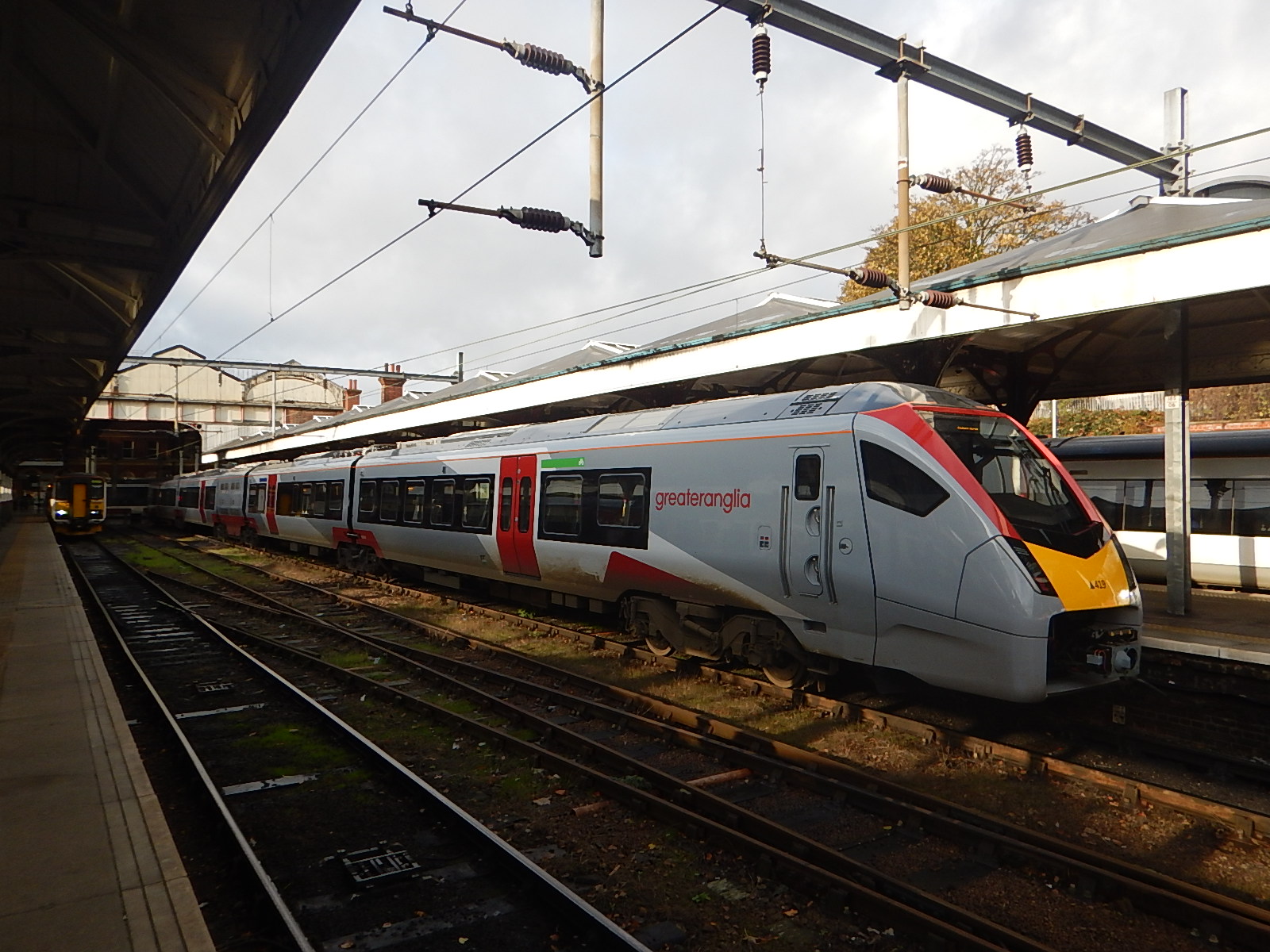
The picture shows a Class 755 train at Norwich station.
The article indicates that hydrogen-power was chosen, as the rail line may be extended by sixty miles to Los Angeles.
Conclusion
After reading the full article, it certainly looks like San Bernardino County Transportation Authority have planned their new railway in a very professional way.
Class 755 Train Details
These pictures are a collection of some of the details of Class 755 trains.
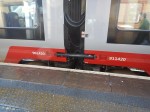
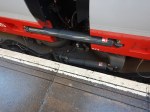
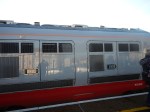
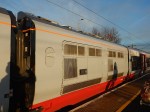
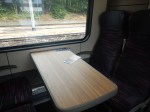
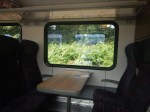
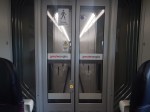
I shall add to this collection of pictures.
If you give me a credit, feel free to use them in anything you write.
A Trip On The East Suffolk Line In A New Stadler Class 755 Train
Today, I took a round trip between Ipswich and Lowestoft stations, along the East Suffolk Line, in one of Greater Anglia’s new Class 755 trains.





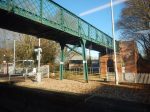
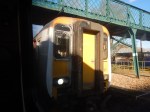
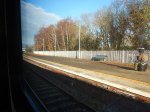
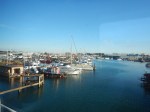



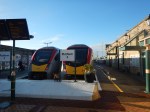
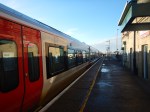



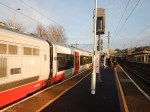
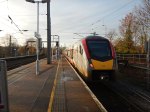
These are my observations and comments.
Stations
The stations vary between the very good and the very basic.
- I don’t think that any station has a step-free bridge to cross the line.
- Many stations are just a single platform.
- Crossing the line often involves a nearby level crossing.
- Westerfield, Woodbridge, Saxmundham, Darsham, Halesworth and Beccles have two platforms.
- Lowestoft and Ipswich are both step-free from the street to the platforms.
- There also appears to be step-free access between the new trains and the platforms.
Overall, from what I could see from the train, each stop was fairly efficient, although I do think that when the drivers and train staff, fully get to grips with the trains, that there is time to be saved on each of the ten stops.
Consider.
- These trains have much better acceleration and deceleration, than the trains for which the timetable was written.
- The trains have level access between train and platform. At Lowestoft, I saw an electric wheelchair roll out of the train at a smart speed.
- These trains set the Gold Standard for step-free access.
I wouldn’t be surprised to see at least a minute and possibly two minutes saved at each station.
That would reduce the current journey time of one hour and thirty minutes between Lowestoft and Ipswich by perhaps ten minutes.
Level Crossings
Consider.
- Over the years, Greater Anglia and its predecessors right back teyond British Rail have been plagued by accidents at level crossings.
- Network Rail would like to close them all,
- But there are always a lot of local objections especially in rural counties like Suffolk.
- Removal is often expensive, as a new toad of several miles needs to be constructed.
I noticed perhaps ten crossings on my trip.
A big problem is that at many stations on the East Suffolk Line, there is a level crossing and it is often the only way to cross the line.
This Google Map shows Saxmundham station.
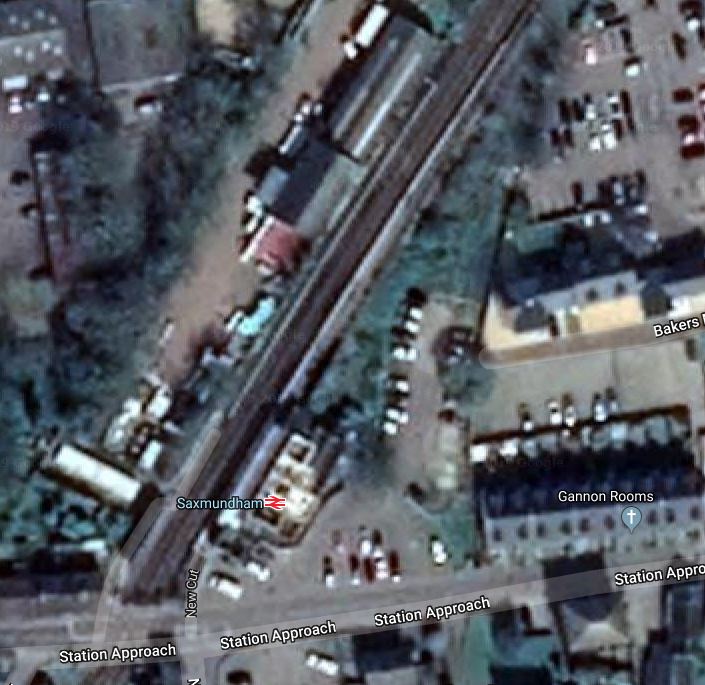
This is typical of the line. But here at Saxmundham, there is probably enough space to squeeze in a step-free bridge like this one, that won the Network Rail/RIBA Footbridge Design Competition.
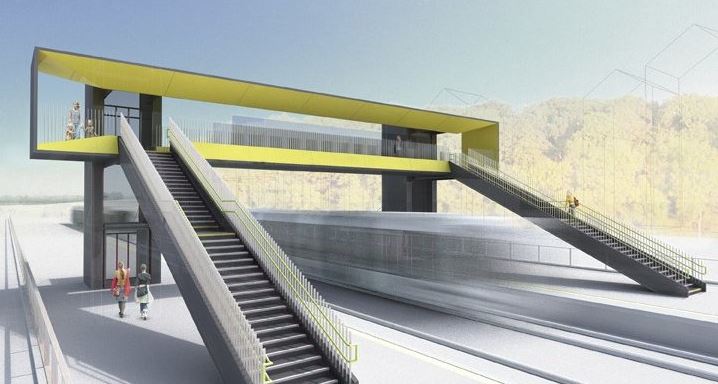
There are lots of rural stations like Saxmundham in the country, so why should suburban stations get all the investment?
How long will it be before one of the new Class 755 trains hits a vehicle on an East Anglian level crossing?
Other Traffic
The only other trains that I saw on the route were Greater Anglia trains going the other way, which we passed in stations like Beccles and Saxmundham.
Checking on realtrimetrains.co.uk, there appears to have been no trains other than the Lowestoft and Ipswich service all day.
It appears that although parts of the route are only single track, that a well-designed timetable operated by well-trained and well-performing staff can provide a reliable hourly service.
Line Speed
I brought my personal dynamometer car with me and the train trundled along at a very easy and leisurely 55-60 mph, which is around the operating speed of the line of 55 mph.
Consider.
- The train gave me the impression, that all those 2,920 kW in the diesel engines could go a bit faster.
- The timetable was probably designed around a Class 156 train, which has just 425 kW per car, as opposed to the 730 kW per car of the Stadler train.
- I estimate that the Stadler train is about sixty percent heavier per car, but it does have a lot of electrical gubbins to carry around.
- The weight of the Stadler train does appear to be lighter per car than a Class 170 train.
I would expect that a well-driven Class 755 train has the power and speed to skip from station to station along the East Suffolk Line at several minutes faster than the timetable.
The line is 49 miles long and trains typically take 90 minutes between Lowestoft and Ipswich. That is an average speed of just under 33 mph.
The leg between Saxmundham and Darsham is just over four miles long and it takes nine minutes. This is an average speed of 27 mph.
Consider
- The acceleration of a Class 755 train is 0.9 m/s², which means to get up to a line speed of 60 mph takes thirty seconds.
- Four miles at 60 mph takes four minutes.
- Driver assistance software can tell the driver exactly where to start slowing for the next station.
It might be possible to do the Saxmundham and Darsham leg in perhaps three or four minutes less than the current timetable.
How much time could be saved on the whole route between Lowestoft and Ipswich?
Trains Needed
Look at a typical Off Peak pattern.
- An Off Peak train is the 1007 from Lowestoft, which arrives at Ipswich at 1136.
- This train returns from Ipswich at 1217, which arrives in Lowestoft at 1343.
- It then leaves Lowestoft for Ipswich at 1407.
The train takes four hours to do a round trip on the route, with forty-one minutes wait at Ipswich and twenty-four minutes wait at Lowestoft.
As trains are scheduled from Lowestoft at 1107, 1207 and 1307, four trains will be needed to provide the service.
This is very inefficient.
I feel that it is totally possible for the new trains to run between Lowestoft and Ipswich in around an hour and fifteen minutes, which would mean a saving of between one-two minutes on each leg of the journey.
Suppose though the trains could achieve this time, with an allowance of fifteen minutes to turn the trains at the two end stations.
This would mean that the round trip is now three hours and only three trains will be needed to provide the service.
The Possibility Of A Half-Hourly Service
The current timetable waits for awkward times in each of the end stations.
But my proposed hour and fifteen minute journey with a fifteen minute turnround could offer the possibility of a half-hourly service.
- Suppose two trains left Ipswich and Lowestoft at identical times on the hour.
- They would arrive at their destination an hour and fifteen minutes later at a quarter past the hour.
- By the half-hour, they would be ready to return to the other station.
- They would arrive back at the start at a quarter to the hour and fifteen minutes they would be ready to repeat the cycle.
The only problem would be to make sure all trains met each other at a place, where they could pass.
The half-hourly service would need six trains. or two more than the current service.
I don’t think that any major engineering works will be needed, although , there might be a need to adjust a passing loop or the signalling.
This is probably only one of many possibilities to provide a half-hourly services.
A Service Between Ipswich And Leiston And Aldeburgh
As I passed this branch the orange army was clearing the track of years of tree and other plant growth.
I’ve always thought that this would be a good idea and I wrote about it in A Station For Leiston.
- A half-hourly service would need two trains.
- It would add extra capacity between Ipswich and Saxmundham.
- It would certainly be needed if Sizewell C is built.
- Much of the route is double-track between Saxmundham and Ipswich.
It should also be noted that Sizewell has a high-capacity electricity grid connection and with the growtyh of offshore wind, Sizewell might be the ideal place for a large energy storage facility,
Cambridge And Lowestoft?
I took a train recently between Cambridge and Norwich and I noticed it went on to Cromer and Sheringham.
This was just Greater Anglia’s way of scheduling the trains for their convenience.
But could the same joining be done between these two services.
- Lowestoft and Ipswich
- Ipswich and Cambridge
It would do the following.
- Make better use of Platform 1 at Ipswich.
- Improve train utilisation.
- It might encourage day trippers to the coast to use the trains.
- It would improve the link from East Suffolk to Stabsted Airport.
- Create a comprehensive service, that connects all the major towns in Suffolk.
- It would connect these Suffolk towns; Lowestoft, Beccles, Saxmundham, Woodbridge, Ipswich, Needham Market, Stowmarket, Bury St. Edmund’s and Newnarket.
- It would serve the proposed A14 Parkway station.
- It would be an excellent feeder sewrvice for the East-West Rail Link.
It would be a true TransSuffolk railway.
Could There Be A Lowestoft And Great Yarmouth Service?
There has been talk of a new service between Lowestoft and Great Yarmouth stations.
There are two options to provide a service.
- Reinstatement of the Reedham Curve that was closed in 1880.
- By reversing the train in Reedham station.
I describe these options in Norfolk Rail Line To Remain Closed As £68m Upgrade Project Overruns.
As the second option does not need any extra infrastructure, I think it is more likely.
This was my conclusion about the route with a reverse.
Typical timings appear to be.
- Between Reedham and Yarmouth – 14-16 minutes
- Between Reedham and Lowestoft – 24-26 minutes
Given that the Class 755 trains have the following characteristics.
- They are 100 mph trains.
- They are optimised for fast stops.
I wouldn’t be surprised to see a sub-forty minute time between Lowestoft and Yarmouth.
It would appear that one train could run an hourly shuttle between Lowestoft and Great Yarmouth.
A Scenic Route Between Norwich And Ipswich
Using the current times between Ipswich and Lowestoft and Norwich and Yarmouth, it also looks like a sub-three hour scenic route is possible between Ipswich and Norwich.
It could be East Anglia’s version of the Cumbrian Coast Line.
Onboard Catering
The East Suffolk Line service currently takes ninety minutes.
I feel that this service is one that could benefit from a coffee service from a trolley.
The service could be provided by Greater Anglia or as on the Settle & Carlisle Line, by the local Community Rail Partnership.
Conclusion
The arrival of Class 755 trains on the East Suffolk Line could be the start of something special!
The 125 mph Bi-Mode Flirt
I am convinced that Stadler’s bi-mode Flirt of which Greater Anglia’s Class 755 trains are the first such fleet to go into service anywhere in the world, are trains that are capable of being developed into a train that can cruise at 125 mph.
Rumours Of 125 mph
When the Flirts were first introduced, I asked a driver, if a 125 mph version was possible and he said yes.
Not that Greater Anglia would have much use for a 125 mph bi-mode.
But it had been reported that several of the drivers had been on trips to Switzerland, as part of the design and training process to smooth the entry of the fleet into service.
And all drivers like to talk about their charges be they freight locomotives, high speed trains, heavy trucks, racing cars (I had a Stig in my kitchen!) or complicated dockside or tower cranes.
Norway’s 120 mph Flirts
Norway runs all-electric Flirts at 200 kph or 120 mph, as described here in Wikipedia.
The basic train design should be capable of running at 125 mph.
Could The PowerPack Run At 125 mph?
This picture shows the PowerPack on a Class 755 train.
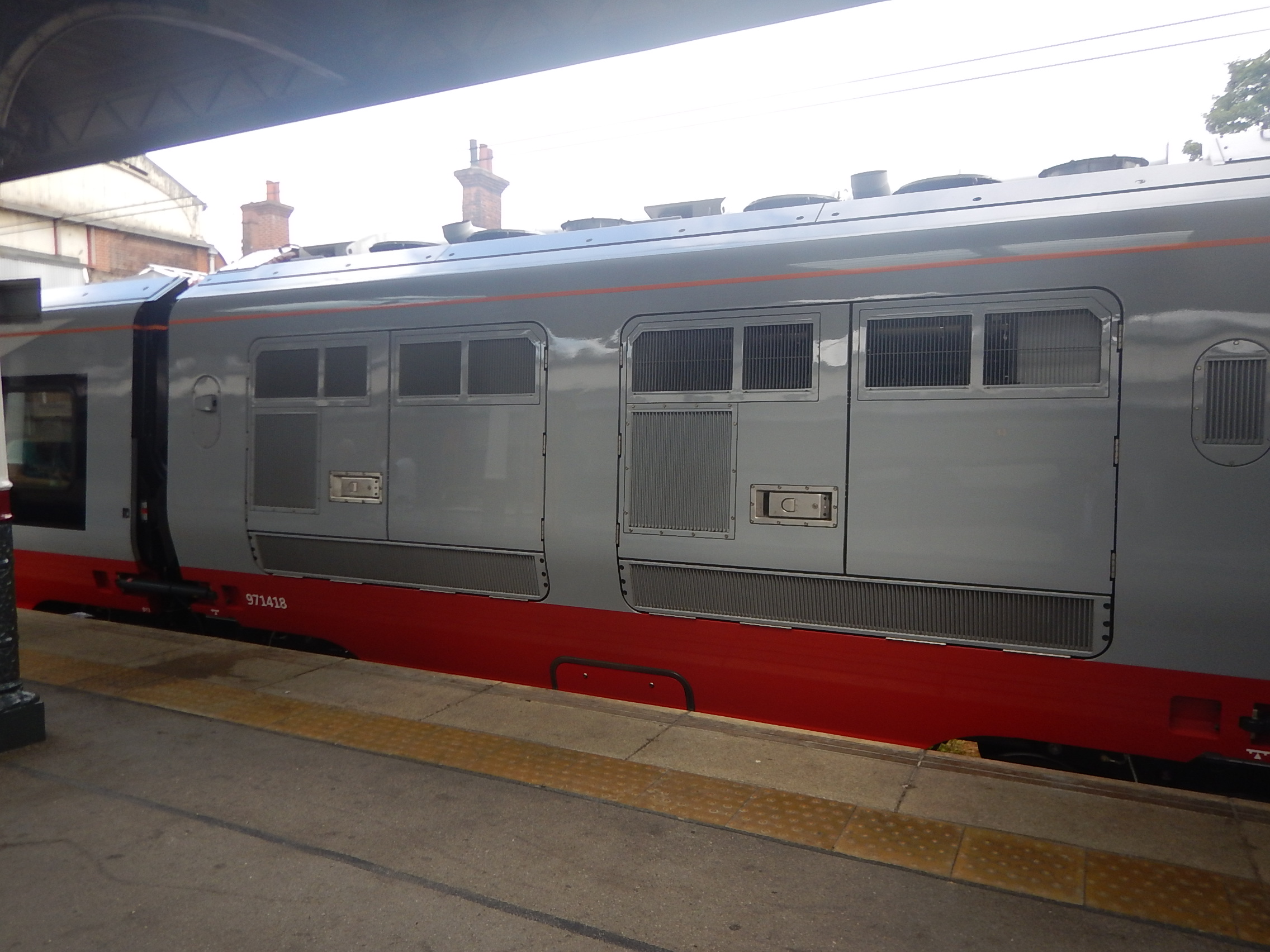
It is only 6.69 metres long and it weighs 27.9 tonnes.
The weight is not out of line with the weight of the 20.81 metre long driver car, which weighs 27.2 tonnes and the 15.22 metre long pantograph car, which weighs 16 tonnes.
But Stadler have put large dampers between the cars.
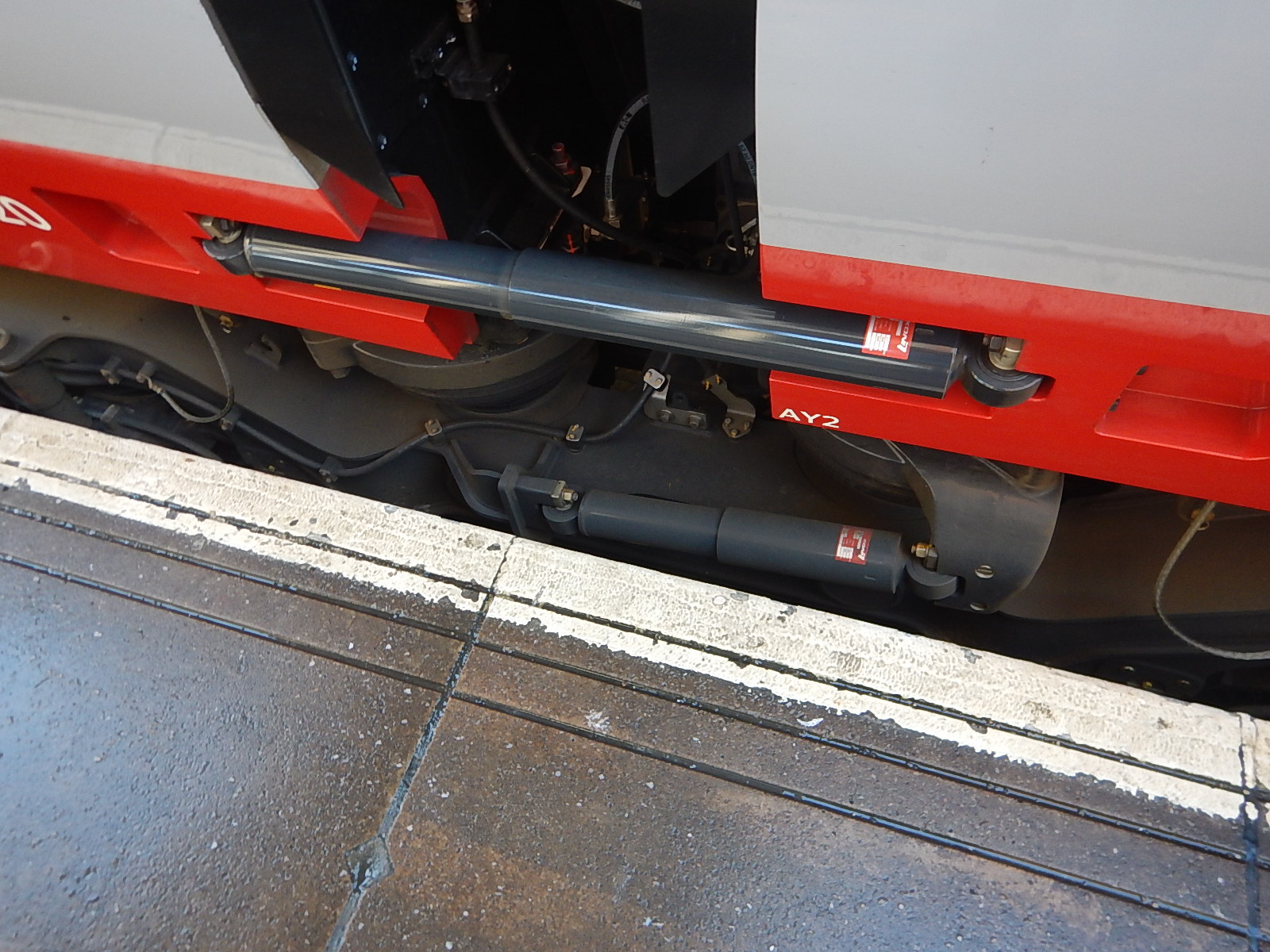
The dampers are the long black cylinders connecting the two cars. There are two on this side of the train and I suspect there are two on the other side.
It looks to me, that Stadler have paid very detailed attention to the dynamics of these trains and seem to hae done the following.
- Carefully balanced the weights.
- Driven the train from the two bogies under the driving cabs.
- Used powerful dampers to calm everything down.
This is probably to enable good performance on both fast and not-so-straight routes.
I also suspect that Swiss railways are a much more challenging environment for running trains, than East Anglia and most of our 125 mph lines.
I wouldn’t be surprised to find out that a Class 755 train could run at or near 125 mph on a straight 125 mph line, whilst running on electric power.
Operating Speed On Diesel
I suspect the power requirements for 125 mph would be too much for the installed power in the PowerPack, but 100 mph would certainly be possible.
Is There A Need For A 125 mph On Electric/100 mph On Diesel Flirt?
If you look at the UK, Hitachi have sold lots of Class 800 and 802 trains, which have a similar performance, but are a few mph faster on diesel.
It would appear that the market is there in the UK.
But the UK is only one of a large number of markets, where Flirts have been sold.
Greater Anglia will be running three services with a large proportion of electrified line.
- Norwich and Stansted Airport
- Lowestoft and Liverpool Street
- Colchester and Peterborough
How the Class 755 trains perform on these services could be crucial to the development and success of Stadler’s unique concept.
Would It Have Been Better To Scrap HSTs, Abandon Class 769 Trains And Use Stadler Bi-Mode Flirts Instead?
I have ridden for several hours in Greater Anglia'[s new Class 755 trains and they seem to make good trains for scenic rural lines.
From December 16th, we’ll be seeing them work between Stansted and Norwich, which will show their mettle as true bi-modes working a partially-electrified route.
By mid-next year they will be working the following partially-electrified routes.
- Liverpool Street and Lowestoft
- Colchester and Peterborough
- Norwich and Stansted
- Ipswich and Cambridge
- Sudbury and Colchester Town
I think that about forty percent of these routes are electrified and they also include a lot of 100 mph lines.
ScotRail
These Greater Anglia routes are not unlike some of the ScotRail Inter7City routes, which are to be run by shorterned four- and five-car HSTs.
Both trains have been late because of training and other issues, but delivery of the HSTs seems to have got stuck round various remanufacturing problems at Wabtec.
Would ScotRail have done better to follow their sister company Greater Anglia and buy some Class 755 trains to their specification?
Consider the advantages of the Inter7City over the Class 755 train.
- Nostalgia
- Well-known engineering
- Comfortable
They could have been obtained at an affordable price.
But they do come with disadvantages.
- Forty years old
- Two big diesel engines
- They are rather dark and dingy inside.
The Class 755 trains also have the following advantages.
- They would help to remove diesel power from Edinburgh, Glasgow Queen Street and Stirling stations.
- They have large picture windows ideal for looking at lakes and mountains.
- Some seats are raised for a better view.
- They are genuine 100 mph trains, which could be uprated to 125 mph, so would be ideal for incursions on the fast routes to England.
- They’re probably ready to fit ERTMS.
- They come in various lengths.
- They are able to be modified for battery-electric operation.
- I suspect hydrogen operation will be possible in the future.
But the biggest advantage is that they could extend Scotland’s electric network by using the bi-mode capability.
Think.
- Fife Circle
- Borders Railway
- West Kilbride
- Perth
- West Highland Line
I think Scotland could really get to love these trains.
Great Western Railway
I could see a case for running shortened HSTs in the far South West, where GWR call them Castles, mainly on nostalgia and tourism grounds, but Class 755 trains would surely be better running the following partially-electrified services.
- Henley and Paddington
- Oxford and Gatwick via Reading
- Oxford and Paddington
- Cardiff and Taunton
- Cardiff and Portsmouth Harbour
Often, they would be replacing Class 156 or Class 769 trains.
- Some would need to be fitted with third-rail equipment.
- The Gatwick services could be given an airport interior.
- I suspect a 125 mph capability is available.
- The Class 769 trains seem to be late in arriving.
I have no doubt in my mind, that the new Stadler trains are much better than the refurbished British Rail trains.
Transport For Wales
Transport for Wales have ordered a selection of bi-mode and tri-mode Flirts.
They must have good reasons for buying a selection of trains, rather than buying more Flirts.
Probably cost!
All these routes could be run using bi-mode Flirts
- Cardiff and Holyhead
- Birmingham International and Holyhead
- Manchester Airport and Llandudno
- Crewe and Chester
- Chester and Liverpool Lime Street
- Milford Haven and Manchester Piccadilly
- Birmingham International and Aberystwyth via Shrewsbury
- Birmingham International and Pwllheli via Shrewsbury
- Heart of Wales Line
- Conwy Valley Line
Some of these routes are partially electrified and use lines with a 125 mph operating speed.
Answering The Question In The Title
I very much feel that bi-mode Flirts would be better trains than shortened HSTs and Class 769 trains.
- They are new trains.
- They can use electrification, where it is present.
- The appear to be capable of uprating to 125 mph.
- They have good viewing for scenic routes because of large windows and some raised seats.
- They are comfortable with a good ride.
- They are able to be modified for battery-electric operation.
- I suspect hydrogen operation will be possible in the future.
I suspect their one downside is cost.
Conclusion
Bi-mode and tri-mode Flirts and other similar trains will proliferate and within ten years we’ll have seen the last of pure diesel trains in the UK.
I suspect that most of the shortened HSTs will have gone by 2030.
Ipswich and Felixstowe In A New Class 755 Train
These pictures show my trip frip from Ipswich to Felixstowe and back in a new Class 755 train.


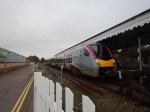
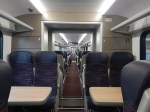
Some points about the journey.
The Class 755 Train Was Fast
Between Derby Road and Trimley stations, the train rattled on at around 70 mph, which is consistent with the current operating speed of 75 mph of the Felixstowe Branch Line.
Looking at Real Time Trains, my train yesterday took four minutes to do the eight miles between Derby Road and Trimley stations and arrived four minutes ahead of schedule.
- The acceleration and deceleration of the new trains is much faster than that assumed for trains on the line.
- The new track is probably capable of handling faster trains.
- The figures on Real Time Trains have a measure of error.
Once the Class 755 train had cleared the junction at the start of the loop, the freight train waiting to come out could leave.
The New Loop
The train I took, illustrated how the new loop allows a passenger train to into into Felixstowe, at the same time as a freight train is coming out.
- The freight train positions itself in the loop.
- The Class 755 train, goes like a rat up a drainpipe down the Northern track and stops into Trimley station.
- As soon as the Class 755 train has passed the freight train, the freight train continues through Derby Road and Westerfield stations to the Great Eastern Main Line..
It looks like the performance of the Class 755 trains, is used to make sure the required timetable is kept.
Could A Second Half-Hourly Service Passenger Service On The Branch?
Consider.
- Felixstowe and the surrounding villages is an area that could be developed with more housing, so there could be a large increase in passenger traffic between Ipswich and Felixstowe.
- The new trains could be very successful in attracting new passengers to the route.
I would be very surprised if Network Rail had designed the new loop at Trimley, without a plan to allow it to be upgrdaed to a half-hourly service.
Are There Seat Reservation Systems On Class 755 Trains?
Greater Anglia’s Class 755 trains may have been ordered mainly for local routes in Norfolk and Suffolk, but they are also going to work some long routes.
- Colchester and Peterborough – 79 milrs
- London Liverpool Street and Lowestoft – 118 miles
- London Liverpool Street and Norwich 114 miles
- Stansted Airport and Norwich – 92 miles
- London Liverpool Street and Norwich via Cambridge 134 miles
These distances are ones, where passengers like to have a reserved seat and you can certainly get reservations on London and Norwich services.
Look at this picture of the window in a Class 755 train.
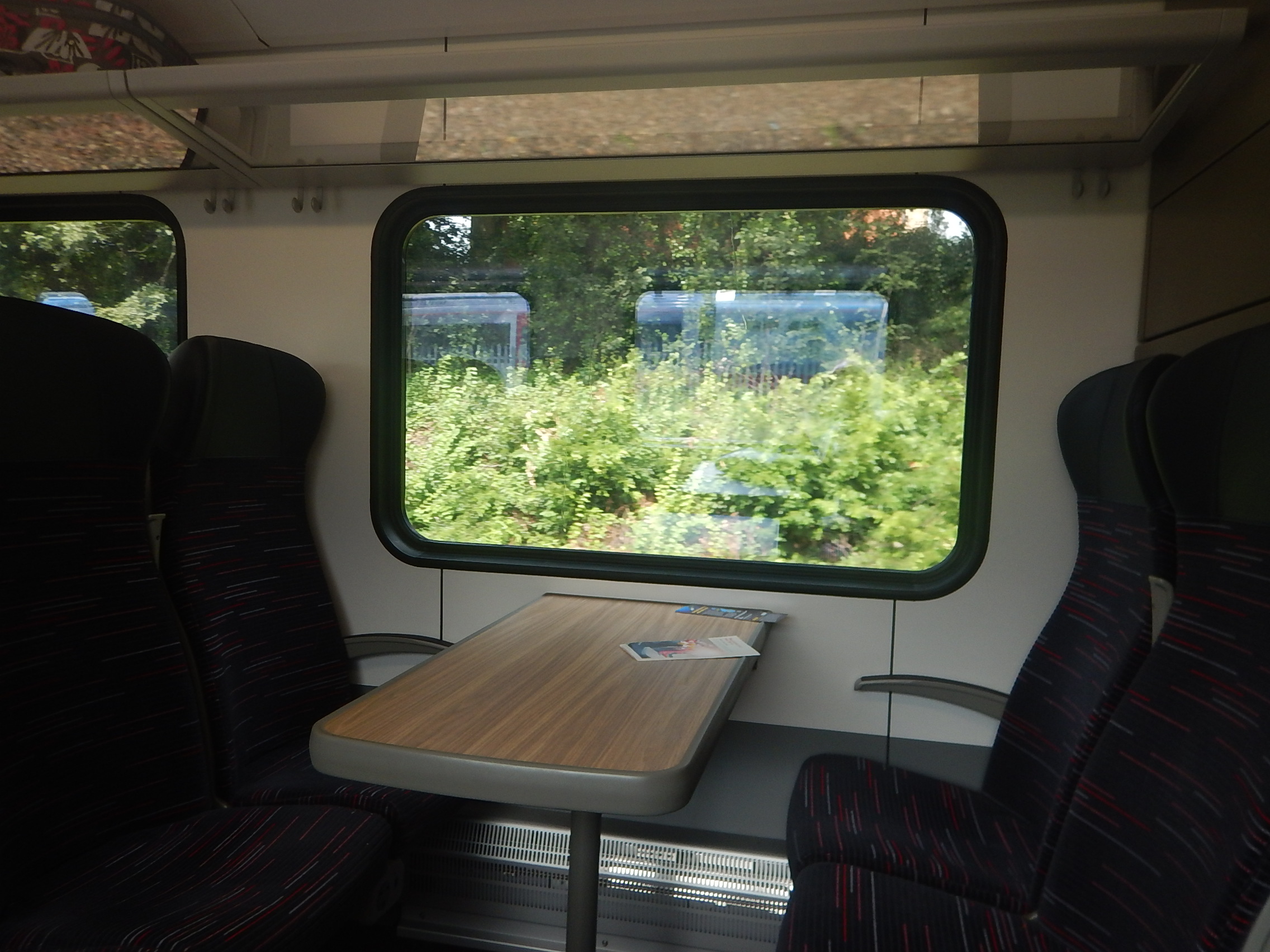
There would appear to be no reservation displays.
Perhaps, they haven’t been fitted yet?
But, it these trains ever run London and Norwich services, via Cambridge because of a weather or power supply emergency, they will need a reservation system.
Can Greater Anglia Run Four-Car Class 755 Trains On Most Services?
Greater Anglia will eventually have the following fleet of Class 755 trains.
- 14 x three-car
- 24 x four-car
Note that only four-car trains are in service.
How Many Trains Are Needed For Each Route?
A rough calculation gives theses trains for various routes.
- Colchester and Peterborough – four trains
- Ipswich and Cambridge – four stains
- Ipswich and Felixstowe – one train
- Ipswich and Lowestoft – three trains
- Norwich and Great Yarmouth/Lowestoft – two trains
- Norwich and Sheringham – two trains
- Norwich and Stansted Airport – four trains
- Sudbury and Colchester Town – two trains
This makes a total of only twenty-two trains. And Greater Anglia have a fleet of twenty-four!
I have seen it written that the Sudbury and Colchester Town service will be run using three-car trains.
Trains North Of Ipswich And Cambridge
Sp it looks like all trains North of Ipswich and Cambridge can be four-car trains, as there are enough trains.
It also gives operational advantages for services to Norwich.
- I took a train from Cambridge to Norwich and noticed, that after unloading passengers at Norwich, it picked up a load more for Cromer and Sheringham and reversed out of the station.
- Norwich services to Great Yarmouth and Lowestoft weave a pattern between the City and the coast all day.
- A spare can be based at Norwich Thorpe Depot, in case a train fails.
- I assume that one Class 755 train can act as a Thunderbird or rescue locomotive for a stalled train.
Ipswich station could see a major sort-out.
- Only three services to and from Cambridge, Felixstowe and Lowestoft, will terminate and go North at the station.
- Will eventually all these services turnback in the bay platform 1?
- Through services going South from Norwich and Lowestoft would use Platfoirm 2
- The new Peterborough and Colchester service will use Platform 2, when going South.
- All Northbound through services would use Platform 3.
- Terminating services from London will use Platform 4.
It looks like Greater Anglia’s proposed timetable simplifies operation at Ipswich and means no new building there.
I suggested that the three services from Cambridge, Felixstowe and Lowestoft all terminate in Platform 1.
- Platform 1 can handle a four-car Class 755 train.
- Three trains per hour (tph) could easily be accommodated in one platform.
- There is space around the platform to improve the passenger experience.
There may be the possibility to use the trains more efficiently.
- Ipswich and Lowestoft currently takes 91 minutes
- Ipswich and Cambridge currently takes 81 minutes
The Class 755 trains will shave a few minutes off these times, but they will still result in a long wait at terminals.
Combining the two services with a reverse at Ipswich might be advantageous.
- Greater Anglia could need less trains for the service.
- Passengers would have extra route choices.
There are some interesting possibilities.
Where Will The Three-Car Trains Be Used?
I believe and I have tried to show the possibilities, that Greater Anglia will use four-car trains efficiently on all their core routes, with the exception of Sudbury and Colchester Town, where three-car trains will be used.
So where will the other three-car trains be used?
New Services
Greater Anglia, Network Rail and politicians have talked about the following new services.
- A direct service between Lowestoft and Great Yarmouth via Reedham.
- Reinstatement of the March and Wisbech service.
- Partial reopening of the Aldeburgh Branch if Sizewell C is built.
In recent years Greater Anglia, Network Rail and others have used the Mid Norfolk Railway, which is a heritage railway for various purposes.
- Storing rail maintenance equipment.
- Moving light tanks for the Army by train.
- Training emergency services.
- Rail enthusiasts tours, including one in an HST,
- Storing trains for Greater Anglia. This was a £3.25million. deal.
I feel that because of the train storage deal, Greater Anglia will explore the possibility of a local Norwich service to Dereham, which is a town of just under 19,000 people with no National Rail connection..
- It could be a joint venture between Greater Anglia and the Mid Norfolk Railway.
- Norwich and Dereham would take under thirty minutes.
- Services could use the Mid-Norkfolk Railway’s stations at Wymondham Abbey, Kimberley Park, Thuxton, Yaxham and Dereham as appropriate.
- Felixstowe, a similar sized town to Dereham attracts 200,000 passengers per year.
The service could be a nice little earner for both companies.
Capacity Increases
With new trains on all Greater Anglia’s services, I suspect that Greater Anglia believe they will see a substantial increase in passengers.
- There will be a large increase in train capacity.
- Services should be faster.
- Services will be more frequent.
But some services will need more capacity.
So will we see pairs of three-car trains working on some services, where a four-car train is not big enough?
Sub-Leasing To Other Companies
It does seem that either Greater Anglia is going to have a large expansion of services or they have acquired too many trains.
Unless of course, they hope to make some of the Class 755 trains available to other companies.
Conclusion
In answer to the title of this post, the answer is yes!
But Greater Anglia must have expansion plans using their three-car Class 755 trains.
Class 755 Trains Are Now Running Between Ipswich And Cambridge
According to this article on the East Anglia Daily Times, the new Stadler Class 755 trains are now running between Ipswich and Cambridge stations.
The article also makes these points.
- The Class 153 trains will be retired at the end of this week.
- More Class 755 trains wll come into service in the coming weeks.
There is a software problem that restricts full operation, which should be fixed in a couple of weeks, which is described like this.
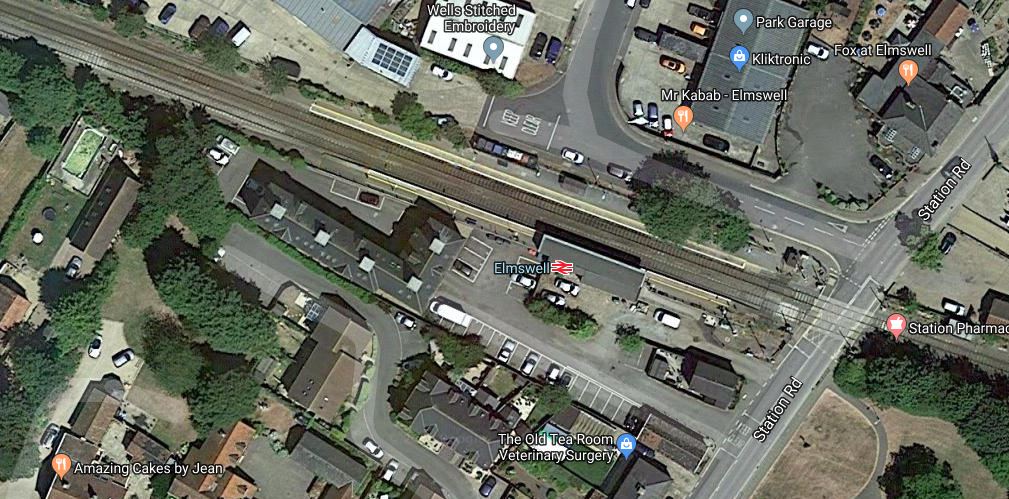
A new piece of software is due to be installed within a few weeks – but until then passengers heading east from Elmswell and west from Kennett are being taken by bus to the next station.
Both Elmswell and Kennett are simpler stations, with short platforms.
This Google Map shows Elmswell station.
And this Google Map shows Kennett station.

I wonder, if with these stations, selective door opening is needed the on one platform and the layout doesn’t fit the original software.
When you write software to work in a large number of situations, it’s difficult to make sure you cover everything.
Greater Anglian’s solution of a bus to get around the problem is not an ideal solution, but it should work, until the software is fixed.
New Trains Make Debut On Suffolk Route From Ipswich To Felixstowe
The title of this post, is the same as that of this article on the East Anglian Daily Times.
This introductory paagraph says it all.
The first new Greater Anglia train operating on Suffolk routes out of Ipswich has gone into service on the Felixstowe branch.
Frim the picture I’m sure it is a four-car Class 755 train.
 The Anonymous Widower