Will Whitechapel Station Have The Widest Platform On The Underground?
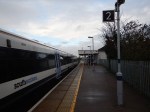
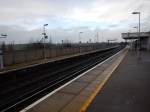
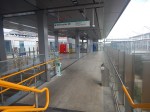
I took this picture across the island platform for the Sub Surface Lines at Whitechapel station, this morning.
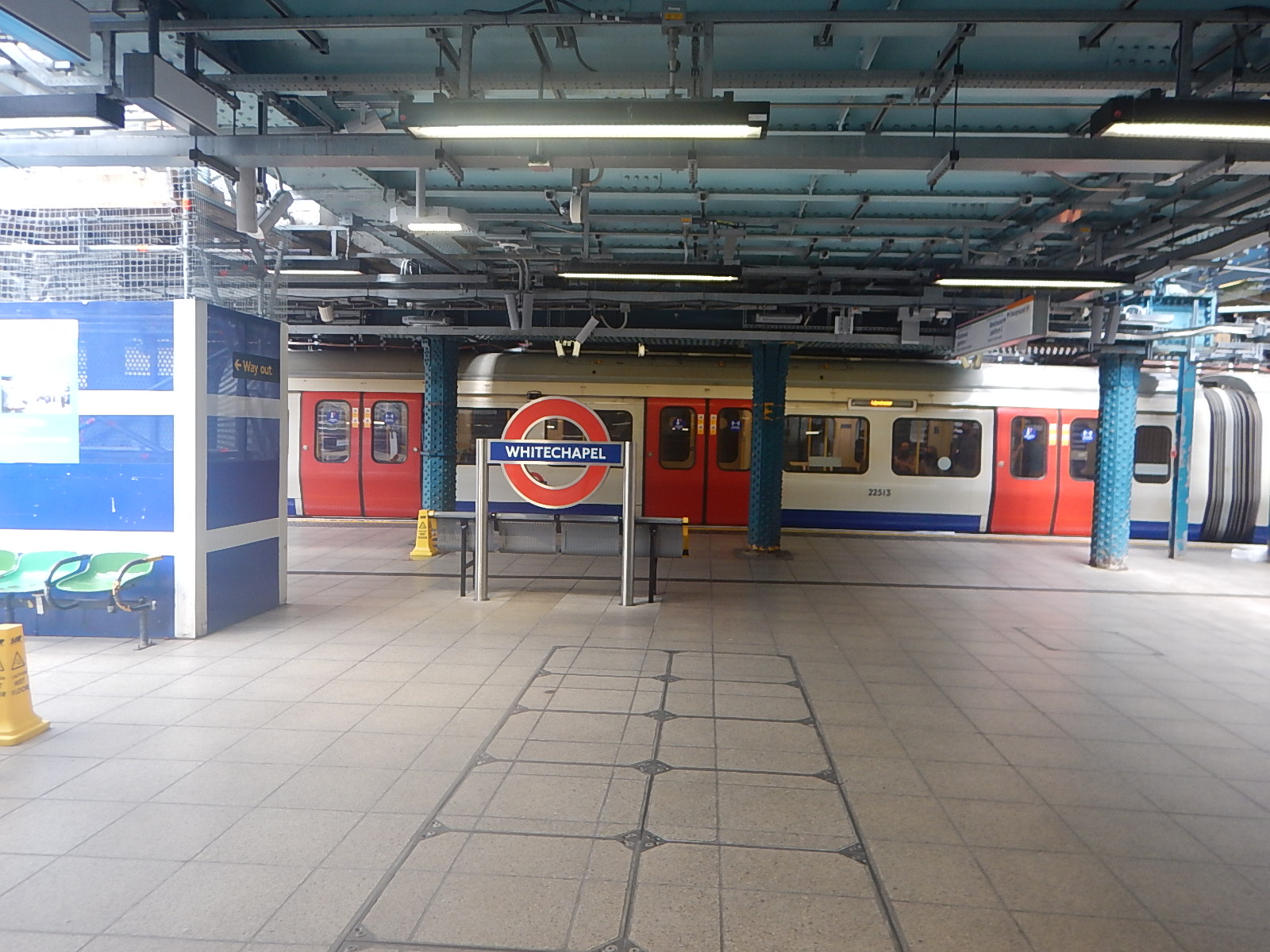
It will certainly be a wide platform, when the station is completed.
It is also shown on this map from carto metro of the lines through the station.
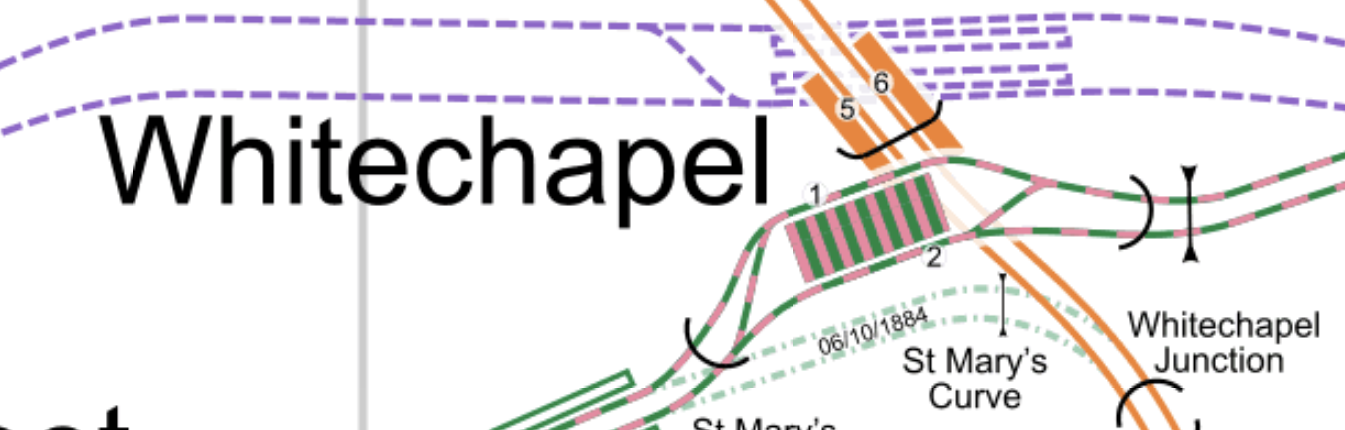
Note.
- Crossrail is shown in purple.
- The Overground is shown in orange.
- The Sub Surface Lines are shown in green and red.
Platforms 1 and 2 form a very wide island platform.
The station is unique in that three full-size high-capacity and high-frequency lines connect at the station.
- Crossrail – East-West – 24 tph – 1,500 passengers per train.
- Sub Surface Lines – East-West – 21 tph – 1209 passengers per train
- Overground – North-South – 16 tph – 170 passengers per train
A lot of passengers will change trains at Whitechapel station, so the spacious platform will be useful.
Will passengers also use the platform to reverse direction.
The quickest way between Liverpool Street and Blackfriars stations is to get a Circle Line train, but passengers could go two stops on a Hammersmith and City train to Whitechapel, walk across the platform and then take the District Line to Victoria.
Alternatively, you could take Crossrail to Whitechapel to get the District Line.
But the latter is in the advanced course on Ducking and Diving.
Whitechapel Station – 10th August 2021
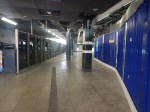
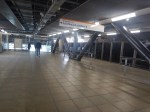
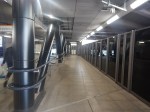
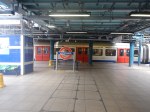
I took these pictures as I passed through Whitechapel station, this morning.




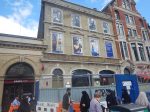

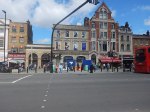


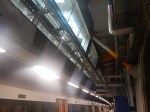
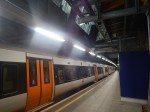
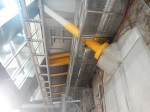

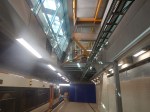


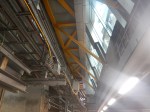
Note.
- Much of the platform lighting on the Sub Surface Lines platforms is now in place.
- The main entrance to the station on appears to be coming on.
- The walkway over the Overground trains appears to be fairly well fitted out.
- There are a lot less blue hoardings generally.
This picture from Crossrail is a visualisation of the Overground platforms, after completion.
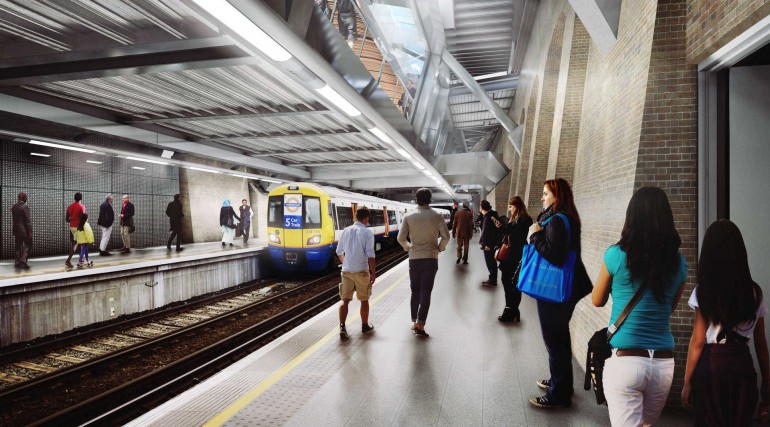
My last five pictures show the final design emerging.
When Will Whitechapel Station Be Finished?
This weekend, the station is closed on Saturday and Sunday. Could the builders be having a big push to get the station ready for opening?
- Your guess as to the finish date is as good as mine!
- The station is gradually coming out of its shell of hoardings and starting to look impressive.
But I did write a post called Is Whitechapel Station Going To Be A Jewel In The East?. I still have high hopes for the station being an architectural gem.
The Crossrail Tracks To The West Of Paddington Station
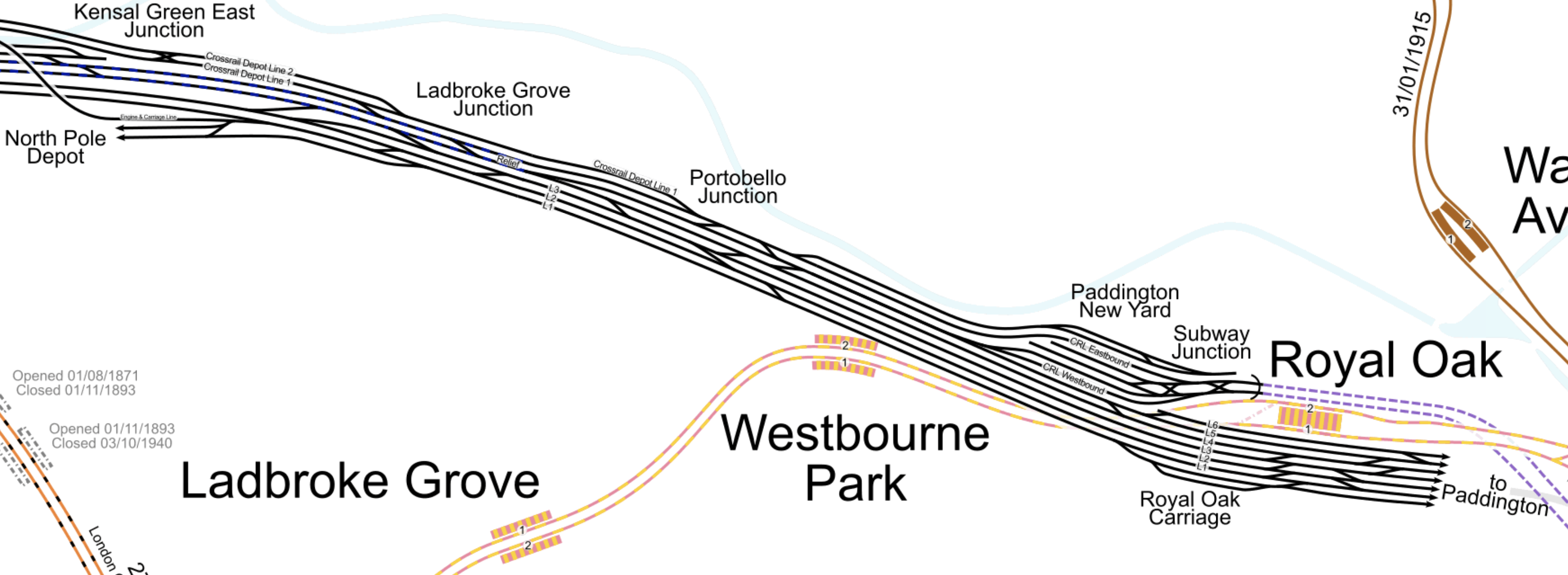
This map from carto metro, shows the track layout to the West of the Crossrail platforms at Paddington station.
Note.
- The Crossrail tunnels are shown in dotted purple at the Eastern end of the map.
- The tracks change from purple to black at the Royal Oak tunnel portal.
- Two tracks named CRL Eastbound and CRL Westbound appear to pass either side of two turnback sidings.
- These tracks change to purple in colour and can be followed to the Western end of the map.
- Tracks break off from this route to the North and serve the depot at Old Oak Common.
It appears to be a very clean and simple layout.
Crossrail Formally Hands Paddington Station Over To TfL
The title of this post, is the same as that article on Ian Visits.
Ian says this about the current status of the stations.
This is the sixth of the Elizabeth line stations to be transferred over to TfL, following Custom House, Farringdon, Tottenham Court Road, Woolwich and Liverpool Street stations, which leaves only Canary Wharf, Whitechapel and the late running Bond Street to go.
Paddington station certainly looked very ready, when I visited yesterday and took the pictures in The Main Crossrail Entrance At Paddington Station.
The Main Crossrail Entrance At Paddington Station
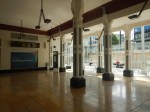
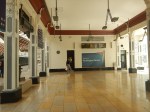
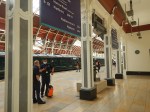
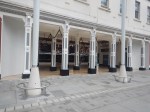
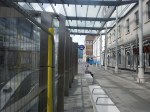
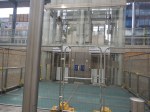
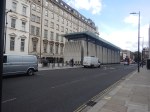
These pictures show the entrance to Crossrail at Paddington station, which is by Platform 1.








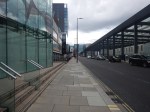
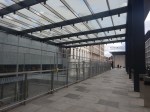
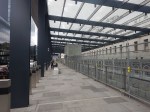

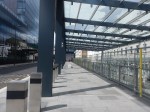
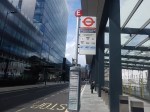
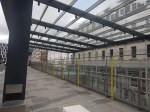
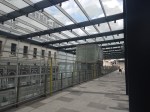
Note.
- The whole entrance is under a massive glass roof.
- Eastbourne Terrace is above the station and connected to it by stairs and a pair of lifts.
- There is a bus stop and short-term parking on Eastbourne Terrace.
- There are a large number of escalators between the main line station and the Crossrail level.
- There are plenty of seats everywhere.
- It is only a short walk between one set of escalators to Crossrail and the shops in the Lawn.
I think Brunel would have liked it, as it has a touch of the over-the-top.
This is a 3D Google Map of the new entrance.

Note.
- The cloud pattern on the roof is clearly visible.
- The lifts to the station are in the middle and the stairs are at the ends of the roof.
- The blue dot shows the position of the bus stop, where about five routes stop.
Will cars and taxis be able to drop people off in Eastbourne Terrace?
Conclusion
It’s an impressive new entrance to the station.
West Drayton Station – 22nd July 2021
West Drayton station is now substantially complete, as these pictures show.

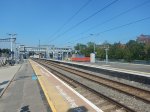
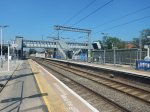

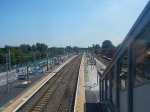
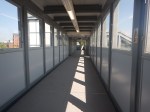
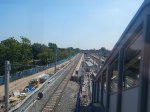

There is obviously work to do including.
- Finishing the station frontage.
- Completion of the building on Platform 4 and 5.
The map from carto metro shows the lines through the station.
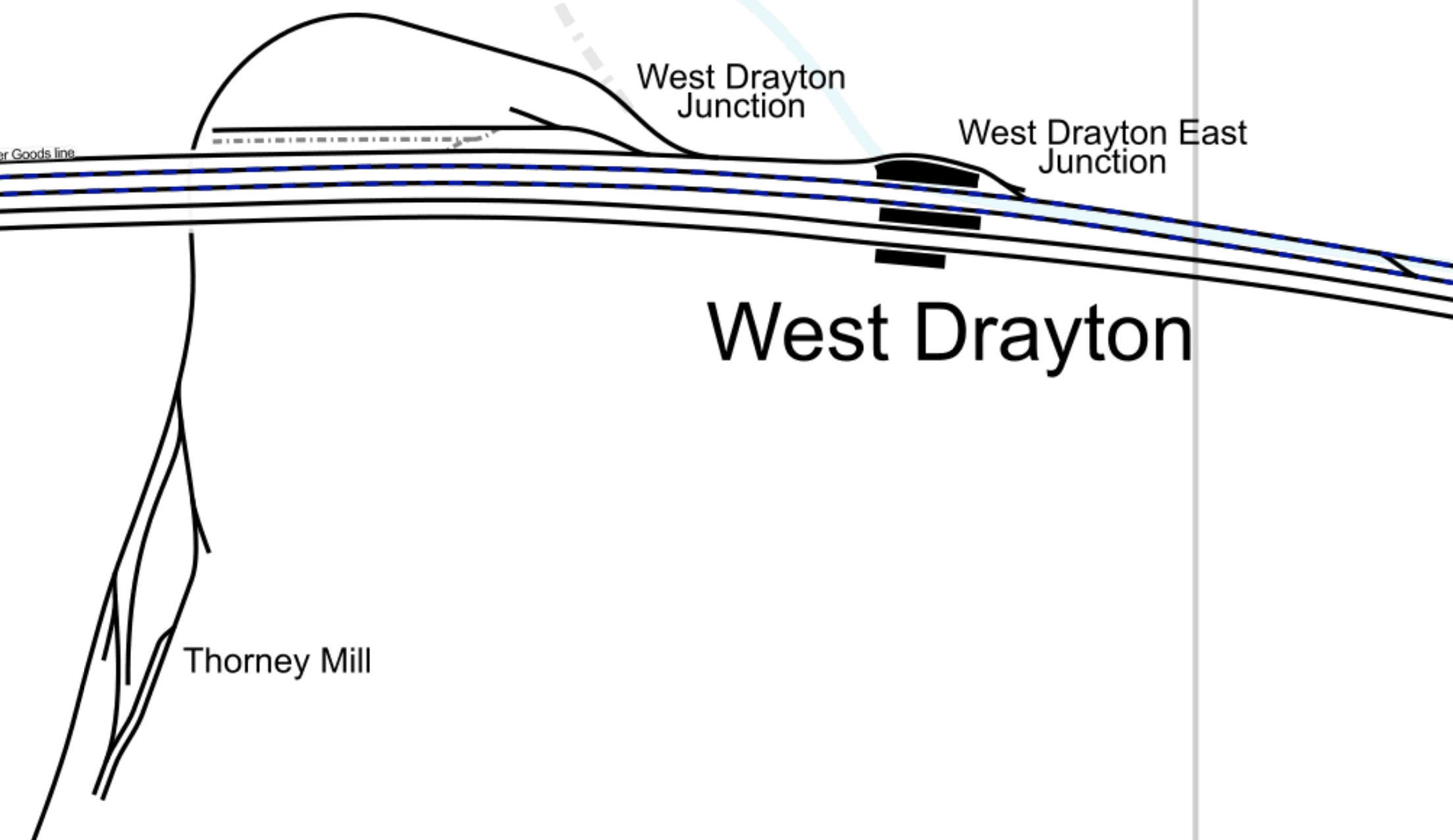
Thorney Mill is an aggregates depot on the former Staines and West Drayton Railway. There is also an aviation fuel terminal for Heathrow Airport at Colnbrook, which is further to the South.
I do wonder, if the former Staines and West Drayton Railway can be repurposed to improve the operation of Heathrow Airport.
An Analysis Of The Train Service On The East Kent Line With Respect To The Three Options For Crossrail To Ebbsfleet (C2E)
Much of the analysis is an update of a post called Up To £3 Billion For Crossrail To Ebbsfleet, that I wrote in June 2019.
Current Services Along The North Kent Line
I shall start by looking at current services on the North Kent Line.
Thameslink – Luton And Rainham (Kent)
A Thameslink service
- Two trains per hour (tph)
- South of the Thames, the service calls at London Bridge, Deptford, Greenwich, Maze Hill, Whatcombe Park, Charlton, Woolwich Arsenal, Plumstead, Abbey Wood, Slade Green, Dartford, Stone Crossing, Greenhithe for Bluewater, Swanscombe, Northfleet, Gravesend, Higham, Strood, Rochester, Chatham and Gillingham.
- Eight-car Class 700 trains work the route, which have a 100 mph operating speed.
- The service calls at Northfleet for a possible interchange with services running from Ebbsfleet International station
- The service calls at Abbey Wood for interchange with Crossrail.
If there needed to be more capacity on this service, I suspect Thameslink could run twelve-car trains.
Southeastern – London Charing Cross And Gravesend
A Southeastern Metro service.
- Two tph
- Calls at Waterloo East, London Bridge, Hither Green, Lee, Mottingham, New Eltham, Sidcup, Albany Park, Bexley, Crayford, Dartford, Stone Crossing, Greenhithe for Bluewater, Swanscombe and Northfleet
- The service calls at Northfleet for a possible interchange with services running from Ebbsfleet International station.
- The service calls at Gravesend for interchange with Southeastern HighSpeed services between St. Pancras International station and North-East Kent, East Kent and soon-to-be East Sussex.
- Class 465 trains work the route, which have a 75 mph operating speed.
This picture shows a train for Gravesend in London Bridge station.
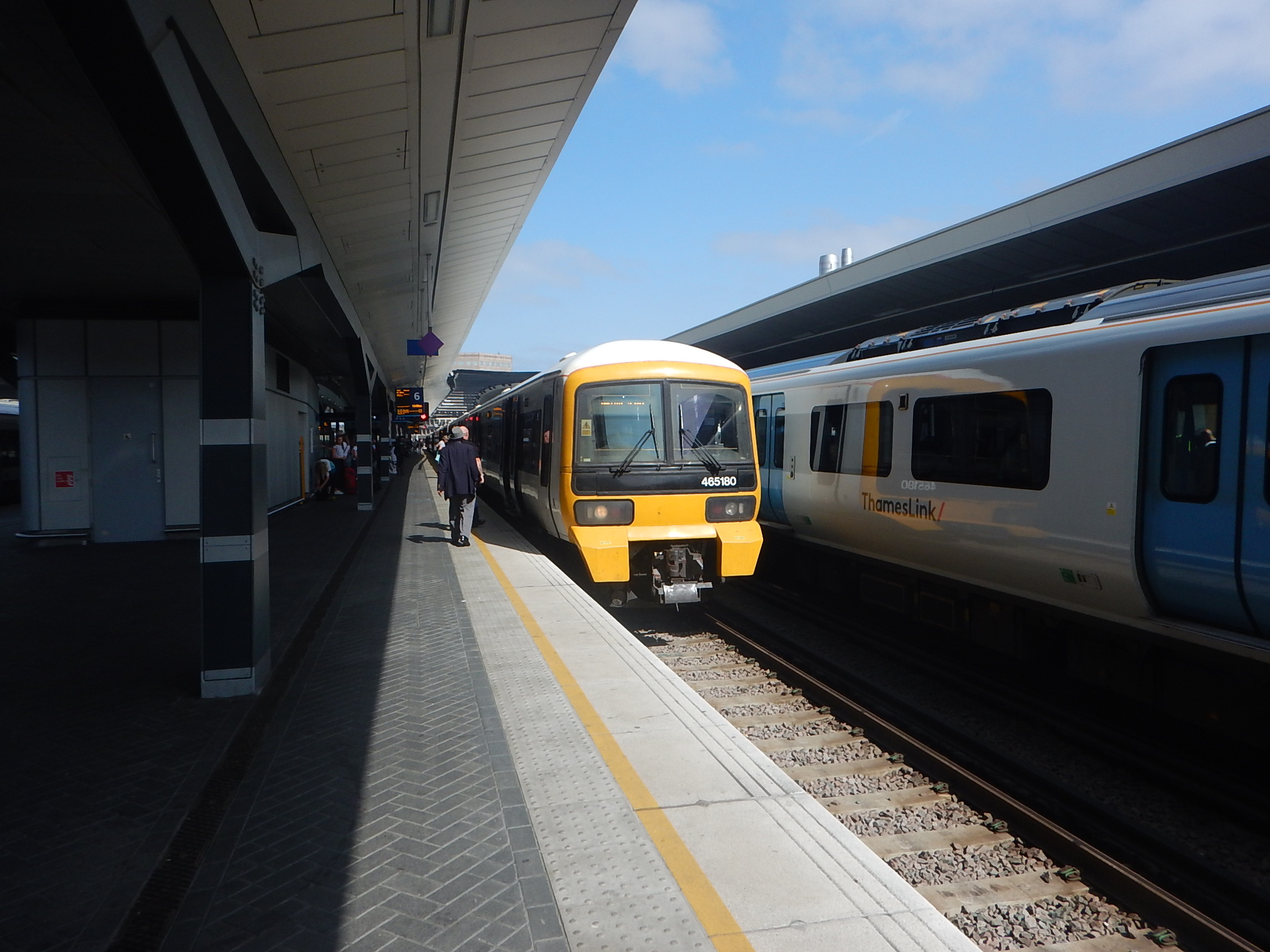
My feeling, is that the service would be improved by modern 100 mph trains, as these antique slow-coaches must restrict the speed of faster trains.
Southeastern – London Cannon Street And Dartford Loop Line
A Southeastern Metro service.
- Four tph in both directions.
- Calls at London Bridge, Deptford, Greenwich, Maze Hill, Westcombe Park, Charlton, Woolwich Dockyard, Woolwich Arsenal, Plumstead, Abbey Wood, Belvedere, Erith and Slade Green.
- Two tph return to Cannon Street via Crayford and Sidcup and two tph return to Cannon Street via Barnehurst and Bexleyheath.
- The service calls at Abbey Wood for a planned interchange with Crossrail.
- Class 465 trains work the route.
As I said with the previous service, these 75 mph trains need replacing with 100 mph trains.
Southeastern – London Charing Cross And Dartford
A Southeastern Metro service.
- Two tph
- Calls at Waterloo East, London Bridge, Lewisham, Blackheath, Charlton, Woolwich Dockyard, Woolwich Arsenal, Plumstead, Abbey Wood, Belvedere, Erith and Slade Green.
- The service calls at Abbey Wood for a planned interchange with Crossrail.
- Class 465 trains work the route.
As I said with the two previous services, these 75 mph trains need replacing with 100 mph trains.
Southeastern – London Victoria And Dover
A Southeastern Mainline service.
- Two tph
- Calls on the North Kent Line at Rochester, Chatham, Gillingham and Rainham.
- Class 465 trains work the route.
As I said with previous services, these 75 mph trains need replacing with 100 mph trains.
Southeastern – London Victoria And Ramsgate
A Southeastern Mainline service.
- One tph
- Calls on the North Kent Line at Rochester, Chatham, Gillingham and Rainham.
- Class 465 trains work the route.
As I said with previous services, these 75 mph trains need replacing with 100 mph trains.
Southeastern – London St. Pancras And Faversham
A Southeastern HighSpeed service.
- One tph
- Calls at Stratford International, Ebbsfleet International, Gravesend, Strood, Rochester, Chatham, Gillingham, Rainham and Sittingbourne.
- The service calls at Ebbsfleet International for an interchange with Continental services.
- Class 395 trains work the route, which have a 100 mph operating speed on lines electrified using a third-rail.
This picture shows a Class 395 train at Gravesend station.
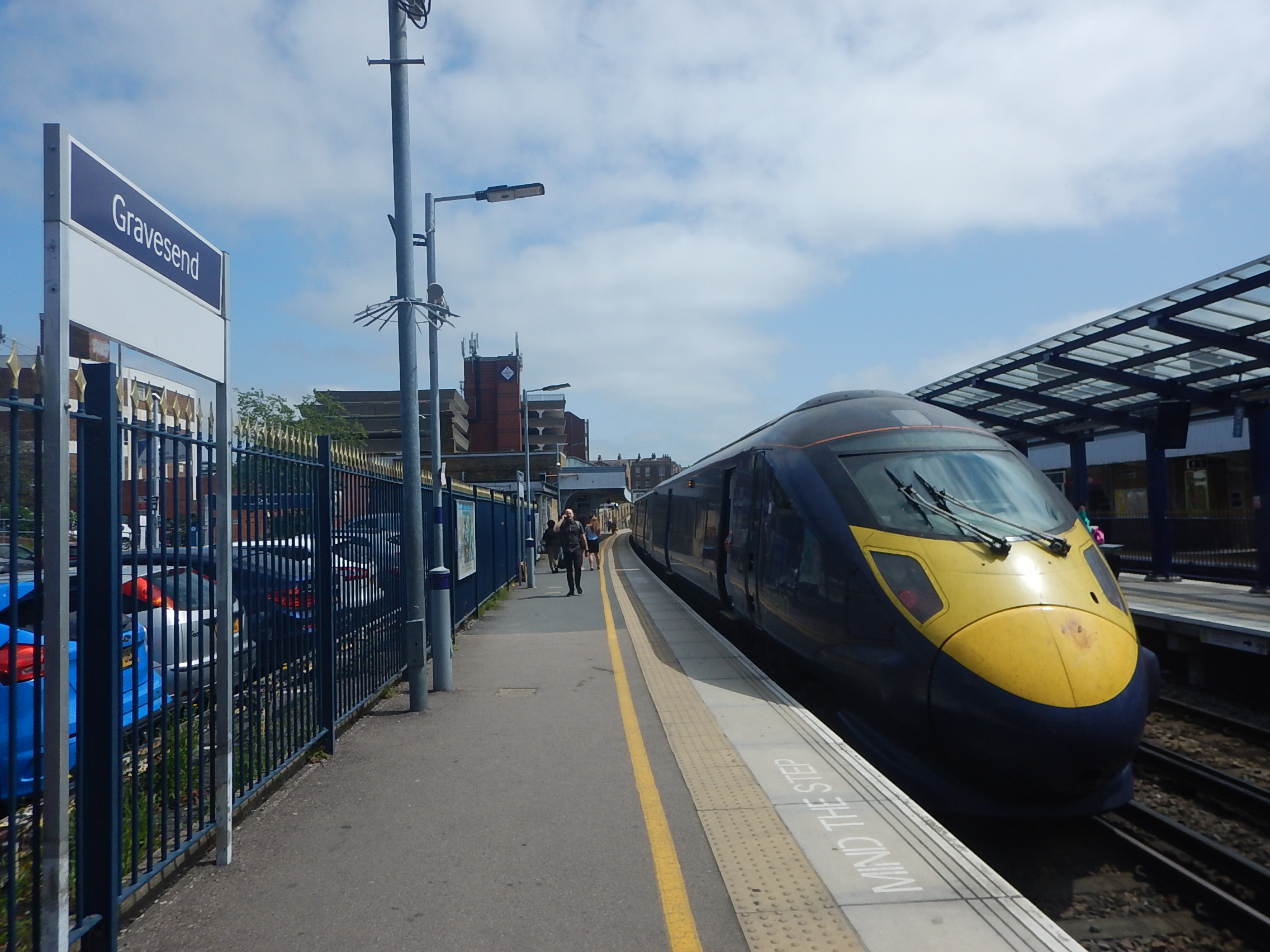
East of Ebbsfleet International, this service can be considered a 100 mph local train, that gets slowed by the 75 mph services.
Southeastern – London St Pancras International Loop Service
A Southeastern HighSpeed service.
- One tph
- Calls at Stratford International, Ebbsfleet International, Gravesend, Strood, Rochester, Chatham, Gillingham, Rainham, Sittingbourne, Faversham, Whitstable, Herne Bay, Birchington-on-Sea, Margate, Broadstairs, Ramsgate, Sandwich, Deal, Walmer, Martin Mill, Dover Priory, Folkestone Central, Folkestone West, Ashford International, Ebbsfleet International and Stratford International.
- The service calls at Ebbsfleet International and Ashford International for an interchange with Continental services.
- Class 395 trains work the route.
East of Ebbsfleet International, this service can be considered a 100 mph local train, that gets slowed by the 75 mph services.
Southeastern – London St Pancras International And Ramsgate
A Southeastern HighSpeed service.
- One tph
- Calls at Stratford International, Ebbsfleet International, Ashford International, Canterbury West, Ramsgate and Broadstairs
- The service calls at Ebbsfleet International and Ashford International for an interchange with Continental services.
- Class 395 trains work the route.
East of Ashford International, this service can be considered a 100 mph local train, that gets slowed by the 75 mph services.
A Summary Of Services By Station
I will look at the current number of trains at stations between London Bridge and Faversham.
- Deptford – 6 tph
- Greenwich – 6 tph
- Maze Hill – 6 tph
- Westcombe Park – 6 tph
- Charlton – 8 tph
- Woolwich Dockyard – 6 tph
- Woolwich Arsenal – 8 tph
- Plumstead – 8 tph
- Abbey Wood – 8 tph
- Belvedere – 6 tph
- Erith – 6 tph
- Slade Green – 6 tph
- Dartford – 12 tph to London and 6 tph to the East
- Stone Crossing – 4 tph
- Greenhithe for Bluewater – 6 tph
- Swanscombe – 4 tph
- Northfleet – 4 tph
- Gravesend – 6 tph to London and 5 tph to the East
- Higham – 2 tph
- Strood – 4 tph
- Rochester – 7 tph
- Chatham – 7 tph
- Gillingham – 7 tph
- Rainham – 7 tph to London and 5 tph to the East
- Sittingbourne – 5 tph
- Faversham – 5 tph
Note.
- This is almost a train every ten minutes all the way from London to Faversham.
- Between Gravesend and Faversham one tph is a Southeastern HighSpeed service.
- In addition Ebbsfleet International has four tph to and from London St. Pancras International.
This can be considered the base service to which Crossrail services can be added.
Service Frequency Of Option 1
The first option provides for an extension of Crossrail from Abbey Wood to Northfleet/Ebbsfleet and Gravesend, sharing the existing tracks with National Rail services.
- Of the 12 trains per hour (tph) that are planned to run to Abbey Wood. four tph will terminate at each of Abbey Wood, Northfleet/Ebbsfleet and Gravesend.
- Crossrail trains would call at all stations on the North Kent Line between Abbey Wood and Gravesend stations.
This gives a summary as follows.
- Deptford – 6 tph
- Greenwich – 6 tph
- Maze Hill – 6 tph
- Westcombe Park – 6 tph
- Charlton – 8 tph
- Woolwich Dockyard – 6 tph
- Woolwich Arsenal – 8 tph
- Plumstead – 8 tph
- Abbey Wood – 20 tph
- Belvedere – 14 tph
- Erith – 14 tph
- Slade Green – 14 tph
- Dartford – 20 tph to London and 14 tph to the East
- Stone Crossing – 12 tph
- Greenhithe for Bluewater – 14 tph
- Swanscombe – 12 tph
- Northfleet – 12 tph
- Gravesend – 10 tph to London and 5 tph to the East
- Higham – 2 tph
- Strood – 4 tph
- Rochester – 7 tph
- Chatham – 7 tph
- Gillingham – 7 tph
- Rainham – 7 tph to London and 5 tph to the East
- Sittingbourne – 5 tph
- Faversham – 5 tph
Note.
- Train frequencies between Abbey Wood and Northfleet have increased by 8 tph
- Train frequencies at Gravesend have increased by 4 tph.
- Train frequencies to the East of Gravesend are unchanged.
- Between Gravesend and Faversham one tph is a Southeastern HighSpeed service.
- Crossrail has a direct interchange at Gravesend with the Southeastern HighSpeed services.
I am fairly certain that signalling must be improved and train speeds must be increased for Option 1.
Service Frequency Of Option 2
The second option is to draw out Crossrail from south east London to Dartford using new dedicated tracks built next to the existing North Kent line, with increased rail service frequency between Dartford and Northfleet.
- All the 12 tph, that currently are planned to run ro Abbey Wood, all will terminate at Dartford station.
- Crossrail trains would call at all stations on the North Kent Line between Abbey Wood and Dartford stations.
- I will assume that Southeastern run an extra 4 tph between Dartford and Northfleet.
This gives a summary as follows.
- Deptford – 6 tph
- Greenwich – 6 tph
- Maze Hill – 6 tph
- Westcombe Park – 6 tph
- Charlton – 8 tph
- Woolwich Dockyard – 6 tph
- Woolwich Arsenal – 8 tph
- Plumstead – 8 tph
- Abbey Wood – 20 tph
- Belvedere – 18 tph
- Erith – 18 tph
- Slade Green – 18 tph
- Dartford – 24 tph to London and 10 tph to the East
- Stone Crossing – 8 tph
- Greenhithe for Bluewater – 10 tph
- Swanscombe – 8 tph
- Northfleet – 8 tph
- Gravesend – 6 tph to London and 5 tph to the East
- Higham – 2 tph
- Strood – 4 tph
- Rochester – 7 tph
- Chatham – 7 tph
- Gillingham – 7 tph
- Rainham – 7 tph to London and 5 tph to the East
- Sittingbourne – 5 tph
- Faversham – 5 tph
Note.
- There is a big increase in services to between Abbey Wood and Dartford.
- There is an increase of 4 tph in services between Dartford and Northfleet.
- There is no increase in services at Gravesend.
- Between Gravesend and Faversham one tph is a Southeastern HighSpeed service.
- Crossrail has no direct interchange with the Southeastern HighSpeed services.
I am fairly certain that signalling must be improved and train speeds must be increased for Option 2.
Service Frequency Of Option 3
A third option consists of improving the National Rail service between Abbey Wood and Northfleet, combined with a new Bus Rapid Transit service.
- It appears Crossrail services would stay the same at Abbey Wood, with all twelve tph terminating at the station, as are currently planned.
- Southeastern services to Dartford via Abbey Wood would be extended to Northfleet. This would increase the number of Southeastern trains to/from London serving stations between Northfleet and Dartford for connection to Crossrail at Abbey Wood from four to eight tph.
This gives a summary as follows.
- Deptford – 6 tph
- Greenwich – 6 tph
- Maze Hill – 6 tph
- Westcombe Park – 6 tph
- Charlton – 8 tph
- Woolwich Dockyard – 6 tph
- Woolwich Arsenal – 8 tph
- Plumstead – 8 tph
- Abbey Wood – 20 tph
- Belvedere – 6 tph
- Erith – 6 tph
- Slade Green – 6 tph
- Dartford – 8 tph to London and 10 tph to the East
- Stone Crossing – 8 tph
- Greenhithe for Bluewater – 10 tph
- Swanscombe – 8 tph
- Northfleet – 8 tph
- Gravesend – 6 tph to London and 5 tph to the East
- Higham – 2 tph
- Strood – 4 tph
- Rochester – 7 tph
- Chatham – 7 tph
- Gillingham – 7 tph
- Rainham – 7 tph to London and 5 tph to the East
- Sittingbourne – 5 tph
- Faversham – 5 tph
Note.
-
- There is a 4 tph increase in services between Abbey Wood and Northfleet.
- There is no increase in services at Gravesend.
- Between Gravesend and Faversham one tph is a Southeastern HighSpeed service.
- Crossrail has no direct interchange with the Southeastern HighSpeed services.
I am fairly certain that signalling must be improved and train speeds must be increased for Option 3.
Conclusion
I have come to several small conclusions about future services on the North Kent Line.
Improved Signalling
To handle the number of trains required, I am fairly certain that modern digital signalling as used on the central sections of Crossrail and Thameslink, should be installed on the route.
Faster Trains
The operating speed of the North Kent Line is 90 mph, which is not a good fit to the operating speed of the trains.
- Class 375 train – 100 mph
- Class 376 train – 75 mph
- Class 395 train – 100 mph
- Class 465 train – 75 mph
- Class 466 train – 75 mph
- Class 700 train – 100 mph
- Class 707 train – 100 mph
I’m sure that train capacity would be increased if trains could operate at 90 mph or even 100 mph on the route.
Only Option 1 Allows Interchange Between Crossrail And Southeastern HighSpeed Services
Option 1 allows this interchange at Gravesend and it could prove useful, when travelling between North-East Kent and Crossrail stations, including Paddington and Heathrow.
More Services East Of Gravesend
I suspect that there could be extra paths to the East of Gravesend.
These could be either classic or HighSpeed services.
In Kent On The Cusp Of Change – Highspeed Routes, I said this.
The Kent On The Cusp Of Change article in the July 2017 Edition of Modern Railways talks about the Southeastern Highspeed routes through Kent.
Some principles are laid down.
- All six-car services would be extended to twelve-car services.
- Trains could be divided at Ashford International station to serve multiple destinations.
- Maidstone West station would get an hourly Off Peak service.
The article gives an estimate that at least another twenty Class 395 trains are needed of which perhaps three would have batteries for operation along the Marshlink Line between Ashford International and Ore stations.
The new timetable proposed in the article is similar to that now, with the following changes in each hour.
- All Day – A St. Pancras – Ashford – Dover Priory service runs once per hour and splits at Ashford with one six-car train going to and from Hastings and the other six-car train going to and from Dover Priory.
- Off Peak – A new St. Pancras – Ashford – Canterbury West service runs once per hour.
- All Day – A new St. Pancras – Ebbsfleet service runs twice per hour.
- Off Peak – A new St. Pancras – Gravesend – Strood – Maidstone West service runs once per hour.
In addition all trains passing Thanet Parkway station will stop after it opens.
Note.
- Southeastern HighSpeed services will serve Hastings.
- Gravesend gets a second Southeastern HighSpeed service to St. Pancras.
I also wrote Kent On The Cusp Of Change – Fawkham Junction Link, which is about a Network Rail proposal to use Victoria as a second terminal for Southeastern HighSpeed services.
Little has been said about using Victoria as a second terminal, but if it was, it could free up space on the North Kent Lines, which would allow more paths for Crossrail.
Proposals For Crossrail Elizabeth Line Extension To Ebbsfleet Cut Down To Three Options
The title of this post, is the same as that of this article on Kent Online.
So what are the three options?
Crossrail To Northfleet/Ebbsfleet And Gravesend
The first option provides for an extension of Crossrail from Abbey Wood to Northfleet/Ebbsfleet and Gravesend, sharing the existing tracks with National Rail services.
- Of the 12 trains per hour (tph) that are planned to run to Abbey Wood. four tph will terminate at each of Abbey Wood, Northfleet/Ebbsfleet and Gravesend.
- A single platform at Abbey Wood, Northfleet and Gravesend would be capable of handling the required four tph.
- Crossrail trains would call at all stations on the North Kent Line between Abbey Wood and Gravesend stations.
- It looks like some form of people-mover will be needed between Northfleet and Ebbsfleet stations.
- Gravesend station could either turn the trains directly or have a turnback facility to the East of the station at Hoo, where provision has been made for train stabling.
- Extension of Crossrail’s digital signalling along the North Kent Line, at least as far as Hoo would probably be needed to cope with the extra trains.
This option would be feasible and would require just a new platform at Northfleet station, the people-mover and perhaps some work at Gravesend station.
Crossrail To Dartford And Northfleet/Ebbsfleet
The second option is to draw out Crossrail from south east London to Dartford using new dedicated tracks built next to the existing North Kent line, with increased rail service frequency between Dartford and Northfleet.
- All the 12 tph, that currently are planned to run ro Abbey Wood, all will terminate at Dartford station.
- Crossrail trains would call at all stations on the North Kent Line between Abbey Wood and Dartford stations.
- It looks like some form of people-mover will be needed between Northfleet and Ebbsfleet stations.
- Extension of Crossrail’s digital signalling along the North Kent Line, at least as far as Hoo would probably be needed to cope with the extra trains.
This option would be feasible and would require a new platform at Northfleet station, the people-mover and a lot of work between Abbey Wood and Dartford stations and at Dartford station.
A Lower Cost Option With Buses
A third option consists of improving the National Rail service between Abbey Wood and Northfleet, combined with a new Bus Rapid Transit service.
- It appears Crossrail services would stay the same at Abbey Wood, with all twelve tph terminating at the station, as are currently planned.
- Southeastern services to Dartford via Abbey Wood would be extended to Northfleet. This would increase the number of Southeastern trains to/from London serving stations between Northfleet and Dartford for connection to Crossrail at Abbey Wood from four to eight tph.
- There would need to be turnback facilities at Northfleet station for the Southeastern services.
- Extension of Crossrail’s digital signalling along the North Kent Line, at least as far as Hoo would probably be needed to cope with the extra trains.
- A Bus Rapid Transit service would be provided between Abbey Wood and Ebbsfleet stations via Slade Green, Dartford and Bluewater.
- A Bus Rapid Transit service would be provided between Slade Green and Ebbsfleet via Greenhithe and Northfleet.
- Both Bus Rapid Transit services would have a frequency of six buses per hour.
This option looks to be feasible and would only require a new platform at Northfleet station.
The Views Of New Civil Engineer
This article on New Civil Engineer gives its views on the three options.
It says this of the first option.
This option would require the construction of some sections of additional track and junction works within the existing rail corridor, significant works at Abbey Wood, Slade Green and Dartford stations and require additional land to accommodate additional train stabling facilities.
And this of the second option.
This option would require significant construction work to build a new two track rail alignment alongside the existing North Kent line, requiring potential compulsory purchase of land and property beyond the existing rail corridor in some areas and significant works at Abbey Wood, Slade Green and Dartford stations, as well as the provision of new train stabling facilities.
It doesn’t comment about the third option, which I take to mean, that all work for the trains can be done within the existing rail corridor.
Components Of The Options
Although the options are different there are some components that appear in more than one option.
Improved Digital Signalling
The number of trains running to the East of Abbey Wood station, will surely increase under all three options and I feel it is essential, that modern digital signalling be installed on the North Kent Lines.
More Train Stabling
Commenting on the first two options, New Civil Engineer says that more stabling will be needed.
In the Gibb Report, Chris Gibb looked at stabling problems with Thameslink and found there was a problem along the North Kent Line. I wrote about it in Gibb Report – Hoo Junction Depot.
I feel that a review of all train stabling in Kent should be performed, so that there is enough space to service and stable the trains of the various operators.
When Crossrail was originally planned, the route was safeguarded to Gravesend and Hoo Junction was put forward as somewhere to stable trains.
A Turnback Platform At Northfleet Station
All three options need a turnback platform at Northfleet station.
- In Option 1 it will be handling Crossrail trains.
- In Options 2 and 3, it will be handling Southeastern trains.
- It probably needs to handle four tph.
- Nine-car Class 345 trains used by Crossrail are 205 metres long.
- Twelve-car Class 377 trains used by Southeastern are 240 metres long.
This Google Map shows Northfleet station.
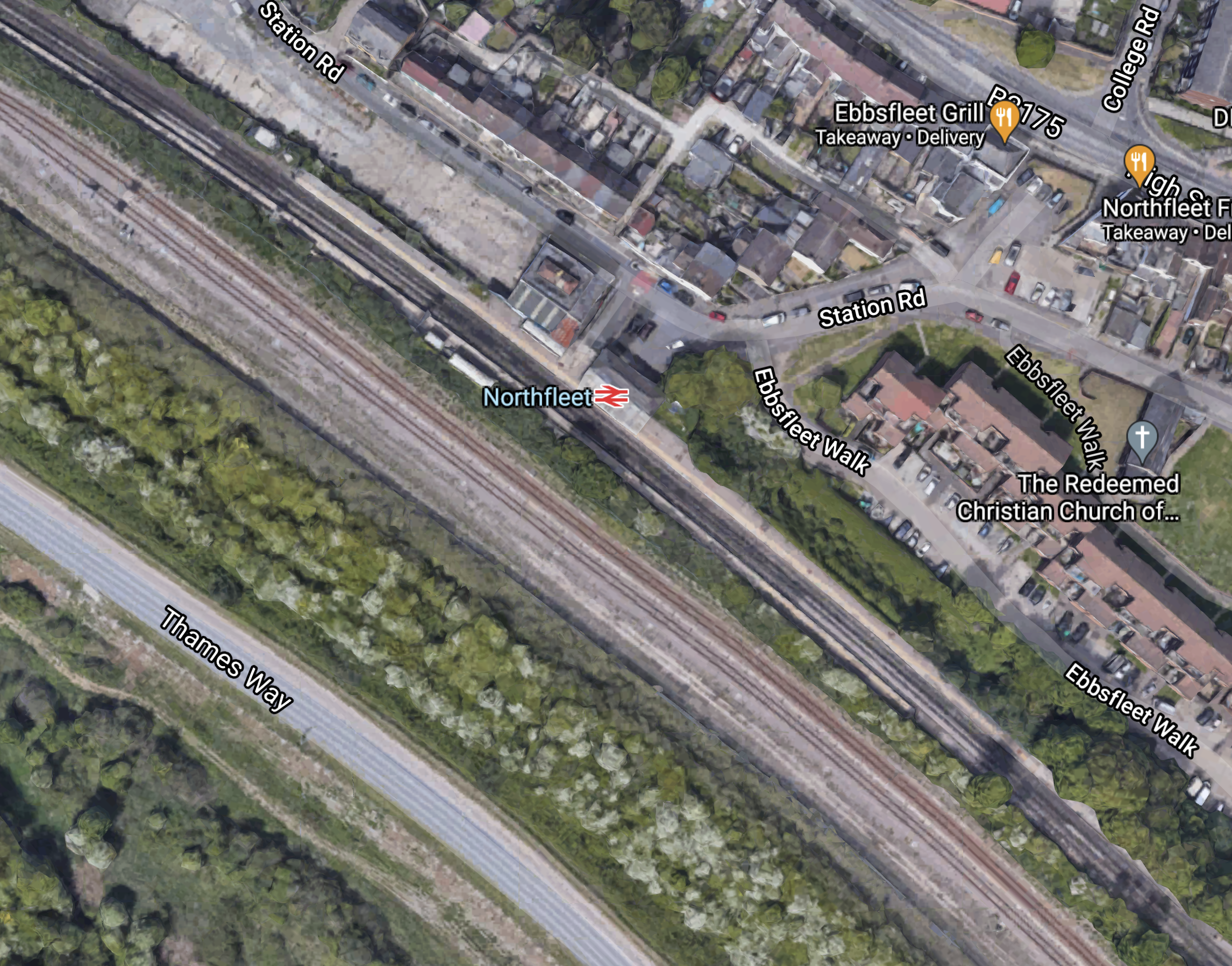
Note.
- The North Kent Line goes diagonally across the map from North-West to South-East.
- Northfleet station is a two-platform station.
- To the South of the station, there are sidings, which are connected to the North Kent Line.
This picture shows the sidings from Northfleet station, with Ebbsfleet station about a mile away.
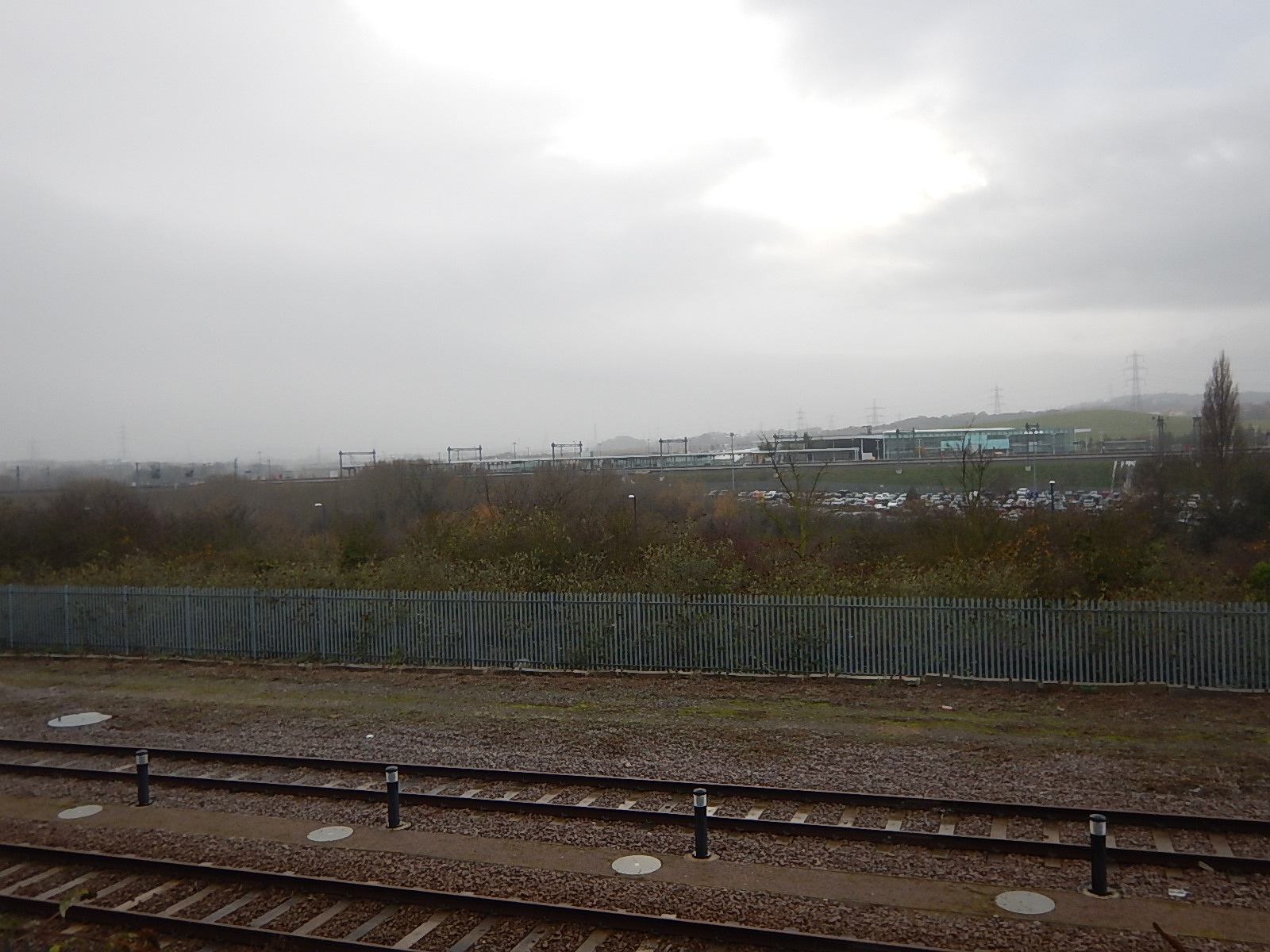
It appears that there would be space to add a well-appointed turnback platform at Northfleet station.
These pictures show some of the features of the current Northfleet station.
Rebuilding to add the turnback platform, could also include.
- Full step-free access
- Modern station buildings
- A deep clean of the pedestrian tunnel.
- An appropriately-sized bus station, with a zero-carbon shuttle bus to Ebbsfleet station.
- Future provision for a high-tech people-mover to Ebbsfleet station.
It is not one of the better stations on the Southeastern network.
But it certainly could be!
I very much feel that Northfleet station needs to be rebuilt with an extra platform.
A People-Mover Between Ebbsfleet And Northfleet Stations
I wrote So Near And Yet So Far! about the poor connection between Ebbsfleet And Northfleet stations.
It is a design crime of the highest order.
There has been a lot of pressure in the past to build a pedestrian link between the two stations, as reported by the Wikipedia entry for Northfleet station.
The station is very close to Ebbsfleet International station (the NNE entrance is only 334 yards (305 m) from Northfleet’s station), but passengers (using public transport) will find it far easier to access Ebbsfleet International from Gravesend or Greenhithe, as these stations are more accessible and offer easy access to Fastrack bus services. The walking route between the two stations is 0.6 miles (1 km) or 0.8 miles (1.3 km) and a suitable pedestrian link has not been built because of funding issues and objections from Land Securities.
Why when Ebbsfleet International station was built in the early 2000s for opening in 2007, was a pedestrian link not built between the two stations?
It sounds like it was a Treasury design for Civil Servants, who work in Westminster and wouldn’t dream of living in Gravesend.
How much did omitting the link save?
Probably in the the long term, about two-fifths of five eighths of f***-all!
The specialists in this type of people-mover are the Doppelmayr/Garaventa Group, who in the UK have built the Emirates Air Line and the Air-Rail Link at Birmingham Airport. Currently, they are building the Luton DART people mover.
Wikipedia says that the Emirates Air-Line cost £60million.

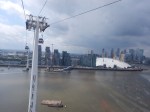
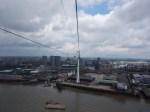


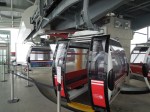
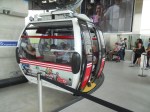
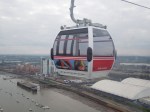
Wouldn’t something similar be an ideal way to welcome people to the UK?
The London Resort
The London Resort, is described like this in its Wikipedia entry.
The London Resort is a proposed theme park and resort in Swanscombe, Kent. The project was announced on 8 October 2012 and, if given planning permission, it is estimated that construction will begin in 2022, with a first gate opening in summer 2024 and a second gate by 2029.
It certainly sounds the sort of place I avoid, but just like Disneyland Paris, I feel the developers will want a rail connection.
They could even want to have another people-mover from Ebbsfleet station.
A Connection To The Bluewater Shopping Centre
The Bluewater Shopping Centre is not easy to get to by public transport and requires a bus from Greenhithe for Bluewater station.
Only Option 3 offered an improvement with a bus between Abbey Wood and Ebbsfleet stations via Slade Green, Dartford and Bluewater, that would run every ten minutes.
Conclusion
It seems that whatever option is eventually chosen, certain works will need to be performed as they are needed for all options.
- Extension of Crossrail’s digital signalling along the North Kent Line, at least as far as Hoo junction would probably be needed to cope with the extra trains.
- A review of train stabling in Kent should be carried out, to make sure there are enough places to service and stable the trains needed, by all the operators/
- Northfleet station needs to be rebuilt with an extra turnback platform for at least four tph.
- Provision should be made for a possible people-mover between Ebbsfleet And Northfleet stations.
The North Kent Line to the East of Abbey Wood station would now be ready for whichever option is chosen.
Because of the London Resort, which has still not been given a definite go-ahead we could see some changes and other options or even some that combine more than one option.
Crossrail’s New Opening Plan
This article on the excellent and well-informed IanVisits is entitled Crossrail Changes Its Staged Opening Plans.
Ian states that Crossrail will be split into two routes.
- Shenfield and Paddington
- Abbey Wood and Heathrow/Reading
Frequencies will be reduced, but Ian states there could be two positive benefits.
- Abbey Wood and Paddington could open earlier in 2022.
- The full integrated service could be brought forward six months.
Why is this possible?
These are my thoughts.
The Covid-19 Pandemic
The current TfL Rail service between Shenfield and Liverpool Street stations coped well before the pandemic and now with reduced passenger numbers it is able to handle current passenger loads without a problem.
I have used Crossrail from Paddington to Heathrow and Reading during the pandemic and Crossrail’s nine-car trains are handling passenger numbers with ease.
It would appear to me, that by using two platforms at Liverpool Street and Paddington stations, the benefits of Crossrail have been delivered to the East and West of the massive Greater London conurbation.
Stratford Station
Stratford station is more or less complete with respect to Crossrail.
- It can handle ten-car trains, if they run in the future.
- The two dedicated platforms for Crossrail, can probably handle the maximum frequency of trains, the line will ever carry.
But Stratford’s biggest advantage is the connections to the Central and Jubilee Lines, and the North London Line of the London Overground, which between them give access to most of Central and North London.
Ealing Broadway Station
A few weeks ago, a fully step-free Ealing Broadway station opened, as I wrote about in Ealing Broadway Station – 31st May 2021.
As with Stratford station, Ealing Broadway station is ready for any future Crossrail service.
It also has connections to the Central and District Lines to give access to most of Central London.
Can The Underground Cope In Central London?
All Lines except the Northern and Piccadilly Lines have seen improvement to signalling and/or trains in recent years and in my meandering around London, they seem to be coping well with the current passenger levels.
Liverpool Street Station
I use Liverpool Street station regularly and changes are happening at the station.
- Platforms have been lengthened so that ten-car Crossrail trains can be handled.
- The main entrance to the Underground was updated a few years ago and has a very wide gateline.
- A wider gateline is being installed for Crossrail and other suburban services on the East side of Liverpool Street station.
- A new entrance to Crossrail has been completed in front of Broadgate and appears ready to open, as I observed in Crossrail’s First Inclined Lift Is Now Available To View!.
A second high capacity step-free entrance has opened on Moorgate. When Crossrail opens through Liverpool Street station opens it will enable the following.
Passengers will be able to walk underground between Liverpool Street and Moorgate, with a substantial section of the route up and down escalators. I described the route in detail in London’s First Underground Roller Coaster.
The Crossrail entrance inside the Underground station at Liverpool Street station is now visible.

Note.
- Crossrail is behind the two pairs of massive stainless-steel doors.
- Peeping through the window, construction appeared to be almost at completion.
- If you turn right here, you take the escalator down to the Central Line.
Eventually, Liverpool Street and Moorgate stations could even be considered a single station with a massive escalator connection between the two original stations.
Liverpool Street And Stratford Stations Together Give Crossrail A Comprehensive Under/Overground Connection
These Under/Overground lines connect to either or both stations.
- Central Line – Connects to both stations, but at Stratford it’s a cross-platform interchange with Crossrail. Ideal for Oxford Street, the City of London and St. Paul’s.
- Circle Line – Connects to Liverpool Street. Ideal for Euston, Kings Cross, Paddington, St. Pancras, Victoria and large parts of South Central and West London.
- Hammersmith And City Line – Connects to Liverpool Street. Ideal for Euston, Kings Cross, Paddington, St. Pancras and large parts of West London.
- Jubilee Line – Connects to Stratford. Ideal for Bond Street, Canary Wharf, London Bridge, Waterloo and Westminster.
- Lea Valley Lines – These Overground Lines connect to Liverpool Street. Ideal for Enfield, Hackney, Haringey, Waltham Forest and North East London and South East Hertfordshire.
- Metropolitan Line – Connects to Liverpool Street. Ideal for Euston, Kings Cross, Paddington and St. Pancras, Wembley Stadium and North-West London.
- North London Line – This Overground Line connects to Stratford. Ideal for Acton, Brent, Dalston, Hackney, Hampstead and a large proportion of North and West London.
Liverpool Street and Stratford certainly have comprehensive connections to the Underground and Overground.
Liverpool Street And Shenfield Is Signalled With TPWS
TPWS is the only signalling system used on the section of Crossrail between Liverpool Street And Shenfield stations.
It offers these benefits, as opposed to the ETCS used in Crossrail’s core tunnel.
- It eased the replacement of the original Class 315 trains with new Class 345 trains.
- It allows Crossrail’s trains to share tracks with other trains not fitted with ETCS.
- Drivers only have to handle one signalling system on the route.
The single signalling system must make commissioning and operating the service between Liverpool Street And Shenfield stations easier.
Liverpool Street Station Gives Crossrail Flexibility In The East
The distance between the two current Crossrail platforms at Liverpool Street station and the steel doors will probably be no more than a couple of minutes walk with just a couple of steps down into the Underground station, which can be by-passed by a lift.
Currently, the service between Liverpool Street and Shenfield station has a frequency of eight trains per hour (tph)
- These trains are currently nine-cars long.
- The two Crossrail platforms at Liverpool Street have been lengthened to handle ten-car trains.
- The gateline for the Crossrail platforms is being improved to handle a higher volume of passengers.
If overcrowding should become a problem between Liverpool Street and Shenfield, then there is a quick fix of adding a tenth car to the trains, which would increase capacity by eleven percent.
The extra cars would be borrowed from Crossrail trains sitting in sidings, that are not needed because of the reduced train frequencies.
When Crossrail opens between Abbey Wood and Paddington stations, passengers needing to go between say Ilford and Paddington will be able to take the short walk between both pairs of Crossrail platforms at Liverpool Street station.
But the big advantage comes, when Crossrail starts running between Shenfield and Paddington.
Trains can be gradually swapped between Liverpool Street and Paddington as a terminus.
If there is a problem in Crossrail’s central tunnel, then services can be swapped back to Crossrail’s two current platforms in the National Rail station.
It looks to be a well-designed system.
Could The Pedestrian Route Between Liverpool Street And Moorgate Stations Be Opened Early?
This article on IanVisits is entitled Northern Line Bank Branch To Close For 4 Months Next Year.
The Northern Line will be closed between Moorgate and Kennington stations from the 15th January to mid-May.
Extra buses will obviously be run between Moorgate and Kennington to help during the closure.
- Finsbury Square is already used to turn buses and could be used as a Northern terminal.
- London Bridge has a bus station and could be used to turn buses.
- In his article Ian talks of buses between Oval and the City.
- The 21 and 141 bus routes run between Moorgate and London Bridge.
Would opening the pedestrian link help a lot of people by providing an easier route between Bank and Moorgate stations, by using the Central Line to Liverpool Street and then the tunnel?
- It would be fully step-free.
- Passengers from say St. Paul’s or Chancery Lane stations on the Central Line needing to get to say Angel station might find it an easier route.
- The weather isn’t always good enough for a walk.
It would be an escalator connection par excellence.
I suspect that this pedestrian route could open before January 15th.
- It will obviously need to be open when Crossrail opens between Abbey Wood and Paddington.
- As a pedestrian route, it will improve connectivity at both Liverpool Street and Moorgate stations.
- The Crossrail station at Liverpool Street, has been handed over to Transport for London.
- It could allow the opening up of the step-free tunnel from the Northern and Northern City Lines to the new entrance at Moorgate station.
Could the last point be the most significant, as it would make the Northern Line platforms at Moorgate station fully step-free in time for the blockade between Moorgate and Kennington stations?
As Transport for London have accepted Liverpool Street station, opening of the pedestrian route is surely their sole decision.
Could The Pedestrian Route Between The Bakerloo Line And Crossrail Be Opened Early?
Access to the Bakerloo Line at Paddington is being transformed by two projects.
- The addition of a step-free pedestrian tunnel, which will be around eighty metres long, that will link the Bakerloo Line and Crossrail.
- A new step-free entrance and booking hall for the Bakerloo Line,that will replace the current Praed Street entrance.
This page on the Transport for London web site, which is entitled Paddington Bakerloo Ticket Hall, gives more details of the new entrance.
Transport for London indicate that the second project will be completed by mid-2022.
But I do wonder, if after Paddington station is handed over to Transport for London, if this tunnel could be opened to give interim step-free access to the Bakerloo Line, until either Crossrail or the new entrance opens.
When Crossrail and these two projects are completed, will this mean that the Bakerloo Line will see a lot more passengers?
Abbey Wood And Paddington
Crossrail between Abbey Wood And Paddington has the following characteristics.
- It is a new twin-track railway, that it doesn’t share with other trains.
- Most of the route is in tunnel, with just three sections on the surface.
- The route is signalled with ETCS.
- All new underground stations will have platform-edge doors.
It is very much a railway designed to the highest modern standards.
The Surface Section At Abbey Wood
The surface section at Abbey Wood has these purposes.
- To provide an interchange station with the North Kent Line.
- To turn back trains towards the West.
- To provide stabling for trains and service trains to enable a smooth operation of the Abbey Wood and Paddington section of Crossrail.
This map from cartometro shows the track layout to the East of Plumstead station.
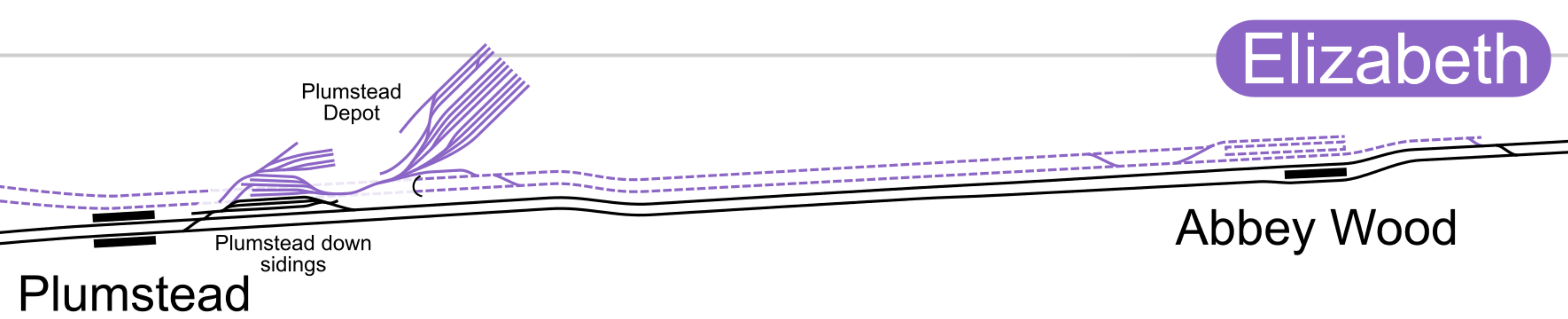
Note.
- Crossrail is shown in purple.
- Abbey Wood station has two platforms for Crossrail and two for the North Kent Line.
- The platforms appear to be numbered one to four from the South.
- There appears to be a turnback for Crossrail trains in Platform 3, which also appears to have crossovers to connect to the North Kent Line.
- Crossovers to the West of Abbey Wood station allow trains to use either Crossrail platform.
- These crossovers also allow access to the sidings at Plumstead.
- The Plumstead tunnel portal can be seen below Plumstead Depot.
If Abbey Wood station follows the two National Rail platforms at Liverpool Street in handling a total of 8 tph, then initially Abbey Wood could handle this frequency of trains.
Ian says this in the first article about the frequencies of Crossrail during testing.
Before the blockade, Crossrail was testing the line with an 8 trains per hour (8tph) service, but this week they are going to be ramping that up to 12tph, which will mirror the timetabled service that the line will offer when it opens early next year.
Note that 12 tph will require Abbey Wood station to handle 6 tph on each platform.
Transport for London also intend to simulate 24 tph through the central section, which will be the Peak frequency when the line fully opens.
The Surface Section At Custom House
This map from cartometro shows the track layout around Custom House station.
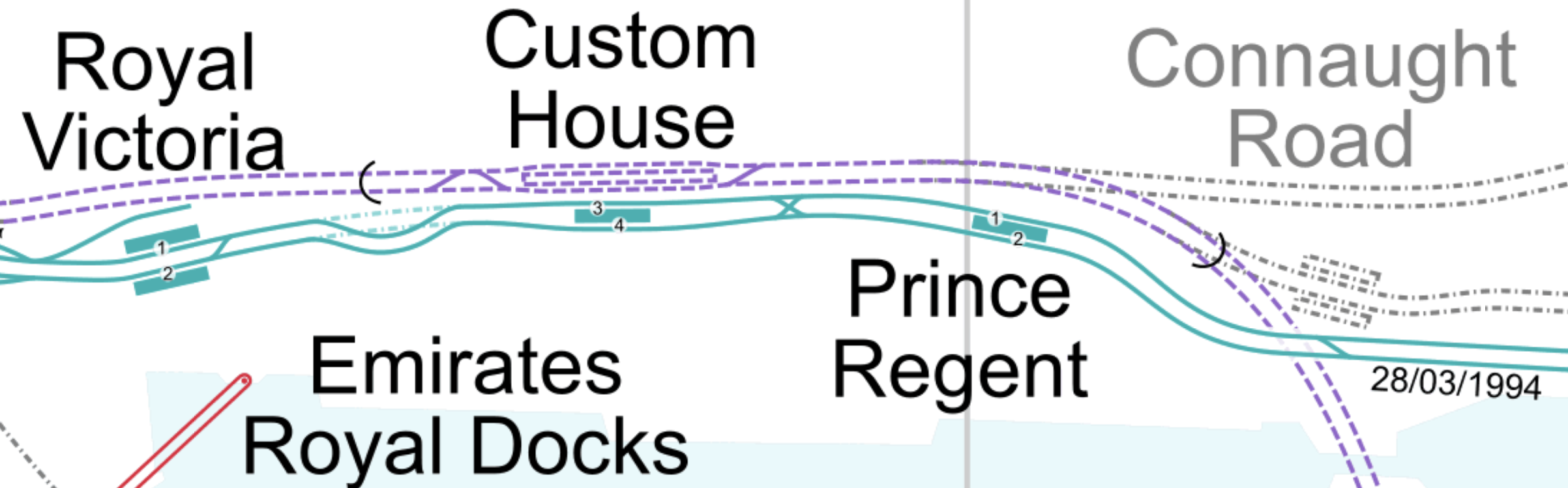
Note.
- Crossrail is shown in purple.
- The DLR is shown in light green.
- The tunnel portal for the central Crossrail tunnel is to the West of Custom House station.
- The tunnel portal for the Connaught tunnel is in the area of the former Connaught Road station.
- Between the other end of the Connaught tunnel and Woolwich station, some of the route is in a cutting.
- There are crossovers either side of Custom House station.
I suspect a lot of the complications are because an old route was reused.
The Surface Section At Paddington
This map from cartometro shows the track layout around Paddington station.
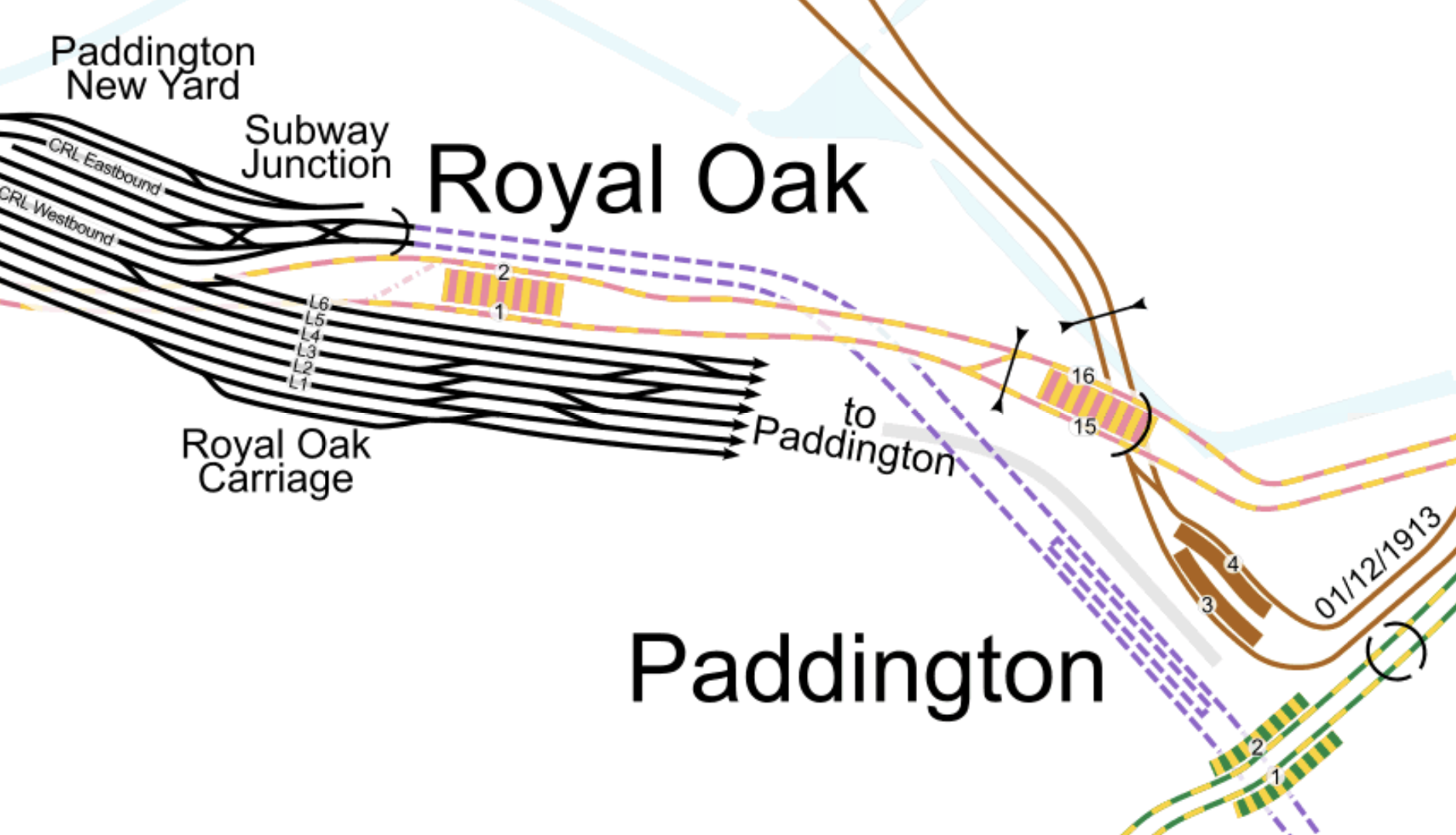
Note.
- The Crossrail station at Paddington is a straight-through two platform station.
- The Royal Oak portal, where Crossrail comes to the surface is just to the West of Royal Oak Underground station.
- Two lines are labelled CRL Eastbound and CRL Westbound are connected to the Crossrail lines.
- Between and around these lines is Paddington New Yard
- There are two full crossovers between Paddington New Yard and the Royal Oak portal.
To reverse at Paddington, trains proceed to Paddington New Yard, where the driver changes ends and then returns to Paddington, when needed.
Trains for Reading and Heathrow use the CRL Eastbound and CRL Westbound lines to connect to Crossrail’s Western surface tracks and the Central core tunnel.
It all looks well-designed to my untrained eye.
Platform Edge Doors
This page on the Crossrail web describes the platform edge doors.
This is the first paragraph.
Crossrail has installed floor-to-ceiling platforms screen doors at each of the eight new underground stations on the Elizabeth line – that’s roughly 4 kilometers of platform edge screens in total.
The new stations between Abbey Wood and Paddington are,
- Paddington
- Bond Street
- Tottenham Court Road
- Farringdon
- Liverpool Street
- Whitechapel
- Canary Wharf
- Custom House
- Woolwich
This is eight underground stations and one surface station; Custom House.
So does it mean that Custom House station doesn’t have platform edge doors?
I took these pictures of Custom House station today.
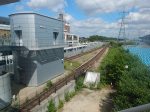
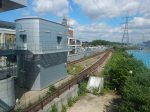
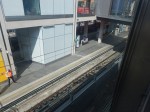
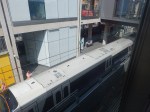


Note.
- The Crossrail trains were running at a frequency of 8 tph.
- , The pictures don’t show any platform edge doors or structures capable of supporting platform edge doors.
Could the regulations allow a surface station like Custom House to be built without doors, or were they left out to save money?
Safety is assured by being able to shut off all entrances to the platforms.
But it does appear that between Custom House and Paddington stations, passengers and trains are separated by platform edge doors.
- Platform edge doors are controlled by the signalling, so with the correct interlocking a lot of things are possible.
- Suppose, a station is not ready for passengers, then by locking the doors closed, trains can still pass through.
- Does this mean that at stations like Liverpool Street, where passengers might need to walk between the Moorgate and Liverpool Street ends of the station to change trains, that these pedestrian routes could be opened? I think it does?
It does appear to me, that platform edge doors are the key to opening a partially-completed railway.
When Could Abbey Wood And Paddington Open?
It strikes me that the following conditions must be met.
- Paddington station must be handed over to Transport for London.
- Platform edge doors at all stations must work reliably.
- The trains must work reliably with the signalling.
It looks like Bond Street, Paddington and Whitechapel stations, are the only stations that have not been handed over to Transport for London.
- I suspect, as Paddington is a terminal station, it must be handed over.
- Crossrail have said they could live with Bond Street opening later.
- Whitechapel appears to have been a difficult station to build, so perhaps it could open later.
Could Crossrail open partially, earlier than anyone thinks?
Perhaps this post called Your First Crossrail Service May Arrive In Time For Christmas, was based on fact and not rumour in the Sunday Times.
Crossrail: Report Finds Not Enough Money To Finish Project
The title of this post, is the same as that of this article on the BBC.
These are the first two paragraphs.
The cost of completing Crossrail exceeds available funding, the government spending watchdog has found.
The National Audit Office (NAO) estimates the cost of the new rail link will be between £30m and £218m above the current funding.
After such a good start with the tunneling and surface line going well, how did we get here?
My main business for nearly forty years was writing project management software and that gave me a deep insight into the dynamics and mathematics of large projects.
The software, I created in the 1970s; Artemis was deeply involved in the most important project of the time; North Sea Oil.
But then more by luck, than any judgement on my part, it was well suited to solving the management problems of North Sea Oil.
The software ran on a small Hewlett-Packard mini-computer with an attached display and a printer, whose footprint, gave Artemis an advantage over competitors who needed a mainframe, for which there was no office space in Aberdeen.
I had first got involved in scheduling resources at ICI about five years earlier and because from previous experience I knew resources would be critical, I gave the program extensive resource aggregation and scheduling capabilities.
I have been told that the latter proved invaluable in successfully developing North Sea Oil. People may have been flattering me, but I do know that Shell used to ensure that all their suppliers used Artemis, so they could check easily if they were being told the truth.
I suspect that Shell and others used the aggregation capability to see that they weren’t overloading the pool of available labour.
Artemis definitely proved itself capable of handling the various projects in the North Sea.
We have now moved on forty years, but has project management moved on to cope with the advances in technology of the modern world?
As with North Sea Oil in Aberdeen, in the 1970s, Crossrail and other large projects like Berlin’s new Brandenburg Airport will always have a need for large numbers of resources, be they men, materiel or machines.
I have some questions.
- Do all contractors working on Crossrail use the same software?
- Does Crossrail have the right to inspect the contractors project management systems?
- Is the upward reporting what it needs to be?
- Does the software the contractors use, have an aggregation capability?
- Do Crossrail track and predict the resources needed?
Someone I respect told me, that a lot of modern project management software doesn’t even have an aggregation capability- Enough said!
I must admit, aggregation and scheduling software is difficult to write, so it might be easier to cut it out and let your clients muddle through!
But The Tunnels Were Built On Time And On Budget!
It all started so well, with the first part of the project, which was the boring of the tunnels being completed on time and on budget.
Observing the project, as I did and picking up information from engineers working on the tunnels and various magazines and television programs, I have to come to the conclusion, that the credit for the on time and budget completion must be down to excellent planning.
- I don’t remember any delays or problems reported in the tunneling. Was that good planning and surveying or luck?
- There were few if any articles on the BBC or in the Standard complaining about the problems the tunneling was inflicting on Londoners.
- The planners realised there could be a shortage of workers qualified to work underground, so they built the Tunnelling and Underground Construction Academy at Ilford, which I wrote about in Open House – TUCA.
Certainly, St Barbara, who is the patron saint of tunnellers looked after the project and its builders.
Worsening The Resource Problem
Crossrail, the Greater London Authority and the Boroughs should have been monitoring this growing resource problem, but I doubt they were in anything other than a perfunctory way!
Instead the politicians were giving planning permission to anybody with money, who wanted to build a shiny new development close to a station.
These projects would need more men, materiel or machines.
As many of these new developments are backed by companies or funds with bottomless pockets to get their developments finished they were prepared to pay more for their labour.
So labour has been deserting Crossrail in droves, thus further delaying the project.
Senior politicians in the Greater London Authority and the boroughs should accept some responsibility for Crossrail’s delay.
They didn’t need to withhold the planning permission, just say that construction of the other projects couldn’t commence until an appropriate phase of Crossrail was open.
In some parts of the world, brown envelopes will have changed hands, but it would be nice to know how many mayors and senior politicians have had holidays in places, they would not normally visit.
Senior project managers tell me, that they would not be surprised if developments along Crossrail had delayed the project.
The Covid Problem
No-one saw Covid coming, except possibly the Chinese.
But good project management is all about negotiating the slings and arrows of outrageous fortune.
There is the story of the miniMetro production line.
The first body shells coming out of the automated welder were crooked and it turned out that the machine had hit a motorway bridge in Germany. But by good project management using Artemis, British Leyland engineers were able to get the second line working correctly before the first and the car was launched on time.
With Covid, the Mayor shut construction, and it was some months before it restarted again.
I am certain, that with good project management we could have done better.
Covid is also a good excuse for lateness.
On the other hand good project management got the vaccines developed, manufactured and delivered into arms.
Covid also blew a big hole in Transport for London’s finances.
But then so did Sadiq Khan’s Fare Freeze, that brought him to office.
Could Crossrail Have Part-Opened Earlier?
I often ponder this and others ask me if it would be possible.
The Victoria Line was built with crossovers and it was able to open in phases.
Crossrail has crossovers in the following places.
- Either side of Custom House station
- To the West of Whitechapel station
- Between Farringdon and Tottenham Court Road stations
Note.
- It doesn’t appear to have been built for part opening.
- From media reports, it appears Whitechapel station is the basket case in the East.
The answer is probably that Crossrail can’t be part-opened, but there are good reasons, why it should be opened earlier.
- To generate a small amount of revenue.
- To give travellers and Londoners in general a lift.
The only practical service would be a few trains turning at Farringdon.
Conclusion
I blame politicians for Crossrail being late and over budget.
 The Anonymous Widower