An Alternative Lift At Caledonian Road and Barnsbury Station
I went to look at something this morning, that might have made a post for this blog.
But as it wasn’t worth photographing, I decided to come home and decided to take a train home from Caledonian Road and Barnsbury station.
The station is of a slightly unusual design, which is described in Is Caledonian Road And Barnsbury An Ideal Four-Track Station?.
There is a wide island platform, where the Overground trains call on either side, which is connected to the station exit, by a half-bridge with lifts.


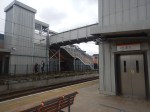
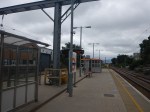
It was an affordable way to make the station accessible for all.
But today the lift on the island platform had failed.
- As I approached the bridge on entering the station, a London Overground station-man was waving at me from the island platform.
- He shouted at me, that the lift on the island platform had failed.
- So I took the working lift and then walked across to the central lift tower, with its failed lift.
- He met me at the top of the stairs and offered to escort me down.
- But I said, that if I could go down the right hand side, with my good arm on the rail, I’d be OK.
- He said that would be fine and he watched me descend, which I did safely.
- Whilst I was there, two mothers with young children in buggies arrived on a train. So after a quick chat, the mothers carried their children up the stairs and he carried the buggies.
London Overground had certainly setup an alternative approach, that should work well until the lift is repaired.
Getting Home From Caledonian Road and Barnsbury Station
The Balls Pond Road of Round The Horne and Beyond Our Ken fame in the 1950s and 1960s, runs between Highbury and Islington and Dalston Junction stations.
- I live about half way between the two stations and as, what would have been my nearest station; Mildmay Park closed in 1934, I have to get a bus from Dalston Junction to get home.
- Today, though, I took a slightly longer route, but one with minimal walking.
- I took a train four stops to Hackney Central station.
- I used the bridge with lifts to cross the tracks at Hackney Central station.
- I exited Hackney Central station through the second exit on Graham Road, that was opened in 2022.
- After crossing Graham Road on a light-controlled crossing, I was able to catch a 38 bus to within a hundred metres of my house.
There would be no case for reopening Mildmay Park station, but as I get older this route is the easiest.
Overground To London Bridge Under Consideration
The title of this post, is the same as that of a short article in the December 2023 Edition of Modern Railways.
This is the text of the article.
Transport for London is considering introducing London Overground services between Crystal Palace and London Bridge to help relieve overcrowding on the Sydenham corridor during the morning peak.
The move is one of two options outlined in a response to Lewisham’s Public Transport Liason Committee meeting on 4 October. The other is operating additional services on the existing route via the East London Line to Dalston Junction/Highbury & Islington. TfL acknowledges the London Bridge service would ‘represent a new routing for London Overground services that would necessitate significant changes to operational arrangements and driver testing’ and therefore further work is required ‘to establish the feasibility and business case for this change.’ There are no timescales for the implementation of either option.
The overcrowding follows the reduction by Govia Thameslink Railway of its Southern service to two trains per hour last September, when it replaced its East Croydon to London Bridge via Forest Hill stopping service with a Victoria to London Bridge via Forest Hill stopping service. In its response to the committee, GTR says the context to these changes is ‘the continued need to respond to the gap between our costs and revenues’, which it says is in the region of £15 million a year, with both demand and revenue having stabilised at around 80 % of pre-pandemic levels. It says its aim is to make ‘the most efficient use of the resources available to us,’ with the Victoria to London Bridge service designed to provide capacity for journeys to both stations’.
GTR says the current service has sufficient capacity and is lightly loaded outside peak times, and that while it will continue to keep passenger and feedback under review an increase from two to four trains per hour would require an increase in funding.
These are my thoughts.
Transport for London’s Long Term Plans
Plans exist to increase the frequency on various London Overground services and this graphic sums up what was planned a few years ago.
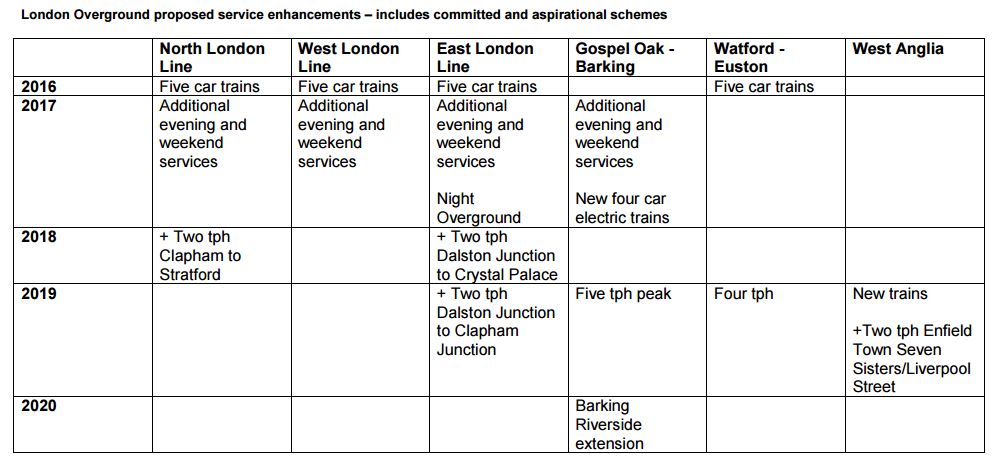
Note the extra two trains per hour (tph) between the following stations.
- Clapham Junction and Stratford
- Dalston Junction and Crystal Palace
- Dalston Junction and Clapham Junction
- Enfield Town and Liverpool St. via Seven Sisters
I think only Route 1 services have been increased.
I know signalling updates are holding up the extra trains on the East London Line, but are more trains needed to fully implement the extra services?
- Routes 2 and 3 services will need Class 378 trains because of the tunnel and these would be transferred from the North London Line.
- Route 4 would need Class 710 trains, as the service already uses them.
So there may be a need for more Class 710 trains.
This plan sees another two trains per hour (tph) running between Dalston Junction and Crystal Palace, which would help to reduce Lewisham’s overcrowding.
Would A London Bridge And Crystal Palace Service Be Easier To Implement?
It looks like the extra Dalston Junction and Crystal Palace services have been held up by two possible reasons.
- The required signalling update on the East London Line, that is needed to increase Crystal Palace and Clapham Junction services has not been performed.
- There are not a sufficient number of Class 378 trains to run the service through the Thames Tunnel. These will be released by running more Class 710 trains on the North London Line.
If two tph were to be run between London Bridge and Crystal Palace, this service would have these advantages.
- The train paths are available.
- The service would not be going through the Thames Tunnel, so the signalling upgrade would not be needed and the trains would not need to be able to evacuate passengers in the tunnel.
- The service could be run by any suitable third-rail trains.
- The service could be run by any length of train, that would fit all the platforms.
I believe the service could be run by eight-car trains to really get a hold on the current overcrowding.
How Many Trains Would Be Needed?
Looking at other services between London Bridge and Crystal Palace, I believe that the journey time would be about 24 minutes.
If the service were run efficiently, I suspect two trains would be needed to provide the required service of two tph.
An eight-car service would required four x four-car trains.
What Trains Could Be Used?
If the numbers are available, then third-rail versions of both London Overground’s Class 378 and Class 710 trains would be suitable.
But this would probably mean a number of Class 710 trains to be manufactured by Alstom. This would not be a short-term solution.
In Liverpool last week, I rode in a Class 319 train and these could be an interesting stop-gap.
- Several will soon be available as West Midlands Trains renews its fleet.
- They are already fitted with third-rail gear.
- They are 100 mph trains.
- Drivers seem to like them.
I believe they could fill in until more Class 710 trains were available.
Crystal Palace Station
This Open RailwayMap shows the platform layout at Crystal Palace station.
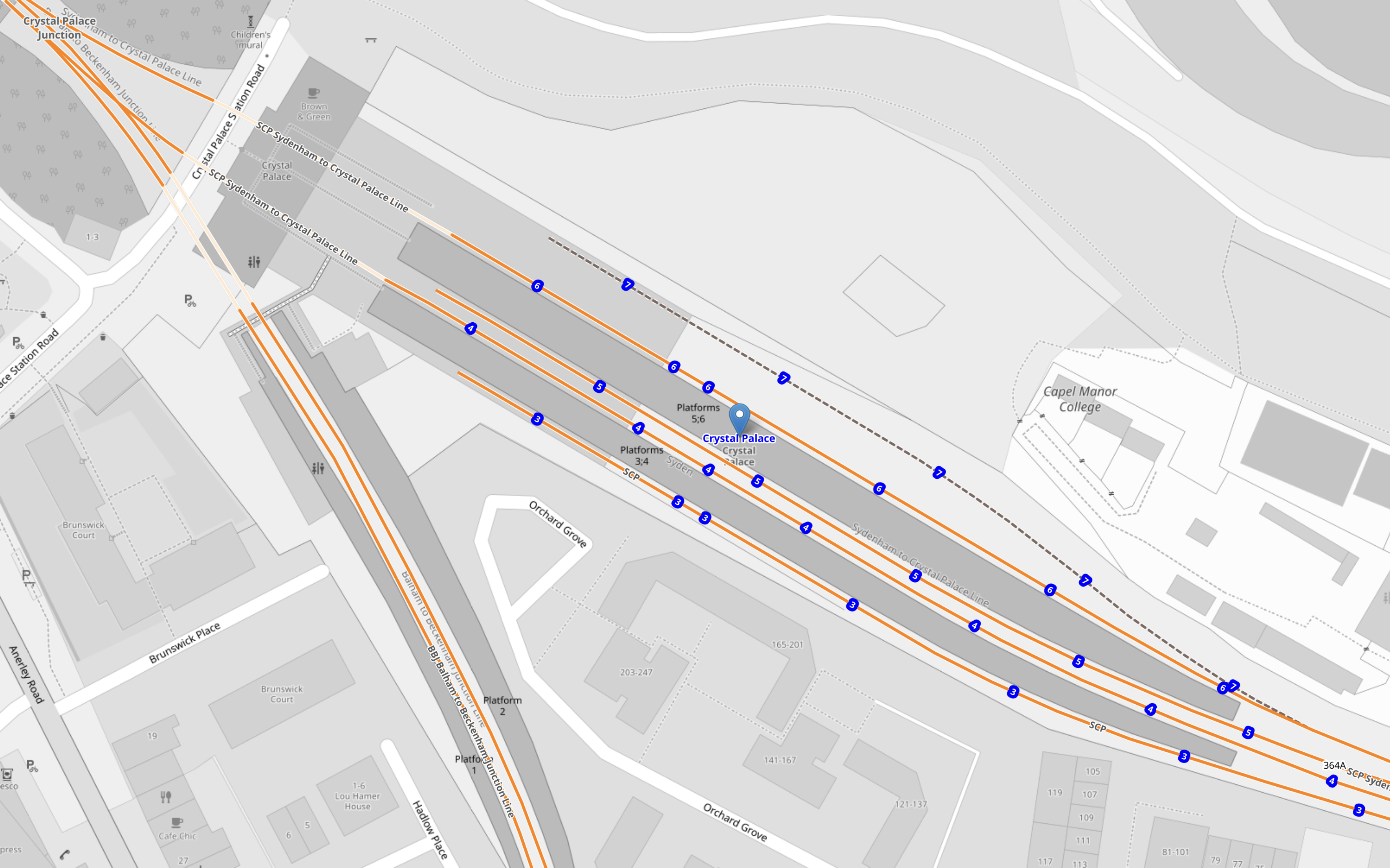
Note.
- Platforms 1 and 2 cross the South-West corner of the map and handle services like London Bridge and Beckenham Junction, London Bridge and London Victoria, and West Croydon services.
- Platform 3 is a little used bay platform, that can terminate trains from the East London Line or London Bridge.
- Platform 4 handles services between London Bridge and London Victoria.
- Platform 5 is a bay platform, that can terminate trains from the East London Line.
- Platform 6 handles services between London Victoria and London Bridge.
- Platform 7 is a disused bay platform.
These pictures show Crystal Palace station.
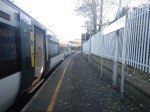
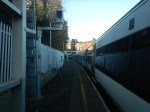
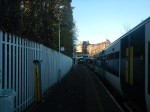
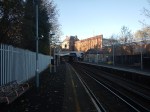
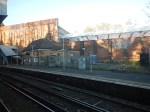
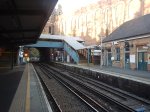
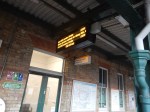
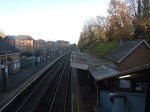
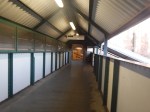
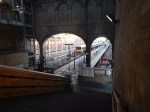
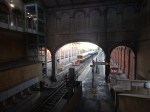
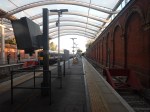
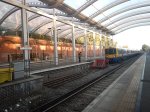
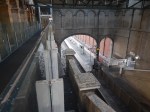
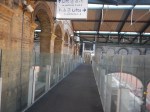
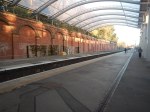
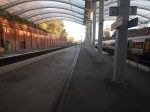
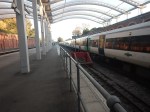

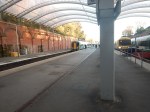
Crystal Palace station has an adequate number of platforms.
Conclusion
A service between London Bridge and Crystal Palace looks to be a sound plan.
East London Is A Duckers And Divers Paradise
This is the East End Tube Map, which I clipped off the full tube map.
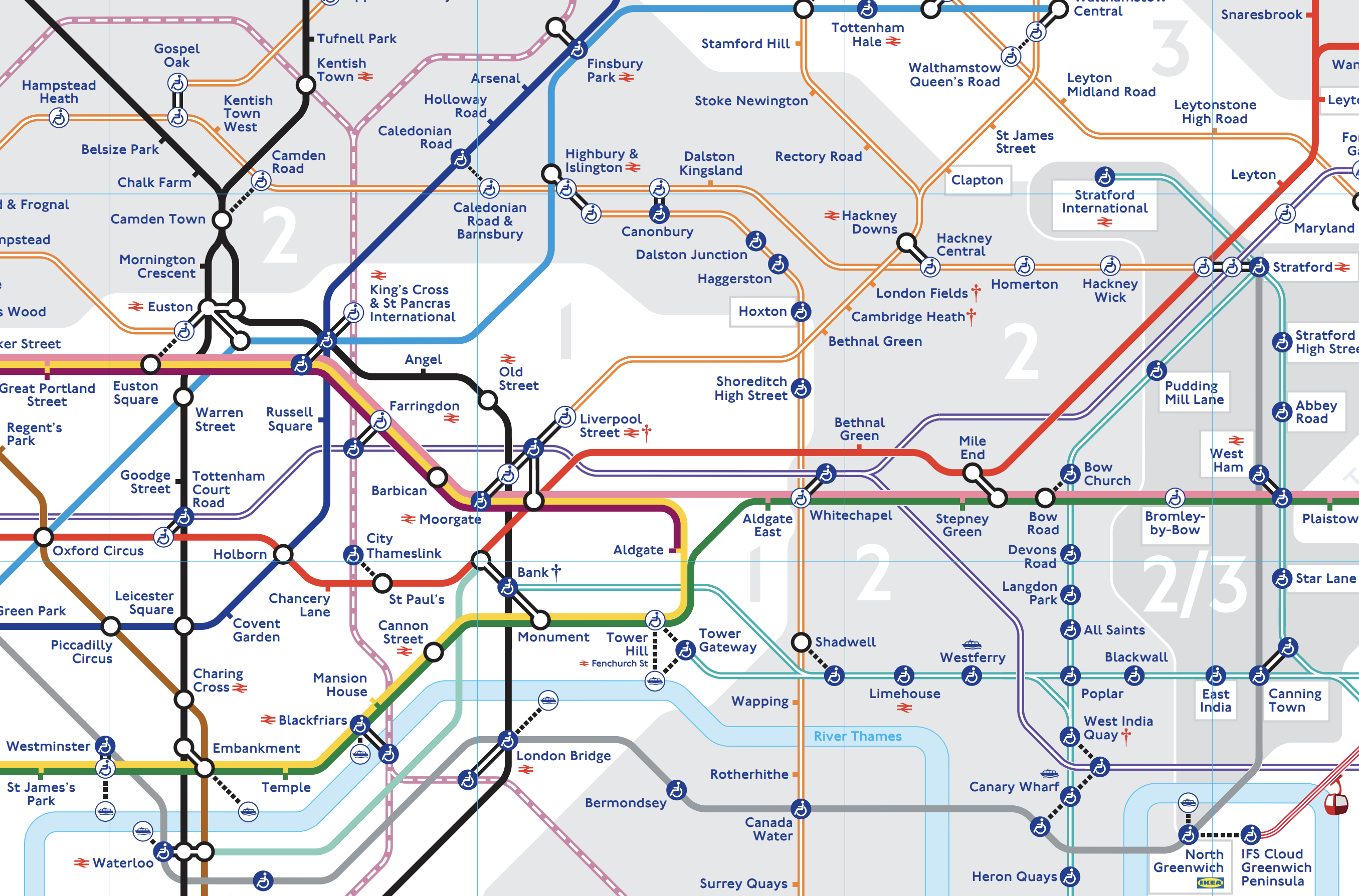
I live just South of the East London Line between Canonbury and Dalston Junction stations.
Today started just after nine, as many others do by braving the nightmare on the buses to take a 141 bus to Moorgate.
- At Moorgate, I had breakfast as I do regularly in the Leon, by Moorgate station.
- After breakfast, it was one stop South on the Northern Line to Bank, to see if the new entrance had opened.
- It was then a trip on the new moving walkway to the Central Line.
- I took the Central Line to Stratford to do my main shopping at the start of the week, in the large Marks and Spencer in Eastfield, by the station entrance.
- It was then on to the North London Line to go back home.
- I didn’t go all the way home on the Overground, but got off the train at Hackney Central and using the new Graham Road entrance, I crossed to get a 38 bus, which would take me home.
- But two 38s passed as I tried to cross the road and in the end I took a 277 bus to Dalston Junction station.
- From the Junction, I got a 56 bus home.
I got home about eleven.
At least now, I’ve got food until Thursday!
London Bridge And Dalston Junction With A Reverse At New Cross
This may seem to be a strange route to go to my home from London Bridge station, but it’s a route I regularly use as it is step-free and it avoids the vagaries of the 141 bus route which can mean waiting longer than necessary at the bus station at London Bridge.
- I went to Platform 1 at London Bridge and got the first train to New Cross, which was waiting in the station.
- On arrival at New Cross, I walked across the platform and waited perhaps three minutes for the London Overground train for Dalston Junction to arrive.
- I then went two stops from Dalston Junction to outside my house.
I took these pictures along the route.


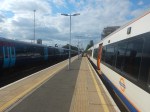
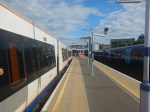
Note.
Dalston Junction To Moorgate Via The Elizabeth Line
This morning to get my breakfast at Leon on Moorgate, I took the longer route via Dalston Junction and Whitechapel stations using the East London and Elizabeth Lines.


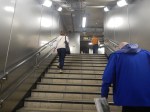
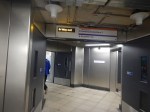


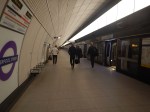
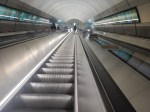
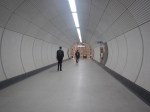
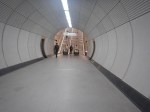

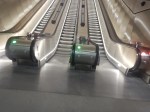

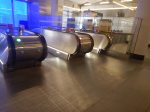
Note.
- I travelled in the last coach of the Overground train from Dalston Junction station.
- I travelled towards the front of the Elizabeth Line train from Whitechapel station.
- There are lifts between Overground and the Elizabeth Line at Whitechapel station.
- All the escalators have traffic lights.
- Using stairs and escalator, the change at Whitechapel station took around two minutes.
The total journey time was just over 25 minutes.
Imagine Peace
This poster has appeared opposite Dalston Junction station.
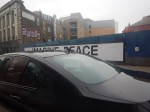
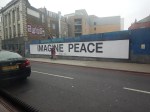
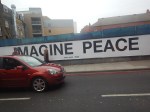
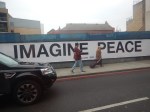
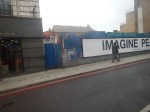
If you can’t read the two small words underneath, it just says “love, yoko 2022”
The Great Bus Robbery
Transport for London (TfL) obviously don’t like people where I live in the Northern part of De Beauvoir Town in the London Borough of Hackney.
When I moved here, ten years ago there were six bus routes that passed through the traffic lights where the Balls Pond Road (It is not a made-up-name from Round The Horne) and Southgate Road/Mildmay Park meet.
- 21 – Newington Green and Lewisham Shopping Centre
- 30 – Marble Arch and Hackney Wick (From the sublime to the ridiculous?)
- 38 – Victoria station and the romantic Clapton Pond
- 56 – Bart’s Hospital and Whipps Cross (You’d be cross, if you’d been whipped!)
- 141 – London Bridge Station and Palmers Green North Circular Road (Surely, another romantic destination!)
- 277 – Highbury & Islington Station and Crossharbour
Note.
- We had two bus routes to and from Highbury & Islington station for Dear Old Vicky!
- We had two bus routes to and from Moorgate, Bank and the City of London.
- We had four bus routes to and from Dalston Junction station and the cultural attractions of Hackney Central.
- We had a direct bus to Canary Wharf.
TfL looked at the name of the district and thought the posh French name, meant we were all had expensive vehicles or Hackney carriages and said we had too many buses.
So in June 2018, the 277 bus was cut back to Dalston Junction station and TfL promised that the frequency of the 30 bus would be increased. We’re still waiting for extra services.
Now, if you want to go to Highbury & Islington station, according to TfL’s Journey Planner, it’s often quicker to take a 38 or 56 bus to Essex Road station and take a train.
To make matters worse the 30 bus route now has cheap and nasty Egyptian-built buses with more steps than Russia. All buses should have flat floors like the New Routemasters.
What is TfL’s latest crime?
The 21 and 271 buses are going to be combined into a new route between Lewisham and Highgate, which will go nowhere near the Balls Pond Road.
So we’ll just have the one bus route to the City of London.
On past form, if TfL say they will increase the frequency, I wouldn’t believe them.
I think that TfL have ignored some problems.
The Elderly And Disabled
Between Newington Green and Englefield Road, a higher proportion of the passengers getting on the 21 and 141 buses seem to be in these groups.
- As it’s a nice place to live, I suspect many elderly people have just stayed on.
- I believe that North of the Balls Pond Road, there are some care homes and sheltered housing.
Have TfL analysed their passengers?
Not Everybody Has Cars
There are several blocks of social housing on the Newington Green and Englefield Road stretch and you see a lot of passengers who don’t look like car owners.
The lack of parking and the Low Traffic Neighbourhoods don’t help.
Access To Waterloo
My quickest way to Waterloo, which is London’s busiest rail terminal, is to take a bus to Bank and then get the Drain.
A halved service to Bank station will probably force me to take longer routes.
Tradition
When I was a child in the 1950s, the 141 was the 641 trolley bus, which ran between Winchmore Hill and Moorgate.
People, who live in Wood Green, Turnpike Lane and Manor House still commute to the City by bus, as people have done for over a hundred years.
I suspect a lot of commuters change from the Piccadilly Line to the 141 bus at Manor House station. I certainly use that route if I’m going to Southgate or Cockfosters.
The 21 bus starts at Newington Green, which means if you want to go from Balls Pond Road to Bank, you’ll usually get on a 21 bus, as the 141 buses are full with passengers from further North.
So it looks like to get to Moorgate, we’ll need to get a bus to Angel and then get the Northern Line, after the rerouting of the 21 bus.
Crossrail
This will have a big effect.
Suppose you live in Wood Green and want to get to Crossrail.
There is no obvious connection, but tradition will mean your preferred route will be to take a 141 bus between Manor House and Moorgate.
There will also be a quick route between Moorgate and Liverpool Street station, that I wrote about in London’s First Underground Roller Coaster.
Conclusion
We will need the 21 bus to provide us with a route to Crossrail, as the 141 buses will be full.
The 21 bus is needed where it is and mustn’t be stolen.
The Dalston Junction Crossing At Night
This picture shows the diagonal light-controlled crossing at Dalston Junction station at night.

This Google Map shows the junction.

Note.
- The North-South Road is Kingsland High Street.
- The Road going East is Dalston Lane, where my grandmother was born on the North side of the road, about a hundred metres along.
- On the South side of Dalston Lane is Dalston Junction station, with a West-facing bus-stop in front.
- The Road going West is the Balls Pond Road of Beyond Our Ken and Round The Horne fame.
- The building at the West of the junction is the solicitors shown in the first picture.
- On the North side of the Balls Pond Road is an East-facing bus stop, which is paired with the one by the station. A bus at the stop can be seen in the first picture.
The diagonal light-controlled crossing can seen crossing between the two sides of the junction between the yellow meshes of the box junction.
The junction has had this layout for a few years now and it works.
- I live about a kilometre to the West of Dalston Junction and regularly take a bus to stop on the West side of the junction before crossing diagonally to catch the Overground.
- Coming home, I catch a bus from just outside the station
- As buses are generally about once every ten minutes, I generally don’t wait long.
- The crossing has made a big improvement to the junction, as it connects the two stations and the Kingsland Road.
How many other busy junctions could be improved by a similar diagonal crossing?
It should also be noted that since the crossing has been installed, Dalston has gained an Aldi, a Co-op. a Marks and Spencer Simply Food Spencer Simply Food, a Pret, a Premier Inn and several better fast food places.
The improvement of the walking routes has certainly brought more people up the junction and to the two stations.
Could Highbury & Islington And Canada Water Stations Be Connected By A Twelve Trains Per Hour Service?
This article on IanVisits, is entitled More Frequent Trains And A New Station For The London Overground.
This is said.
In a statement, the government agreed to requests for £80.8 million from the GLA to support transport upgrades so that 14,000 homes can be built along the East London Line.
Upgrades include
- New Bermondsey station, which was originally to be called Surrey Canal Road, will be built.
- A second entrance will be built at Surrey Quays station.
- Frequency between Dalston Junction and Clapham Junction stations will be increased from four trains per hour (tph) to six tph.
- Frequency between Highbury & Islington and Crystal Palace stations will be increased from four tph to six tph.
The frequency upgrades will mean twenty tph between Dalston Junction and Surrey Quays stations, or a tyrain every three minutes as opposed to the current three minutes and forty-five seconds.
Consider the section of the East London Line that I use most between Highbury & Islington and Canada Water stations via Whitechapel station.
- Highbury & Islington station has good connections to the Victoria Line, the Northern City Line and the North London Line.
- Highbury & Islington station is the thirteenth busiest station in the UK.
- Whitechapel station has good connections to the District and Hammersmith & City Lines, which have recently been increased in Frequency.
- Whitechapel station will be on Crossrail, when it opens.
- Canada Water station has a good step-free connection to the Jubilee Line.
- Canada Water station is the seventeenth busiest station in the UK.
- Currently, the frequency between Highbury & Islington and Canada Water station is eight tph and after the improvements it will be ten tph.
The frequency increase is to be welcomed but I wonder if it could be better.
Would it be possible that in addition to the proposed changes, the West Croydon and Clapham Junction services should swap Northern terminals, as they do on Sundays.
This would not affect any services South of Dalston Junction, but it would increase the number of services between Dalston Junction and Highbury & Islington via Canonbury to twelve tph.
This would give several benefits.
- Passengers changing from the North London Line to go South, would have an easier change at the less-crowded Canonbury station, rather than Highbury & Islington. Canonbury has only one Southbound platform, simpler passenger flows, is fully step-free and as the trains on the East London Line, will be at a higher frequency, the waiting time would be less and a maximum of just five minutes.
- Passengers could avoid the cramped Dalston Kingsland, which is not step-free, on many journeys.
- Half the trains going North through Dalston Junction would have a cross-platform interchange with the Westbound North London Line at Highbury & Islington.
- Passengers going South from Dalston Junction wouldn’t dither about at the bottom of the stairs, trying to ascertain, which train is going first. As there would be sixteen trains per hour leaving on the left island Platform 3/4, only passengers going to New Cross would go right.
- Dalston Kingsland and Highbury & Islington is one of the busiest Peak Hour services in the UK. Twelve trains per hour on the alternative route might ease the congestion.
- The increased frequency might help, when Arsenal are playing at home.
- In some ways, maximising the service between Dalston Junction and Highbury & Islington, compensates for the annoying cut-back of the 277 bus service.
I do feel that swapping the two services so that both six train per hour services terminate at Highbury & Islington could be beneficial.
Hopefully, TfL have got there first! Unless of course, there’s an operational reason, why the swap can’t be done!
Is This The Longest Bus Stop Repair in London’s History?
This picture shows the bus stop outside Dalston Junction station.
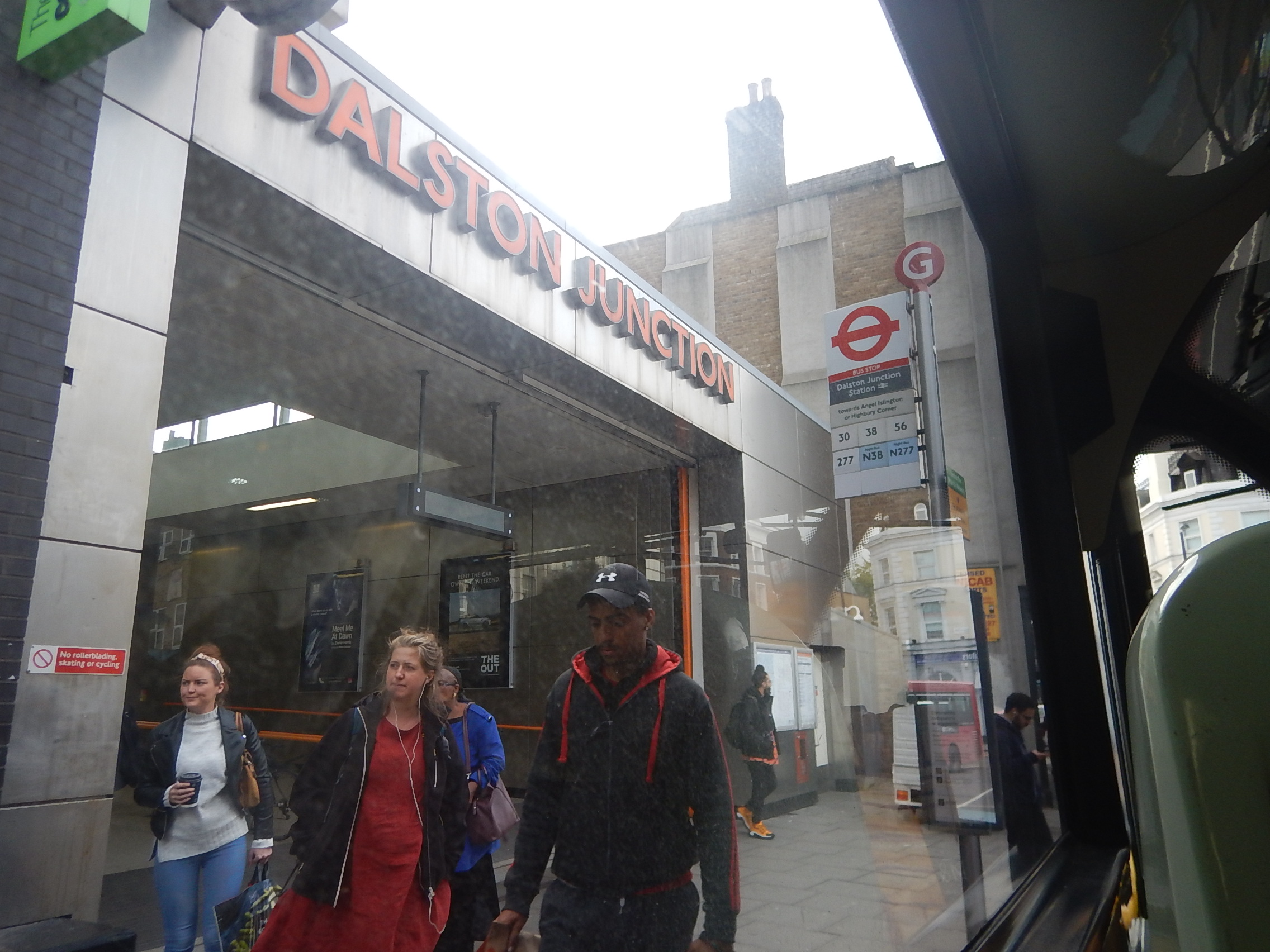
I use this bus stop regularly and since about 2012, the top bit above the information has been missing.
But not any more!
 The Anonymous Widower