Alpha Trains Commits To Hybrid Retrofit For Diesel Fleet
The title of this post is the same as that on this article on Global Rail News.
This is the first paragraph.
Alpha Trains has signed a letter of intent with Rolls-Royce to retrofit its existing diesel train fleet with hybrid drive systems.
This involves using an MTU Hybrid PowerPack, from the same family as those, that will be used in the UK to upgrade the Class 170 trains. I talked about the latter project in Rolls-Royce And Porterbrook Launch First Hybrid Rail Project In The UK With MTU Hybrid PowerPacks.
It certainly looks like Rolls-Royce have created the MTU Hybrid PowerPack for a worthwhile market.
This video explains Rolls-Royce’s thinking.
Rolls-Royce And Porterbrook Launch First Hybrid Rail Project In The UK With MTU Hybrid PowerPacks
The title of this post is the same as that on this Press Release from Porterbrook.
Porterbrook, Eversholt and the other train leasing companies have a problem, that can be turned into an opportunity to make money in a way, few will find unacceptable.
There are several fleets of trains in the UK, that are reasonably new and have plenty of life left in their basic structure, running gear and traction equipment.
But compared to modern rolling stock, they are like a twenty-year-old BMW, Jaguar or Mercedes. Good runners and comfortable, but not up to the standards, passengers, rail operators, rail staff and environmentalists expect.
So the train leasing companies are looking for ways to update their fleets, so that they can continue to earn money and satisfy everybody’s needs and aspirations.
Class 769 Train
Porterbrook started this innovation by taking redundant Class 319 trains and converting them into Class 769 trains, so they could be used on lines without electrification.

The picture shows one of Northern’s Class 319 trains.
Thirty-five of these trains have been ordered. So far, due to design and testing issues none have been delivered. Hopefully, as testing has now started, some will be in traffic before the end of the year.
This project could create upwards of fifty much-needed four-car bi-mode trains for running on partially-electrified routes.
Class 321 Hydrogen Train
Eversholt have also teamed up with Alstom to create a hydrogen-powered version of their Class 321 train.
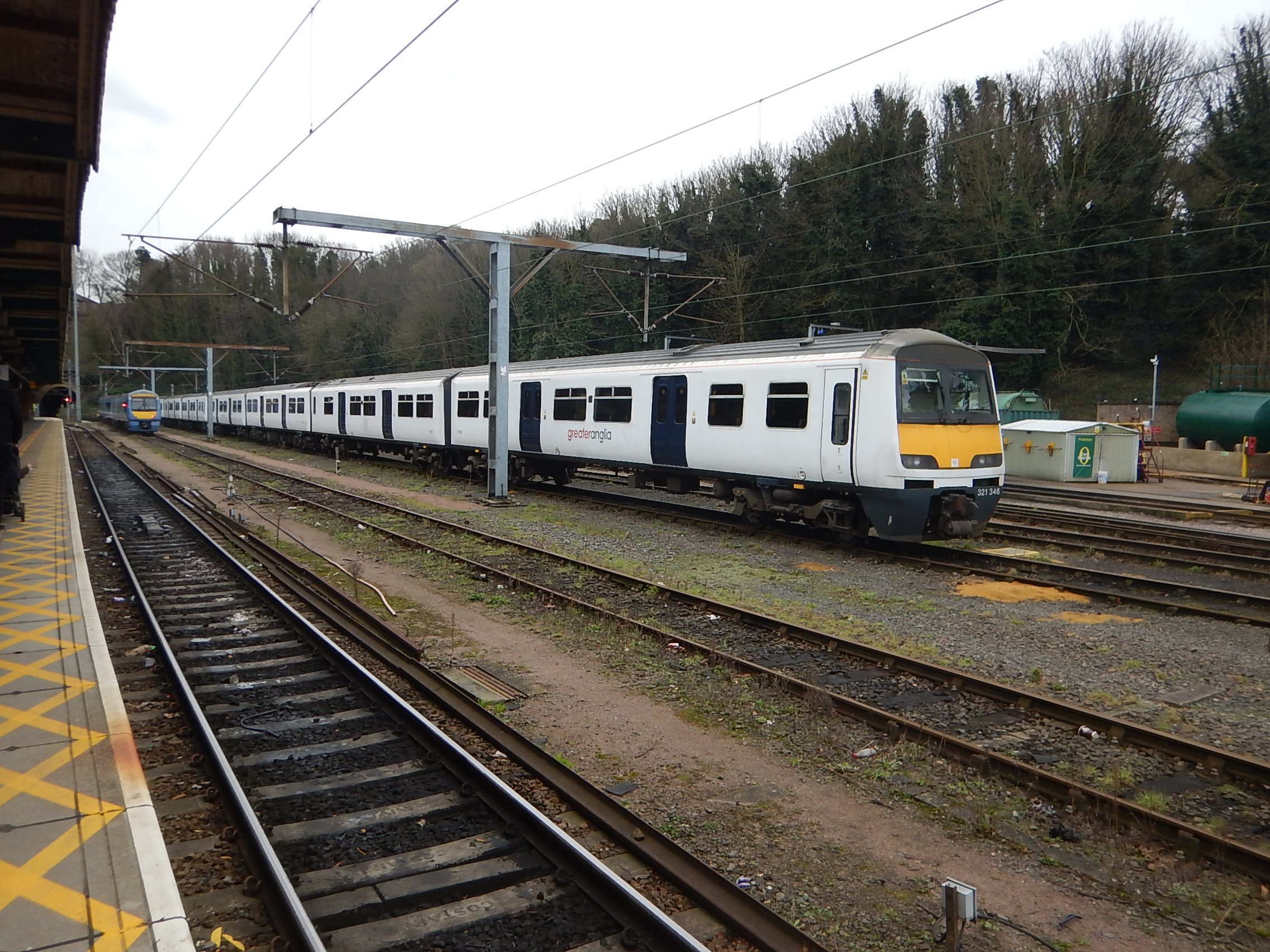
This project could create around a hundred four-car 100 mph, zero-emission electric trains, for running on routes with no or only partial electrification.electrification.
The Four-Car High Speed Train
Everybody loves High Speed Trains and Scotrail and Great Western Railway are taking a number of them and creating four-car quality trains to increase their rolling stock.
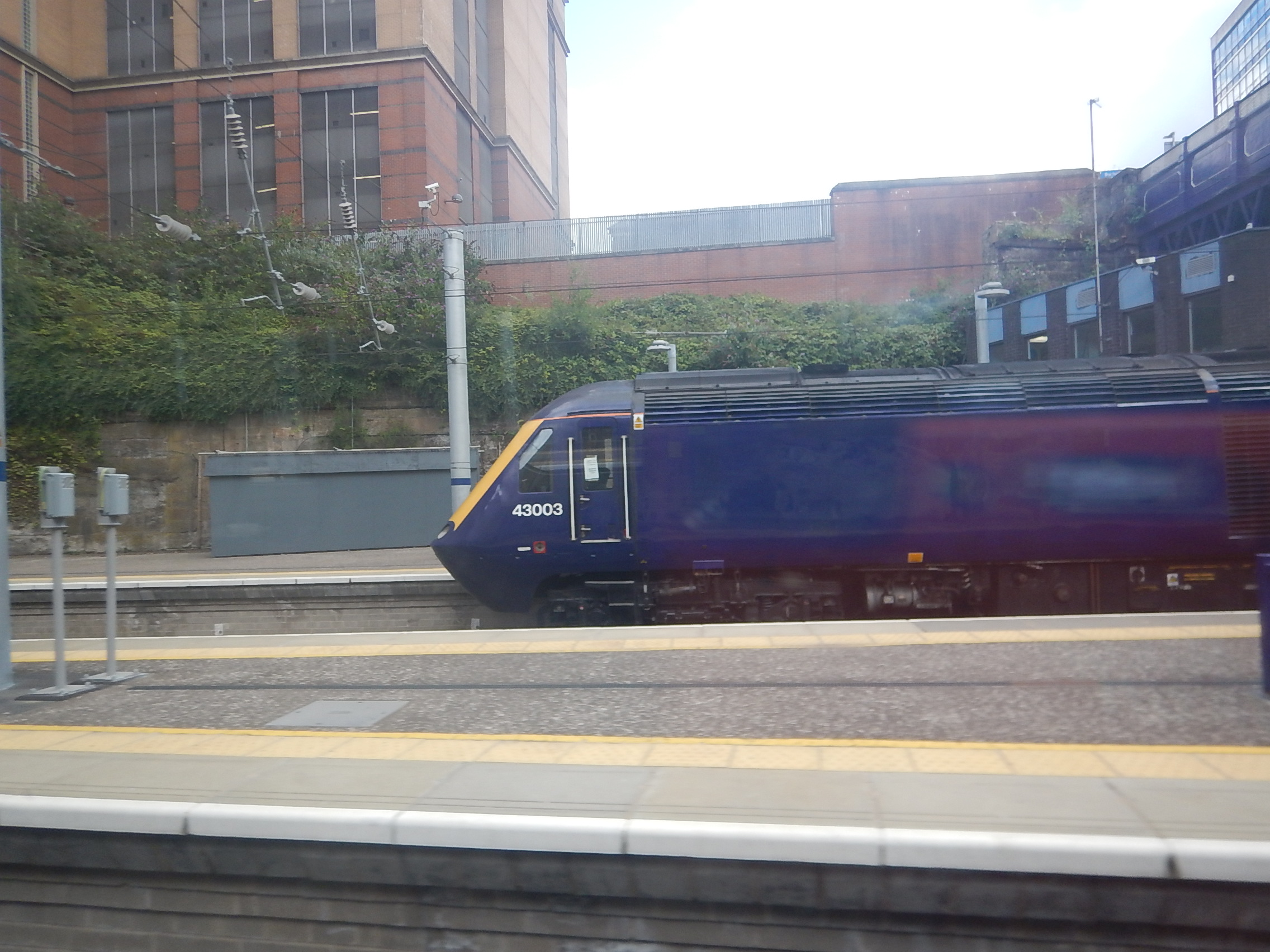
The picture shows a High Speed Train under test in Glasgow Queen Street station.
They are already running in Cornwall and they should be running in Scotland before the end of the year.
Updating The Class 170 Trains
The Press Release announces Porterbrook’s latest project and gives this picture.
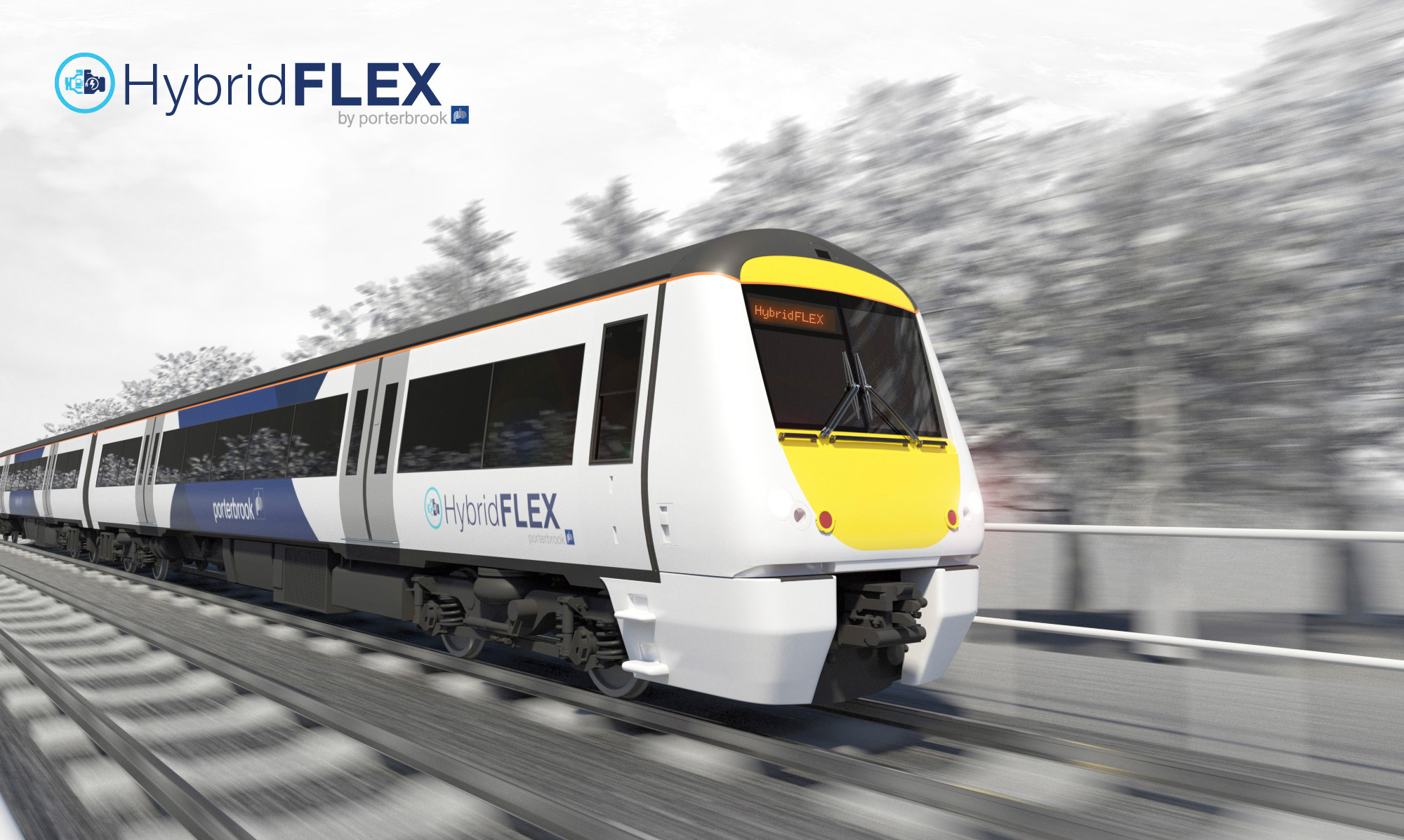
There are 122 Class 170 trains on the UK rail network, which were built around twenty years ago. There are also nearly a hundred other Class 168, 171 and 172 trains with a similar design.
They are 100 mph trains, that are diesel-powered and some are used on long distances.
As a passenger, they are not a bad train, but being diesel, they are not that environmentally friendly.
The Class 172 trains, which are currently running on the Gospel Oak to Barking Line, would surely be a much better train with a smoother electric transmission, that had regenerative braking. Although, as they have a mechanical transmission, rather than the hydraulic of the other Turbostars, this might not be possible.
On the other hand, West Midlands Trains will soon have a fleet of thirty-five Class 172 trains of various sub-types, so fuel savings could be significant.
This is from the Press Release.
Rolls-Royce and Porterbrook, the UK’s largest owner of passenger rolling stock, have agreed the delivery of MTU Hybrid PowerPacks that can convert Class 168 and Class 170 ‘Turbostar’ DMUs from diesel-only to hybrid-electric operation. Hybrid technology allows for the cleaner and quieter operation of trains in stations and through urban areas.
As I understand it, the current hydraulic traction system will be replaced by an electric one with a battery, that will enable.
- Regenerative braking using a battery.
- Battery electric power in urban areas, stations and depots.
- Lower noise levels
- Lower maintenance costs.
This should also reduce diesel fuel consumption and carbon emissions.
Conclusion
The good Class 170 trains, are being improved and should give another twenty years of service.
How many other projects like these will surface in the next few years?
Class 230 Trains On The Conwy Valley Line
I suspect to some people, the use of Class 230 trains, which are rebuilt London Underground D78 Stock on the Conwy Valley Line is a challenge to far.
Class 230 Trains
I wrote about these trains in First D-Train With Transport for Wales In March 2019, where I stated that the train formation will be.
- DM – Driving Motor with battery
- T – Trailer with four generators
- DM – Driving Motor with battery
As the trains will have regenerative braking, this will be used to help charge the batteries.
Note that batteries and traction motors are only in the Driving Motor cars.
The Conwy Valley Line
The route of the single-track Conwy Valley Line can be summsarised as follows.
- From Llandudno to Llanrwst it is a fairly level route alongside the River Conwy.
- From Llanwrst the line climbs to a 240 metre summit in the Ffestiniog tunnel, with gradients as steep as 1-in-47.
- From the summit, the train descends into Blaenau Ffestiniog with gradients as steep as 1-in-43.
It has some of the characteristics of a roller-coaster.
Class 230 Trains On The Conwy Valley Line
Provided the trains can handle the gradients either side of the summit, they can just roll down the other side. During the descent, the regenerative braking will charge the batteries.
This will have the following effects.
- Trains on the downhill sections will not need to use their diesel engines.
- Trains waiting in Blaenau Ffestiniog station, won’t need to use their diesel engines until they start back to Llandudno.
- I suspect some Northbound services, trains would be able to reach Llandudno without using their diesel engines.
Gravity is being used as an energy store to create an efficient railway!
Energy Of A Class 230 Train On The Conwy Valley Line
I am curious to know how much energy is needed to get a fully-loaded train up the hill from Llandudno to Blaenau Ffestiniog.
Consider the following.
- A D78 Driving Motor car weighs 27.5 tonnes
- A D78 Trailer car weighs 19 tonnes
- Wikipedia says “For the Country layout, each D-train unit is to be a three-car formation, which would accommodate 163 seats along with a total capacity of 291.”
- I assume each passenger weighs 90 Kg with baggage, buggies and bicycles.
- I think it is fair to say that each generator and battery weighs about a tonne.
- The summit of the line in the Ffestiniog Tunnel is 240 metres above sea level.
- I will assume that the coastal end of the route is at sea level.
This means that the empty train weighs eighty tonnes and a full load of passengers weighs twenty-six tonnes.
Using Omni’s Potential Energy Calculator, this gives a potential energy for the train of seventy kWh, at the summit with a full load of passengers.
This figure means that if two 55 kWh batteries from a New Routemaster bus were used on the train and they were fully-charged, then they could power the train to the summit and on to Blaenau Ffestiniog.
It should be noted that Vivarail talk about using 106 kWh battery rafts on the Class 230 train.
A Few Questions
I have these questions.
Are These Class 230 Trains Serial Hybrids?
I ask this question, as it could be key to making the operation of the trains more efficient on this line.
The train would always be powered directly from the batteries.
- The diesel engines would cut in to charge the batteries, when the battery charge level got to a certain low level.
- The diesel engines would cut out, when the battery charge level, got to a certain high level.
As the train has four generator sets, an appropriate number could be used as required.
A well-trained driver or an intelligent control system could make these trains very efficient.
In this article on RAIL Magazine, this is stated.
Shooter told RAIL that the trains will save around 20% on fuel consumption.
Adrian Shooter is Chairman of Vivarail, who are creating the Class 230 trains.
Possible Electrification Of The Ffestiniog Tunnel
The Class 230 trains are created from London Underground D78 Stock and I suspect it would be possible for the Class 230 trains to be powered by third-rail electrification.
The Ffestiniog Tunnel is the summit of the Conwy Valley Line.
- It is a single-track.
- It is 3.5 kilometres long.
- One end of the tunnel is close to Blaenau Ffestiniog.
Would it be a sensible idea to electrify the tunnel either fully or partially, to top up the batteries?
Consider.
- The third-rail electrification would be no intrusion in the landscape.
- The electrification could only be switched on when a train is present.
- I don’t think supplying power would be difficult.
- There could be less need to run on diesel.
The electrification could even be extended to wards Blaenau Ffestiniog station, so that trains leaving the station could have electrical power to climb to the summit.
Will The Class 230 Trains Attract Passengers?
I think that the Class 230 trains have several passenger-friendly features.
- All new interiors.
- Ten percent more seats and almost twice the capacity.
- Lots of space for bicycles
- Large windows
- Wi-fi and power sockets
- Accessible toilet
Hopefully, there will also be step-free access between train and platform.
This package of improvements should encourage more to travel.
I also suspect, that having a decent train with a novelty appeal that connects to the Ffestiniog Railway will tap a new market of travellers.
Conclusion
I have no doubt, that Class 230 trains will be able to provide a successful service on the Conwy Valley Line.
First D-Train With Transport for Wales In March 2019
The title of this post, is the same as that of this article on Rail Magazine.
This is the first paragraph.
The first Class 230 D-Train for Transport for Wales should be ready by March 2019, with all five in traffic from May 2019.
There are also other details.
The Train Formation
More details are given about the formation of the Class 230 trains.
- The trains will be three cars.
- The driving cars will have batteries.
- The centre car will have four generators.
When the trains were D78 Stock on the London Underground, they ran as a six-car train formed of two half-trains containing.
- DM – Driving Motor
- T – Trailer
- UNDM – Uncoupling Non-Driving Motor
The two UNDM cars were coupled together, to form the six-car train.
So is the formation of a Class 230 train as follows?
- DM – Driving Motor with battery
- T – Trailer with four generators
- DM – Driving Motor with battery
I would suspect that the DM cars are identical.
Regenerative Braking
The trains will have regenerative braking, where the energy recovered will be stored in the batteries.
In the D78 Stock, the Trailer car wasn’t motored, so unless motors are fitted in this application, the two Driving Motor cars can almost be considered two identical battery locomotives with regenerative braking, that are solely responsible for moving the train.
The Trailer Car With Power
The Trailer Car in the middle of the train contains the four generators.
The Wikipedia entry for the Ford Duratorq engine, has a section for a 3.2 litre diesel engine, where this is said.
The 3.2 is an I5 engine used in the Ford Transit, the Ford Ranger, Ford Everest, Mazda BT-50 and the Vivarail D-Train.
The standard engine has a rating of 200 hp or 150 kW.
The Class 230 train would appear to have an installed power of 600 kW.
Interiors
The article says that everything the passenger will see inside the train is new!
Performance
This is a quote from Tristan Guyard of Transport for Wales.
On the Conwy Valley and Wrexham – Bidston routes, ‘230s’ will be quicker than most other new trains built in the UK at the moment. This is because of the high proportion of motored wheels and the use of batteries to provide additional power. When these trains come into service, we will be able to improve journey times and have a more flexible timetable as soon as 2019.
The Conwy Valley Line seems a stiff route, which might get a better service with a more powerful train.
The Wrexham-Bidston route currently takes 56 minutes to go South and 58 minutes to go North, which probably makes timetabling a half-hourly service a difficult job.
Will the Class 230 trains offer enough extra performance for these services?
Perhaps this is why they have four diesel power packs.
We will find out next year, what is the toughness of these remanufactured London Underground trains!
Thoughts On The Traction System
How Does The Power Compare To Other Trains?
How powerful is the 600 kW in the Class 230 train?
By comparison. a two-car Class 156 train, has 860 kW of diesel power.
On the other hand the three-car Class 230 train has regenerative braking using batteries.
Is The Class 230 Train A Serial Hybrid?
In a serial hybrid vehicle, a power source like a diesel engine charges the battery and the battery drives the vehicle and powers internal systems.
The classic serial hybrid vehicle is a New Routemaster bus, which is powered by a 138 kW diesel engine.
In this bus., the engine starts and stops to keep the energy in the battery within a particular range.
It is a very simple control system and is regularly used in many applications, where water or temperature levels are to be kept within range.
The layout of the Class 230 train with a central power car could easily provide power to the batteries in the two Driving cars.
The train’s control system would switch the engines on and off automatically as required.
If two diesel generators supplied the battery in each Driving Car, the train could even be considered a double serial hybrid.
So this should make the train reliable, as most components of the drive-train are duplicated.
Conclusion
I sometimes feel that the Class 230 train could end up as a heroic design failure.
But then the oldest trains in service on the UK’s rail network are the London Underground 1938 Stock on the Island Line.
London Underground rolling stock seems to have a longevity, that other trains seem to have been built without!
Or is it that as the elderly fleets of the Glasgow Subway, Merseyrail and the Northern City Line seem to keep soldiering on, that spending a large proportion of your working life underground, is good for trains?
Have Bombardier Got A Cunning Plan For Voyagers?
In the July 2018 Edition of Modern Railways, there is an article entitled Bi-Mode Aventra Details Revealed.
A lot of the article takes the form of reporting an interview with Des McKeon, who is Bombardier’s Commercial |Director and Global Head of Regional and Intercity.
This is a paragraph.
He also confirmed Bombardier is examining the option of fitting batteries to Voyager DEMUs for use in stations.
The Voyager family of trains has three members.
- Class 220 trains – Voyagers – 34 trains of four cars – operated by CrossCountry.
- Class 221 trains – Super Voyagers – 44 trains of four or five cars – operated by CrossCountry
- Class 222 trains – Meridians – 27 trains of four, five or seven cars – operated by East Midlands Trains.
The trains have the following characteristics in common.
- They are diesel electric multiple units.
- Each car is powered by an underfloor Cummins QSK19 diesel engine of 750 hp/560 kW.
- They are capable of 125 mph running.
- Some trains are fitted with tilting, which isn’t used.
- The trains have rheostatic braking.
- They meet or could easily meet the latest accessibility regulations for passengers of reduced mobility.
- Train length appears to be flexible and cars seem to be able to be swapped around in a particular class.
I think it is true to say that the operators have a few problems with these trains.
- Some passengers think the trains are rather cramped.
- There is also a noise and vibration problem when the engines are working hard.
- There have been problems with seawater getting in the resistor banks for the rheostatic braking on Class 220 trains at Dawlish.
- CrossCpuntry would welcome extra capacity.
- Both operators would probably welcome better fuel consumption on the trains.
How Would You Fit A Battery To A Voyager?
All these trains seem to be fitted with rheostatic braking.
Effectively, the traction motors generate electricity when they work in reverse to slow the train. On a modern train this electricity is either returned through the electrification to power other trains or stored in a battery.
But on these Voyagers, it is passed through resistors on the roof and used to heat the sky.
Consider these facts for a four-car Class 220 train.
- The train has an operating speed of 125 mph.
- Each car has its own diesel engine.
- The train has a weight of 185.6 tonnes.
- The train has seats for two hundred passengers.
- If we assume that each passenger weighs 90 Kg. with their baggage this gives a total train weight of 203.6 tonnes.
Calculating the kinetic energy of the train for various speeds gives
- 75 mph – 32 kWh
- 90 mph – 46 kWh
- 100 mph – 56 kWh
- 125 mph – 89 kWh.
Every time a train stops, this energy goes to waste.
The simplest thing to do, would be to divert this energy to an appropriately sized battery in each car. As there is four cars in the train, a battery of 50 kWh in each car would probably be sufficient.
If the battery was full, then the energy would still go to the resistors on the roof.
You’ve now got a full battery, but how would you use the energy in a productive manner?
The easiest and probably best thing to do with it, is to power the hotel functions of the train like air-conditioning, lights, doors and toilets. This is an approach taken by Hitachi on their Class 800 trains, as this diagram confirms.

The diagram is contained in this document on the Hitachi Rail web site, which is entitled Development of Class 800/801 High-speed Rolling Stock for UK Intercity Express Programme.
The document is a fascinating read.
Using the energy to power the traction motors and move the train might be possible, but I suspect it might be too complicated and expensive.
The simple system of the braking energy charging the battery and then using this energy for hotel power has advantages, both for Hitachi and Voyagers.
- The engines generally won’t need to run in a station to provide hotel power,as Des McKeon noted.
- The control electronics would be reasonably simple.
- Many of the existing expensive components like engines and traction motors probably wouldn’t need to be changed.
- There might be maintenance savings on the brakes.
- Less fuel will need to be expended to provide hotel power.
- If say the train has to halt perhaps because of a signalling or track fault, hotel power can be provided without running the engines.
- If batteries are supplying the hotel power, the train may have more power for traction.
I obviously don’t know how independent each car is from the next, but if each is independent, then there could be further advantages in converting, testing and maintaining the cars.
Conclusion
It looks to be a good plan.
In
More On Tri-Mode Stadler Flirts
In the July 2018 Edition of Modern Railways, there is an article entitled KeolisAmey Wins Welsh Franchise.
This is said about the Stadler Tri-Mode Flirts on the South Wales Metro.
The units will be able to run for 40 miles between charging, thanks to their three large batteries.
In Tri-Mode Stadler Flirts, I said this.
I would expect that these trains are very similar to the bi-mode Stadler Flirt DEMUs, but that the power-pack would also contain a battery.
As an Electrical and Control Engineer, I wouldn’t be surprised that the power-pack, which accepts up to four Deutz diesel engines, can replace one or two of these with battery modules. This could make conversion between the two types of Flirt, just a matter of swapping a diesel module for a battery one or vice-versa.
Note that the three-car Class 755 trains for Greater Anglia have two diesel engines and the four-car trains have four engines.
So could it be that the tri-mode Stadler Flirts have three batteries and just one diesel engine in the four slots in the power-pack in the middle of the train?
I wonder how much energy storage you get for the weight of a V8 diesel, as used on a bi-mode Flirt?
The V8 16 litre diesel engines are made by Deutz and from their web site, it looks like they weigh about 1.3 tonnes.
How much energy could a 1.3 tonne battery store?
The best traction batteries can probably store 0.1 kWh per kilogram. Assuming that the usable battery weight is 1.2 tonnes, then each battery module could store 120 kWh or 360 kWh if there are three of them.
How Far Would A Full 360 kWh Battery Take A Three-Car Flirt?
In an article in the October 2017 Edition of Modern Railways, which is entitled Celling England By The Pound, Ian Walmsley says this in relation to trains running on the Uckfield Branch, which probably has a terrain not much different to the lines to the South and West of Cardiff.
A modern EMU needs between 3 and 5 kWh per vehicle mile for this sort of service.
This would mean that a 360 kWh battery would take a three-car train between twenty-four and forty miles. The claim in Modern Railways of a forty mile range, isn’t that out of line.
How Much Energy Is Needed To Raise A Three-Car Flirt From Ystrad Mynach To Rhymney?
In Tri-Mode Stadler Flirts, I estimated the following about the weight of three-car Flirt.
- I reckon, that the weight of the train will be around 130 tonnes.
- I will assume 150 passengers at 80 Kg. each, which gives a weight of 12 tonnes.
Raising it through the 125 metres between Ystrad Mynach and Rhymney, will need 48 kWh.
But what about stopping and starting at the seven stations on the route?
At every stop, a proportion of the energy will be recovered. If 20% is lost at every station, I think we can add about another 20 kWh of energy use.
And then there’s the power rneeded to run the train. Using the Ian Walmsley formula shown earlier, we get between
three-cars x 10 miles x 3kWh and three-cars x 10 miles x 5 kWh or between 90 kWh and 150 kWh.
It would appear there is certainly enough power from a full battery, that will have been charged all the way from Cardiff to drive a three-car Flirt up to Rhymney on battery power.
For a four-car train my weight estimate is 166 tonnes, which means Raising the train between Ystrad Mynach and Rhymney, will need 57 kWh.
I estimate that losses for stopping and stasrting would be about 24 kWh
Train running power would be between 120 kWh and 200 kWh.
It would still be possible to go between Ystrad Mynach and Rhymney on battery power.
Conclusion
It looks to me, that Stadler have designed a tri-mode train on steroids!
Tri-Mode Stadler Flirts
I would expect that these trains are very similar to the bi-mode Stadler Flirt DEMUs, but that the power-pack would also contain a battery.
As an Electrical and Control Engineer, I wouldn’t be surprised that the power-pack, which accepts up to four Deutz diesel engines, can replace one or two of these with battery modules. This could make conversion between the two types of Flirt, just a matter of swapping a diesel module for a battery one or vice-versa.
Note that the three-car Class 755 trains for Greater Anglia have two diesel engines and the four-car trains have four engines.
This document on the KeolisAmey web site details their plans for the new Wales and Borders Franchise.
It gives a few extra details about the Tri-Mode Stadler Flirts
The KeolisAmey document gives extra a few extra details.
- The tri-mode trains are instended for Rhymney/Coryton <> Penarth/Barry Island/Bridgend via the Vale of Glamorgan Line.
- Main power source 25 KVAC overhead line with battery and diesel engine.
- 100% electric operation on transferred metro network.
I assume the following.
- That 100% electric operation includes battery operation.
- Batteries will certainly be used in the mile-long Caerphilly tunnel.
- Batteries will be charged when running on electrified lines or by capturing regenerative breaking energy whilst descending to Cardiff.
- The diesel engine will be used for primary power on the Vale of Glamorgan Line, which is without electrification and nearly twenty miles long?
There will be a lot of commonality between the two types of Flirts and I suspect driver and other staff training for the two variant will be the same.
How Big Will The Batteries Need To Be?
Consider a three-car Tri-Mode Stadler Flirt
- I reckon, that the weight of the train will be around 130 tonnes.
- Rhymney has an altitude of 287 metres.
- I will assume 150 passengers at 80 Kg. each, which gives a weight of 12 tonnes.
This means that the train has a potential energy of 111 kWh at Rhymney station.
On the way down the hill from Rhymney the regenerative braking will convert this potential energy into electricity, which will be stored in the battery.
But also consider.
- There will be losses in energy conversion in the regenerative braking process.
- Energy will be used running the train’s systems.
- Energy will be used stopping and starting the train at each station.
- Energy will be used bringing the train through some sections without electrification.
- Energy will be used keeping the crew and passengers comfortable.
- Energy can be burned off using braking resistors on the roof of the train.
When you consider that the battery on a London New Routemaster bus, has a capacity of 75 kWh, I think it is highly likely, that Stadler can design a battery module to fit one of the two spare engine positions in the power-pack.
Now, consider a four-car Tri-Mode Stadler Flirt
- I reckon, that the weight of the train will be around 150 tonnes.
- Rhymney has an altitude of 287 metres.
- I will assume 200 passengers at 80 Kg. each, which gives a weight of 16 tonnes.
This means that the train has a potential energy of 130 kWh at Rhymney station.
Looking at the weight of Bombardier’s 50 kWh batteries, I suspect that it would be possible to design a battery module with the following characeristics.
- 100 kWh capacity
- A weight less than that of the Deutz engine, which is around 1.3 tonnes.
- Plug compatibility with the diesel engine.
Doing this calculation with real data, is the sort of mathematics that I relished doing in my twenties.
How Far Would A Full 100 kWh Battery Take A Three-Car Flirt?
In an article in the October 2017 Edition of Modern Railways, which is entitled Celling England By The Pound, Ian Walmsley says this in relation to trains running on the Uckfield Branch, which probably has a terrain not much different to the lines to the South and West of Cardiff.
A modern EMU needs between 3 and 5 kWh per vehicle mile for this sort of service.
This would mean that a 100 kWh battery would take a three-car train between six and ten miles. It might even take the train from Cardiff to Barry Island or Penarth and back..
Conclusion
It looks a very interesting concept.
- Most of the energy is provided by the electrification, which would power the train up the hill.
- Coming down the hill, the batteries would be recharged using the regenerative braking.
- Battery power would used to take the train on routes without electrification to the West and South of Cardiff.
- When the battery power was low, the diesel engines would cut in.
Energy efficiency would be high.
Routes For Bombardier’s 125 Mph Bi-Mode Aventra
This article in Rail Magazine, is entitled Bombardier Bi-Mode Aventra To Feature Battery Power.
A few points from the article.
- Development has already started.
- Battery power could be used for Last-Mile applications.
- The bi-mode would have a maximum speed of 125 mph under both electric and diesel power.
- The trains will be built at Derby.
- Bombardier’s spokesman said that the ambience will be better, than other bi-modes.
- Export of trains is a possibility.
Bombardier’s spokesman also said, that they have offered the train to three new franchises. East Midlands, West Coast Partnership and CrossCountry.
These are my thoughts on these franchises.
Bi-Mode And Pure Electric
I’m pretty certain that if you want to create a 125 mph bi-mode train, you start with a 125 mph electric train, if you want a high degree of commonality between the two trains.
Hitachi have a whole family of Class 800 trains, each of which has a different specification for the diesel power. Even the pure-electric Class 801 trains, has one diesel engine for emergencies.
An electric train with batteries could be very efficient, if the batteries were used to handle regenerative braking and boost the trains, where more power is required.
East Midlands
It is no surprise that Bombardier are talking to the groups, that are bidding to become the new franchise holder for the East Nidlands, when it is awarded in April 2019.
They wouldn’t want to see another company’s product roaring past the factory.
The proposed bi-mode Aventra will probably have been designed very much with the Midland Main Line in mind.
- The Midland Main Line will be electrified from St. Pancras to Kettering and Corby.
- Will the fast lines be electrified to Glendon Junction, where the Corby Branch joins the Midland Main Line?
- The route between St. Pancras and Glendon Junction is being upgraded to four tracks, with as much 125 mph running as possible.
- The non-stop nature of Midland Main Line services South of Kettering could be significant.
- North of Kettering, there is currently no electrification.
- The development of Toton station for HS2 is being accelerated and there could be an island of electrification here, by the mid-2020s.
- If HS2 shares the Midland Main Line corridor between Toton and Sheffield, this section could be electrified by the late-2020s.
Over the next decade, there will be more electrification and a greater proportion of the route, where 125 mph running will be possible.
There has been a bit of controversy, that the number of stops the franchise will make at Bedford and Luton is being reduced after May this year.
The reason given is that it will enable faster services to Derby, Nottingham and Sheffield.
North To Derby, Nottingham and Sheffield
Consider a bi-mode train with batteries going North.
- Between St. Pancras and Kettering, it will be at 125 mph for as long as possible.
- The train will also ensure that at Kettering, it has the batteries brim full, sfter charging from the electrification.
- After a stop at Kettering station, if the electrification reached to Glendon Junction, the acceleration would all be electrically-powered.
- Whether it stopped at Kettering or not, the train would pass Glendon Junction at line speed with full batteries.
It’s almost as if the electrification is being used as a catapult to speed the train North.
South From Derby, Nottingham and Sheffield
Being as electrically efficient coming South would be a lot more difficult.
- I suspect that train batteries will be charged at Derby, Nottingham and Sheffield, so they start their journey South with full batteries.
- Using a full battery and assistance from the onboard generator, trains would be accelerated away from the terminii.
- The trains computer would select automatically, whether to use battery or onboard generator power and would harvest all the power from regenerative braking.
- At each stop on the journey, energy would be lost, as regenerative braking systems do not are only between seventy and ninety percent efficient.
- Once at Glendon Junction, the train would raise the pantograph and switch to getting power from the overhead wires.
It’s all about a well-programmed computer on the train, which knows the route, the timetable and battery state so it can switch power sources appropriately.
Electrification
On the other hand, electrification around Toton could make everything easier and more efficient.
With electrification, every little helps.
- Modern trains can raise and lower pantographs, quickly and automatically.
- Faster journeys.
- Lower carbon emissions.
- Less noise and vibration from diesel generators.
Everyone’s a winner.
Oakham To Kettering
The Oakham-Kettering Line to Corby station is being electrified, double-tracked and I suspect speed limits will be raised.
Speed limits are also being raised and track improvements are being done, South of Glendon Junction.
Currently, services take seventy minutes. With the 125 mph Aventras on the route, they will not need to use the onboard generator, but surely the journey time could be reduced to under an hour, which would attract passengers and need less trains to run a two trains per hour (tph) service.
The Oakham Problem
Oakham station is in the middle of the town, as this Google Map shows.

The Department for transport would like to see more services to the town and the next station of Melton Mowbray.
But the line through the station is busy with freight trains and there is a level crossing in the middle of the town.
125 mph bi-mode trains, won’t help with the problem of Oakham.
Joining And Splitting Of Trains
There is also the possibility of joining and splitting trains.
Hitachi’s Class 800 trains can do this and I’m sure bi-mode Aventras will be able to do this automatically.
There is only four platforms available for trains on the Midland Main Line at St. Pancras and regularly two trains occupy one platform.
The ability to run a pair of bi-mode trains, that joined and split could be a great asset.
Liverpool To Norwich
This long route is an important one for those, who live near its stations. It is usually served by one or two Class 158 trains, which are often very crowded.
The route is partially electrified.
- Liverpool to Hunts Cross
- Manchester Oxford Road to Stockport
- Grantham to Peterborough
- Around Ely
- Around Norwich
So there should be plenty of places to raise the pantograph and charge the batteries.
It is a typical long-distance route for the UK and I’m sure it would benefit from 125 mph bi-mode Aventras.
West Coast Partnership
Bids for the West Coast Partnership, which will run services on the West Coast Main Line and HS2, will be submitted by July 2018. The winning bidder will be announced in May 2019 and take over services two months later.
A modern 125 mph bi-mode would be an ideal replacement for the current twenty Class 221 trains, that work on the West Coast Main Line.
These Class 221 trains are.
- Diesel powered.
- Five-cars long.
- Built in 2001-2002 by Bombardier.
- 125 mph capable.
- Some services are run by splitting and joining trains.
But most importantly, most services are run substantially under wires.
New 125 mph bi-mode trains would certainly improve services.
- Several of the current services operated by Class 221 trains, would become electric ones.
- How much faster would they be able to run a service between London Euston and Holyhead?
- They would also be able to run new services to places like Barrow. Blackburn and Huddersfield.
- Five cars could be a convenient train size for the operator.
But above all, they would offer a better passenger experience, with less noise and vibration from the diesel engines.
The longest section of running using onboard power of a bi-mode Aventra will be along the North Wales Coast Line to Holyhead.
- The line has an 90 mph operating speed.
- The line is 85 miles long.
- The gradients won’t be too challenging, as the line runs along the coast.
- Services stop up to half-a-dozen times on the route.
- From London to Crewe is electrified.
- The section between Crewe and Chester may be electrified.
It looks to be an ideal route for a 125 mph bi-mode Aventra.
As the route appears to not be as challenging as the Midland Main Line, could this route, be the ideal test route for a hydrogen fuel-cell powered Aventra.
West Coast Partnership may well have plans to use 125 mph bi-mode trains as feeder services for HS2’s hubs at Birmingham and Crewe.
I could certainly see West Coast Partnership ordering a mixed fleet of 125 mph Aventras, some of which would be bi-modes and some pure electric.
CrossCountry
CrossCountry has a diverse portfolio of routes, which have every characteristic possible.
- Some are lines with a 125 mph operating speed.
- Some are electrified with 25 KVAC overhead wires.
- Some are electrified with 750 VDC third-rail.
- Some are not electrified.
A bi-mode train with these characteristics would fit well.
- 125 mph capability on both electric and diesel power.
- Battery power for short branch lines.
- Modern passenger facilities.
- Five-cars.
- Ability to work in pairs.
They could actually go for a homogeneous fleet, if they felt so inclined.
That would be a substantial fleet of upwards of fifty five-car trains.
The new CrossCountry franchise will be awarded in August 2019 and start in December 2019.
Other Routes
If the 125 bi-mode Aventra with batteries is built, there could be other routes.
Borders Railway
Why would you run a 125 mph bi-mode Aventra on the 90 mph Borders Railway?
- The Borders Railway will be extended to Carlisle, which will mean, that both ends will be electrified for a few miles.
- This will mean that bi-mode trains with batteries could charge their batteries at both ends of the line.
- If traffic increases, extra cars can be added.
- The trains would be able to use the West Coast Main Line to link the Lake District to Edinburgh.
- They could be given a tourism-friendly interior, to go with the large windows common to all Aventras.
The trains would help to develop tourism in the South of Scotland and the North of England.
East West Rail
The East West Rail between Oxford and Cambridge is going to built without electrification.
- But that doesn’t mean that it should be built with an operating speed in the region of 90 mph!
- The legendary InterCity 125s have been running on lines without electrification at 125 mph since the late 1970s, so it isn’t an unknown practice.
So if the line were to be built for high speed across some of the flattest parts of England, why not unleash the 125 mph bi-mode Aventras?
They could serve Ipswich, Norwich and Yarmouth in the East using their onboard generators.
They could serve Bournemouth, Bristol, Reading and Southampton, if the trains had a dual-voltage capability.
They could use electrification at Bedford, Bletchley, Cambridge and Reading to charge the batteries.
Settle-Carlisle Line
Surely, if the 125 mph bi-mode Aventras are suitable for the Borders Railway, then it should be able to work the Settle-Carlisle Line.
- Both ends of the line are electrified, so batteries could be charged.
- The line needs more and better services.
But the main reason, is that there will be a high-class scenic route between Edinburgh and Leeds.
I estimate that a London to Edinburgh service via Leeds, Settle, Carlisle and the Borders Railway would take six and a half hours, using a 125 mph bi-mode Aventra.
Some tourists love that sort of trip.
Waterloo To Exeter
The West of England Line has the following characteristics.
- It runs between Basingstoke and Exeter.
- It is a hundred and twenty miles long.
- It has a 90 mph operating speed.
- The line is not electrified.
- It is connected to the electrified South Western Main Line to Waterloo.
- The route is electrified between Waterloo and Basingstoke.
- Direct trains take three hours twenty-three minutes between Waterloo and Exeter, with fourteen stops between Basingstoke and Exeter.
- The trains used on the route are twenty-five year-old Class 159 trains.
Would a 125 mph bi-mode Aventra improve the passenger service between Waterloo and Exeter?
- The Aventras are built for fast dwell times at stations, so there could be time saving with all those stops.
- The Aventras could use the third-rail electrification between Waterloo and Basingstoke.
- There may be places, where the operating speed can be increased and the faster Aventras would take advantage.
- The trains could have a passenger-friendly interior and features designed for the route.
The real benefits for South Western Railway and their passengers would come, if the trains could do Waterloo to Exeter in three hours.
Routes For A Pure-Electric Version
There are several routes in the UK, where the following apply.
- Some long-distance trains are run by 125 mph trains.
- The route is fully- or substantially-electrified.
- A proportion of the route allows 125 mph running.
- Sections of the route is only double-track.
Routes satisfying the criteria include.
- The West Coast Main Line
- The East Coast Main Line
- The Great Western Main Line
- The Midland Main Line
On these routes, I believe it would be advantageous, if all passenger trains were capable of operating at 125 mph.
This is cause if all trains were running at 125 mph, they could be more closely spaced, thus increasing capacity.
Digital signalling would probably be needed.
There are several train services,, that use the electrified 125 mph sections of these routes.
Birmingham/Liverpool/Manchester To Edinburgh/Glasgow
TransPennine Express, are replacing their current Siemens 110 mph Class 350 trains on this service, with new CAF 125 mph Class 397 trains.
Euston To The West Midlands, Liverpool And Preston
West Midland Trains are replacing some of their current Siemens 110 mph Class 350 trains with new Aventras.
Information is scarce at the moment, but could some of these new Aventras be 125 mph units for working on the West Coast Main Line?
Leeds/York To Edinbugh
TransPennine Express run trains on this route.
St. Panvras To Corby
The Corby Branch is being upgraded.
- Double-track
- 125 mph running
- Electrification
The section of the Midland Main Line between St. Pancras and Glendon Junction is also being upgraded to allow as much 125 mph running as possible.
If 125 mph bi-mode trains are to be used from St. Pancras to Derby, Nottingham and Sheffield, then surely, it would be logical to use a pure-electric version of the train between St. Pancras and Corby?
Various documents and web pages say, that the St. Pancras to Corby services are going to be worked by 110 mph Class 387 trains. Surely, faster 125 mph trains, which had been designed for the route would be better for passengers and the train operating company.
From my experience of scheduling, the section of the Midland Main Line between St. Pancras and Bedford, must be a nightmare to timetable successfully.
- There are two train operating companies using the route, who go a hundred miles in different directions.
- The Class 700 trains used by Thameslink are only 100 mph trains, so probably can’t use the fast lines too often, as if they do, they’ll delay the expresses..
- Regular passengers object to any change in stopping patterns or journey times.
- Passengers liked to get on express services at Bedford, but they now don’t stop.
- Passengers don’t like the Class 700 trains.
- Luton Airport wants more services.
My experience, says that something radical must be done.
Consider.
- Plans are for two tph between St. Pancras and Corby.
- How many passengers would complain if they ended up in the St. Pancras Thameslink platforms, rather than the high-level ones? They’re both equally badly connected to the Underground, buses and taxis.
- There will be four tph between Bedford and London all day on Thameslink, with an extra four tph in the Peak.
- Some or all of these services will call at both Luton and Gatwick Airports.
- Looking at the two semi-fast services. which both run at tw trph, they seem to stop virtually everywhere.
I think it would be possible for the two tph St. Pancras to Corby services to become express services between Corby, Gatwick Airport and Brighton.
- The services would only stop at Kettering, Bedford, Luton, Luton Airport Parkway, St. Albans, West Hampstead Thameslink, St. Pancras Thameslink, Farringdon, City Thameslink, Blackfriars, London Bridge and East Croydon.
- The services would use the 125 mph fast lines North of St. Pancras, as much as possible.
- Corby services would always call at St. Pancras Thameslink.
- The trains would be designed for both Airport services and long-distance commuting.
- The trains would be maximum length.
Obviously, this is my rough idea, but something like it might satisfy the stakeholders, more than what is proposed.
I think there are also other services, which are fully electrified, which could be upgraded, so that they would be suitable for or need 125 mph electric trains.
Kings Cross To King’s Lynn
I wrote about this route in Call For ETCS On King’s Lynn Route.
Portsmouth Direct Line
Under Topography Of The Line in the Wikipedia enter for the Portsmouth Direct Line, this is said.
The central part of the route, from Guildford to Havant, runs through relatively thinly populated country. The line was designed on the “undulating principle”; that is, successive relatively steep gradients were accepted to reduce construction cost. In the days of steam operation this made the route difficult for enginemen.
But with.
- A second man in the cab, in the shape of the train’s computer, juggling the power.
- Regenerative braking to the batteries saving energy for reuse when needed.
- Bags of grunt from the traction motors.
The pure electric version of the 125 mph Aventra might just have the beating of the topography.
South Western Railway plan to introduce an older train from Litchurch Lane in Derby on this route, in the shape of the last of the Mark 3s, the Class 442 train or the Wessex Electrics, which were built in the 1980s.
It will be interesting to see how a 125 mph pure electric Aventra compares to something made in the same works, thirty years earlier.
Waterloo To Southampton, Bournemouth and Weymouth
The South Western Main Line goes to Southampton Central, Bournemouth and Weymouth.
- It is a 100 mph line
- It is fully-electrified.
Would a 125 mph pure-electric Aventra be able to put the hammer down?
I’m sure Network Rail can improve the line to a maximum safe line-speed.
Conclusion
If Bombardier build a 125 mph bi-mode Aventra with batteries, there is a large market. Especially, if there is a sibling, which is pure electric.
 The Anonymous Widower