Northern Launches New Yorkshire Flyer Fast Service Between Leeds And Sheffield
The title of this post is the same as that of this news item from Northern Trains.
This is the sub-heading.
Northern is running a new fast service which allows customers to travel between Leeds and Sheffield in 47 minutes.
These three introductory paragraphs add more detail.
Known as the Yorkshire Flyer, as it provides a quick and convenient connection between the White Rose county’s two biggest cities, the service was officially launched during an event at Leeds station earlier today.
Cutting journey times and providing more than 30,000 extra seats a week, the service will support economic growth by making it easier for people to get to work and reach new opportunities.
It used to take all Northern customers around an hour or longer to make the journey, with trains calling at various stops along the way.
These further details come from Real Time Trains.
- The trains used appear to be two-car Class 158 trains.
- The total distance is 38.7 miles.
- Between Leeds station and South Kirkby junction is electrified and a distance of 20.6 miles.
- Trains appear to leave Leeds station at xx45.
- CrossCountry services Leeds station for Sheffield at xx15 and make a similar intermediate stop at Wakefield Westgate.
- Leeds trains for Sheffield seem to leave from Platform 12 or 12A.
- Trains appear to leave Sheffield station at xx52.
- CrossCountry services leave Sheffield station for Leeds at xx22 and make a similar intermediate stop at Wakefield Westgate.
- Sheffield trains for Leeds don’t seem to have such a regular platform, as those in the other direction. But I suppose that will be improved.
Effectively, Northern and CrossCountry have paired up two services to give a two trains per hour, fast service between Leeds and Sheffield with one stop at Wakefield Westgate.
I have some further thoughts.
The Route Could Be Run By Battery-Electric Trains
Consider.
- The only part of the route that is not electrified is the 18.1 miles between South Kirkby junction and Sheffield station.
- From talking to engineers, who are working on developing battery-electric trains, a three-car train with a battery range of fifty miles is already a possibility.
- In 2015, I actually rode on a four-car battery-electric Class 379 train, that ran reliably on the Harwich branch for three months.
- Merseyrail’s battery-electric Class 777 trains probably have the performance and are working reliably on Merseyside. But they are probably a bit slow.
I believe that any number of train manufacturers would be very pleased to provide new battery-electric trains for the route.
But Siemens must be in the prime position.
- The German company has built a £200 million train factory at Goole in East Yorkshire, which is currently building London’s Piccadilly Line trains, which have batteries.
- Siemens have already delivered trains in Germany using the technology, they would use in the UK.
- The battery charging technology they would use for other routes in the UK, is described in Technology Behind Siemens Mobility’s British Battery Trains Hits The Tracks.
- Sheffield and Leeds, would make a superb test and demonstration route for battery-electric trains, as 50% of the route is fully-electrified with 25 KVAC.
- The Sheffield and Leeds route is just down the track from the Goole factory.
- I wouldn’t be very surprised, if Siemens were very keen to get a few orders close to their factory, as they would surely be easy to support.
But the clincher must be Juergen Maier, who used to be CEO of Siemens UK, and is now Chair of Great British Energy. Maier holds both British and Austrian citizenship, and was educated in Leeds and Nottingham, so hopefully, he can give this clanger-prone government some excellent advice where they need it, from his position in Great British Energy.
Could A Stop Be Made At Meadowbank Station?
This would give access to other rail routes and the Sheffield Supertram, but most of this access could also be performed at Sheffield.
Looking at the timetable of the route, I feel that there is enough slack to fit in a stop at Meadowhall, but it would need for the route to be electrified, so that the trains had faster acceleration and deceleration.
However, battery-electric trains may have the required performance.
What Maximum Speed Would The Trains Need?
Consider.
- The current Class 158 diesel trains used between Sheffield and Leeds and in many places in the UK are 90 mph trains.
- There are also a large number of Class 170 trains in the UK, that will need to be replaced and these are 100 mph trains.
- The Sheffield and Leeds route has some sections of 85 mph running.
- Train speeds are all accurately computer-controlled.
As a Control Engineer for safety and route availability reasons, I believe the trains will have a 100 mph maximum speed, but train speed will be computer controlled.
Will The Trains Be Driver-Only Operated?
I asked Google AI if Hitachi IET trains are driver only operated (DOO) and received this reply.
Hitachi Intercity Express Trains (IETs, Class 800/802) are designed for versatile operation, capable of Driver-Only Operation (DOO) using in-cab CCTV monitors for door safety checks. While they can operate without a guard, many services, particularly on GWR, still retain a guard on board for passenger service duties, even if the driver controls the doors.
So Hitachi trains can be driver-only operated and these will surely share the tracks with the trains that work the Northern Flyer.
I asked Google AI if Thameslink trains are driver only operated (DOO) and received this reply.
Yes, all Thameslink train services are Driver Only Operated (DOO). This means the driver is solely responsible for operating the doors and ensuring the safe dispatch of the train, without a guard or conductor on board to manage the doors. Through the central London core, these trains often use Automatic Train Operation (ATO).
As I believe that Siemens would be likely to win the battery-electric train order, because of proven technology, factory location and influence of Juergen Maier, Siemens certainly have the ability to produce trains, that are driver-only operated.
I believe that, whoever builds the trains, they will be capable of driver-only operation.
But if driver-only operation is to be used will be down to politics.
- Because of the situation on East West Rail, Heidi Alexander will probably be in favour.
- The Tories and Liberal Democrats will also be in favour.
- The rail unions, the left wing of the Labour Party and the Greens will be strongly against.
- Farage and Reform UK will take a very hard line to enforce driver-only operation everywhere.
The average citizen on the Northern Flyer and all the other trains in the UK, will just want a reliable train service.
Conclusion
- This would make a superb route for a battery electric train.
- No chargers or extra electrification would need to be installed.
- There wouldn’t be much work needed to be done to the platforms or the signalling.
- The trains would use standard 25 KVAC overhead electrification for charging.
- The trains would be running close to where they were built.
I believe the new service will give a large boost to the Yorkshire economy. Even before the arrival of battery-electric trains.
Gibb Report – East Croydon – Milton Keynes Route Should Be Transferred To London Overground
The Gibb Report, says that the East Croydon – Milton Keynes route should be transferred to the London Overground.
By 2020 London will have two high-capacity and two medium-capacity cross-London heavy rail routes, backed up by several cross-London Underground Lines.
- Central Line – 30+ trains per hour (tph)
- District Line – 20+ tph
- Crossrail – 24 tph
- East London Line – 20 tph
- Jubilee Line – 30+ tph
- Metropolitan Line – 20+ tph
- Northern Line – 30+ tph
- North London Line – 16+ tph
- Piccadilly Line – 30+ tph
- Thameslink – 24 tph
- Victoria Line – 30+ tph
One line is missing from this list; the West London Line, which has a rather pathetic four tph between Clapham Junction and Willesden Junction stations.
Until Southern got embroiled in their Driver Only Operation dispute, there used to be a very useful one tph service between East Croydon and Milton Keynes Central stations.
The Gibb Report says this about the service.
I believe there is an option to transfer the East Croydon – Milton Keynes operation to TfL and it’s London Overground concession in 2018.
TfL may decide to change the service, for example by not running it north of Watford Junction, or running it to an alternative southern destination other than East Croydon. They could also develop the combined West London line service to better match available capacity to demand.
They would have a number of crewing and rolling stock options, but should be able to operate the service more efficiently than GTR in the longer term, without the involvement of Selhurst.
Selhurst TMD is the depot in South London, where the current Class 377 trains are based.
I think that this is a good proposal for the following reasons.
- As was seen on the Chingford Branch Line, London Overground have a reputation for making a good fist of taking over services that need improvement.
- As the Gibbs Report says, the combined West London Line service could be developed.
- I have net quite a few people, who use this West London Line route to get to and from events at Wembley stadium.
- The service could call at Old Oak Common station to connect to Crossrail and HS2.
- A variant of London Overground’s new Class 710 trains, could probably work the shortened route, as either four or eight-car trains.
- The Class 710 trains could be based at the convenient Willesden TMD, along with the rest of the fleet.
Being practical, a service of just two tph would give a train every ten minutes on the West London Line.
The Current Service
The current service is supposed to stop at the following stations.
- Bletchley
- Leighton Buzzard
- Tring, Berkhamsted
- Hemel Hempstead
- Watford Junction
- Harrow & Wealdstone
- Wembley Central
- Shepherd’s Bush
- Kensington (Olympia)
- West Brompton
- Imperial Wharf
- Clapham Junction
- Wandsworth Common
- Balham
- Streatham Common
- Norbury
- Thornton Heath
- Selhurst
Note.
- Stations between Watford Junction and Clapham Junction, already have a substantial Overground presence.
- London Overground already run three tph on the Watford DC Line between Euston and Watford Junction stations.
But would this be the ideal route?
The Northern Terminal
The West Coast Main Line is very busy and stations between Watford Junction and Milton Keynes are well-served by London Midland and Virgin Trains.
So would it be sensible to continue a slower local service North of Watford Junction?
It should also be remembered, that Southern introduced the original service to give better access to Gatwick Airport. Surely, this need is now satisfied by services from Clapham Junction and East Croydon.
As Watford Junction station probably has platform capacity, surely Watford Junction should be the Northern terminal
Could The Service Use The Watford DC Line?
If this were possible, this must surely give advantages, especially if Watford Junctio is the Northern terminal.
- Dual-voltage Class 710 trains could work the route.
- The service level on the Watford DC Line would be increased.
- There would be no problem accessing the bay platforms at Watford Junction station.
- There would be no requirement for any paths on the West Coast Main Line.
I think the answer to whether the Watford DC Line could be used at the present time is that trains going from the West London Line to Watford Junction must use the West Coast Main Line.
This map from carto.metro.free.fr shows the lines around Willesden Junction..
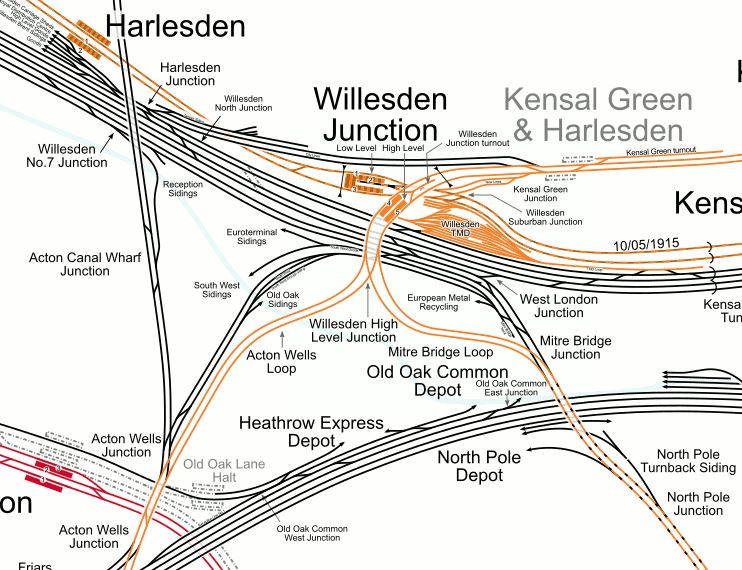
As it is all railway land, I suspect that the connection can be created.
The one problem, is that some of the Watford DC Line is shared with the Bakerloo Line.
But as the Bakerloo Line is being extended to the South and the Northern end will probably be improved, then surely creating an optimal solution to the Watford DC line, the Bakerloo Line and Overground services to Watford, makes a lot of sense.
The Southern Terminal
Various stations have merits and problems to be used as the Southern terminal for the service.
Clapham Junction
Clapham Junction would appear to have a strong case, but London Overground had enough problems squeezing in their current services.
As the station is now substantially step-free and has typically three tph to Gatwick Airport, Clapham Junction offers a good route to the airport.
Balham
Balham has been used as a terminal in the past and connects to the Northern Line. If redeveloped for Crossrail 2, it could be a possibility.
Steatham Common
Streatham Common could be developed as a major interchange and if this happens, then surely is is a possibility.
East Croydon
East Croydon would have a strong case, as it is a busy and well connected station, but there probably isn’t a suitable platform.
I think that any station South of East Croydon is probably too far.
My money would be on the new interchange station at Streatham Common, with Balham as an alternative.
Schedules And Trains
I estimate that a train doing a return journey between Watford Junction and Streatham Common would take under three hours, using the Watford DC Line. This would mean that three trains would be needed for an hourly service and six trains for a half-hourly service.
Conclusion
Transferring the East Croydon – Milton Keynes route to the London Overground looks feasible.
DOO – Analysed & Explained
This article in Rail Staff is a must-read about the dispute.
It is a detailed article and if you are short of time, just read the last paragraph entitled Looking Forward.
From Liverpool To Huddersfield
These pictures document a trip I took between Liverpool and Huddersfield.


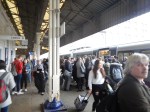

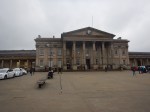



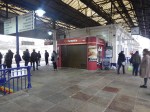
Some thoughts on the trip.
The Class 319 Interior
The first batch of Northern’s Class 319 trains are very much pack-it-in specials for running commuter services around the Blackpool, Liverpool, Manchester Airport triangle.
They are good for a thirty-year-old train, but they could be better.
In Porterbrook’s Class 319 Flex brochure, they show a proposed interior based on a Class 319/4 with the following.
- A mix of 2×2 and 2×3 seating.
- 12 First Class seats
- 255 Standard Class seats
- A full-accessible toilet.
- Two luggage racks per car.
It would certainly be a much better passenger experience.
Works At Edge Hill
Buckingham Group obviously have a big project on to the East of Edge Hill station.
This Google Map shows the lines through and to the East of Edge Hill.
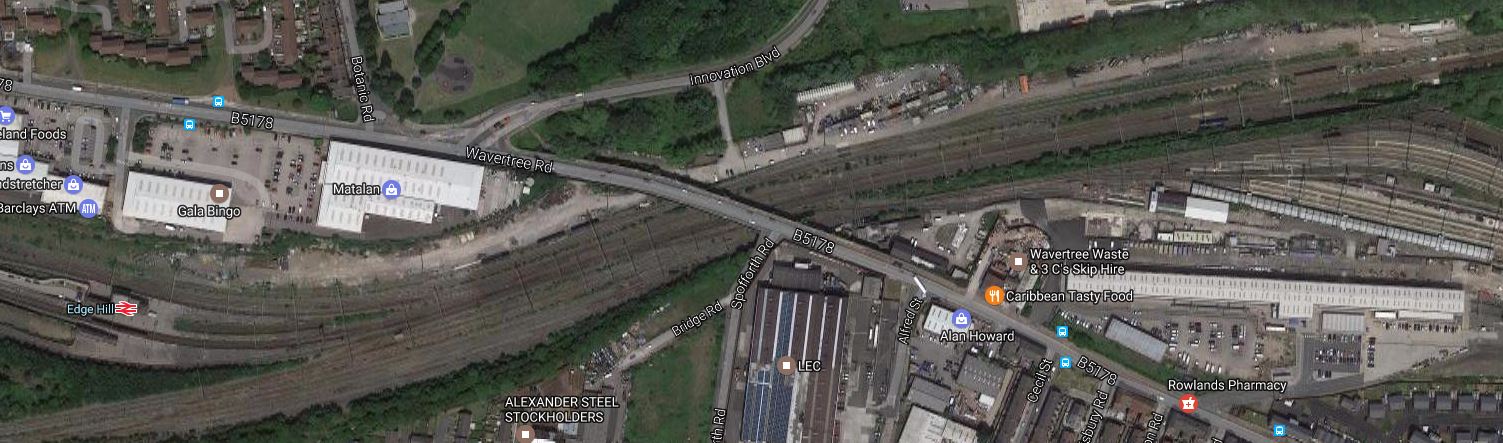
Note how to the South of the Retail Park and/or warehouses, work seems to be going on. Are extra tracks being created?
There is also a white scar at Wavertree Technology Park station, so if this was two fast lines, then fast services between Liverpool and Manchester and Wigan could storm in and out.
The Atherton Line
The Atherton Line is part of the Manchester-Southport Line and runs between Wigan Wallgate and Salford Crescent stations.
Wikipedia says this about Improvements to the Atherton Line.
There is ongoing feasibility into the conversion of parts of this line (Wigan–Atherton–Manchester) to operate as a Manchester Metrolink service with a higher frequency metro service for the Greater Manchester Boroughs of Wigan and Salford into the city centre. In November 2013, the Greater Manchester Combined Authority approved a recommended strategy for reconfiguring existing commuter services into tram-train operation, identifying the Atherton line as providing an opportunity for extending potential tram-train services from the south-east (Marple, Glossop) across the city centre and outwards to the north west.[2] Southport and Kirkby services on this line would be diverted to operate via Bolton. Additionally, Network Rail has identified electrification of Wigan to Southport, together with the Ormskirk–Preston line and the Burscough Curves as a possible source of new services.
I also think that the route from Salford Crescent to Southport via Atherton and Wigan could be ideal for electrifying in stages using Class 319 Flex trains to bridge any gaps.
The tools seem to be there, now is the time to think about how the work will be done.
Salford Crescent
Salford Crescent station could look very different in the future, as modern station design might be seen to favour two island platforms, one face of each dealing with Manchester Victoria station and the other Manchester Piccadilly station.
- Passengers going in to Manchester, needing trains to the other terminus, would just wait on the platform and catch the next train.
- Passengers coming from Manchester, who needed a different distination would change at Salford Crescent to their desired train.
- Comprehensive information would be provided.
The platforms would be built with lots of space, waiting rooms and coffee kiosks and would be well-staffed.
Manchester Victoria Station
Manchester Victoria station is starting look dirty again.
It must be all those elderly diesel trains.
Huddersfield Line
The Huddersfield Line took me to Stalybridge station and then later on to Huddersfield station.
There was no sign of any electrification work.
Stalybridge Station
As a coeliac, I found Stalybridge station one of the most gluten-free-unfriendly stations I have ever found.
In future, if I’m going that way, I’ll make sure that I stock up in Manchester or Leeds first.
TransPennine Express
The train was crowded and getting on at Stalybridge for the short trip to Huddersfield was delayed, as the conductor couldn’t get near to the doors to open them. Whereas the driver could have had a clear view.
It’s about time the NUR stopped this Driver Only Operation farce, which nearly all passengers think is sillier than the Teletubbies.
I hope the idiot, who landed TransPennine routes with the inadequate number of Class 185 trains, now has a job where he can do no harm, like in charge of the railways on the Scilly Isles.
Huddersfield
I don’t know Huddersfield and the only thing I’ve ever bought in the town is a ticket to the football.
You arrive in the Grade I Listed Huddersfield station and walk out into the magnificent St. George’s Square, which should be a welcoming gateway to the town.
Compare it to Kings Cross Square, where there is generally something going on and on a Friday is bustling with food stalls.
I walked to the shops and did find Marks and Spencer in a prominent place, but why wasn’t the route for pedestrians only, as it was crammed with traffic and parked cars.
Huddersfield needs to think how they organise their town centre, as except for the square ut’s about as weloming to visitors as Turkey is to the Dutch.
This Google Map shows the area.
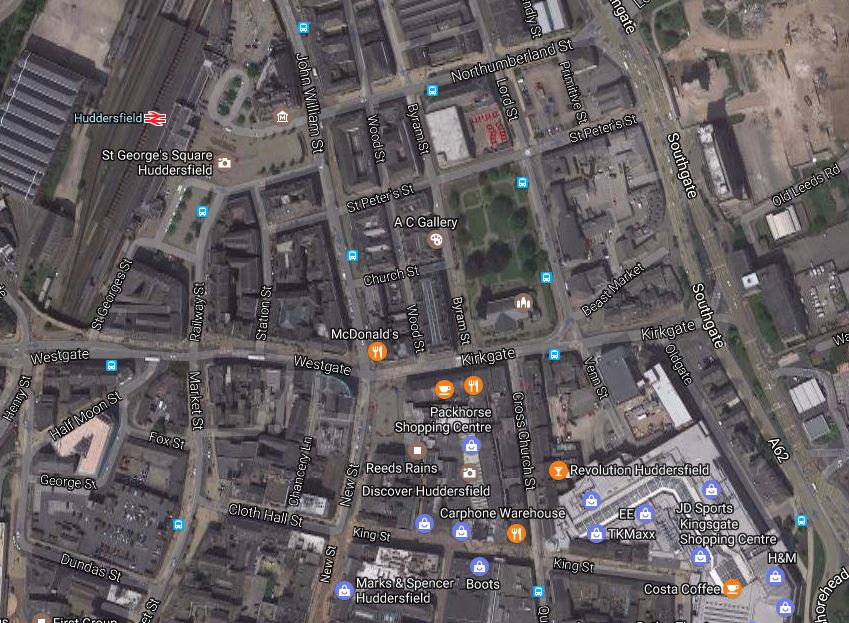
I feel that Huddersfield needs what most European towns of this size would have and that is a tram, that goes through the centre.
You would walk out of the station and in the square would be a tram stop. Trams would go South along a pedestrianised John William Street and New Street. Obviously the route would be designed to go through the town to the main hospital, the University and if possible the the Council Offices, the Courts and the football/rugby stadium.
Incidentally, if you search for Huddersfield Hospital, you don’t find the NHS hospital, but a private one. All major hospitals should have a name like Ipswich, Reading or Crawley Hospital. It should also be galleria for sports venues to constantly change their names.
Huddersfield might wonder, why it doesn’t get the visitors, it thinks it should. It’s because it isn’t visitor friendly.
If I was a businessman wanting to set up a depot, warehouse or whatever in a large town in the North of England, Huddersfield would put me off because of its non-existent and chaotic transport system, built around everybody having a car with a sat-nav.
Driver Only Train Operation In Yorkshire
One of my readers has just sent me this story from the Yorkshire Post, which is entitled Commuter chaos in Yorkshire after train driver leaves conductor behind.
No-one seems to have been hurt in this demonstration of Driver Only Operation, so perhaps as a matter of honour, the RMT should look at more efficient ways of train operation.
Laura Kuenssberg On The Southern Rail Dispute
This article on the BBC by Laura Kuenssberg is entitled The politics behind the Southern rail dispute.
It is a must-read for everyone who uses trains to get to and from work or for important journeys.
This is said.
One former senior minister tells me that “successive secretaries of state” in charge at Transport have wanted to “get rid of guards on trains”. The ambition is to bring down the cost of rail travel for the tax payer and the train passenger.
With that considered to be a long term ambition, it’s no surprise that the RMT, the only union that represents guards, wants to fight this every step of the way. Union sources deny it, but it’s suggested that they have dug in in this dispute, because if they lose it, they also lose a big chunk of their industrial muscle.
If there have to be guards on trains, a strike works if they walk out. If services can run with drivers on their own, their power to disrupt would be reduced. It’s worth noting that the RMT has more than 80,000 members, nearly ten times as many as the drivers’ union, ASLEF. It’s ASLEF that has agreed to meet Southern for talks tomorrow.
So like it or not the traditional guard is going the way of the dinosaurs.
Can rail passengers and hard-pressed tax-payers afford to pay for a vanity job, which if abolished would result in no loss of employment, but as Laura points out, a considerable loss of industrial muscle.
It is interesting to look at the future in the shape of Merseyrail’s new trains, that I wrote about in Thoughts On Merseyrail’s New Trains.
- The trains will be designed to fit the platforms for step-free entry and exit for all passengers.
- The trains will be designed for as high a level of passenger safety as possible.
- The trains will have a high degree of automation.
- Automatic Train Operation may be implemented in the Loop Line under Liverpool.
The trains will be designed for Driver Only Operation. This article on the BBC, which is entitled Merseyrail driver-only trains: RMT sets guards decision deadline.
This is said.
A train operator has two weeks to give “cast-iron” assurances that guards will be retained or risk dispute, rail union RMT has said.
I have a feeling that Merseyrail have been cunning here and that as it is three years before the trains run, natural wastage and other factors, will mean that the second men and women on the trains by 2020, will be running under new contracts.
Liverpudlians like a good fight and I have a feeling that in this dispute the RMT and its guards will be severely outnumbered.
RMT Fights Trains That Might Have Saved Girl
This is the headline on an article in today’s Sunday Times.
It is only for balance that you read the whole article, but I predict there could be an almighty row over over Merseyrail’s new Stadler trains, which as the article describes, are designed totally with safety in mind.
But not the RMT!
Will DOO Mean DOO on Thameslink?
On Thursday I took a Thameslink Class 700 train from St. Pancras to Blackfriars.
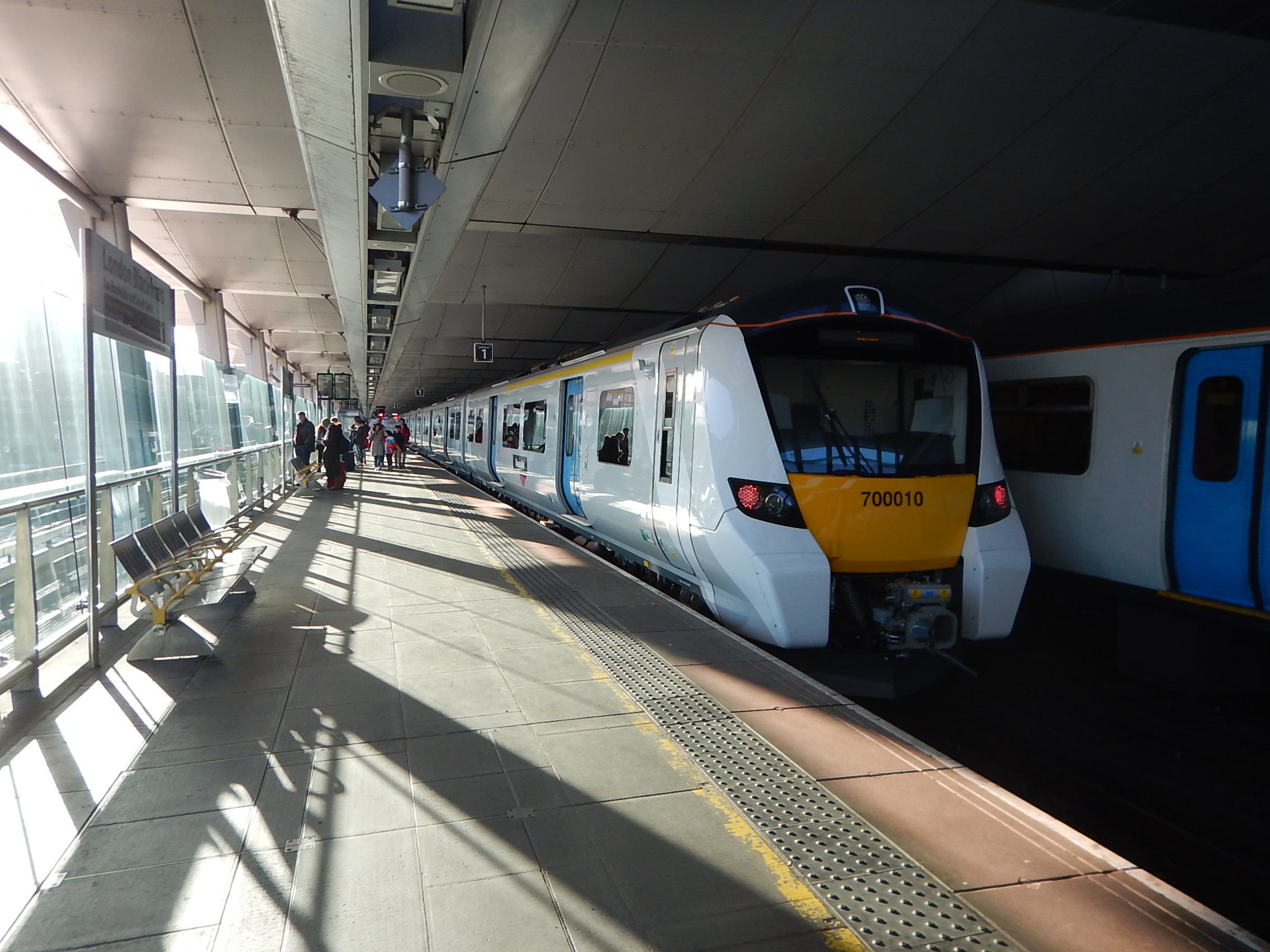
A Class 700 At Blackfriars
At Blackfriars an announcement said that the doors would open automatically.
Which they did without any of the usual intervention from passengers after the driver had released the doors.
This is how DOO works on the London Underground.
It is surely better, especially if you are getting off and your hands are otherwise engaged.
 The Anonymous Widower