Are The Best Ideas Started In Garages?
The storage of electricity has always been a problem and it’s one that will get worse as we get more renewables like wind-power, that tend to produce electricity at variable times.
So this article on the BBC web site caught my eye. I particularly like this bit.
The technology was originally developed by Peter Dearman, a garage inventor in Hertfordshire, to power vehicles.
Just like Hewlett-Packard, which started in a garage.
What is the most significant fact, is the IMechE have got involved.
This might be one of those ideas that runs and runs.
It has a lot of things going for it.
- It’s all technology we have had around for years.
- It doesn’t require large amounts of land.
- The plants could also be used to say produce liquid carbon dioxide, nitrogen or oxygen, where they are needed, instead of bringing it in by tanker. On the other hand liquid oxygen is dangerous stuff to have around.
I shall be watching this story in the future.
It’s Open House Weekend!!
I’m following an engineering theme this weekend.
Saturday
- Bond Street Crossrail Station
- TUCA – London’s University of Hole Digging
- Limehouse Accumulator Tower
Sunday
Obviously, I may add some more.
Is This The Best Microwaveable Gluten-Free Sunday Lunch?
I wasn’t feeling too well this morning, as I probably got too hot in the sun at the Paralympics yesterday. It seemed to make my hand and arm go rather cold. So I picked up one of Marks & Spencer, roast pork loin with apple & cider sauce dinners from their Fuller Longer range, as I didn’t want the hassle of cooking properly.

Roast Pork Loin With Apple & Cider Sauce
It really is rather a nice meal for something that you just put in a microwave. I wonder whether when John Randall and Harry Boot, invented the cavity magnetron in 1940 at the University of Birmingham, ever visualised, nearly everybody having one in their homes.
And Now The Bouncy Bus
The Czech House is at the Angel and this bus is outside.
It is an interesting piece of engineering art by David Cerny. I like it a lot better than some of his other works.
I suspect some fans of Bristol buses will find it sacrilege.
The Old Farts Get It Right
Wimbledon has shown that with a bit of planning, you can avoid the problems of the weather. In 1993, they unveiled a plan to create a venue fit for the 21st century. Now nearly twenty years later, they have completed that plan. Here’s a simplified version of the plan from Wikipedia.
Stage one (1994–1997) of the plan was completed for the 1997 championships and involved building in Aorangi Park the new No. 1 Court, a broadcast centre, two extra grass courts and a tunnel under the hill linking Church Road and Somerset Road.
Stage two (1997–2009) involved the removal of the old No. 1 Court complex to make way for the new Millennium Building, providing extensive facilities for the players, press, officials and members, and the extension of the West Stand of the Centre Court with 728 extra seats.
Stage three (2000–2011) has been completed with the construction of an entrance building, club staff housing, museum, bank and ticket office.
A new retractable roof was built in time for the 2009 championships, marking the first time in the tournament’s history that rain did not stop play for a lengthy time on Centre Court.
A new 4000-seat No. 2 Court was built on the site of the old No. 13 Court in time for the 2009 Championships.
A new 2000-seat No. 3 Court was built on the site of the old No. 2 Court and the old No. 3 Court.
It just shows if you take your care at the planning stage and get everyone on your side, you get a better outcome. The only mistake, they seem to have made was underestimate the success of the roof on Centre Court and not put in provision for a roof on No. 1 Court. I suspect though, that engineers are seeing No. 1 Court as their next challenge.
It is interesting to compare Wimbledon’s progress with the dithering the French have been through about expanding or relocating, the venue for the French Open.
Wimbledon have also had the last laugh, in that they will be hosting the tennis at the London Olympics. What odds can I get on a Federer-Murray final? After all one will be hoping to prolong a winning streak and the other will be looking for revenge.
Where Next For The Emirates Air-Line?
I like predicting the future and in many cases, I have the knowledge to do my predictions based on fact rather than fantasy.
So now we have got the Emirates Air-Line up and running, where else could we use a similar system within the UK.
The Emirates Air-Line has been designed using the simple single cable, Monocable Detachable Gondola (MDG) technology, which uses a single cable for both support and propulsion. The simple concept probably explains, why the system went from project start to finish in undera year. It is not untried technology, as a similar system in Caracas, is twice the length and has twice the number of cabins. So if you are of a nervous disposition and find the Emirates Air-Line a bit scary, stay away from Caracas. Although looking at my pictures and some of the Caracas system, the gondolas appear to be very similar. Both might have been built by the Austrian company, Dopplemayr. The Emirates Air-Line certainly was.
But it does show the flexibility of the technology, as Caracas system is much larger than the London one. But the Emirates Air-Line is not small in terms of capacity, as its 34 cars can move 2,500 people in an hour, which is the equivalent of thirty buses. Cynics have complained about the cost of £60 million, but then crossing a river, either needs a tunnel, a ferry or a bridge.
Asa an aside here, London’s millennium footbridge cost around £20 million, but of course couldn’t have been used here, as it is not high enough for large ships to pass underneath.
I know England well and I think there are several places, where cable-cars could be a cost-effective alternative to other means of moving people.
Obviously, because I know Liverpool well, a cable-car could be an alternative way to cross the Mersey. Liverpool has a problem in that it has three ageing ferries, that will need replacing at some time. They also do other jobs, like run pleasure trips up the Mersey. As there is a proper railway under te river, Liverpool’s need for passenger movement is not so pressing. But a cable-car system, running all the way from Lime Street station to Birkenhead could be a spectacular attraction taking visitors over one of the best cityscapes in Europe.
Crossing the Tyne at Newcastle, would probably be one of the easiest from an engineering point of view.
Obviously, schemes will come together, when the economics of the Emirates Air-Line are fully understood in a couple of years.
But I think before the end of this decade we will be seeing other cable-car systems in the UK.
Emirates Air-Line – It Was So Good I Did It Twice
The Emirates Air-Line that is!
This time it wasn’t so crowded and I had a gondola all to myself.

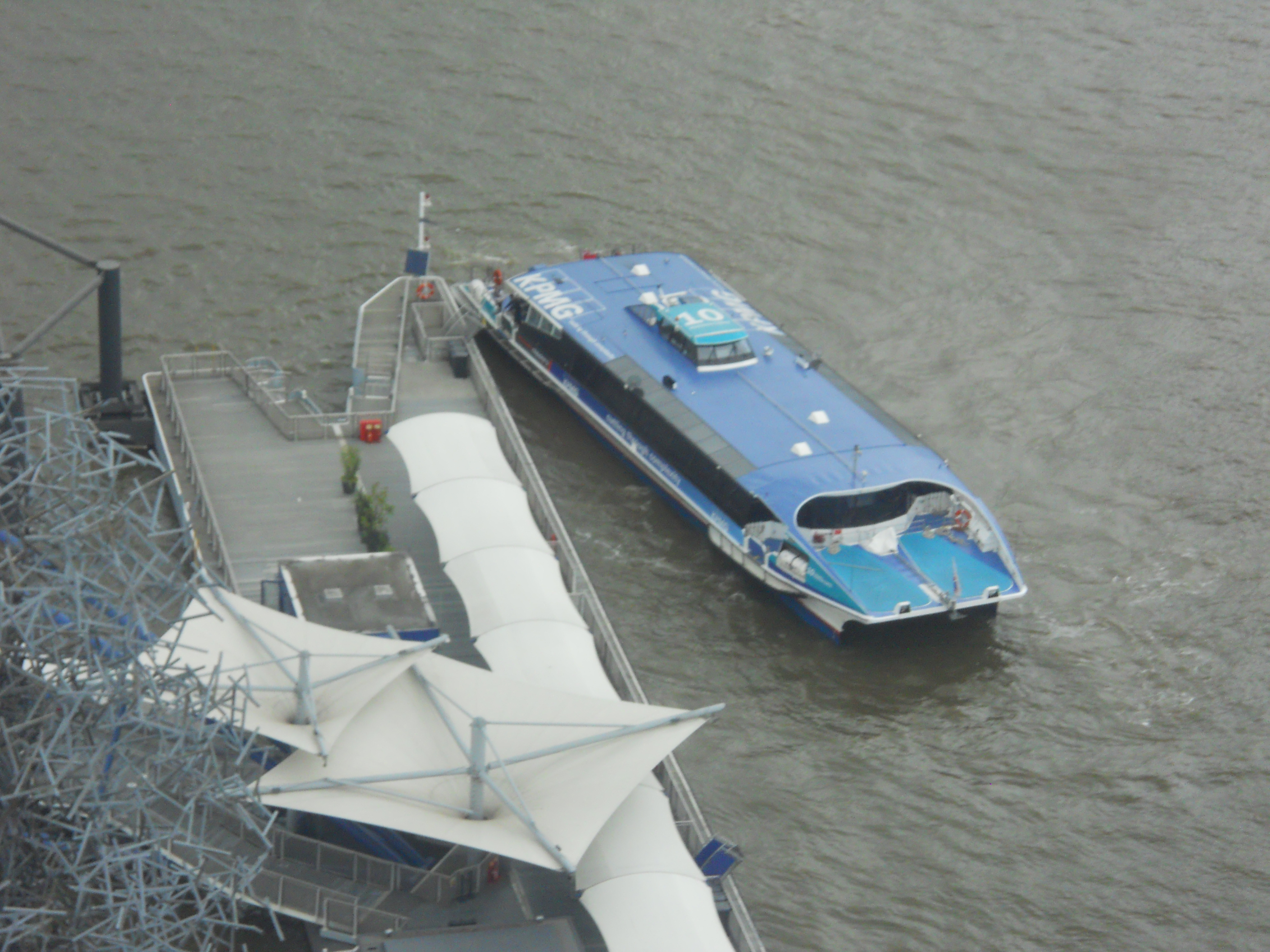
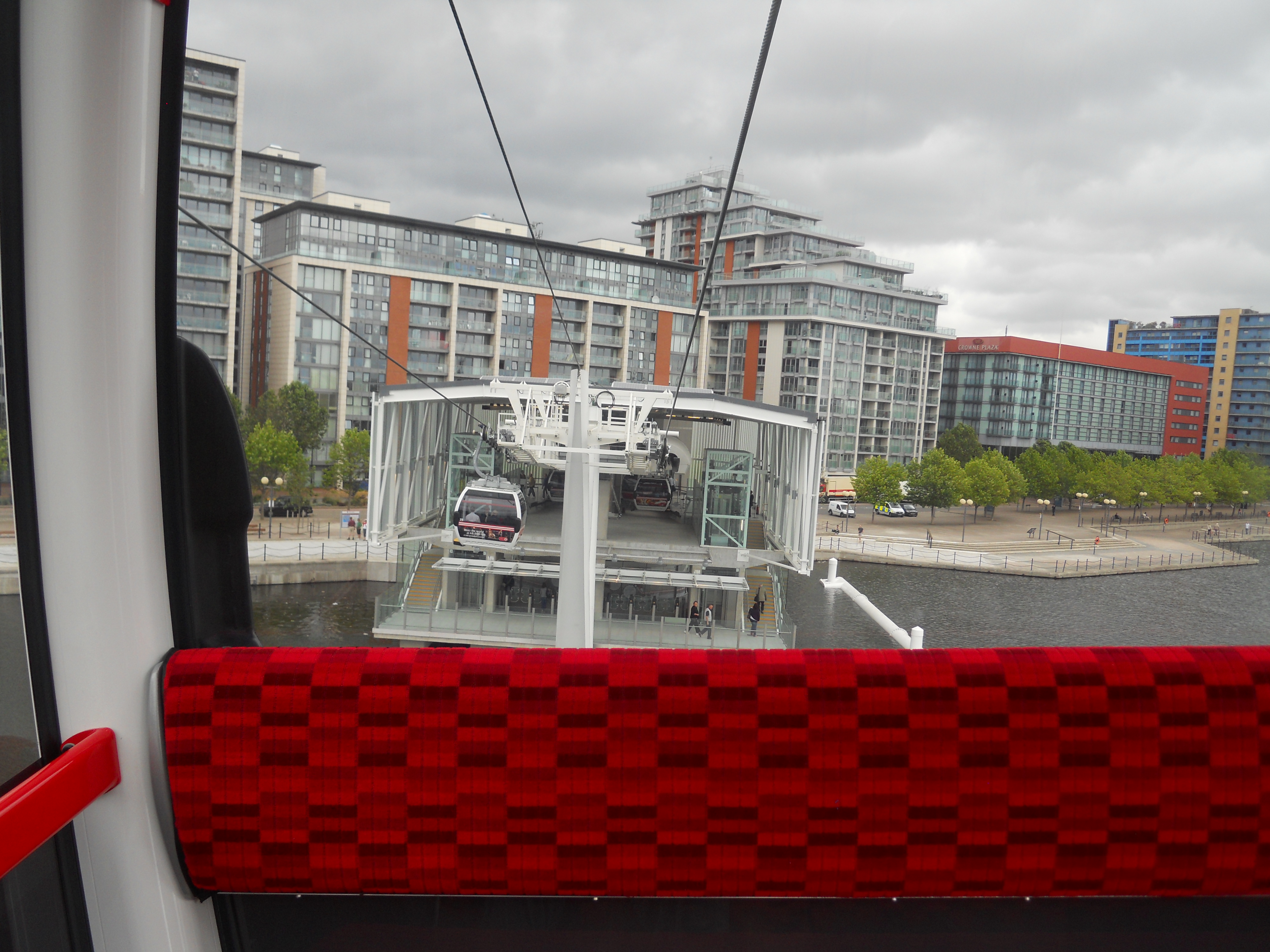
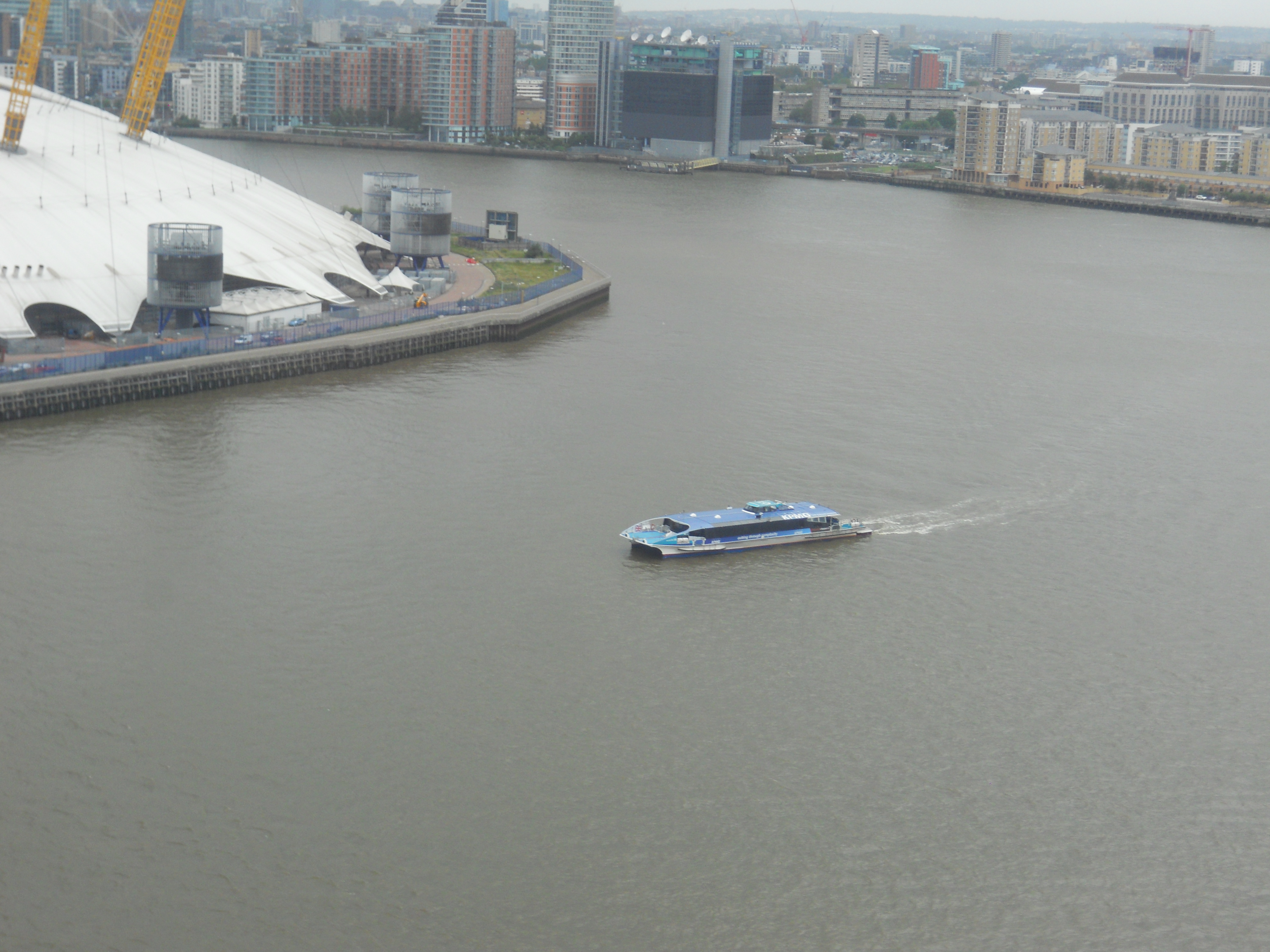

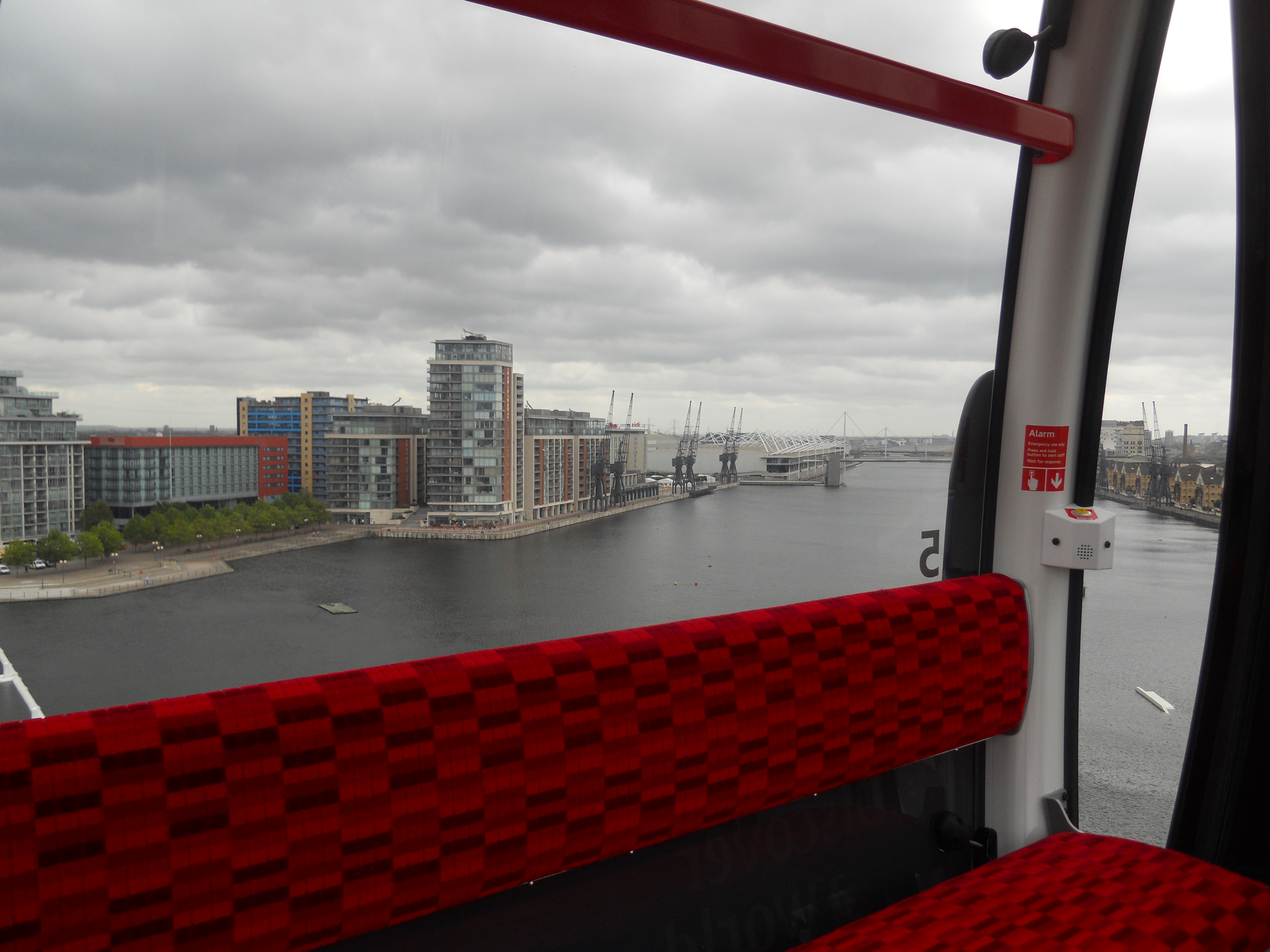
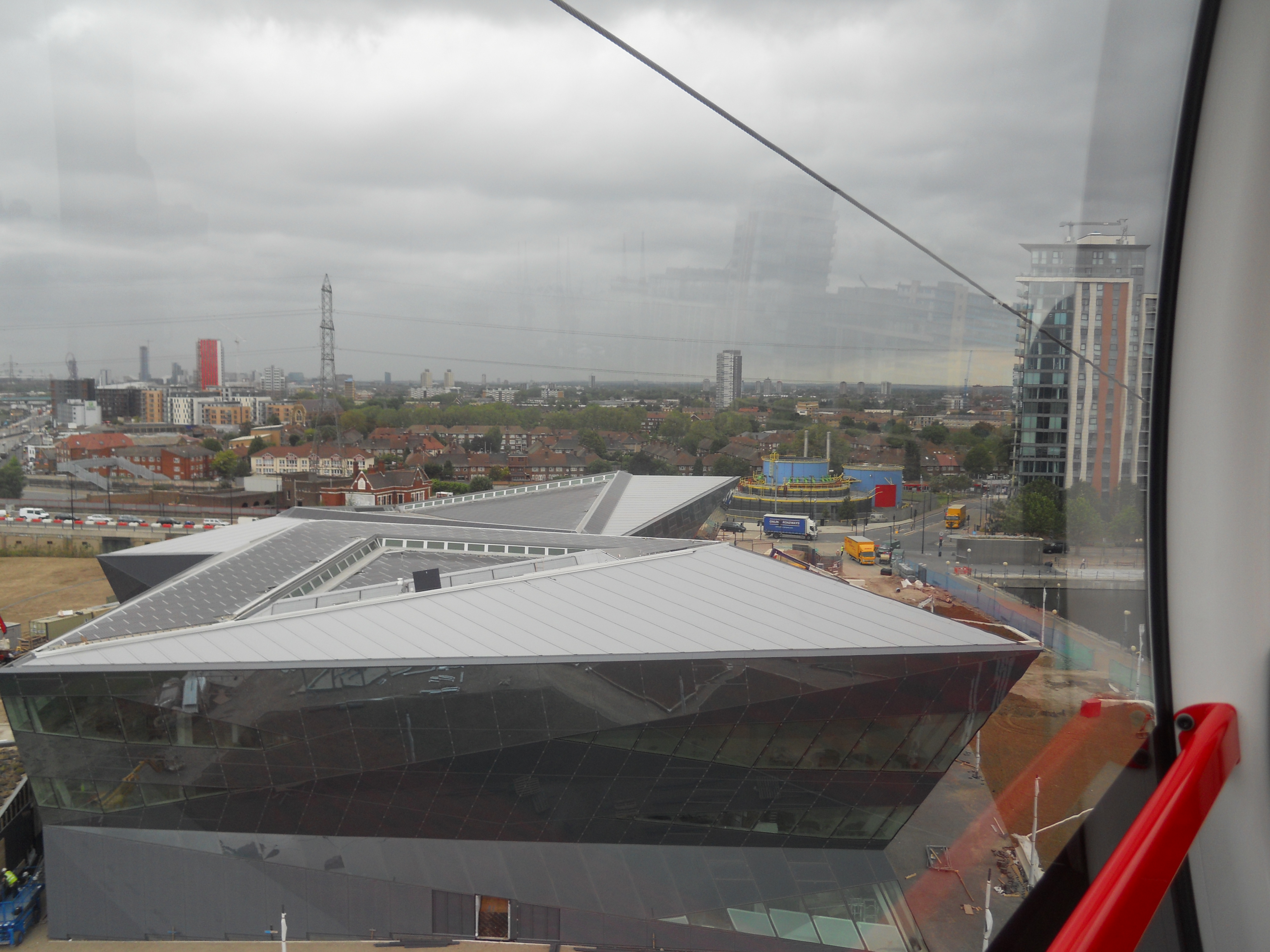
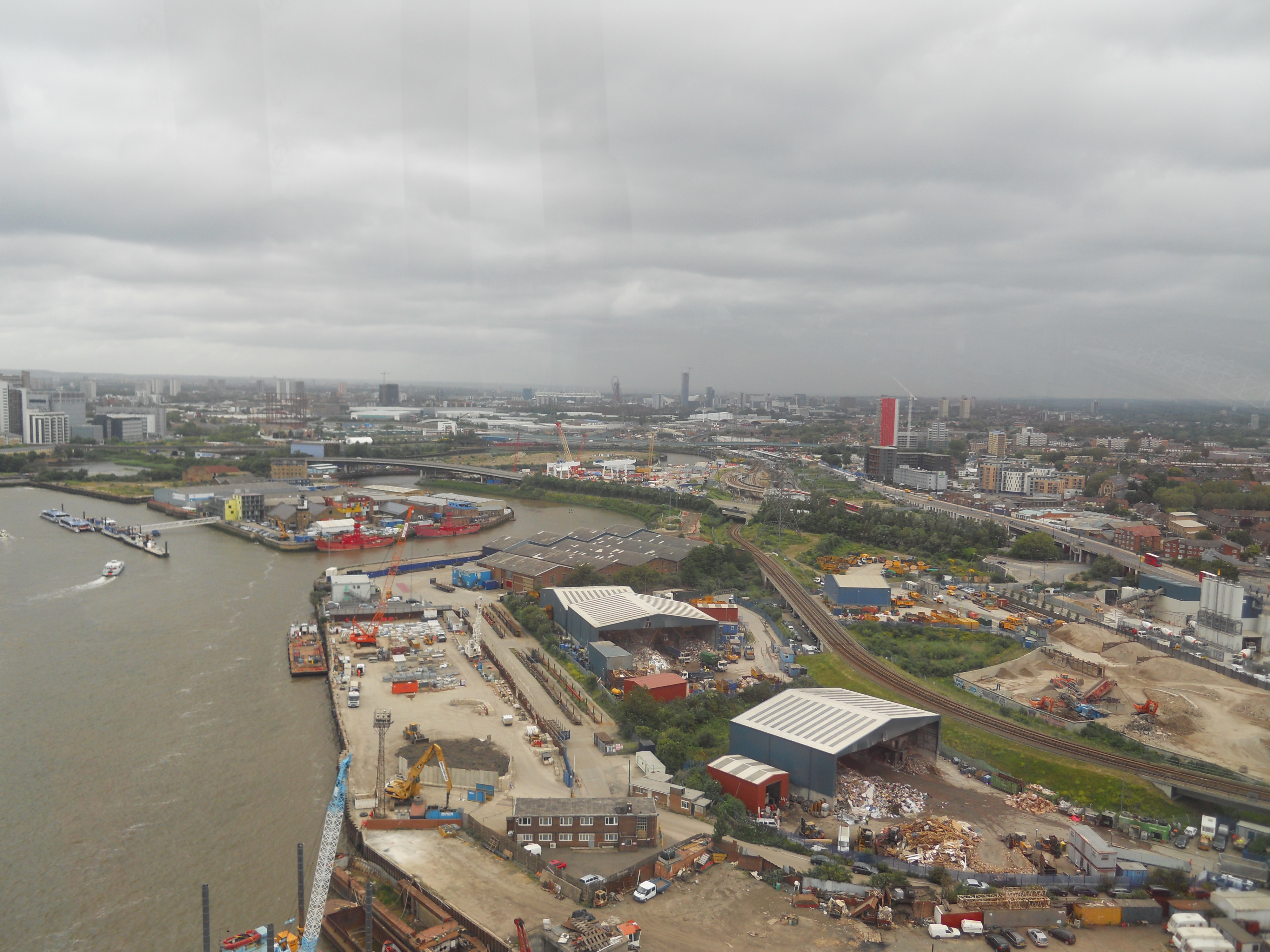
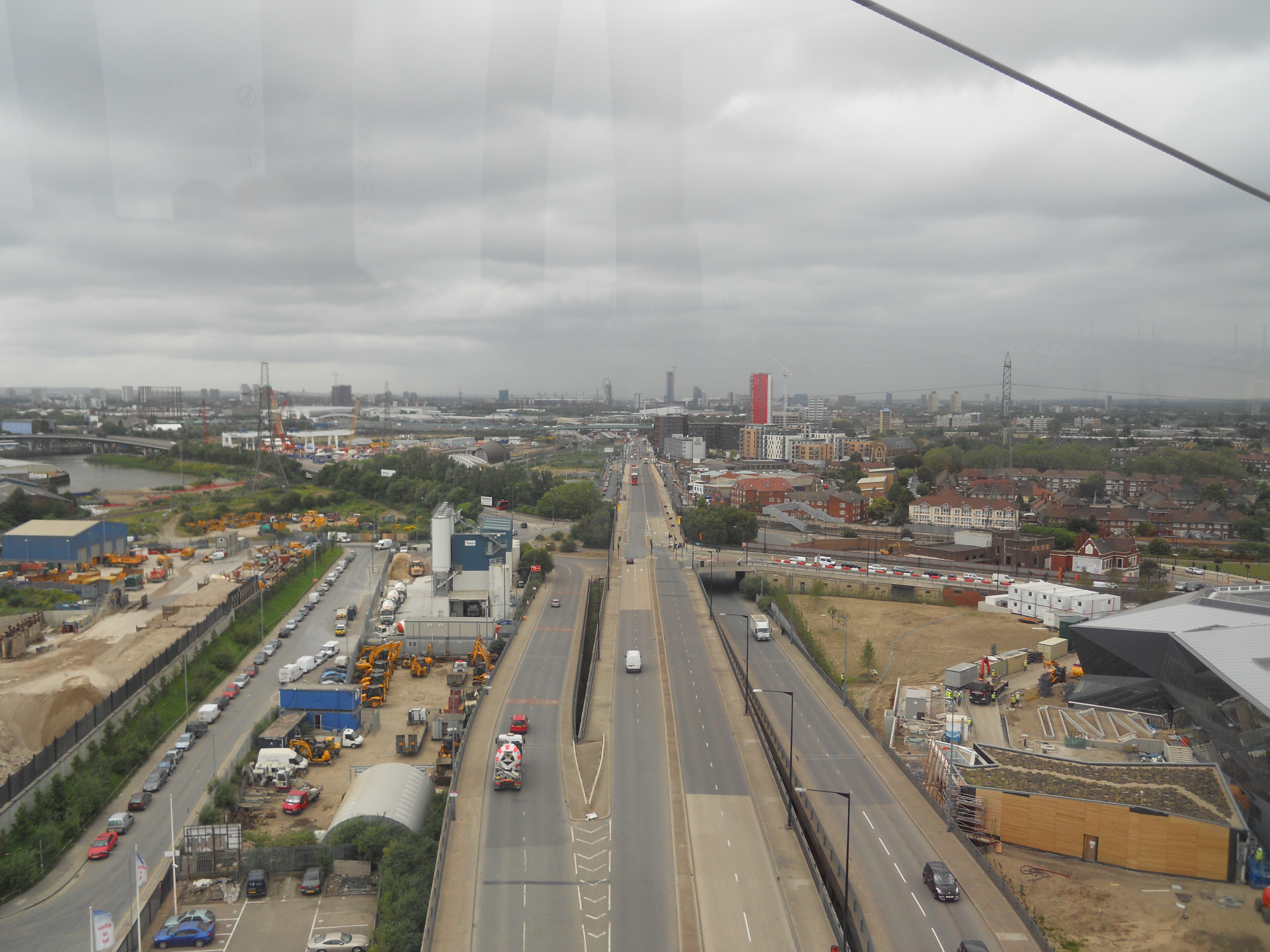
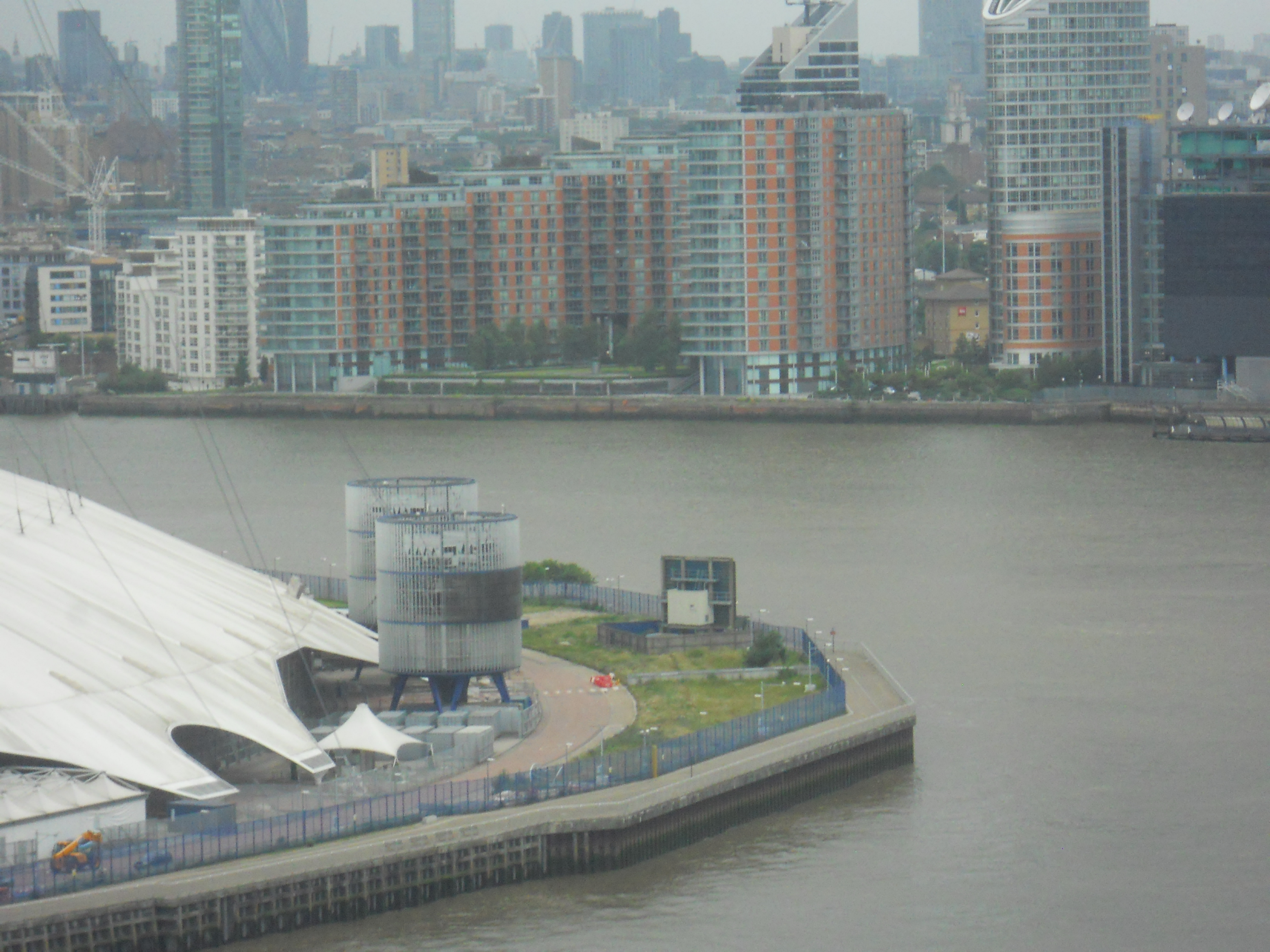
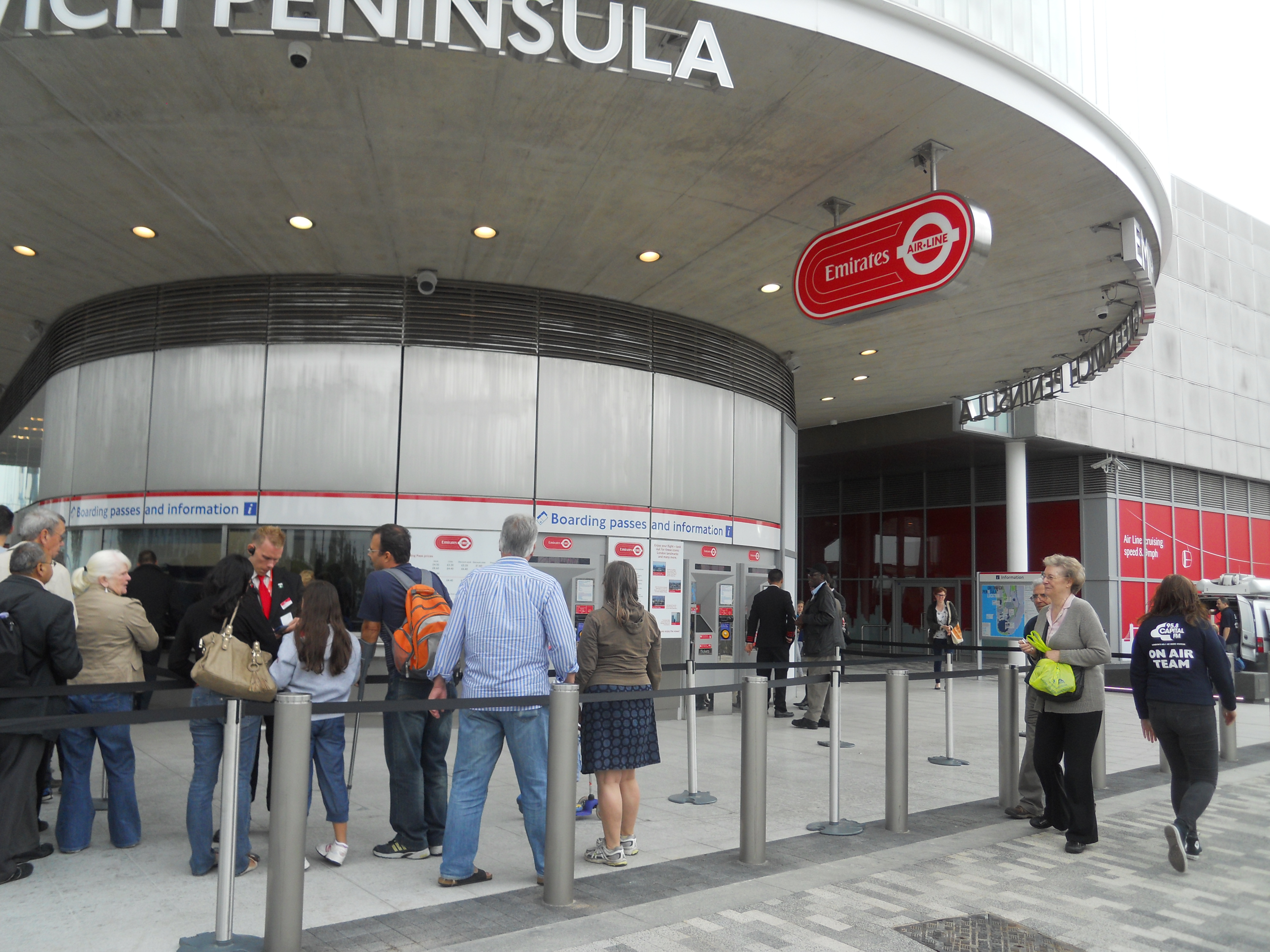
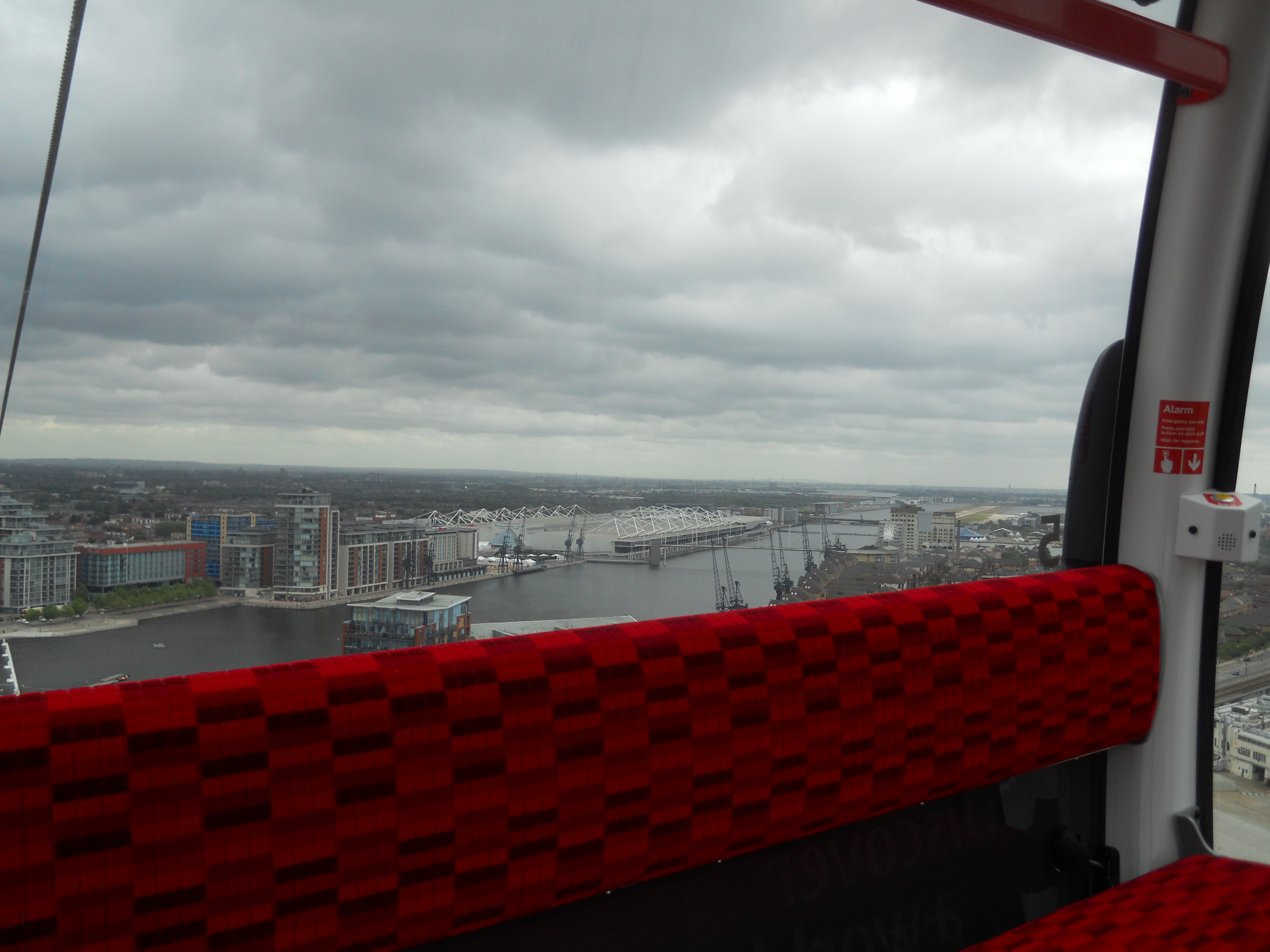
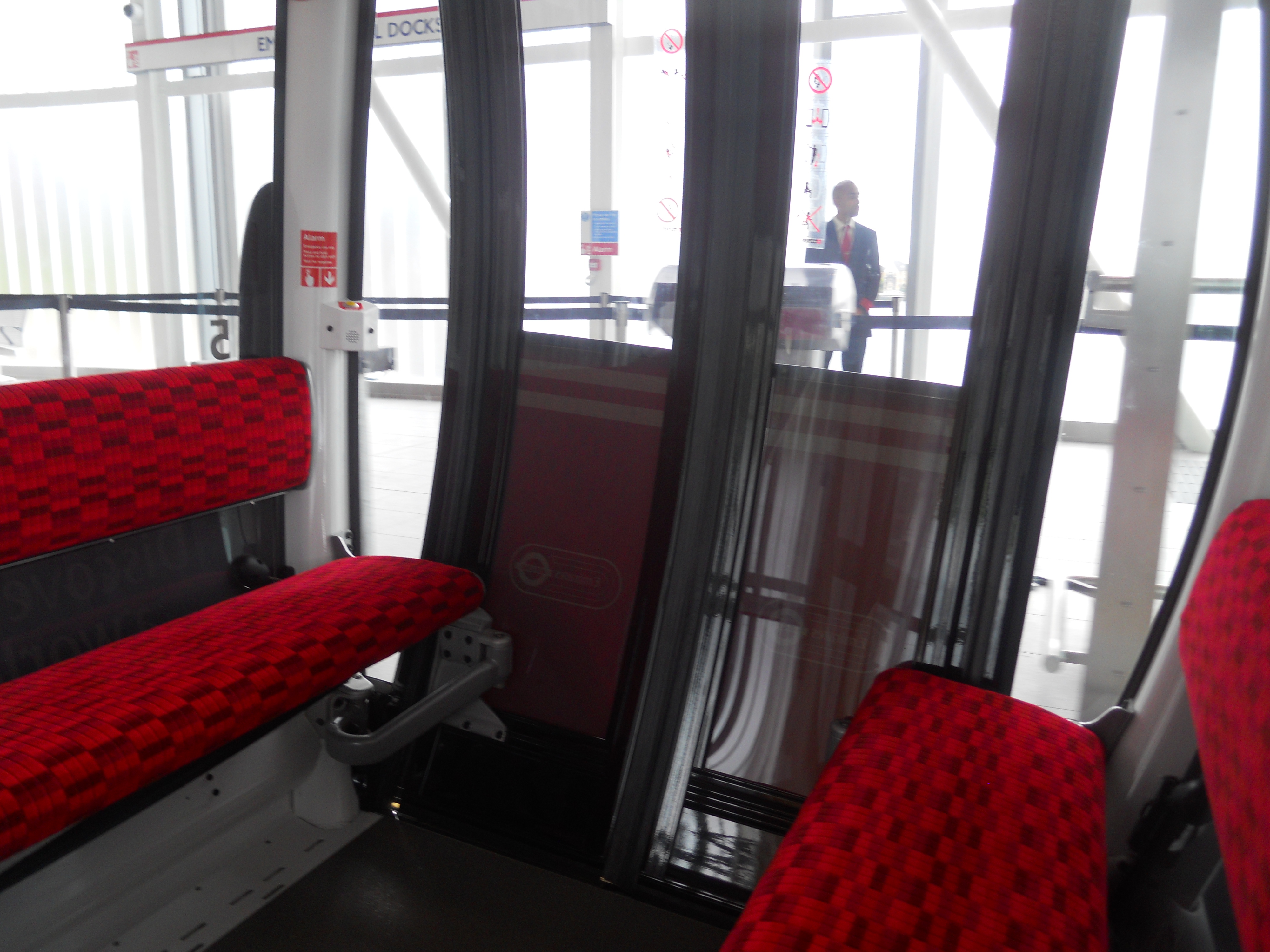
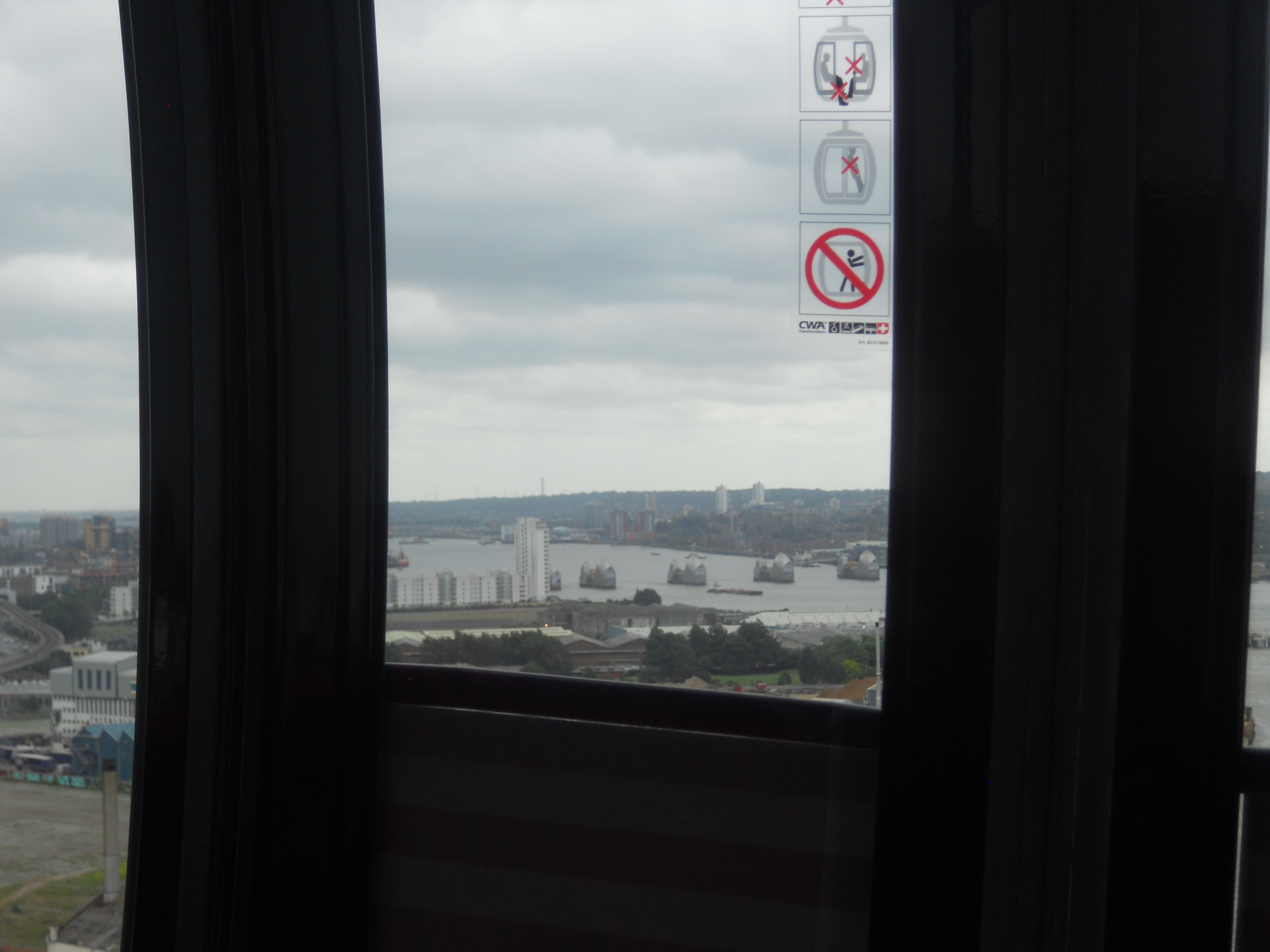
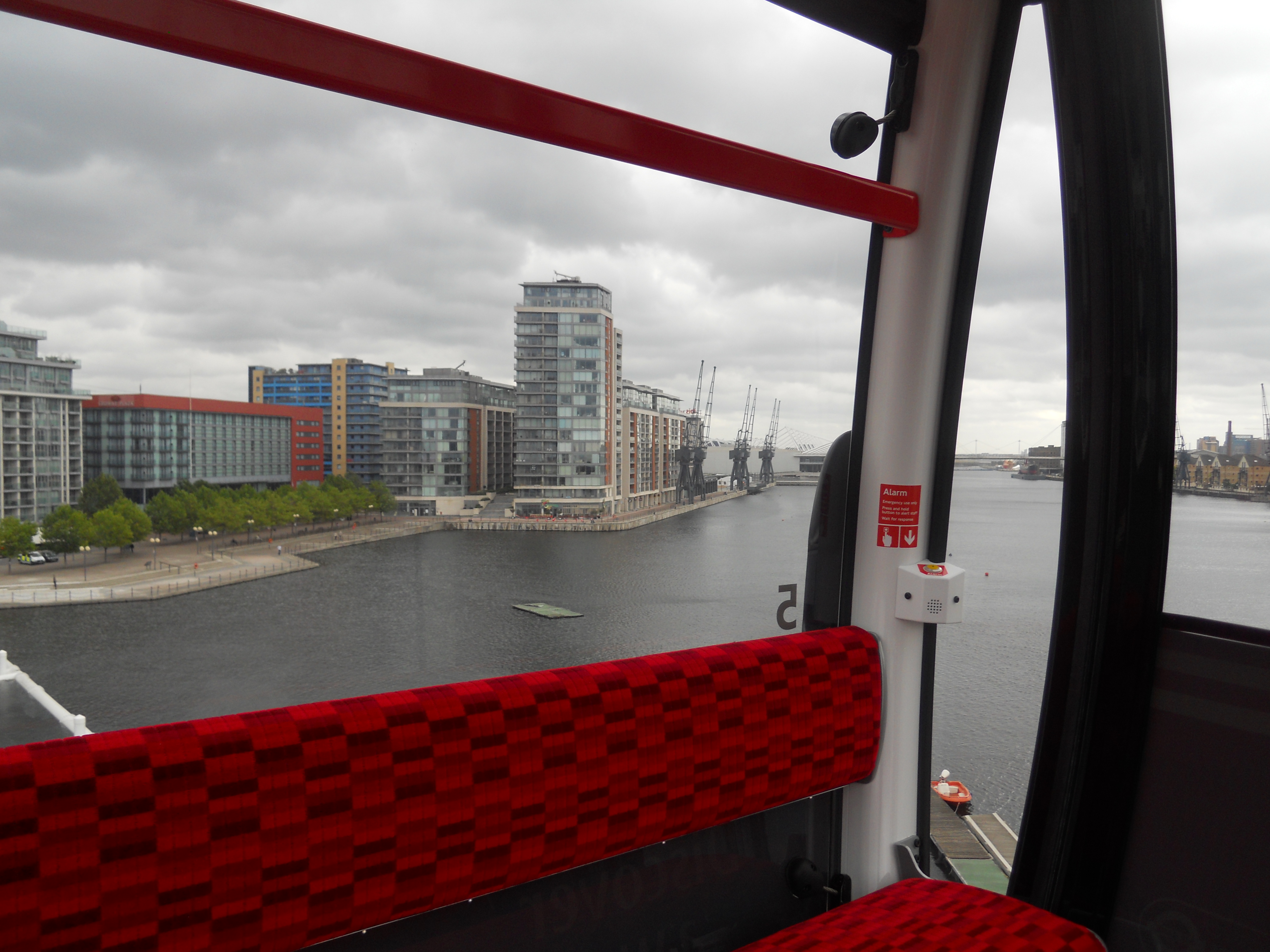
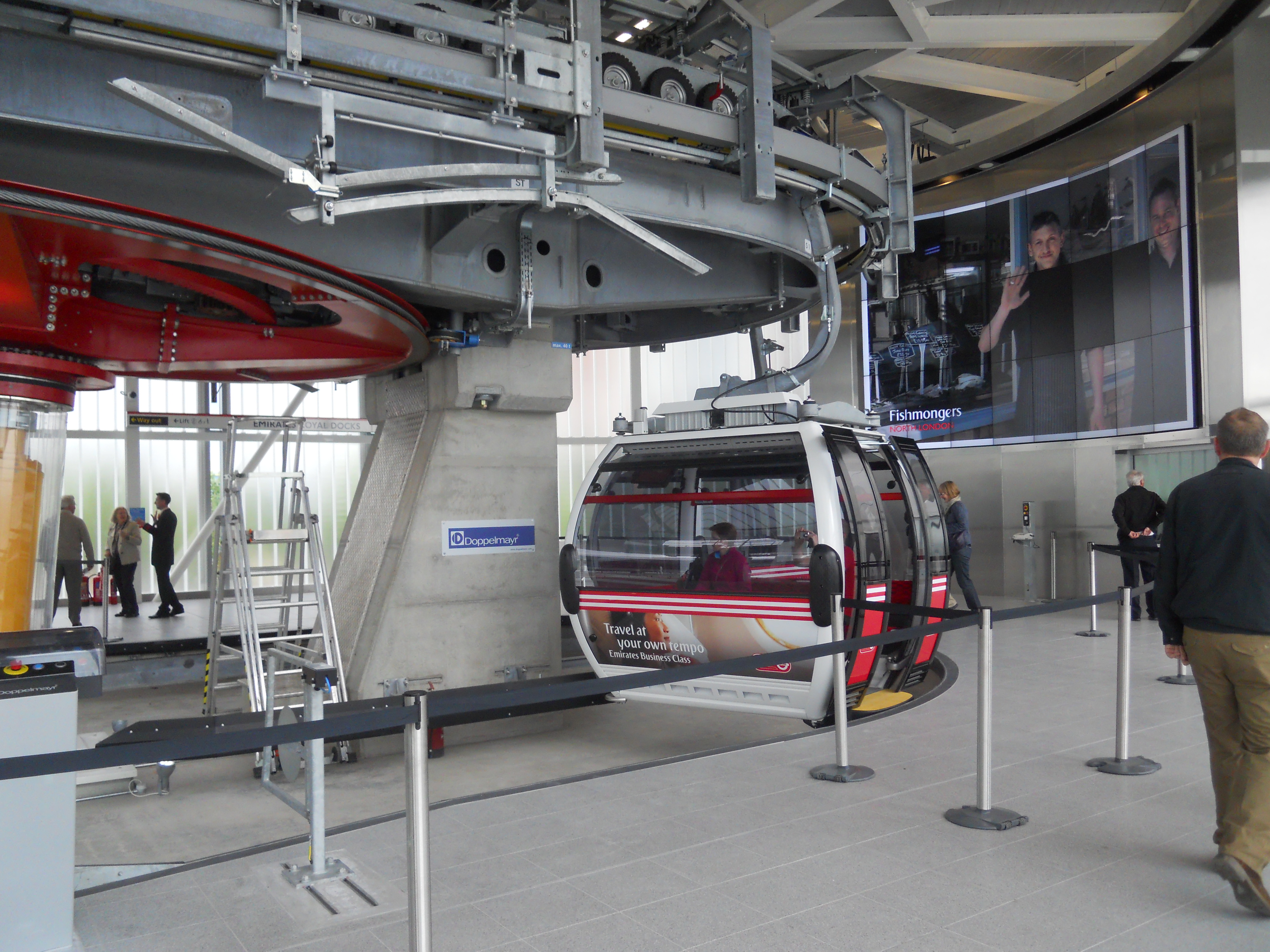
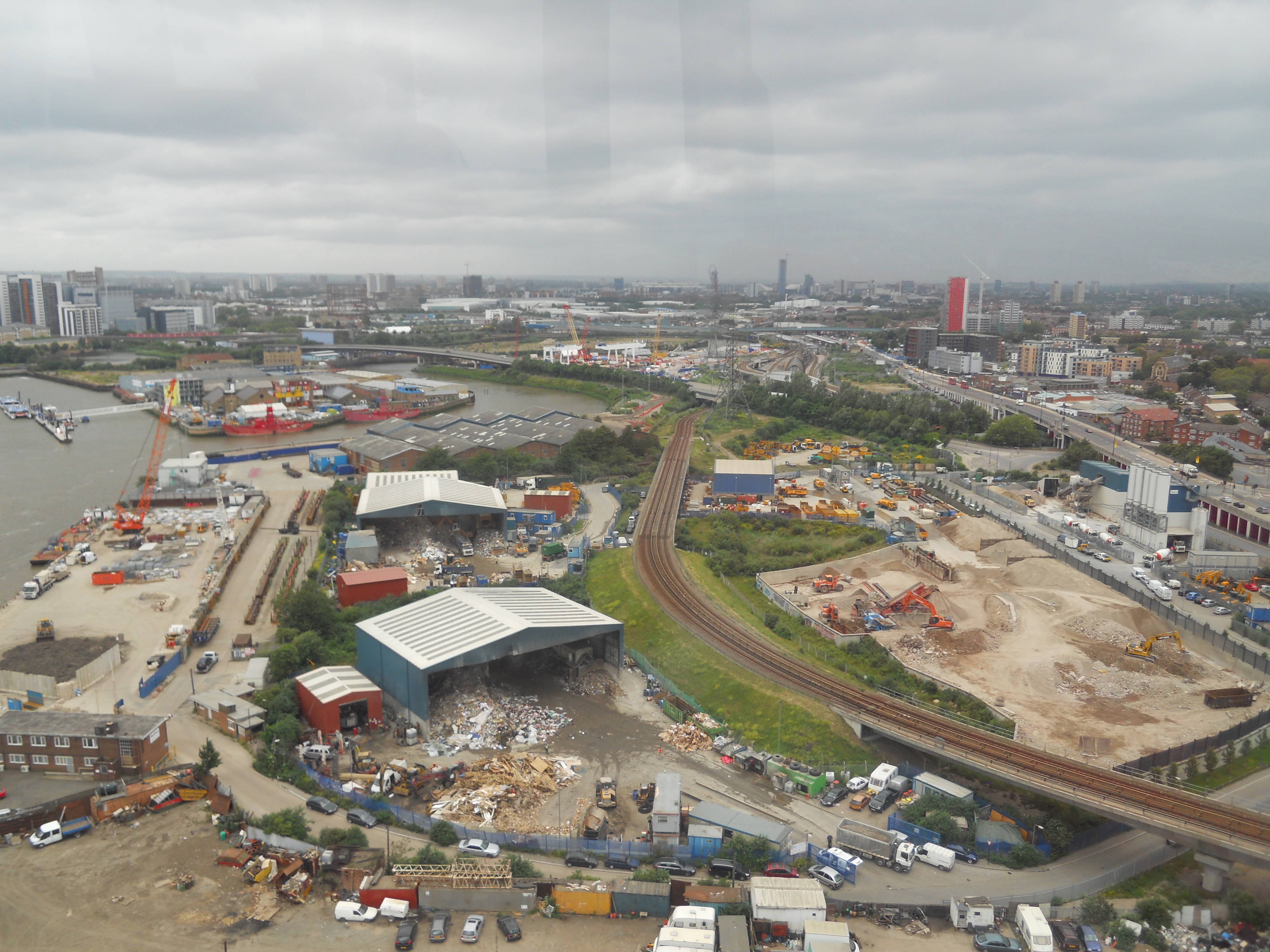
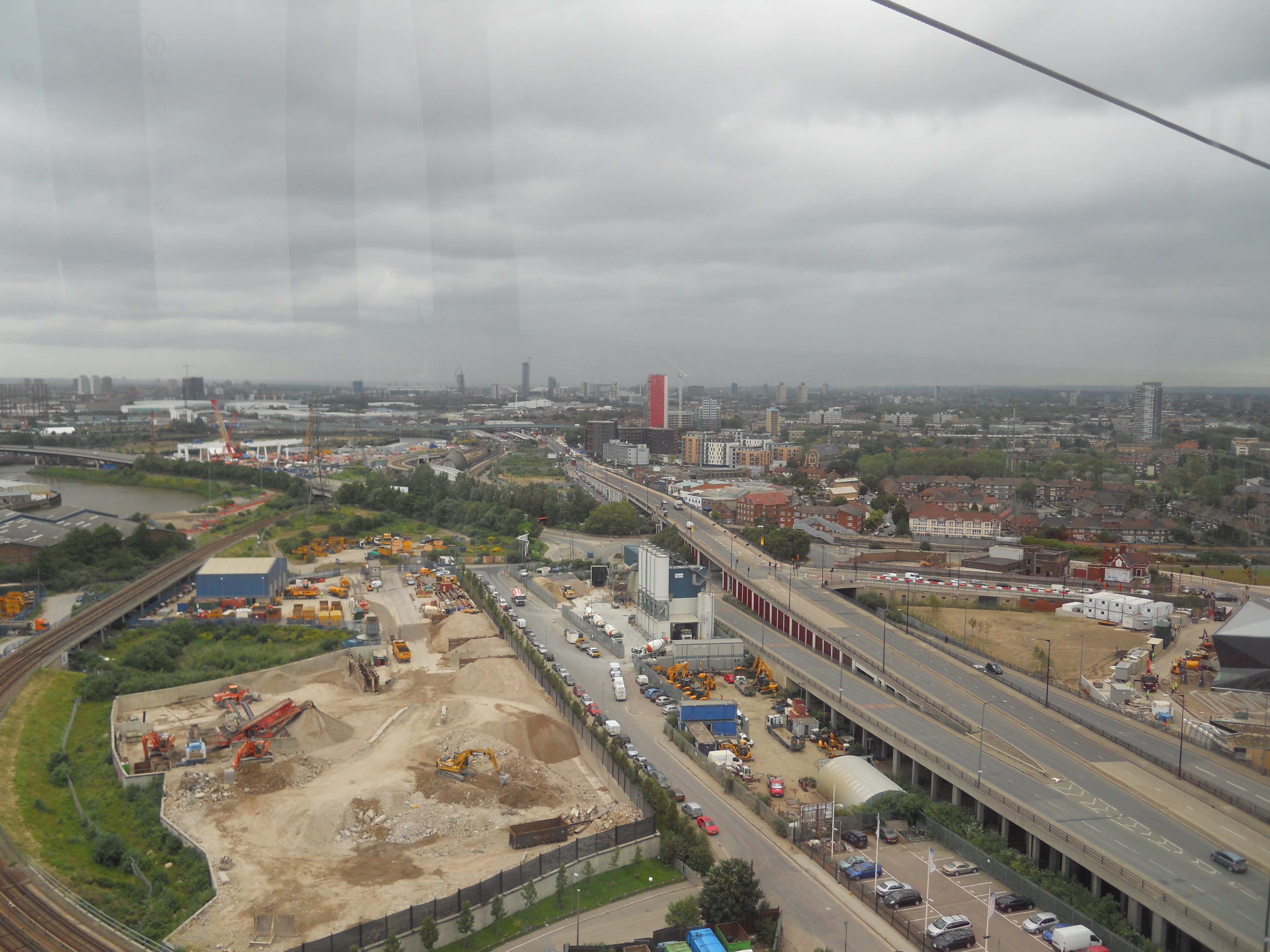
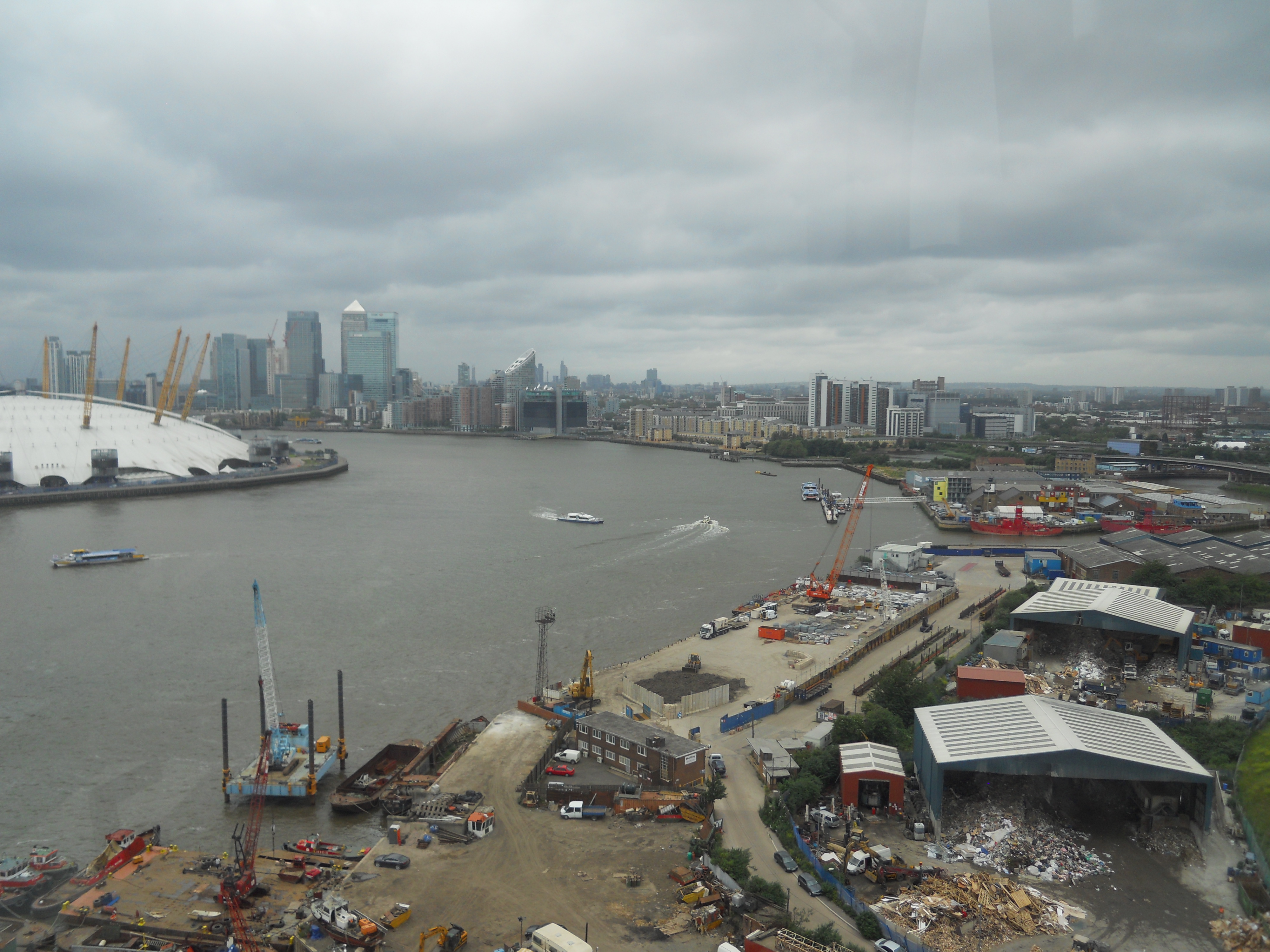

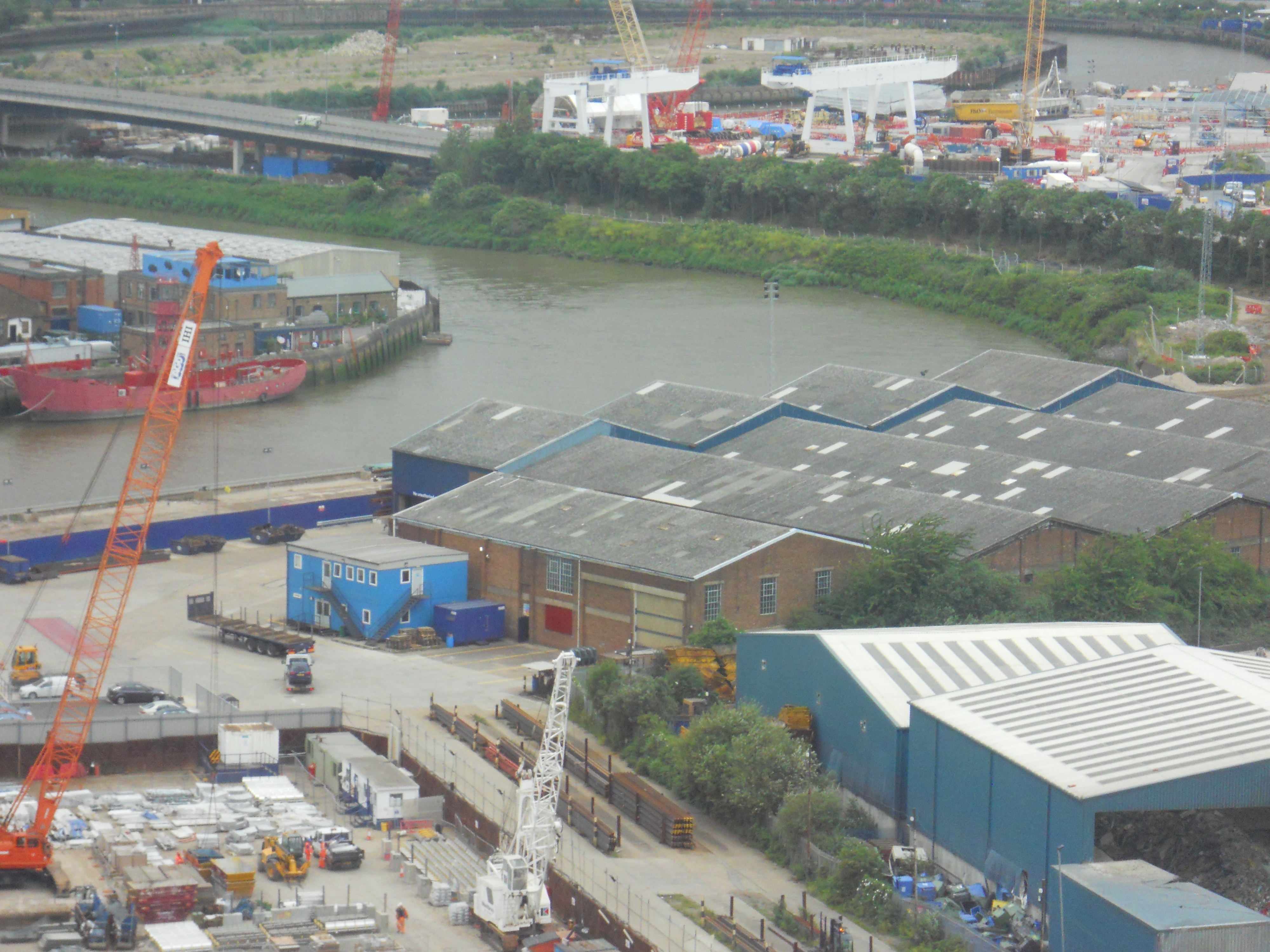
As you can see I was sitting on the City side of the gondola. Sitting on the other side should give good views of the Thames Barrier.
It really is good value at £3.20. Although, it was a bit shaky in the wind today and getting good pictures was more difficult.
Who knows, I might go back about sunset on a day it decides to show it’s face.
Robert Comes Home
I like to see old engines and other pieces of industrial history displayed at places like stations.
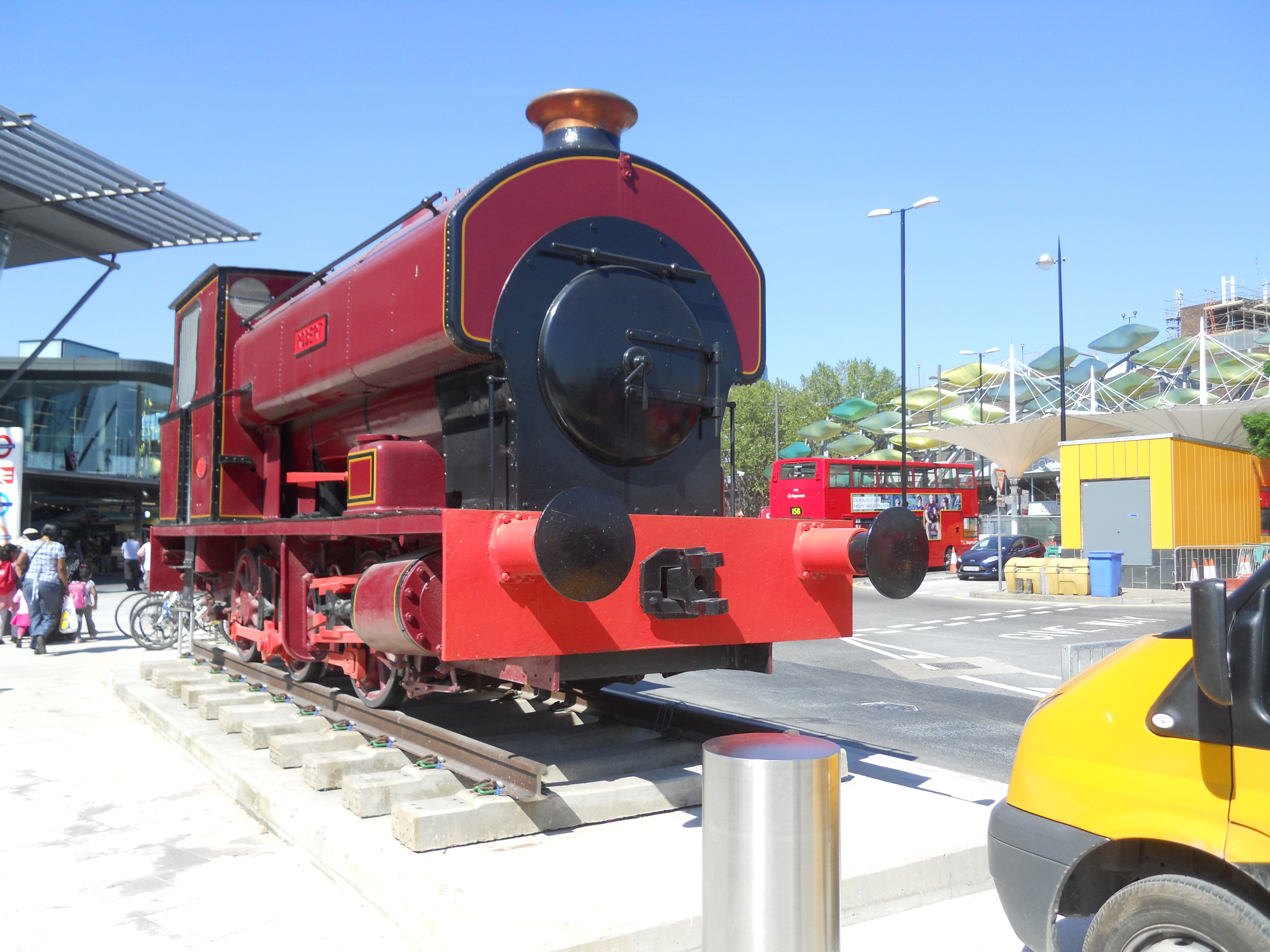


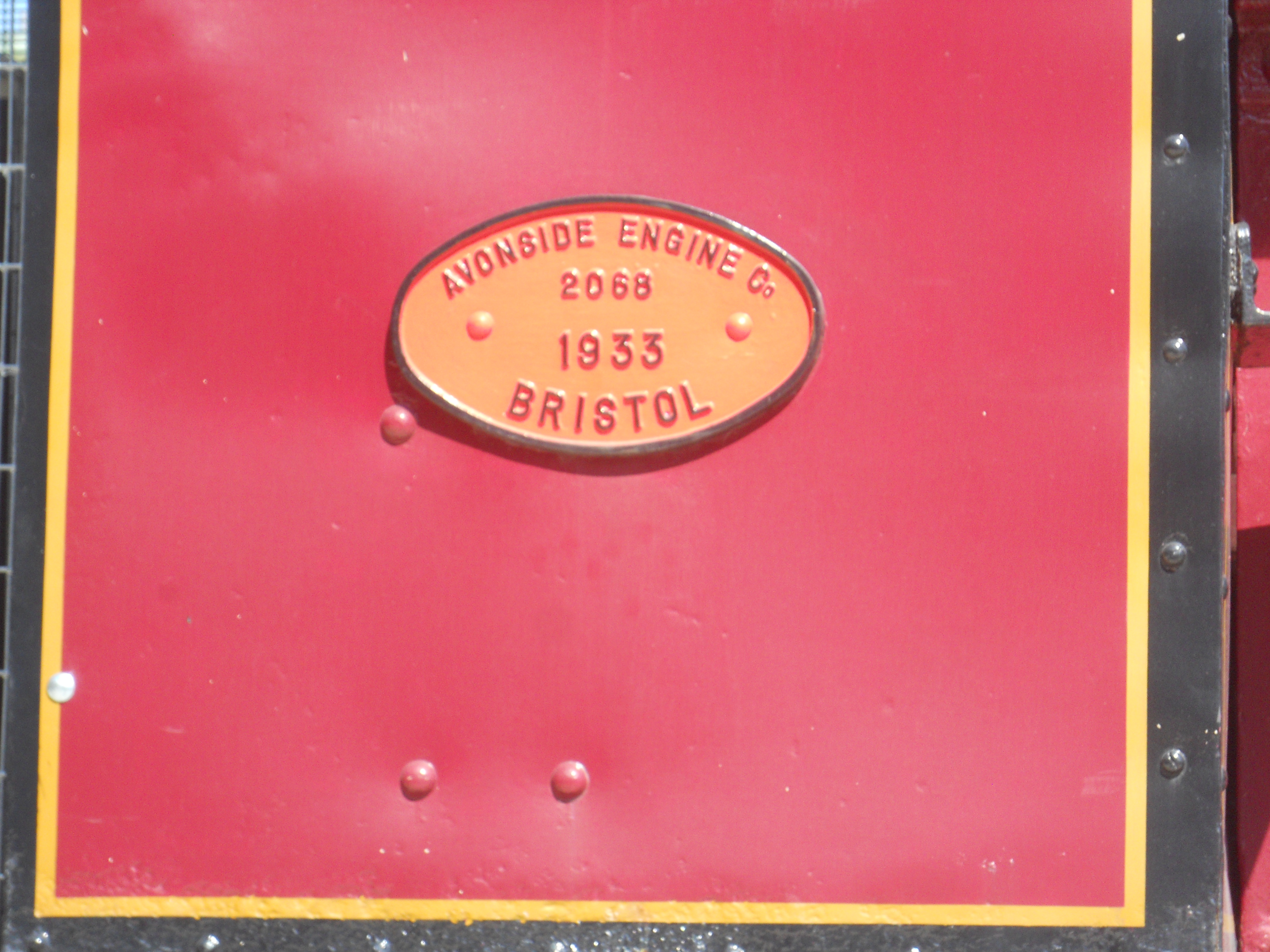
Robert has now been put back at Stratford station and as you casn see from the picture, it has a proper information board.
Some might have commissioned an expensive sculpture, but surely old engines like this are cheaper and just as interesting.
The Development of the New Bus for London
I went to a lecture last night at the Institute of Mechanical Engineers about the New Bus for London. A very good lecture, given by David Barnett, the Development Engineering Manager of The Wright Group, who build the bus.
His talk should be recorded and shown to all students, who might think they would benefit from going to University to do engineering, as it showed how innovative thinking can transform a product as everyday as a bus.
I think the lecture, also confirmed my view, that the buses we ride in ten years from now, will be even better. The current New Bus for London is just the start of the development of buses that will transform the way we get around.
I think it is worth emphasising that buses, trams and trains are only part of a transport system. They need to be backed up by all kinds of information technology from simple maps to web pages and mobile phone apps, so that passengers find their way around with ease.
 The Anonymous Widower