Cargo Sous Terrain
This is a Swiss idea to move small parcels around the country.
This is the project’s web site.
There will be a network of tunnels under Switzerland serving all the major centres.
This article on LeNews is entitled Switzerland’s Underground Tunnel Project Gets Green Light From Upper House, describes the project.
This is the first paragraph.
On 1 June 2021, a project to build an underground freight tunnel network stretching from Geneva to St Gallen, gained almost unanimous support in the Council of States, Switzerland upper house.
These are a few points from the article.
- It appears to be privately funded.
- There will be a three-lane tunnel network across the country.
- It will use driverless electric vehicles.
- Speed will be 30 kph.
- It will run twenty-four hours per day.
- There will be a track in the roof of the tunnel for smaller parcels.
- There will be a total of 500 km of tunnels.
- Completion date is set for 2045.
- It will cost around £24 billion.
It’s as though all of Switzerland were to be turned into a giant Amazon or Ocado warehouse.
Will It Work?
I don’t see why not, although it would be an immense project!
This paragraph indicates they will start small.
The first 70 km section of the tunnel network, which will connect a hub in Härkingen-Niederbipp with Zurich, is scheduled for completion in 2031.
But even that will cost around £2.5 billion!
It certainly, is a bold idea, that has possibilities.
One Freight Train Overtaking Another In Cardiff Central Station
I took these pictures as one freight train overtook another, as they passed to the West, through Cardiff Central station.


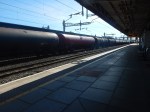

You don’t see it often in the UK.
Especially in a station.
My First Ride In A Class 769 Train
I went to Cardiff today and had my first ride in a Class 769 train. These pictures summarise my ride on the train between Cardiff Central and Bargoed stations.



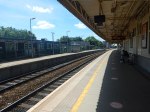
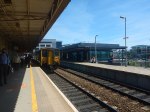


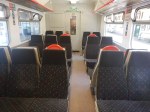

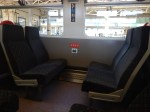
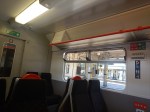
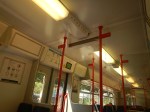



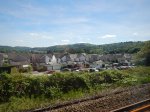
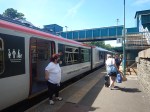
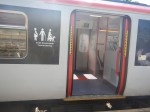
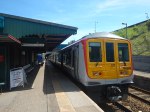
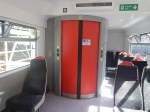
So what was it like?
Noise And Vibration
Going up to Bargoed, I deliberately sat as near over the top of the engine as I could.
There was a bit of a whine, but not as much as in a new Class 195 train.
For those, who commuted on Class 319 trains for years on Thameslink, they probably wouldn’t notice much difference.
Performance
For a 100 mph electric train built for running between the flat lands of Bedfordshire and the South Coast over the hillocks of the Downs, the train climbed to Bengoed, which has an altitude of around a thousand feet with a purpose.
But then I have a Porterbrook brochure for these trains and the power source was sized, such that the train would be able to climb the stiffest routes in the UK.
The Interior
It looked to me like the Thameslink interior with new sea covers and plugs to charge a mobile phone.
They could certainly be upgraded a bit further to the standard of the Class 319 trains on the Abbey Line, that I wrote about in A Very Smart Class 319 Train.
A Job To Do
Trains for Wales has acquired these trains for extra capacity, whilst they refurbish their Class 150, 153 and 160 trains.
It looks to me, that they will do this job more than adequately.
Future Uses
I suspect Porterbrook hope that these trains will find uses around the UK, as they have spent a lot of time, effort and money to bring these trains into service.
But there are around eighty of the Class 319 trains in service or in store, from which the Class 769 trains are converted.
So they could find uses in several niche applications.
Short Term Fleets
This is effectively, the Trains for Wales application, where extra trains are provided, so that a fleet refurbishment can be performed.
- They would surely, have been a better replacement fleet for Greater Anglia, than the three Mark 2 coaches and a pair of diesel locomotives, that they used after a series of level crossing accidents.
- They could also be used to increase capacity for some major events like the Open Golf or a pop festival.
- Uniquely, they can stand in for both a 100 mph electric train or a 90 mph diesel train.
- They can even be fitted with third-rail shoes.
- They are the right size at four cars.
- They fit most UK platforms.
- They can be run in formations of up to twelve cars.
I wouldn’t be surprised to see Porterbrook or someone on their behalf, keep a fleet of trains on standby to handle short term needs.
Route Development And Testing
There has been a lot of pressure to open up new routes in recent years and these trains would be ideal to try out routes and test new electrification.
Tri-Mode Services
Great Western Railway have a particular problem with their service between Reading and Gatwick, in that it has some third-rail electrification. As they might like to extend this service to Oxford, an ideal train would be dual-voltage and self-powered.
This extract is from the Great Western Railway section in the Wikipedia entry for the Class 769 train.
Although initially planned for use in London and the Thames Valley whilst twelve Class 387 units are modified for Heathrow Express services, the future plan for these units will be operating on services between Oxford, Reading and Gatwick Airport, which would mean operating on unelectrified, 25 kV AC OHLE and 750 V DC third-rail routes. To enable this, Great Western Railway’s allocation of Class 769 units will retain their dual-voltage capability in addition to being fitted with diesel power units. The units will also receive an internal refurbishment and be fitted with air cooling.
I suspect, that they’ll also be used on the Henley, Marlow and Windsor branches, which have some operational problems.
- The branches are not electrified.
- Some branches run occasional services to Paddington.
- The Windsor branch probably needs more capacity.
The Marlow branch could be difficult, but I suspect that, there’s a solution somewhere.
Luxury Bi-Modes
Greater Anglia felt they needed luxury bi-modes for East Anglia and they bought Class 755 trains, which are probably a lot more expensive, as they are brand-new and from Stadler of Switzerland.
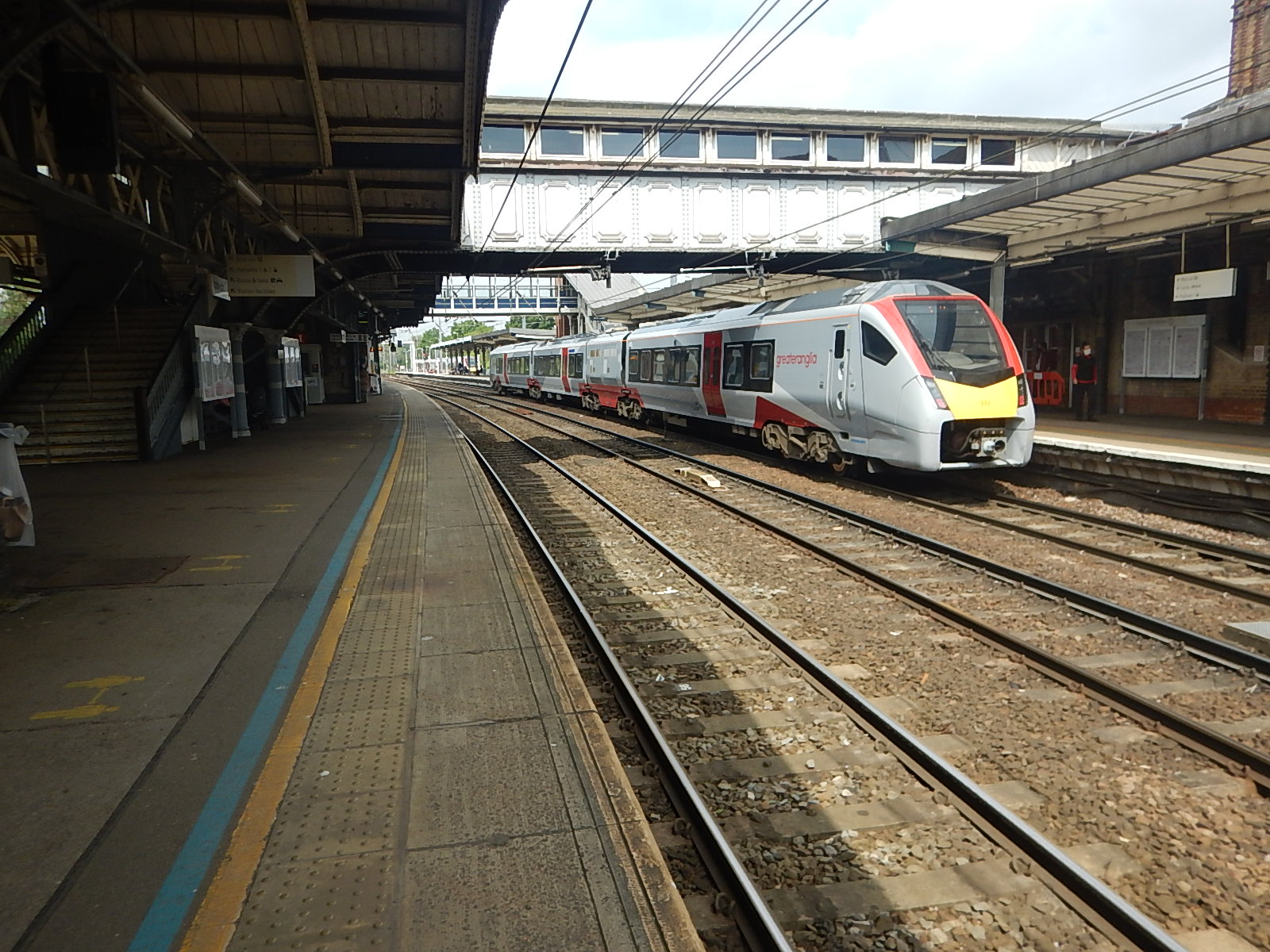
Surprisingly, the Class 319 trains have a higher passenger capacity.
But both trains could do a similar task, where the route is partially electrified.
As I said earlier about the GWR units.
The units will also receive an internal refurbishment and be fitted with air cooling.
Porterbrook’s brochure for the Class 769 train talks about using them between Manchester and Buxton.
Surely, this route could do with a Northern version of a GWR interior.
I also think a service should link Hellifield and Buxton. as I wrote about in Why Not Buxton To Hellifield?
That would show what Class 769 trains could do!
It would also connect the Peak District to the hills North of Lancashire.
I might also be, that the standby-fleet should also be the luxury variant of the train. Surely, supporters going to the Open at some of the inaccessible venues could afford pay to pay extra for a comfy train.
Express Freight And Parcels Services
Rail Operations Group would appear to have placed the second-largest order for Class 769 trains, which they will use to launch a high-speed parcels service called Orion.
This extract is from the Rail Operations Group section in the Wikipedia entry for the Class 769 train.
Orion is aiming to launch its first trial service conveying parcels and light freight in April 2021, with the Midlands to Mossend now likely to be the debut flow. The company is to use converted Class 319s for the service and is now planning for a fleet of 19 four-car units – nine Class 319s and 10 Class 769s. Arlington Fleet Services at Eastleigh is modifying the interiors of the units to accommodate roller cages for parcels, with the aim of operating primarily under electric power but with the 769s using their diesel engines to act as tractor units for the 319s on non-electrified stretches. The first 769 bi-mode, No 769501, has undergone its Flex conversion at Brush in Loughborough and is due to be outshopped from Arlington at Eastleigh in March following its interior modification.
In Did These Strawberries Have Road- Or Rail-Miles?, I talked about strawberries going between Scotland and London.
Surely, the movement of high-quality food could be one of the cargoes for Orion.
It wouldn’t be the first such traffic, as Class 43 power cars of the InterCity 125s used to carry flowers and fish up to London from Cornwall.
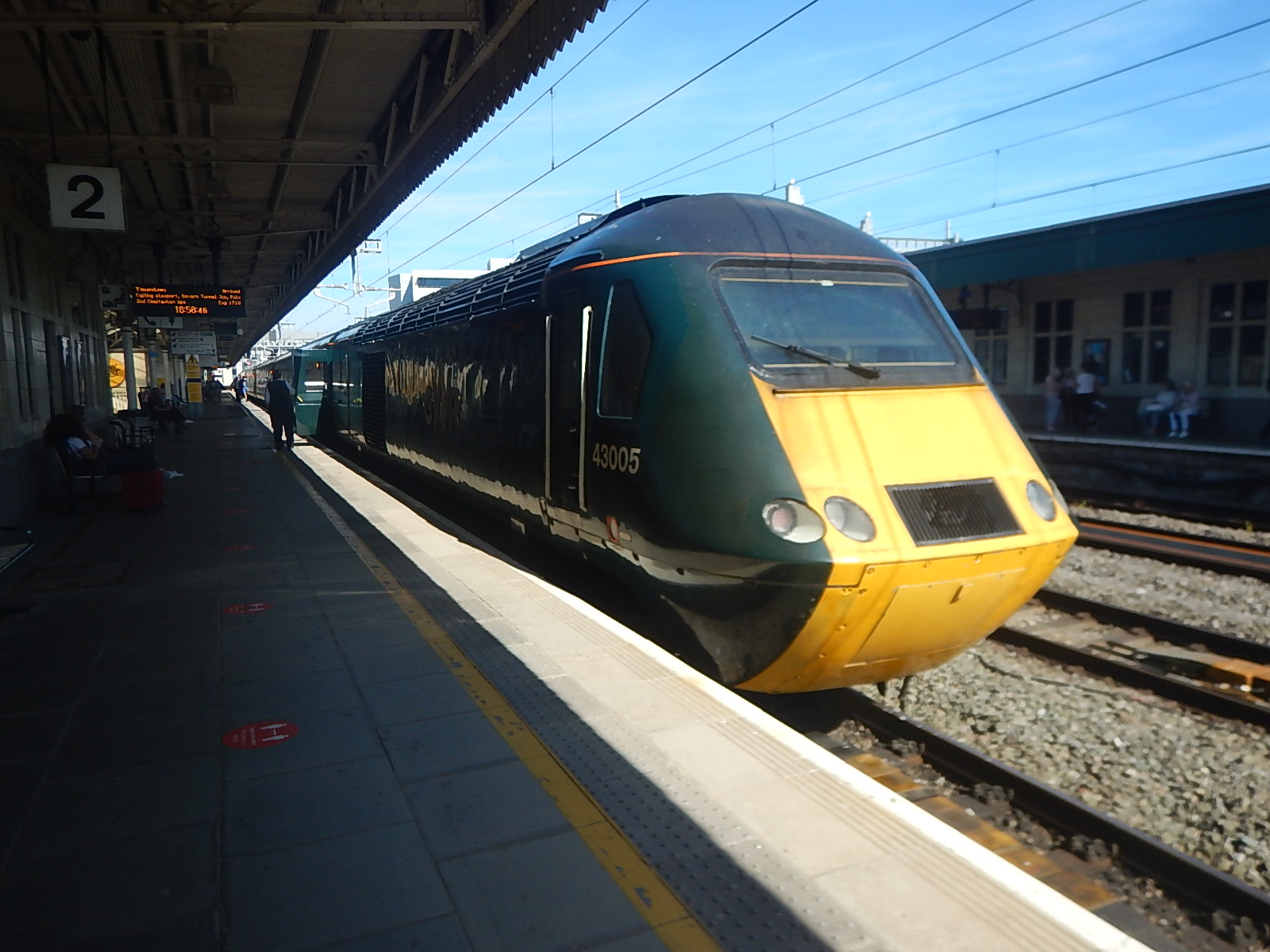
There’s a lot of space in the back of a Class 43 power car.
I certainly feel there are possibilities for using Class 769 trains as high speed parcels transport.
It should be noted that Class 325 trains already run high speed parcel services up and down the country on behalf of Royal Mail. These trains may look like later British Rail trains, but they are in fact based on Class 319 trains.
So I doubt, there’ll be any worries that the trains can’t handle the required services after conversion.
Conclusion
It looks to me that Porterbrooks plan to convert numbers of their Class 319 trains into Class 769 trains will find several ready markets.
It could be argued that more carbon savings could be achieved by perhaps a new battery-electric or hydrogen-electric train. But these will take years to develop!
These trains are a good short-term solution, that will help define their zero-carbon successors.
Did These Strawberries Have Road- Or Rail-Miles?
These strawberries were grown my M Porter in Perthshire and I bought them in the M & S Simply Food store in Waterloo station.


So did they travel between Perthshire and London, by truck or train?
I think the strawberries came from East Seaton Farm, owned by Lochart and Debbie Porter.

If the strawberries were to be grown any further East, they’d be grown in the middle of the North Sea.
But did they come South, by road or rail?
I suspect it was the former, but there is change in the air! Or do I mean on the rails?
In My First Ride In A Class 769 Train, I talked about Rail Operations Group and their proposed Orion parcels service, that will use Class 769 trains.
This service would surely be ideal to bring strawberries and Arbroath smokies to the South.
Nestlé’s Glass Train Shifts More Cargo From Road To Rail
The title of this post, is the same as that of this article on RailFreight.com.
This is the first paragraph.
In France, Nestlé Water is bringing more trains to the rails for the transport of reusable water bottles to and from the production site. The Glass Train project, as it is called, is also getting two more destinations; Arles in Southern France and Merrey in the country’s East. The 25 new trains will help the company remove up to 1,000 trucks off the road and save approximately 500 tons in CO2 emissions.
Nestlé is expanding the project to Vittel and Pellegrino.
Conclusion
We need more projects like this!
Kraft Heinz And Freight Innovation
In the UK, we certainly need to get more freight on to the railways.
Recently, KraftHeinz were involved in an experiment. A lot of their product currently comes into the UK in containers, which are then taken by road from the ports by truck.
This report about the experiment was on this page of the Modern Railway’s web site.
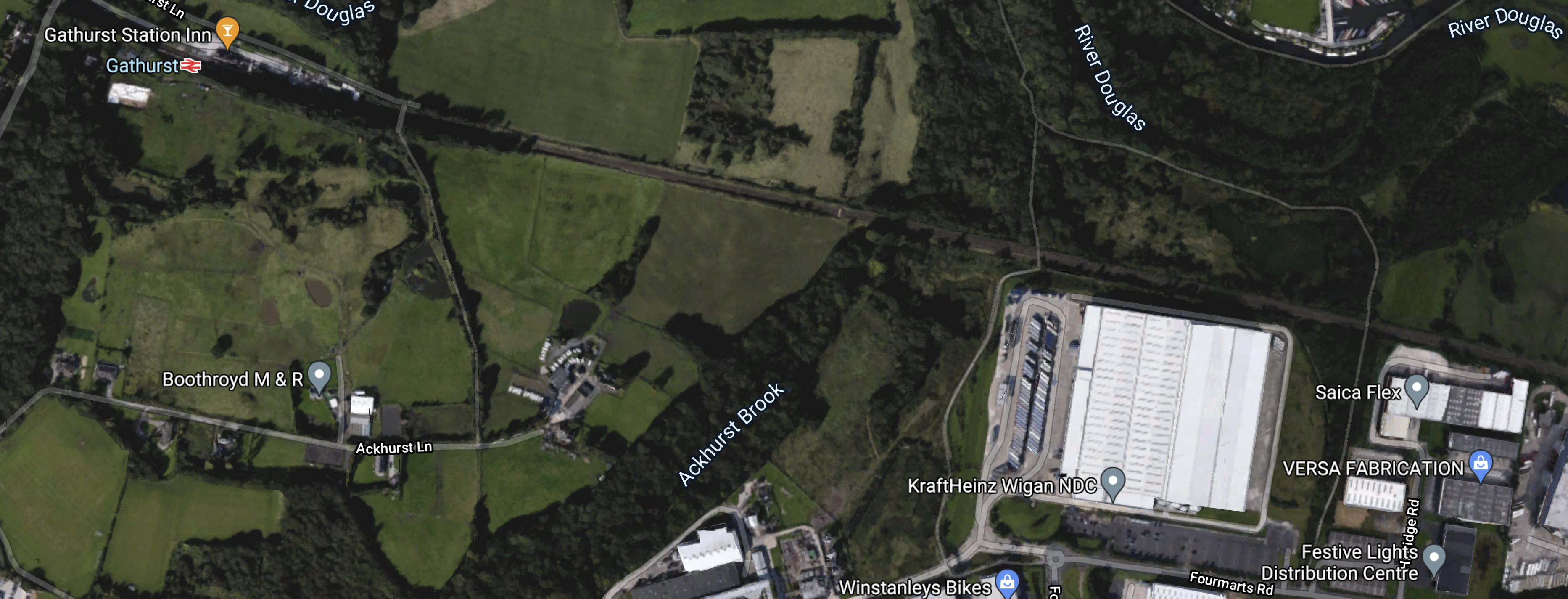
KraftHeinz’s distribution centre is in the Orrell district of Wigan, with the Wigan Wallgate to Southport route the closest railway line. The trial involved a container train that was sent from Crewe to the branch on an overnight working, with the notional offloading taking place from the running line close to Gathurst station. Also demonstrated was the feasibility of loco run round in this area. Network Rail signallers helped ensure the success of the trial by facilitating the use of a crossover at Parbold station for the run round (some signal alterations would be likely if this became a regular operation).
This Google Map shows the area.
Note.
- Gathurst station is in the North-West corner of the map.
- The KraftHeinz Distribution Centre is in the South-East corner of the map.
- The Wigan Wallgate and Southport Line runs between the two.
It was all very convenient for some intense night work.
I have some thoughts.
Where’s The Siding?
Years ago a lot of factories and distribution centres like this, would have had a siding.
Many have been sold off and built over, as many companies preferred to use road transport.
Using The Running Line
This was first used in the UK to load timber on to trains in the North of Scotland for transporting to markets in the South.
Surely, the only thing needed is ground strong enough alongside the track to support a container handling machine.
Were JCB Involved?
JCB are innovators and appeared a few days on this blog, in this a post entitled JCB Finds Cheap Way To Run Digger Using Hydrogen.
Although, that post wasn’t about cargo handling, it shows that the company thinks differently and I’m sure they can come up with a pollution-free container-handler to unload containers at night for companies like KraftHeinz.
Conclusion
Surely, if this freight movement were to be used regularly, the signalling changes and perhaps some concrete should be installed.
We need more cargo-handling experiments like this to get more trucks off the road.
‘Super Train’ In Finland Sets New Record: The Equivalent Of 92 Trucks
The title of this post, is the same as that of this article on RailFreight.com.
This is the introductory paragraph.
The Finnish railway company VR Transpoint has introduced another heavy weight to the railways. Dubbed the Super Train, it carries a weight of 7,000 tonne, and 80 wagons. Moreover, it is about one kilometre long. According to the company, this sets a new record on Finnish railways.
These are a few points about the service.
- The service runs between Vainikkala and Hamina.
- The route appears to be electrified.
- The super train is hauled by two Vectron locomotives.
- Longer trains are more efficient.
- Long trains regularly run in Russia.
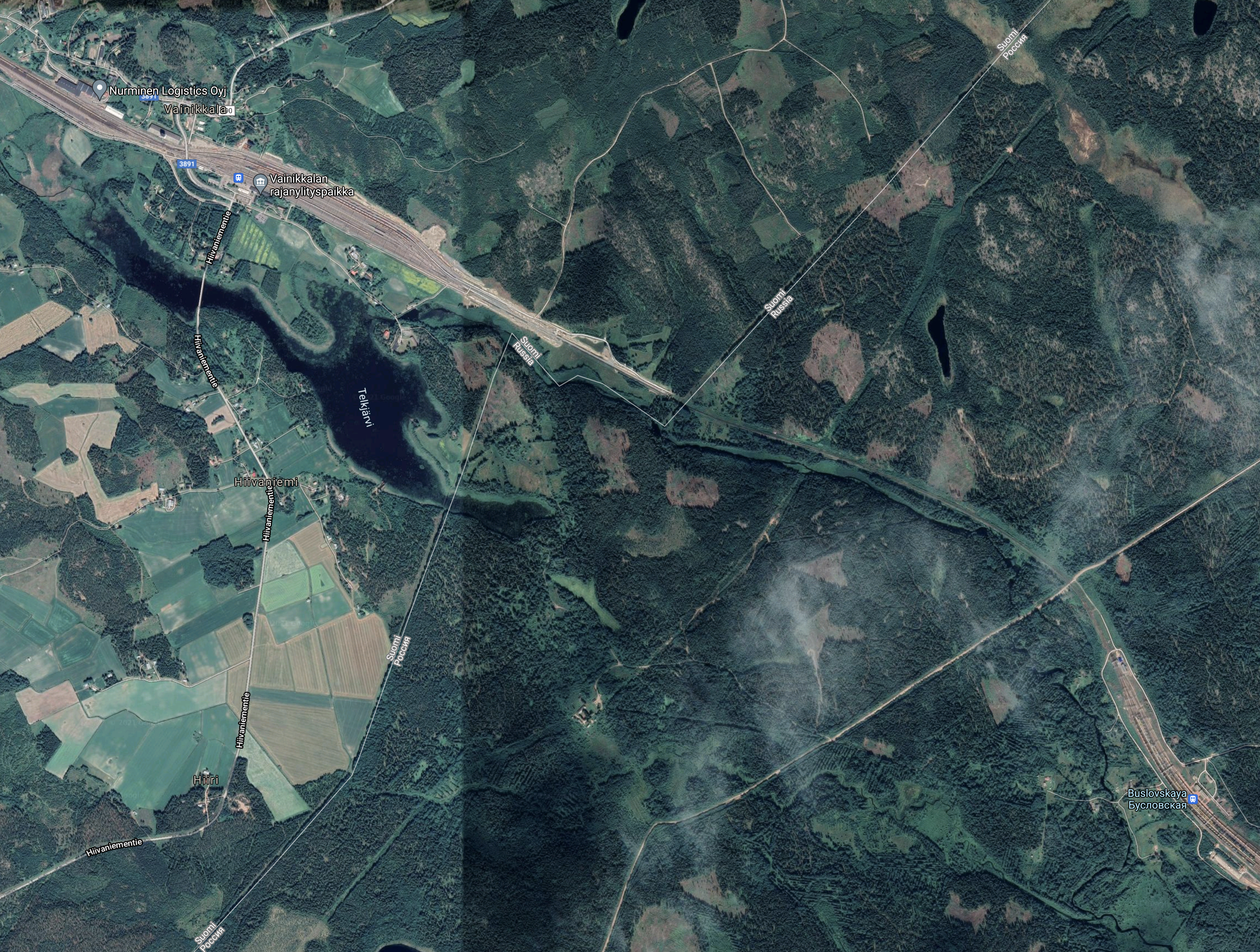
This map shows the border crossing at Vainikkala.
Note.
- The border running South-West and North-East across the map.
- The giant Finnish marshalling yard in the North-West.
- The large Russian marshalling yard in the South-East.
This Google Map shows the Finnish Marshalling yard at Vainikkala.
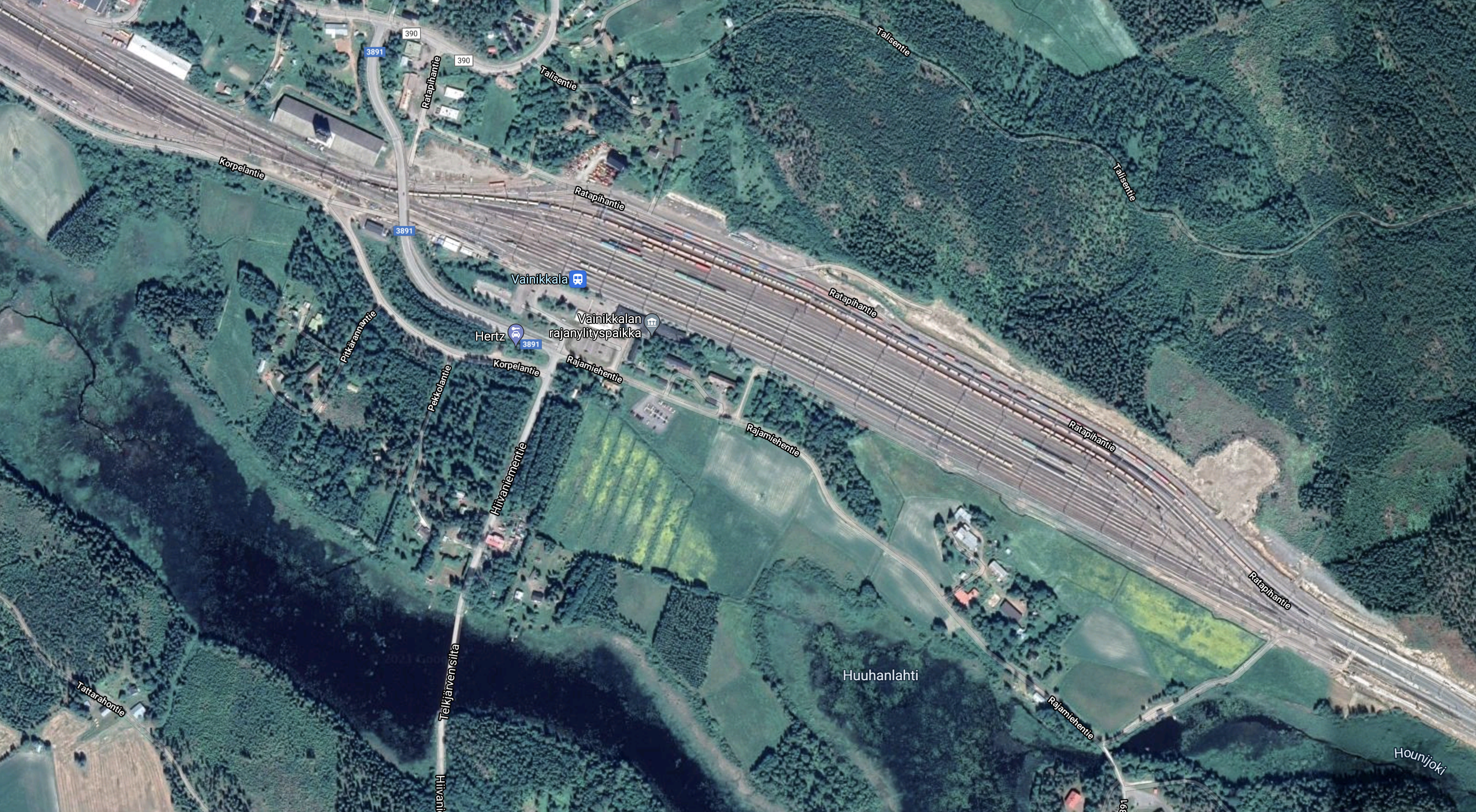
I estimate that the yard is over a kilometre in length.
Passenger Trains Between Helsinki And St. Petersburg
There is also a passenger service between Helsinki and St. Petersburg, that uses this route called Allegro, that usually runs thrice daily.
The trains are Alstom Pendolinos, specially designed for the route and are detailed in this section called Vehicles in the Allegro Wikipedia entry.
The journey time is just three and a half hours.
If you want to buy tickets, this page on The Man In Seat 61 gives all the details.
Conclusion
It looks like the Finns and the Russians have co-operated well to create a quality passenger and freight link between their two countries.
Calais – Mediterranean Rail Motorway Bids Called
This title of this post, is the same as that of this article on Railway Gazette.
This is the introductory paragraph.
The government has called for expressions of interest to operate a lorry trailer carrying service between the English Channel port of Calais and the Mediterranean port of Sète south of Montpellier. Submissions are required by May 16.
Further details include.
- It is aimed to start the service in 2022.
- Government financial help ight be available.
- In French it is called an autoroute ferroviaire.
- There is also a similar service between Perpignan and Paris.
- I would expect the service saves carbon emissions.
This certainly seems like a good idea.
I do wonder if we will eventually see trains carrying trucks running between Barking and Sete through the Channel Tunnel.
- The loading gauge will probably allow it.
- It would be electrically hauled all the way.
- Other destinations in Europe would be possible.
- It might need less drivers, who would only work in the UK or Europe.
- Would it help with Covid-19 bio-security?
If not Barking, what about to the Freeport being developed at Dagenham by the Thames?
It would
Swift Express Freight Demonstrator To Be Tested
The title of this post, is the same as that of this article on Railway Gazette.
This is the first paragraph.
Leasing company Eversholt Rail and Ricardo have teamed up to develop an electric multiple-unit intended to demonstrate a cost-effective and low carbon way of transporting parcels.
Other points include.
- A Class 321 train will be converted.
- The trains have a top speed of 100 mph.
- Each vehicle will handle up to twelve tonnes of freight.
Eversholt are talking to possible operators.
Conclusion
There are various train leasing companies and operators looking at similar concepts.
I’m sure one will create a viable model.
Gulf Of Mexico Train Ferry Fleet Renewal
The title of this post, is the same as that of this article on Railway Gazette International.
This is the first two paragraphs.
The first of two train ferries ordered for CG Railway’s route across the Gulf of Mexico has been launched by CSSC Huangpu Wenchong Shipbuilding Co in China.
The CGR joint venture of Genesee & Wyoming and SEACOR Holdings transports 10 000 wagons/year between Mobile in Alabama in the USA and Coatzacoalcos in Mexico.
I was surprised about this article, as between the US and Mexico wasn’t where I would expect to find a train ferry.
But it obviously makes sense as two new ships don’t come cheap.
Some other points from the article.
- The two new ships will increase capacity by forty percent.
- There will be a 44 % reduction of CO2 emissions compared to the all rail route.
- The ships are designed to be pandemic proof.
- The ships take five days for the trip, which is half the time of the all-rail route.
I can see this investment being copied in various places around the world.
 The Anonymous Widower