The Inland Freeport On The Banks Of The Manchester Ship Canal
The title of this post, is the same as that of this article on the Manchester Evening News.
These are the opening paragraphs.
Businesses on the banks of the Manchester Ship Canal could benefit from tax reliefs, a reduction in red tape and increased investment with Freeport status.
Port Salford, an inland port in Eccles which opened in 2016, will be part of the Liverpool City Region’s new Freeport announced in the budget on Wednesday.
Up to 10,000 jobs could be created at the site in Salford where a further 320,000 sq m of employment space is planned alongside a new rail link – but the developer behind the scheme says its success does not depend on its Freeport status.
It looks from this that freeport status is not needed for the development at Port Salford to go ahead.
Eight New Freeports Set To Open In The UK
Today, in his 2021 Budget, Rishi Sunak announced eight new freeports.
This article on the BBC, which is entitled Freeports: What Are They And Where Will They Be?, gives a brief guide to the freeports.
This links link to the nearest I can find to an official web site for each of the freeports.
The Government has said that the freeports will start their operations late this year.
A Class 66 Locomotive At Stratford
I’ve needed a generic photograph of a Class 66 locomotive for some time and one obliged at Stratford.

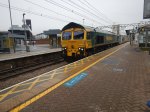
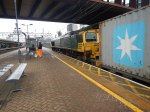
The sooner these are replaced with a modern more environmentally-friendly locomotive the better.
A Pair Of Class 90 Locomotives Working Through Stratford
I spotted this pair of Class 90 locomotives at Stratford hauling a long but lightly loaded freight train.


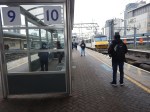
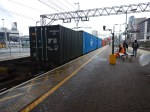
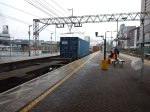
Note.
- I was surprised to see the locomotives working as a pair.
- Was it an experiment, testing or driver training?
- The locomotives were still in the Greater Anglian white livery.
- They still had their names.
I was a bit slow to get my camera out.
A Class 93 Locomotive Hauling A Train Between The Port Of Felixstowe And Wentloog
I am looking at this trip in detail, to see how a Class 93 locomotive could change this journey.
Where Is Wentloog?
Wentloog is a Rail Freight Interchange, run by Freightliner, a few miles to the East of Cardiff.
This Google Map shows the interchange.
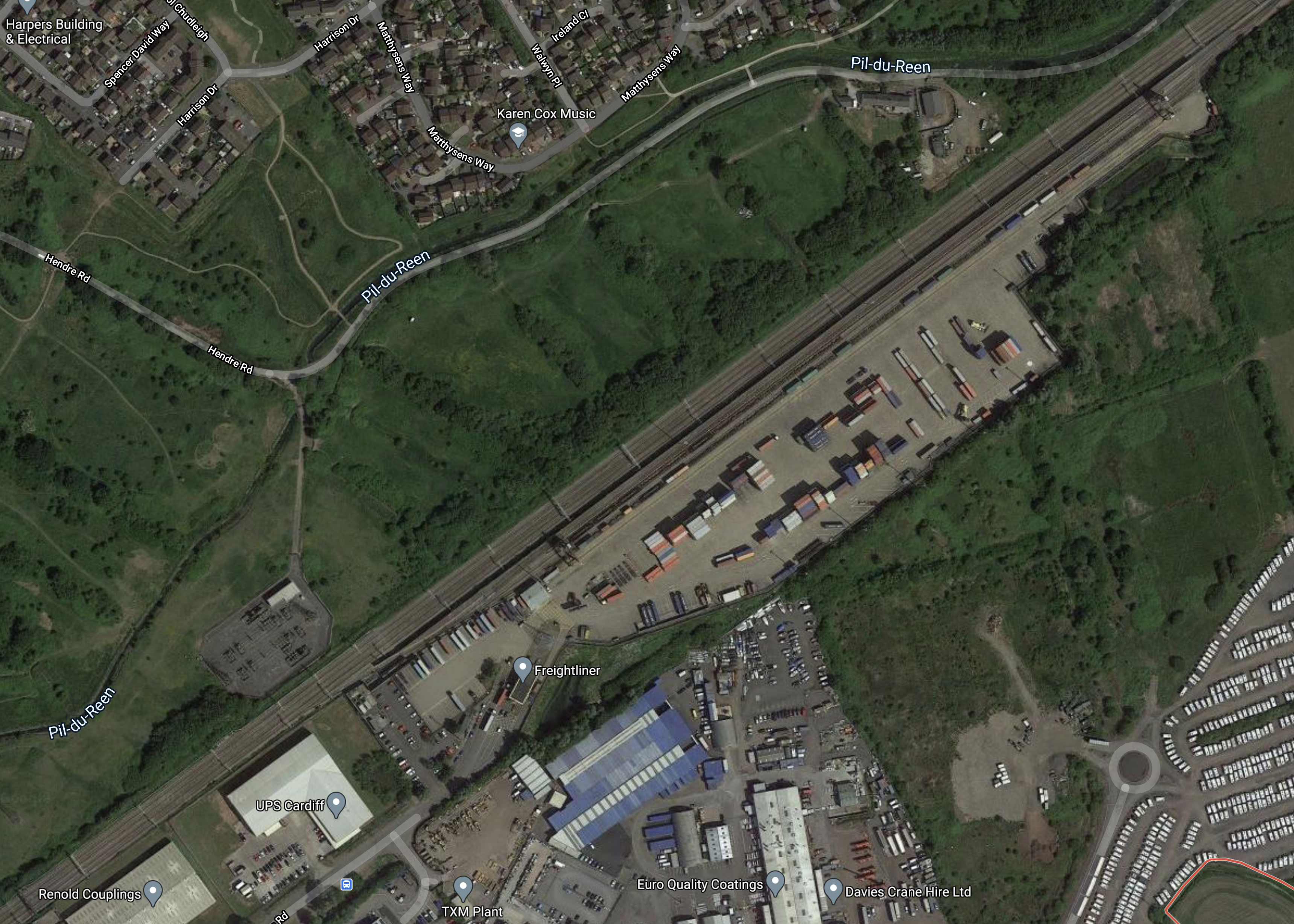
Note the electrified Great Western Main Line between London and Cardiff giving rail access to freight trains.
Sections Of The Route
The route can be divided into these sections.
- Port of Felixstowe and Trimley – 2.3 miles – 7 minutes – 19.7 mph – Not Electrified
- Trimley and Ipswich – 14 miles – 60 minutes -14 mph – Not Electrified
- Ipswich and Stratford – 64.6 miles – 77 minutes – 50.3 mph – Electrified
- Stratford and Acton Wells Junction – 12.5 miles – 72 minutes – 10.4 mph – Electrified
- Acton Wells Junction and Acton Main Line – 0.7 miles – 3 minutes -14 mph – Possibly Electrified
- Acton Main Line and Wentloog – 134.3 miles – 249 minutes -32.4 mph – Electrified
Note.
- Nearly, all the route is electrified.
- I am not sure if between Acton Wells Junction and Acton Main Line is electrified.
The journey takes nearly eight hours.
These are my thoughts on how the various sections would be handled.
Port of Felixstowe And Trimley
As I stated in Rail Access To The Port Of Felixstowe, I would electrify the short section between the Port of Felixstowe And Trimley. This would do the following.
- Charge the batteries on trains entering the Port, so they could operate in the Port without using diesel.
- Charge batteries on trains leaving the Port, so that they could have a power boost to Ipswich.
- The trains could be accelerated to operating speed using the electrification.
There would also be no use of diesel to the East of Trimley, which I’m sure the residents of Felixstowe would like.
Trimley and Ipswich
This section would be on diesel, with any energy left in the battery used to cut diesel running through Ipswich.
Ipswich And Stratford
Consider
- Ipswich and Stratford is a 100 mph fully-electrified line.
- A passenger train can do the route in an hour.
There must be savings to be made! Especially, if all trains between Ipswich and Liverpool Street are 100 mph electrically-hauled trains.
Stratford and Acton Wells Junction
The North London Line is getting increasingly busy and as it goes through the middle of residential areas, there will be increasing pressure for all trains to be electric, to cut noise and pollution.
In A North London Line With Digital Signalling, I wrote about the benefits of adding digital signalling on the North London Line.
I suspect in a few years time all freight trains using the North London Line will be electrically-hauled and will use digital ERTMS signalling, so that more trains can be squeezed onto the North London Line, so that increasing numbers of freight trains can travel between Felixstowe, London Gateway and Tilbury in the East and Birmingham, Cardiff, Liverpool, Manchester, Scotland and other destinations in the North and West.
Locomotives like the Class 93 locomotive will become an increasingly common sight on the line.
Acton Wells Junction and Acton Main Line
This connection between the North London Line and the Great Western Main Line will surely, be electrified, if it has not been done already, so that electric freight trains can go between the two routes.
Acton Main Line and Wentloog
Consider
- Acton Main Line and Wentloog is a fully-electrified line.
- The operating speed is up to 125 mph
- A passenger train can do the route in just under 100 minutes.
There must be savings to be made! Especially, if all trains between London and Cardiff are electrically-hauled trains, capable of upwards of 100 mph.
Conclusion
There would be very worthwhile time and diesel savings, by running the Felixstowe and Wentloog service using a Class 93 locomotive.
How many other services to and from Felixstowe, London Gateway and Tilbury would be improved by being hauled by a Class 93 locomotive?
I suspect, it’s not a small number, that can be counted on your fingers and toes.
A Class 93 Locomotive Hauling A 1500 Tonne Train Between The Port Of Felixstowe And Nuneaton
I am writing this post to show how I believe the new Class 93 locomotive would haul a freight train between the Port of Felixstowe and Nuneaton, where it would join the West Coast Main Line for Liverpool, Manchester mor Scotland.
Why 1500 Tonnes?
This article on Rail Engineer, which is entitled, Re-Engineering Rail Freight, gives a few more details about the operation of the Class 93 locomotives.
This is said about performance.
As a result, the 86-tonne Class 93 is capable of hauling 1,500 tonnes on non-electrified routes and 2,500 tonnes on electrified routes. With a route availability (RA) of seven, it can be used on most of the rail network.
So as I’m talking about non-electrified routes, I’ll use 1500 tonnes.
Sections Of The Route
The route can be divided into these sections.
- Port of Felixstowe and Trimley – 2.3 miles – 7 minutes – 19.7 mph – Not Electrified
- Trimley and Ipswich Europa Junction – 13.5 miles – 43 minutes -18.8 mph – Not Electrified
- Ipswich Europa Junction and Haughley Junction – 12.1 miles – 24 minutes -30.2 mph – Electrified
- Haughley Junction and Ely – 38.3 miles – 77 minutes -29.8 mph – Not Electrified
- Ely and Peterborough – 30.5 miles – 58 minutes -31.6 mph – Not Electrified
- Peterborough and Werrington Junction – 3.1 miles – 5 minutes -37.2 mph – Electrified
- Werrington Junction and Leicester – 49.1 miles – 97 minutes -30.4 mph – Not Electrified
- Leicester and Nuneaton – 18.8 miles – 27 minutes -41.8 mph – Not Electrified
Note.
- The train only averages around 40 mph on two sections.
- There is electrification at between Europa Junction and Haughley Junction, at Ely and Peterborough, that could be used to fully charge the batteries.
- In Trimode Class 93 Locomotives Ordered By Rail Operations (UK), I calculated that the 80 kWh batteries in a Class 93 locomotive hauling a 1500 tonne load can accelerate the train to 40 mph.
I can see some innovative junctions being created, where electrification starts and finishes, so that batteries are fully charged as the trains pass through.
- There must be tremendous possibilities at Ely, Haughley and Werrington to take trains smartly through the junctions and send, them on their way with full batteries.
- All have modern electrification, hopefully with a strong power supply, so how far could the electrification be continued on the lines without electrification?
- Given that the pantographs on the Class 93 locomotives, will have all the alacrity and speed to go up and down like a whore’s drawers, I’m sure there will be many places on the UK rail network to top up the batteries.
Consider going between Ely and Peterborough.
- Leaving Ely, the train will have a battery containing enough energy to get them to forty mph.
- Once rolling along at forty, the Cat would take them to the East Coast Main Line, where they would arrive with an almost flat battery.
- It would then be a case of pan up and on to Peterborough.
These are my ideas for how the various sections would be handled.
Port of Felixstowe And Trimley
As I stated in Rail Access To The Port Of Felixstowe, I would electrify the short section between the Port of Felixstowe And Trimley. This would do the following.
- Charge the batteries on trains entering the Port, so they could operate in the Port without using diesel.
- Charge batteries on trains leaving the Port, so that they could have a power boost to Ipswich.
- The trains could be accelerated to operating speed using the electrification.
There would also be no use of diesel to the East of Trimley, which I’m sure the residents of Felixstowe would like.
Trimley and Ipswich Europa Junction
This section would be on diesel, with any energy left in the battery used to cut diesel running through Ipswich.
Ipswich Europa Junction and Haughley Junction
Consider.
- This is a 100 mph line.
- It is fully-electrified.
- All the passenger trains will be running at this speed.
If the freight ran at that speed, up to 17 minutes could be saved.
Haughley Junction And Ely
This section would be diesel hauled, with help from the batteries, which could be fully charged when entering the section.
There are also plans to improve Haughley Junction, which I wrote about in Haughley Junction Improvements.
One possibility would be to extend the electrification from Haughley Junction a few miles to the West, to cut down diesel use in both Greater Anglia’s Class 755 trains and any freight trains hauled by Class 93 locomotives.
As there are plans for an A14 Parkway station at Chippenham Junction, which is 25 miles to the West of Haughley Junction, it might be sensible to electrify around Chippenham Junction.
Ely and Peterborough
This section would be diesel hauled, with help from the batteries, which could be fully charged when entering the section.
It should also be noted that the tracks at Ely are to be remodelled.
- Would it not be sensible to have sufficient electrification at the station, so that a Class 93 locomotive leaves the area with full batteries?
- Acceleration to operating speed would be on battery power, thus further reducing diesel use.
It probably wouldn’t be the most difficult of projects at Peterborough to electrify between Peterborough East Junction and Werrington Junction on the Stamford Lines used by the freight trains.
On the other hand, I strongly believe that the route between Ely and Peterborough should be an early electrification project.
- It would give a second electrified route between London and Peterborough, which could be a valuable diversion route.
- It would allow bi-mode trains to work easier to and from Peterborough.
- It would be a great help to Class 93 locomotives hauling freight out of Felixstowe.
As the Ely-Peterborough Line has a 75 mph operating speed, it would Class 73 locomotive-hauled freights would save around thirty ,inutes.
Peterborough and Werrington Junction
This section looks to be being electrified during the building of the Werrington Dive Under.
Werrington Junction and Leicester
This section would be diesel hauled, with help from the batteries, which could be fully charged when entering the section.
Leicester and Nuneaton
This section would be diesel hauled, with help from the batteries,
As there is full electrification at Nuneaton, this electrification could be extended for a few miles towards Leicester.
Conclusion
This has only been a rough analysis, but it does show that Class 93 locomotives can offer advantages in running freight trains between Felixstowe and Nuneaton.
But selective lengths of electrification would bring time and diesel savings.
Rail Access To The Port Of Felixstowe
This Google Map shows the Port of Felixstowe.
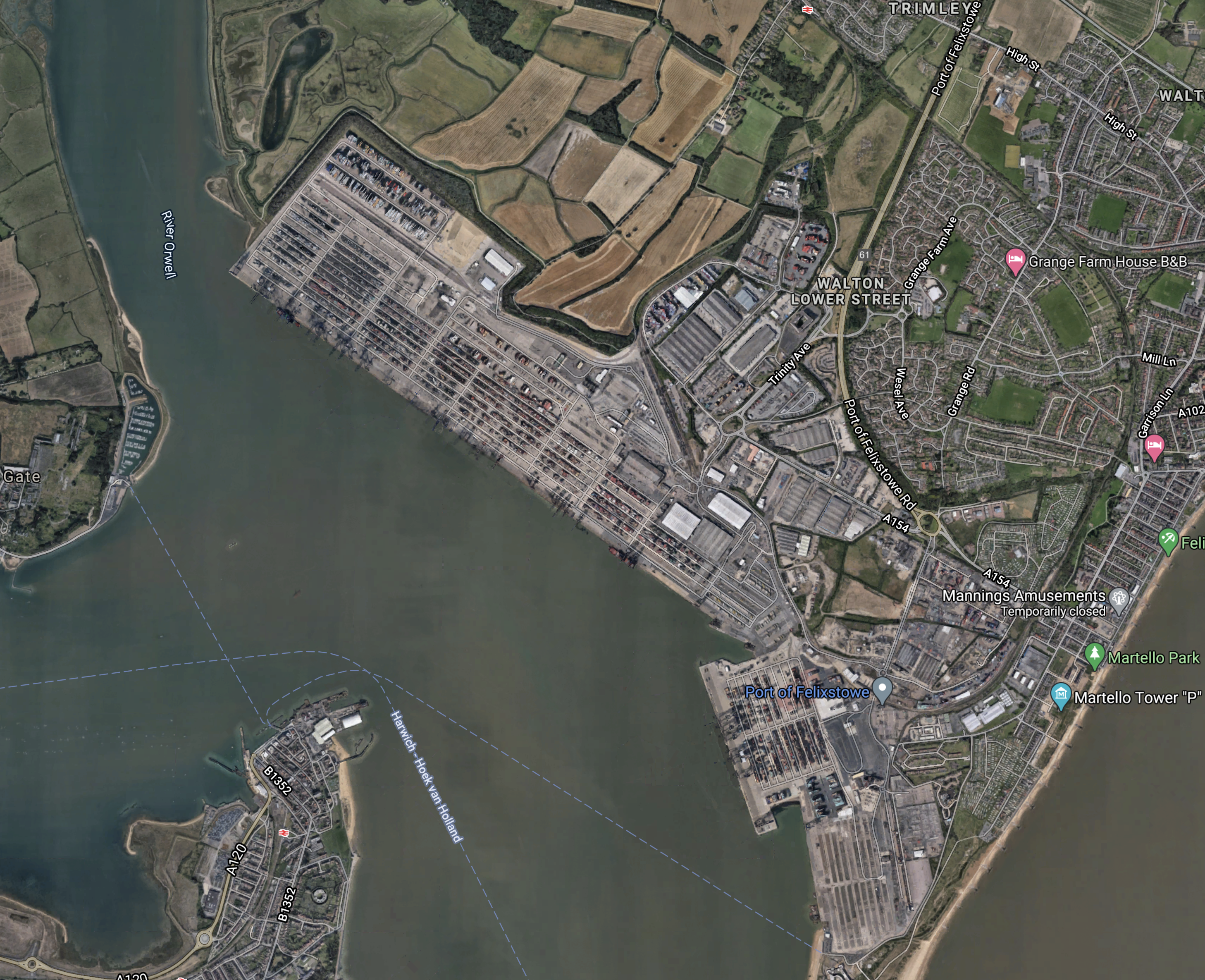
Note.
- Trimley station is at the top edge of the map.
- One rail line curves down from Trimley to the Southern side of the Port.
- Another rail line connects Trimley to the Northern side of the Port.
- A few miles of the route between Trimley and Ipswich, has recently been double-tracked and improved.
I will now describe the important parts of the rail network to and from the Port.
Trimley Station
This Google Map shows Trimley station.
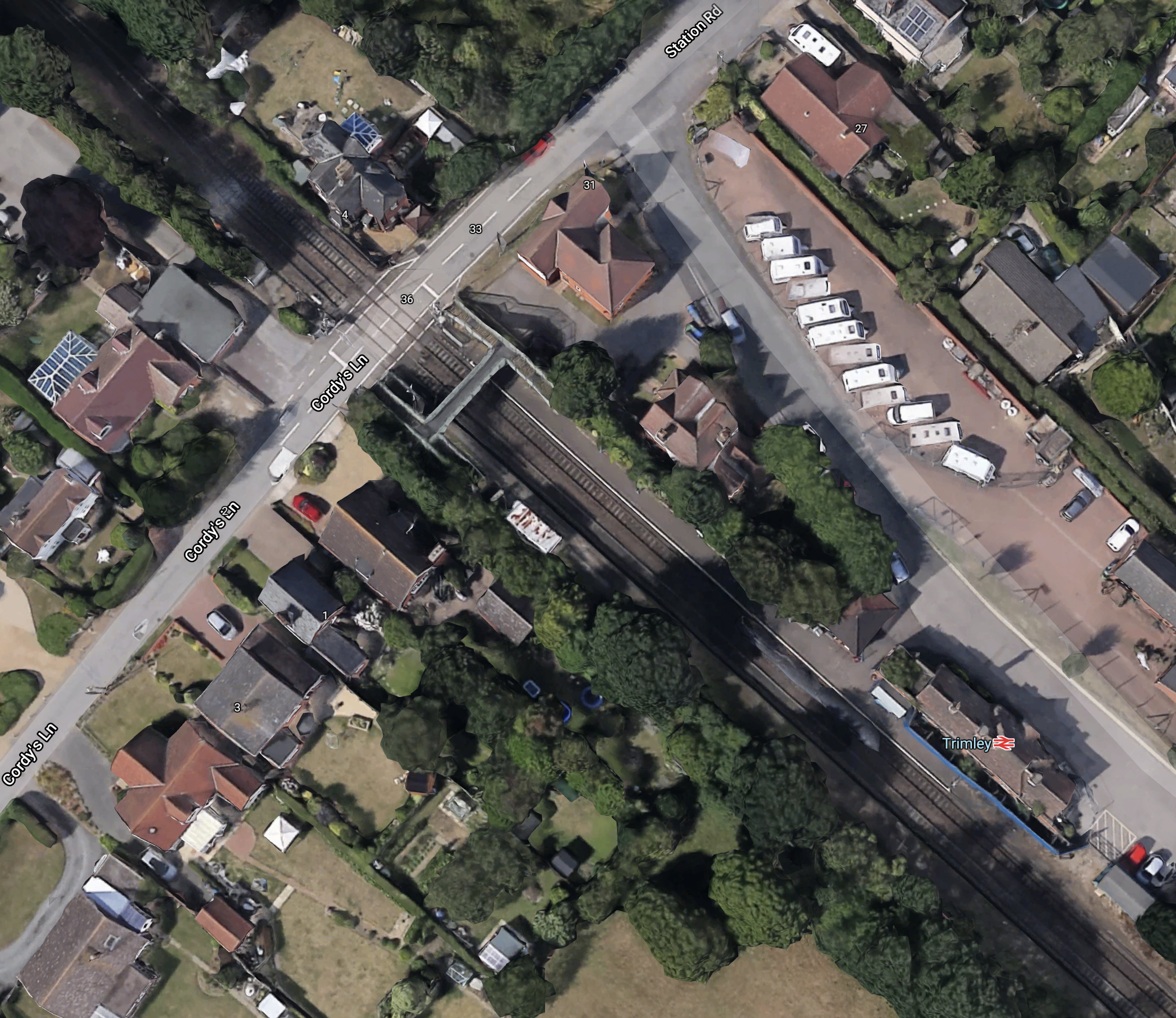
Note.
- Trimley station has two platforms. although only the Northern one, which is numbered 1 is in use.
- There are two tracks through the station.
- There is a footbridge over the tracks.
- Most people cross the lines on the level crossing.
The track through Trimley station has been improved and the improved is described in the Wikipedia entry for the Felixstowe Branch Line, where this is said.
In October 2017 final approval was given for a £60.4m project which includes doubling between Trimley station and Grimston Lane foot crossing. Work started on 7 April 2018 and was predicted to end in Autumn 2019.[29] However, the work was completed by May 2019 and saw changes to the infrastructure at Trimley station where trains from the Felixstowe direction could now access the disused platform road and the establishment of a double track as far as a new junction called Gun Lane Junction just over a mile west of Trimley station. Both lines can be worked bi-directionally and with the increase in freight traffic that resulted from the additional capacity a number of level crossings were either abolished or upgraded to improve safety.
This Google Map shows the section of line, that has now been dualed.
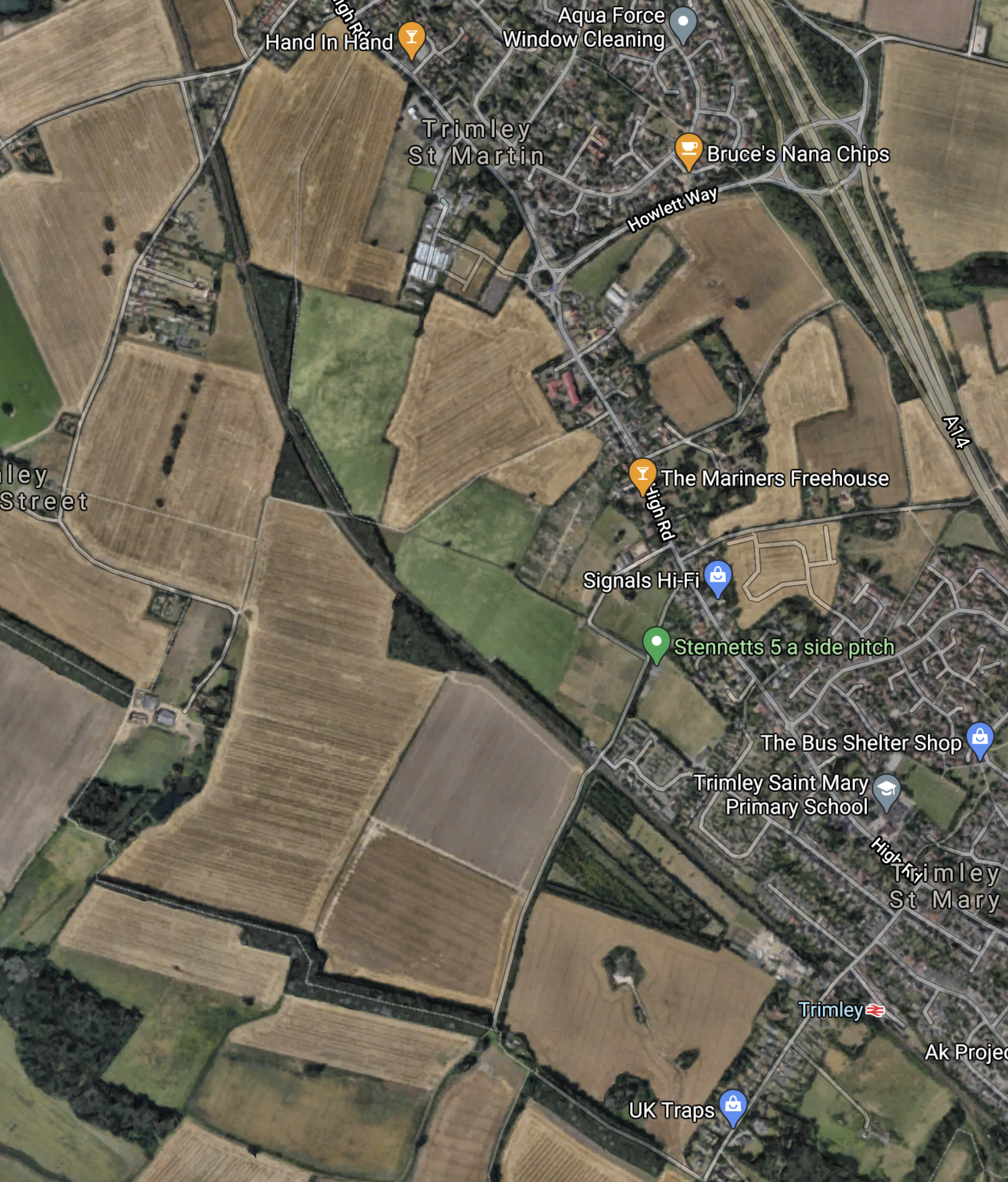
Note.
- Grimston Lane is the triangle of roads in the North-West corner of the map.
- Trimley station is in the South-East corner of the map.
This Google Map shows the track layout East of Trimley station.
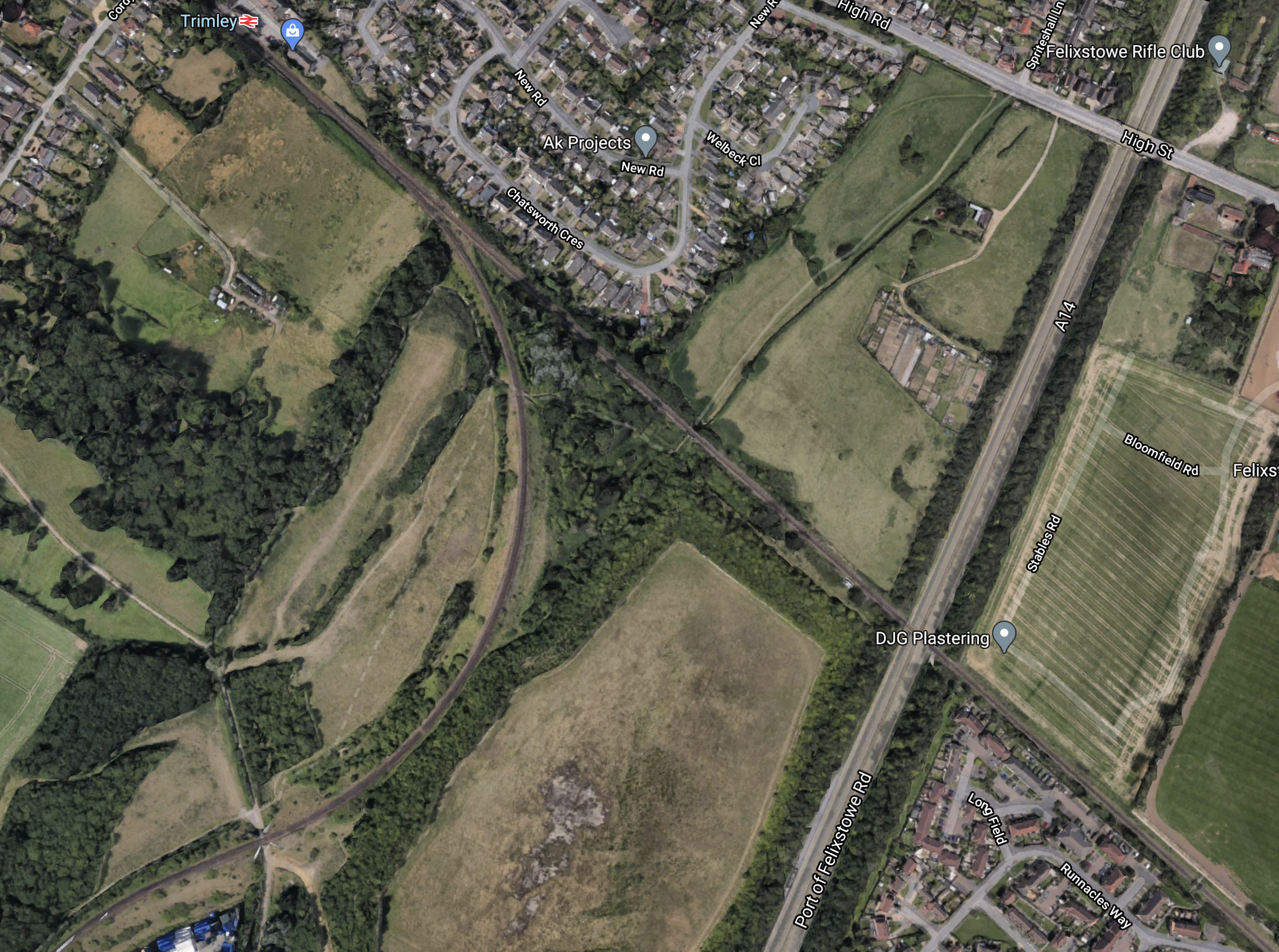
Note.
- Trimley station is at the top of the map.
- There is a junction to the South-East of Trimley station.
- The Northern track goes straight on to Felixstowe station and the Southern Terminal at the Port of Felixstowe.
- The Southern track curves South to the North Terminal at the Port of Felixstowe.
- Both branches are single track.
It would appear that all trains going to and from the South Terminal at the Port, take the Northern track through Trimley station and those going to and from the North Terminal at the Port, take the Southern track.
Southern Access To The Port
This Google Map shows how the trains go between Trimley station and the Southern entry to the Port.
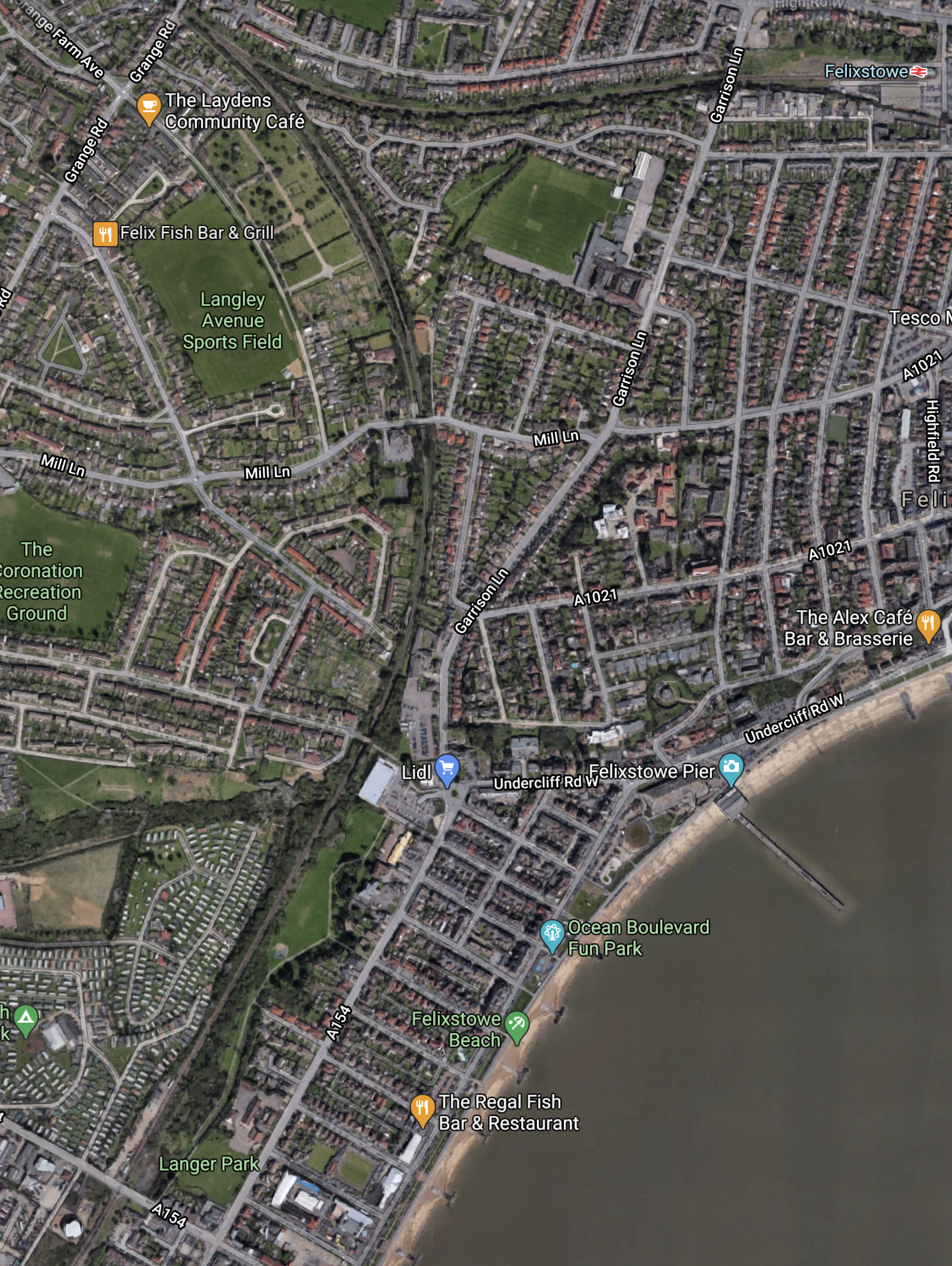
Note.
- Felixstowe station is in the North-East corner of the map.
- The single track from Trimley station splits into two in the North West corner of the map.
- One branch allows an hourly service between Ipswich and Felixstowe stations.
- The second branch goes South to the Port.
- The junction used to be a full triangular junction to allow trains to go between the two Felixstowe stations.
Do the residents of some houses in Felixstowe, get plagued by noise, pollution, smell and the diesel smoke of Class 66 locomotives going to and from the Southern access to the Port?
Felixstowe Beach Station
There used to be a Felixstowe Beach station on the railway to the Port.
This Google Map shows the location.
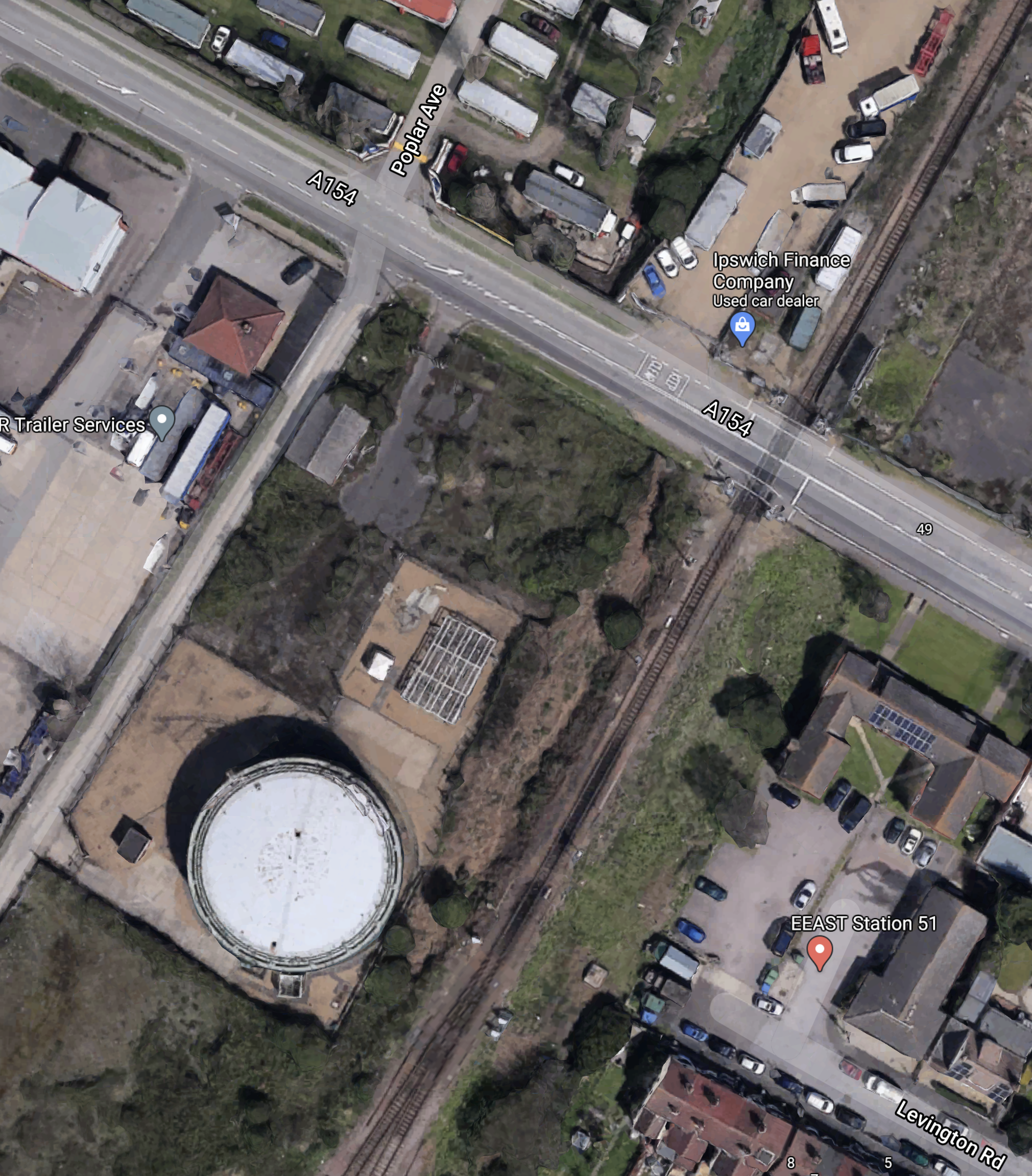
The station was to the North-East of the level crossing.
These pictures show the area as it was a year or so ago.
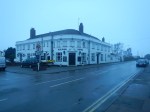
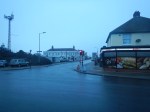
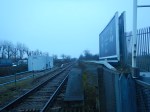
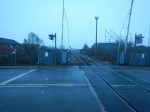
Is there a need for a new Felixstowe Beach station to allow workers and visitors to the Port to avoid the crowded roads?
Future Passenger Services Between Ipswich and Felixstowe
The passenger service between Ipswich and Felixstowe has for many years been a bine of contention between the Port of Felixstowe and passenger train operators.
The Port would like to see the passenger service discontinued, so that they could run more freight trains.
However, to increase both freight and passenger capacity, the East-West Rail consortium has proposed running a tram-train between Felixstowe and Ipswich.
- It would run through the streets of Ipswich to the forecourt of Ipswich station.
- It would serve important points in Ipswich, like the Hospital, Town Centre and Portman Road.
- It would have a frequency of four trains per hour (tph).
I wrote about the proposal in Could There Be A Tram-Train Between Ipswich And Felixstowe?
The Southern area of Felixstowe, along the beach is run down and needs improvement.
So why not run the tram-train all the way along the sea-front to Landguard Point?
This Google Map shows Landguard Point.
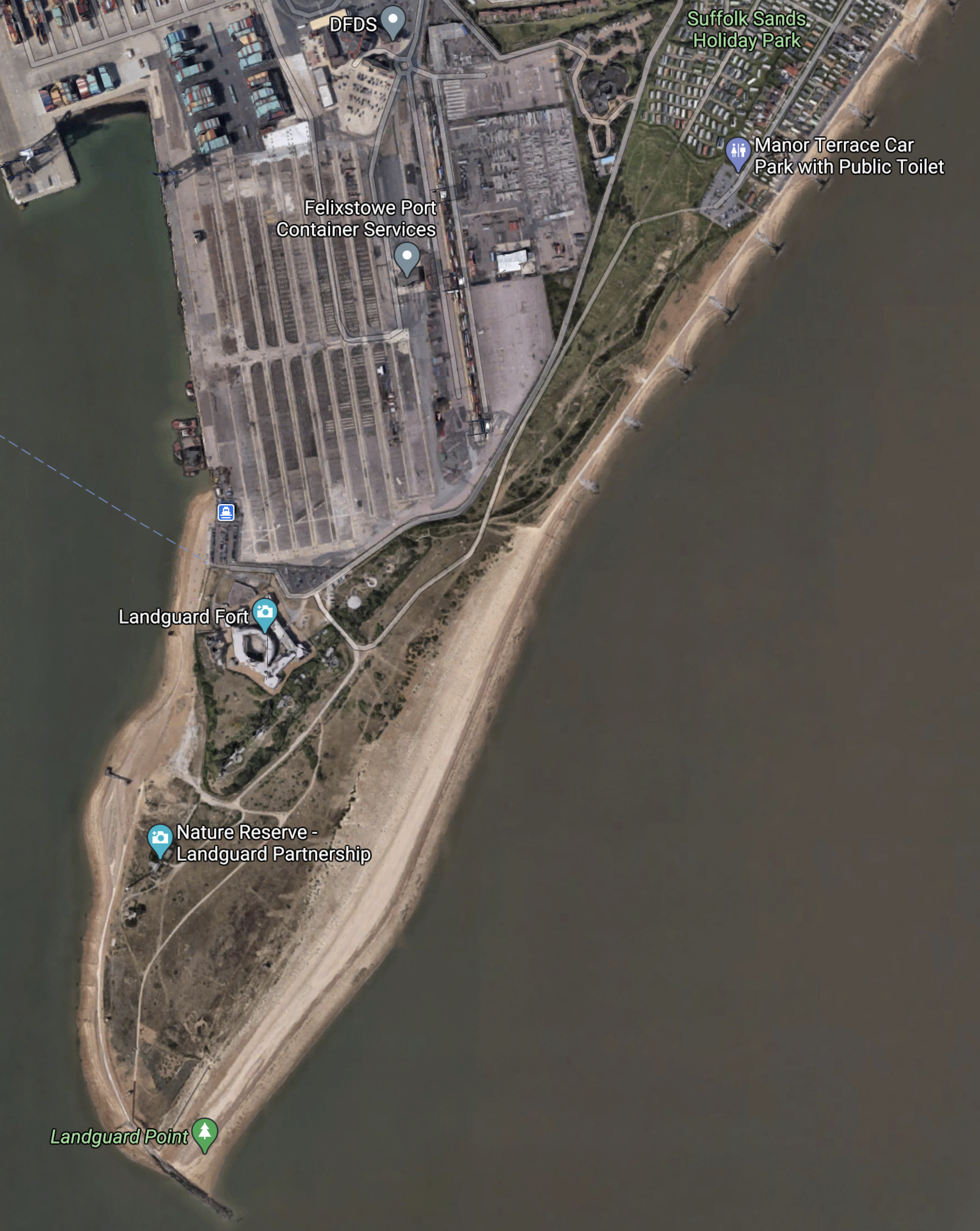
A tram-train going to Landguard Point would do the following.
- Provide a direct passenger rail service between the Port and Ipswich.
- Provide access to the Harwich ferry.
- Improve the economic prospects of the Southern part of Felixstowe.
- Bring visitors to the beach without using their cars.
But the main thing it would do is create decent access to the historic Landguard Fort.




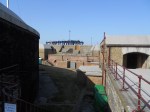


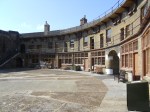
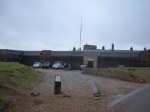
Landguard Fort was the site of the last invasion of the UK, when the Dutch were repelled on the 2nd of July 1667, at the Battle of Landguard Fort.
The Southern Terminal At The Port Of Felixstowe
This Google Map shows the Southern terminal of the Port.
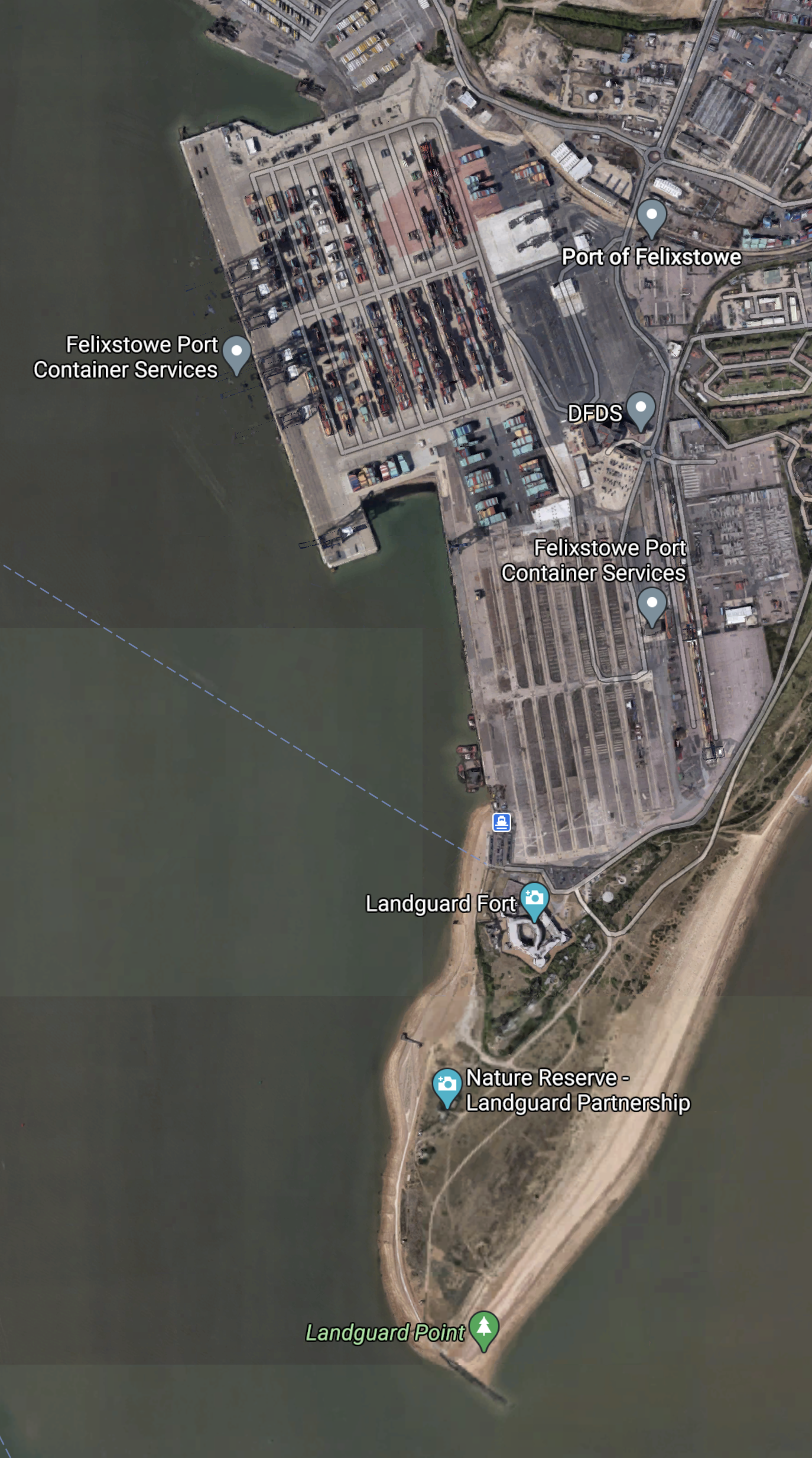
This second Google Map shows where the rail line enters the Southern terminal.
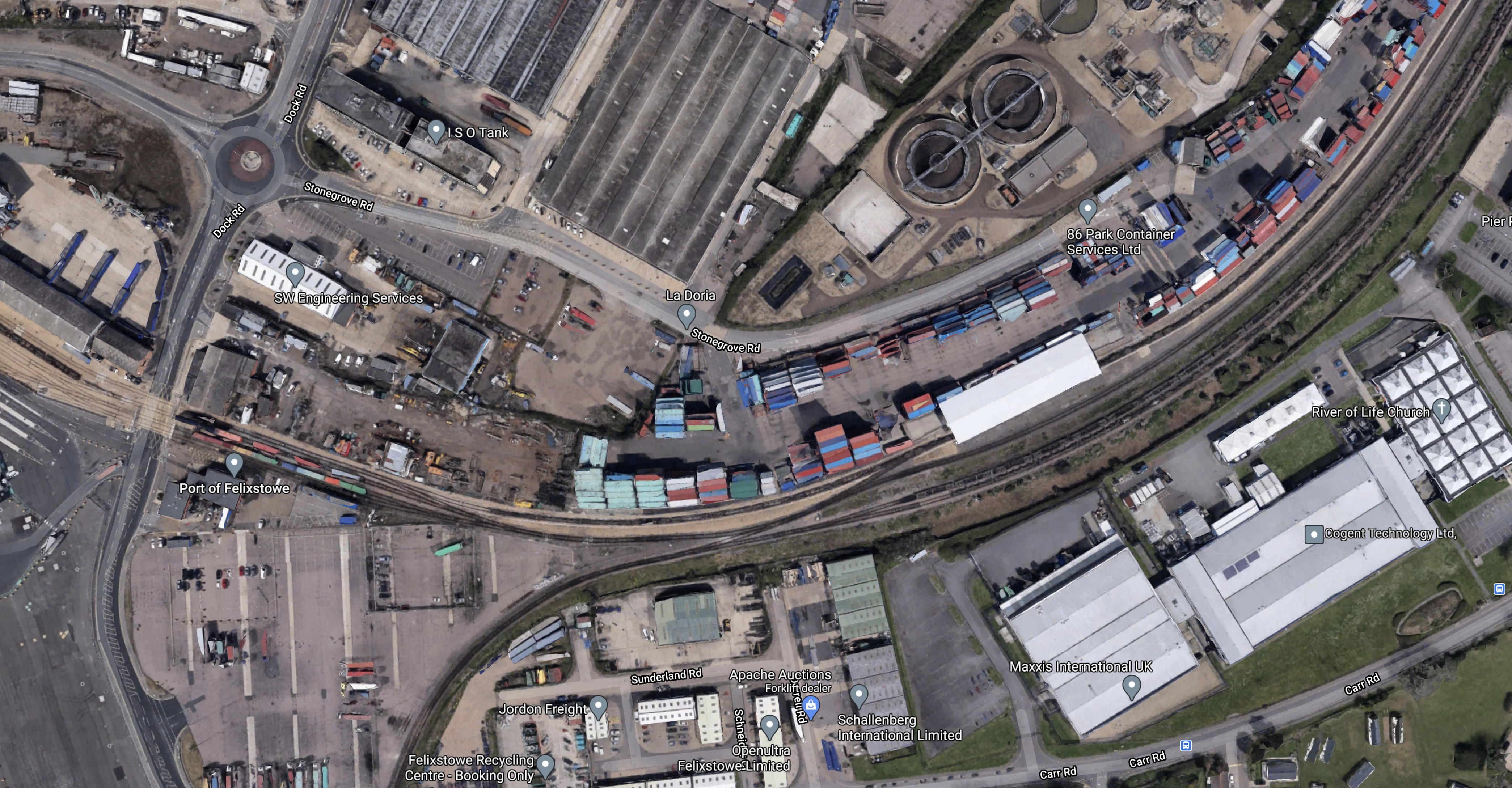
Note how the rail link enters in the North-East corner of the and curves towards the quays before it splits into two.
One branch goes straight on, past some sidings and gives a connection to the Trinity Terminal.
The second branch turns South to several sidings.
This Google Map shows these sidings.
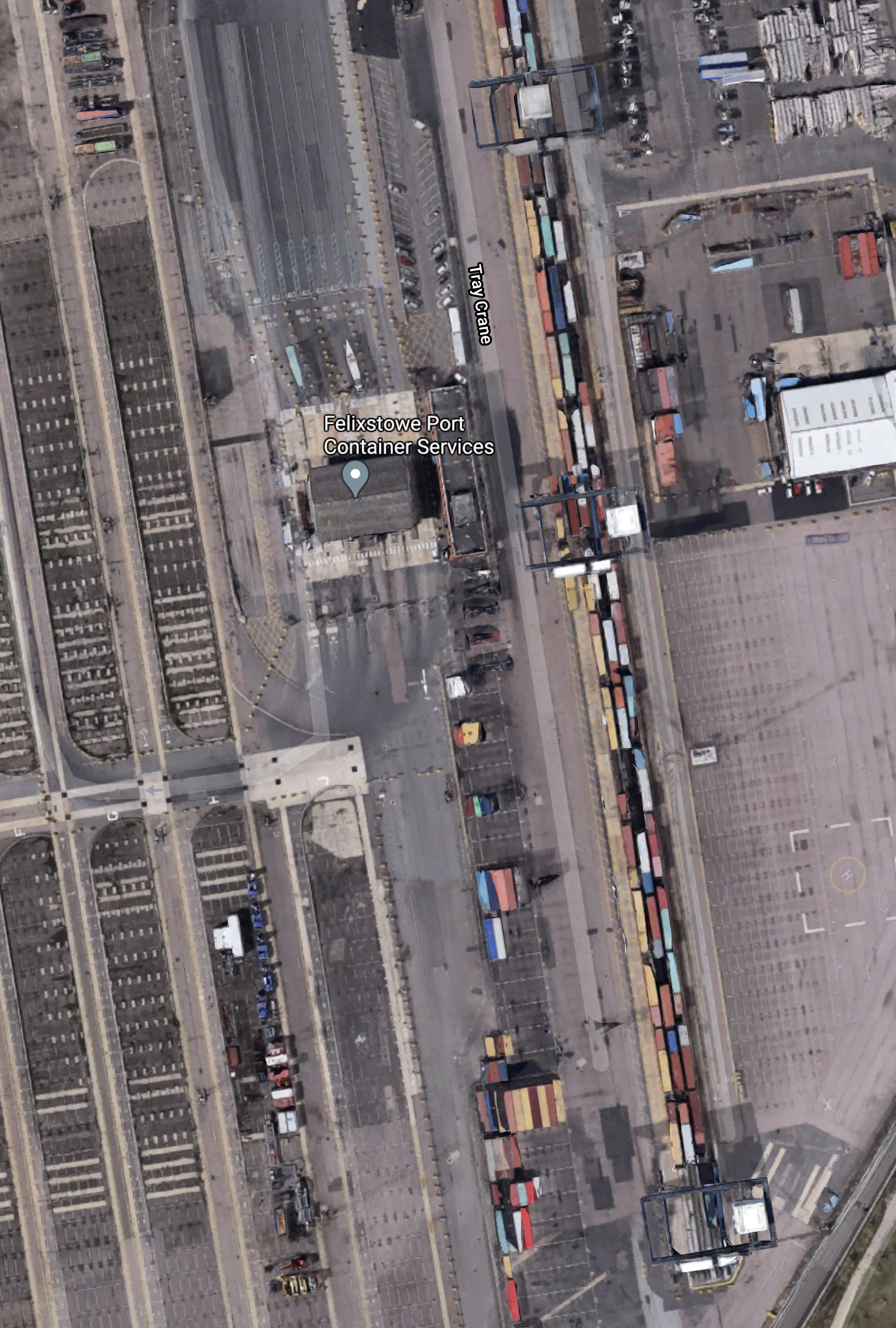
Note that the sidings are towards the right of the image and run North-South.
Northern Access To The Port
This Google Map shows the route taken by the rail access to the Trinity Terminal.
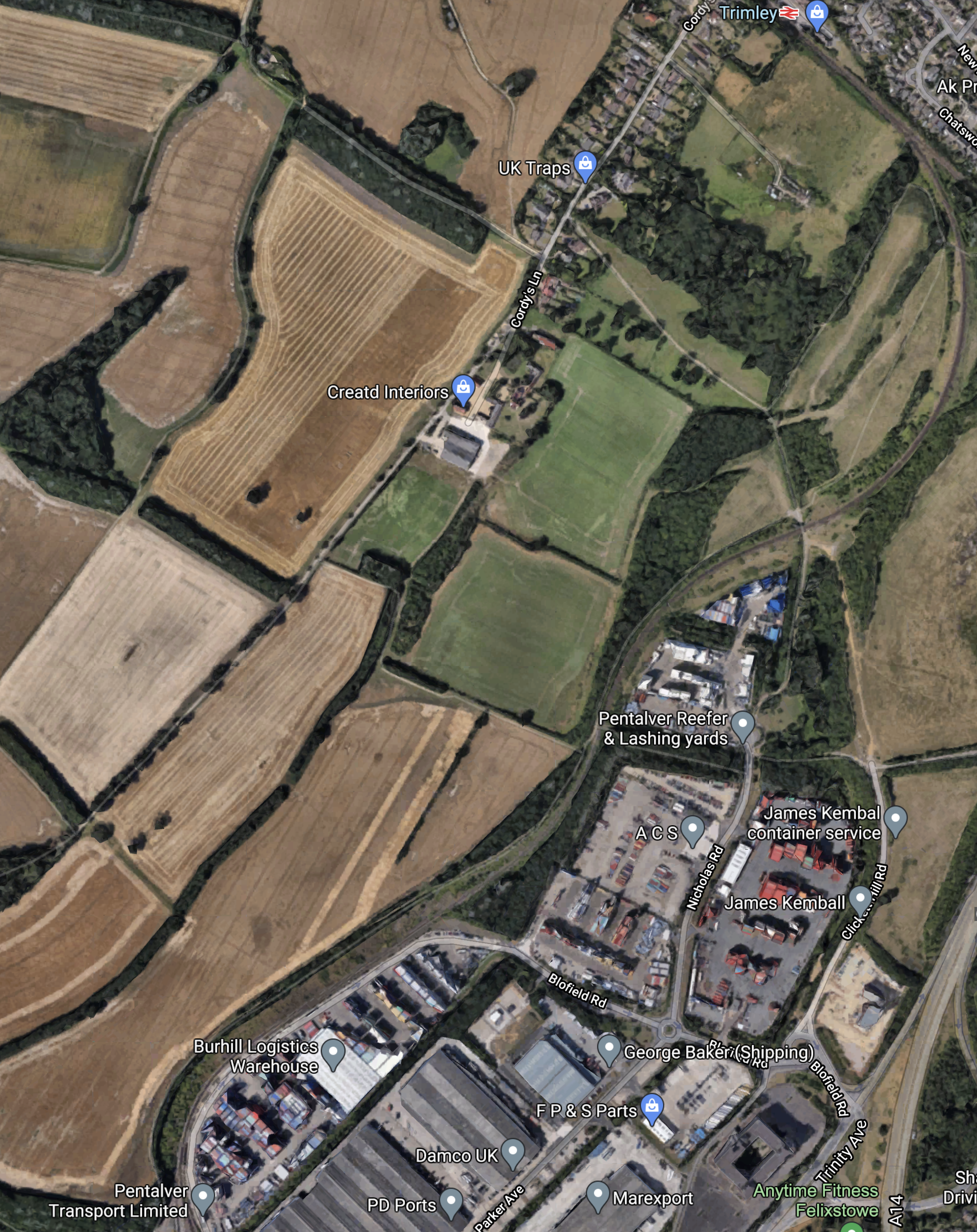
Note.
- The route branches off South just to the East of Trimley station.
- It curves its way South to the South-West corner of the map, where it enters the Port.
- It is single track.
This second Google Map shows where it enters the Port.
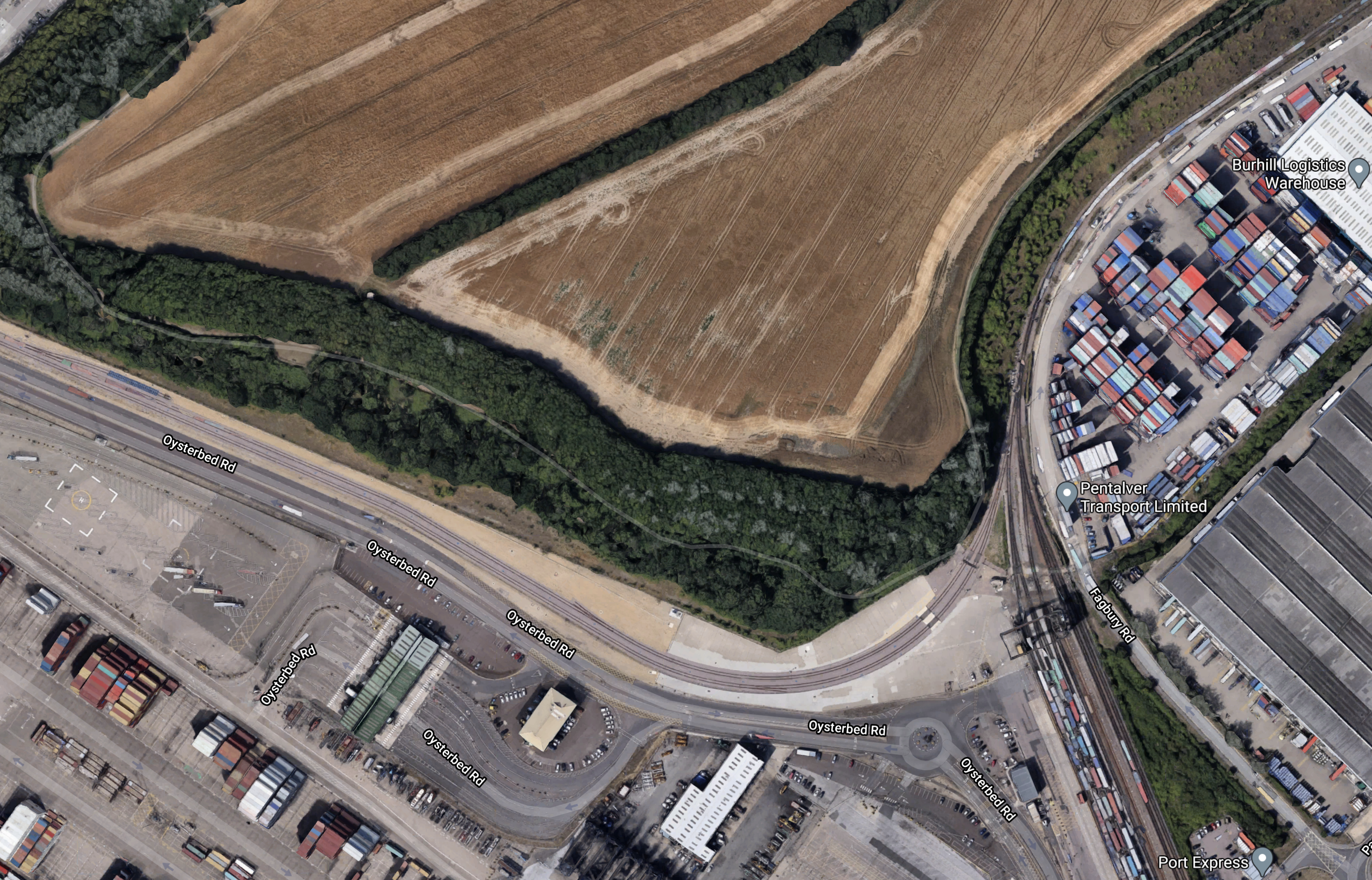
Note.
- The track enters from the North-West corner of the map.
- It then splits into two branches.
- One branch goes West to the Trinity Terminal.
- The second branch goes South into a set of sidings.
It looks to be a well-designed access, to the Felixstowe Branch Line at Trimley station.
The Trinity Terminal At The Port Of Felixstowe
This Google Map shows the Trinity terminal.
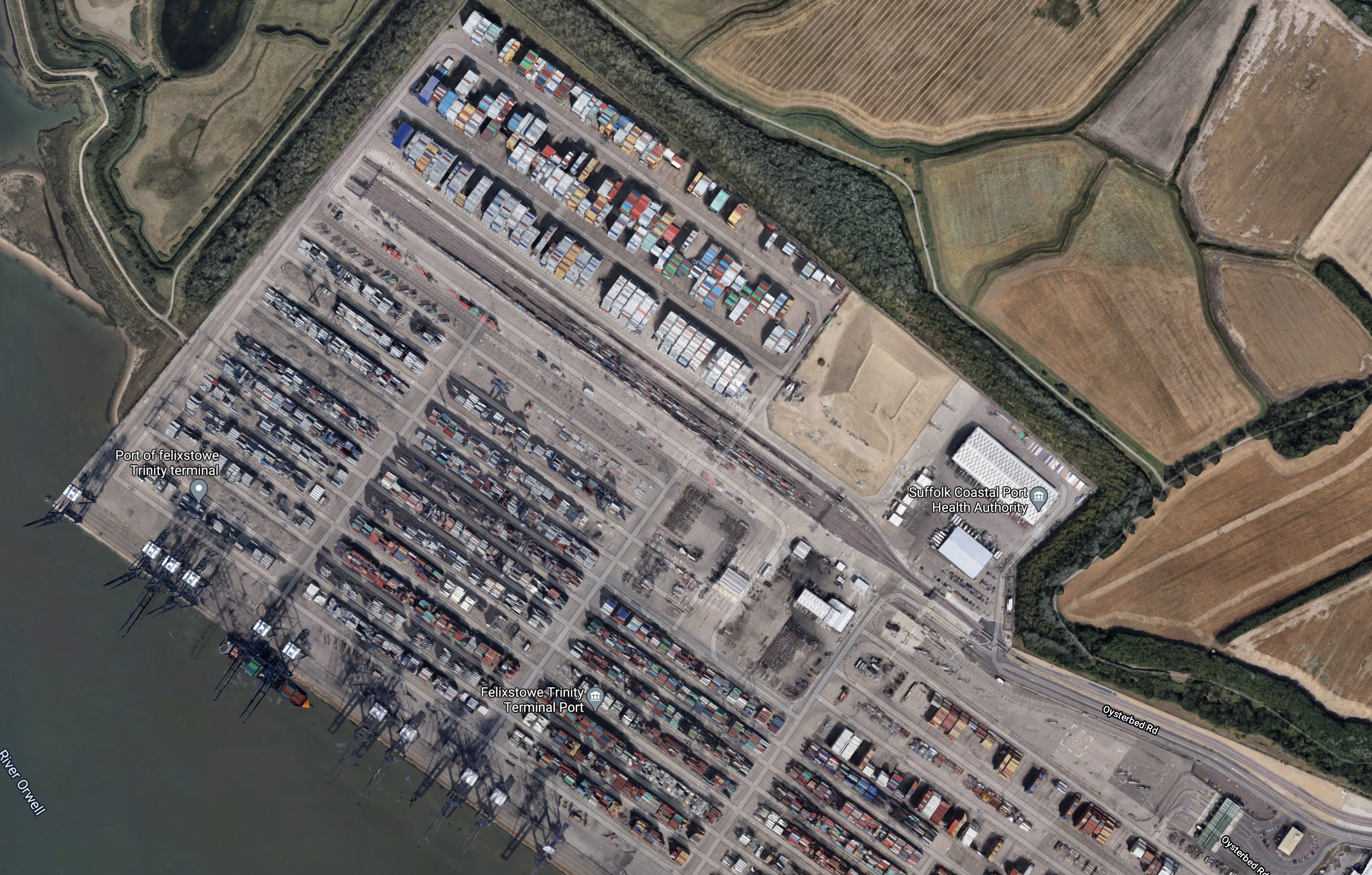
Note the rail sidings and the link to the East, which links to the previous map.
This Google Map shows the rail sidings in detail.
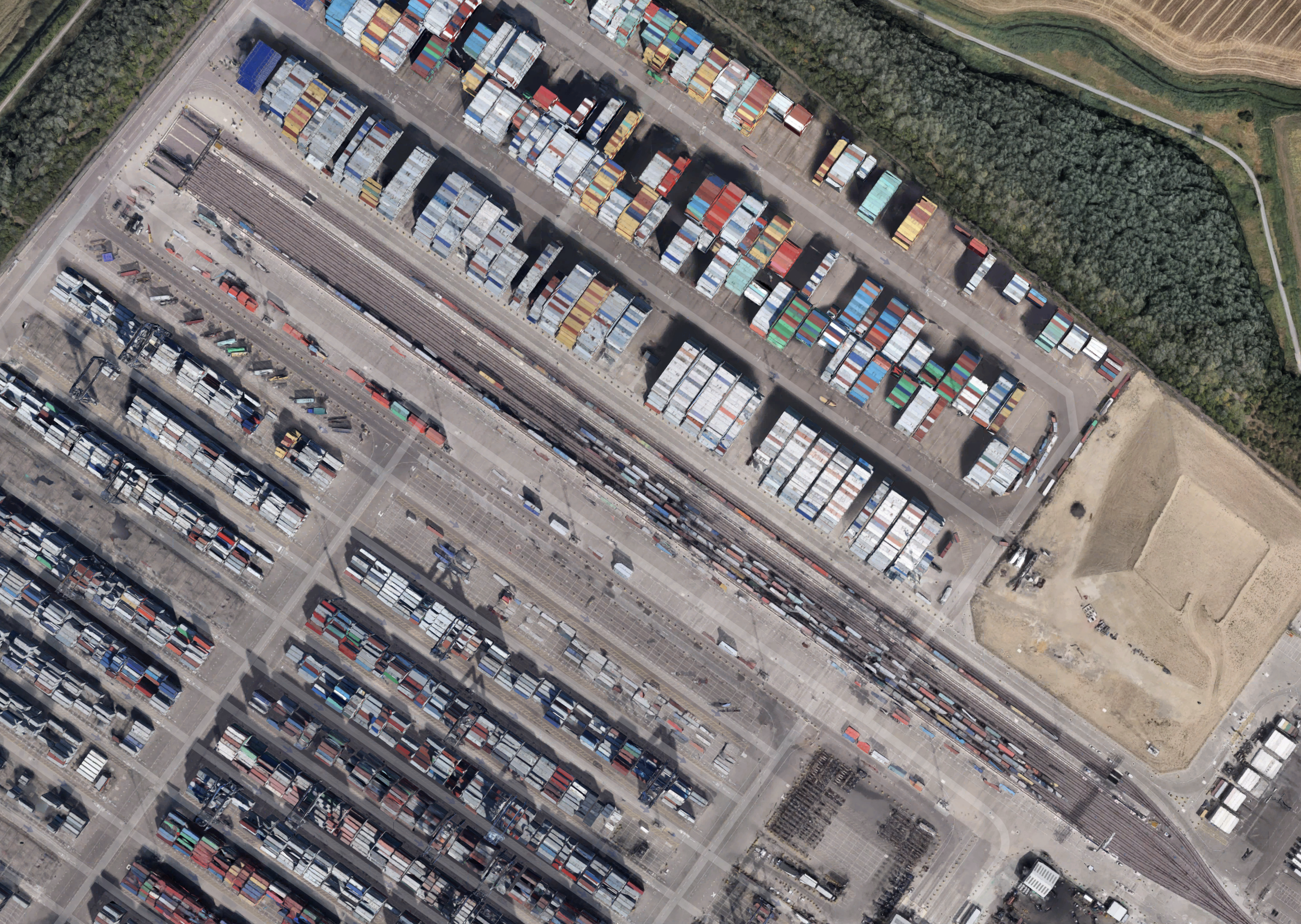
I hope the pictures give a clear impression of the size of the port, which in the next few years will probably need more trains to the rest of the country.
There is also a yard that appears to be connected to both the North and South train entrances to the Port.
This yard is shown in this Google Map.
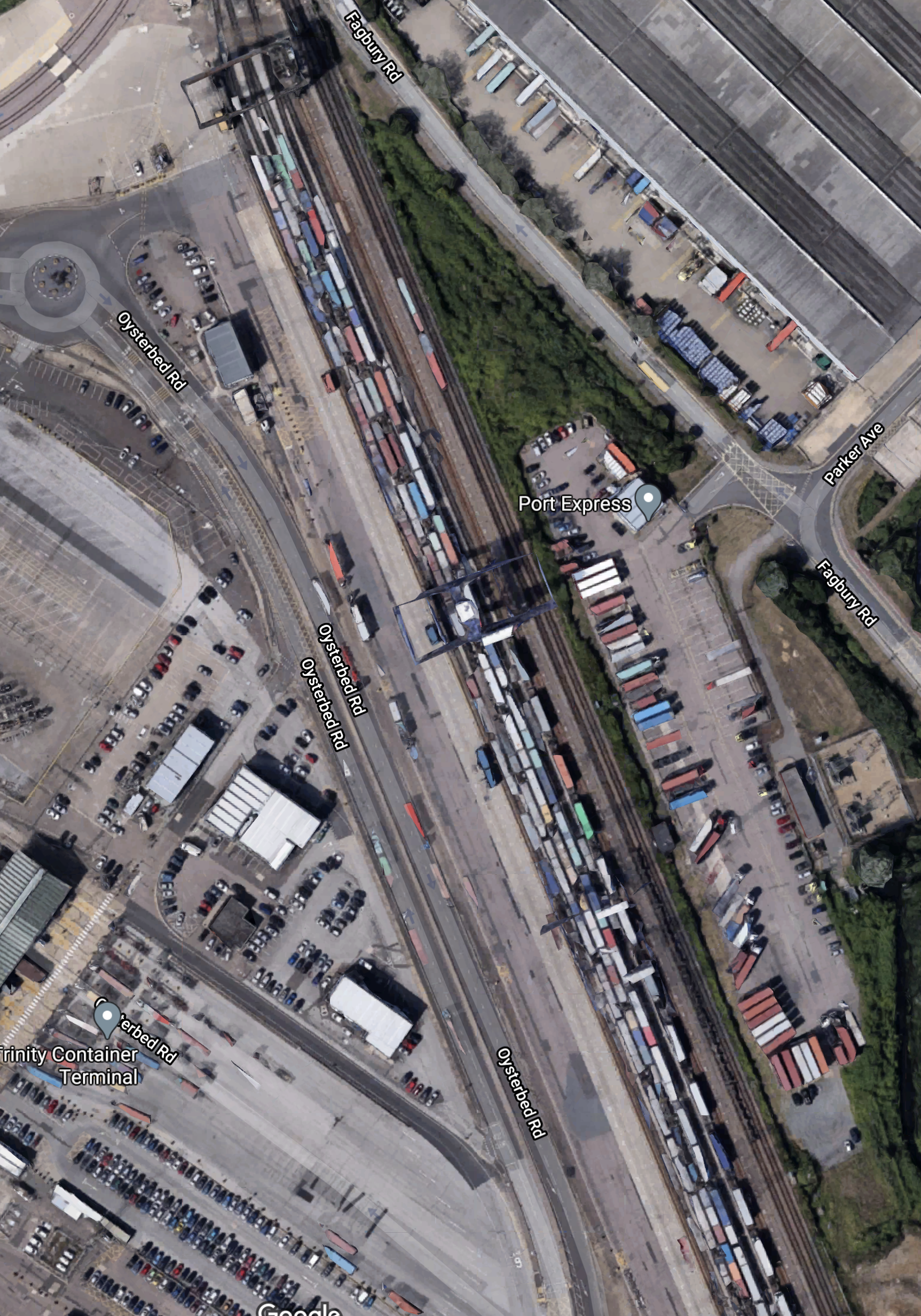
Note, the cranes to lift containers on and off.
Electrification In The Port
Note that there is no electrification in the Port or on the access links from Trimley station.
I once spent half-an-hour with a fellow Ipswich supporter before an away match. He turned out to be a crane driver at the Port of Felixstowe and we got to talking about why the trains weren’t electrified.
He told me that accidents to happen and that you you don’t want high voltage wires about, when you’re swinging containers on and off trains.
Especially, when the trains are close together, as they are in the previous image.
Class 73 Locomotives And The Port Of Felixstowe
The first Class 73 locomotives have now been ordered by Rail Operations Group (UK), and I wrote about the order in Trimode Class 93 Locomotives Ordered By Rail Operations (UK).
What surprised me about the order was that it was for thirty locomotives, whereas only ten were talked about two years ago. I know, that Rail Operations (UK) have received a big capital injection, as was reported in this article on Rail Advent, which is entitled Rail Operations Group Acquired By STAR Capital Partnership. but they must have ambitious plans for thirty locomotives.
Could it be that the specification of these locomotives is geared to operating out of ports like Felixstowe?
Consider.
- A locomotive probably needs a self-powdered capability to take a heavy train in or out of the Port of Felixstowe.
- Would a Class 73 locomotive have sufficient range and power to take the average train out of the port using bi-mode diesel and battery power until it arrived at the electrification of the Great Eastern Main Line?
- How would these locomotives handle a gap like Haughley Junction and Ely?
- A Class 73 locomotive could probably handle these container trains at 100 mph to and from London on the Great Eastern Main Line, which would keep them out of the way of Greater Anglia’s express trains.
- What speed would these locomotives be able to achieve under electric power on the West Coast and East Coast Main Lines?
- The two single-track access links between Trimley station and the Port could be electrified to charge the batteries both ways and to accelerate the train fast out of the Port.
I also feel that other ports would benefit.
Conclusion
I very much feel, that the specification of the Class 93 locomotive with its trimode capability is ideal for working to and from ports and freight terminals.
BNSF and Wabtec Commence Battery-Electric Locomotive Pilot Test In California
The title of this post, is the same as that of this press release from BNSF.
This is the introductory paragraph.
BNSF Railway Company (BNSF) and Wabtec’s (NYSE: WAB) exploration of the future potential of battery-electric locomotives crosses another significant milestone this week as they begin testing the technology in revenue service between Barstow and Stockton, California. As BNSF seeks ways to further reduce its environmental impact, the advancement of battery technology offers some possible solutions.
“We’ve got everything in place and we’re ready to see how this next-generation locomotive performs in revenue service,” said John Lovenburg, BNSF vice president, Environmental. “BNSF is focused on continuing to reduce our environmental impact, and we’re committed to doing our part to test and assess the commercial viability of emerging technologies that reduce emissions.”
They have also released this video.
It certainly seems to work.
Construction Of Europe’s Largest Rail Intermodal Terminal Starts On Hungary-Ukraine Border
The title of this post, is the same as that of this article on MENAFN.
This is the introductory paragraph.
The construction of Europe’s largest railway intermodal combi terminal East-West Gate (EWG) has begun near the Hungarian-Ukrainian border.
This paragraph sums up the benefits of the new terminal.
‘Equipped with state-of-the-art technology, the EWG intermodal terminal, as the western gateway to the New Silk Road, offers a faster alternative route to Austria, Switzerland, Italy, Slovenia, Croatia and Germany for freight traffic from Asia than the current land and maritime routes, reads the article.
It is planned to be completed in 2022.
Vlad The Poisoner won’t like it!
Fuel Cell Enabling Technologies, Inc. Announces First Major Customer, Signs Memorandum of Understanding Regarding Purchase of Fuel Cells for Locomotives
The title of this post, is the same as that of this article on Cision.
This is the introductory paragraph.
Fuel Cell Enabling Technologies, Inc. (FCET), a start-up energy technology company that has developed a novel, low-cost solid oxide fuel cell (SOFC) system, has announced a memorandum of understanding (MOU) with NextGenPropulsion, LLC (NGP) indicating NGP’s intent to purchase FCET fuel cells for NGP light-rail trains and freight locomotives. In addition to fuel cell orders, this would mean engineering collaboration between the two firms, each bringing its specific and considerable expertise to these projects.
I have been saying that hydrogen freight locomotives are certain to be ordered in a few years.
Hydrogen-powered freight locomotives, are in my opinion, the logical way of decarbonising rail freight.

