A Danish Study On Links Between Coeliac Disease And Blood Clots
I am a coeliac on a long-term gluten-free diet.
I am worried that the covids might prey on people like me, so I am researching hard to find out the truth.
Note that in much of Europe, North America and Australasia, coeliacs are at least 1-in-100 of the population and could be higher. The NHS quotes the 1-in-100 figure on this web page, which also says reported cases of coeliac disease are higher in women than men.
This morning I found on the Internet, a peer-reviewed Danish study which was entitled
Coeliac Disease And Risk Of Venous Thromboembolism: A Nationwide Population-Based Case-Control Study
The nation in the study was Denmark.
This was the introductory paragraph.
Patients with coeliac disease (CD) may be at increased risk of venous thromboembolism (VTE), i.e. deep vein thrombosis (DVT) and its complication pulmonary embolism (PE), because they are reported to have hyperhomocysteinaemia, low levels of K-vitamin-dependent anticoagulant proteins, and increased levels of thrombin-activatable fibrinolysis inhibitor.
One thing in this summary screams at me. The mention of vitamin-K!
Ten years ago, I had a serious stroke, that because of modern clot-busting drugs failed to kill me.
I am now on long-term Warfarin and know I have to eat a diet without Vitamin-K.
Given that in a nation like Germany with a population of eighty-three million, there could be nearly a million coeliacs, many of whom will be undiagnosed, this Danish study should be taken seriously, as it should be able to predict the number of clots down to coeliac disease in Germany. But I’m just an engineer and statistician and no medic. Although after the medical troubles of my family, I know a lot more medical knowledge than I did twenty years ago.
An article in The Times, also says that all but two who suffered clots after having the AstraZeneca vaccine were women.
It should be noted that the NHS states on its web site, that women are more likely to suffer coeliac disease than men.
I am absolutely certain, that more research needs to be done.
Blood Clots In Young German Ladies After AstraZeneca Vaccine
There have been various reports that young ladies in Germany have suffered blood clots after having the AstraZeneca vaccine.
I am coeliac on a long-term gluten-free diet.
The UK, Ireland and Italy are generally fairly good at identifying coeliacs, as they suffer from so many side effects, one of which is strokes.
I had a stroke and a cardiologist thought it could have been because I wasn’t diagnosed until fifty, so my diet damaged my heart muscle causing atrial fibrillation.
My father, who I now believe was coeliac, died of a series of strokes.
I do wonder, if Germany doesn’t look for coeliacs, as they should, partly because it is a Jewish disease in their minds. Certainly finding gluten-free food in Germany can sometimes be difficult.
It should also be noted that the NHS says that there are three times as many coeliacs who are female.
Conclusion
This adds to the circumstantial evidence that coeliac disease is the alligator in the swamp of Covid-19.
WindH2 Hydrogen Project Commissioned In Germany
The title of this post, is the same as that as this article on Chemical Engineering.
This is the introductory paragraph.
Salzgitter AG, Avacon and Linde have taken an important step on the path to decarbonizing the steel industry. With the commissioning of “Wind Hydrogen Salzgitter – WindH2”, Germany’s only cross-sector project, green hydrogen will be produced in future with electricity generated by wind power on the site of the steelworks in Salzgitter.
This sentence describes the hydrogen production.
Avacon, a member of the E.ON Group, operates seven newly built wind turbines with an output totaling 30 megawatts on the premises of Salzgitter AG. Salzgitter Flachstahl GmbH has installed two Siemens 1.25 megawatt PEM electrolyzer units on its plant site that are capable of producing around 450 m3 per hour of ultra pure hydrogen.
It appears that Salzgitter AG are initially using hydrogen to cut their carbon footprint.
To get an impression of the size of the steelworks, look at this Google Map.
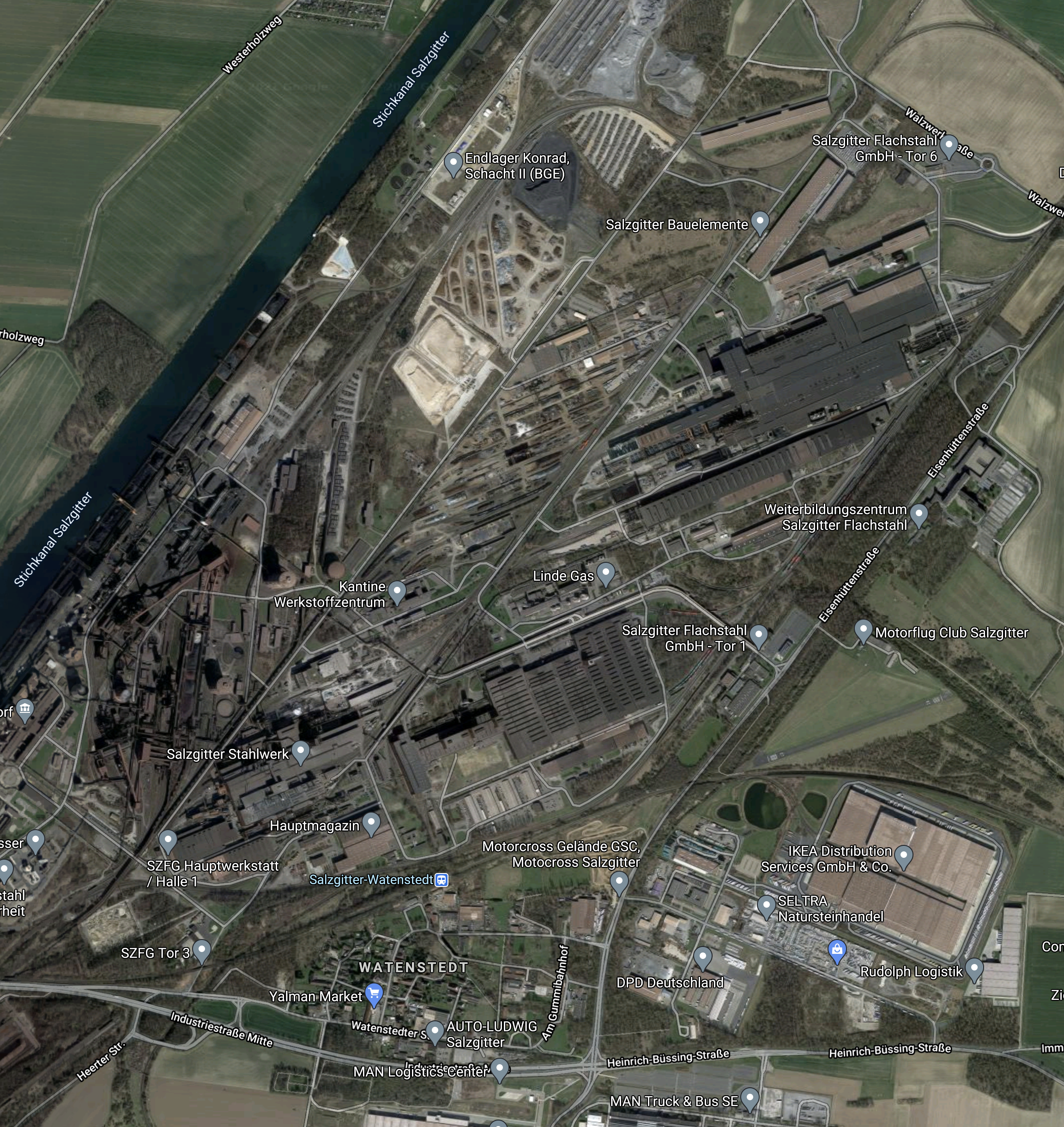
Note that if you click on the map to show it in a large scale, stahl is German for steel.
The article is certainly worth a read.
Morocco Could Produce Up To 4% Of World’s Green Hydrogen By 2030
The title of this post, is the same as that of this article on Morocco World News.
This is the first paragraph.
Morocco could produce up to 4% of the global demand for green hydrogen by 2030, according to the German Ministry of Economic Cooperation and Development.
They are aiming to produce 10,000 tonnes of hydrogen per year by 2025.
Wikipedia has an informative topic called Energy Policy in Morocco, which indicates the following.
- The country has little oil and gas reserves. Although it does have some oil shale, that could be developed.
- Wind, solar and hydro power are being developed.
- They could install a nuclear power station East of Rabat.
It sounds, that they could have an electricity structure, that would be ideal for the production of green hydrogen.
Conclusion
Morocco could be joining an ever growing club, which includes Australia, Saudi Arabia and Spain, who will produce hydrogen for export to countries like Germany, Japan and South Korea.
Get H2 Partners Propose Green Hydrogen Pipeline In Europe
The title of this post, is the same as that of this article on the Green Car Congress.
This is the first paragraph.
Seven companies from the GET H2 initiative in Europe want to build a cross-border pipeline for green hydrogen. From Lingen (Emsland) to Gelsenkirchen and from the Dutch border to Salzgitter, production, transport, storage and industrial acceptance of green hydrogen are to be connected in several steps between 2024 and 2030 under the umbrella of the overall project.
Note.
- I suspect this could be almost four hundred kilometres of hydrogen pipeline.
- The hydrogen will be used in refineries, for steelmaking and other industrial uses.
- It could avoid production of sixteen million tonnes of carbon dioxide by 2030.
This will need a lot of wind-turbines and electrolysers, most of which I expect will be in the German and Dutch parts of the North Sea.
Germany Tasks TÜV With Finding Standards For H2 Trains
The title of this post, is the same as that of this article on Electrive.
This is the introductory paragraph.
TÜV Rheinland InterTraffic has been commissioned to develop a standard for hydrogen applications in rail vehicles. Until now, authorities have had to rely on technical regulations and standards from the automotive industry for conformity assessments.
As hydrogen trains have entered service in Germany and have been trialled on rail networks in Austria, Italy, The Netherlands and the UK, this is probably about time, especially as Spain and Switzerland will soon be joining the club.
As most of Europe has the same loading gauge, it looks to me that the German standard will be a de-facto European standard, that could also be used for countries like Australia, Canada and the United States.
But in the UK, we have a smaller loading gauge, so will the German standard be application to the UK?
As some German S-bahn trains are not much bigger than say a Siemens-built Class 700 train, I suspect that the Germans could write a dual standard, that covered the following.
- Standard UK-sized trains.
- Standard EU-sized trains.
- Standard German S-bajm-sized trains.
After all, if it could be arranged, one world-wide standard would probably be a good idea.
A Curious Link Between Pancreatic Cancer And COVID-19
i am involved in fund raising for pancreatic cancer research at Liverpool University, because my youngest son died of the awful disease, at just thirty-seven, leaving a widow and an eight-year-old daughter.
I am also a passionate analyser of data and databases.
For a few weeks now, I have had a feeling that there is a connection between pancreatic cancer and the old Austro-Hungarian Empire.
I found this simple description of the Austro-Hungarian Empire on this page on the Internet.
The former Austro-Hungarian Empire was spread over a large part of Central Europe, it comprises present Austria and Hungary as well as the Czech Republic, Slovakia, Slovenia, Bosnia, Croatia and parts of present Poland, Romania, Italy, Ukraine, Moldova, Serbia and Montenegro.
I had been looking at pancreatic cancer data on the World Life Expectancy database, which is based on World Health Organisation data.
I have built this table, which shows the top twenty countries for a death rate from pancreatic cancer.
These are the columns.
- Country
- Rate of pancreatic cancer deaths per 100,000 of the population.
- Quarantine or Travel Corridor based on this page of the Government web site.
- Member of the Austro-Hungarian Empire.
These are the top twenty countries.
- Hungary – 11.35 – Quarantine – AHE
- Uruguay – 10.72 – Quarantine
- Armenia – 10.34 – Quarantine
- Malta – 10.01 – Quarantine
- Czech Republic – 9.89 – Quarantine – AHE
- Estonia – 9.26 – Travel Corridor
- Iceland – 9.21 – Quarantine
- Israel – 9.18 – Quarantine
- Slovakia – 9.17 – Quarantine – AHE
- Austria – 9.13 – Quarantine – AHE
- Finland – 8.78 – Travel Corridor
- Japan – 8.74 – Travel Corridor
- Latvia – 8.72 – Travel Corridor
- Germany – 8.68 – Travel Corridor
- Slovenia – 8.55 – Quarantine – AHE
- Denmark – 8.51 – Quarantine
- Netherlands – 8.38 – Quarantine
- Croatia – 8.30 – Quarantine – AHE
- Lithuania – 8.21 – Travel Corridor
- Luxembourg – 8.15 – Quarantine
Note.
- I would hope that the Government’s Travel Corridor list has been devised in a scientifically-correct manner.
- Am I right to assume that the Travel Corridor list is a good measure of the level of Covid-19 in the country?
- The pancreatic cancer data is from 2018.
Of the countries I mentioned earlier, as being partly in the Austro-Hungarian Empire, only Montenegro is in the top thirty countries for pancreatic cancer deaths.
My Thoughts On The Data
These are my thoughts on the data.
The Significance Of The Austro-Hungarian Empire
Consider.
- All the countries that were fully or partly in the Austro-Hungarian Empire are on the Government Quarantine List, with the exception of Italy.
- Many will argue, including myself, that Italy, has too high a Covid-19 rate for a visit.
- Austria, Croatia, the Czech Republic, Hungary, Slovakia and Slovenia are in the top twenty countries for pancreatic cancer deaths.
It looks to me, that there is a correlation in there somewhere.
Germany And Japan Are The Odd Ones Out
The list of countries with high levels of pancreatic cancer, where there is no quarantine are.
- Estonia
- Finland
- Japan
- Latvia
- Germany
- Lithuania
If you eliminate the Baltic States and Finland from the worse countries for pancreatic cancer, you’re left with Germany and Japan.
Is There A Jewish Dimension?
I ask this question for these reasons.
- Israel is eighth on the pancreatic cancer list and has high levels of Covid-19 according to various news reports, like this one on the BBC, which is entitled Coronavirus: Israel Tightens Second Lockdown Amid Acrimony.
- I am not Jewish, but my great-great-great-grandfather from Konigsberg probably was and it looks like I inherited my coeliac disease from him and gave it to my son, who died from pancreatic cancer.
- The Baltic States and Finland, don’t seem to have large Jewish populations for various reasons and they have high levels of pancreatic cancer, but low levels of Covid-19.
- Germany has the third largest Jewish population in Europe, but seems to have done well in fighting Covid-19. Is that because their well-funded healthcare system has worked?
- Wikipedia states that, the Austro-Hungarian Empire was favourable to the Jews and even a sizeable numbers of its Army officers in Word War One were Jewish.
- According to reports locally and my observations, it appears that the Jewish community in Hackney, where I live has been badly hit by Covid-19.
I need an appropriate historian to give me answers.
Conclusion
I believe the correlation between pancreatic cancer and Covid-19 could be rather strong. More research needs to be done, as to why.
But I do wonder, if undiagnosed coeliac disease, as in my son, could be the alligator in the swamp.
Undiagnosed coeliacs seem to have poor immune systems, which makes them more susceptible to everything, that’s going around.
The more I learn about coeliac disease and its myriad effects on health, the more I’m convinced that it should be one of the diseases checked for in all young children.
It would certainly have changed my miserable always-ill childhood for the better.
Dutch Province To Introduce Regular Hydrogen Services
The title of this post, is the same as that of this article on the International Railway Journal.
This is the introductory paragraph.
The regional transport authority in the Dutch province of Groningen has announced plans to introduce hydrogen trains for its regional concession following a successful test earlier this year.
In March 2019, I went to Groningen and explored the railways in the area, where Stadler GTW trains are used for the train services.

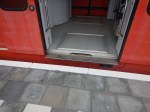
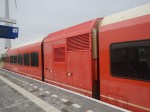
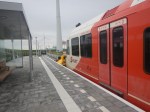
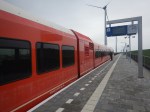
These trains are a smaller version of Greater Anglia’s Class 755 trains.
In The Train Station At The Northern End Of The Netherlands, I describe a visit to Eemshaven station to the North of Groningen.
I said this.
At the turnround at Eemshaven with the driver, he indicated that there had been speculation about battery and hydrogen trains in the North of The Netherlands.
It appears the driver was right.
The Bridge Over The Ems
The article also indicates that the bridge over the River Ems, that I wrote about in From Groningen To Leer By Train, could be opening soon.
This video shows what the new bridge will look like.
And this Google Map shows the current state of the bridge.
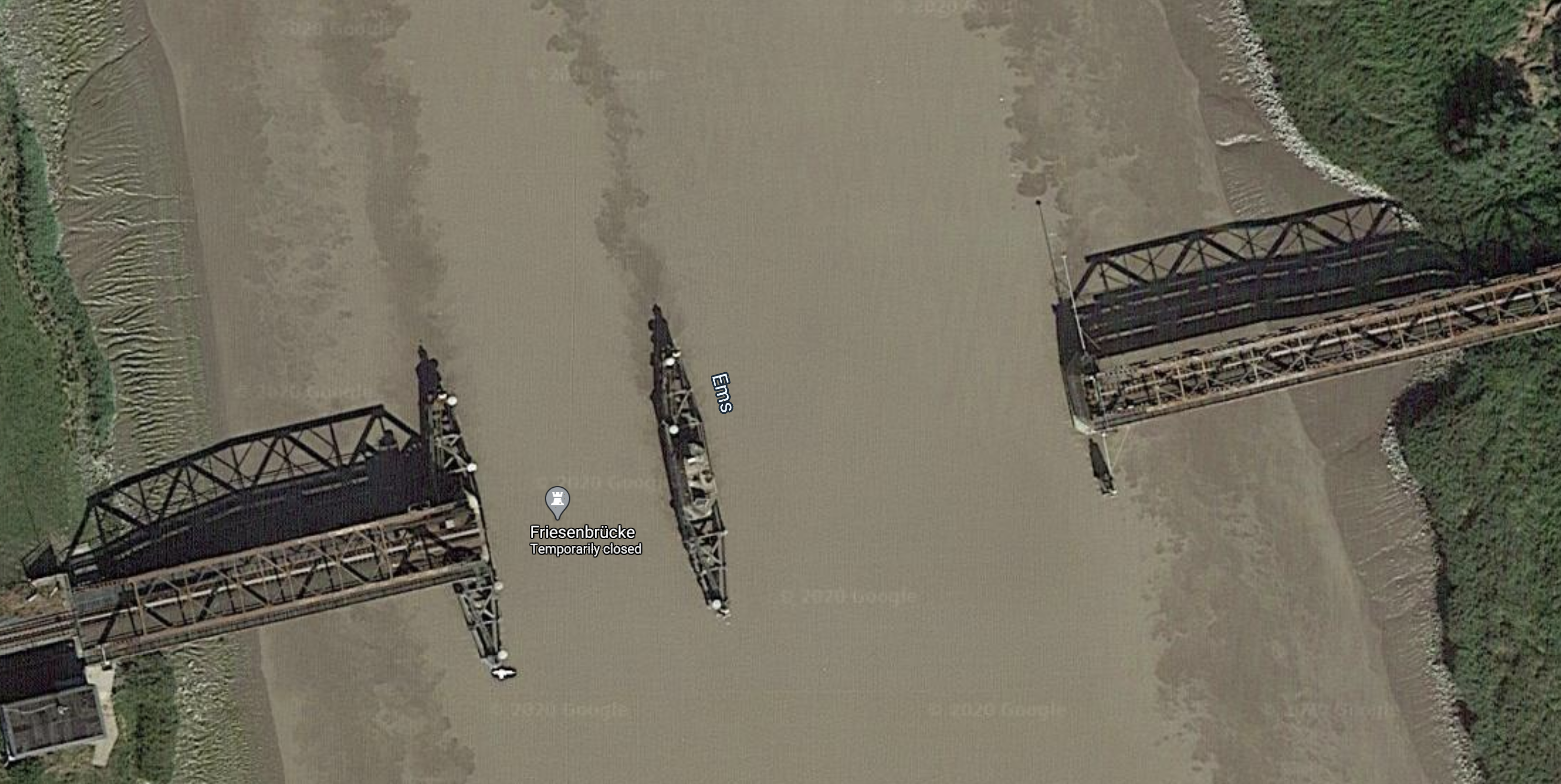
I’m not sure of the date of the picture, but there still appears a lot of work to do.
Green Hydrogen For Scotland
The title of this post, has been taken from this press release from ITM Power, which is entitled ‘Green Hydrogen For Scotland’ To Help Reach Net Zero Targets: First Project To Deliver A 10MW Electrolyser To Glasgow Facility.
This is the introductory paragraph.
A pioneering Strategic partnership has been established to create new green hydrogen production facilities with clusters of refuelling stations across Scotland, supporting the country’s efforts to achieve net zero by 2045. ‘Green Hydrogen for Scotland’ – a partnership of ScottishPower Renewables, BOC (a Linde company) and ITM Power – brings together industry-leading names in the renewables and clean fuel industries to offer an end-to-end market solution for reducing vehicle emissions through the provision of green hydrogen.
Other details include.
- The green hydrogen production facility located on the outskirts of Glasgow will be operated by BOC.
- ITM Power will deliver a 10 MW electrolyser.
- Electricity will come from , wind and solar produced by ScottishPower Renewables.
- The project aims to supply hydrogen to the commercial market within the next two years.
This ITM Power infographic outlines Green Hydrogen for Scotland.
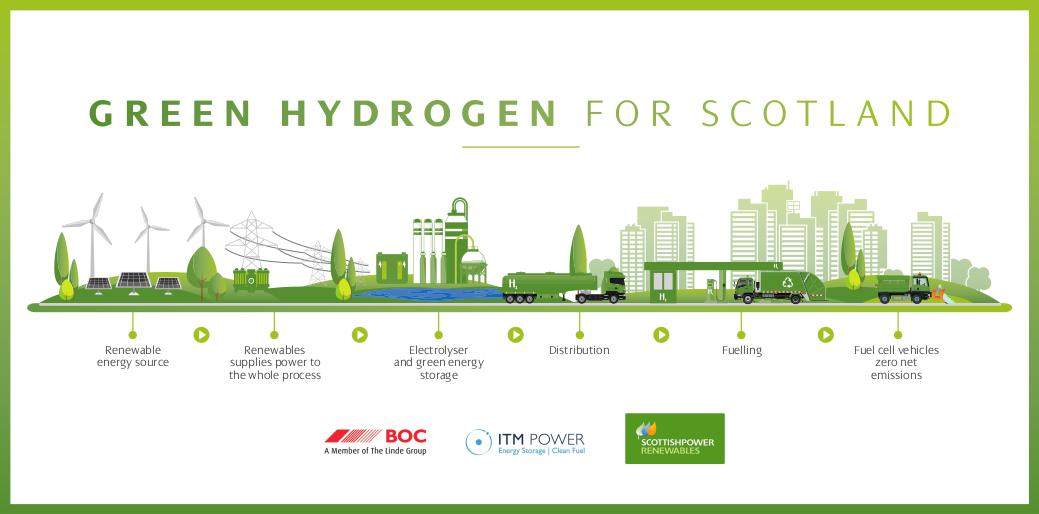
Surely it should be called tartan hydrogen. Does anybody know a tartan containing the blue of Scotland, the white of Yorkshire and the black, red and gold of Germany?
The Weekend Read: Hydrogen And The Energy Transition
The title of this post, is the same as that of this article on pv Magazine.
This is the introductory paragraph.
Researchers are now simulating how the energy transition can be as successful and cost-effective as possible. As part of the simulation, they are also calculating how much hydrogen will be needed and where it could come from. In Germany, a recent study by Fraunhofer ISE showed that the cost is so low that the nation could gift itself the energy transition as a Christmas present.
The last sentence is a very powerful statement.
The article makes these and many other points.
- Hydrogen is ideal to produce process heat about five hundred degrees centigrade.
- Hydrogen can be used to power some cars, trucks, trains, ships, and aircraft
- In Germany ten million cars could be powered by hydrogen, as opposed to forty million by batteries.
- Consumer choice will play a big part in how much hydrogen is needed.
It is very much a must-read article.
 The Anonymous Widower