Scotland To Get New Intercity Fleet
The title of this post is the same as that of this press release from Transport Scotland.
These eight paragraphs make up the body of the press release.
The Scottish Government announced today that procurement will begin to replace the trains in its Intercity fleet.
The procurement will seek a replacement for the High Speed Train (HST) fleet of 25 trains which operates on its InterCity routes between Glasgow, Edinburgh, Aberdeen, and Inverness.
Cabinet Secretary for Transport, Fiona Hyslop said:
“Resilient, reliable ScotRail services are key to encouraging more people to choose to travel by train for work, leisure and learning.
“Over 4 million passengers travelled on InterCity trains between our key cities in the last year – we want to encourage even more people to do so. This procurement will enable us to replace the current Intercity fleet with trains which provide improved facilities and accessibility.
“Any replacement fleet is expected to be more energy efficient and therefore will significantly reduce emissions, reduce operating costs and be more in line with current passenger expectations, including for accessibility. The procurement process ensures Scottish suppliers will be able to offer to provide their services to potential bidders.
“This latest milestone in our rolling programme of decarbonisation will ensure the reliability of our Intercity routes for the long-term, making Scotland’s railway a more attractive and greener travel choice.”
Further details on this announcement will be shared when the contract is awarded in 2025. It is also expected that the refreshed Decarbonisation Action Plan will be published in Spring 2025, and this will detail updated targets for replacing ScotRail’s existing diesel fleets.
It is a press release full of good intentions, but very few facts.
Is this what Scots get from their political party?
I have a few questions.
Will The Trains Be Built In The UK?
This must surely give some advantages, but will it get the best trains at the best price?
What Will Be The Number And Capacity Of The Trains?
Transport Scotland could go for a like for like number and capacity replacement.
- But there have been capacity problems in Scotland, which have meant using diesel Class 153 trains as baggage cars.
- They might also want to add extra services.
- Will they replace the train lost at Stonehaven?
They could add a few options.
Other Companies May Need Similar Trains
Consider.
- GWR will need to replace their similar Castles.
- CrossCountry will need new trains.
- Grand Central will need new trains.
- South Western Railway may need new trains for services between Cardiff and Devon.
- Transport for Wales may need new trains.
Hull Trains and Lumo have recently ordered a selection of new Hitachi Class 802 and 803 trains, which I wrote about in Fourteen New Trains To Drive First Rail Open Access Growth.
I can see an argument for buying more Hitachi Class 80x trains, as it will surely save Great British Railways costs in the long time.
Should The New Trains Be A Forever Solution?
When British Rail electrified to Brighton, Crewe, Edinburgh, Glasgow, Leeds, Liverpool, Manchester, Newcastle, Norwich, Portsmouth, Southampton, Weymouth and many other places from London, they saw it as a mode of traction, that would be used forever.
As the trains wore out or got outdated, they would be replaced with trains, which at least could run using the same mode of traction.
Generally, on electrified routes, when British Rail’s electric trains have been replaced, they have been replaced by more modern new electric trains.
The one major exception was on the East Coast Main Line where some InterCity 225 trains were replaced with Hitachi Class 800 and Class 802 diesel bi-mode trains.
But as the Class 800 and Class 802 diesel bi-mode trains were also replacing InterCity125 trains, they were a pragmatic replacement.
The Hitachi trains can be considered a Forever Solution, as bi-mode trains will always be able to work some routes that will never get electrified.
But Hitachi are developing the successor to their diesel bi-mode train, which is the tri-mode train, capable of running on electrification, diesel or battery power.
- Diesel power-packs can be swapped for battery packs.
- The battery packs have the same weight and power as a diesel power-pack.
- Existing diesel bi-mode trains can be converted to tri-mode or battery-electric bi-mode trains.
- A range of over forty miles on a single battery pack has been demonstrated.
Could Hitachi tri-mode trains be The replacements for the Inter7City trains?
Will Some Trains Have A Battery Electric Capability?
I very much believe so, as some routes in Scotland could be decarbonised by battery-electric trains.
What Top Speed Would The Trains Have?
Most of the routes in Scotland, where new modern quality rolling stock is needed, has a top speed of less than 100 mph, but in places the top speed is 125 mph.
I suspect, if trains can run at 125 mph in the places, where it is allowed, could probably save a few minutes on journey times.
Take the Borders Railway.
- The electrification runs out at Brunstane. Batteries would be charged between Edinburgh and Brunstane using the existing electrification.
- To go from Brunstane to Tweedbank and return to Brunstane is 63 miles.
- To work the Borders Railway would need a battery range of 63 miles.
I suspect every route in Scotland could have an electrification strategy for use with battery-electric trains. Some of which would have short lengths of extra electrification.
What Lengths Would The Trains Be?
In my example I used the Borders Railway.
A typical service is run by a three-car Class 170 train or two such trains running as a pair.
Perhaps, a single four- or five-car train could work the service all day and still provide enough capacity?
Conclusion
I believe, that Scotrail services could be electrified line-by-line.
Some lines would need more or longer trains and an update to the electrification.
Extending The Elizabeth Line – Adding Ladbroke Grove Station To The Elizabeth Line
There is a Wikipedia entry for Ladbroke Grove railway station, which starts with this paragraph.
Ladbroke Grove is a proposed railway station in London, England on the Crossrail Route between Old Oak Common and Paddington. This is not part of the internal route and would be added at a later stage. Locals want the station to be called Portobello Central to serve the nearby Portobello Market. It was originally called Kensal.
The Wikipedia entry also gives these details of two proposals for a Ladbroke Grove station on the Elizabeth Line.
Kensington and Chelsea Council has been pushing for a station at North Kensington / Kensal, just to the east of the Old Oak Common railway station site, off Ladbroke Grove and Canal Way, as a turn-back facility will have to be built in the area anyway. Siting it at Kensal Rise, rather than next to Paddington itself, would provide a new station to regenerate the area. Amongst the general public there is a huge amount of support for the project and then-mayor of London Boris Johnson stated that a station would be added if it did not increase Crossrail’s overall cost; in response, Kensington and Chelsea Council agreed to underwrite the projected £33 million cost of a Crossrail station, which was received very well by the residents of the borough. Transport for London (TfL) is conducting a feasibility study on the station and the project is backed by National Grid, retailers Sainsbury’s and Cath Kidston, and Jenny Jones (Green Party member of the London Assembly).
The plans were resurrected by Boris Johnson in 2016.
In March 2017, it was announced that TfL was considering a Crossrail station in Kensal Green, on the site of a former gasworks, and it would be between Old Oak Common and Paddington.
This map from cartometro.com shows the railway lines to the West of Paddington.
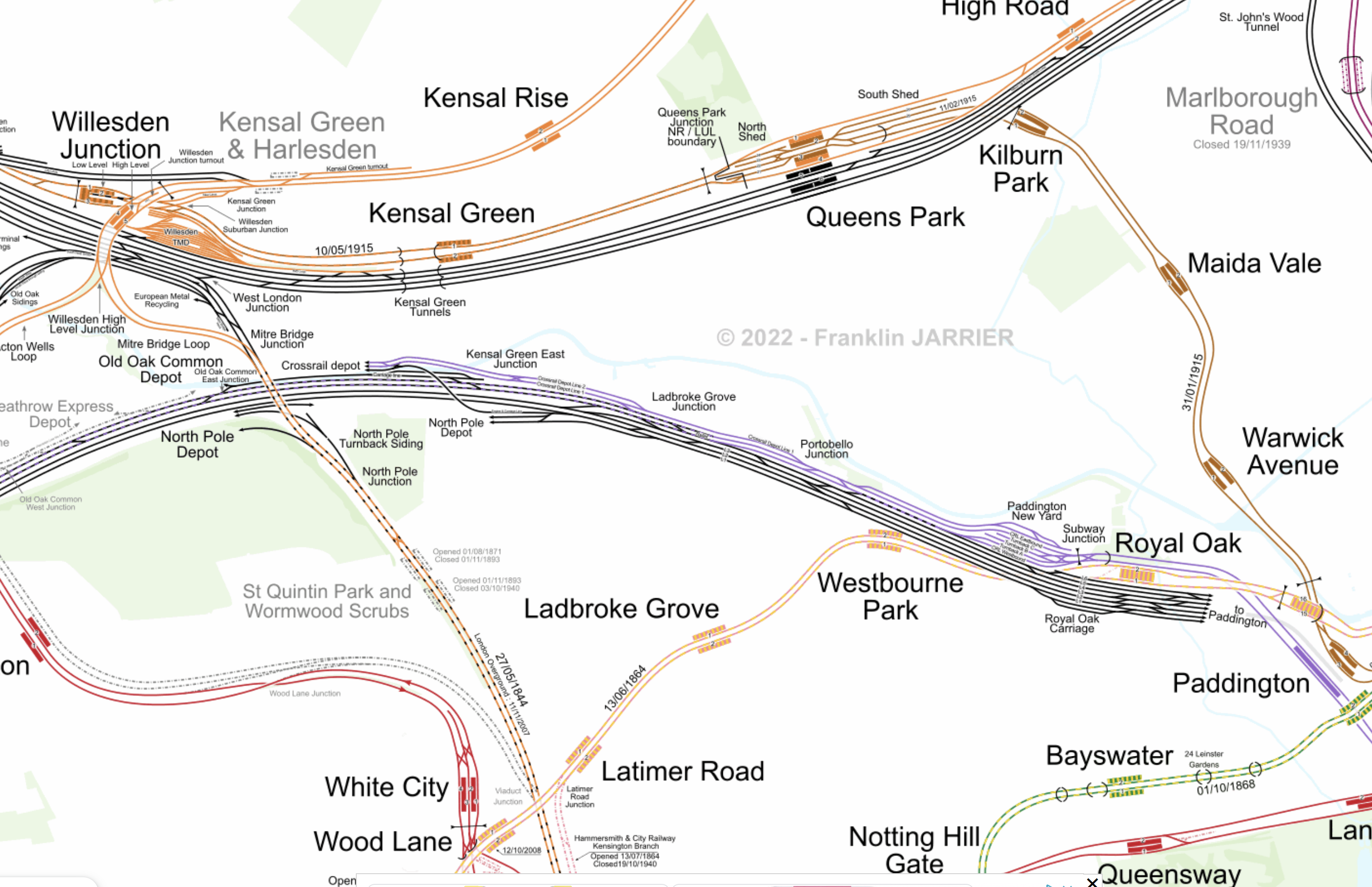
Note.
- The Elizabeth Line is shown in purple.
- Ladbroke Grove rube station is not close to the Elizabeth Line.
- Kensal Green tube station is not close to the Elizabeth Line.
But we do know this about the future Old Oak Common station.
- It will be served by Elizabeth Line services between Central London and Heathrow Airport.
- It will be served by High Speed Two services between London Euston and the North of England and Scotland.
- It will be served by Great Western services between London Paddington and the West of England and Wales.
- It will be served by North London Line services betweeen Stratford and Richmond.
- It will be served by Heathrow Express services between London Paddington and Heathrow Airport.
From the map, it looks unlikely that the Hammersmith & City Line will be able to serve Old Oak Common station.
However, it might be possible that Euston and Old Oak Common could be served by Watford DC Line services, which called at either Old Oak Common or Kensal Greeen.
A link between Euston and Old Oak Common, would give all stations on the line access to High Speed Two and Heathrow with a change at Old Oak Common.
Some Euston suburban services could stop at Old Oak Common for access to High Speed Two and Heathrow.
The Watford DC Line which is very self-contained could become a comprehensive feeder line for High Speed Two and Heathrow.
Kensal Green Station
I took a trip to Kensal Green station and took these pictures.
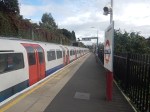
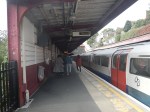

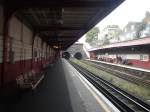
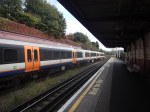
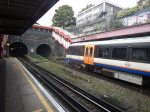
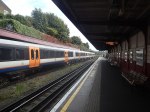
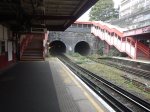
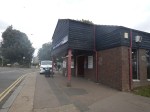
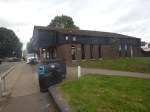


Note.
The station handles two heights of trains on single-height platforms.
Some of the stairs are not the best.
There is no step-free access.
There are six lines through the station and there may be scope for more platforms.
If ever there was a station that needed a makeover it is Kensal Green.
Conclusion
I doubt that the Hammersmith & City Line could be connected to the Elizabeth Line to the West of Paddingt9n.
But I do feel that the Watford DC Line could be developed into a comprehensive link between Euston and Old Oak Common satiations.
Innotrans 2024: Rolls-Royce Shows mtu Solutions For On-Track Energy Transition And Celebrates 100 years Of Rail Engine Business
The title of this post, is the same as that of this press release from Rolls-Royce.
These four bullet points, act as sub-headings.
- All mtu engine series for locomotives and railcars approved for sustainable fuels
- DB, RDC Autozug Sylt, Trenitalia and České dráhy use or test HVO
- Rolls-Royce celebrates 100 years of success with mtu rail drives
- More than 250 rail customers worldwide value the performance, compact design and low exhaust emissions of mtu systems
These are the first two paragraphs.
Rolls-Royce will be presenting its mtu-brand propulsion and service solutions at the international rail exhibition Innotrans in Berlin from September 24 to 27, 2024 in Hall 18, Booth 500. The company will be celebrating an anniversary at the same time: for 100 years, mtu products have been powering trains, including mainline and multi-purpose locomotives, high-speed trains and local transport railcars. On display will be sustainable propulsion solutions such as the mtu Series 4000 and 1600 engines for locomotives and the underfloor drive systems mtu PowerPacks for railcars, all of which are now released for sustainable fuels such as HVO. Rolls-Royce will also be presenting its repower and reman solutions.
100 years ago, Karl Maybach laid the foundation for the rail drive systems of today’s mtu brand with the world’s first high-speed diesel engine for railcars, the Maybach G 4a. Maybach also developed the GO 5 engine for the “Fliegender Hamburger” express train.
These are my thoughts.
Chiltern Railways Could Go Carbon-Neutral By Using HVO
In Vegetable Oil Fuelling Chiltern Railways Trains In UK First, I described how Chiltern Railways are running their Class 68 locomotives on HVO.
This move by Rolls-Royce mtu will allow all Chiltern’s Class 168 trains to be run on sustainable HVO, as they have Rolls-Royce mtu diesel engines.
Chiltern Railways Class 168 train fleet is as follows.
- 10 x 4-car
- 9 x 3-car
- 9 x 2-car
This will still leave Chiltern Railways Class 165 train fleet to be converted to sustainable fuel.
- 28 x 2-car
- 11 x 3-car
Note.
- There are 75 of these trains in service with Chiltern Railways and Great Western Railway.
- They are fitted with Perkins engines.
- Perkins engines are now owned by Caterpillar, who built the engines for the Class 68 locomotives.
As Caterpillar have the sustainable diesel technology, could they convert the Class 165 trains to HVO?
Cummins And HVO
Although this post is mainly about Rolls-Royce mtu, it would be convenient to put in this section about Cummins and how their diesel engines run on HVO.
The UK train fleet contains the following trains with Cummins engines.
- 10 x Class 175 train x 2-car
- 16 x Class 175 trains x 3-car
- 14 x Class 180 trains x 5-car
- 34 x Class 220 trains x 4-car
- 23 x Class 221 trains x 5-car
- 4 x Class 221 trains x 4-car
- 4 x Class 222 trains x 7-car
- 23 x Class 222 trains x 5-car
Cummins says this about their engines and HVO.
Cummins approves use of HVO fuel in all high-horsepower engines
(19L-95L), including the QSK19, K19, QSK23, QST30, QSK38, K38, QSK45,
QSK50, K50, QSK60, QSK78, QSK95, V903 and ACE for all industrial
markets. No engine modifications are required; engines currently in the
field can be used with HVO at any percentage.
It would appear that all trains with Cummins engines can be converted to run on HVO.
CAF And HVO
Class 195, 196 and 197 trains all have Rolls-Royce mtu diesel engines, so they will be able to run on HVO.
Hitachi And HVO
Class 800, 1801, 802, 805 and 810 trains all have Rolls-Royce mtu diesel engines, so they will be able to run on HVO.
Conclusion
If all diesel engines are to be converted to HVO, there is going to be a lot of HVO needed in the UK.
But many train fleets will be carbon-neutral.
Refurbished Class 165 Trains
I have collected these pictures over the last couple of days of the recently refurbished Class 165 trains.
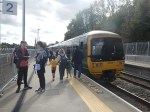

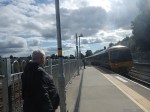
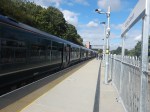
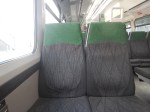
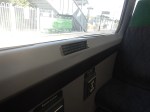
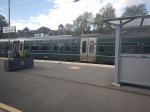
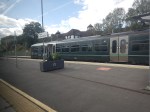
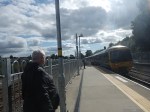
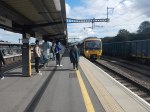

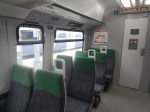

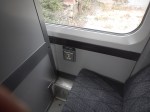
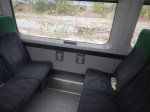
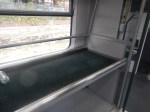
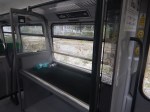
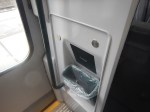
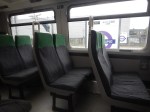
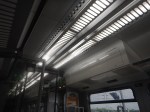
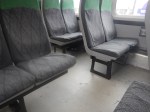


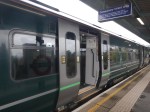


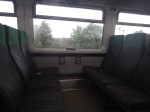


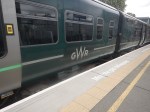
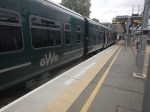

Note.
- The copious luggage space for holidaymakers and schoolchildren.
- The large number of quality charging points.
- The good quality painting and decorating.
- Lots of useful accessories like litter bins.
- I found the seats reasonably comfortable.
They certainly haven’t scrubbed up like a thirty-year old train.
Why The Elizabeth Line Must Be Extended To Ebbsfleet International
There are various plans to link the Elizabeth Line to Ebbsfleet International.
In Elizabeth Line To Ebbsfleet Extension Could Cost £3.2 Billion, I showed this map from the Abbeywood2Ebbsfleet consultation.
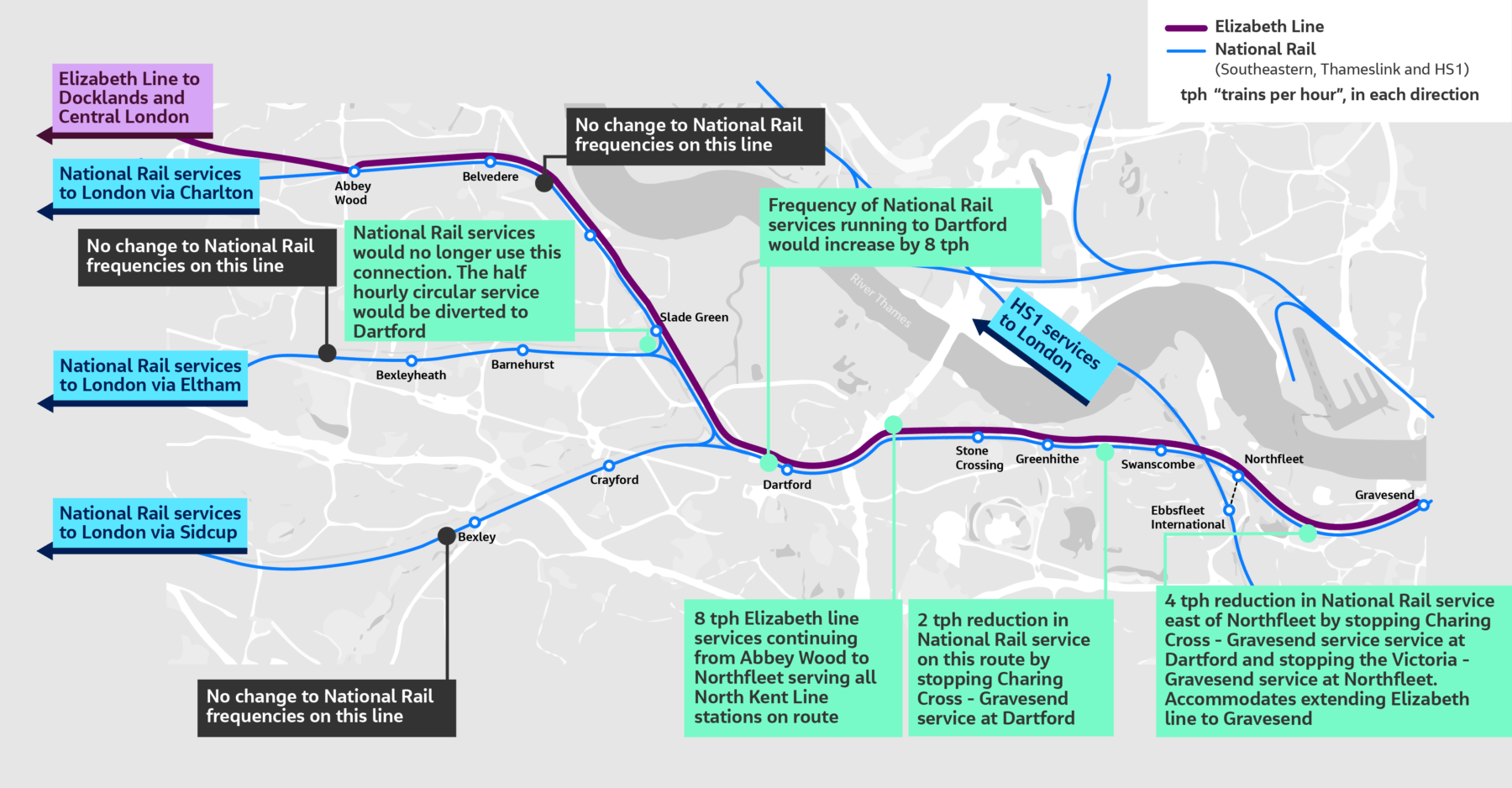
There doesn’t appear to be too much new infrastructure, except for a proper connection between Northfleet and Ebbsfleet stations. References on the Internet, say that the similar-sized Luton DART connection at Luton Airport, cost around £225 million.
The Elizabeth Line connects to the following.
- Bond Street
- Canary Wharf
- City of London
- Farringdon for Thameslink
- Heathrow Airport
- Old Oak Common for High Speed Two
- Liverpool Street station
- Oxford Street
- Paddington station
- Slough for Windsor
- Tottenham Court Road for the British Museum, Oxford Street, Soho, Theatreland and the Underground.
- West End of London
- Whitechapel for the Overground and Underground
For many people like me, the Elizabeth Line at Ebbsfleet will provide one of the quickest ways to get to and from European trains.
High Speed Two Services
This diagram shows High Speed Two services, as they were originally envisaged before Phase 2 was discontinued.
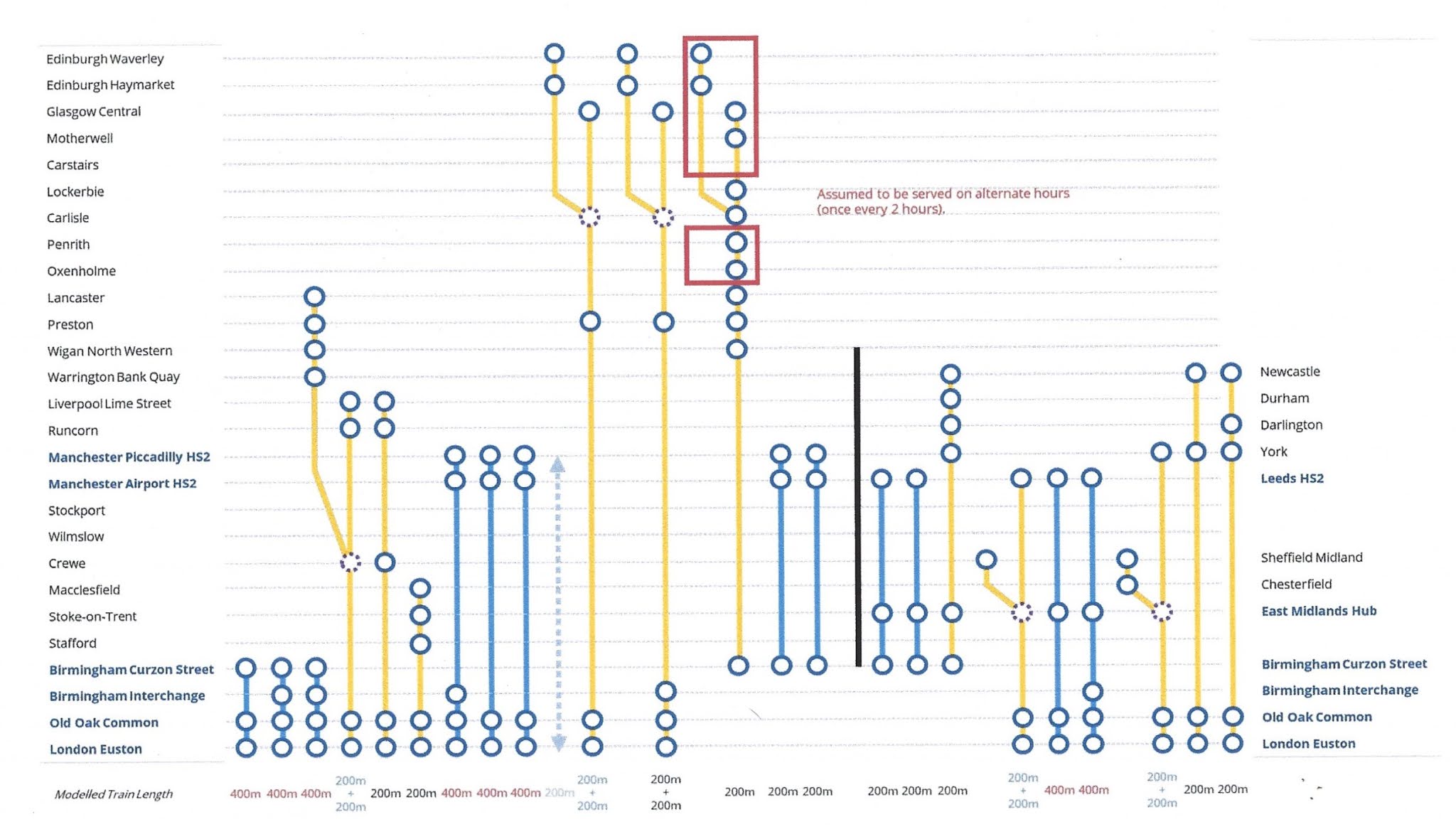
Note.
- Trains to the left of the vertical black line are Phase 1 and those to the right are Phase 2.
- Full-Size trains are shown in blue.
- Classic-Compatible trains are shown in yellow.
- The dotted circles are where trains split and join.
- In the red boxes routes alternate every hour.
- Was Lancaster chosen as it’s close to the new Eden Project Morecambe?
Click on the diagram to enlarge it.
Destinations served by the current foreshortened High Speed Two or High Speed Two Lite will be.
- Birmingham Curzon Street
- Birmingham Interchange
- Carlisle
- Carstairs
- Crewe
- Edinburgh Haymarket
- Edinburgh Waverley
- Glasgow Central
- Lancaster
- Liverpool Lime Street
- Lockerbie
- Macclesfield
- Manchester Airport
- Manchester Piccadilly
- Motherwell
- Oxenholme
- Penrith
- Preston
- Runcorn
- Stafford
- Srockport
- Stoke-on-Trent
- Warrington Bank Quay
- Wigan North Western
- Wilmslow
That is twenty-five stations.
I would add these extra stations.
- Bangor
- Blackpool
- Chester
- Holyhead
- Llandudno Junction
- Wrexham
Note.
- These extra six stations would make High Speed Two, a line for more of the people.
- Because the Eastern leg is cancelled, the paths that would have served that leg can be used to provide services for the West of the country.
The East of the country could be served by updating the East Coast Main Line.
The Development Of Eurostar
Consider.
- Eurostar and Thalys have now merged and I can see them providing extra direct services between London and Europe.
- Bordeaux, Cologne, Frankfurt and Geneva have been mentioned as possible destinations.
- Most of the new destinations, will be served by extending current services from Amsterdam, Brussels and Paris appropriately.
But to cope with the extra numbers of passengers, there will have to be extra passenger capacity at St. Pancras and/or Ebbsfleet International.
High Speed Two And Continental Services
Currently, if you want to go from the North of England or Scotland to the Continent, you do one of the following.
- Take a train to King’s Cross and walk across to St. Pancras International.
- Take a train to St. Pancras and walk to the International section of the station.
- Take a train to Euston and walk or take a bus, taxi or Underground to St. Pancras International.
Note.
- Passengers from North Wales take the Euston route.
- Some passengers will take an Elizabeth Line train to Farringdon and then take Thameslink to St. Pancras International.
- Passengers arriving at Paddington on Heathrow Express will probably take a taxi to St. Pancras International.
- Passengers arriving at Paddington on a budget will probably take the Underground to St. Pancras International.
For Londoners and those travellers, who know London well, the routes to St. Pancras International, are not to bad but they could be better.
If the current foreshortened High Speed Two or High Speed Two Lite finishes at Old Oak Common station, passengers will have to use the following routes for their onward journey.
- Elizabeth Line
- Great Western Railway – local services.
- Heathrow Express
- North London Line of the London Overground, or whatever the Mayor at the time calls it.
If the full High Speed Two or High Speed Two Lite finishes at Euston station, passengers will have to use the following routes for their onward journey.
- Avanti West Coast
- Circle, Hammersmith & City and Metropolitan Lines
- London North Western – local services
- Northern Line
- Victoria Line
- Watford DC Line of the London Overground, or whatever the Mayor at the time calls it.
These routes will be in addition to those at Old Oak Common station.
There will be two routes between High Speed Two and St. Pancras International station.
- Passengers arriving at Old Oak Common will take an Elizabeth Line train to Farringdon and then take Thameslink to St. Pancras International.
- Passengers arriving at Euston will walk or take a bus, taxi or Underground to St. Pancras International.
I am not sure that either route will have enough capacity, if High Speed Two attracts a large number of passengers.
Extend High Speed Two To Euston
I believe that this is essential, as it improves the connectivity greatly, at the bottom end of High Speed Two, as several Underground Lines will be connected to High Speed Two.
Extend The Elizabeth Line from Old Oak Common To Ebbsfleet International
I believe this too is essential, as it gives the North of England and Scotland, the connection to the Continent that they need.
There could be cross-platform connections at both Old Oak Common and Ebbsfleet International between the Elizabeth Line and the high speed lines.
Conclusion
Politicians should stop the dithering and act to give the UK, the rail connection it needs up and down the country and to the Continent.
Are Scotrail Going To Replace The Inter7City Trains With Hydrogen-Powered Trains?
This article in The Times is entitled The Caley Is Ready To Roll With New Venture Building Trains.
I feel that this is one of the most significant paragraphs in the article.
ScotRail has indicated that it wants to replace nearly two thirds of its fleet with new, low-carbon rolling stock between 2027 and 2035, comprising about 675 carriages in total, with an initial core order of 64 four and five-car units. A spokesman confirmed: “We are working on a business case that will go to the Scottish government for the procurement of a new suburban train fleet.”
The current Scotrail fleet includes.
- 25 Inter7City trains which comprise 52 Class 43 power cars and 120 Mark 3 carriages – Diesel – 120 cars – 1975
- 5 Class 153 trains – Diesel – 5 cars – 1987
- 42 Class 156 trains – Diesel – 84 cars – 1987
- 40 Class 158 trains – Diesel – 80 cars – 1987
- 30 Class 170 trains – Diesel – 90 cars – 1998
- 21 Class 318 trains – Electric – 63 cars – 1985
- 34 Class 320 trains – Electric – 66 cars – 1990
- 40 Class 334 trains – Electric – 120 cars – 1999
- 38 Class 380 trains – Electric – 140 cars – 2009
- 70 Class 385 trains – Electric – 234 cars – 2015
Note the last three fields are the traction type, total number of cars and the build year of the first train.
I will split these trains into four groups.
- Inter7City – Diesel – 25 trains – 120 cars
- BR Diesel – Diesel – 117 trains – 259 cars
- BR Electric – Electric – 55 trains – 129 cars
- Modern Electric – Electric – 148 trains – 494 cars
Note.
- This is a grand total of 345 trains and 1002 cars.
- Ignoring the modern electric trains and the total is 197 trains and 508 cars.
- The total for diesel trains is 142 trains and 359 cars.
- As Great Western Railway have withdrawn their similar GWR Castles, there must be reasons for Scotrail to do the same.
I will now look at replacement strategies, based on this statement from Scotrail.
ScotRail has indicated that it wants to replace nearly two thirds of its fleet with new, low-carbon rolling stock between 2027 and 2035, comprising about 675 carriages in total, with an initial core order of 64 four and five-car units.
I would expect 675 carriages would be about 232 trains, if the current average train length of just under three cars is carried over.
The Effect Of 675 New Carriages
Assuming that no modern electric trains were replaced, this would create a fleet size of at least 1169 carriages.
This would be a sixteen percent increase in carriages, which would be welcome news for some rail users.
The Initial Core Order Of 64 Four And Five-Car Units
All we know of this order, is the number of trains and that they will be new and low-carbon, according to indications from Scotrail.
Low-carbon would mean one of these traction options.
- Electric trains with full electrification.
- Battery-electric trains with partial-electrification.
- Hydrogen-powered trains.
Note.
- The heritage Taliban would object violently to full electrification of some historic routes.
- UNESCO would probably remove the World Heritable Site status to the Forth Bridge if it were to be electrified.
- Scotland is developing a hydrogen infrastructure.
- Hydrogen-powered trains have long ranges in the order of a thousand kilometres.
- Hydrogen-powered trains are essentially electric trains with a hydrogen fuel-cell to provide electricity as needed.
- Hydrogen-powered trains would need very little new infrastructure, except for a network of refuelling points across Scotland.
- Well-designed battery-electric and hydrogen-electric trains, should be very quiet and comfortable for passengers.
As an engineer, I would choose hydrogen-power for the initial core order.
Where would the initial core order be deployed?
Twenty-five would be used to replace the carbon-emitting elderly Inter7City trains.
These routes could probably handle the other forty.
- Aberdeen and Inverness
- Edinburgh/Glasgow and Aberdeen.
- Edinburgh/Glasgow and Inverness.
- Glasgow and South Western Line
- West Highland Line.
Note.
- A lot of diesel trains would be retired.
- Trains could be designed, for tourists with proper cycle spaces.
- The West Highland Line would get the five-car trains it needs.
This would be a good start.
Conclusion
It looks to me, that the Inter7City trains will be going and will be replaced by new trains.
But will Scotland take the great leap forward and power the new trains by Scottish hydrogen?
Porterbrook Acquires ‘379s’ For Lease To GTR
The title of this post, is the same as that of a small article in the April 2024 Edition of Modern Railways.
This is the first paragraph.
Porterbrook has successfully bid to acquire the fleet of 30 Class 379 Electrostar EMUs from Akiem and will lease them to Govia Thameslink railway, which will use them on Great Northern services.
Note.
- Will the Class 379 trains replace all or some of the 39 Class 387 trains currently used by Great Northern?
- The Class 379 trains are 25 KVAC overhead only trains, whereas the Class 387 trains are dual-voltage.
- If the Class 379 trains are not modified to run on 750 VDC third rail, they will be restricted to Great Northern routes.
- It may be a problem, that the Class 379 trains are only 100 mph trains, whereas the Class 387 trains are capable of 110 mph, but I suspect that the Class 379 trains can be upgraded to 110 mph.
It looks to me that it is likely that Govia Thameslink Railway will end up with thirty spare Class 387 trains.
The Wikipedia entry for the Class 387 train, says this about the differences between the two classes of Electrostar.
The Class 387 is a variation of the Class 379 with dual-voltage capability which allows units to run on 750 V DC third rail, as well as use 25 kV AC OLE.
This surely has three main ramifications for Govia Thameslink Railway.
- Third rail equipment can probably be fitted to the Class 379 train, if required.
- The Class 379 train can probably be uprated to the 110 mph of the Class 387 train.
- Retraining the drivers to use the new Class 379 trains, will not be a major exercise.
Govia Thameslink Railway will have the luxury of configuring the trains to run, the services their passengers need and want.
But Govia Thameslink Railway may have a collateral benefit.
In 2015, a Class 379 train was modified to do a trial as a battery-electric multiple unit.
This section in the Wikipedia entry for the Class 379 train, describes the trial.
During 2013, the national infrastructure owning company Network Rail announced that unit 379013 would be used as a testbed for a future Battery-Electric Multiple Unit. Following several months of conversion work and non-service testing, the unit was used to carry passengers for the first time on a Manningtree–Harwich Town service on 12 January 2015. Throughout its five-week trial period, data was gathered to assess its performance; it could reportedly operate for up to an hour on battery power alone, while charging via the pantograph took two hours.
Note.
- I feel it would be reasonable to assume, that a Class 387 train could be easily converted to battery electric operation.
- I’ve met commuters, who used the prototype every day between Harwich and Manningtree and it gave a good service.
- In an hour with stops, a typical Southern commuter service does just 35 miles.
Southern have two routes, where Class 171 diesel trains are still used.
- Ashford International and Ore – 25.4 miles
- Hurst Green Junction and Uckfield – 24.7 miles.
A battery-electric train with a range of 30 miles would surely decarbonise these routes.
- Batteries would be charged, where 750 VDC third-rail electrification is installed.
- As the Class 387 trains are dual-voltage, a short length of 25 KVAC overhead electrification, could be used to charge the train at Uckfield, if that was to be needed.
- Alternatively, the Vivarail Fast Charge system could be fitted.
A rough estimate is that ten battery-electric Class 387 trains would be needed to make Govia Thameslink Railway an all-electric railway.
- The now redundant Class 171 trains could be cascaded to someone, who needs them.
- The remaining twenty Class 387 trains could be used to replace twenty Class 377 trains, or converted to battery-electric operation and be cascaded to another operator.
Hopefully though, after all of the musical trains, there will be a reliable procedure to convert late model Electrostars into battery-electric trains.
The Definitive Battery-Electric Electrostar
It could have this specification.
- Based on a Class 377, Class 379 or Class 387 train.
- Three, four or five cars.
- I suspect the batteries would be spread around the cars.
- Dual-voltage or 25 KVAC overhead electrification only.
- Charging by 25 KVAC overhead electrification or Vivarail/GWR Fast Charge system.
Note.
- Battery range appropriate for the route.
- In GTR And Porterbrook Unveil £55 million Fleet Modernisation, I talk about an internal refurbishment of GTR’s trains.
It looks to me, that, whatever route Govia Thameslink Railway takes, there could be another twenty refurbished Class 377 or Class 387 trains, that could be available for conversion to four-car battery-electric trains.
Great Western Routes That Could Be Run By Battery-Electric Electrostars
Great Western Railway have 30 Class 387 trains, which are used on Thames Valley services around the London end of the Great Western Main Line.
Routes that could be suitable for Battery-Electric Electrostars include.
- London Paddington and Didcot Parkway – two trains per hour (tph) – 10 trains
- London Paddington and Oxford – one tph – 5 trains – 10.5 miles x 2
- London Paddington and Newbury – one tph – 5 trains
- Reading and Newbury – one tph – 2 trains
- Newbury and Bedwyn – one tph – 1 train – 13.3 miles x 2
- Reading and Basingstoke – two tph – 2 trains – 13.6 miles x 2
- Reading and Gatwick – two tph – 7 trains – 18.6 miles
Note.
- The number of trains is my rough estimate of the number, that would be needed to run each route.
- The miles is how much running would be needed on batteries.
My estimated total is 32, but there might be savings from more efficient routes. It looks like a range of around thirty miles would be sufficient.
Conclusion
It looks like after decarbonising Govia Thameslink Railway and the Thames Valley Services of Great Western Railway, there will be twenty high quality Electrostars available to decarbonise other routes.
The Bay Platform At Greenford Station
These pictures show Greenford station.

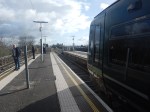

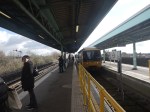
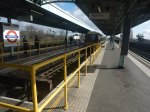
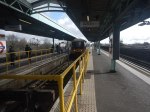
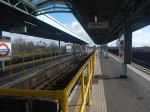
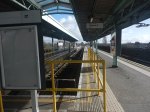
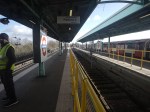
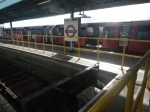
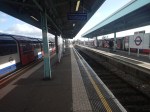
I have some observations to make.
Electrification
Tests for the new battery-electric train would appear to be taking place soon, but there is no electrification or Vivarail/GWR Fast Charge system.
This leads me to the conclusion, that all charging will be done at West Ealing station.
What Length Of Train That Can Be Accommodated In Platform 2 At Greenford Station?
Consider.
- The two-car Class 165 train shown in the pictures is 47 metres long.
- FirstGroup’s test Class 230 train appears from a GWR video, to be three-cars, which would make it 54.663 metres long.
- The test Class 230 train would appear to be nearly eight metres longer, than the current train that works the route.
From the pictures it appears that there is sufficient space in the platform to accommodate the longer train.
Great Western Railway’s Battery Train Sets New Distance Record
The title of this post, is the same as that of this press release from Great Western Railway.
This is the sub-heading.
Great Western Railway’s innovative FastCharge battery trial has achieved another significant step – just days after laying claim to a battery train UK distance record without recharging.
These two paragraphs add more detail.
The train demonstrated its capability on Wednesday by travelling a UK record of 86 miles (138km) on battery power alone and without recharging.
Today the Class 230 battery train completed a 70-mile move from Long Marston to Reading Train Care Depot – using just 45 per cent of its battery capacity. GWR’s team of specialist engineers on board the train claim it could have travelled more than 120 miles on a single charge.
There is also this impressive video.
Note.
- In the video, the train is cruising at 36 mph.
- The top speed of the D78 Stock was 45 mph.
- The train looks in excellent condition.
This is a total game-changer for battery-electric trains in the UK.
The train makers, who have demonstrated battery-electric trains; Alstom/Bombardier, CAF, Hitachi, Siemens and Stadler will have to up their distances on battery power to at least 86 miles and possibly 120 miles, as who would want their new product to be outdistanced by second-hand forty-year-old upcycled London Underground trains?
I have some further thoughts.
The Trains Performance In The Real World
Dr. Simon Green, who is GWR’s Engineering Director, said this.
It’s also worth noting that in reaching the 86 miles on Wednesday, the train was operating in a real-world environment, at speeds of up to 60mph, stopping and starting over a hilly route, with elevation changes of up to 200m.
The train exceeded the 84 miles (135km) recorded by a Stadler Class 777 under test conditions in 2022 – believed to have been the greatest distance travelled by a battery train designed for the UK.
Note that the train was running at up to 60 mph.
Timings For The Mid-Cornwall Metro
This map shows the Mid-Cornwall Metro.

I have been looking at the Mid-Cornwall Metro and this service will share the Cornish Main Line with faster services between Par and Truro.
- Expresses and the Mid-Cornwall Metro will both stop at Par, St. Austell and Truro.
- Par and Truro is a distance of 19 miles.
- Expresses between Penzance and Plymouth take around 22-23 minutes to go between Par and Truro.
- This is an average speed of around 50-52 mph.
It looks to me, that there is scope for the Mid-Cornwall Metro and the express trains to run at similar speeds between Par and Truro.
- If the Mid-Cornwall Metro used Class 230 trains running on batteries, these trains should be fast enough to keep out of the way of the expresses.
- Par station has an island platform, where the Mid-Cornwall Metro uses one side (Platform 3) and expresses use the other (Platform 2).
Perhaps, if the timetable was something like this, it would give the best services to passengers.
- All expresses would use Platform 2, if they were stopping at Par station. The current track layout allows this.
- For Westbound passengers the Mid-Cornwall Metro would stop in Platform 3 and the express would stop in Platform 2, so that passengers going to beyond Truro on the Cornish Main Line could to the express on the other platform.
- Between Par and Truro, the Mid-Cornwall Metro would run a couple of minutes behind the express.
- Passengers for the Falmouth Branch could swap trains at Par on wait for the Metro at St. Austell or Truro.
- For Eastbound passengers, between Par and Truro, the Mid-Cornwall Metro would run a couple of minutes behind the express.
- At Par, the Mid-Cornwall Metro would stop in Platform 3 and the express would stop in Platform 2.
- The express would wait at Par for the Mid-Cornwall Metro.
- Passengers for Plymouth and London Paddington would change trains at Par for the express on the other platform.
- Passengers for the Newquay Branch on the express would swap trains at Par or wait for the Metro at St. Austell or Truro.
I suspect there are other patterns, but something like this will combine express services with the Mid-Cornwall Metro.
Simon’s Vision
Simon Green also says this about his vision of how the trains and the related FastCharge technology could be used.
GWR’s FastCharge technology has been designed to solve the problem of delivering reliable, battery-only trains capable of fulfilling timetable services on branch lines, eliminating the use of diesel traction and helping to meet the Government and wider rail industry’s target to reach net-zero carbon emissions by 2050.
The use of batteries for extended operation has typically been constrained by their range and meant widespread implementation has, until now, not been possible. It also negates the need for overhead electric lines which are expensive, time consuming to install and impact the landscape.
He’s judging the system as a whole, which is the only way to do it.
Where Could Class 230 Trains Be Used On The Great Western Railway?
These are a few ideas.
- Slough and Windsor & Eton Central – 2.8 miles – 3 cars – FastCharge at Slough
- Maidenhead and Marlow – 7.1 miles – 2 or possibly 3 cars – FastCharge at Maidenhead
- Twyford and Henley-on-Thames – 4.6 miles – 3 cars – FastCharge at Twyford
- Reading and Basingstoke – 15.4 miles – 3 cars – FastCharge at Basingstoke
- Weston-super-Mare and Severn Beach – 32.5 miles – 3 cars – FastCharge at Severn Beach
- Bristol Temple Meads to Avonmouth 8.9 miles – 2 cars – FastCharge at Avonmouth
Bourne End station, where there is a reverse may restrict the length of the service to Marlow.
GWR Trialling Transformative Ultra-Rapid Charging Train Battery
The title of this post is the same as that of this article on Rail Technology Magazine.
This is the sub-heading.
Great Western Railway (GWR) has begun trialling a potentially groundbreaking battery innovation called FastCharge. If the trial is successful, it is hoped that the technology could transform branch line services and accelerate the decarbonisation of the network.
This is the first paragraph.
This innovative system, which has been developed over three years, eliminates the need for diesel trains on branch lines by powering battery-operated units with ultra-rapid charging. The system boasts an impressive 2,000kW charging capacity, eight times more powerful than a Tesla Supercharger, allowing trains to fully recharge in just 3.5 minutes at West Ealing station, the trial’s first real-world location.
I took these pictures of the trial installation at West Ealing station, this morning.


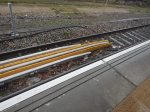

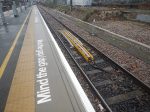
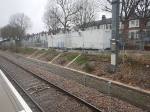
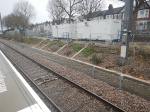
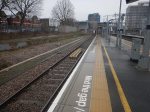
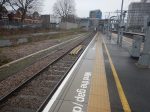
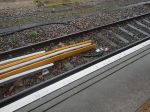
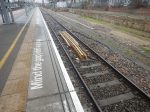
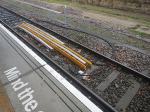
Note.
- Platform 5 is used by the trains to and from Greenford station.
- Two sets of charging rails have been installed between the rails, in Platform 5.
- The rails in the charging rails could be aluminium. This would not be surprising, as it is a good electrical conductor.
- The two shorter outside charging rails could be connected together.
- The yellow parts of the charging rails are plastic, so are probably for warning purposes.
- Two white containers have been installed alongside the track.
In Great Western Railway Updates EHRT On Its Upcoming Operational Trial Of Fast Charge Tech, I described the components of the Fast Charge system in this paragraph.
The Fast Charge system consists of three key components: retractable charging shoe gear, which is mounted to the underframe of the train; short (4m) charging rails mounted between the underframe of the train; and the Fast Charge Battery Bank (FCBB) installed beside the track, acting as an energy buffer between the train and the grid.
The charging rails are clearly visible in my images and the Fast Charge Battery Bank is probably in the white containers.
These are my thoughts.
The Engineering Is Of A High Quality
Or it certainly appears so from the platform and in the pictures, that I took.
How Much Energy Will Be Taken On Board at Each Charge At West Ealing?
According to the Rail Technology Magazine article, the Fast Charge Battery Bank will have to supply 2,000 KW for 3.5 minutes to fully-charge the train at West Ealing station.
This is 7,000 KW-minutes or 117 KWh.
In D-Train Order For Marston Vale Confirmed, this is said about the batteries on a Class 230 train.
- The train has four battery rafts, each with a capacity of 106 kWh
- Range is up to fifty miles with a ten minute charge at each end of the journey.
- Range will increase as battery technology improves.
I wonder if the Class 230 train, that will run between West Ealing and Greenford, will only have one 106 kWh battery.
- This will be less weight and therefor better acceleration.
- 117 kWh in the Fast Charge Battery Bank will be sufficient to fully-charge the single battery.
- The route is only five miles for a round trip.
I can see costs dropping.
What Batteries Will Be Used In The Fast Charge Battery Bank?
I think there are four main possibilities.
- New lithium-ion batteries
- Refurbished second-hand electric vehicle batteries
- New lead-acid batteries.
- It might be possible to use supercapacitors
Note.
- Lead-acid batteries can lose charge in cold weather.
- Supercapacitors don’t care about the weather.
- The weight of lead-acid batteries would not be a problem in a stationary application.
If there is only one battery on the train, I can see the supercapacitors handling it.
What Voltage Is Used In The Charging Rails?
Consider.
- The Vivarail Class 230 trains are built from redundant London Underground D78 Stock trains.
- The D78 Stock trains were built to run on London Underground lines, when that had voltages of 0 and 630 VDC.
- So I wouldn’t be surprised if the trains were designed around this voltage.
- If the charging rails worked at 630 VDC, then to have a 2,000kW charger, this would mean a charging current of 3175 Amps.
This would explain the fat cables connecting the charging rails to the Fast Charge Battery Bank.
An alternative voltage to use could be 3,000 VDC, as some trains are built to this voltage and therefor the electronics and transformers must be available. This would reduce the charging current to 667 Amps, which might be able to use smaller cables.
It may come down to what is convenient for the output voltage of the batteries.
Why Are There Two Sets Of Charging Rails?
They are both shown in this image.
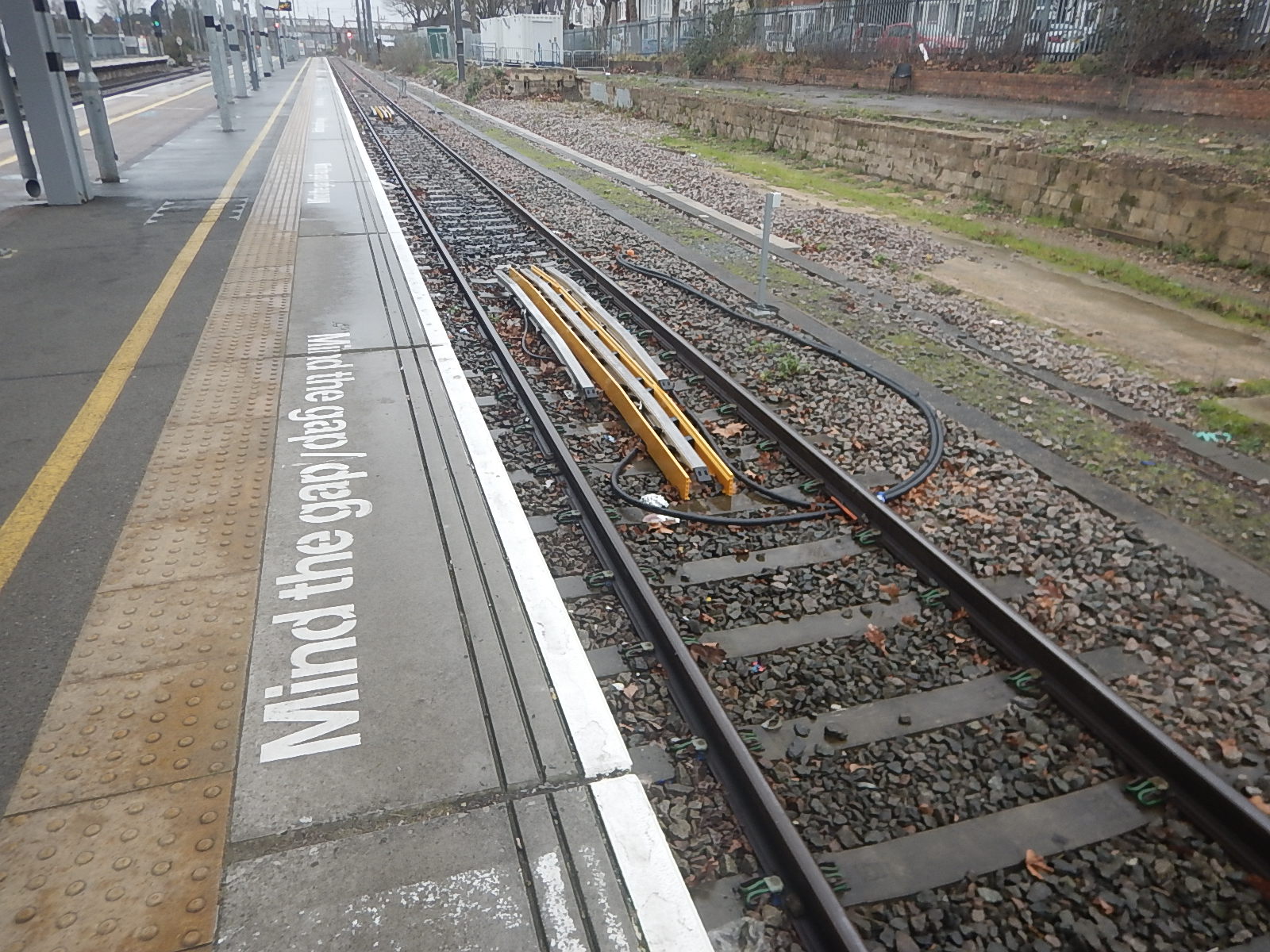
Note.
- The two sets of charging rails are about forty metres apart.
- The Fast Charge Battery Banks are another twenty metres further on.
It’s not the layout you’d expect for running a single two-car train running every half hour.
But could it be that two separate sets of charging rails can operate a more frequent service with this layout of charging rails?
 The Anonymous Widower