H2 Green Steel Raises More Than €4 billion In Debt Financing For The World’s First Large-Scale Green Steel Plant
The title of this post, is the same as that of this press release from H2 Green Steel.
This is the sub-heading.
H2 Green Steel signs definitive debt financing agreements for €4.2 billion in project financing and increases the previously announced equity raised by €300 million. Total equity funding to date amounts to €2.1 billion. The company has also been awarded a €250 million grant from the EU Innovation Fund. H2 Green Steel has now secured funding of close to €6.5 billion for the world’s first large-scale green steel plant in Northern Sweden.
These three paragraphs describe the company and outlines the financing.
H2 Green Steel is driving one of the largest climate impact initiatives globally. The company was founded in 2020 with the purpose to decarbonize hard-to-abate industries, starting by producing steel with up to 95% lower CO2 emissions than steel made with coke-fired blast furnaces. The construction of the flagship green steel plant in Boden, with integrated green hydrogen and green iron production, is well under way. The supply contracts for the hydrogen-, iron- and steel equipment are in place. A large portion of the electricity needed has been secured in long-term power purchase agreements, and half of the initial yearly volumes of 2.5 million tonnes of near zero steel have been sold in binding five- to seven-year customer agreements.
Today H2 Green Steel announces a massive milestone on its journey to accelerate the decarbonization of the steel industry, which is still one of the world’s dirtiest. The company has signed debt financing of €4.2 billion, added equity of close to €300 million and been awarded a €250 million grant from the Innovation Fund. Funding amounts to €6.5 billion in total.
H2 Green Steel has signed definitive financing documentation for €3.5 billion in senior debt and an up-to-€600 million junior debt facility:
Note.
- I first wrote about H2 Green Steel about three years ago in Green Hydrogen To Power First Zero Carbon Steel Plant.
- The Wikipedia entry for Boden in Northern Sweden, indicates it’s a coldish place to live.
- In that original post, H2 Green Steel said they needed €2.5 billion of investment, but now they’ve raised €4 billion, which is a 60 % increase in financing costs in just three years.
Is this Sweden’s HS2?
The Future Of Green Steelmaking
The finances of H2 Green Steel look distinctly marginal.
I have a feeling that green steel, as the technology now stands is an impossible dream.
But I do believe that perhaps in five or ten years, that an affordable zero carbon method of steel production will be developed.
You have to remember, Pilkington developed float glass in the 1950s and completely changed an industry. Today, we’d call that a classic example of disruptive innovation.
The same opportunity exists in steelmaking. And the rewards would be counted in billions.
Fossil-Free Steel A Giant Step In Scania’s Decarbonisation
This title of this post, is the same as that of this article on Automotive World.
This is the introductory sub-title.
“Now we are gearing up in our journey towards completely emission-free products!” This is how Scania’s Head of Purchasing Anders Williamsson sees the company’s decision to invest in and enter into a partnership with the company H2 Green Steel (H2GS).
Other points from the article include.
- Each Scania truck contains five tonnes of steel.
- Scania will have a close partnership with H2GS.
- Scania will be able to get 90 % of their steel from H2GS.
H2GS will change steelmaking, when they start production in 2024.
H2 Green Steel Plans 800 MW Hydrogen Plant In Sweden
The title of this post, is the same as that of this article on montel.
The title says it all.
In Can The UK Have A Capacity To Create Five GW Of Green Hydrogen?, I said the following.
Ryze Hydrogen are building the Herne Bay electrolyser.
- It will consume 23 MW of solar and wind power.
- It will produce ten tonnes of hydrogen per day.
The electrolyser will consume 552 MWh to produce ten tonnes of hydrogen, so creating one tonne of hydrogen needs 55.2 MWh of electricity.
This would mean that H2 Green Steel’s electrolyser could be producing around one hundred and forty thousand tonnes of hydrogen per year or 380 tonnes per day.
What About Scunthorpe?
I very much believe that Scunthorpe in Lincolnshire, would be the ideal place for hydrogen steelmaking in the UK as I outlined in Green Hydrogen To Power First Zero Carbon Steel Plant.
So could 800 MW of electricity be available to produce the hydrogen in the area.
Currently, the world’s largest offshore wind farm is Hornsea One with a capacity of 1218 MW, which feeds into the National Grid at Killingholme.
This Google Map shows the distance between Scunthorpe and Killingholme.
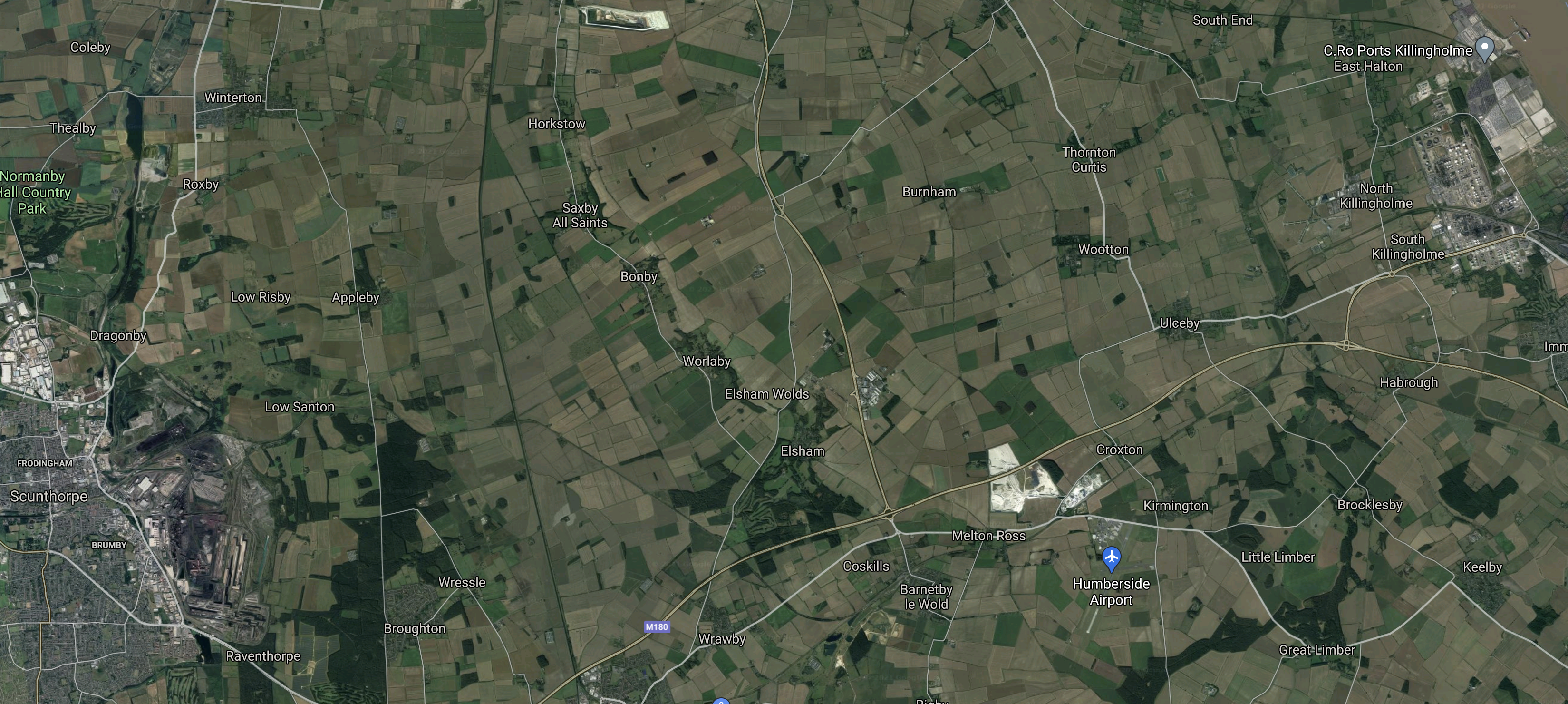
Note.
- Scunthorpe is in the South-West corner of the map.
- Killingholme is in the North-East corner of the map.
The distance is about twenty miles.
When fully developed, the Hornsea Wind Farm is planned to have a capacity of 6 GW or 6000 MW, so there should be enough renewable energy.
Could The Hydrogen Be Created Offshore?
In ITM Power and Ørsted: Wind Turbine Electrolyser Integration, I wrote about combining wind turbines and electrolysers to create an offshore wind turbine, that generates hydrogen, rather than electricity.
This approach may be ideal for the later phases of the Hornsea Wind Farm.
- Redundant gas pipes can be used to bring the hydrogen ashore.
- Worked-out offshore gas fields can be used to store hydrogen.
- Worked-out gas fields in the area, are already being used to store natural gas from Norway.
- The hydrogen can be fed directly into the HumberZero hydrogen network.
But the main reason, is that some serious commentators feel it is more affordable approach in terms of capital and maintenance costs.
It is also easy to convert hydrogen back to zero-carbon electricity, if you have a handy gas-fired power station. There could be as many of three of these at Keadby.
Conclusion
It’s all coming together on Humberside.
Anything the Swedes can do, we can do better!
Green Hydrogen To Power First Zero Carbon Steel Plant
The title of this post, is the same as that of this article on renews.biz.
This is the two introductory paragraphs.
A new industrial initiative, backed by EIT InnoEnergy, will build the world’s first large-scale steel production plant powered by green hydrogen, in north Sweden.
The H2 Green Steel industrial initiative, which will mobilise €2.5bn of investment, aims to deliver a project that will create a new green steel producer from inception.
These further points are made.
- There will be downstream steel products manufacture.
- The initiative will create 10,000 direct and indirect jobs.
- Production could start in 2024.
- Up to five million tonnes of steel could be produced by 2030.
The plant will be built in the Boden-Lulea area of Northern Sweden.
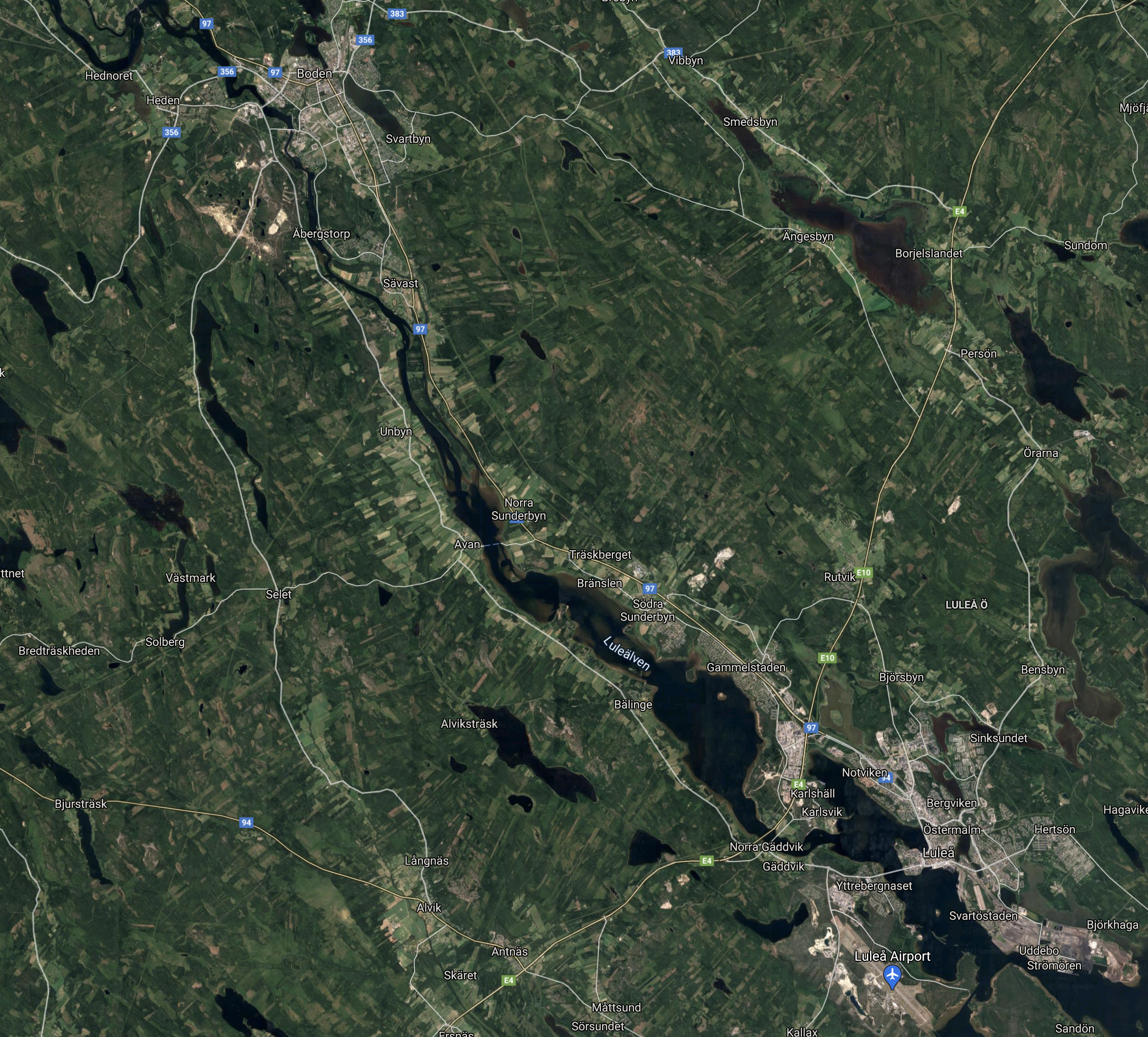
Note.
H2 Green Steel has a web site, which explains more.
What About Scunthorpe?
Surely, the obvious location for green steel production plant in the UK would be Scunthorpe.
- The HumberZero network can bring in hydrogen and take away any carbon dioxide.
- The steelworks makes world-class products like railway rails.
- It is a massive site.
- The site has good rail access.
But there don’t seem to be any plans for hydrogen steelmaking at Scunthorpe.
Conclusion
I hope we’ve not missed the boat for hydrogen steelmaking.
- We’ve certainly got the sites, the renewable energy and the hydrogen technology.
- On the other hand, I can remember sensible arguments for lots of much smaller steel plants from fifty years ago, as an alternative to nationalisation of the steel industry by the Wilson Government in 1967.
- I can also remember proposals for nuclear steelmaking.
I just wonder, if a design of hydrogen steelmaking plant could be developed, perhaps even using a small modular nuclear reactor to generate the hydrogen.
If we are going to have a steel industry in the future, we must do something radical.
 The Anonymous Widower