All Aboard The Bamford Hydrogen Bus Revolution
The title of this post, is the same as that of this article on Air Quality News.
This is the introductory paragraph.
Air Quality News editor Jamie Hailstone talks to JCB heir and hydrogen advocate, Jo Bamford, about why it is the fuel of the future for buses.
It is a good read, as Jo Bamford details his vision to change public transport with thousands of hydrogen-powered buses.
He talks in a common-sense manner, about the economics and practicalities of zero emission buses, of which this paragraph is typical.
‘I have a bus manufacturing business,’ he adds. ‘We make a diesel bus, a battery double-decker and a hydrogen double-decker. A battery double-decker will do 60% of the distance of a diesel bus and take 4.5 hours to charge. A hydrogen bus will do the same distance as a diesel bus and take seven minutes to fill up. If you are running a bus for 22 hours a day, you can’t afford to charge them up for 4.5 hours a day.
Jo Bamford finishes with.
I think hydrogen is a sexy, cool thing to be looking at.
I agree with him and we should get started on lots of hydrogen buses and their hydrogen supply network.
As I wrote in Daimler Trucks Presents Technology Strategy For Electrification – World Premiere Of Mercedes-Benz Fuel-Cell Concept Truck, Mercedes are going the hydrogen route with big trucks and these trucks will need a hydrogen supply network to be built in the UK.
So surely, we should look at decarbonisation of buses and heavy trucks in an holistic way, by creating that hydrogen supply network in the UK.
Ryze have now obtained planning permission for their first big electrolyser at Herne Bay and it now has its own web site, which includes this video, explaining Ryze Hydrogen’s philosophy.
Let’s hope that this first electrolyser, grows into the network the country needs.
Four Must-Read Articles From H2-View
I have just read these articles on H2-View.
- New partnership aims to convert Dash 8 airliner to hydrogen fuel
- 1,000 new hydrogen-powered buses planned for European roads
- Investing in hydrogen trains will put UK green recovery on the fast track
- Mercedes-Benz GenH2 Truck revealed
They are all worth a read.
The last one includes an informative video about German policy on hydrogen.
Linde And RVK Unveil New Hydrogen Station For Buses
The title of this post, is the same as that of this article on H2 View.
This is the introductory paragraphs.
Linde and regional transport company Regionalverkehr (RVK) today presented an innovative hydrogen station for fuel cell buses to the public.
With a capacity of up to 20 refills per day, the new station located near Cologne, Germany features, for the first time, a new high-pressure storage technology developed by Linde: constant pressure tubes ensure that the refuelling pressure always remains at a constant level, even as the storage tank volume decreases.
It does appear that Linde is going to be big in hydrogen, as they already are an investor in electrolyser company;ITM Power.
Solving The Problem With Electric Bus Design
The title of this post, is the same as that of this article on Electric & Hybrid Vehicle Technology International.
The article opens with this paragraph.
A number of European cities have committed to securing only zero-emission buses by 2025. However, to achieve this objective, manufacturers must make bold design choices, radically changing bus componentry, systems, and bodywork. Here, it looks at the debate for greater electric bus design standardization.
Standardisation is one thing, but the article doesn’t talk about the major problem with electric bus design – For many countries like the UK, Hong Kong, Singapore and Germany, where there are lots of double-decker or articulated high-capacity buses, battery electric buses are just not big enough.
Battery-electric buses are also generally not big enough to compete with the latest designs of tram and metro systems.
These pictures show the Chinese double-deck electric double-deck buses, that ran in London.



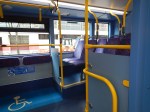


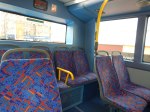
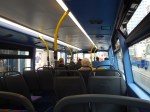
Half of the downstairs was take up by batteries.
Where are they now?
The Belgian firm; Van Hool have a product called Exquicity. This video shows them working in Pau in France.
But these buses are powered by hydrogen.
Similar buses running in Belfast are diesel-electric.
In both the Pau and Belfast applications, I wonderwhy they didn’t use trolley-bus versions of the WxquiCity or conventional trams.
Conclusion
Until we get more efficient battery storage, electric buses will have difficulty competing economically in the high-capacity bus sector.
Green Bus Maker Reveals Plan For Scottish Hydrogen Fuel Production Facility
\the title of this post, is the same as that of this article on the Herald.
Thwaw are the introductory paragraphs.
Jo Bamford, chief of Ryze Hydrogen, has revealed plans to create a hydrogen production facility in Scotland.
He said the production unit will be sited outside Glasgow and it is expected to be operational by November next year when the rescheduled COP26 climate event is due to take place in the city.
Mr Bamford earlier said Glasgow could run 300 hydrogen-powered buses, while Aberdeen is set put a fleet of hydrogen powered double deckers on the road.
You can’t fault Jo Bamford’s ambitions.
World’s First Hydrogen-Powered Double Decker Buses To Be Launched In Scotland
The title of this post, is the same as that of this article on The Herald.
This introduction says a bit more.
A fleet of hydrogen-powered double decker buses that is claimed to be the world’s first is due to be launched in Scotland later this year in what is seen as a major step forward in the use of hydrogen as a fuel.
First Aberdeen will be running fifteen hydrogen-fuelled buses.
Hamburger Hochbahn Launches Tender For 50 Hydrogen Fuel Cell Buses
The title of this post, is the same as that of this article on H2 View.
The title says it all!
But it does show how hydrogen buses are proliferating around the world.
This makes the third hydrogen or energy project from the German city, that I have detailed.
Diesel Buses To Be Phased Out Within 15 Years To Cut Greenhouse Gas Emissions
The title of this post, is the same as that of this article in The Times.
Hallelujah!
Should be heavy trucks, next!
Ryze Hydrogen-Suttons Tankers Partnership To Supply Hydrogen To Transport for London
The title of this post, is the same as that of this article on H2 View.
From reading the article, it looks like London’s new hydrogen buses will be on the road by the end of the year.
Sadly, in some ways, the hydrogen will have to be driven from Runcorn, as the Herne Bay electrolyser won’t be completed for a couple of years.
I would assume, that the hydrogen is coming from the plant where I worked around 1970, or more likely its successor.
15 More Fuel Cell Electric Buses For UK Roads
The title of this post, is the same as that of this article on H2 View.
This is the introductory paragraph.
A further 15 fuel cell electric buses (FCEBs) are planned for the UK this year, as the country works towards its goal of deploying 4,000 zero emission buses over the next five years.
These futher points are made.
The fuel cells are 85KW heavy-duty FCveloCity®-HD fuel cell modules from Ballard Power Systems.
This will take Wrightbus’s order book for hydrogen-powered buses to fifty. all of which will be delivered this year.
Twenty buses are for London and fifteen are for Aberdeen.
I have some thoughts on the 85KW heavy-duty FCveloCity®-HD Fuel Cell Module.
This pdf file on the Ballard web site is the data sheet and this is selected data.
- The net power is 85 kW
- The fuel cell weighs 256 Kg.
- It needs a coolant sub-system that weighs 44 Kg.
- It needs an air sub-system that weighs 61 Kg.
- It is a true zero-emission product.
It is worth looking at the power train of a New Routemaster bus, which although very different will probably give clues as to the weight that can be carried and the power and battery size needed for a full-size bus.
- The Cummins ISBe diesel engine develops 138 kW and weighs 499 Kg.
- The engine is mounted half-up the back stairs.
- The Microvast Lithium Titanate battery has a capacity of 18 kWh.
- The battery is placed under the front stairs.
- The braking on the New Routemaster bus is regenerative.
These are some of my observations.
- If you sit at the back of a New Routemaster bus, you can hear the engine, when it is running. On most routes in Central London, it certainly isn’t running all the time.
- The battery doesn’t seem very large at 18 kWh.
- The fuel cell with its sub-systems would appear to be lighter than the diesel engine, but of less power.
- The fuel-cell won’t need the generator of the diesel bus.
I very much feel getting all the components into a standard double-decker bus will be a tight squeeze, but none of the individual components are that large or heavy.
Conclusion
I can’t wait to have my first ride in a hydrogen-powered double-decker bus.
 The Anonymous Widower