9 Energy, House And Rail Projects Planned For Norfolk
The title of this post, is the same as that of this article on the Eastern Daily Press.
The article is a survey of major projects across Norfolk.
Projects in the article with my thoughts will now be detailed.
Railway Village
This is described as follows in the article.
Plans to build a new 5,000-home town north of Dereham could take a significant step forward in 2023.
The proposals have been dubbed a ‘railway village’ and would lie close to the Mid Norfolk Railway at North Elmham.
The 1,278-acre site has been put forward by its owners as a potential area for development included in Breckland Council’s forthcoming local plan – a document detailing how the district should grow over the next two decades.
This map from OpenRailwayMap shows North Elmham and the Mid-Norfolk Railway.
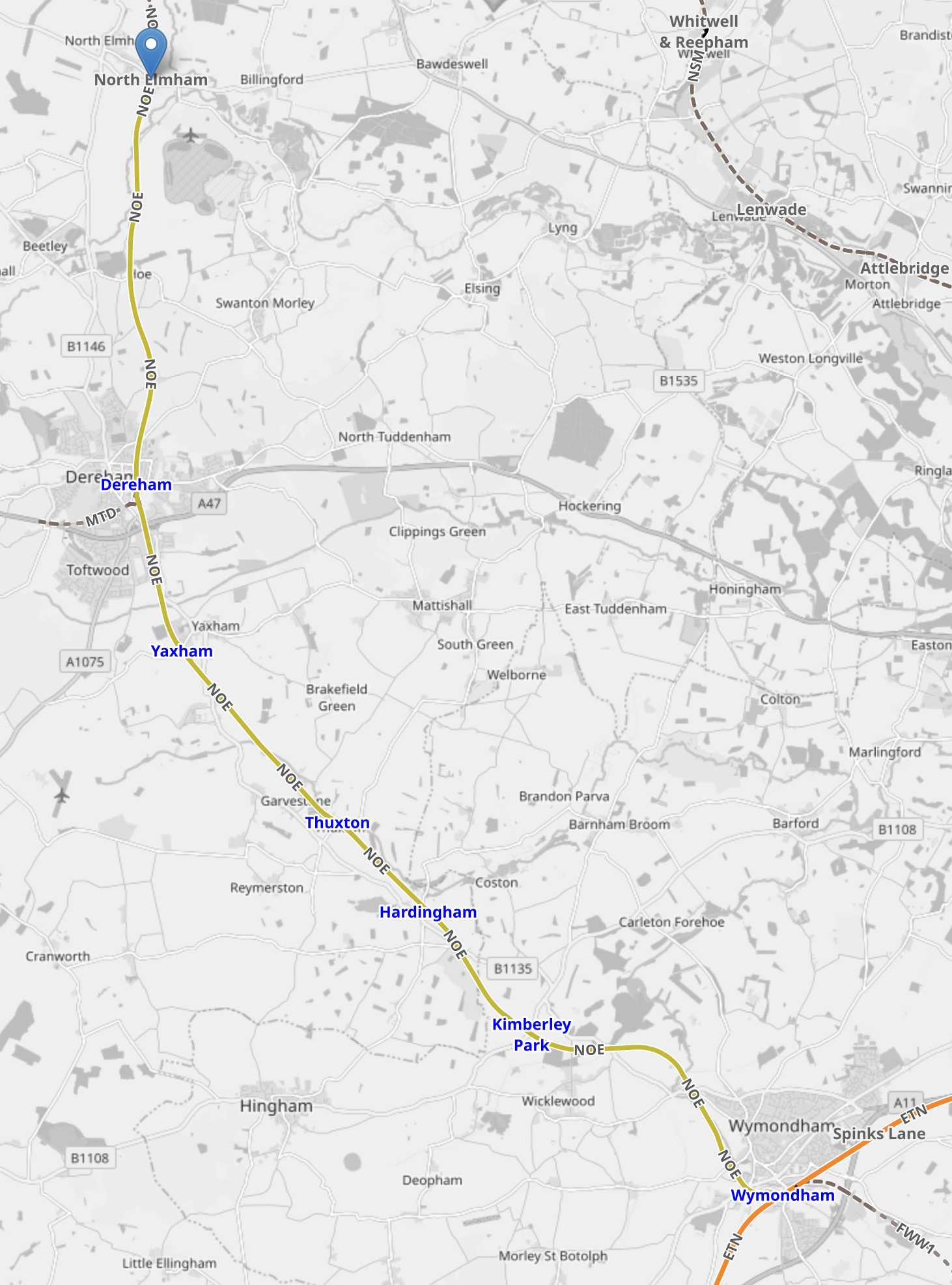
Note.
- The yellow line is the Mid-Norfolk Railway.
- The site of the former North Elmham station is shown by the blue arrow at the top of the map.
- The orange line across the South-East corner of the map is the Breckland Line between Cambridge and Norwich.
- Wymondham station is on the Breckland Line, but trains between the Mid-Norfolk Railway and Norwich would be able to call at Wymondham station.
Wymondham station could be converted into a proper connection between the Breckland Line and the Mid-Norfolk Railway, with services being run between Norwich and North Elmham via Dereham.
In the Wikipedia entry for the Mid-Norfolk Railway, there is a section, which is entitled Community Railway, where this is the first paragraph.
The Mid-Norfolk Railway was established as a multi-functional line, with an intention to operate a community service in addition to tourist and freight services. The railway has also stated their belief that a commuter service between Dereham and Norwich remains a viable proposition, with the MNR either running the service themselves or working with an existing train operator. One obstacle on the MNR to running such services is the requirement to operate five manual gated level crossings between Dereham and Wymondham, although level crossing automation is a possibility in the future.
Later the section indicates that the Mid-Norfolk Railway could be extended to Fakenham.
This map from OpenRailwayMap shows the original route between North Elmham and Fakenham.
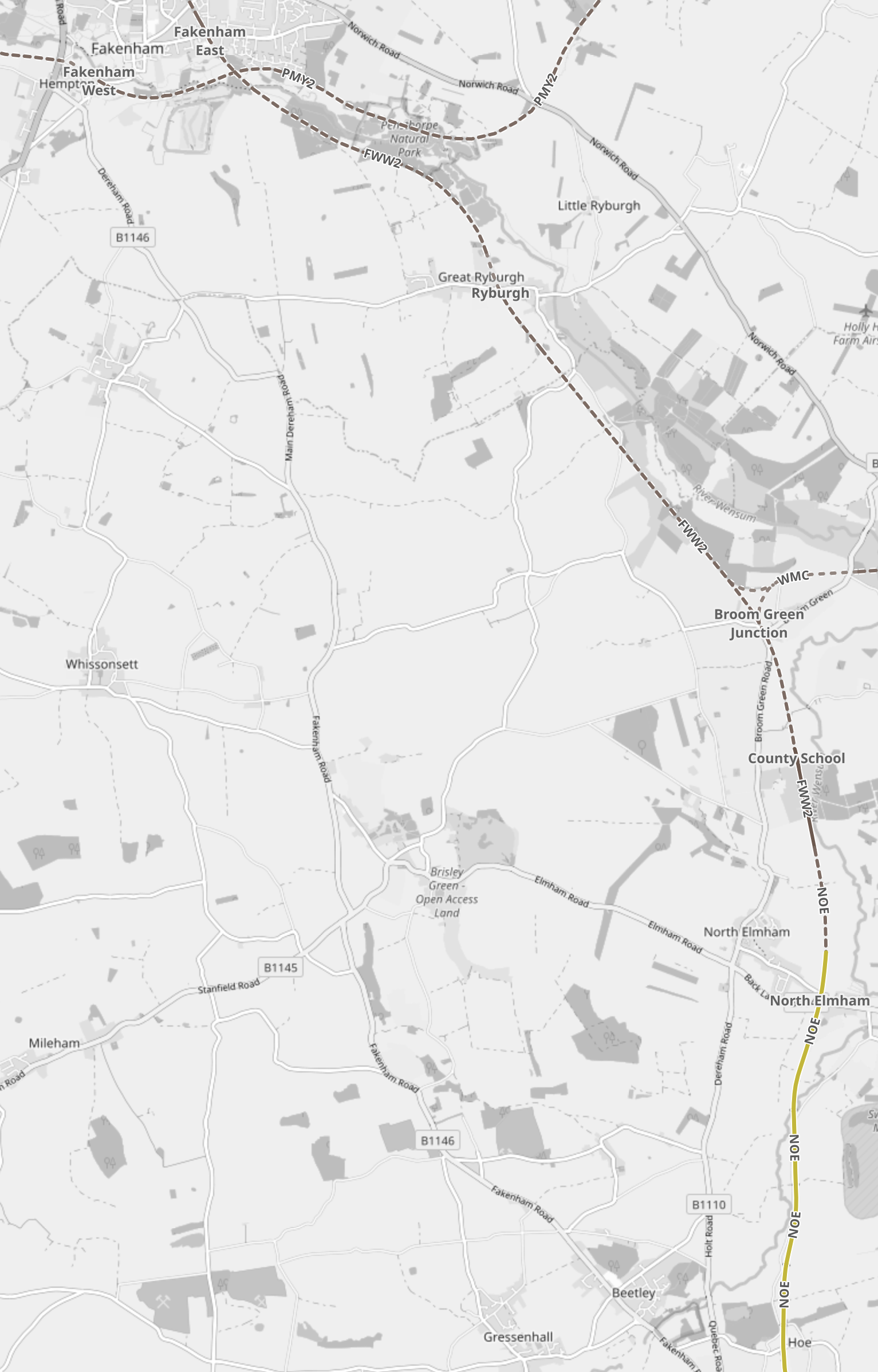
Note.
- The yellow line is the Mid-Norfolk Railway.
- North Elmham station is at the top of the yellow.
- Fakenham is at the top of the map.
Adding Fakenham to the passenger service from Norwich would surely increase its viability.
There have been ambitions in the past to create a Norfolk Orbital Railway, that would connect the National Rail stations at Sheringham and Wymondham, using the tracks of the North Norfolk Railway and Mid-Norfolk Railway, and some new and relaid track.
This map from OpenRailwayMap shows North Norfolk from Fakenham and North Elmham in the West to Sheringham in the East.

Note.
- Fakenham is on the Western edge of the map about halfway up.
- North Elmham is in the South-West corner of the map, on the yellow line, what indicates the Mid-Norfolk Railway.
- The railway shown in the North-West corner is the Wells and Walsingham Light Railway. which is a 260 mm. gauge railway.
- Sheringham station, which has an hourly service to Norwich via Cromer, is in the North-East corner of the map.
- The Eastern terminus of the North Norfolk Railway is a short walk from Sheringham station.
- The blue arrow to the West of Sheringham station, indicates the Western terminus of the North Norfolk Railway at Holt station.
The Norfolk Orbital Railway would need to connect Fakenham and Holt, which doesn’t appear to be easy.
But if the connection could be made, Greater Anglia could run a combined service around the county, which would allow those living in the houses at North Elmham to get easily to the coast or the City of Norwich.
Wash Barrage
This is described as follows in the article.
A bid to build a tidal barrage stretching from Norfolk to Lincolnshire was unveiled at the end of last year.
While the scheme has seen objections from conservation groups, proponents say it would help protect the Fens from flooding, generate tidal power and would allow a new deep-sea container port to be built.
A planning application has yet to be submitted for the scheme, which Centre Port, the group behind the proposal, said could be operational by the end of the decade if given the go-ahead.
The Wash Barrier has a web site, but I doubt the RSPB will like it.
New Reservoir
The article says that the proposed site is between Chatteris and March in Cambridgeshire.
Long Stratton Bypass
This is described as follows in the article.
The Long Stratton Bypass has been mooted for decades and finally looked like it was going to get underway after funding was approved in 2021.
The scheme will mean motorists can avoid passing through the centre of the town.
It was needed, when C regularly commuted to Norwich in the 1980s.
Norwich Western Link
This is described as follows in the article.
The flagship infrastructure project has been thrown into doubt after County Hall announced an indefinite delay earlier this month.
The 3.9-mile road is designed to link the A47 with the NDR to the west of the city and has been hailed as a council priority for several years.
Climate protestors are mounting a High Court challenge.
Windfarms
These are described as follows in the article.
There are a series of major windfarms planned for the Norfolk coast.
These include Swedish energy giant Vattenfall’s Boreas and Vanguard projects, which could be some of the largest in the world.
The company was granted development consent for its Norfolk Vanguard windfarm in 2022, pledging to get underway early this year.
The two schemes could power more than 3.9m homes in the UK.
Hornsea Three, another major scheme which could power another 3.2m homes, is set to start being built in March.
Note.
- The author missed out the Sheringham Shoal and Dudgeon Extension windfarms.
- Total wind power that will be developed is around 6 GW, which would supply around a quarter of the UK.
The only problem is that Norfolk is protesting against the cables to connect the wind farms to the National Grid.
I suspect they will have to be put under the sea. I wrote about this in Is There A Need For A Norfolk-Suffolk Interconnector?
New Rail Junctions
The problems around Ely station are described as follows in the article.
A key rail junction, which could help to boost growth across the region, could steam ahead this year.
Ely Junction is important because it links five lines connecting Norwich, Ipswich, Cambridge, Peterborough and King’s Lynn.
It is currently operating at full capacity, which limits the opportunity for growth of routes for passenger and cross-country freight services.
It would also enable more frequent passenger services, including between King’s Lynn and London.
An outline business case was submitted to the Department for Transport last year to seek money for the next stage of the design process – but the government has yet to make a decision.
There are also problems at Haughley Junction.
Hospitals Rebuild
The article also puts the case for developing both King’s Lynn and Great Yarmouth hospitals.
Conclusion
Norfolk is going to be busy.
STEAG Advances Plans For 55MW Norfolk Solar Plant With Battery Storage
The title of this post, is the same as that of this article on Business Green.
It is very much a standard solar farm with a battery and provided everything is installed properly, there shouldn’t be to much adverse effects on wildlife and especially, East Anglia’s magnificent hares.
This article on the Solar Power Portal is entitled Solar Farms and Biodiversity.
This is a paragraph.
The point is that all sorts of wildlife move onto solar sites, from hares and hedgehogs, buzzards and butterflies, grasshoppers and beetles; other protected species such as Hazel Dormouse – all continue their ways along the hedgerows uninterrupted.
Hopefully, if the rules are followed at King’s Lynn, the hares will thrive.
King’s Lynn
I went to King’s Lynn today, because I had written about the Fen Line and I’d never been there before.
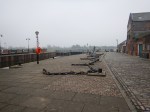
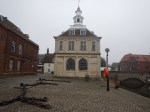
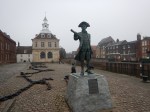
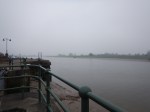

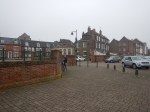
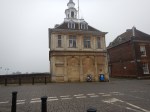
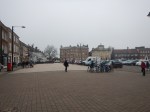
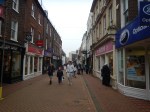
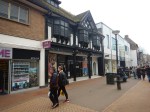
Note the references to George Vancouver.
I wonder how many Canadians visit! After all it only cost me about twenty pounds with a railcard to come up from Kings Cross.
The weather could have been better! But I can remember a day, when we took the dogs to North Norfolk for a walk, on a sunny day. Celia was wearing a summer dress over a bikini, but by the time we got to the beach, it was so dreich, we went straight back home. That’s North Norfolk for you!
Greater Anglia, The Fen Line And Class 755 Trains
Greater Anglia currently operates two trains per day between King’s Lynn and Liverpool Street stations, in the Morning Peak
- 05:17 – 07:25 – 2 hr. 8 min.
- 06:17 – 08:25 – 2 hr. 8 min.
This is matched by three trains a day between Liverpool Street and King’s Lynn, in the Evening Peak.
- 17:07 – 19:08 – 2 hr. 1 min.
- 18:-07 – 20:10 – 2 hr. 3 min.
- 19:07 – 21:05 – 1 hr 58 min.
Note.
- The two Morning Peak trains stop at Watlington, Downham Market, Littleport, Ely, Cambridge North, Cambridge, Whittesford Parkway, Audley End, Bishops Stortford and Tottenham Hale.
- The three Evening Peak trains call similarly, but miss out Cambridge North.
- Services are run by Class 317 or Class 379 trains.
All the passenger trains on the Fen Line including Great Northern’s Class 387 trains, are four x twenty metre cars, which can run as four, eight or twelve cars.
Maximum Length Of Trains On The Fen Line
This article in the Eastern Daily Press is entitled Plans For Longer Trains Between King’s Lynn And London Could Be Delayed.
Reading it, I get the following impressions.
- The Fen Line can currently accept four-car trains.
- Eight-car trains are needed.
- Plans have been or are being developed to lengthen all platforms to accept eight car trains.
- Network Rail are quoted as saying “The King’s Lynn eight car scheme is amongst the CP5 projects that have funding.”
Extending further might well be out of the question, on grounds of cost and inconvenience to passengers, whilst the work is carried out.
Greater Anglia’s Trains And The Fen Line
There is a problem for Greater Anglia, as both the Class 317 and Class 379 trains are being moved on.
Class 745 Trains
The thirty x four-car Class 379 trains, that work the express West Anglia Main Line services are being replaced with ten x twelve-car Stadler Class 745 trains.
These trains will be too long for the Fen Line.
Class 720 Trains
Five-car Class 720 trains would fit the Fen line and as they are 100 mph trains, like the Class 317 and Class 379 trains, they could handle the current service.
Class 755 Trains
Greater Anglia currently have the equivalent of twenty-eight assorted diesel trains in different lengths, which they are replacing with thirty-eight bi-mode Class 755 trains.
These are.
- 100 mph trains.
- Bi-mode trains with the ability to run on electric or diesel.
- Compatible with the Class 745 trains.
Fourteen will be three-car trains and twenty-four will be four-car trains.
Greater Anglia, have already said they will run services to and from Liverpool Street from Lowestoft, so will they use the extra trains to run services to and from Liverpool Street to important East Anglian towns?
It is worth looking at the capacity of the various trains.
- Class 379 train – four-car – 189 2nd/20 1st
- Class 755 train – three-car – 166 2nd
- Class 755 train – four-car – 224 2nd
- Class 720 train – five-car – 430 2nd
Would a four-car Class 755 train have sufficient capacity for a service between Kings Lynn and Liverpool Street?
I think the answer is probably in the affirmative, but a six or seven car train couple be created, by joining two trains together, if required.
So if the Class 755 trains can provide direct Liverpool Street services for Kings Lynn and Lowestoft, what other towns could get a direct service to London?
- Bury St. Edmunds – Either via Newmarket and Cambridge or Stowmarket and Ipswich
- Cromer/Sheringham via Norwich and Ipswich
- Norwich via Wymondham, Attleborough, Thetford, Ely and Cambridge
- Peterborough via March and Cambridge
- Yarmouth via Via Norwich and either Ipswich or Cambridge.
I can remember, when some of these towns had services to Liverpool Street.
Trains could also split and join at Cambridge and Ipswich to save paths on the main lines to London.
Could trains go up to London in the Morning Peak and return in the Evening Peak?
If there was sufficient demand, they could return in mid-morning and come back to Liverpool Street in mid-afternoon, in time for the Evening Peak.
If so, how many trains would be needed?
- Bury St. Edmunds (35k) – 1
- Cromer (7k)/Sheringham (7k) – 1
- King’s Lynn (43k) – 3
- Lowestoft (70k) – 1
- Norwich via Cambridge – 2
- Peterborough – 1
- Yarmouth (47k) – 1
The figures in brackets are the population
Considering, that my rough calculation, showed there were ten spare trains, these numbers seem feasible.
I have some questions.
- How many Class 755 trains will be able to link together?
- Will platforms needed to be extended at Liverpool Street
- Could Lincoln be reached from London, via a reopened March to Spalding Line via Wisbech?
- Could a Yarmouth and Lowestoft service to London be created by reopening the chord at Reedham?
- Would it be a good idea to have a dozen First Class seats in the Class 755 trains doing the London commute.
I feel that Greater Anglia have ambitious plans.
Conclusion
From this rather crude analysis, it appears that Greater Anglia will be using the Class 755 trains as three and four car electric trains on the electrified lines to Cambridge, Ipswich and Norwich and then using their diesel power to create new direct routes to the capital.
I also suspect, trains will split and join at Cambridge, Ipswich and Norwich to reduce the number of paths needed to and from London. After all one twelve-car train is cheaper to run than three four-car trains!
Could Greater Anglia be bringing forward a timetable, where any town in East Anglia, with a population of over say 10,000, gets at least one fast train to London in the morning and back in the evening?
As the tracks, signals and stations are already there, away from the main lines, there may be little that needs doing.
If not, Greater Anglia have bought too many trains.
Call For ETCS On King’s Lynn Route
The title of this post, is the same as that on an article in Edition 849 of Rail Magazine.
The article is based on this document on the Fen Line Users Aoociation web site, which is entitled Joint Response To Draft East Coast Main Line Route Study.
In addition to ETCS, which could improve capacity on the East Coast Main Line, they would also like to see journey time reductions using trains capable of running at 125 mph or faster on the King’s Lynn to King’s Cross route.
The Fen Line
The Fen Line runs between Ely and King’s Lynn stations.
- It is mainly single -track with a double-track section at Downham Market station.
- The line has an operating speed of 90 mph.
- The line is electrified.
- All stations have two platforms.
- Looking at the line from my virtual helicopter, I suspect that redoubling would be possible.
- Passenger numbers are increasing at stations on the line.
- There are several level crossings.
It also would appear that because of the complicated nature of timetabling trains on the East Coast Main Line to the South of Hitchin, that there are often delays on the Fen Line, as there is only one passing place at Downham Market.
I therefore agree with the opinions expressed on the Fen Line Users Association, that restoring double-track could help reduce delays on the Fen Line.
The Cambridge Line
The Cambridge Line connects Cambridge to the East Coast Main Line at Hitchin.
- It is double-track throughout.
- It is fully electrified.
- It has a 90 mph operating speed.
- King’s Lynn to King’s Cross services use the line.
- Currently four trains per hour (tph) run between Cambridge and Kings Cross.
- This will be increased by two tph, when Thameslink is fully operational.
King’s Lynn to King’s Cross services use this line.
The Current Timetable
Trains seem to take around an hour and forty minutes to go from King’s Cross to King’s Lynn, where they take under ten minutes to turnround and then they take around an hour and forty minutes to return to King’s Cross. I suspect, it isn’t the easiest service for an operator to mrun, as a train could be sitting in King’s Cross for thirty minutes.
How Could The Service Between King’s Lynn and King’s Cross Be Improved?
From the Rail Magazine article, the views of the Fen Line Users Association and the details of the route, the following could help.
ERTMS And ETCS
ERTMS and the closely related; ETCS are digital systems that enable trains to run faster and closer together, which could increase the capacity of the line and reduce journey times.
The Wikipedia entry for the East Coast Main Line says this about recent and future development of the signalling.
A new Rail Operating Centre (ROC), with training facilities, opened in early 2014 at the “Engineer’s Triangle” in York. The ROC will enable signalling and day-to-day operations of the route to be undertaken in a single location. Signalling control/traffic management using ERTMS is scheduled to be introduced from 2020 on the ECML between London King’s Cross and Doncaster – managed from the York ROC.
I would think it likely that if the whole route from King’s Lynn and King’s Cross were digitally signalled, there would be advantages.
- It would help the merging of trains at Hitchin.
- It would help in managing trains on the single-track sections of the Fen Line.
The Rail Magazine article mentions flighting trains on the single-track sections, where two or more trains in the same direction, went though in succession.
It would also allow closer spacing and higher frequencies on the East Coast Main Line.
All trains using the route, including freight trains, would need to be fully equipped for digital signalling.
Improving The Fen Line
The biggest improvement would come by redoubling the line between Littleport and King’s Lynn.
- Trains could pass anywhere on the Fen Line.
- It might also be possible to avoid complicated operating procedures.
- Timetabling should be easier.
- Extra services would be possible.
- Delays should be reduced, as there would be less knock-on effects from problems on the East Coast Main Line.
On the flat lands of the fens, it might also be possible to increase the operating speed.
Improving Ely
Ely is a mess, where trains always seem to be waiting for something.
Hopefully, improvements are on the way, as I wrote in Are The Trains In Ely Finally To Be Sorted?
According to an e-mail and comments on this post, Ely North Junction needs improvement.
This Google Map shows the junction.
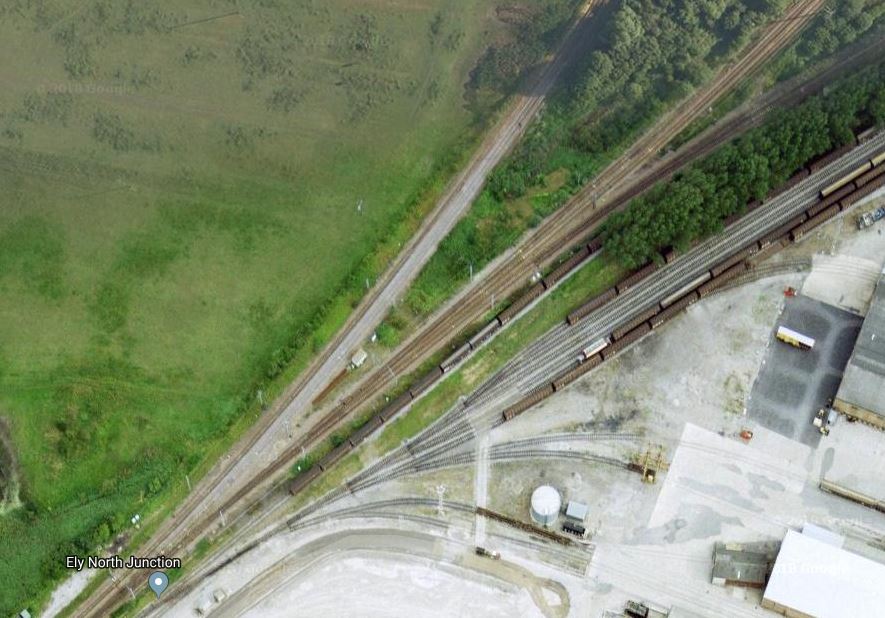
Note.
- Ely station is to the South West.
- starting at the top-left and going clockwise, lines go to Peterborough, Ely and Norwich.
- The last set of lines are sidings.
There would appear to be two solutions.
- Extra lines and flat junctions can be added. Flat junctions mean that trains have to cross each other.
- From what I’ve read digital signalling is very good at handling junctions, by making sure trains present themselves correctly, so this may be a better solution.
Either solution could be make to work very well!
Improving The Cambridge Line
There don’t appear to be any projects on the Cambridge Line, but I suspect that Network Rail are looking for small things, that will save minutes here and there.
125 Mph Trains
Who’d have thought forty or fifty years ago, that someone would seriously suggest running trains capable of 125 mph to King’s Lynn?
The Class 387 trains are 110 mph trains and I have recorded one at that speed on the East Coast Main Line.
Would a 125 mph train, be able to use that speed South of Hitchin?
If it could then.
- It could cruise on the fast lines with all the fast trains to and from the North.
- It would cut a couple of minutes from the journey time.
Once digital signalling is operational, the trains could be closer together, which would increase line capacity.
There are several fast electric multiple units, that have been built in recent years or are on order.
- Bombardier Class 387 – 110 mph – In service.
- Bombardier Aventra – 110 mph -In development for West Midlands Trains.
- CAF Class 397 – 125 mph – In development for TransPennine Express.
- Hitachi Class 801 – 125 mph On test for service entry this year.
- Siemens Class 350 – 110 mph – In service.
Bombardier are also showing ideas for a 125 mph bi-mode Aventra to various train operating companies, which I wrote about in Bombardier Bi-Mode Aventra To Feature Battery Power.
To build a 125 mph bi-mode train, you probably start with a 125 mph electric train.
So have Bombardier designed a 125 mph version of the Aventra?
It would appear, that Bombardier, Hitachi and possibly CAF and Stadler will be offering 125 mph electric multiple units, with a bi-mode version if needed, for lines without electrification.
But there are several routes in addition to Kings Cross to King’s Lynn
- St. Pancras to Corby
- Euston to the West Midlands
- Liverpool/Manchester to Edinburgh/Glasgow
- Leeds/York to Edinburgh/Glasgow.
- Waterloo to Bournemouth/Southampton/Weymouth
Train travel could be getting faster?
Conclusion
The ultimate benefit would come if trains could do a round trip in under three hours.
This would probably need a journey time of perhaps an hour and twenty-four minutes between King’s Cross and King’s Lynn. It is certainly not possible now, but it might be with the following.
- 125 mph-capable trains.
- Digital signalling on the East Coast Main Line and on the Cambridge and Fen Lines.
- 125 mph running, where possible on the East Coast Main Line.
- Improvements at Ely.
- Full double-tracking of the Fen Line.
- If possible, 100 mph running on the Cambridge and Fen Lines.
A three-hour round trip would allow the current service of one tph to be run with just three trains.
If both of the twice-hourly fast services between Kings Cross and Cambridge were extended to King’s Lynn, instead of the current one, this would mean that the following service could be possible with just six trains.
- Two tph
- Stops at Cambridge, Cambridge North, Waterbeach, Ely, Littleport, Downham Market and Watlington.
- Ten x 23 metre cars or twelve x 20 metre cars.
- Possibly a bistro.
- Trains might stop at Royston, Hitchin and/or Stevenage.
It would be a passenger-attracting 125 mph Metro.
There is improvement to come between King’s Cross, Cambridge and King’s Lynn, if the financial case stacks up.
 The Anonymous Widower