Yesterday, was a better news day for new trains, with articles with these headlines.
All are significant for passengers.
Class 710 Trains
The authorisation of the Class 710 trains is particular importance to me, as they will be running locally to where I live.
It will be a couple of months before they enter passenger service.
But the trains have mainly been delayed by software problems and now that appears to have been fixed and as there are twenty trains already built, I could see them entering service, as soon as drivers have been trained.
It should be noted that eight trains are needed for the Gospel Oak to Barking Line and six for the Watford DC Line, so if twenty have been built, I would expect that these two routes could be converted to the new trains by the summer.
Class 801 Trains
LNER’s Class 801 trains will be a significant introduction, as they will enable the cascade of the Mark 4 coaches to other operators, like Trains for Wales and East Midlands Railway.
April 17, 2019
Posted by AnonW |
Transport/Travel | Class 710 Train, Class 801 Train, East Coast Main Line, Gospel Oak And Barking Line, London Overground, Mark 4 Coach, Mark 5A Coach, TransPennine Express, Watford DC Line |
2 Comments
c2c’s Fenchurch Street And Grays Service
This service runs at a frequency of two trains per hour (tph).
- Each journey takes about 34-36 minutes each way.
- If ten minutes is allowed at each end, that gives a ninety minute round trip.
- The service will need three trains.
A four tph service would need.
- Six trains.
- The ability to handle extra two tph at Fenchurch Street station and in the bay platform at Grays station.
Grays station can probably handle the extra trains, but Fenchurch Street station may need extra capacity.
London Overground’s Gospel Oak And Barking Riverside Service
This service runs at a frequency of four tph.
Changing At Barking Station
Both service will use.
- Platform 7 At Barking Station When Running Eastbound
- Platform 8 At Barking Station When Running Westbound
Both platforms will have to handle six tph.
Would It Be Better For Changing If Both Services Were Four tph?
This would mean.
- Passengers would never wait more than fifteen minutes to their desired destination.
- The combined frequency would be eight tph or a train every seven-and-a half minute.
- There would be a lot of scope for optimising the timetable for the convenience of passengers.
As an example, consider a passenger going from Barking Riverside to Fenchurch Street.
If trains were equally-spaced at Barking station, passengers would wait a maximum of seven-and-a-half minutes, if trains were on time.
On balance, if both services were four tph would be better.
Conclusion
If c2c and London Overground co-operate, customers will benefit.
April 9, 2019
Posted by AnonW |
Transport/Travel | Barking Riverside Station, Barking Station, c2c, Gospel Oak And Barking Line, Grays Station, London Overground |
Leave a comment
Crofton Park station is not step-free and has the usual staiircases.
As I passed through today, I noticed that an ungated entrance had been used to create step-free access.
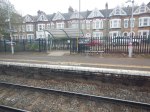
Passengers are expected to touch-in and out on the touch pads.
I suspect most do!
But it’s a clever idea to build an affordable step-free entrance.
I suspect this type of entrance might become more common in the Oyster-card area.
After all, there are several Overground stations without ticket gates.
April 7, 2019
Posted by AnonW |
Transport/Travel | Contactless Ticketing, Crofton Park Station, London Overground, Step-Free |
2 Comments
The North London Line will be my route to High Speed Two when it opens in 2026.
This map from Wikipedia, shows how the lines connect.
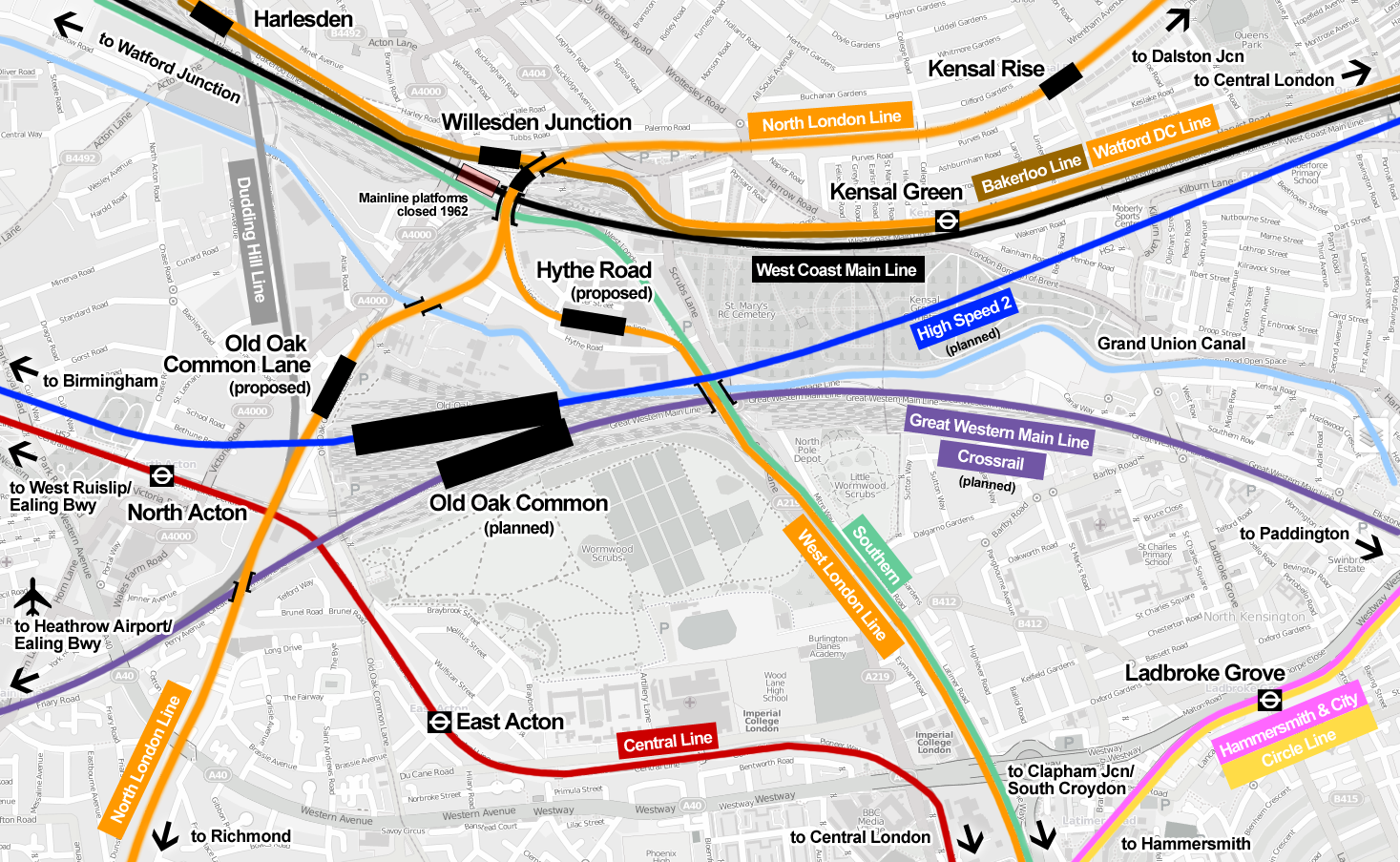
I will actually have two Overground stations, that I will be able to use.
Note.
- Wikipedia says that both stations should open in 2026, which is the same date as High Speed Two.
- Hythe Road station is 700 metres from the High Speed Two station.
- Old Oak Common Lane station is 350 metres from the High Speed Two station.
Currently, both lines have a four trains per hour (tph) service.
- The Class 378 trains are five cars, which can get very busy in the Peak.
- It would need an additional five trains to increase the frequency to five tph on both routes.
- Six new five-car Class 710 trains are on order for North and West London Line services.
- I feel the higher frequency could be in operation by the opening of High Speed Two.
- Most stations between Stratford and Willesden Junction would appear to be able to accept six-car trains, if selective door opening were to be used.
I think by 2026, there will be a more than adequate service between Stratford and High Speed Two.
- There will be at least ten tph to Stratford, with services split equally between Hythe Road and Old Oak Common Lane stations.
- Richmond and Clapham Junction stations will get at least five tph.
- Step-free access is not currently available at Brondesbury Park, Brondesbury, Finchley Road & Frognal, Kentish Town West and Dalston Kingsland stations.
But what other developments will or might happen?
Highbury & Islington Station
Highbury & Islington station is the thirteenth busiest station in the UK and it is in need of a major upgrade to bring the deep level platforms and their access up to the standard of the four London Overground platforms, which all have lifts.
I also think that the track layout at the station could be modified to allow trains on the East London Line to continue further to the West. This was mentioned, when the Oveground was created, but is seldom talked about these days.
Step-Free Access On The North And West London Lines
These two lines which form a Y-shaped railway that splits at Willesden Junction, will provide these services from High Speed Two to major interchange stations.
The only thing that is needed is to complete step free access at all stations on the North and West London Lines.
The Maximum Frequency Across North London
Five tph on both the North and West London Line would give the following turnback frequencies at the four terminals.
- Clapham Junction – 5 tph
- Richmond – 5 tph
- Stratford – 10 tph
This chart from TfL shows planned improvements on the London Overground
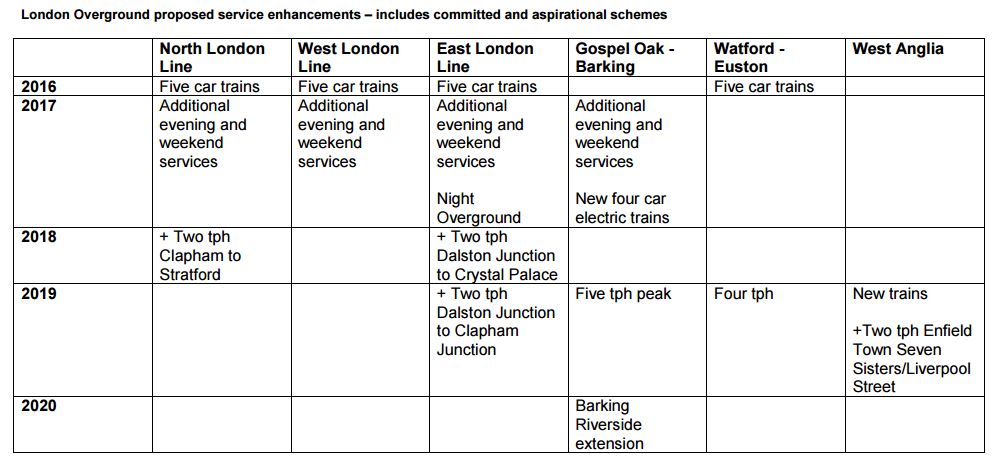
Note that it clearly shows that it is possible to run a six tph service between two single platform stations.
I think it likely that it would be possible to run six tph on both routes, provided that the route and the signalling could handle the increased frequency.
Twelve tph between Stratford and Willesden Junction stations would probably be the maximum frequency.
But would the number of freight trains allow this frequency?
A Reduction In Freight Services
Currently, the North London Line carries a lot of freight trains, going between Barking, Felixstowe and London Gateway in the East to virtually everywhere West of London.
- Noises from the East West Rail Consortium are hinting that services to and to and from Bristol, Liverpool, Manchester, South Wales, Southampton and the West Midlands might use their new route between Oxford and Cambridge.
- Could more freight use ports like Liverpool and Teesport in the North of England, which would reduce the traffic through the ports in the South?
Whatever happens, the current succession of diesel-hauled freight trains across London is not environmentally-friendly and it will raise increasing numbers of protests.
I think it is inevitable that the number of freight services will reduce, thus allowing more paths for passenger trains.
Digital Signalling
To handle the increasing traffic on the North and West London Lines, I can see digital signalling being installed. There could even be a degree of Automic Train Control.
Six-Car Trains
Only a few stations can handle six-car trains without selective door opening and even the rebuilt West Hampstead station still has platforms for five-cars.
Selective door opening would allow six-car trains to use the five-car platforms and passengers have in London have shown they can cope with moving forward to get out at certain stations. Especially, as the walk-through design of the train, makes this a lot easier.
A Round-The-Corner Service
I can remember reading in Modern Railways, that one of the reasons for the East and North London Lines running parallel through Canonbury to Highbury & Islington was to possibly enable extension of the East London Line to perhaps Willesden Junction, where there is a handy bay platform.
This has not happened and I doubt we’ll ever see something like a New Cross to Willesden Junction service, as Crossrail will effectively provide a faster frequent service between Whitechapel and Old Oak Common stations.
West London Orbital Railway
The proposed West London Orbital Railway will have two routes.
- West Hampstead Thameslink and Hounslow
- Brent Cross Thameslink and Kew Bridge
Both routes will have four tph and have a connection to Crossrail, High Speed Two and the North London Line at Old Oak Common station.
The only possible problem would be the eight extra tph through Acton Central station and level crossing and South Acton station.
But it would become an important feeder route to Crossrail, Heathrow Airport and High Speed Two.
Conclusion
The North and West London Line route between Stratford and Willesden has the ability to handle a lot more traffic than it currently does.
Dgital signalling and six-car trains could add over another fifty per cent capacity to the route.
I very much feel that digital signalling will be absolutely necessary.
March 26, 2019
Posted by AnonW |
Transport/Travel | Class 378 Train, Freight, Highbury And Islington Station, London Overground, North London Line, Stratford Station, West London Line, West London Orbital Railway, Willesden Junction Station |
2 Comments
I spent Friday and Saturday roaming around East Anglia, ending up at the football at Portman Road.
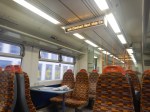
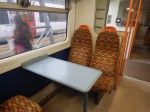
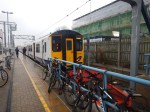
These pictures show one of London Overground’s Class 317 trains, which I used to start my journey between Hackney Downs and Cheshunt stations.
Some questions?
- Are then any other inner-city metro trains, where there are comfortable seats and tables for four?
- How are passengers going to react, when it is replaced with a high-capacity Class 710 train, with longitudinal seating?
- Will the wi-fi and charging points of the new trains compensate.
One factor that will help the changeover, is that most on the line are Class 315 trains, which need to be delivered to the scrapyard.
The Class 317 trains will surely find a good home.
March 3, 2019
Posted by AnonW |
Transport/Travel | Cheshunt Station, Class 317 Train, Class 710 Train, London Overground, Roaming Around East Anglia- March 2019 |
2 Comments
The title of this post is the same as that of this article on IanVisits.
Overground
TfL’s plan for the Overground would appear to be an extension under or over the River Thames to a single station at Thamesmead and a possible connection to the North Kent Line at Plumstead, Abbey Wood or Belvedere stations.
DLR
The plan for the DLR involves more stations, including a possible one on the North Bank of the Thames. It also serves a proposed massive Peabody housing development, which will provide up to 11,500 new homes.
What Goes East Must Go West
Nothing is said in Ian’s report about train services to Thamesmead.
Overground
On the Overground, there will be four trains per hour (tph) between Gospel Oak and Barking Riverside stations.
There are problems with increasing frequency and capacity, which could be necessary.
- The terminus at Gospel Oak station is only a single platform.
- The Gospel Oak to Barking Line is used by an increasing amount of electrically-haled freight trains.
- There is little space on the line for an additional bay platform to turn trains.
- Trains can’t continue along the North London Line at Gospel Oak, as that line is busy as well.
The only alternative Western terminals are.
- Barking – A bay platform could possibly be squeezed in.
- Enfield Town – Sounds crazy, but there is a chord between Seven Sisters and South Tottenham stations.
- Fenchurch Street – Busy and possibly could be made larger with redevelopment.
- Liverpool Street – Busy and only a slight possibility.
There would also need to be platform lengthening to incorporate trains that are longer than four cars.
Although, it might be possible to run five-car trains using selective door opening on the last car.
DLR
Currently, the DLR has a Peak service of 7.5 tph between Tower Gateway and Becton calling at Shadwell, Limehouse, Westferry, Poplar, Blackwall, East India, Canning Town, Royal Victoria, Custom House, Prince Regent, Royal Albert, Beckton Park, Cyprus, Gallions Reach.
The extension to Thamesmead would branch off around Gallions Reach and the current service has the following connections.
- Shadwell – London Overground
- Canning Town – Jubilee Line
- Royal Victoria – Emirates Air-Line
- Custom House – Crossrail
Will there be enough capacity on this section of the DLR?
- Tower Gateway is a single-platform station and would need to be upgraded to handle more than 7.5 tph.
- Thirty tph run through Shadwell, Limeshouse and Westferry station in the Peak.
- Can stations be lengthened to use longer trains?
It does look to me that the only way to increase capacity would be to extend the DLR to the West, as I outlined in The Bank Station Upgrade And The Western Extension Of The DLR.
This map from TfL shows the possible extension.

What would be the cost of this extension?
Conclusion
The logic and economics of extending either the Overground or the DLR to Thamesmead are sound for that area of South-East London, but does The Mayor have the budget to complete the other end of the transport links?
February 16, 2019
Posted by AnonW |
Transport/Travel | Barking Riverside, Crossrail, Docklands Light Railway, Docklands Light Railway Extension To Thamesmead, Docklands Light Railway Western Extension, London Overground, Sadiq Khan, Thamesmead |
1 Comment
Beggars on the London Overground are becoming a nuisance.
Today, as I returned home, I saw this notice at Dalston Junction station.

So I made a small donation to the Whitechapel Mission.
Let’s hope it helps.
February 12, 2019
Posted by AnonW |
Transport/Travel | Dalston Junction, London Overground, Whitechapel Mission |
4 Comments
In The Canonbury Cross-Over, I described how it was possible at Canonbury station to change easily from a Westbound train on the North London Line to a Southbound-train on the East London Line.
Services through Canonbury station on the East London Line in trains per hour (tph) are.
- Four tph between Highbury & Islington and Crystal Palace stations.
- Four tph between Highbury & Islington and West Croydon stations.
This means that eight tph call in Platform 2 at Canonbury station.
Services through Canonbury station on the North London Line used to be.
- Four tph between Richmond and Stratford stations.
- Two tph between Clapham Junction and Stratford stations.
This means that six tph call in Platform 3 at Canonbury station.
Since the December 2018 Timetable Change, two tph have been added to the Clapham Junction service.
So now both services calling at Platform 2/3 have the same frequency of eight tph.
So Why Does The Canonbury Cross-Over Appear To Be More Difficult?
Today, I was coming from Stratford on a Richmond train and was changing to the East London Line to Dalston Junction station, from where I can get a bus from outside the station to my house.
It takes a bit longer, but I was carrying my weekend shopping and as Dalston Junction station has lifts, if you need them and Dalston Kingsland station doesn’t, A lot of passengers, seem to use the Canonbury Cross-Over, when they are going from Stratford to stations on the East London Line.
As my train arrived at Canonbury station, in Platform 3, a Southbound-train was leaving Platform 2. So I had a wait of seven minutes in the rain for the next train to Dalston Junction station.
Since the Timetable Change, it appears that I am having to wait for several minutes a lot more.
Look at these times from the 6th of February. The time is when a train on the North London Line calls in Platform 3 and the integer is the number of minutes before the train calls on the East London Line in Platform 2.
- 1150 – 7
- 1157 – 0
- 1205 – 7
- 1212 – 0
- 1220 – 7
- 1227 – 0
- 1235 – 7
- 1242 – 2
- 1250 – 7
- 1257 – 0
- 1305 – 7
- 1312 – 0
- 1320 – 7
- 1327 – 0
- 1335 – 7
- 1342 – 0
- 1353 – 4
- 1357 – 0
- 1405 – 7
- 1312 – 0
In some cases two Southbound trains call between two Westbound ones.
Quite frankly, it’s crap!
Why?
I am no expert on railway timetabling, but if I look at the timetable, it appears that the two trains often seem to be timetabled to arrive at the same time.
As Southbound trains on the East London Line have only come one stop from Highbury & Islington station, are they more likely to be on time, than North London Line trains that have come all the way from Stratford station.
So like today, do North London Line trains arrive after the East London Line train has departed?
Conclusion
The timetable needs to be improved.
Would it be possible to timetable the East London Line trains a couple of minutes after those on the North London Line?
February 8, 2019
Posted by AnonW |
Transport/Travel | Canonbury Station, East London Line, London Overground, North London Line, Stratford Station |
Leave a comment
Since modernisation in 2010, the service on the Gospel Oak To Barking Line has been run using six two-car diesel Class 172 trains.
Today was the first weekday, when one of the diesel trains had been replaced by a four-car electric Class 378 train.
I was able to ride on a Class 378 train between Harringay Green Lanes and Gospel Oak stations. I then doubled back and travelled all the way East to Barking station.
These are a few observations.
Electric Trains
Riding the electric Class 378 trains is a very different experience to riding the diesel Class 172 trains.
- There is a lot less noise and vibration.
- You sit longitudinally in London Undergound fashion, as opposed to transversely.
- There was more capacity in the four cars of the electric train, as opposed to the two-car diesel trains.
I also got the impression that the Class 378 trains accelerated faster and cruised at a higher speed, than the Class 172 trains. I will check this out.
Train Capacity
I said in the previous section, that physical capacity is doubled from two to four cars.
- I actually went from Harringay Green Lanes to Gospel Oak twice in the morning Peak; once in a Class 172 and once in a Class 378.
- The former was jam-packed and the second was very comfortable, with only a few stansdees.
- The Class 172 train has 120 seats in a 47 metre train, which works out as 2.6 seats per metre.
- The Class 378 train has 136 seats in a 80 metre train, which works out at 1.7 seats per metre.
The lower seat density and the wide central isle, probably explains, why the electric train was more comfortable.
Note that in a few months, the Class 378 trains will be replaced with Class 710 trains, which will likely have a similar passenger capacity to the Class 378 trains.
So the capacity and passenger ambience of the Class 378 trains can probably be read across to the internally-similar Class 710 trains.
Platform Length Issues
I did my usual trick of riding in the last car and looking at where the end of the train came on the platform.
The line has been built, so that all platforms fit the standard British Rail four-car length of eighty metres, which applies to both four-car Class 378 and Class 710 trains.
The Possibilities Of Five-Car Trains
London Overground run five-car trains through four-car stations at Shadwell, Wapping, Rotherhithe and Canada Water on the East London Line, by allowing the last car to overhang the platform.
They get away with it without any trouble because.
- The Class 378 trains have selective door opening and a walk-through interior, with large lobbies.
- The announcements on the train are high-quality and advise passengers in the last car to move forward at short platforms.
- East Enders quickly learn how to get in and out of the train with little fuss
So could five-car trains be run the Gospel Oak to Barking Line?
- Barking station has a long platform.
- Some stations like Woodgrange Park, Wanstead Park, Leytonstone High Road, Leyton Midland Road and Upper Holloway originally had longer platforms and these could probably be extended.
- Other stations like Gospel Oak, South Tottenham and Blackhorse Road are probably at maximum length and would use selective door opening.
I suspect that if the demand needed the extra capacity, that the new trains could be lengthened from four to five cars, which would give a twenty-five percent increase in capacity.
Typical Passengers
I have a feeling that the Gospel Oak to Barking Line doesn’t have well-defined typical passengers, like a lot of routes do.
Using the train in the Peak, you notice that many passengers just hopped a couple of stops on the line.
One guy was going from Harringay Green Lanes to Shoreditch High Street, with changes at Gospel Oak and Canonbury.
This journey is probably a reflection on the badly-designed bus routes in the area it serves.
Gospel Oak To Barking Line Connectivity
The line is well-connected to the Underground, especially if you are up for a ten-minute walk.
- District and Hammersmith & City Lines at Barking
- Crossrail at Wanstead Park
- Victoria Line at Blackhorse Road
- Piccadilly Line at Harringay Green Lanes
- Northern Line at Upper Holloway
- North London Line at Gospel Oak
There are also good connections to North-South buses at several stations.
Will Electric Trains Attract More Passengers?
I suspect London Overground will be looking at the passenger statistics on the route with considerable interest, during the period, when some trains are two-car diesels and the others are four-car electrics.
This may well give the answer to my question.
I have a feeling that the reduced crowding on the route will mean that more passengers are attracted.
The new Class 710 trains will have wi-fi and USB charging points, so I wonder how many passengers this will attract.
But as I said earlier, a twenty-five percent increase in capacity may be possible by adding another car to the trains.
Conclusion
I have a very strong feeling that the upgrade to the Gospel Oak to Barking Line and the new electric trains, will change North-East London for the better.
As the London Overground lines to Cheshunt, Chingford and Enfield Town are also getting new trains, I would suspect that the effects will be bigger and more widespread than anybody has predicted.
- Trains will get crowded.
- New stations will be added to the network.
- Existing stations will be upgraded with step-free access
We could even see a serious outbreak of London Overground Syndrome.
Future Additions
These are projects that will or could happen along the Gospel Oak to Barking Line.
At present only the first two will happen.
January 28, 2019
Posted by AnonW |
Transport/Travel | Class 172 Train, Class 378 Train, Class 710 Train, Gospel Oak And Barking Line, London Overground, London Overground Syndrome |
2 Comments
It has been well-publicised that Bombardier are having problems getting their new Class 710 trains working reliably for service on the Gospel Oak to Barking Lines.
In the February 2019 Edition of Modern Railways, there is an article written by the well-respected Roger Ford, which is entitled Train Makers Face ‘Year Of Truth’.
Roger makes a succession of important points about Bombardier and Aventras in particular.
Class 345 Trains
Roger says this.
While reliability continues to be poor, software issues have been largely down to signalling interfaces at the western end of Crossrail.
Production appears to have been paused at 57, with perhaps 37 accepted.
Class 345 Trains And Class 710 Trains Use Different Software
Roger says this.
For the Class 345s, Transport for London specified an evolution of the Class 378 ‘last generation’ software. However the units for London Overground and Greater Anglia, and the other Aventra contracts for delivery beyond 2019, are true next generation trains with a new ‘family tree’ of software.
So it would appear that Class 345 and Class 710 software problems could be unrelated!
My experience of putting together large complicated software systems over forty years, leads me to add these two statements.
- If the base hardware has been thoroughly tested and put together in a professional manner, it will be very rare for the software to not work on one set of hardware and work perfectly on several dozen other sets.
- You can’t do too much testing; both of the hardware and the software, both on test systems and in real-life scenarios.
I don’t know anything of the computer hardware structure and its connectivity on Aventras, but I wouldn’t be surprised if a lot has been lifted straight out of the aerospace industry, in which Bombardier has a substantial presence. Borrowing proven techniques and hardware will hopefully reduce the risk.
The major risk will be the software that is totally new and unique to the Aventra.
So to me, it is not surprising that the complicated signalling on Crossrail, has been the major trouble on the Class 345 trains.
In this article on Rail Magazine, which is entitled Gospel Oak-Barking Fleet Plan Remains Unclear, this is a paragraph.
London Overground was due to put new Bombardier Class 710 electric multiple units into traffic on the route from March 2018, with a full rollout by May. However, problems with the Train Control Management System (TCMS) has so far prevented this.
I suspect that the TCMS is totally new and unique and has a level of complexity much higher than what is used in the Class 345 train.
- It will have the ability to test all the trains sub-systems on a continuous basis.
- The TCMS will be an important part of the train testing process, which is why I have listed it first.
- The TCMS will control 25 KVAC overhead and 750 VDC third rail power collection.
- It will control the energy storage, that is reputedly fitted to the train.
- It will handle regenerative braking using the energy storage.
- Electricity usage will be optimised.
- It will control all the displays and systems throughout the train.
- It will interface to the signalling system.
- It will communicate train status and faults back to the depot.
I also suspect that every Aventra will have the same TCMS, which will probably be compatible with the proposed 125 mph bi-mode Aventra.
This is not a new concept, as in the 1980s, Boeing 757 and 767 aircraft had identical cockpits, flight control systems and a common rating for pilots.
The Aventra has been described as a computer-on-wheels. Could it also be described as an aircraft-on-rails?
When I was growing up, all new trains, aircraft and vehicles were generally fully described with detailed cutaway drawing in a comic called Eagle.
Bombardier have seemed to be very reluctant to give details about what lies under the skin of an Aventra. Could it be very different to all other trains?
There is one big disadvantage about having a common TCMS, in that, it requires a very high quality of software design, programming and testing and that any lateness in the software delays the whole project.
Class 710 Trains For The Gospel Oak To Barking
Roger says this about the delayed Class 710 trains for the Gospel Oak to Barking Line.
According to,Bombardier, delivery of the Class 710 fleet is now due to be completed by the end of 2019. Given that the original date was September 2018, this is 15 months late. But with large numbers of Class 710 vehicles in storage, it also seems unduly pessimistic.
Roger does not have a reputation for looking on the bright side of life, so when he says that the schedule is unduly pessimistic, I give that a high chance of being right.
Surely, when the final approved version of the TCMS software is delivered, all of those trains in storage can be woken up, tested by the TCMS software then go through a pre-delivery check with the appropriate level of trouble-free running.
It’s a bit like having a new PC on your desk. You can’t really use it, until the software you need to do your job is installed. But as the software will be designed for your PC and has already been fully tested, it is unlikely to be a traumatic operation.
It appears to me, that the more comprehensive the TCMS software, the quicker it will be to take a train from manufacture to ready for service.
Class 720 Trains For Greater Anglia
Bombardier are already building the Class 720 trains for Greater Anglia.
Are these just being checked and tested before being put into store?
As with the Class 710 trains, will they be woken up using the same final fully tested version of the TCMS software?
I would be very surprised if the software on the two trains used different versions of the software.
When I was writing Artemis, we had two versions; one for single users and another for multiple users.
The software for both was identical and it worked on two different operating systems.
That is one of the advantages you get with well-written software.
Hence my belief that all Aventras have a common TCMS software.
Building Aventras
The article says that Bombardier are gearing up to have six Aventra production lines in Derby, which would mean they can turn out 24 vehicles a week.
That is a high production rate, which would mean that the 222 vehicles for the London Overground could be built in under ten weeks.
Bombardier must be expecting a lot of orders!
January 27, 2019
Posted by AnonW |
Transport/Travel | Aventra, Bombardier, Greater Anglia, High Speed Battery/Electric Aventra, London Overground |
Leave a comment