A London Overground Replacement For Southern’s East Croydon And Milton Keynes Service
In July 2017, I discussed this suggestion by Chris Gibb in Gibb Report – East Croydon – Milton Keynes Route Should Be Transferred To London Overground.
In an article, in the July 2019 Edition of Modern Railways, , which was entitled ‘710s’ Debut On Goblin, this was this last paragraph.
On the West London Line, TfL is curremtly working with the Department for Transport on options for the devolution of services originally suggested in Chris Gibb’s report on the Govia Thameslink Railway franchise, which could lead to ‘710s’ being deployed here.
It made me think, that further investigation was called for.
An Apology
I apologise, if you think I’m repeating myself.
What The Gibb Report Says
The Gibb Report, says this about the current service between East Croydon and Milton Keynes Central stations.
I believe there is an option to transfer the East Croydon – Milton Keynes operation to TfL and it’s London Overground concession in 2018.
TfL may decide to change the service, for example by not running it north of Watford Junction, or running it to an alternative southern destination other than East Croydon. They could also develop the combined West London line service to better match available capacity to demand.
They would have a number of crewing and rolling stock options, but should be able to operate the service more efficiently than GTR in the longer term, without the involvement of Selhurst.
Selhurst TMD is the depot in South London, where the current Class 377 trains are based.
A few of my thoughts.
The Trains
Using Class 710 trains as suggested in the Modern Railways article, would surely offer a suitable crewing and rolling stock option for the route, if they were based at the convenient Willesden TMD, where the fleet of up to twenty-five dual-voltage Class 710/2 trains are stabled.
The Northern Terminus
Chris Gibb suggested the service might not go past Watford Junction.
I think that could be difficult.
- The longitudinal seating of the Class 710 train, is probably not suitable for outer suburban services North of Watford.
- East Croydon to Watford Junction takes 69 minutes, which is not a good journey time to create an efficient service.
It would also appear to be tricky for a train to transfer between the West London Line and the Watford DC Line.
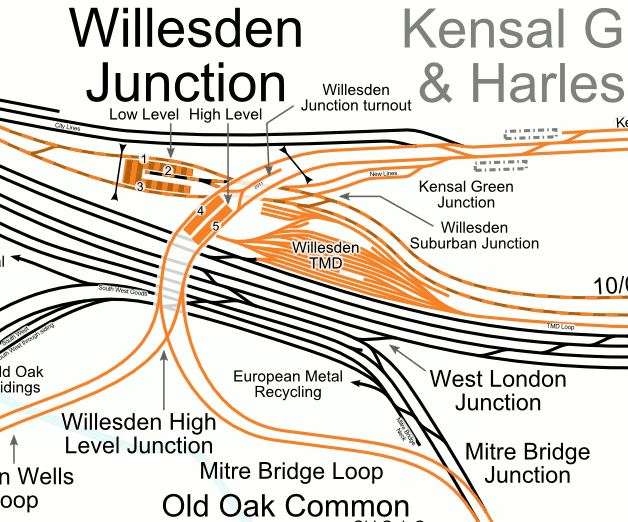
This map from carto.metro.free.fr shows the complicated track layout in the Willesden Junction area.
Note.
- The two Willesden Junction stations, labelled High Level and Low Level.
- The Watford DC Line, which is shown in black and orange, passing to the North of Willesden TMD. and through the Low Level station.
- The four tracks shown in black are the West Coast Main Line, with Watford to the West and Euston to the East.
- The North London Line to Richmond and the West London Line to Clapham Junction splitting at Wilesden High Level Junction.
The current service between East Croydon and Milton Keynes, is only one train per hour (tph) and uses a succession of flat junctions to take the slow lines to and from Watford.
This is not a good operational procedure and I suspect Network Rail and various train operators, would like to see it discontinued.
So if trains in a new London Overground version of the service, don’t go up the Watford DC Line or the West Coast Main Line, where do they turn back?
Note the siding to the East of the High Level platforms, which is labelled Willesden Junction Turnout.
This is regularly used to turnback London Overground services on the West London Line.
I feel that London Overground will be turning their replacement service in Willesden Junction High Level station.
Current train services at the station include.
- For passengers, who want to go further North, there is a good connection to the Watford DC Line for Wembley Central, Harrow & Wealdstone and Watford Junction stations.
- The Watford DC Line can also take you to Euston.
- The Bakerloo Line between Stonebridge Park and Elephant & Castle via Central London.
- Frequent North London Line services between Stratford and Richmond.
The station has kiosks, coffee stalls, toilets and waiting rooms.
There are certainly worse places to change trains.
The Southern Terminus
Obviously, existing travellers on the route would like to see as few changes as possible.
East Croydon station must be a possibility for the Southern terminus, as it is the currently used.
But East Croydon is a busy station and perhaps it is not a convenient station for trains to wait in the platform.
On the other hand, West Croydon station offers some advantages.
- The station has a long bay platform, which might be long enough for nine or ten cars.
- There is a separate turnback siding.
- It has space to add another bay platform, but this may have been sold to a developer.
- It already has a four tph London Overground service to Highbury & Islington station.
- Using West Croydon avoids the crowded lines to the North of East Croydon station.
It is also managed by London Overground, so the landlord would be co-operative.
How Many Trains Would Be Needed For A West Croydon And Willesden Junction Service?
West Croydon station has two possible routes, that trains could take to Willesden Junction.
- Via Norwood Junction and Clapham Junction in 55 minutes.
- Via Selhust and Clapham Junction in 45 minutes.
These times mean that a two-hour round trip between West Croydon and Willesden Junction should be possible.
Trains required for various frequencies would be as follows.
- One tph – Two trains.
- Two tph = Four trains.
- Four tph – Eight trains.
They would need to be dual voltage Class 710/2 trains, as are now running on the Gospel Oak to Barking Line.
Compare the figures with those for the current East Croydon and Milton Keynes service, which needs four pairs of four-car trains for an hourly service.
What Would Be The Frequency?
I think one, two and four tph are all possibilities!
One tph
One tph would be a direct replacement for the current service. But is it enough?
Services at West Croydon could probably share the bay platform with the existing Highbury & Islington station service.
Two tph
Two tph could be a compromise frequency.
Two tph could probably still share the current bay platform with the Highbury & Islington service.
Four tph
Four tph would be a full Turn-Up-And-Go service,
- It would probably be London Overground’s preference.
- It would give a very passenger-friendly eight tph between Willesden Junction and Clapham Junction stations.
- The two services would call at opposite sides of Clapham Junction station.
- It would give a four tph link between Croydon and High Speed Two.
- Westfield wouldn’t mind all the extra shoppers at Shepherds Bush!
But there could be downsides.
- The service could need an extra bay platform at West Croydon.
- Would it be possible to turn four tph at Willesden Junction?
- Will the train paths be available through South London.
But four tph would probably would be London Overground’s preference.
It will be interesting to see the reasons, why Transport for London choose a particular frequency.
A Trip Between Imperial Wharf And East Croydon Stations
Today, I took a trip between Imperial Wharf and East Croydon stations at around 11:30.
- The train was two four-car Class 377 trains working as an eight-car train.
- After Clapham Junction it wasn’t very busy.
- I was in the last car, which was empty, except for myself.
I came to the conclusion, that an eight-car train was too much capacity for the Southern section of the journey.
I suspect that Transport for London have detailed passenger estimates for this route, so they should be able to determine the frequency and length of replacement trains required.
The Upgraded Norwood Junction Station
In Major Upgrade Planned For Norwood Junction Railway Station, I talked about a plan to upgrade Norwood Junction station.
The idea behind the upgrade is to improve connectivity and capacity in the crowded Croydon area.
If the West Croydon and Willesden Junction service, was routed via Norwood Junction station, the upgraded station would give easy access to both East and West Croydon stations.
Conclusion
I’ve always liked Chris Gibb’s suggestion of the transfer of the service between East Croydon and Milton Keynes stations to the London Overground and I can now start to see flesh on the bones!
At the present time and until better data is available, I think the replacement service should be as follows.
- The Northern terminus should be Willesden Junction.
- The Southern terminus should be West Croydon station, where there are good tram and train connections.
- The route would be via Shepherds Bush, Kensington Olympia, West Brompton, Imperial Wharf, Clapham Junction, Wandsworth Common, Balham, Streatham Hill, West Norwood, Gipsy Hill, Crystal Palace and Norwood Junction.
- Going via Gipsy Hill, rather than the current route via Selhurst, would give access to the connectivity at Norwood Junction.
- The frequency should be four tph.
- Trains will be four- or five-car Class 710 trains.
The benefits would be as follows.
- The rail hubs of Clapham Junction, Norwood Junction, West Croydon and Willesden Junction would be connected together by a Turn-Up-And-Go service.
- The proposed four tph service would need eight Class 710 trains, whereas the current one tph service needs eight Class 377 trains. Would this be better value?
In the future with a connection to High Speed Two in the Old Oak Common area, the benefits would increase.
- There would be a simple interchange with High Speed Two.
- South London from Clapham to Croydon, would get a direct service to High Speed Two.
- There would also be a better connection to Heathrow Airport and other rail services through Old Oak Common.
I think that the connection to High Speed Two trumps everything else.
‘710s’ Debut On Goblin
The title of this post is the same as an article in the July 2019 Edition of Modern Railways.
The article is mainly about the introduction of the Class 710 trains on the Gospel Oak to Barking Line.
But the last sentence of the article is worth more investigation.
On the West London Line, TfL is curremtly working with the Department for Transport on options for the devolution of services originally suggested in Chris Gibb’s report on the Govia Thameslink Railway franchise, which could lead to ‘710s’ being deployed here.
I investigate it fully in A London Overground Replacement For Southern’s East Croydon And Milton Keynes Service.
This was my conclusion.
At the present time and until better data is available, I think the replacement service should be as follows.
- The Northern terminus should be Willesden Junction.
- The Southern terminus should be West Croydon station, where there are good tram and train connections.
- The route would be via Shepherds Bush, Kensington Olympia, West Brompton, Imperial Wharf, Clapham Junction, Wandsworth Common, Balham, Streatham Hill, West Norwood, Gipsy Hill, Crystal Palace and Norwood Junction.
- Going via Gipsy Hill, rather than the current route via Selhurst, would give access to the connectivity at Norwood Junction.
- The frequency should be four tph.
- Trains will be four- or five-car Class 710 trains.
The benefits would be as follows.
- The rail hubs of Clapham Junction, Norwood Junction, West Croydon and Willesden Junction would be connected together by a Turn-Up-And-Go service.
- The proposed four tph service would need eight Class 710 trains, whereas the current one tph service needs eight Class 377 trains. Would this be better value?
In the future with a connection to High Speed Two in the Old Oak Common area, the benefits would increase.
- There would be a simple interchange with High Speed Two.
- South London from Clapham to Croydon, would get a direct service to High Speed Two.
- There would also be a better connection to Heathrow Airport and other rail services through Old Oak Common.
I think that the connection to High Speed Two trumps everything else.
I will keep returning to this vital link down thw West London Line.
Free Device Charging On The Overground
This picture, that I took at Shoreditch High Street station, says it all.
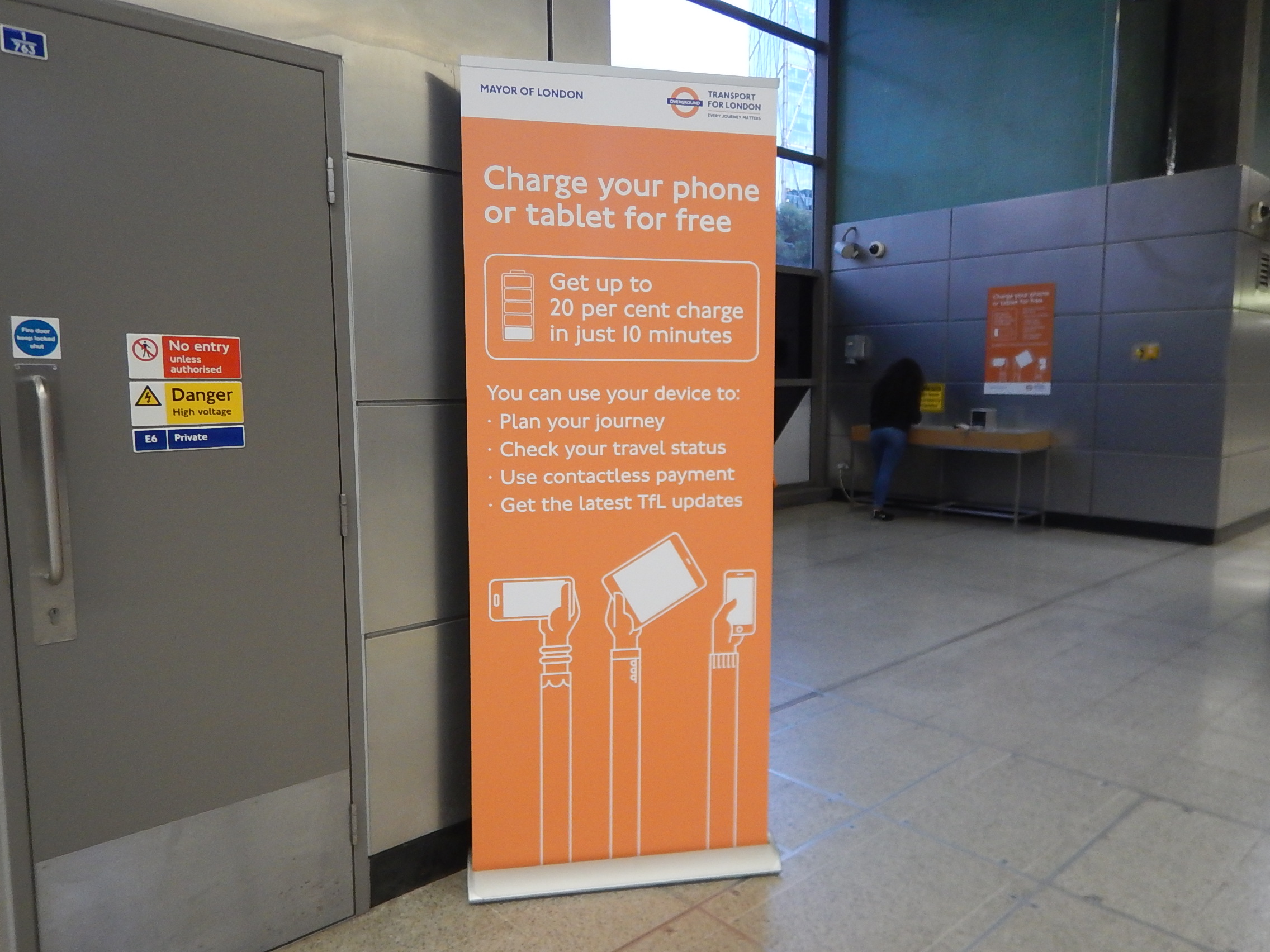
There were a selection of leads for all the different devices.
Major Upgrade Planned For Norwood Junction Railway Station
The title of this post is the same as that of this article on IanVisits.
Ian introduces his article like this.
A somewhat shabby, and yet quite busy station in South London could get a major makeover if plans by Network Rail are approved.
The proposals are part of the wider plan to clean up the mess of tracks around Croydon to boost the capacity of the lines through the area, but it is also a stand-alone project.
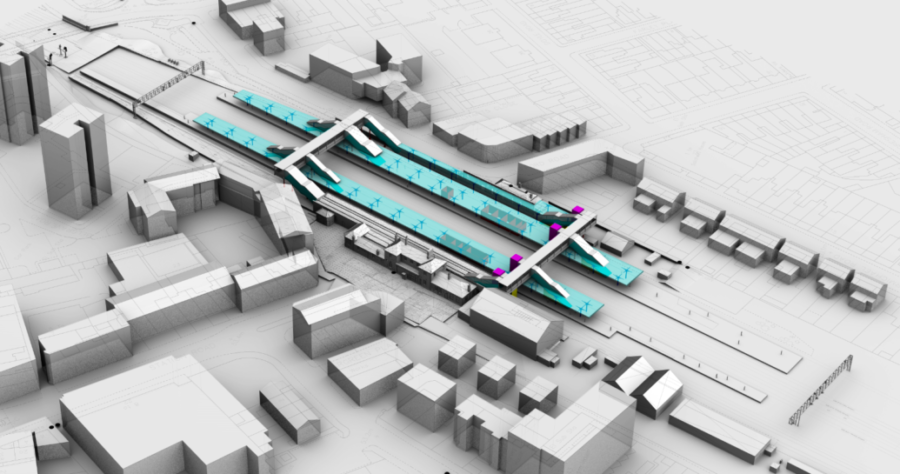
Ian also has this visualisation of the upgraded Norwood Junction station.
Note.
- London Bridge station is to the left with East Croydon station to the right.
- The Main station entrance is on the near side, with the Clifford Road station entrance on the far side.
- Platform 1 & 2 is the highlighted island platform on the near side.
- Platform 3 & 4 is the highlighted island platform on the far side.
It looks expensive with two step-free bridges.
Both bridges have four sets of steps to.
- The Main Station Entrance.
- The Northbound Platform 1 & 2,
- The Southbound Platform 3 & 4
- The Clifford Road Entrance.
In addition, the Southern bridge has four lifts to the two entrances and two platforms.
These pictures show the current state of the station.
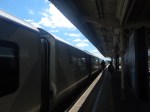
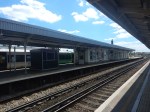
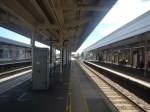
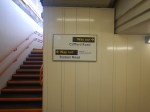
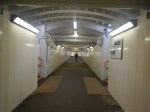
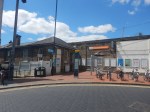
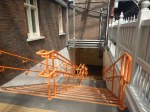
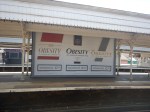
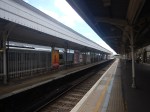
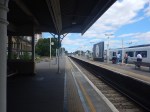
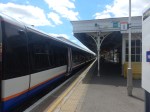
Currently, the station has three island platforms.
- They are connected by a well-lit, step-only subway.
- Some platforms are too short for twelve-car trains.
- The wooden buidings need a quality makeover. Where is Terry Stollery, when you need him?
- In the new layout, the central island platform will be removed, to allow a pair of fast lines through the station.
- One advantage of the subway is during the station upgrade, it can still be used to access the middle platforms, thus easing construction and causing less disruption for passengers.
After the upgrade, the layout will be as follows.
- Platforms 1 & 2, which are currently Platforms 2 & 3, would be for Northbound trains, with perhaps Platform 1 for stopping and Overground services and Platform 2 for limited-stop and Thameslink services.
- Platforms 3 & 4, which are currently Platforms 5 & 6, would be for Southbound trains, with perhaps Platform 3 for stopping and Overground services and Platform 4 for limited-stop and Thameslink services.
The subway will probably be closed.
Improved Train Services
For people like me, who live on the Overground, North of Norwood Junction station, hopefully it will solve the problem of getting to Gatwick Airport.
- It’ll just be a walk across the platform at Norwood Junction station, instead of a tram between West Croydon and East Croydon stations.
- In the future, would the cross-platform interchange help travellers between Crossrail and Gatwick and the South Coast?
- The Zeus of the Timetables could even make it better, by increasing the frequency of Thameslink trains between Norwood Junction and Gatwick Airport stations to match the four trains per hour (tph) between Dalston Junction and West Croydon stations.
Note that the day, I took the pictures Bedford and Highbury & Islington trains were in the current Platforms 2 & 3.
Up here in sometimes-forgotten Dalston, I’ll certainly give this new layout at Norwood Junction station, a high score, if the trains are changed to use it to advantage.
Norwood Junction Will Become A Major Interchange!
The walk-across interchange between Northbound services on platforms 1 & 2 and Southbound services on platforms 3 & 4, will mean that the station, will become the station where travellers will prefer change trains.
Suppose you were travelling from Luton to Epsom.
The Journey Planner on http://www.national.co.uk, suggests a double change at Farringdon and Carshalton, with a journey time of 1 hour and 51 minutes.
The upgraded Norwood Junction station, would allow the journey to be done in two legs.
- Luton and Norwood Junction – one hour and three minutes.
- Norwood Junction and Epsom – 29 minutes.
It could be quicker and it is a cross-platform change, where hopefully, there will be a climate-controlled waiting room and a coffee stall.
Current frequencies going North are as follows.
- Anerley – Six tph
- Balham – Two tph
- Battersea Park – Two tph
- Bedford – Two tph
- Brockley – Six tph
- City Thameslink – Two tph
- Clapham Junction – Two tph
- Crystal Palace – Two tph
- Dalston Junction – Four tph
- Farringdon – Two tph
- Flitwick – Two tph
- Forest Hill – six tph
- Gypsy Hill – Two tph
- Haggerston – Four tph
- Harlington – Two tph
- Harpenden – Two tph
- Highbury & Islington – Four tph
- Honor Oak Park – Six tph
- Leagrave – Two tph
- Hoxton – Four tph
- London Blackfriars – Two tph
- London Bridge (Non-stop) – Two tph
- London Bridge (Stopping) – Three tph
- London St. Pancras – Two tph
- London Victoria – Two tph
- Luton – Two tph
- Luton Airport Parkway – Two tph
- New Cross Gate – Six tph
- Penge West – Six tph
- Rotherhithe – Four tph
- Shadwell – Four tph
- Shoreditch High Street – Four tph
- St. Albans City – Two tph
- Streatham Hill – Two tph
- Surrey Quays – Four tph
- Sydenham – Six tph
- Wandsworth Common – Two tph
- Wapping – Four tph
- West Norwood – Two tph
- Whitechapel – Four tph
Current frequencies going South are as follows.
- Carshalton Beeches – Two tph
- Cheam – Two tph
- Coulsdon Town – Two tph
- Earlswood – Two tph
- East Croydon – Six tph
- Epsom – Two tph
- Ewell East – Two tph
- Gatwick Airport – Two tph
- Horley – Two tph
- Purley – Four tph
- Purley Oaks – Two tph
- Redhill – Two tph
- Reedham – Two tph
- Salfords – Two tph
- South Croydon – Two tph
- Sutton – Two tph
- Waddon – Two tph
- Wallington – Two tph
- West Croydon – Eight tph
In addition these services pass through.
- Bedford and Brighton – Two tph
- Cambridge and Brighton – Two tph
- London Brifge and Caterham & Tattenham Corner – Two tph
- London Bridge and Uckfield – Two tph
- Peterborough and Horsham – Two tph
It is a very comprehensive list of services and possible destinations.
I believe that if a few more trains stopped at Norwood Junction station, there could be at least two tph to every station connected to Norwood Junction station, with these higher frequencies to the more important stations.
- Bedford – Four tph
- Brighton – Four tph
- Canada Water – Four tph
- City Thameslink – Eight tph
- Clapham Junction – Four tph
- Crystal Palace – Four tph
- Dalston Junction – Four tph
- East Croydon – Eight tph
- Epsom – Four tph
- Farringdon – Eight tph
- Finsbury Park – Four tph
- Gatwick Airport – Four tph
- Highbury & Islington – Four tph
- London Blackfriars – Eight tph
- London Bridge (Non-stop) – Four tph
- London Bridge (Stopping) – Four tph
- London St. Pancras – Eight tph
- London Victoria – Four tph
- Luton – Four tph
- Luton Airport Parkway – Four tph
- St. Albans City – Four tph
- Stevenage – Four tph
- Sutton – Four tph
- Welwyn Garden City – Four tph
- West Croydon – Eight tph
- West Hampstead Thameslink – Four tph
- Whitechapel – Four tph
These frequencies could be attained, by stopping a few extra services at Norwood Junction station.
It is certainly comprehensive and getting to most important areas of Central London is direct or a single change.
- The step-free changes to Crossrail at Farringdon and Whitechapel will allow simple access to Canary Wharf, the City,, Heathrow, Paddington, the West End and all the towns and cities on the branches.
- The Bakerloo Line Extension will connect at New Cross Gate.
- The Central Line doesn’t connect
- The Circle, District, Hammersmith & City and Metropolitan lines connect at Farringdon, Kings Cross St. Pancras, London Blackfriars and Whitechapel.
- The Jubilee Line connects at Canada Water, London Bridge and West Hampstead Thameslink.
- The Northern Line connects at Kentish Town, Kings Cross St. Pancras and London Bridge
- The Piccadilly Line connects at Finsbury Park and Kings Cross St Pancras.
- The Victoria Line connects at Finsbury Park, Highbury & Islington and Kings Cross St. Pancras.
But there are some important places that are not well-connected or have difficult interchanges to Norwood Junction station.
- Euston station, High Speed Two and the West Coast Main Line.
- Cannon Street, Charing Cross and Waterloo mean a complicated interchange at London Bridge.
- The connections to Great Northern services, the North London Line and the Victoria Line at Highbury & Islington need serious improvement.
- South East London needs going to London Bridge and coming out again!
Radical thinking and serious improvement is needed.
Milton Keynes Central and East Croydon
This is a useful service for some..
It calls at Bletchley, Leighton Buzzard, Tring, Berkhamsted, Hemel Hempstead, Watford Junction, Harrow & Wealdstone, Wembley Central, Shepherd’s Bush, Kensington (Olympia), West Brompton, Imperial Wharf, Clapham Junction, Balham, Streatham Common, Norbury, Thornton Heath, Selhurst.
But, it has problems.
- It has a high level of cancellation.
- It has a totally inadequate hourly frequency.
- It has no connection to the North London Line at Willesden Junction.
- It blocks a platform at East Croydon, when it turns round.
In his report on Southern, Chris Gibb recommended that the service be the responsibility of the London Overground. I wrote about this in Gibb Report – East Croydon – Milton Keynes Route Should Be Transferred To London Overground.
To connect High Speed Two at Old Oak Common, there needs to be a four tph service between Croydon and Old Oak Common.
Transport for London are proposing a new Hythe Road station on the West London Line..
- It will be a seven hundred metre walk to the High Speed Two station. That is too long!
- There will be a bay platform to turn trains from Clapham Junction.
- Trains still won’t be able to call at Willesden Junction for the North London Line.
I think that building Hythe Road station is a bad idea.
This map shows the lines in the area.
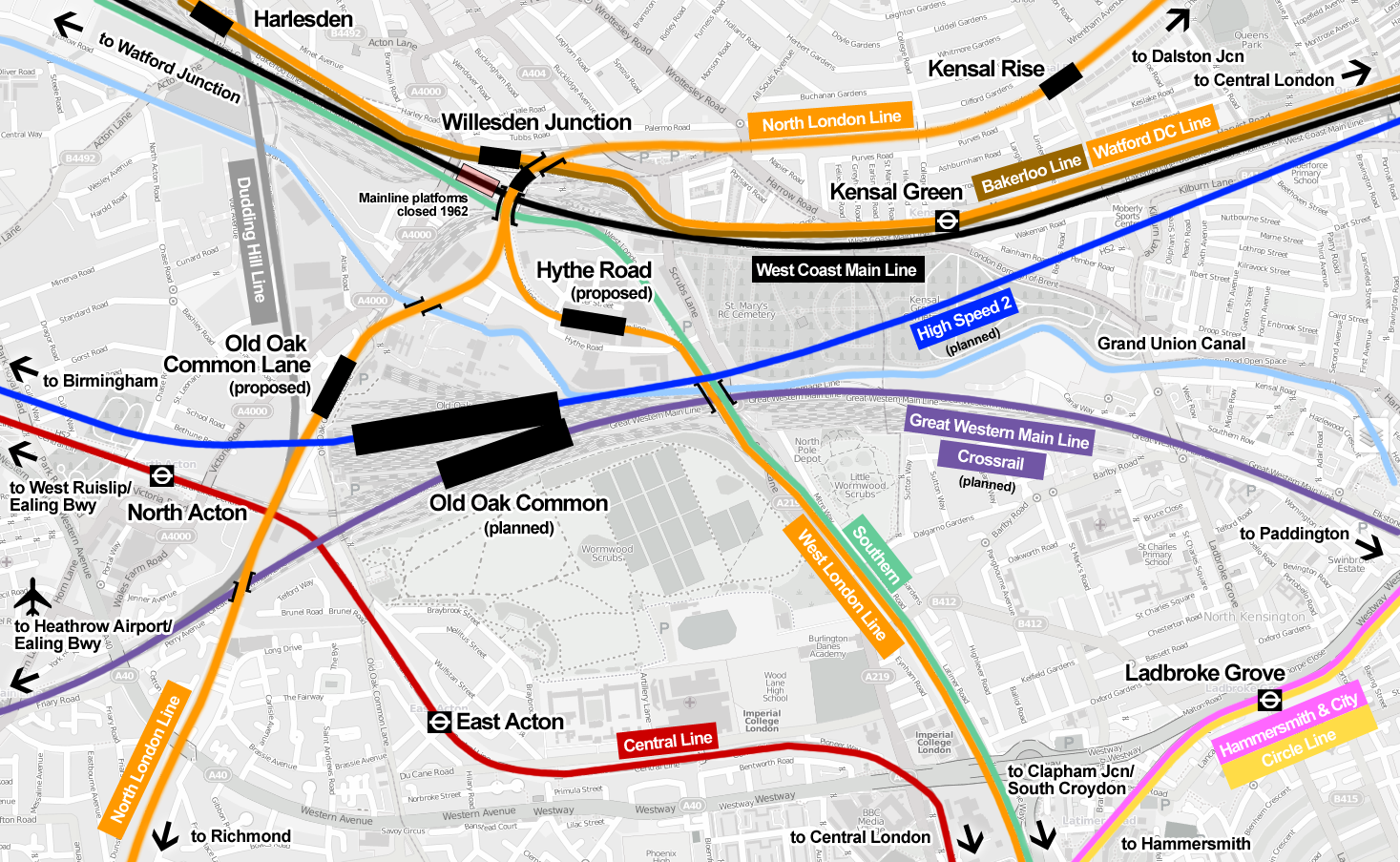
Surely, the West London Line should have been re-routed over the Eastern end of Old Oak Common station at right angles, which would have the following benefits.
- Quick and easy interchange with High Speed Two, the Great Western Main Line and Crossrail.
- The ability to add bay platforms to terminate services.
- Sharing of station services with the other stations.
Perhaps, though this practical passenger and operator-friendly idea would have ruined the architect’s vision.
Or is it, that the current track layout to connect to the West Coast Main Line only allows crap solutions.
Surely, the amount of money being spent on High Speed Two allows the best to be done everywhere.
London Overground principles say that services must be at least four tph.
The simplest way to do this would be to extend the current Stratford and Clapham Junction service via Willesden Junction to Croydon.
- It would call at Balham, Streatham Common, Norbury, Thornton Heath, Selhurst, if it followed the current route.
- I doubt that East Croydon station could handle four tph terminating at the station.
But why not use the route taken by London Victoria and West Croydon services via Wandsworth Common, Balham, Streatham Hill, West Norwood, Gipsy Hill, Crystal Palace, and Norwood Junction, to terminate at West Croydon?
- This route calls at Norwood Junction, with all its connectivity.
- If needed, there is space for a new platform at West Croydon.
I’ve no idea, what will happen, but the upgrade at Norwood Junction station should help.
Suppose you were going between Gatwick and High Speed Two.
- The standard route will be Thameslink and Crossrail with a change at Farringdon.
- A surface route with a change at Norwood Junction could be an alternative.
The second may be more pleasurable.
Upgrading The Station
In Winner Announced In The Network Rail Footbridge Design Ideas Competition, I wrote how the competition was won by this bridge.
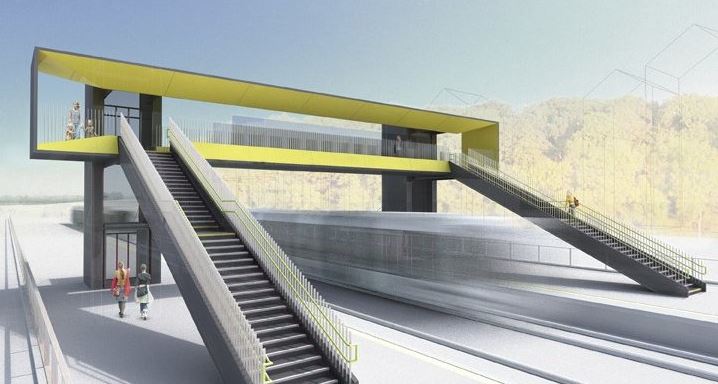
So could two factory-built bridges like this be installed at Norwood Junction station?
- The design is adaptable to multiple spans over the tracks.
- Lifts could be left out for one bridge.
- Once the site is prepared, I believe the bridges can be quickly installed, probably from a train with a crane.
- The bridge is probably more affordable, than a traditional design.
During the installation period, the existing subway can be used for platform access.
Conclusion
Obviously, I am speculating that the new footbridge system will be used at Norwood Junction station.
But the new platform and track layout at the station, will certainly improve services on these routes.
- Between East Croydon and London Bridge stations.
- Between East Croydon and the London Overground and Crossrail.
- Between the Overground and Gatwick Airport station and the South Coast.
All of the interchanges will be step-free and some will be cross-plsatform.
Are
Would It Be Sensible To Build London Overground’s Lea Valley Trains As Eight-Cars?
It has been reported that getting the new Train Control Management System on the new Class 710 trains is proving troublesome. It also still needs to be updated for multiple working, as is reported in this article in Rail Magazine, which says.
He (Jon Fox) also said that the TCMS will need further updating for the Class 710/1s, which will be required to operate in multiple on West Anglia inner-suburban trains from Liverpool Street. Asked when they would enter traffic, he said: “Not predicting, but it will be this year.”
As these trains will always work in pairs of two four-car trains, why not build them as eight-car trains?
- Yrains would consists of two driver cars and six intermediate cars.
- There would surely be less testing needed.
- New trains could be in service earlier.
Software for multiple working could be pushed back few months, until needed.
Would the cost of manufacture be lower?
The Formation Of A Class 710 Train
This morning, I was able to look at the plates on all four cars of a Class 710 train.
Here is the formation of the train.
DMS+PMS(W)+MS1+DMS
The plates on the individual cars are as follows.
DMS – Driving Motored Standard
- Weight – 43.5 tonnes
- Length – 21.45 metres
- Width 2.78 metres
- Seats – 43
The two DMS cars would appear to be identical.
PMS  -Pantograph Motored Standard
- Weight – 38.5 tonnes
- Length – 19.99 metres
- Width 2.78 metres
- Seats – 51
The signifies a wheelchair space.
MS1 – Motored Standard
- Weight – 32.3 tonnes
- Length – 19.99 metres
- Width 2.78 metres
- Seats – 52
It is similar in size to the PMS car, but has an extra seat.
These figures add up to the unit figures you would expect.
- Weight – 157.8 tonnes
- Length – 82.88 metres
- Seats – 189
But what else can be said?
All Cars Are Motored
All four cars are motored, which is not an arrangement seen very often in UK electrical multiple units.
- Most British Rail units like Class 317, 319 and 321 trains have only one motored car.
- Five-car Class 800 trains have two trailer cars and nine-car trains have four trailer cars.
- Eight-car Class 700 trains have four trailer cars and twelve-car trains have six trailer cars.
Class 345 trains which are also Aventras, have eight motored cars and only one trailer car.
I suspect that it is an arrangement that gives advantages, over the weight and cost of the extra motors.
Less Force Between Wheel And Rail
The tractive and braking force between the wheels and the rail will be less to get the same acceleration and deceleration, as the force will be divided between all traction motors and wheels.
Does applying the power at all wheels mean that the train accelerates and decelerates faster, thus cutting station dwell times?
Does this mean that wheel slip, which damages wheels and rails is less likely?
Are the lower power traction motors more reliable?
Can A Motored Car Be Changed Automatically To A Trailer Car?
Suppose a traction motor or its controlling system packs up, can the train’s central computer switch it out and effectively convert the errant motored car into a trailer car.
On a 710 train, that would mean a 25 % loss of power, but surely the train has sufficient power to be driven to the next station?
Equalisation Of Forces Between Cars
The forces between the four cars must be equal and possibly low at all times, as you have four identical individually-powered, computer-controlled vehicles moving in unison.
Does this give passengers a smoother ride?
Does it mean that walking between cars is an easier process?
I think so and I can only think of the problems of getting a four-person pantomine caterpillar working properly!
A Logical Way To Power A Train
Could it be that this is the logical way to power a train, but you need precise computer control of all cars to take full advantage?
It strikes me that getting it right could be a very difficult piece of computing, so has this been causing the delays for the Class 710 trains?
I don’t think we’ll know the answers to all my questions, until Bombardier publish a full authorised philosophy.
Twenty Metre Long Cars
British Rail designed a lot of trains to be eighty metres long give or take a metre. So there are a lot of platforms in the UK, that can accommodate an eighty-metre long train.
All of the London Overground routes, where these trains will run have platforms that can accommodate 80, 100 or 160 metre long trains.
So they could be run by a single train or two trains running together as appropriate without any expensive platform lengthening.
The Two Driving Cars Appear Identical
This must be logical.
Many older electrical multiple units have different driving cars.
Sod’s law states that one type will be less reliable than the other, so you’ll end up with a shortage of trains.
But if both driving cars are identical, you have much less of a problem.
What Will Be The Formation Of a Five-Car Class 710 Train?
If all cars are to be powered then it will be.
DMS+PMS(W)+MS1+MS2+DMS
MS2 and MS1 would be identical.
Would you really want to add a new trailer car into the fleet to complicate maintenance?
Why Are The Trains For The Lea Valley Lines Not Eight-Car Trains?
On the Lea Valley Lines, London Overground have said that they’ll generally run two four-car trains as an eight-car train.
In Latest On The New London Overground Class 710 Trains, I discussed the possibility of changing the order to a number of eight-car trains and felt there could be advantages.
- Higher passenger capacity in the same train length.
- An eight-car train would contain only two DMS cars instead of four.
- Trains could be built as two four-car half-trains, to improve reliability.
- Passengers would be able to walk the full length of the train.
Bombardier and London Overground must have analysed this and as they have more information than I do, they have come to a different conclusion.
Is there for instance, a safe procedure, that uses the operational train to transfer passengers to a safe place and then drag the failed train to appropriate parking?
- With an eight-car train, you’d have no operational train to take passengers to safety.
- With two four-car half-trains, as in Crossrail’s Class 345 trains, would you have other problems? But the Croosrail trains are designed for a long tunnel, with difficult evacuation problems.
There must be a very valid reason.
Conclusion
The Class 710 train has been well-designed and is not your normal suburban train.
Stop It! Phone App Cries Out To Deter Japan Subway Gropers
The title of this post, is the same as that of an article on page 31 of today’s Times.
An app has been developed and deployed in Japan, where if a lady being groped on the Subway if she presses a button on the app, it displays an appropriate message on her phone.
If the groper persists, then another button, shouts out a message.
As a regular traveller on crowded London Underground and Overground trains, I know groping goes on, but I have never seen it happen, except between obviously consenting couples, who arrived and left together.
Although, you do get the odd bumping at times, but usually smiles and a sorry, say it is a genuine accident.
Seven Sisters Station To Go Step-Free
This document on the Government web site is entitled Access for All: 73 Stations Set To Benefit From Additional Funding.
Seven Sisters station is on the list.
These pictures show the current station.


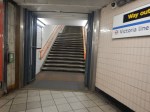
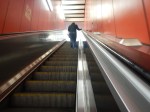
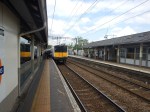
It is a nightmare.
- There are two London Overground platforms on a viaduct and three deep-level ictoria Line platforms.
- The Overground platforms are accessed by stairs although there is one up escalator and provision was made for another, although it was never installed.
- The Victoria Line station is double-ended with escalators and steps which must be negotiated by all passengers.
- Rabbits would probably feel at home in the warren of tunnels of the Underground station.
- The three subway entrances on Tottenham High Road all have just steep steps.
If ever there was a station designed by a committee of bean counters, with no children or disabilities and rail experience, it is Seven Sisters station.
Extra Pressures
Other factors will come into play in the next few years.
Tottenham Hotspur
As Seven Sisters station is the nearest Underground station to the ground, a lot of supporters walk to matches and other events along Tottenham High Road.
White Hart Lane station is being rebuilt, with increased capacity and full step-free access, so hopefully, passengers on match days at Seven Sisters station will decrease.
But the obvious route to the ground from Euston is probably to take the Victoria Line and walk from Seven Sisters station.
With the new station at White Hart Lane, there may even be an increase in interchange passengers at Seven Sisters station.
Crossrail
In any London railway scheme, Crossrail is the elephant in the room.
Will passengers between Tottenham and Enfield and the West End and Heathrow take the Overground to and from Liverpool Street and then use Crossrail?
For many passengers with limited movement, it could be a better route to avoid Seven Sisters station.
New Trains On The Overground
Hopefully, new Class 710 trains will start to arrive on the Overground this year.
As all new trains do, these will increase the number of passengers through Seven Sisters station, especially as the trains may have a much larger capacity, than the existing Class 315 trains.
Extra Services On The Overground
Transport for London are planning to add extra services through Seven Sisters, which will surely bring more passengers wanting to interchange with the Victoria Line.
Increased Frequency On The Victoria Line
The Victoria Line currently runs at thirty-six trains per hour (tph) all day, with trains running between Walthamstow Central and Brixton stations.
I am sure that the line’s engineers would love to squeeze the magic forty tph out of the line, but the capacity of some stations couldn’t handle the extra passengers.
But one way or another, more passengers will be squeezed into Dear Old Vicky and as she always does, she will deliver and more passengers will want to interchange at Seven Sisters station.
Services Between Seven Sisters And Stratford Stations
The track exists to run services between Lower Edmonton and Statford stations, via Seven Sisters, South Tottenham and Lea Bridge stations.
With all the new housing being built in the area, I feel this could be valuable addition to London’s railways.
As South Tottenham and Lea Bridge stations have step-free access, this might be an improvement that takes pressure from Seven Sisters station, by giving passengers a new route to Crossrail.
Improving Access At Seven Sisters Station
It is obvious, that passenger numbers wil be increasing at Seven Sisters station will be increasing and there will also be a substantial increase in passengers wanting to change between the Overground and the Victoria Line.
So what can be done to solve the various problems?
The Tottenham High Road Subway Entrances
These really only give access to the Victoria Line via an escalator.
Lifts tom the subway could be provided, but that would just get passengers to and from the gate-line. After the gate-line, it is just escalators to the platforms with some steps thrown in for good measure.
Victoria Line Platforms
If you were pushing a buggy or in a wheelchair, your best route to the Underground is probably to take a bus from outside the station in Tottenham High Road to Tottenham Hale station and use the step-free access there, which in a couple of months will also apply to the trains as well.
I doubt we’ll see much improvement to the Underground station, until Crossrail 2 is built, which will probably be in the 2050s.
Overground Platforms
There is a side entrance on Seven Sisters Road, that was probably the original entrance to the station.
Making this route to the Overground platforms step-free, is probably the best way to at least do something positive, as regards step-free access at the station.
It could also be relatively easy to put an escalator on the Londonj-bound platform, where there are two parallel staircases.
Conclusion
This is a very important station, that needs to be made step-free.
But it will be very difficult.
Funding Secured For New Entrance At Stratford Tube Station
The title of this post is the same as that of this article on IanVisits.
The new entrance will give those coming from the Carpenters Estate direct access to Stratford station.
This Google Map shows the South East section of the station.
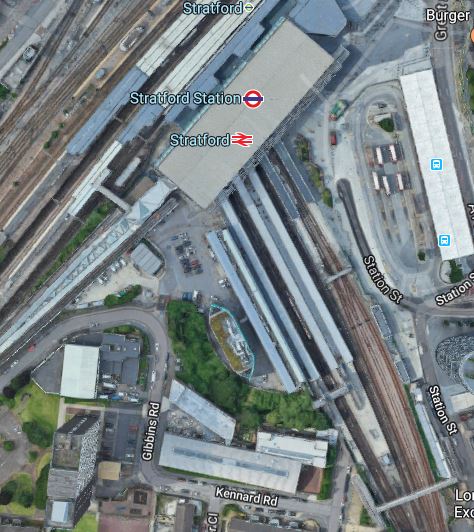
The main station building has the two station symbols on the top and the Jubilee Line platforms run Southwards from the building.
It would appear that the new entrance will be close to the Southernmost corner of the station building in a staff car park.
Knowing the station well, I suspect it will be a very useful new entrance for both residents and visitors to the Olympic Park.
It will make it easier to avoid the clutches of Eastfield.
The only details on the cost of the scheme is this sentence from Ian’s article.
Newham council has agreed to contribute £1 million to the scheme, which is being funded from its Community Infrastructure Levy.
As it incorporates some extra lifts in the station, the scheme is probably going to be more than a million pound one, but the London Legacy Development Corporation (LLDC) is involved, I suspect that everything is securely funded.
Should There Be Other Small Schemes Like This?
At Shepherd’s Bush station on the Overground, in 2015, a new entrance was built to give better access to Westfield. It is not very busy during the day, but I suspect that workers at Westfield use it more than shopper. Wikipedia says it cost £1.35 million, so I should think that the Stratford scheme wouldn’t cost a great deal more.
I believe there are other places, where extra entrances could be built.
Simple Ungated Entrances
Entrances don’t have to be grand, as I showed in An Ungated Entrance Used To Create Step-Free Access At Crofton Park Station.
These two entrances are just a hole in the station fence, Oyster readers and a bit of tarmac. There must be other places, where these entrances can be installed.
An Entrance At Hackney Central Station Into Graham Road
In It Looks Like The Hackney Downs/Central Link Is Ready To Open, I also talk in detail about adding a Southern entrance to Hackney Central station, that would lead directly into Graham Road. Eith a pedestrian crossing and changes to the bus stops, it would be a very useful step-free entrance for those living between the centres of Hackney and Dalston.
A Second Entrance At Highbury & Islington Station
In Could We Create A Second Entrance To The Overground At Highbury And Islington Station?, I investigated creating a West-facing entrance at Highbury & Islington station, that would improve access for those going to football.
Conclusion
I believe that a lot of stations can be improved, by adding extra entrances in convenient places.
It is probably easier to do in London’s Oyster/contactless card area, as a couple of readers can sort out ticketing.
The Future Of Class 378 Trains
This post is a musing on the future of the Class 378 trains.
The Thames Tunnel
The Thames Tunnel is the tail that wags the East London Line, when it comes to trains.
- For evacuation and safety purposed, trains running through the tunnel, must have an emergency exit through the driver’s cab.
- It hasn’t happened yet, as far as I know, but a version of Sod’s Law states if you ran trains without this emergency exit, you’d need to use it.
- London Overground’s Class 378 trains have this feature, but their Class 710 trains do not.
So it would appear that until Bombardier build an Aventra with an emergency exit through the driver’s cab, that the existing Class 378 trains must work all services through the Thames Tunnel.
Incidentally, I can’t think of another long tunnel, that might be served by the London Overground, so it could be that Class 378 trains will be the only trains to go through the Thames Tunnel, until they wear out and need to go to the scrapyard.
Six Car Trains On The East London Line
I covered this in Will The East London Line Ever Get Six-Car Trains? and I came to this conclusion.
I will be very surprised if Network Rail’s original plan on six-car trains on the East London Line happens in the next few years.
It might happen in the future, but it would need expensive platform extensions at Shadwell, Wapping, Rotherhithe and Canada Water and Surrey Quays stations.
Increased Frequency On The East London Line
If five-car Class 378 trains are the limit, the only way to increase capacity of the East London Line would be to increase frequency.
The current frequency of the East London Line is sixteen trains per hour (tph)
There are four tph on each of these routes.
- Dalston Junction And Clapham Junction
- Dalston Junction And New Cross
- Highbury & Islington And Crystal Palace
- Highbury & Islington And West Croydon
Two increases are planned.
- 2018 – 6 tph – Highbury & Islington And Crystal Palace
- 2019 – 6 tph – Dalston Junction And Clapham Junction
This would increase the frequency of the East London Line to twenty tph.
It will probably mean an updated digital signalling system on the East London Line.
Eventually, I think it likely, that a full ERTMS system as is fitted to Thameslink and Crossrail will be fitted to at least the East London Line, but possibly the whole Overground network.
Digital signalling would certainly allow the twenty-four tph frequency of Thameslink and CXrossrail, which could mean that the four routes all received a frequency of four tph.
But Thameslink and Crossrail are theoretically capable of handling thirty tph or a train every two minutes, through their central tunnels.
If the two modern multi-billion pound tunnels can handle 30 tph, why can’t their little brother, that started life as a half-million pound pedestrian tunnel in 1843,
The Number Of Trains Needed For The Current Service
If I go through the routes of the original Overground, I find the following.
Dalston Junction And Clapham Junction
Trains take 46 minutes to go South and 44 minutes to come North and a round trip would take two hours.
This means that the current four tph service would need eight trains.
A six tph service in the future would need twelve trains.
Dalston Junction And New Cross
Trains take 22 minutes both ways and a round trip would take an hour.
This means that the current four tph service would need four trains.
A six tph service in the future would need six trains.
Highbury & Islington And Crystal Palace
Trains take 44 minutes to go South and 43 minutes to come North and a round trip would take two hours.
This means that the current four tph service would need eight trains.
A six tph service in the future would need twelve trains.
Highbury & Islington And West Croydon
Trains take 52 minutes both ways and a round trip would take two hours.
This means that the current four tph service would need eight trains.
A six tph service in the future would need twelve trains.
This means that the current four tph on all four routes needs twenty-eight trains.
The Proposed 2020 Service
This will have two extra tph to Crystal Palace and Clapham Junction and will need thirty-six trains.
Six Trains Per Hour On All Four Routes
as each route terminates at both ends in a single platform, which can handle six tph, with the right signalling, I feel that this could be the design objective of the East London Line, when it was built in the early-2010s.
This could be achieved with forty-two trains, leaving perhaps twelve to fifteen trains for other duties, depending on how many are needed on stand-by or are in maintenance.
What Could Be Done With Twelve Trains?
As I calculated earlier, three routes need twelve trains to provide a six tph service.
- Dalston Junction And Clapham Junction
- Highbury & Islington And Crystal Palace
- Highbury & Islington And West Croydon
All three services take between 44 and 52 minutes.
So could another six tph service that takes around this time be added to the current four services?
Willesden Junction As A Northern Terminal
Trains could take the North London Line to Willesden Junction and terminate in the Bay Platform 2.
I estimate the following timings from Willesden Junction.
- Highbury & Islington – 27 mins
- Dalston Junction – 31 mins
- Whitechapel – – 41 mins
- New Cross – 49 mins
- Crystal Palace – 64 mins
- Clapham Junction – 73 mins.
- West Croydon – 74 mins
It would appear that the only possible Southern terminal of the current four, would be New Cross, as that is the only terminal within the 44-52 minute range of journey time.
So could a service between Willesden Junction and New Cross replace the current one between Dalston Junction and New Cross?
- It would need to be run using dual-voltage trains
- Voltage changeover could be at Highbury & Islington station.
- Extending the New Cross service would free up a bay platform at Dalston Junction station.
- It should be possible to have a frequency of six tph.
- Serious modifications or additions to infrastructure would probably not be required.
As running to Willesden Junction was talked about before the Overground opened, I wonder if the numerous crossovers on the North London Line, already allow trains from the East London Line to terminate at Willesden Junction.
Southern Terminals Via New Cross Station
This map from carto.metro.free.fr shows the lines at New Cross station.
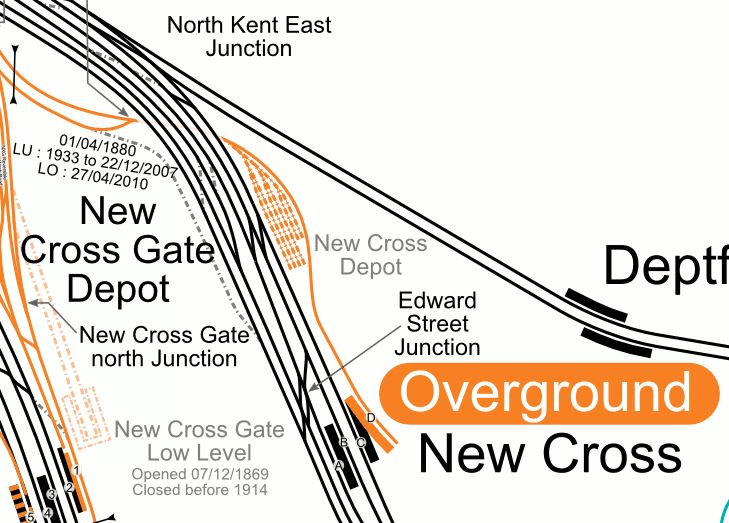
Note how the double-track East London Line, shown in orange, arrives from Surrey Quays station arrives in the North-Western corner of the map, becomes a single-track and then goes under the main lines before going into the bay platform D.
This Google Map shows the same area.
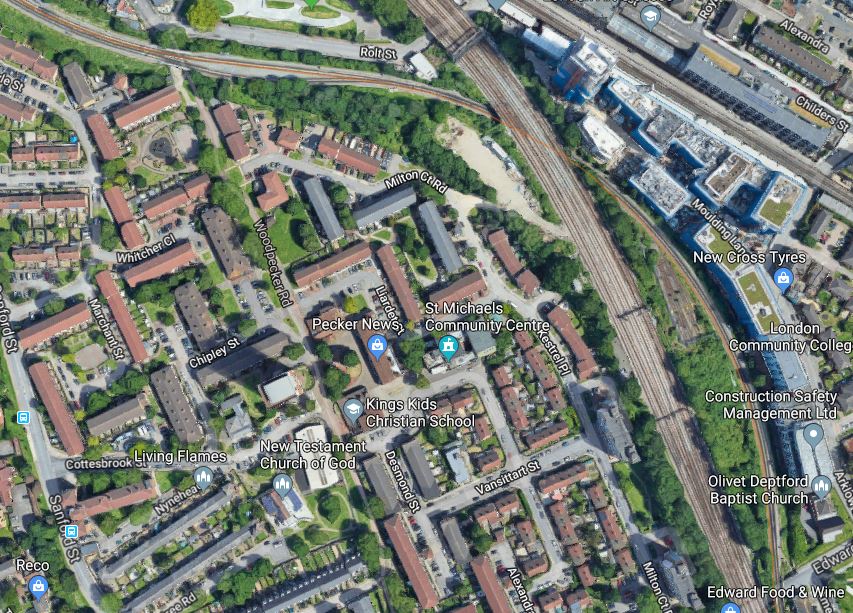
The London Overground track is clearly visible.
Could extra track be added, to enable the following?
- Southbound trains could join the main line and stop in Platform C
- Northbound could leave the main line after stopping in Platform A and go towards Surrey Quays station.
If this is possible, then trains could run between Dalston Junction and Lewisham stations.
Once at Lewisham they would have choice of Southern terminal,
Hayes As A Southern Terminal
Consider a service between Dalston Junction and Hayes stations.
- I estimate that a train could go between the two stations in 53 minutes.
- Hayes station has two terminal platforms
Six tph would probably be too many services, but 2-3 tph might be very welcome.
Orpington As A Southern Terminal
Consider a service between Dalston Junction and Orpington stations.
- I estimate that a train could go between the two stations in 47 minutes.
- Orpington station has three terminal platforms.
Six tph would probably be too many services, but 2-3 tph might be very welcome.
A Combined Hayes And Orpington Service
As a case can be made for services to both Hayes and Orpington via Lewisham, I think the ideal service could be two tph to both Hayes and Orpington.
- There would be four tph between Dalston Junction and Lewisham.
- Stations on the East London Line would have access to the important interchange station at Lewisham.
- Several stations on the routes to Hayes and Orpington would have a two tph service to Crossrail and the Jubilee Line.
Other Stations Via New Cross
Looking at rail maps, there would seem to be several possibilities including with their times from Dalston junction station.
- Beckenham Junction – 41 mins
- Bromley North – 40 mins
- Gove Park – 35 mins
There are probably others.
Southern Terminals Via Peckham Rye Station
As an example Streatham Common station is planned to be a major interchange and is 43 minutes from Dalston Junction.
Would a bay platform work here as an East london Line terminal?
Conclusion
If all fifty-seven Class 378 trains worked the East London Line, they could run six tph on the current routes.
- Dalston Junction And Clapham Junction
- Dalston Junction And New Cross
- Highbury & Islington And Crystal Palace
- Highbury & Islington And West Croydon
It would need forty-two trains.
Suppose the Dalston Junction and New Cross service was replaced with a Willesden Junction and New Cross service.
- This would provide a useful direct four tph service between East and North London.
- Changing at Highbury & Islington station would be avoided for a lot of journeys.
- The journey time wold be around 49 minutes.
- A two tph service would need four trains.
- A four tph service would need eight trains.
- A six tph service would need twelve trains.
- Many journeys between North and South London would now be possible with just a single same platform interchange.
To run the following frequencies on this route would mean these total frequencies on the East London Line and total numbers of trains.
- 2 tph – 20 tph – 40 trains
- 4 tph – 22 tph – 44 trains
- 6 tph – 24 tph – 48 trains
I think that if the figures are juggled a bit, there is enough trains to run extra services to one or more Southern destinations from Dalston Junction.
My preference would be a split service of 2 tph to both Hayes and Orpington via New Cross, where some new track would be needed.
This would do the following.
- Create a frequent connection between South-East and North-East London.
- Both areas would be connected to Crossrail and several Underground Lines, including the future Bakerloo Line Extension.
- The Hayes Line would be shared between Overground and Southeastern trains.
No more new trains or large amounts of new infrastructure would be needed.
I suspect that London Overground and the new Southeastern franchise can do better than my musings.
 The Anonymous Widower