From Moorgate To Imperial Wharf – 30th June 2022
I wanted to see the new entrance at Imperial Wharf station today, so after a full English breakfast on Moorgate, I took the Lizzie Line, Central and West London Lines across London.
I took this route.
- Lizzie Line – Moorgate to Tottenham Court Road
- Central Line – Tottenham Court Road To Shepherds Bush
- West London Line – Shepherds Bush To Imperial Wharf
I took these pictures along the route.
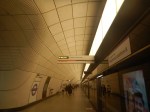
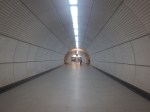
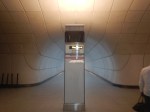

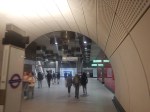
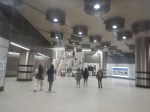



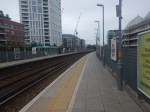
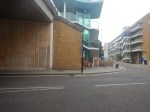
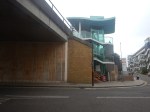

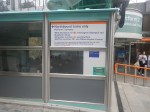
Note.
- The change at Tottenham Court Road station involves going up to the ticket hall and down again.
- The change at Shepherds Bush involves crossing the road between the Central Line and Overground station.
- The last few pictures show the new entrance at Imperial Wharf, which is for Northbound trains only.
When Bond Street station opens on the Lizzie Line, it should be easier to change there for the Central Line.
The Plans For A Connection Between The Lizzie And West London Lines?
This map from cartometro.com shows, where the Lizzie and West London Lines cross in the area of Old Oak Common.
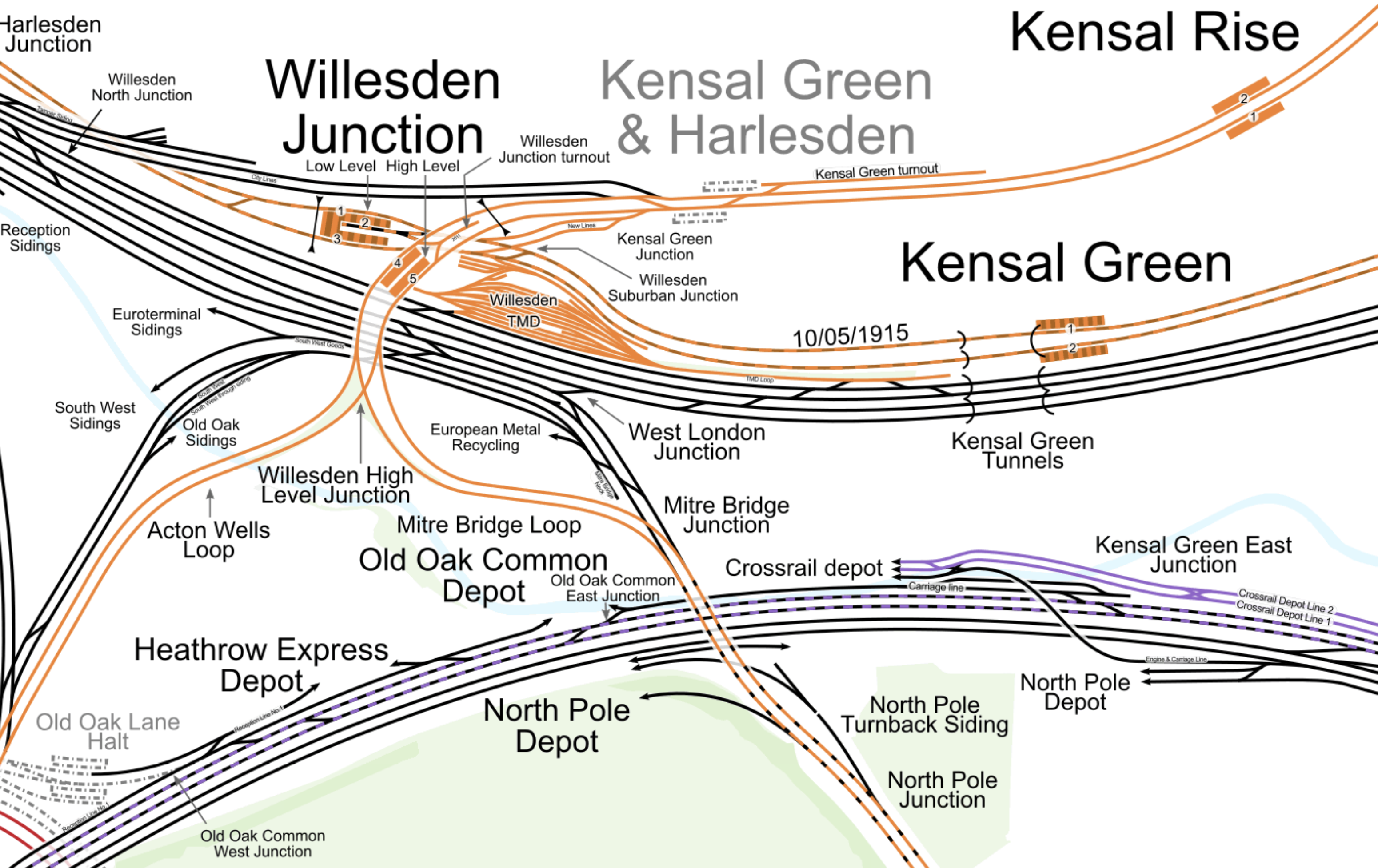
Note.
- The Overground is shown in orange and splits into the North and West London Lines South of Willesden Junction station.
- The Lizzie Line is shown in purple and black, as it goes across the map, as at this point it shares tracks with the Great Western Main Line.
This map shows how High Speed Two will change the lines.
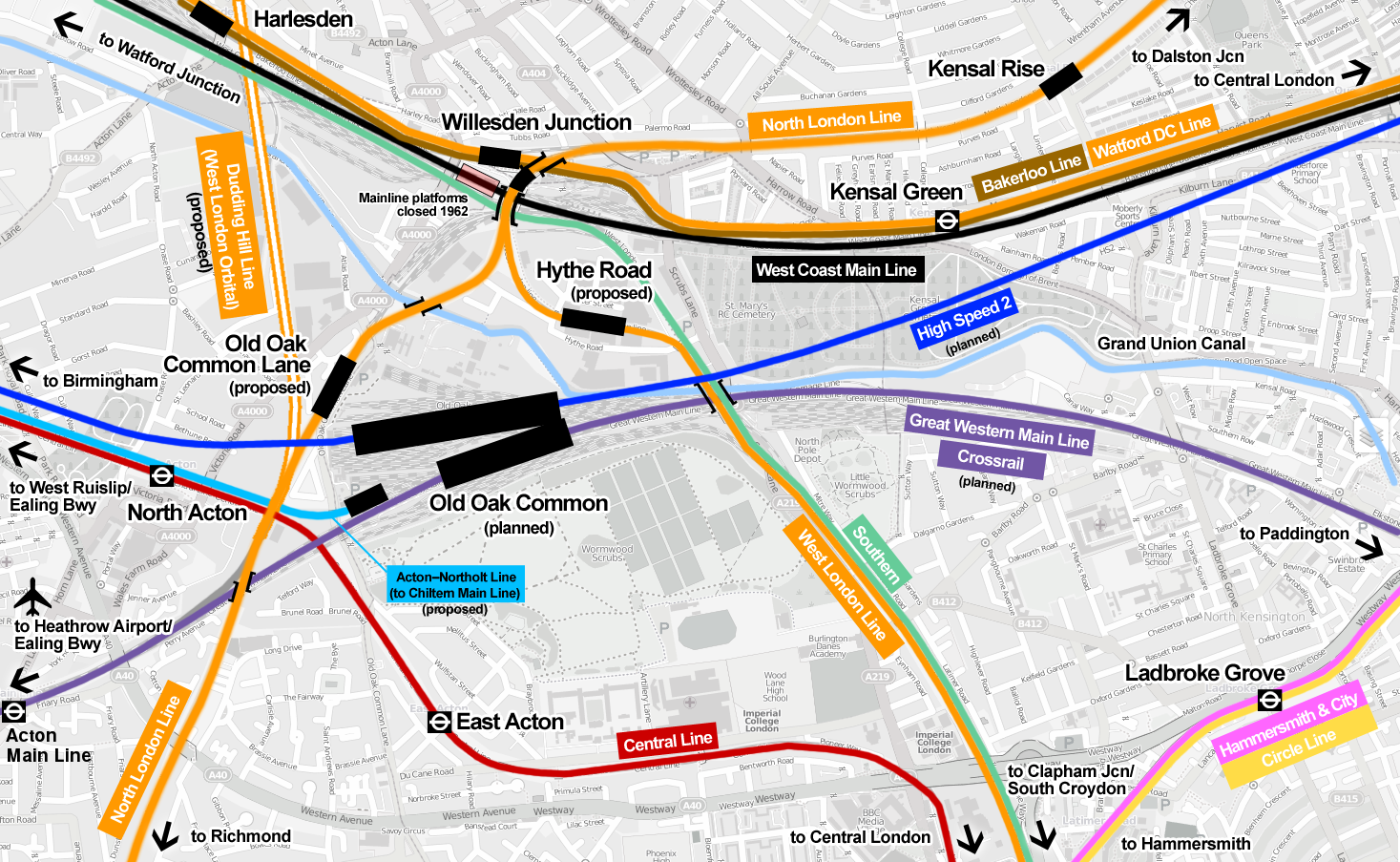
Note.
- Hythe Road station on the West London Line, which will have a walking route to High Speed Two and the Lizzie Line.
- Old Oak Common Lane station on the North London Line, which will have a walking route to High Speed Two and the Lizzie Line.
- The Dudding Hill Line, which is shown as an orange double-line and could be part of the West London Orbital passing North-South to the West of Old Oak Common Lane station.
- The Acton-Northolt Line, which is shown in blue and could give Chiltern Railways extra platforms at Old Oak Common with a walking route to High Speed Two and the Lizzie Line.
Wikipedia says that the status of the two Overground stations according to Transport for London is as follows.
Subject to funding being secured and further public consultation, we would seek permission to build and operate the proposals via a Transport and Works Act Order (TWAO). Funding remains a significant constraint in delivering these proposals. We are currently seeking to establish a package of funding that could enable the stations to be delivered by 2026 alongside the new HS2 and Elizabeth line station.
I suspect that with our current South London Mayor, we will see little progress on these connectivity schemes at Old Oak Common station, as with the possible exception of Hythe Road station, there’s little in it for South London.
Conclusion
Hythe Road station would certainly have made my journey easier yesterday.
Hopefully, though, if I do the journey again in the next year or so, Bond Street station will be open on the Lizzie Line and I’ll change to the Central Line there.
I’m Missing The Elizabeth Line Today
Today is a Sunday and because engineers are working on connecting the three sections of the Elizabeth Line, there are no trains in the central section between Abbey Wood and Paddington stations.
I have got used to the new line and generally use it if I stray farther than a couple of miles from home to the South. It’s just so handy, when you want to go in an East-West direction across London.
One of the draws to me of the Elizabeth Line is that it is air-conditioned and in the current heat-wave, it is much more pleasant to travel on the line compared to the Central and Northern Lines.
So for my journeys around Central London, I tend to stick to buses, the Overground, Elizabeth Line and Thameslink.
TfL Advances Plans For DLR And Overground Extensions
The title of this post, is the same as that of this article on New Civil Engineer.
This is the first paragraph.
Transport for London (TfL) has confirmed that it is moving ahead with plans to extend the Docklands Light Railway (DLR) and the West London Orbital (WLO), part of the London Overground.
So it appears that despite all their financial problems, some progress is being made.
The Docklands Light Railway Extension To Thamesmead
I first wrote about this project in TfL Considering Extending DLR As Far As Abbey Wood.
Now it appears that TfL has been working with Homes England and the Department for Levelling Up, Housing and Communities on a feasibility study for the extension.
I would like to see this extension incorporation the following.
- A signature bridge over the Thames with good views of the river.
- A station with a convenient connection to Crossness, which could become one of major London’s tourist attractions with better transport links.
- A connection to the Elizabeth Line at Abbey Wood station.
It could help to level up Thamesmead, whose main claim to fame is that it was where the violent film Clockwork Orange was made.
The West London Orbital Railway
I have written extensively about this railway and you can see my posts here.
This map from the Mayor’s Transport Strategy shows the route.
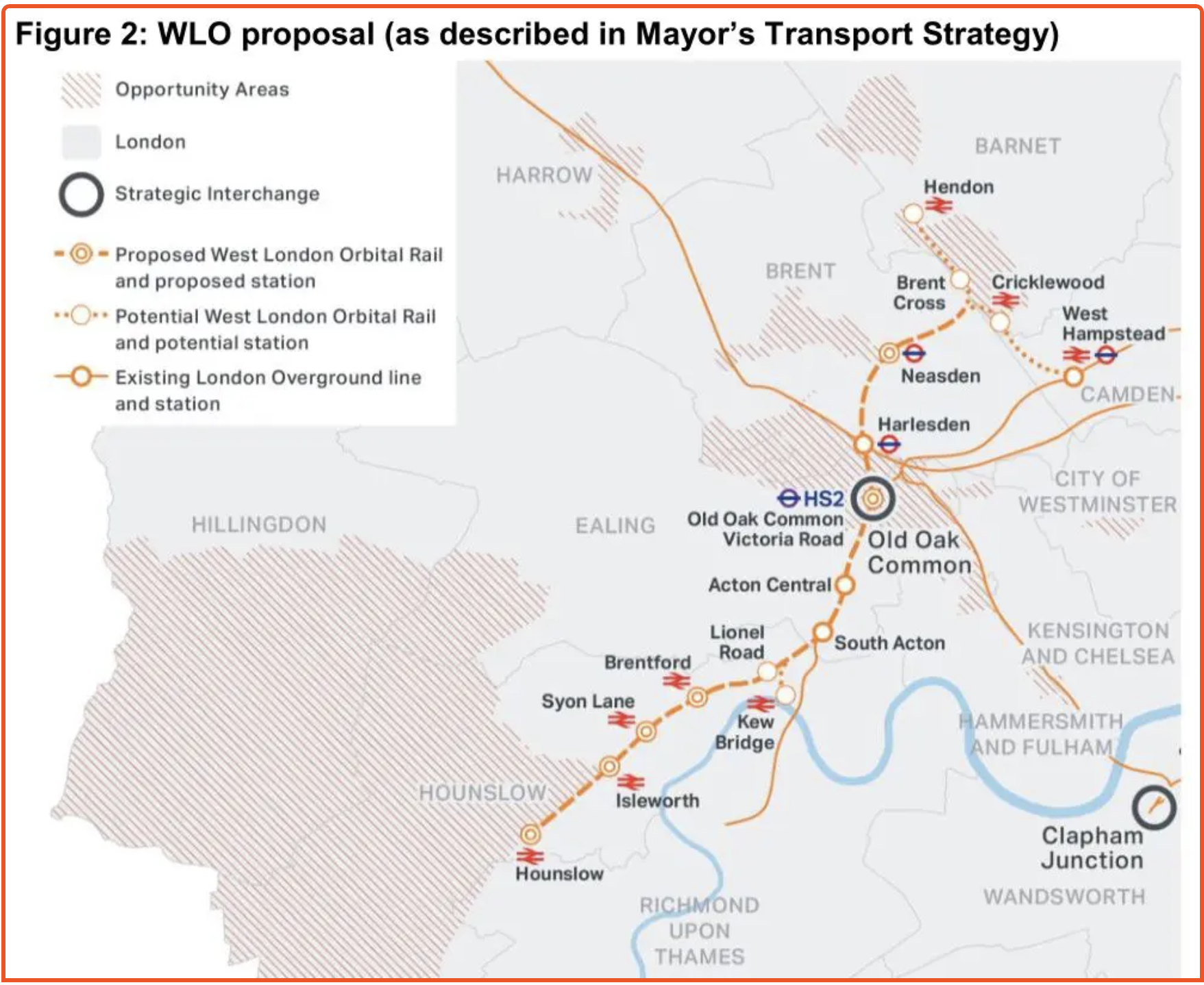
I believe this railway could do the following.
- Level-up much of North-West London.
- Provide better access to Heathrow.
- Link West London to High Speed Two and the Elizabeth Line.
It would also provide better links to Brentford’s new stadium.
The New Civil Engineer says this about funding.
TfL now confirms that the West London Alliance has commissioned feasibility work for the scheme. Meanwhile, TfL is considering options for a Borough Community Infrastructure Levy to help pay for it and has been investigating development opportunities on the route that could unlock funds via Section 106 planning obligations and Carbon Offset funding.
Conclusion
It does appear there are ways and means to fund these schemes, without expecting the rest of the UK to fund London’s transport network.
Dalston Junction To Moorgate Via The Elizabeth Line
This morning to get my breakfast at Leon on Moorgate, I took the longer route via Dalston Junction and Whitechapel stations using the East London and Elizabeth Lines.













Note.
- I travelled in the last coach of the Overground train from Dalston Junction station.
- I travelled towards the front of the Elizabeth Line train from Whitechapel station.
- There are lifts between Overground and the Elizabeth Line at Whitechapel station.
- All the escalators have traffic lights.
- Using stairs and escalator, the change at Whitechapel station took around two minutes.
The total journey time was just over 25 minutes.
Possible Regular Services Between West Somerset Railway And Taunton
The title of this post, is the same as that of this article on Rail Advent.
These are the introductory paragraphs.
Hopes are growing that regular scheduled train services will once more operate between the West Somerset Railway (WSR) and the national rail network.
There is an increasing interest in re-opening long-closed stations and lines on the network. To this end, a partnership working group has been set up to look at the prospects of running scheduled trains between WSR’s Bishops Lydeard station and Taunton, which would safeguard the WSR’s long-term future.
The working group comprises representatives of the Heart of South West Local Enterprise Partnership, Great Western Railway, Network Rail, Somerset County Council, and WSR Plc.
Given the success of the reopened Okehampton station, that I wrote about in Success For The Dartmoor Line, where 2,500 passengers a week have used the trains since last November, I wonder if Somerset is aiming to emulate Devon’s success, with the West Somerset Railway.
There are certainly similarities between the two routes.
Connection To The County Town
Both routes connect to the county town.
- The Dartmoor Line connects to Exeter, which is the county town of Devon.
- The West Somerset Railway connects to Taunton, which is the county town of Somerset.
As the county town usually contains important local services like the council offices and the Courts, this is often convenient.
Connection To The Great Western Railway
Both routes could have excellent connections to the Great Western Railway.
- Exeter St. David’s station is a major interchange.
- Taunton station could be a more important interchange.
Note.
- Both stations have connections to Bristol, London and Cornwall.
- The two stations are well-connected to each other.
- Both stations have six platforms, which include some bay platforms for branch line services.
This Google Map shows the less developed Taunton station.
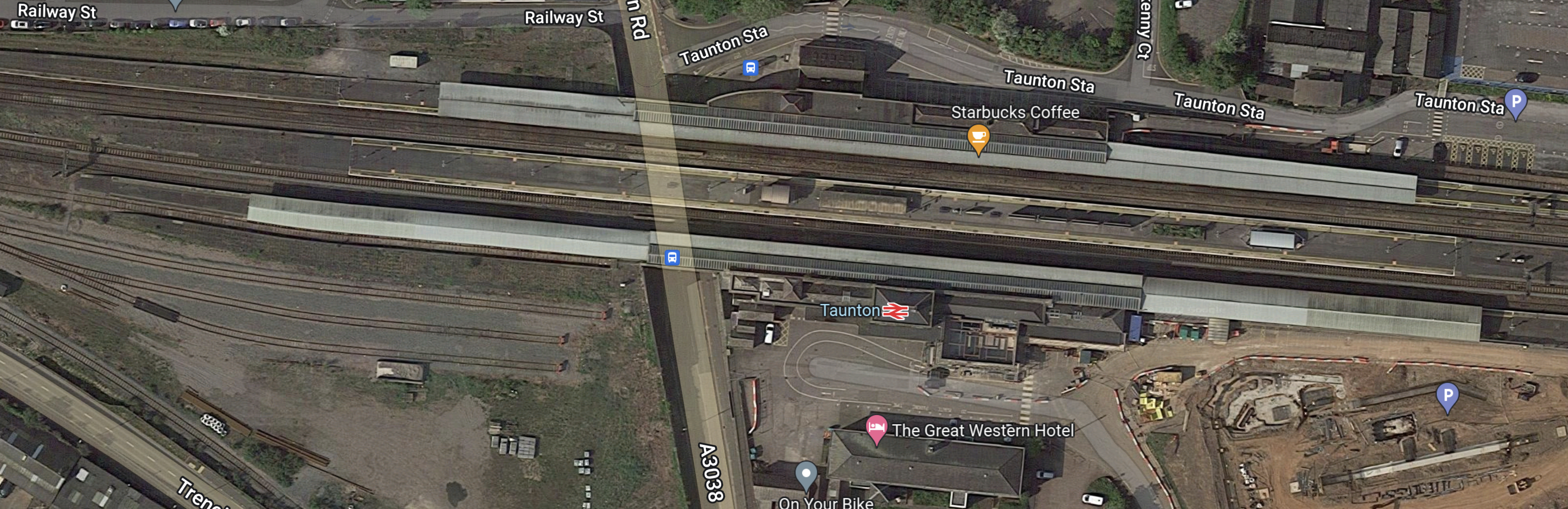
Note that there appears to be lots of space for development of rail and related development.
Both Branches Were/Are In Use Before Development
Before the Dartmoor Line was reopened, the route was in occasional use for both freight and passenger trains. Great Western Railway have in recent years run InterCity125 trains to Okehampton station.
With reopening the line to Okehampton, there was no major viaduct or bridges to rebuild, although Network Rail took the prudent decision to relay the track.
It would appear that the West Somerset Railway has similar use for both freight and passenger trains. How much work will be needed to bring it up to an acceptable standard.
Great Western Railway Are Providing Initial Weekend Services
On the Dartmoor Line services started between Exeter and Okehampton in 2019 and Wikipedia says this about initial services between Taunton and Bishops Lydeard station.
In 2019, the WSR entered into a partnership with the modern Great Western Railway (GWR) to operate Summer Saturday services to Bishops Lydeard from Taunton beginning on 27 July 2019. The introduction of these GWR services will mark the first time the station has been connected to the rest of the national rail network since its initial closure in 1971.
Is history going to repeat itself?
The First Step
This paragraph from the Rail Advent article, indicates the first step to reopening a service between Taunton and Minehead.
The first task will be to look at the simplest and most effective way in which the link between the WSR and the mainline can be improved, signalled, and operated. An outline business plan will then be developed to estimate how much it would cost.
This Google Map shows the link between the West Somerset Railway and the mainline.
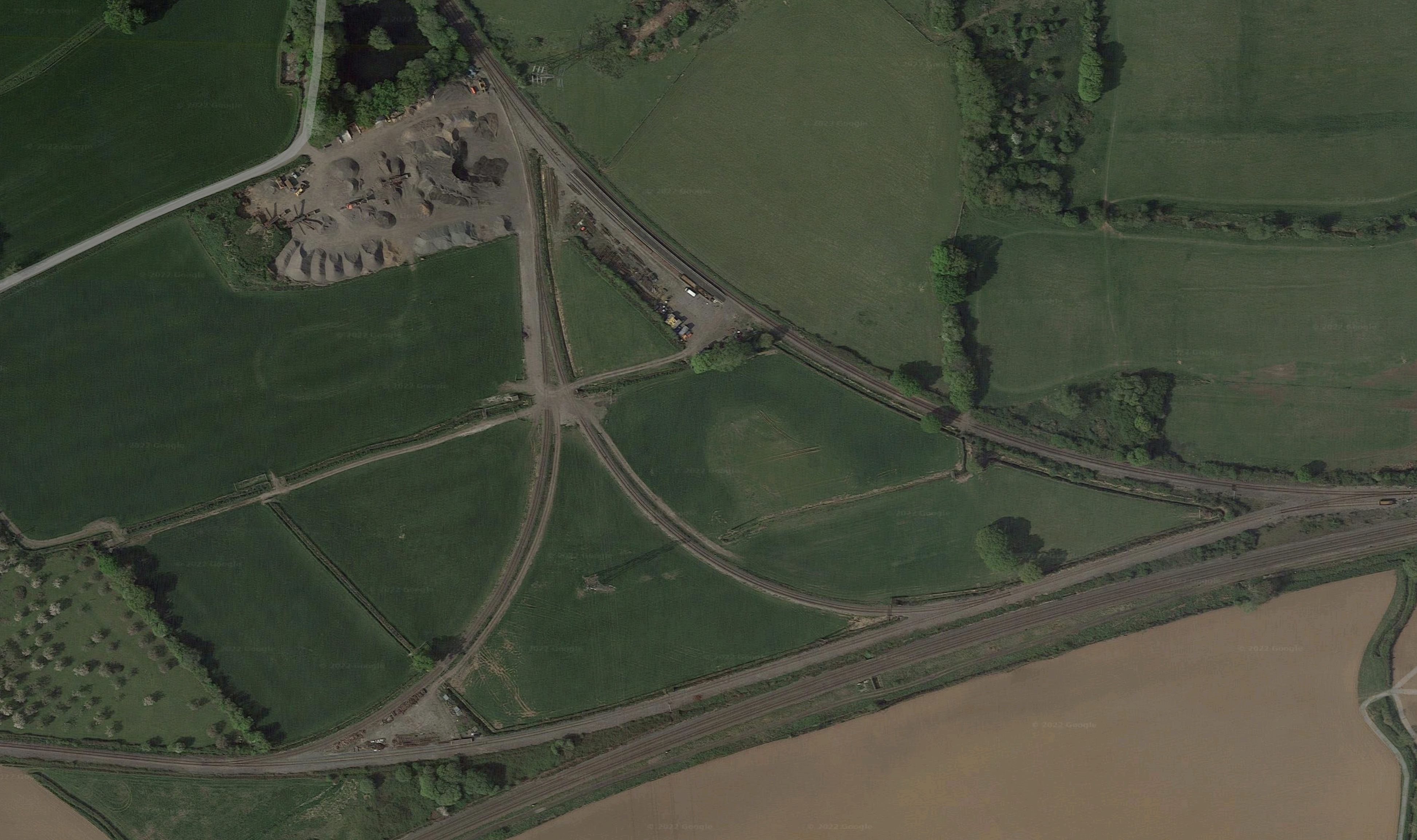
Note.
- The large triangular junction.
- The Bristol-Exeter railway runs East-West across the bottom of the map.
- Minehead is to the North.
- Taunton is to the East.
- A disused line to Barnstaple is to the West.
- The site to the West of the top of the triangular junction is a ballast cleaning site.
It does appear that there could be the space to create an efficient junction linking the two railways.
Initial Regular Services
This was one of the introductory paragraphs.
There is an increasing interest in re-opening long-closed stations and lines on the network. To this end, a partnership working group has been set up to look at the prospects of running scheduled trains between WSR’s Bishops Lydeard station and Taunton, which would safeguard the WSR’s long-term future.
This page on the Railway Touring Company web site is entitled The West Somerset Steam Express.
This paragraph describes the trip.
This series of trains from London Paddington to Minehead features haulage by two steam locomotives in one day.
One steam locomotive will haul our train from London Paddington to the West Somerset Railway at Bishops Lydeard.
The Heritage Railway will then provide a steam locomotive to haul our train to Minehead and back. This provides a truly fascinating day out travelling through beautiful scenery to the Bristol Channel coast.
So it looks like, the initial services on the between Taunton and Bishops Lydeard stations, will duplicate services that are already planned on a very much less frequent basis.
Bishops Lydeard Station
Bishops Lydeard station is the station, where mainline and West Somerset services meet.
This OpenRailwayMap shows the track layout at the station.
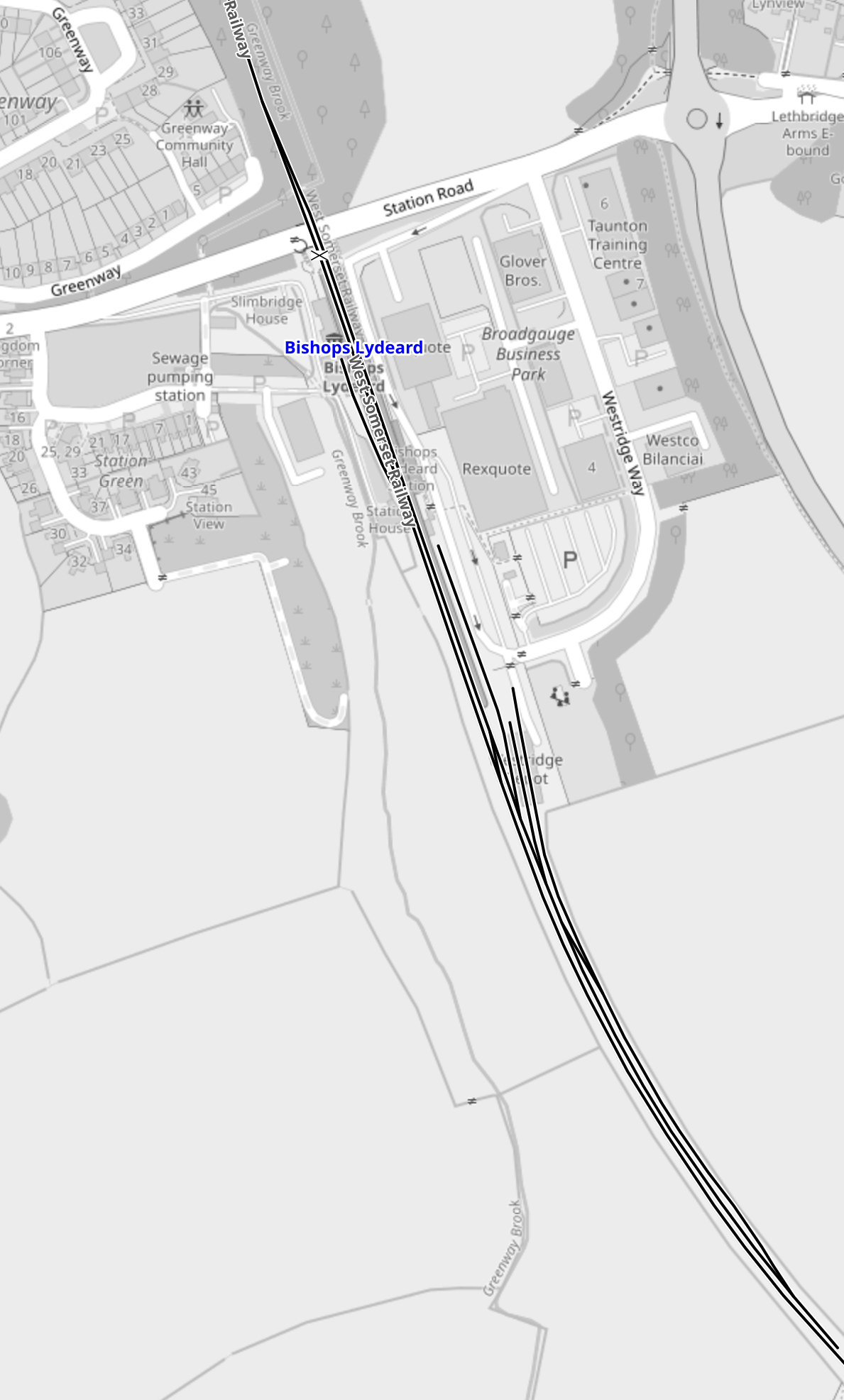
Note.
- The station is the Southern terminus of the West Somerset Railway.
- Track is single to the North and South of the station.
- Bishops Lydeard station has two platforms.
- There is a passing loop.
If the terminal station has a serious problem, it doesn’t appear to have much parking.
So it would appear, that a link to Taunton might improve the finances of the West Somerset Railway, by attracting more visitors.
Onward To Minehead
This OpenRailwayMap shows the last section of the West Somerset Railway to Minehead.
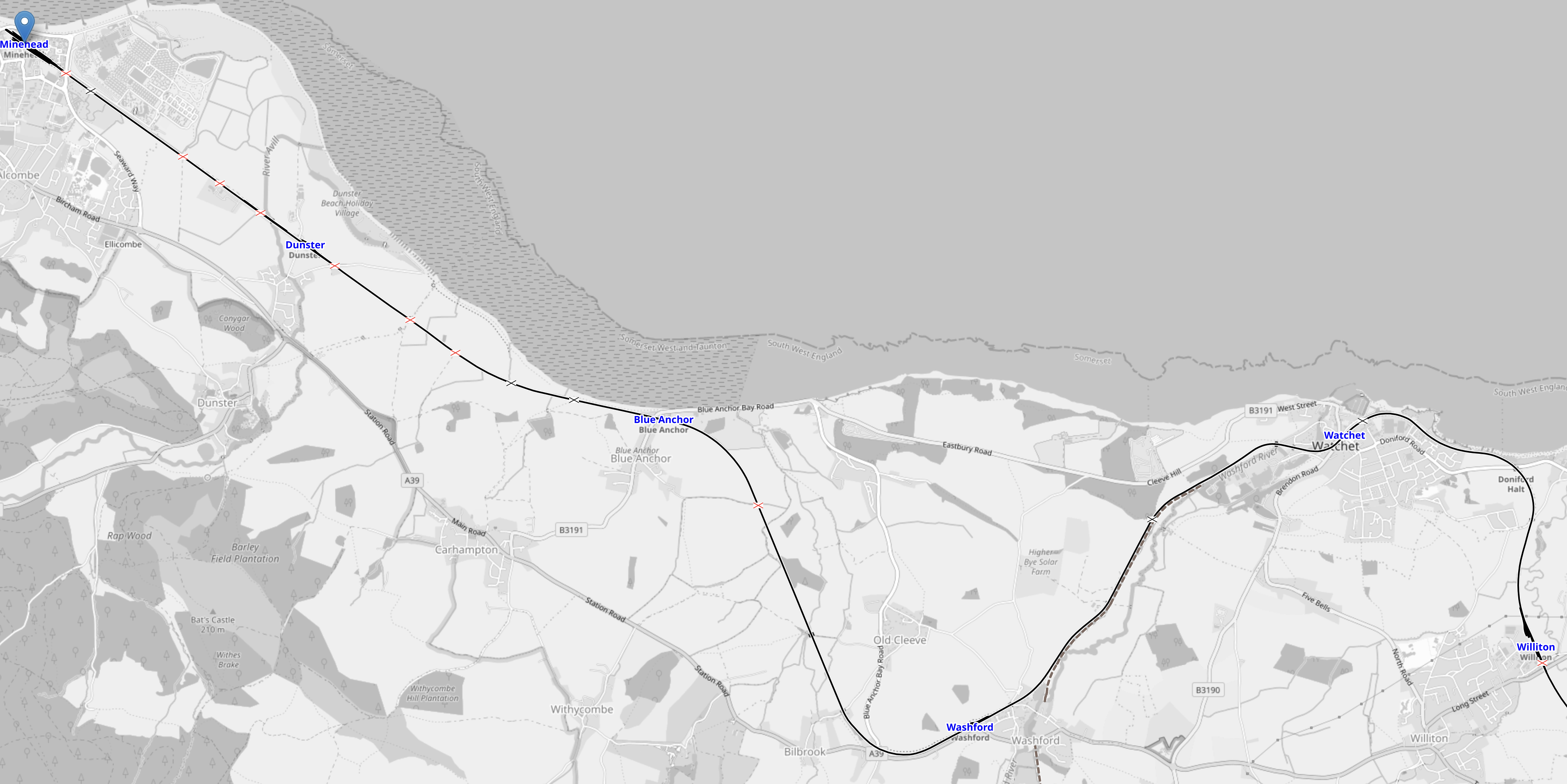
Note.
- Minehead station is in the North West corner of the map.
- Minehead station appears to be a well-equipped station, with two platforms.
- Minehead station even has a turntable for turning locomotives.
- There are four or five stations close to the coast.
The Wikipedia entry for Minehead, says this about the town.
The parish of Minehead has a population of approximately 11,981, making it the most populous town in the western part of the Somerset West and Taunton local government district, which in turn, is the worst area in the country for social mobility.
The West Somerset Railway could become both a useful and a real bucket-and-spade railway. Surely, that could generate revenue and level-up the area.
Financing
If you want something to work well, you must get the finances right.
I have lived in Dalston in London for twelve years now. When I moved here after my wife died and I had had a serious stroke, which left me unable to drive, I relied on an antiquated mainly bendy-bus-based public transport system.
Then along came the Overground and fleets of shiny new buses and Hackney and Dalston in particular was more than levelled up with London’s more salubrious boroughs.
Shopping improved with M & S returning after at least seventy years. There’s even a Pret, which boomed during the pandemic.
Transport for London got the financing for the Overground right and they created a success.
Conclusion
Can the initial working group find a financial model so that the West Somerset Railway can do for West Somerset, what the Overground has done for Dalston and the Dartmoor Line appears to be doing for Devon?
I thoroughly hope so!
A New Route Between New Cross Gate And Queen’s Park Stations
In Does The Elizabeth Line Offer Similar Benefits To The Bakerloo Line Extension?, I said this.
I suspect that the easiest way between New Cross Gate and Harrow & Wealdstone will be with changes at Whitechapel and Paddington.
I also said, I would try out the route today.
I did a shorter route between New Cross Gate And Queen’s Park stations, with the same two changes.
For each extra station, I can apply Irene’s Law, by adding two minutes for each station.
I took these pictures on the route.

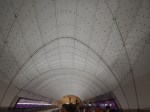

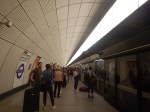

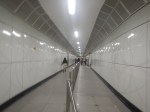
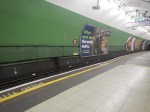

Note.
- On the Overground and the Elizabeth Line, there were few spare seats and a number of standees.
- Quite a few passengers changed at Whitechapel.
- The tunnel at Paddington between Elizabeth and Bakerloo Lines wasn’t very busy.
- The Bakerloo Line wasn’t very busy.
I have a few thoughts.
First Time Riders
I got the impression, a lot of passengers were first-time riders.
This could explain the passenger numbers.
Timings
These were my timings.
- It took me forty-six minutes for the fourteen stations.
- The interchange at Whitechapel was about four minutes.
- At Paddington, I walked between the Elizabeth and Bakerloo Line platforms in under five minutes and then just missed a Northbound train.
Irene’s Law
I talk about Irene’s Law in Irene’s Law – Estimating Tube Journey Times, where I define it like this.
If you want to get an estimate of how long a journey will take on the London Underground, you count the number of stations and multiply by two, before adding five for every interchange.
For the Overground, I’ve found that using three minutes for the number of stations gives a reasonable answer.
So how does it fit for my journey?
- The base time is forty-six minutes.
- Deduct ten minutes for the two changes gives thirty-six minutes.
- 36/14 gives 2.6 minutes.
I’ll go with that! But it looks like for a mixed journey like this, 2.5 might give a rough estimate.
How Would This Time Compare With An Extended Bakerloo Line?
Consider.
- New Cross Gate station could be on an extended Bakerloo Line.
- The Bakerloo Line timetable gives a time of 26 minutes between Queen’s Park and Elephant & Castle stations.
- There are three extra stations, which would probably be two minutes per station.
So the time between Queen’s Park and New Cross Gate stations would be 32 minutes via an extended Bakerloo line.
Conclusion
It looks like an extended Bakerloo Line will be a few minutes quicker.
But that the Elizabeth Line will be a good alternative for a few years.
My feeling is that the Elizabeth Line will have enough capacity for several years, but that eventually the Bakerloo Line will need to be extended.
Does The Elizabeth Line Offer Similar Benefits To The Bakerloo Line Extension?
This map shows the proposed Bakerloo Line extension.
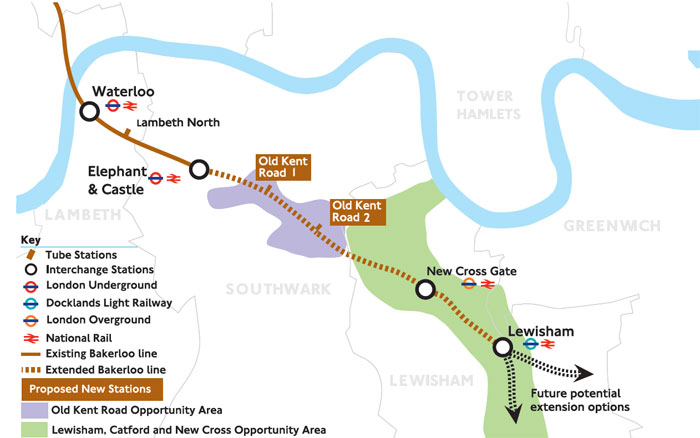
Note.
- There are new or improved stations at Old Kent Road 1, Old Kent Road 2, New Cross Gate and Lewisham.
- New Cross Gate station has Overground and Southern services.
- Lewisham station has Docklands Light Railway and Southern services.
- The future potential option going South is to take over the Hayes Line.
Could we provide improvements along the line of the Bakerloo Line Extension in a less disruptive and more affordable manner?
I will look at the various stations.
New Cross Gate
New Cross Gate station is a fully-accessible station, as these pictures show.
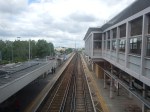
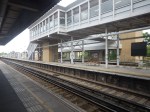
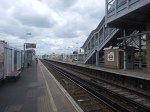
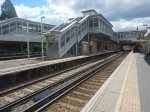
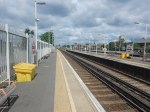
The station, currently has the following services.
- Overground – Highbury & Islington and Crystal Palace – 4 tph
- Overground – Highbury & Islington and West Croydon – 4 tph
- Southern – London Bridge and Victoria via Sydenham – 2 tph
- Southern – London Bridge and Coulsdon Town via Sydenham – 2 tph
Note.
- tph is trains per hour.
- The Overground services provide an 8 tph service to the Elizabeth Line at Whitechapel station.
- TfL may well increase the frequency of the two Overground services to 5 tph.
I suspect that the easiest way between New Cross Gate and Harrow & Wealdstone will be with changes at Whitechapel and Paddington.
- New Cross Gate and Whitechapel – Overground – 13 minutes.
- Whitechapel and Paddington – Elizabeth Line – 14 minutes.
- Paddington Interchange – 15 minutes
- Paddington and Harrow & Wealdstone – Bakerloo Line – 29 minutes
This gives a total time of 71 minutes.
As Bakerloo Line trains go between Elephant & Castle and Harrow & Wealdstone, which is 24 stations and the journey takes 48 minutes, this gives a figure of two minutes per station.
- This seems to fit Irene’s Law, which I wrote about in Irene’s Law – Estimating Tube Journey Times.
- So it looks like a direct train on the extension would take 54 minutes.
- That time fits well with the 71 minutes via the Elizabeth Line if fifteen minutes is allowed for the walk at Paddington.
I will do the trip for real today.
Lewisham
There are two ways to get between Lewisham and the Elizabeth Line.
- Take the Dockland’s Light Railway to Canary Wharf. Estimated at 15 minutes.
- Take a train to Whitechapel, which needs a change of train at New Cross station. Estimated at 17 minutes minimum.
Neither are perfect.
I will try out these two trips soon.
Hayes
The Hayes Line is often talked about as the final destination of the Bakerloo Line.
In More Frequent Trains And A New Station For The London Overground, I put forward a plan for connecting the Hayes Line to the New Cross branch of the London Overground.
This map from carto.metro.free.fr shows the lines at New Cross station.
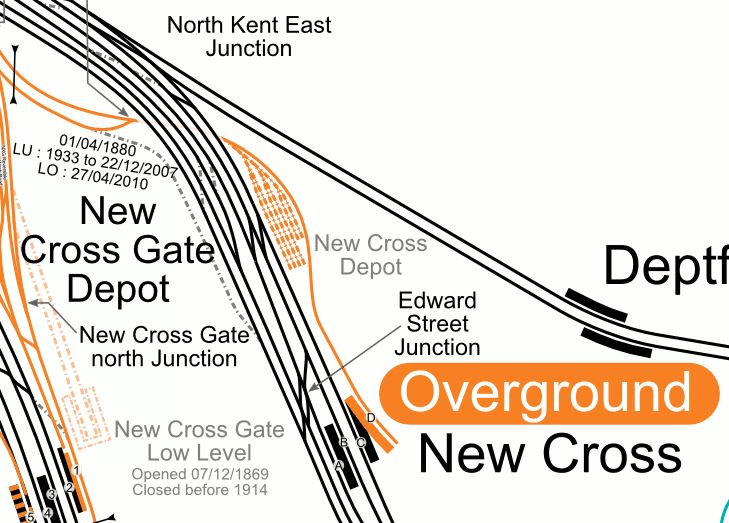
Note.
- The double-track East London Line, shown in orange, arrives from Surrey Quays station arrives in the North-Western corner of the map, becomes a single-track and then goes under the main lines before going into the bay platform D.
- Hayes Line services use Platform C going South and Platform A going North.
- Could the Overground going South divert into Platform C for Hayes?
- It would appear there used to be a line connecting Platform A to the East London Line of the Overground. Could this line be reinstated?
This Google Map shows the same area.
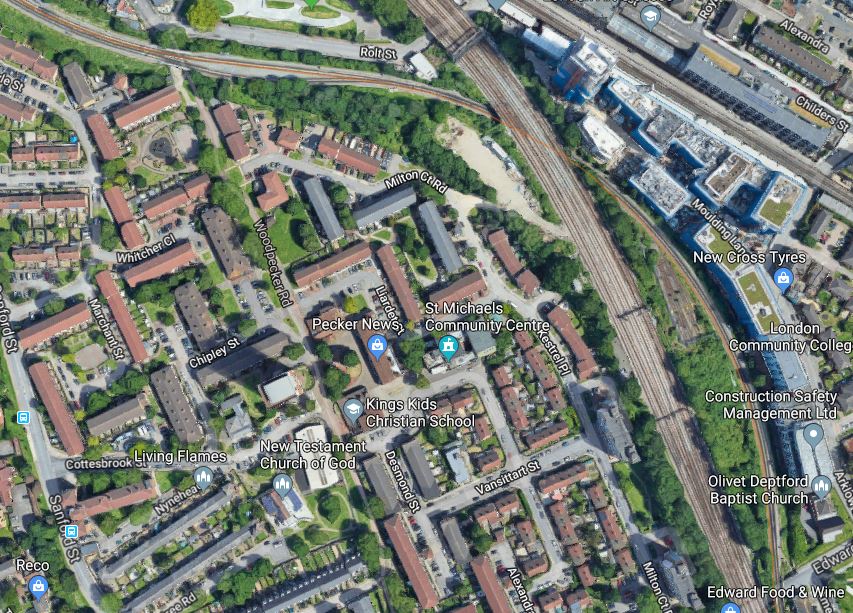
Note.
- The London Overground track is clearly visible.
- The needed connection certainly looks possible, without too much heroic engineering.
- Although, I suspect it could need digital signalling to get everything to work smoothly. But that will happen anyway!
The big advantage of this approach, is that all stations between Whitechapel and Hayes, would have a direct connection to the Elizabeth Line.
Hayes Line services would still continue to Victoria and Cannon Street, although the frequency might be reduced, depending on how many Overground services used the route.
Old Kent Road 1 And Old Kent Road 2
I think there are two ways to serve this important area.
- The first would be to run a high-frequency bus service between Elephant & Castle and the two stations at New Cross.
- I also suspect, it would be possible to have a short extension of the Bakerloo Line to a double-ended station at New Cross Gate and New Cross stations.
I went into the second way in More Frequent Trains And A New Station For The London Overground, where I came to these conclusions.
I am drawn to these two conclusions.
- The Bakerloo Line should be extended via two new Old Kent Road stations to a double-ended terminal station in New Cross with interchange to both New Cross Gate and New Cross stations.
- The New Cross branch of the London Overground should be extended through Lewisham to Orpington and/or Hayes.
My preferred destination for the London Overground service could be Hayes, as this would surely help to free up paths through Lewisham and London Bridge.
I also feel, that the scheme would be much more affordable if high-specification buses were used between Elephant & Castle and the two stations at New Cross.
Conclusion
There are certainly possibilities to create an alternative route, with the same objectives as the Bakerloo Line Extension.
A Cruise To Barking – 13th May 2022
I noticed earlier in the week, that the Thames Clippers now go all the way to Barking Riverside. So I went today.


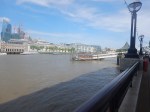

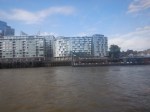



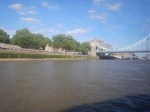
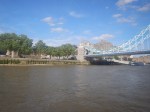
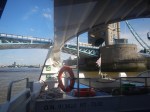
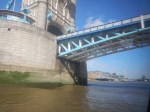










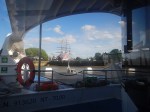
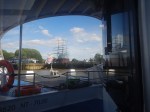

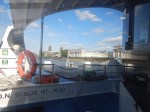
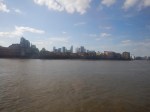




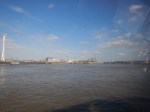
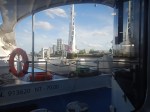


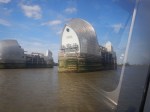






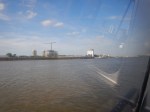
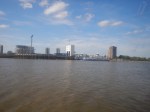
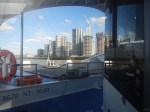


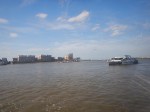










Note.
- I boarded the boat at the London Bridge City Pier.
- The easiest way to get to this pier is to get a 21, 43 or 141 bus from Moorgate or Bank station. to London Bridge and walk along the South Bank of the river for perhaps a hundred metres. Walking from London Bridge station is a bit tricky.
- I alighted at Barking Riverside Pier, which will be a short walk to the new Barking Riverside station.
The route is a mixture of historic and modern London and places passed include.
- HMS Belfast
- The Tower of London
- Tower Bridge
- Canary Wharf
- Cutty Sark
- The Royal Naval College, Greenwich
- The O2
- The Thames Barrier
- Wooolwich Arsenal
Many have piers for the Thames Clipper.
The Royal Iris
These pictures show what is left of the former Mersey Ferry, the MV Royal Iris, which is rusting in the River at Woolwich.
I remember the ferry, when it was resplendent in green and yellow in the 1960s. I also remember going on one evening party cruise up and down the Mersey.
It’s rather a sad end for ship that has many happy memories for many.
According to Wikipedia, there is a campaign to return the iconic ferry to Liverpool.
London’s CrossFerry
The Thames Clippers keep on going and now at many times, you can go all the way between Barking Riverside and Putney.
It’s not that slow either and in the open waters East of Tower Bridge, my phone was saying that the ferry was cruising at 40 mph.
If it has one problem, it is that the Thames Clippers don’t have an all-day timetable, that is simple.
If it is going to be a pseudo-train line across London, then there needs to be a two boat per hour service across the city. This will be needed more as more housing is built at Barking Riverside.
I know Barking Riverside will be getting the Overground in the Autumn, but unlike the Thames Clippers, that serve Canary Wharf, the City and Westminster, the Overground will serve a swathe of housing, rather than employment, across North London.
London Underground Gets Approval For Walthamstow Central Tube Station Upgrade
The title of this post, is the same as that of this article on Ian Visits.
It is from over a year ago and I’m only including it, as it includes a cutaway of the upgrade.
I go regularly to Walthamstow Central station and hopefully, this will make my journeys easier in busy times.
This paragraph from Wikipedia describes some of cost-cutting design features of the current station.
The underground station, like many stations on the Victoria line, was built to a low budget. White ceiling panels were never fixed to the ceilings above the platforms; instead the steel tunnel segments were painted black and used to support the fixtures and fittings, cutting lighting levels. A concrete stairway sits between two escalators instead of a third; this economy caused a disruptive station closure for several weeks in 2004 when both escalators went out of service.
Hopefully, these short comings will be addressed in the upgrade.
But it doesn’t appear there will be step-free interchange between Underground and Overground.
Penge East Station – 11th March 2022
When I wrote Advance Warning Of Brixton To Beckenham Junction Rail Closure In July, I realised I’d never been to Sydenham Hill station.
So when I visited Sydenham Hill station this morning, I decided to take the train through Penge Tunnel to take some pictures of Penge East station.
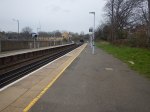
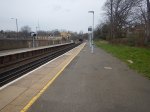
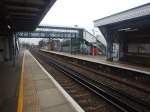
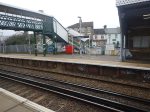
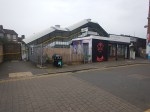
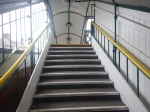
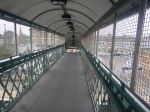
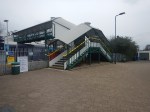
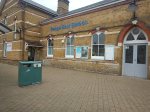
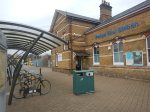
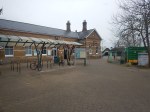

Note.
- The station is a Grade II Listed Building.
- It has been well-painted since I last visited.
- It would be very difficult to make the existing bridge step-free.
I think this station could be difficult to incorporate into a Penge Interchange station.
But it would be a shorter walk along the platforms to a lift and stairs to the high level platforms, than the current one to Penge West station.

