The Power Behind Rolls-Royce
My post entitled ‘Spirit of Innovation’ Stakes Claim To Be The World’s Fastest All-Electric Vehicle, was based on this press release from Rolls-Royce, which has the same title.
In the post I talk about Rolls-Royce’s experimental electric aircraft; Sprit of Innovation.
- The aircraft set a world record for electric-aircraft of 345.4 mph.
- the aircraft clocked up a maximum speed of 387.4 mph.
- The aircraft was propelled on its record breaking runs by a 400kW electric powertrain.
- Rolls-Royce worked in partnership with aviation energy storage specialist; Electroflight and automotive powertrain supplier; YASA.
For comparison, my Cessna 340A had two 230 kW engines and a maximum speed of 281 mph.
Electroflight, Evolito And YASA
YASA has this description of the company on their home page.
YASA is at the forefront of eMotor innovation and development. Our axial flux technology motors are up to 4x more powerful than those used in nearly all Electric Vehicles on the road today, whilst being around 50% smaller & lighter.
We already feature in some of the best eMotor applications across multiple sectors, and now as part of Mercedes-Benz, with sites in Oxfordshire and Welshpool, we are accelerating development of axial flux eMotors and Control Systems for of the next generation of Electric Vehicles.
Evolito has this description of the company on their About page.
Evolito was spun out in 2021 by YASA, the world-leading pioneer of automotive axial-flux electric motors acquired by Mercedes-Benz in July 2021, to exclusively commercialise YASA’s next-generation electric motor technology and IP for the rapidly-growing aerospace market. Evolito is funded by a portfolio of private investors including B-FLEXION and Oxford Science Enterprises (OSE).
Electroflight has this company story on their About page.
Founded in 2011 to address battery-electric issues in the aerospace market, we are a UK-based innovation engineering company, taking expertise from across the automotive and aerospace sectors, working with leading airframers to develop and supply next-generation battery technology.
In 2019, Electroflight, Rolls-Royce and YASA partnered to design and build the worlds fastest all-electric vehicle – The Spirit of Innovation. 3 years of dedication from the team involved integrating the full powertrain into a NXT aircraft, optimising the system to peak performance and following rigorous testing processes in an emerging market with new regulations; in 2021 the record breaking flight reached a staggering 345.5 mph!
Following the successful spinout of Evolito (YASA’s Aerospace Division) in 2021, Evolito acquired Electroflight in July 2022 to offer a fully optimised powertrain solution for the electric aerospace industry.
It appears that Mercedes-Benz now own YASA’s technology for the the automotive industry and Evolito have the aerospace technology.
Evolito’s Technology
The Evolito web site has a Technology page, which is entitled The World’s Most Advanced Electric Propulsion Solution.
- Their Axial Flux Motors are certainly a revolutionary approach.
- It looks like one of their motors has a peak power of 280 kW, a continuous power of 100 kW and weighs just 35 Kg.
There is also this page, which gives more details about the creation of the Spirit of Innovation, which has this video.
Evolito And Project Fresson
This press release from Cranfield Aerospace Solutions is entitled Cranfield Aerospace Welcomes Ground-Breaking UK Technology Innovator Onboard Project Fresson.
These paragraphs explain the link-up.
Cranfield Aerospace Solutions (CAeS) welcomes Evolito, a ground-breaking UK technology innovator onboard as the motor & inverter supplier for its hydrogen-powered aircraft demonstrator – Project Fresson.
Evolito join Reaction Engines and Ricardo as technology collaborators on Project Fresson, showcasing the UK innovation that is redefining the aviation industry.
Based in Oxfordshire, Evolito is the aerospace spin out of YASA – the world-leading pioneer of automotive axial-flux electric motors.
Producing the world’s most advanced electric propulsion system, Evolito’s motors are smaller, lighter, and typically 4 times more power dense than radial flux solutions, making them ideally suited to the emerging zero-emissions aviation markets.
Evolito’s axial-flux technology requires up to 75% less iron, less copper and fewer permanent magnets than competing radial solutions, making it lighter and more environmentally friendly.
Note.
- Project Fresson is a project to develop an electric propulsion system for Britten-Norman Islanders.
- There are 700 Islander aircraft in service.
A hydrogen propulsion system, would be useful for new aircraft and conversions.
Mercedes-Benz, Amazon, Frankfurt Airport, Lidl & Kaufland, Vodafone – Giants In Germany Lining Up To Buy Offshore Wind Power
The title of this post, is the same as that of this article on offshoreWIND.biz.
This is the sub-heading.
With the latest news about Lidl and Kaufland entering a long-term offshore wind power offtake contract, and Mercedes-Benz announcing the same shortly prior to that, the list of big names signing up to buy offshore wind-generated electricity in Germany keeps growing. What lies behind this are both the companies’ ambitious decarbonisation strategies and the country’s approach to tendering.
Rhe whole article can be read after signing up for a free trial.
Daimler Unveils Electric Bus With 441 kWh Solid-State Battery Pack
The title of this post, is the same as that of this article on electrek.
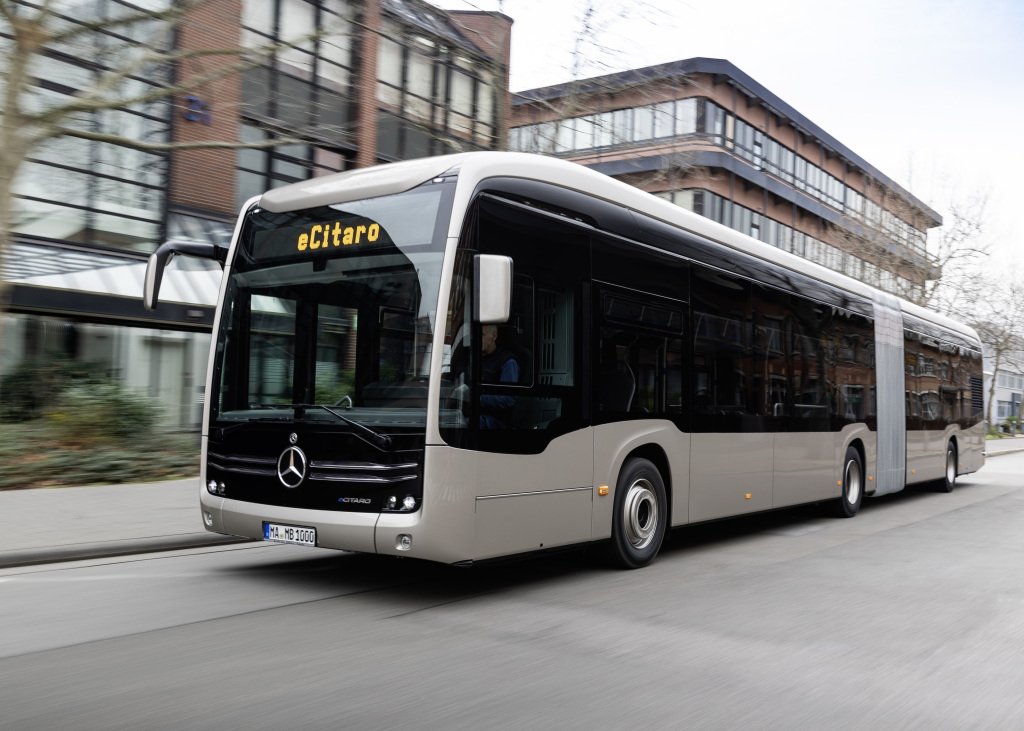
This is the introductory paragraph.
Daimler has unveiled an electric bus equipped with a solid-state battery pack — probably becoming the first planned production EV with a solid-state battery.
What is meant by solid-state battery, is not stated.
But at 441 kWh it is not a small battery!
This article on the Daimler Global Media Site gives these extra details.
In general, vehicles with solid-state batteries as standard were not expected until the middle of this decade. Mercedes-Benz is faster: the new eCitaro G is the first series production city bus in its category anywhere in the world to be equipped with solid-state batteries. They have a very high energy density which is around 25 percent greater than the coming generation of traditional lithium-ion batteries with liquid electrolyte. The result is an impressive energy content of 441 kWh for the new eCitaro G. This battery technology is also free of the chemical element cobalt and therefore especially environmentally friendly in the manufacture of the components.
The long life of the solid-state batteries is particularly striking. Therefore, when purchasing an eCitaro with solid-state batteries, a basic guarantee for the high-voltage battery for up to 10 years or up to 280 MWh energy throughput per battery pack is standard.
They sound impressive.
Daimler Trucks Presents Technology Strategy For Electrification – World Premiere Of Mercedes-Benz Fuel-Cell Concept Truck
This title of this post, is the same as that of this article on the Daimler Global Media Site.
These are the opening bullet points.
- Mercedes-Benz GenH2 Truck, a fuel-cell truck with a range of up to 1,000 kilometers and more for flexible and demanding long-haul transport – customer trials in 2023, start of series production in second half of this decade.
- Mercedes-Benz eActros LongHaul, a battery-electric truck with a range of about 500 kilometers for energy-efficient transport on plannable long-haul routes – projected to be ready for series production in 2024.
- Mercedes-Benz eActros, a battery-electric truck with a range of well over 200 kilometers for heavy urban distribution to go into series production in 2021.
- ePowertrain global platform architecture offers synergies and economies of scale.
Judging by the spelling, this media copy, is from the bad spellers of Trumpland.
It looks to be a case of Daimler have called up the heavy brigade.
The best way to learn more is to search for “Mercedes-Benz GenH2 Truck”
There’s some good YouTube videos.
From this video, I ascertained the following.
- The truck has a stainless steel tank for liquid hydrogen on either side between the front and rear wheels.
- There are two 150 kW fuel cells, which appear to be of an inhouse Mercedes design.
- There is a 70 kWh battery between the two liquid hydrogen tanks low down in the middle of the truck.
- The battery can supply 400 kW, if needed.
This screen capture shows a cutaway from the video.
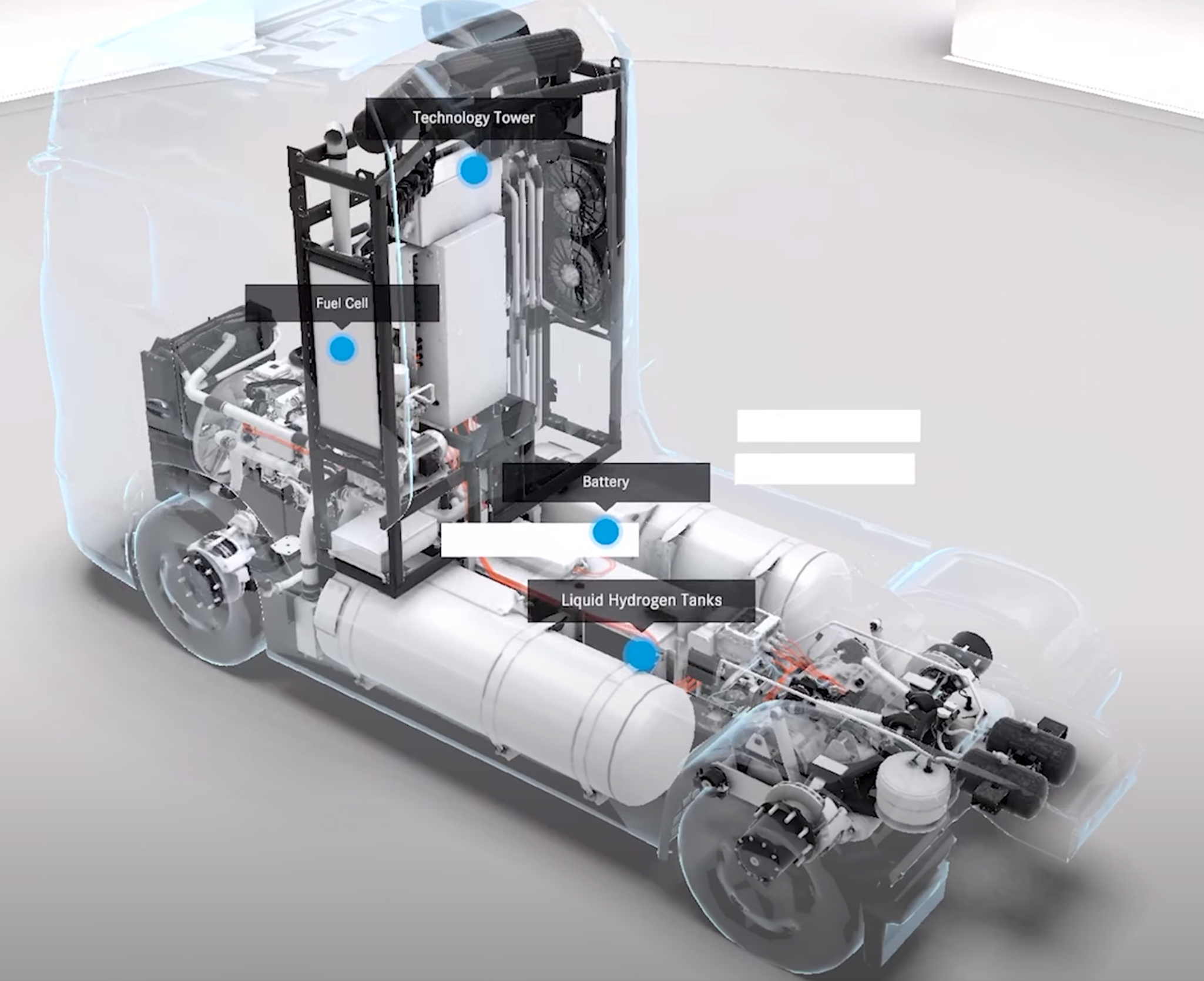
I am impressed by the design.
- Everything is fitted neatly in the small space.
- The design doesn’t seem to intrude into the load space, so I would assume, it would work with all existing trailers and bodies.
- The battery position must help stability and driveability.
- It looks like a design, that would be friendly to cyclists, as the hydrogen tanks act as a round safety barrier.
I shall look at the operation.
Consider.
- The current Actros trucks have engines with a power of up to 500 HP or 400 kW.
- The 70 kWh battery can provide 400 kW for about 10 minutes.
- Regenerative braking to the battery must be possible.
- There’s probably a well-programmed computer between the driver and the electric transmission.
I wouldn’t be surprised that the truck is more of a battery-hydrogen hybrid, than a pure hydrogen truck.
Suppose, it was hauling a heavy load from Felixstowe to Manchester.
- Will the truck charge the battery before it leaves Felixstowe? It could use the fuel cells or be plugged in to a high-performance charger. 70 kWh, is not the biggest of batteries compared to say those on a train.
- Once on the A45 (Sorry! A14), it would accelerate quickly to the cruising speed, probably using mostly battery power.
- It would then cruise mainly using hydrogen and the fuel cells to the destination. The truck would be optimised for an economic cruise.
- During any deceleration, regenerative braking to the battery would be used.
- Battery power might be called upon on any inclines or after a stop.
Intriguingly, a range of 1000 kilometres or 620 miles would allow many out-and-bank journeys in the UK, France, Germany or Italy to be performed without refuelling.
Leeds, Liverpool, Manchester and Newcastle are all under 300 miles from the Suffolk port.
Conclusion
I used to part-own a company, that financed trucks, moving loads into and out of Felixstowe in the 1980s.
From what I learned then of the heavy truck market, hydrogen-powered heavy trucks are going to be a winner, especially, if most journeys are out-and-back from one end.
 The Anonymous Widower