Development Around Liverpool Street Elizabeth Line Station
After my Full English breakfast in Leon this morning, I walked around the area between the two entrances to Liverpool Street station on the Elizabeth Line, before entering the station at the Liverpool Street entrance.
I took these pictures as I walked.



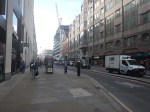
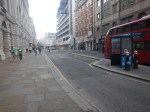
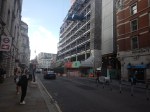
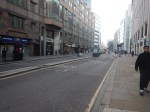
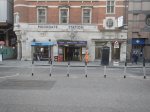
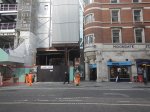

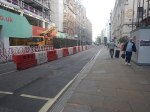
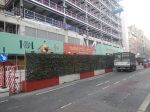
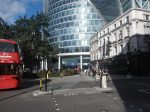
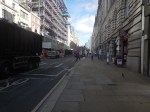
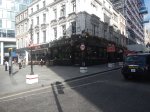

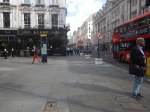




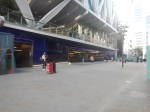
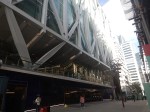





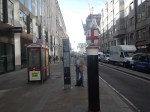
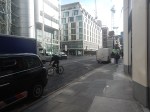
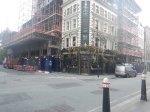
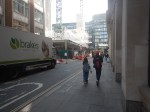
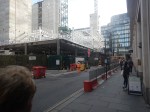
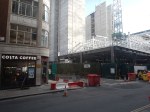
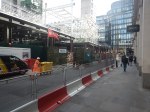
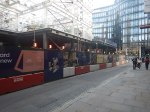
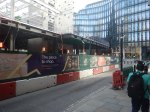
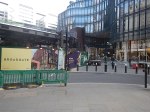





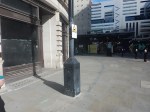
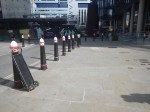
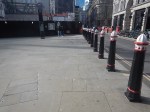
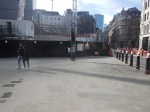



Note.
- The large development with the naked concrete towers is the Western extension to Broadgate.
- The old entrance to Moorgate Underground station and two pubs are squeezed in between the modern buildings.
- The cylindrical building behind the Globe pub, is Moor House.
- Some buildings are brand new and others are older ones, that have been refurbished and/or reskinned.
There is hardly any space left to put in a dog kennel.
London’s First Two HS2 Tunnelling Machines Ordered
The title of this post, is the same as that of this article on Ian Visits.
The title gives a description of the story, but the article reveals a lot of details about the tunnels for High Speed Two.
- There will be ten tunnel boring machines (TBMs) in total for High Speed Two.
- The main tunnels are 42 % larger than those for Crossrail.
- There will be three pairs of tunnels under London; West Ruislip and Greenford (5 miles), Greenford and Old Oak Common (3.4 miles) and Old Oak Common and Euston (4.5 miles).
- It looks like these first two machines will bore the two outer tunnels and that two extra TBMs will be ordered for Greenford and Old Oak Common.
There are also two excellent infographics.
- The first shows the route of the tunnels.
- The second shows the three pairs of tunnels and the directions, they will be bored.
- The third also discloses that the tunnels will be up to fifty metres deep.
There will also be a vent shaft at Greenford in Green Park Way, when the tunnel opens.
This Google Map shows the area.
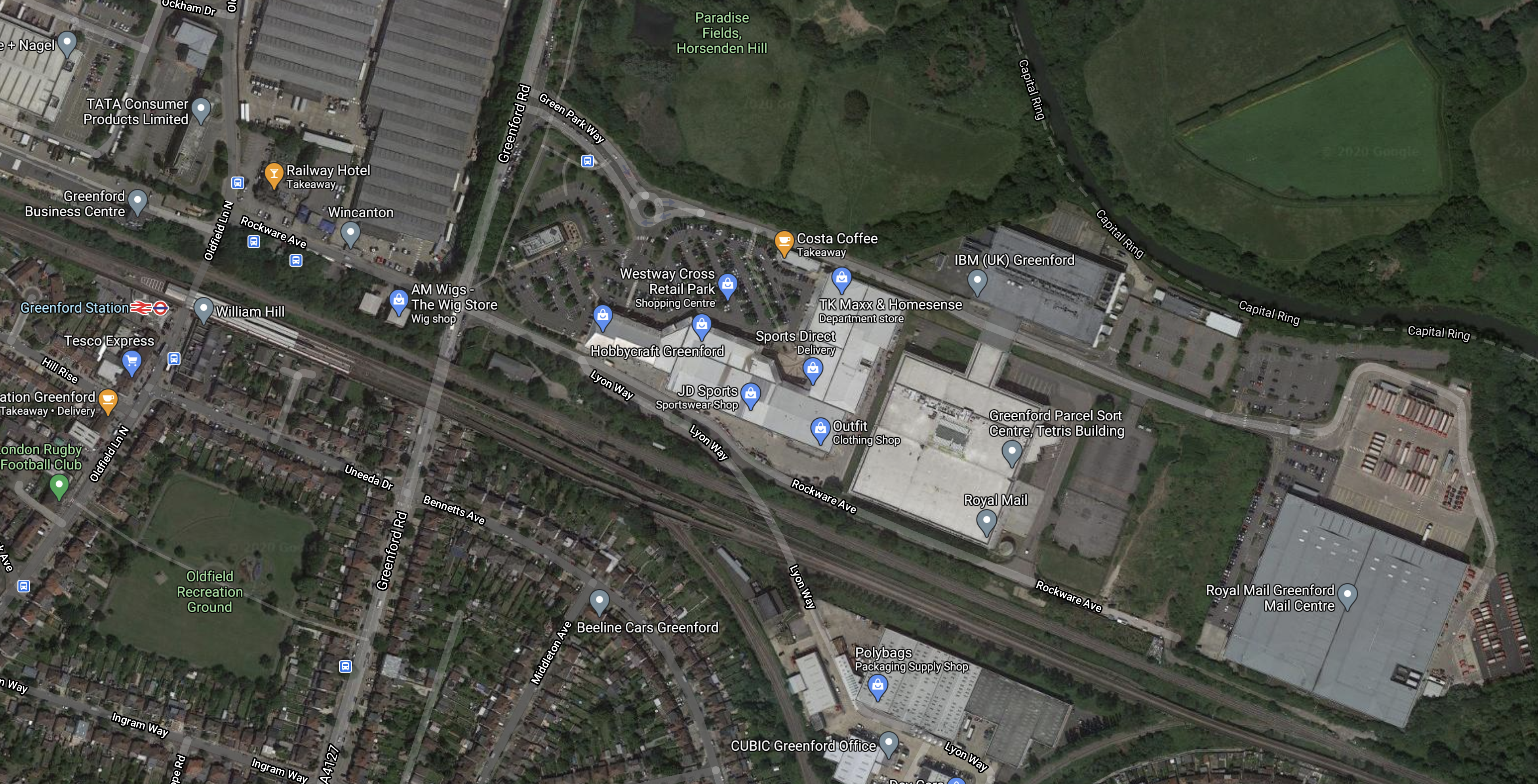
Note.
- The A 4127 runs North-South across the map.
- The railways running across the map are Acton and Northolt Line and the Central Line, which serves Greenford station.
- The Greenford Branch Line goes South from a triangular junction.
The green site squeezed in between the industrial buildings and just to the North of the railways could be the site for the vent shaft.
This second map is a clip of High Speed Two’s map of the area.
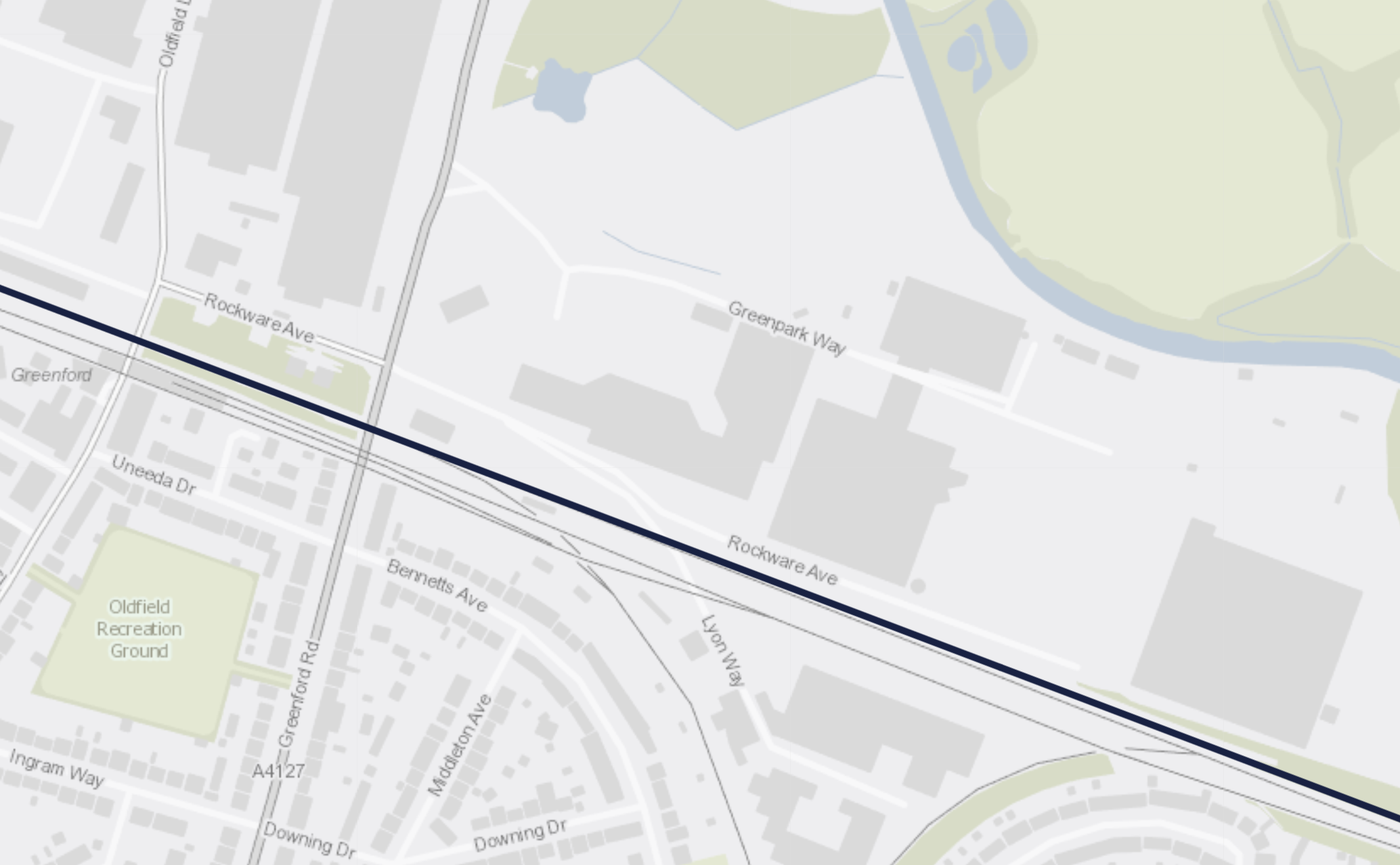
The black line is the route of the High Speed Two tunnel.
- It is to the North of the Central Line.
- It looks to be close to the vacant site.
When High Speed One was built through Hackney, they bored the tunnels under the North London Line, so High Speed Two only seem to be repeating, what worked successfully.
These pictures show some of the ventilation shafts for High Speed One in East London.
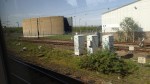
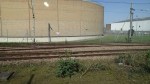
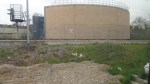
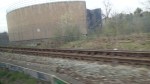


Crossrail’s vent shafts are smaller in number and less obtrusive. There is one disguised in this building; Moor House.
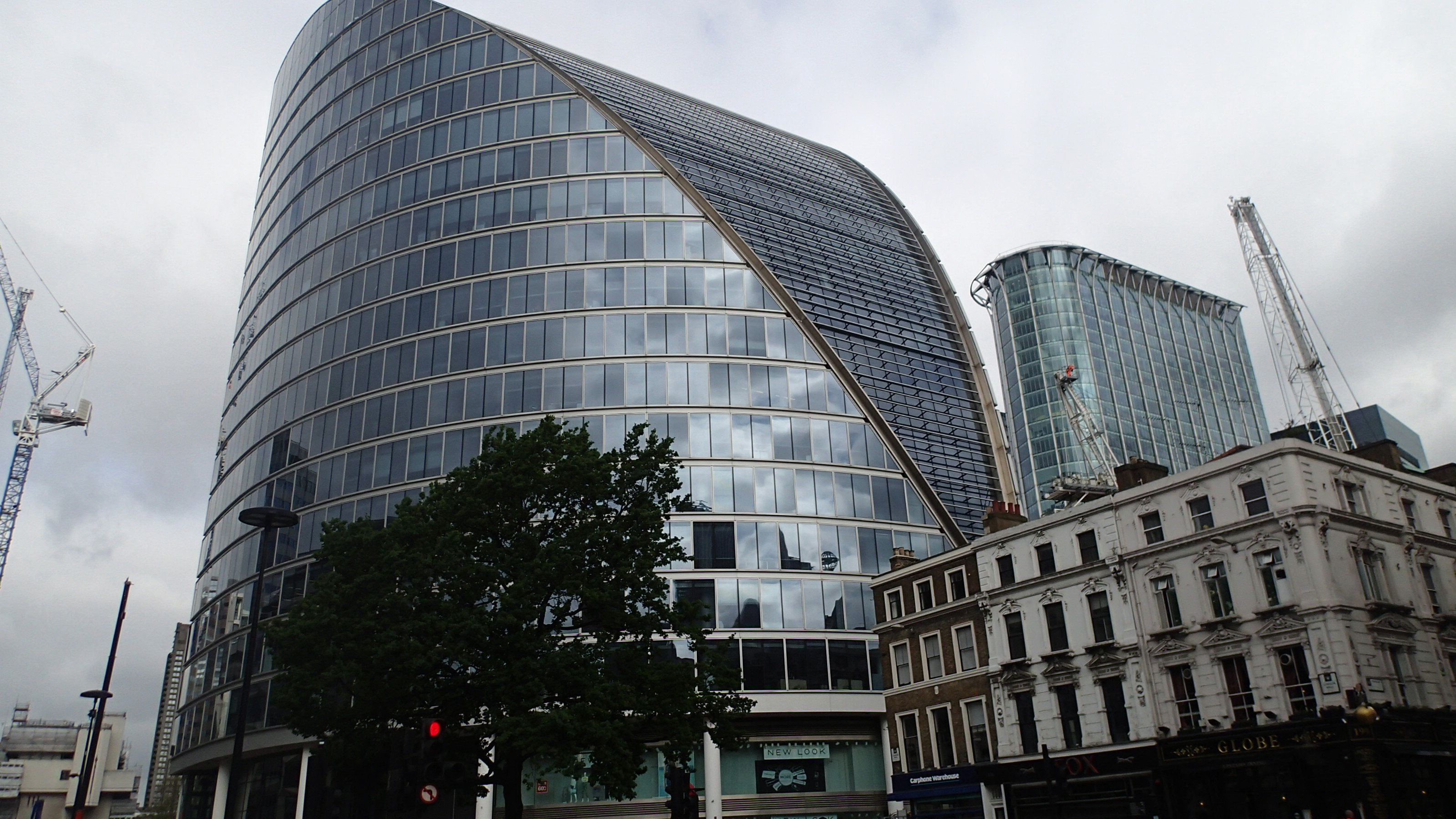
I would hope that High Speed Two could improve further and create a useful building on top, that adds value to the area and doesn’t follow the utilitarian constructions of High Speed One.
Boring the Tunnels
According to the infographics, the three tunnels will be built in the following directions.
- West Ruislip and Green Park Way – Towards Green Park Way
- Green Park Way and Old Oak Common – Towards Green Park Way
- Old Oak Way and Euston – Towards Euston.
These High Speed Two tunnels will be the fourth set of large tunnels to be bored under London in recent years after High Speed One, Crossrail and the Thames Tideway Scheme and I suspect there will be those , who will have worked on all four, at every level.
- I wouldn’t be surprised to see some innovative use of the TBMs, so that they are reused if possible.
- As four TBMs start at Old Oak Common and four finish at Green Park Way, I wonder if the planners have sequenced the insertion and extraction of the TBMs to make best use of the very expensive cranes needed.
- Two TBMs will be inserted at West Ruislip, where there is a public golf course that must give plenty of space.
- Two TBMs will be extracted a short distance to the North of Euston station. Again, there appears to be space.
I suspect experience from previous projects and good project planning has contributed to the design.
The Work Has Started At Green Park Way
These pictures show the Greenford site on the 12th of October 2020.
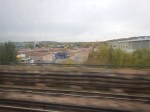
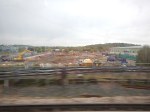
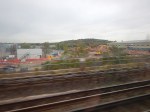
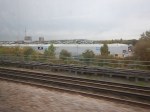
These pictures were taken from a Central Line train.
The Tunnel Portal Works At West Ruislip Station
These pictures show the West Ruislip site on the 12th of October 2020.
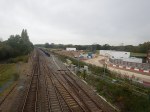
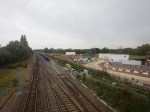
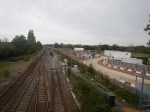

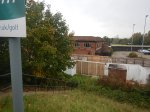

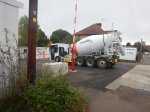

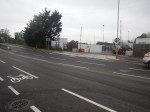
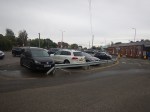
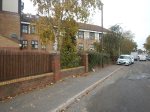

Note.
- This is where High Speed Two will emerge from the tunnels from Euston.
- The first three pictures were taken from the bridge over the railway and show the Chiltern Main Line, Chiltern’s turnback siding and the High Speed Two site.
- There is no sign of works around the car park and the L-shaped care home on the station side of the road, so I would assume, that they will be unaffected by the tunnel.
This Google Map shows West Ruislip station.
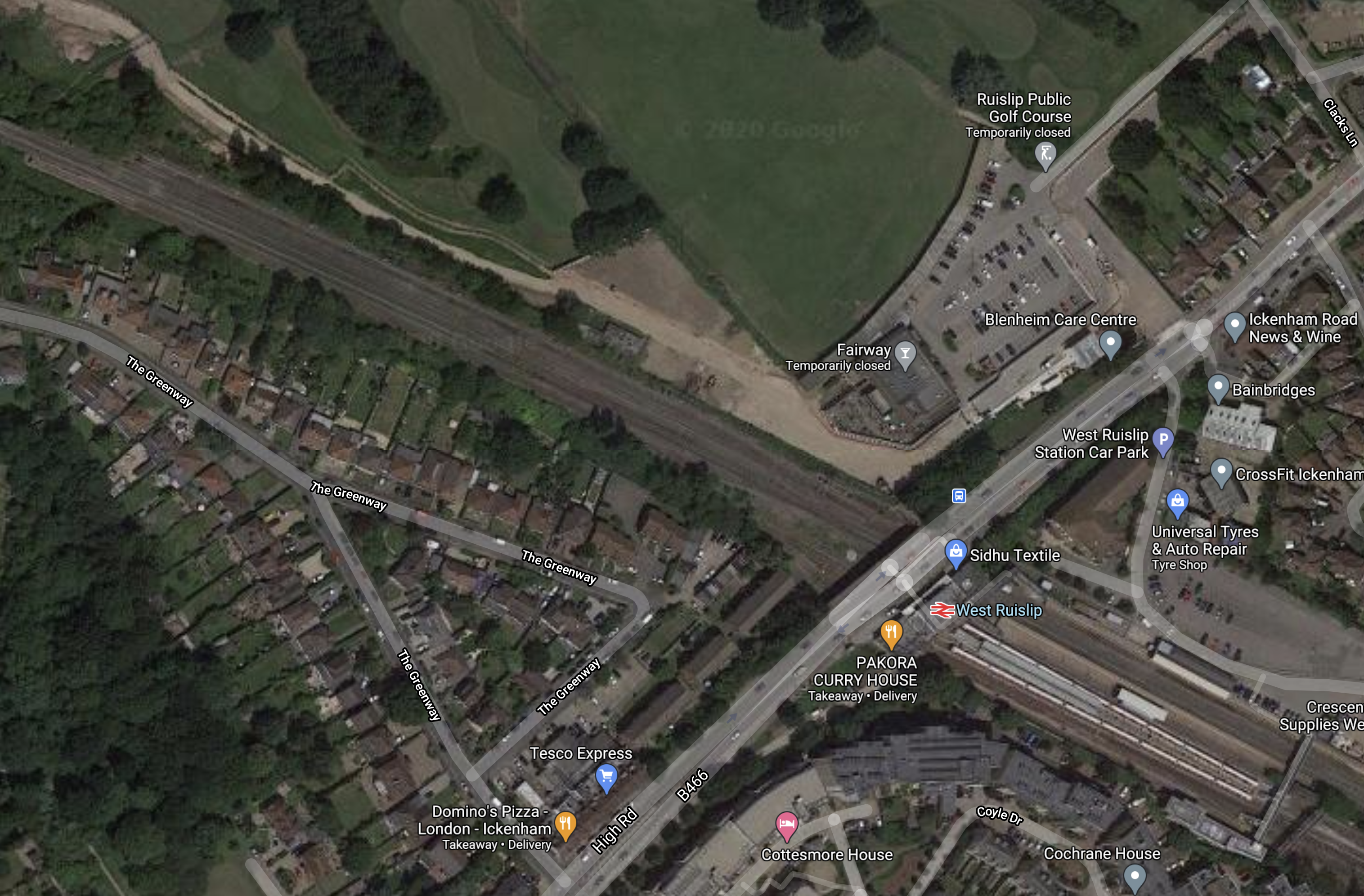
Note.
- The Central Line terminating in West Ruislip station.
- The Chiltern Main Line passing through the station.
- The scar of the construction of High Speed Two alongside the Chiltern Main Line.
If you follow the Chiltern Main Line on Google Maps for a couple of miles, you can see the route of High Speed Two.
This second map is a clip of High Speed Two’s map of the area.
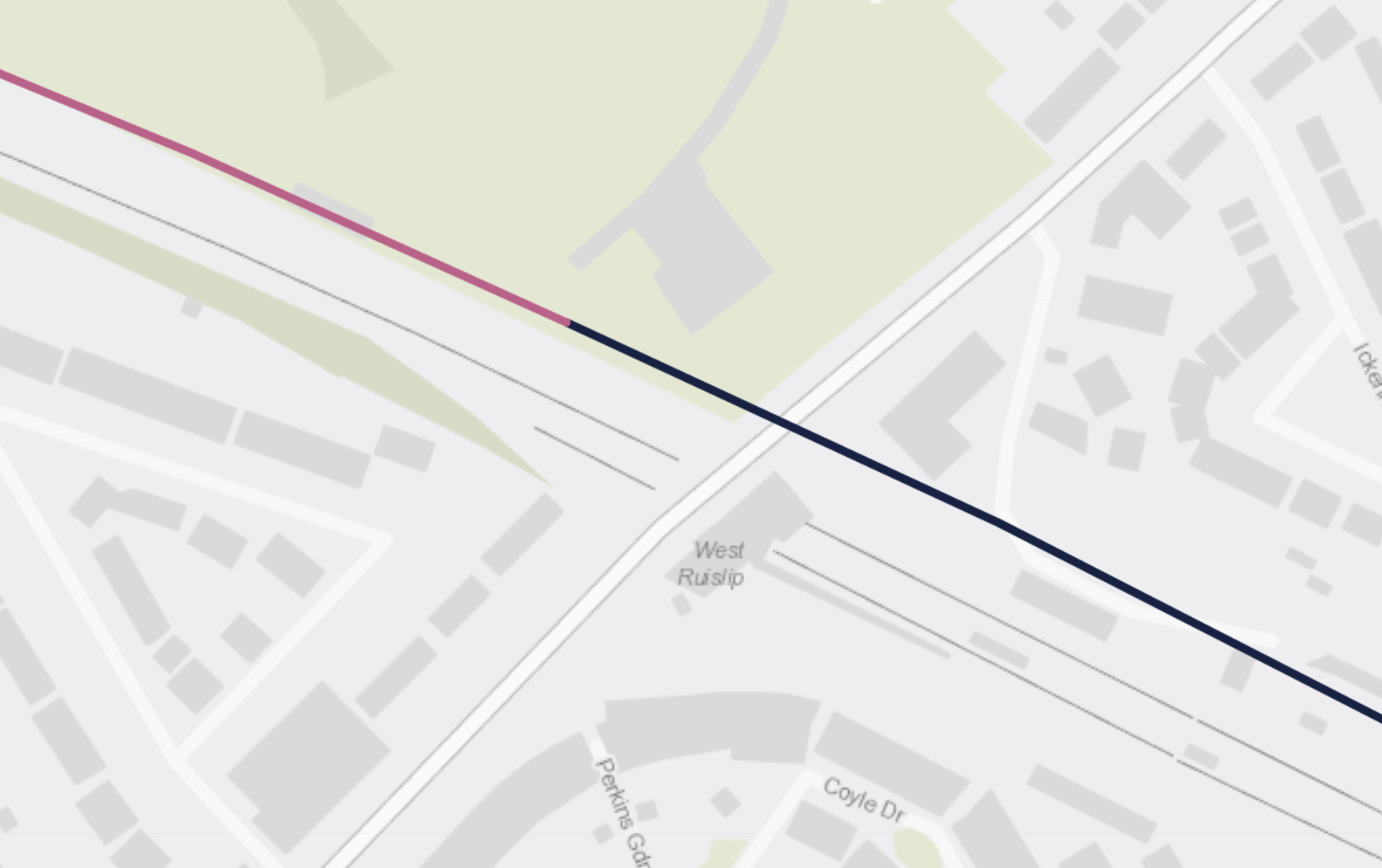
Note.
- The black line is the High Speed Two tunnel, that surfaces, where it changes colour.
- The L-shaped care home is still on the map, so it does appear the tunnel goes underneath.
It looks to me, that the bridge and Chiltern Trains going towards London, will offer good views of the tunnel works.
In the late 1950s, British Rail were increasing the number of tracks through Hadley Wood station, from two to four, by digging two extra tunnels.
I can remember my father taking me to see the works from Waggon Road or Wagon Road, which had and still had a few years ago, different names at either end.
TfL Moots Bakerloo Line To Hayes
The title of this post is the same as that of an article in the November 2019 Edition of Modern Railways.
There are various points in the article.
A More Direct Tunnel Between Lambeth North and Elephant & Castle Stations.
This map from carto.metro.free.fr shows the current routes between these two stations.
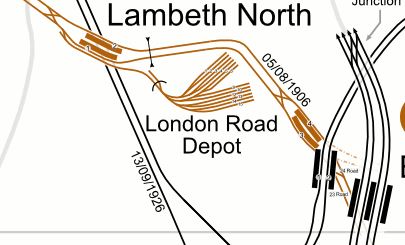
It appears that Transport for London (TfL) are proposing the following.
- A more direct route, between the two stations.
- A rebuilt Elephant & Castle station, handling both Underground lines.
- Step-free access between Bakerloo and Northern Lines.
- The station would be integrated with the new shopping centre.
Part of the plan appears to be to keep the current Bakerloo Line station open during construction.
Could the plan mean that the London Road depot will be closed?
This Google Map shows the London Road Depot and Lambeth North and Elephant & Castle stations.
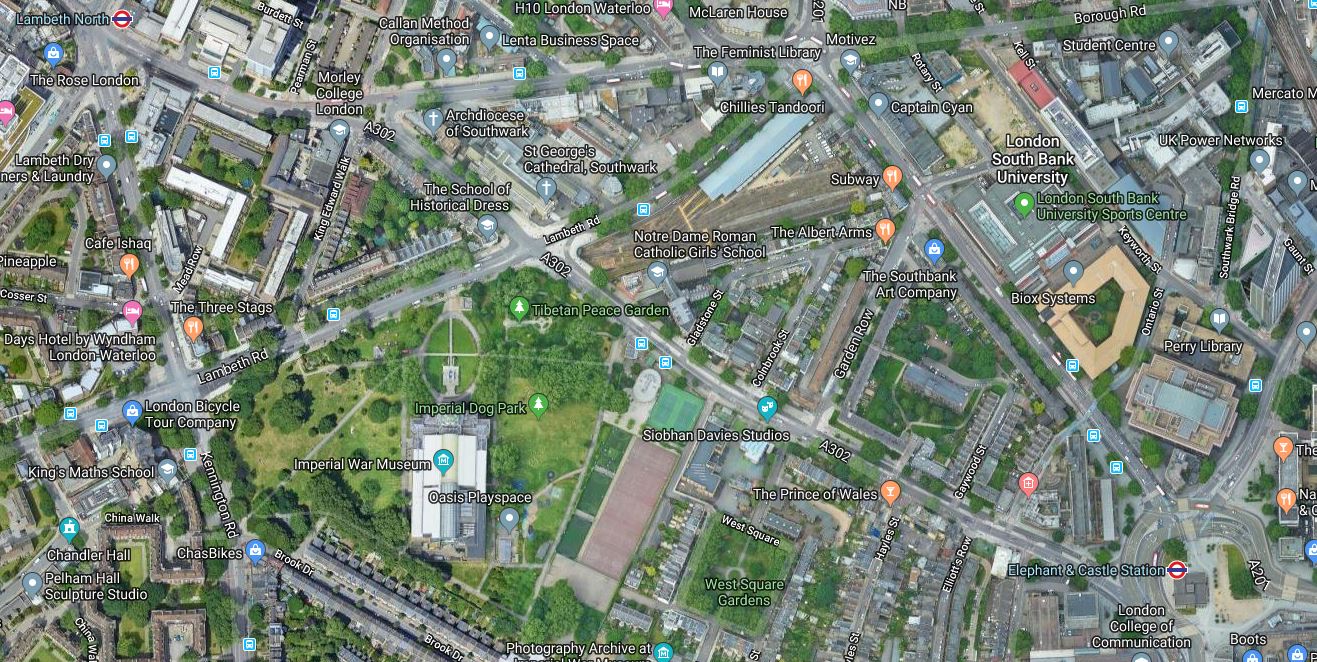
Note.
- Lsmbeth North station is in the North West corner.
- Elephant & Castle station is in the South East corner.
- The London Road Depot is North of a point about half-way between the stations.
This second Google Map shows a close-up of the London Road Depot.
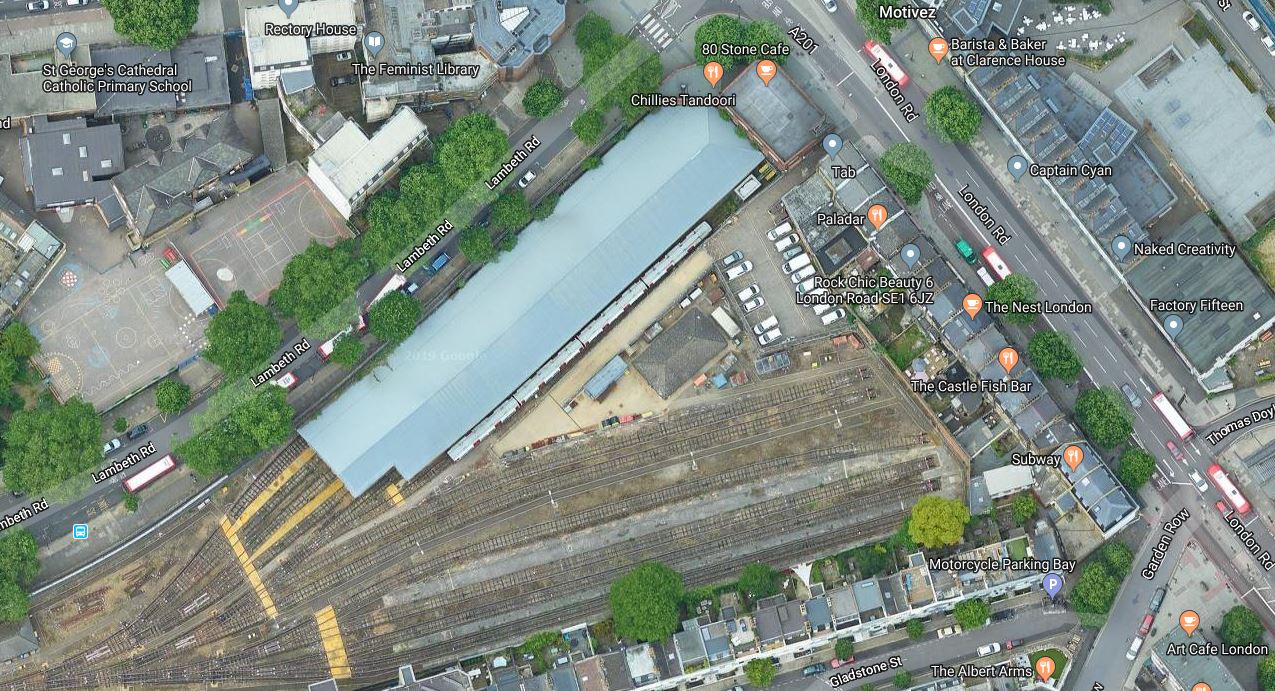
It appears to be quite a large site about a hundred metres along a long side.
Consider.
- It must be a development valuable site.
- It could be used as the site from which to dig the tunnels.
- The current Bakerloo Line skirts the site to the North.
So could the London Road Depot be closed and developed as the first part of the scheme, leaving a nice and handy tunnel in the basement?
- There already is a connection from the depot to Lambeth Noth station.
- It might even be possible to excavate much of the new tunnel by digging down, rather than by using a tunnel boring machine.
- Note that recently, the new Southbound tunnel of the Northern Line at Bank station has been dug using traditional methods.
- Moor House at Moorgate contains a ventilation and access shaft for Crossrail and was built some years rest of Crossrail.
Could this mean that the London Road Depot gets developed early in the project and London gets a lot of much-needed housing in a prime location?
But where do they stable the trains?
A Changed Tunnel Alignment Between Elephant & Castle and Lewisham Stations
The article also says this.
It (TfL) has also updated plans for the alignment of tunnels between Elephant & Castle and Lewisham, with the new direct tunnel alignment removing the need for one of the proposed tunnel shafts. A shaft would be builtbetween New Cross Gate and Lewisham, while plans for a shaft beyond Lewisham at the Wearside Road council depot site have been developed into proposals for train stabling.
This map from carto.metro.free.fr show the railway lines around Lewisham station.
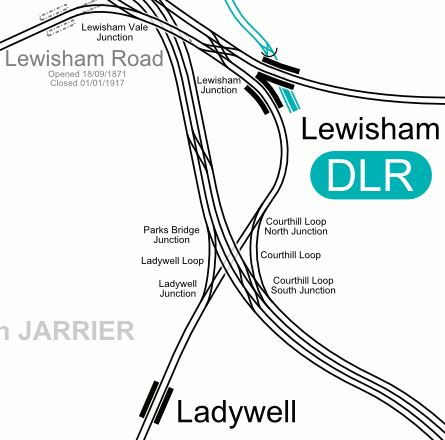
Note.
- Current plans are for the Bakerloo Line to terminate under the current Lewisham station.
- There will be overrun tunnels under the Hayes Line, which runs through Ladywell station.
- These tunnels could at a future date be joined to the Hayes Line.
The Wearside Road depot is tucked into the South side of the junction, as this Google Map shows.
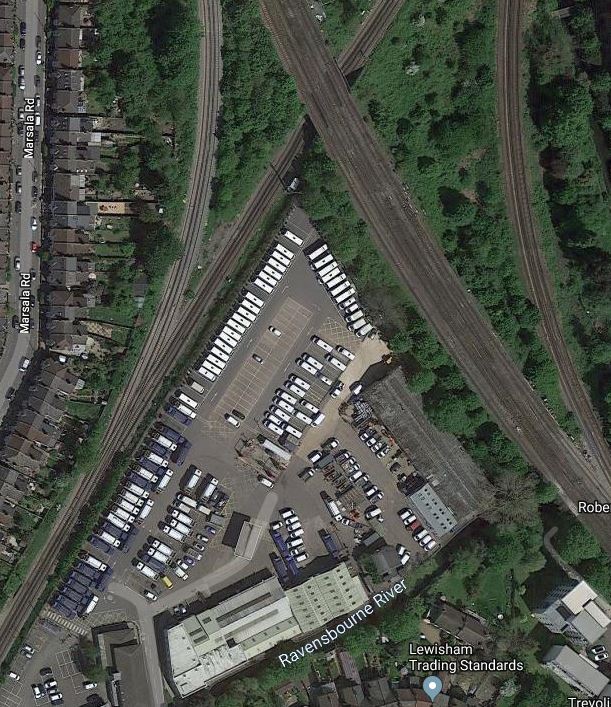
It looks to me, that TfL could be selling the site at London Road for development and using the Wearside Road depot, to replace the lost stabling.
It surely has advantages.
- It is further South.
- It could be easily connected to the overrun tunnel;s under the Hayes Line.
- It could be connected to the Hayes Line.
Could it be possible to build the new rail depot and put the council’s trucks on a second floor?
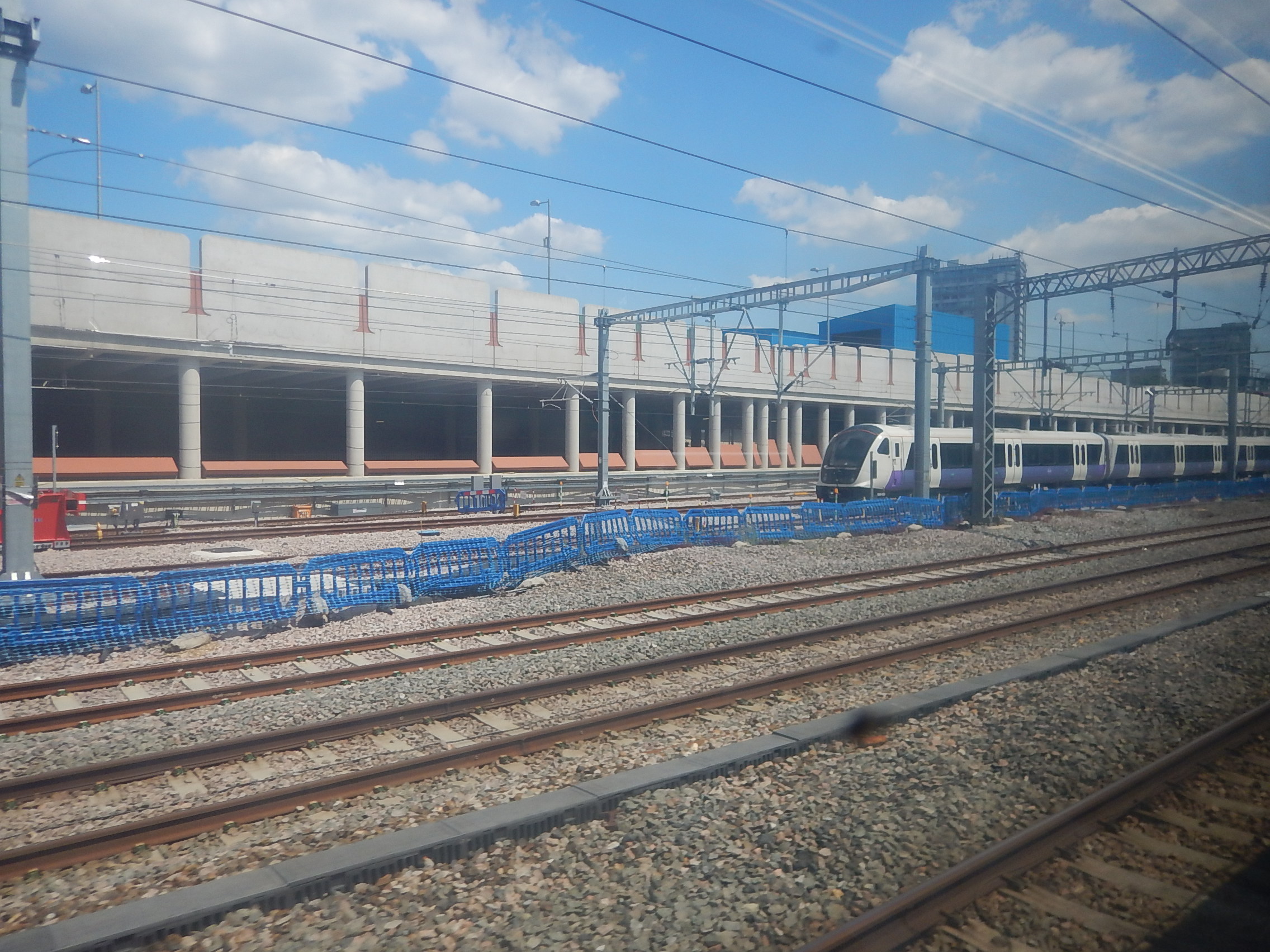
The picture shows Westbourne Park bus garage over stabling for Crossrail trains.
Hayes Line Takeover
TfL are now saying that extension to Hayes and Beckenham Junction stations offers the greatest benefit
Consider the following.
Development Of The Wearside Road Depot
Suppose the Wearside Road Depot were to be developed early.
- It could be developed as a double-deck depot, with trains underneath and the Council depot on top.
- Lewsisham is developing lots of tower blocks, so these would be an alternative topping.
- The rail depot could be built initially as a shell connected to the Hayes Line, with space for connections to the overrun tunnels at Lewisham station.
- It could be used as a transfer point for tunnelling spoil, if some digging towards Lewisham, were to be done from the site. Trains could access the site from Beckenham Junction.
It appears to me, that closing the London Road Depot is important in terms of financing, minimising disruption to passengers and construction, but the only way it can be done, is by providing an alternative depot. And the best way to do that is to connect the line in the first phase to the Hayes Line and use Wearside Road as a replacement depot.
Service Frequency
The current service frequency on the line is according to Wikipedia as follows.
The standard off-peak service is two trains per hour (tph) each way between London Charing Cross and Hayes, non-stop between London Bridge and Ladywell, and two tph between London Cannon Street and Hayes, calling at all stations via Lewisham.
So that is four trains per hour (tph), but only two tph call at Lewisham.
Currently, the Bakerloo Line frequency at Elephant & Castle station is 20-21 tph. As it appears there is no terminal platforms on the extension except for Hayes and Beckenham Junction stations, I would assume that their three platforms will be able to handle the full service.
The single platform at Beckenham Junction can probably handle six tph, which would leave the rest to be handled in the two platforms at Hayes station.
As the Victoria Line handles thirty-six tph with modern signally, I see no reason, why the Bakerloo Line wouldn’t be able to handle 30 tph with ultra-modern signalling.
Development Of An Interchange At Catford
In An Opportunity At Catford, I talked about the possibilities of developing an improved interchange between Catford and Catford Bridge stations, which are no more than a hundred metres apart. |Although, it is rather up and down.
The map from carto.metre.free.fr shows the layout of lines at the two stations.
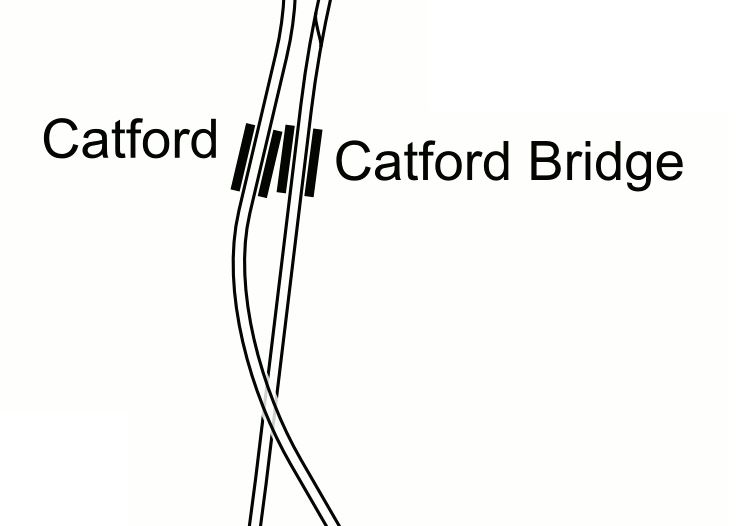
Note that Catford Bridge station is on the Hayes Line and Catford station is on the Catford Loop Line.
It strikes me that there is scope for some advanced thinking, if an interchange is to be created between the two stations.
Could it be arranged that as part of the conversion of the Hayes Line to the Bakerloo Line, that the tracks be reorganised with the Bakerloo Lines on the outside of a single four-platform station, that would enable cross-platform interchange between the two lines?
Unfortunately, No! But it could have been safeguarded some years ago, but now there’s new housing in the way!
However, I do think there are other ways of making this interchange step-free and reasonably quick.
The Hayes And City Problem
Wikipedia says this about the takeover of the Hayes Line by the Bakerloo Line.
The driving force for this change is that Network Rail would like the train paths freed up for services mainly from the South Eastern Main Line. Transport for London prefer this route due to its being largely self-contained after Lewisham.
Currently, Off Peak services from Hayes station are as follows.
- Two trains per hour (tph) to Cannon Street
- Two tph to Charring Cross
These two services mean that there are also.
- Two tph to Lewisham
- Four tph to London Bridge
- Two tph to Waterloo East.;
There are also extra services in the Peak.
Will there be a problem for commuters to get between the Hayes Line and the City of London and Canary Wharf?
There will also be no First Class on the trains.
In practice Canary Wharf could be the easier, as it will just mean using the Docklands Light Railway from Lewisham.
This could also be quickest way to the City!
I think we we shall be hearing from some restless natives!
The Use Of
Crossrail Rushes To Make Bond Street Ready For Testing
The title of this post is the same as that of this article on Rail Technology Magazine.
Mark Wild, who is Crossrail’s Chief Executive, is quoted as telling the London Assembly.
Our current focus is predominantly on key areas of risk such as ensuring that Bond Street station is at the required stage of completion to allow us to commence trial running early in 2020..
The more I read about this project, the more I believe, that the projects lateness is down to two things.
- Some very optimistic project management by contractors to get some of the enormous contracts on offer.
- A lack of resources in vital areas like some trades and the testing of trains.
But then what do I know about Project Management and computer software?
Could Bond Street also be the only really late station, as it is on a very cramped site in the centre of some of the most expensive real estate on the planet?
The 3D visualisation shows the area around the station.
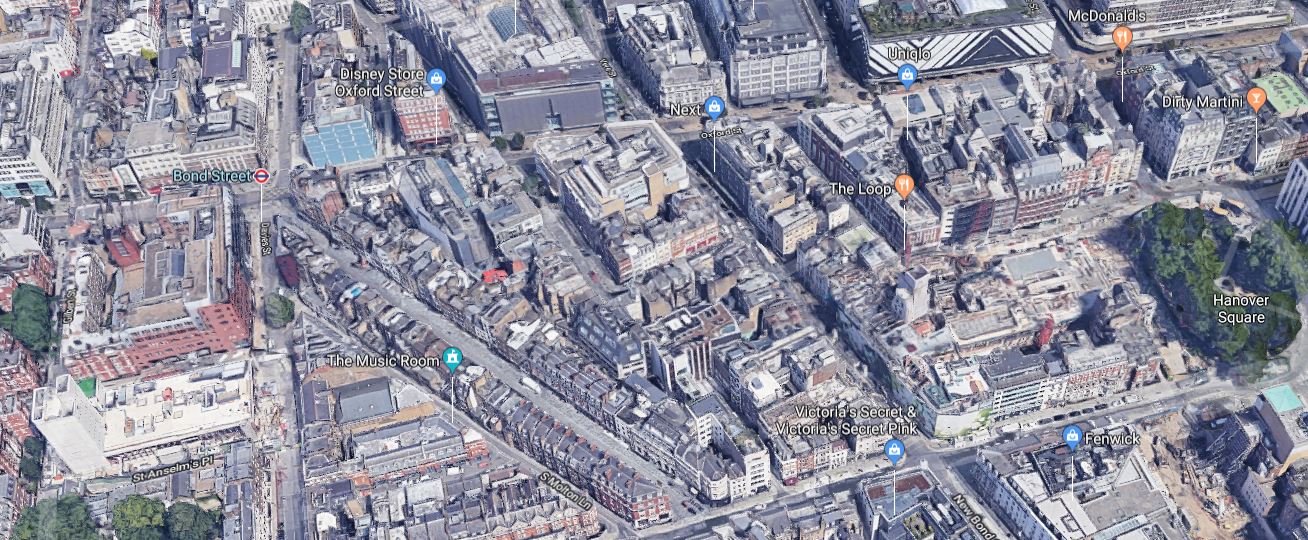
Note .
- The new Western entrance to Bond Street Crossrail station, which is the cleared site with the russet-coloured building behind.
- The new Eastern entrance, which is just to the West of Hanover Square.
- Bond Street running down from Next on Oxford Street to Fenwicks.
Surface access is not good to say the least.
The same access problem probably applies at Paddington, Tottenham Court Road, Farringdon, Moorgate and Liverpool Street stations, but at these five stations, there were buildings that could be demolished to give access for construction.
It should also be notes, that some of these stations have only a few local residents.
I’ll take a quick look at these five stations.
Paddington
This Google Map shows Paddington station.
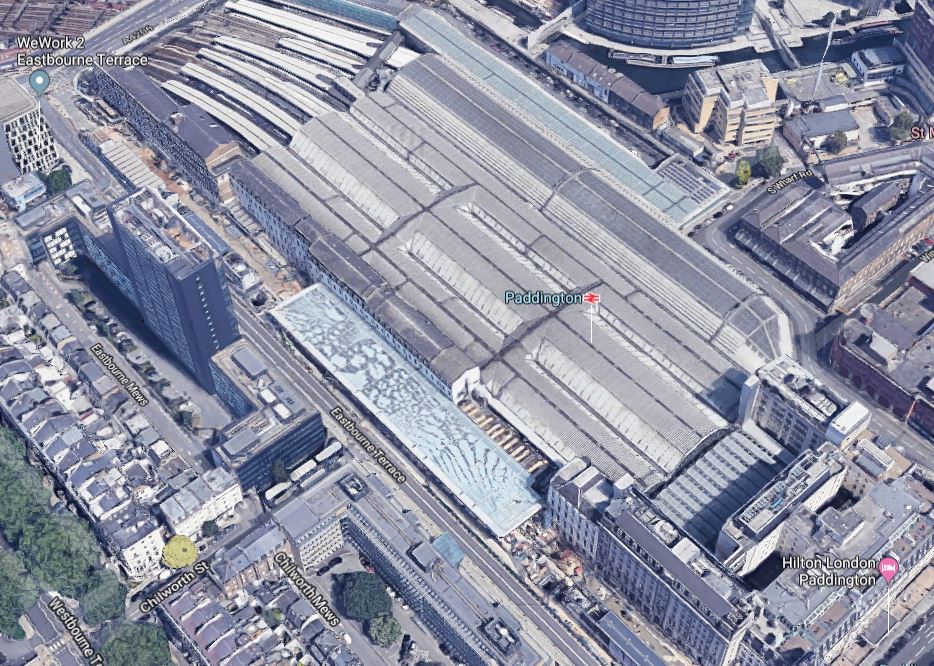
Note the Crossrail station, which has been squeezed into the old cab rank, alongside the station.
Tottenham Court Road
This Google Map shows Tottenham Court Road station.

Note the amount of cleared space around the station,
Farringdon
This Google Map shows Farringdon station.

The Crossrail station is to the West of the current station. It must have helped contractors, that the station had been redeveloped a couple of times for the construction and update of Thameslink.
Moorgate
This Google Map shows Moorgate station.
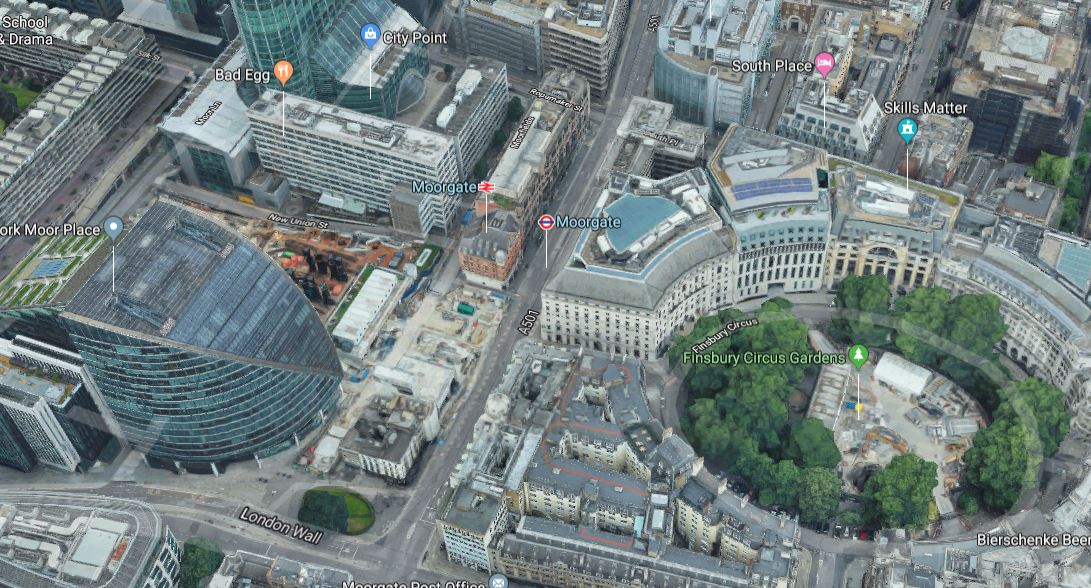
Moor House, which is the large office block behind Moorgate station, was built in 2004 and was designed to accept Crossrail in the basement.
Finsbury Circus, which is the green space in the East was used as a construction site.
Liverpool Street
This Google Map shows Liverpool Street station.
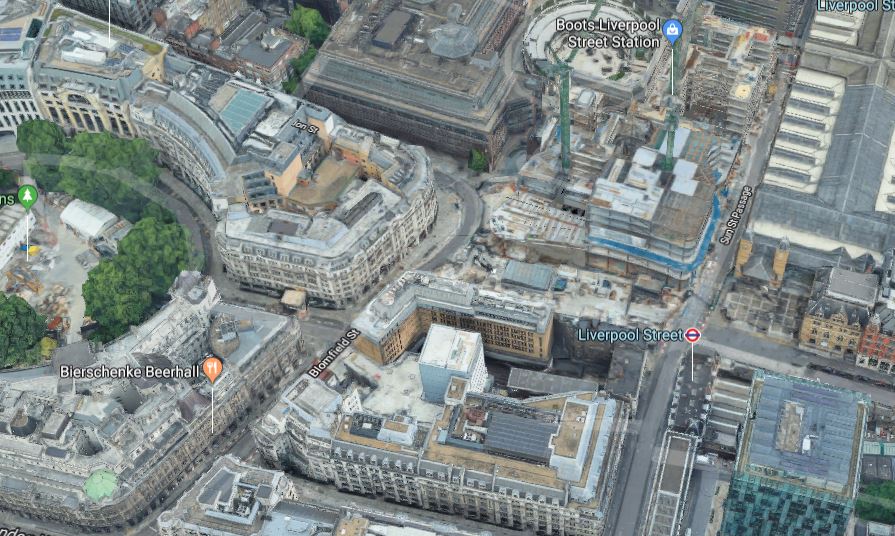
The main entrance to the Crossrail station will be in front of the Broadgate office complex, which is to the West of the station.
This section of Broadgate is also being redeveloped, which probably helps and hinders in equal measure.
Conclusion
I think lessons will be learned that can be applied to other cross-city rail projects.
- Future-planning as with Moor House should be increasingly used.
- Should stations be built in conjunction with other developments?
- Are stations in areas of high real-estate values a good idea?
- Could more innovative ways be used to bring in construction materials?
Will future projects be better?
Aviva Investors Acquires 101 Moorgate Development Site
The title of this post is the same as that of the title of this article on Property Funds World.
This introductory paragraph says it all.
Aviva Investors, a global asset management unit of Aviva, has completed the acquisition of the long leasehold interest in 101 Moorgate, EC2, from Transport for London (TfL). Aviva Investors will develop a mixed-use retail and office site above Crossrail infrastructure and opposite the new Crossrail Liverpool Street Station western entrance.
This Google Map shows a 3D visualisation of the site.
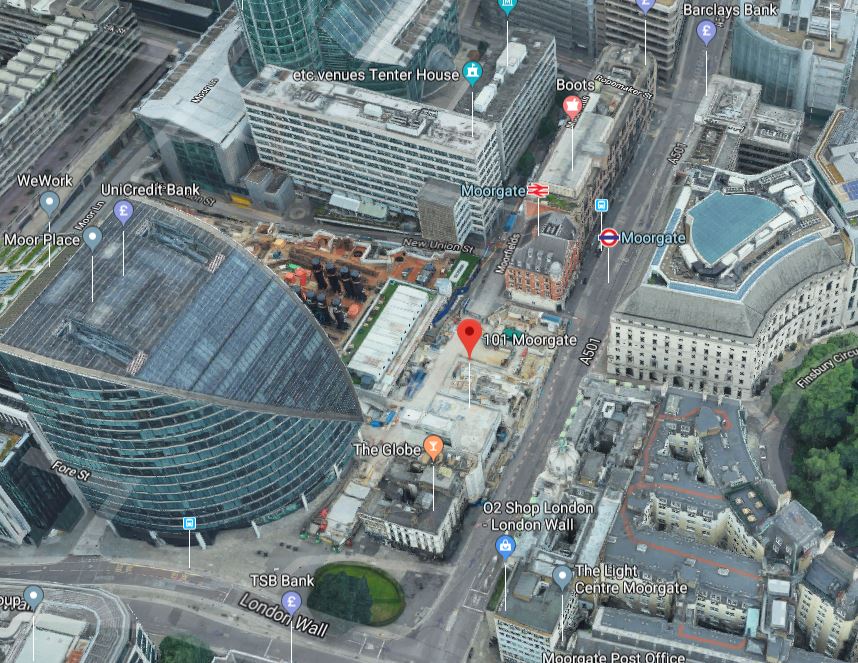
Note the site is indicated by the red arrow.
To its left is the distinctive Moor House, which as well as being a large office block, incorporates a Crossrail ventilation shaft.
Hopefully, Transport for London raised a few pennies for that deal.
Do Aventras Use Supercapacitors?
In this article in Global Rail News from 2011, which is entitled Bombardier’s AVENTRA – A new era in train performance, gives some details of the Aventra’s electrical systems. This is said.
AVENTRA can run on both 25kV AC and 750V DC power – the high-efficiency transformers being another area where a heavier component was chosen because, in the long term, it’s cheaper to run. Pairs of cars will run off a common power bus with a converter on one car powering both. The other car can be fitted with power storage devices such as super-capacitors or Lithium-ion batteries if required. The intention is that every car will be powered although trailer cars will be available.
Unlike today’s commuter trains, AVENTRA will also shut down fully at night. It will be ‘woken up’ by remote control before the driver arrives for the first shift
This was published over seven years ago, so I suspect Bombardier have refined the concept.
The extract makes three interesting points.
All Or Most Cars Will Be Powered
In A Detailed Layout Drawing For A Class 345 Train, I give the formation of a Crossrail Class 345 train.
DMS+PMS+MS1+MS3+TS(W)+MS3+MS2+PMS+DMS
Note.
- M signifies a motored car.
- Eight cars have motors and only one doesn’t.
- The train is composed of two identical half-trains, which are separated by the TS(W) car.
- There are four wheelchair spaces in the TS(W) car.
Are the MS!, MS2 and MS3 cars identical?
In addition, I have been told, that all cars in Class 720 trains are motored.
It does seem that Bombardier have fulfilled their statement from 2011.
Remote Wake-Up
This is mentioned in the extract, but there are few other references to it. I quoted a report from the Derby Telegraph, which has since been deleted, in Do Bombardier Aventras Have Remote Wake-Up?.
Supercapacitors And Lithium-Ion Batteries
According to the extract, the trains have been designed to accept supercapacitors or lithium-ion batteries if required.
As the other two statements in the extract appear to be likely, I will continue to believe that all Aventras can have some form of energy storage.
Crossrail
I’ll look first at Crossrail’s Class 345 train.
In How Much Energy Does A Crossrail Class 345 Train Use?, using the train’s data sheet, I came to the conclusion, that electricity usage of the trains is 2.67 KWh per car per kiometre or 3.29 KWh per car per mile.
In the linked post, I also calculate the kinetic energy of a fully-loaded nine-car Crossrail train.
I’ll repeat it.
- If I take a nine-car Class 345 train, this has a mass of less than 350 tonnes and a maximum speed of 145 kph.
- 1500 passengers at 80 kg each works out at another 120 tonnes.
- So for this crude estimate I’ll use 450 tonnes for the mass of a loaded train.
This gives the train a kinetic energy of 101 KWh.
As the Class 345 trains are effectively two half trains, with two PMS cars with pantographs, it is likely that they have at least two cars that are ready for supercapacitors or lithium-ion batteries.
The Design Of Crossrail
Crossrail could best be described as the Victoria Line on steroids.
- Both lines were designed to run in excess of twenty-four trains per hour (tph) across London.
- The Victoria Line was built to deep-level Underground standards, with one of the most advanced-for-its-time and successful train operating systems of all times.
- Crossrail is a modern rail line being built to National Rail standards, with world-leading advanced technology, that takes full account of modern environmental standards and aspirations.
Costs were saved on the Victoria Line by leaving out important parts of the original design..
- The route was cut back to Walthamstow Central, from the proposed terminus at Walthamstow Wood Street or possibly South Woodford or Woodford.
- Some stations like Highbury & Islington were built to a totally inadequate low-cost design.
- Third escalators at stations were changed into stairs.
- Step-free access was non-existent at the opening, but has been added to some stations since.
- Cross platform interchange with the Chingford Branch Line was left out at Walthamstow Central station.
Costs were saved on Crossrail, by using high-quality design.
- Crossrail and the Great Western Main Line electrification share a sub-station to connect to the National Grid.
- The number of ventilation and access shafts was reduced significantly, with one in a new office block; Moor House.
- Electrification uses a simple overhead rail, which is only fed with power at the ends.
I also believe that the Class 345 trains, which were designed specifically for the route, were designed to save energy and increase safety in the tunnels.
Regenerative braking normally saves energy by returning braking energy through the electrification, so it can be used to power other nearby trains.
Batteries For Regenerative Braking
However, in recent years, there has been increasing interest in diverting the braking energy to onboard energy storage devices on the train, so that it can be used when the train accelerates or to power systems on the train.
The system has these advantages.
- Less energy is needed to power the trains.
- Simpler and less costly transformers can be used for the electrification.
- The onboard energy storage can be used to power the train after an electrification failure.
- In tunnels, there is less heat-producing electricity flowing in all the cables.
Obviously, keeping the heat down in the tunnels is a good thing.
A Station Stop On Crossrail Using Regenerative Braking And Energy Storage
Imagine a fully-loaded train approaching a station, at the maximum speed on 145 kph.
- The train will have a kinetic energy of 101 kWh.
- As it approaches the station, the brakes will be applied and the regenerative brakes will turn the train’s energy into electricity.
- This energy will be stored in the onboard energy storage.
- As the train accelerates away from the station, the electricity in the onboard energy storage can be used.
The only problem, is that regenerative braking is unlikely to recover all of the train’s kinetic energy. But this is not a big problem, as the train draws any extra power needed from the electrification.
To make the system as efficient as possible, the following must be fitted.
- The most efficient traction motor.
- Onboard energy storage capable of handling the maximum kinetic energy of the train.
- Onboard energy storage with a fast response time.
The train will probably be controlled by a sophisticated computer system.
What Size Of Onboard Energy Storage Should Be Fitted?
Obviously, this is only speculation and a best guess, but the following conditions must be met.
- The onboard energy storage must be able to capture the maximum amount of energy generated by braking.
- The physical size of the energy storage system must be practical and easily fitted under or on the train.
- The energy storage system should be able to store enough energy to be able to move a stalled train to safety in the event of complete power failure.
Note that an energy storage system with a 100 kWh capacity would probably take the train somewhere around four to five kilometres.
Obviously, a series of computer simulations based on the route, passengers and various other conditions, would indicate the capacity, but I feel a capacity of around 120 kWh might be the place to start.
Where Would The Energy Storage Be Placed?
With nine cars, and with eight of them motored, there are a several choices.
- One energy storage unit in all motored cars.
- One energy storage unit in the three MS cars.
- One energy storage unit in each half train.
I’ve always liked the concept of an energy storage unit in each powered car, as it creates a nice tight unit, with energy stored near to where it is generated and used.
But there is another big advantage in splitting up the energy storage – the individual units are smaller.
Could this mean that supercapacitors could be used?
- The main need for onboard energy storage is to handle regenerative braking.
- The secondary need for onboard energy storage is for emergency power.
- There is no needon Crossrail as yet,to run the trains for long distances on stored power.
- Supercapacitors are smaller.
- Supercapacitors can handle more operating cycles.
- Supercapacitors run cooler.
- Supercapacitors have a fast response.
If running for longer distances were to be required in the future, which might require lithium-ion or some other form of batteries, I’m sure there will be space for them, under all those cars.
I wouldn’t be surprised to find out that Crossrail’s Class 345 trains are fitted with supercapacitors.
Note, that a Bombardier driver-trainer, talked of an emergency power supply, when I asked what happens if the Russians hacked the electrification.
Class 710 Trains
London Overground’s Class 710 trains are a bit of a mystery at the moment as except for a capacity of seven hundred passengers disclosed in this article on the International Railway Journal little has been published.
Here are my best guesses.
Formation
Based on the formation of the Class 345 trains, I think it will be.
DMS+PMS+MS+DMS
Effectively, this is a half-train of a seven-car Class 345 train, with a DMS car on the other end.
Dimensions
I have a Bombardier press release, which says that the car length is twenty metres, which is the same as Class 315, Class 317 and Class 378 trains and a whole load of other trains, as twenty metre cars, were a British Rail standard.
I doubt there will be much platform lengthening for these trains in the next few years.
Weight
The Wikipedia entry for Aventra gives car weight at between thirty and thirty-five tonnes, so the train weight can be anything between 120-140 tonnes.
Passenger Capacity
I wrote about this in The Capacity Of London Overground’s New Class 710 Trains.
This was my conclusion.
It appears that seven hundred is the only published figure and if it is, these new Class 710 trains are going to substantially increase public transport capacity across North London.
They are certainly future-proofed for an outbreak of London Overground Syndrome, where passenger numbers greatly exceed forecasts.
As some of the trains are being delivered as five-car units, there is always the option of adding an extra car. Especially, as the platforms on the line, seem to have been built for five or even six car trains.
London Overground have not made the platform length miscalculations of the North and East London Lines.
For the near future they’ll hold around 700 passengers at 80 Kg. each, which means a passenger weight of fifty-six tonnes.
Full Train Weight
For various train weights, the fully-loaded trains will be.
- 120 tonnes – 176 tonnes
- 130 tonnes – 186 tonnes
- 140 tonnes – 196 tonnes
Until I get a better weight for the train, I think I’ll use 130 tonnes or 186 tonnes, when fully-loaded.
Speed
I wrote about this in What Is The Operating Speed Of Class 710 Trains?.
This was my conclusion.
But what will be the operating speed of the Class 710 trains?
I said it will be somewhere between 145 kph (90 mph) and 160 kph (100 mph)
Consider.
- I think that 145 kph, will be able to handle the two planned increased frequencies of four tph.
- 145 kph is identical to the Crossrail trains.
- 160 kph is identical to the Greater Anglia trains.
- 160 kph seems to be the speed of suburban Aventras.
It’s a difficult one to call!
I do think though, that trundling around the Overground, they’ll be running at the same 121 kph of all the other trains.
Kinetic Energy
The kinetic energy of a 186 tonnes train at 121 kph is 29 kWh.
Could Supercapacitors Handle This Amount Of Energy?
I’m pretty certain they could.
Conclusion
Supercapacitors are a possibility for both trains!
I’ll review these calculations, as more information is published.
Crossrail 2 Review Prompts Fresh Delays
Note that this document was written in January 2018 and I gave it a serious rewrite in November 2022, to reflect the scrapping of all further work on Crossrail 2, which I wrote about in Crossrail 2 Falls Victim To £1.8bn TfL Bailout.
This title of this post is the same as this article on Construction News.
This is the opening paragraph.
Crossrail 2 is set for further delays after London’s transport boss admitted a fresh funding review would push back consultations on the scheme until the end of 2018.
It would now look increasingly unlikely that the hybrid bill to enable Crossrail 2, will get through Parliament before the next General Election in 2022.
These dates should be noted for Crossrail.
- Approved – 2007
- Construction started – 2009
- Services started – 2015
- Partial opening – 2018 – Now delayed until 2021
- Full opening – 2019 – Now delayed until 2022
So, if Crossrail 2 is approved in 2022, we could be looking at an opening date of 2034 to 2037.
If it is needed earlier for political reasons, then we must do some serious thinking.
Crossrail 2 As A Series Of Related Projects
I’ve always believed that Crossrail 2, should be considered to be a series of related projects. followed by the boring of the Central Tunnel.
- Increasing Capacity On The Waterloo Suburban Lines to four trains per hour (tph)
- Station Improvements On The Waterloo Suburban Lines
- Increasing Capacity in Tooting And Wimbledon
- Providing better access to Clapham Junction station
- Making it easier for passengers transferring between trains and Underground at Waterloo.
- Improving public transport access to Chelsea.
- Creating better access to Euston, St. Pancras and Kings Cross stations.
- Improving transport in Dalston and Hackney.
- Four-tracking the West Anglia Main Line between Coppermill Junction and Broxbourne.
- Allowing An Increased Number Of West Anglia Services to Terminate At Stratford
- Creating a high-capacity commuter route up the Lea Valley.
- Creating a high-capacity commuter route to Wood Green and New Southgate.
- Taking Pressure Off the Victoria Line
These projects would incorporate all the holes, through which to thread the Central Tunnel, that will run between Wimbledon and Tottenham Hale.
So would it be better to build Crossrail 2 as a series of smaller projects?
Increasing Capacity On The Waterloo Suburban Lines To 4 Tph
In An Analysis Of Waterloo Suburban Services Proposed To Move To Crossrail 2, I showed that it would be possible to run a service with Crossrail 2’s characteristics terminating in Waterloo station.
I said the following would be needed.
- More platform capacity in Waterloo station.
- Modern high-performance 100 mph trains like Class 707 trains or Aventras.
- Wimbledon station would only need minor modifications.
- Some improvements to track and signalling between Waterloo and Wimbledon stations.
- A measure of ATO between Waterloo and Wimbledon stations.
Much of the infrastructure works have been completed in Summer 2017, as I reported in It’s All Over Now, Waterloo!.
All it needs to introduce a much improved Waterloo Suburban service, is for Bombardier to build the new 100 mph Class 701 trains for South Western Railway.
Note that, these improvements will be needed, whether Crossrail 2 is built or not!
Station Improvements On The Waterloo Suburban Lines
Many of the stations on the Waterloo Suburban Lines need substantial improvement.
- Some station buildings need sympathetic improvement.
- Some stations need step-free access.
- Some stations could be redeveloped to create much-needed housing on top of a new station.
- Some stations might need extra platforms and/or capacity improvements.
- There are level crossings that need to be closed.
Note.
- These improvements will be needed, whether Crossrail 2 is built or not!
- As Crossrail 2 and South Western Railway will both be using Aventra trains, improvements will be the same if Crossrail 2 is built or not!
There could be quite a large number of small projects.
Increasing Capacity In Tooting And Wimbledon
Crossrail 2 will increase the capacity at Wimbledon and Tooting Bradway stations, with up to thirty tph passing through.
Wimbledon will benefit from the following, whether or not Crossrail 2 is built.
- More trains on the Suburban Lines to Waterloo or Central London via Crossrail 2..
- Increased frequency on the District Line, where the new signalling is being installed under the Four Lines Modernisation program.
- Increased frequency and capacity on the Northern Line.
- Increased frequency and capacity on Tramlink.
- A new Tramlink route to Sutton.
- After all the work at London Bridge, would it be possible to increase the frequency of trains on the Sutton Loop Line, which currently handles a measly two tph for most of the day?
The area will probably benefit from the splitting of the Northern Line into two separate lines.
Transport for London (TfL) have talked about creating a major interchange, by increasing capacity at Streatham Common station.
Services going through the station and the major junction a short distance to the North include.
- Thameslink services on the Sutton Loop Line, between Sutton and St. Albans via Wimbledon, Elephant & Castle and St. Pancras.
- Brighton Main Line services between Victoria and East Croydon.
- The Milton Keynes to East Croydon service calls.
- London Bridge to West Croydon services.
- There is a six tph service to and from Balham station.
It has also been suggested that the station could be a terminus for London Overground’s East London Line services and a Tramlink extension.
I can certainly understand why TfL are thinking of an improved interchange at Streatham Common station.
The original plan for Crossrail 2 showed a preference for the route to go through Balham station rather than Tooting Broadway station.
Surely, if Balham is not to be on Crossrail 2, that station may well be upgraded.
- The disused platforms could be reinstated.
- Full step-free access could be added.
- A better connection between National Rail and the improved Northern Line could be created.
It could become a true Gateway To The South!
Providing Better Access To Clapham Junction Station
Provision has been made in the design of the Northern Line Extension, so that it could be extended from Battersea Power Station station to Clapham Junction station.
If the connection at Clapham Junction is designed to the high-standard of Crossrail, then the Northern Line Extension could provide an important route for commuters.
The trains on the Northern Line Extension will connect to the Morden branch at Kennington station.
The Wikipedia entry for Kennington station says this.
TfL has assessed that the Battersea extension will not have a significant impact on the number of passengers entering and exiting the station, but, to accommodate additional interchanges between the branches, additional cross-platform passageways will be constructed between each pair of plaforms. When the extension opens, all services from the Charing Cross branch will run to Battersea Power Station. Trains to and from Morden will run via the Bank branch.
So it looks like Clapham Junction station will gain a free-flowing connection to both branches of the Northern Line.
Note that, if the Northern Line Extension is extended to Clapham Junction, it will probably be built to allow easy connection to a future Crossrail 2.
Making It Easier For Passengers Transferring Between Trains And Underground At Waterloo
The on-going upgrade to Waterloo station will improve the transfer and also provide better walking routes.
In addition, the recent upgrade across the South Bank between Waterloo East and London Bridge stations, could be useful to a proportion of passengers.
But more needs to be done!
These other projects might help.
- To increase capacity on Southeastern services out of Charing Cross station, it has been proposed to rebuild the station, so it reaches across the Thames.
- Waterloo East station could be a prime site for redevelopment.
- The Bakerloo Line is going to be upgraded with new trains and more capacity.
- The Bakerloo Line will have a good connection to Crossrail at Paddington station.
- The Waterloo and City Line will be getting new trains, which could increase capacity by twenty-five percent.
- The |Waterloo and City Line could get improved access at Waterloo to match the improved access currently being created at Bank station.
Surely done in the right order, these projects could increase capacity for passengers at Waterloo, who are connecting to other parts of London.
Improving Public Transport Access To Chelsea
Kings Road, Chelsea station was cancelled in March 2017.
Perhaps, the posh people of Chelsea don’t want the plebs visiting? How will their maids and dogsbodies get to work?
Creating Better Access To Euston, St. Pancras and Kings Cross Stations
One of the main objectives for Crossrail 2, is to provide better access to the three major stations of Euston, St. Pancras and Kings Cross.
The chosen solution is to build a ‘mega-station’ called Euston St. Pancras station. The connections of the station are described like this in Wikipedia.
The station will be firmly integrated into Euston and St. Pancras mainline stations, as well as Euston Underground station. Access to King’s Cross station, and King’s Cross St Pancras Underground station will be via a short walk through St. Pancras station. There may also be a link to Euston Square station on the Underground, created as part of Euston station’s reconstruction for High Speed 2.
In order to illustrate, the lines in the area and the relationship of Euston St. Pancras station to the current stations, look at this map from carto.metro.free.fr.
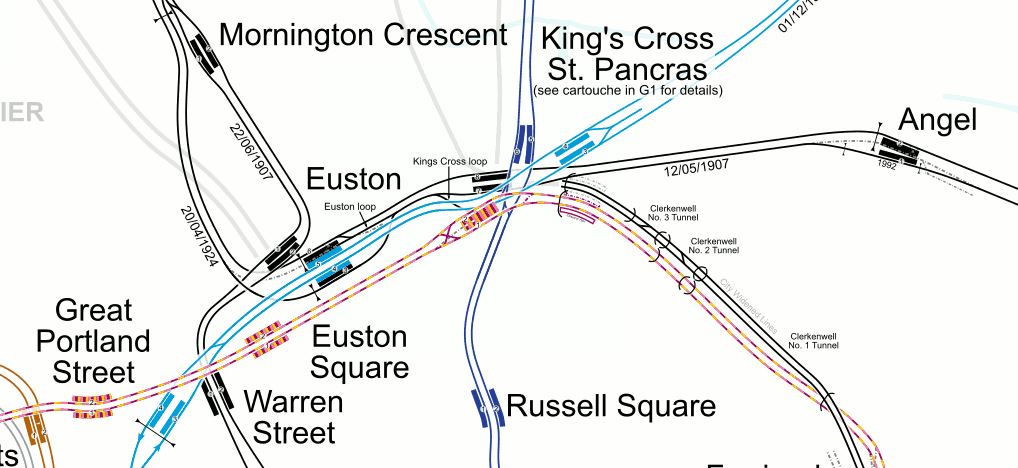
Crossrail 2 will pass through Angel station, before roughly following the line of the Northern Line through Kings Cross St. Pancras station to Euston station, where it will turn South towards the next station, which is Tottenham Court Road station, where it will have an interchange with Crossrail.
Like, its earlier sister, Crossrail 2 will have to go deep to avoid the tunnels of the Underground and London’s sewers.
However, London’s famous clay, that was instrumental to the creation of London’s deep-level Tube lines, will probably enable a successful tunnel to be created.
High Speed 2 is scheduled to open in 2026 and it appears to me, that there is no way, that given the slippage of the project, that Crossrail 2 can open before High Speed 2.
So how will the extra passengers using High Speed 2 be handled at Euston station?
The only alternative plan, that I can see is to fall back on the existing lines.
Affecting all the connections between High Speed 2 and the Underground, would hopefully be a complete rebuilding of Euston station incorporating the following.
- A connection to the sub-surface lines.
- Full step-free access to all Underground lines.
The Circle, Hammersmith & City and Metropolitan Lines, are undergoing an Upgrade Program, which is known as the Four Lines Modernisation by TfL and is described like this in Wikipedia.
Together with the introduction of S Stock trains, the track, electrical supply and signalling systems are being upgraded in a programme planned to increase peak-hour capacity on the Circle and Hammersmith & City lines by 65 per cent by the end of 2018. A single control room for the sub-surface railway is to be established in Hammersmith and an automatic train control (ATC) system will replace signalling equipment installed from the 1940s. The cross-London Crossrail line, planned to open in 2018, is expected to reduce crowding between Paddington and Whitechapel.
Note the reference to Crossrail, with its connections to the sub-surface lines at Paddington, Farringdon, Liverpool Street and Whitechapel stations. Passengers will Duck-and-Dive around the busy sections, using Crossrail and its five helper lines, that loop along it to the North and South.
- Central Line
- Circle Line
- District Line
- Hammersmith & City Line
- Jubilee Line
- Metropolitan Line
Predicting how the capacity will split between the various lines across London, will be a statistical nightmare.
But there will be a substantial increase in capacity on the sub-surface lines through Kings Cross St. Pancras and Euston.
The Northern Line could be a totally different line, when High Speed 2 opens in 2026.
- Bank station will open in 2021 with 40% more capacity.
- Camden Town station will be rebuilt by 2024/25.
- The Northern Line Extension to Battersea Power Station station is scheduled to open in 2020.
All this work, may well allow a Northern Line Split, which would bring increased train frequencies and more capacity.
The Victoria Line is probably at maximum capacity at the present time, but history has shown that she never knows when to stop calling for more!
- Capacity at Highbury & Islington, Oxford Circus and Walthamstow Central stations is probably a limiting factor.
- Access at Euston and Kings Cross St. Pancras stations could certainly be improved.
The Piccadilly Line could be a big contributor to extra capacity through the area.
Can the line be upgraded with new trains in time to make a meaningful contribution?
Lastly, we mustn’t forget the new station complex at Old Oak Common, which connects High Speed 2, Crossrail and the North London Line.
Note that, these improvements will be implemented, whether Crossrail 2 is built or not!
Improving Transport In Dalston And Hackney
As a resident of Dalston since 2010, I can honestly say, that public transport has improved a lot in recent years.
- The North London Line has two frequent five-car train services from Stratford in the East to Clapham Junction and Richmond in the West.
- The East London Line has four frequent train services from Highbury and Islington and Dalston Junction in the North to Clapham Junction, New Cross, New Cross Gate and West Croydon in the South.
- The Victoria Line has thirty-six tph between Brixton and Walthamstow Central.
- Lea Bridge station has reopened.
- Liverpool Street to Cheshunt, Chingford and Enfield are now Overground routes.
- There are numerous bus routes with new buses going hither and thither.
The icing on the cake, is that extra services and new trains will be provided in the next couple of years.
- Dalston Junction and Whitechapel for Crossrail will have at least 20 tph.
- Hackney Wick and Highbury & Islington will have at least 10 tph.
- New trains will appear on Liverpool Street to Cheshunt, Chingford and Enfield and Gospel Oak to Barking Line services.
Crossrail 2 would be an improvement for Dalstonistas and Hackneysians, as we could get to Central London faster.
But from December 2019, Crossrail with perhaps a single change will give us numerous ways to get to all the stations on the proposed line, quicker than you could do the trip in a Hackney cab, driven by the likes of Lewis Hamilton.
Hackney has survived on the crumbs of London’s transport system since the trams and trolley buses were scrapped.
Like all those with Cockney in their genes, nurture or environment, we’ll keep smiling through!
Note that, the improvement in Hackney will be implemented, whether Crossrail 2 is built or not!
Four-Tracking The West Anglia Main Line Between Coppermill Junction And Broxbourne
This needs to be done to create extra capacity on the West Anglia Main Line for the following services.
- Express services to Stansted Airport, Cambridge and possibly Norwich.
- Extra express services terminating at Stratford for Crossrail.
- Local services from Liverpool Street and Stratford to Broxbourne, Hertford East and Bishops Stortford.
- 100 mph running for Express services on the fast lines.
Four-tracking would certainly be necessary to accommodate the proposed 10-15 tph service for Crossrail 2.
Note that, this four-tracking will be needed, whether Crossrail 2 is built or not!
Allowing An Increased Number Of West Anglia Services to Terminate At Stratford
Greater Anglia have said, that they will run extra Stansted Airport services into Stratford station from 2019.
- Previously, these Stratford-Stansted Airport services used the High Meads Loop under the Eastfield Shopping Centre, in much the same way as Merseyrail’s Wirral Line trains run under Liverpool.
- Services would all call at either Platform 11 or 12 at Stratford, depending on the way the loop is travelled.
- The loop is double-track, which opens the possibility of local services using one platform and Stansted services using the other.
- If local services used Platform 12, North London Line services would be perhaps fifty metres away.
- It would be a walk of about a hundred metres to Crossrail and the Central Line and not much further to the Jubilee Line and the Docklands Light Railway.
- Using a loop is a technique that saves time, as the train goes straight on, without the driver changing ends and Merseyrail handle something like twelve tph on the Wirral Line.
- With a measure of Automatic Train Control (ATC), I suspect that a frequency of fifteen or even twenty tph could be possible through the High Meads Loop.
Could paths be found to incorporate perhaps two tph between Stratford and Chingford via a reinstated Hall Farm Curve?
It seems to me that Network Rail’s track design at Stratford station incorporated a lot of future-proofing!
Creating A High-Capacity Commuter Route up the Lea Valley
Crossrail 2 intends to implement a 10-15 tph service between Tottenham Hale and Broxbourne stations.
After the four-tracking of the West Anglia Main Line, the only other works needed to create a high-capacity commuter route up the Lea Valley will be.
- Remodelling of Coppermill Junction, so trains can access Crossrail 2’s Central Tunnel.
- Rebuilding of Tottenham Hale station to accommodate the extra services, to and from the Crossrail 2 tunnel, Liverpool Street and Stratford.
- Rebuilding stations to serve the new tracks.
The rebuilding of Tottenham Hale station is already underway.
There is the interesting possibility pf running at least a ten tph service up the Lea Valley from Stratford to Broxbourne and Hertford East.
If the High Meads Loop, were to be fully developed at Stratford, as the terminus of both Stansted Express and local Lea Valley services, using Crossrail from Stratford to cross London would probably be an acceptable alternative route until the Crossrail 2 tunnel is built.
It would have other advantages.
- Capacity would be released at Liverpool Street station.
- Capacity would be released through Clapton and Hackney Downs stations on the direct route to Liverpool Street.
- Services could be connected to Stratford International station with the addition of another platform.
- Heathrow to Stansted Airport would be a single change at Stratford with just a short walk.
The major undertaking of the Crossrail 2 central tunnel could also be delayed to smooth cash-flow.
Creating A High-Capacity Commuter Route To Wood Green And New Southgate
This section will be nearly all in tunnel and will call at the following stations.
New Southgate – For Great Northern and Thameslink
- Alexandra Palace – For Great Northern and Thameslink
- Turnpike Lane for Piccadilly Line
- Wood Green for Piccadilly Line
- Seven Sisters for Victoria Line, London Overground and Gospel Oak To Barking Line.
The area is one I know well and it probably needs improved services.
But some are already planned.
- Thameslink will add at least two tph to Alexandra Palace and New Southgate.
- New trains will add capacity and frequency to the Piccadilly Line.
- New trains will add capacity and frequency to Great Northern services into Moorgate on the Northern City Line.
- New trains will add capacity and frequency to the Gospel Oak to Barking Line.
Hopefully, enough capacity can be incorporated to serve North London.
Taking Pressure Off The Victoria Line
Dear Old Vicky can’t give much more and what really would relieve it is Crossrail 2.
The two lines connect at the following stations.
- Tottenham Hale
- Seven Sisters
- Euston St. Pancras
- Victoria
But the following will help.
- The rebuilding of Walthamstow Central, Highbury & Islington and Oxford Circus stations.
- The upgraded Piccadilly Line with connections at Finsbury Park, Kings Cross St. Pancras and Green Park
- The upgraded Northern Line with connections at Kings Cross St. Pancras, Euston, Warren Street and Stockwell.
- The cross-platform interchange with the Northern City Line at Highbury & Islington connects to Crossrail.
- The upgraded Overground routes into Liverpool Street from Cheshunt, Chingford and Enfield Town.
- A reinstated Hall Farm Curve would give Walthamstow and Chingford easier access to Crossrail at Stratford.
Other new connections and stations might take off extra pressure.
The Central Tunnel
The Central Tunnel, that will run between Wimbledon and Tottenham Hale stations, will be a major undertaking.
- It is about twice as long as Crossrail’s Central Tunnel from Stratford to Paddington.
- There will also be the branch tunnel to Wood Green.
- There will be some large and complicated stations, like Dalston and Euston St. Pancras.
- Some of the tunnelling South of the Thames could be challenging.
Remember that, boring the tunnels on Crossrail took around five years, with another two years to lay the track.
On the other hand, the following will apply on Crossrail 2.
- The contractors will have all the knowledge and experience gained on Crossrail.
- The tunnel portal sites at Tottenham Hale and Wimbledon look to have plenty of space.
- Some of the stations, will be ready to accept the tunnel boring machines.
Overall, it will be a very doable project, but I suspect it could take ten years or more.
Other Projects Will Help
In my review of the smaller projects that should be done before the Central Tunnel of Crossrail is bored, Other projects get multiple mentions.
Digital Signalling And ETCS
Crossrail, Thameslink, Crossrail 2 and several Underground Lines will all be lines that have the most modern of signalling, which will also allow a degree of Automatic Train Control.
New passenger trains will be able to take advantage of this technology, but what about lines, where freight trains also run.
Ths article on Global Railway Review is entitled The Digital Railway Begins With Landmark Siemens ETCS Contract.
This is the opening two paragraphs.
Network Rail has awarded Siemens Rail Automation the contract to supply, install and support its European Train Control System (ETCS) on freight locomotives across Great Britain.
Network Rail’s multi-million pound contract grants Siemens to supply, install and support ETCS in-cab signalling equipment on the 745-strong fleet of freight locomotives which operates across Great Britain. ETCS is expected to make Britain’s freight locomotives safer and greener whilst unlocking capacity.
The installation of ETCS will surely be invaluable on lines around London, where freight trains and passenger services mix.
- Crossrail branch to Shenfield
- Crossrail branch to Reading
- Sections of Thameslink
- North London Line
- West London Line.
- The Gospel Oak to Barking Line
Some of these lines and their passenger services are not ready for digital signalling, but the two Crossrail branches and Thameslink will probably be already equipped or will be in the near future.
Digital signalling should unlock more capacity everywhere it is installed.
The Creation Of More Transport Hubs
London has had major transport hubs, where rail lines and other transport modes connect, as long as it has had trains, trams and horse buses.
More transport hubs have been added in recent years and others will be created in the next few years.
- Brent Cross
- Dalston
- Finsbury Park
- Hackney
- New Cross/New Cross Gate
- Shenfield
- Stratford
- Streatham Common
- Tottenham Hale
- Walthamstow Central
- West Hampstead
Have all been discussed or planned and some have been started.
But these are small projects compared to the massive transport hub planned at Old Oak Common.
- It will serve the developments at Park Royal and Old Oak Common.
- High Speed 2 services will stop between Euston and Birmingham.
- ,Crossrail, Great Western,West Coast Main Line, North London Line and West London Line services will call.
- The Central Line may call.
- Plans exist for a West London Orbital Railway linking North-West and South-West London to Old Oak Common.
It would be a transport mega-hub.
Could others be developed?
Crossrail
Crossrail will inject a massive amount of East-West capacity into London’s transport system.
Some journeys that would be easy on Crossrail 2, will be possible using Crossrail and another line.
Take, where I live in Dalston.
When I moved to the area in 2010, for residents of a large area of Islington and Hackney, the only way to get to the City, Canary Wharf, the West End or major stations was to get a bus to Highbury & Islington, Liverpool Street or Moorgate stations and use the Underground.
Then along came Big Orange in the shape of the London Overground.
After Crossrail opens, for many journeys, I will hop on the Overground to Whitechapel station, from where I’ll take Crossrail to my destination.
The capacity, speed and novelty of Crossrail wil help make up for a delayed Crossrail 2.
Thameslink
Used properly by the rail companies, I believe Thameslink could create a lot more North-South capacity across London.
Some of this could help provide capacity at stations, that will be served by Crossrail 2..
Especially as, Crossrail 2 and Thameslink will share stations at Alexandra Palace, St. Pancras and Wimbledon.
The long-talked about improved stations at Peckham Rye and Loughborough Junction and a possible new one at Camberwell, would help create better connectivity across South London.
What Thameslink needs is a good connection to Clapham Junction, but this would appear to be difficult.
But don’t underestimate London’s troubled North-South Link!
For a start it should be on the Tube Map!
High Speed 2
High Speed 2 will affect Crossrail 2 in two opposite ways, when it opens in 2026.
- The planned rebuilding of Euston station for the line will incorporate better connections to the Underground and any sane rebuilding would surely bring Euston Square station into the complex.
- The new line will have a station at Old Oak Common, where there will be an interchange with Crossrail and the London Overground.
The first will increase passenger numbers at Euston, whilst the second should reduce them.
Four Lines Modernisation
Transport for London describe the Four Lines Modernisation with this paragraph.
We are transforming the Circle, District, Hammersmith & City and Metropolitan lines. When the work is completed in 2023, increased capacity and boosted reliability will make journeys faster and more comfortable.
TfL say these will be the benefits of the modernisation.
- A new fleet of air-conditioned trains, with brighter more spacious interiors, low floors and dedicated spaces for wheelchair users, CCTV and other improved features
- Space for more customers
- Faster journeys and reduced waiting times
- Fewer delays as safe but obsolete equipment – dating back to the 1920s in some places – is replaced with modern, computerised signalling and control systems
- Better live customer information on platforms and to smart devices.
Note.
- The trains have arrived and no-one seems to have complained.
- TfL’s documents claim the new signalling can handle up to thirty tph.
- The new trains and signalling could do for the four sub-surface lines, what they did for the Victoria Line and increase frequencies by a substantial amount.
- It is highly likely that the rebuilt Euston station will have easy access to Euston Square station.
- Paddington, Euston, Kings Cross St. Pancras and Liverpool Street will see a high-frequency service across the capital, that connects at both ends to Crossrail.
- Crossrail will be faster between Whitechapel and Paddington.
The benefits of the Four Lines Modernisation and the rebuilding of Euston station would effectively create two new high capacity lines across Central London, with up to thirty tph carrying around nine hundred people each.
- A loop North of Crossrail, between Whitechapel and Paddington, serving Euston, St. Pancras, Kings Cross and Liverpool Street
- A loop South of Crossrail, between Whitechapel and Paddington, serving Victoria, Charing Cross, Blackfriars, Cannon Street and Fenchurch Street.
The Four Lines Modernisation will give Crossrail a very serious competitor, that was originally opened by the Victorians in the 1860s.
- Crossrail can handle 24 tph , which each contain 1500 passengers. 36,000 passengers per hour
- The North and South loops of the sub-surface lines could be able to handle 30 tph, which each contain 900 passengers. 27,000 passengers per hour
- Crossrail 2’s Central Tunnel is being designed to handle 30 tph, which might each contain 1500 passengers. 45,000 passengers per hour
These are truly massive numbers.
But perhaps more importantly, the Four Lines Modernisation should be able to go a long way to solving the problems of handling the large numbers of extra passengers using Euston for High Speed 2, when the first phase opens in 2026.
With all this extra capacity through Euston and Kings Cross coming on stream around 2023, I think that sensible planning would say that the Central Tunnel of Crossrail 2 through the area can be delayed by several years.
Upgrading The Piccadilly Line
I used the Piccadilly Line between Oakwood and Southgate stations between 1958 and 1965 to get to school. The current 1973 Stock trains on the line date from 1974 or only nine years after I left.
Wikipedia says this about new trains for the Piccadilly Line.
London Underground has invited Alstom, Bombardier and Siemens to develop a new concept of lightweight, low-energy, semi-articulated train for the deep-level lines, provisionally called “Evo” (for ‘evolution’). So far only Siemens has publicised an outline design, which would feature air-conditioning and would also have battery power enabling the train to run on to the next station if third and fourth rail power were lost. It would have a lower floor and 11% higher passenger capacity than the present tube stock. There would be a weight saving of 30 tonnes, and the trains would be 17% more energy-efficient with air-conditioning included, or 30% more energy-efficient without it.
Given the new trains seen in recent years, coupled with new signalling, I believe that there could be an increase in frequency from the current twenty-four tph to a Victoria Line frequency of over thirty tph.
- Current capacity of the line is 24 tph, each of which can carry 684 passengers. This is 16416 passengers per hour.
- Future capacity of the line could be 33 tph, each of which can carry 760 passengers. This is 25080 passengers per hour.
Like the Victoria Line, I think the capacity of the Piccadilly Line will be more limited by platform and station design, than the trains and the signalling.
But that won’t stop the Piccadilly Line from helping to hold the fort until the Central tunnel for Crossrail 2 is built.
London Underground’s New Deep Level Trains
After the Piccadilly Line trains have been delivered, it s highly likely that more trains will be built for the following lines.
- Forty for the Bakerloo Line giving a 25% capacity increase.
- Hundred for the Central Line giving a 25% capacity increase.
- Ten for the Waterloo and City Line giving a 25% capacity increase.
These figures come from an article entitled Deep Tube Upgrade in the November 2017 Edition of Modern Railways.
Bakerloo Line Upgrade And Extension To Lewisham
It could be argued that South East London needs extra capacity just as much as South West London.
The Deep Tube Upgrade article in Modern Railways says that this about an extended Bakerloo Line.
The 1972 stock trains are now the oldest on the system and are set to reach nearly 60 years in service before they are replaced. The Bskerloo fleet also is undergoing refurbishment, wgich is both addressing structural issues and improving the passenger environment.
Associated with this is the plan to extend the Bakerloo Line beyond Elephant & Castle to Lewisham via the Old Kent Road. Transport for London is undertaking a series of consultations into this plan, which have exhibited consistent support for the proposals, and the aim is for the extension to open around 2030, concurrent with the line’s modernisation.
Current Bakerloo Line stations, where work could happen or already has happened include.
- Elephant & Castle will be upgraded.
- Lambeth North has recently had a facelift.
- Waterloo is being updated to give better connection to National Rail services.
- Oxford Circus is going to be upgraded to add more capacity to the Victoria Line platforms.
- Baker Street has been planned to have step-free access, but due to budgetary restraints, this has not happened.
- Paddington is being updated to provide direct access to |Crossrail.
- Queen’s Park is planned to become step-free in 2019.
Most of the stations need improvement and a large proportion need step-free access.
Oxford Circus Station
Oxford Circus station was rebuilt in the 1960s for the Victoria Line.
- That rebuild was sized to handle around twenty tph on the Bakerloo, Central and Victoria Lines.
- The Central and Victoria Lines are now handling well over thirty tph.
- The Bakerloo and Central Line will be getting new Deep Level trains, which will further increase passengers.
- I would never bet against engineers squeezing another four tph out of Dear Old Vicky to run a forty tph frequency.
Oxford Circus station won’t be able to take the extra passengers and it will need a rebuild.
Judging by the solutions at Bank, Bond Street, Camden Town, Holborn, Kings Cross St. Pancras and Knightsbridge, I suspect it could take the form of a new entrance, which connected to the ends of platforms.
This map from carto.metro.free.fr shows the lines through the station.
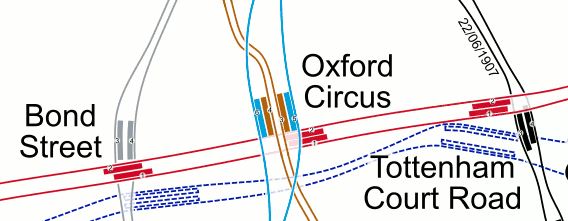
The lines are as follows.
- Red – Central
- Silver – Jubilee
- Brown – Bakerloo
- Turquoise – Victoria
- Purple – Crossrail
Consider.
- The Central Line runs at a not very deep level under Oxford Street.
- Oxford Street is going to be pedestrianised.
- The cross-platform interchange between the Bakerloo and Victoria Lines.
Could a simple new entrance be built at the Eastern end of the Central Line platforms?
These pictures were taken between Marks & Spencer at the Pantheon and Oxford Circus station.
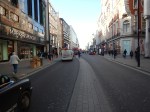

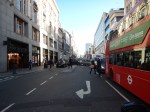
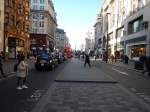
I could imagine an island entrance to the |Central Line in the middle of a fully pedestrianised Oxford Street.
- Escalators could lead to a spacious mezzanine floor, a few metres under Oxford Street.
- The mezzanine could contain ticket machines and perhaps kiosks and even toilets.
- From the mezzanine a gate-line would control access to escalators leading to the Eastern end of the Central Line platforms.
- Lifts could be added as required.
On the surface the entrance could be covered with a fosterito or some other similar structure.
I believe that the opening of Crossrail and the pedestrianisation of Oxford Street could allow this entrance to be constructed without stopping the Central Line trains running through Oxford Circus station, although passengers would not be able or allowed to use the Central Line at the station.
It wouldn’t be a first for the UK.
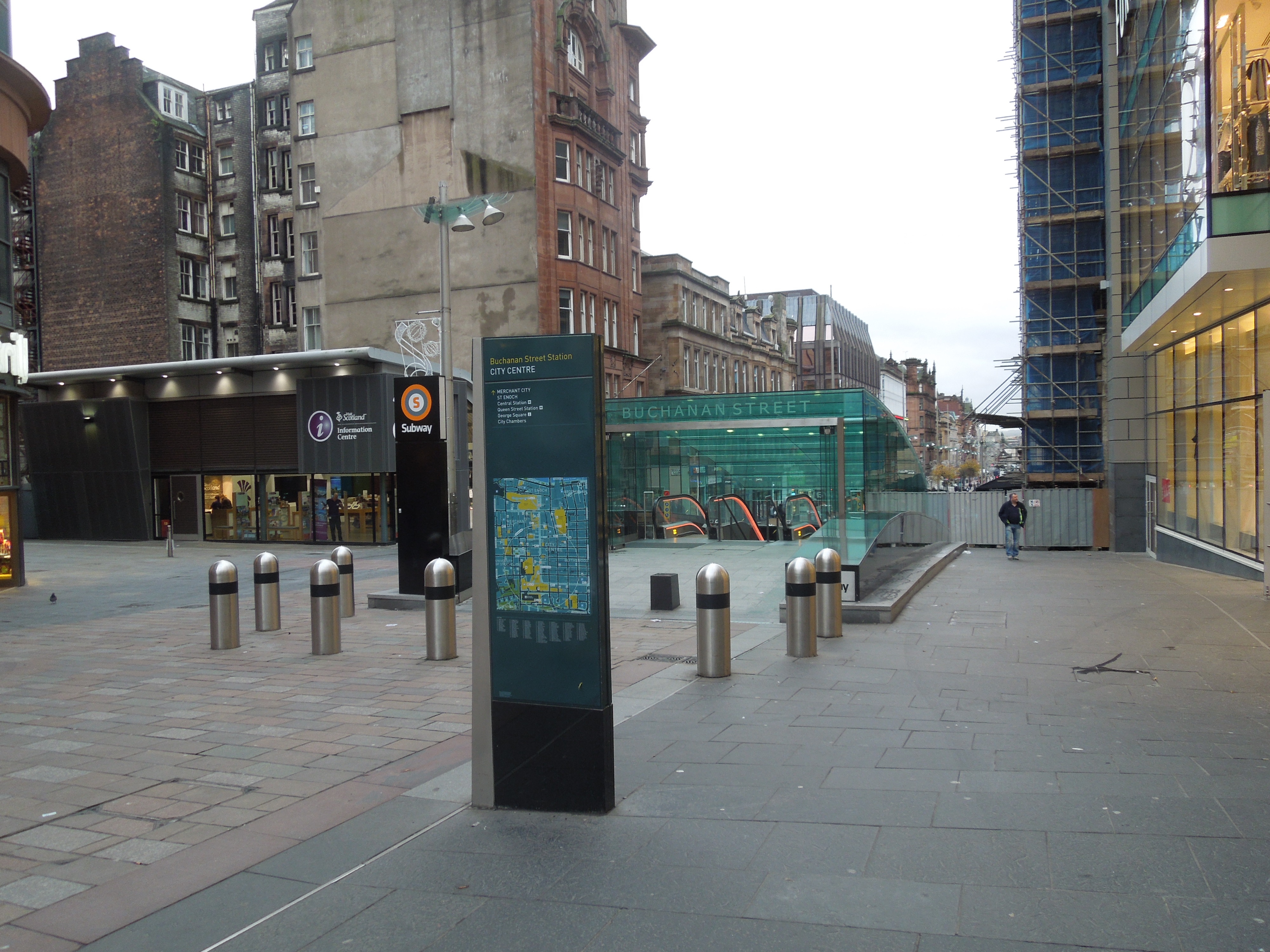
The picture shows Buchanan Street station on the Glasgow subway. Wikipedia says this about the canopies.
Other than St Enoch it is the only station with an underground ticket hall, and surface buildings are restricted to new mid-street entrance canopy which was rebuilt in 1999 as part of the repaving of Buchanan Street. This canopy is constructed entirely of structural glass: all beams and columns, the walls and roof are glass.
Note that Buchanan Street could be considered to be Glasgow’s Oxford Street.
Oxford Circus station could be redeveloped into an even more important interchange.
Many have said, that it needs a good connection to Crossrail.
Consider.
- Crossrail’s platforms at Bond Street station are long and stretch to Hanover Square, where there is an entrance to the station.
- The Hanover Square entrance to Bond Street station is approximately half-way between the Oxford Street entrances of Bond Street and Oxford Circus stations.
- The Crossrail platforms are deeper than the other lines. One picture shows them twenty-six metes below ground level.
I can’t see why, if it was decided to connect the two stations, that a pedestrian tunnel connection couldn’t be squeezed in.
This visualisation from Crossrail shows the Hanover Square entrance to Bond Street station.
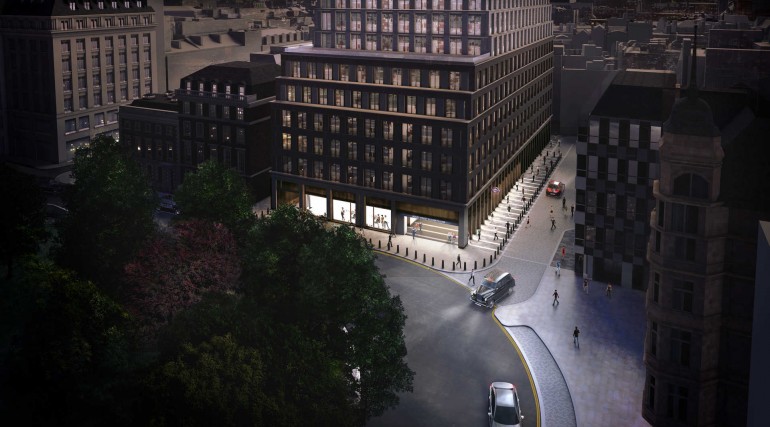
It looks to me that the design expects transferring passengers will walk on the surface.
Consider.
Let’s hope that Hanover Square gets fully pedestrianised and traffic-free.
A tunnel would have a great advantage over a surface route in that it would only be used by people transferring between the two stations.
Perhaps an entrance to the rebuilt Oxford Circus station, should be in the North-Eastern corner of Hanover Square.
Or could there be a fosterito or a new entrance in a traffic-free Princes Street?
These pictures show Princes Street.


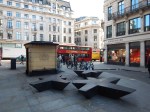
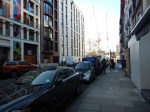

There are possibilities, which all depend on whether it is possible to dig a pedestrian tunnel from Oxford Circus.
There are more difficult stations, where the building of other entrances will be much more difficult.
An Improved Central Line
Crossrail and the Central Line have connections at Stratford, ,Liverpool Street, Tottenham Court Road, Bond Street and Ealing Broadway stations.
These connections will make it easier for stations and parts of the Central Line to be closed for major works, as passengers have a ready alternative.
I believe that this could cut time and costs when updating the line for the new Deep Level Trains and improving stations.
As the new trains will bring a twenty-five percent increase in capacity, it will all help take pressure from other lines.
An Improved Waterloo & City Line
New trains and perhaps an improved station at Waterloo will improve this route.
But the big improvement will happen early this year, when the new entrance at Bank station opens.
Underground And Overground Station Upgrades
This page on the TfL website gives details of station improvement. The page starts with this.
We’re modernising some of our busiest stations to increase capacity, make journeys faster and add step-free access. We’re also integrating them with other modes of transport, like buses, National Rail and cycling.
At present plans are underway or are being developed for the following key stations, which will be on or near the route of Crossrail 2.
- Alexandra Palace
- Bank and Monument
- Camden Town
- Elephant & Castle
- Finsbury Park
- Hackney Central
- Holborn
- Knightsbridge
- Oxford Circus
- Palmers Green
- Peckham Rye
- Seven Sisters
- Tottenham Hale
- Victoria
- Walthamstow Central
- Waterloo
- White Hart Lane
Others will probably join this list.
Splitting The Northern Line
Once the improvements at Camden Town and Bank stations have been completed and the Northern Line Extension to Battersea has been completed, TfL have ambitions to split the Northern Line.
- A Charing Cross Line would run from between Edgware and Battersea Power Station via Charing Cross
- A Bank Branch would run between High Barnet and Morden via Bank.
The two lines would have interchanges at Camden Town, Euston and Kennington.
Wikipedia has a section on the splitting of the Northern Line, which says this.
Running trains between all combinations of branches and the two central sections, as at present, means only 30 trains an hour can run through each of the central sections at peak times, because merging trains have to wait for each other at the junctions at Camden Town and Kennington. Completely segregating the routes could allow 36 trains an hour on all parts of the line.
Plans also exist for the following.
- Further extension of the from Battersea Power station to Clapham Junction station.
- New high-capacity modern trains, similar to those being specified for the Piccadilly Line.
I estimate, that the high-capacity trains for the Piccadilly Line will be able to carry 720 passengers in air-conditioned comfort. Currently, the 1995 Stock trains on the line can accommodate 662 passengers.
This gives the following current and future capacities of the two lines.
- Current capacity of the line is 30 tph, each of which can carry 662 passengers. This is 19860 passengers per hour.
- Future capacity of the line is 36 tph, each of which can carry 720 passengers. This is 25920 passengers per hour.
This gives around a thirty percent increase in capacity.
As with the Four Lines Modernisation, the application of high quality engineering from the Twenty-First Century to Victorian and Edwardian tracks and tunnels can give a surprisingly-high increase in capacity.
London Overground’s New Class 710 Trains
London Overground serves North and East London and will have interchanges with Crossrail 2 at Cheshunt, Dalston, Euston and Seven Sisters stations.
Their Lea Valley services to Cheshunt, Chingford andEnfield Town are getting new Class 710 trains.
Information on these new trains is scant, but I suspect that their performance would be superior to the current Class 315 and Class 317 trains, which have maximum speeds of 75 and 100 mph respectively.
Most Aventras seem to be 100 mph trains, with the exception of Crossrail’s Class 345 trains, which are 90 mph trains.
Your guess is as good ass mine, as to what the operating speed of the Class 710 trains will be. Unless of course, you have a data sheet!
Because of their modern design, I think we can assume that the new trains will also save a minute or two at each stop, when compared to the existing trains.
They will also have a larger passenger capacity, which I estimate at somewhere near 700 for a four-car train.
The East London Line
Never underestimate the contribution, that London’s newest cross-River line can make.
The East London Line (ELL) shows what you can do, when you take an old well-built tunnel and apply the following.
- New trains.
- Well-designed stations.
- Modern signalling.
- A passenger-friendly timetable.
I always wonder what Marc and Isambard Brunel, would think of the way the Thames Tunnel has morphed into a sixteen tph electric railway from their tunnel for foot passengers and horse-drawn vehicles.
But Transport for London haven’t finished their development of the East London Line.
Projects in the pipeline include.
- The ELL will connect to Crossrail at Whitechapel in December 2018.
- The trains have been ordered for two extra tph to both Crystal Palace and Clapham Junction stations.
- An interchange at Brockley station with the line between Nunhead and Lewisham stations.
- An interchange at Penge with the Chatham Main Line.
- An interchange at Loughborough Junction station with Thameslink.
- A full step-free interchange could be built at Brixton.
- Peckham Rye station could be an important interchange.
- Increasing the maximum frequency along the line to 24 tph.
- A possible new destination at a rebuilt Streatham Common station.
- New Cross and New Cross Gate stations could be rebuilt to interchange with the Bakerloo Line Extension.
Because of the planned mega-station at Dalston on Crossrail 2, the East London Line will play an important role as a feeder line for Crossrail 2.
Just as the Waterloo Suburban and the West Anglia Main Lines, will serve South-West and North-East London respectively, development of the ELL could bring benefits to some very neglected parts of South East and South London.
I believe that updating the stations could be the key.
- Brockley will have ten tph on the ELL and two tph between Victoria and Lewisham.
- Lounghborough Junction will have six tph on the ELL and eight tph on Thameslink.
- Peckham Rye station will have six typh on the ELL, two tph on Thameslink , 4 tph to London Bridge and several other services.
- Penge station will have ten tph on the ELL and four tph between Victoria and Orpington.
The density of services across South London would be seriously increased.
The North London Line
The North London Line may not have the same number of destinations as the East London Line, as it only offers two services.
- Four tph run between Stratford and Richmond
- Four tph run between Stratford and Clapham Junction
Both services run seven days a week.
As with the East London Line, Transport for London have plans for the North London Line.
In Musical Trains On The Overground, I quote from an article on London Reconnections, which says that Transport for London would like to increase the frequency of these two services to six tph, which would give twelve tph between Willesden Junction and Stratford.
But that is not all!
- Two new stations at Hythe Road and Old Oak Common Lane will be built to serve the new developments at Park Royal and Old Oak Common.
- These new stations will also interchange with Crossrail, High Speed 2, West Coast Main Line, Great Western and Chiltern services.
- West Hampstead station is being rebuilt.
- Highbury & Islington station will probably be rebuilt to improve interchange between the London Overground, Victoria Line and the Northern City Line.
- Transport for London have suggested that Camden Road station could have a quality step-free interchange with the Northern Line at Camden Town station.
- ETCS will probably be applied to the North London Line, to increase the capacity of freight and passenger services.
The North London Line would also benefit, if improved West Anglia Main Line services ran to Stratford, as the simple step-free interchange is ready and waiting.
The West London Line
The West London Line is London’s most underutilised rail route.
Consider.
- If its cousin in the East can handle twenty tph, surely a redesigned West London Line could operate at least sixteen tph.
- It connects to the new super-hub station of Old Oak Common in the North for HS2, West Coast Main Line and Crossrail.
- It connects to the Victorian super-hub station of Clapham Junction in the South.
- The London Overground already connects North-East London to South-West London using the West London Line, with a frequency of four tph.
- Southern’s Milton Keynes to East Croydon service needs a higher frequency and could be another valuable North-South route across London.
Transport for London should take control of this line and give it the service that West London needs.
- An increase to six tph for the Stratford to Clapham Junction service is already planned.
- TfL should take over the Milton Keynes to East Croydon service as recommended by Chris Gibb.
- A new station is being built at Hythe Road.
I also feel that a new station should have been built to serve the new housing development at Earl’s Court.
The Gospel Oak To Barking Line
The Gospel Oak To Barking Line is the joker in the pack.
- It is currently going through a shambolic electrification.
- New four-car electric Class 710 trains are rumoured to be arriving in Spring 2018, which will double capacity.
- It will provide a second electrified freight route across North London.
- The line is being extended to a new station at Barking Riverside.
- ETCS will probably be applied to the Gospel Oak to Barking Line, to increase the capacity of freight and passenger services.
The current frequency of four tph will probably be retained for some time with the new trains.
Currently, it appears that the Class 172 trains take ninety minutes to do the round trip along the line, with ten intermediate stops. This means that six trains are needed for a four tph service.
If the new trains can do the round trip in an hour, because of their better performance, this would reduce the number of trains required to four for a four tph service.
Whether two trains less are needed will depend on the performance of the trains, which has not been disclosed.
But I do feel that the line will suffer a severe case of London Overground Syndrome and actual passenger traffic will exceed forecasts by a large margin.
Without the freight trains on the line, I suspect that with enough trains, the frequency on this line could be increased to six tph.
But I wouldn’t rule it out happening some time in the future, when the following has been done.
- The Barking Riverside Extension has been completed.
- The xtra trains for Barking Riverside have been delivered.
- All trains using the line work under ETCS.
I think it should be noted that after completion of the Barking Riverside Extension, Platform 1 at Barking station will probably be available for turning trains, at times of service disruption.
From what I’ve seen of station works on the Gospel Oak to Barking Line, it might already be possible to add one or two coaches to the trains, if they are needed.
So there could be scope to massively increase the capacity of the line.
An Improved Chingford Branch Line
The London Overground service on the Chingford Branch Line has a frequency of four tph between Liverpool Street and Chingford, with trains taking twenty-seven minutes for the trip with seven stops.
Improvements proposed for the line include.
- An increased frequency of trains.
- Better connection between Chingford/Walthamstow and Stratford, via a reinstated Hall Farm Curve.
- New stations at Forest Road and Chingford Hatch.
The problem is the restriction caused by the level crossing at Highams Park station, which probably limits the line to its current frequency.
However, the higher performance Class 710 trains, digital signalling and some innovative timetabling could see an improved service that satisfies all stakeholders.
An Improved Service To Enfield Town
Enfield Town station has a service to Liverpool Street with the following characteristics.
- A two tph service in the Off Peak
- , A four tph service in the Peak
- Trains take thirty-four minuses with twelve or thirteen intermediate stops.
- Some intermediate stations are step-free like Edmonton Green, but others need a lot of improvement.
There is also the massive new development of Tottenham Hotspur’s new stadium at White Hart Lane station, which will be built fully-step-free.
It looks like London Overground have prepared for the stadium development, in that two extra tph are planned for the route from 2019 along with new Class 710 trains.
The question also has to be asked if, the new |Class 710 trains can do the trip fast enough to bring the round trip time to under an hour.
If they can, it appears, that the same number of trains will be able to add two tph to the timetable.
An Improved Service To Cheshunt
Cheshunt station has a service to Liverpool Street withe the following characteristics.
- A two tph London Overground service in the Off Peak taking astound 39 minutes with fifteen stops.
- A four tph Greater Anglia service in the Off Peak taking astound 23-29 minutes with 1-5 stops.
It looks to me, that the higher performance of the new trains will improve the service to Cheshunt.
White Hart Lane
White Hart Lane station is being rebuilt with full step-free access to cope with sixty-thousand crowds at Tottenham Hotspur’s new stadium.
The Off Peak London Overground services will be at least as follows, after 2019.
- Four tph to Enfield Town
- Two tph to Cheshunt
- Six tph to Liverpool Street
- There will also be extra trains on match-days.
Wikipedia says this about Tottenham Hotspur matches.
On days that see football matches at Tottenham Hotspur’s ground nearby the station sees increased usage. A special timetable operates on match days, with trains arriving and departing every few minutes before and after the game. There is an increase in the number of trains to and from the line’s termini at Cheshunt and Enfield Town, as well as starting and terminating White Hart Lane trains and services to and from Edmonton Green and Liverpool Street. Abellio Greater Anglia occasionally serve the station on match days only, similarly to Northumberland Park Station.
Historically, additional match-day services also connected to the Gospel Oak to Barking Line and to Stratford from Cheshunt.
The historical route from Stratford to Cheshunt via White Hart Lane is still intact and it’s fully electrified.
Dalston Interchange
Crossrail 2 envisages a mega-station at Dalston.
- It will connect to the current two stations of Dalston Junction and Dalston Kingsland.
- It will make it easier for passengers to connect between the North and East London Lines.
- The connection to the East London Line will connect Crossrail 2 to a large number of stations in East and South-East London.
- The connection to the North London Line will connect Crossrail 2 to a large number of stations in North London.
- The station could become a major bus interchange.
A mega-station will surely help in the development of much needed housing in the area.
The current lack of direct connectivity between the North and East London Lines at Dalston is a big weakness. Walking between the two stations is an obstacle course on crowded narrow pavements, alongside the busy Kingsland High Street.
The problems are worse, as Dalston Kingsland station, is a busy station without step-free access.
The Crossrail 2 mega-station at Dalston will hopefully solve this connectivity problem, as there could be a step-free tunnel underneath Kingsland High Street.
But Dalston needs a solution now!
A chance was lost, with three new developments along Kingsland High Street between the two stations, which were built without improving the quality of pedestrian routes.
This Google Map shows the two stations.
Note the Kingsland Shopping Centre, which is single storey with a lot of surface-level parking.
The owners have submitted plans for redevelopment, but nothing seems to have happened.
I’m sure, that an imaginative developer could create something worthwhile.
- Some quality shops for Dalston’s residents.
- New land could be created over the top of the North London Line.
- More efficient parking.
- Some green space.
- Housing on top of the shopping centre.
- A pleasant walking route with perhaps cafes and small shops between the two stations.
There could be a new step-free entrance to Dalston Kingsland station on the East side of Kingsland High Street, to serve the Shopping Centre and Ridley Road Market.
It seems to me that a good plan for Dalston could be developed, that would work with or without the building of Crossrail 2.
There is a precedent for building on the surface first, in that Moor House was built on the site of the future Crossrail station and incorporated the ventilation shaft for the railway line.
Perhaps, Foster and Partners should do their best for Dalston!
Hackney Interchange
Hackney Central and Hackney Downs stations are now linked by a walkway and will increasingly become an important interchange between the North London and Lea Valley Lines.
Proposals are being developed to improve both stations.
The combined station might even get another Eastern branch of Crossrail 2.
STAR
STAR is a new service being added to the rail network in East London.
- STAR stands for Stratford-Tottenham-Angel Road.
- Meridian Water is a new station that will serve a massive £3.5 billion development and replace Angel Road station.
- A third track is being added between Lea Bridge and Meridian Water stations.
- The service will have a frequency of at least four tph.
This page on the Network Rail web site, which is entitled Lee Valley Rail Programme, gives more details.
- 5,500 metres of new track will be installed.
- ,This would appear to be about the distance of a single track from Meridian Water to just short of Lea Bridge station.
- Tottenham Hale station is being made Crossrail 2-ready and developed into a major step-free transport hub, linking West Anglia Main Line, Victoria Line and numerous bus routes.
- Northumberland Park station is being replaced with a new step-free station.
- The new track and the extra platforms at Tottenham Hale and Northumberland Park could be bidirectional.
The engineering seems to be progressing, but I have questions about the passenger service.
I think the extra track could be used in one in three ways.
- The new line would be used by all trains going South from the West Anglia Main Line to Stratford.
- Trains between Stratford and North of Meridian Water, that needed to call at all stations, would use the line as a loop.
- A dedicated service would run between Stratford and Meridian Water.
Currently trains between Angel Road and Lea Bridge take twelve minutes. If four tph were to run between Lea Bridge and Meridian Water in both directions, that would take eighty-four minutes.
I suspect even with Greater Anglia’s new Class 720 trains, that are modern 100 mph trains designed for fast stops at stations, that running four tph in both directions along the new third track is difficult, if not impossible.
So it would appear that using the third track for Southbound services to Stratford is the only viable option.
- Greater Anglia also want to run direct services between Stratford and Stansted, which would perhaps add two tph to the route.
- The track layout would be very simple with no flat junctions.
- At Meridian Water, Northumberland Park and Tottenham Hale, island platforms would mean passenger-friendly separate platform faces for Liverpool Street and Stratford services.
- Northbound services from Liverpool Street and Stratford would merge between Coppermill Junction and Tottenham Hale.
Note.
- Digital signalling could be needed, to ensure safe and efficient operation of the trains.
- If the third tack was designed for fast running, there could be time savings on Stansted Express running to and from Stratford for Crossrail and all the other connections.
- The third track could probable handle at least ten tph
At the Stratford end, four tph could be accommodated in Platform 11 as the two tph West Anglia service are ow!
But the extra trains for Stansted Express would probably need another method.
Could we see all services using the High Meads Loop and calling in Platform 12?
- Stansted Expresses used to do this, some years ago.
- Loops like this have a capacity of upwards of ten tph.
- Platform 12 at Stratford is not used at present.
- Crossing of other tracks on flat junctions in the Stratford area could be minimised.
- Time would be saved on turning trains, as the driver would not have to change ends.
- Platform 11 at Stratford could still be used as a bay platform for trains from the West Anglia Main Line.
There are a lot of possibilities, but the following will happen.
- There will be at least a four tph stopping service between Stratford and Meridian Water.
- This stopping service could continue to Hertford East or Bishops Stortford, as the current Stratford services do now!
- Stansted Expresses will run to Stratford.
- There will be excellent stations at Meridian Water, Northumberland Park and Tottenham Hale.
- Further capacity will be created.
It could also be the first instalment of a clever plan to four-track the West Anglia Main Line, as far as Broxbourne.
I could envisage the extra tracks being squeezed in a section at a time, whilst the current services continue on the West Anglia Main Line.
The Northern City Line
The Northern City Line is North London’s forgotten commuter railway, that runs from Moorgate to North London and into Hertfordshire.
- The Class 313 trains are some of the oldest scrapyard specials on the UK network.
- Most stations need refurbishment and the addition of step-free access.
- Many of the stations need a good cleaning and a lick of paint.
- Some of the operating procedures haven’t changed since the Victorian era.
- Six tph work in the Off-Peak, with up to fifteen tph in the Peak.
- Weekend service is patchy.
- The line has cross-platform interchange with the Victoria Line at Highbury and Islington station.
The good news is coming thick and fast for this line.
- Crossrail will have a step-free connection to the Northern City Line at Moorgate station in December 2018.
- Highbury and Islington station is planned to be redeveloped with a second entrance and step-free access.
- Finsbury Park station is being redeveloped with more capacity and step-free access.
- Alexandra Palace station will get step-free access.
- Extra track capacity has been installed between Finsbury Park and Alexandra Palace.
- Work will be done to improve Gordon Hill and Stevenage stations.
The big change will be the new Class 717 trains, which could increase train frequency to twelve tph.
When the stations have been updated and the new trains are running, this line will become a much more valuable part of London’s rail infrastructure.
- It connects to Crossrail at the Southern end.
- It connects to Thameslink and the East Coast Main Line at the Northern end.
- It connects to the Victoria and North London Lines at Highbury and Islington station.
- The new trains will offer increased capacity, comfort and frequency and reduced journey times.
- In the future it will connect with Crossrail 2 at New Southgate, Alexandra Park and Moorgate
Before Crossrail 2 is opened, the Northern City Line can be developed into a very valuable alternative route in East London.
The Docklands Light Railway Extensions To Euston, St. Pancras and Victoria
If there’s a capacity problem anywhere to the East of Bank station, you can always expect Cinderella to keep people moving. If they gave medals for transport at Olympic Games, then the 2012 Gold would have gone to the Docklands Light Railway.
Despite being built down to a cost, it seems to have been designed to a quality, that
- Provides a reliable service in Docklands and to and from Canary Wharf
- Inspires affection in its passengers.
- Encourages residents and visitors to use the system.
- Allows easy extension of the system.
Now that the line will be getting new trains, which will probably offer.
- Increased capacity.
- More comfort.
- Better passenger facilities.
- Increased frequencies.
Perhaps it is time to give travellers between Bank station and the East, a new route to Central London.
This map shows the proposed extension of the Docklands Light Railway to the West.
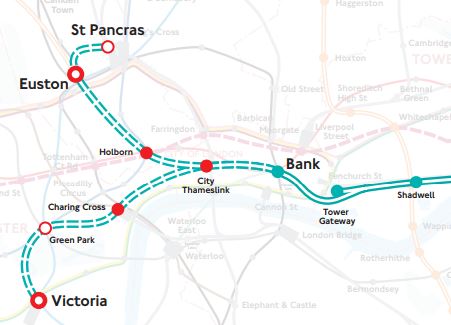
Note that this is a well-connected extension.
- Charing Cross, Euston, St. Pancras and Victoria are major rail interchanges.
- There are several interchanges with the Northern, Piccadilly and Victoria Lines.
- Euston, St. Pancras and Victoria will be on Crossrail 2.
- City Thameslink and St. Pancras are interchanges with Thameslink.
In addition, Bank, Charing Cross, Euston and Holborn are or will be upgraded.
The only thing missing is an easy interchange with Crossrail to the West of Bank.
Conclusion
I’m certain that someone must have added up the capacity, that all of the smaller projects will bring across London.
I haven’t but some of the current in-progress projects in the pipeline will add a lot of capacity to the South-West to North-East corridor across London.
- The new trains and signalling for the Piccadilly Line.
- The new Class 710 trains for the London Overground in North-East London.
- Extra capacity across North London on the North London and Gospel Oak to Barking Lines.
- Extra capacity between North and South London on Thameslink, the East London Line and a split Northern Line.
- Extra capacity between East and West London on Crossrail and the Circle, District and Metropolitan Lines.
- Develop the West London Line to its full potential.
- The capacity upgrade at Waterloo station.
- Four-tracking of the West Anglia Main Line has started with the addition of a third track for STAR.
Could everything in London be organised, so that the only thing needed to complete Crossrail 2, is to build the Central Tunnel?
I believe this could be so!
So perhaps in 2035 or even later, the Central Tunnel would be built to link everything together.
Crossrail 2 October 2015 – King’s Road Chelsea Station
The reason for my walk this morning, between Sloane Square and Imperial Wharf stations, was to look at Crossrail 2’s plans for King’s Road Chelsea station.
If the station is built it will sit between Victoria and Clapham Junction stations.
This Google Map shows the area.
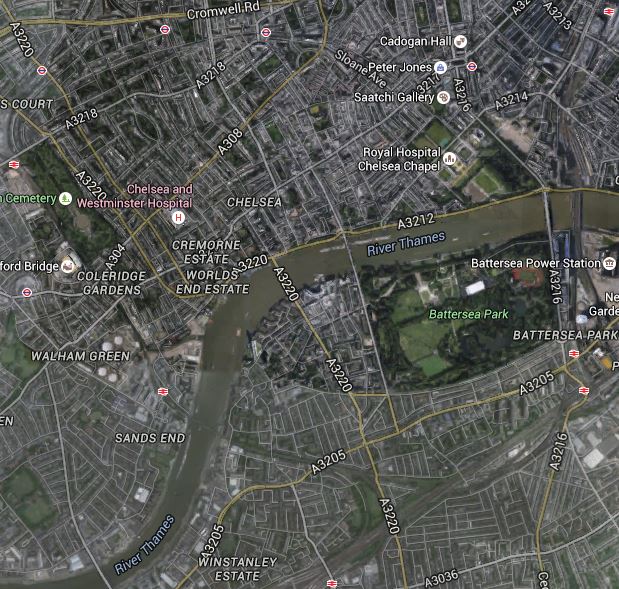
Victoria To Clapham Junction
Victoria station is in the top right corner and Clapham Junction is at the bottom of the map.
So what do Crossrail 2 say about the need for a King’s Road Chelsea station in their document about the station. They say this.
A station in the Chelsea area has always been part of the Chelsea – Hackney line safeguarding since it was first proposed in 1989. A Crossrail 2 station in Chelsea would improve community access to rail based public transport in an area where current service levels are low in comparison to similar inner London locations. It would also improve connectivity to the Royal Brompton and Royal Marsden hospitals and provide access to the existing retail and commercial developments along King’s Road. Providing a Crossrail 2 station in Chelsea would also improve journey times for those travelling to or from King’s Road.
Chelsea currently suffers weekday congestion and delays on its main roads. By 2031 congestion on London’s roads is expected to increase by 60 per cent. Providing a Crossrail 2 station would encourage more people to use public transport, which would help to reduce traffic congestion in the area and improve air quality.
That is an answer that would persuade someone like me, who doesn’t drive and knows the arguments for buses and trains, but to the average selfish driver of a high-powered car or off-road vehicle, that is almost an insult.
The Google Map does show the enormous problem in working out the route of Crossrail 2.
Victoria and Clapham Junction stations are about four kilometres apart, so for safety and ventilation reasons any tunnel between the two stations will need an access shaft.
And what lies between the two stations? The River Thames!
I’m sure that part of the reason for a new station in the Chelsea area, is to provide the necessary shaft for the tunnels, as the only other alternative is somewhere in Battersea and that is probably too close to Clapham Junction.
This creates a wonderful irony for Chelsea. Suppose that Crossrail 2 decide that because of opposition, they are going to drop building a station in Chelsea.
They might still decide to build a shaft in perhaps a block of flats, in the same way they did on Moorgate with Moor House.
So Chelsea would have an unseen emergency access and ventilation shaft, but no station.
This map from the Crossrail 2 document shows the proposed station and its shafts, entrances and work-sites.
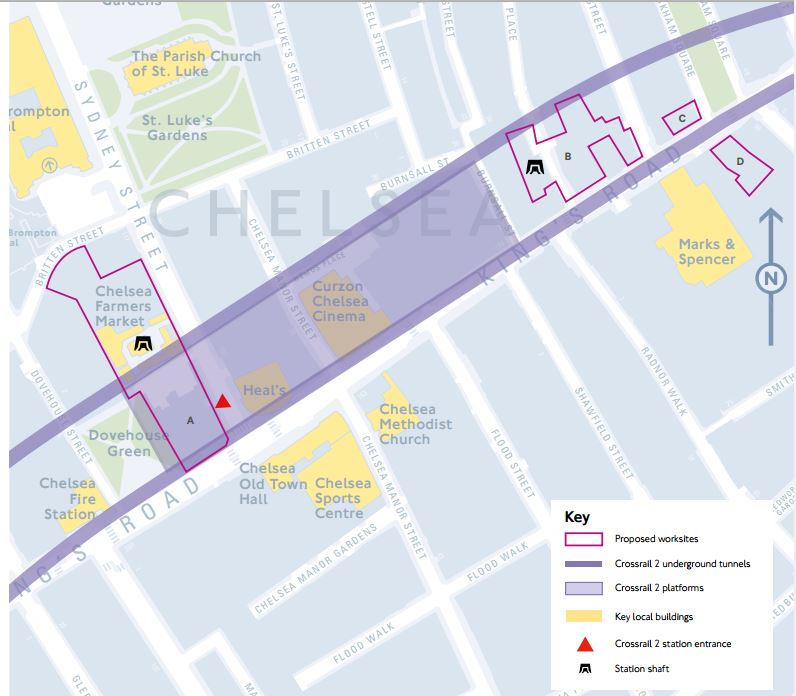
King’s Road Chelsea Station
This Google Map shows the area of Site A in an enlarged format.
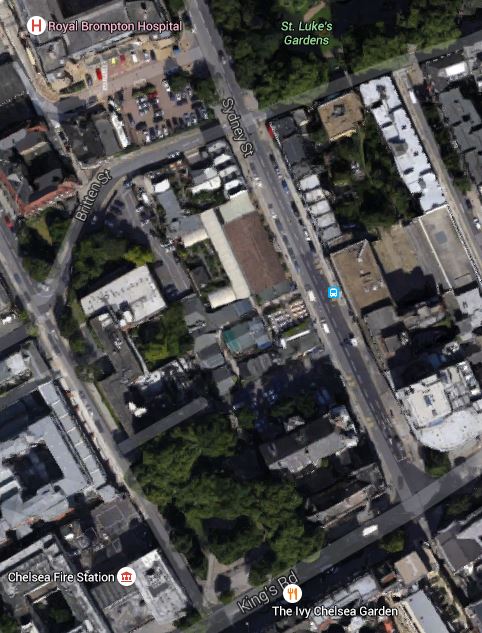
King’s Road Chelsea Station Site A
Site A is described like this by Crossrail 2.
Includes the Chelsea Garden Centre and Farmers Market. This would be the main worksite for construction of the station tunnels, station entrance, ticket hall and station shaft. Although the site boundary includes 250 King’s Road and 151 Sydney Street, these buildings would be retained.
I would assume that the buildings to be retained are these on the corner.
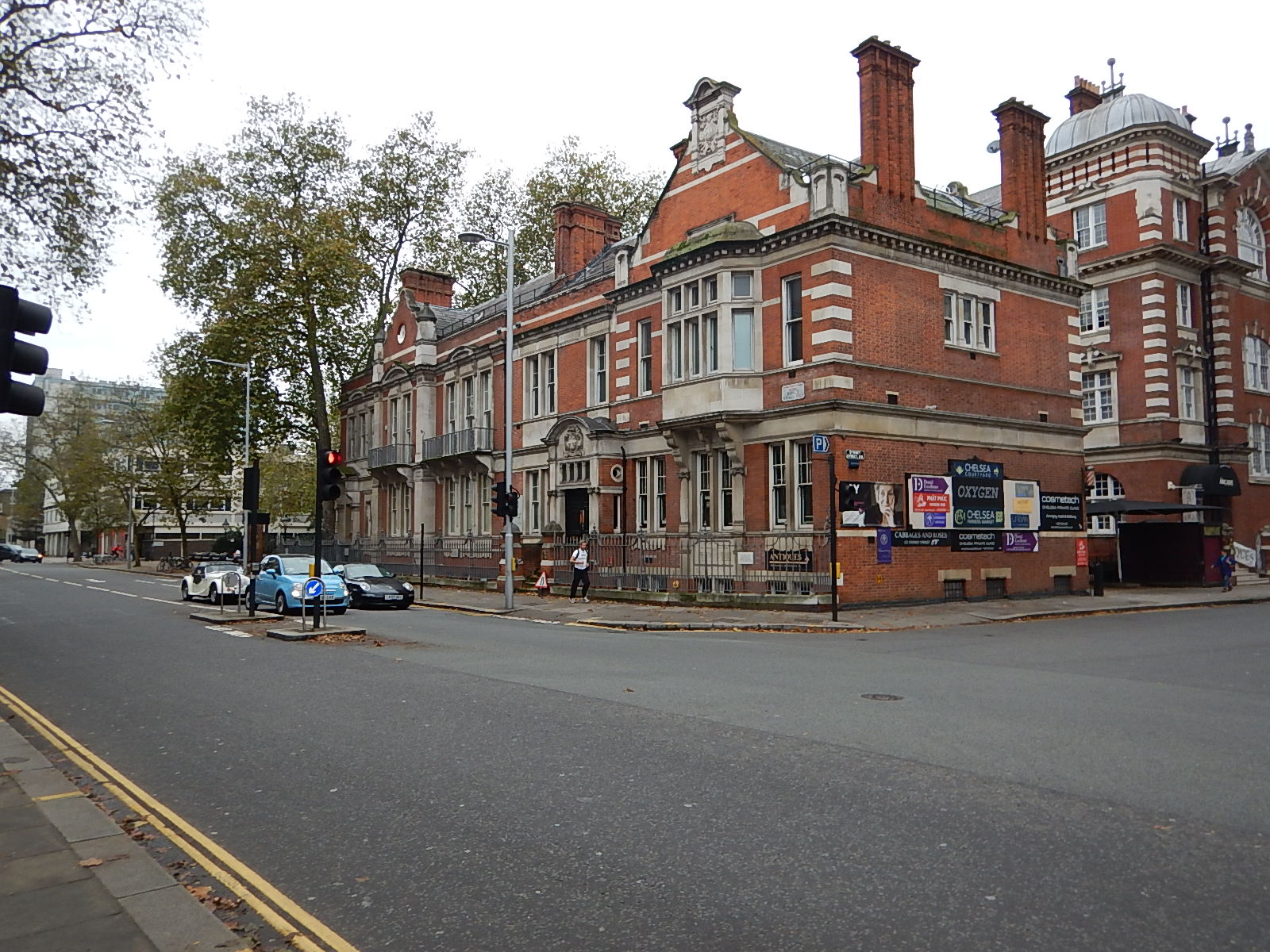
This Google Map shows the area of Site B in an enlarged format.
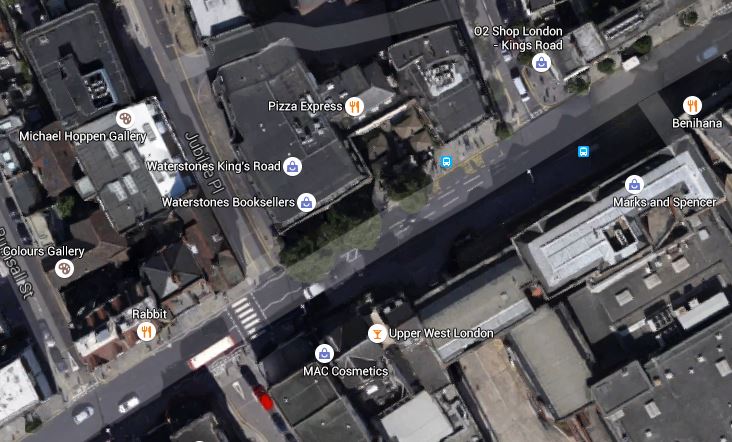
King’s Road Chelsea Station Site B
Site B is described like this by Crossrail 2.
Includes retail and office buildings adjacent to The Pheasantry and extends across Jubilee Place, which would be closed temporarily. This site would be used for construction of the eastern station shaft.
The Pheasntry, where Pizza Express has their restaurant is to the right of Waterstones and Ryman
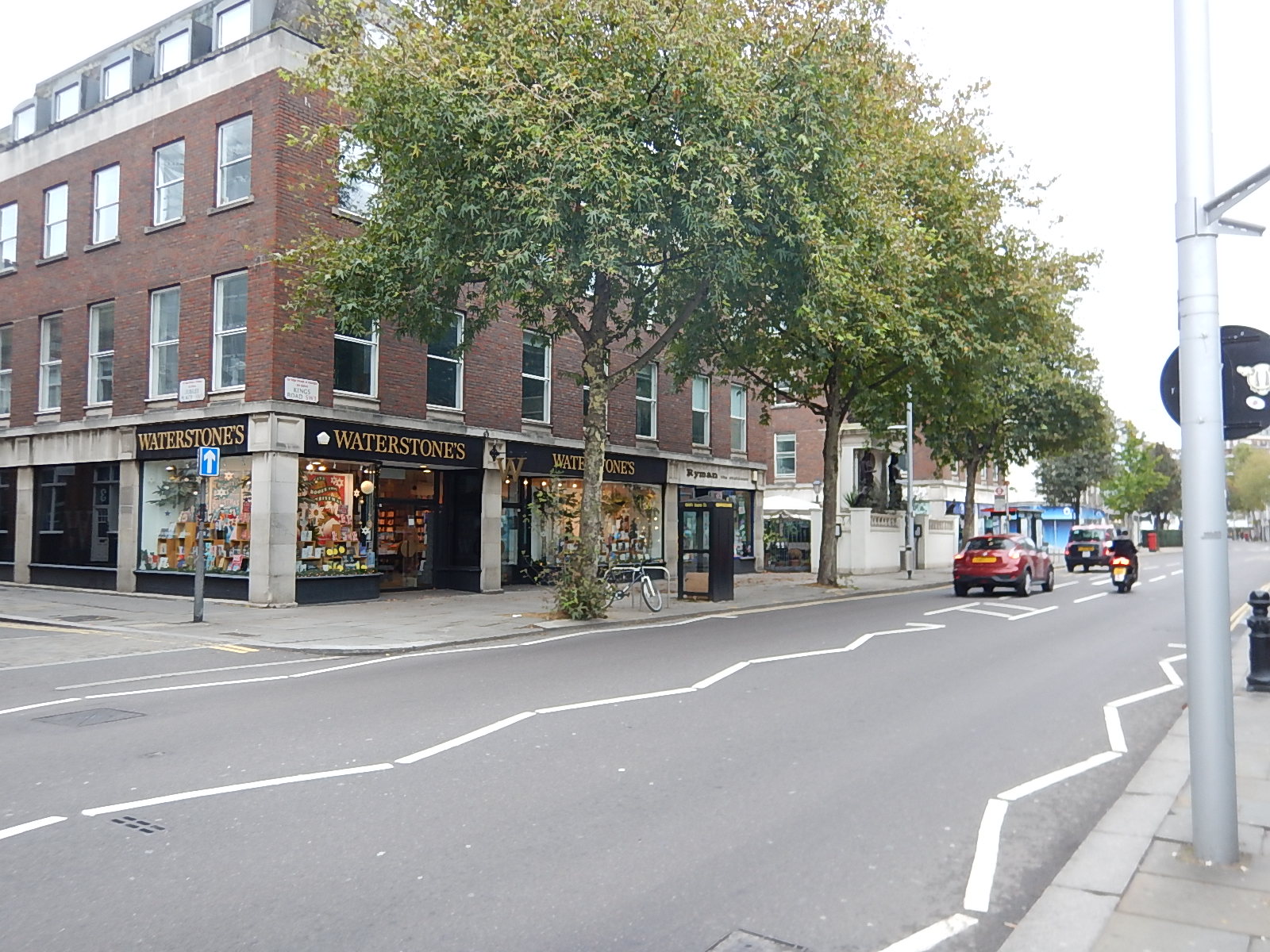
Jubilee Place is to the left of Waterstones and appears to be one-way away from the King’s Road.
This station design is not very ambitious, when you compare it to Balham or Dalston, in that it appears to be single as opposed to double-ended.
Is this because there is no interchange with other lines or because Crossrail 2 want to have to argue only one entrance with protestors?
What Will The New Buildings Be Like?
Obviously I don’t know, but I can make a few points.
- On both sites A and B, I suspect that both shafts and the station at Site A will be incorporated into buildings in keeping with the area.
- It looks from the proposed position of the station entrance, that if the building on the corner of Site A is to be retained as Crossrail 2 say, then it will double as the station.
Surely, this would be two briefs that would be welcomed by one of our world-class architects.
Conclusion
This is probably the most difficult station to build for Crossrail 2.
Not in terms of the actual engineering, but in the sensitive nature of the site and the local residents.
But as I said earlier, I have a feeling that if Crossrail 2 is built it will have to build something in the Chelsea area, due to London’s geography.
How Will Crossrail 2 Affect De Beauvoir Town?
The recent publication of the latest plans for Crossrail 2 and the launch of a consultation about the project has led me to ask me the question that is the title of this post.
A Few Truisms About Large Projects
I was involved with large projects and writing software to help them get built on time and on budget and hopefully in a more affordable and less disruptive manner for over thirty years.
This leads me to a few truisms about large projects.
- What gets built in the end after extensive consultation, is often very different from the original plans.
- Successive similar projects get better and more affordable.
- More time spent planning a project, often results in a better and more affordable project.
- Political interference often results in a worse and more costly project.
- Good design, engineering and architecture costs less than bad.
As the design and planning process for Crossrail 2 is being started fifteen years before the stated opening in 2030, hopefully London will get this one right!
The Consultation
The consultation has a page on the Transport for London web site.
There are masses of pages to read, but if you have better things to do, then at least give the three Crossrail 2 documents in the following sections, a quick butchers.
I’ve added a few notes in the next few sections.
A Typical Crossrail 2 Station
These are my thoughts on a typical Crossrail 2 stationa typical Crossrail 2 station
This diagram shows how a typical station will be laid out underground.
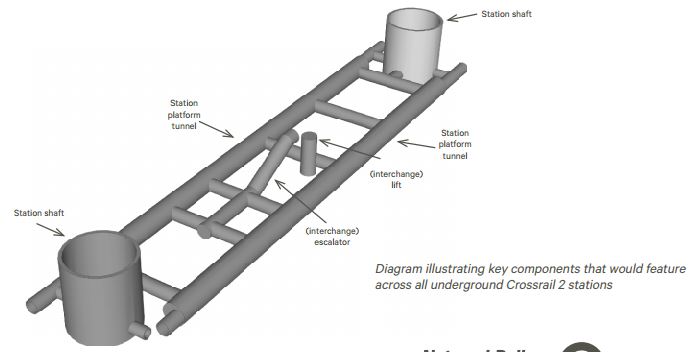
A Typical Crossrail 2 Station
Note the two shafts at each end, which provide ventilation and access. In some places, but not Dalston, they are difficult to fit amongst the buildings.
One of the reasons Balham has been chosen rather than Tooting Broadway, is that shafts at Balham fit in a Waitrose car park and where a rather poor 1960s office block sits.
Crossrail 2 Shafts
These are my thoughts on Crossrail 2 shafts
These allow access from the surface to the tunnels and trains, for stations, emergency access and ventilation.
There will be two shafts proposed for Dalston; one by Dalston Kingsland station and one by Dalston Junction station to ventilate and provide emergency access to the platform tunnels up to thirty metres down.
Don’t think that the top of shafts will be eyesores like this one in Graham Road for the Channel Tunnel Rail Link.

If you want to get a look at this awful monument to bad urban design, look to your right, as you arrive at Hackney Central station on a westbound North London Line train.
We’ve come a long way since that one was built. This is a computer visualisation of what is being built in Mile End Park for Crossrail.
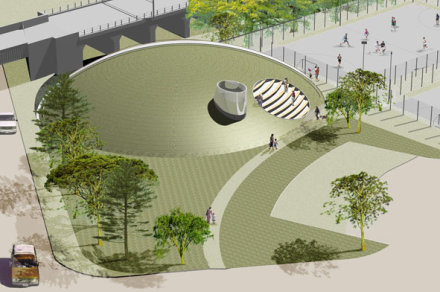
I think it’s also been designed to serve as a viewing mound for the pitches nearby.
You can get a good view of the site from the top of 277 bus going to Leamouth, as the bus runs alongside Mile End Park.
Ventilation shafts can even be incorporated into buildings.
This Norman Foster- designed building is Moor House on Moorgate and it incorporates a Crossrail ventilation shaft for the massive Liverpool Street/Moorgate Crossrail station. Wikipedia says this about Moor House and its use by Crossrail.
Completed in 2004, it was the first building to be designed for the forthcoming Crossrail, with a ventilation shaft to the station underneath the building. It has the deepest foundations in London, which reach down 57 metres (187 ft) and are specifically designed to withstand further tunneling below it in the future.
I’m sure these days if you wanted to put a tunnel ventilation and access shaft by St. Paul’s Cathedral, one of our very good architects could find an acceptable solution.
Practically though, as Crossrail 2 is now being designed and probably won’t be finished until 2030, that gives us a long time to create the needed ventilation shafts in buildings that are developed on the sites where they will go.
Dalston Station
These are my thoughts on Crossrail 2’s Dalston Factsheet
This is their description of the station.
The Crossrail 2 station at Dalston would be a double-ended station, with an interchange at Dalston Junction at the southern end, and an interchange with Dalston Kingsland at the Northern end.
The Crossrail 2 station at Dalston would be underground and could include:
- 2×250 metre long platforms. Station platform tunnels around 20 metres below ground level to the top of the tunnel
- An enhanced station entrance and ticket hall onto Kingsland High Street, for interchange with Dalston Kingsland station
- An enhanced station entrance and ticket hall onto Dalston Lane, for interchange with Dalston Junction station
This map from Crossrail 2’s document shows the layout of the new station.

Note how that most of the station is underneath Kingsland High Road. I think it could be deeper than their proposed twenty metres, if it has to go under the Channel Tunnel Rail Link, which runs in a tunnel in-line with the North London Line.
The two black squarish icons are the two station shafts, as were shown in the picture of a typical station.
I estimate that the Northern shaft is opposite Dalston Kingsland station to the North of Ridley Road in a block that contains the NatWest bank and Kings Land Butchers.
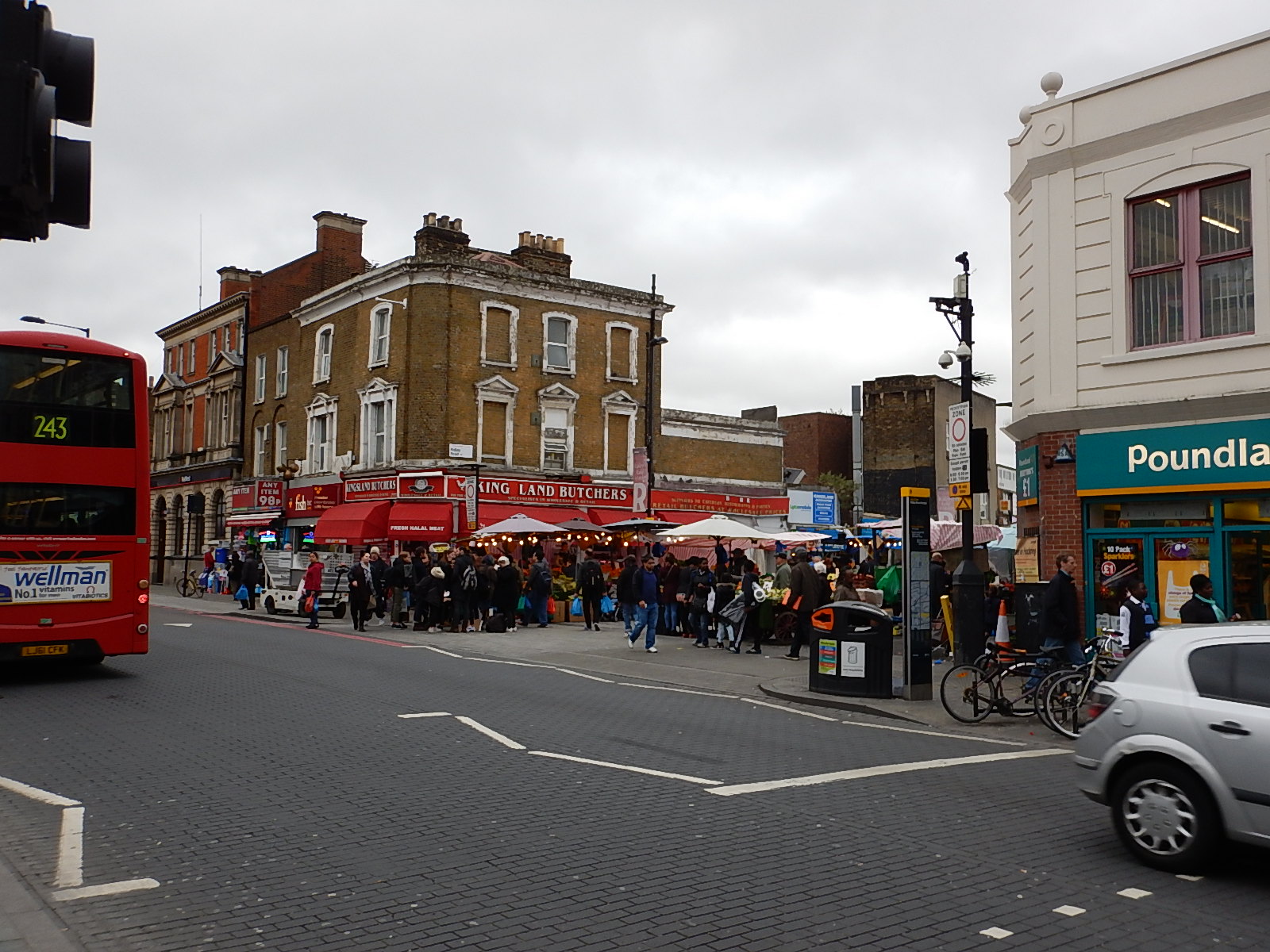
The Southern one is on the West side of Kingsland Road, just North of Tottenham Road.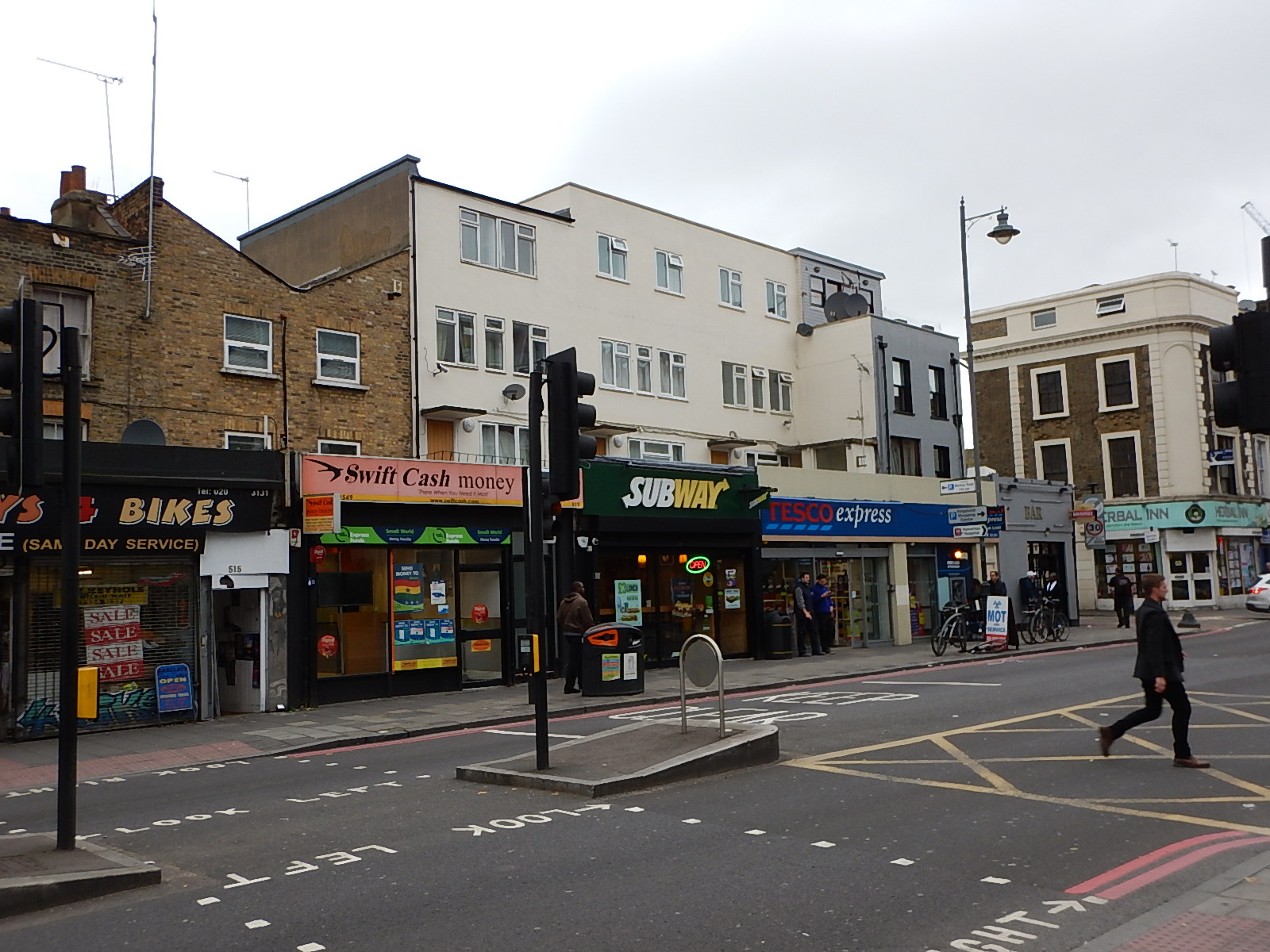
Will the buildings on these sites be missed?
Personally, I won’t miss the Subway, as I’m a coeliac and have to be gluten-free.
Railway Development In Dalston
Before looking at the effect of Crossrail 2 on Dalston and De Beauvior Town, I will look at other rail developments that could also have an effect.
- Twenty-four six-car trains per hour on the East London Line – This proposal is in some of Transport for London’s published documents and plans have already been published to increase the number of trains through Dalston Junction from sixteen to twenty trains per hour, by 2019.
- More trains on the North London Line – If the level of freight trains can be reduced, plans exist to increase the number of passenger services through Dalston Kingsland station.
- East London Line Trains to Willesden – This was talked about in the original proposals for the Overground, but was dropped, probably to cut costs.
- HS2 at Old Oak Common – Transport for London are planning a big development at Old Oak Common, which will connect a lot of lines together including the North London Line and HS2. Certainly North London Line trains will go there, but there are innovative characters in TfL and they may terminate some East London Line trains at Old Oak Common, rather than Highbury and Islington.
- Crossrail – Who knows what effects this will have all over London? As Dalston Junction is just four stops from Whitechapel, it certainly solves the difficult problem of getting from this area to Paddington and Heathrow.
- Reopening the Hall Farm Curve – Reopening this curve north of Lea Bridge, will allow direct trains from Chingford and Walthamstow to Stratford and then possibly along the North London Line.
- Reopening the Dalston Eastern Curve – This could happen to connect Stratford and South London.
- Shoreditch High Street station on the Central Line – A connection between the East London Line and the Central Line at Shoreditch High Street station has been proposed, but not until after Crossrail is opened.
- Penge And Brockley Station Improvements – There are rumours that these stations will be improved to create better links to South East London. There are design challenges, but they are in TfL’s plans and Birmingham solved a similar problem at Smethwick Galton Bridge station.
None of these will be implemented until after Crossrail is fully opened, except some of the extra services on the East and North London Lines.
What actually happens will probably be more determined by passenger traffic statistics than anything else.
But all will have the effect of moving more trains and passengers through the two Dalston stations.
Whether Crossrail 2 is built on not, Dalston will become one of the most important interchanges on London’s transport network.
This will have three main effects on the area.
- Property developers will see it as good place to do business.
- The area will grow as a business and cultural hub.
- House prices will continue to rise.
If and when Crossrail 2 is built, these effects will get bigger.
I do wonder when the area will get a Waitrose!
How Will Crossrail 2 Affect De Beauvoir Town?
In the end, after Crossrail 2 opens it will be better transport links for De Beauvoir Town and more development in property, business and cultural directions and ever increasing house prices.
Building Dalston Station And Crossrail 2 Through Dalston
But during the building of the line, it could have other effects.
The three main sites used to construct Dalston station, will have to be redeveloped.
- Site A – The Tesco Express site on the West side of Kingsland Road opposite Dalston Junction station. This site will contain the Southern station shaft.
- Site B – Dalston Kingsland station and the block to the North.
- Site C – The block containing NatWest opposite Dalston Kingsland station. This site will contain the Northern station shaft.
I believe that just as Moor House was developed some years before Crossrail, I feel that these sites should be developed separately some years before Crossrail 2, perhaps with flats or offices above and shops at street level. The building of the blocks would incorporate the shafts and any other underground works for Crossrail 2, if it was thought appropriate.
I would also expect that development of each of these three sites, will each be a similar sized project to the creation of the two blocks of flats on the Dalston Western Curve, which are being built at the present time.
I’m pretty certain, that the digging of the southern shaft at Site A will be the only major part of the construction, that will affect De Beauvoir Town, as I suspect they’ll have to remove the spoil in a succession of trucks. I estimate there will be about 10,000 cubic metres of spoil to remove to create the hole for the shaft.
At the northern shaft at Site C . they could and should use the railway.
Question for Crossrail – Is it intended to build the two shafts at Dalston station inside other buildings and complete them early, in the manner of Moor House?
Question for Crossrail – How do you intend to remove the spoil from the shafts at Sites A and C in Dalston?
My project management knowledge suggests to me that we don’t have much to fear from the building of Crossrail 2 in Dalston and De Beauvoir, if everything goes to plan.
The reason I add the caveat, is that several rail projects have found bad ground conditions, that have made things difficult. But the railways and property developers have done so much digging in the Dalston area in recent years, I would hope they’ve found all the problems.
Rebuilding Dalston Kingsland Station
The rebuilding of Dalston Kingsland station is desperately needed, as it is a cramped station, that is totally inadequate for most of its users and all of those, who are in wheelchairs, pushing buggies or carrying the average suitcase.
I can’t find anything substantial on the Internet except for odd drawings and images.
There is this construction map of the Crossrail 2 work-sites at the station in Crossrail 2’s document.
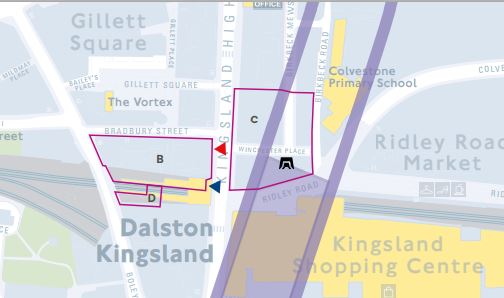
Dalston Kingsland Station Work-Sites
Note, there is a small Site D on the station side of the site currently being developed as Fifty Seven East. The Crossrail 2 document says this about Site D.
Would be used for construction of a new bridge providing access from the new ticket hall to the westbound platform at Dalston Kingsland.
So we know that at least there is going to be a new pedestrian bridge between the two platforms. As opposite Site D is Site B, about which Crossrail 2 says this.
Would be used for construction of a new Crossrail 2 station entrance and ticket hall. The site includes properties on the southern side of Bradbury Street.
Much of Site B bordering the station seems to be closed.
One sensible plan for Dalston Kingland station, would involve putting the new fully-accessible bridge in first and then building a temporary station on the site of the closed pub on the north side of the current station. This would enable passengers to still use the North London Line, whilst the current station building was rebuilt.
Note that most temporary stations that I’ve seen, are better than the current Dalston Kingsland.
I suspect that Transport for London has a complete plan, but I do feel that it will involve the fully-accessible bridge that will intrude into Fifty Seven East, being built.
Dalston Station Entrances
The station platforms lie almost under the Kingsland High Road, with entrances into Dalston Kingland at the North and Dalston Junction at the South.
As far as I can tell from the drawings. entrances into the station are as follows.
- One new and one existing entrance at Dalston Kingsland on the West side of Kingsland High Road
- One new and one existing entrance at Dalston Junction on the east side of Kingsland Road
So we have entrances in the North-West and South-East, but I can’t see any in the North-East and South-West.
The purpose of Site C in the North East is described like this by Crossrail.
Would be used for construction of the northern station shaft and escalator connection to the Crossrail 2 platforms
Given that this corner is by the iconic Ridley Road Market, surely there needs to be an entrance here, with perhaps a subway under the road to the Ticket Office.
Question for Crossrail – Is there going to be an entrance to the station close to the Ridley Road Market?
The purpose of Site A in the South West is described like this by Crossrail.
Would be used as the main site for construction of the station tunnels and southern station shaft
No mention of any entrance or escalators.
Question for Crossrail – Is there going to be an entrance to the station in the South West corner?
Question for Crossrail – Are there going to be escalators at both ends of the Crossrail 2 station?
Note that if there isn’t escalators at both ends, this means that a passenger changing from Dalston Junction to Crossrail 2 would have to virtually walk to Dalston Kingsland first.
Dalston Station and De Beauvoir Town
De Beauvoir Town is a grid of wide roads and pavements and we all have our favourite ways of crossing the area! Often we make use on our travels of the diagonal roads across the area, like Ardleigh and Stamford Roads.
As it happens Site A is just at the junction of one of these diagnonal roads; Stamford Road and the Kingsland Road. So I believe that every man, woman and fox, who lives in De Beauvoir would vote for an entrance into the station at this point. A subway would probably be welcome, as waiting for the lights on the Kingsland Road can get boring.
Incidentally, I walked this mornin from St. Peter’s to Site A and it took me ten minutes.
Question for Crossrail – What will be the pedestrian arrangements for those going between the station and De Beauvoir Town?
What Bribes Do We Want?
This is very much in jest, but Crossrail has shown itself to be a good neighbour at some of the sites it’s used.
It also ran a high-profile archaeology program that many in London, including myself, enjoyed.
One thing that disappoints me is the number of large bronze and other metal artworks, that are in store, because to display them in their intended outdoor setting, could mean they would get stolen! Surely, some could be displayed inside the new stations. It wouldn’t be easy to remove a tonne of bronze up an escalator.
Art should be accessible to everyone!
Tail-Piece
I am waiting for the 25th of November with excitement and trepidation. Will Osborne say go in his Autumn Statement?
Remember that there’s a small matter of an important election in May 2016! I have counted and there are thirty-three proposed Crossrail 2 stations in Conservative-held parliamentry consituencies and only fifteen in Labour ones!
They’re Just A Load Of Snobs In Chelsea
That should be the headline on this report from the Evening Standard about the posh people not wanting the plebs to go to Chelsea.
It’s the last time, I buy any of Grossman’s sauces!
Seriously though, look at this Google Map of the area from Fulham Broadway station to the possible proposed site of the station.
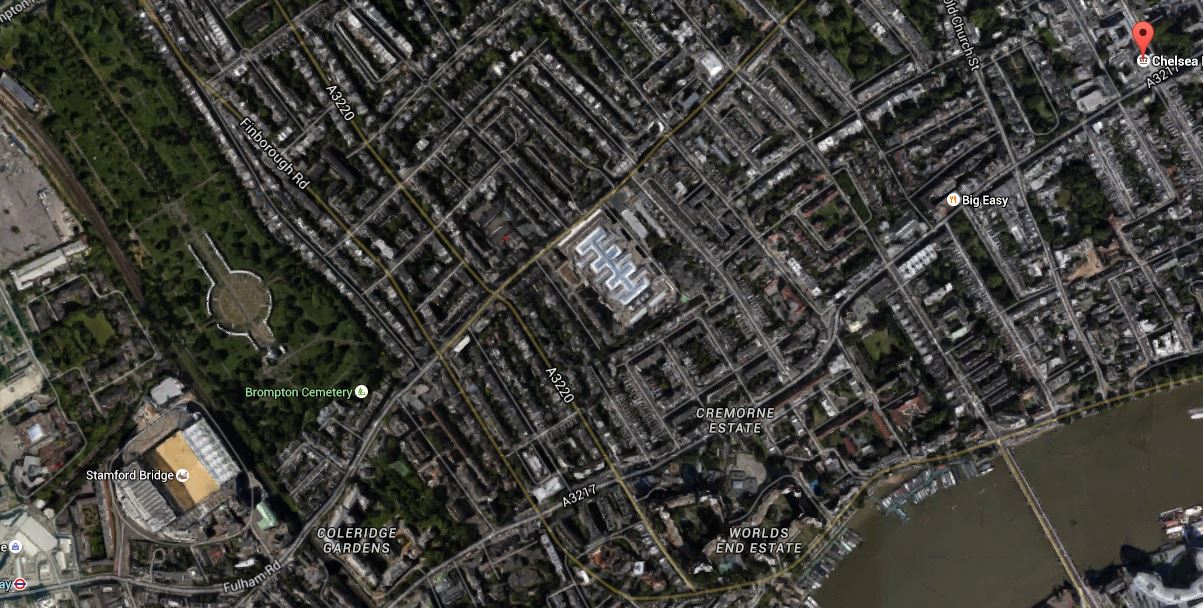
Chelsea Station And Stamford Bridge
If the new Chelsea station is where the red arrow is, it will be very convenient for going to the football. Especially for one of my mates who supports Chelsea and lives in Dalston.
But where I live, I’m close to Highbury and could walk there to see a match. The only trouble you get is a lot of traffic on match days, which is getting better year on year as the public transport improves.
I suspect that if the new Chelsea station opens, that on match days, it will actually improve the traffic in Chelsea, as more supporters will use public transport.
Those who are protesting are just a load of snobs, who would prefer to live in a gated community, where others are only let in under permit and after CRB checks!
I took a few photographs from the top of a virtually empty number 11 bus, as it progressed up the King’s Road from Fulham Broadway to Sloane Square.


It was surprisingly quiet.
Having seen the site, I suspect if they do put a station at the Chelsea Fire Station site, they’ll use the same technique as at Moor House for Crossrail.
At some point in the next few years, a developer will put up a stylish building in place of the fire station, which will have a core that will have provision for Crossrail 2 to pass through and connect up later. This later connection will be done without any action from the surface, but totally from the tunnels.
I suspect the probably bland high-rise residential property, they will get on the fire station site, will cause more degradation than Crossrail 2 ever will. Look at the monstrosity that has replaced the much-loved Middlesex Hospital.
 The Anonymous Widower