Amazon Books Over Half Of Moray West Offshore Wind Capacity To Power UK Operations
The title of this post, is the same as that of this article on offshoreWIND.biz.
This is the sub-heading.
Amazon has signed a corporate power purchase agreement (CPPA) for a total of 473 MW of Moray West offshore wind farm’s generation capacity to help power its operations when the project becomes operational later this year.
These are the first two paragraphs.
The technology giant signed the CPPA with ENGIE, which owns the Moray West project through Ocean Winds, the 50-50 joint venture between ENGIE and EDP Renewables.
The 473 MW Amazon secured through the agreement is enough to power the equivalent of more than 650,000 UK homes annually and is more than half of the total installed capacity of the 882 MW Moray West offshore wind farm.
Note.
- In Google Buys Scottish Offshore Wind Power, I talked about how Google had signed a Corporate Power Purchase Agreement to buy 100 MW from the Moray West offshore wind farm.
- This would mean that there’s still 305 MW of capacity to allocate.
- I would assume you wouldn’t sell hundred percent of capacity to give yourself leeway.
But what do you do, if your wind farm isn’t producing the 573 MW you need to satisfy the CPPAs you’ve sold? I suspect you have to buy it on the market.
If And When Do Amazon Think About Batteries?
My twenty-five-year-old self could have developed methods to calculate the answer to that question, as it would have been a simple calculation for the analogue computer, that I was using at the time; a PACE-231-R.

They really were magnificent machines.
Google Starts Building £790m Site In Hertfordshire
The title of this post, is the same as that of this article on the BBC.
This is the sub-heading.
Google has invested $1bn (£790m) to build its first UK data centre
These are the first four paragraphs.
The tech giant said construction had started at a 33-acre site in Waltham Cross, Hertfordshire, and hoped it would be completed by 2025.
Google stressed it was too early to say how many jobs would be created but it would need engineers, project managers, data centre technicians, electricians, catering and security personnel.
The prime minister said it showed the UK had “huge potential for growth”.
The project marked the latest investment by a major US tech firm in Britain, after Microsoft announced it would invest £2.5bn to expand data centres for artificial intelligence (AI) across the UK.
Note.
- By “completed by 2025” do they mean completed before 2025 or completed by the end of 2025. Judging by the time they took to build their London HQ, its the latter.
- Rishi is right about the UK having a huge potential for growth! Especially, if the nihilists of the United States vote in the Big Orange!
- Judging by the total spend of £2.5 billion on data centres and the £790 million for this one, this looks to be the first of three.
But where is this data centre going to be built?
This article on EssexLive is entitled Google To Move Into Waltham Cross With £788m Data Centre To Support ‘AI Innovation’, where this is said.
The new data centre will go on land at Maxwell’s Farm, next to the A10 Great Cambridge Road and around one mile from the M25 junction 25. Debbie Weinstein, Google vice president and managing director in the UK and Ireland, set out the decision in a blog post on Thursday, January 18 – the fourth day of the World Economic Forum’s Davos 2024 in Switzerland.
This is a Goggle Map of that area, when I searched for Maxwell’s Farm.
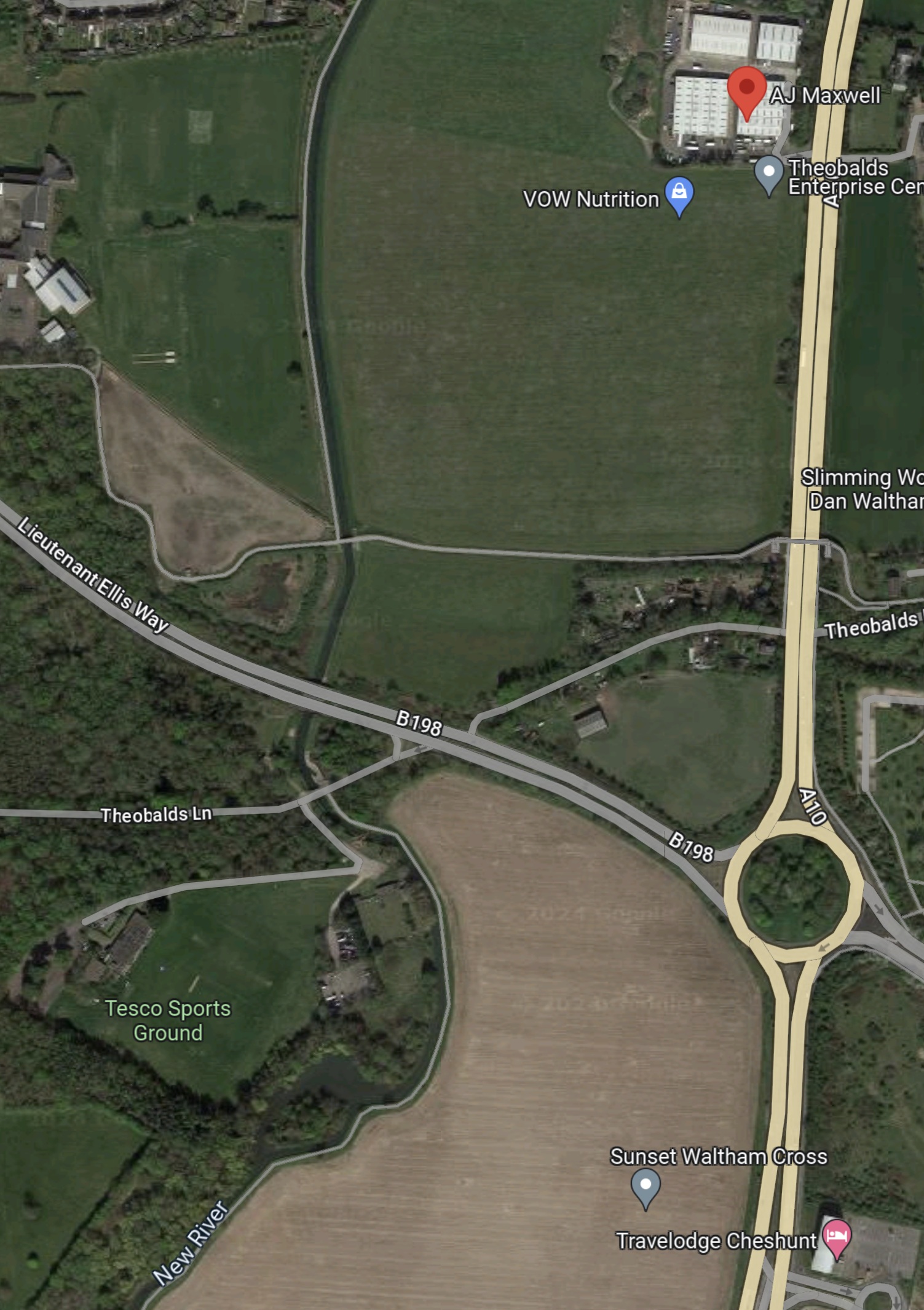
Note.
- The red arrow indicates the result of my search, which Google interpreted as A.J. Maxwell.
- The dual-carriageway road running down the East side of the map is the A10 between London and Cambridge.
- The A10 road joins the M25 at Junction 25.
- The arrow to the South-West of the roundabout indicates the new studios; Sunset Waltham Cross, which is being built.
- At the other side of the studio site, there is a label saying New River and this important piece of London’s water infrastructure can be traced to the top of the map.
- The other dual-carriageway road is the B198 or Lieutenant Ellis Way.
- A quick calculation shows that 33 acres is roughly a 365 metre square.
I would suspect that the data centre will lie somewhere between the A10, the B198 and the New River.
This Google Map shows the South-East corner of the site.
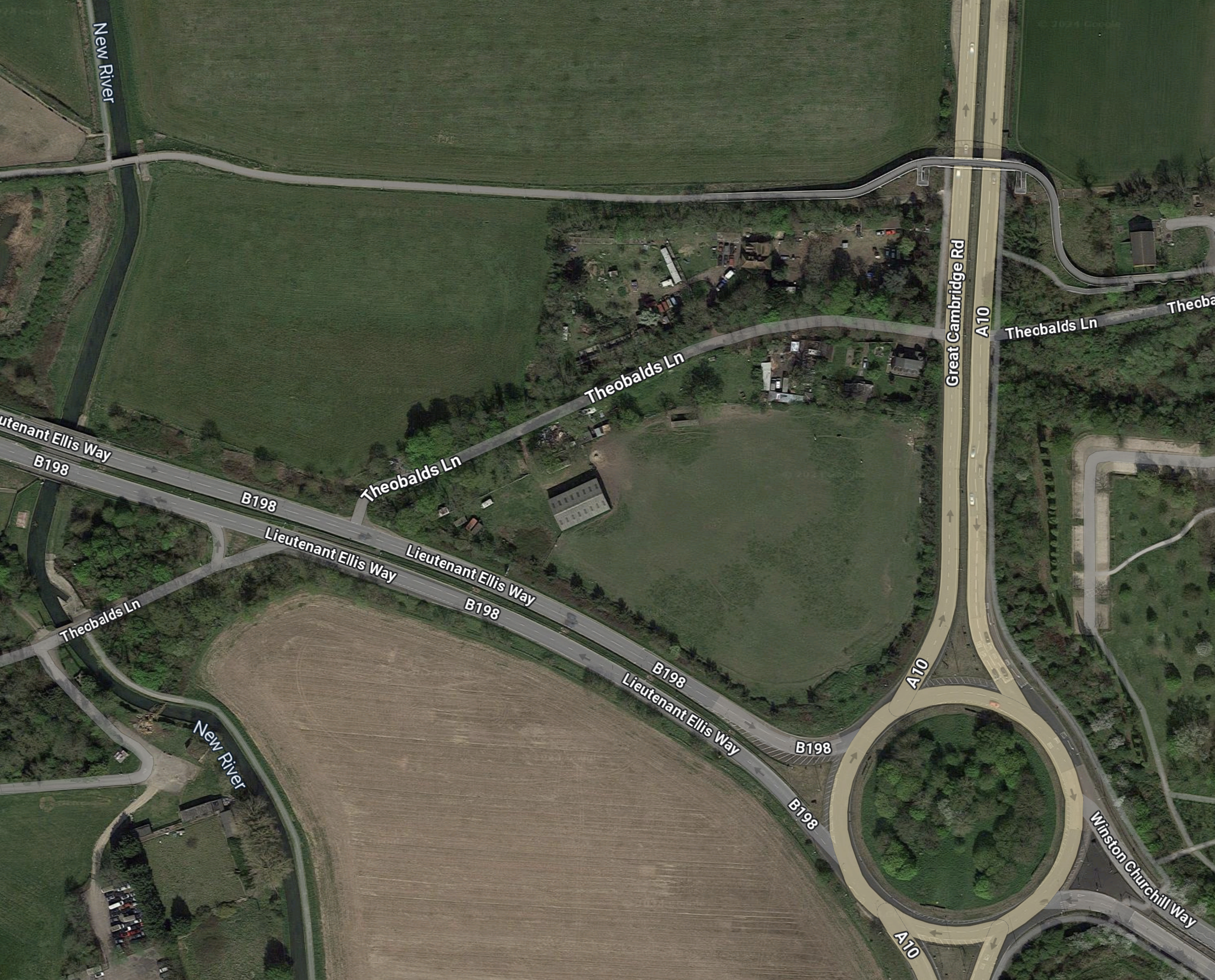
Note.
- There appears to be a lane running East-West, that crosses over both the A10 and the New River.
- Theobalds Lane appears to have some housing and possibly a farm.
- The smaller field by the roundabout appears to have some animals using it as grazing.
- The field between the East-West lane and Theobalds Lane appears to have a good crop of cereal.
The East-West lane would appear to be a possible Southern border of the site.
This Google Map shows where the East-West lane goes.
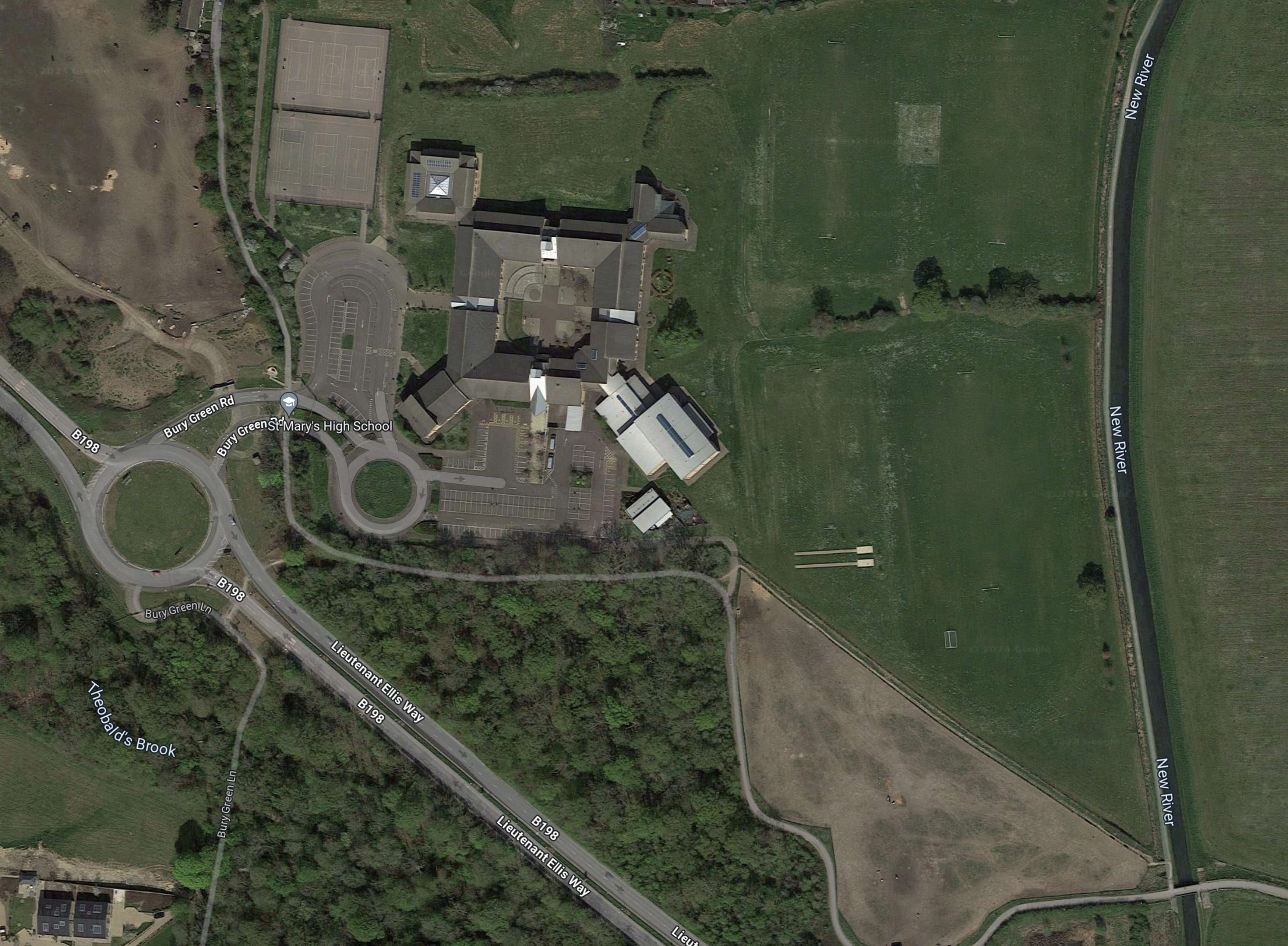
Note.
- The lane leads to Queen Mary’s High School.
- The school also has access from Lieutenant Ellis Way.
- The New River appears to form, the Eastern boundary of the school site.
- There are sports pitches between the New River and the school.
The New River looks to be the Western boundary of the Google site.
This Google Map shows around the red arrow from the Google search that led me to this area.
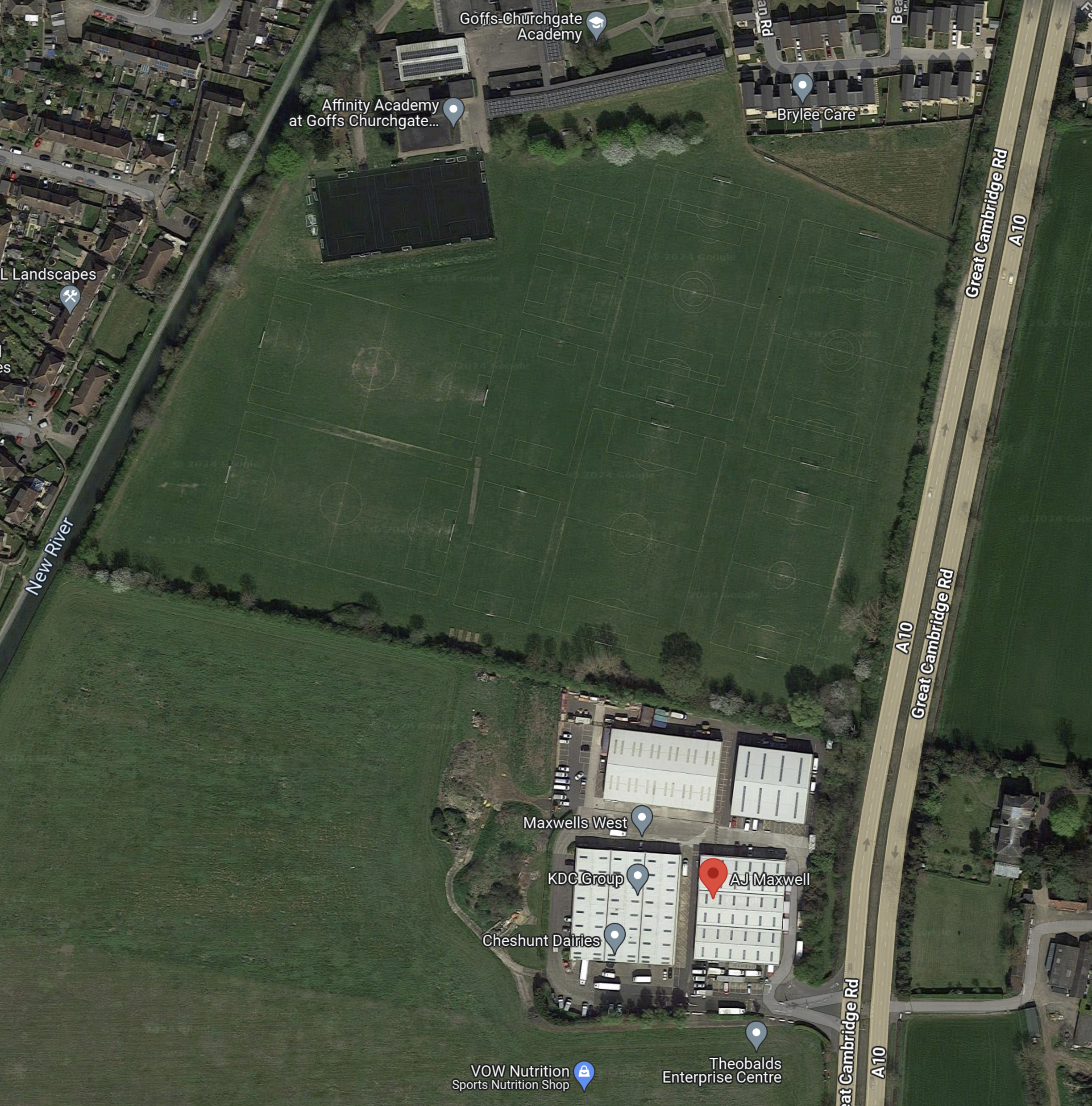
Note.
- A.J. Maxwell is identified by the red arrow in the Theobalds Enterprise Centre.
- The New River can be seen at the West of the map.
- A hedge runs roughly East-West to the North of the Enterprise Centre.
- North of the hedge are a number of football pitches, which appear to belong to the Affinity Academy at Goffs Churchgate.
The hedge could be the Northern boundary of the Google site.
This Google Map shows the area between the South of the Enterprise Centre and the East-West lane I picked out earlier.
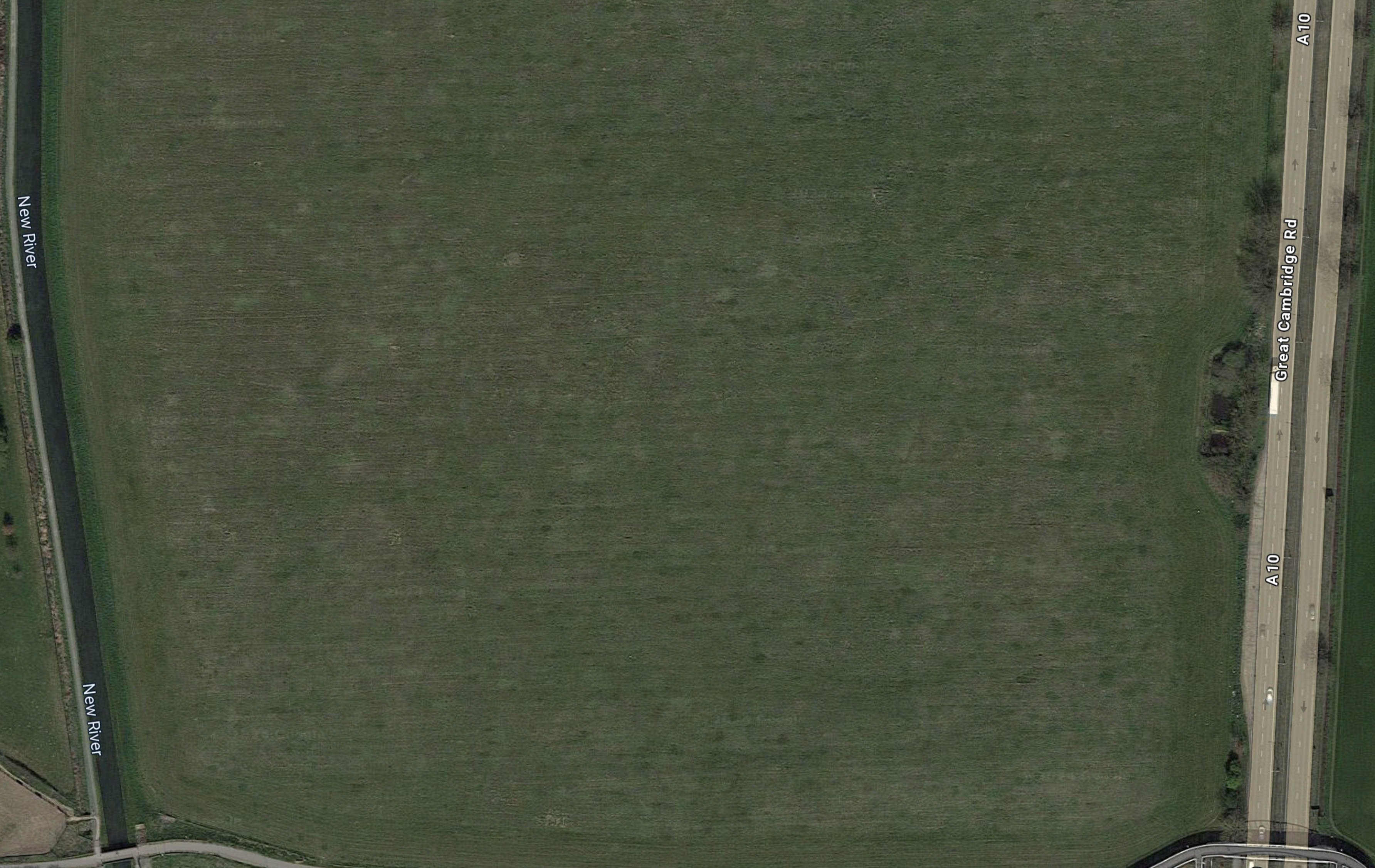
A crude measurement indicates it could be around 33 acres or slightly more.
This picture is used in nearly all the news reports about the Data Centre.

Note.
- Could that be the gentle curve of the New River on the left?
- With the high fence, the New River forms an almost-mediaeval defence against trespassers.
- There looks to be a dual-carriageway road running down the other side of the site, which would be the A10.
- Between the A10 and the site, there appears to be loots of dark areas, which I take to be car parks.
- Are the car-parking spaces in the front of the picture marked for those, who are disabled? There certainly appear to be chargers on some spaces.
I have a few thoughts.
The Relative Locations Of Google’s Data Centre And Sunset Studios?
This Google Map shows the two sites to the West of the A10.

Note.
- St. Mary’s High School is in the North-West corner of the map.
- Cheshunt Football Club is in the North-East corner of the map.
- The dual-carriageway A10 runs North-South on the map.
- I believe that Google’s Waltham Cross Data Centre will be located in the field to the West of the A10, at the top of the map.
- The A10 connects to the M25 at Junction 25, which is in the centre at the bottom of the map.
- In The Location Of Sunset Studios In Broxbourne, Sunset Studios are placed to the North West of the Junction 25 roundabout.
- Just as the A10 forms the Eastern boundary of both sites, the New River forms the Western boundary.
The two sites are close together between the A10 and the New River, separated by the dual-carriageway Lieutenant Ellis Way.
Will Google’s Data Centre Be Storing Data For Sunset Studios?
I’ve never worked in the production of films, but these days with digital electronic cameras, CGI, motion capture and other techniques, producing a film must need huge amounts of data storage.
- So have Sunset Studios outsourced their data storage needs to Google?
- Perhaps too, Sunset Studios found the local authority welcoming and this attitude was recommended to Google.
- Both sites will need local services like electricity, gas, sewage and water.
I suspect that there would be cost savings in construction and operation, if the two sites shared the utilities.
Providing Electricity And Heat For Both Sites
Consider.
- I estimate from information given in the Wikipedia entry for Google Data Centres, that a data centre needs between 10 and 12 MW.
- There is no obvious power source like offshore wind or a nuclear power station nearby.
- There is the 715 MW Rye House gas-fired power station, which is a few miles away.
- In Google Buys Scottish Offshore Wind Power, I talked about how Google had signed a Corporate Power Purchase Agreement to buy 100 MW from the Moray West offshore wind farm.
Google and Sunset Studios would also want an electrical and heat supply that is at least 100 % reliable.
Liverpool University had the same problem on their hundred acre campus in the centre of Liverpool.
- The University decided to build their own 4 MW Combined Heat and Power Unit (CHP), which is described in this data sheet.
- It is fired by natural gas.
- On their web site, Liverpool University state that their CHP can be adapted to different fuel blends. I take this includes zero-carbon fuels like hydrogen and carbon-neutral fuels like biomethane.
But given their location in Waltham Cross close to the Lea Valley, CHP units may have a use for their carbon dioxide.
This Google Map shows between Junction 15 of the M25 and Tomworld.

Note.
- Junction 25 of the M25, where it joins the A10 is in the South-West corner of the map.
- The sites of Google’s Data Centre and Sunset Studios can be picked out with reference to the previous map.
- Tomworld is in the North-East corner of the map.
- So why should Tomworld need a lot of carbon-dioxide?
This Google Map shows Tomworld.
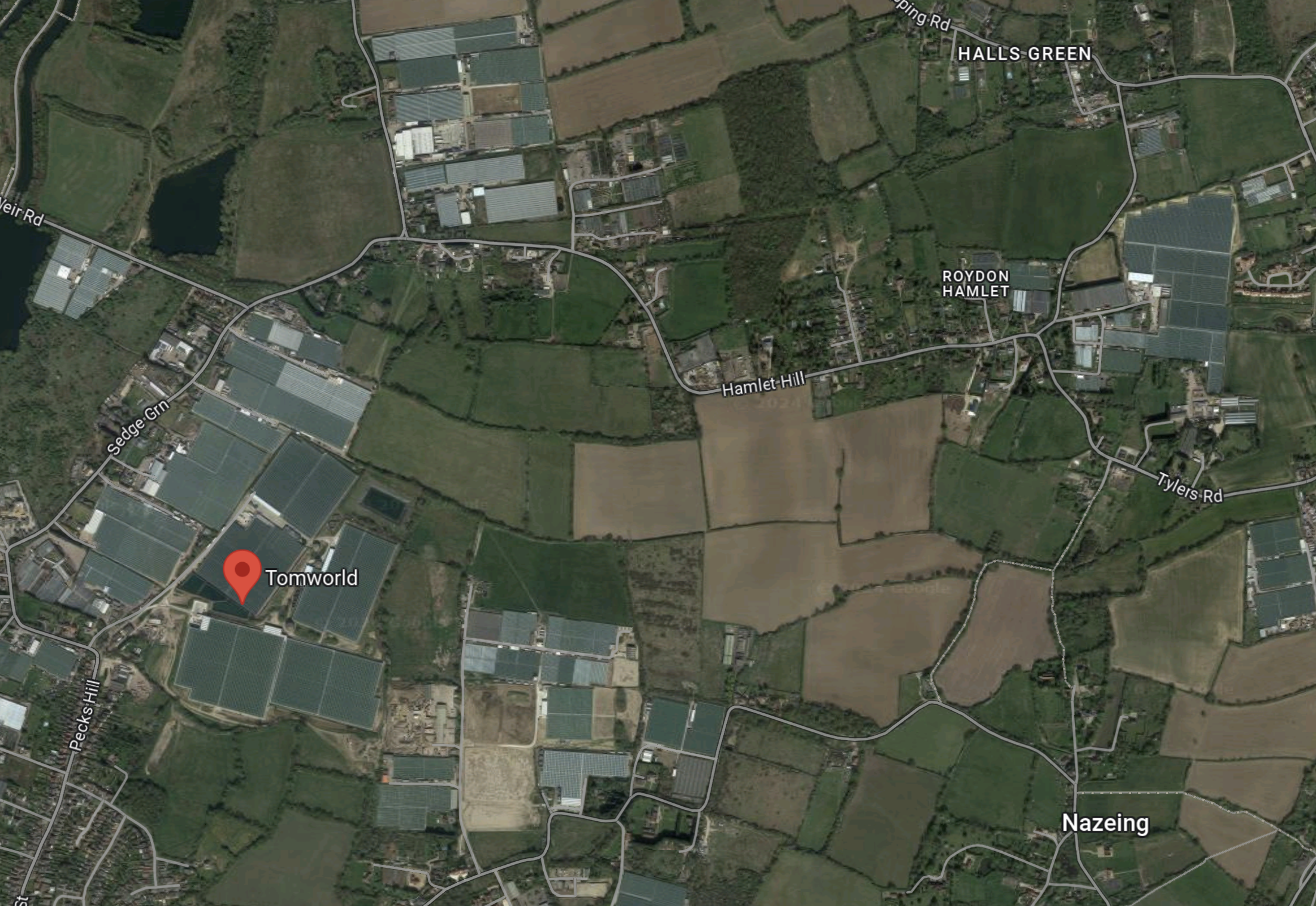
Note.
- This web page indicates what Tomworld do.
- They have 44 acres of glass growing tomatoes, about five miles to the North-East of Google’s Data Centre.
- The map has lots of other greenhouses.
I know of a guy, who has a large greenhouse, that grows tomatoes for the supermarkets.
- He heats the greenhouse with a gas-fired Combined Heat and Power Unit (CHP).
- The electricity produced runs his business.
- Any surplus electricity is fed into the grid.
- The carbon dioxide is fed to the plants in the greenhouse, which helps them grow quality tomatoes.
I just wonder, if carbon dioxide from CHP units at Google’s Data Centre and Sunset Studios could be used by the multitude of greenhouses in the Lea Valley.
Could A Carbon Dioxide Pipeline Be Built Along The M25?
This Google Map shows the Northern section of the M25, South of Waltham Cross.
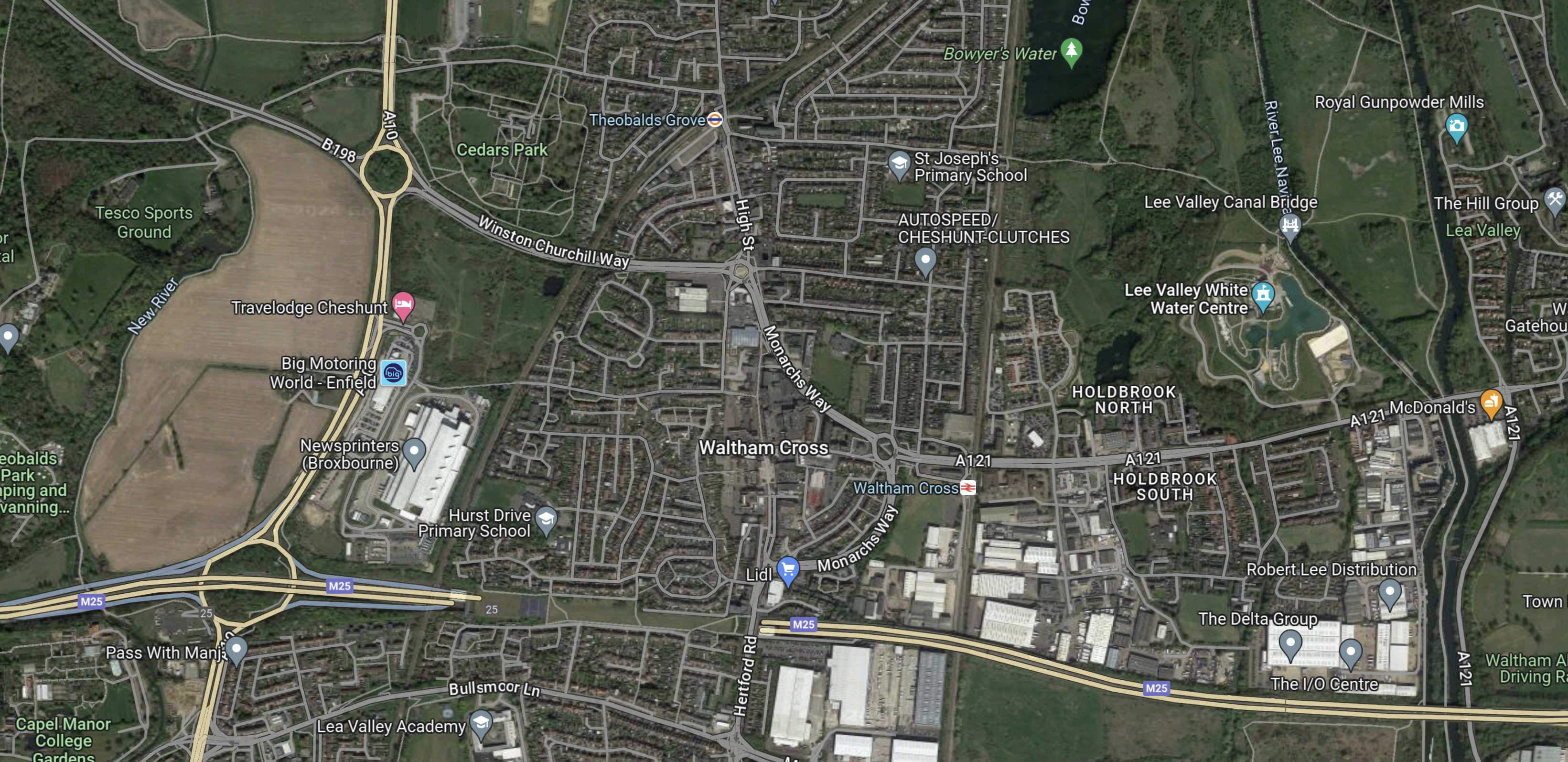
Note.
- The M25 running East-West across the bottom of the map.
- Junction 25 of the M25 in the South-West corner of the map.
- The A10 running North-South at the West of the map.
- Google’s data centre and Sunset Studio are to the West of the A10.
- The River Lee, which has numerous water courses is at the East of the map.
I wonder, if a carbon dioxide pipeline could be built along the M25 to connect the producers to those who could use it?
- It would not be a dangerous pipeline as carbon dioxide is a fire extinguisher.
- It wouldn’t be a huge pipe.
I think it would be possible.
Google’s Commitment To Being Zero-Carbon
This blog post on the Google web site is entitled Our $1 Billion Investment In A New UK Data Centre, has a section, which has a sub-title of 24/7 Carbon-Free Energy By 2030, where this is a paragraph.
Additionally, we’re also exploring new and innovative ways to use the heat generated by data centres, and this new facility will also have provisions for off-site heat recovery. Off-site heat recovery presents an opportunity for energy conservation that benefits the local community, as it allows us to capture the heat generated by the data centre so that it can be used by nearby homes and businesses. The data centre is also set to deploy an air-based cooling system.
If they are using off-site heat recovery, it would be logical to use waste carbon dioxide from CHPs to provide carbon dioxide for the local horticultural businesses.
Will Google Be Building A Vertical Farm Nearby?
In Schneider Electric: Vertical Farming – The Next Yield In Data Centre Sustainability, I noted that some data centres are paired with vertical farms to increase their sustainability.
Could Google be doing that in Waltham Cross?
- They will have a lot of waste heat.
- They will have a fair bit of carbon dioxide, which could be used to help plants grow.
- The local workforce probably contains a lot of experience of market gardening.
I like the idea of pairing a data centre and a vertical farm.
Public Transport Access
Consider.
- Increasingly, the cost of electric vehicles, medical problems and the UK economic situation are causing people to adopt a car-free lifestyle.
- After my stroke, my eyesight deteriorated such, that I am no longer allowed to drive.
- Others may live in one-car families and it may not be their’s to use every day.
- Or your car may just break down on the way to work.
For these and probably lots of other reasons, any large site employing a lot of employees, must have a valid way of getting there by public transport.
The nearest rail station to Google’s Data Centre and Sunset Studios is Theobalds Grove station.
This Google Map shows the roads between the sites and the station.
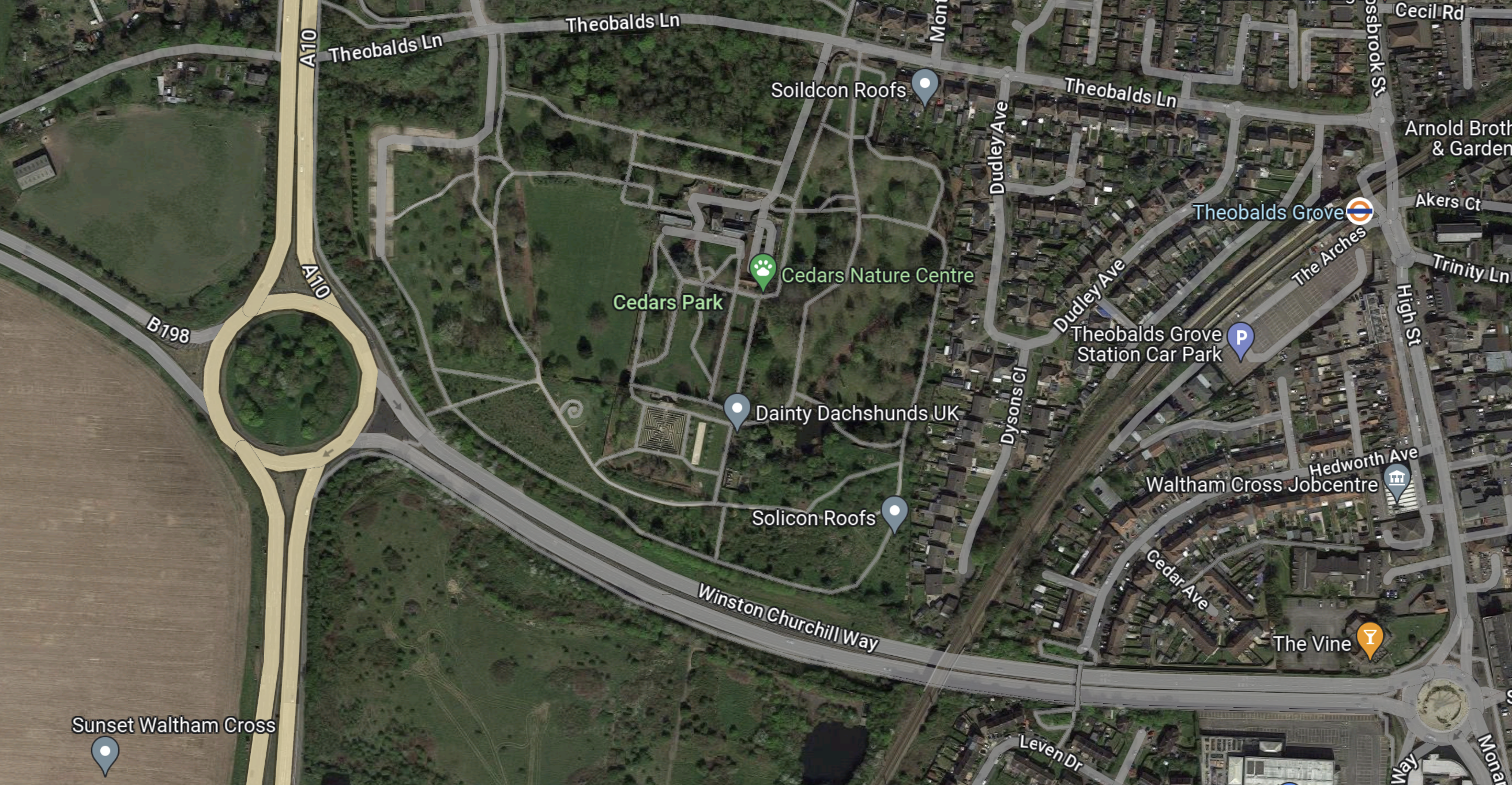
Note.
- The Sunset Waltham Cross label in the South West corner.
- Google’s Data Centre will be just off the map to the West of the A10.
- Theobalds Grove station is marked by the TfL roundel in the North-East corner of the map.
- There would appear to be no bus stops on Winston Churchill Way or the A10.
I walked South from the station to Winston Churchill Way, where I took these pictures.
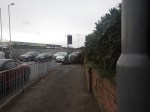




Note.
- At that point, I gave up because of the cold and pollution.
- It was also a Saturday morning about midday.
The route I took is certainly not an alternative route to get to Google’s Data Centre or Sunset Studios.
A Possible Station At Park Plaza North
This article on the BBC is entitled Broxbourne: Two New Stations Planned.
This is the sub-heading.
Two new train stations could be built in Hertfordshire if plans to tighten planning policies are adopted.
This is the first paragraph.
Broxbourne Borough Council said stops at Park Plaza North – between Turkey Street and Theobalds Grove London Overground stations – and Turnford on the London to Bishop’s Stortford route would be subject to a consultation.
Later the BBC say that Park Plaza North station will be South of the A121 Winston Churchill Way near Waltham Cross
This Google Map shows the area South-East of the roundabout, where Winston Churchill Way meets the A10.
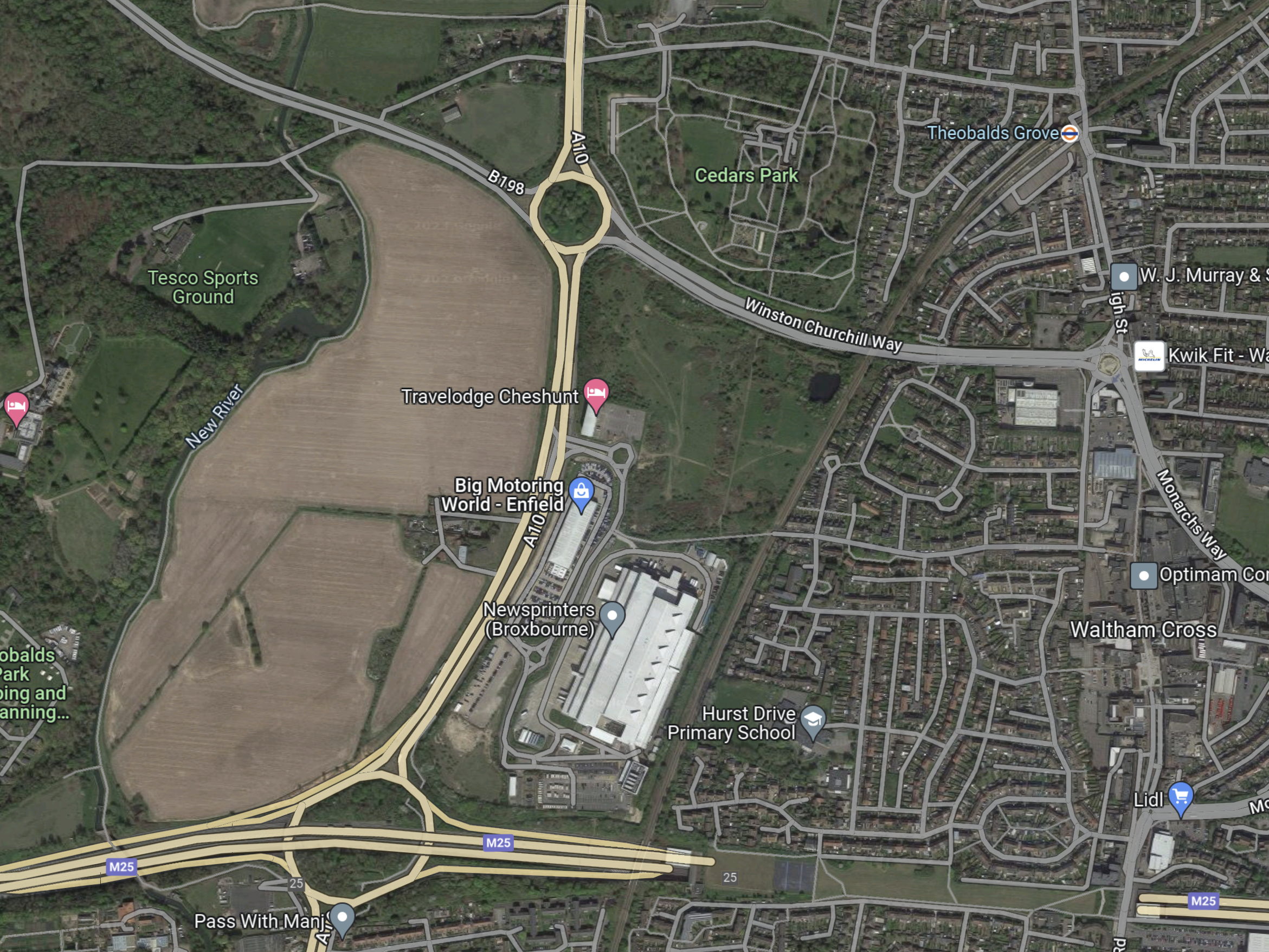
Note.
- The green patch of land to the South-East of the roundabout where Winston Churchill Way meets the A10 appears to be ripe for development.
- Looking at the green patch with a higher resolution, the land is little more than high class scrub beloved of newts.
- The London Overground line to Cheshunt runs down the East side of the site.
- To the North, the London Overground crosses Winston Churchill Way to get to Theobalds Grove station.
- To the South, the London Overground crosses the M25 to get to Turkey Street station.
- There is a lane running East-West along the South edge of the site, which crosses the railway in a level crossing.
This picture clipped from Google StreetView shows the level crossing.
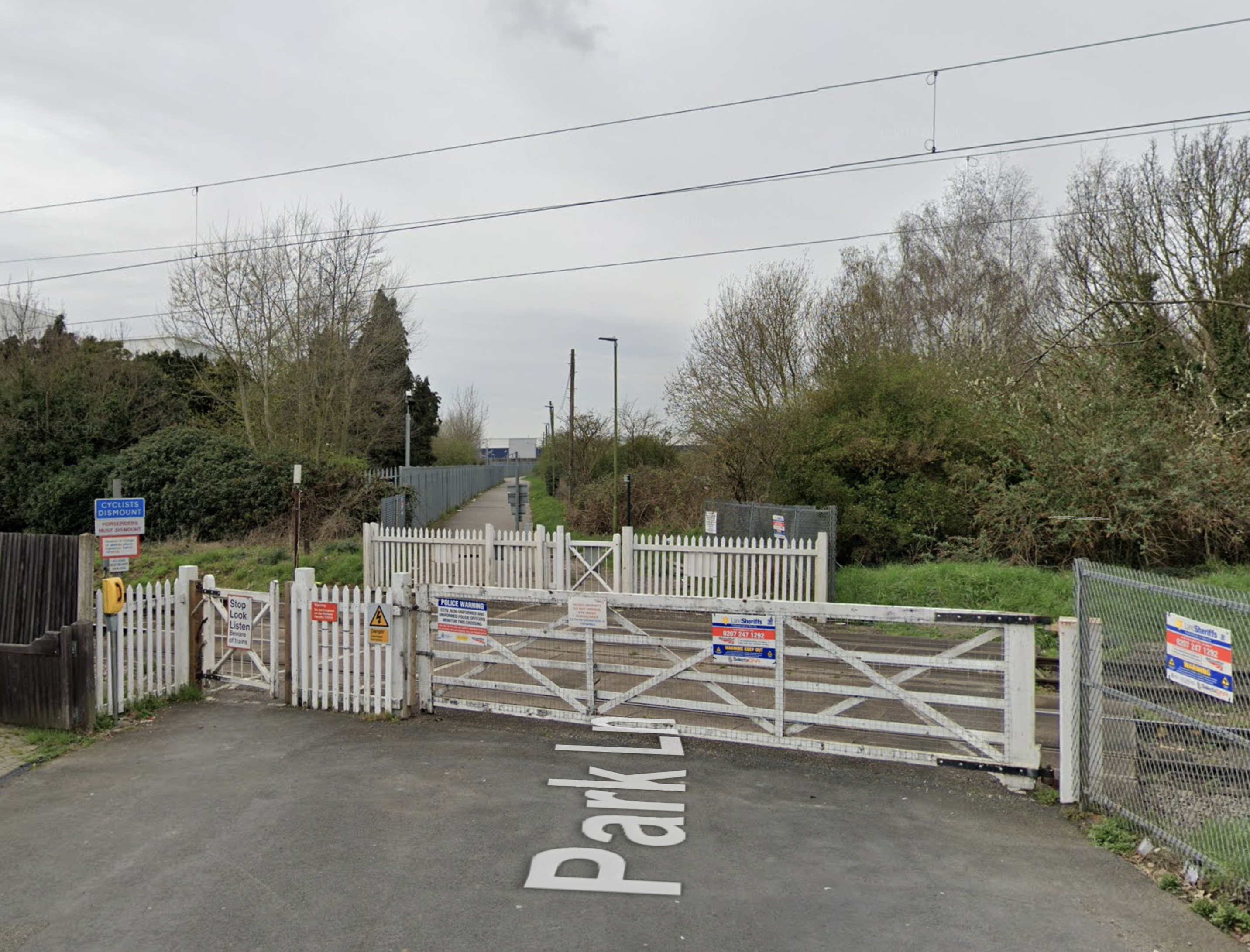
This is certainly one, that drivers dread.
This GoogleMap shows the level crossing and a stretch of the London Overground.
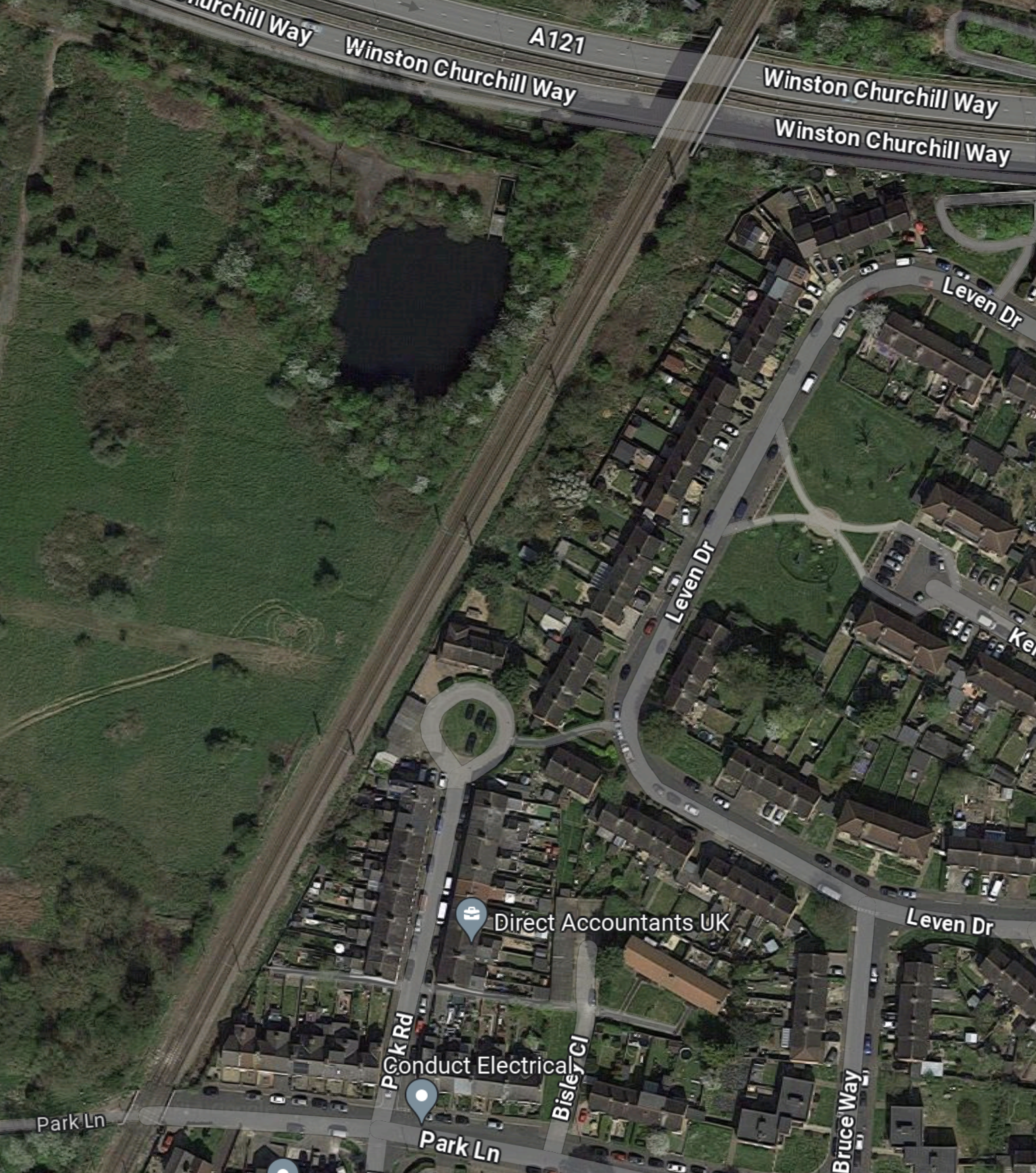
Note.
- The level crossing is in the South-East corner of the map.
- There isn’t much space to put a London-bound platform on the East side of the tracks, South of the Park Road circle.
- There is plenty of space to put a Cheshunt-bound platform on the West side of the tracks.
- North of the Park Road circle, there would appear to be space for two platforms.
It will need a lot of ingenuity to provide a safe and efficient solution to the problems of the level crossing and fitting a station in this limited space.
The first thing I’d do, would be to dig an underpass for pedestrians and cyclists to connect the two halves of Park Lane.
Moray West First UK Round 4 Offshore Wind Project To Reach Financial Close
The title of this post, is the same as that of this article on offshoreWIND.biz.
This is the sub-heading.
Moray West Offshore Wind Farm, owned by Ocean Winds and minority shareholder Ignitis Group, has secured GBP 2 billion of non-recourse project finance and reached financial close, the developers announced on 21 April and said this was the first project from the UK’s Contract for Difference (CfD) Allocation Round 4 to reach this milestone.
This is the first paragraph.
The construction work for the wind farm has already started, with this phase of the project set to create 1,000 direct jobs in the UK. With financial close in place, the project will now move to secure the remaining elements of supply chain activity in preparation for offshore installation works later this year which will be fully completed by 2025, when the 882 MW Moray West is scheduled to be fully operational.
That sounds good for Scotland and electricity users in the UK.
But this paragraph is probably the most important.
According to its developers, the 882 MW offshore wind farm is the first in the UK to rely in majority on corporate power purchase agreements (CPPAs) for the commercialisation of its output. CPPAs were signed with long-term strategic partners, for more than 50 per cent of the project’s output, enabling the rapid progress of the project. The vital CPPAs were originated in partnership with ENGIE and represent the largest contracts of their kind implemented in the UK market to date, Ocean Winds said in a press release.
There’s not much point in making something that nobody wants to buy at the price you need for a profitable sale.
But with all those CPPAs, one of which is with Google, Moray West wind farm appears to be on his way.
DEME Returns To Scotland, Announces Offshore Wind Industry Firsts
The title of this post, is the same as that of this article on offshoreWIND.biz.
This is the sub-heading.
DEME has won the contract to install foundations at the 882 MW Moray West wind farm offshore Scotland.
The industry firsts are described in these paragraphs.
In an industry breakthrough, the Moray West project will be the first time XXL monopiles will be installed in the winter period, and DEME will deploy its double-staged, motion-compensated pile gripper, the company said.
Moray West will also be the first time a vibro-hammer is being utilised for the XXL monopiles to overcome weaker soil layers.
Note.
- The water depth at Moray West wind farm is 35-54 metres, which necessitates the XXL monopiles.
- Working offshore in winter can be challenging.
- DEME’s gripper sounds just like what the engineers wanted.
This is just like with North sea oil and gas, where everything got bigger and more capable over time. But it did speed construction!
Google Buys Scottish Offshore Wind Power
The title of this post, is the same as that of this article on offshoreWIND.biz.
This is the sub-heading and the first paragraph.
ENGIE and Google have entered into a 12-year, 100 MW corporate power purchase agreement (CPPA) supporting the Moray West offshore wind development in Scotland.
ENGIE will provide Google with more than 5 TWh of green power from the Moray West project, a nearly 900 MW offshore wind farm set to begin generating power from 2025.
Increasingly, it seems that large energy users are committing themselves to long-term energy deals.
One of Google’s senior people is quoted as saying.
People across the UK and Europe are increasingly worried about climate change and energy security. We share that concern and believe technology is an important part of the solution – both by reducing our own emissions, and by helping others to reduce their own.
I have a few thoughts.
How Much Of Moray West’s Output Is 5 TWh?
Consider.
- Moray West has an maximum output of 882 MW.
- This converts to 7.73 TWh.
If Google are buying all the electricity produced by the wind farm, that would mean that the capacity factor is around 64.7 %, which is quite reasonable, if a bit high for a fixed foundation wind farm.
If we are, it does surely reflect a desire for stability and security in a fast-changing world.
Are We Seeing More Corporate Power Purchase Agreements (CPPAs)?
The Caledonia Wind Farm
Another of the ScotWind wind farms, that I described in ScotWind Offshore Wind Leasing Delivers Major Boost To Scotland’s Net Zero Aspirations, has been given a name and a web site.
This map shows the various ScotWind leases.

Note, that the numbers are Scotwind’s lease number in their documents.
9 is now Caledonia.
- It has grown from a 1,000 MW fixed foundation wind farm and is now 2,000 MW.
- A completion date of 2030 is now given.
The wind farm will be the fourth development in the area, after the 598 MW Beatrice, the 950 MW Moray East and the 882 MW Moray West wind farms. That is a total of nearly 4,500 MW.
Caledonia’s Unique Advantages
On the About Caledonia page on the Caledonia Wind Farm web site, there is a section called Caledonia’s Unique Advantages, which has four sections.
Water Depths
Caledonia’s water depths are 40 to 100 m. Three-quarters of the site is at depths that allow for fixed (rather than floating) foundations.
This means the majority of the site can be built using the same type of jacket foundations which Ocean Winds optimised at Moray East, seeing Caledonia implement a proven, low-risk, low-cost engineering solution.
Wind
The wind resource at Caledonia is proven through the experience of previous projects and is of a magnitude more usually associated with deeper waters, further from shore. This means Caledonia will benefit from an excellent wind resource, yielding a higher output at lower costs.
Distance from Shore
Caledonia is around 40km from shore and 70km from the nearest National Grid connection point. Beyond distances of approx 120km, DC technology becomes a necessity for subsea transmission. This means the additional costs associated with installing AC-DC convertors offshore and DC-AC convertors onshore can be avoided and the onshore substation will be smaller so will require less land and have a lesser impact on the surrounding environment.
Environment
The Moray Firth is the home of commercial-scale offshore wind generation in Scotland. Caledonia neighbours the Moray East, Moray West, and Beatrice sites, and Ocean Winds have had a presence here from the beginning of the area’s offshore wind development.
Conclusion
It does appear that if you do your planning well on projects like these, there are benefits to be reaped in terms of size, construction, capacity and financial returns.
 The Anonymous Widower