Could The Morocco-UK Power Project Be Developed Into A Western Europe And Africa Interconnector?
This page on the Xlinks web site, describes the Morocco-UK Power Project, which is proposed to generate solar and wind power in Morocco and deliver it to the UK.
- The plan envisages 10.5 GW of electricity being generated.
- There will be a 5GW/20GWh battery in Morocco.
- They will export 3.6 GW of electricity to the UK for at least twenty hours per day.
- The electricity will be exported to the UK by an Interconnector that skirts to the West of Spain, Portugal and France.
- The interconnector will be 3,800 kilometres long.
I described the project in detail in Moroccan Solar-Plus-Wind To Be Linked To GB In ‘Ground-Breaking’ Xlinks Project.
This Google Map shows Western Europe And North Africa.

Note.
- The light blue of the Continental Shelf
- The darker blue of deeper water.
- The Southern end of the Morocco and the UK interconnector will at Guelmim Oued Noun in the South of Morocco, which is indicated by the red arrow.
- The UK end of the cable will be at Alverdiscott between Barnstaple and Bideford in North Devon.
- Southern Morocco and Algeria look to be mainly in the Sahara Desert.
If we look at the route of the cable, it connects a lot of possible renewable energy sources.
- Morocco – Solar and wind
- Spain – Solar and wind
- Portugal – Solar and wind
- France – Nuclear, tidal and wind
- UK – Nuclear and wind.
Could the UK and Morocco interconnector be developed into a bigger power project?
- Solar and wind power from Algeria could be added.
- Tidal power from a Severn Barrage could be added.
- Connections could be added to Gibraltar, the Irish Republic and Wales.
I believe that there could be a large amount of electricity developed on the Western costs of Europe and Africa.
An interconnector would move it to where it is needed.
How Clean Energy And Jobs Can Flow From Morocco to The UK
The title of this post, is the same as that of this article in The Times.
- The article has been written by Simon Morrish, who is the founder and CEO of Xlinks.
- The article is about his plans to build a 10.5 GW solar and wind power complex in Morocco and connect it to the UK, by an undersea power cable running up the coasts of Morocco, Spain, Portugal and France.
- This page on the Xlinks web site gives details of the project.
These are some points from the article.
Relationship With The Exchequer
He makes these points about the projects relationship with the Exchequer.
- The company will be a net contributor.
- The project will not require government subsidy of finance.
- Energy will be delivered under the Contract for Difference (CfD) price of £48/MWh.
- This compares with a CfD price of £92/MWh for Hinckley Point C.
Simon Morrish also claims they will be energised before Hinckley Point C.
That sounds good to me.
Finance
I wonder if at the CfD price quoted in the article, could this mean that this is a project that could be financed in the City of London or from a Sovereign Wealth Fund?
As Simon is confident the project can be completed before Hinckley Point C, I suspect that the finance might be in place, even if it hasn’t been signed off.
The 20GWh/5GW Battery
Simon says this about the battery.
Alongside the consistent output from its solar panels and wind turbines, a 20GWh/5GW battery facility will ensure power generated can be delivered every day, resulting in a dedicated, near-constant source of flexible and predictable renewable energy, designed to complement renewable energy generated in the UK.
In Moroccan Solar-Plus-Wind To Be Linked To GB In ‘Ground-Breaking’ Xlinks Project, I forecast that the battery would be from Highview Power, but given the delivery date before Hinckley Point C, I would suspect that Xlinks have a battery supplier in mind.
Employment Benefits
Simon says this about employment benefits.
Thousands of jobs will be created in Morocco and also at home.
If the project goes ahead, given its size, I don’t think many would disagree with that.
Simon also claims the project will create 1350 permanent jobs by 2024. Sites mentioned include Hunterston, Port Talbot and the North East of England.
Simon’s Conclusion
This is Simon’s conclusion about the project.
I love the idea of clean electricity flowing, all the way from Morocco to the UK. I hope it may inspire other ambitious renewable energy projects too — which, together, will provide clean, secure and stable energy, at affordable prices, for businesses and households to rely on and help to protect this special planet.
If you can, I suggest you read the full article on The Times.
Conclusion
The more I read about this project, the more I tilt towards it being feasble
Engineering is the science of the possible, whereas politics is dreads of the impossible.
Moroccan Solar-Plus-Wind To Be Linked To GB In ‘Ground-Breaking’ Xlinks Project
The title of this post, is the same as that of this article on Current News.
This is the first paragraph.
New solar and wind under development in Morocco is to be linked with Britain, with developer Xlinks also seeking to develop a cable manufacturing industry.
It looks to be a very challenging project.
- The HVDC cable will be 3,800 km long.
- The plan envisages 10.5 GW of electricity being generated.
- There will be a 5GW/20GWh battery in Morocco.
- They will export 3.6 GW of electricity to the UK for at least twenty hours per day.
- The electricity will be exported to the UK by a cable that skirts to the West of Spain, Portugal and France.
- The UK end of the cable will be at Alverdiscott in Devon.
All except the last are pushing current technology to the limit.
There is more information on the Morocco-UK Power Project page on the Xlinks web site.
- The company claims, that it can supply renewable energy, that acts like baseload power.
- When complete, it could supply eight percent of the UK’s energy needs.
These are my thoughts.
The 3,800 km. HVDC Link
This paragraph on the project web page describes the HVDC link.
Four cables, each 3,800km long form the twin 1.8GW HVDC subsea cable systems that will follow the shallow water route from the Moroccan site to a grid location in Great Britain, passing Spain, Portugal, and France.
It appears that would be 15200 kilometres of cable.
The longest HVDC link in the world is 2375 km. It’s overland and it’s in Brazil.
I can’t think otherwise, than that this will be a very challenging part of the project.
This Google map shows the area of Morocco, where the energy will be generated.
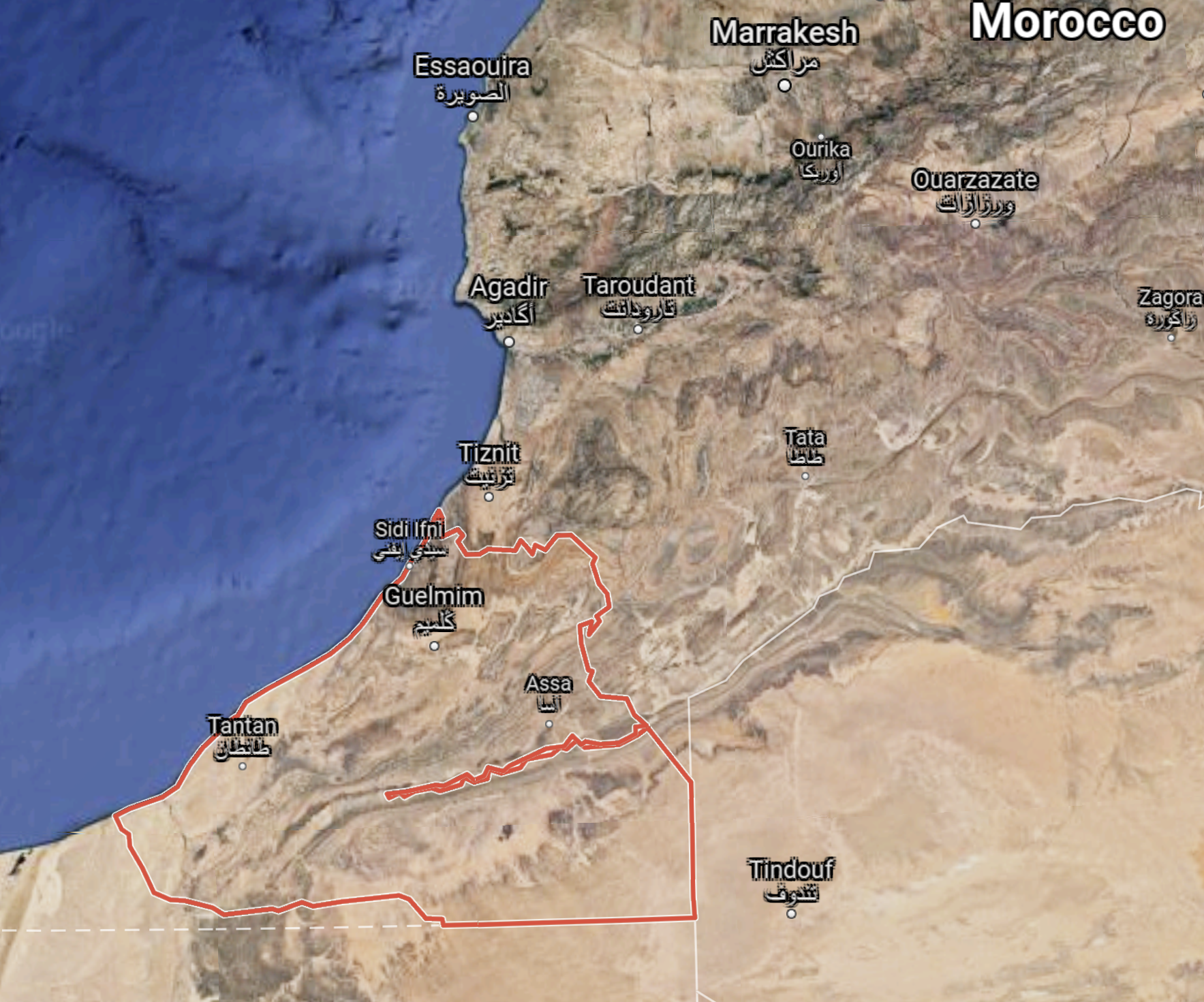
Note.
- Guelmim Oued Noun is outlined in red.
- The Canary Islands are just off the map to the West.
At least the project will be able to have convenient access to the sea.
This second Google Map shows the <Moroccan, Portuguese and Spanish coasts from Guelmim Oued Noun to the Bay of Biscay.

Note.
- The light blue of the Continental Shelf
- The darker blue of deeper water.
- Guelmim Oued Noun is outlined in red.
- The Canary Islands in the Atlantic Ocean to the West of Guelmim Oued Noun.
- Could the cable bring power to Gibraltar?
- There are other large cities on the route in Morocco, Portugal and Spain.
This third Google Map shows the Bay of Biscay.
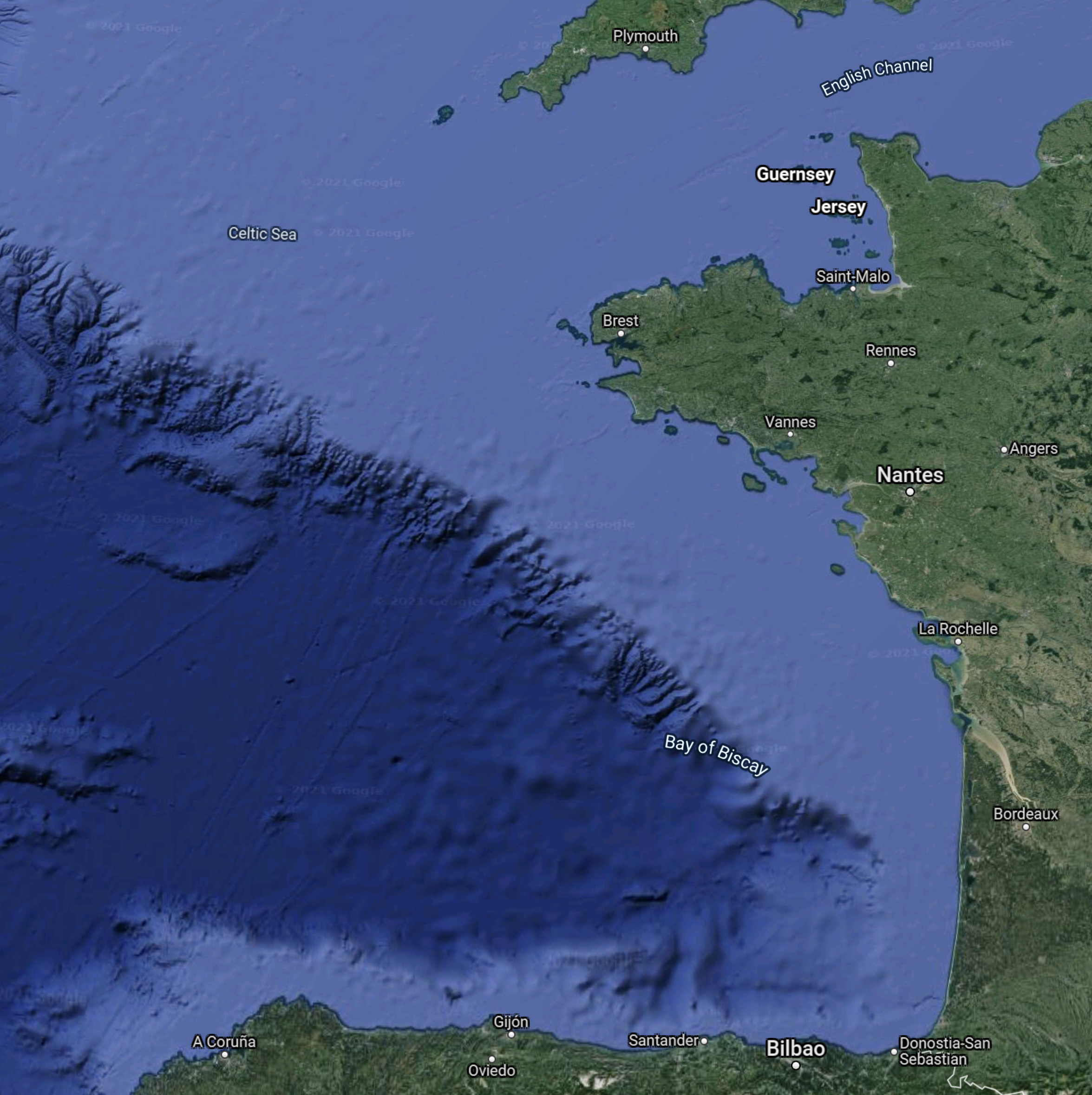
Note.
- The light blue of the Continental Shelf
- The darker blue of deeper water.
- There are a series of islands off the Spanish and French coasts.
- Could these islands be used as stepping stones for the cable?
This fourth Google Map shows the Western Approaches to the UK.
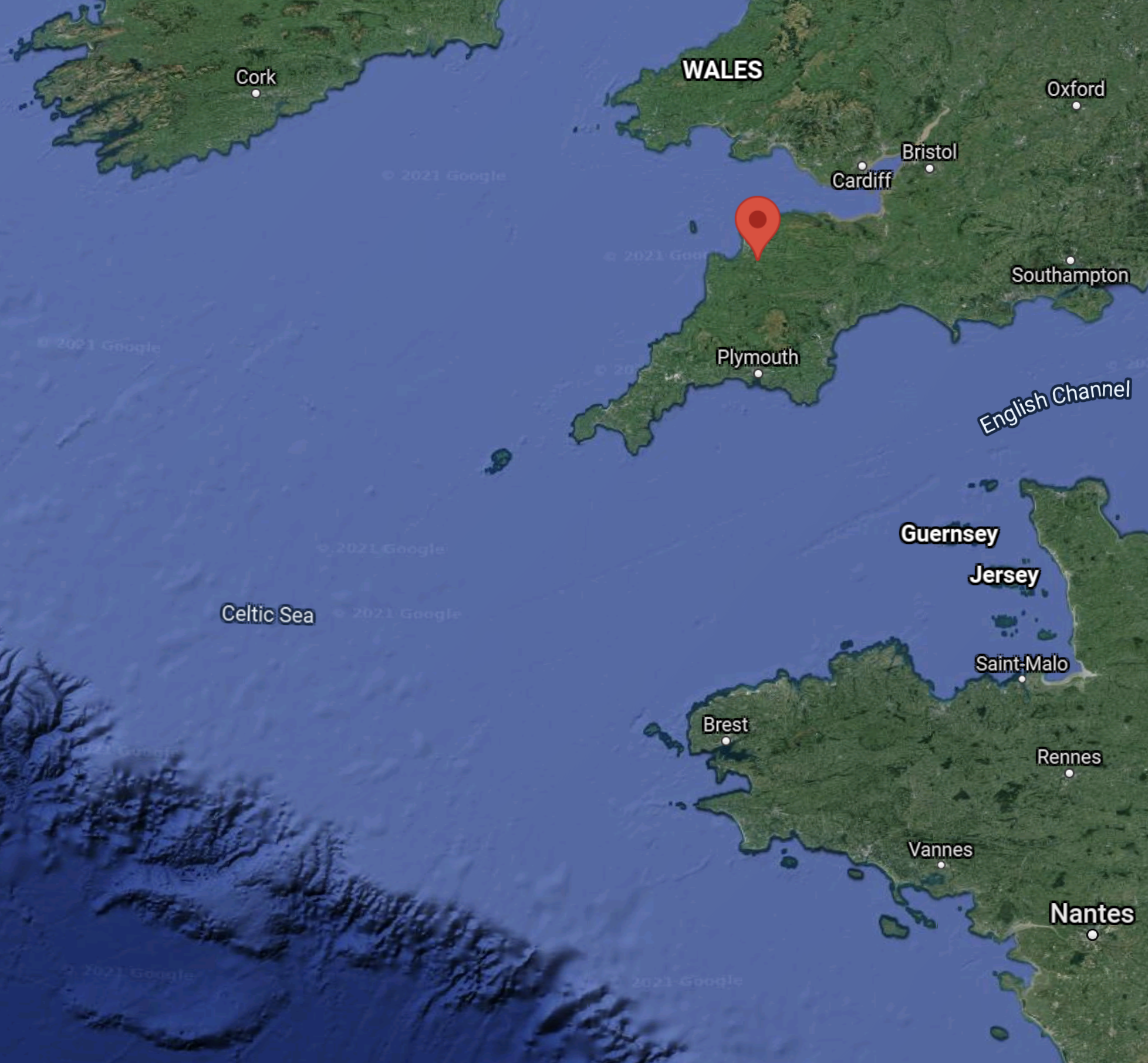
Note that the prominent red arrow indicates Alverdiscott, where cable connects to the UK National Grid.
This fifth Google Map shows Alverdiscott to Lundy Island.
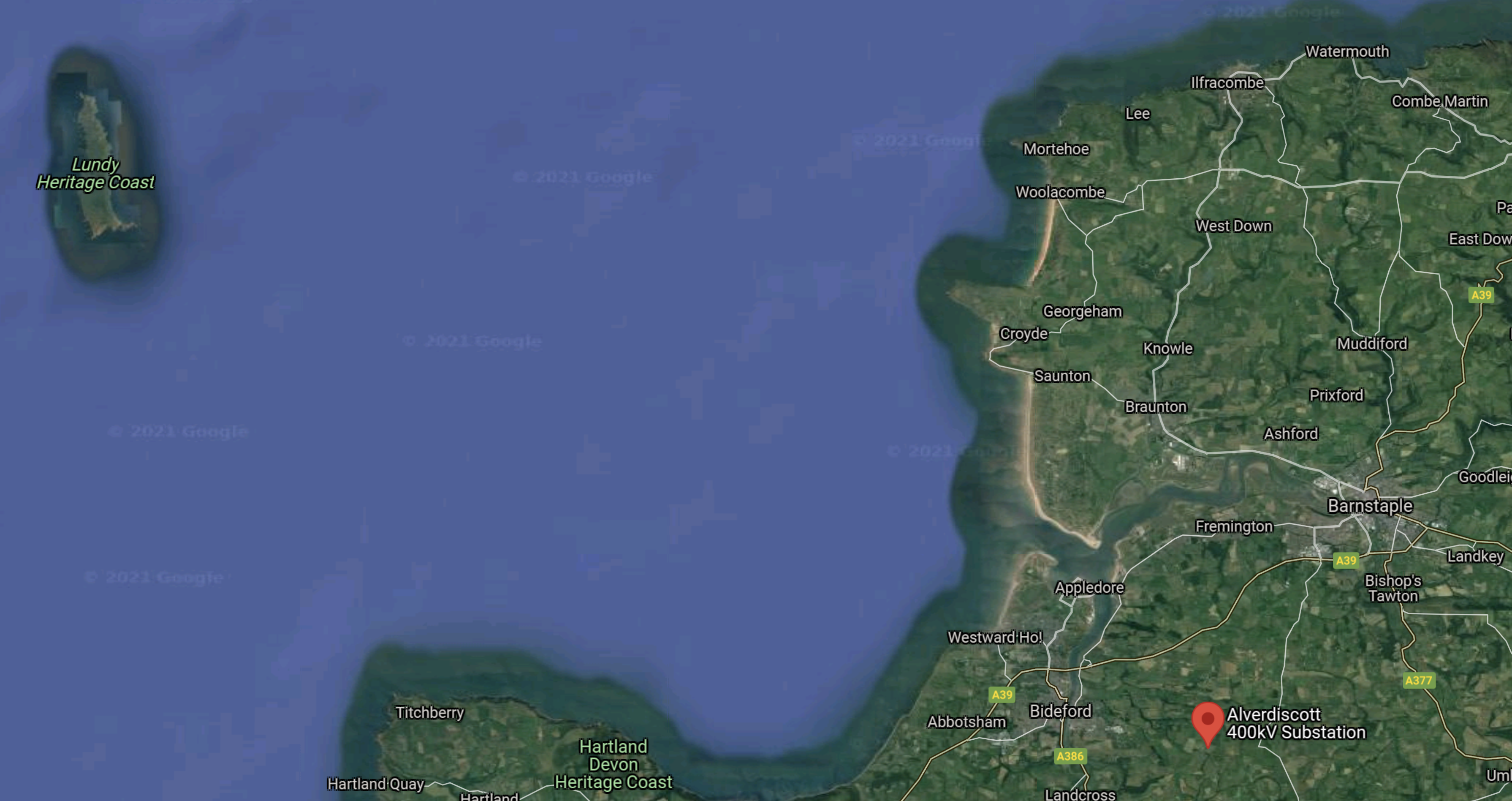
Alverdiscott substation is indicated by the red arrow.
This sixth Google Map shows the Alverdiscott substation in relation to the town of Bideford.
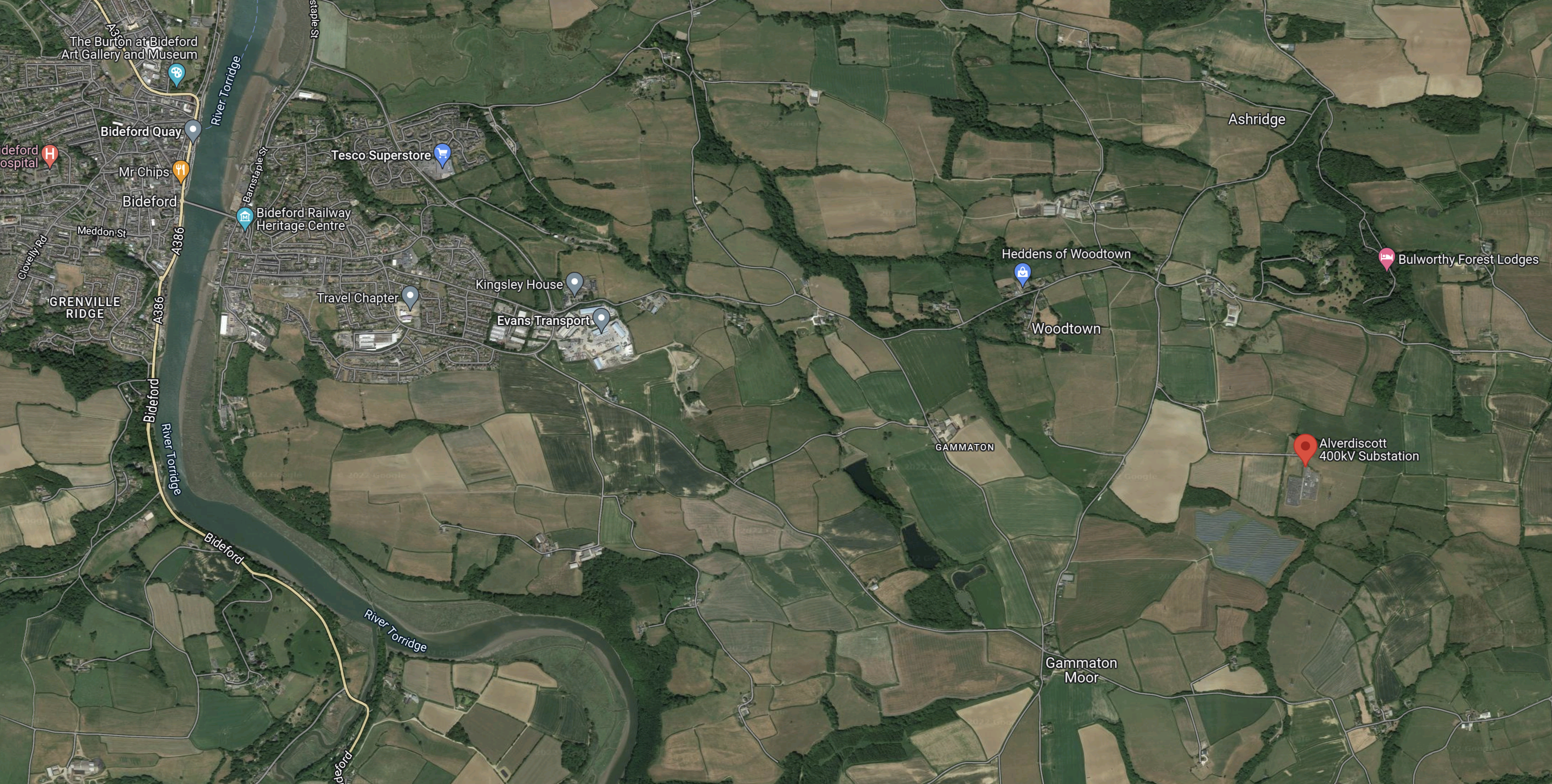
Note.
- Bideford is in the North-West corner of the map.
- The red arrow indicates the Alverdiscott substation.
- The River Torridge runs through the town of Bideford.
Could the river be used to bring the cables from Morocco to the substation?
This seventh Google Map shows the Alverdiscott substation
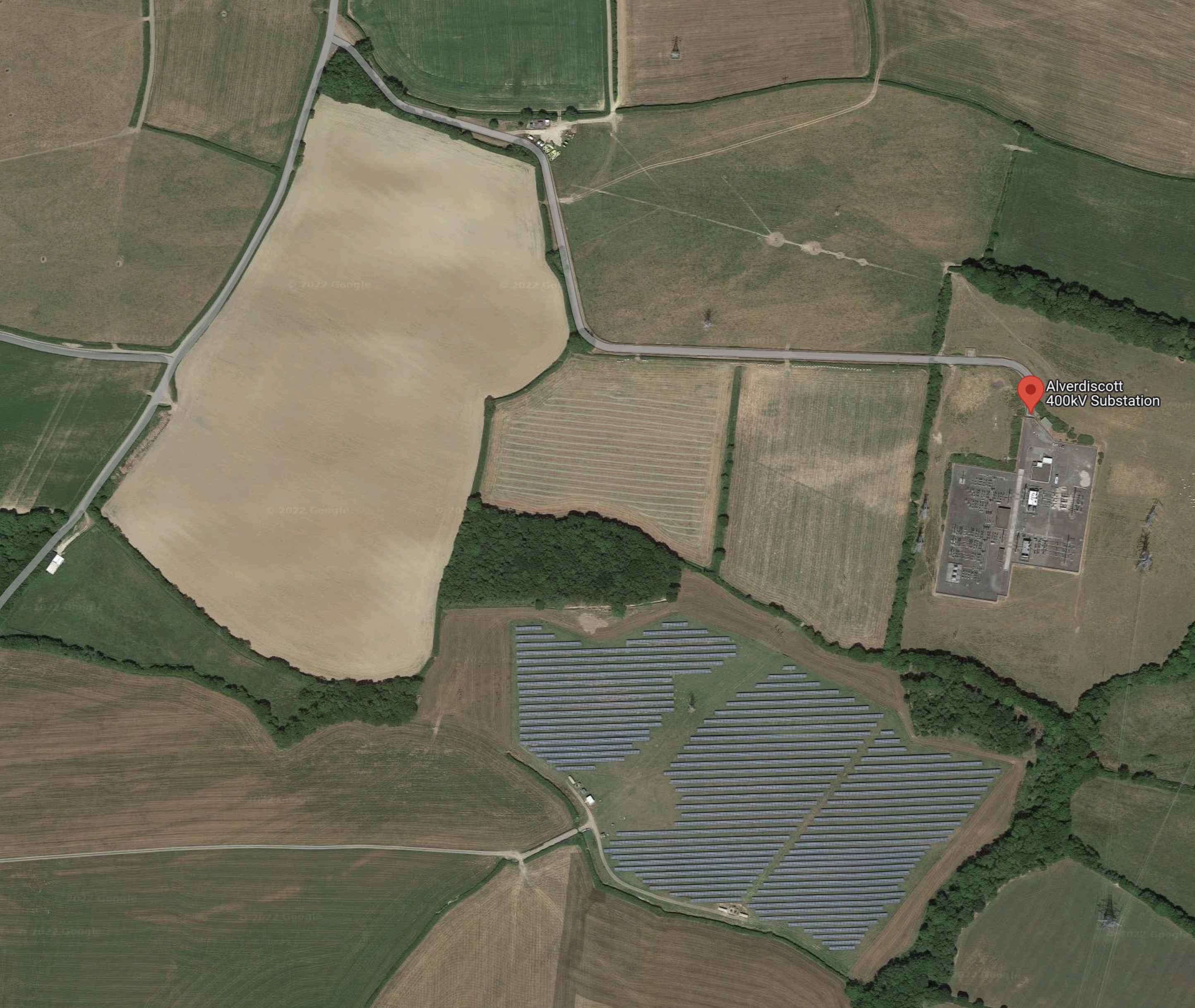
Note the solar farm to the South of the substation.
HVDC Cable
The article also says that they may be building their own cable-manufacturing facility. Does this indicate that there is a shortage of HVDC cable?
Judging by the number of proposed interconnectors proposed for UK waters, it might be a prudent move to improve cable-manufacturing capacity.
10.5 GW Of Zero-Carbon Electricity
This sentence on the project web page describes the power generation.
This “first of a kind” project will generate 10.5GW of zero carbon electricity from the sun and wind to deliver 3.6GW of reliable energy for an average of 20+ hours a day.
It appears that they will be providing a baseload of 3.6 GW to the UK for over twenty hours per day.
Consider.
- Hinckley Point C has an output of 3.2 GW.
- As I write this around midnight, the UK is generating 22.2 GW of electricity.
This paragraph from their web site describes the advantages of Morocco.
Most importantly, Morocco benefits from ideal solar and wind resources, required to develop renewable projects that could guarantee suitable power production throughout the year. It has the third highest Global Horizontal Irradiance (GHI) in North Africa, which is 20% greater than Spain’s GHI and over twice that of the UK. Furthermore, the shortest winter day still offers more than 10 hours of sunlight. This helps in providing production profiles that address the needs of the UK power market, especially during periods of low offshore wind production.
It is not a small power station in the wrong place.
The 5GW/20GWh Battery
That is a massive battery.
The world’s largest lithium-ion battery is Gateway Energy Storage in California. It has a capacity of 250 megawatts for one hour.
The proposed battery in Morocco is eighty times as large.
If I was choosing a battery for this application, I believe the only one that has been demonstrated and might work is Highview Power’s CRYOBattery.
I wrote about Highview’s similar type of application to Morocco in Chile in The Power Of Solar With A Large Battery.
But that installation only will only have storage of half a GWh.
But I believe Highview and their partner; MAN Energy Solutions can do it.
Conclusion
I wish the company well, but I have a feeling that there’s a chance, that this will join the large pile of dead mega-projects.
But I do feel that the solar and wind power station in Morocco will be developed.
And like the project in Chile it will have a large Highview CRYOBattery.
Morocco Could Produce Up To 4% Of World’s Green Hydrogen By 2030
The title of this post, is the same as that of this article on Morocco World News.
This is the first paragraph.
Morocco could produce up to 4% of the global demand for green hydrogen by 2030, according to the German Ministry of Economic Cooperation and Development.
They are aiming to produce 10,000 tonnes of hydrogen per year by 2025.
Wikipedia has an informative topic called Energy Policy in Morocco, which indicates the following.
- The country has little oil and gas reserves. Although it does have some oil shale, that could be developed.
- Wind, solar and hydro power are being developed.
- They could install a nuclear power station East of Rabat.
It sounds, that they could have an electricity structure, that would be ideal for the production of green hydrogen.
Conclusion
Morocco could be joining an ever growing club, which includes Australia, Saudi Arabia and Spain, who will produce hydrogen for export to countries like Germany, Japan and South Korea.
Novel Long-Duration Energy Storage System Installed At World’s Largest CSP Plant
The title of this post is the same as that of this article on Recharge.
This is the sub-title.
Technology that stores power in molten aluminium inaugurated at 580MW Noor Ouarzazate solar complex in Morocco.
Other points from the original article.
- The idea is from Swedish start-up; Azelio.
- The the Noor Ouarzazate solar complex is rated at 580MW
- Noor is Arabic for light.
- Energy is stored as heat in molten recycled aluminium at 600 °C.
- When energy is needed, a Stirling engine is used to generate energy.
- Waste heat can also be captured and used to heat buildings.
- The system has a 90 % round-trip efficiency.
I feel this could be a winner in the long term.
Leaving Casablanca
I took these pictures as the Oriana left Casablanca


I have not annotated them. The mosque named after Hassan II is in many of the pictures.
The Maverick
This ship was docked in front of the Oriana in Casablanca.
For whatever reason, I don’t know, it was stuck in the port, so the captain of the Oriana sent some of our food to keep the crew of The Maverick going for another few days.
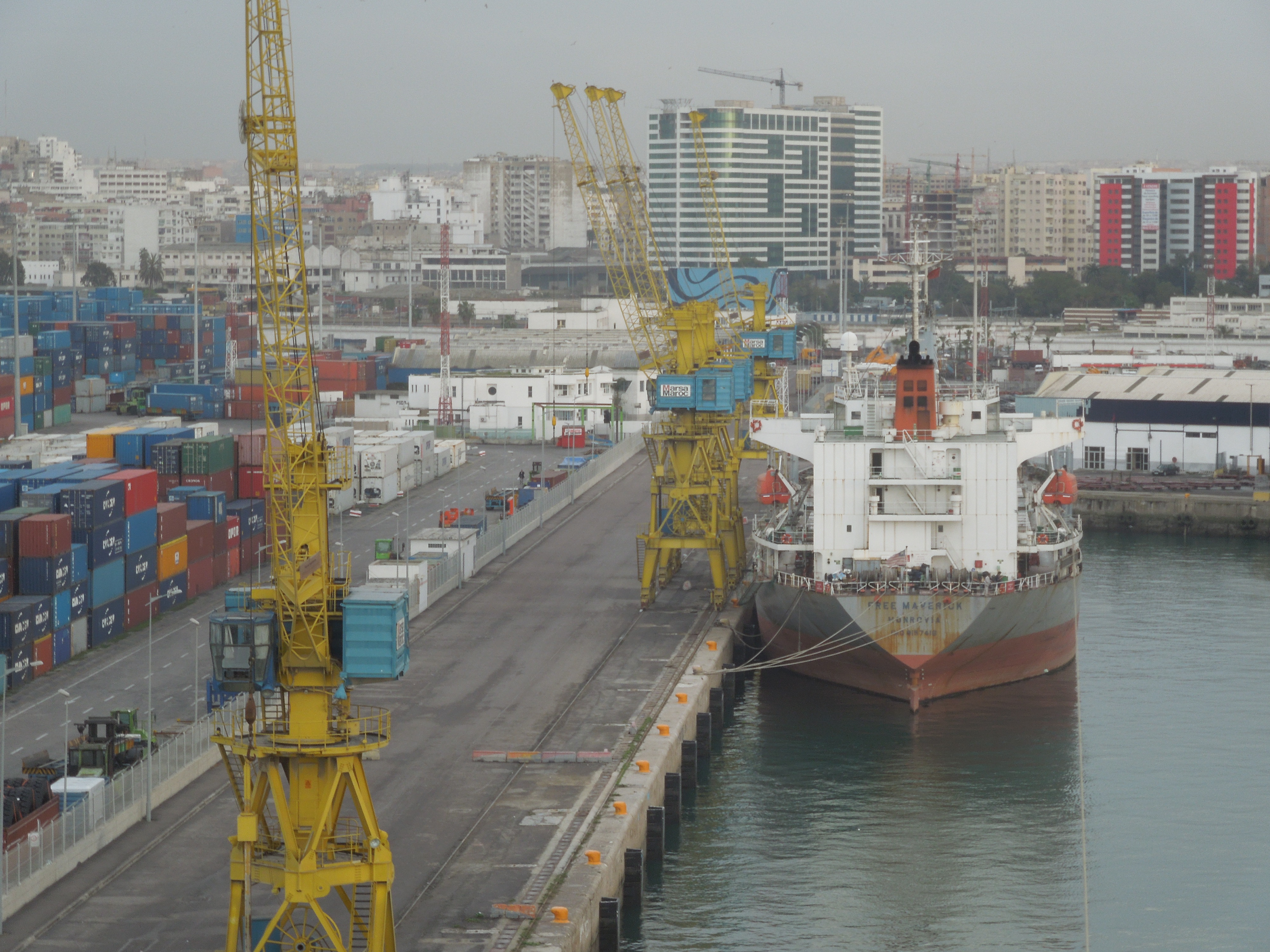
The Maverick
I would assume that the owners didn’t have the money for port fees or something.
Everybody thought it was right, that the Captain took the action he did. But then it is a law of the sea to help fellow seafarers.
Summing Up Casablanca
The trip to the beach was excellent, but that couldn’t be said for the weather! I’ve been to Morocco before, and it was just as non-threatening as Marrakesh was ten years ago.
One thing that I noticed, was that a lot of the young Moroccan women, don’t bother to cover their hair, as most women do in Muslim countries. Coupled with the vast numbers of newspapers on the streets, does this show that Morocco is joining the modern world? Incidentally, I did hear a report on BBC World, that said that Morocco was one of the most welcoming countries in the world.
Let’s hope it stays that way! Or possibly gets even better!
I remember last time in Marrakesh that we had been recommended a restaurant by one of C’s colleagues in her chambers. We asked the concierge of our five star hotel, how we could get to the restaurant and he said to take a taxi, as the restaurant was difficult to find. We then asked how we got a taxi to get home and he said, that if we felt up to it the best way was to walk, as Marrakesh was a safe city.
So after an amazing meal, we walked back to the hotel!
The only interaction we had on the walk, was when a guy courteously waved us through, as he was in a hurry.
Walking Back To The Oriana
I took these pictures as I walked back to the Oriana.


They do illustrate, what I said in this post about there being a need for a good walking route from the tram to the dock.
I always photograph daisies.
The Beach At The End Of The Line
The beach was lots of flat sand, with the sort of dramatic sea, for which the Atlantic Ocean is renowned.


It was actually fairly deserted, so after my orange juice, I returned to the city centre.
But it was worth it, just for that orange juice alone, which had been freshly squeezed for my benefit. I have only ever had one orange juice anywhere near the same quality and that was in a five star hotel in probably Spain.
That would have cost me a lot more than the thirty pence or so the Casablancan one did!
 The Anonymous Widower