Platforms 10-14 At Paddington Station
This Google Map shows the Western end of Paddington station.
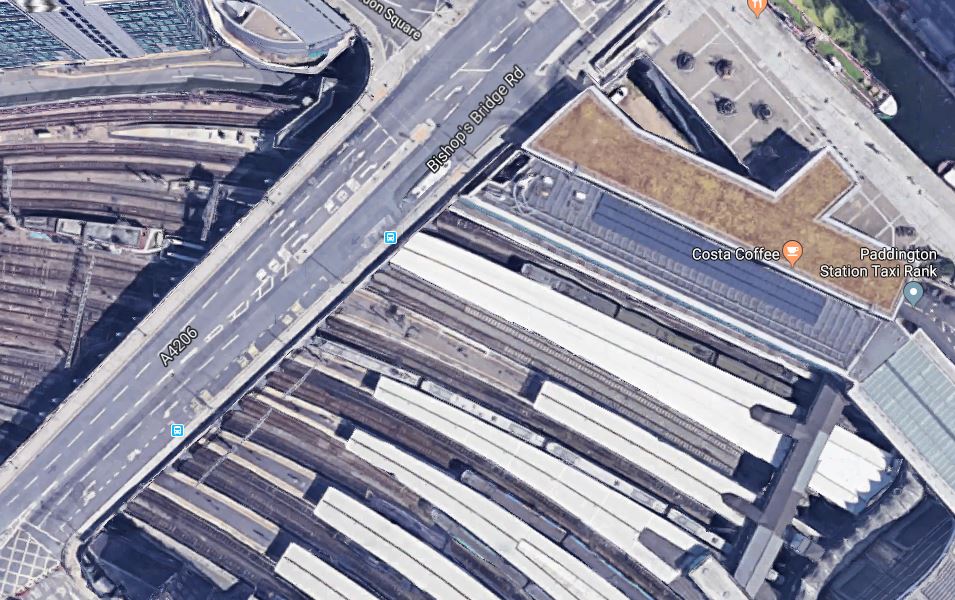
Note.
- In the top right hand corner of the map you can see the canal boats parked alongside the station.
- The light brown flat roof, would appear to be the roof of the London Underground station, which has two platforms and is served by the Circle and Hammersmith & City Lines.
- The thin platform pointing out from under the road bridge at the is probably the extension of the two Underground platforms, which are numbered 15 and 16.
- The next platform end which is wider, is platforms 12 and 14.
Now look at this picture taken by the end barrier on platform 15.
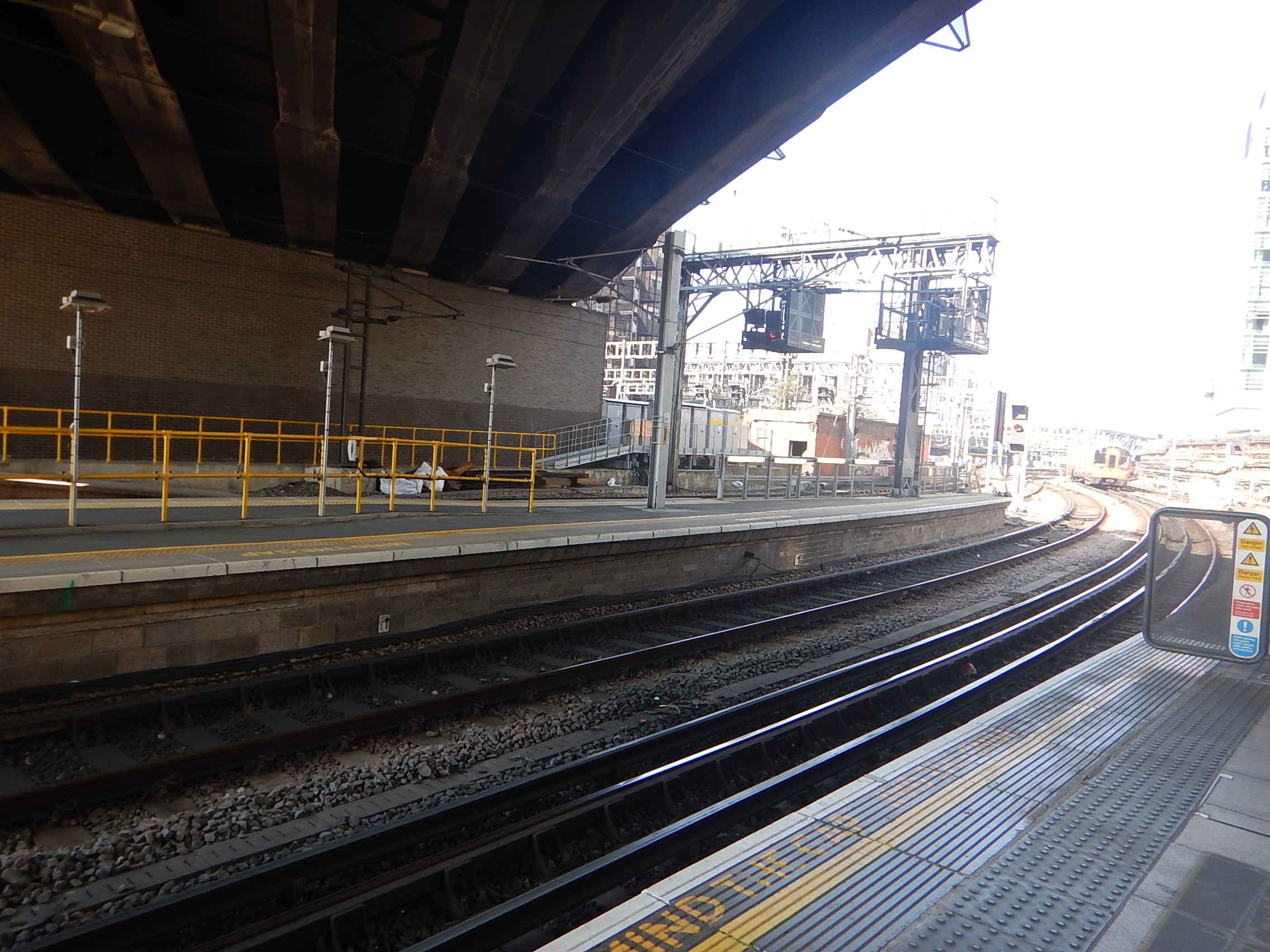
Note.
- The road bridge is over the top.
- Platform 14 is opposite, which is fitted with overhead electrification.
- The track for Platform 15, is the Westbound Underground line and has typical London Underground electrification.
- I think the signal gantry at the end of the platform can be seen on the Google Map.
The Google Map and my photo are two different views of the same area.
The Length of Platform 14
This article on Rail Engineer is entitled All Change At Paddington.
This is an extract, which is talking about Platform 14.
To extend the platform’s operational length to 164 metres, it had to be extended at both ends. On the London end, the buffer stop had already been moved by 11 metres, and that was all the room available. The country end had also been extended as much as possible.
164 metres is an interesting length.
The length of a four-car Class 387 train is just over eighty metres, so two working as a pair would fit Platform 14.
In Weight And Dimensions Of A Class 345 Train, I state that the length of a seven-car Class 345 train is 159.74 metres.
It looks like platform 14 can accept either of the electric trains that work the suburban services out of Paddington.
The Length of Platform 12
Platform 12 is the other platform face of the island containing platform 14.
I took these pictures as I walked down the Underground platform.


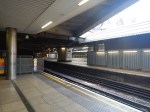
I then left the Underground station and took these pictures on the island containing platforms 12 and 14.
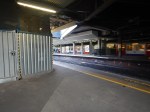
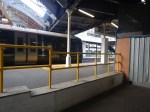
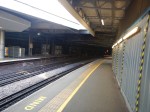
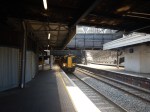
Note that the train in Platform 12 is an eight-car Class 387 train, which is around 160 metres long.
The end of the train appeared to be about the same place as the end barriers on the Eastern end of the Underground platform.
As a S7 Stock train is 117.45 metres long, I estimate that the length of Platform 12 is almost 280 metres.
This picture was taken at the Eastern End of the platforms from behind the buffers.

As there is perhaps forty metres, between the buffer stop and the train, does that mean that Platform 12 and its neighbour; Plstform 11 are long enough to accommodate any of the following.
- Up to four four-car Class 387 trains.
- Two seven car Class 345 trains.
- A Class 345 train at the maximum length of nine or ten cars.
Network Rail seem to have provided a lot of space for future services.
Conclusion
There is certainly enough space to run a Western Cossrail service to Reading. The space is available now, so it should be available in December 2019.
The only restriction would be that Platform 14 can only handle a seven-car Class 345 train.
From Paddington To Victoria The Hard Way
On Friday, I tried to use the Bakerloo Line at Paddington station and it was in chaos because of related engineering work.
So today, instead of going between Paddington and Victoria by using the Bakerloo and Victoria Lines, I thought I’d use the Circle Line and go direct.
But it turned into a struggle.
- A train arrived within a minute but didn’t say where it was going.
- It turned out to be Olympia, so I changed at Earl’s Court for Victoria.
- Close to my exit from the train at Victoria was a lift saying it was going to the Way Out.
- But it didn’t and I had to climb back up to the platform where I started.
- Another set of stairs took me to the sueface.
When I got to the surface, I saw an information office and asked if they could point me to a bus spider map, so I could find out if a bus would have been easier. They hadn’t a clue and probably only wanted to see me a tour.
But I found one in an obvious place.
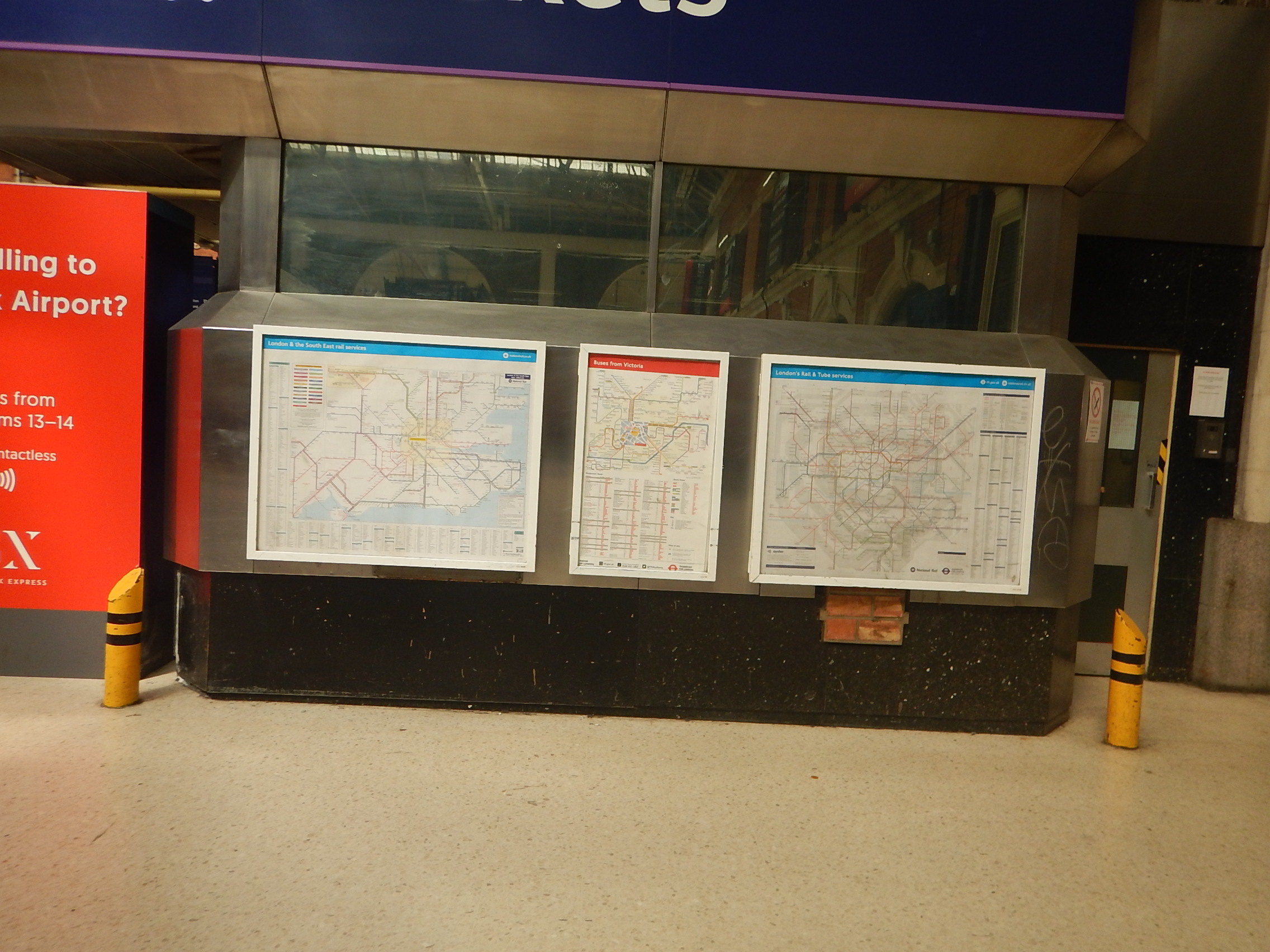
And ascertained that a 36 bus would have been just the job.
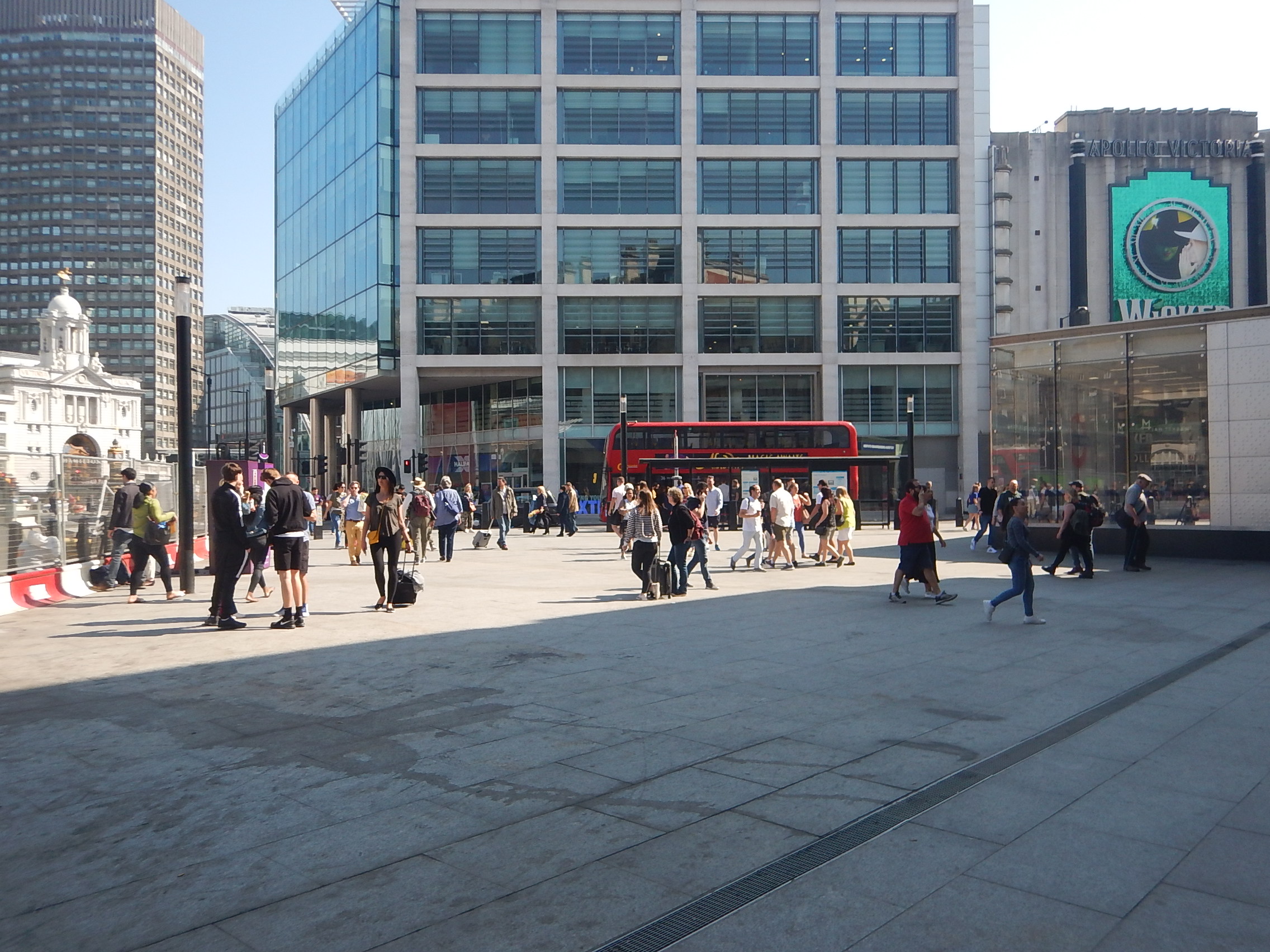
The picture shows one going the other way, just outside the station.
It is a bit slower, but not if you have a heavy case or a child in a buggy.
If Crossrail Opens To Reading In December 2019, How Will It Terminate In Paddington?
If you look at the Services in the Wikipedia entry for Crossrail, the services on the Western Branch are the following in trains per hour (tph).
- Reading and Abbey Wood (5 stops) – Two tph in the Peak, None in the Off-Peak
- Reading and Abbey Wood (12 stops) – Two tph all day
- Maidenhead and Abbey Wood (10 stops) – Two tph all day
- Heathrow Terminal 4 and Abbey Wood (6 stops) – Four tph all day
- Heathrow Terminal 5 and Abbey Wood (6 stops) – Two tph all day
If these services terminate in Paddington station, then the station must be able to handle twelve tph in the Peak and ten tph at all other times.
Perhaps two platforms could be used as follows.
- Reading and Maidenhead services handling six tph in the Peak and four in the Off Peak.
- Heathrow Terminal 4 and Heathrow Terminal 5 services, handling six tph all day.
Or to give a bit of spare capacity and make it easier for passengers, three platforms could be used as follows.
- Reading and Maidenhead services handling six tph in the Peak and four in the Off Peak.
- Heathrow Terminal 4 services, handling four tph all day
- Hesthrow Terminal 5 services, handling two tph all day
For convenience, services could terminate in the two Northernmost platforms 12,and 14. 13 hseems to have disappeared.
- These platforms have their own short gate line.
- They are on the same side of the station, as the slow lines that Crossrail will use to leave the station.
- Platform 14 is 164 metres long, with platforms 11 and 12 longer.
Could these two platforms be turned into a self-contained Crossrail station?
- Each platform could handle six tph.
- I don’t think full-length nine-car Crossrail trains could be used, but seven-car trains could fit a 164 metre platform.
- The lighting needs to be improved.
- If these platforms could be used for exclusively for Crossrail, there would be no crossing of tracks outside the station involving Crossrail trains.
- It would be convenient for passengers as they’d just go to the Crossrail station and through the gate.
But above all, there would not be a lot of work needed to create a Crossrail station.
Unless it was decided to make all platforms capable of handling full-length trains. But hopefully, it would only be needed for a couple of years.
Conclusion
Platform 12 and 14 at Paddington could be converted into a two-platform Crossrail station handling seven-car Class 345 trains, at a frequency of twelve tph, with its own gate line.
Crossrail’s Class 345 Trains Are Not Suburban Trumdlers
Over the last couple of days, I’ve had several trips on Class 345 trains, running to Hayes & Harlington station.
- I found that I was able to time the trains at almost 80 mph in places.
- They don’t seem to go this fast to Shenfield.
- Wikipedia says the maximum speed of the trains are 90 mph.
I would not be surprised to see 90 mph cruising on some of the longer stretches between stations towards Reading.
This will surely mean that when Crossrail opens to Reading, the Crossrail service with all its stops might not be the slowest way to travel between Reading and London.
Consider.
- Some Class 800 trains do the trip in as fast as 26 minutes.
- Class 387 trains do the trip with eight stops in 56 minutes.
- Most Crossrail Class 345 trains from Reading To Paddington will have fourteen stops.
- In the Peak, two Class 345 trains in each hour, will take just five stops.
Although the Class 387 are modern trains, they probably don’t have the performance and certainly don’t have the digital signalling of the Class 345 trains.
I suspect that even with fourteen stops, the Class 345 trains will still do the journey in under an hour, when Crossrail is completed.
I suspect that many travellers between Reading and London will be changing their routes.
Crossrail To Reading In December 2019
It is rumoured that Crossrail will open to Reading in December 2019, with all services terminating at Paddington in Brunel’s station.
I believe that the Class 345 trains will be able to provide a high-capacity service between Paddington and Reading, which will complement the faster and mostly non-stop Great Western Railway services.
Are The Bakerloo Line Platforms At Paddington Ready For Step-Free Access And Crossrail?
I took these pictures on the Bakerloo Line platforms at Paddington station.


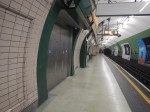
Note.
- The blue hoardings have gone.
- The decorations appear finished.
- There are a set of locked fire-doors in the centre of the platforms. Where do they lead?
- The signs by the doors, have big white spaces, which cry out for graffiti or direction signs.
It all fits with Crossrail opening within a year as I wrote about in Crossrail Service To Reading On Track For December Opening.
Many of the extra passengers will head for the Underground, so complete their journeys. So opening Crossrail to Reading with a step-free connection to the Bakerloo Line makes sense.
Crossrail Service To Reading On Track For December Opening
The title of this post is the same as this article on New Civil Engineer.
In Will Crossrail Open To Reading in 2019?, I analysed this possibility, after it was raised in the January 2019 Edition of Modern Railways.
I decided it would be a good idea, with the major benefit of making Paddington a station without any trains running on diesel.
Will Crossrail Open To Reading in 2019?
The latest rather dodgy date for the opening of Crossrail’s Core Tunnel is Autumn 2019.
In the January 2019 Edition of Modern Railways, there is an article, which is entitled Crossrail Can’t Commit To Autumn Opening.
This a paragraph from the article.
TfL also says that it is exploring with DfT the possibility of beginning to operate Reading to Paddington services ahead of the completion of the Elizabeth Line to help provide a boost in revenue.
This is a very interesting possibility.
How Much Work Is Still To Be Done To The West of Hayes & Harlington?
This is the key factor as to whether Western Branch of Crossrail can be opened.
- The biggest problem is that Class 345 trains can’t run to Heathrow as there are signalling issues to eradicate.
- There are also several stations, that need to be completed.
There is no work-round to the first problem, but trains seem to be able to call at the unfinished stations.
It would appear, that for TfL’s proposal to be taken fully forward, the signalling issues to and from Heathrow, must be dealt with.
The stations can be finished later.
The Current Proposed Crossrail Service To Reading And Maidenhead
These are the proposed services shown on Wikipedia, so they could have been updated.
Reading To Paddington – Limited Stop
This service will be run at two trains per hour (tph) in the Peak with no trains in the Off-Peak.
Stops are Twyford, Maidenhead, Slough, West Drayton and Ealing Broadway.
Reading To Paddington – All Stations
This service will be run at two tph all day.
The service will call at all stations except Hanwell and Acton Main Line.
Maidenhead To Paddington
This service will be run at two tph all day.
The service will call at all stations except Hanwell and Acton Main Line.
A Summary Of Peak/Off Peak Calls
Adding these service up, gives the following numbers for Peak and Off Peak calls in trains per hour (tph)
- Reading – 4,2
- Twyford – 4,2
- Maidenhead – 6,4
- Taplow – 4.4
- Burnham 4,4
- Slough – 6,4
- Langley – 4,4
- Iver – 4,4
- West Drayton – 6,4
- Hayes & Harlington – 4.4
- Southall – 4,4
- Hanwell – None to Reading/Maidenhead
- West Ealing – 4.4
- Ealing Broadway – 6,4
- Acton Main Line – None to Reading/Maidenhead
- Paddington – 6,4
Note.
- 4,2 means 4 tph in the Peak and 2 tph in the Off Peak.
- It would appear that all stations except Reading and Twyford have at least four tph all day.
- Stations between Hayes & Harlington and Ealing Broadway will get another six tph all day going to Heathrow.
- Acton Main Line station will get another four tph all day going to Heathrow.
This gives the following frequencies.
- Reading – 4,2
- Twyford – 4,2
- Maidenhead – 6,4
- Taplow – 4.4
- Burnham 4,4
- Slough – 6,4
- Langley – 4,4
- Iver – 4,4
- West Drayton – 6,4
- Hayes & Harlington – 10,10
- Southall – 10,10
- Hanwell – 6,6
- West Ealing – 10,10
- Ealing Broadway – 12,10
- Acton Main Line – 4,4
- Paddington – 12,10
I can draw these conclusions from the figures.
- Every station has a good service from Crossrail.
- But could Reading and Twyford have another two tph in the Off-Peak to make the services four tph all day?
- Paddington station would need perhaps two or three platforms dedicated to Crossrail to handle twelve tph.
- The maximum frequency of 12 tph should be easily handled with conventional signalling and could be increased with modern digital signalling.
It looks like running the Western services of Crossrail from Paddington could be a possibility.
Consider.
- The Reading and Maidenhead services will be run on routes with mainly conventional signalling.
- The Class 345 trains, which each can hold 1,500 passengers would give a massive capacity boost to the outer Crossrail stations.
- Heathrow services can be run with Class 345 trains, when the signalling problems are solved.
- Higher frequencies to and from Paddington may enable trains to provide a better interchange with branch line services, at West Ealing, Slough, Maidenhead and Twyford.
But I think that separating these services initially from Crossrail will have substantial operational and development benefits.
- Paddington to Reading is essentially a self-contained railway, with a major branch to Heathrow and four small branch lines worked by diesel shuttle trains.
- The route, with the exception of the Heathrow branch, has conventional signalling.
- The signalling problems of the Heathrow branch can be solved independently.
- The Western branches of Crossrail could be fully debugged before trains start running through the Core Tunnel.
I also wonder, if the route could be useful for mileage accumulation, driver training and certification of newly-delivered trains.
Is It Just About The Money?
The original Modern Railways extract said that the proposal was to help provide TfL with extra revenue.
It must bring in revenue and especially when the Heathrow Branch is working reliably to plan.
Faster Journeys
Modern Class 345 trains have the following advantages over the current British Rail-era Class 156 trains.
- They are slightly faster.
- They have better acceleration.
- They are modern trains designed for short dwell times at stations.
It would be very likely, that journey times between Paddington and Reading, will improve..
Passenger Behaviour
But passengers may change their behaviour .
- Will passengers use Crossrail as a lower-cost alternative to Heathrow Express?
- Will passengers use Crossrail as a faster alternative to the Piccadilly Line?
- Will passengers, going between Heathrow and the West and Wales, use Crossrail to and from Reading, with a change at Hayes & Harlingon?
- Will passengers on branch lines find the extra capacity helpful, when travelling to London or Reading?
In addition, as I said earlier, I think opening Paddington to Reading early,, could make finishing the Crossrail project easier.
If nothing else, it shortens the to-do list!
GWR Might Object
Will GWR object to losing their local services between Reading and London to Crossrail?
Consider the following issues.
Heathrow Express
GWR have taken over the lucrative Heathrow Express.
- Heathrow Express will be run using 110 mph Class 387 trains in an Airport Express configuration.
- Will these trains be less of a block on the line, than the 100 mph Class 332 trains currently running the service?
- Currently both Class 332 and Class 800 trains take nine 9½ minutes to go between Paddington and Heathrow Airport Junction.
Perhaps GWR could squeeze in extra trains, by replacing the Class 332 trains with faster Class 387 trains?
The more trains they could squeeze into Paddington, the larger their revenue.
Reading, Bedwyn and Oxford Services
I am not sure, but it does appear that GWR services to places like Bedwyn and Oxford will in future be run using the new five-car Class 802 trains.
- The trains will surely use electric traction on the fast lines to Paddington.
- Will passengers going between Bedwyn/Oxford and stations between Reading and Paddington, be happy to change at Reading?
As it appears that Bedwyn/Oxford services might not need to use the slow lines, these will be used exclusively by Crossrail and the occasional freight.
Could Bedwyn And Oxford Services Be Combined?
There is also the possibility that to save paths on the fast lines between Reading and Paddington, that hourly Bedwyn and Oxford services could be combined and split at Reading.
- GWR already splits and joins Class 387 trains at Reading.
- Class 800/802 trains are designed to be split and joined quickly.
- Timings to the two destinations are about the same, being around 75 minutes.
Two five-car Class 802 trains with one running to Bedwyn and one to Oxford might be a good idea. Especially, as it saves one high-speed path between Paddington and Reading and possibly a few trains.
It does look, that Oxford and Bedwyn services could be moved out of the way of Crossrail services.
Will There Be Enough Class 800/802 Trains?
In Huge Increase In Capacity On GWR As Final Class 800 Enters Traffic, I wrote that there are now only fifteen trains of a total fleet of 93 trains to be delivered.
I suspect that GWR can find enough trains to run Bedwyn/Oxford services to London.
Too Many Class 387 Trains!
But it does strike me that GWR will have too many Class 387 trains, if Crossrail takes over local services to Reading and Class 802 trains take over services to Bedwyn and Oxford.
Twelve Class 387 trains are being converted to take over Heathrow Express services, but that still leaves GWR with 33 trains to find a use for.
It seems like Greater Anglia’s twenty Class 379 trains, they could become homeless orphans.
Will The Class 769 Trains Get In The Way?
Original plans talked about using 100 mph Class 769 trains to back up the Class 387 trains, whilst twelve of these were updated to Heathrow Express standard.
But it appears now from Wikipedia and other sources on the Internet, that these trains will concentrate on the following services.
- Reading To Gatwick Airport
- Reading to Oxford
I can’t find any reference of them continuing to serve Paddington, so it looks like they should keep out of the way.
Serving The Henley And Marlow Branches
Henley-on-THames station on the Henley Branch Line and Bourne End station on the Marlow Branch Line are having their Peak services to London gradually withdrawn.
If Crossrail took over services between Reading and Paddington, the frequencies in the Peak at the interchange stations would be.
- Maindenhead for the Marlow Branch Line – 6 tph,
- Twyford for the Henley Branch Line – 4 tph
Two tph at each interchange station run limited stop to and from Paddington.
The trains will each hold 1,500 passengers.
Could it be that GWR feel that the increased frequencies and reduced journey times to and from Paddington mean that there is a lesser need to run a direct diesel service.
But I could see the following.
- A four-car shuttle train, which could be a Class 769 bi-mode, at two tph on the Henley Branch Line.
- Two tph on the Marlow Branch Line.
At least GWR have the trains to provide a service to match customer demand.
I also wouldn’t be surprised to see a radical plan for these branches.
No Diesel Running Into Paddington
Every train run by GWR and Crossrail, between Paddington and Reading, would use electric traction.
- Now that large numbers of Class 800/802 trains have been delivered, it can’t be long before the last InterCity 125 runs into Paddington on a regular service.
- Class 165 and Class 166 diesel trains will be refurbished and sent to the West Country.
- Bedwyn and Oxford services will be run by Class 800/802 trains.
In addition all GWR trains running into Paddington will be 125 mph units running on electricity.
What is that worth as a marketing hook?
Conclusion
It looks to me, that running a full Western Branch service for Crossrail could be a good move.
So will it happen in 2019?
I think it all depends on solving the signalling issues on the Heathrow Branch!
But I feel, it should be possible, otherwise TfL wouldn’t have suggested it!
Pedestrian Tunnels In London’s Transport System
I take particular interest in pedestrian tunnels, as I believe properly designed tunnels can be a solution to improving access to stations.
This list will be extended as I photograph more.
Bank – Bank And Monument Escalator Connection
I still think of this tunnel, as an escalator connection, as that was how it was marked on the tube map in the 1950s.



It is two escalators down a walk between the Docklands Light Railway platforms and then two escalators up at the other end.
Verdict – The connection is being upgraded.
Bank- Central To Northern Interchange Tunnel
This is the shortest way from the Central Line to the Northern Line.
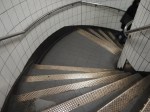
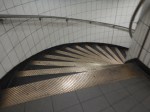
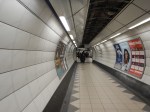

It does involve a descent of a circular staircase.
When the Bank station upgrade is complete this route will be replaced by an escalator connection between the two lines.
This visualisation shows the connecting escalators.
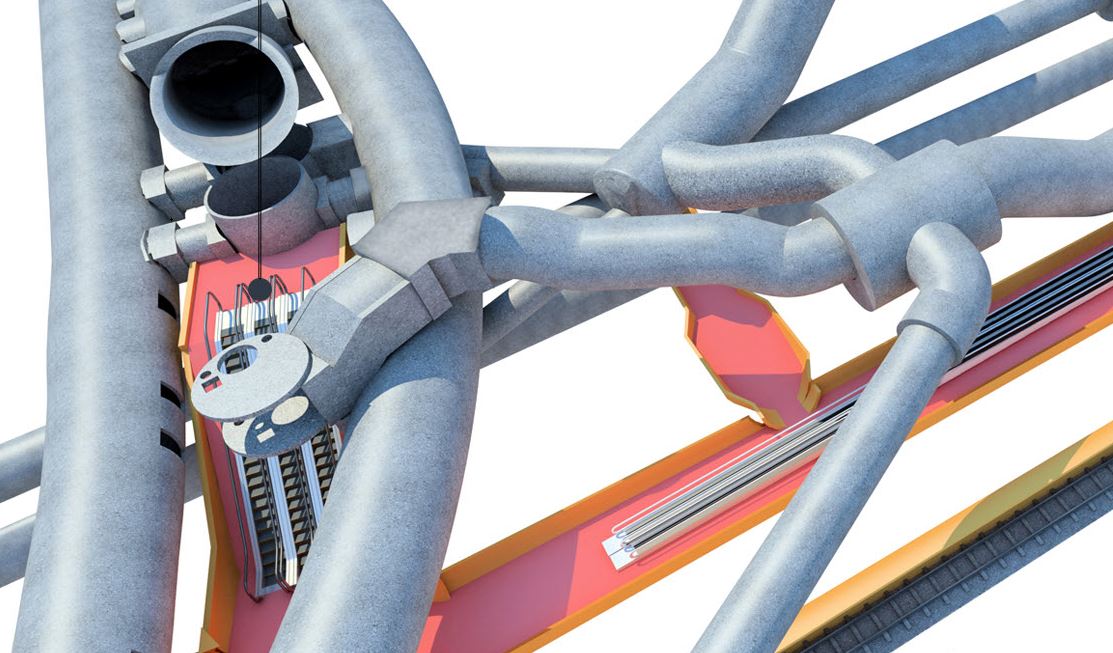
Note.
- The two wide highest level tunnels are the Central Line.
- The infamous curved Central Line platforms,create a large gap to mind.
- The two mid-level crossed tunnels are the existing Bank and Monument Escalator Connection and the Waterloo & City Tunnel.
- The four narrower lowest level tunnels are from bottom to top; the Southbound Northern Line, a new tunnel with a travelator; the old Southbound Northern Line tunnel and the Northbound Northern Line tunnel.
- The old Southbound Northern Line tunnel will become a passenger walkway.
Poking through all this spaghetti are the three escalators connecting the Central Line level with the Northern Line level.
Verdict – This connection will become much better.
Bank – Waterloo & City Inclined Travelator
The inclined travelators that link the Waterloo & City Line platforms and the main station entrances around Bank junction, are unique on the London Underground.
There are other travelators, but no others are inclined.


Verdict – I wonder why there are no others, as this pair seem to work very well.
Bank – Waterloo & City Tunnel
This tunnel connects the Waterloo & City Line platforms at Bank station to the central tunnel at Bank station.
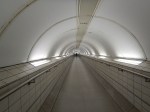
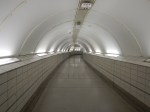

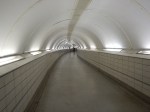
Verdict – It is a linear oasis in an otherwise dingy and cramped station.
Bond Street – Northern Entrance Tunnel
This new tunnel connects the new Northern entrance at Bond Street station to the platforms.


Incidentally, I’d arrived at Bond Street station through the main entrance and it was an awfully overcrowded scrum. The Northern entrance was quiet, as the pictures show.
The entrance is steps or a lift between the street and its own gate line and then a well-lit wide passage to the escalators.
In future, it will link to a wide tunnel to the Western end of the Crossrail platforms at the station.
It is much better way to enter Bond Street station.
Verdict – London and other cities with underground railways, need more new station entrances like this.
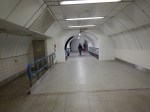
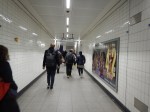
Green Park – Interchange Tunnel
This tunnel connects the Jubilee, Piccadilly and Victoria Lines at Green Park station.
The opening dates of the three lines, through the station were.
- Piccadilly Line – 1906 – Modernised in the 1930s with escalators.
- Victoria Line – 1969
- Jubilee Line – 1979
Since 1979 the station has been continually improved and is step-free.
This map from carto.metre.free.fr shows the lines at Green Park station.
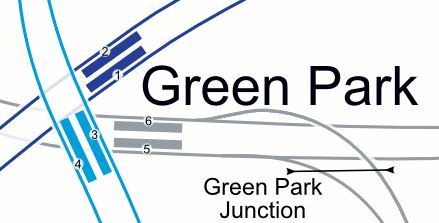
Note that the Jubilee Line is below the other lines and when the extension was built, it was a radical change to what was originally planned. The lines to the right lead to Charing Cross station and those going South to Westminster station.
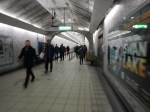
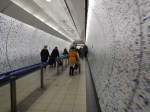

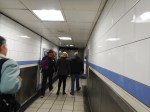

The interchange tunnel is long and usually very crowded. I had an incident recently, where I was walking slowly to the Victoria Line and a group of tourists all with four-wheeled cases, were nudging me to go faster. When we all got to the steps at the end, there was an enforced slow down.
Verdict – I avoid interchanging at Green Park like the plague.
Kings Cross – Eastern Tunnel
This tunnel runs which used to be part of the access to the old Kings Cross Thameslink station, runs from East of Kings Cross station and then has access to the main tunnel connecting the Northern, Piccadilly and Victoria Lines.

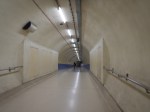

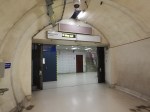

It has partial escalator access at the Eastern end, where the buses from Islington and the East stop outside the old station entrance. Although getting buses to the East mens crossing the busy Pentonville Road.
Verdict – Needs improvement
Kings Cross – Interchange Tunnel
This tunnel connects the Eastern Tunnel at Kings Cross to the escalators and lifts that lead to the Northern ticket hall Kings Cross St. Pancras tube station. On the way is connects to the Victoria, Piccadilly and Northern Lines.


It is a long walk, especially, if you have accessed it, as I often do, from the Eastern Tunnel which is convenient for buses from Islington and Dalston.
Verdict – Too long and boring
Kings Cross – St. Pancras Tunnel
This tunnel connects St. Pancras station to the Northern ticket hall at Kings Cross St. Pancras tube station.
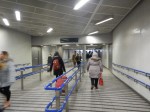
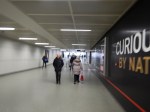

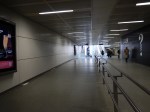
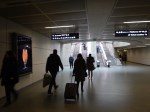
It is a wide, comfortable tunnel with a double handrail down the middle.
Note that the middle picture shows the connection to the next tunnel.
Verdict – Useful and a better walk than the surface alternative in cold or wet weather.
Kings Cross – Pancras Square Tunnel
This tunnel connects St. Pancras Square to the underground tunnel, that links St. Pancras station to the Northern ticket hall of Kings Cross St. Pancras tube station.
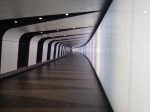
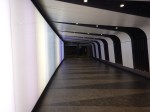
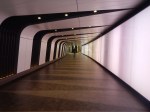

It is a good example of how to create a tunnel.
It has up and down escalators at the St. Pancras Square entrance.
Verdict – Good design and a pleasant walk.
Knightsbridge – Northern Exit Tunnel
This tunnel at Knightsbridge station was built in 2010 to connect the new entrance on the North side of Knightsbridge.


It looks to me that Transport for London had to make do with less space than they needed.
Verdict – Rather narrow and utilitarian.
Paddington – Bakerloo Line Link
This project to create a pedestrian link between the Bakerloo Line and Crossrail at Paddington is currently being built.
- It will be one hundred and thirty metres long.
- It will be twenty-five metres below the Paddington station concourse.
- The design uses a route to avoid existing station facilities.
- The tunnel is being built without major disruption to Bakerloo Line passengers.
- It will have lifts and escalators at both ends.
- The tunnel will handle five thousand passengers per hour in the Peak.
In August 2016, I wrote Paddington Is Operational Again, which describes the tunnel in detail.
Verdict – I have a feeling that this could be one of the most impressive parts of Crossrail.
I can’t wait for this tunnel to open.
South Kensington – Exhibition Road Pedestrian Tunnel
The Exhibition Road Pedestrian Tunnel at South Kensington station is unique in London, as it was built in 1885 and it is Grade II Listed.
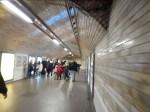

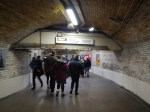
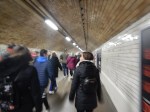
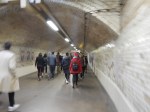
As the pictures show, it can get very busy.
Verdict – A Victorian idea, that hasn’t been copied much.
Tottenham Court Road – Interchange Tunnel
This tunnel connect the Central and Northern Lines at Tottenham Court Road station.
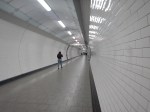


It is a bit lacking in colour to my liking. But at least there is some of Eduardo palotzi’s tiles at one end.
Verdict – Bland and too long.
Victoria – New Tunnels
Victoria station has had a new entrance at Cardinal Place and a lot of new tunnels to sort out the poor connectivity, added in the last couple of years.

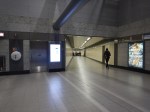


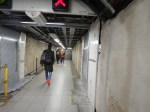
As the pictures show, not all the tunnels are finished.
Verdict – Victoria is no longer a station yo avoid
Waterloo – Interchange Travelator
This map from carto.metro.free.fr shows the Underground lines at Waterloo station.
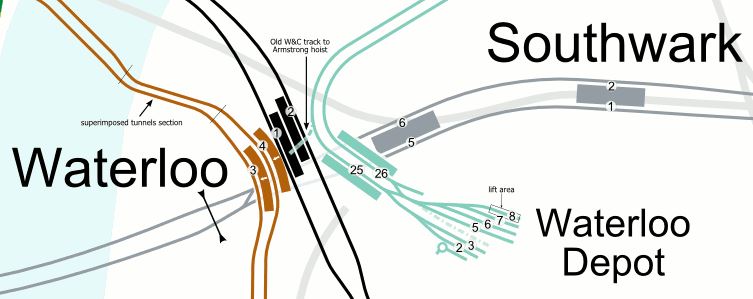
Note the large separation of the platforms of the Jubilee Line and those of the Bakerloo and Northern Lines.
The solution was to install a travelator, when the Jubilee Line Extension was built.


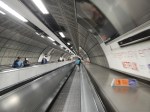
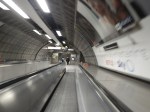
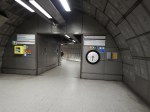


Although expense wasn’t spared on the project, I think we would give it a more decorative lining today.
Verdict – It works.
Whitechapel – Refurbished Overground Staircases
There are two staircases between the District/Hammersmith & City Lines and the East London Line, that are being refurbished for Crossrail.
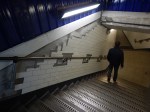
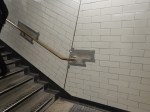
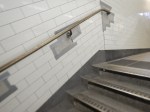
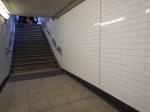
It looks like the work is of a high quality and that the old rails have not been replaced.
Verdict – These were scruffy tunnels a couple of years ago.
Summing Up
Some tunnels are obviously better than others, but what surprised me, was how well the Exhibition Rpad Tunnel to the museums coped with large numbers of passengers.
Perhaps, the Victorians got it right, as some of the best tunnels in my examples are the wider ones.
Comparing the Northern Exit Tunnel at Knightsbridge with the Northern Entrance Tunnel at Bond Street, shows how a wide tunnel and entrance, built with a lift, is a much better solution, than a narrow tunnel and entrance, without a lift.
The only narrow tunnel, that seems to work well is the tunnel connecting the Waterloo & City Line to the main Bank station complex.
But this tunnel is well-lit and I suspect tends to have passengers going the same way most of the time.
It also appears that recent tunnels like those at Bond Street and Victoria, are much better than those built about ten years ago, like the tunnel at Knightsbridge.
The Future
After Crossrail, London has a number of large station projects in the pipeline, some of which will require new connecting tunnels for passengers.
- The upgrading of Bank station is underway, where tunnels are being dug and escalators, travelators and lifts and being installed.
- The upgrading of Knightsbridge station is underway, but this will be simpler and I don’t think the upgrade includes more tunnels.
- The upgrading of Camden Town, Holborn and Walthamstow stations are in the planning stage. All will probably involve creating a new entrance connected to the existing platforms with lifts and escalators, but no long tunnels.
- Oxford Circus station is likely to be the subject of a major upgrade.
- Euston and Euston Square stations are being upgraded for the arrival of High Speed Two and there will be new tunnels to dig, between the two stations.
There are also possible new lines to consider, which may or may not be built.
- Bakerloo Line Extension
- Crossrail 2
- Docklands Light Railway to Thamesmead
- Docklands Light Railway to Euston, St. Pancras and Victoria.
All will be built with lots of entrances and exits, and interchanges with existing lines, so it is likely, there will be quite a few connecting tunnels.
Conclusion
I think that three tunnel projects will define a lot of the thinking about pedestrian access in the future.
- The Northern Entrance Tunnel at Bond Street, which surfaces in a commercial development.
- The Paddington Bakerloo Line Link, which appears to be setting new standards of design and construction.
- The narrow well-lit tunnel at Bank.
Could we see lessons learned with these newly-built tunnels applied to projects like Oxford Circus and Euston stations?
The Paddington Fiasco
Everybody is looking for a scapegoat for the problems at Paddington station, that is reported in this article on the BBC, which is entitled Paddington Station: Passengers Face Major Disruption.
Tony Miles of Modern Railways was on BBC Breakfast this morning and he explained what happened.
The Class 802 train was accumulating the 2,000 miles it needs before it can be accepted by Great Western Railway.
The trains are designed to be able to change from diesel to electric power and vice-versa at line speed.
This train was raising the pantograph to access the pverhead wires on a section of British Rail-era overhead wires at Ealing.
The pantograph is thought to have bounced and the overhead wires have broken and become entangled in the pantograph.
Modern electrification with its heavyweight gantries has each line wired separately, but according to Tony Miles, the British Rail lightweight system, means if one comes down, they all fail.
I should add, that several times in the last ten years on the East Coast Main and Great Eastern Main Lines, I have been on trains that have been stranded by failed overhead wires.
In addition, over the last few years, it has been a nightmare travelling to Ipswich, as Network Rail have been renewing the overhead wires to a modern standard.
There are still many miles of this sub-standard British Rail-era overhead wiring all over the country.
It should all be replaced with new modern systems.
There is a problem though with the new modern electrification systems. They are ugly and many believe they are totally out-of-place in the countryside.
There is also the problem caused by the disruption, when the old systems are removed.
Conclusion
This sub-standard overhead electrification should have been removed years ago.
A New Country End Concourse At Paddington
Paddington is an annoying station. I’d come in to Paddington, on the Parliamentary service from South Ruislip station, that I wrote about in A Train Of My Own and I had to walk from platform 14 at the far end of the station to the front concourse and then go back again to get the Circle/Metropolitan Line trains to Moorgate for coming home.
There is a back stairs, but it is difficult to find and it would not be idea for passengers with heavy cases wanting the Circle/Metropolitan or a taxi.
When Crossrail opens, it will be easier, as I’ll just change at Reading and come straight through to Moorgate.
Or will it?
Reading will only have four trains per hour (tph) in the Peak and half that in the Off Peak.
It surely needs at least six tph all day and preferably all night as well!
This document on the Network Rail web site is entitled Open For Business and subtitled with this.
Opportunities for third parties to fund, finance or deliver improvements on Britain’s railways September 2018
One of the projects mentioned is entitled Paddington Station Country End Concourse. This is all that is said.
Provision of country-end concourse and platform extensions to reduce station congestion.
It should have these features.
- Escalators and lifts to each pair of platforms at the station, including Crossrail and the Circle and Metropolitan Lines.
- A short level walk to the taxis.
- It should be wider than the bridge across all platforms at Reading station.
- A massive Premier Inn or similar on top
And I want it now!
Not 2030, if I’m lucky.
The hotel will never happen, as high development will block the view of the Brunel’s station and the Nimbys will stop it.
But it should!
 The Anonymous Widower