UK Hydrogen Train Demonstrator To Be Tested In 2019
The title of this post, is the same as that on this article on Railway Gazette.
This is the first two paragraphs.
A memorandum of understanding for the development of a hydrogen fuel cell demonstrator train was signed by leasing company Porterbrook and the University of Birmingham’s Centre for Railway Research & Education at InnoTrans on September 19.
Porterbrook is to provide an ex-Thameslink Class 319 25 kV 50 Hz/750 V DC third rail electric multiple-unit for the Hydro Flex project. The partners expect it to be equipped with a fuel cell system and ready for demonstration runs in mid-2019. It would retain the ability to use electrical power.
Action is certainly happening in the development of low-emission trains and it appears, that the train leasing companies are taking an active lead.
Rolls-Royce And Porterbrook Launch First Hybrid Rail Project In The UK With MTU Hybrid PowerPacks
The title of this post is the same as that on this Press Release from Porterbrook.
Porterbrook, Eversholt and the other train leasing companies have a problem, that can be turned into an opportunity to make money in a way, few will find unacceptable.
There are several fleets of trains in the UK, that are reasonably new and have plenty of life left in their basic structure, running gear and traction equipment.
But compared to modern rolling stock, they are like a twenty-year-old BMW, Jaguar or Mercedes. Good runners and comfortable, but not up to the standards, passengers, rail operators, rail staff and environmentalists expect.
So the train leasing companies are looking for ways to update their fleets, so that they can continue to earn money and satisfy everybody’s needs and aspirations.
Class 769 Train
Porterbrook started this innovation by taking redundant Class 319 trains and converting them into Class 769 trains, so they could be used on lines without electrification.

The picture shows one of Northern’s Class 319 trains.
Thirty-five of these trains have been ordered. So far, due to design and testing issues none have been delivered. Hopefully, as testing has now started, some will be in traffic before the end of the year.
This project could create upwards of fifty much-needed four-car bi-mode trains for running on partially-electrified routes.
Class 321 Hydrogen Train
Eversholt have also teamed up with Alstom to create a hydrogen-powered version of their Class 321 train.
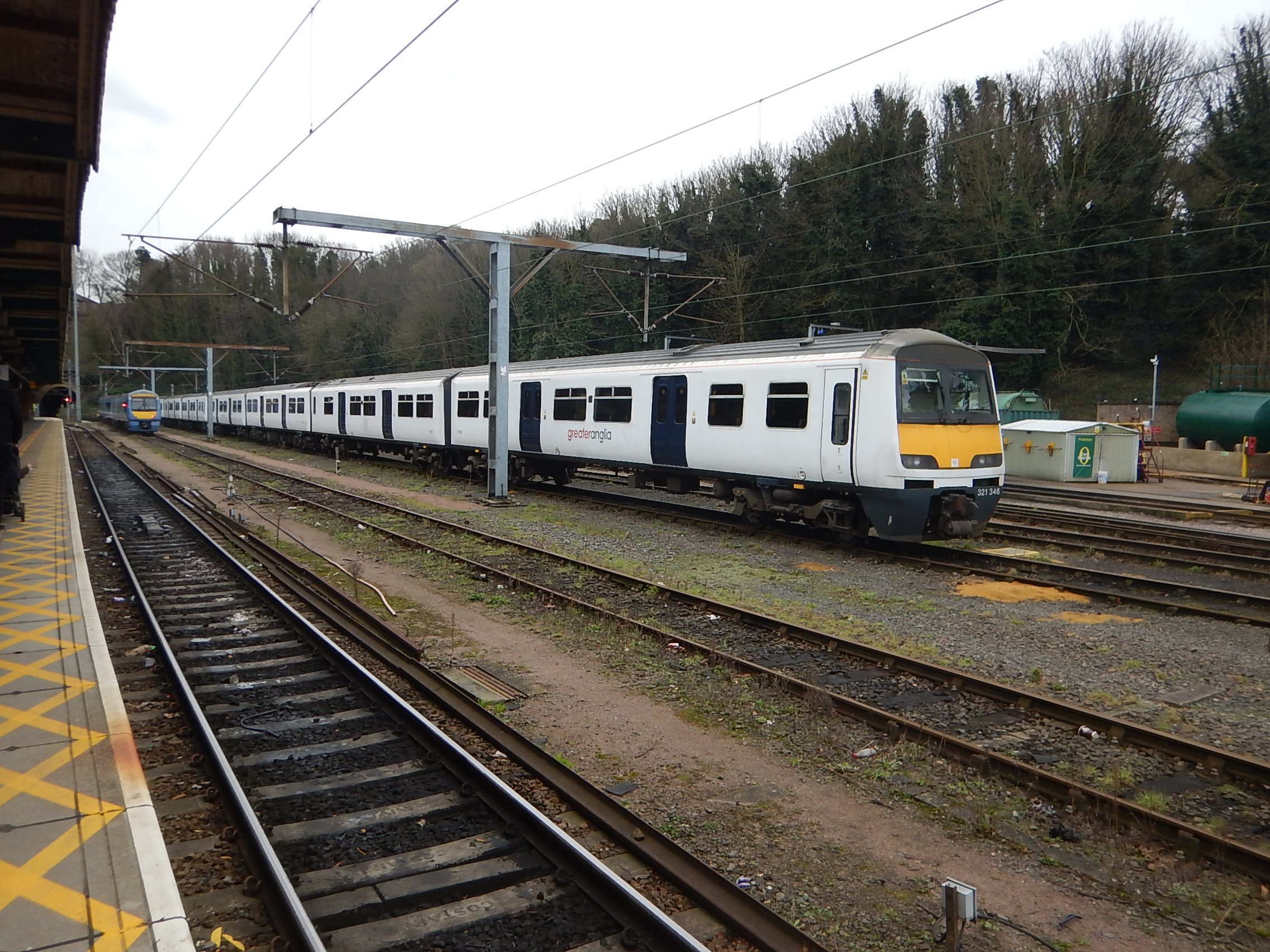
This project could create around a hundred four-car 100 mph, zero-emission electric trains, for running on routes with no or only partial electrification.electrification.
The Four-Car High Speed Train
Everybody loves High Speed Trains and Scotrail and Great Western Railway are taking a number of them and creating four-car quality trains to increase their rolling stock.
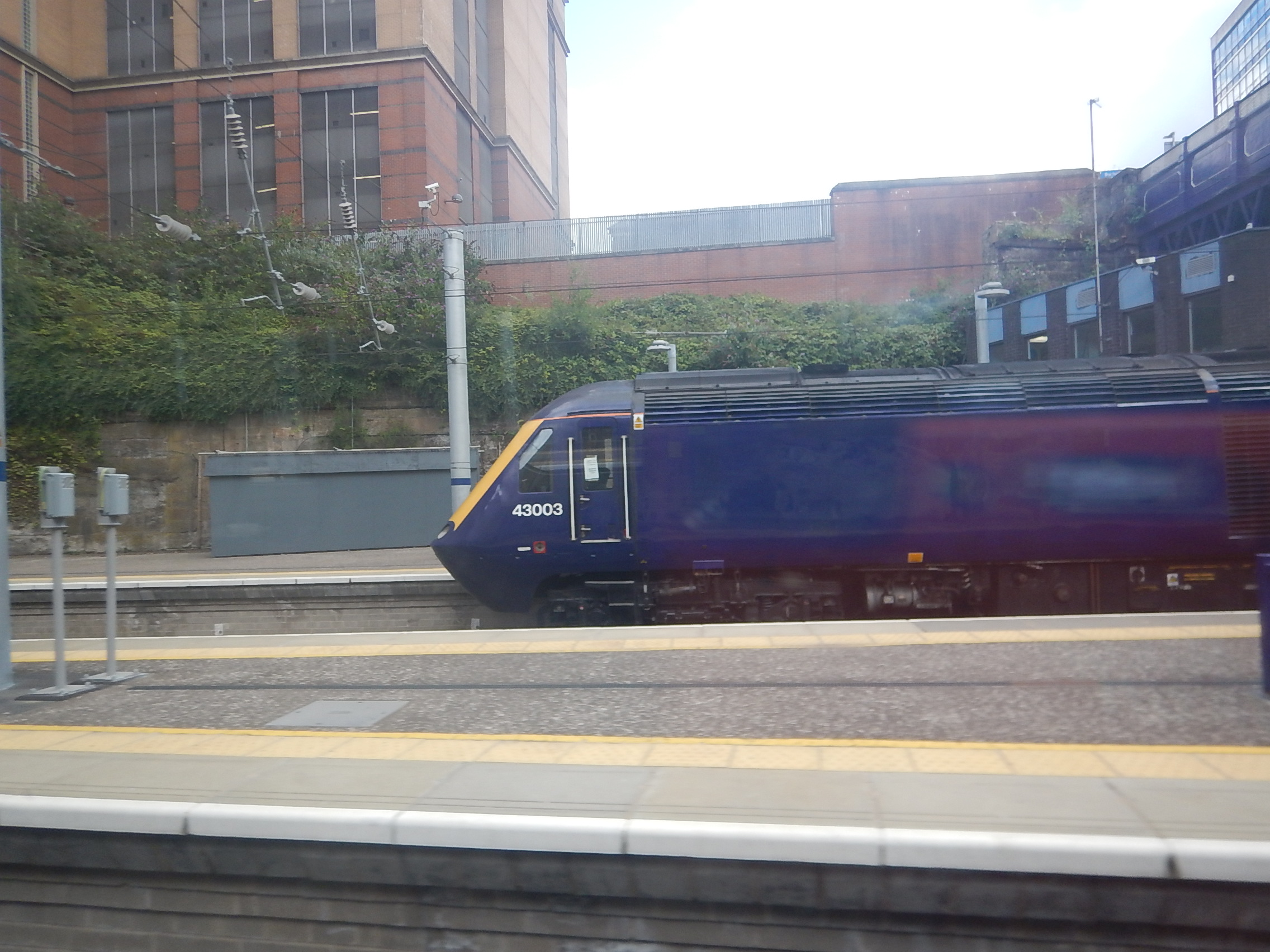
The picture shows a High Speed Train under test in Glasgow Queen Street station.
They are already running in Cornwall and they should be running in Scotland before the end of the year.
Updating The Class 170 Trains
The Press Release announces Porterbrook’s latest project and gives this picture.
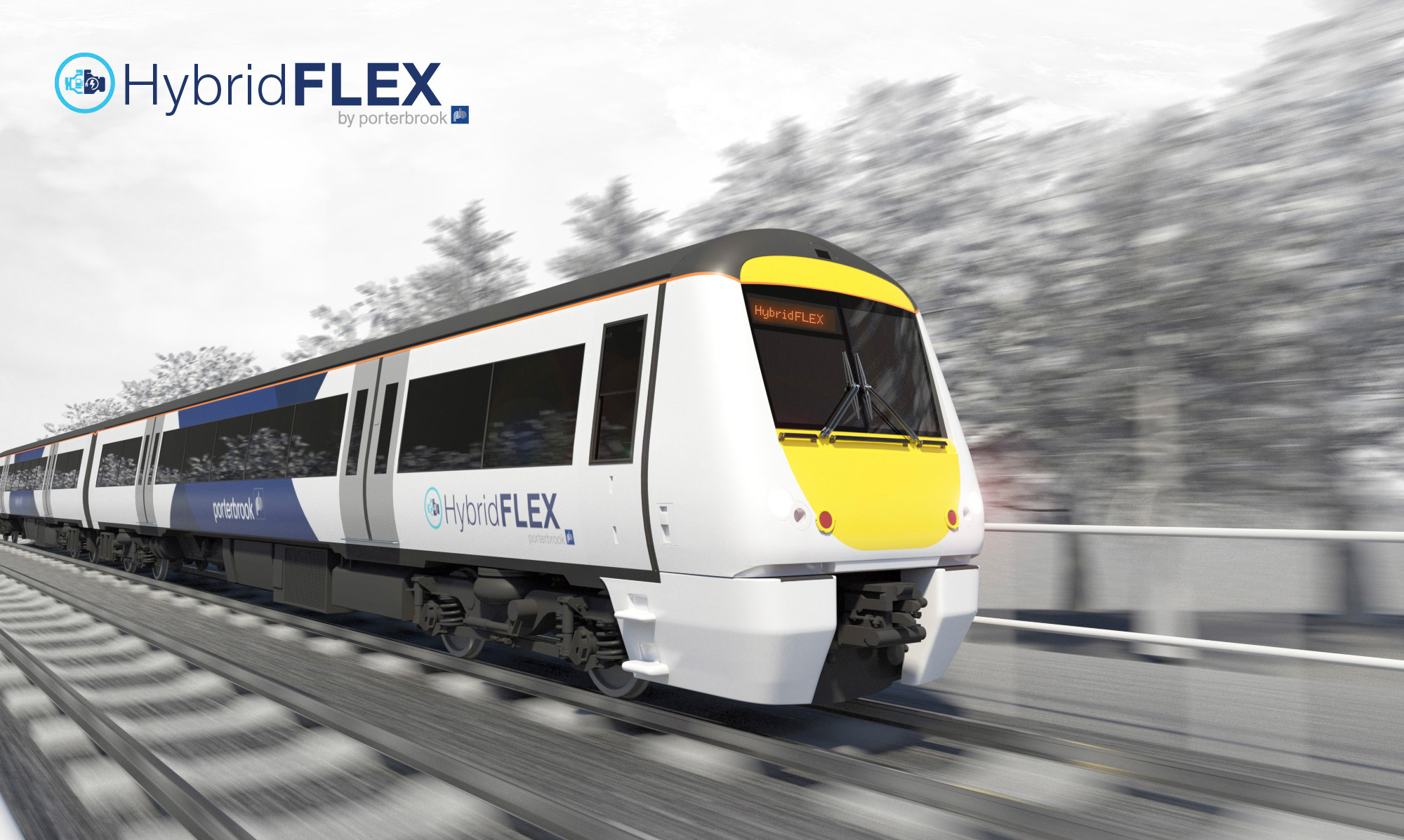
There are 122 Class 170 trains on the UK rail network, which were built around twenty years ago. There are also nearly a hundred other Class 168, 171 and 172 trains with a similar design.
They are 100 mph trains, that are diesel-powered and some are used on long distances.
As a passenger, they are not a bad train, but being diesel, they are not that environmentally friendly.
The Class 172 trains, which are currently running on the Gospel Oak to Barking Line, would surely be a much better train with a smoother electric transmission, that had regenerative braking. Although, as they have a mechanical transmission, rather than the hydraulic of the other Turbostars, this might not be possible.
On the other hand, West Midlands Trains will soon have a fleet of thirty-five Class 172 trains of various sub-types, so fuel savings could be significant.
This is from the Press Release.
Rolls-Royce and Porterbrook, the UK’s largest owner of passenger rolling stock, have agreed the delivery of MTU Hybrid PowerPacks that can convert Class 168 and Class 170 ‘Turbostar’ DMUs from diesel-only to hybrid-electric operation. Hybrid technology allows for the cleaner and quieter operation of trains in stations and through urban areas.
As I understand it, the current hydraulic traction system will be replaced by an electric one with a battery, that will enable.
- Regenerative braking using a battery.
- Battery electric power in urban areas, stations and depots.
- Lower noise levels
- Lower maintenance costs.
This should also reduce diesel fuel consumption and carbon emissions.
Conclusion
The good Class 170 trains, are being improved and should give another twenty years of service.
How many other projects like these will surface in the next few years?
Brush Traction Signs Contract With Skeleton Technologies For Modules For Class 769 Trains
The title of this post is the same as that of this article on Rail Advent.
This is the first two paragraphs
Skeleton Technologies has announced that they have signed a contract with Brush Traction to supply SkelStart Engine Start Modules for all Porterbrook Bi Mode Class 769 trains.
The high-power density, safe and tiny size of the 24V SkelStart module were decided over other solutions during the feasibility stage to start the Auxiliary Power Supply (APS) units. Simply put, there was not enough room available for another solution.
The article then gives a few brief details on the SkelStart
Who are Skeleton Technologies?
They have a web site at www.skeletontech.com and there is a brief description on the home page.
Under a title of.
Powering Energy Savings With Ultracapacitors
There is this description.
Skeleton Technologies’ patented curved graphene is changing the world of energy storage.
Our superior technology enables us to deliver ground-breaking energy storage solutions with market leading power and energy density. Our products are used across industries from automotive to aerospace and everything in between.
Curved graphene? I know about graphene, but I’d never heard of it being curved.
There is a Press Release on the Skeleton Technologies web site, which is entitled Skeleton Technologies Signs Contract with Brush Traction to Supply Ultracapacitors for All BMU Class 769 Prime Movers.
This gives a lot more details, including this brief description of size and weight.
The 24V SkelStart has the size of a regular car battery and with its 8kg weight, it solved the space restriction we had.
It looks to be a very simple application of a capacitor with the ability to hold a lot of charge.
One of their products is called a SkelMod 170V 53F Ultracapacitor Module.
The datasheet gives these details.
- Voltage – 170 Volts
- Capacitance – 53 Farads
- Maximum Stored Energy – 0.2127 kWh
- Weight – 77 Kg.
That is a lot of energy for a capacitor.
A 50 kWh capacitor suitable for a bus or train, with this energy density would weigh eighteen tonnes, so it’s a bit impractical for this type of application at present.
But who knows what will be possible in the near future?
Skeleton Technologies would already appear to have pushed capacitor design a long way.
Skeleton Technologies Are An Estonian Company
This surprised me at first! But why not?
An Aside
Somewhere in my past about the 1960s, I remember an electronic news item, where someone like AERE Harwell, had built a one Farad capacitor, that was house-sized. Noe we get 53 Farad in a suitcase.
Conclusion
I think we’ll eventually see supercapacitors big enough to replace lithium-ion batteries in a lot of applications.
Porterbrook Targets OffLease DMU Class 153s As ‘Capacity-Busters’
The title of this post is the same as that of an article in Issue 851 of Rail Magazine.
I wrote about my visit to the new Kenilworth station in Kenilworth Station – 1st May 2018.
I travelled between Coventry and Kenilworth stations in a well-turned out Class 153 train.
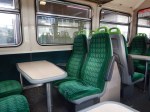
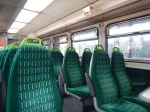
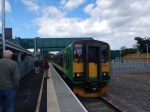
The pictures show it is no scrapyard special.
As the article says, Porterbrook own thirteen of these trains and they are looking at ways of using them profitably for a few more years.
The article suggests these uses.
- Reforming them as two-car Class 155 trains, which is how they were built.
- Inserting them into other DMUs.
- Converting them to luggage/cycle-carrying vehicles.
When I was at Oxenholme Lake District station on Monday, a Class 153 train, was being used to convert two-car Class 156 train into a three-car train, to increase capacity on the Windermere Branch Line.
Many of the Class 153 trains are due to be replaced in the next few years and as there are seventy in total, there will need to be a lot of good ideas.
Route Development
For a start, there is the job the single Class 153 train is doing at Kenilworth, which is route testing and development.
- Drivers are being trained on the route.
- Systems are being tested.
- Passengers have a train service, they can use.
On the Kenilworth route, it doesn’t matter if it is too small a train, as in a couple of months a ten-year-old Class 172 train should be available to double the capacity.
Stand-In Trains
East Anglia has a problem with trains being severely damaged in level-crossing accidents.
Pairs of Class 153 trains could be used as stand-in trains on many branch lines.
Network Rail Uses
Don’t underestimate the uses that Network Rail will find for the trains!
Conclusion
I think that some of the uses will e very innovative.
Capacity Crunch At Chester – Borderlands Line
The Capacity Crunch At Chester article in the July 2017 Edition of Modern Railways talked about the Borderlands Line.
The article says this about the line and the passenger service.
The line is currently worked by two ATW Class 150/2 Sprinter units, which do their best to maintain the clockface hourly frequency. The Wrexham-Bidston Rail Users Association told the Wales & Borders franchise inquiry performance is far from ideal, highlighting late running frequently leads to trains being turned back at Shotton, meaning they do not reach Bidston to connect with Merseyrail services to Liverpool and leaving lengthy gaps at intermediate stations in England.
The article then talks about electrifying the line, but Network Rail have indicated that this would cost £207million. Apparently, third-rail electriication now needs palisade fencing along the track.
Enter The Class 455 Flex Train
In The Class 319 Flex Units To Be Class 769, I commented on the report, that Porterbrook were also looking at converting Class 455 trains to bi-modes.
Consider.
- These trains could probably work Merseyrail’s tunnels, as they are closely related to the current trains.
- They have quality 2 x 2 interiors.
- They meet all regulations.
- Performance is similar to the current trains.
- They are four-cars.
- Porterbrook will have ninety-one trains to place, when South Western Railway replaces them with Aventras.
The only problem is that the interiors are very red, which might upset half of Merseyside.
But I think it is possible that we could see Class 455 Flex trains working the Borderlands Line.
- From Wrexham to Bidston, they would use their on-board diesel engines.
- At Bidston, they would change from diesel to third-rail electric power.
- From Bidston to Liverpool, they would join the queue of trains from the Wirral and go round the newly-rebuilt Loop Line.
I’m pretty sure, that if Merseyrail have signalled the Loop appropriately, that there would be enough capacity in the Loop to run two trains per hour (tph) between Wrexham and Liverpool.
Based on the following current timings.
- Liverpool Lime Street -to Bidston – 17 minutes
- Bidston to Wrexham – 1 hour
With a few performance tweaks, I suspect that a Class 455 Flex train could do the round trip in well under three hours.
So three trains could easily handle the current hourly service, but would give the following advantages.
- Direct access to Liverpool City Centre.
- Four-cars instead of two.
- A much better interior.
The only problem would be checking that the Class 455 trains would fit the tunnels in the Loop Line. But seeing, that the Class 455 trains, were built as a successor to the Class 508 trains used by Merseyrail, I suspect they fit.
Could Class 319 Flex Trains Be Used?
The reason I looked at Class 455 Flex trains first is that in a article in the June 2017 Edition of Modern Railways, which is entitled ‘319 Flex’ Units To Be Class 769, this is said.
The company reports considerable interest in the concept and expects further orders soon, while it is also considering transferring the concept to other rolling stock, such as Class 455 EMUs.
As Porterbrook will soon receiving around ninety of these trains from South Western Railway, these struck me as possibilities for the Borderlands Line.
If you look at Merseyrail’s current Class 507 and Class 508 trains, Class 455 trains and Class 319 trains, they all appear to have a similar 2.82 metre width and a 3.58 metre height.
So if Class 319 Flex trains could work the tunnels under Liverpool, what would this do to service on the Borderlands Line.
- Their 90 mph as opposed to 75 mph operating speed could bring the round trip under two and a half hours.
- Five trains would be needed for a 2 tph service.
- Wrexham to Liverpool times of under an hour and fifteen minutes should be possible.
- The better performance of the trains would allow extra stops to be made with ease.
- The trains can have First Class seats and fully-accessible toilets.
In Wales Orders Some Golden Oldies, I noted how Arriva Trains Wales are acquiring five Class 319 Flex trains as cover for the refurbishment of Class 150 and Class 158 trains on the Cardiff Valley Lines.
So once all of these diesel trains have been refurbished, will we be seeing the Class 319 Flex trains moved to the Borderlands Line?
Wales Orders Some Golden Oldies
This article on Global Rail News is entitled Arriva Trains Wales Invests In Bi-mode Class 319s.
These four paragraphs define the deal and why.
The Welsh Government and Arriva Trains Wales are investing in five Class 319 Flex bi-mode trains.
Due to arrive next year, the four-car trains will be leased from Porterbrook thanks to £1.9 million from the Welsh Government and £1 million from Arriva Trains Wales.
Arriva Trains Wales said the trains would likely be deployed on commuter services into Cardiff.
Introducing the 319s will allow Arriva Trains Wales to carry out work needed on its Class 150 and 158 vehicles to ensure they meet new accessibility standards.
This looks to me to be a sensible way to provide cover and also increase the size of the fleet.
Consider.
- The Class 769 train, to give the Class 319 Flex train it, its new official TOPS name, has been designed around the Manchester to Buxton route.
- Manchester to Buxton is as stiff as any route in the Cardiff Valley Lines.
- The trains can do 100 mph on 25 KVAC overhead electrification, so would be ideal for any partially-electrified routes.
- According to this article on the BBC, electrification reaches Cardiff in December 2018.
- The trains can do around 90 mph on diesel.
- Range is ten Manchester-Buxton round trips on a full tankfull.
- Modern Railways has reported the trains can change between diesel and electric modes on the move.
- Drivers have told me, that the brakes on Class 319 trains are superb. Will that be needed on descents into Cardiff?
In Riding In A Clean Class 319/4 Train, I describe a recent ride in one of the better examples, that could be converted for Wales.
The trains may be thirty-years-old, but they are based on Mark 3 coaches, as are the InterCity 125, so like certain actors and singers, they seem to keep on performing.
How Would The Bi-Mode Trains Be Used?
Arriva Trains Wales has the following trains currently working the Cardiff Valley Lines or that need to be converted to meet the latest regulations..
- 15 – Class 142 Pacer
- 15 – Class 143 Pacer
- 36 – Class 150 Train
- 24 – Class 158 Train
The Pacers can in part be ignored, as I suspect they’ll be going to the scrapyard, when the next franchise starts. But Arriva Trains Wales will need fifteen four-car trains to replace them, if they hit the cut-off date in the regulations.
The Class 158 trains were given a full refurbishment in 2010-2, as described like this in Wikipedia.
A complete refurbishment programme to provide the Class 158s with full ‘as new’ interiors took place between December 2010 and October 2012. Funded by the Welsh Assembly Government at a cost of £7.5m, work completed includes interior and exterior repainting, along with replacement of seating, wall coverings, carpets, lighting, luggage racks and toilet fittings. A passenger information system has been fitted, while selected seats have gained at-seat power sockets for mobile phones and laptops. Until this refurbishment, the fleet had seen only minor attention to its interior since a refit by Wales & West in the late 1990s, as well as having been only partially repainted into Arriva colours externally
So will these Class 158 trains need much more than attention to detail and a very good clean? As most seem to be based away from Cardiff, I don’t think we’ll see many Class 769 trains standing in for Class 158 trains. Unless of course Arriva Trains Wales wanted to see how a Class 769 train performs on a longer route.
The Class 150 trains are a totally different matter. In What Train Is This?, I rode in a superbly refurbished Class 150 train, that if standing in for a Class 172 train wouldn’t bring many complaints.
Much of the time on the Cardiff Valleys Lines, the Pacers and the Class 150 trains seem to be running as pairs to make four-car trains.
So five Class 769 trains mean that ten Class 150 trains can be released for updating.
It is worth comparing a Class 769 train with two Class 150 trains working as a pair.
- A Class 769 train, based on a Class 319/4 has a capacity of 50 First Class and 255 Standard Class seats.
- A Class 150 train has a capacity of 147 seats or 294 for a pair.
- The Class 769 train has a top speed of 100 mph on 25 KVAC overhead electrification.
- The Class 769 train has a top speed of just over 90 mph on diesel.
- The Class 150 train has a top speed of 75 mph.
- The Class 769 train has a higher power/weight ratio than the Class 150 train.
It would appear that a pair of Class 150 trains and a Class 769 train can be considered equivalent and with the right number of trains, the two types of train could work the Cardiff Valley Lines.
But the bi-mode Class 769 train has the advantage that it is faster and can run on 25 KVAC overhead wires.
On some routes the Class 769 train may actually reduce the number of trains needed.
Cardiff Central To Ebbw Vale Town
This route between Cardiff Central and Ebbw Vale Town stations uses the South Wales Main Line and the Ebbw Valley Railway.
If you look at the timetable, the trains take up to a few minutes over the hour, which must be an inconvenient time to use trains efficiently.
But eighteen minutes of the route are between Cardiff Central and Pye Corner stations, has perhaps fifteen minutes or so on the South Wales Main Line, with four tracks and an operating speed of 90 mph.
Given the superior power and speed, I suspect that the Class 769 trains can do a round trip in under two hours, even if they had to run on diesel on the South Wales Main Line.
This would mean only two trains would be needed to work an hourly service. Class 769 trains would be four coaches, as one size fits all!
Penarth To Rhymney
This route between Penarth and Rhymney stations uses the Rhymney Line.
If you look at the timetable, journeys both ways take around an hour and 16-20 minutes.
I think that three trains would be needed to work an hourly service.
Two factors slow the trains.
- There are eighteen stops along the route.
- From Bargoed to Rhymney, the line is only single track.
This extract is from the Wikipedia entry for the Rhymney Line.
In March 2007 the latest in a series of infrastructure improvements on the Valley Lines was announced, included lengthening of platforms between Rhymney and Penarth to allow Class 150 units to operate in multiples of 3 (6 cars). However, this is postponed indefinitely due to the sub-lease by the Department for Transport, to First Great Western, of the units that would have allowed this extra capacity.
Would four-car Class 769 trains be an adequate substitute for the planned three Class 150 trains working in multiple as a six-car?
If they were, this would mean that three trains would certainly work an hourly service with a substantial increase in capacity.
I wonder what times, well-driven Class 769 trains, with their hill-climbing abilities could do for the service on this line.
Bridgend/Barry Island/Cardiff Central To Merthyr Tydfil/Aberdate
These services are run in what appears to be an intricate diagram.
But as the Class 769 trains are faster and more capable than anything else running the routes, they should be able to deputise.
Could This Interim Pattern Emerge?
These routes could be run by Class 769 trains.
- Cardiff Central to Ebbw Vale Town
- Penarth to Rhymney
Conveniently, the two routes would need five trains.
By the end of 2018, it is predicted that the South Wales Main Line will be electrified, which would mean they could use electric power for some of the routes.
There might be small amounts of add-on electrification to ease changeover of mode.
- South Wales Main Line to Pye Corner
- Cardiff Central to Penarth
It might even be sensible to electrify the Vale of Glamorgan Line to give a second electrified route from Cardiff Central to Bridgend and serve Cardiff Airport.
Electrification of the lines in Cardiff would probably be much simpler than on some of the steep valley lines, but it would allow more Class 769 trains or similar to work the Cardiff Valley Lines efficiently.
But I did say this would only be an interim plan until perhaps 2020.
So Where Do CAF Come In?
CAF bring several things to this party.
- By 2020, CAF will have a fully functioning factory a few miles down the line at Llanwern, just to the East of Newport.
- CAF build trams, trains and tram-trains of all sizes and speeds.
- CAF are one of the world leaders in the application of energy storage to rail vehicles.
- CAF are not afraid to experiment or do Research and Development.
- CAF have a modular train concept called Civity, which in their data sheet claim is all things to everybody.
I believe that CAF can come up with a train with the following characteristics.
- Electric or diesel power.
- On-board energy storage.
- Regenerative braking.
- Lots of powered-axles.
- Four-cars
- 100 mph on electric power
- 90 mph on diesel power.
It looks very much like a modern Class 769 train with added battery power.
In fact the Class 769 trains will do all the specification development and route proving for CAF’s engineers.
So Where Do Porterbrook Come In?
Someone will have to finance the new trains for South Wales and they must be in prime position.
Similar systems can also be developed in other UK cities using Class 769 trains.
Conclusion
I have a feeling, that Network Rail have looked at electrifying the Cardiff Valley Lines and decided that it will be very difficult. Various commentators have suggested using trams.
What I have proposed is using bi-mode trains designed specifically for the Cardiff Valley Lines, that use electric power on and around the South Wales Main Line, diesel power to climb the hills and gravity and a bit of storage or diesel to come down.
I think that the purchase of five Class 769 trains will lead to an innovative solution from CAF to creating a world-class rail system in South Wales.
What Will Happen To The Class 319, Class 455, Class 321 And Cl;ass 317 Trains?
When I go to Walthamstow to have supper with my son, I regularly travel from Hackney Downs station in one of London Overground’s Class 317 trains.
For a metro train, some are unusual in that they still have the First Class compartment and spacious 2 + 2 seating in the rest of the train. Also, as some at one time used to work the Stansted Express service, they have multi-lingual safety instructions and luggage racks.
Like the Class 319, Class 321 and Class 455 trains, they are going to be replaced by new trains by their current operators.
So what will happen to the various trains.
The Class 319 Flex Train
Porterbrook, the ROSCO, who own the Class 319 and Class 455 trains have developed the Flex concept that can transform these classes into much-needed four-car bi-mode trains. We should be seeing Class 319 Flex trains under test by the end of the year.
As the Class 319 Flex train has now been given its own TOPS-number of 769, the powers-that-be must think it is a viable concept.
In Metro Development With Flex Trains, I describe how I believe Northern are going to use the Class 319 Flex trains in the North West in the Liverpool, Manchester and Preston triangle, to develop a world-class Metro network.
The Class 455 Flex Train
The applications of a Class 455 Flex train would probably be less than that of a Class 319 Flex train, as the trains are 75 mph third rail trains, as opposed to 100 mph dual-voltage units.
The Class 319 and its Flex version will travel on say the West Coast Main Line with ease, but the slower Class 455 train would be a rolling roadblock.
But because they have a high-quality 2 + 2 interior, they could find applications as much-needed four-car diesel multiple units.
The interiors are certainly some of the best on short distance suburban trains and I would rate them better than some stock delivered in the lst couple of years.
The Class 455 Flex Train And Pacer Replacement
Class 455 Flex trains would make a superb replacement for the dreaded Pacers.
- Class 455 trains were built to withstand the impact of a 24-tonne cement mixer truck falling from the sky. Try repeating the Oxshott accident with a Pacer.
- The Class 455 interior is comfortable and South Western Railway‘s fleet was fully refurbished around 2003.
- The Class 455 Flex train will have at least the performance of a Pacer.
- The Class 455 trains meet all the latest Rail Vehicle Accessibility Regulations.
- Could the Class 455 Flex train be given the same hill-climbing capability of a Class 319 Flex train?
- The Class 455 train is four-cars as opposed to the two-cars of a Pacer.
Ironically, the Pacers are a few years younger than the Class 455 trains. But then class is permanent! Or should that be Mark 3 coaches are permanent?
I think that Porterbrook are looking at converting the Class 455 trains for several reasons.
- They own ninety-one Class 455 trains, that will be released by South Western Railway.
- The quality interiors probably just need good cleaning and cosmetic repairs.
- The costs and rate of conversion are now well-known.
- The Pacers need to be replaced quickly.
It should be noted that the number of Pacers in service are as follows.
- Class 142 – Arriva Trains Wales – 15
- Class 142 – Northern – 79
- Class 143 – Arriva Trains Wales – 15
- Cl;ass 143 – Great Western Railway – 8
- Class 144 – Northern – 23
The only replacements on order are Northern’s 25 x two-car and 30 x three-car Class 195 trains.
That means that 140 two-car Pacers are being replaced by the same number of vehicles.
So there is a short term need for some quality trains. If all the Cl;ass 455 trains were converted that would add another ninety-one quality trains that could be used to replace Pacers.
The Welsh and Great Western Pacers are used far from any 25 KVAC electrification, so the inability to use electrification on a Class 455 Flex will be irrelevant. But both Wales and the West Country have lines with challenging gradients.
So if the Class 455 Flex train was designed to be able to handle the Manchester to Buxton test route, the trains could handle the Cardiff Valley Lines and the challenging lines in Devon.
Currently, the Class 455 trains have a very red interior, which would surely go down well in the Principality.
The 100 mph Bi-Mode Train
The rumoured large response to Porterbrook’s proposal for the 100 mph four-car bi-mode Class 319 Flex train, says to me, that there is a market for a train, with the following characteristics.
- 100 mph operating speed on electricity.
- Over 90 mph operating speed on diesel power.
- Four-car
Both the Class 321 and Class 317 trains could be modified to fit this specification.
Class 321 Flex Trains
Greater Anglia have around a hundred of these trains, which will be replaced by brand-new Aventras in the next couple of years.
- They were built in the late 1980s.
- They have a 2 + 3 interior.
- Class 321 trains can be modified for dual voltage.
- Thirty are being upgraded under the Renatus project, which involves new air conditioning and heating, seating and Wi-Fi.
- A new traction package with new AC traction motors and regenerative braking has been designed.
- They are owned by Eversholt Rail Group.
- The trains are probably very similar electrically to the Class 319 trains,
If needed, there must be scope to convert some of these trains to bi-mode using similar engineering to the Class 319 Flex trains.
I haven’t ridden in a Class 321 Renatus, but pictures on the web, indicate the train could have a high-class interior.
It would appear that with the Renatus treatment, the Class 321 trains could be transformed into a high class train.
The market would decide, if some were converted into bi-mode Flex variants.
Class 317 Flex Trains
Greater Anglia and London Overground have around seventy of these trains, which will be replaced by brand-new Aventras in the next couple of years.
- They were built in the early 1980s.
- They have a 2 + 2 interior, to a variety of standards, but mostly in generally good condition.
- Some have First Class compartments.
- Some were built for the Stansted Express and have luggage racks.
- All are 25 KVAC units.
- They are owned by Angel Trains.
- Plans exist for the fitting of a new traction package if required.
As with the Class 321 trains, there must be scope to convert some of these trains to bi-mode using similar engineering to the Class 319 Flex trains.
The Future
The four main train types , that I have have listed are all slightly different.
- Class 317 is a 100 mph, 25 KVAC overhead only, good 2 + 2 interior
- Class 319 is a 100 mph, dual-voltage train, average 2 + 3 interior
- Class 321 is a 100 mph, dual-voltage train, average 2 + 3 interior
- Class 455 is a 75 mph, 750 VDC third-rail only, good 2 + 2 interior
There are also smaller numbers of other types that could also be converted.
Different train types will be better suited to different markets.
I’ll list some of the markets in the next few sections.
Route Extensions
This is probably the simplest application of a Flex train.
Consider the new Bromsgrove station at the Western end of the Cross-City Line in Birmingham.
From May 2018, the station will have been electrified and new electrified services will start across Birmingham from Bromsgrove.
West from Bromsgrove it is under twenty miles to Worcester, which is getting a new station at Worcestershire Parkway.
Bromsgrove to Worcestershire Parkway would be well within range of a Flex train.
How many simple extensions to electric services could be created with a few Flex trains?
There could be quite a few and some might even be extensions to third-rail networks using Class 455 Flex trains.
Metro Development
In Metro Development With Flex Trains, I discuss how Northern are developing the Northern Electric network in the Liverpool, Manchester and Preston triangle, using a mixed fleet of electric and bi-mode Flex version of the Class 319 trains.
Various places in the UK have plans for Metros and where there is some electrification a mixed fleet of electric and bi-mode trains could be used to develop the metro.
The mixed fleet of electric and bi-mode Flex trains gives the train operator advantages.
- Passengers have a similar customer experience across the fleet.
- The Flex trains can go anywhere on the network.
- The electric trains can only work electrified lines, but as more electrification is added, they can take advantage.
- Flex trains can deputise for electric ones.
- If there is a problem with the electrification, the Flex trains can still get through.
- Drivers and other staff don’t have two very dissimilar train types to deal with.
- Maintenance must be simplified.
I feel that Class 319, Class 321 and Class 317 trains could all be offered in both electric and bi-mode Flex versions.
Several of the possible places where a Metro needs to be developed like Hull, Leeds, Middlesbrough, Newcastle, Sheffield and Stoke-on-Trent are in Northern territory, so for preference, Northern would probably use Class 319 trains, especially as they have the ability to cruise safely at near 100 mph on the West and East Coast Main Lines.
But there is only so many Class 319 trains, so I suspect Northern will have to look at other types.
A city that could benefit from the Flex approach is Leeds.
- There is a mix of electrified and non-electrified local lines from Leeds station.
- Some important local routes like Leeds to York and Sheffield are not fully electrified, but could be worked by a Flex train.
- Northern use five Class 322 trains in the Leeds area. These are very similar to Class 321 trains.
- Northern need some more stock for the electrified lines from the City and have brought in some Class 321 trains.
- Leeds station seems to me to have a platform capacity problem.
I feel that a few Class 321 Flex trains and some reorganisation of services so some ran back-to-back through Leeds station could be beneficial.
One point about a mixed fleet of electric and bi-mode Flex trains must be raised.
Suppose an operator is thinking of using a mixed fleet to create a local Metro around a City and that calculations say that to work the required service would need six electric and four bi-mode trains.
Would the operator perhaps buy five trains of each type and use one bi-mode as an electric train most of the time?
But surely, this would be inefficient as the bi-mode would be dragging its diesel power packs around all day.
But the bi-mode trains have an advantage, in that they can still operate if the electrification has failed.
They might also be able to rescue a stalled train and drag it back to the depot.
Diesel Multiple Unit And Pacer Replacement
The Rail Vehicle Accessibility Regulations are going to kill off a lot of diesel multiple units and especially the Pacers.
Operators with Pacers are going to need to act quickly and as I showed earlier in The Class 455 Flex Train And Pacer Replacement, a Class 455 Flex train would be a very able replacement.
- Similar performance.
- Four cars instead of two.
- The unmatched ride of the Mark 3 coach.
- Modern, comfortable high-quality interior.
- Full compliance with the accessibility regulations.
For operators with lots of Class 150 and Class 156 trains, which need to be refurbished, a Class 455 Flex train would be a very able deputy.
In some places, where two Class 150 trains work as a pair, replacing them with a single Class 455 Flex train, may give operational and capacity advantages.
The High Speed Parcel or Pallet Train
In The Go-Anywhere Express Parcel And Pallet Carrier, I proposed using Class 321 trains as HSPTs of High Speed Parcel or Pallet Trains. In the manner of all Mark 3-based trains, they would undoubtedly make an excellent fist of this job.
Both electric and bi-mode Flex versions could be used to give a go-anywhere fleet.
I suggested using Class 321 trains, as some of them have very basic interiors, so conversion would be less costly to parcel carriers than acceptable passenger trains.
Conclusion
The train refurbishing companies are going to be busy.
The real beauty of this approach, is that what trains get created will depend on what is needed and how much train operators are prepared to pay.
But there are also plenty of trains for most applications.
Cats are supposed to have nine lives, but that is nothing compared to a Mark 3 coach.
The Class 319 Flex Units To Be Class 769
This is the title of a short article in the June 2017 Edition of Modern Railways.
Giving the Class 319 Flex train, its own unique class number of 769, must say that Porterbrook, Northern, Network Rail and the Department of Transport, think that the bi-mode conversion of a Class 319 train is a viable project.
The article gives some new details about the trains.
- Northern have ordered eight units, which will be delivered before the end of May 2018.
- The first unit is at Wabtec’s Brush Traction facility in Louthborough.
- Completion of the design and the first load testing is plasnned before the end of May.
- The first unit is due to be completed with driver training underway, by the end of the year.
- Northern will get a total of thirty-two Class 319 trains, which probably include the eight Class 769 trains.
- Tri-mode functionality and dynamic mode changeover on the move are being considered.
- Full production rate is a Class 769 train every two weeks.
The Class 319 Flex train has definitely moved from concept to a real train.
The article finishes by saying that Porterbrook expects further orders soon, while it is also considering transferring the concept to other roiling stock, such as the Class 455 train.
Why Convert Class 455 Trains?
The Class 319 and Class 455 trains are very similar electrical multiple units based on Mark 3 coaches.
But there are a few differences.
- The Class 455 is third-rail only, whereas the Class 319 is dual-voltage.
- The Class 455 is a 75 mph train, whereas the Class 319 is a 100 mph train.
- South West Trains’ Class 455 trains have had an extensive refurbishment and are fitted with 2+2 seating.
- South West Trains planned to upgrade the traction package of the Class 455 trains, which would include new AC traction motors and regenerative braking. This article in Rail Magazine has full details.
A Class 455 Flex train could have the following specification.
- The updated 2 x 2 seating.
- The new traction package with AC traction motors and regenerative braking.
- 75 mph operating speed on both electric and diesel.
It could be a better financial proposition for both the leasing company and the train operator.
In The Class 319 Flex Train And Third Rail Routes, I looked at various third-rail routes that could be served with a Class 319 Flex train.
Some of these routes could be served by a Class 455 Flex train, instead of the Class 319 Flex train.
The article states that Porterbrook are expecting further orders and could it be, that the company have assessed the number of bi-mode trains required and found that a large proportion of the available Class 319 trains might need to be converted.
So creating a Class 455 Flex train for use in areas with third rail electrification, might be a prudent action.
South Western Railway, will have around ninety well-maintained Class 455 trains with the refurbished interiors going spare, so there is certainly no shortage of trains to convert.
South Western Railway And Class 455 Flex Trains
South Western Railway, themselves could have some uses for the trains.
I doubt that the trains would be acceptable running long distance services from say Waterloo to Salisbury, due to being designed as short distance commuter trains and the lack of a toilet and tables.
They would be ideal for the following local services.
- Running the hourly circular service from Salisbury to Chandlers Ford via Southampton, which has sections of electrified line.
- Existing lines like the Lymington Branch.
- Reopened lines like the Fawley Branch and the Ludgershall Branch.
- Perhaps running services on the Swanage Railway.
- New services like Portsmouth Harbour to Salisbury via Southampton and Romsey.
- Services on the Heart of Wessex Line.
In some places like the Lymington Branch, they would release Class 158/159 trains to boost services on the West of England Main Line.
Merseyrail And The Class 455 Flex Trains
In the June 2017 Edition of Modern Railways, Chris Stokes talks about the problems of running services between Bidston and Wrexham Central stations on the Borderlands Line. He concludes with the following.
So the operation of the route is very tight, but it appears to work quite well.
There has been talk of using battery trains on this route in place of an expensive full electrification, which would allow Merseyrail’s new Stadler trains to run the route in the following manner.
- At least two trains per hour (tph).
- Longer trains.
- Calls at proposed new stations on the route.
In an ideal world, the service would terminate at the Northern end of the line by going round the third-rail electrified Loop Line under Liverpool City Centre.
The Class 455 train appears on a brief look to be the same size as Merseyrail’s current Class 508 trains, so it should be possible to use the Liverpool Loop.
Chris Stokes has told me two things.
- The Class 455 trains, used redundant trailer cars from Class 508 trains, that were shortened for Merseyrail, so there can’t be much difference in the size of the Class 455 and Class 507/508 trains.
- The Wrexham service used to terminate at Birkenhead North station.
So it seems a better Northern terminus could be possible.
Ideally, the Loop Line would be used, but look at this Google Map of Birkenhead North station.
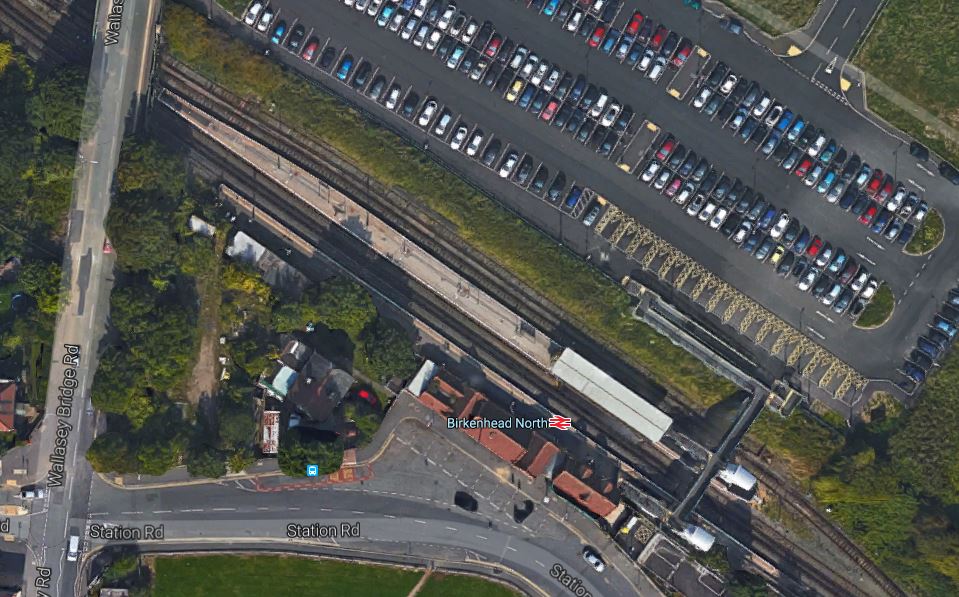
The Wikipedia entry for the station, has a section entitled Wrexham Diesel Service. This is said.
From 4 January 1971 until 2 October 1978, the diesel service on the Bidston to Wrexham line, which had previously operated from New Brighton, was diverted to Birkenhead North. These trains terminated on the centre platform which had previously been used for Liverpool-bound services, and when one of the diesel trains was present (which in that timetable was much of the time), Liverpool-bound electric services used the outer north side of the island platform instead. The diesel service was cut back to Bidston from 2 October 1978. Regular use of the outer platform at Birkenhead North thereafter ceased.
Note that the service used to be Wrexham to New Brighton, which with the replacement of a short chord and some work at New Brighton station might be another alternative, although the service wasn’t very busy.
So could a Class 455 Flex train work the route in the following manner?
- Use diesel power between Wrexham Central and Bidston stations.
- Use electric power from Bidston to Liverpool.
- Join the other Wirral Line trains and terminate in the Liverpool Loop, stopping at the four stations in Central Liverpool.
As to frequency, you could run as many trains as you want, as the Borderlands Line is double-track, with the exception of a short single track section between the two Wrexham stations.
A round trip would take nearly three hours based on current timings, which would mean the following numbers of trains would be needed.
- One tph – three trains.
- Two tph – six trains.
- Four tph – twelve trains.
As Merseyrail like to run four tph on the various branches, why not use this frequency on the Borderlands Line?
It would be a Turn-Up-And-Go service, that would benefit a large number of people.
Does the service have to terminate at Wrexham?
- Shrewsbury is only thirty-one miles from Wrexham on the Chester to Shrewsbury Line.
- Rhyl is only twenty-seven miles from Shotton on the North Wales Coast Line.
It certainly wouldn’t require any electrification or challenging engineering to open up these and other possible routes.
The Class 455 Flex train may have other uses in Liverpool.
Northern’s services in the area will probably use a few Class 319 Flex trains alongside their Class 319 trains, that already serve Liverpool Lime Street.
So where services are being extended from Merseyrail’s third-rail network, why not use some Class 319 Flex trains, as these trains have a third-rail capability from their days South of the Thames?
- There may be an engineering or operational problem with a dual-voltage Class 319 Flex train.
- The pantograph of a Class 319 Flex train might make the train too large for parts of Merseyrail’s third-rail network.
- A third-rail only Class 455 Flex train may be a better financial proposition for leasing companies and train operators.
Or it could be that Porterbrook’s response to the Class 319 Flex train has been so positive, that the alternative offered by the Class 455 Flex train is welcomed.
Merseyrail’s prime route for a bi-mode Flex train would be the Canada Dock branch.
- There is a long term aspiration to run a passenger service.
- The branch is not electrified but it could connect to Liverpool’s third-rail network at both ends and also to 25 KVAC at the Southern end.
- Numerous freight trains use the route.
- Perhaps four stations at about ten million pounds a time would need to be rebuilt.
- Liverpool Football Ground would get a station.
Class 455 Flex trains could run a Southport, Ormskirk or Kirkby to Liverpool South Parkway service tomorrow.
A Four-Car Diesel Multiple Unit
In Who Would Want An Electric Train Powered Only By Diesel?, I discussed the fact that according to the Porterbrook brochure,
A diesel-only version of Class 319 Flex is now being delivered for one operator.
Could it be, that the updated interior of the Class 455 train, is exactly what the operator wants in a diesel train?
A Class 455 Flex train would have the following characteristics, if the third-rail equipment was removed.
- Four cars.
- Diesel power only.
- 75 mph operating speed.
- A quality 2 x 2 interior.
- A train that meets all the present and future access and disabled regulations.
That sounds to me like a high-quality replacement train for which Direct Rail Services will provide you with two Class 68 locomotives and some elderly coaches, which probably don’t meet the latest regulations.
But also, the UK suburban diesel multiple unit fleet has quite a lot of two and three car trains, but very few four-car ones and you see lots of four-car trains made by coupling two two-car units together. So perhaps, some train operators, see these trains as an easy and affordable way to increase the number of four-car trains on their routes without any form of electrification.
As South Western Railway take over the South West Trains franchise on the 20th August 2017, perhaps some Class 455 trains would be available soon after, as they could replace them with new Class 707 trains.
I suspect that a Class 455 Flex train could be available early in 2018.
Conclusions
The Class 319 Flex train or more properly the Class 769 train looks to be a successful concept.
I’m also convinced that Porterbrook have decided the market is larger than they originally thought, so they are seriously looking at converting Class 455 trains, to make sure they have enough trains.
Last ‘319s’ On Thameslink This Summer
The title of this post is the title of an article in the May 2017 Edition of Modern Railways.
This is the first paragraph of the article.
Govia Thameslink Railway plans to withdraw its last Class 319s by the end of June, allowing it to operate a full Class 700 service on Thameslink this summer.
According to Wikipedia on the 28th April 2017, Thameslink still have thirty-five examples (319/0 – 13 and 319/4 – 22) and there are twelve examples Off Lease (319/2 – 1,319/3- 6 and 319/4 – 5)
So it looks like there could be a maximum of forty-seven trains released, of the following types.
In Riding In A Clean Class 319/4 Train, I wrote about riding in a particularly nice Class 319/4 train. If any of the other twenty-six are in as good a condition, operators will want to take them over.
There’s certainly enough trains to keep the refurbishment line busy for four or five years.
There is also plenty of scope for speculation about the specification of the refurbished trains and where the trains will see service.
- How many will end up as bi-mode Class 319 Flex trains?
- How many will retain their third rail capability?
- How many will retain their First Class seats?
- How many will get wi-fi?
- How many will end up in a reserve fleet to cover for train shortages? Think level crossing accidents!
- Will any have a luxury interior, so they can be used as special event trains and shuttles? Think Edinburgh to St. Andrews for the Open or Manchester to Aintree for the Grand National!
- Will any be bought for use in non-passenger roles? Think 100 mph parcel carriers bringing goods into and out of big city stations at three in the morning!
- Will any be bought by Network Rail for engineering purposes? Think testing and checking overhead and third-rail electrification!
Uses will be demand-led and I suspect some will be very surprising.
Operators have never had a train that is both a 100 mph electric train and a 90 mph diesel train, which is available, affordable and proven.
I shall discuss a few of the ideas in detail.
Parcels Trains
Currently, Royal Mail uses the closely-related Class 325 trains to move parcels traffic around the country. These trains have the following specification.
- They are four-car electric units.
- They can run as four, eight and twelve car units.
- They are 100 mph dual-voltage trains.
- Each car can carry twelve tonnes.
- They use the same running gear as the Class 319 trains.
If they have a problem it is that they can only run on electrified lines, so they seem to be confined to the West and East Coast Main Lines.
Royal Mail and their train operator DB Cargo UK, might be interested in some more trains. They might even have use for some Class 319 Flex trains for routes with no or partial electrification.
In A Station At Doncaster Sheffield Airport, I talked of Peel Group’s plans to develop the Airport.
I said this.
It should also be stated that Doncaster Sheffield Airport has air cargo ambitions.
Consider.
- It has a massive runway, that was able to accept the Space Shuttle in an emergency.
- The airport has lots of space for cargo terminals.
- The largest cargo planes, that exist only in the minds of Airbus and Boeing engineers would be welcome.
- The Great Northern and Great Eastern Joint Railway, which is a major freight route between the South East and the North passes the airport.
- Plans exist to create a network of high speed package carrying trains. I’d use Doncaster Shjeffield Airport as a hub.
- Amazon already fly freight to and from the Airport. Deliveries could leave the United States in the evening and be in Edinburgh, Glasgow, Liverpool, London and Manchester for a morning delivery.
It looks like the Peel Group have a plan to create a transport interchange for both passengers and freight for a cost of millions, not billions. But it were to be worth spending billions, I’m certain that they can obtain it.
Could Class 319 trains be the trains delivering the parcels to main-line stations all over the country for onward distribution?
There must also be specialist and possibly perishable cargoes like fish and flowers, perhaps between Cornwall and London. Some of the cargoes now go in the large space in the locomotives of the InterCity 125s , but these trains are being phased out.
Could a Class 319 Flex train substitue with honour?
The Luxury Go-Anywhere Shuttle Train
Look at the venues for the Open Championship and they seem to be tucked away. But supposing there was an all Class 319 Flex train fitted with all First Class seating and a bar, it would make a very good alternative to get spectators to the venue in style.
Other venues within the trains range would include.
- Aintree, Ascvot, Chelternham, Doncaster, Epsom, Goodwood, Haydock Park, Newbury, Newmarket, Sandown Park and York racecourses.
- Glastonbury for the Festival
- Henley for the Regatta.
- Important football and rugby matches.
Travel First Class in any InterCity 125 and you realise the standard that can be applied to a Mark 3 coach.
Reserve Trains
Greater Anglia are often short of a train or two, with the cause often being a level crossing accident.
Their way round the problem is to hire in two Class 68 locomotives and some elderly coaches.
But surely, a better way, would be to have an appropriate number of Class 319 Flex trains available for hire with a driver!
They could deputise for a 100 mph electric train and an up to 90 mph diesel train.
Network Rail Use
Network Rail have a highly-instrumented InterCity 125 called the New Measurement Train, which is used to test the condition of the tracks all over the UK.
But it can only test those tracks where an InterCity 125 train is allowed.
If Network Rail ever need to create a smaller version of the train and especially one to test both overhead and third-rail electrification systems, a Class 319 train would be a candidate.
Conclusion
Porterbrook’s Sales and Marketing Department are going to have fun!
Riding In A Clean Class 319/4 Train
The Class 319/4 train is the upmarket version of the Class 319 train with First Class seats, less 2+3 seating and a fully-accessible toilet.
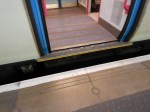
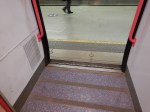
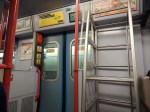
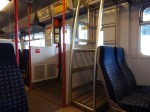
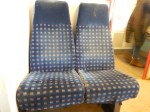
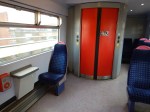
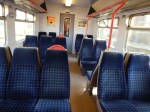

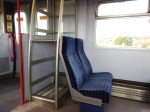
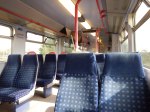

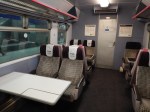


I took the pictures on a particularly neat and tidy Thameslink train.
It is likely that the Class 319 Flex train will use this interior, especially as the prototype is a conversion of a Class 319/4 train.
According to Wikipedia, there are still 23 Class 319/4 trains in service with Thameslink, with a few actually off lease, so there should be quite a few of this variant to convert.
In the article in Rail Magazine, which is entitled Flex… and flexibility, this is said.
One unit has moved to Loughborough (319427), but this is not one of the eight destined for Northern. Instead, it will be deployed for dimensional analysis. Only so much can be planned on paper and computers, and this will enable the various teams to evaluate the train and ensure everything fits.
Sounds like good engineering and as the train was off lease, it probably wasn’t one of best, so if it eventually becomes a spares donor or scrap, no-one is probably bothered, given that there are quite a few Class 319/4 trains available for conversion.
In fact after riding in a couple of Northern’s Class 319 trains last week, I definitely felt that the Class 319/4 train in the pictures, rode a lot better and more like what you’d expect from a train derived from a Mark 3 coach.
Conclusion
The more I read and observe about the Class 319 Flex train, the more I like the project.
I wonder how much a new bi-mode four-car multiple unit would cost? As a rough guide London Overground are paying nearly six million for each of their Class 710 trains.
Class 319/4 trains converted to Class 319 Flex trains will have the following extra and proven features.
- 100 mph as against 75 mph top speed.
- 91-92 mph top speed away from wires on diesel.
- First Class seating
- Fully-accessible toilet.
- The ability to survive a direct hit from a 24 tonne cement mixer truck dropped from a bridge.
But the Class 319 Flex is not a new train.
The Oxshott incident with the cement mixer truck, did happen to a Class 455 train, but this is also Mark 3 coach-based, like the Class 319 train.
 The Anonymous Widower