Embraer, Widerøe And Rolls-Royce Announce Partnership To Research Innovative Technologies For Sustainable Regional Aircraft
The title of this post, is the same as that of this press release from Rolls-Royce.
This is the body of the press release.
Embraer, Widerøe and Rolls-Royce have today announced plans to study a conceptual zero-emission regional aircraft.
The 12-month cooperation study – in the context of pre-competitive research and development – will address passenger requirements to stay connected in a post Covid-19 world, but do so sustainably, and seeks to accelerate the knowledge of the technologies necessary for this transition. Such technologies will allow national governments to continue to support passenger mobility while reusing most of the existing infrastructure in a more sustainable way.
Advances in scientific research can make clean and renewable energy a major enabler of a new era of regional aviation and the three companies will share their combined in-depth knowledge of aircraft design, market demand, operations and propulsion solutions to further develop their understanding of zero-emission technologies and how they can be matured and applied to future regional aircraft.
Among other topics, the study will cover a wide range of applications for new propulsion technologies to examine a range of potential solutions – including all-electric, hydrogen fuel cell or hydrogen fueled gas turbine powered aircraft.
These are my thoughts.
An Aircraft For Existing Infrastructure
This is an extract from the press release.
Such technologies will allow national governments to continue to support passenger mobility while reusing most of the existing infrastructure in a more sustainable way.
If I was the CEO of an airline, I’d want an aircraft that fitted the airports and their facilities, where I wanted to fly.
No Propulsion System Is Ruled Out
This is an extract from the press release.
Among other topics, the study will cover a wide range of applications for new propulsion technologies to examine a range of potential solutions – including all-electric, hydrogen fuel cell or hydrogen fueled gas turbine powered aircraft.
It would appear no propulsion system is ruled out.
In LNER Seeks 10 More Bi-Modes, where I talked about LNER ordering ten new trains, they also said they would accept any type of power, that was suitable.
Embraer
Embraer are a successful Brazilian aerospace company, who according to Wikipedia, are the third largest producer of civil aircraft, after Boeing and Airbus.
I first flew in one of their EMB 110 Bandeirantes in the 1970s from Norwich to Stavanger and I’ve flown on several of their aircraft since.
Embraer’s current jet aircraft line-up includes.
- Embraer E-Jet – Twin-jet regional airliner – 66-124 passengers – 1596 produced
- Embraer E-Jet E2 – Twin-jet regional airliner – 88-146 passengers – 50 produced
Note.
- The E-Jet E2 is the successor to the E-Jet with new engines, new avionic, fly-by-wire controls and other improvements.
- Production numbers are as of 31st March 2021.
- Embraer don’t seem to produce turboprop aircraft any more, although a lot of their former products are still flying.
I certainly wouldn’t avoid flying in Embraer products, as I would in other aircraft and on some airlines.
Have Embraer identified a market for a smaller sustainable or even zero-carbon aircraft that could extend their product range below the jets?
Widerøe
Widerøe are a long-established and well-respected Norwegian airline.
Their fleet consists of forty De Havilland Canada Dash 8 turboprop aircraft of various variants and three Embraer E-Jet E2 jet airliners.
Wikipedia says this about their fleet.
Widerøe plans to replace most of its Dash-8 by 2030.
Given that the Dash 8 seats between 40 and 80 passengers, I wonder if a sustainable or even zero-carbon aircraft with an appropriate number of seats and the STOL performance of the Dash 8, would suit Widerøe’s route network, which includes many small airfields.
Rolls-Royce
In What Does 2.5 MW Look Like?, I talked about Rolls-Royce’s development of a 2.5 MW Generator.
I am inserting the start of the linked post.
This press release on the Rolls-Royce web site is entitled Rolls-Royce Generator Delivered For Most Powerful Hybrid-Electric Propulsion System In Aerospace.
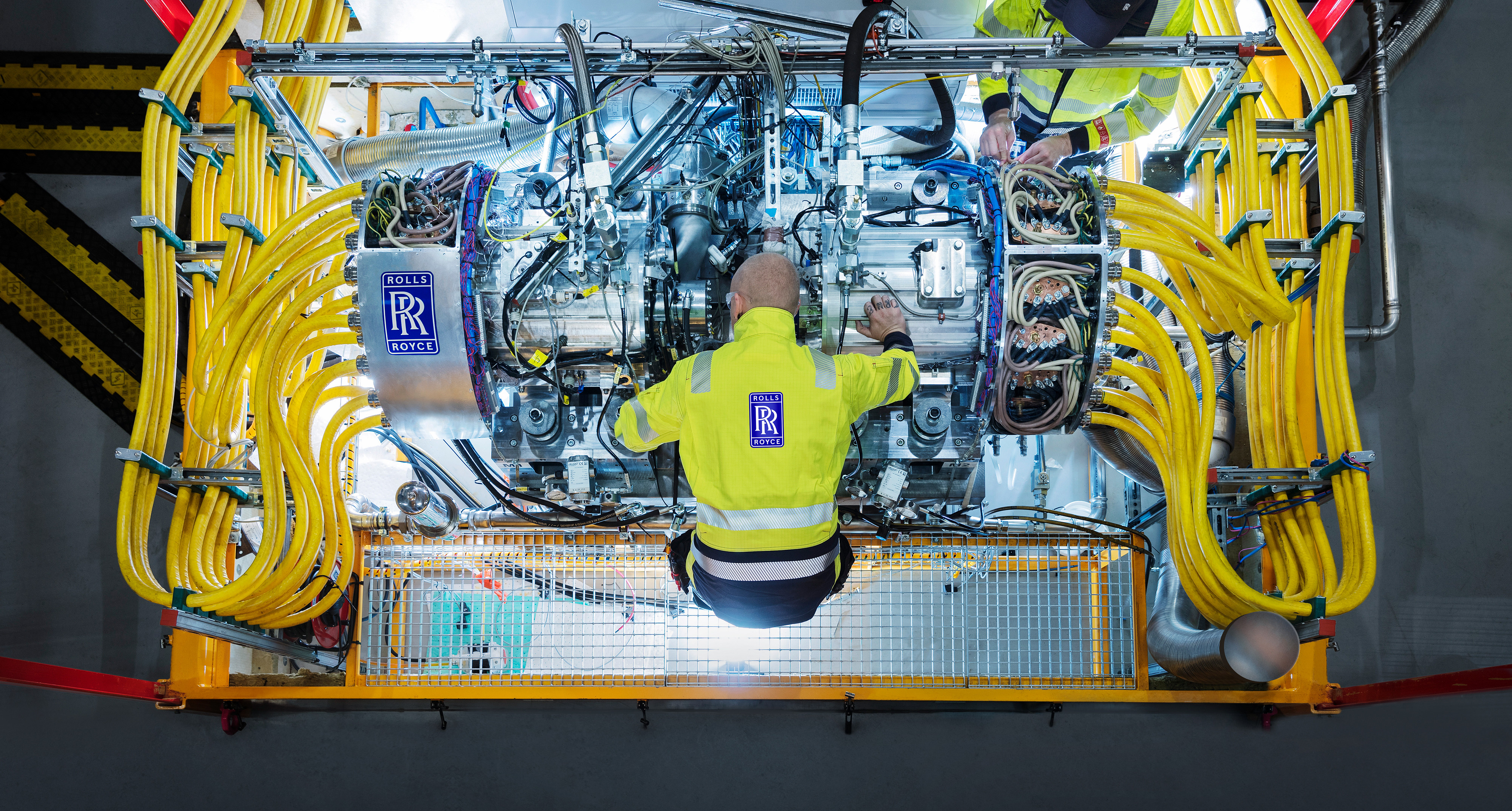
This Rolls-Royce picture shows the generator installed on a test bed.
These are the first three paragraphs of the press release.
The generator that will be at the heart of the most powerful hybrid-electric aero power and propulsion system in aerospace has arrived for installation at our specialist testbed.
The generator, and related power electronics, was delivered to the newly-renovated Testbed 108 in Bristol, UK, from the Rolls-Royce facility in Trondheim, Norway, having completed an extensive development test programme. It will form part of the 2.5 megawatt (MW) Power Generation System 1 (PGS1) demonstrator programme, for future regional aircraft. In addition to hybrid-electric propulsion, the generator could also be used as part of a “more-electric” system for larger aircraft or within future ground or marine applications.
PGS1 forms an important element of our sustainability strategy, which includes developing innovative electrical power and propulsion systems.
I must say that as an engineer this 2.5 MW generator really excites me, as I see so many possibilities.
Could this engine become the power unit of a hydrogen-powered regional airliner?
Rolls-Royce, Tecnam And Widerøe
In Rolls-Royce And Tecnam Join Forces With Widerøe To Deliver An All-Electric Passenger Aircraft Ready For Service In 2026, a similar deal to the Embraer, Widerøe and Rolls-Royce deal is discussed.
I am inserting the start of the linked post.
The title of this post, is the same as that of this press release from Rolls-Royce.
This is the first paragraph.
Rolls-Royce and airframer Tecnam are joining forces with Widerøe – the largest regional airline in Scandinavia, to deliver an all-electric passenger aircraft for the commuter market, ready for revenue service in 2026. The project expands on the successful research programme between Rolls-Royce and Widerøe on sustainable aviation and the existing partnership between Rolls-Royce and Tecnam on powering the all-electric P-Volt aircraft.
This picture from Rolls-Royce shows the proposed aircraft.

The P-Volt aircraft is based on the Tecnam P2012 Traveller.
Conclusion
Perhaps, the first deal is progressing so well, Rolls-Royce and Widerøe decided to repeat the exercise.
‘Biggest Breakthrough’ On Pancreatic Cancer Is On The Horizon As Scientists Hail Two-In-One Teatment That Could Even CURE The Disease
The title of this post, is the same as that of this article on the Daily Mail.
These three paragraphs give an introduction to the research.
Scientists are on the cusp of the ‘biggest ever’ breakthrough in the treatment of pancreatic cancer.
UK researchers have developed a two-in-one treatment that could dramatically improve survival and even cure the disease, which is one of the deadliest cancers.
Survival rates for pancreatic cancer have barely improved in the last 50 years and it has the worst prognosis of any common cancer.
It is a state, that you don’t want to go near.
This is the heart of the new two-in-one treatment.
One of the treatments is immunotherapy, whereby a drug fires up the immune system to fight the cancer.
The drug is a checkpoint inhibitor, which means it blocks proteins that stop the immune system from attacking cancer cells. It has had stunning results against some types of cancer.
But pancreatic cancer tumours have a thick outer layer which stops the drug in its tracks.
The second treatment, known as high intensity focused ultrasound (HIFU), involves blasting the tumour with pulses of sound waves.
This creates tiny bubbles in the cells, which bounce around with such force that they puncture holes in the protective barrier – allowing the immunotherapy drug to get to work.
I find it strange that I when I wrote Glencore & Strategic Partner Britishvolt Strengthen Relationship And Agree To Build Battery Recycling Ecosystem In The UK, I found that a similar technique is being investigated by the Faraday Institute in the recycling of lithium-ion batteries.
In this article on the BBC, which is entitled As The World looks To Electrify Vehicles And Store Renewable Power, One Giant Challenge Looms: What Will Happen To All The Old Lithium Batteries?, I found this paragraph.
The team has also found a way to achieve direct recycling of the anode and cathode using an ultrasonic probe, “like what the dentist uses to clean your teeth,” he explains. “It focuses ultrasound on a surface which creates tiny bubbles that implode and blast the coating off the surface.” This process avoids having to shred the battery parts, which can make recovering them exceedingly difficult.
Umpteen million tiny bubbles can’t be wrong! It sounds to me that engineers from the Faraday Institute and Medics from the Institute of Cancer Research have been imbibing pints of the thinking man’s liqueur; real ale in a serious meeting in a pub.
But if it works don’t knock it! Just use the technique on your project to remove an awkward coating.
My son, who died of pancreatic cancer was a coeliac like me, but he had never been tested and as he was a sound engineer in the music business, he lived on a diet of Subways, cigarettes and high strength cannabis.
I asked the Professor at Liverpool University’s Pancreatic Cancer Research Unit, if this had contributed to his death and he nodded.
But my son certainly, didn’t have my strong immune system, which is because I’m coeliac and have been gluten-free for nearly thirty years. I know it is strong, as it gave the first dose of the AstraZeneca vaccine a good kicking. But by the time I got the second dose, it had worked out it was a friend, so I got no reaction.
I have three questions.
What is the hard skin of the pancreatic cancer made from?
Do all cancers have hard skins?
When patients are given immunotherapy drugs, do they go gluten-free for a Tesco effect (Every little helps!)?
Hydrogen Refuelling Station For Vehicles Lands At Teesside Airport
The title of this post, is the same as that of this article on the Northern Echo.
This is the introductory paragraph.
A refuelling station that will serve hydrogen-powered vehicles based in the Tees Valley is now up and running at Teesside Airport as part of a £2.5million region-wide trial.
A selection of vehicles and equipment is being trialled, including some for the emergency services.
The trial will be overseen by Teesside University.
The University also runs the Tees Valley Hydrogen Innovation Project, which is described on this page on the University web site.
Covid Leaves Wave Of Wearied Souls In Pandemic’s Wake
The title of this post, is the same as that as this article on The Times.
It is the usual excellent article by Tom Whipple and it discusses long covid.
I haven’t knowingly had long covid or even common-or-garden short covid for that matter.
The Asian Flu of 1957-1958
But go back to 1957-1958 and the outbreak of Asian Flu.
This was another present from China to the world. Wikipedia says this about its severity.
The number of excess deaths caused by the pandemic is estimated to be 1-4 million around the world (1957–1958 and probably beyond), making it one of the deadliest pandemics in history.
According, to this page on Wikipedia, deaths from Covid-19, were approaching 5,500,000 at the first of January 2022.
But then the world population is now 7.9 billion as opposed to 2.8 billion in 1957. This is 2.8 times bigger.
If the Asian Flu of 1957-1958 had had a Covid-19 death rate around two billion would have died.
Was There A Long Form Of The Asian Flu?
In Long Covid And Coeliac Disease, I started the post like this.
I recently heard an interview with Adrian Chiles on Radio 5 about the so-called long covid
I am 73 and the more I read about Long Covid, the more I think I had something similar around 1958, when I had just started Minchenden Grammar School, where I missed most of the Spring Term. This was at the time of the 1957-8 flu pandemic., which killed between one and four million people worldwide.
This article on New Decoder is a personal memory of that pandemic, from an experienced journalist called Harvey Morris.
Last night, I was listening to another program about kids with long covid and they seemed to be describing how I felt all those years ago.
One of those two programs, also said that one doctor tested patients for coeliac disease.
So did I have a long form of Asian Flu which kept me off school for a long time?
I can remember a conversation between my late wife and my mother that took place before we got married in 1968.
My mother described how I was badly ill at around ten and how our GP, the excellent Dr. Egerton White kept coming to see me, whilst I was recovering at home, as he couldn’t fathom out what was wrong with me.
But he did seem to take particular care of me, even coming to visit me in hospital, when I had my tonsils out at around five. Could it be, that as he had brought me into this world, that he felt differently about me? It should be noted that he was probably from the Caribbean and either black or mixed-race.
Is Long Covid Linked To Undiagnosed Coeliac Disease?
As I said earlier that one doctor tested long covid patients for undiagnosed coeliac disease, at least one doctor must believe so.
Looking at the statistics in The Times article, I can make the following deductions.
- 42 % of sufferers from long covid are over fifty?
- 58 % of sufferers from long covid are female?
- It is not stated how many sufferers had been diagnosed as coeliac and were on a long-term gluten-free diet.
These statistics would fit roughly with the statistics for coeliac disease.
- According to the NHS, there are more female coeliacs as male.
- There was no test for coeliac disease in children until 1960, so it is likely, that many undiagnosed coeliacs are over 60.
- Since around 2000, coeliac disease is tested for by means of a simple blood test.
- Doctors understand coeliac disease better now, so I suspect more coeliacs under about thirty have been diagnosed.
I am certainly led to the conclusion, that undiagnosed coeliac disease could be a factor in long covid.
Treating Long Covid
The article on The Times has a section which is entitled How Do We Deal With It (1)?, where this is said.
One of the great challenges of pathology is that you have to know what you are looking for before you can find it.
“People with long Covid go to the clinician, give blood, and none of the results that come back show that these individuals are sick,” says Resia Pretorius, from Stellenbosch University. The doctors look through the metabolites in their blood, seeking something unusual, and find nothing. “The end result is their clinician tells them it’s psychology — go for a run or whatever. Some of these patients can’t even walk up a set of stairs. They think: are we mad?”
She had an idea. What if it was about the blood structure, as much as its composition? Her laboratory has looked at the blood of both acute Covid patients and long Covid sufferers. They have found tiny clots.
Something in the disease seems to cause malformation, and they can’t be removed.
They have also found preliminary evidence that treating patients with antiplatelet and anticoagulants leads to significant improvement. Although, she stresses, it’s a risky procedure that requires careful monitoring, in case people bleed dangerously.
When I read the bit about anticoagulants, the bells in my head started ringing.
I am a coeliac on a long-term gluten-free diet, who suffered a serious stroke in 2011, from which I made a remarkable recovery. I am now on Warfarin, which is the old-fashioned anti-coagulant and test myself regularly with a meter, so I don’t bleed dangerously.
Note remarkable is not a word of my choosing, but one that has been used several times by doctors referring to the recovery in my stroke. But then there are masses of Jewish, Huguenot and Devonian survival genes in my cells.
At the time of the panic about blood clots and the AstraZeneca vaccine I wrote A Danish Study On Links Between Coeliac Disease And Blood Clots, of which this is an extract.
This morning I found on the Internet, a peer-reviewed Danish study which was entitled
Coeliac Disease And Risk Of Venous Thromboembolism: A Nationwide Population-Based Case-Control Study
The nation in the study was Denmark.
This was the introductory paragraph.
Patients with coeliac disease (CD) may be at increased risk of venous thromboembolism (VTE), i.e. deep vein thrombosis (DVT) and its complication pulmonary embolism (PE), because they are reported to have hyperhomocysteinaemia, low levels of K-vitamin-dependent anticoagulant proteins, and increased levels of thrombin-activatable fibrinolysis inhibitor.
One thing in this summary screams at me. The mention of vitamin-K!
Ten years ago, I had a serious stroke, that because of modern clot-busting drugs failed to kill me.
I am now on long-term Warfarin and know I have to eat a diet without Vitamin-K.
There are too many coincidences in all this for me not to shout, “Do More Research!”
Prevalence Of Celiac Disease Among Blood Donors in SÃO PAULO – The Most Populated City In Brazil
The title of this post, is the same as that of this scientific paper from Brazil.
I am posting, so I can find the paper when I need it.
I will only point out one sentence.
Furthermore, an increase in the ingestion of wheat in the country in recent decades may have favored the increase in CD in our society.
I wonder if this statement can be confirmed, as this could explain the increase in coeliac disease in some countries.
Walking The Line
A friend asked, if I’d like to accompany her on a walk along the tunnels of the Post Office Railway.
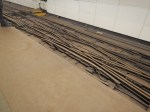
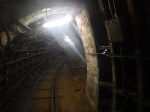
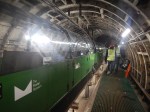
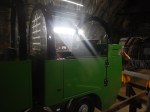
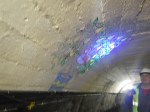
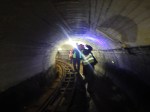
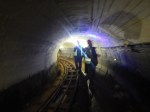
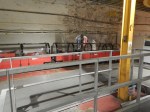
I said yes, went along and took these pictures.






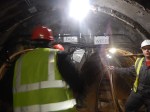



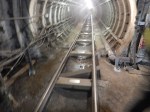
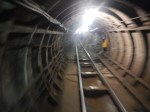
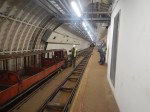


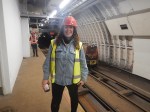









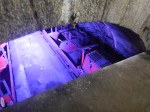

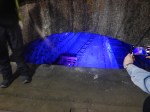

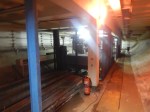















Note.
- The tracks are only two-foot gauge.
- The trains were driverless and electrically powered.
- The two modern trains with the plastic roofs; one of which is red and the other green, are used to take Postal Museum visitors along the tunnels.
- The yellow train was painted that colour for its part in the Bruce Willis film; Hudson Hawk.
- A large number of the sleepers had plaques on them, indicating their sponsors. The sleeps looked to be nearly all original.
- The paintings on the wall show the Twelve Days of Christmas and date from when Christmas parties for children were held in the tunnels.
- The tunnels were dug by hand using a Greathead Shield.
- There was no evidence of rodents.
It is a unique railway that is well worth a visit.
A few other facts and thoughts.
New Tunnels
Most modern tunnels like Crossrail, High Speed Two and the Thames Tideway are now dug by tunnel boring machines or TBMs. These pictures show Millicent and Ursula preparing to start boring the Thames Tideway.
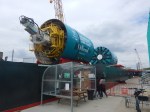
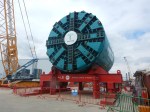
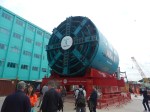
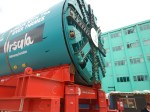
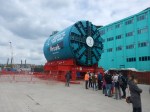
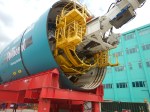

Not all tunnels though use a TBM. Recently, the new running tunnel at Bank and pedestrian tunnels at Paddington and possibly Moorgate have been dug in the traditional way, but probably with the aid of some of the likes of JCB’s finest.
There was also the innovative way, that Whitechapel station was built, that I described in Coal Mining in Whitechapel.
Tunnel Life Research
This is a paragraph from the Wikipedia entry for the Post Office Railway.
A team from the University of Cambridge has taken over a short, double track section of unused Post Office tunnel near Liverpool Street Station, where a newly built tunnel for Crossrail is situated some two metres beneath. The study is to establish how the original cast-iron lining sections, which are similar to those used for many miles of railway under London, resist possible deformation and soil movement caused by the new works. Digital cameras, fibre optic deformation sensors, laser scanners and other low-cost instruments, reporting in real time, have been installed in the vacated tunnel. As well as providing information about the behaviour of the old construction materials, the scheme can also provide an early warning if the new tunnel bores are creating dangerous soil movement
This is worthwhile research, as there have been some problems with London’s older tunnels.
Building The Paddington Bakerloo Line Link Project
This was done in and around the Paddington end of the Post Office Railway.
There is a link to a professional presentation about this complex project in Paddington Bakerloo Line Link Project, London.
Royal Mail Group assets at Paddington helped in the comstruction of the link.
Infection, Mortality And Severity Of Covid-19 In Coeliac Disease – Prof Jonas Ludvigsson
The title of this post is the same as that of this presentation on the Coeliac UK web site.
If you are coeliac and worried about catching the Covids, I suggest you watch the presentation.
The presentation is about eighteen minutes long and this is the last-but-one screen.
Coeliac Disease and Covid-19
- No increased risk of death from Covid-19
- No increased risk of ICU for Covid-19
- No increased risk of any (!) Covid-19
THEN: Coeliac patients with Covid-19, have no increased risk of death compared to other patients with Covid-19.
Conclusion
The professor concludes it is good news and there is no need for coeliac patients to get the jab earlier than other people.
I would also like to add my fourpennyworth!
The professor was only analysing diagnosed coeliacs, who were probably on a long-term gluten-free diet.
My son was an undiagnosed coeliac, who lived the rock and roll lifestyle, generally living on ciggies, high-strength cannabis and Subways. His immune system, probably gave him all the protection of a plastic colander.
He died at just 37 from pancreatic cancer.
Life After Pancreatic Cancer
The London Marathon always throws up human stories.
This one from the Argus, which is entitled Youngest London Marathon Runner Raising Funds For Medics Who Saved Her Life, is one of the best I can remember.
These are the first two paragraphs.
The youngest runner in the London Marathon is undertaking the challenge to raise money for the medics who saved her life by carrying out surgery to remove a tumour from her gut the size of a large grapefruit.
Lucy Harvey, from Poole, Dorset, was admitted to Poole Hospital in January 2019 with appendicitis, but the pre-op scans identified a mass on her pancreas.
This story has really touched me.
- My son died at 37 from pancreatic cancer.
- His daughter, who is now eighteen, was born with a congenital hernia of the diaphragm and was saved by heroic surgery in the Royal London Hospital by Vanessa Wright.
- I support pancreatic cancer research at Liverpool University, where I met my late wife in the 1960s.
- I raised a little bit of money, for the pancreatic cancer study I talk about in There’s More To Liverpool Than Football And The Beatles!.
My granddaughter now lives a reasonably normal life!
Brutal Third Wave Or Harmless Ripple? The Scientists Aren’t Yet Sure
The title of this post, is the same as that is the same as that of this article on The Times.
The scientists nay not be sure, whether with two jabs, you are safe from the Indian or Delta variant.
But how about me?
- I have had my two AstraZeneca jabs.
- I am also coeliac and have stuck tightly to my long-term gluten-free diet.
- Despite possibly being challenged by a group of Chinese students, that I wrote about in Did I Have A Close Brush With Covid-19?, I have not knowingly had the covids.
- I’ve only had one test for the virus and that was negative.
For various reasons, I believe that coeliacs on a long-term gluten-free diet have a very strong immune system, that could help to protect them from the covids.
- Personally, my health was transformed, when I went gluten-free in 1997.
- I am sure, my immune system gave the first dose of the vaccine a good kicking.
- I rarely, suffer from colds and sniffles, although I do have flu jabs.
- Research by Joe West at Nottingham University, has shown that as a group, we’re 25 % less likely to suffer from cancer.
So could these points prove my hypothesis?
In addition, I ask people, if they have any coeliac friends. These personal tales have yet to reveal any coeliacs on long-term gluten-free diets, who’ve had a serious dose of the covids.
I’ve also talked to intensive care doctors, who have said they can’t remember caring for a coeliac with a serious dose of the covids.
So I shall be Keeping Calm And Carrying On!
My INR Readings Before And After My Second AstraZeneca Jab
I am on long-term Warfarin after a serious stroke.
I also measure my own INR using a simple hand-held meter.
So with all the fuss about the AstraZeneca vaccine and blood clots, I thought I’d do an experiment around my second dose of the vaccine.
I maintained a constant Warfarin dose of 3.5 mg, which is the daily dose, I have agreed with my GP.
I maintained a reasonably constant diet. That is fairly easy if you’re coeliac and on a long-term gluten-free diet, as I am.
I measured my INR every morning.
These are my results.
- April 12th – 2.3
- April 13th – 2.8
- April 14th – 2.8
- April 15th – 2.9
- April 16th – 2.5
- April 17th – 2.3
- April 18th – 2.3
- April 19th – 2.4 – 2nd Jab
- April 20th – 2.2
- April 21st – 2.2
- April 22nd – 2.6
- April 23rd – 2.5
- April 24th – 2.4
- April 25th – 2.7
- April 26th – 3.0
- April 27th – 2.7
- April 28th – 2,5
- April 29th – 3.0
- April 30th – 3.1
- May 1st – 2.9
- May 2nd – No Data
- May 3rd – 2.8
It would appear that the results have been less stable since the second jab.
I am a Control Engineer with a B. Eng. from Liverpool University and I’m not surprised at these results.
It’s just like the bounce you get when the wheel of your car hits a pothole.
I would suggest that more research needs to be done.
 The Anonymous Widower