Stadler Rail to launch IPO
The title of this post is the same as that of this article on the International Rail Journal.
I feel that from an engineering point of view the company has a bright future, as they seem to have their fingers in a lot of innovative pies.
But whether that makes the company a good investment, I’ll leave to the experts.
Stadler Rail’s Specification For UK Trains
These are links to the pdf specifications of Stadler Rail’s products in the UK.
- DRS – Class 68
- DRS – Class 88
- Greater Anglia – Class 755
- Merseyrail – Class 777
- Sheffield – Class 399 tram-train
I shall add more as I find them!
Stadler’s New Tri-Mode Class 93 Locomotive
In Thoughts On A Battery/Electric Replacement For A Class 66 Locomotive, I looked at an electro-diesel freight locomotive with batteries instead of a diesel engine, as a freight locomotive. It would have the size and weight of a Class 70 locomotive and perhaps use similar technology to Stadler’s Class 88 locomotive.
I concluded the article like this.
It would be a heavyweight locomotive with a performance to match.
I believe that such a locomotive would be a very useful addition to the UK’s fleet of freight locomotives.
Stadler have not produced a battery/electric replacement for a Class 66 locomotive, but they have added a diesel/electric/battery Class 93 locomotive with a heavyweight performance to their Class 68/88 or UKLIGHT family of locomotives built at Valencia in Spain.
Details of the locomotive are given in this article in Rail Magazine, which is entitled Rail Operations Fuels Its Ambitions With Tri-Mode Class 93s. There is also a longerand more detailed article in the print edition of the magazine, which I purchased today.
Reading both copies of the article, I can say the following.
A More Powerful Class 88 Locomotive
At a first glance, the Class 93 locomotive appears to be a more powerful version of the Class 88 locomotive.
- The power on electric mode is the same in both locomotives at four megawatt. It would probably use the same electrical systems.
- Some reports give the diesel power of the Class 93 locomotive as 1.34 MW as opposed to 0.7 MW of the Class 88 locomotive.
- The Class 93 locomotive has a top speed of 110 mph, as opposed to the 100 mph of the Class 88 locomotive.
- The article says, “It’s an ’88’ design with the biggest engine we could fit.”
It would also appear that much of the design of the two locomotives is identical, which must make design, building and certification easier.
The Class 93 Locomotive Is Described As A Hybrid Locomotive
Much of the article is an interview with Karl Watts, who is Chief Executive Officer of Rail Operations (UK) Ltd, who have ordered ten Class 93 locomotives. He says this.
However, the Swiss manufacturer offered a solution involving involving an uprated diesel alternator set plus Lithium Titanate Oxide (LTO) batteries.
Other information on the batteries includes.
- The batteries are used in regenerative braking.
- Batteries can be charged by the alternator or the pantoraph.
- Each locomotive has two batteries slightly bigger than a large suitcase.
Nothing is said about the capacity of the batteries, but each could be say 200 litres in size.
I have looked up manufacturers of lithium-titanate batteries and there is a Swiss manufacturer of the batteries called Leclanche, which has this data sheet, that describes a LT30 Power cell 30Ah.
- This small cell is 285 mm x 178.5 mm x 12 mm.
- It has a storage capacity of 65 Wh
- It has an expedited lifetime of greater than 15,000 cycles.
- It has an energy density of 60 Wh/Kg or 135 Wh/litre
These cells can be built up into much larger batteries.
- A large suitcase is 150 litres and this volume would hold 20 kWh and weigh 333 Kg.
- A battery of 300 litres would hold 40 kWh. Is this a large Swiss suitcase?
- A box 2.5 metres x 1 metre x 0.3 metres underneath a train would hold 100 kWh and weigh 1.7 tonnes
These batteries with their fast charge and discharge are almost like supercapacitors.
, It would appear that, if the large suitcase batteries are used the Class 93 locomotive will have an energy storage capacity of 80 kWh.
But this is said about Class 93 locomotive performance..
LTO batteries were chosen because they offer a rapid recharge and can maintain line speed while climbing a gradient, and will recharge when running downhill.
Looking at the batteries, they could provide up to around 40 kW of extra power for perhaps half an hour to help the train climb a gradient and then recharge using regenerative braking or the diesel alternator.
This is a hybrid vehicle, with all the efficiency advantages.
The article does say, that with a light load, the locomotives can do 110 mph on hybrid. Nothing is said about what is a light load.
Could it be a rake of five modern Mark 5A coaches?
In Thoughts On A Battery Electric Class 88 Locomotive On TransPennine Routes, I said this.
It is worth looking at the kinetic energy of a Class 88 locomotive hauling five forty-three tonne CAF Mark 5A coaches containing a full load of 340 passengers, who each weigh 90 Kg with baggage, bikes and buggies. This gives a total weight would be 331.7 tonnes.
The kinetic energy of the train would be as follows for various speeds.
90 mph – 75 kWh
100 mph – 92 kWh
110 mph – 111 kWh
125 mph – 144 kWhThe increase in energy is because kinetic energy is proportional to the square of the speed.
There would be little difference in this calculation, using a Class 93 locomotive, which is only a tonne heavier. The kinetic energy at 100 mph, would be 93 kWh.
This could be very convenient, as it looks like the battery capacity could be almost as large as the kinetic energy of a fully-loaded train.
A train stopping in a station without electrification, would cut diesel running drammatically in the station and when accelerating away.
Similar Weight And Axle Load To A Class 88 Locomotive
The article states that the locomotive will weight 87 tonnes, as opposed to the 86 tonnes of a Class 88 locomotive.
As both locomotives have four axles, this would mean that their axle loading is almost the same.
So anywhere the Class 88 locomotive can go, is most likely to be territory suitable for the Class 93 locomotive.
Again, this must make certification easier.
A Modular Design
In a rail forum, members were saying that the Class 93 locomotive has a modular design.
So will we see other specifications with different sized diesel engines and batteries?
The TransPennine routes, for example, might need a locomotive with a smaller diesel engine, more battery capacity and a 125 mph-capability for the East Coast Main Line.
Stadler have said they specialise in niche markets. Have they developed the tailor-made locomotive?
Power Of Various Locomotives
These are various UK locomotives and their power levels in megawatts.
- Class 43 – Diesel – 1.7
- Class 66 – Diesel – 2.4
- Class 67 – Diesel – 2.4
- Class 68 – Diesel – 2.8
- Class 88 – Electric – 4
- Class 88 – Diesel – 0.7
- Class 90 – Electric – 3.9
- Class 91 – Electric – 4.8
- Class 93 – Electric – 4
- Class 93 – Diesel – 0.9
- Class 93 – Hybrid – 1.3
The interesting figure, is that the Class 93 locomotive has 53 % of the diesel power of a Class 43 locomotive from an InterCity 125. The difference could probably be made up at times using battery power, where needed. The batteries could be partly recharged using regenerative braking.
Could The Locomotive Be Uprated To 125 mph?
Consider.
- The UK has successfully run 125 mph Class 43 and 91 locomotives for many years.
- Stadler has built trains that run at that speed.
- Mark 3, Mark 4 and Mark 5A coaches are all certified for 125 mph.
- There are hundreds of miles of track in the UK, where 125 mph running is possible.
I would think it very unlikely, that the engineers designing the Class 93 locomotive, ruled out the possibility of 125 mph running in the future!
Only Stadler will know!
Could A Battery/Electric Version Of The Locomotive Be Created?
I don’t see why not!
The diesel engine, fuel, exhaust and cooling systems and some ancilliary systems could all be removed and be replaced with an equivalent weight of batteries.
As the C27 diesel engine in a Class 88 locomotive weighs almost seven tonnes, I suspect a ten tonne battery would be possible.
Given the current typical energy density and using the Leclanche figures, this would mean that the batteries would have a total capacity of around 700-700 kWh.
Possible Uses Of The Class 93 Locomotive
The Rail Magazine article goes on to detail some of the uses of a Class 93 locomotive.
Express Freight
Karl Watts says this.
They can operate express freight. In Europe, there are vehicles capable of 100 mph running, and these are perfect for high-speed domestic freight. We have been running intermodals at 75 mph since the 1960s – It’s time to change that.
The locomotive would certainly be able to haul express freight at 100 mph on an electrified main line.
Note the following.
- This would greatly help with freight between Felixstowe and London on the 100 mph Great Eastern Main Line.
- Running freight trains at 100 mph on the major electrified lines would increase capacity, of the lines.
- Ports and freight terminals wouldn’t need to be electrified.
Overall, the proportion of freight mileage, where electric power was used, would grow significantly.
Electrification Gap Jumping
In Thoughts On A Battery/Electric Replacement For A Class 66 Locomotive, I gave a list of typical gaps in the electrification in the UK.
- Didcot and Birmingham – Around two-and-a-half hours
- Didcot and Coventry – Just under two hours
- Felixstowe and Ipswich – Around an hour
- Haughley Junction and Peterborough – Around two hours
- Southampton and Reading – Around one-and-a-half hours
- Werrington Junction and Doncaster via Lincoln – Around two hours
- Werrington Junction and Nuneaton – Just under two hours
How many of these gaps could be bridged by a Class 93 locomotive working in a diesel hybrid mode?
It should be noted, that many of the busiest gaps are in the flatter Eastern areas of England.
I’m sure Stadler and Rail Operations Group have done extensive simulation of possible routes and know where the locomotives are best suited.
Class 66 Locomotive Replacement
I suspect that several of these locomotives will end up replacing duties currently done by Class 66 locomotives.
It could haul an intermodal freight from Felixstowe to Manchester, Liverpool, Glasgow or Doncaster, using electrification where it exists.
And do it at a speed of 100 mph, where speed limits allow!
No other locomotive on the UK network could do that!
Use On Electrified Urban Freight Routes
Near to where I live there are two electrified lines passing through North London; the North London Line and the Gospel Oak To Barking Line.
Both lines have several freight trains a day passing through, that are still hauled by diesel locomotives.
There are other urban freight routes around the UK, where despite electrification, polluting diesel locomotives are still used.
Class 93 locomotives would be an ideal environmentally-friendly replacement locomotive on these routes.
Thunderbird Duties
Karl Watts says this.
They can be used for network recovery as a more comprehensive Thunderbird. Currently, stand-by locomotives are hired or used by an operator to rescue its own trains, but these would be available for anything or anyone. I have sopken to Network Rail about this and they need convincing. But as the network gets busier, so it will be that one failure causes chaos.
Perhaps, a better method for recovering failed trains could be developed.
Passenger Trains
Karl Watts says this.
I can say that the 93s’ feature n two franchise bids, although I cannot say which, due to non-disclosure agreements.
We can only speculate!
Class 93 locomotives could replace the Class 68 locomotives on TransPennine Express services between Liverpool and Scarborough, where Mark 5A coaches will be used.
- Electric mode could be used between Liverpool and Stalybridge and on the East Coast Main Line.
- Diesel or hybrid mode would be used where needed.
- If the locomotives could be uprated to 125 mph, that would help on the East Coast Main Line.
There are certainly, redundant Mark 4 coaches or new Mark 5A coaches that could be used to provide services.
An InterCity 125 For the Twenty-First Century
The InterCity 125 is a masterpiece of engineering, that passengers love.
One of the reasons for the success, is the superb dynamics of the train, which gives them a very comfortable ride.
Could it be that by putting two Class 93 locomotives at each end of a rake of suitable coaches could create a 125 mph train, with the same faultless dynamics?
The answer is probably yes, but in many cases either half-length trains or bi-mode multiple units may be a more affordable or capable train.
The locomotive certainly gives a lot of flexibility.
Conclusion
This is going to be a very useful locomotive.
This was the last paragraph of the printed article, as spoken by Karl Watts.
I don’t think I will be ordering only ten or 20 – there will be more.
I have registered 93001 to 93050.
The word hybrid opens the door.
I think this might be the third member of a very large and widespread family.
Thoughts On A Battery Electric Class 88 Locomotive On TransPennine Routes
In Issue 864 of Rail Magazine, there is an article, which is entitled Johnson Targets A Bi-Mode Future.
As someone, who has examined the mathematics of battery-powered trains for several years, I wonder if the Age of the Hybrid Battery/Electric Locomotive is closer than we think.
A Battery/Electric Class 88 Locomotive
After reading Dual Mode Delight (RM Issue 863), it would appear that a Class 88 locomotive is a powerful and reliable locomotive.
- It is a Bo-Bo locomotive with a weight of 86.1 tonnes and an axle load of 21.5 tonnes.
- It has a rating on electricity of 4,000 kW.
- It is a genuine 100 mph locomotive when working from 25 KVAC overhead electrification.
- The locomotive has regenerative braking, when working using electrification.
- It would appear the weight of the diesel engine is around seven tonnes
- The closely-related Class 68 locomotive has a 5,600 litre fuel tank and full of diesel would weight nearly five tonnes.
The locomotive would appear to be carrying between 7 and 12 tonnes of diesel-related gubbins.
It is worth looking at the kinetic energy of a Class 88 locomotive hauling five forty-three tonne CAF Mark 5A coaches containing a full load of 340 passengers, who each weigh 90 Kg with baggage, bikes and buggies. This gives a total weight would be 331.7 tonnes.
The kinetic energy of the train would be as follows for various speeds.
- 90 mph – 75 kWh
- 100 mph – 92 kWh
- 110 mph – 111 kWh
- 125 mph – 144 kWh
The increase in energy is because kinetic energy is proportional to the square of the speed.
Supposing the seven tonne diesel engine of the Class 88 locomotive were to be replaced by a battery of a similar total weight.
Traction batteries seem to have an energy/weight ratio of about 0.1kWh/Kg, which is increasing with time, as battery technology improves.
A crude estimate based on this energy/weight ratio would mean that at least a 700 kWh battery could be fitted into a Class 88 train and not make the locomotive any heavier. Given that lots of equipment like the alternator and the fuel tank would not be needed, I suspect that a 1,000 kWh battery could be fitted into a Class 88 locomotive, provided it just wasn’t too big.
A short length of electrification could be installed at terminal stations without electrification to charge the batteries during turnround.
This size of battery would be more than large enough to handle the braking energy of the train from full speed, so would improve the energy efficiency of the train on both electrified and non-electrified lines.
It would also contain more than enough energy to accelerate the train to line speeds that are typical of non-electrified routes.
TransPennine Express will soon run similar rakes of coaches hauled by Class 68 diesel locomotives between Liverpool and Manchester Airport and the North East.
The following sections of the Northern TransPennine route, are not electrified.
- Stalybridge and Leeds – 35 miles taking 46 minutes
- Leeds and Colton Junction – 20 miles taking 18 minutes
- Northallerton and Middlesbrough – 21 miles taking 29 minutes
- York and Scarborough – 42 miles taking 56 minutes
When running on these sections without electrification, consider the following.
- The train consists of modern coaches, which must be energy efficient.
- The train would enter the sections with a full battery, that had been charged using the 25 KVAC electrification on part of the route.
- Scarborough and possibly Middlesbrough stations, would have means to charge the battery.
- The train would enter the sections as close to line speed as possible, after accelerating using electrification.
- Regenerative braking would help conserve energy at any planned or unplanned stops.
- The driver will be assisted by a modern in-cab signaling and a very capable Driver Assistance System.
- Stadler and Direct Rail Services must have extensive theoretical and measured data of the performance of Class 88 locomotives and the related Class 68 locomotive, when they are hauling trains across the Pennines, which will enable extensive mathematical models to be built of the route.
For these reasons and especially the last about mathematical modelling, I believe that Stadler could create a battery/electric locomotive based on the Class 88 locomotive, that would be able to bridge the electrification gaps on battery power and haul a five-coach train on the Northern routes across the Pennines.
A Quick Look At The Mathematics
As I said earlier, the weight of a Class 88 locomotive and five Mark 5A coaches, full of passengers is 331.7 tonnes.
There would appear to be little weight difference between a diesel Class 68 locomotive and an electro-diesel Class 88 locomotive, so in this rough exercise, I will assume the train weight is the same.
The current Class 185 trains, that run across the Pennines have the following characteristics.
- Three-cars
- A weight of 168.5 tonnes.
- A passenger capacity of 169.
- Installed power of 560 kW in each coach, which means there is 1560 kW in total.
If each passengers weighs 90 Kg, with all their extras, a full train will weigh 183.7 tonnes.
So a full train has a power-weight ratio of nine kW/tonne, which must be sufficient to maintain the timetable across the Pennines.
The diesel Class 68 locomotive, which will be hauling trains on the route in the New Year, has an installed power of 2,800 kW, which gives a power/weight ratio of 8.4 kW/tonne.
I would be interested to know, if a Class 88 locomotive running in diesel mode with a power output of only 700 kW, could take one of the new trains across the Pennines. I suspect Stadler and/or DRS know the answer to this question.
But it would be a power/weight ratio of only 2.1 kW/tonne!
The challenging route is between Stalybridge and Leeds via Huddersfield, where the Pennines has to be crossed. I’m pretty certain, that all the other sections lack the gradients of the section between Stalybridge and Leeds.
So would a Class 88 locomotive with a 1,000 kWh battery be able to cross the Pennines with a full train?
Theoretically, up and down routes are good for battery/electric trains with regenerative braking, as energy used going uphill can be recovered on the other side.
The thirty-five miles between Stalybridge and Leeds take forty-six minutes, so for how long on this journey will the locomotive be applying full power? Perhaps for twenty minutes. If the locomotive applied an average of 2,000 kW for twenty minutes or a third of an hour, that would be 667 kWh.
With an electric multiple unit like an Aventra, where most if not all axles are driven and they can also contribute to regenerative braking, reasonably high rates of braking energy can be recycled.
But what proportion can be recycled, when the locomotive is doing all the regenerative braking. Any braking done by disc brakes on the coaches will result in lost energy.
As an aside, I wouldn’t be surprised to find out that train manufacturers simulate train braking in order to develop braking systems, that turn less energy into wasted heat.
I’d also love to see a simulation using Stadler’s real data of a Class 88 locomotive with batteries attempting to cross the Pennines, with a rake of Mark 5A coaches!
- What size of battery will be needed?
- Can this battery be fitted in the locomotive?
- Would distributing the batteries along the train increase performance?
- Would short lengths of electrification on the route, increase performance?
I was doing problems of similar complexity to attempt to design efficient chemical plants nearly fifty years ago. We had our successes, but not as great as we hoped. But we certainly eliminated several blind alleys.
My figures don’t show conclusively, that a Class 88 locomotive with a 1,000 kWh battery instead of a diesel engine and all the related gubbings, would be able to perform services across the Pennines.
But.
- Battery technology is improving at a fast pace.
- Train manufacturers are finding surprising ways to use batteries to improve performance.
- I don’t have access to Stadler’s real performance figures of their diesel locomotives.
- Finding a way to make it work, has a very high cost benefit.
Who knows what will happen?
125 Mph Running
The Class 88 locomotive, has a similar power output to the 125 mph Class 91 locomotive of the InterCity 225 and I believe that the locomotive might have enough power, when running on 25 KVAC overhead wires to be able to haul the train at 125 mph on the East Coast Main Line.
Conclusion
I believe that it is possible to create a battery/electric version of the Class 88 locomotive, that should be able to take a rake of five Mark 5A coaches across the Pennines.
Timings across the Pennines would benefit substantially, without any new infrastructure, other than that already planned and the charging system at Scarborough.
Merseyrail’s Battery Intentions
In New Merseyrail Fleet A Platform For Future Innovations, I quoted from this article on the Rail Technology Magazine web site.
The article mainly is an interview with David Powell, who is programme director of rolling stock at Merseytravel.
This is a direct quote from the article.
We will be exploring, with Stadler, what the options are for having the trains becoming self-powered. This isn’t the bi-modes that lots of other people are talking about in the industry; this is on-board electrical storage.
The Wikipedia entry for Merseyrail links to this document, which puts a lot more flesh on Merseyrail’s intentions for battery trains.
It outlines strategies for the following routes.
Ellesmere Port And Helsby
The document says this.
There is a reasonable business case for extending the Merseyrail service through to Helsby.
However this is likely to be best served by the use of Merseyrail battery powered enabled
services. This will be tested on the new units in 2020.
According to Wikipedia, the sixth Class 777 train to be delivered will be fitted with batteries.
Currently, the service between Liverpool Central and Ellesmere Port stations is as follows.
- A train every thirty minutes.
- Trains take eighty-five minutes to do the round trip from Ellesmere Port round the Wirral Loop under Liverpool and back to Ellesmere Port.
- There are thirty-one stops on the route.
- There is a five minute turnround at Ellesmere Port station.
Two trains are needed to run the service.
The Current Class 507/508 trains and the future Class 777 trains both have the same operating speed, but there are performance differences.
The British Rail trains have 656 kW of power per train, whereas every new Stadler train will have 2,100 kW. The speed may be the same, but the acceleration will be much greater if needed and and the regenerative braking should be powerful and smoothly controlled.
- Figures for the Class 313 train, which is similar to the Class 507/508 trains show a top speed of 75 mph and an acceleration of 0.67 m/s².
- Figures for the Class 777 train show a top speed of 75 mph and an acceleration of 1.1 m/s².
These figures mean that a Class 507 train will get to 75 mph in 125 seconds, whereas the new Stadler trains will take just 76 seconds.
In addition, loading and unloading of passengers with their increasing levels of extras will be much faster due to the hollistic design of the trains and the platforms on the new Stadler trains.
It would not be unrealistic to see around a minute saved at every stop.
I think this level of improvement could be expected, with all the modern trains in the UK.
The extended service between Ellesmere Port and Helsby stations is not much extra distance and time.
- Just over five miles each way.
- About thirteen minutes each way , based on existing services on the route.
So if the terminus were to be moved to Helsby, when the new trains are in service, the time savings between Ellesmere Port and Liverpool should cover the extra distance.
It should also be noted about Helsby station.
- It has four platforms and could probably handle four trains per hour (tph).
- A platform with a charging station could be created.
- It has a wide selection of services including Chester, Llandudno, Manchester and Warrington.
To my mind, Liverpool to Helsby would be an ideal route for a battery electric train.
Ormskirk-Preston Enhancements
The document says this.
This incorporates both electrification from Ormskirk through to Preston and the potential
reintroduction one or both of the Burscough Curves. In view of the deferral of electrification
proposals, and the relative low ranking of the electrification proposal in the Northern Sparks
report, it is unlikely that the electrification proposal is expected to be taken forward in the
near future. In addition to this, the business case for extending electrification to Burscough,
and the introduction of the southern Burscough Curve, is poor. The potential use of battery
powered Merseyrail units may improve the business case for both proposals. This will be
reviewed after the Merseyrail units have been tested for battery operation in 2020.
Currently, the service between Ormskirk and Preston stations is as follows.
- A train every hour.
- Trains take around thirty minutes to go between the two terminal stations.
- The route is fifteen and a half miles long.
- There are three stops on the route.
- There is a long turnround in a bay platform at Preston station.
At the present time, the service seems rather erratic, with some services replaced by buses and long connection times at Ormskirk.
The service between Liverpool Central and Ormskirk stations takes thirty-five minutes with eleven stops and is generally every fifteen minutes, with a half-hourly service in the evening and at weekends.
If a Class 777 train could use battery power, I estimate it could run between Liverpool Central and Preston stations within an hour.
This would surely open up the possibility of a new service between Liverpool and Preston.
- It would take only a few minutes longer than the fifty-one minutes of a direct train between Liverpool Lime Street and Preston stations.
- It would connect a lot of stations to the West Coast Main Line at Preston.
- It would link the major sporting venues of Aintree, Anfield and Goodison or Everton’s new ground to the North.
- At the Southern end, it could connect to Liverpool Airport.
The Class 777 trains would need to be able to do about thirty miles on battery power and if required, the technology exists to either top up the batteries at Preston or use a pantograph to access the overhead wires of the West Coast Main Line.
At the present time, the Ormskirk Branch Line between Ormskirk and Preston stations is only single track and probably needs resignalling, but I suspect that a four tph service could be run between Liverpool and Ormskirk, with two tph extended to Preston.
Extra track work, North of Ormskirk and the reinstatement of the Burscough curves would allow.
- Four tph between Liverpool and Preston via Ormskirk.
- A service between Liverpool and Southport via Ormskirk.
- A service between Preston and Southport.
There is even the possibility of extending Liverpool and Preston services to Blackpool South station, if they used the overhead electrification through Preston to charge the batteries.
Borderlands Development
The document says this.
While the aspiration is to fully electrify the line, and incorporate it into the Merseyrail
network, this is very much a long term aspiration. In the interim period the aim is to develop
the line through the introduction of an improved diesel service. Merseytravel will work
closely with relevant cross-border organisations such as Growth Track 360 to bring this
about. There are a number of new station proposals for the line, the principal being a new
station close to the Deeside Industrial Park, which would improve the ability of the
workforce to access the site via public transport.
The Borderlands Line provides a service between Liverpool and Wrexham Central station with a change at Bidston station.
- The twenty-seven miles between Wrexham Central and Bidston are not electrified.
- The line is double-track throughout.
- There are twelve stations on the line.
- The service is hourly, but probably needs to be at least half-hourly.
- The service takes about an hour between Wrexham and Bidston stations.
Using Class 777 trains on the route, using battery power between Bidston and Wrexham Central stations would enable.
- A direct service, that terminated in the Wirral Loop under Liverpool.
- An increased capacity at Bidston station.
- A faster service.
I estimate that a time of perhaps seventy to eighty minutes between Liverpool Central and Wrexham Central stations will be possible.
There would be very little infrastructure work, except for new stations and the possible ability to top up batteries at Wrexham Central.
I suspect that political problems, rather than any railway ones will be larger.
Bootle Branch Electrification
The document says this.
A long term proposal which will need to be considered alongside the developing freight
strategy for the region and the expansion of the Port of Liverpool. The proposal envisages
the introduction of passenger services which will operate from the Bootle Branch into Lime
Street. An initial study is required to understand fully the freight requirements for the line
and what the realistic potential for operating passenger services over the line is.
The Bootle Branch is known as the Canada Dock Branch in Wikipedia.
Class 777 trains with a battery capability and the ability to use the overhead electrification into Liverpool Lime Street would be able to serve this route, without the need for electrification.
Obviously, if for freight efficiency, the route was electrified, the trains could use it as needed.
North Mersey Branch
The document says this.
A long term proposal; this envisages a new service operating from Ormskirk via Bootle into
Liverpool. It was reviewed as part of the Merseyrail Route Utilisation Strategy in 2009 which
identified a poor business case.
I can’t identify the actual route, but there are various rail alignments into and through the Docks.
Skelmersdale
The document says this.
Merseytravel is currently working with Lancashire County Council and Network Rail to
develop the Merseyrail network from Kirkby through to Skelmersdale. This work is expected
to be completed in 2019. Further development work will be required before this project is
implemented. While 3rd rail electrification is being considered currently, alternatives will be
considered later in the development process. A new station at Headbolt Lane to serve the
Northwood area of Kirkby is an integral part of this proposal. The potential to extend the
network further through to Wigan will need to be developed separately.
I wrote about this plan in Merseyrail To Skelmersdale – How To Plan A New Rail-Link.
Thoughts On Battery Size And Range
Thjis article on Railway Gazette is entitled Battery Trial Planned For New EMU Fleet.
This is the first paragraph.
The sixth of the 52 four-car 750 V DC third rail electric multiple-units which Stadler is to supply for Merseyrail services around Liverpool is to be fitted with a 5 tonne battery to test the business case for energy storage. While all the EMUs will be equipped for regenerative braking, this is not seen as optimal on the Merseyrail network.
I find the last part of this paragraph difficult.
Does it mean the trains can use regenerative braking, but that it is not worth using?
This media release on the Stadler web site is entitled Stadler Signs Contract To Build And Maintain 52 Metro Trains For
Liverpool City Region.
This is a sentence.
The units will also be equipped with batteries that allow independent movement of the units in the workshop and depot areas.
Out of curiosity, what will be the kinetic energy of the four-car trains at the full speed of 75 mph
- The train weight is given as 99 tonnes in Wikipedia.
- The passenger capacity is 484, with a weight of 90 Kg each.
- This gives a train weight of 142.56 tonnes.
Putting these figures into Omni’s Kinetic Energy Calculator gives a kinetic energy of 22.3 kWh.
I feel that this fairly low amount of energy could be held in a 60 kWh battery, that would probably come from a hybrid bus and weigh about 600 Kg.
I would be very surprised if Stadler are not using a smaller battery to do the following.
- Handle regenerative braking.
- Independent movement in the workshop and depot areas.
- Train power in sidings and platforms.
It could also handle, train rescue to a safe evacuation point, in the event of power failure. I suspect that like Crossrail in London, Merseyrail would be very happy to have an independent recovery system in the tunnels under Liverpool, Birkenhead and the River Mersey.
In How Much Power Is Needed To Run A Train At 125 mph?, I estimated that using 3 kWh per vehicle mile is not a bad estimate for the energy use of an electric train running at speeds in excess of 100 mph.
Using this figure would give a range on a 60 kWh battery of at least five miles, which would move the train out of the tunnels if the power failed.
But we’re talking about a modern lightweight train running on probably newly relaid track and my 3 kWh per vehicle mile could be a little on the high side.
Stadler are talking of fitting the sixth train with a fifty five battery, which would probably have a capacity of around 500 kWh.
Using various consumption figures, the range would be as follows.
- 3 kWh per vehicle mile – 42 miles
- 2 kWh per vehicle mile – 62 miles
- 1 kWh per vehicle mile – 125 miles
Stadler and their battery supplier are probably working on.
- A train that uses less electricity.
- More efficient regenerativer braking.
- A more intelligent train control system.
- Increased energy density in the battery.
- Efficient charging systems.
- A plug-in battery pack that can be added and removed in minutes.
As a Control and Electrical Engineer, I wouldn’t be surprised to see that the control, electrical and software system of trains with and without the five tonne battery are identical and some just have a larger amount of energy storage.
Range on battery power can only increase!
Consider the lengths of some of the routes discussed earlier.
- Ellesmere Port and Helsby – 5 miles
- Ormskirk and Preston – 16 miles
- Bidston and Wrexham Central – 27 miles
Only the last route might need a charging station at the remote terminal.
My Own Speculation On Routes
I think there could be other routes that could easily be run by Class 777 trains running on battery power.
Onward From Hunts Cross
The current service between Hunts Cross and Manchester Oxford Road stations is only two tph, using rather suspect rolling stock.
- Under Merseyrail and London Overground rules, it should be at least four tph to give travellers a Turn-Up-And-Go service.
- The stations are of variable quality, but are being improved and will soon be joined by a new station at Warrington Wrst.
- There is a lot of new developments along the route.
- The service terminates in a convenient bay-platform at Manchester Oxford Road station.
- The service calls at Deansgale station for the Manchester Metrolink.
The route could be developed into a City-Centre-to-City-Centre and commuter route for both Liverpool and Manchester.
So could this route be run by Class 777 trains using battery power?
Consider.
- Hunts Cross and Manchester Oxford Road are just twenty-seven miles apart.
- The last couple of miles to Oxford Road is electrified with 25 KVAC overhead wires.
- Hunts Cross is electrified with 750 VDC third-rail.
It will be a Liverpool and Manchester Railway for the Twenty-First Century
I think it is one of those problems, where the engineering is easy, but the politics will be very difficult.
Onward From Headbolt Lane
The current service between Liverpool and Kirkby, which will be extended to the new station at Headbolt Lane, is a a Turn-Up-And-Go service of four tph. But the onward service to Wigan and Manchester is just a very inadequate hourly-service.
Consider.
- Headbolt Lane and Wigan are just twelve miles apart.
- Plans are being developed to create a proper transport interchange at Wigan for the arrival of High Speed Two.
- Wigan North Western is electrified with 25 KVAC overhead wires.
- Kirkby is and Headbolt Lane will be electrified with 750 VDC third-rail.
It would appear to be very possible to extend Class 777 trains from Kirkby to Wigan using battery power.
More Trains For Merseyrail
This is a paragraph from the Stadler media release about Merseyrail’s new trains.
The new four-car trains will all be in service by 2021, with the first unit arriving for testing by the middle of 2019.
The value of the manufacture and maintenance contracts for the 52 trains is up to £700m and Merseytravel
also has the option to procure an additional 60 units of rolling stock.
If the options are taken up, this would more than double the size of the Merseyrail’s fleet.
But where will these trains connect to Liverpool City Centre?
Helsby, Preston, Skelmersdale, Wrexham Central and the other routes in Liverpool will all need more trains, but nothing like sixty trains.
So will we see Wigan and Warrington added to Merseyrail’s destinations? And what about Manchester?
Never say no to Liverpool and their Swiss co-conspirators!
Conclusion
It is a comprehensive expansion strategy, where much of the work to create the various extensions is performed by adding equipment to the trains in factories or depots, rather than by the disruptive installation of electrification.
It looks very much like a case of Have Swiss Train Will Travel.
But then, I think the London Overground is using a similar strategy to expand in partnership with Bombardier.
Other networks like the Tyne & Wear Metro and those in cities like Birmingham, Cardiff, Glasgow and Leeds will be using similar philosophies of battery trams, tram-trains and trains.
Cardiff has already disclosed their plans and Stadler are building the trains for the South Wales Metro.
Merseyrail Reveals Latest Station Closures For Upgrade Work Ahead Of New Trains
The title of this post is the same as that of this article on Liverpool Business News.
This is the first paragraph.
Merseyrail has announced details of the next phases of station closures as it upgrades is platforms to make them ready its new £460m fleet of trains due to come into service in 2021.
In total, there are eleven phases of work to give all platforms level access to the new trains.
I am fairly sure that no other local rail network in the UK, will have this quality of level access.
Some stations on the London Overground have similar access, but not that many. When you consider, that many station platforms have been rebuilt and they are only used by Class 378 trains, I believe an opportunity was missed.
The article says this about Merseyrail‘s new Class 777 trains.
Swiss manufacturer Stadler has started the manufacturing process at its Szolnok plant in Hungary on the new fleet of 52 trains. There, the car-body production is under way with the units being machined, welded, sandblasted and coated in special protection and premium quality paint to combat corrosion, caused by the contact with sea-water.
Most of the current Class 507/508 trains are forty years old, but they appear to me to be one of the most bottom-friendly suburban trains in the UK, with desirable 2+2 seating. I regularly travel on Class 313 trains, which are similar trains of the same vintage, into and out of Moorgate, and these are scrapyard specials compared to Merseyrail’s spotless, spacious and comfortable trains.
These pictures from March 2017, show the current trains.
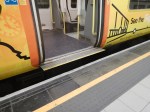
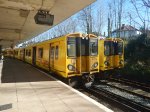
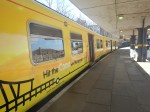
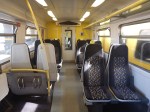
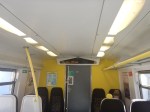
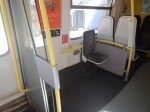
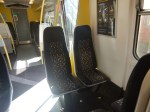
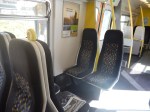
They certainly look to be in good enough condition to see all the new trains into service and through their inevitable teething troubles in the next couple of years.
Conclusion
,The care being taken by Merseyrail and Stadler in the preparation for and design of their new trains, seems to indicate that they are intending to get forty years out of the new fleet.
A Swiss-Style Wheelchair Ramp
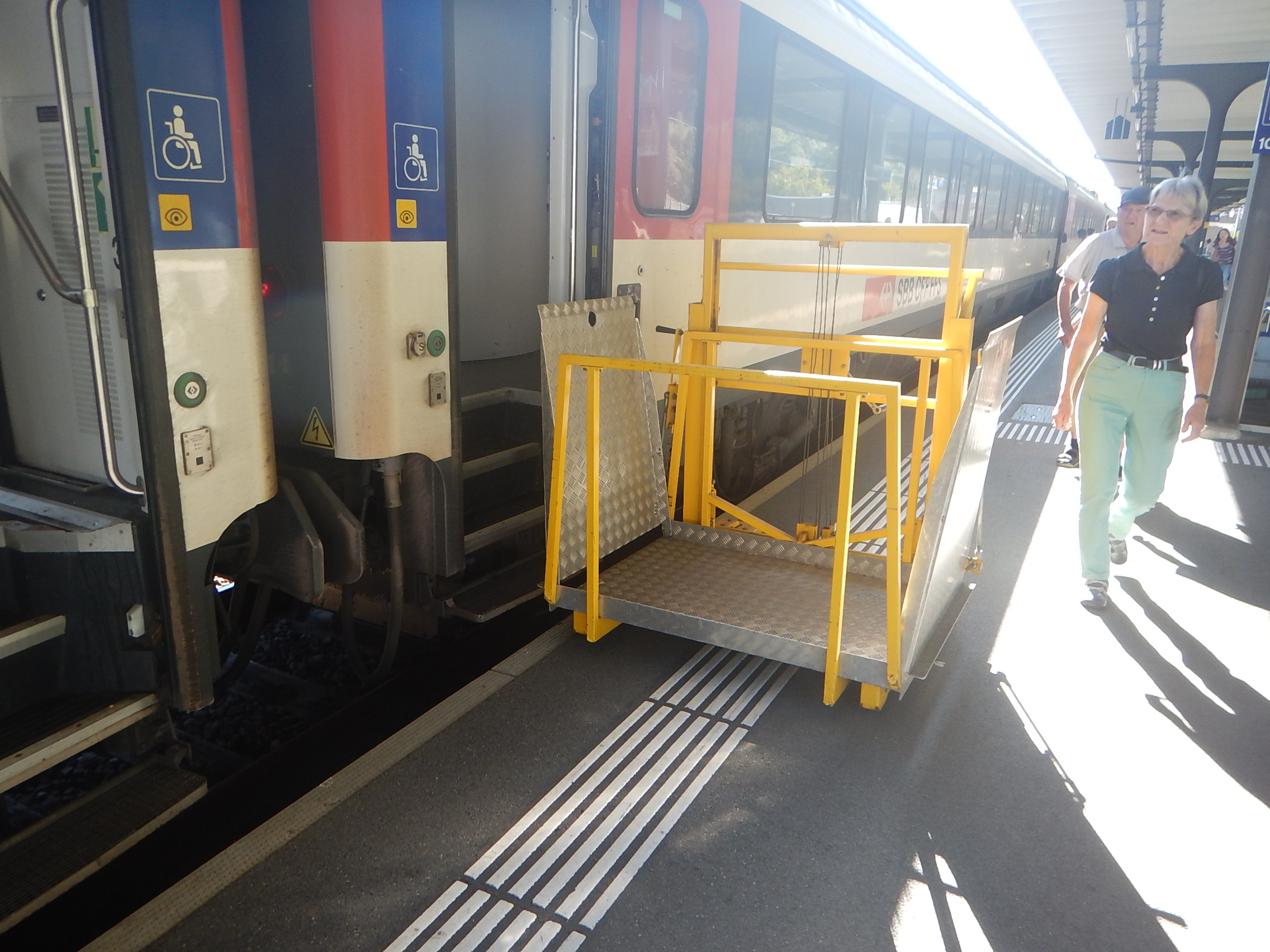
I took this picture of a wheelchair ramp at Interlaken Ost station
At least I noticed several low-floor trains with gap fillers.



I think most of these pictures were taken of trains built by Swiss train manufacturer; Stadler.
I think that this is the way to go.
Stadler are using gap fillers on their Class 777 trains for Merseyrail. This is said in Wikipedia about the design of the trains.
The trains will also have platform gap fillers so wheelchair users will not have to use ramps to board the train.
Will there be step-free access on Greater Anglia’s Class 745 and Class 755 trains?
It’s obviously good for passengers, but what’s in it for train operators?
It’s all about making the dwell time in a station as short as possible.
Between Lucerne And Interlaken Ost Stations On Die Zentralbahn
The Zentralbahn is the scenic railway, that connects Lucerne and Interlaken Ost stations along the Brünig Line. Wikipedia says this about the ownership of the railway.
The Zentralbahn is a Swiss railway company that owns and operates two connecting railway lines in Central Switzerland and the Bernese Oberland. It was created on January 1, 2005, with the acquisition of the independently owned Luzern–Stans–Engelberg line, and the Brünig line of the Swiss Federal Railways.
I don’t know, but as the railway is metre rather than standard gauge, I do wonder, if it was to Swiss Federal Railways, a bit like the Settle-Carlisle Line was to British Rail; Expensive to run, loved by locals and tourists and in need of new investment.
These pictures show the railway.
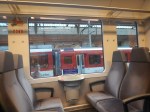







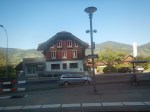






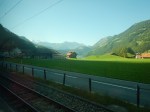






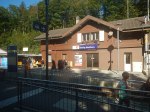




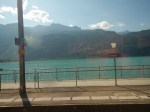

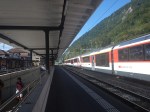
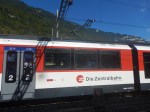
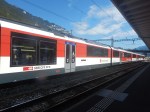
As some of the pictures show, the line was busy in places. and judging by the number of Asian groups on the train, a lot were tourists.
The trains are modern Stadler SPATZ trains.
- Fully-electric.
- Metre gauge.
- They are able to use sections of the line which have a rack to assist climbing.
- Large panoramic windows for good views.
It appears that the three-car train has been designed with all the electrical gubbings in the middle car, with the end sections similar to the Stadler GTW.
Stadler seem to be able to shuffle their ideas and especially, the central power-pack to produce trains for all purposes.
Greater Anglia’s Class 755 trains, and the tri-mode Flirts of the South Wales Metro, will be just more variations on the same theme.
Next Time I Go To The Area
There are two groups of mountain railways grouped at Interlaken and Lucerne, which are linked by the
Brünig Line. The route is not simple and there is a reverse about half-way at Meiringen station.
Searching the web, it appears that there is reasonably-priced accommodation in and around Meiringen.
With a Swiss Pass, which gives a worthwhile discount on the expensive mountain trains, I shall be staying around there on my next trip to Switzerland.
Consider.
- You could fly in to Zurich Airport and buy your Swiss Pass there.
- Lucerne and Interlaken are about an hour away on the scenic Brünig Line.
- Bern and Zurich are close enough for a day trip.
I didn’t explore Meiringen, so check the guides first. But it looked OK from the train.
Zillertalbahn Orders Stadler Hydrogen-Powered Trains
The title of this post is the same as that of this article on the International Railway Journal.
This is the first paragraph.
Austria’s narrow-gauge Zillertalbahn announced on May 15 that Stadler is the successful bidder for a €80m contract to supply five hydrogen fuel cell multiple-units.
The Zillertal Railway is in the Tyrol district of Austria and has a gauge of 760 mm.
It looks like Stadler are supplying another market, that is rather special.
 The Anonymous Widower