Scottish Ministers Approve 200MW Battery Storage Project
The title of this post is the same as that as this article on Solar Power Portal.
These three paragraphs add further meat to the story.
Developer Intelligent Land Investments (ILI) Group has received planning consent for a 200MW battery energy storage system (BESS).
The BESS will be adjacent to the Easterhouse substation near Gartcosh, Glasgow, at Whitehill Farm. ILI Group received Section 36 planning consent, meaning that the BESS is classed as a change to the existing consent granted to the generating substation.
Consent from Ministers follows support for the project from both the Glasgow City Council and North Lanarkshire Council.
ILI seem to be doing well, as they regularly appear in my data searches.
The article sums up ILI Group’s portfolio like this.
ILI Group has a portfolio of over 4.7 GW energy storage projects, including 2.5 GW of utility-scale battery storage and 2.5 GW pumped storage hydro.
They must be doing something right.
ILI Group’s biggest success to date would appear to be developing the Red John pumped hydro power station, which they sold to Statkraft, as I reported in Statkraft To Acquire Major Loch Ness Pumped Storage Hydro Project From Intelligent Land Investments Group.
Conclusion
The batteries and the pumped storage keeps coming in Scotland.
It appears Scotland will not only generate the renewable energy, but store it until it is needed.
As a Control Engineer, my nose is telling me, that Scotland is going to need a few more interconnectors to sell the energy to those, who need it.
Alternatively, it will attract industries, that will need a lot of electricity.
UK To Fund Hydro Energy Storage Projects
The title of this post, is the same as that of this article on The Times.
This is the sub-heading.
New infrastructure aims to help balance the electricity system after the rapid growth in renewables
These three paragraphs infrastructure the article.
Projects that use water to store and release energy are to be given government support, in an attempt to help manage the volatility in supply and demand as more green power enters the grid.
From next year, pumped hydro storage projects will be able to apply for government subsidies, which will be provided via a “cap and floor” mechanism. These would guarantee revenues if prices drop below a certain floor but prevent providers from charging above a ceiling when power prices are high.
Like other government support schemes, any cost will be levied on energy bills, while consumers will be paid back any money generated above the cap. It is yet to be decided precisely how the cap and floor will be set.
I feel it is reasonable to expect the system to be a success, as a similar system is used for interconnectors and this article on Offshore Energy is entitled Over $86 million To Be Split Between UK and Belgium Consumers As 1 GW Subsea Interconnector’s ‘Remarkable’ Revenues Exceed Ofgem’s Cap.
It looks like Ofgem played this right for interconnectors and the Nemo Link is making a substantial payment.
It will be interesting to see what happens when “cap and floor” contracts are assigned.
This move by Ofgem will probably have effects in two areas.
- SSE, Statera and Statkraft, who are typically developing systems at the high end with a size of about 1.5 GW/25 GWh could find money is easier to come by.
- At the lower end, companies like Highview Power, who have systems of 50 MW/300 MWh and 200 MW/2.5 GWh under development, will also benefit.
My Control Engineering thoughts are leaning towards the 200 MW/2.5 GWh systems being the popular ones. Especially as they would appear to be close to the right size to support a 1 GW wind farm for two hours.
A Highview Power Two-Hour Liquid Air Battery could fit nearly with a fleet of Two-Hour BESS.
It should be noted that CAF use a little-and-large approach to theit battery-electric trams in the West Midlands.
A large lithium-ion battery is the main storage device.
A supercapacitor handles the high-frequency response and keeps the power steady.
Pairing a Highview Power Two-Hour Liquid Air Battery and a Two-Hour BESS could achieve the same performance and possibly result in some cost savings.
Fifth Hydro Project Proposed At Loch Ness
The title of this post. is the same as that of this article on the BBC.
This is the sub-heading.
The local community is to be asked for its views next week on plans for a new hydro-electric scheme at Loch Ness.
These three paragraphs introduce the new scheme.
Glen Earrach Energy’s, external (GEE) pumped storage hydro project is the fifth hydro scheme proposed for the Loch Ness area.
The company said its project on Balmacaan Estate would create clean energy while protecting the environment, and create 600 on-site jobs.
But concerns have been raised about the number of planned schemes, with Ness District Salmon Fishery Board worried about the effect on wild fish.
The project has a web site, which has a section entitled About The Project, where this is said.
Glen Earrach Energy, which means “Valley of Spring” in Gaelic, stands at the forefront of energy innovation. The Pumped Storage Hydro (PSH) project, located at Balmacaan Estate, Scotland, is a critical component for achieving a net-zero grid by 2030.
The project prioritises environmental preservation and biodiversity enhancement while achieving outstanding efficiency in energy storage and generation.
This ensures a healthier and more sustainable balance between harnessing natural energy resources and the maintenance and reinforcement of the surrounding ecosystem.
Note.
- It doesn’t say, but it looks like Glen Earrach Energy aim to complete the project by 2030.
- Glen Earrach Energy also seem to be playing a strong environmental card.
But nothing is said about the size of the project.
This article on Business Insider, which is entitled £3 billion Loch Ness Hydro Project Plans Unveiled, does give some details.
- Potential Investment – More than £2 billion
- Output – 2 GW
- Storage Capacity – 30 GWh
- The project could create at least 600 on-site construction jobs in Scotland over a six-year period, plus many thousands more locally in the supply chain.
It is larger, than SSE’s flagship Coire Glas pumped storage hydroelectric power station, which is planned to be a 1.5 GW/30 GWh station, at the other end of the Great Glen.
I have some thoughts.
The Existing Hydro Schemes On Loch Ness
According to the BBC article, there are two existing hydro schemes on Loch Ness.
- Foyers is described on this web site and is a reasonably modern 305 MW/6.3 GWh pumped storage hydroelectric power station, that was built by SSE Renewables in the last fifty years.
- Glendoe is described on this web site and is a modern 106.5 MW conventional hydroelectric power station, that was built by SSE Renewables in the last twenty years.
Foyers and Glendoe may not be the biggest hydroelectric power stations, but they’re up there in size with most solar and onshore wind farms. Perhaps we should look for sites to develop 100 MW hydroelectric power stations?
The Proposed Hydro Schemes On Loch Ness
According to the BBC article, there are four proposed hydro schemes on Loch Ness.
- Coire Glas is described on this web site and will be a 1.5GW/30 GWh pumped storage hydroelectric power station, that is being developed by SSE Renewables.
- Fearna is described on this web site and will be a 1.8GW/37 GWh pumped storage hydroelectric power station, that is being developed by Gilkes Energy.
- Loch Kemp is described on this web site and will be a 600MW/9 GWh pumped storage hydroelectric power station, that is being developed by Statera.
- Loch Na Cathrach is described on this web site and will be a 450MW/2.8 GWh pumped storage hydroelectric power station, that is being developed by Statktaft.
In addition there is, there is the recently announced Glen Earrach.
- Glen Earrach is described on this web site and will be a 2GW/30 GWh pumped storage hydroelectric power station, that is being developed by Glen Earrach Energy.
Note.
- The total power of the seven pumped storage hydroelectric power stations is 4.76 GW.
- The total storage capacity is 85.1 GWh.
The storage capacity is enough to run all turbines flat out for nearly five hours.
Could Glendoe Be Updated To Pumped Storage?
The Wikipedia entry for the Glendoe Hydro Scheme mentions pumped storage several times.
In Glendoe Hydro Power Station, I estimate that a Glendoe pumped storage scheme could be perhaps 50 % bigger than the system at Foyers.
I feel that if more storage capacity is needed in the Highlands, then Glendoe could be converted to pumped storage.
A World First For Liverpool
This article on The Engineer is entitled ABB Grid Balancing Facility Comes Online.
This is the sub-heading.
A significant new project to provide vital inertia across the UK’s electricity grid has gone live at the Lister Drive Greener Grid Park in Liverpool.
This Google Map, shows the Lister Drive Greener Grid Park.
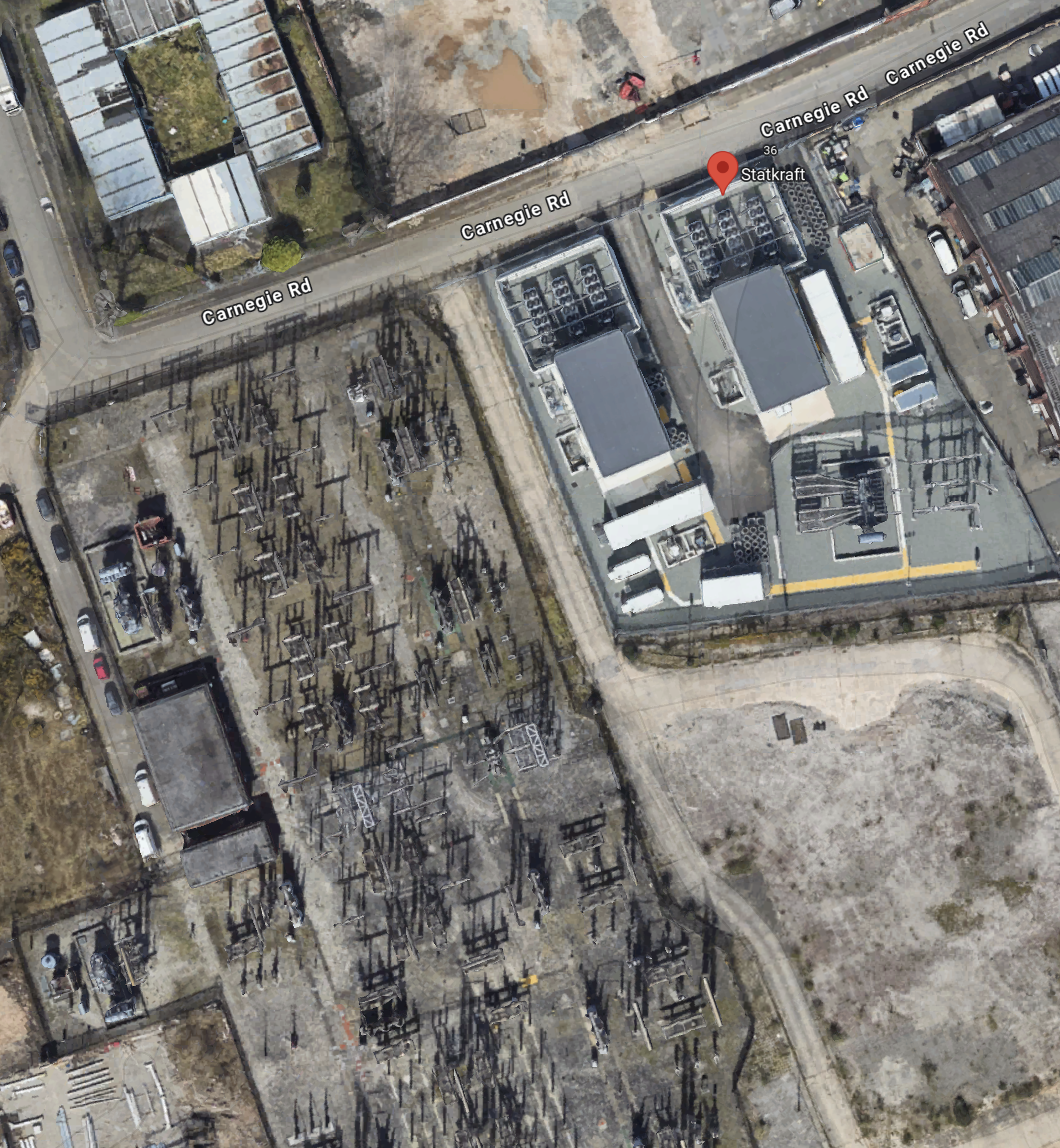
Note.
- The red arrow indicates the location of the pair of synchronous condensers.
- The metal forest to the West of the Statkraft site, looks like a large substation.
These are the first two paragraphs.
Featuring two ABB synchronous condensers, the facility is designed to replicate the inertia currently provided by spinning turbines at coal and gas-fired plants. This inertia is essential for maintaining the correct frequency and voltage across electricity grids, so an alternative source must be installed as thermal generation is replaced by wind and solar, which provide no inertia.
Developed for Norwegian renewable energy firm Statkraft, Lister Drive is the first project anywhere in the world to feature a high-inertia configuration that couples a synchronous condenser with a 40-tonne flywheel. According to ABB, this approach increases the instantaneously available inertia by 3.5 times, ensuring the network frequency and voltage are held stable within the tight limits essential to maintain grid reliability.
In my Electrical Engineering degree course at Liverpool University, I opted out of power engineering, as I preferred Electronics and Control Engineering. So I am indebted to this Wikipedia entry for what a synchronous condenser is and does.
Statkraft seem to be developing several of their Greener Grid Parks, in various places in the UK.
Statkraft To Acquire Major Loch Ness Pumped Storage Hydro Project From Intelligent Land Investments Group
The title of this post, is the same as that of this press release from Statkraft.
This is the sub-heading.
The acquisition demonstrates Statkraft’s latest commitment to helping Scotland meet its renewable energy targets and strengthening UK energy security
These two paragraphed outline Red John and the deal.
Statkraft, Europe’s largest renewable power generator, has agreed to acquire the Red John Pumped Storage Hydro Scheme, from Intelligent Land Investments Group (ILI).
The 450MW scheme, first conceived in 2015, was granted consent by Scottish Government ministers in June 2021. The acquisition demonstrates Statkraft’s latest commitment to helping Scotland meet its renewable energy targets and strengthening UK energy security.
Note.
I wrote about Red John in Red John Pumped Storage Hydro Project.
I have also found a web site for the project, where this is said.
- The scheme has an output of 450 MW.
- The storage capacity is 2,800 MWh or 2.8 GWh.
- The scheme has planning consent.
- The project is budgeted to cost £550 million.
- The construction program indicates that the scheme will be completed by the end of 2025.
It looks to me, that the ILI Group have done all the hard work in getting the project shovel-ready and are passing the project to a bigger developer.
Ireland Awards 3.1 GW Offshore Wind Capacity In First ORESS 1 Auction
The title of this post, is the same as that of this article on offshoreWIND.biz.
This is the sub-heading.
Ireland has selected four projects with a combined capacity of nearly 3,100 MW in the first offshore wind auction under the Renewable Electricity Support Scheme (ORESS 1).
The four wind farms are.
- The 1,300 MW Codling Wind Park owned and developed by a 50/50 joint venture of Fred Olsen Seawind and EDF Renewables.
- The 824 MW Dublin Array owned and developed by RWE.
- The 500 MW North Irish Sea Array (NISA), owned and developed by Copenhagen Infrastructure Partners (CIP) and Statkraft.
- The 450 MW Sceirde Rocks wind farm owned and developed by Fuinneamh Sceirde Teoranta (FST), a joint venture owned by Corio Generation, a portfolio company of Macquarie’s Green Investment Group, and global infrastructure investor, Ontario Teachers’ Pension Plan.
Note.
- That makes a total of 3074 MW.
- All wind farms already have web sites.
- Looking at the web sites, it appears all wind farms will have fixed foundations and some seem to be located on convenient sandbanks.
- This is equivalent to over a third of Ireland’s entire electricity consumption this year and over a quarter of projected 2030 electricity demand.
- This article on offshoreWIND.biz, which is entitled Fred. Olsen Seawind And EDF Renewables Win Big Offshore Ireland, gives more details of the first wind farm.
- This article on offshoreWIND.biz, which is entitled 500 MW for Statkraft And CIP In First Irish Offshore Wind Auction, gives more details of the third wind farm.
- Given SSE’s large presence in Ireland, I’m surprised they didn’t obtain a lease.
The auction results appear to have surpassed the expectations of the Irish government.
Green Hydrogen Production Facility
The title of this post is the same as this project on the Arup web site.
This is the introduction.
Green hydrogen – hydrogen produced using 100% renewable energy – holds promise as a future, low emission energy source. Across the world many players are beginning to explore or invest in its production at scale.
Statkraft are Europe’s largest renewable energy producer and are investing heavily in green hydrogen as an energy source for use in transportation and industry. Statkraft have identified a site in Pembrokeshire for a green hydrogen production facility near to the Haven Waterway Enterprise Zone, an area focusing on developing opportunities within the energy and environment sectors.
This green energy hub will be located on the former Royal Navy Armaments Depot in Trecwn, Pembrokeshire. During development, the site employed over 3,000 people, and it is hoped that this new facility can continue to support highly skilled jobs in the area, while contributing to the Welsh Government’s net zero strategy.
Statkraft have a web page for the Trecwn Green Energy Hub, where this is said about the expected production.
It is estimated that the 15MW hydrogen plant will generate up to 4 tonnes of hydrogen a day, the equivalent of powering a single bus for over 40,000 miles. The hydrogen produced could be used locally for a range of purposes including transport, as a feedstock or heat source for industry and manufacturing, as well as for heating buildings.
This Google Map shows the location of Trecwn in Pembrokeshire.

Note.
- The red arrow indicates Trecwn.
- The port of Fishguard is just to the North of Trecwn.
The site appears to be at RNAD Trecwn, which is a decommissioned Royal Navy Armaments Depot.
This second Google Map shows the remains of some of the site.
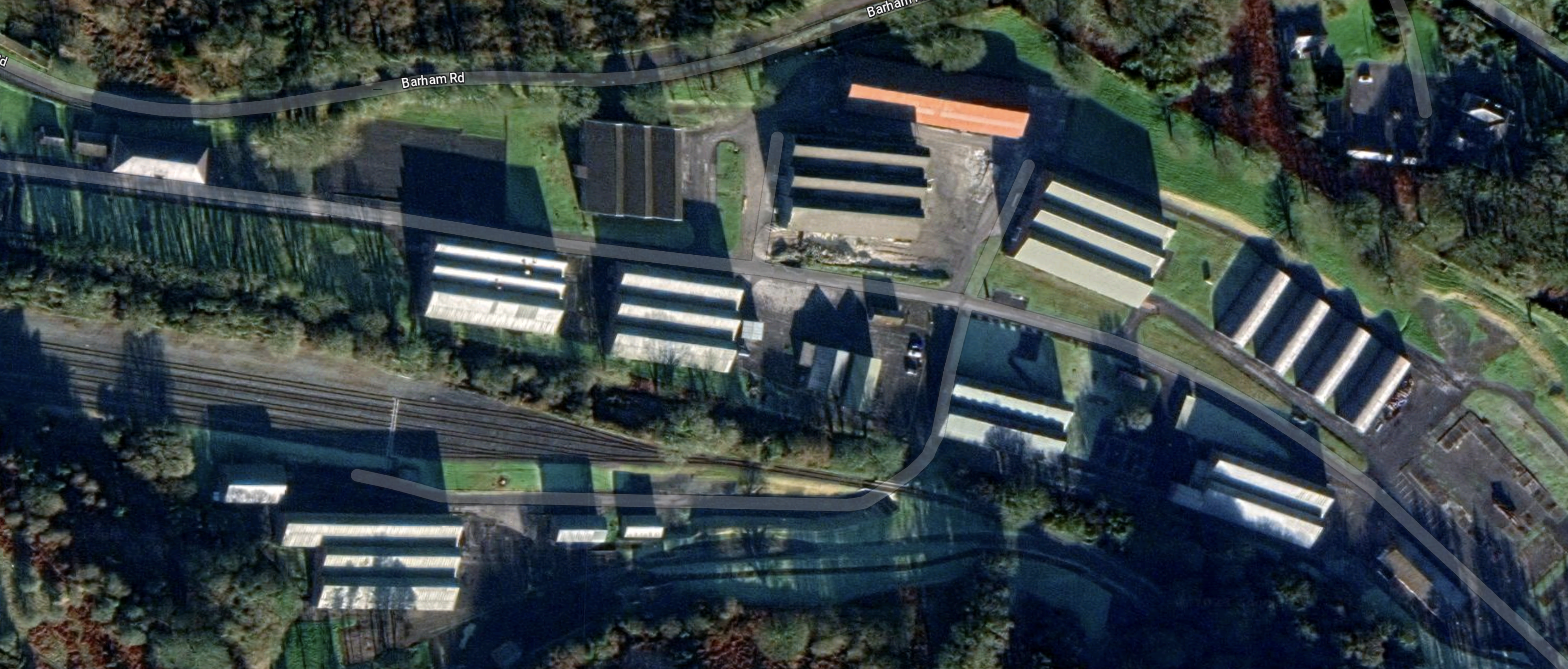
Note the railway line to the site, which is visible in West of the map, which connects to Carmarthen, Fishguard, Milford Haven and Pembroke Dock.
Wikipedia says this about its condition.
Network Rail have not only kept the railway connection operational, but refurbished it to allow the site to develop as an Intermodal freight traffic distribution site from Fishguard.
Note.
This would surely enable local trains, port operations, railway locomotives and ships to be hydrogen-powered.
- Trains and railway locomotives could be filled on the site.
- Buses and trucks could be filled on the site.
- Ports could be supplied by hydrogen trains.
- Strangely, I’ve not seen a design for a short hydrogen delivery train, which would be needed to supply the ports. But I doubt, it would be difficult to design and build.
All the Health and Safety protocols could probably easily be created, given the former use of the site.
Conclusion
Statkraft seem to have chosen an ideal site for the hydrogen electrolyser.
 The Anonymous Widower