They’re Not So Silly In Suffolk
I once had a letter published in The Times after C died, in which I praised the joined up thinking, between the Registrars and the Council, which got me a virtually automatic Council Tax reduction.
Have you ever wondered what happened to all those businesses, that were displaced by the Olympics in Stratford?
Quite a few ended up in Haverhill, as St. Edmundsbury Council thought that would be a good place to relocate and they had the sites available. So the Council achieved the highest rate of inward investment of any Council in England in 2012, by some intelligent marketing of the businesses to be displaced. One unlikely story, I heard, was that someone from the Council walked around and knocked on doors!
BBC Breakfast was joking this morning that Bury St. Edmunds-based brewer, Greene King have an export boom to China after David Cameron took the Chinese leader to the local pub and gave him a pint of Greene King IPA.
It’s all reported in this article in the Guardian, entitled Greene King strikes gold as Chinese demand soars after Xi Jinping pint.
Sudbury To Cambridge – D-Train, IPEMU Or Tram-Train?
In D-Trains For East Anglia? I reported on how possible Anglia franchisees, were looking at using Vivarail D-Trains between Marks Tey and Sudbury on the Gainsborough Line.
So as someone, who lived by the disused line from Sudbury to Cambridge Line via Haverhill for nearly twenty years, I have views on whether this route should be opened.
The Case For Reopening
After my stroke, for a year, I lived just North of Haverhill, in the middle of nowhere. The only way to get to say Cambridge, Ipswich or London, was to get a taxi to either Newmarket and get a train or Haverhill and get a bus.
As with many people, a station in Haverhill would have given me an alternative route, using a cheaper taxi!
But for many who live along the Stour Valley getting to Cambridge and its employment opportunities means the car or a bus.
Haverhill is now a town of 30,000 souls and when the line closed, the population was under a quarter of that figure.
So although the case for closure of the Stour Valley Railway in 1967, was strong, there is probably just as strong a case to provide a high-quality public transport system between Sudbury and Cambridge via Cavendish, Clare and Haverhill.
The Route Today
Much of the route is still there, although in places it has been built upon.
But I believe, as do others, that a single-track railway with passing places could be built between the West Anglia Main Line, just South of Shelford station to Sudbury station on the Gainsborough Line thst connects to the Great Eastern Main Line at Marks Tey station.
If the line is built mainly single-track, this would be more appropriate for an area of outstanding natural beauty and it would make it easier to squeeze the line into difficult places like the station at Sudbury, which is shown in this Google Map.
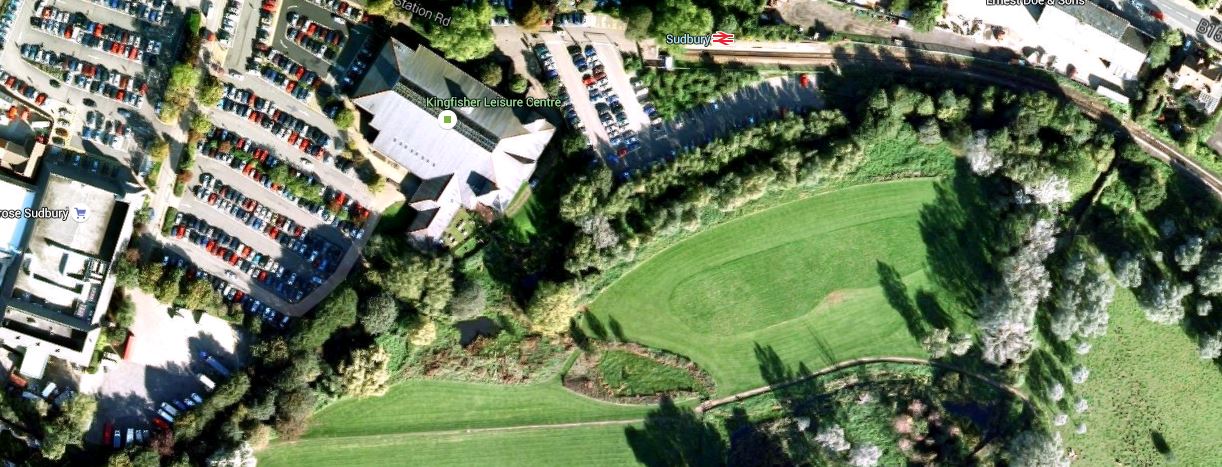
Sudbury Station
The route of the overgrown disused rail line, goes out towards the South-West.
The route of the line is still visible in the other major town on the line; Haverhill. It is shown on this Google Map.
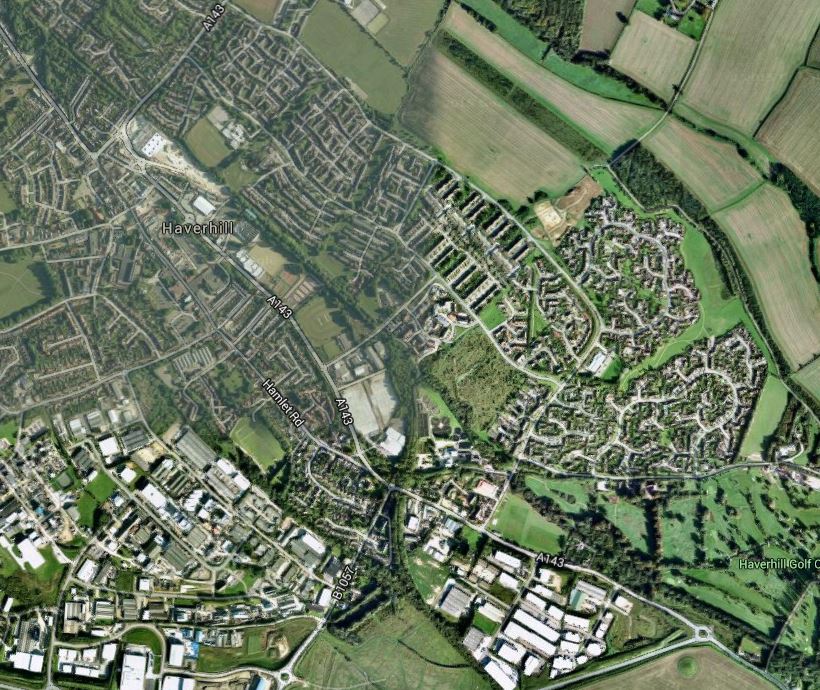
The Railway Through Haverhill
The railway goes across the town from North-West to South-East. It does split with one branch going South over a massive brick viaduct and the other going East towards Clare, Cavendish and Long Melford.
Much of the line now is a footpath through the town, which I suspect could share the route with a single-track railway or tramway. Tesco’s probably wouldn’t mind if the station was just to the North of their massive car-park.
I suspect that all stations would be designed to be as simple as possible.
Several of those on the new Borders Railway like Eskbank, Galashiels, Gorebridge and Newtongrange are well-designed single platforms and some have no means to cross the railway.
Stations like these would be practical and unobtrusive.
Possible Rolling Stock
Because of the limited nature of the track, which as I pointed out could possibly be mainly single track, I think that some types of rolling stock can be ruled out.
If say, the line was to be run using something like two or three-car Class 168 trains, there could be capacity, vibration and noise problems.
So I think we’re left with the following.
- D-train or Class 230 trains
- IPEMUs
- Class 399 tram-trains
I shall now look at each in detail.
Class 230 Trains
Class 230 trains or D-trains have been talked about as possibilities for the Gainsborough Line and these conversions from London Underground D78 Stock could certainly travel easily between Marks Tey and Shelford, before going on to Cambridge.
Other than possible hostility to their origin and second-hand provenance, I can see other problems with these trains.
- When running between Shelford and Cambridge, would they get in the way of faster trains to and from London and Stansted.
- Would they have a noise and vibration problem, as they trundled through quiet villages?
- Extending the service at either end to perhaps Colchester and Cambridge North might be difficult.
- They would have a shorter life-span than the other options.
But we haven’t seen a Class 230 train in service yet.
IPEMUs
IPEMUs or battery-powered trains have only been seen briefly on UK railways and that was at Manningtree, where Bombardier and Network Rail ran the prototype in a successful trial in public service.
They are full size four-car electric trains and could run from Marks Tey to Shelford on batteries, charging up on the electrified main lines.
In addition they would have the following other advantages.
- They have a high-capacity, with all the facilities that all types of passengers could want or need.
- There could be no need to put up any overhead wires between Marks Tey and Shelford.
- They would probably have a very low intrusion factor into the environment.
- When they are on the main lines, they become normal trains, so there would be no disruption to other traffic.
- They could also extend the service to between say Colchester and Cambridge North.
Perhaps the only disadvantage of IPEMUs, is that being full-sized trains, the railway might have to be fully-protected with fences.
Class 399 Tram-Trains
Class 399 tram-trains are the unusual one of the three. But in some ways they are the most versatile.
They are a three-car high-capacity 100% low-floor tram, very similar to those you see in Blackpool, Birmingham, Croydon or Nottingham. But in addition to being able to run using a tram 750 VDC overhead supply, they can also run as a train using the standard 25kVAC supply of the main line railway.
They combine the best characteristics of both means of transport.
In the next couple of years they will be trialled in Sheffield on an extension of the Sheffield Supertram to Rotherham.
For those that worry about the technology, several German cities have large systems of mixed trams, trains and tram-trains, so it is not by any means untried. Especially, as a Class 399 tram-train is a German standard tram-train, modified for our overhead voltage, which incidentally is much more standard, than the German’s 15kVAC.
The tram-train would start at Cambridge or Cambridge North stations and run as a tram to Shelford station, where it would become a tram running on the route of the Stour Valley Railway all the way to Sudbury, where it would continue along the Gainsborough Line to Marks Tey, where it could use the overhead wiring to go to Colchester if required.
A Class 399 tram-train would have advantages and disadvantages compared to say the IPEMU.
I’ll deal with the disadvantages first.
- It is a three-car tram of slightly smaller capacity than the four-car IPEMU.
- It would need to have a track electrified to 750 VDC using a simple overhead catenary.
- They have tram interiors and no toilets.
- They are slightly slower on train sections, than the IPEMU.
But it does have advantages too.
- They are 100% low-floor vehicles, so have comprehensive step-free access.
- Stops can be a very simple design without any expensive foot-bridges, lifts or long disabled ramps. Just like Croydon for example!
- They are good sight-seeing vehicles for a beautiful part of the country
- When the line allows it, they can get up to speeds of nearly 70 mph on a main line railway.
- Tram-trains have all the flexibility and manoeuvrability of trams, so they can go off for a meander rather than a direct route, if necessary.
- If used between Cambridge and Marks Tey,instead of going direct from Cambridge to Shelford, they could take a loop around the Addenbrooke’s site.
- Or perhaps if they turned at Cambridge North, they could perhaps do a tour of the Science Park rather than a simple reverse.
It is a terrible pity that the Cambridge Guided Busway was designed before tram-trains became a viable alternative.
Conclusions
It is very much a case of who pays the money makes the choice.
- The Class 230 train is a remanufactured train that doesn’t need any expensive electrification, but may have noise, vibration and performance issues.
- The IPEMU is a brand-new train that doesn’t need any expensive electrification and has all the performance, comfort and facilities of any modern full-size electric train.
- The Class 399 tram-train is also brand new, needs only simple electrification and infrastructure and has all the performance and flexibility of a tram coupled with many features of a full-size electric train.
If the choice was down to me, I would discount the Class 230 train, but only because the other two solutions are new and not remanufactured old ones, which will have to be replaced at some time.
So why not have the new IPEMUs or Class 399 tram-trains, both of which would probably give first-class service for a large number of years?
Both the new trains are types of trains, that will be common on the UK rail network, so as the knowledge base increases we’ll probably find ways of using them both to create very high-class public transport systems.
Choosing between the two new solutions is extremely difficult.
As neither has run in extended service on the UK rail network, I feel that for the moment I’ll duck that difficult choice.
As an aside, this analysis has proved to me, that the Cambridge Guided Busway may have been a good decision at the time based on the knowledge available, but with the arrival of IPEMUs and tram-trains, it is very much a technology that few will choose in the future.
Better East-West Train Services Across Suffolk
The east-west train service across Suffolk is better than it was, but I’ve just read in a Network Rail study entitled Improving Connectivity, about a radical proposal to greatly improve services.
At present at Ipswich station, in addition to the main line services, there are hourly services to Cambridge, Felixstowe and Lowestoft, with a two-hourly service to Peterborough.
From a passenger point of view it is not good at times. In the past I have been irked by.
- Trying to get between Newmarket and Felixstowe, which often means a not very short wait on Ipswich station.
- The lack of a late night train back to Newmarket from Ipswich.
- Bad connectivity between London services and the various branches.
It may be better now and some of the proposals in the latest franchise documents will certainly help.
One document I’ve read, talked about direct services between London and Lowestoft. When I moved to Suffolk in the 1970s, this route was served a couple of times a day.
But one proposal in the Network Rail study must be taken seriously.
The study proposes creating an island platform at an updated Newmarket station and running a direct service between Newmarket and Peterborough via Ely. The study describes the proposal like this.
To solve this dilemma, The direct Ipswich to Peterborough service is replaced by a Newmarket to Peterborough service, running via a reinstated Warren Hill Junction – Snailwell Junction chord, as shown in Figure 3.2. A semi-fast Ipswich to Cambridge train connects into this service with a cross-platform connection at a reconstructed Newmarket station.
No services are duplicated and connections at Ipswich are simplified: the East Suffolk line arrival need only connect with the Cambridge train. This method of operation combines two markets on one train, achieving a 35 per cent reduction in train miles and halving the number of passenger train paths required on this busy freight corridor. In addition, Newmarket gains a direct service to Peterborough.
So one new short chord and a reconstructed Newmarket station, dramatically improve the passenger train services across Suffolk, whilst giving more much-needed space in the schedules for freight trains.
This map shows the area between Newmarket station and Warren Hill – Snailwell.

Newmarket’s Railways, Racecourses and Training Grounds
Note that the line through Newmarket station goes in a tunnel under the training grounds of Warren Hill before turning to the East to connect to Bury St. Edmunds and Ipswich. The new chord would connect between the Newmarket to Bury Line and the Ely to Bury Line.
Hopefully, Network Rail has safeguarded the route and hasn’t sold the land to some, who would oppose the plan.
If I read Network Rail’s proposal correctly, there would be an hourly Newmarket to Peterborough service, which would provide a cross-platform interchange with an hourly semi-fast Ipswich to Cambridge service.
Given that Abellio Greater Anglia were part of the IPEMU tests between Manningtree and Harwich, I suspect that both the Peterborough to Newmarket and Ipswich to Cambridge services would be run with four-car IPEMUs.
In my view it is a very good starting plan, but it does raise a few questions and interesting possibilities.
- IPEMUs would be faster than the current diesel trains and would also offer an increase in capacity.
- Would IPEMUs take over the Cambridge to Norwich, Ipswich to Lowestoft and Ipswich to Felixstowe services?
- Newmarket racecourse is an incredibly popular venue and the current Newmarket station has inadequate capacity for racegoers. More four-car IPEMU trains from Cambridge, Ipswich, Ely and Peterborough calling at the station can only increase total capacity.
- As now, I suspect a shuttle bus will be provided, between station and racecourse.
- A simple one-platform Newmarket Racecourse station could even be built on land owned by the Jockey Club on the single-line section of line to the West of the town, which would be about a kilometre walk from both racecourses.
- Cambridgeshire County Council have had plans for a long time to reopen Soham station. This would be on the hourly Newmarket to Peterborough service, which would men that with one change you could be in Cambridge or Ipswich.
- If Soham is worth reopening, why not reopen Fordham station.
- How would the new station at Cambridge North fit in and affect services in the area?
I think that when and if the full proposals arrive, they will have some extra features.
An uprated service from Cambridge to Ipswich will require some reorganisation at Ipswich.
Over the last few years, freight traffic through Ipswich station has eased due to ther opening of the Bacon Factory Chord which allows diesel-hauled freight trains to go directly between the Felixstowe branch and the Midlands and North via Stowmarket.
The Newmarket reorganisation will also release extra paths through Ely and Peterborough and there could be scope for improving the efficiency of Ipswich station.
Given that services will arrive from and leave to Cambridge, Lowestoft and Felixstowe, every hour. Surely, a platform layout could be found, so that they all used the same part of the station and passengers just walked across.
Imagine the benefits to passengers if say you were going between Beccles and Peterborough and you just walked across between trains at Ipswich and Newmarket.
I suspect that Network Rail and Abellio have an excellent idea for Ipswich station, filed under Cunning Plans.
Would it also be worth improving patterns at Ely?
This Google Map is from Railways in Ely in Wikpedia.
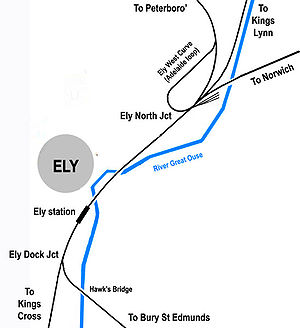
Ely Lines
It is complicated. These are my thoughts.
- The layout would appear to work quite well now,but will it cope with Cambridge North station?
- Cambridge North station will probably generate a lot of traffic and with some reorganisation, passengers might even be able to walk across or just wait for the next train at Cambridge or Ely, to be on their way.
- But in some cases, changing will mean climbing over the bridge at Cambridge or using the subway at Ely.
- Ely station should cope with any extra services on the lines to Ely and Norwich.
- There is also the issue of a possible Wisbech branch at March.
So will we see changes to the track layout at Ely?
I think the answer is yes!
But upgrading Ely does throw up one important question.
When the Cambridge Guided Busway was built, I didn’t think it was the best solution, but I had no real idea what would have been best.
I now wonder, if the ideal transport system for the route of the Cambridge Busway has arrived in the form of the tram-train!
If you look at the route from Huntingdon through Cambridge to Addenbrookes, it’s very much linked to the railway lines through the city. Most of the extensions proposed for the busway could be performed by tram-trains in tram mode. One proposal from Huntingdon to Peterborough, is typical of many systems, I’ve seen in Germany.
But it is too late now to change that decision.
One thing though that surprises me, is the amount of undeveloped land there is on either side of the railway line, where the Cambridge North station is being built. It could be possible to create a a tram line to connect Cambridge North station to the Cambridge to Ipswich Line. Thus tram-trains could go from both Cambridge North and Cambridge stations to Newmarket and then on past Fordham and Soham to Ely, where with a short chord they could turn south to the Cambridge stations.
Obviously, a real route would be based on the proposed developments and passenger traffic, but there are a lot of possibilities to use tram-trains to serve the towns and villages around Cambridge from the existing heavy rail lines.
At the Southern end, how about Shelford to Haverhill and onto Sudbury to then take the Gainsborough Line to Marks Tey?
I suspect that a single-track tram with passing places could handle tram-trains on a route not far removed from the route of the old Stour Valley Railway.
A lot of serious thinking can be done!
Bernie Gets Out Of Jail
There is a report on the BBC about how Bernie Ecclestone has paid a very large fine to end his bribery trial. This is the start of the report.
A German court has agreed to end the bribery trial of Formula 1 boss Bernie Ecclestone in exchange for a $100m (£60m) payment from him.
Mr Ecclestone’s offer was based on an existing provision in German law.
I would suspect that there are only two other people in history, could have extracted themselves from the predicament in which Bernie found himself.
Machiavelli himself and Cardinal Thomas Wolsey.
And of course like Wolsey, Bernie was born in Suffolk.
Suffolk is a county of England unlike any other. Someone described it as curious, but I disagreed in this post calling it independent and forgotten.
Bernie is definitely independent, but he will never be forgotten.
East Suffolk Gets A Community Rail Partnership
The two East Suffolk Lines out of Ipswich to Felixstowe and Lowestoft are being proposed for a Community Rail Partnership. It’s reported in Modern Railways, but strangely not in the East Anglian Daily Times.
I have travelled these lines occasionally over the last few years and still go to my long-suffering dentist in Felixstowe. I have only been to Felixstowe once since the opening of the Bacon Factory Curve, but it does appear that this development has made trains on the East Suffolk Lines more reliable and better to time.
The Ipswich to Felixstowe branch, must have one of the simplest schedules anywhere on the UK rail network. A single Class 153, just trundles up and down the line every hour over a dozen times a day.
A Community Rail Partnership can only benefit the line.
So what enhancements would I like to see on the Felixstowe branch.
A two coach train should probably be used, as at times the line gets busy and increasingly there are passengers with bicycles.
But the line doesn’t necessarily need a train with a toilet, as Ipswich and Felixstowe stations both have excellent facilities.
One thing I’d like to see is better interfaces with the buses at Felixstowe, but as ever the information is as visitor-unfriendly as you will find. It should at least have a town circular that goes to all the important places in the small town, arriving and leaving at the station convenient for the trains.
It should also have bike hire.
So let’s hope the Community Rail Partnership improves the line.
One possibility that might happen is electrification to Felixstowe Port, which would completely transform this line, Then an old electric multiple unit with perhaps three coaches, could be saved from the scrapyard and given a well-deserved sprucing up and retirement on the Suffolk coast.
I don’t know the Lowestoft line as well, but properly looked after by a Community Rail Partnership, it could be a serious asset to the towns on the route.
One thing is missing from the services back to London from Lowestoft and Felixstowe is the lack of a late train to get back to Ipswich and on to London.
The last train from Lowestoft leaves after nine on most days and at 20:05 on Sundays, whereas the last train from Felixstowe leaves just before half past nine all the week.
It’ll be good to see how the rail services develop in this proud part of Suffolk.
The Future Of Railways In East Anglia
There are several major drivers of growth in the usage of the railways in East Anglia, which for the purpose of this analysis is the four eastern counties of Cambridgeshire, Essex, Norfolk and Suffolk.
Freight
The Port of Felixstowe and to a certain extent those of Harwich, Great Yarmouth and London Gateway are going to add considerably to the number of trains trundling around the railways of East Anglia. The interim destinations of these trains for onward journeys to the rest of the country will be London and Peterborough, using either the Great Eastern Main Line, the Ipswich to Ely Line or the London, Tilbury and Southend Line.
The LTS is mentioned as it is being connected to the London Gateway Port by a rail link and not all traffic will be directed through London.
Tourism
East Anglia has always earned a lot of income from a wide variety of tourism, from birdwatching to food and real ale and sailing to horse racing.
Many of the tourism hot-spots for East Anglia like Norwich and Cambridge already have a good rail service, although much of it is London-centric. Other places like Newmarket, Bury St. Edmunds and Great Yarmouth have the rail links, but don’t have frequent trains, but there are tourism hot-spots that are difficult to get to by public transport.
High Technology
Driven by Cambridge, high technology will be a big driver of growth in the area, but how will it effect the railways?
It already has.in that a station is being built at Cambridge Science Park, although I didn’t see any sign of construction, as I passed through yesterday. But the station is scheduled to open in 2016.
Just as with tourism everywhere, the high-technology sector in Cambridge, will generate increased passenger traffic. Just as London uses every place it can find in the South East of England as a dormitory, Cambridge will draw in workers from all the nearby towns.
But the high-technology itself will spill out from Cambridge into the surrounding towns, further increasing demand for rail services in places like Norwich, Peterborough, Newmarket and Bury St. Edmunds and possibly even unfashionable towns like Haverhill and Ipswich.
Thameslink
When Thameslink opens to Cambridge in 2018, it will be a massive feeder of passengers into the western side of East Anglia. The provisional timetable shows four semi-fast 12-car Class 700 trains to Cambridge every hour, as opposed to the two 8-car Class 365 trains at present. This will go a long way to reversing the dominant commuter flow from into London to out of London.
Incidentally, no plans have been published about what happens to the Kings Cross-Cambridge-Kings Lynn service using Class 365 trains after Thameslink opens.
If it is assumed that the current trains still go into Kings Cross, then that would mean about a quadrupling of the number of seats between Kings Cross/St. Pancras and Cambridge in each hour. If they don’t it’ll be a tripling of seats.
I know the line is crowded, but this does seem a hell of a lot of seats.
Crossrail
You might say that an east-west cross-London link won’t have any effect on East Anglia! But it will! And in ways we just don’t expect!
A fellow Ipswich supporter drives up to every home match from near Tonbridge over the Dartford Crossing and up the A12. He has stated that after Crossrail, he’ll drive to Abbey Wood and get the train to Liverpool Street for a fast train to Ipswich. I suspect Crossrail with its direct access to Liverpool Street, Heathrow and Reading will alter the travel habits of many travellers, going to and from East Anglia.
Improved Electrification
To my untrained eye, the overhead electrification being erected in the Liverpool-Preston-Manchester triangle is going up a lot faster and more robustly, than we would have expected a few years ago.
We’re just getting much better at it!
Remember too, that one of the major costs f railway electrification is getting the power to the track. Where electrification is tacked on to an existing system, it is a lot easier and more affordable.
Improved Signalling
Over the next decade signalling will move into the cabs of trains. It is a massive hidden project being undertaken by Network Rail, as is described here. This first two paragraphs say it all.
This tried and tested system will replace traditional railway signals with a computer display inside every train cab, reducing the costs of maintaining the railway, improving performance and enhancing safety.
It will offer a host of benefits to the railway and the application of its cab signalling component, the European Train Control System, ETCS, will spell the end for traditional signalling.
Who’s to say what difference this will make.
If it does nothing else, improved signalling will help slot all those freight trains between the passenger trains.
No More New Diesel Trains
I think it is very unlikely any new diesel trains will be built, although refurbished ones might come available, as lines are electrified.
Are any actually on order at the moment for any line in the UK? There are some Class 66, Class 68 and Class 88 diesel locomotives, but I can’t think of any diesel multiple units in the pipeline.
On the other hand, Thameslink, Crossrail and the London Overground will release a lot of electric multiple units, that will be very good candidates for a full refurbishment.
So what do I think will happen to railways in East Anglia in the near future?
Service Expectations
There are five major stations in East Anglia; Cambridge, Ely, Ipswich, Norwich and Peterborough. The service frequency between Ipswich and Norwich is one train every half hour, so it is probably a reasonable expectation that this is the frequency between any pair of stations
Outlying stations such as Felixstowe, Great Yarmouth and Lowestoft generally get an approximately hourly service from the nearest main town, so this should be maintained.
If we insist on half hour service frequency between Cambridge, Ipswich and Norwich, then this means that important stations like Bury St. Edmunds, Diss, Newmarket, Stowmarket and Thetford would get a half hour service frequency too.
This would mean that journeys like I did once from Newmarket to Great Yarmouth changing at Stowmarket and Norwich would be a lot easier.
Norwich in Ninety?
I’ve talked about this before here, and so has the BBC.
With the completion of the Bacon Factory Curve, one of the first projects to achieve the Norwich in Ninety goal has been completed. It will be interesting to see if London to Norwich on-time statistics improve, just as I feel they have on the Felixstowe branch.
I’ve just found this Network Rail press release, about improving the track at Colchester, which is work that is going on now. Will be see a lot more of these smaller engineering-led projects over the next few years to achieve Norwich in Ninety?
I think the answer is yes!
Network Rail’s Great Eastern Main Line engineers have lived off table scraps for years. But now that there is a political will to get something done, the fag packets and used envelopes will be retrieved from the bin and over pints of real ale in country pubs, they will be turned into viable projects.
My only question on Norwich in Ninety is that it is a typical project title chosen to ring well in the press. I wonder what is the minimum time, that has been revealed by the envelopes.
It certainly won’t be ninety!
You do have to wonder if there is anything more to come from the nearly forty-year-old Class 90 locomotives that push and pull the trains to and from Norwich. The engineers have won awards for the most improved trains, so there can’t be much improvement left. Hopefully any chances in the deterioration of the engines has been minimised.
I certainly look forward to my first sub sixty minute run to Ipswich.
Electrification Of Ipswich To Ely
I would assume, as this line all the way to Peterborough and eventually to Nuneaton has been recently cleared to take the larger freight containers that the line also has sufficient clearance to allow overhead lines to be erected.
So as the number of freight trains on this route is large, this line must be a prime candidate for electrification all the way to Nuneaton. Especially, as it crosses numerous electrifed lines, which would mean getting the power to the line won’t be too difficult.
I also found this article on Railfuture. They say this about creating an East-West electric spine.
Similarly to the already planned Freight Spine from Southampton, one from East to West would also be strategically beneficial. This would involve electrification of the whole line from Felixstowe to Birmingham, already being upgraded to take more freight trains by, for example, the new chord at Nuneaton. Broken down, Felixstowe to Ipswich would also facilitate through electric haulage for freight trains to/through London. Ipswich to Peterborough would gain access to the East Coast Mainline. Peterborough to Leicester (Syston) would do the same in respect of the Midland Main Line. Leicester (Wigston) to Nuneaton for the West Coast Mainline, and Nuneaton to Birmingham for all its freight terminals. A most useful bi-product would be for the Cross Country passenger service from Birmingham to Stansted Airport to convert to electric trains.
That all seems very sensible. Note the bi-product of releasing some much needed diesel multiple units, which would probably be replaced by larger electric units.
Electrification Of The Felixstowe Branch
As Railfuture said in the extract I used above, if you electrify to Nuneaton, you might as well electrify the Felixstowe branch, as that would virtually make the line electric freight only.
Electrification Of Ipswich To Cambridge
If the main Ipswich to Ely line is electrified, it may seem logical to also electrify the single track Cambridge branch of the line. But this may not be that easy, as there is a tunnel under Warren Hill at Newmarket and the line loading guage of the line hasn’t been updated.
But obviously, if the whole Ipswich to Ely and Cambridge system, it would make it easier to increase passenger capacity due to the easier availability of electric multiple units.
Electrification Of Ely To Norwich
There are no freight reasons to electrify the Breckland Line, but it is effectively fill-in electrification between two electrified lines, which should make it easier.
It is not cleared to a big loading gauge except around Ely, but many of the bridges are new, so I would suspect there wouldn’t be that much expensive bridgework to make the line suitable for electrification.
Unfortunately, the long distance service from Norwich to Liverpool couldn’t be converted to an electric traction, as it will still use non-electrified lines in the Sheffield area, but Nottingham trains could go electric if Nottingham to Grantham was electrified.
Consequences Of Electrification Of Ely To Peterborough
If Ely to Peterborough is electrified and the passenger trains were to run say every thirty minutes, then there would be less need for the diesel trains from Birmingham, Liverpool and Nottingham, to travel to Ipswich or Norwich, as there would just be a simple change to or from an electric train at Peterborough.
Electric services such as Cambridge to Peterborough via Ely could also be as traffic dictated, rather than infrequent as they are now! Peterborough to Cambridge services are important, as many in Cambridge feel that Peterborough could be a high-technology satellite to Cambridge. There have been proposals to extend the Cambridge Guided Busway to Peterborough, but I suspect a rail link might be preferable to passengers. The current rail service takes fifty minutes and runs once an hour, which isn’t good enough for a lot of people.
Would a frequent service between Cambridge and Peterborough, also improve employment prospects in the area?
Electrification Of The Great Yarmouth Branch
When I first moved back to near Ipswich in the 1970s, the London to Norwich trains went on to Great Yarmouth. Even in the 1980s, I can remember taking a direct train to Great Yarmouth from London to see a horse run at the racecourse there. But now, there are no direct services, except in the summer.
If the line was electrified, it would surely make it easier to more services to the town and possibly direct services to London.
Perhaps if the Breckland Line was electrified and running at the oreferred half-hour service, then every other train could be extended to Great Yarmouth. Or perhaps all of them?
The possibilities are endless.
One benefit of an electrified railway is that it might breathe new life into the outer harbour, which seems to suffer from white elephant syndrome.
Further Electrification
I don’t think any of the other branches would be worth electrifying.
Last year the electried Braintree branch carried about 800,000 passengers, whereas the Sudbury branch carried about 328,000. Felixstowe incidentally carried about 210,000, but whether that branch gets electrified depends on the freight traffic.
New Stations
East Anglia is already getting one new station at Cambridge Science Park, with another proposed for Great Blakenham, if the SnOasis gets built.
A couple of new stations have been added in East Anglia in recent years and I suspect that in the next few years several could open, especially where new housing or other developments are concerned.
New And Reopened Lines
As I said in the post about the North Norfolk Railway, most schemes for new lines have connotations with pie and sky.
Although, there will be conversion of some lines from single to double track and there could be the odd curve to allow trains to go a better route.
The only line which has been mentioned seriously for reopening, is a freight line between Spalding and March. I can’t find much detail, but I suspect it would allow freight trains from Felixstowe to the North to bypass Peterborough and join up with the GNGE, which I talked about here.
Conclusion
After reading this again in the cold light of day, the key is to electrify the main lines and this gives frequent at least half-hourly services between the major towns and cities.
Isn’t this what Essex has got into Liverpool Street? So we’re only continuing what was started after the Second World War and applying to the rest of East Anglia. If we can have a half hour service between Norwich and Ipswich, surely everyone is entitled to at least that.
Ranging Around Suffolk And Norfolk
I took the 09:30 Mark 3 express out of Liverpool Street station to Ipswich, buying a Day Ranger ticket for East Anglia north of Ipswich and Cambridge on the way from the conductor on the train for £11.40.

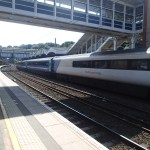
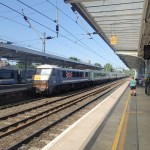
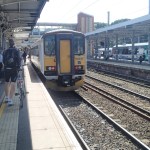
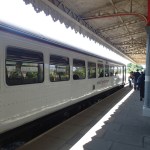
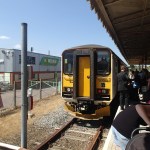

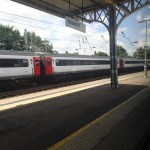

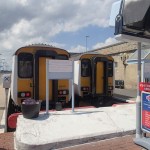
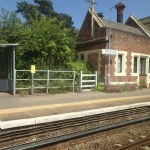
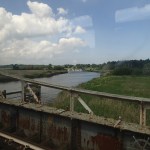
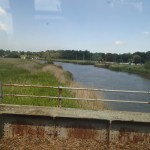
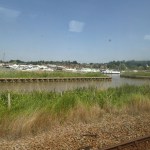
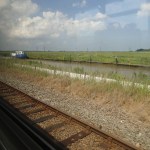

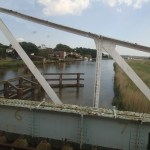

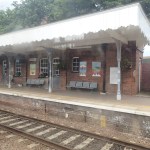
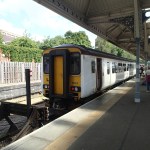
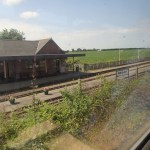
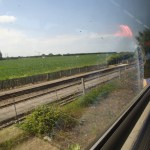


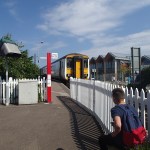
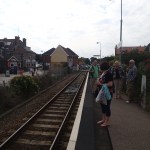
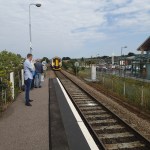

I hadn’t really decided on a route, but I started by taking the single coach Class 153 to Felixstowe and back.
The service between Ipswich and Felixstowe is now nearly twenty trains each way in the day and it seems to be more reliable since the Bacon Factory Curve has opened, which means that the service doesn’t have to thread its way through freight movements in Ipswich yard. Hopefully incidents like the one I suffered here, will happen less often.
When I lived in the town in the early 1960s, there were just a handful of services each way. It did wonders for a teenager’s social life when you didn’t have a car. The train I took wasn’t full, but it was pretty busy, with lots of families and tourists with buggies and bikes.
I wonder how long it will be, before the Felixstowe branch will be generating enough traffic for a two-car train? As it is, because of the length of the line, where a journey takes just twenty-five minutes or so, it means that an hourly service can be achieved with just one train.
There have been calls to reopen Felixstowe Beach station, but this simple schedule would be broken and two trains and some clever train operating would be required. So I’d be surprised, if it ever opened. It would probably be a lot cheaper to fund a bus, that met the train and distributed and collected the passengers all over Felixstowe.
The only way it will open, is if they electrify the line and the Port of Felixstowe encourages staff to come to work by train to a rebuilt Felixstowe Beach/Port station. But again, a bus from Felixstowe station would probably be better and more affordable.
Unfortunately, from Felixstowe I had to return to Ipswich to get the train to Lowestoft, as there is no easy train connection at Westerfield any more between the Lowestoft and Felixstowe branches .
At Ipswich, I was treated to a passing through of one of Mark 3 expresses in Greater Anglia’s new livery. These coaches just refuse to go quietly.
On the trip to Lowestoft, I used the new disabled toilet, that as I reported had been recently installed in the Class 156. The most remarkable thing about using the toilet was that I didn’t realise it was the new design. It was different and slightly more compact, but you didn’t have to think about how you used the door or the flush. But then that is the test of good design. If your target users don’t immediately know how to use something, then it is a bad design.
At Lowestoft I walked across the platforms to take another Class 156 on the Wherry Line to Norwich, where I stayed on the train to take the Bittern Line to Sheringham, where I intended to have lunch.
I did make a mistake in that my train back from Sheringham to Norwich, didn’t connect with a direct Cambridge train, as many do. So I had to go to Ely on a Nottingham service, before buying a ticket from there to London on First Capital Connect. My Ranger ticket covered the journey to Ely and I spent another £12.50 to get home.
Greater Anglia’s scheduling of the trains I took was excellent, as I didn’t wait more than a few minutes at either change of train or service. Looking at the timetables, it would appear that some journeys like say Beccles to Sheringham use these quick changes to minimise journey times. With a few more trains, it might even be possible to tie all these services together on an hourly basis. After all, if you knew that if you turned up at Lowestoft, Ipswich or Norwich and that in a few minutes your next train would be leaving, it would be a great incentive to travel by train.
Judging by the people, I saw on these busy trains, Greater Anglia will find that their services around Norfolk and Suffolk will see an increasing patronage.
The Other Side Of Healthcare
According to reports like this, the new boss of the NHS is going to create more smaller community hospitals. Here’s the first few paragraphs
Smaller community hospitals should play a bigger role especially in the care of older patients, the new head of the NHS in England has said.
In an interview in the Daily Telegraph, Simon Stevens signalled a marked change in policy by calling for a shift away from big centralised hospitals.
The health service chief executive said there needed to be new models of care built around smaller local hospitals.
I think there is something, which is just as important, that he doesn’t seem to mention.
That is that all hospitals should be easy to access from most of their catchment area.
When I lived in Suffolk, the only way to get to the excellent local hospital at Addenbrooke’s in Cambridge, was either by a private car or taxi. It certainly couldn’t be done by public transport.
Where I live now, I only have to walk round the corner about fifty metres and every ten or fifteen minutes, there is a 30 bus direct to University College Hospital. The other local hospitals; Royal London, Barts and Homerton are also easy by public transport. I could even get the 30 bus to Harley Street for a private consultation.
But not everybody is so lucky and many hospitals are downright difficult or even impossible to access by public transport. Two hospitals in Suffolk; Ipswich and Bury \St. Edmunds come to mind.
Fixing this problem, will not only help patients, but make it easier for visitors without their own private transport to get to the hospitals.
Hopefully good public transport to hospitals, may also ease parking problems for staff and visitors and hopefully cut down the number of patients who miss their appointments.
Suffolk Shows The Value Of Improving Train Services
The East Suffolk line from Ipswich to Lowestoft is one of those train lines, that British Rail would have liked to close in the 1960s and 1970s. Everything was simplified and a lot of the line was made single-track.
Then a year ago, they introduced a loop at Beccles and an hourly service between the two biggest towns in East Suffolk.
The result has been an 11.5% increase in passengers as is reported here. Here’s the first paragraph.
It was a record setting year as passenger numbers of the East Suffolk Line hit an all time high in 2013. A record 653,000 journeys were made on the line between Ipswich and Lowestoft last year, an 11.5% increase on 2012. Compared to 2009 / 2010 that number is up by 60%.
We’re not talking massive sums on improving the line, but it shows that if you provide a better train service, it’ll get used, as I found out earlier this week on the Settle and Carlisle.
An Advantage Of Not Owning A Car
Because I just missed a train on the return from Pokesdown station, I had an hour to kill.
It was enlivened by a few minutes helping this Ipswich supporter find where he might have parked his car for the match, using a map at the station.
He’d driven down on Saturday, stayed in a hotel and then driven over on the Sunday. But he had no idea, of the name of the road he’d parked in. I don’t know whether he had a sat-nav, but it wasn’t much use to him if he had, as it would have been the car.
And then to cap it all, we told him to turn right out of the station. And he turned left!
And others talk about silly Suffolk!
All I have to do is remember the way back to the station. If I should forget, I can always take a taxi or a bus! Or even ask directions for something that has been there for a few years!
 The Anonymous Widower