My Ticket To Ride
I’ve just picked up my ticket to ride to Edinburgh on the 27th of next month from Dalston Junction station.

All very conventional!
LNER’s Terrible Tickets
On my last trip on LNER to Spalding, I had to buy the tickets in the Booking Office, as I can’t get the hang of their machines at King’s Cross.
Like several other companies, they have changed to thermal tickets.
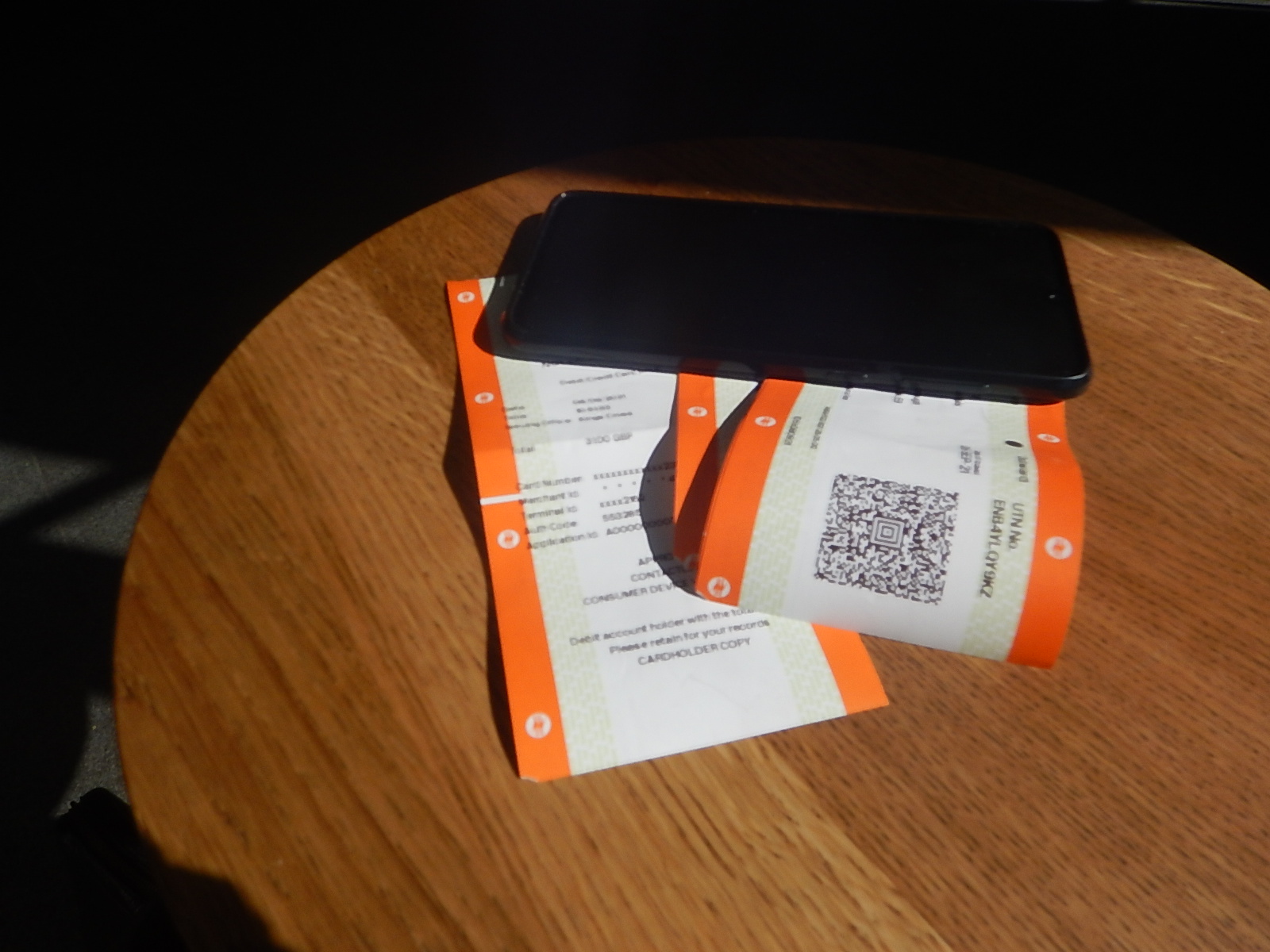
They are awful!
- You can’t put them in a typical pocket in a wallet.
- They curl up.
- I constantly drop them, because my left hand doesn’t work properly.
- Is thermal paper as environmentally-friendly as the credit-car-sized card tickets?
They should be banned as soon as possible!
ScotRail Offers 1st Class For £3 As Luxury Travel Reintroduced
The title of this post, is the same as that of this article on Rail Advent.
To encourage passengers back after the pandemic, Scotrail have introduced a three pound onboard upgrade to First Class on services on Inter7City and Class 385 train services.
This sounds like a good idea!
Rail Tourism Pass To Be Explored
The title of this post, is the same as that of an article in the August 2021 Edition of Modern Railways.
This is the first paragraph.
The government is to pursue plans for a new domestic rail tourism product, building on the success of products such as the BritRail pass, only available to visitors to the UK from abroad.
I am basically in agreement with the proposal, but before anything too drastic is brought forward, it might be a good idea to build on what we already have.
These are a few thoughts.
Railcards
I am surprised at the number of people I talk to, who don’t have a railcard, despite the fact, that it would save them money.
So make sure, you have the right railcard.
Rangers And Rovers
Rovers and Rangers are tickets that allow you to wander about an area on the trains for a given period.
You may often find there is a ticket that will be ideal for exploring the area, where you are staying.
Breaking Journeys
This is a rule, that many travellers don’t know about and it can be very useful.
Suppose you are going between Ipswich and Cambridge and you want to break the journey at Newmarket to have lunch with a friend.
You can buy a ticket between Ipswich and Cambridge and break your journey at Newmarket and after lunch continue your journey.
This is allowed on most trains, but I would ask someone, in case there is a problem.
London Terminals Tickets
Often tickets will be labelled something like London Terminals or Manchester Stations.
A simple example would be a return to Cambridge from London, which might be labelled London Terminals.
This means that you can use the ticket to go out from Kings Cross and come back to Liverpool Street.
The London Zone 6 Extension Ticket
Often on a trip to London travellers will buy a Travelcard for London’s local transport.
Supposing on your trip to London, you needed to make a trip outside Zone 6 to visit someone.
Not everybody knows, you can buy a ticket from the Zone 6 boundary to a station outside the zone.
Conclusion
A Rail Tourism Pass may be a good idea, but I think it’s also important, that travellers learn to use what ticketing options are already in place.
Hull Trains Seat Allocation System
When I went to Hull recently, I used Hull Trains.
These pictures show the train as I boarded at London Kings Cross.


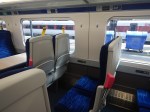
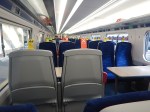
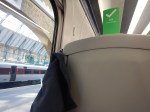
When I got my ticket out of the machine, I was very surprised to see the phrase No Specified Seat on the ticket.
I queried it with one of the LNER staff and they said, it will be alright and anyway, it is nothing to do with them.
When I got to the gate, I asked the guy from Hull Trains and he said, you’ll see when you get inside and something like. “Sit in any seat with a green flag!”
You can see the coloured flags on the seats in the pictures. The different colours mean.
- Green – For single travellers
- Red – Do not sit here
- Yellow – For two or more travelling together.
So I choose a window seat with a green flag on it.
Did it work?
- There were no families, but several pairs of travellers and I suspect about sixty percent of the seats were taken.
- Everybody was socially distanced and either had a spare seat or someone they knew next to them.
- At one table, I could see four guys all sitting together,
- The system deals with no-shows and leaves their seat for someone else.
Until proven otherwise, I think it worked well.
- I didn’t get allocated a seat, but I’m certain the system would work well if say some seats had been allocated by the booking computer.
- Seats could also be indicated by coloured lights.
- But as Hull Trains had only just restarted after the attack of the covids.
I had to have a quiet smile though.
My father was a master at designing production control systems and coloured cards were one of the tools in his box.
Often cards for his big customers like Belling, Dunlop and Enfield Rolling Mills were intricate and numbered creations, all produced with letterpress and his two faithful Original Heidelberg Plattern Presses.
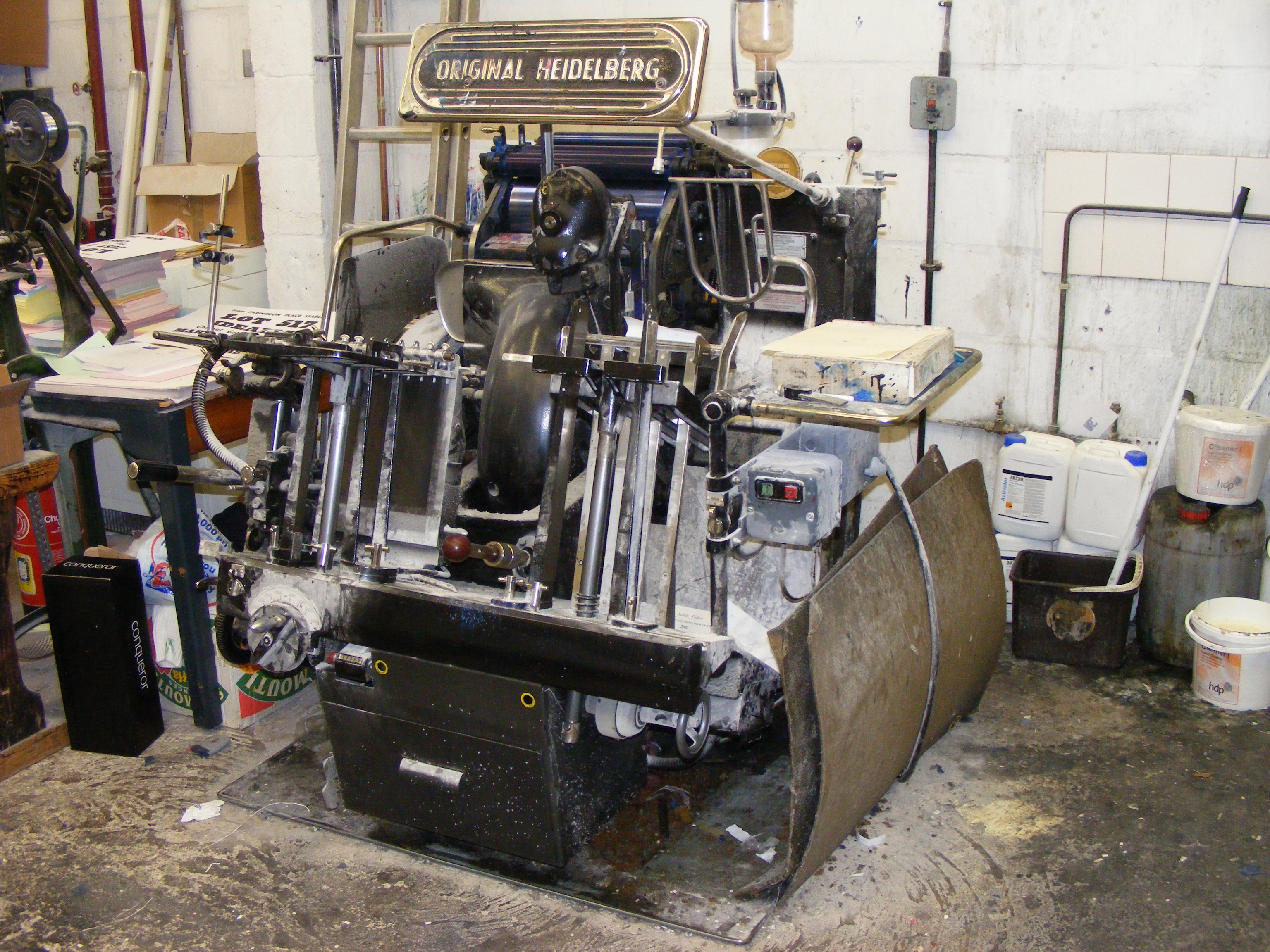
Original Heidelberg
With the right gadgets in the chase, that held the type, they could number, score and perforate. You couldn’t do those operations with litho, in the 1950s and 1960s.
I hadn’t realised much about this side of my father’s work, until I met Ray Askew, whilst walking our basset hound. He had a basset too and on talking, it turned out he had worked for Enfield Rolling Mills and it was part of his job to source production control documents and he used to design them with my father, whose firm, then printed them!
Could This System Be Used On East Coast Trains?
East Coast Trains are another First Group company like Hull Trains, who will be running services between London and Edinburgh from some time next year.
I can’t see why they could use a developed version of this system, with tri-colour lights on the seats.
East Coast Trains will be aiming for a four hour service and I suspect they’d like people to just turn up and go, so quick ticketing would be needed. A simple app, where you said how many tickets and what train and then you just turned up in time for your train would do.
LNER’s Cheaper Advanced Tickets Can Be Bought Just Before You Travel
Yesterday, I had a ticket on the 15:47 train, back from Doncaster to London Kings Cross. I had bought it on-line a few days ago for £23.50.
But, I was unable to complete what I wanted to do, so found myself at Doncaster station, with three hours to wait for my train.
Usually, I buy open returns, but LNER have stopped that because of the covids!
So rather than wait, I decided to buy another ticket.
A new Off Peak Single with my Railcard would have been £60, but I found the machine could sell me an Advance Single Ticket for £31.
So I got home in time for the cricket. My ticket also got me two seats, including a window.
LNER seem to be getting their act together.
Coronavirus Pushes Switch From Cash To Card Payment
The title of this post is the same as that as this article on Railway Gazette.
This is the introductory paragraph.
Cash sales of tickets on the Metlink transport network in Greater Wellington will end on March 23, in a move which Metlink said was designed ‘to stay one step ahead of Covid-19 and give our passengers and staff more peace of mind’.
Should all buses, trams and trains go cash-free and contactless in the UK?
Economics Of Very Light Rail Between Cromer And Sheringham
In Very Light Rail Research On Track, I reviewed an article of the same name on Railway Gazzette International.
The article ,mentioned that the route between Cromer and Sheringham stations could be run by very light rail vehicles.
Very Light Rail Vehicles
Very Light Rail vehicles are defined as weighing less than a tonne per linear metre.
- Warwick Manufacturing Group (WMG) found the most efficient propulsion system, was diesel-electric hybrid with battery storage. Was it nicked from an LEVC taxi?
- An eighteen metre long vehicle will hold 56 seating and 60 standing passengers.
- Will turn round times at the end of a shuttle route be reduced to perhaps two minutes as the driver only has to walk eighteen metres?
- The article doesn’t give any speed estimates for very light rail vehicles. But I suspect 50-60 mph would be possible, as this is the operating speed of a Class 399 tram-train and very much the speed of typical single-decker buses.
If seated passengers weigh 90 kilograms with baggage, bikes and buggies and standing passengers perhaps 75 kilograms, this gives a vehicle weight of around 27.5 tonnes.
I estimate that a three-car Class 755 train, with the same passenger load would weigh around 108 tonnes or about 98 tonnes empty, which is about a tonne and a half per linear metre. A single-car Class 153 train is about 1.8 tonnes per linear metre.
Very light rail vehicles appear to be considerably lighter.
Cromer And Sheringham Line
This section of the Bittern Line can be considered a branch of the main section of the line, which links Norwich and Cromer stations.
- It is single-track.
- There is a simple cross-over outside Cromer station
- It is just over 3.5 miles long.
- Sheringham station is a single platform, that has recently been extended to take four-car Class 755 trains.
- The only intermediate station is West Runton, which is a single platform.
- Cromer station has two platforms.
- Trains take eight minutes to go between Sheringham and Cromer stations.
- The average speed of the train between Sheringham and Cromer is just 26 mph.
- The maximum speed of the route is given in Wikipedia as 75 mph. As it is fairly straight it could probably be improved.
As four trains per hour (tph) between Cromer and Sheringham would take a total of 64 minutes, it would seem to be impossible to run such a schedule with current trains, given that the driver would have to change ends eight times in an hour.
Cromer Station
This Google Map shows the two-platform Cromer station.

Note the Northern platform, which is directly connected to the route to Sheringham.
A Split Service
Operation of a split service could be as follows.
- A shuttle using the Northern platform 2 to Sheringham via West Runton.
- A service to Norwich using the Southern platform 1.
I suspect to save signalling costs, that the Sheringham service could be run for most of the time under the principle of one-train on the line.
Could Four tph Run Between Cromer And Sheringham?
I suspect that a driver in running shoes could squeeze four tph out of a three-car Class 755 train.
Consider.
- Three-car trains would save 160 metres of walking over four-car trains.
- The Class 755 trains are designed for quick stops and have fast acceleration.
- Versions of the trains are to be fitted with batteries.
- Two crew working together with some automation might mean that the driver doesn’t have to change ends.
- Three tph would be easier, as it would give more time for the driver to change ends.
- Automation with the crew having an override could surely be used.
I don’t believe it would be impossible for a system of operation for this shuttle to be run using a Class 755 train.
Certainly, three tph is easier, but four tph is much more passenger friendly.
Could Two tph Run Between Cromer And Norwich?
Currently, trains take fifty-seven minutes between Norwich and Sheringham, which means that two tph would be very complicated, but not impossible.
Running the Cromer and Sheringham section independently, would mean that the time between Cromer and Norwich could be as low as forty-six minutes.
For a start, this means that a single train could work an hourly service between Cromer and Norwich.
It probable means that two trains could run a two tph service, provided that they could pass at a suitable place, where there are two tracks, as at North Walsham or to the South of Hoverton & Wroxham station.
Possible Service Patterns
I think the ideal service pattern would be something like this.
- Two tph between Cromer and Norwich.
- Three or four tph between Cromer and Sheringhan.
Currently, there is an hourly service along the whole route, which needs two trains to operate.
Two tph to and from Norwich and a shuttle would only need one extra train.
Savings With Very Light Rail
There are various ways cost savings can be made.
Cost Of The Vehicle
Leasing a single very light rail vehicle will be much less than leasing even an ancient one-car Class 153 train.
Obviously, for a reliable service, a spare will be needed, if a company had several routes that could be developed using very light rail, then the spare could be shared.
It looks like Greater Anglia are also thinking about other routes, so this may be an economic proposition.
One Train On Line Operation
Cromer and Sheringham could be run with a single train shuttling between the two stations and the points set, so that no other train could use the track.
This must surely reduce signalling costs.
Track Access Charges
Lighter trains have lower track access charges.
This could be a substantial saving, especially if there were four tph in both directions.
Cost Of New Infrastructure
Some routes that will be proposed for very light rail operation will need bridges and embankments to be built.
If the maximum weight of the vehicle is lower, this must surely reduce costs, as lighter structures could be used.
Fast Turnround Times
One of the limiting factors in providing frequent services over a short branch line is the time it takes to turn the train at each end of the route.
But in a very light rail vehicle, which is only eighteen metres long, the driver can probably change cabs in under two minutes, which is of the order of the time it takes to load and unload the train with passengers.
The only high frequency shuttle service over a short route in the UK is the one between Stourbridge Junction and Stourbridge Town stations.
- The route is just 0.8 of a mile long.
- It is served by Class 139 trains, which are just 8.7 metres long and can carry 20–25 seated, 30–35 standing passengers.
- Trains run every ten minutes
- The turnround time appears to be about two minutes
It is reputed to be the shortest operational branch line in Europe.
I can’t see why, that in a well-designed very light rail vehicle that is only twice the length of a Class 139 train, that the turnround time could not be the same time of two minutes.
It probably can’t be any shorter, in case several people turn up in wheel-chairs at the same time.
If we look at the Cromer and Sheringham route, I can see the following timing being possible for a well-designed shuttle train on the route.
- Cromer to West Runton – two minutes
- Stop at West Runton – one minute
- West Runton to Sheringham – two minutes
- Turnround at Sheringham – two minutes
- Sherington to West Runton – two minutes
- Stop at West Runton – one minute
- West Runton to Cromer – – two minutes
- Turnround at Cromer – two minutes
Note.
- The round trip would take fourteen minutes.
- I have assumed that the train is running at around 50-60 mph.
- The West Runton stop could be by request.
- There is only one train on the route at all times.
The round trip could be scheduled at four tph.
It must surely be an affordable way to provide a service.
I would also do the following.
- As at Stourbridge have a second train on standby, to guarantee a reliable service, rescue a failed train and perhaps double the capacity at busy times.
- Services between Cromer and Sheringham would be free.
- Cromer, West Runton and Sheringham would be part of a group called Cromer stations, like Birmingham stations and Manchester station. So to book to any of the stations, you’d buy a ticket to Cromer stations.
If the latter ideas didn’t attract passengers then nothing would.
Greater Anglia would get their revenue on the onward services from Cromer.
Could The Cromer And Sheringham Shuttle Be Extended To Holt?
If the train crosses the level crossing at Sheringham station, the track extends all the way to Holt on the North Norfolk Railway.
This Google Map shows the two stations at Sheringham on either side of the level crossing.
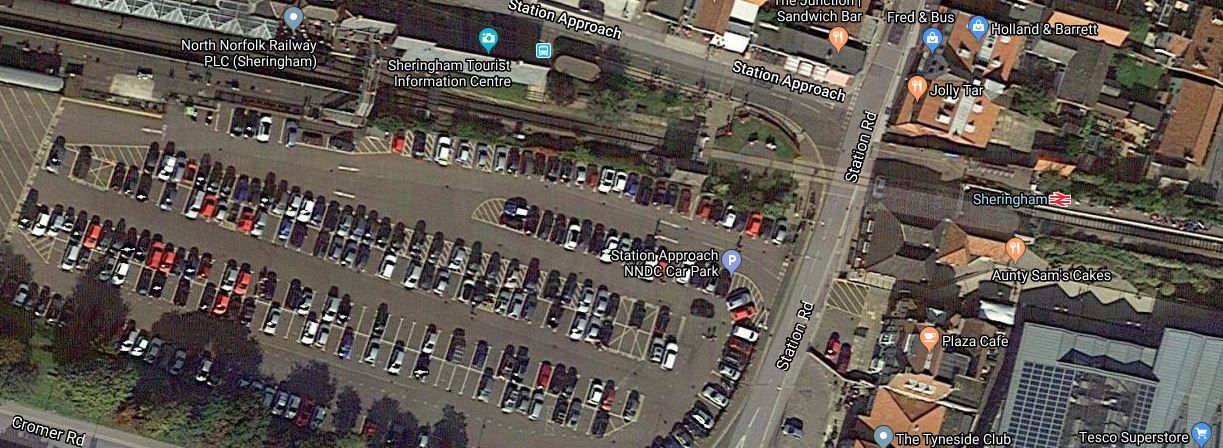
The National Rail station is on the East side, with the heritage railway on the West.
Some heritage railways are certified to be able to run scheduled services to and from the main rail network.
This may even be possible here, to allow a service between Cromer and Holt.
Although the North Norfolk Railway seem to run a frequent timetable, I’m sure if there was the necessary coming together, that a service that was beneficial to all parties could be arranged.
Conclusion
Very light rail could be very exciting!
London Overground Ticket Office Closures As 2% Of Tickets Are Bought Through Them
The title of this post, is the same as that of this article in Rail Advent magazine.
This is the introductory paragraph.
Transport for London has announced that the hours at some London Overground ticket offices will start to change over the next few weeks to match the times customers use them.
That sounds fine by me, as any company or organisation, should make best uses of resources.
It should be born in mind, that London Overground’s policy is to always have staff visible, when the trains are running.
Could Suffolk Have It’s Own Version Of London’s Freedom Pass?
London has a travel pass for certain groups of passengers, like the elderly and the disabled called a Freedom Pass.
This is the introduction forthe Freedom Pass from Wikipedia.
Freedom Pass is a concessionary travel scheme, which began in 1973, to provide free travel to residents of Greater London, England, who are aged 60 and over (eligibility age increasing by phases to 66 by 2020) or who have a disability. The scheme is funded by local authorities and coordinated by London Councils. Originally the pass was a paper ticket, but since 2004 it has been encoded on to a contactless smartcard compatible with Oyster card readers.
I have a Freedom Pass, as I am seventy-two and it really gives me freedom, as my eyesight isn’t good enough for me to drive.
Other parts of the UK like Manchester and Newcastle have similar schemes that allow a degree of free travel on local trains, trams and light rail systems.
But generally English counties like Suffolk don’t have such a scheme.
East Anglia’s Rail Revolution
All of Greater Anglia’s trains are being replaced with new Stadler Class 745 and Class 755 trains.
In InterCity Quality For Rural Routes, I said this.
Greater Anglia are purchasing a fleet of 38 trains with a total of 138 carriages to replace 27 trains with a total of 58 carriages.
- This is a forty percent increase in the number of trains.
- This is nearly two and a half times as many carriages.
- The average number of carriages per train is raised from 2.1 to 3.6.
That is a massive increase in train capacity.
I don’t believe that Greater Anglia will park these trains in a siding, but use them to increase frequencies.
Greater Anglia are having signalling problems introducing the new trains, but we have already seen the following in Suffolk.
Four-car Class 755 trains running from Ipswich to Cambridge, Felixstowe and Lowestoft.
As the frequency is still the same and train length has increased from one, two and three cars, this is almost a doubling of capacity.
The UK’s Contactless Ticketing Revolution
London started wide-scale contactless tickerting and in places, it is applied to rural routes like Iver and Reading on TfL Rail’s new Western branch, where frequencies are more Suffolk, than Central London.
I believe in the next few years, the average passenger going between say Newmarket and Ipswich in Suffolk, will touch-in at Newmarket with their credit card and touch-out at Ipswich, just as passengers do now, millions of times all over London, every day of the year.
London’s Freedom Pass looks to the readers in London, as just a different credit card, so it is able to allow passengers through.
I believe that once Suffolk goes contactless with ticketing, then it will be possible to overlay a Suffolk Free Travel Pass on the system.
What Lines Would Be Allowed To Be Used By Passengers With A Suffolk Free Travel Pass?
These are routes that are wholly or partly in Suffolk.
Ipswich And Cambridge
The Ipswich and Cambridge Line currently has one train per hour (tph) and is wholly in Suffolk, except for a short section at the Cambridge end of the route.
Would a Suffolk Travel Pass allow travel to Cambridge?
I suspect that both Cambridgeshire and Suffolk would have reasons for a compromise , as both counties could benefit from visiting Travel Pass holders.
I would include Ipswich and Cambridge in a Suffolk Free Travel Pass.
Ipswich And Diss
The section of the Great Eastern Main Line, between Ipswich and Diss, currently has two tph and is wholly in Suffolk, except for a short stretch at Diss, which is just over the border in Norfolk.
I would include Ipswich and Diss in a Suffolk Free Travel Pass.
Ipswich And Felixstowe
The Felixstowe Branch Line currently has one tph and is wholly in Suffolk.
But this route is planned to be upgraded as I wrote in Could There Be A Tram-Train Between Ipswich And Felixstowe?.
- Tram-trains would start at Ipswich station and run to \felixstowe.
- Tram-trains could start on the forecourt of Ipswich station and could run through the streets of Ipswich, via Portman Road, the Town Centre, Christchurch Park, Ipswich Hospital, the proposed new housing at Westerfield and Ransome’s Retail Park before joining the Felixstowe Branch, in the area, where it crosses the A14.
- It could even do more street running in Felixstowe to connect to the Town Centre and the Sea Front.
- Frequency would be four tph.
Removing the passenger service from the rail lines between Derby Road and Ipswich stations, would allow more freight trains to run through the area.
I would include Ipswich and Felixstowe in a Suffolk Free Travel Pass.
Ipswich and Lowestoft
The East Suffolk Line currently has one tph and is wholly in Suffolk.
I believe that this line could be developed by adding a second hourly service to Aldeburgh.
I would include Ipswich and Lowestoft in a Suffolk Free Travel Pass.
Colchester And Peterborough
The current service runs between Ipswich and Peterborough, and is a service of one train per two hours.
Greater Anglia plan to do the folloeing.
- Increase the frequency to one tph.
- Extend the route to run between Colchester and Peterborough.
- It will terminate in a bay platform at Colchester.
The route will be mainly in Suffolk, with thends in Cambridgeshire and Essex.
- Passengers for the North and Scotland will change at Peterborough.
- Passengers for London will change at Colchester, Ipswich, Cambridge and Peterborough.
- Passengers for Stansted Airport, Hertfordshire and West Essex will change at Cambridge.
- Passengers for Sudbury will change at Colchester.
This route will become a very important connecting service.
Because of this connectivity, I would include Colchester and Peterborough in a Suffolk Free Travel Pass.
Colchester Town And Sudbury
The Gainsborough Line currently has one tph and is an isolated line that is half in Suffolk and half in Essex.
I would include Colchester Town and Sudbury in a Suffolk Free Travel Pass.
How Would It Be Funded?
Wikipedia says this sabot the funding of London’s Freedom Pass.
The cost of providing the travel concession is negotiated between London Councils and the local transport operator Transport for London. It is funded through a mixture of national grant and council tax.
Although a similar process could be used for a county like Suffolk, other elements are present, that have effects on use and revenue.
Only One Train Operator
There is only one train operator involved; Greater Anglia.
This must make planning and operation easier.
Greater Anglia Should Benefit From Passengers Travelling Further
Will passengers use their passes to get to Ipswich and Peterborough to travel further?
If they do, then Greater vAnglia won’t be bothering.
Greater Anglia may be able to fill the twelve-car Clsass 745 trains in the Peaks, but filling them in the Off Peak will be more difficult.
Would a Suffolk Free Travel Pass attract passengers to the trains?
Modal Change
This is a big imponderable in any calculation.
If you live near a station, would you be more likely to use the train to go to work, shopping or a meal in Ipswich, Bury St. Edmunds or Cambridge, if the train was free?
Only partly, but if the car parking was expensive or always full, that would be a deterrent.
People plan travel against a large range of parameters and cost is one of them.
Would a Suffolk Free Travel Pass take pressure off the roads.
Trips To The Coast
There are only two rail-connected coastal towns in Suffolk; Felixstowe and Lowestoft.
Travel on a sunny day between Ipswich and Felixstowe and the train can be packed with passengers going for a stroll along the sea front.
With more capacity, this usev will increase and especially amongst those who would be eligible for a Suffolk Free Travel Pass.
Carbon Emissions
People are starting to take notice of carbon emissions.
But they’re not buying electric cars, as they worry about the range.
So taking the train is a sop to the pressure of their conscience or that of their children.
Stansted Airport
There are two tph between Cambridge and Stansted Airport.
Travelling from say East Suffolk to the sun, could start with a train to the nearest airport using a train at Cambridge.
East-West Suffolk Travel
Suffolk is not the largest county in England, but East West travel by road can take longer than the train.
Greater Anglia are planning two East-West services at a frequency of one tph.
- Colchester and Peterborough via Ipswich, Needham Market, Stowmarket, Bury St. Edmunds and Ely.
- Ipswich and Cambridge viaNeedham Market, Stowmarket, Bury St. Edmunds and Newmarket.
Note that Ipswich and Bury St. Edmunds stations will have a frequency of two tph.
The East-West Railway, currently being built between Oxford and Cambridge is proposing more improvements for Suffolk.
- A new hourly Manningtree and Oxford service, via Ipswich, Needham Market, Stowmarket, Bury St. Edmunds, Newmarket and Cambridge.
- A new A14 Parkway station, where the Cambridge and Peterborough routes divide to the North of Newmarket.
- Tram-trains at a frequency of four tph between Ipswich and Felixstowe.
Note that Ipswich and A14 Parkway stations willl have a frequency of three tph.
I also think that operationally, there could be another improvement.
Ipswich station has a limited number of platforms and expanding it will be difficult.
But I believe that operations could be eased, if the Ipswich and Cambridge and Ipswich and Lowestoft services were to be combined into a single cross-Suffolk Cambridge and Lowestoft service, with a reverse at Ipswich.
These routes between Cambridge and Suffolk will spread the Cambridge effect across the county and in return Suffolk will provide the housing and other resources that Cambridge needs.
People Will Be Working Longer
We are going through an employment revolution for those past retirement age for various reasons.
- Economic necessity.
- Some people l;Ike and/or need the camaraderie of working.
- Some people have much-needed skills.
- Some business owners and self-employed prefer working to retirement.
- Flexible and part-time working is expanding.
A Suffolk Free Travel Pass would be used by a lot of those who are still working and paying Income Tax.
Healthcare
I have no figures, but I suspect in London, Freedom Pass holders are bigger users of the NHS and hospitals.
Healthcare in East Anglia is changing, with increasing dependence on the three largest hospitals at Cambridge, Ipswich and Norwich.
This means that going to hospital for a check-up often means a fifty mile drive and a long hassle over the limited parking.
Published plans mean that Cambridge and Ipswich hospitals will be rail-connected at each end of Suffolk.
Would it be easier to use the train from many parts of Suffolk?
It should also be noted, that those with health problems, that need regular hospital visits in London, are issued with a Freedom Pass for travel, as it’s cheaper than sending a car.
Any county bringing in a free travel scheme would surely use it to help those needing to go to hospital regularly.
Greater Anglia’s new trains are all step-free, as this picture shows.
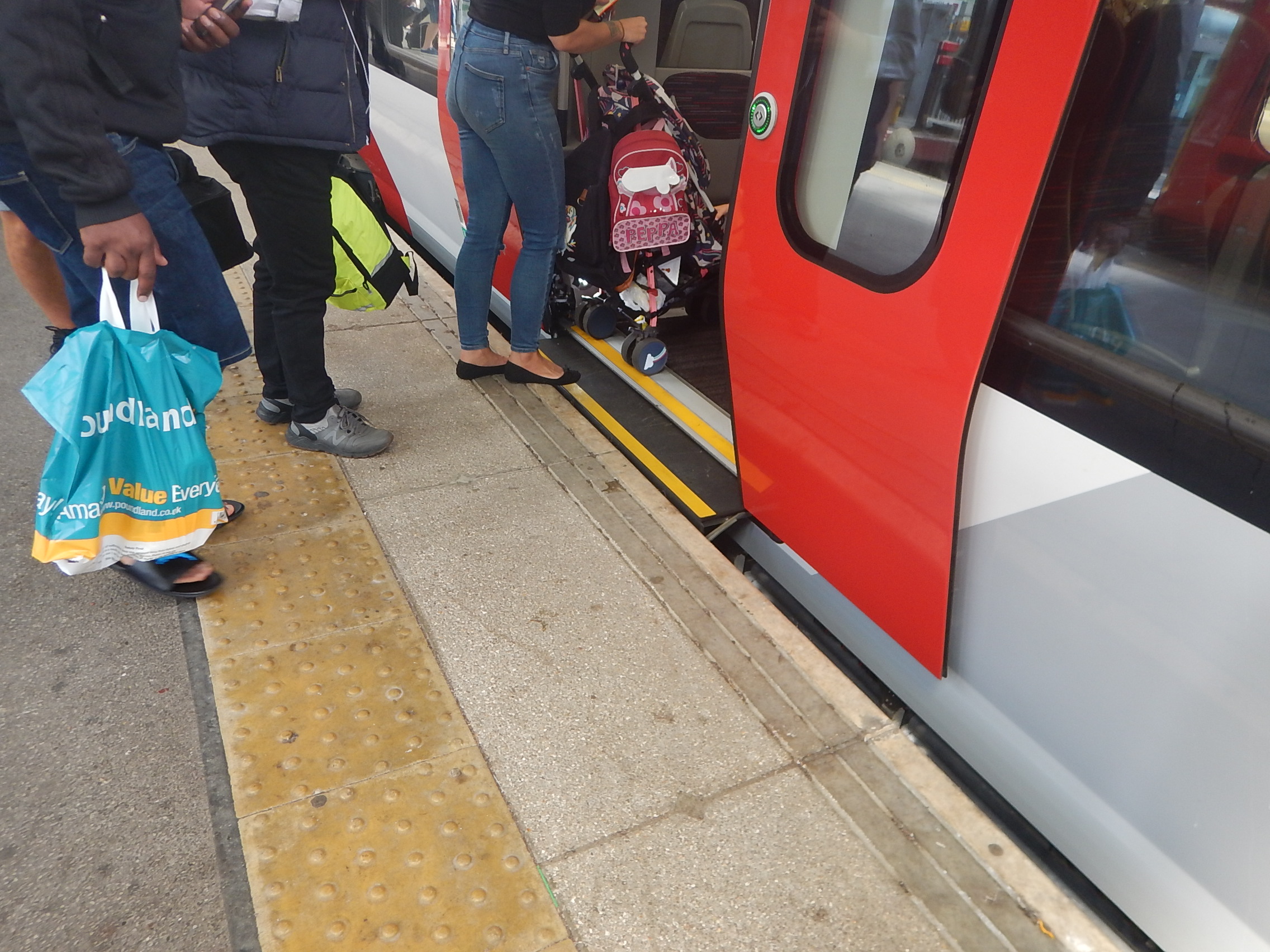
I believe that good rail-connected hospitals can improve the efficiency of the NHS.
Summing Up Funding
All of these developments across Suffolk will see a large increase in Suffolk’s economic activity and the consequent tax take from Council Tax and Business Rates.
I believe that Suffolk could probably afford to fund their share of a Suffolk Free Travel Pass.
Given the reduction in carbon emissions, that would probably occur, surely Government would contribute a share.
As Greater Anglia would surely benefit from onward journeys to and from London, they can probably afford to do a good deal for free travel in Suffolk. After all, they’ve already built in the capacity to their business model.
Restrictions On Use
There may need to be restrictions on use, like some routes apply in London.
For instance, using trains to and from London to perhaps travel between Ipswich and Stowmarket, may be restricted in the Peak.
It will all depend on Greater Anglia’s capacity.
Would It Work For A Group Of Counties?
I don’t see why not!
Perhaps instead of Cambridgeshire, orfolk and Suffolk, all having their own Free Travel Passes, would an East Anglian one work better?
Conclusion
If London can have a Freedom Pass, then why not Suffolk? Or other English and Welsh counties for that matter?
I have rambled through several ideas and possibilities.
But I believe that Suffolk with the powerhouse of Cambridge in the |West can see an improvement in economic activity, can go a long way to funding a Suffolk Free Travel Pass.
This in turn could generate further economic activity and the tax revenue that would be generated to pay for the scheme.
Suffolk though is lucky in that it aslready has the rail network and Greater Anglia have purchased enough trains. Only a hanful of extra stations and some branch line reopenings would be needed.
I shall return regularly to this post.

