Could The Hall Farm Curve Be Built Without Electrification?
The Hall Farm Curve was a five-hundred metre curve that used to connect the Chingford Branch Line to the Lea Valley Line, thus enabling direct services between Stratford to Chingford via the new Lea Bridge, James Street and Walthamstow Central stations.
This map from carto.metro.free.fr shows the lines in the area around Coppermill Junction.

Coppermill Junction
It is a much-needed route, as anybody who has taken the bus between Walthamstow and Stratford can testify.
I have heard rumours that it will be rebuilt, but nothing has been published yet.
The last rumour said it would be a single-track bi-directional line, as I wrote in Rumours Of Curves In Walthamstow
If this were to be built, there would need to be appropriate cross-overs, so that the trains could go on the right lines to and from Chingford and Stratford.
As in a few years time, the Stratford-Chingford service would be likely to be run by Aventras and no other electric train would be likely to use the curve, would it not be possible to not electrify the curve.
In Bombardier’s Plug-and-Play Train, I showed that all Aventras will have a certain amount of onboard energy storage to handle regenerative braking and enable short movements using stored energy.
So could the Aventras use their onboard energy storage to navigate the curve? The pantograph could be raised and lowered appropriately in Lea Bridge and St. James Street stations.
Conclusion
Building the Hall Farm Curve without electrification is possible, if Aventras use the line exclusively for passenger services.
Related Posts
Improving The Chingford Branch Line
Could Electrification Be Removed From The Chingford Branch Line?
Could Reversing Sidings Be Used On The Chingford Branch Line?
Crossrail 2 And The Chingford Branch Line
New Stations On The Chingford Branch Line
Will Walthamstow Central Station On The Victoria Line Be Expanded?
Has Scotrail Got The Wrong Sort Of Heat?
This article on Rail Magazine is entitled Train failures and crew shortages hit Borders operation.
This is said.
ScotRail Operations Director Perry Ramsey says the company has identified a fleet-wide issue with the Class 158s that affects them particularly badly during hot weather.
Under heavy load, such as accelerating on steep gradients, the engines can overheat and shut down, leading to disruption.
So has ScotRail got the wrong sort of heat?
London Bridge Station Wakes Up
Part of the new concourse of London Bridge station opened at five o’clock this morning.


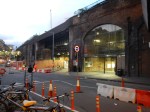
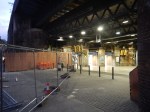
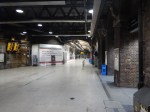
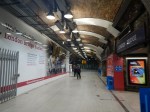


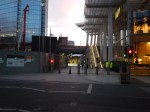


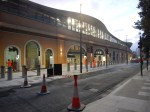
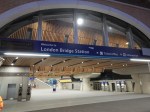

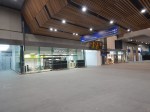


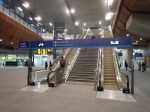




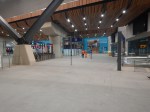

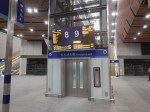

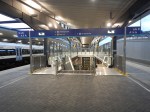

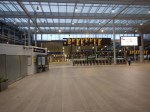


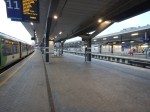
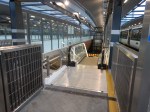
I got there around 05:30, so at least there would be some light.
Points to note.
- The concourse is underneath the platforms.
- Often when this is done, as at Brussels Midi, the concourse is dark and claustrophobic. London Bridge certainly isn’t, as natural light is allowed in and there are masses of LED lights.
- The concourse is split into an open side and one where you must have a valid ticket.
- Escalators join the platforms in the centre.
- The island platforms have three escalators, two sets of stairs and a lift.
- The first through platform; 8 and 9 for Charing Cross, form a wide island platform.
- If platforms 4 and 5 for Thameslink, are as wide as 8 and 9, they will be a game-changer for those with limited mobility on Thameslink.
- Currently, the only dreary public area, is the old cross-passage between Tooley Street and Guy’s Hospital, but that dates from a few years ago and is probably going to be updated.
It is certainly a very good start.
Hitachi To Power Up Before Hinckley
This is the title of a small article in the Sunday Times, which talks about Hitachi’s plans to build a new nuclear power plant at Wylfa on Anglesey.
Hitachi would build a proven commercial reactor, that could be built by 2025.
Why are we bothering to still even think about the gold-plated Franco-Chinese dead elephant at Hinckley Point?
Hitachi is a private company and have to live from good designs, technology and engineering, whereas those behind Hinckley Point are governments or their agencies.
When you consider that the last big project of Hitachi in the UK, was to build a factory at Newton Aycliffe to construct trains and it would appear that that has gone to the plans, I suspect that going for Wylfa and putting Hinckley Point out of its misery, would be a pair of decisions, that have the much lesser risk.
Could Hamilton’s 55-Place Penalty Be Good For The World?
If you want a good explanation of how Lewis Hamilton ended up with a 55-place penalty in a 22-car race, then this article on the BBC, which is entitled Belgian Grand Prix: Lewis Hamilton’s grid penalties explained.
It does what it says in the title.
This extract, which describes the new technology in Formula One, is significant.
Governing body the FIA realised that the turbo-hybrid engines were highly complex pieces of kit, as well as introducing revolutionary new technology.
How revolutionary? A road-car petrol engine has a thermal efficiency – its ability to convert fuel-energy into usable power – of about 29%, a figure they have been stuck at for decades. A road-going turbo-diesel can be as efficient as about 35-40%.
Modern F1 engines, the best of which produce more than 950bhp, are approaching 50% thermal efficiency – and exceed it when the hybrid system is on full energy deployment.
It is a truly amazing step forward in technology in such a short amount of time, and these advances will soon filter down to road cars, which was the whole point of introducing them into F1.
So that means that if your vehicle does say 29 mpg, then in perhaps a decade, its equivalent will be doing over 50 mpg, as increased thermal efficiency translates into less fuel usage.
There is a lot of innovative technology generally getting itself involved with the humble internal combustion engine and where they are used.
- Engines, whether petrol or diesel will get more efficient, in terms of energy efficiency.
- Engines will get lighter and smaller.
- Transmission and braking will increasingly be electric, with onboard energy storage.
- Energy storage for larger applications like buses, trucks and trains, will use alternatives to batteries.
- Engines will become more complex and will be controlled by sophisticated control systems.
It is definitely a case of |Formula One leading the way.
But I suppose Formula One is one of the few places where there is an incentive to be more efficient.
With passenger cars, more efficient vehicles have generally sold better. But an incentive is probably needed to get people to scrap worthless and inefficient vehicles.
Perhaps a properly thought out carbon tax, would accelerate more efficient buses, trucks and trains.
It is interesting to note, that hybrid buses are commonplace, but when did you see a hybrid truck?
Could it be, that local politicians have more control over the bus fleets in their area and many of the worst trucks are run by cowboys, who don’t care so long as they earn their money?
It is also easier to complain about your buses, than say trucks moving builders rubbish around, if they are noisy, smelly or emitting black smoke.
But I do think the key to more efficient buses, trucks and large off-road construction equipment, is probably a mixture of better engines and some better method of energy storage, that means say an eight-wheel thirty-tonne truck, could sit silently at traffic lights and then move quietly away, when the lights go green. A lot of buses can do that! Why not trucks?
I also think that the next generation of trains will use onboard energy storage.
- It enables regenerative braking everywhere, saving as much as a quarter of the electricity.
- Depots, sensitive heritage areas and downright difficult lines can be without electrification.
- It enables a get to the next station ability , if the power should fail.
As modern trains from many manufacturers, are increasingly becoming two end units with driving cabs, where you plug appropriate units in between to create a train with the correct mix for the route, energy storage and hybrid power cars will start to appear.
Intriguingly, Bombardier have said that all their new Aventra trains will be wired for onboard energy storage.
So a four-car electric multiple unit, might be changed into a five-car one with on-board energy storage to run a service on a short branch line or over a viaduct in an historic city centre.
Cambridge North Station
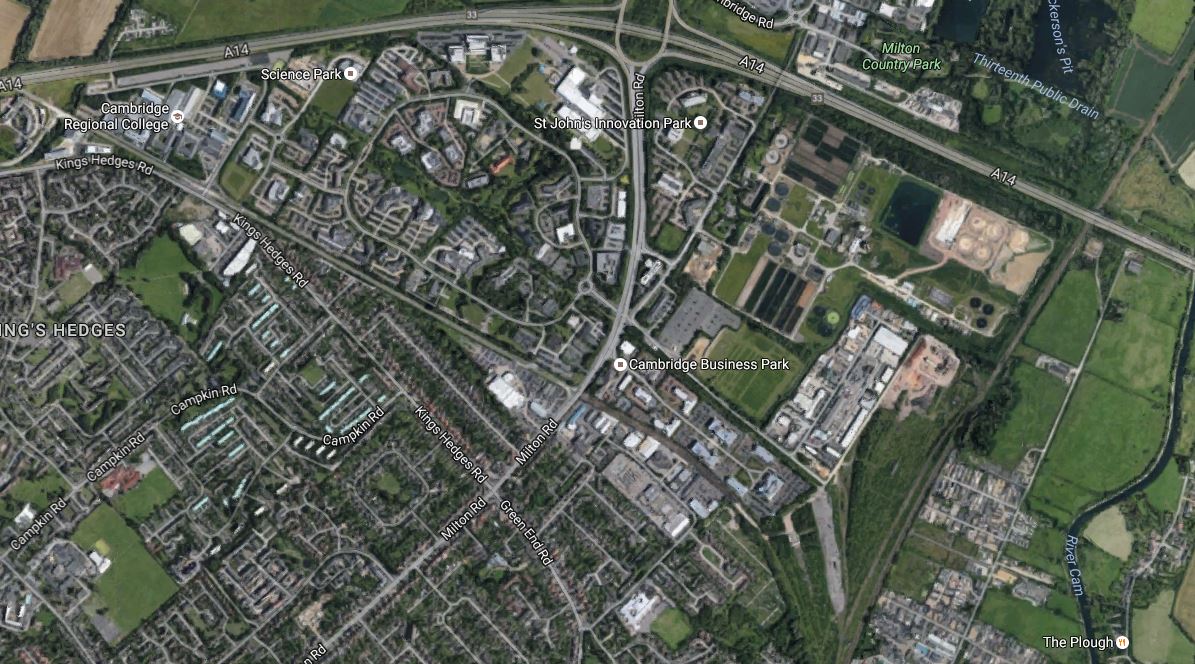
Cambridge North station is being built to serve the North of the city and especially, Cambridge Science Park and other developments in the area.
This Google Map shows the area.
Cambridge Science Park And Cambridge North Station
Note the Breckland Line between Cambridge and Ely, which cuts across the Eastern side of the map, at a right-angle to the main A14 dual carriageway. The rail line appears to split with a loop on the North West side by a green space. The station will go in this area.
These are pictures, I took from passing trains going to and from Ely.

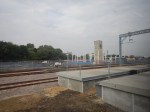


From the pictures, the following seems to be apparent.
A long island platform is being built to the North West side of the tracks.
There is a lift tower by the car and cycle parks outside of all tracks.
There is a double-track loop that by-passes the platforms.
This is the only plan I can find on the Internet.
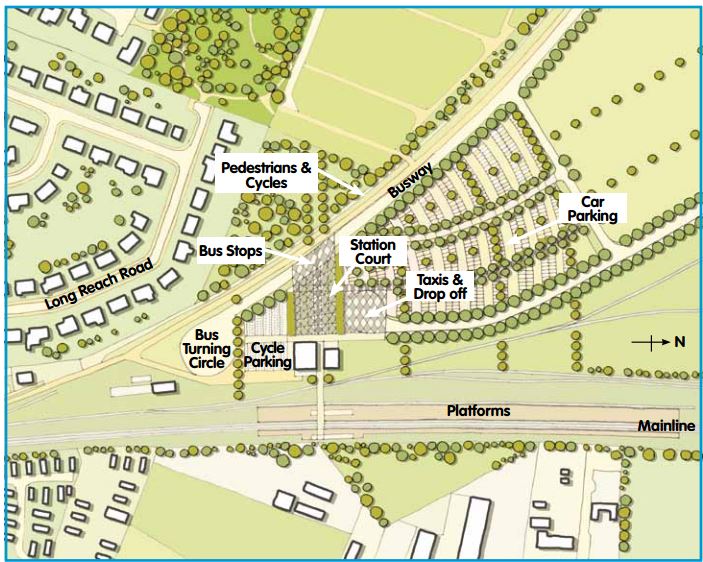
Cambridge North Station Pan
I know this about the station.
- It is proposed to have three platforms according to Wikipedia.
- Thameslink will terminate two trains per hour at the station.
- Most other services will stop at the station as they pass through.
The plan shows the main line going between the platforms, so will the double-platform in the pictures be used as a through platform for Cambridge to Ely trains and the far side as a terminating platform?
Unfortunately, when I returned to Cambridge, there were no seats on the other side of the train.
This article in European Railway Review is entitled New Cambridge North railway station taking shape – set for 2017 launch, has two pictures, which clearly show the second through platform on the South-East side of the tracks.
A few observations.
- It would appear that to go between the car or cycle park and the trains, you always need to use the bridge.
- My pictures show that the platforms are very long and will certainly handle the twelve-car Class 700 trains.
- Passengers from Thameslink needing to go to say Kings Lynn or Norwich, will just walk across the platform to get their onward train.
- Passengers from Kings Lynn and Norwich wanting to go South on Thameslink would probably change at Cambridge to avoid using the bridge.
- On the current service pattern the station would only have a one train per hour service to Peterborough.
- The station has no direct connection to Ipswich or Bury St. Edmunds.
I wonder if there are plans to allow Cambridge North station to act as a terminus for trains from the Ely direction.
Under the new East Anglian Franchise, Abellio are extending their Peterborough to Ipswich service to Colchester and making it hourly.
It is a pity, that this service can’t easily serve Cambridge North station.
This Google Map shows Ely station and the lines going South towards Cambridge.
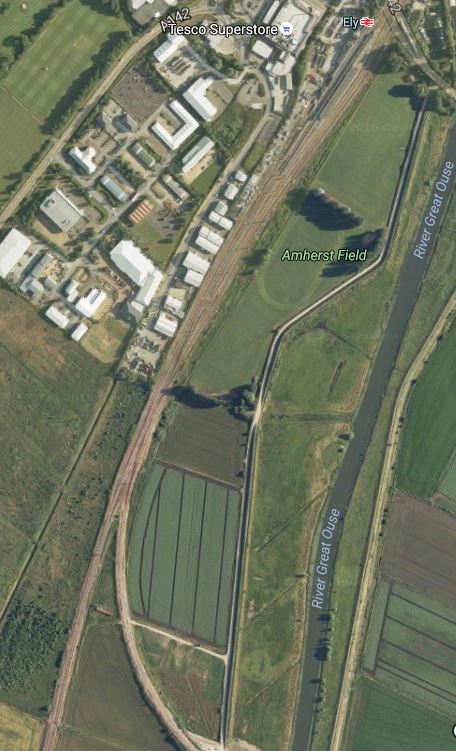
Ely Station And The Lines To Cambridge And Ipswich
Note how the line to Bury St. Edmunds and Ipswich branches off to the South-East.
If a chord were to be built allowing trains to go between Cambridge and Bury St. Edmunds, this would do the following.
- Allow the Peterborough-Ipswich service to call at Cambridge North, with just a reverse at Cambridge North.
- Give Cambridge North station a second train in an hour to and from Peterborough.
- Create a direct hourly service between Cambridge North station and Bury St. Edmunds, Ipswich and Colchester.
- When the East-West Rail Link opens, it would allow freight trains to go between that line and Felixstowe without using the single-tack Ipswich-Cambridge route.
Strangely, it doesn’t appear that this chord has ever existed.
But, I do think it will be seriously considered in the future, with the main reason being the freight route from Felixstowe to the Great Western Railway at Reading.
An Article On Driverless Trains That Hardly Mentions Unions
This article on Rail Engineer is entitled Subway Revival – Glasgow to introduce UTO.
In this instance UTO stands for Unattended Train Operation.
In the article, there is only one mention of a trade union. This is said.
Getting the workforce’s commitment to new working practices was an essential first step of the modernisation programme. SPT achieved this in 2012 with an agreement between UNITE and SPT for more flexible working and establishment reduction with no compulsory redundancies.
The dreaded word RMT does not appear.
Having read the whole article, it does look like, when the new trains start running in a few years time, Glasgow will have one of the best Underground lines in the world.
I particularly liked this paragraph on the procurement of the new trains.
Charlie Hoskins explained that SPT did not procure its trains on the basis of a prescriptive technical specification as this might rule out a worthwhile technology. Instead, prospective suppliers were given a concept of operation that covered general requirements such as the number of people to be carried and how SPT wished to operate the trains. A competitive dialogue then followed to develop the technical solution that offered best value. This approach was supported by Glasgow-based consultant Racon and by Systra which, with SPT key staff, formed the client’s technical, commercial and procurement team.
It looks like Glasgow said they wanted to move so many passengers and the consortium came up with a solution.
How practical! And the dreaded word Treasury wasn’t mentioned.
Also just as they are involved in East Anglia, the Swiss company; Stadler is very much involved here. They seem to be s[specialising in niches.
Another Level Crossing Crash In East Anglia
This afternoon, I was in Cambridge trying to get to Ely.
I didn’t!
This report in the East Anglian Daily Times, which is entitled Investigation underway after car driver seriously hurt during train strike at level crossing near Ely – rail services severely disrupted, explains what happened and why I didn’t get to Ely!.
This is said.
Network Rail is investigating whether it had been asked for permission to open a gate at a level crossing before a vehicle was hit by a train.
I won’t prejudge their enquiry, but it strikes me there are these ways that the Land-Rover could have been on the crossing and hit by the train.
- The signalman erroneously gave the driver permission to cross.
- The phone system was broken.
- The driver crossed without permission.
- The vehicle broke down, whilst crossing.
My father always taught me to drive defensively and assume that everybody else is an idiot. Similar things were also said to me, when I was learning to fly.
In one case, not too far away from the level crossing, where the accident happened, I was driving home and at another crossing, the half-barriers were down and on enquiry they had been that way for half-an-hour with the lights flashing. I phoned the signaller and he told me all trains had been stopped for safety reasons and that we could all cross, by weaving through the barriers.
Eventually, I did this with extreme care, but others reversed and went the long way round.
Today, once clear of Cambridge and its troubles, I came across a very irate Abellio employee. Not with me, or the company, but with the accident, as she had had a big afternoon of complaints.
In my view, the driver was at fault, as he did not appear to assume that the signaller was an idiot.
Incidentally, the Abellio employee was of the opinion, that all crossings should be replaced with ones with full barriers.
Certainly, in this day and age, user-worked level crossings are not safe enough for many of the idiots on our roads.
Why Aren’t There More Female Train Drivers?
In Have The RMT Seen The Writing On The Wall?, I asked the following question.
As an aside, when did you last see a woman driving a train on the National Rail Network?
So I searched the Internet to see if I could get any information.
I found this article in The Guardian, which is entitled Meet the women doing ‘men’s work’, there is a section about Alison Miller, who drives trains for ScotRail. This is said.
Alison drives trains out of Glasgow Central for ScotRail. One of only 4% of train drivers who are women, Alison is also on Aslef’s Women’s Representative Committee.
Four percent is not very many. Perhaps, as Alison hints in the article, the rather uncompromising unisex uniform is a discouragement.
Nearly twenty years ago, when they had a severe driver shortage, London Underground placed an advert in Cosmopolitan to attract women. It is reported in this article in The Guardian entitled Cosmo ads target women train drivers.
You certainly see more female drivers on the Tube, than on the main lines.
I used to travel up to London years ago, with a driver-supervisor on the Central Line. I can’t ever remember discussing female drivers with him, but he did say one of the reasons suitable applicants backed out of being Underground drivers, was after seeing the wildlife with long tails, running about in the tunnels.
I lived with a woman for forty years, who wouldn’t have bothered with rats, mice or spiders, but if the tunnels had been filled with chickens, that would have been a totally different matter.
Bermondsey Dive-Under – 8th August 2016
On my way to Tulse Hill, I took these pictures of the Bermondsey Dive-Under.


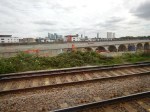
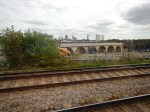

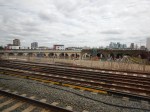
According to the Wikipedia entry for the Bermondsey Dive-Under, it will open in Spring 2017.
Blackfriars staion, London Bridge station and the Borough Market viaduct, may have got all the publicity and infuture the plaudits of critics, but I have a feeling that engineers and those that worked on it, will rate the untying of the railway lines, by creating the Bermondsey Dive-Under to be a greater achievement.
 The Anonymous Widower