Ready To Charge
The title of this post is the same as that of this article in Issue 898 of Rail Magazine.
This is the sub-title of the article.
Vivarail could be about to revolutionise rail traction with its latest innovation
The article details their plans to bring zero-carbon trains to the UK.
These are a few important more general points.
- The diesel gensets in the trains can be eco-fenced to avoid unning on diesel in built-up areas.
- The Transport for Wales trains could be the last Vivarail diesel trains.
- A 100 kWh battery pack is the same size as a diesel generator. I would assume they are almost interchangeable.
- Various routes are proposed.
- In future battery trains will be Vivarail’s focus.
- At the end of 2020, a battery demonstration train will be dispatched to the United States.
- Two-car trains will have a forty-mile range with three-cars managing sixty.
- Trains could be delivered in nine to twelve months.
The company also sees Brexit as an opportunity and New Zealand as a possible market.
Modifying Other Trains
The article also states that Vivarail are looking at off-lease electric multiple units for conversion to battery operation.
Vivarail do not say, which trains are involved.
Vivarail’s Unique Selling Point
This is the last two paragraphs of the article.
“Our unique selling point is our Fast Charge system. It’s a really compelling offer.” Alice Gillman of Vivarail says.
Vivarail has come a long way in the past five years and with this innobvative system it is poised to bring about a revolution in rail traction in the 2020s.
Conclusion
Could the train, that Vivarail refused to name be the Class 379 trains?
- There are thirty trainsets of four-cars.
- They are 100 mph trains.
- They are under ten years old.
- They meet all the Persons of Reduced Mobility regulations.
- They currently work Stansted Airport and Cambridge services for Greater Anglia.
- They are owned by Macquarie European Rail.
I rode in one yesterday and they are comfortable with everything passengers could want.

The train shown was used for the BEMU Trial conducted by Bombardier, Network Rail and Greater Anglia.
The only things missing, for these trains to run a large number of suitable routes under battery power are.
- A suitable fast charging system.
- Third rail equipment that would allow the train to run on lines with third-rail electrification.
- Third rail equipment would also connect to Vivarail’s Fast Charge system
As I have looked in detail at Vivarail’s engineering and talked to their engineers, I feel that with the right advice and assistance, they should be able to play a large part in the conversion of the Class 379 fleet to battery operation.
These trains would be ideal for the Uckfield Branch and the Marshlink Line.
If not the Class 379 trains, perhaps some Class 377 trains, that are already leased to Southern, could be converted.
I could see a nice little earner developing for Vivarail, where train operating companies and their respective leasing companies employ them to create battery sub-fleets to improve and extend their networks.
Retired London Underground Train Travels Forty Miles Solely On Battery Power
This article on Railnews is a summary of today’s news and has a subtitle of Battery Train Sets British Record.
This is the first sentence.
A battery train from Vivarail has achieved a British first by travelling 64km on battery power alone, and the feat has been repeated many times during tests.
The train was a Vivarail Class 230 train, that is based on retired London Underground D78 Stock.
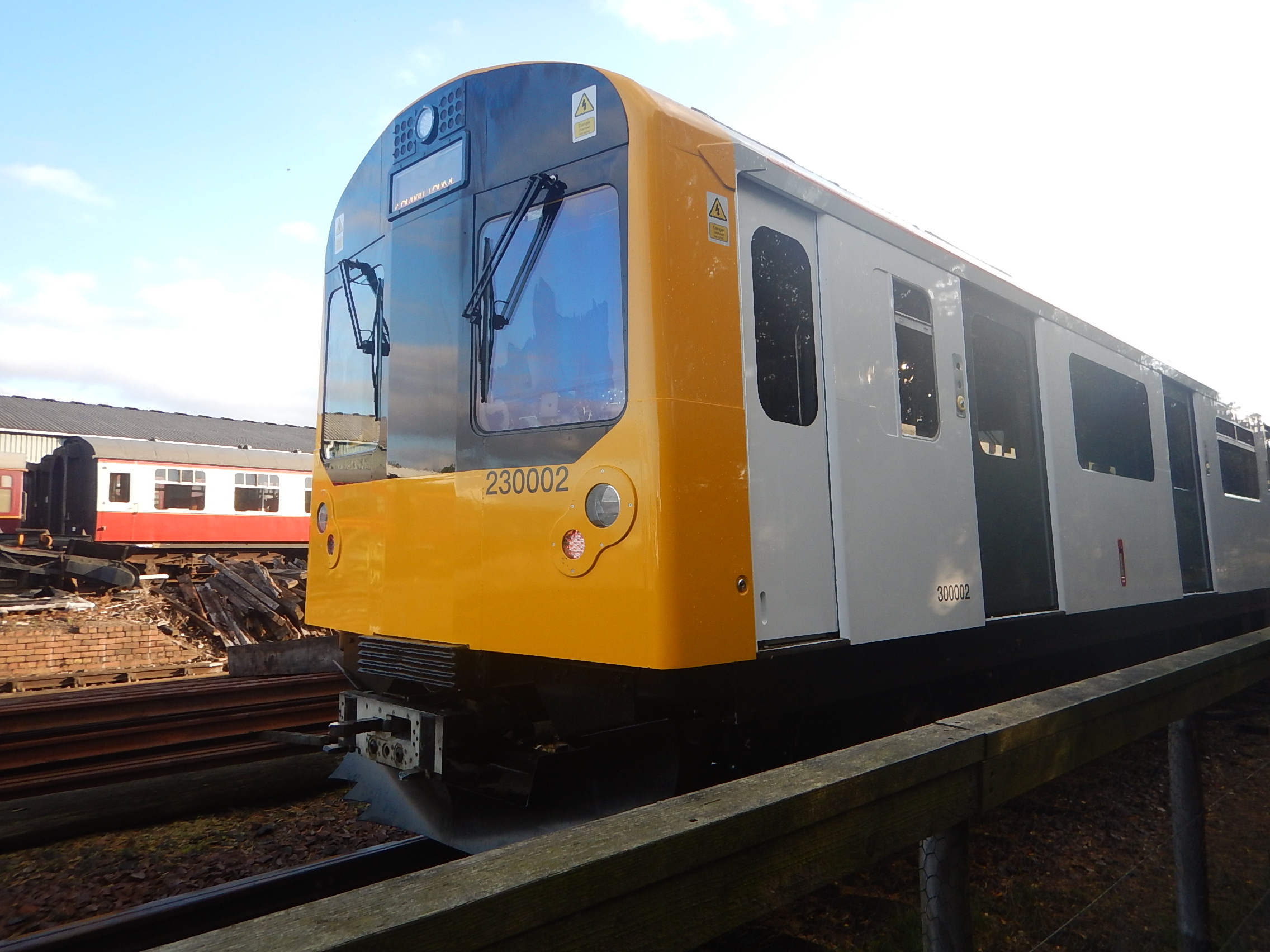
The picture shows the prototype battery train, when I rode it in 2018 at the Bo’ness And Kinneil Railway.
The article also says this.
Vivarail CEO Adrian Shooter is predicting that production versions of the battery trains will be able to run for almost 100km between charges, which will take just 10 minutes.
Battery trains appear to be going places.
Solar Panel Pilot For Aldershot
The title of this post is the same as that of an article in the August 2019 Edition of Modern Railways.
This is the two paragraphs.
Solar panels are to be installed on derelict land near Aldershot station as part of an experiment into whether renewable energy can be used to power trains.
A total of 135 discrete solar panels are being installed and are expected to go live in August. The Riding Subnbeams ‘First Light’ demonstrator project is a collaboration between climate change charity 10:10, Community Energy South and Network Rail, alongside a consortium of specialist consultants and university departments.
I wrote about the company and its ideas in Solar Power Could Make Up “Significant Share” Of Railway’s Energy Demand, which I posted in December 2017.
I won’t repeat myself, but I will say that since I wrote the original article, a compatible development has happened.
In Vivarail Unveils Fast Charging System For Class 230 Battery Trains, I wrote about Vivarail’s charging system for battery trains, which uses battery-to-battery power transfer to charge batteries on trains, through standard third-rail technology.
I do feel that the 10:10 and Vivarail ought to be talking, as I feel that between them, they could come up with some good joint ideas.
The Mathematics Of Fast-Charging Battery Trains Using Third-Rail Electrification
In Vivarail Unveils Fast Charging System For Class 230 Battery Trains, I talked about how Vivarail are proposing to fast-charge their Class 230 trains.
- The trains are fitted with special high-capacity third rail shoes.
- Third-rail electrification is laid in stations.
- The third rail is powered by a bank of bstteries, that are trickle-charged from the mains or perhaps even solar power.
- When the train connects to the rail, the rail is made live and a fast transfer takes place between third-rail and train.
So how much electricity could be passed to a train during a stop?
The most powerful locomotive in the UK, that can use 750 VDC third-rail electrification is a Class 92 locomotive.
According to Wikipedia, it can produce a power output of 4 MW or 4,000 kW, when working on third-rail electrification.
This means, that in an hour, four thousand kWh will be transferred to the train using conventional third-rail electrification.
Or in a minute 66.7 kWh can be transferred.
In Vivarail’s system, because they are transferring energy between batteries, enormous currents can be passed.
To illustrate how batteries can can deliver enormous currents here’s a video of a guy using two car batteries to weld things together.
These currents are possible because batteries have a low impedance and when the battery on the train is connected to the battery bank on the station, the two batteries will equalise their power.
If we take the example of the Class 92 locomotive and conventional electrification, this would be able to transfer 200 kWh in three minutes or 400 kWh in six minutes.
But I believe that battery-to-battery transfers could be at a much higher current
Thus in a typical one or two minute stop in a station, upwards of 200 kWh could be transferred to the train.
On this page of their web-site, Vivarail say this.
Due to the high currents required for the train Vivarail uses a carbon ceramic shoe able to withstand the heat generated in the process – without this shoe the charge time would make operational running unfeasible.
The devil is always in the details! From what I’ve seen and heard about the company, that would fit!
Vivarail Wins Environment Award For Class 230 Train
The title of this post, is the same as that of this article on Rail Advent.
This is the first two paragraphs.
Vivarail has announced that they have won the Environment award for their Class 230 battery train and fast charge system.
The awards are one of the industry’s top events.
The article also says this about the Class 230 trains.
- 60 miles range between charges
- 10 minute recharge time
- And can be fitted with range extenders (such as pantograph, genset or fuel cells)
Trains are getting more like houses.
After one useful life, someone comes along and gives them trains a makeover and they have a second useful life.
Vivarail Units Take Over Marston Vale Services
The title of this post is the same asw this article on Railway Gazette.
The article contains an informative video of Adrian Shorter talking about the Class 230 train.
Much of the article and the video is information that has already been well reported.
Adrian Shooter does mention that the diesel-electric-battery versions of the Class 230 train for Transport for Wales will incorporate geo-fencing.
This would mean that in sensitive areas, the diesel engines would be cut out and only battery power would be used.
The process would be controlled automatically using the train’s position from GPS.
This technique has been used on hybrid buses to lower emissions and noise levels in sensitive areas.
Vivarail And Arcola Announce Partnership To Bring Emission-Free Trains To The UK
The title of this post is the same as this press release from Vivarail.
These are the first two paragraphs
Vivarail, designers and manufacturers of the Class 230 trains, and hydrogen fuel cell specialists Arcola Energy today announced a long-term collaboration.
The companies share a determination to help de-carbonise the UK’s transport system. Vivarail has already designed and run an emission-free battery train whilst Arcola lead the market in supplying power systems for efficient fuel cell electric vehicles, primarily buses, to the UK. Working together the companies will develop a hydrogen/battery hybrid train.
It strikes me that this could be a good fit.
Powering A Bus
In New Facility To Power Liverpool’s Buses With Hydrogen, I described Arcola Energy’s involvement in a project to create and fuel hydrogen-powered buses in conjunction with Alexander Dennis.
- A typical hybrid double-decker bus like a New Routemaster has a battery capacity of 55 kWh.
- If these Liverpool hydrogen-powered double-decker buses have serial hybrid transmission like the New Routemaster, I could envisage them having a battery of up to 100 kWh, as let’s face it, the New Routemaster design is now eight years old and battery technology has moved on.
So the Arcola Energy-sourced fuel cell must be able to continuously top-up, the battery, in the same manner as the diesel engine on a hybrid bus.
Sit in the back of a New Routemaster and you can hear the engine cutting in and out. It doesn’t seem to work very hard, even on routes like the 73, which operate at high loadings.
Powering A Class 230 Train
Vivarail’s battery-powered Class 230 train, has a battery capacity of 106 kWh.
This size of battery could certainly be changed by a hydrogen fuel cell.
But could a hydrogen fuel cell provide enough power to keep the train running?
- Vivarail are clamming a range of fifty miles, which means that their two-car battery trains are consuming around 2 kWh for every mile.
- I will assume the train is travelling at its operating speed of sixty mph, which is a mile every minute.
- To keep the battery topped up would need 2 kWh to be produced every minute.
A hydrogen fuel cell with a rating of 120 kW would be needed to power the train continuously. But as the fuel cell would only be topping up the battery, I suspect that a smaller fuel cell would be sufficient.
The Ballard fuel cell is a HD variant of their FCveloCity family.
This page on the Ballard web site is the data sheet of an HD fuel cell of their FCveloCity family.
- The fuel cells come in three sizes 60, 85 and 100 kW
- The largest fuel cell would appear to be around 1.2 m x 1 m x 0.5 m and weigh around 400 Kg.
- The fuel cell has an associated cooling subsystem, that can provide heat for the train.
This Ballard fuel cell would appear to be capable of mounting under the floor of a train.
There are probably several other fuel cells that will fit the Class 230 train.
Arcola should know the best hydrogen fuel cell for the application, in terms of size, power and cost.
The Concept Train
Vivarail’s press release describes a concept train.
The concept train will be used to demonstrate the system capability and test performance. Vivarail’s production hydrogen trains will consist of 4-cars, with 2 battery driving motor cars and 2 intermediate cars housing the fuel cell and tanks.
Vivarail seem very certain of the formation of production trains.
I am not surprised at this certaincy.
- The mathematics of battery-powered and hydrogen-powered trains is well known.
- Vivarail have experience of running their battery-powered prototype.
- Arcola have experience of the capabilities of hydrogen-power.
I also wouldn’t be surprised to see some commonality between the Alexander Dennis and Vivarail installations.
Range Of A Hydrogen-Powered Class 230 Train
Nothing is said in Vivarail’s press release about the range on hydrogen.
In Hydrogen Trains Ready To Steam Ahead, I examined Alstom’s Class 321 Breeze hydrogen train, based on an article in The Times.
I said this about range.
The Times gives the range of the train as in excess of 625 miles
The Class 321 Breeze looks to be designed for longer routes than the Class 230 train.
I would suspect that a hydrogen-powered Class 230 train would have the range to do a typical day’s work without refuelling.
Refuelling A Hydrogen-Powered Class 230 Train
I don’t think this will be a problem as Arcola appear to have the expertise to provide a complete solution.
Conclusion
This is a co-operation, where both parties are bringing strengths to the venture.
A First Ride In A Revenue-Earning Class 230 Train
When I heard that London North Western Railway were running a new Class 230 train between Bedford and Bletchley, I just had to go.
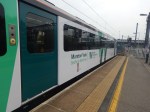

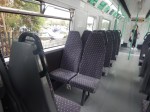
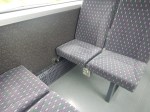
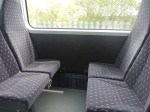
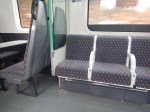
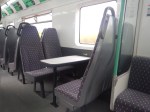
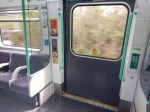
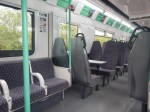

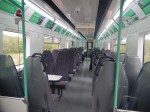
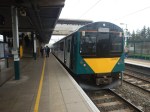
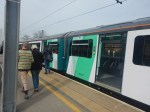
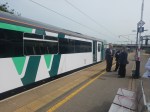
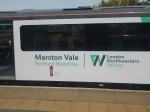
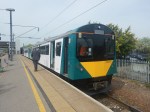
These are my thoughts.
Comparison With D78 Stock
I regularly used the D78 Stock from their introduction in 1980 until their retirement in 2017. In Raw Material For A New Train, I showed a few pictures of one of the last D78 Stock trains to be in service.
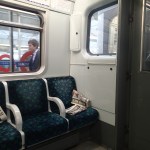

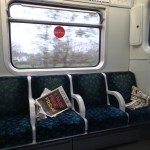
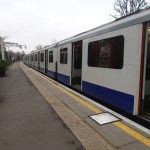
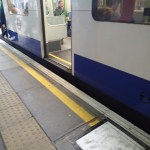
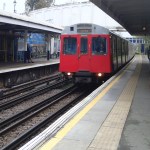
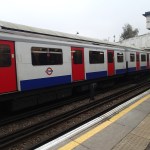
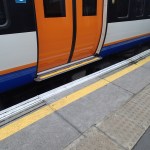
The picture with the orange doors shows a Class 378 train, at the same platform as the D78 train for comparison.
The trains have certainly undergone changes with new wndows and a new interior, but some components like the longitudinal seats, appear to have just been refurbished.
But the Class 230 train has retained the well-lit feel of the D78 Stock.
An Interior For All Passengers
Passengers come in many different types and the interior has been well-designed to cope all types of passengers who might use the train.
As it also takes clues from other trains, that work on high-capacity routes, I feel it would cope well if on perhaps a weekend, there was some form of event or festival.
Longitudinal Seating
Vivarail have retained some of the old London Underground longitudinal seating, which must be unique in the UK outside the London Underground/Overground and the Glasgow Subway.
But it does seem to fit in more seats.
Seat Comfort
To me, seat comfort is all important, as I have a posterior that objects to certain seats, like those on Thameslink’s Class 700 trains.
But these seats were fine, despite the fact they looked like the dreaded Thameslink seats. But then perhaps the padding is different!
Tables
LNWR have chosen to fit several tables in these trains, which were big enough to lay out a tabloid-sized newspaper.
Wi-Fi, Power And USB Points
Wi-fi is fitted to this train and there were numerous power and USB points. The latter were in the armrests of the longitudinal seats, which in my view, is the obvious, if not essential place. Other train manufacturers please note!
An Unfussy, Surprisingly Quiet And Workmanlike Ride
Passengers don’t generally rave about the quality of the ride in Underground trains and I would generally describe the ride of the average Underground train as workmanlike.
But then I’ve been riding Underground trains for at least sixty-five years and a modern S7 Stock train, is so much better than the 1938 Stock trains I can remember.
The ride of the Class 230 train is unfussy, surprisingly quiet and it still has that workmanlike quality of forty-year-old Underground trains.
Without doubt though, the ride and especially the noise is much better than the Alstom Coradia iLint, that I wrote about in My First Ride In An Alstom Coradia iLint.
Engine Noise
The two diesel engines beneath our feet, were not any more noticeable, than the engine on one of London’s Routemaster buses.
I would expect that High quality noise suppression techniques have been used.
An Air Of Quality
The finish of the train appeared to have a good quality
Operating Speed
Using the |SpeedView app on my phone, the train seemed to trundle on happily at around 45-50 mph.
Passenger Reaction
The passengers seemed to be fairly pleased with their new train, and several said it was better than the single car Class 153 train.
A Senior Manager from LNWR, also seemed pleased with his new train.
Conclusion
It is a well-designed train, that impressed me.
It should find a niche in the train market.
The fact that the train is in service, will in itself provoke interest from train operating companies and Councils and other groups promoting new or reopened train services.
I wouldn’t be surprised to see more orders this year.
More About Steamology Motion
In Grants To Support Low-Carbon Technology Demonstrators, I talked about a company called Steamology, who were given a grant by the Department for Transport to develop a method of converting hydrogen into energy.
The company is called Steamology Motion and in Issue 872 of Rail Magazine more details are given in an article, which is entitled DFT Hands Out £350,000 Each To Five Rail Green Schemes.
This is said in the article.
Steamology Motion, the final recipient, aims to create a new zero-emmissions power train for a Vivarail Class 230 train. The W2W system generates steam from compressed hydrogen and oxygen stored in tanks. The steam then drives a turbine to generate electricity.
The concept is aimed at being a ‘range extender’ able to charge onboard battery packs.
My mathematical modelling skills for this type of system have never been strong, but I’m sure that others will know how much hydrogen and oxygen are needed to charge a 200 kWh battery.
- A quick search of the Internet reveals that small steam turbines could be available
- I very much suspect, that as the system is a ‘range extender’, rather than a power unit to take the train hundreds of miles, that the physical size of the gas tanks will be smaller than those proposed by Alston for their hydrogen conversion of a Class 321 train.
I also don’t think that the DfT would have given £350,000 to the company, if the the physics and the mathematics weren’t credible.
Conclusion
If this technology is successful, I suspect it could have other applications.
Vivarail Spearheads Development Of Green Fuel Technologies
The title of this post is the same as that of this press release from Vivarail.
The press release describes and shows visuals of their new hydrogen-powered Class 230 train.
These are a few points from the press release.
A Four-Car Train
This is said about the basic philosophy of the design.
Vivarail’s on-going success in launching new technologies to the UK market means it is the only train manufacturer with a fully approved base train to work from. The hydrogen train will follow the design of the Transport for Wales fleet with two driving motor cars powered by Hoppecke batteries, the only difference being that instead of a diesel genset beneath the intermediate car the hydrogen train will have two carriages housing the fuel cells and hydrogen tanks.
Building on an approved base train must be the way to go.
Underfloor Power
This is said about the position of the hydrogen tanks and the fuel cells.
Unlike other trains the Vivarail Class 230s will store all the equipment beneath the floor making a much more stream-lined and efficient vehicle able to carry more passengers and deliver faster journey times.
I would suspect that Vivarail have designed tanks and fuel cells, that take up less space.
Modular Design
The design appears to be modular from this extract.
Vivarail’s standard modular power pack designs allow easy transition from one power source to another – in this case simply adapting a genset to a fuel cell. Both sit in the same space envelope beneath the train and indeed a train built as a diesel unit could be converted to run with hydrogen if required.
Would you design it, any other way?
Range Of 650 Miles
This is a thousand kilometres and seems to be the design range of most hydrogen trains.
Class-Leading Acceleration
It is a good idea to look at the ratio of weight to length of a basic trains, that will be converted to hydrogen power.
- Alstom – The Class 321 train has a figure of 1.72 tonnes/metre.
- Vivarail – The D78 Stock train has a figure of s 1.32 tonnes/metre.
The difference is probably because the D78 Stock is built from aluminium.
Keeping the weight down is a good way to increase the rate of acceleration.
Regenerative Braking
Why would you design a train without it?
Conclusion
The only supplier mentioned in the press release is Hoppecke, who will be making the batteries.
It looks to me that Vivarail have looked at every component for a hydrogen train and chosen the best ones with respect to performance, size and weight.
I shall be looking forward to taking a ride!
 The Anonymous Widower