Amprion Reveals Energy Corridor Project To Bring 8 GW of Offshore Wind To North Rhine-Westphalia
The title of this post, is the same as that of this article on offshoreWIND.biz.
This is the sub-heading.
Amprion Offshore has started working on an energy corridor project that would bring electricity produced by up to 8 GW of offshore wind farms in the North Sea directly to the German state of North Rhine-Westphalia.
This is the first paragraph.
Named Windader West, the energy corridor involves building four offshore grid connection systems that would use the new-generation 2 GW offshore grid technology. Each of the four connections (NOR-15-1, NOR-17-1, NOR-19-1 and NOR-21-1) would have a transmission capacity of 2 GW and, together, the grid connections would transmit enough electricity to cover the energy needs of eight million households in North Rhine-Westphalia.
The linked article has an excellent large scale map.
What Are The UK Doing?
There is a Wikipedia entry for Eastern HVDC, where these are the opening paragraphs.
Eastern HVDC and Eastern HVDC projects are the names used by Ofgem for two planned HVDC submarine power cables from the East coast of Scotland to Northeast England to strengthen the National Grid. The two links combined will deliver 4 GW of renewable energy from Scottish wind farms to England.
Ofgem state that “At an estimated cost of £3.4 billion for the two links, the Eastern HVDC projects would be the largest electricity transmission investment project in the recent history of Great Britain.”
The two links are called.
Note.
- SEGL1 will run from Torness in Southeast Scotland to Hawthorn Pit substation in Northeast England.
- EGL2 will run from Sandford Bay, at Peterhead in Scotland, to the Drax Power Station in Yorkshire, England.
- Both links have a capacity of 2 MW and the DC voltage will be +/-525 kV.
National Grid are also developing Eastern Green Links 3 and 4 and this is the web site.
These paragraphs describe EGL3 and EGL4.
The EGL 3 project will be a new offshore High Voltage Direct Current (HVDC) electrical link from Peterhead to the south Lincolnshire area.
EGL4 will be a new offshore HVDC electrical link from east Scotland, also to the south Lincolnshire area.
Where offshore projects such as these connect with the land, we also have to build onshore infrastructure to enable the clean energy to be transported, to homes and businesses. The onshore infrastructure required for each of these projects will include new converter stations and substations (in both Scotland and England), as well as underground cables to connect everything together.
Together, these projects will transfer 4GW of electricity between Scotland and England. This means that once operational, these projects will provide enough energy to power around 3 million homes.
Note.
- As with the German cables, each carries 2 MW.
- Consultation for EGL3 and EGL4 starts in early 2024.
- Both cables terminate in South Lincolnshire.
In The Lincolnshire Wind Powerhouse, I publish this map of the wind farms in the South of Lincolnshire.
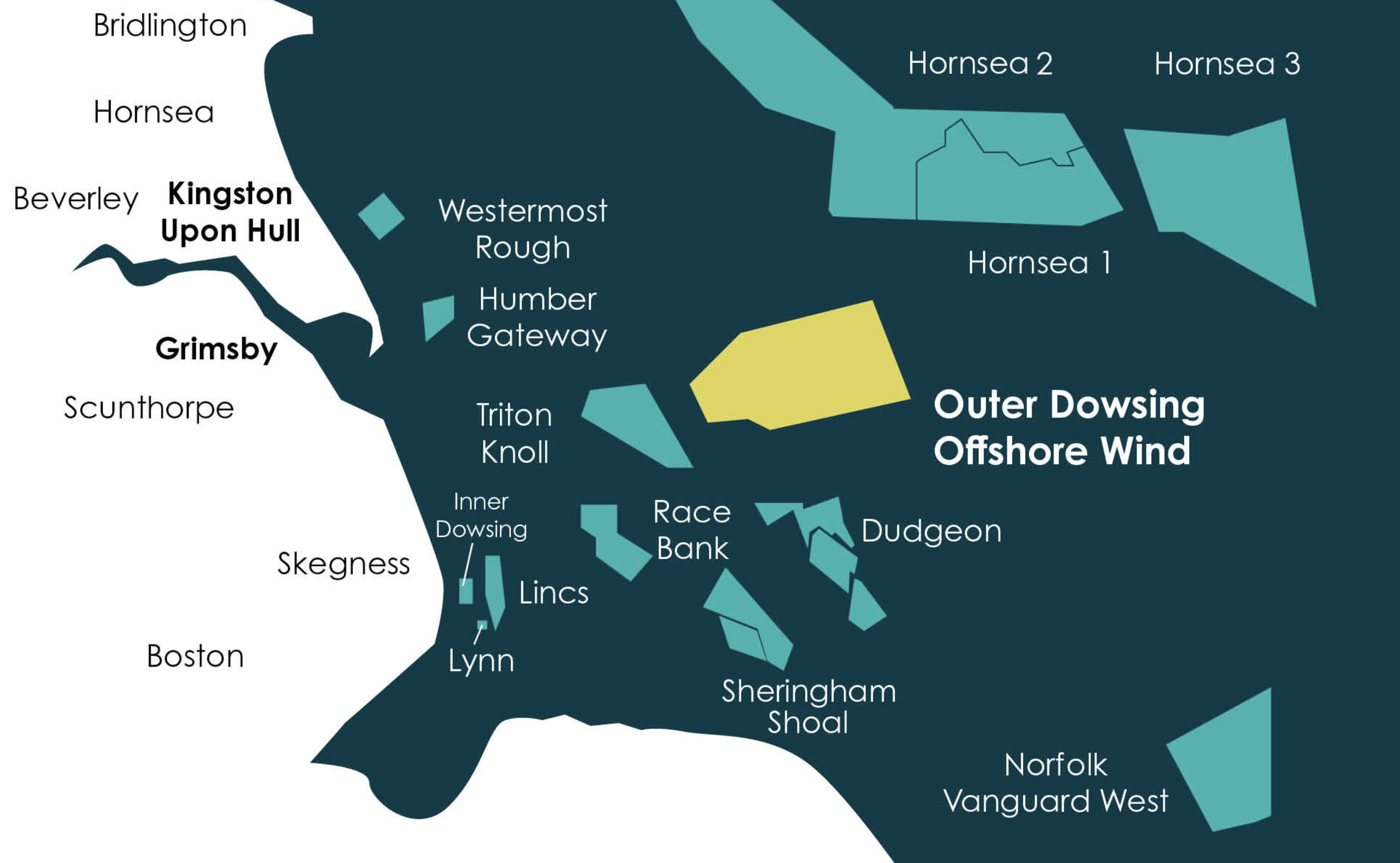
Note.
- The completed Hornsea wind farm will be over 6 MW.
- The future of Norfolk Vanguard is uncertain.
- These wind farms total up to 13524 MW, but without Norfolk Vanguard the total is 11724 MW.
- According to Wikipedia, the Viking Link to Denmark will open on the 1st of January 2024.
I wrote about the Viking Link in Work Begins On New Substation For World’s Longest Electricity Cable Between Denmark and Lincolnshire.
The German And UK Cables Compared
Consider.
- Both have 4 x 2 MW capacity.
- SEGL1 and EGL2 have a cost of £3.4 billion.
- The four German cables are quoted at a total of €16-18 billion here.
- The first two UK cables have planned completion dates of 2027 and 2029.
- German completion dates are given as 2032-2036.
This leads me to this conclusion.
Building interconnectors in the sea is quicker and more affordable than building them on land.
World’s Largest Floating Offshore Wind Farm Officially Opens
The title of this post, is the same as that of this article on offshoreWIND.biz.
This is the sub-heading.
Norwegian energy major Equinor, together with its partners, will inaugurate today the world’s largest floating offshore wind farm, Hywind Tampen
The story is according to Reuters.
This page on the Equinor web site, outlines the project.
Hywind Tampen is the world’s first floating wind farm built specifically to power offshore oil and gas installations, and is now supplying electricity to Equinor’s oil and gas fields Snorre and Gullfaks in the Norwegian North Sea.
With a system capacity of 88 MW it is also the world’s largest floating offshore wind farm and an important step forward in industrialising solutions and reducing costs for future offshore wind power projects.
With Hywind Tampen now operational, Equinor is now operating nearly half (47 percent) of the world’s offshore floating wind capacity.
This floating wind farm powering oil and gas fields will be the first of many.
The Lonely Wind Turbine – 17th August 2023
I took these pictures to the North of Newark on the way to Leeds.
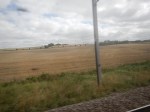
You don’t often see an onshore single wind turbine as large as this one.
Fire On Scroby Sands Wind Turbine Self-Extinguishes, Incident Under Investigation
The title of this post, is the same as that of this article on offshoreWIND.biz.
This is the sub-heading.
A wind turbine at the Scroby Sands offshore wind farm in the UK caught fire yesterday morning (15 August). The cause of the fire, which self-extinguished later the same day, is now being investigated.
This sort of incident doesn’t seem to be reported very often, although this one was shown prominently in this article on the BBC, which contains a video.
Able Seaton Port
Able Seaton Port has been in the news several time recently. So I looked it up on Google Maps.
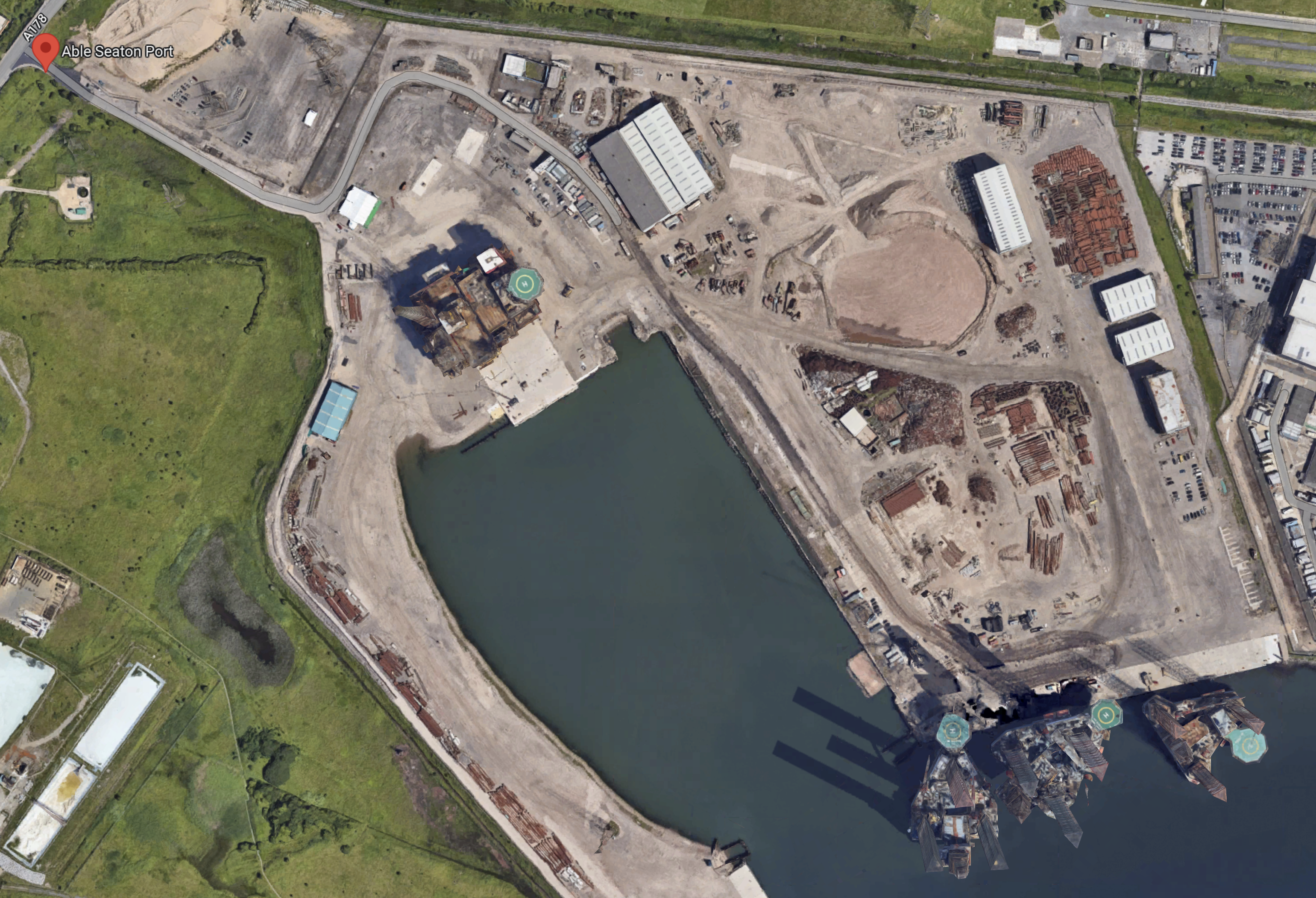
These four paragraphs on the Able Seaton Port website outline the capabilities of the port.
ABLE Seaton Port (ASP) is located in the centre of the UK on the North East Coast close to the mouth of the River Tees and covers 51 hectares (126 acres) including a 10 hectare (25 acre) dry dock (currently wet) – one of the world’s largest.
It is capable of handling all types of offshore construction vessels, has significant crane capacity and quays, which have been constructed particularly to suit the requirements of the heavy fabrication industry.
Quays 10 & 11 are some of the strongest in Europe at 306m long. They are dredged to -15m chart datum and are designed with a quay loading capacity of 40T/m² with a heavy load-out pad area capable of 60T/m².
Quay 6 is a new heavy-lift quay at the northern end of the wet dock. At 60T/m² this is one of the heaviest load out quays in Europe. It’s function is to service the Brent field decommissioning project which ABLE is undertaking with partners Shell and Allseas.
Note.
The four platforms with their helipads.
Is the platform at the Northern end of the dock concerned with the Brent field decommissioning project?
There seems to be lots of components around the dock ready to be assembled into assemblies like wind turbine foundations.
As Able say this is certainly a large facility.
This second Google Map is a 3D-visualisation of the Southern three platforms.
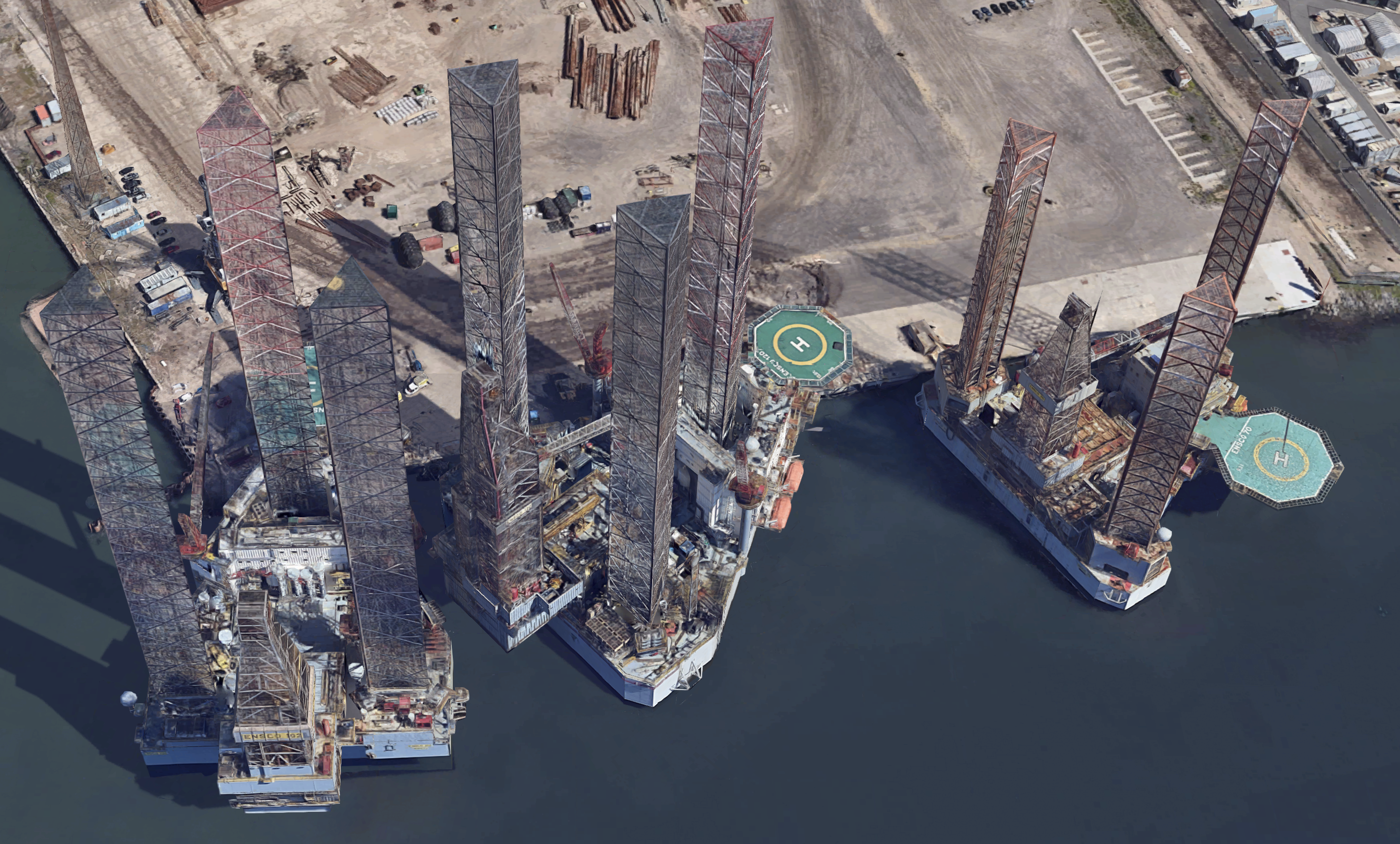
The view has all changed now according to this news item on the Able Seaton Port, which is entitled First Campaign To Install Turbines At World’s Largest Offshore Wind Farm Is Underway.
A new vessel called Voltaire will be used to install the turbines.
This page on the Dogger Bank Wind Farm web site, is entitled Largest Jack-Up Vessel Voltaire Arrives In The UK To Build Largest Wind Farm In The World.
These are the bullet points.
- Largest offshore jack-up vessel and first seaworthy ultra-low emission installation vessel Voltaire arrives in the UK for her very first assignment on Dogger Bank Wind Farm.
- The vessel will install turbines for all three Dogger Bank Wind Farm phases, a total of 277 units of GE Renewable Energy Haliade-X offshore wind turbines.
These three paragraphs describe the assembly of the wind farm.
The largest offshore jack-up installation vessel ever built, Voltaire, has just arrived in the UK port of Able Seaton ahead of its first campaign on Dogger Bank Wind Farm.
Voltaire of Jan De Nul Group was delivered in late 2022. Since then she has been undertaking final preparations for her very first assignment, the construction of the Dogger Bank Wind Farm phases A, B and C.
In total, the vessel will be responsible for installing 277 GE Renewable Energy Haliade-X turbines. Voltaire will sail out in early July to begin installation
As in an earlier life I was writing project management software for North Sea oil and gas, I can obviously say history is repeating itself. In the 1970s offshore work got easier as cranes got bigger and now fifty years later, it looks like larger lifting capacity, is enabling the installation of larger turbines.
Crown Estate Supports Four Nature-Positive Offshore Wind Research Projects
The title of this post, is the same as that of this article on offshoreWIND.biz.
This is the sub-heading.
The Crown Estate has revealed that it is partnering with a range of UK-wide expert bodies to launch four research projects to support nature recovery and the coexistence of offshore wind farms with marine life.
The four projects are described in these paragraphs.
The first of four projects is called Prevalence of Seabird Species and Collision Events in OWF (PrediCtOr), led by the Carbon Trust under the Offshore Renewables Joint Industry Programme (ORJIP).
It aims to develop a coordinated approach for reducing uncertainty surrounding bird collision risk and influencing factors, and therefore reducing consenting risk, at offshore wind farms.
The second project is Procellariiform Behaviour & Demographics (ProcBe), led by JNCC, which seeks to fill evidence gaps around how seabird species, such as storm petrels and Manx shearwater might interact with offshore wind farms and improve the demographic rate and population modelling approaches.
Reducing Seabird Collisions Using Evidence (ReSCUE) project, led by Natural England, is a three-and-a-half project that could improve the industry’s knowledge of seabird flight heights and collision risk with offshore wind turbines in UK waters.
And the last project, named Strategic Compensations Pilots for Offshore Wind, is led by OWIC.
Research like this will surely increase the acceptance of offshore wind power amongst conservationists.
Iberdrola Secures EUR 500 Million Loan For East Anglia Three
The title of this post, is the same as that of this article on offshoreWIND.biz.
This is the sub-heading.
Spain-headquartered Iberdrola has secured a EUR 500 million loan from Citi, partly guaranteed by the Norwegian Export Credit Agency (Eksfin), to support the development of the 1.4 GW East Anglia Three offshore wind farm in the UK.
It certainly doesn’t seem that raising the money to build this wind farm has been difficult.
Octopus Energy To Pour Billions In Offshore Wind Globally By 2030
The title of this post, is the same as that of this article on offshoreWIND.biz.
This is the sub-heading.
UK green energy supplier Octopus Energy Group has announced that it will invest, through its generation arm, USD 20 billion (about GBP 15 billion) into offshore wind by 2030.
These three paragraphs outline the investment.
The company said that this will go towards the generation of 12 GW of renewable electricity a year, enough to power 10 million homes.
Octopus is targeting projects across the globe, with a focus on Europe, and already has several deals in the pipeline.
It will back developers of new offshore wind farms as well as projects that are under construction operational, according to the press release.
Note.
- This is the original press release from Octopus Energy, which is entitled Making Waves: Octopus Energy To Unleash $20bn Of Investment In Offshore Wind By 2030.
- According to the press release, Octopus Energy also backs Simply Blue, a developer of innovative floating offshore wind projects, a type of offshore wind technology that taps into strong winds deeper out at sea.
- I will be interested to see how much capacity, Octopus Energy builds in the UK and how the capacity relates to their electricity sales in the UK.
Octopus Energy seem to have their tentacles into several worthwhile projects.
They will certainly need a lot of finance.
In World’s Largest Wind Farm Attracts Huge Backing From Insurance Giant, I describe Aviva’s philosophy about investing in renewable electricity infrastructure, based on an article in The Times.
I suspect other reputable companies and funds will follow Aviva’s lead. Provided, that the infrastructure is top-notch and well-managed.
Ørsted Divests Remaining Stake In London Array For EUR 829 Million
The title of this post, is the same as that of this article on offshoreWIND.biz.
This is the sub-heading.
Ørsted has signed an agreement with funds managed by Schroders Greencoat to divest its remaining 25 per cent minority interest in the London Array offshore wind farm in the UK.
These first three paragraphs outline the deal and give Ørsted reasons.
The total value of the transaction is GBP 717 million (approximately EUR 829 million).
Ørsted originally owned 50 per cent of the project and divested an initial 25 per cent of London Array to Caisse de dépôt et placement du Québec (CDPQ) in 2014.
The company does not have operations and maintenance (O&M) responsibility at the 630 MW London Array, and as the firm only holds a minority interest, Ørsted said it considers the asset non-strategic.
Note.
- Ørsted is the world’s largest developer of offshore wind power by number of built offshore wind farms.
- Schroders Greencoat LLP is a specialist manager dedicated to the renewable energy infrastructure sector.
This is a typical transaction, which is enabled between companies in the world’s financial centres all the time.
- Company A has an asset, which generates a predictable cash flow and needs money to invest in similar assets.
- Fund B has lots of money, but needs a predictable cash flow to pay interest to its investors.
So it is not surprising, that Fund B buys the asset from Company A.
I should say that the project management computer system, that I designed; Artemis was leased to the end users.
This eased the process of funding the sales.
In later years, I seem to remember, that we took bundles of leases with companies like BAe, BP, Shell, Texaco and sold them to banks, who needed a safe investment.
 The Anonymous Widower