Leuchars Station – 21st Aug 2019
I took these pictures at Leuchars station after arriving on an Inter7City train from Edinburgh.
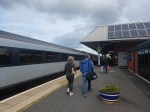
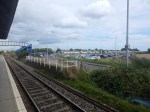

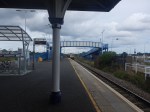
I didn’t stay log as I was running late and needed to get to Edinburgh for my train home.
My reason for going to Leuchars was to look at the proposed St. Andrews Rail Link.
This Google Map shows the position of St. Andrews in relation to Leuchars station.
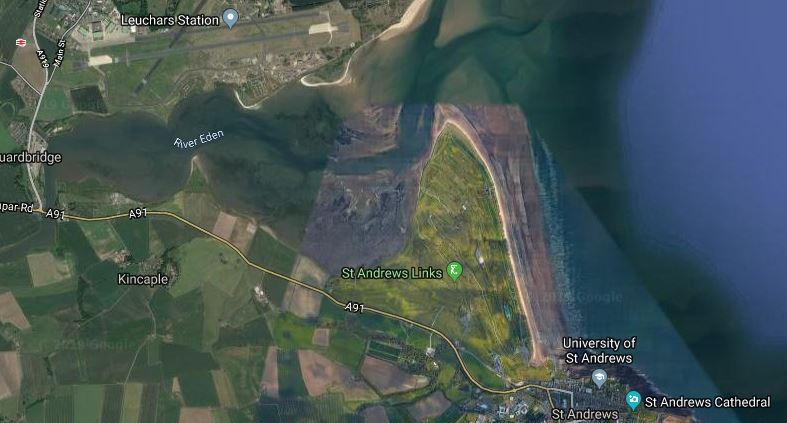
Leuchasrs station is in the North-West corner of the map, with St. Andrews in the South-East.
It looks like most of the route has been dismantled or built on and it might not be the easiest route to reinstate.
Wikipedia says this about an alternative plan.
The original reinstatement plan espoused by StARLink was simply a reestablishment of the historical Leuchars – St Andrews line but since the publication in 2012 of a report by Tata Steel Rail Consultancy StARLink now advocates an entirely new 21st-century layout with a twin-cord high-speed rail link travelling west and southwards via Cupar and northwards via Leuchars. StARLink has estimated that the railway could be reinstated for £76 million.
I am rather suspicious of the low value of the costing.
What ouzzled me at Leuchars was that there were no signs that I saw, telling visitors how to get St. Andrews.
Around The Fife Circle Line
Although, I’ve been to Scotland many times, I’d never knowingly been over the Forth Bridge in good light.
So I went all the way round the Fife Circle Line and took these pictures.
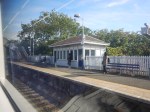

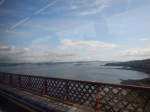
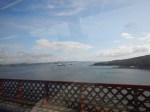

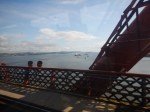
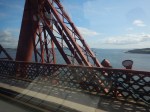
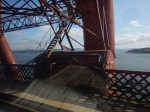
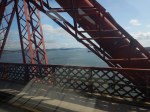
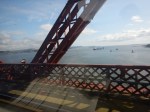
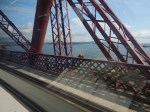
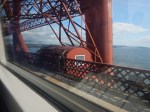
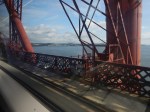
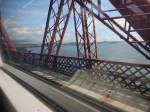
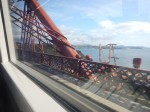
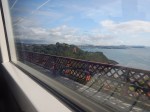

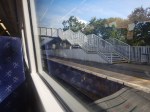
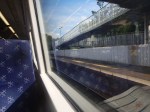
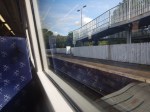
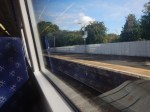
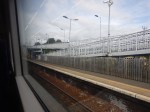
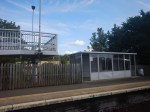
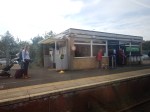
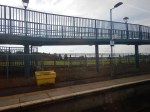
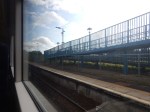
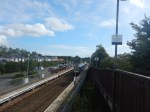
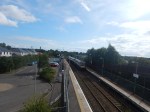
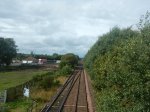
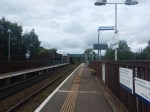
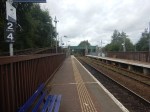
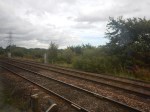
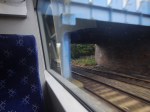
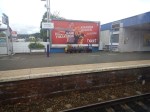
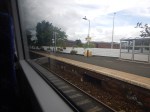
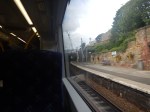
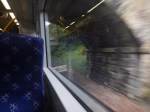
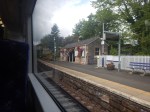
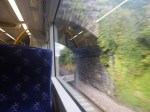
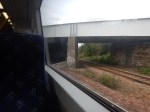
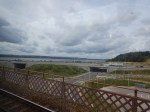
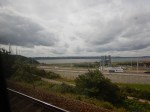
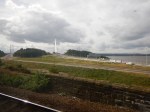
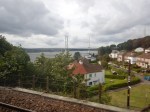
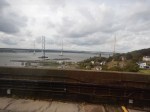
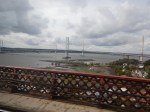
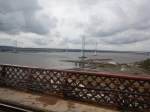


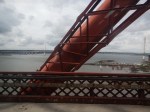
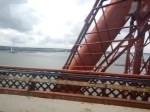

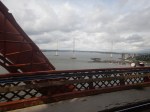
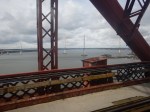
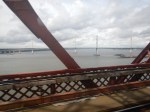
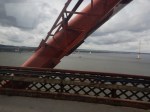




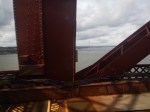
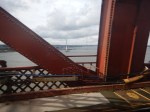
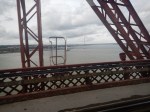
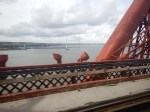
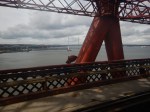
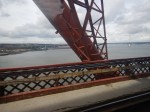
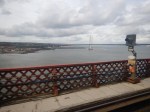
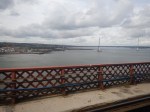
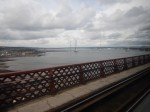
The route was fairly busy and I very much feel that the three-car Class 170 train could at times be rather small for the route.
The Fife Circle Line
This map from Wikipedia shows the stations on the Fife Circle Line.
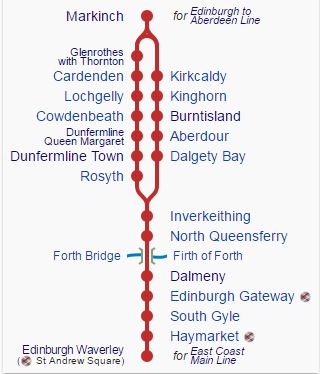
Consider.
The route is double-track.
- The distance from Dalmeny to Glenrothes with Thornton station via Comdenbeath is 22.3 miles
- The distance from Dalmeny to Glenrothes with Thornton station via Kirkcaldy is 21.4 miles
- The train I was on waited a couple of minutes at Glenrothes with Thornton station before turning to Edinburgh.
In addition my pictures show the following.
- Many of the bridges are high- enough to allow electrification.
- On the East side of the Circle, there are some old stone bridges that would need to be raised for electrification.
- Some of the stations are step-free with ramps.
Overall, it is a typically-Scottish neat-and-tidy line, that needs some improvement, like longer electric trains and some improved stations with step-free access.
Electrification Of The Fife Circle Line
In my view, there are two major obstacles to full-electrification of the Fife Circle Line.
The Forth Rail Bridge
I feel that engineers could electrify the Forth Rail Bridge without too much difficulty.
But that is not the problem.
- The bridge is on the main route between Edinburgh and Aberdeen and North East Scotland and electrification would cause major disruption during the installation.
- There is also the Heritage Lobby, who would probably be totally against major changes to a World Heritage Site.
For these reasons, I don’t think that the Forth Bridge will be electrified.
The Stone Bridges On The Eastern Side Of The Circle
There are nearly a dozen stone arch bridges on the route through Kirkcaldy and raising these for electrification would cause major disruption to one of Scorland’s main rail routes.
Third-Rail Electrification Of The Fife Circle Line
In my view, this would be an option to get round the problems of disruption and the Forth Rail Bridge.
But, third-rail electrifrication is still-considered a method non-grata, despite being used successfully for over a hundred years in Merseyside and South of London.
I do wonder, if Brexit will make it easier to install third-rail systems.
Certainly, Hitachi who would probably make most of the electric trains that would use the Forth Rail Bridge and the Fife Circle Line have the technology for third-rail trains, which they used on the Class 395 trains for HighSpeed commuter services to Kent.
I do wonder, if Brexit will make it easier to install third-rail systems.
Battery-Electric Trains On The Fife Circle Line
In Hitachi Plans To Run ScotRail Class 385 EMUs Beyond The Wires, I discussed Hitachi’s plan to fit batteries to Class 385 trains, so they could run on unelectrified lines.
The Fife Circle Line would be an ideal route for battery-electric trains.
This map shows the rail lines to the South of the Forth Rail Bridge.
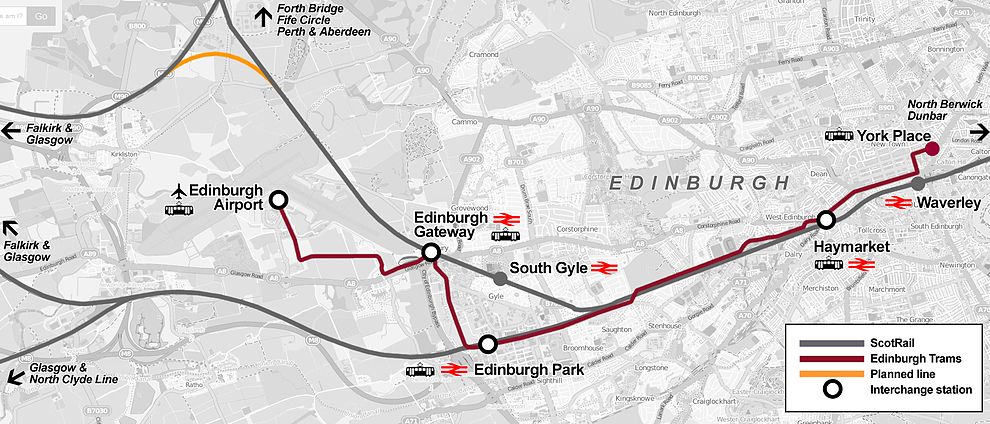
Note.
- An unelectrified line, through South Gyle and Edinburgh Gateway stations, connects the Forth Bridge to the main electrifield Edinburgh and Glasgow Line through Edinburgh Park station.
- There is also another unelectrified line, that connects the Forth Rail Bridge to Linlithgow, Falkirk and Glasgow.
- Shown in yellow is a proposed chord, which would create another route between Edinburgh and Glasgow.
Electrification as far as Dalmeny station, which is between the Forth Bridge and the proposed chord would enable LNER’s bi-mode Class 800 trains to use electric power for a few extra miles.
As I said earlier, the distance between Dalmeny and Glenrothes with Thorntonh station is under twenty-five miles using either the Western or Eastern side of the Fife Circle Line.
- Twenty-five miles is well within range of a battery-electric train, that has charged the battery using the electrification between Edinburgh and Dalmeny.
- Most quoted ranges for battery-electric trains are in the order of sixty miles, so a well-designed train could probably do a complete round trip from Dalmeny station.
- A charging point could be provided at Glenrothes with Thorton station to top up the batteries, whilst the train waits to return, if that were deemed necessary.
In my view, the Fife Circle Line is an ideal route for battery-electric trains. Especially, as the only new infrastructure required is as follows.
- Electrification to Dalmeny station, which may be under consideration anyway.
- Provision of a charging station at Glenrothes with Thornton station.
It is undoubtedly, the lowest cost way to provide new electric trains on the Fife Circle Line.
How Big Would The Batteries Need To Be?
I use a figure of three kWh per vehicle mile for the energy consumption of an electric multiple unit running on a typical route. My reasoning for this figure is given in How Much Power Is Needed To Run A Train At 125 mph?.
On that basis a three-car Class 385 train would need a battery capacity of 3x3x50 or 450 kWh to do a complete trip around the Fife Circle Line.
Note that Vivarail are talking about putting 424 kWh in a three-car Class 230 train.
This page on the Vivarail web site is entitled Battery Train Update.
This is a paragraph.
Battery trains are not new but battery technology is – and Vivarail is leading the way in new and innovative ways to bring them into service. 230002 has a total of 4 battery rafts each with a capacity of 106 kWh and requires an 8 minute charge at each end of the journey. With a 10 minute charge this range is extended to 50 miles and battery technology is developing all the time so these distances will increase.
So it looks like Vivarail manage to put 212 kWh under each car of their two-car train.
Surely, Hitachi have the technology to put 450 kWh in a three-car Class 385 train.
Trains On The Levenmouth Rail Link
In Scottish Government Approve £75m Levenmouth Rail Link, I talked about using Class 385 trains with batteries on the Levenmouth Rail Link.
The same Class 385 trains with batteies could do both routes.
Extension To The Borders Railway
There has been suggestions, that Borders Railway and Fife Circle Line trains run back-to-back across Edinburgh.
It is just over thirty miles between Newcraighall, where the electrification from Edinburgh ends, and Tweedbank.
With a charging station at Tweedbank, Class 385 trains with batteries could run both routes.
Conclusion
It appears that running battery-electric Class 385 trains on the Fife Circle Line and the Levenmouth Rail Link is a feasible option.
It would also be superb publicity for the company, who supplied the trains, if videos were shown of the trains on the Forth Rail Bridge.
My First Ride In An Inter7City Train
These are some pictures I took of a ride between Edinburgh and Leuchars station.
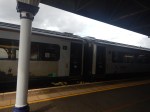
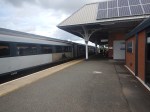

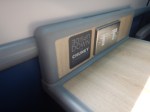

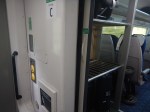

In some ways, I wasn’t particularly impressed and the interiors were not up to the standard of some InterCity125 trains and Mark 3 coaches I’ve ridden lately.
These are some other pictures of Inter7City trains, I took on my recent trip to Scotland.

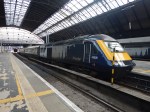
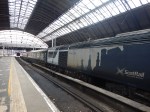
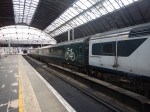

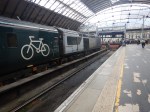
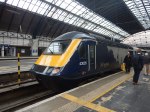
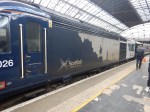

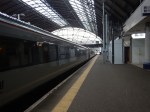
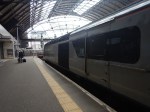
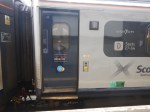
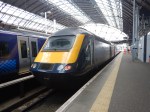
They may look nice and are what the public wanted, but would the right new trains have been better.
Gluten-Free Breakfast At Amarone In Edinburgh
I had my gluten free breakfast in Amarone in Edinburgh a couple of weeks ago.



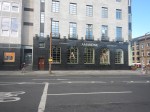
I would certainly go back again.
- Service was friendly.
- Price was reasonable.
- Food was excellent.
- Tea was at it should be in a pot!
It was a bit quiet, but that was probably due to the early hour.
I’ll certainly use their restaurant in Glasgow as well!
Little Has Been Said About East Midlands Railway’s Promised Hydrogen Trains
In their proposal for the East Midlands franchise, Abellio said that they would trial hydrogen-powered trains on the Midland Main Line.
But little has been heard of this promise since winning the franchise.
So where could the franchise use hydrogen-powered trains on the Midland Main Line?
Extending Corby Trains To Oakham And Melton Mowbray
This is a distance of under thirty miles, so it would probably be within range of a well-designed hybrid battery-hydrogen-electric train.
- Refuelling with hydrogen could be at Corby or Melton Mowbray stations.
- Trains would be 240 metres long.
- In addition batteries would be charged between St. Pancras and Corby stations.
- Trains would run at 125 mph for much of the route between St. Pancras and Corby.
- Hydrogen power would be used as a top-up between Corby and Melton Mowbray if required.
The service could even go further and turn back at Leicester.
Perhaps one train per hour (tph) of the two Corby services could be extended.
Non-Stop London To Leicester Trains
The Midland Main Line will be electrified as far as Market Harborough, so there would be under twenty miles without electrification on the route between St. Pancras and Leicester stations.
- Trains would run at 125 mph for much of the route between St. Pancras and Leicester.
- Refuelling could be at Leicester.
- To publicise the service, it might be best to run two tph non-stop.
- Perhaps the only stop would be Luton Airport Parkway, as the Airport wants more fast services.
As with the Corby Extension service, it wouldn’t require a great deal of running on hydrogen.
Why Not Run A Loop From London?
If the Corby Extension service went as far as Leicester it would approach the station from the North, whereas the London service would approach from the South.
So why not run the services back-to-back?
- There could be two tph in each direction.
- There could be a longer stop at Leicester to take on hydrogen.
- Stops could include Luton Airport Parkway in both directions, to give the Airport four tph to and from London and Leicester.
- There might also be the possibility of an improved station at Syston, which is to the North-East of Leicester.
It wouldn’t need any new platforms or other infrastructure, except for the hydrogen filling station at Leicester and the possible improvements at Syston.
It would deliver high speed hydrogen-powered trains to Leicester at a frequency of two tph direct and two trph via Corby.
It would fit Luton Airport’s ambitions as I outlined in Luton Trains Its Eye On Sub 30-Minute Express.
What would that do for the prestige of the Leicester and the ambitions of Luton Airport?
Who Would Build The Trains?
These are my thoughts.
- Alston have the technology, but do they have the train?
- Bombardier have stated they are not interested in hydrogen.
- CAF have the train and the battery technology, but do they have the hydrogen technology?
- Hitachi have the train, but do they have the battery and hydrogen technology?
- Stadler have the train and the battery technology, but do they have the hydrogen technology?
I have heard rumours they are pushing hydrogen technology and also that their PowerPack concept works at 125 mph, so I suspect that Stadler are as likely as any to produce a working high speed hybrid hydrogen train.
But they will have several dozen trains working in the UK in a year or so.
They are not to be underestimated.
But then the prize for successfully running a 200 kph or 125 mph zero-carbon train will be immense, and this will not be lost on the train builders.
Or East Midlands Railway for that matter!
The first person, who does something is always remembered!
Losers come second!
On The Caledonian Sleeper To Glasgow
I started this post on the Caledonian Sleeper to Glasgow.
It’s one of the new Mark 5 trains and they are a great improvement, although one Scottish hard man, preferred the old Mark 3s.
Out of Euston we were doing 80 mph and the ride in the Lounge Car is good. At least up to the standard of a Greater Anglia Mark 3, which are some of the best!
These are some pictures of my train.
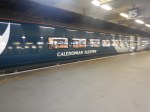

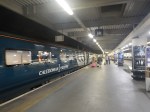










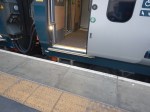

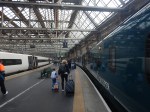
I don’t think I could fault the train.
But the service was rather sub-standard, due to a strike and I got a partial refund.
Metrolink Customers Complete 170k Trips Using Contactless System
The title of this post, is the same as that of this article on Rail Technology Magazine.
The high number of journeys is no surprise to me and Manchester should have introduced this system several years ago!
This post from September 2015 is ntitled Transport for London Are Leading The Contactless Revolution.
I’ll repeat the short post here.
This article from Rail Magazine is entitled Contactless Ticketing Booms In London.
It states the following.
- In the first year, 180 million journeys have been made using contactless cards.
- This accounts for a fifth of all pay-as-you-go journeys.
But what isn’t said is the fact that despite the predictions of some left-wing and green politicians, there has been no hint of any problems. If there had been, the various tabloids would have had a field-day.
When are the rest of the large cities of the UK going to copy London, so I don’t need to use that nineteenth century technology of paper tickets?
Manchester’s figure of 170,000 in four weeks is a rate of around two million in the first year.
- Greater Manchester is a lot smaller than Greater London.
- London had been running Oyster successfully since 2003.
- Oyster and contsctless ticketing could be used on the Underground, Overground, trams, trains and buses.
I will be very surprised if Manchester doesn’t expand their system.
This is said in the Wikipedia entry for Oyster card.
Since the launch of contactless payment in 2012, over 500 million journeys have been made, using over 12 million contactless bank cards.
Assuming the rate of use is level, which it isn’t as it’s increasing, this works out at 71.4 million journeys per year.
- Greater London’s population is 8.8 million
- Greater Manchester’s population is 2.8 million
Just doing a simple pro-rata means that Manchester should see 22 million journeys a year or 62,000 journeys a day.
According to Wikipedia, the Manchester Metrolink had 43.7 million riders in 2018/19.
Conclusion
Manchester must do the following as soon as possible.
- Extend contactless ticketing to all buses and trains in the Greater Manchester area.
- Make sure all taxis accept contactless cards.
- Extend the Mabchester Metrolink.
- Put in an order for some more trams, as soon as possible. They will be needed as traffic will grow exponentially.
- Purchase some vandal-proof terminals.
They should also enter into discussions with Cheshire, Lancashire, Leeds, Liverpool, Sheffield and Yorkshire about creating a common and integrated contactless card system for the North!
Contactless ticketing would transform lhe North!
Will Contactless Ticketing Generate Funding For Extensions?
Some extensions to the Manchester Metrolink will be fairly easy and not very costly to build. In Tram-Trains To Hale Station, I talked about a simple extension to Hale station, that could go a lot further to perhaps Northwich, Sandbach and Crewe.
When Transport for Greater Manchester get a decent financial model and data from a year of contactless ticketing, some of the routes for tram-trains might be possible to fund from a large insurance or pension fund.
I have used this tram-train extension as an example, as there is no need to lay a lot of new track, so costs can be less.
London should have been able to fund improvements, but Sadiq Khan brought in a fare freeze and Crossrail turned out to be late.
A Lesson For Brexit
Boris Johnson was Mayor of London, when full contactless ticketing was implemented in London.
- It was the first such system in the world.
- The left and the green were against it and said it would all end in tears.
- All Londoners and visitors have embraced the system and I’ve never found anybody who refuses to use it.
- Attacks on staff have dropped to a very low level, as there’s no money about.
- In my opinion it is one of the main reasons, that London has been so successful in recent years.
I voted Remain and still think, there are reasons we should stay in Europe.
- But the referendum went the other way and everyone must abide by the result.
- Boris probably had little to do with London’s contactless ticketing revolution, but if it had failed he would have got the blame.
- All politicians in London now embrace the technology and would be voted out of office, if they decided contactless bank cards couldn’t be used.
Boris is now in charge of Brexit and just like those of the left and the green who opposed contactless ticketing, those that oppose Brexit will be Yesterday’s Men.
Like contactless ticketing, it has nothing to do with Boris, but all to do with the power of the man and woman on the bus or in the voting booth.
I think it is too late to stop a No-Deal Brexit.
The Shuttle Train Between Stratford And Meridian Water Stations Has Appeared In The Timetable
In the Wikipedia entry for Meridian Water station, this is said about the initial service.
A seven day a week, half-hour service from 6am to 11pm is timetabled to start on 9 September 2019 to Stratford calling at Northumberland Park, Tottenham Hale and Lea Bridge which will start and terminate at Meridian Water from Platform two.
If you type this date and time into the on-line National Rail timetable, you get these trains.
- 06:22
- 07:08 and )7:38
- 08:08 and )8:38
The trains then seem to follow the eight minutes past the half hour pattern until 23:08
Each journey has the same characteristics.
- They leave from Platform 2 at Meridian Water
- They arrive in Platform 11 at Stratford fifteen minutes later at XX:23 and XX:53
- Times at Northumberland Park are XX:10 and XX:40.
- Times at Tottenham Hale are XX:13 and XX:43
- Times at Lea Bridge are XX:16 and XX:46
Return journeys have the following characteristics
- They leave from Platform 11 at Stratford at XX:17 and XX:47
- They arrive in Platform 2 at Meridian Water fifteen minutes later at XX:32 and XX:02
- Times at Lea Bridge are XX:23 and XX:53
- Times at Tottenham Hale are XX:26 and 56
- Times at Northumberland Park are XX:29 and XX:59
The timetable to provide the two trains per hour (tph) service looks to have been put together in a very simple way.
- Two trains are used.
- Train One works the XX:08 from Meridian Water and the XX:47 train from Stratford
- Train Two works the XX:38 from Meridian Water and the XX:17 train from Stratford
- Trains have six minutes to turn round at Meridian Water.
- Trains have twenty-four minutes to turn round at Stratford.
- Only one train is North of Lea Bridge at any one time and they are on the new third track.
- The two trains will pass between Stratford and Lea Bridge stations, where they will be on separate tracks.
There is one complication; the two tph service between Stratford and Bishops Stortford is still running and the timetable, says it will be using Platform 11 at Stratford.
- But as the Meridian Water shuttle train will wait for twenty-four minutes at Stratford, could the Bishops Stortford train share the same platform?
- Or will the signallers use Platform 12 as an overflow, when they need?
There must be a sound, safe and reliable plan, otherwise they wouldn’t run the trains.
Enfield Council has been promised four tph between Meridian Water and Stratford stations.
Sharing Platform 11 between the Meridian Water shuttle and the Bishops Stortford service might just fulfil Enfield’s needs.
- If the Southbound Bishops Stortford to Stratford service stopped at Meridian Water, if would stop in Platform 3, which shares an island with Platform 2, which will be used by the shuttle.
- The Southbound Bishops Stortford to Stratford service would probably stop at Meridian Water at XX:22 and XX:52, which would be conveniently between the shuttle services.
- Northbound Stratford to Bishops Stortford services would leave conveniently at XX:00 and XX:30 from the samr platform as the shuttle.
But I feel that this is very much an interim service until Greater Anglia have worked out what is possible with real trains and passengers and their new Class 720 trains have been delivered.
The Bakerloo Line Connection At Paddington Station
I use the Bakerloo Line to get to and from Paddington station for various reasons, and find myself in the narrow two-way passage between the Underground station entrance in the middle of the Paddington station and the top of the escalators to the Bakerloo Line.
These pictures show the route towards the Bakerloo Line.
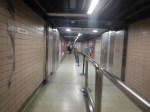


It strikes me that a certain amount of reorganisation is needed.
- In the narrow two-way passage signs tell people to keep left.
- On the escalators, the escalators are run on a keep right basis.
So everybody has to cross over in the area at the top of the escalators.
I’m sure, it could be better organised.
It should be noted that another pedestrian tunnel is being built to connect the Bakerloo Line to Crossrail.
I wrote about the Paddington Bakerloo Line Link in Paddington Is Operational Again!
 The Anonymous Widower