Darlington Station – 28th October 2020
I went to Teesside to have a look round yesterday.
These are my thoughts on Darlington station.
Platform 1 And Platform 4
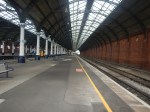
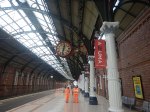
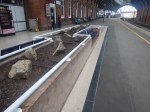
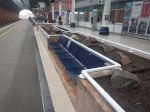
These pictures show the two main platforms at Darlington station.
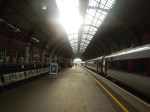
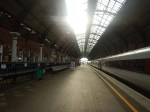
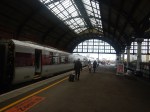
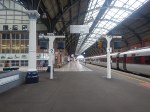


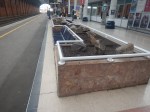
Note.
- They are affectively a very wide island platform.
- Platform 1 handles all trains going South and East to Middlesbrough and Saltburn.
- Platform 4 handles all trains going North and West to Bishop Auckland.
- The platforms are well over 200 metres long.
- Both the main platforms have a second track, between the current track and the walls of the station.
- Both main platforms have a large clock.
- Platform 1 has some innovative seating.
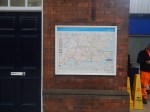
- Uniquely, there is a London Rail Map on the London-bound Platform 1. Every London-bound platform needs a copy of this map, but they are very rare.
They appear to handle all the current services easily.
There is certainly a lot of space to improve the station.
Station Structure
The station stricture is probably best described as grand, stylish and Victorian and it appears to be in good condition.
- The tracks through the station are enclosed in two large brick walls.
- A roof of the period, is supported on the walls and a number of perhaps forty cash-iron columns.
These pictures give a flavour of the station.

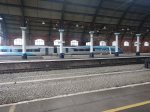
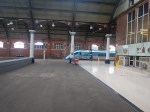
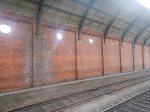

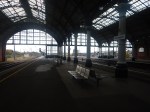
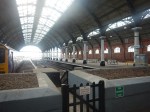
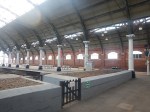
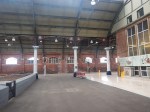
There must be few better station structures than Darlington in the UK and as it is Listed Grade II*. I would expect this is recognised by English Heritage.
The Southern Bay Platforms
There are two bay platforms at the Southern end of the station.
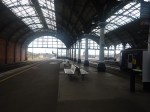



There were bay platforms at the Northern end, but these have now been removed.
I wonder, if these two bay platforms could be invaluable in the expansion of services both on the Tees Valley Line and generally in the area.
Current plans envisage the following.
- Four trains per hour (tph) between Saltburn and Darlington.
- Two tph between Darlington and Bishop Auckland.
One obvious way to achieve this objective would be to do the following.
- Run two tph between Saltburn and Bishop Auckland. These trains would run as now with Saltburn services using Platform 1 and Bishop Auckland services using Platform 4 at Darlington station.
- Run two tph between Saltburn and Darlington. These trains would use Platform 2 at Darlington station.
The advantages of this are.
- To get to Middlesbrough or Saltburn, you would go to the island Platform 1/2, as you do now.
- To get to Bishop Auckland, you would go to Platform 4, as you do now.
- If battery trains were to be used the bay platforms would be ideal for a Vivarail Fast Charge system
There would probably need to be some changes to the tracks serving Platform 1 and 2.
Other possibilities might include.
- Darlington might also be a useful terminal for a service to Whitby via Middlesbrough.
- Using the station as a Northern terminus for an Express Parcels Service from London.
Lengthened platforms able to take a five-car Class 802 train, could be useful for service recovery.
The Western Pedestrian Entrance To The Station
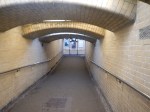
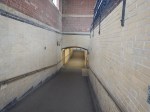
Darlington Town Centre lies to the West of the station and these pictures show what probably was a very grand entrance to the station connected to it by a subway.
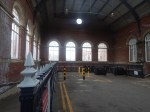
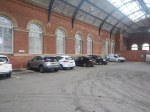
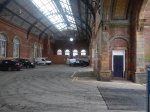
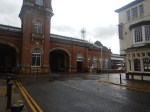
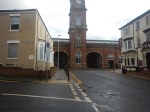
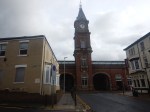
This Google Map shows the size of the entrance.
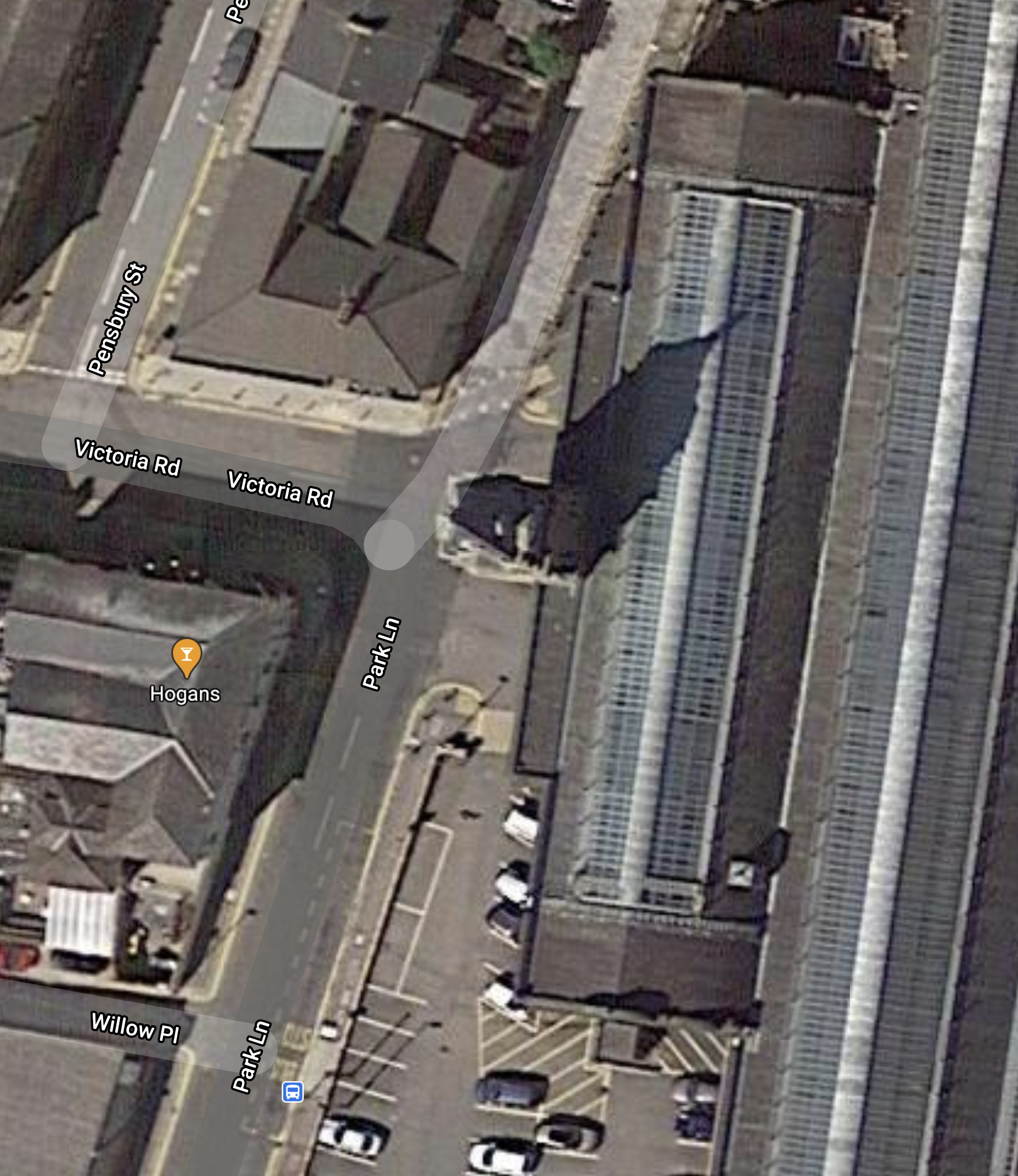
It is one of those buildings that would be described by a certain breed of estate agent, as having development potential.
- There are no lifts to the subway.
- It could be turned into a retail experience.
- Does the clock tell the right time?
- Buses were signposted in this direction, but there appeared to be little information.
Surely, it could be turned into an asset to both the railway and the town.
The Southern Approaches To The Station
These pictures show the Southern approach to the station.

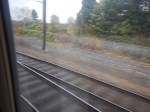

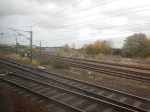
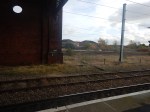


The Tees Valley Line to and from Middlesbrough and Saltburn joins to the South of the station and trains going to Bishop Auckland have to cross over the two tracks of the East Coast Main Line.
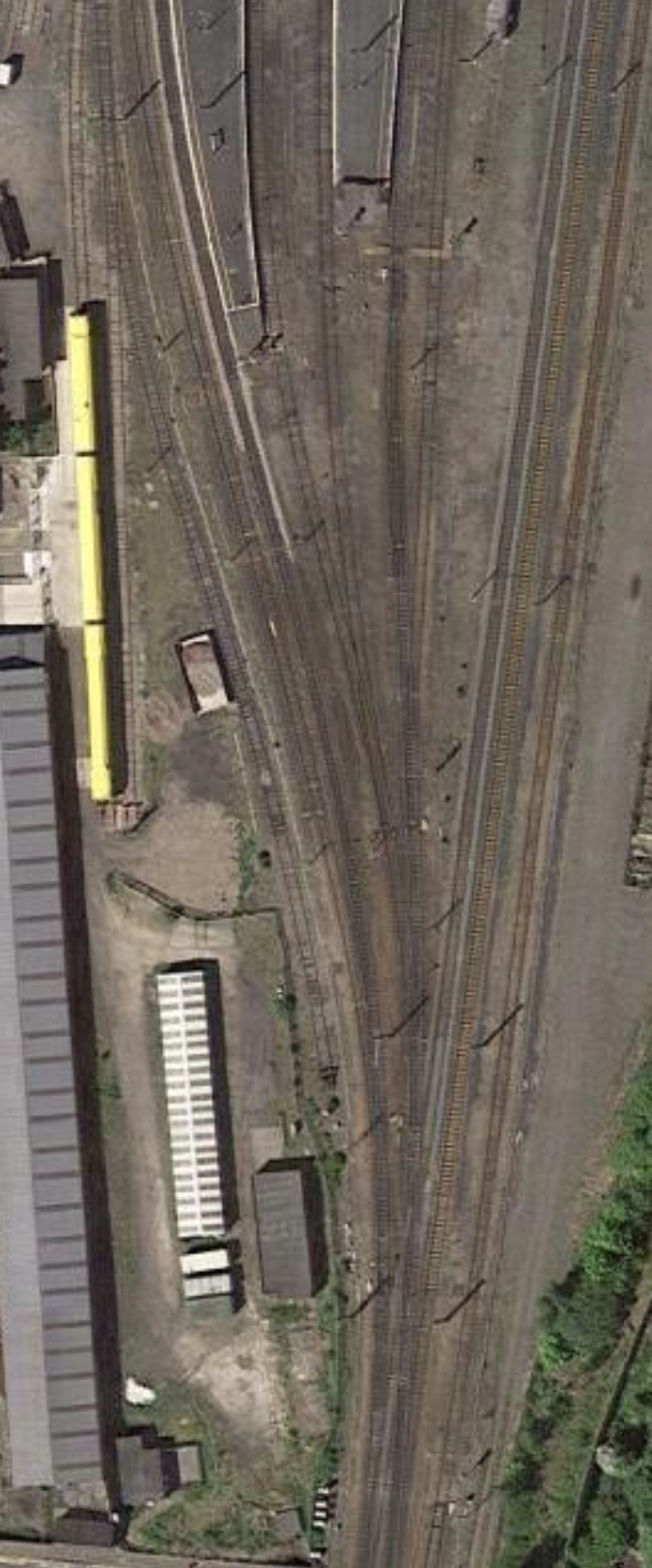
This Google Map shows the track layout just to the South of the station.
Note.
- The Southern ends of the platforms can just be seen at the top of the map.
- Platforms are numbered 1 to 4 from West to East.
- The two avoiding lines going past the East side of the station.
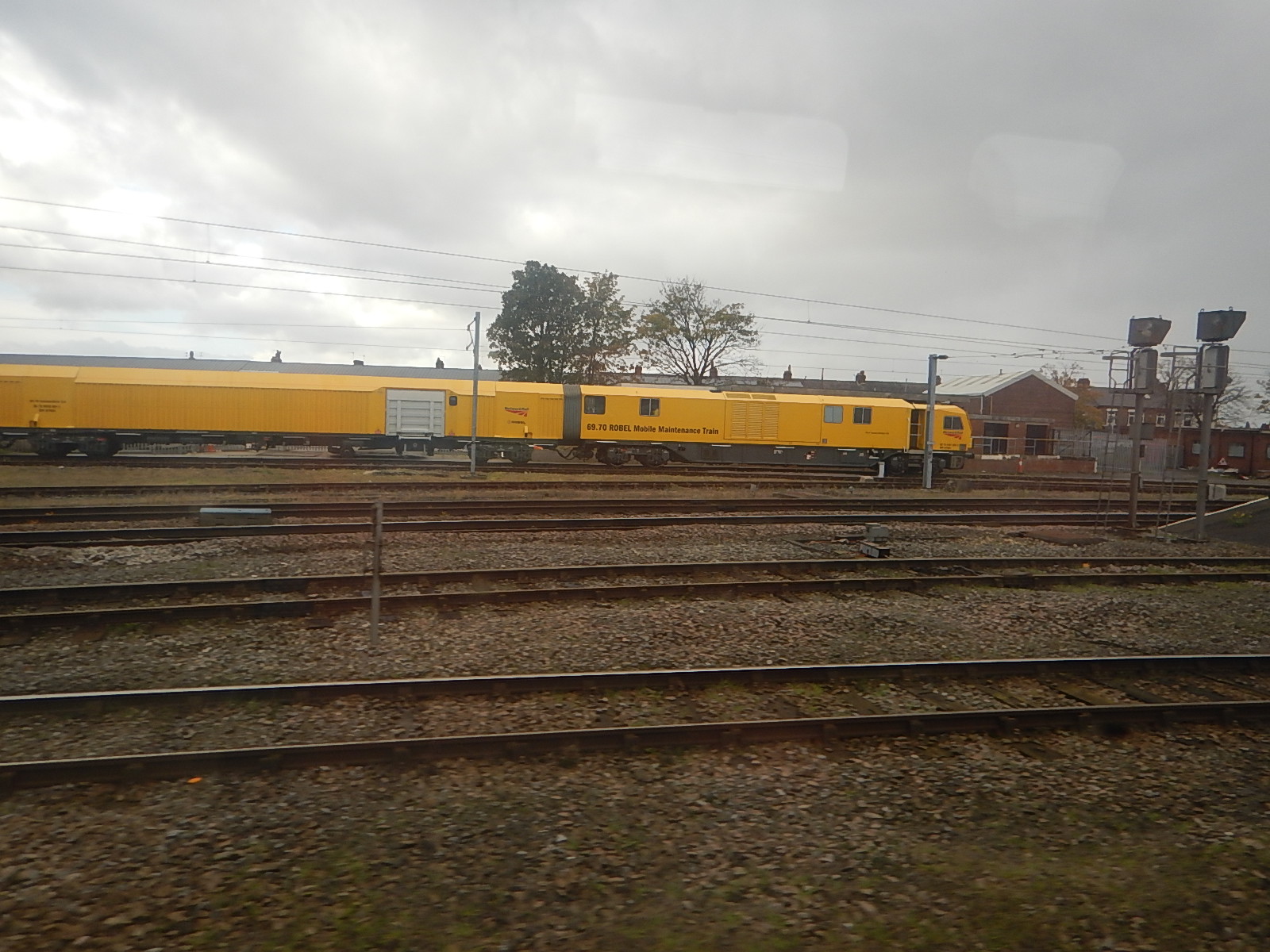
- The yellow train is one of Network Rail’s Mobile Maintenance Trains.
The Mobile Maintenance Train was parked in the same place yesterday, as this picture shows.
The second Google Map shows Darlington South Junction, where the Tees Valley Line from Middlesbrough joins the East Coast Main Line.
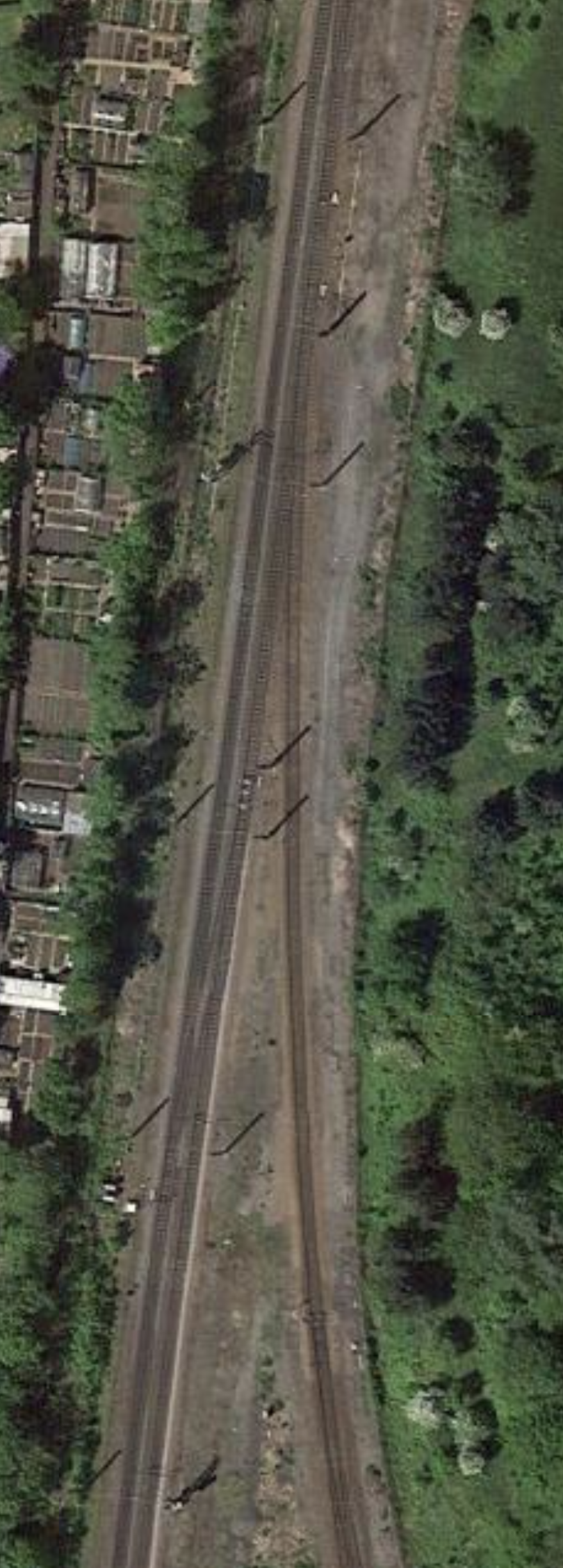
These two maps indicate the problem of train operation at Darlington.
A train between Bishop Auckland in the West and Middlesbrough and Saltburn in the East, can sneak down the Southbound East Coast Main Line and take the Tees Valley Line to continue on its way.
But a train going the other way, needs to cross both tracks of the East Coast Main Line on the flat, which means precision working by drivers and signallers, to avoid causing delays to both main line and local trains.
I suspect all the following are true.
- The number of London and Scotland expresses will increase.
- London and Scotland expresses will be running faster.
- The number of freight services on the route will increase.
- The number of services between Bishop Auckland and Saltburn will increase from the current hourly only service.
- High Speed Two will eventually start to run services between London and Birmingham, and at least as far North as Newcastle
All will make the need for improvements South, and probably North, of Darlington station increasingly important.
Could it be that the simplest solution would be to create a dive-under?
- It would only need to be single-track.
- It could probably be built without affecting current services, as was the Acton dive-under.
- There would appear to be plenty of space.
It would only need to allow trains from the Eastern branch of the Tees Valley Line to access Platform 4 at Darlington station.
High Speed Two Is Coming
High Speed Two is coming to Darlington and I wrote about that in £100m Station Revamp Could Double Local Train Services.
This was my conclusion about what will happen to services at Darlington in that post.
I think that this will happen.
- The Tees Valley Line trains will be greatly improved by this project.
- Trains will generally run at up to 140 mph on the East Coast Main Line, under full digital control, like a slower High Speed Two.
- There will be two high speed platforms to the East of the current station, where most if not all of the High Speed Two, LNER and other fast services will stop.
- There could be up to 15 tph on the high speed lines.
With full step-free access between the high speed and the local platforms in the current station, this will be a great improvement.
So what will the step-free access be like?
The young assistant in WH Smith told me that a hole will be made in the wall on the East side of the current Platform 1.
It does seem that a new bridge could reach over all the platforms with an entrance for the Town Centre in a refurbished Western entrance.
Passengers would arrive by high speed train every few minutes from the South, Newcastle or Scotland.
- Those for the Town Centre would walk across the bridge and exit the station in a refurbished Western entrance.
- Those needing onward local train travel would descend into the current station to catch another frequent train.
- Hopefully, there would be space somewhere for a bus station.
It would be a real gateway station for Darlington.
UK Records A 16% Increase In New Tech Startups
The title of this post, is the same as that of this article on ITPro.
It’s not all bad news out there.
As someone, who started a business in the recession of 1977, and was very successful, now is probably a good time to start the right business.
Scotland seems to have had the largest increase.
Tunnelling Complete At Bank Tube Station
The title of this post, is the same as that of this article on Infrastructure Intelligence.
This is the opening paragraph.
Tunnelling work at the project to modernise and expand Bank Underground station in London has been completed, marking a major milestone in the project. The tunnelling, which forms part of the programme to expand the size of the station by 40%, has seen more than 1.3km of tunnels constructed since May 2017.
I use Bank station regularly and it has been fully-functional during the tunnelling.
Hopefully, it will only in 2022.
Werrington Dive-Under – 28th October 2020
I took these pictures as I passed the Werrington Dive-Under on my way North this morning.

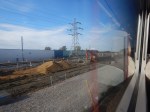
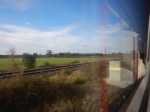
It seems to be coming on.
Le Pain Quotidien Has Reopened
This is good for coeliacs, as they do reasonable gluten-free food.
I can also get a 73 bus directly to Goodge Street station, where there is a particularly good Le Pain Quotidien, close to a Marks & Spencer food store and a Rymans.
What more could I want?

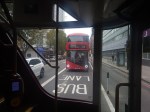
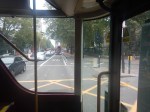


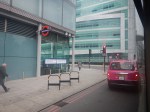
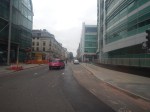
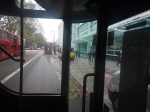

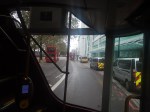

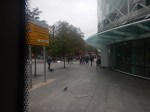

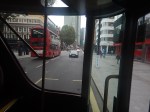
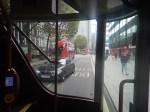
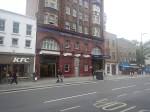

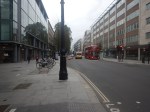
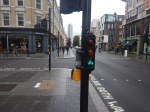
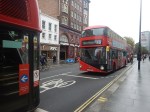

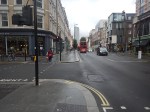
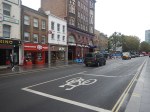

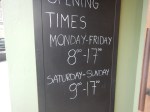

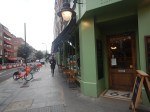

Note.
- I caught the bus close to my house and sat in the tail-gunner’s seat.
- The 73 bus has now been rerouted down Tottenham Court Road.
- The green-glazed building is University College Hospital. I now have a direct bus to the hospital, where I sometimes go for appointments.
- Tottenham Court Road is now two-way for buses, cyclists and taxis.
I shall use that Le Pain Quotidien more often.
Two New Black Country Railway Stations Receive Planning Approval
The title of this post, is the same as that of this article on Rail Engineer.
Planning permission has been granted for two new railway stations on the Walsall to Wolverhampton line, marking a major milestone in the project to restore passenger services to this part of the Black Country.
The stations at Darlaston and Willenhall will offer local residents vastly improved connections to Wolverhampton, Walsall and Birmingham New Street stations when they open in 2023.
The article also gives full details on the location of the stations and the rail services that will be provided.
So, What Exactly Is Long-Duration Energy Storage?
The title of this post is the same as that of this article on Greentech Media.
This is the sub-title.
Everyone’s talking about it, and Californians are buying in. Here’s what you need to know about this emerging grid sector.
It describes what California is doing and the sector, with particular reference to Hydrostor, Form Energy and Highview Power.
The article finishes with a section entitled What’s The Catch?
This is the first two paragraphs.
The obvious barrier to a thriving long-duration storage industry is convincing generally conservative power plant customers that emerging technologies quite unlike anything the grid currently uses are safe bets for decades of operation.
Lab tests can reduce the risk, but nothing beats operational, megawatt-scale installations for proving that something works. That’s why the Form deal with Great River Energy is so crucial, as are early projects by Highview Power and Hydrostor. The big exception to technology risk is pumped hydro, which has been used at scale for decades. Those projects grapple instead with high capital expense and environmental concerns.
The article is a must-read and hopefully, this and more articles like it, will convince conservative energy company owners, regulators and governments, that long duration energy storage is the missing link between renewable power and electricity consumers.
At least, the current UK Government has backed two of the most promising British long duration energy storage companies; Gravitricity and Highview Power.
Frankfurt Starts Building Fuel Station For World’s Biggest Zero-Emissions Train Fleet
The title of this post, is the same as that of this article on Reuters.
These are the two opening paragraphs.
German regional transport group RMV began construction on Monday of a filling station near Frankfurt that will use hydrogen generated as a by-product of chemicals manufacturing to fuel the world’s largest fleet of zero-emissions passenger trains.
France’s Alstom will deliver 27 hydrogen-powered fuel cell trains to the Infraserv Hoechst industrial park in the Rhine-Main region in mid-2022. Starting regular local services by that winter, the fleet will replace diesel engines.
All the investment will be partly funded by fares.
Chlorine Manufacture
I find it interesting, that the article also states that the hydrogen comes as a by-product of chlorine manufacture. When I worked in a ICI’s electrolysis plant around 1970, their plant used the Castner-Kellner process to produce both gases.
The process uses a lot of mercury and Wikipedia says this about the future of the process.
The mercury cell process continues in use to this day. Current-day mercury cell plant operations are criticized for environmental release of mercury leading in some cases to severe mercury poisoning as occurred in Japan Minamata_disease. Due to these concerns, mercury cell plants are being phased out, and a sustained effort is being made to reduce mercury emissions from existing plants.
Are INEOS, who now own the Runcorn plant, and the Germans still using the Castner-Kellner process?
I remember two stories about the theft of mercury from the Runcorn plant.
Mercury was and probably still is very valuable, and it was always being stolen. So ICI put a radioactive trace in the mercury, which didn’t affect the process. The result was that all legitimate metal dealers on Merseyside bough Geiger counters to check any mercury before they bought it.
One guy thought he had found the ideal way to steal mercury, so he filled his bike frame with the metal and wheeled it to the gate. Whilst he clocked out, he propped the bike against the gate-house. Unfortunately, it fell over and because of the weight of the mercury, he was unable to pick it up.
My work in the plant, involved devising a portable instrument that would detect mercury in air and a colleague’s project was to develop a way of detecting mercury in urine samples from the plant operatives.
Those projects say a lot, about why we should be careful around any process involving mercury.
A Trip To Stansted Airport In A Class 745/1 Train
This lunchtime a friend was passing through Stansted Airport on the way to Glasgow. As we hadn’t seen each other for a couple of years, we had decided to have a coffee at the Airport.
I took these pictures on the trip.
Property Development At Tottenham Hale
There is a lot of development going on around Tottenham Hale station.
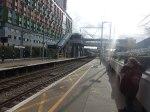
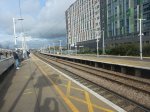

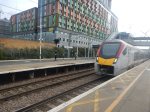
There will be a lot more to come.
The New Class 745/1 Train
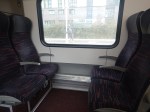
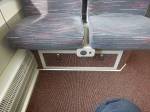
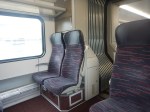
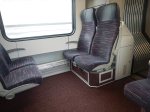
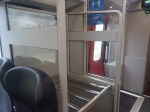
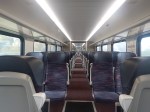
I travelled in a new Class 745/1 train, which are replacing the Class 379 trains.
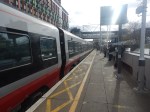
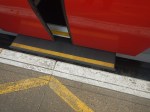




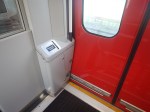

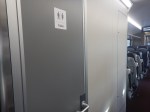
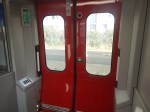
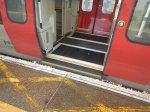
Note.
- The trains have twelve articulated sections.
- The trains are 236.5 metres long.
- Only 11-car Class 390 trains or a pair of five-car Class 80x trains are longer.
- The train has767 seats at a density of 3.24 seats/metre
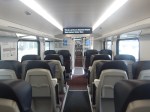
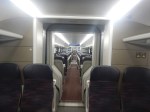
This picture through the train emphasises the train’s length.
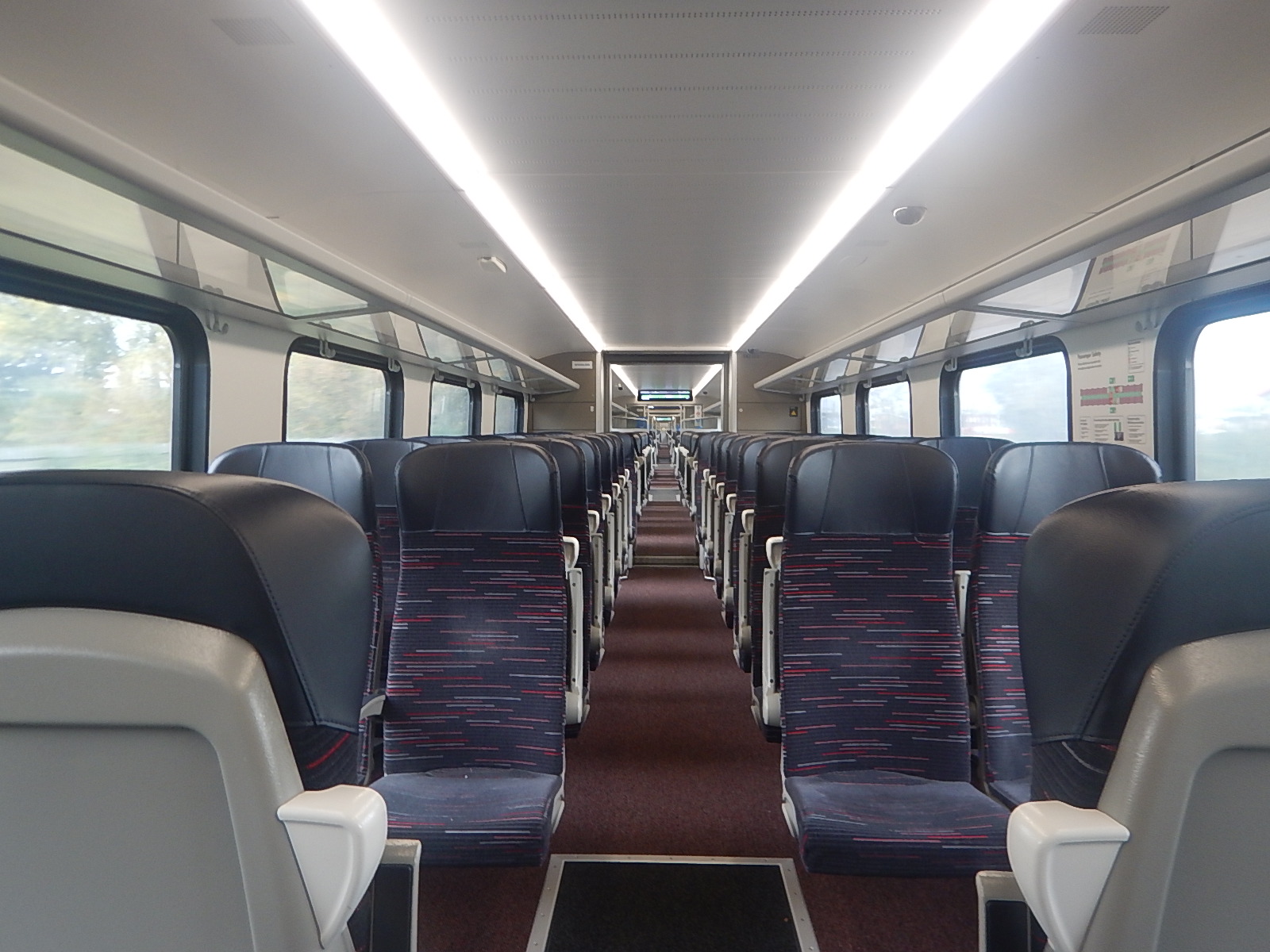
Note.
- There are some light slops, but no steps.
- A coffee and snack trolley would be possible.
- The overhead racks are generously-sized.
- Some seats are higher and you step up into them, as they are over the wheels.
The ride was also excellent.
Class 745/1 Train Performance
I made these observations.
- My train stopped at Tottenham Hale, Harlow Town, Bishops Stortford and Stansted Mountfitchet.
- The train was at 80 mph most of the time on the West Anglia Main Line.
- The maximum speed if a Class 745 train is 100 mph.
- The operating speed of the West Anglia Main Line is given on Wikipedia as 100 mph maximum.
- The train was didn’t exceed 70 mph on the Stansted Branch.
- Between Stansted Airport and Stansted Mountfitchet, the train accelerated to 70 mph and then braked at the right time to stop precisely in the following station.
At all times, I felt the train was running very easily. But then there are 125 mph members of the Flirt family running in Norway.
I can see these trains cutting the current 49 minutes between Liverpool Street and Stansted Airport.
Other times to London’s airports are as follows.
- London Bridge – Gatwick – Thameslink – 48 minutes.
- Victoria – Gatwick – Gatwick Express – 30 minutes.
- Victoria – Gatwick – Southern – 32 minutes.
- Paddington – Heathrow Central – Heathrow Express – 15 minutes
- Paddington – Heathrow Central – Crossrail – 28 minutes
With the exception of Heathrow Express, the new Stansted Express doesn’t stand up too badly.
Rye House Gas-Fired Power Station
One of the landmarks you pass on the West Anglia Main Line is Rye House power station.


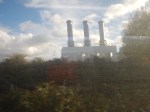
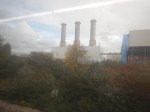
The weather wasn’t good, but the pictures give an impression of the 715 MW gas-fired power station.
This Google Map shows the power station.
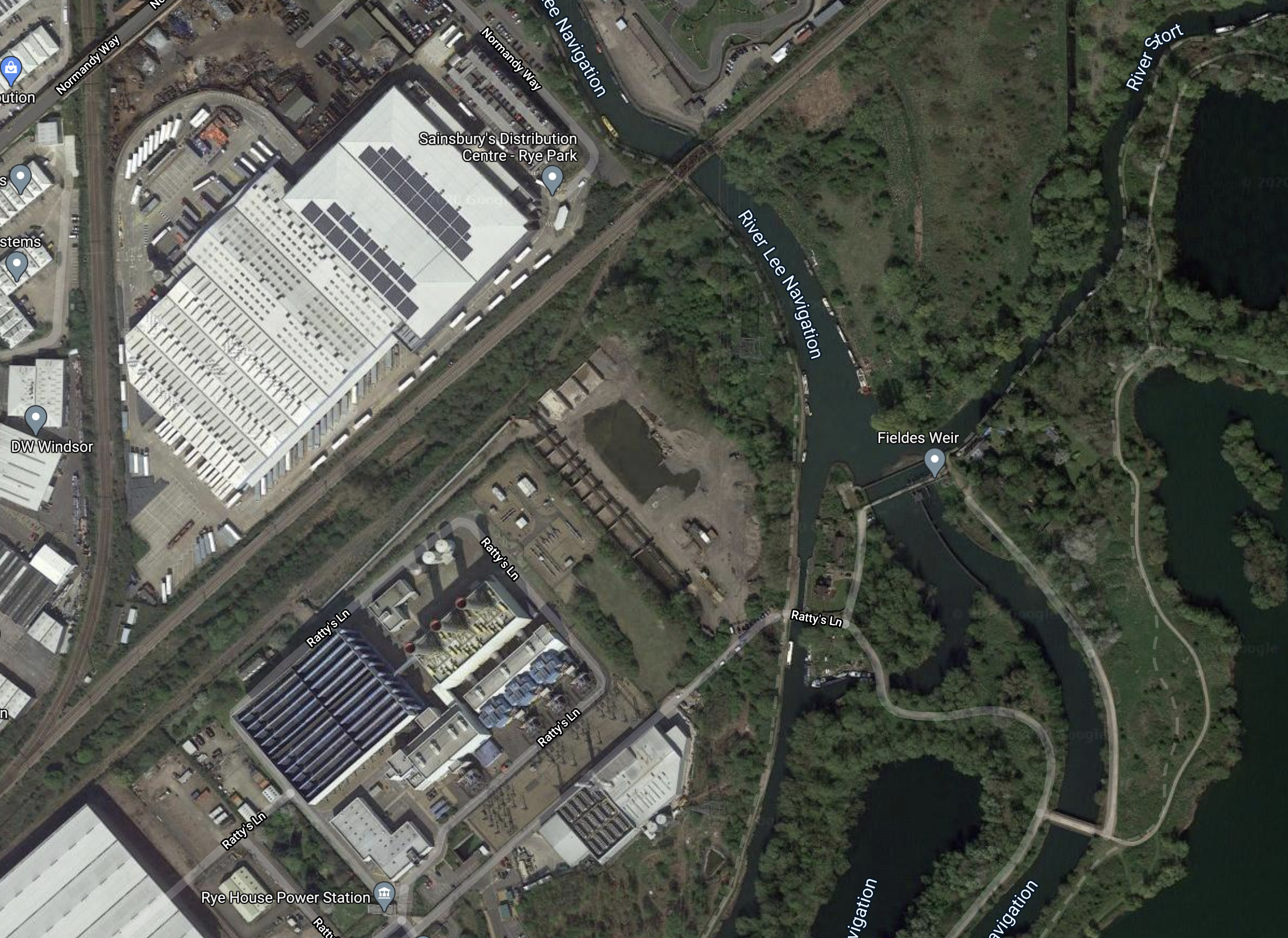
Note.
- The West Anglia Main Line running SW-NE across the map.
- Sainsbury’s distribution centre to the North of the railway.
- The power station to the South of the railway.
- The grid-like structure is an air-cooled condenser.
But where is the station’s carbon capture equipment?
The Lea Valley is London’s greenhouse, as this second Google Map shows.
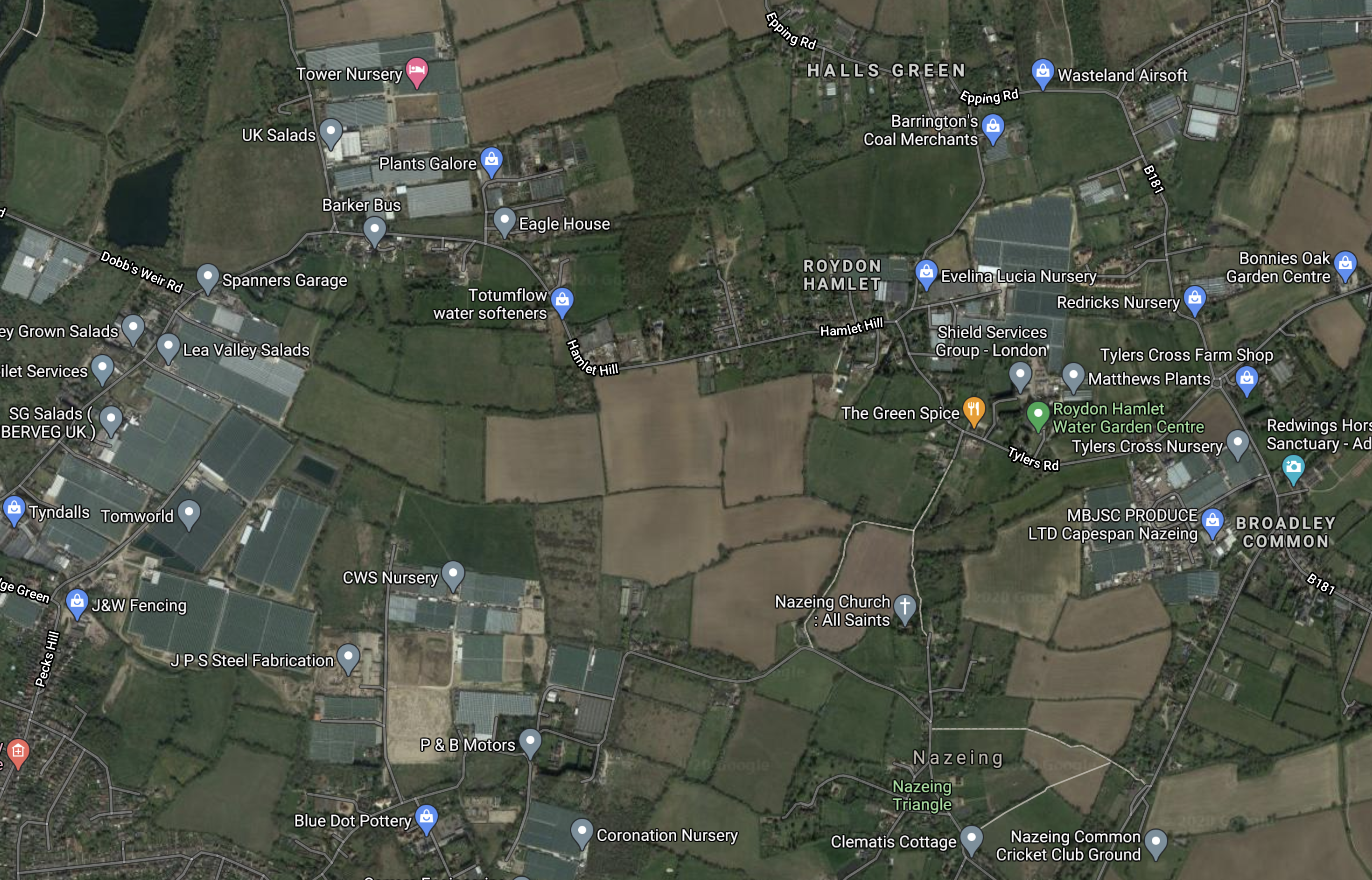
Note all the nurseries and salad producers on the map, which is a mile or so to the South East of the power station.
Drax Group used to pipe carbon dioxide to salad producers from Drax power station, so why aren’t they doing it here?
Changing At Tottenham Hale Station
This set of pictures show my change at Tottenham Hale station, when I returned to London.
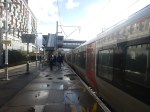
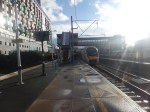
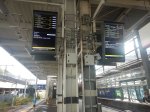
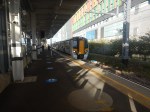
Note.
- The step-free entry to the Class 745 train.
- The Stansted Express used Platform 3.
- It was then followed in Platform 3, by a train to Liverpool Street via Hackney Downs station.
- At the same time, a train arrived in Platform 4, which went to Stratford via Lea Bridge station.
- I took the Stratford train to Lea Bridge station.
- The train was a Class 379 train, which has been replaced by the Class 745 train.
It looks like all Stansted Expresses have an interchange to trains to Hackney Downs and Stratford after a few minutes.
This sums up, what travellers can do at Tottenham Hale station, after arriving on a Stansted Express.
- Stay on the Stansted Express for Liverpool Street.
- Wait for the next train to Hackney Downs and Liverpool Street, on the same platform.
- Wait for the train to Stratford, on the other side of the same platform.
- Catch the Victoria Line, as passengers have done for decades.
- There are also lots of buses and taxis.
When Crossrail opens, there will be connections at Stratford and Liverpool Street.
Lea Bridge Station
I took these pictures at Lea Bridge station.
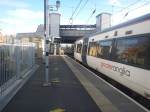
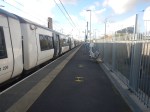
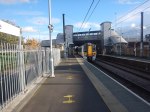
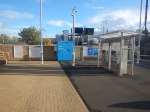
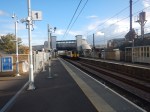
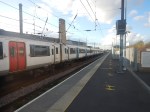
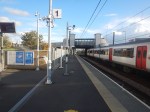
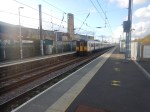
Note, that not all trains on this route are Class 379 trains.
Property Development At Lea Bridge Station
There is a lot of development going on around Lea Bridge station.




As at Tottenham Hale and Stratford, there will probably be more to come.
Lea Bridge Road In Mid Afternoon
As I just mixed a 56 bus home, I walk about half-a-mile to the next bus stop.



It was not a pleasant walk!
 The Anonymous Widower