The New Step-Free Entrance At Euston Square Station
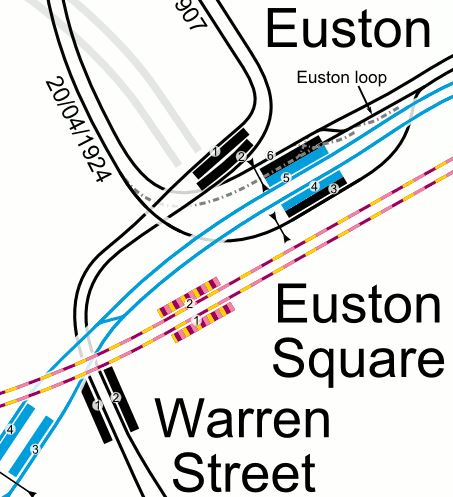
This map from cartometro.com shows the Underground Lines in the Euston station area.
Note.
- The Northern Line is shown in black.
- The Victoria Line is shown in light blue.
- The sub-surface lines are shown in yellow and mauve.
- The Northern and Victoria Lines are deep underneath the station, whereas the sub-surface lines are under Euston Road.
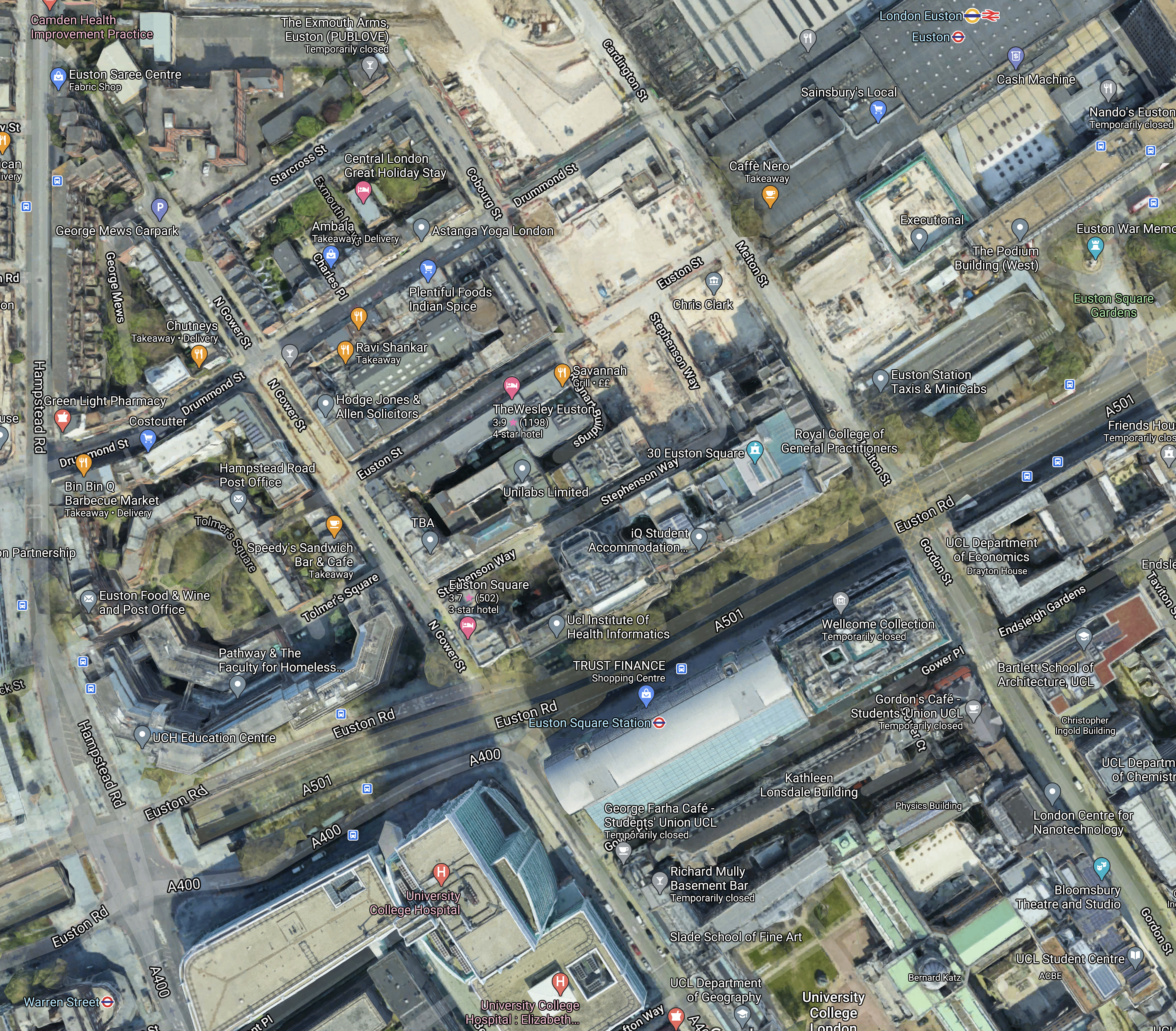
This Google Map shows the area and the positions of the station entrances.
Note.
- Warren Street station in the South West corner of the map at the Northern end of Tottenham Court Road.
- Euston Road running South-West to North-East across the map.
- University College Hospital is on the South side of Euston Road between Tottenham Court Road and Gower Street.
- There is a subway under Euston Road almost in line with Gower Street, that gives access to the Western ends of the platforms at Euston Square station.
- There is a lift to the station from the South side of Euston Road on the Eastern side of Gower Street.
- The Western end of the platforms at Euston Square are probably just to the East of Gower Street.
The next road across Euston Road is Gordon Street, where the entrance to a new subway under Euston Road to Euston station will be located.
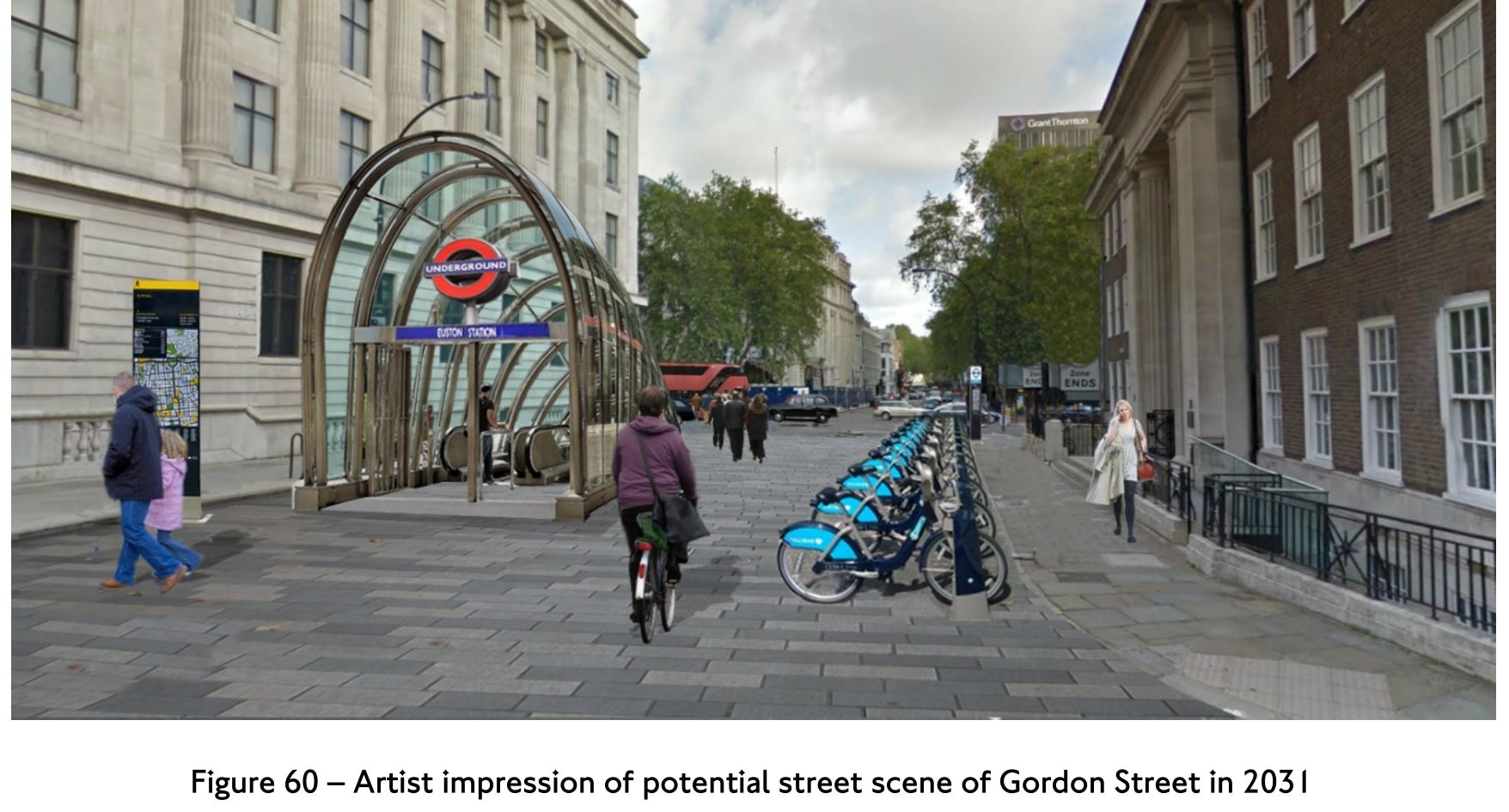
This Transport for London visualisation shows the entrance to the subway looking towards Euston station.
This diagram of the subway. is from Ian Visits,
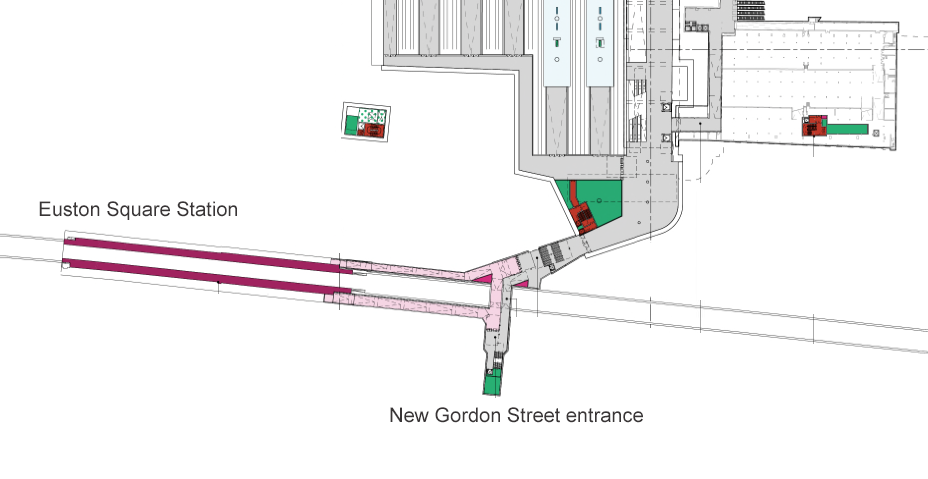 Note the platforms at Euston Square station appear to be shown in red and end to the West of Gordon Street.
I took these pictures at the Eastern end of Euston Square station.
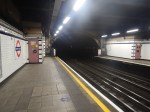
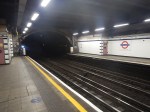
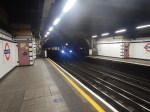
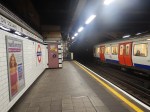
Note what look like bricked off areas at the end of the platforms for electrical and other gubbins. I suspect they could be removed to create more space.
Conclusion
I don’t think that connecting the platforms to the subway will be the most challenging of projects, if they can dig easily behind and over the walls of the Victorian tunnel and behind the platforms.
A Danish Study On Links Between Coeliac Disease And Blood Clots
I am a coeliac on a long-term gluten-free diet.
I am worried that the covids might prey on people like me, so I am researching hard to find out the truth.
Note that in much of Europe, North America and Australasia, coeliacs are at least 1-in-100 of the population and could be higher. The NHS quotes the 1-in-100 figure on this web page, which also says reported cases of coeliac disease are higher in women than men.
This morning I found on the Internet, a peer-reviewed Danish study which was entitled
Coeliac Disease And Risk Of Venous Thromboembolism: A Nationwide Population-Based Case-Control Study
The nation in the study was Denmark.
This was the introductory paragraph.
Patients with coeliac disease (CD) may be at increased risk of venous thromboembolism (VTE), i.e. deep vein thrombosis (DVT) and its complication pulmonary embolism (PE), because they are reported to have hyperhomocysteinaemia, low levels of K-vitamin-dependent anticoagulant proteins, and increased levels of thrombin-activatable fibrinolysis inhibitor.
One thing in this summary screams at me. The mention of vitamin-K!
Ten years ago, I had a serious stroke, that because of modern clot-busting drugs failed to kill me.
I am now on long-term Warfarin and know I have to eat a diet without Vitamin-K.
Given that in a nation like Germany with a population of eighty-three million, there could be nearly a million coeliacs, many of whom will be undiagnosed, this Danish study should be taken seriously, as it should be able to predict the number of clots down to coeliac disease in Germany. But I’m just an engineer and statistician and no medic. Although after the medical troubles of my family, I know a lot more medical knowledge than I did twenty years ago.
An article in The Times, also says that all but two who suffered clots after having the AstraZeneca vaccine were women.
It should be noted that the NHS states on its web site, that women are more likely to suffer coeliac disease than men.
I am absolutely certain, that more research needs to be done.
Blood Clots In Young German Ladies After AstraZeneca Vaccine
There have been various reports that young ladies in Germany have suffered blood clots after having the AstraZeneca vaccine.
I am coeliac on a long-term gluten-free diet.
The UK, Ireland and Italy are generally fairly good at identifying coeliacs, as they suffer from so many side effects, one of which is strokes.
I had a stroke and a cardiologist thought it could have been because I wasn’t diagnosed until fifty, so my diet damaged my heart muscle causing atrial fibrillation.
My father, who I now believe was coeliac, died of a series of strokes.
I do wonder, if Germany doesn’t look for coeliacs, as they should, partly because it is a Jewish disease in their minds. Certainly finding gluten-free food in Germany can sometimes be difficult.
It should also be noted that the NHS says that there are three times as many coeliacs who are female.
Conclusion
This adds to the circumstantial evidence that coeliac disease is the alligator in the swamp of Covid-19.
The New Lift To The Northern Line At Moorgate Station
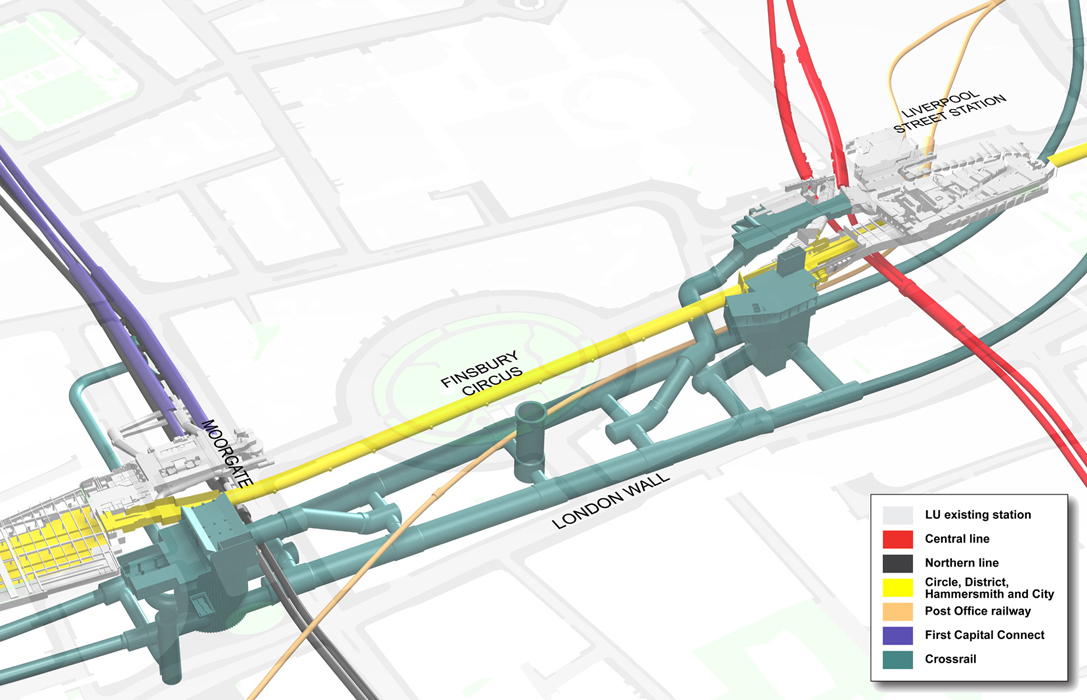
Look at this image, I’ve clipped from this large visualisation of the massive Liverpool Street-Moorgate Crossrail Station.
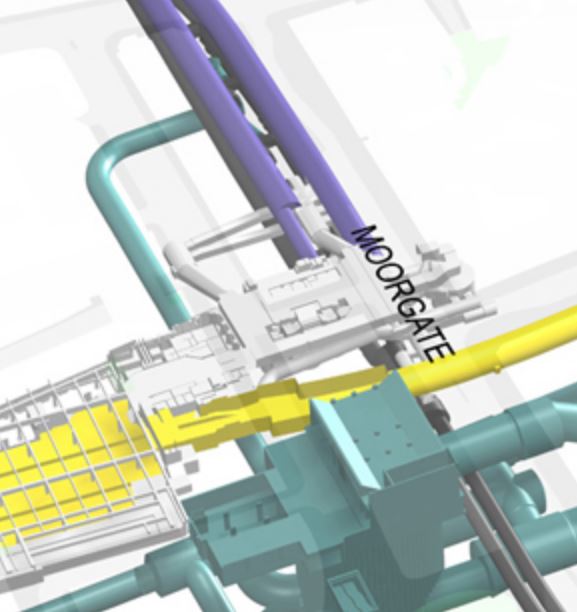
The image shows the Northern City Line coming into Moorgate station.
Note.
- The Northern City Line is shown in purple.
- The double escalator going down to between the two terminal platforms of the Northern City Line.
- The Northern Line is shown in black and the two platforms are underneath the Northern City Line.
- The Northern Line tunnels cross over the top of the Crossrail running tunnels.
- Note the other escalator going down to the left of the Northern City Line escalators, that is connected to the Northern Line by two passages and stairs.
- There are also two single escalators connecting the Northern Line to the Northern City Line above. I regularly use the up escalator, when I arrive in Moorgate station on the Northern Line, as it is quicker and there are no steps. I described this exit in Up From The Depths At Moorgate Station.
- There is also a new passage shown in the visualisation, which appears to link the main Crossrail station with the Northern Line platforms or the area underneath them.
Whilst going through the station today, I found this lift.
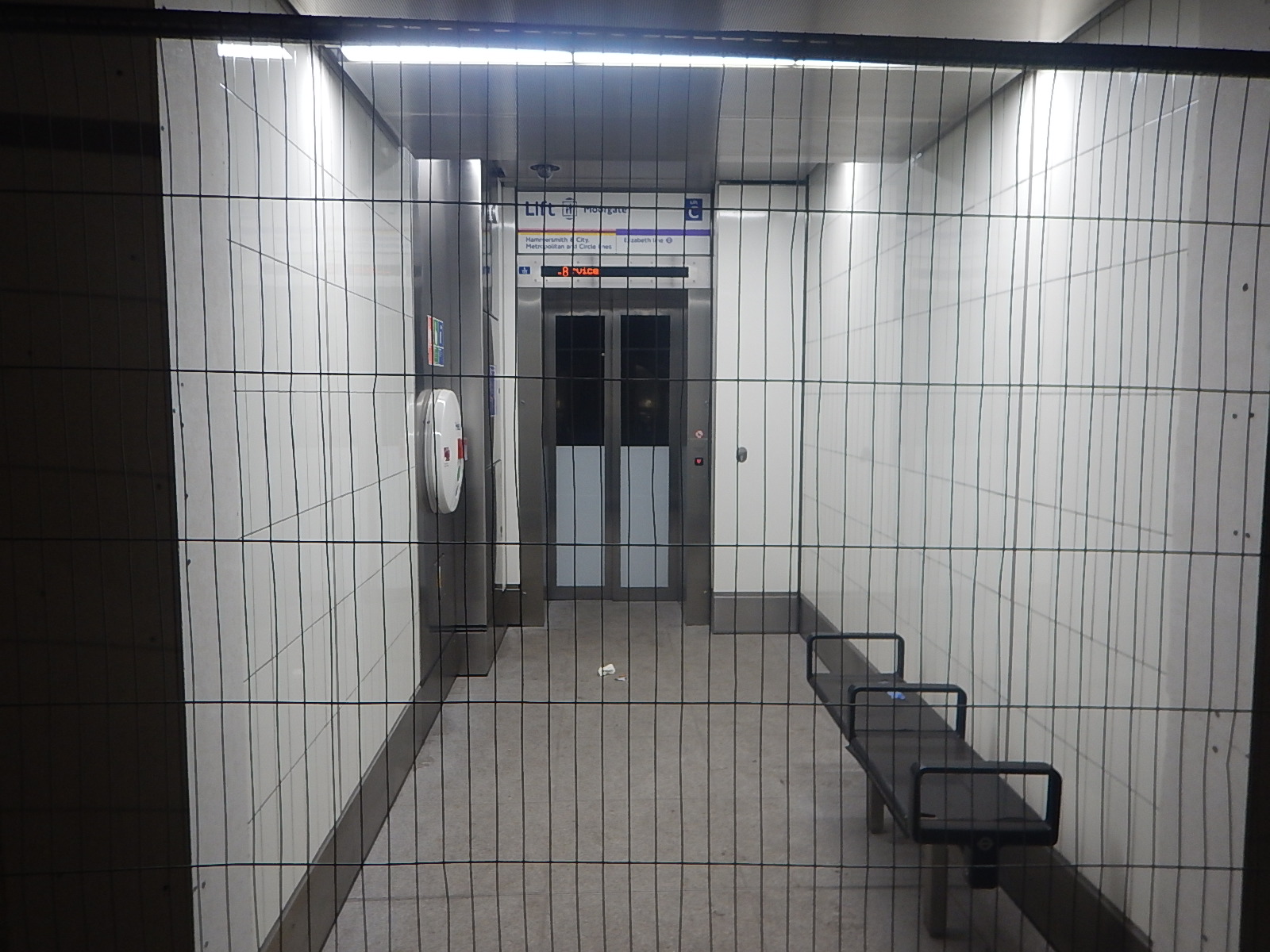
It appears to be squeezed in between the two escalators linking the Northern and Northern City Lines.
Note
- Does it serve the Northern City and Northern Lines and the passage to Crossrail?
- The sign says Moorgate. Does this mean that the lift goes to the surface? But it would come probably up to the surface in Boots. So I suspect it leads to the passage, which means you go to Moorgate that way.
- The lift looks finished.
- The lights are on.
It certainly looks Crossrail-ready.
If you look at the visualisation in detail by clicking on it, it looks like,there could be two new short escalators and a lift going down from the Northern Line platforms to the passage underneath.
It looks to me, that if you arrive in the passage underneath the Northern Line from the main Crossrail part of the station, that you can do one of the following.
- Take one escalator to the Northern Line.
- Take two escalators to the Northern and City Line.
- Take three escalators to the surface.
In addition you can do the following.
- If you’re on the Northern and City Line platforms, you can take two escalators down to take the passage to access Crossrail.
- If you’re on the Northern Line platforms, you can take pne escalator down to take the passage to access Crossrail.
- Use the lift to go up or down as required.
If I’m not right what is shown in green?
I can see this technique used to squeeze escalators and a lift between the platforms on some stations with less space than a 1960s Mini.
GSK To Manufacture 60m Doses Of Novavax Covid Vaccine In UK
The title of this post is the same as that as this article in the Financial Times.
As the Novavax Covid-19 vaccine is a two-dose vaccine, that is enough for thirty million people.
Wikipedia gives brief details of the the manufacturing of the vaccine for Canada and the UK in this section entitled Deployment.
On 2 February 2021, the Canadian Prime Minister Justin Trudeau announced that Canada has signed a tentative agreement for Novavax to produce millions of doses of its COVID-19 vaccine in Montreal, Canada, once it is approved for use by Health Canada, making it the first COVID-19 vaccine to be produced domestically.
On 29th March 2021, the UK government announced an order for 60 million doses of the Novax vaccine, which will be manufactured in the UK. FUJIFILM Diosynth Biotechnologies and GlaxoSmithKline will manufacture and fill the orders respectively.
This Google Map shows Barnard Castle in relation to Teesside.

Note.
- The red arrow in the South-West corner of the map indicates the GSK factory at Barnard Castle.
- Teesside is the estuary at the Eastern edge of the map.
- FUJIFILM Diosynth Biotechnologies are located in Billingham, which is on the North bank of the Tees.
The two sites are under an hour apart.
This page on the UK Government web site gives details of the vaccines ordered.
- Adenovirus – Oxford/AstraZeneca – 100 million – Approved and in deployment
Adenovirus – Janssen – 30 million – Phase 3 trials
mRNA – Pfizer/BioNTech – 40 million – Approved and in deployment
mRNA – Moderna – 17 million – Approved
Protein Adjuvant – GlaxoSmithKline/Sanofi Pasteur – 60 million – Phase 1/2 trials
Protein Adjuvant – Novavax 60 million – Phase 3 trials
Inactivated whole virus – Valneva – 60 million – Phase 1/2 trials
Note.
- Type, manufacturer, number and status are shown for each vaccine.
- This is a total of 567 million doses.
It looks to me, that backing four different technologies and seven different partnerships or companies was a successful strategy, as if the Novavax vaccine get approval, as serious commentators like Fergus Walsh of the BBC, think it will, picking four winners in a seven horse race.
GlaxoSmithKline appear to be a big loser in that they backed the French Sanofi Pasteur vaccine, which is still in Phase 1/2 trials. Wikipedia has a section entitled Deployment.
In July 2020, the UK government signed up for 60 million doses of a COVID-19 vaccine developed by GSK and Sanofi. It uses a recombinant protein-based technology from Sanofi and GSK’s pandemic technology. The companies claimed to be able to produce one billion doses, subject to successful trials and regulatory approval, during the first half of 2021. The company also agreed to a $2.1 billion deal with the United States to produce 100 million doses of the vaccine.
Someone appears to have lost billions.
I wonder though, if GSK had developed a plan to fill and finish the sixty million doses for the UK.
So have the fixers in the Joint Committee on Vaccination and Immunisation (JCVI) matched FUJIFILM Diosynth Biotechnologies vaccine manufacturing to GSK’s fill and finish plan to give Novavax a 60 million dose capacity in the UK?
- Both vaccines are of the same type, so can one fill and finish line handle both?
- The Novavax vaccine was trialled in the UK.
- Supplying Europe from Teesside would not be difficult.
Wikipedia seems to indicate, that Novavax like to spread production around. Spain, India and Poland are mentioned.
Conclusion
Every one of sixty million jabs helps.
President Macron was unavailable for comment.
London Will Still Need Crossrail 2 To Deal With HS2 Influx, London Mayor Predicts
The title of this post, is the same as that of this article on Building.
This is the first paragraph.
Sadiq Khan says he expects mothballed scheme will eventually get built.
I don’t disagree that it will eventually get built, but it will be long after both Sadiq Khan and myself have gone.
You might think, that as I live in Dalston, I would be very much in favour of Crossrail 2 being built as soon as possible.
But then, I’m a duck-and-diver and there will always be a quick route to get to Euston.
I currently use four routes regularly and coming home, if it’s late or I want to get home quickly to cook supper say, I can take a taxi for a reasonable price.
The easiest way is actually to walk about two hundred metres and get a 73 bus to directly outside Euston station.
I very much feel we need to improve access in London to High Speed Two and that this can be done by making sure several smaller projects are completed before High Speed Two opens.
Improved Underground Connections At Euston Station
This page on the High Speed Two web site, says this about the station layout and Underground connections at the rebuilt station.
HS2 will deliver eleven new 400m long platforms, a new concourse and improved connections to Euston and Euston Square Underground stations. Our design teams are also looking at the opportunity to create a new northerly entrance facing Camden Town as well as new east-west links across the whole station site.
I would suspect that connection to the Underground will have step-free options.
I wrote about Underground connections at Euston station in Ian Publishes Details Of Future Developments At Euston And Euston Square Underground Stations.
The developments certainly look comprehensive and include a new entrance in Gordon Street on the South side of Euston Road.
Note.
- The view is looking North.
- A tunnel from this entrance will lead to the Eastern ends of the platforms at Euston Square station, where it appears there will be at least escalator access.
- The tunnel will also lead into Euston station.
- It is a simple improvement, that shouldn’t be too challenging.
This diagram shows the layout of the tunnel.
It looks to me to be a neat design, that could be installed between Gordon Street and Euston Square stations without disturbing the traffic on the busy Euston Road.
Once the subway and the Gordon Street entrance were built, there would have these benefits.
- There would be a step-free route between Euston and Euston Square stations.
- It would be a shorter walk in an air-conditioned tunnel, rather than currently along the very polluted Euston Road.
- It would be the fastest way to transfer between Euston and Kings Cross or St. Pancras stations.
- It would give excellent access to the other London terminal stations of Liverpool Street, Moorgate and Paddington.
- It would give step-free access to Crossrail at Farrington, Liverpool Street, Moorgate, Paddington and Whitechapel
- With a change at Farringdon or Liverpool Street to Crossrail, it would offer the fastest route to Canary Wharf.
- The Gordon Street entrance would improve walking routes between Euston station and University College London and other buildings on the South side of Euston Road.
I also suspect that as this project is part of the rebuilding of Euston station for High Speed Two, that it will be completed before Euston station opens for High Speed Two.
If possible, it should be built much sooner to improve access between Euston station and the sub-surface lines.
Once open, even without other improvements at Euston station, this subway would improve access to Euston station by a very substantial amount.
Camden Town Station Upgrade
In 2015, I went to see an exhibition about the proposed expansion of Camden Town station and wrote The Camden Town Station Upgrade Exhibition.
I believe this upgrade should be delivered before High Speed Two opens around the end of this decade.
But due to the financial problems of Transport for London, this project has now been kicked into the long grass.
The Wikipedia entry for Camden Town station, states that upgrading the station will take four years.
Northern Line Split
The completion of the Camden Town Station Upgrade will enable the splitting of the Northern Line into two separate lines, after the completion of the Northern Line Extension to Battersea and the Bank Station Upgrade.
- Northern Line West – Edgware to Battersea Power Station via Camden Town, Euston, Charing Cross and Waterloo.
- Northern Line East – High Barnet to Morden via Camden Town, Euston, Kings Cross, Moorgate, Bank and London Bridge.
Each branch will be running at least 24 trains per hour (tph) and will significantly increase capacity between High Speed Two and other terminal stations and the City of London.
The Northern Line should be split into two lines by the time High Speed Two opens, but with no start date in sight for the Camden Town Station Upgrade, this might not be possible.
Victoria Line Improvements
The Victoria Line or Dear Old Vicky probably won’t be able to help much, but I do think it would be feasible to improve the three most inadequate stations on the line.
- Oxford Circus station needs more capacity and step-free access.
- Highbury & Islington station needs step-free access to the deep lines to complete the station, which was only half-built in the 1960s.
- Walthamstow Central station needs to be double-ended and have step-free access.
I doubt the money can be found to carry out these improvement projects, that are essential, but very much smaller than the Camden Town Station Upgrade.
Sub-Surface Lines Improvements
The big project on the Circle, District, Hammersmith & City and Metropolitan Lines is the Four Lines Modernisation (4LM) project.
- It is an upgrade of the trains, track, electrical supply, and signalling systems.
- This will add 27 % more capacity in the Peak.
- As anybody will know, who has been to a major event at Wembley Stadium, the new S8 Stock trains, that have been running for a few years now, have an almost infinite capacity.
- Incidentally, the S8 Stock trains hold 1350 passengers, which is not far short of the 1500 that each Crossrail Class 345 train can hold.
- Euston Square station will have a step-free connection from the rebuilt Euston station complex.
Most of the Modernisation will be completed by 2023.
I believe that the sub-surface lines will become the main method to get to and from the upgraded Euston station, until Crossrail 2 is built.
- There will be direct trains to around seventy stations from Euston Square station.
- With a change at Paddington to Crossrail, there is a route to Heathrow Airport and Reading.
- With a change at Farringdon or Liverpool Street to Crossrail, there is a route to East London, Canary Wharf and South East London.
- With a change at Farringdon to Thameslink, there are routes to over a hundred stations.
- With a change at Whitechapel to the East London Line, there are routes to North, East and South London.
When you consider that the Metropolitan Line opened in 1863 and was the first passenger-carrying underground railway in the world, hasn’t it done well?
When the Euston Square station upgrade is complete, I will probably use that route to get home from Euston, changing on to a bus at Moorgate, which stops close to my house.
Old Oak Common Station
High Speed Two’s Old Oak Common station is introduced like this on this page on the High Speed Two web site.
Old Oak Common is a new super hub set to be the best connected rail station in the UK.
This map from Transport for London shows the various lines at the station.
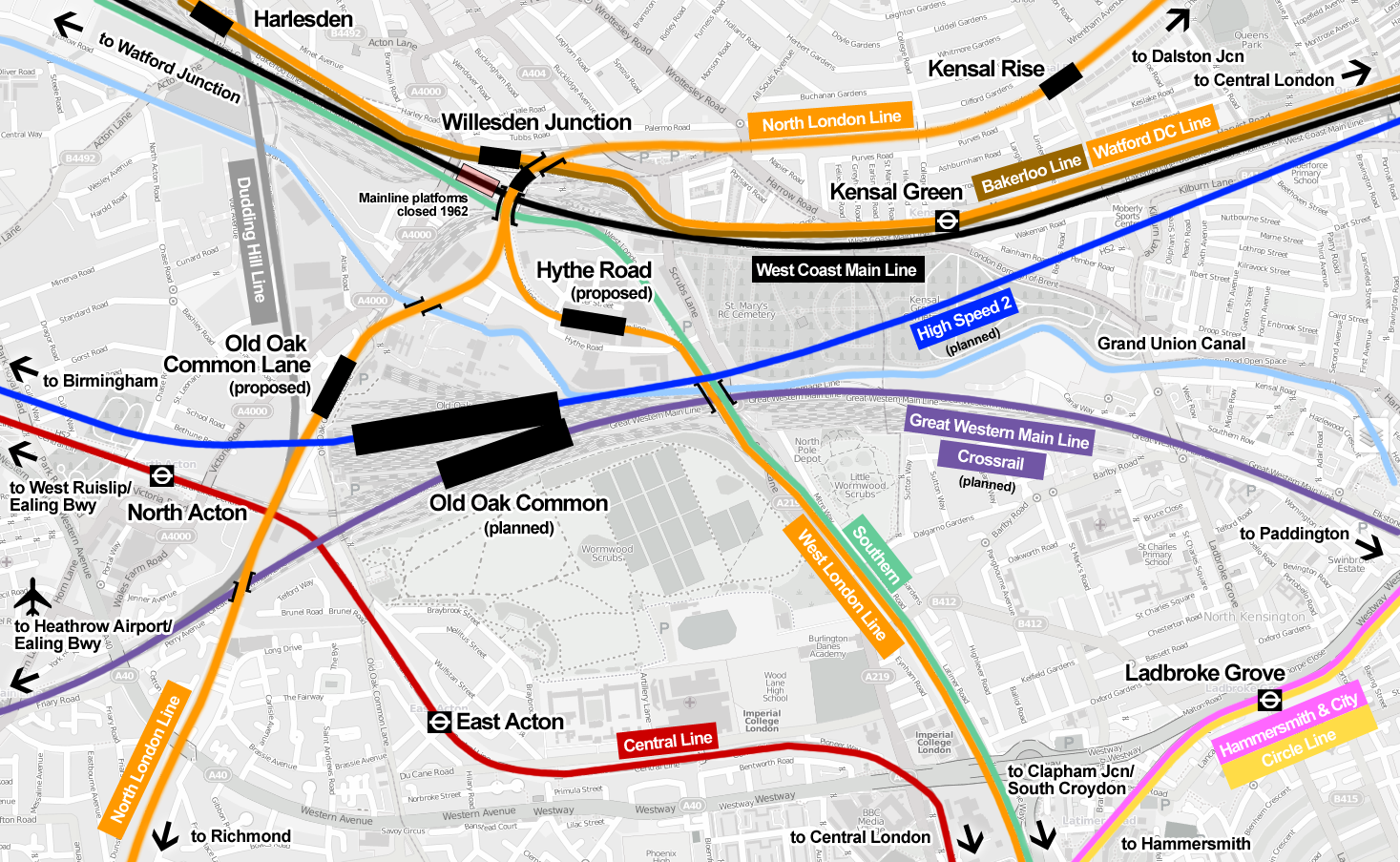
Note.
- The bright blue line is High Speed Two.
- The purple line is the Great Western Main Line and Crossrail.
- I suspect that the interchange between these three lines will be a good one.
- Will all Great Western services stop at Old Oak Common station?
- The orange lines are London Overground services, with two new stations; Old Oak Common Lane and Hythe Road close to the main Old Oak Common station.
- The green line is the Southern service between Milton Keynes and South Croydon.
- The red line is the Central Line and it could be joined to the main station.
- There are plans for a West London Orbital Railway, from Brent Cross and West Hampstead in the North to Hounslow and Kew Bridge in the West, that would call at the main Old Oak Common station.
Old Oak Common station could be well connected to most of London, through its Crossrail. London Overground and West London Orbital connections.
It is my view that these three smaller projects must be completed before the opening of High Speed Two.
- Hythe Road station
- Old Oak Common Lane station
- West London Orbital Railway.
None of these three projects would be very challenging.
Chiltern Railways And High Speed Two
Chiltern Railways already have a London Marylebone and Birmingham Moor Street service
Birmingham Moor Street station will be close to High Speed Two’s Birmingham Curzon Street station.
Plans exist for a second London terminus for Chiltern Railways close to the main Old Oak Common station.
- Could Chiltern Railways become a partner for High Speed Two on routes like between Leeds and Banbury?
- They could certainly bring passengers to Old Oak Common from Buckinghamshire, Oxfordshire and Warwickshire.
- One of my principles on High Speed Two, is that it should be a One-Nation railway.
Old Oak Common would be a very different station to Marylebone with its very useful Crossrail. London Overground and West London Orbital connections.
The terminal for Chiltern Railways at Old Oak Common is another project that should be completed before the opening of High Speed Two.
The Duality Of Euston and Old Oak Common Stations
Euston and Old Oak Common stations could almost be considered to be one station.
- All High Speed Two trains terminating or starting at Euston also call at Old Oak Common station.
- They will be just five minutes apart.
- Both stations have comprehensive networks of connections.
- Taken together the connections from both stations cover most of London and the South East.
There could be advantages for both operators and passengers.
- Would a ticket to and from London Terminals be usable at both stations?
- For some London destinations, passengers might prefer to use one terminal or the other.
- By changing at Old Oak Common to Crossrail will probably be the fastest way to Heathrow, the West End, the City, Canary Wharf and other places.
- Passengers could make the decision about the London terminal to use en route.
- Operators sometimes put the cleaning crew on the train at the last station before the terminal to save time in the turnround. The closeness of the two stations would enable this.
I think the London end of High Speed Two has been designed to make it easy for the operator and passengers.
The Losers If Crossrail 2 Isn’t Built
Crossrail 2 will provide better access to High Speed Two and the London terminals of Euston, Kings Cross, St. Pancras and Victoria for parts of London and the South East.
Victoria Line Passengers
The Victoria Line will have interchanges with Crossrail 2 at the following stations.
- Tottenham Hale
- Euston and Kings Cross St. Pancras on the Victoria Line and Euston St. Pancras on Crossrail 2
- Victoria
Note.
- Crossrail 2 will relieve capacity on the Victoria Line between Tottenham Hale and Victoria
- There will be a very comprehensive interchange at Euston St. Pancras to serve High Speed Two, Eurostar and classic lines out of Euston, Kings Cross and St. Pancras.
From what has been disclosed about the connrection between Euston and Euston Square stations transfer between Euston and Kings Cross and St. Pancras will be a lot easier than it is now.
This reworking of the poor connection to Euston Square station might take some pressure off the Victoria Line.
It might also might be possible to squeeze more trains down Dear Old Vicky.
Passengers On The Suburban Lines Into Waterloo
The suburban lines into Waterloo will go into tunnel at Wimbledon and connect directly to Victoria, Euston, St. Pancras and Kings Cross.
This will be superb access for South West London to four major London terminals.
Without Crossrail 2, passengers will have to use one of these routes to get to and from Euston.
- Change at Waterloo to the Northern Line.
- Change at Waterloo to the Bakerloo Line and then at Oxford Circus to the Victoria Line.
- Change at Vauxhall to the Victoria Line.
Could it be, that the Northern Line Extension should be extended to Clapham Junction station, as it is an aspiration over a safeguarded route under Battersea Park?
In An Analysis Of Waterloo Suburban Services Proposed To Move To Crossrail 2, I showed it was possible to run a Crossrail 2 schedule of four tph into Waterloo station, if the following were done.
- More platform capacity in Waterloo.
- Modern high-performance 100 mph trains like Class 707 trains or Aventras.
- Some improvements to track and signals between Waterloo and Wimbledon stations.
- Wimbledon station would only need minor modifications.
- A measure of ATC between Waterloo and Wimbledon stations.
This would not be a large project
Passengers In Balham And/Or Tooting
Crossrail 2 is planned to run between Wimbledon and Victoria via the following stations.
Note.
- Crossrail 2 should take pressure off the Northern Line.
- Public Opinion is against King’s Road Chelsea station. How will their cleaners, cooks and nannies get to work? Especially, as the roads in the area are already jammed by Chelsea tractors.
- The original route favoured Balham to give an interchange with National Rail. Tooting Broadway also has geological problems for the tunneling.
- On the other hand, Sadiq Khan supports the route through Tooting Broadway, which better serves his former constituency.
This Map from cartometro.com shows the rail lines in the area.
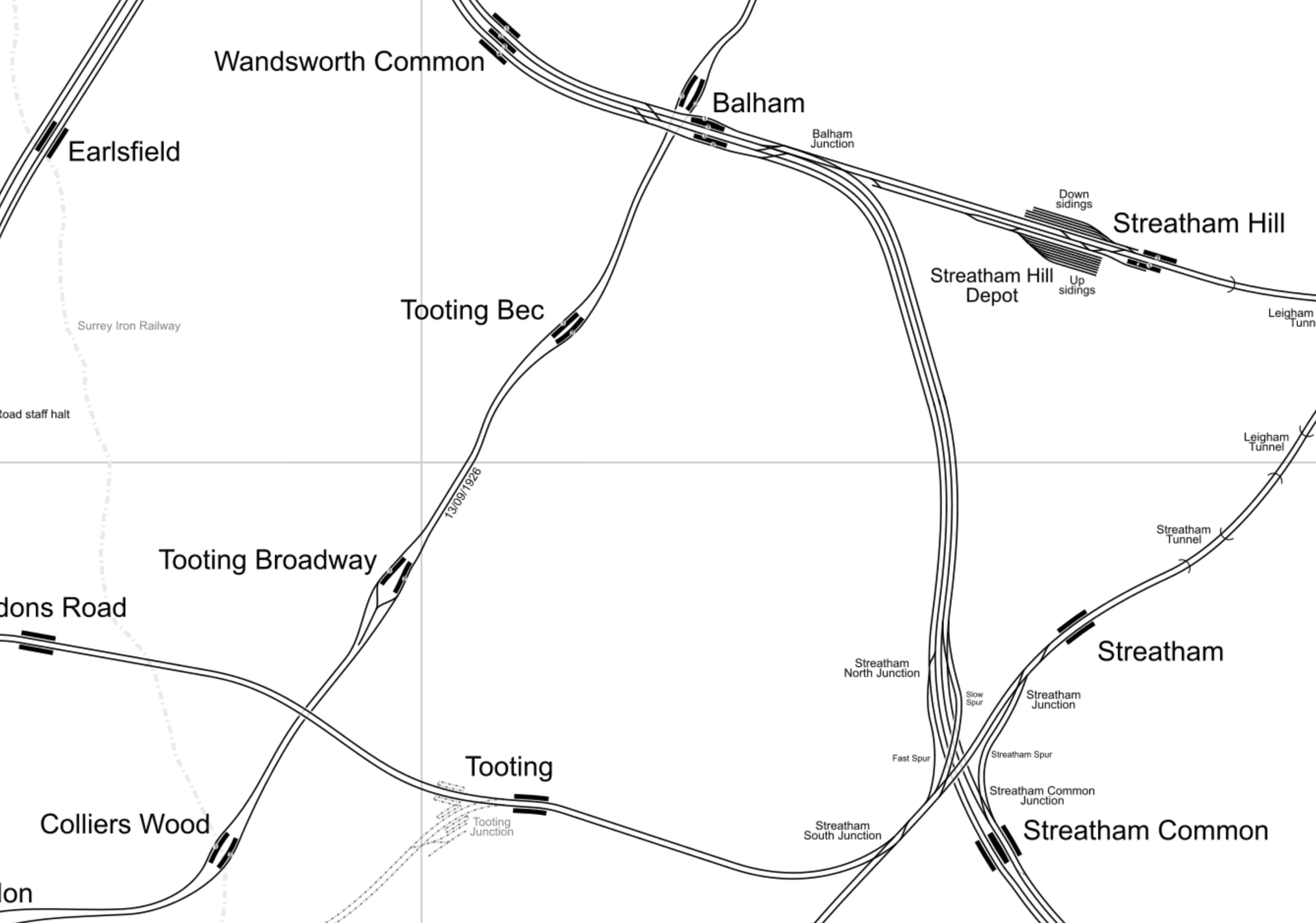
Note.
- Balham station in the North is an interchange station between the Northern Line and National Rail, with a possible four National Rail platforms.
- Tooting Broadway is a simple through station on the Northern Line.
- The next station after Wandsworth Common towards London is Clapham Junction.
- Transport for London have been advocating a new Streatham Common station, that would be an interchange between the lines through Streatham Common and those through Streatham.
- Streatham and Tooting stations are on the Wimbledon Loop Line, which only carries two tph in both directions.
Since I have been writing this blog, there have been several ideas to make better use of the National Rail lines in this area.
There was even a plan that I wrote about in 2016 called The Streatham Virtual Tube.
- Trains would run through Streatham Common, Streatham, Streatham, Hill, Balham, Wandsworth Common, Clapham Junction and into Victoria.
- Trains could also go North from Clapham Junction to Old Oak Common for High Speed Two.
- The Streatham Common Interchange would be built. This would give a useful interchange to the Wimbledon Loop Line.
- There would be four tracks through Streatham.
- A tunnel would be build to allow trains to go through both Streatham and Streatham Hill stations.
- It would have an interchange at Balham with the Northern Line.
- It could have an interchange at Clapham Junction with an extended Battersea Branch of the Northern Line.
- Suppose it had a frequency of perhaps six or even ten tph.
I think it might work, but it shows what can be done, with a bit of out-of-the-box thinking.
Passengers In Dalston And Hackney
One of the entrances to the proposed massive double-ended Crossrail 2 station at Dalston will be at the end of my road and very close to where my mother used to work and where her mother was actually born.
East London had not had major rail improvements since the 1950s and 1960s, when most of the lines into Liverpool Street were electrified and the Southbury Loop was reopened.
But since the creation of the Overground in 2007 from the remains of the ill-performing Silverlink, with the addition of new trains and ticketing and a good clean, there has been a series of smaller projects that have been completed, in and around East and North London.
- 2009 – North London Line starts running to new platforms at Stratford.
- 2009 – Stratford International station opens on High Speed One.
- 2010 – East London Line opens with services to Crystal Palace, New Cross, New Cross Gate and West Croydon stations.
- 2011 – A substantially rebuilt Stratford station opens for the Olympics
- 2012 – South London Line opens with services between Dalston Junction and Clapham Junction stations.
- 2012 – The Docklands Light Railway is extended to Stratford and Stratford International stations.
- 2014 – Hampstead Heath station gets an upgrade.
- 2015 – The Lea Valley Lines between Liverpool Street and Cheshunt, Chingford and Enfield Town stations were moved to the Overground.
- 2015 – TfL Rail begins operation between Liverpool Street and Shenfield, using new Class 345 trains.
- 2016 – Lea Bridge station reopened.
- 2016 – Second entrance to Ilford station in York Road reopened.
- 2018 – Northumberland Park station was rebuilt.
- 2019 – The Gospel Oak to Barking Line was electrified and equipped with new Class 710 trains.
- 2019 – West Hampstead station was rebuilt.
- 2019 – The new Meridian Water station opened.
- 2019 – The rebuilt White Hart Lane station opened.
- 2020 – Tottenham Hale station was rebuilt.
- 2020 – The new Class 710 trains were rolled out on the Lea Valley Lines.
Note.
- There have also numerous smaller upgrades like the addition of lifts to several stations.
- Stations between Stratford and Shenfield have been upgraded for Crossrail.
- There has also been considerable upgrades to the electrification, which in some places was not in the best of condition.
- Most lines have a frequency of four tph or more.
Some may feel that East London has done well with rail improvements in the last few years.
I would agree in some ways, but would counter by saying that before the Overground was created, East London’s were in a terrible state and their state today is a excellent example of what can be achieved by good design, planning and execution, without spending vast sums.
East London and the boroughs of Enfield, Hackney, Haringey, Newham and Waltham Forest in particular, now have a good rail network, that is going to get a lot better with the addition of Crossrail.
- The North London Line is about half a mile to the North of where I live and can walk to two stations or get a bus to another three.
- Crossrail will be a couple of miles to the South with station entrances at Moorgate, Liverpool Street, Whitechapel and Stratford.
- There are four electrified railway lines with new trains, which run North-South with connections to the two East-West lines.
- Although my quickest way to Crossrail will be a bus from close to my house to outside Moorgate station.
- I suspect that everybody in the Borough of Hackney and the Eastern part of Islington will be able to get to a Crossrail station in well under thirty minutes.
- In addition, from where I live the Gospel Oak to Barking Line runs a couple of miles North of the North London Line.
I believe that Dalston’s success over the last decade has been a collateral benefit of its comprehensive rail system, supported by lots of shiny new buses.
Does Dalston want Crossrail 2? Probably, Yes!
Does Dalston need Crossrail 2? Possibly, No!
Do other areas of large cities need Dalstonisation of their railway and bus systems? Absolutely!
I certainly don’t regret moving to Dalston!
Note that one of the reasons I’m so keen on the West London Orbital Railway is that it could do the same for North West London, as the Overground and the Lea Valley Lines have done for North East London.
Passengers Along The Lea Valley
Crossrail 2 will connect the Lea Valley Lines to Dalston and on to Central London.
It will involve the following changes to the West Anglia Main Line.
- Four-tracking of the route at least as far as Broxbourne.
- A junction South of Tottenham Hale station will connect the route to a tunnel to Dalston.
- Level crossings at Brimsdown, Enfield Lock and Cheshunt will be removed.
- Like Crossrail, stations would be substantially step-free.
- The signalling will be upgraded to full in-cab digital ERTMS signalling, that is used by Crossrail and Thameslink under London.
This would enable 10-15 tph running between Tottenham Hale and Broxbourne stations.
With all the development going on around Cambridge and possible expansion of Stansted Airport, I believe that even if Crossrail 2 is not build, then there will be pressure to four-track the West Anglia Main Line, remove the level crossings and improve the stations and signalling.
If this were to be done, then there is an interim plan that could be implemented that I wrote about, four years ago in Could A Lea Valley Metro Be Created?
I envisaged the following.
- Updating the West Anglia Main Line to four-tracks and a standard suitable for Crossrail 2.
- Using the double-track loop at Stratford as the Southern terminal, for some of the trains.
- Updating the Victoria Line stations. The major interchange at Tottenham Hale station has already been improved substantially.
- Providing an appropriate service between Stratford and Broxbourne stations.
- Terminating some Stansted and Cambridge services in the Stratford Loop, as Stratford has better connections to South London and Kent than Liverpool Street.
- Integrating Lea Valley Metro, London Overground and Greater Anglia services to Bishops Stortford, Cambridge and Hertford North stations.
Note.
- All services connect to Crossrail and the Central Line at the Southern end.
- Services to Liverpool Street connect to National Rail services, the Lea Valley Lines of the London Overground and the Circle, District and Metropolitan Lines.
- Services to Stratford connect to National Rail services, the North London Line of the London Overground and the Jubilee Line.
- Could alternate trains serve Liverpool Street and Stratford?
- Could splitting services between Liverpool Street and Stratford mean that the largest proportion of routes have just a single change?
As Transport for London and the train operating companies know where passengers want to go and actually go, I’m sure that a service pattern, that is acceptable to all could be created.
Conclusion
Crossrail 2 is quoted as being a £33 billion project.
I believe that with a good review lots of money could be saved and other smaller projects could be planned and executed to handle the expected increase in the number of passengers.
I would do the following.
- Camden Town station – Upgrade
- Chiltern Railways – Build their connection to Old Oak Common station
- Euston Station – Improve connections to Euston and Euston Square Underground stations.
- Northern Line – Extend the Battersea branch to Clapham Junction
- Northern Line – Split Into Two Lines
- Overground – Build Old Oak Common Lane and Hythe Road stations
- Southern – Build the new Streatham Common station and implement The Streatham Virtual Tube.
- South Western Railway – Run four tph on all proposed Crossrail 2 routes into Waterloo station
- Victoria Line – Upgrade Highbury & Islington, Oxford Circus and Walthamstow Central stations and increase the frequency if possible
- West Anglia Main Line – Upgrade ready for Crossrail 2 and develop the Lea Valley Metro
All of these projects would have their own benefits, whether Crossrail 2 is built or not!
Only when the needs of all passengers have been assessed in a few years, should we make a decision about Crossrail 2.
University Of Oxford To Study Nasal Administration Of COVID-19 Vaccine
The title of this post, is the same as that of this article on the University of Oxford web site.
These two introductory paragraphs outline the structure of the tests.
The Phase I trial, which will enrol 30 healthy volunteers aged 18–40, will investigate the level of immune system responses generated by the vaccine using this delivery technique, as well as monitoring safety and for any adverse reactions.
All of the volunteers will receive the same vaccine that is currently being delivered by intramuscular injection as part of the national roll out of the ChAdOx1 nCoV-19 vaccine. The volunteers, who will be drawn from the local Oxford region, will be followed for a total of four months.
This is surely a very worthwhile study.
France’s Aura Aero Unveils 19-Seat Electric Aircraft Development Plan
The title of this post is the same as that of this article on Flight Global.
This is the introductory paragraph.
French aerospace firm Aura Aero is intending to develop a 19-seat electric-powered regional aircraft, as it looks to certify its two-seat Integral R light single.
For a better picture and more information, look at this article in The Times, which is entitled French Electric Airliner Will Take To The Skies In Five Years.
Some clues as to the specification from the article and around the web.
- Nineteen seats.
- Maiden flight by 2024 and in service entry in 2026.
- It has six electric engines.
- Three hundred mile range.
- Hybrid power will be used to extend the range to 500 miles.
- A freighter version will be available.
This paragraph is from The Times article.
This week the company began production of a new two-seater plane made of carbon-wood, a lightweight composite material. It is confident that it can meet its ambitious timetable in a race to beat rivals in Europe, the US and Israel and overcome the formidable weight and range barriers to commercial electric passenger flight.
A carbon-wood airframe hints at possibly the world’s most successful composite aircraft; the wooden De Havilland Mosquito, which was light, strong and very fast.
- In fact, it was so fast, one aircraft could bomb Germany twice in one night, with two crews and a refuelling and a rearming in between.
- It could also carry a bomb load not far short of that of a Boeing B17 Flying Fortress.
Sadly, we didn’t realise the full potential of this aircraft in World War II, but if we had, fewer aircrew and civilians on the ground would have died, as waves of Mosquitos could have knocked out important targets with precision and surprise. I wrote about one of their precision raids in The Kunstzaal Kleizkamp Raid.
Conclusion
I think the mathematics and regulations point to an aircraft with the following specification, being the right plane to develop.
- Nineteen seats
- 300 mile range
- Versatile interior
- Sustainable aviation fuel range extender
It appears that both the Aura Aero Era and the Faradair BEHA are aimed at this market, with the Cessna eCaravan and the Eviation Alice aimed at a smaller number of passengers.
Note.
- Sustainable aviation fuel doesn’t need any specialist handling and can be delivered to the aircraft in a normal bowser.
- I suspect that one electric aircraft manufacturer or electric vehicle support company will develop a charging system, for the batteries, that is based on a vehicle that just plugs into the aircraft during loading.
I think this segment of the aviation market could be a big one and I wouldn’t be surprised to see other companies bringing forward 19 seat/300 miles aircraft.
Although, the market could be a bit squashed from the top. Airbus have proposed a ZEROe Turboprop, which I wrote about in ZEROe – Towards The World’s First Zero-Emission Commercial Aircraft.
This would be capable of carrying up to a hundred passengers over a thousand nautical miles, with no emissions except water.
Is This A Case Of The Sh1t Hitting The Turbofan?
The title of this post was inspired by this article on Nonwovens Industry, which is entitled British Airways to Use Fuel Sourced From Recycled Diapers.
This is the first paraph.
British Airways will likely soon have part of its fleet fueled by trash. The company has entered into a partnership to build facilities that convert household waste into renewable jet fuel. The first stage of the partnership is a feasability stage with final investment planned for 2019. If the first stage is successful, part of BA’s fleet will fly using the fuel.
Admittedly, this is old news and the plant is now being built by Altalto at Immingham.
But it does get rid of one of the problems of the modern world; disposable nappies.
Blood Clots And Vaccines
I had a little bit of trouble with my Roche Coaguchek INR meter yesterday and had to phone Roche.
I indicated that I would soon be having my second AstraZeneca jab and measuring my INR before and after as a medical experiment.
I was then told that all vaccines can cause blood clots. That can’t be right?
But Roche should know!
 The Anonymous Widower