An Avenue Of Trees, Cheered Me Up Today
I was feeling a bit down, after the loss of my phone on a train yesterday, as I cam back from Cambridge South station.
After reporting its loss at Liverpool Street station this morning, I thought I might be able to get something I needed at Sainsbury’s in Walthamstow.
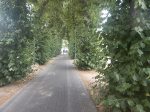
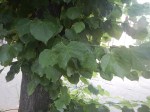
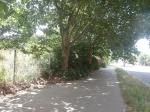
To get from Walthamstow Central station to Sainsbury’s I walked along this avenue of trees.
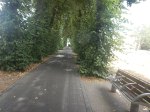
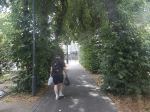
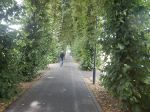
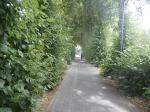
Note.
- It was lovely and cool on a hot day.
- There was a gentle breeze through the trees.
- Halfway along, I chatted to a guy with Indian heritage. He said he liked the trees at Chistmas, when the Council put lights on them.Now surely, that is multiculturalism.
I asked Google AI about the trees and got this reply.
The avenue of mature trees leading from Walthamstow Central Station towards the High Street consists of lime trees. Also locally referred to as Lime Tree Walk, these established trees are well known for soaking up pollution from the adjoining bus and transit areas.
Google AI estimates that the trees are at least a hundred years old.
I believe we should do things like this more often, as it is surely a scientifically-correct way to deal with the pollution of only a few vehicles emitting it.
Out of curiosity, I asked Google AI,”Are we doing research to increase the effectiveness of trees clearing pollution?” and received this reply.
Yes, there is extensive, ongoing scientific research dedicated to increasing the effectiveness of trees at clearing pollution. Studies focus on optimizing urban canopy cover, vegetative barrier design, and microbiome/soil enhancements to maximize both particulate matter (PM) capture and carbon sequestration.
Current research initiatives and findings include:
Vegetative Barriers & Species Traits: Research from the University of Surrey’s Global Centre for Clean Air Research (GCARE) has developed a plant selection framework. By evaluating traits like leaf hairs, canopy density, and seasonal leaf retention, they identify highly effective species (such as silver birch, elder, and yew) to act as physical green barriers that trap particulate matter and filter exhaust.
Tree Spacing & Dispersion: Studies on urban street canyons show that sparse or dense tree spacing can sometimes trap pollutants if the canopy blocks wind flow. However, “medium spacing” (where the gap between trees is roughly equal to the crown diameter) has been proven to optimize both airflow and particle reduction for pedestrians and cyclists.
Soil & Growth Interventions: Studies like the Glandwr Forest Carbon Study by Imperial College London and The Carbon Community are testing methods to boost young tree growth and carbon sequestration using enhanced rock weathering and microbial enrichment.
Cooling & Air Purification Pathways: Recent findings published in Landscape and Urban Planning highlight that trees reduce particulate pollution (PM10) not just by trapping it on leaves, but also through localized cooling. By mitigating extreme heat, trees promote the natural deposition of suspended particles.
It seems that the good citizens of Walthamstow and the nearby forest, probably achieved a result, that was very much in line with modern research.
One Of The Jobs I Did, That I’m Most Proud Of
In the early 1970s, I developed and attempted to market a simultaneous differential equation solving program called SPEED, which stood for Simple Program for the Efficient Evaluations of Differentials or something like that.
It wasn’t very successful, but two companies asked me to write some for them.
- For Time Sharing, I put the central algorithm into their simultaneous differential equation solver to move the program up to the next level.
- WS Atkins, asked me to install it on their computer.
SPEED had a few advantages over typical simultaneous differential equation solvers of the time like IBM/CSMP.
- IBM/CSMP needed at least an IBM 360/50 computer, which I ran it on at ICI in Welwyn Garden City, where I was a general mathematical dogsbody. But SPEED could run on a dial-up line to a time-shared computer like a PDP-10.
- The time-shared computers as used by Time Sharing and WS Atkins, gave the big advantage, that as the size of the computer increased, the size of the problem, that could be tackled in proportion.
- IBM/CSMP and SPEED both had a simple column-oriented report writer, which unsurprisingly ended up in Artemis, which I wrote a few years later.
- I can’t remember, who at ICI gave me the tip, but I used a sophisticated version of the Runga-Kutta algorithm, that everybody used and some probably still do today. The version, I used was called Runga-Kutta-England, where like me England, was a graduate of Liverpool University.
This summary by Google AI described the algorithm.
The England version of the Runge-Kutta method (developed by R. England) is a highly efficient 4th/5th order embedded numerical integration formula. By reusing intermediate slopes across two methods of differing orders, it provides a highly reliable built-in error estimate for adaptive step-size control.
Does anybody still use Runga-Kutta methods? I suspect not!
A breakthrough of sorts came, when WS Atkins asked me to produce a larger system of the SPEED software, that could handle several tens of thousands of equations.
- Atkin’s client was the Water Resources Board and they were modelling the water distribution system for a large part of the UK.
- Prominent in the project was a Dr. David A, Dimeloe and we became friends and had dinner with our wives a couple of times.
- But I never received a copy of the report, that was written or heard any more since about 1975.
- But judging by the fact, that we seem to have adequate supply of water in the UK and problems seem to be all about sewage, politics, management and finance, I feel that David and his team, must have done a good job.
- I was also never asked to fix any bugs in the software.
I did have some trouble getting the money I was owed from the intermediary in the deal, but I eventually retrieved it through the County Court without a solicitor.
Does BYD Stand For Bet On Your Destination?
Today I came back from Walthamstow Sainsbury’s to my home in Hackney, using two BYD electric buses on route W15, a diesel bus on route 488 and a Reliable Routemaster on Route 38.
Both the BYD electric buses stopped short of their final destination.
I also changed early to the 38, so I could have a Diet-Coke in a cafe that looked friendly.
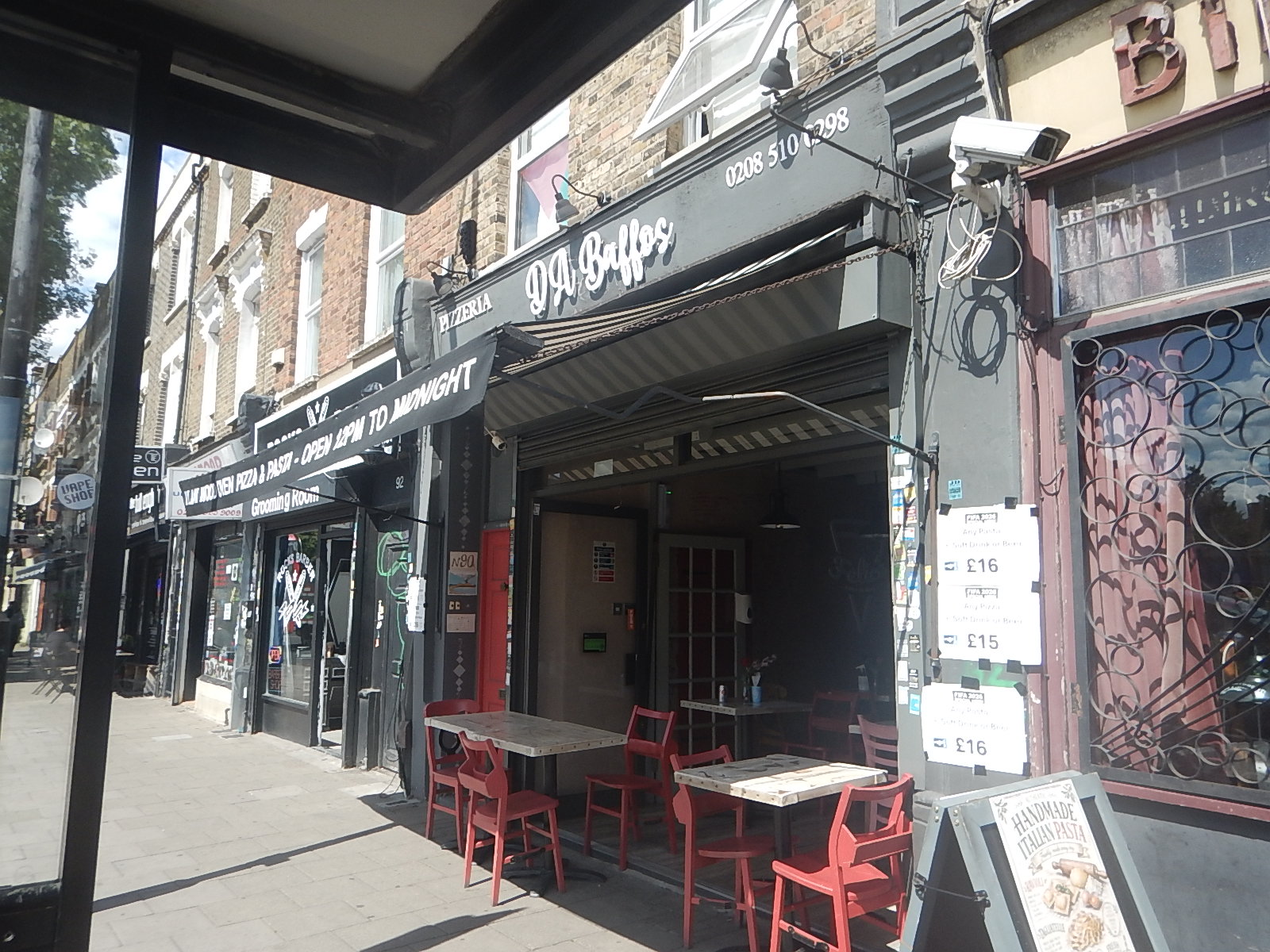
It was!
- As you can see, it was right by a bus stop, where luckily for me, 38 buses called.
- I have written a few posts about the horrid BYD electric buses on route 141, but London shouldn’t be made to suffer an inferior product.
- If Manchester and Leeds can have UK-built buses by Wrightbus, that are delivered as diesel and converted at an appropriate time to zero-carbon, why can’t London and the rest of the country?
London’s fleet of a thousand Routemasters, which were built by Wrightbus, a few years ago, seem to have found a new niche in the world of advertising and I wouldn’t be surprised to see an experimental fleet of zero-carbon Routemasters.
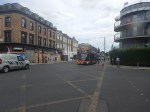
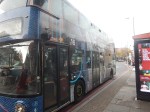
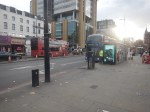
Here’s a few images of Routemaster paint schemes.
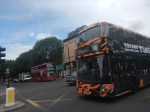

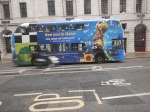
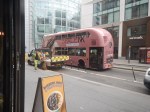
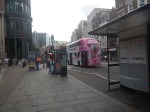
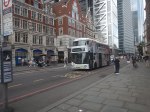
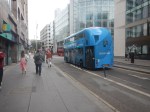
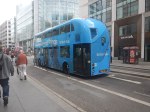
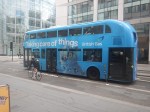


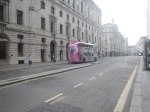
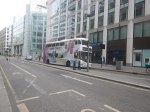

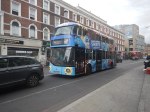
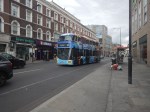
I like them. I wonder, if a bus has gone missing to have a special makeover, if England get to the latter stages of the World Cup?

