How Cambridge University Test Students For The Covids
In Tom Whipple’s excellent article in The Times today, which is entitled In Search Of A Less Painful Route Through The Long Covid Winter, there is this paragraph.
They also point to a different, smaller-scale, test. In the summer, Cambridge University decided to go its own way on testing. Each “bubble” of students put their swabs to be tested together. If they contained a positive — validated through a far more effective laboratory test — they were each retested. At the start of the autumn term, the university experienced the usual run of cases. In the final week, when other universities were seeing mass outbreaks, all 10,000 students were tested. There were zero positives.
Could this simple method, speed up mass testing of residential areas, care homes and other universities?
Octopus Energy Chief Greg Jackson Declares London World Leader Of Green Energy Tech As It Wins “Double Unicorn” $2bn Status
The title of this post, is the same as that of this article on the Standard.
This is the sub-title.
CEO declares Britain’s mixture free market and technology skills give green energy tech massive export potential.
These are some points from the article.
- Octopus Energy started five years ago and is now worth $2 billion.
- It supplier 1.7 million homes in the UK, with green energy.
- It has customers in the US and Germany.
- It has its own management software called Kraken.
- Due to Kraken, their costs are 2.5 times lower than rivals.
- Kraken is a fun-for-hire, that is now used by other energy supplier.
The CEO wants a 100 million customers in five years.
We need more companies with this attitude!
Is The Pfizer Vaccine The New Betamax?
To me, the Pfizer vaccine may work well, but the precautions needed to deliver it safely are so onerous, I can’t see it being the most successful of vaccines.
If healthcare professionals and GP surgeries in the UK, are saying that the minus seventy delivery route is going to be difficult, then how difficult is it going to be to deliver it, in parts of India, Africa and South America.
I can’t see the current Pfizer vaccine lasting very long, before it is either overtaken by one of the many others vaccines under development or Pfizer reformulate it, so it has an easier method of delivery.
It truly is the new Betamax.
My Advice To Coeliacs On A Gluten-Free Diet Concerning The Covids
As a coeliac, I have been worried about the Covids and researching the statistics for some months.
Who Are Likely To Be Coeliac?
In the next sub-sections, I look at various groups.
Ashkenazi Jews
I am coeliac because there is an unbroken genetic line to my great-great-great-grandfather; Robert, who was a Jewish tailor from Königsberg in East Prussia. Census records in the UK, say that he arrived around 1800 and setup business in Bexley. Like many Jews from East Prussia, he had to leave, when he became eighteen, because he was male, Jewish and not one of the privileged families.
I know little of him, except from a brief chat from my father, whose own grandfather had met him as a child and remembered him, as a small elderly man, who didn’t speak any English.
I did get some more details of the Jewish community in East Prussia from a curator at the German Historical Museum in Berlin, and I don’t think she was proud at her countrymen’s treatment of the Jews before the Second World War. By the 1930s many had fled to the UK or the United States.
Wikipedia has a detailed History of the Jews in Königsberg.
In May this year at the height of the first wave of the pandemic, I wrote Jews In The UK And COVID-19, which is based on three articles in the Times of Israel.
This is an extract from my post.
I am also fairly sure, that my coeliac disease came from my Ashkenazi Jewish genes.
This second article on The Times of Israel is entitled Jewish Charity Warns Of Coeliac ‘Stigma’ As Half-A-Million Said Undiagnosed.
This is the introductory paragraph.
A Jewish charity says there is a “stigma” surrounding coeliac disease in the Jewish community, after a national charity warned that there were still half a million people in the UK who are undiagnosed.
I would assume that the half-a-million figure refers to all the population of the UK, as there are only about half that number of Jews in the UK.
Could coeliac stigma mean that there many older Jews, who are coeliac, have not been diagnosed and their poorer immune systems make them more vulnerable to COVID-19?
In the post, I also came to this conclusion.
I should say, that I’m no medic, but just a humble engineer, mathematician and statistician, who has nearly sixty years experience of analysing data.
That experience applied to coeliac disease and COVID-19, says that undiagnosed coeliac disease, is not helping our fight against COVID-19!
I stand by that statement today.
The Elderly
I suppose at seventy-three, I’m in this group too!
In April this year I wrote A Thought On Deaths Of The Elderly From Covid-19, where this was the conclusion.
Many of those 120,000 coeliacs will have been born before 1960 and have a high probably of not having been diagnosed. for the simple reason, that a childhood test for coeliac disease didn’t exist.
Will these undiagnosed coeliacs have a compromised immune system, that makes them more susceptible to Covid-19?
It has been said, that a good immune system helps you fight Covid-19!
I heard today of an 85-year-old coeliac, who was diagnosed at forty and is bright as a button on a gluten-free diet. They have already had their jab. Excellent!
The Irish
As with the Ashkenazi Jews, the Irish have suffered bad living conditions and famine and they seem to have more than their fair share of coeliac disease.
Black People With Slaves As Ancestors
In the last thirty years or so, I have come across three or four West Africans with coeliac disease, including one, who was an excellent chef in a pub, near where I lived at the time. I also met an American vet online called DogtorJ, who wrote this paper on his web site, which is entitled Why Is The Plane Of Our Nation’s Health In A Death Spiral? He was referring to the United States, but a lot of the points he makes can equally apply to the UK and other nations.
In one section he talks about the historical atrocity of the slave trade from a medical perspective, where he says this.
I read in one source that approximately 6% of the slaves never made it to their destinations, many of whom died of dysentery. It suddenly dawned on me that they could have easily been the newest batch of gluten intolerants. These transplanted people had never eaten wheat-based foods in the past and yet here they were, under the worst possible conditions, having this new dietary challenge suddenly thrust upon them in the form of the white man’s bread.
DogtorJ’s reasoning applies to Afro-Americans, but it could surely apply to all slaves and their descendants, just as one coeliac ancestor passed me the disease.
People From The Indian Sub-Continent
I always thought that the Indian Sub-Continent was fairly free of coeliac disease, as Indian cuisine is rice-based and I’ve had many excellent gluten-free meals in Indian restaurants all over the UK.
But then I found this article on the Indian Journal Of Research Medicine.
I wrote about the article in Coeliac Disease: Can We Avert The Impending Epidemic In India?
I finished with these sentences.
What do I know? I’m just an engineer and a coeliac who has a good nose for problems!
But please someone! Research the connection between undiagnosed coeliac disease and COVID-19!
My son; George was an undiagnosed coeliac with a gluten-rich and smoky lifestyle. He died at just 37 from pancreatic cancer.
Did he have a poor immune system, which meant he couldn’t fight the cancer? One expert on cancer said, “Yes!”
Are people from the sub-continent suffering from the same problems, that slaves did several centuries ago?
Research From The University Of Padua
This paper on the US National Library of Medicine, which is from the University of Padua in Italy.
The University followed a group of 138 patients with coeliac disease, who had been on a gluten-free diet for at least six years, through the first wave of the Covid-19 pandemic in Padua.
This sentence, sums up the study.
In this analysis we report a real life “snapshot” of a cohort of CeD patients during the SARS-CoV-2 outbreak in Italy, all followed in one tertiary centre in a red area of Northern Italy. Our data show, in accordance with Emmi et al., the absolute absence of COVID-19 diagnosis in our population, although 18 subjects experienced flu-like symptoms with only one having undergone naso-pharyngeal swab.
It says that no test subject caught Covid-19, in an admittedly smallish number of patients.
But it reinforces my call for more research into whether if you are a diagnosed coeliac on a long-term gluten-free diet, you have an immune system, that gives you a degree of protection from the Covids.
It should be remembered, that Joe West of Nottingham University has shown, that diagnosed coeliacs on a gluten-free diet have a 25% lower risk of cancer compared to the general population.
My Advice To Coeliacs On A Gluten-Free Diet Concerning The Covids
I shall be carrying on with my gluten-free diet, as the respected University of Padua found no problems in doing so!
A Small Piece Of Research
If you are on a gluten-free diet or you are a coeliac, you might like to fill in my poll, if you haven’t suffered from the Covids.
Green Light For Fossil-Free Steel In Oxelösund
The title of this post, is the same as that of this article on Market Screener.
These are the first two paragraphs.
Green light for fossil-free steel in Oxelösund The Land and Environment Court has decided to grant SSAB Oxelösund an environmental permit to convert its steelmaking operations and reduce carbon dioxide activities by 2025. This also means that we will take a step nearer towards fossil-free steel production across SSAB in 2045.
This is an historic decision in many ways. It is the first time that Oxelösund has applied for changes in production to reduce carbon dioxide emissions. Use of sponge iron made through HYBRIT technology, together with scrap iron as feedstock instead of iron ore and coal, will enable SSAB to reduce emissions in Oxelösund by around 80%.
Hydrogen steelmaking processes are surely the future of steelmaking, as they can be made zero-carbon.
It will need a lot of hydrogen and I can see processes like Shell’s Blue Hydrogen Process being ideal to produce the hydrogen.
But will China and the other countries that produce cheap steel, turn to hydrogen steel-making?
My Christmas Dinner Has Arrived
These pictures show my Christmas dinner, which arrived today.





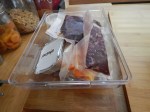


Note.
- As the pictures show it is now safe in my fridge.
- I don’t think I could complain about the packaging.
- Full cooking instructions were included. Most look like time in an oven or boil-in-a-bag.
The Christmas Feast came from Roasted by Jack and Scott.
Did I Have A Close Brush With Covid-19?
In January, this year, I wrote a post called Mule Trains Between Liverpool And Norwich, where I went between Liverpool and Sheffield on a train formed of of several Class 153 trains.
I didn’t think of it, at the time, I wrote the post, but at Manchester Piccadilly station, the train filled up with a large number of Chinese students returning to University.
The students were happy and laughing, but you wouldn’t have complained about them, but there must have been twenty taking most of the available seats in my carriage. I shared a table with three!
At the time, Covid-19 had hardly started to invade the UK, with most cases starting in March.
But, after hearing someone’s story on the radio yesterday, I wonder about the health of those students.
I certainly, didn’t catch the covids seriously after that train journey and haven’t had the virus since, to my knowledge. But thinking back I may have felt unwell the next day.
But after reading the scientific paper from the University of Padua, that I wrote about in Risk of COVID-19 In Celiac Disease Patients, perhaps I was protected by a natural immunity provided by being a coeliac on a long-term gluten-free diet.
As my father said, I was born lucky!
Risk Of COVID-19 In Celiac Disease Patients
The title of this post, is the same as that of this paper on the US National Library of Medicine, which is from the University of Padua in Italy.
This is an extract from the paper.
Among the 171 patients included in our registry and on gluten free diet from at least six months, we contacted 138 CeD subjects (80.7%), aged 41.3 years old (SD 14.9), 73.9% were females on a gluten-free diet from a mean of 6.6 years (SD 6.0). Two patients had a diagnosis of refractory celiac disease type one and one of refractory celiac disease type 2. Among them, none reported to have been diagnosed with COVID-19, whereas 19 CeD patients experienced flu-like symptoms with 1 of them having undergone a negative naso-pharyngeal swab.
This is another sentence, summing up the study.
In this analysis we report a real life “snapshot” of a cohort of CeD patients during the SARS-CoV-2 outbreak in Italy, all followed in one tertiary centre in a red area of Northern Italy. Our data show, in accordance with Emmi et al., the absolute absence of COVID-19 diagnosis in our population, although 18 subjects experienced flu-like symptoms with only one having undergone naso-pharyngeal swab.
That is very firm and the report finishes with this sentence.
We only evaluated patients on a gluten free diet, so far no data on the risk at the time of diagnosis can be extrapolated from this study. Long-term clinical and epidemiological studies in celiac disease will be of great utility in the field but these preliminary data seem to suggest that CeD patients are not at higher risk of COVID-19.
Note.
- SARS-CoV-2 causes Covid-19.
- All their patients were suffering from coeliac disease and were on a gluten-free diet for more than six months.
I’m no medic, but I’m a seventy-three-year-old man with coeliac disease on a gluten-free diet.
I shall be sticking to my diet, in addition to social distancing.
The Hitachi Intercity Tri-Mode Battery Train Between Paddington And Bedwyn
This is probably one of the easiest services for GWR to run using a Hitachi Intercity Tri-Mode Battery Train.
This Hitachi infographic shows the specification.

Consider.
- The route is fully electrified between London Paddington and Newbury.
- It is 13.3 miles between Bedwyn and Newbury, with two intermediate stations.
- There is under thirty miles without electrification in a round trip between Paddington and Bedwyn.
- There is a turnback siding at Bedwyn, that could be fitted with a charger if required.
- Current trains take 17 minutes for between Bedwyn and Newbury, which is an average speed of 47 mph.
- The trains would run at up to 125 mph between Paddington and Reading.
- If the Great Western Main Line gets full in-cab digital ERTMS digital signalling, they will be able to take advantage and run at up to 140 mph between Reading and Paddington.
If it could be shown to be able to run the route reliably, I feel that a Hitachi Intercity Tri-Mode Battery Train with a mix of diesel engines and battery packs might be the ideal train.
- Large amounts of power would not be needed to maintain an average speed of 47 mph between Newbury and Bedwyn, which from my helicopter appears to be a fairly level railway by the side of the Kennett and Avon Canal.
- Except in emergencies, I doubt that diesel running would be needed.
On my list of possible services for these trains, they would also be able to work GWR services between Paddington and Oxford or any other station with a less than thirty mile round trip away from the electrification
Station Stop Performance Of The Intercity Tri-Mode Battery Train
Hitachi have stated that the their Intercity Tri-Mode Battery Trains will not use their diesel engines in stations and to leave the station.
The first Intercity Tri-Mode Battery Trains will be conversions of Class 802 trains.
This page on the Eversholt Rail web site, has a data sheet for a Class 802 train.
The data sheet shows the following for a five-car Class 802 train.
- It can accelerate to 120 kph/75 mph in 100 seconds in electric mode.
- It can accelerate to 160 kph/100 mph in 160 seconds in electric mode.
- It can accelerate to 120 kph/75 mph in 140 seconds in diesel mode.
- It can decelerate from 120 kph/75 mph in 50 seconds in electric mode.
Note.
- 75 mph is the operating speed of the Cornish Main Line and possibly the Highland Main Line.
- 100 mph is the operating speed for a lot of routes in the UK.
- It would appear that trains accelerate to 75 mph forty second faster in electric mode, compared to diesel mode.
- In diesel mode acceleration slows markedly once 100 kph is attained.
Can we assume that performance in battery mode, will be the same as in electric mode?
I am always being told by drivers of electric cars, trains and buses, that they have sparkling performance and my experience of riding in battery electric trains, indicates to me, that if the battery packs are well-engineered, then it is likely that performance in battery mode could be similar to electric mode, although acceleration and operating speed my be reduced to enable a longer range.
If this is the case, then the following times for a station call with a 75 mph operating speed are possible.
- Electric mode – 50 + 60 + 100 = 210 seconds
- Diesel mode – 50 + 60 + 140 = 250 seconds
- Battery mode – 50 + 60 + 100 = 210 seconds
Note.
- The three figures for each mode are deceleration time, station dwell time and acceleration time.
- Times are measured from the start of deceleration from 75 mph, until the train accelerates back to 75 mph.
- I have assumed the train is in the station for one minute.
I suspect with a stop from 100 mph, that there are greater savings to be made than the forty seconds at 75 mph, due to the reduced acceleration in diesel mode past 100 kph.
Savings Between London Paddington And Penzance
There are fifteen stops between London Paddington and Penzance, which could mean over ten minutes could be saved on the journey.
This may not seem that significant, but it should be born in mind, that the fastest journey times between London and Penzance are between five hours and eight minutes and five hours and fourteen minutes.
So these small savings could bring a London Paddington and Penzance journey much closer to five hours.
Savings Between London Kings Cross And Inverness
There are probably not as great savings to be made on this route.
- The electrification runs as far as Stirling.
- There are only five intermediate stops between Stirling and Inverness
- Stirling and Inverness are 151 miles apart.
On the other hand, the route has a lot of gradients, which may give opportunities to use the batteries to boost power on climbs and save fuel and emissions.
Conclusion
Replacing one or more of the diesel engines on a Class 800, 802, 805 or 810 train, on a route, where the full complement of diesel engines is not required, may well result in time savings on the journey, simply by reducing the time taken to accelerate back to operating speed.
I have indicated two routes, where savings can be made, but there may be other routes, where savings are possible.
 The Anonymous Widower