Does Miserable Weather Deplete Your B12?
Consider.
I have been feeling down this winter and especially in the last few weeks.
- My three-monthly B12 injection is now due.
- But I can’t get one until the second of February.
- But on miserable days like this, I do feel bad.
- So I have asked for the injection to be moved forward?
In answer to my question in the title of this post, Google AI gave this answer.
Yes, cold, dark, and “miserable” winter weather can contribute to lower Vitamin B12 levels, or at least worsen an existing deficiency.
While miserable weather does not directly “burn” B12 out of your body, the associated lifestyle changes and reduced sunlight can cause levels to drop.
Here is how winter weather affects B12:
Reduced Sun Exposure:
While Vitamin D is directly linked to sunlight, the general reduction in sunlight during winter can affect energy levels and mood.
Low Vitamin B12 can also cause similar symptoms, making it harder to distinguish between a vitamin deficiency and “winter blues”.
Dietary Changes:
In winter, people may consume less of the fresh, nutrient-dense foods (like animal products) that are high in B12, or they may feel less motivated to maintain a balanced diet, leading to lower intake.
Increased Stress and Fatigue:
Cold, dark weather can induce stress.
Chronic stress and fatigue are known to deplete B vitamin reserves, including B12.
Increased Sensitivity to Cold: Ironically, if you are already slightly deficient in B12, you may feel much colder, more tired, and more lethargic than others, exacerbating the feeling of “miserable” weather.
Key Takeaways:
Check Levels: If you experience extreme fatigue, low mood, or numbness in your hands and feet during winter, it might be worth checking your B12 levels.
Supplementation: In many cases, people, especially vegetarians or vegans, find that B12 supplements or injections help manage symptoms of low energy and poor mood during colder months.
Diet: Ensure you are getting enough B12-rich foods like meat, fish, dairy, and fortified foods.
If you are feeling significantly lower energy or mood during winter, it is always best to consult a healthcare professional.Conclusion:
Do B12 Injections Help Stroke Recovery?
A friend, who thinks I’ve made a good recovery from a stroke, asked me if there is anything I could recommend, for another of his friends, who has just had a stroke.
As a coeliac, am I in a group with a higher risk of a stroke?
So, I asked Google AI, the question, if this were true and received this answer.
- Initial Higher Risk: Some studies suggest a slightly increased risk of stroke (roughly a 10-15% increased likelihood). This risk is highest in the first year after diagnosis.
- Effect of Gluten-Free Diet: After 5 years on a strict, gluten-free diet, the risk of stroke for people with coeliac disease is virtually the same as that of the general population.
- Overall Risk: While some studies have suggested a link, others, including a 2023 UK Biobank study, found no clear evidence of an association between coeliac disease and stroke, although they did find an overall increased risk of cardiovascular disease (27% higher).
- Mechanism: The potential for a higher risk is likely due to the chronic inflammation associated with untreated coeliac disease, rather than traditional risk factors like high blood pressure or smoking.
- Children: A 2023 study found that coeliac disease plays a minimal role in the risk of stroke in children, but recommended that doctors consider it a potential factor in cases of stroke with unknown causes.
Conclusion:
While untreated coeliac disease may slightly increase the risk of stroke due to chronic inflammation, adhering to a gluten-free diet helps manage this risk.
This study by coeliacUK and Oxford University, was the source of the findings by Google AI.
Do B12 Injections Help Stroke Recovery?
For nearly thirty years, ever since I was diagnosed as coeliac, I have had regular three-monthly B12 injections. So ever since my stroke in 2011, I have had B12 injections.
So now AI is available, I felt I should ask Google AI to see if it says anything useful.
This is the answer I received.
- Nerve Repair & Axonal Growth: B12 aids in repairing damaged nerve fibers (axons) and regenerating nerve cells, vital for restoring lost function after a stroke.
- Reduces Inflammation: It helps calm the harmful inflammatory response (neuroinflammation) in the brain after an ischemic stroke, notes this ScienceDirect article.
- Improves Brain Communication: B12 supports neurotransmitter production, allowing brain cells to communicate more effectively and speeding up healing, according to this Flint Rehab article.
- Lowers Stroke Risk: By reducing homocysteine levels, an amino acid linked to stroke, B12 can help prevent recurrent strokes, reports this Flint Rehab article and this NIH article.
- Supports Microglia Function: It helps functionalize microglia (brain immune cells) to reduce injury and promote recovery, states this ScienceDirect article.
- To Boost Recovery: For those with moderate deficiencies, injections or supplementation can improve neurological function, notes this NIH article.
Conclusion
B12 injections seem to have done me no harm.
I also have them on the NHS, at no cost to myself.
If the NHS said I couldn’t have them, I’d pay for them.
New Station Openings In Early 2026
This post is for two reasons.
I needed an answer to my query.
I wanted to explore the competence of Google AI.
When I typed the title of this post into Google AI, I received this answer.
Several new railway stations in the UK are scheduled to open or begin passenger services in early 2026, primarily in the West Midlands, Northumberland, Devon, and Cambridgeshire.
- Darlaston (between Walsall and Wolverhampton)
- Willenhall (between Walsall and Wolverhampton)
- Kings Heath (Camp Hill line, Birmingham)
- Moseley Village (Camp Hill line, Birmingham)
- Pineapple Road (Camp Hill line, Birmingham)
- Bedlington
- Northumberland Park (interchange with Tyne and Wear Metro)
- Cambridge South (Cambridgeshire) – Expected to open in June 2026, connecting the biomedical campus to London, Birmingham, Stansted, and Gatwick airports.
- Okehampton Interchange (Devon) – This new park and ride station, part of the Devon Metro plan, is planned to open in spring 2026.
- Magna (Rotherham) – A new tram-train and park & ride stop is due to open in early 2026.
- Darlington Station redevelopment (County Durham) – Major redevelopment works are “on target” for completion in spring 2026.
It looks to me, that Google AI made a good fist of my question.
What Are Gail’s Like For Gluten-Free Food
As a coeliac, I just had to ask this question of Google AI and I choose Gail’s as my first test.
This was the answer.
Gail’s offers a standout, award-winning Gluten-Free Sourdough, made in a separate facility for purity, but for other items, cross-contamination is a risk, as they use shared equipment and ingredients. While they have gluten-free salads, flourless cakes, and sometimes other specials, customer experiences vary widely, with some finding staff knowledgeable and careful, while others report poor communication and lack of safe options for severe allergies like Coeliac disease, so always check ingredients and ask staff about specific items.
I think I’ll stay clear.
Are There People, Who Have Very Leaky Skin And Consequently Lose A lot Of Fluids And Have To Drink A Lot. Do Some Become Alcoholics?
I’m actually asking this question for my paternal grandfather, who died on the 25 Jun 1929.
- I obviously never met him.
- My father told me he was a chronic alcoholic.
- My father was upset about his father’s drinking and did his utmost to ensure I didn’t follow his father’s example.
- At no time in my life, have I been drunk day after day, like my paternal grandfather.
- My father set me an excellent example on drinking and I tried to follow his lead.
The question in the title of this post, is based on a composite person of myself and my paternal grandfather.
- In My Strange Skin, I describe the unusual properties of my skin, which often causes medical staff to have a good laugh.
- My previous excellent GP would always take my blood and, never needed a plaster and always had a big smile on his face afterwards.
- I am coeliac and I am fairly certain my father was, but was my paternal grandfather?
I asked Google AI the question in the title of this post and received this AI Overview.
While people generally lose some fluid through normal sweating, there are specific medical conditions that cause excessive fluid loss through the skin, primarily genetic disorders affecting the skin’s barrier function.
One prominent example is Netherton Syndrome, a rare genetic condition that results in a defective skin barrier . People with this condition experience:
- Excessive Trans-Epidermal Water Loss (TEWL): Their skin loses moisture much faster than a healthy person’s skin.
- Dehydration Risk: This requires them to constantly monitor hydration levels and drink plenty of fluids to compensate for the continuous loss.
- Another condition is epidermolysis bullosa (EB), a group of genetic diseases that make the skin very fragile and blister easily. The open wounds and blisters also lead to significant fluid loss, increasing the risk of dehydration and infection.
Note that my skin doesn’t have open wounds and blisters and generally heals well and quickly if I cut myself. My late wife would compliment me on my skin and say it was very much like that of our son, who died of pancreatic cancer.
The second part of the question—whether these individuals become alcoholics as a consequence of their condition—is more complex. There is no evidence in medical literature or research to suggest a direct causal link between having a “leaky skin” condition (which necessitates high fluid intake) and the development of alcoholism.
- Fluid management vs. alcohol consumption: Individuals with these conditions need to consume water, milk, or specific electrolyte-balancing fluids.Alcohol has a diuretic effect, meaning it would actually worsen dehydration and be counterproductive to their necessary fluid management.
- Risk factors for alcoholism: Alcoholism is a complex condition influenced by a combination of genetic, psychological, social, and environmental factors, not by the physiological need to consume large volumes of non-alcoholic fluids.
In summary, certain conditions do cause significant fluid loss through the skin requiring high fluid intake, but this physiological need is managed with appropriate hydration (water, electrolytes), and does not lead to alcoholism.
I will now use, what intelligence I have and my observations of my own body to build on these results.
I Have Very Dry Eyes
I had my first eye test in a shed in a friend’s back garden. But the guy who did it, had been the Senior Eye Surgeon in Ipswich Hospital, so he had practiced at a high level and had a lot of experience.
- During the tests, he remarked to me, that I had the driest eyes he’d ever encountered.
- Afterwards, I got bought the glasses from Boots in Ipswich.
- They were fine and served me well for a number of years.
- A few years later, I was involved in a research project at Moorfields Eye Hospital, where members of the public gave their opinion on new eye testing machines that the NHS might use.
- Moorfields said my eyes were indeed very dry.
- The last professional to comment on my eyes was an opthalmist in Vision Express, who suggested that I bathe my eyes in clean, hot water every morning.
- A couple of days later I saw my GP on another matter and he gave the same advice.
My eyes have been a lot more comfortable since.I also have not had to go to a hospital to have a wayward fly taken out of my eyes, which must have happened perhaps four or five times before.
Are Very Dry Eyes A Sign Of Netherton Syndrome?
I asked Google AI, this question and received this answer.
Yes, very dry eyes can be an associated sign or complication of Netherton Syndrome (NS) and other forms of ichthyosis. The underlying skin barrier defect in NS can lead to various eye problems.
- Ectropion: In some cases, the chronic skin inflammation and tightness can cause ectropion, where the eyelids evert (turn outwards) and do not close properly. This prevents the eyelids from adequately covering and protecting the eyeballs, leading to severe exposure and dryness.
- Ichthyosis and Meibomian Gland Dysfunction: Netherton syndrome is a type of ichthyosis, which is characterized by dry, scaly skin. Patients with ichthyosis often have meibomian gland dysfunction (MGD), where the glands that produce the oily layer of the tear film don’t function correctly. This results in the tear film evaporating too quickly, causing evaporative dry eye.
- Corneal Complications: Chronic dry eye can lead to more severe issues like keratitis (inflammation of the cornea) or punctate epithelial erosions, which are painful and can affect eyesight.
It looks like Google AI is thinking in the right direction.
Are Very Dry Eyes A Sign Of Excessive Trans-Epidermal Water Loss?
I asked Google AI, this question and received this answer.
Yes, very dry eyes are associated with increased trans-epidermal water loss (TEWL) from the ocular surface. Studies have shown that individuals with dry eye disease (DED) have significantly higher ocular TEWL values compared to healthy individuals.
- Tear Evaporation: TEWL from the ocular area is used as a measure of tear evaporation. Excessive tear evaporation is one of the two main causes of DED and leads to a condition called evaporative dry eye (EDE).
- Compromised Barrier: The tear film has a protective lipid (oil) layer that acts as a barrier to prevent excessive evaporation of the aqueous (water) layer of the tear film. A compromised or deficient lipid layer, often caused by meibomian gland dysfunction, results in increased tear evaporation/TEWL.
- Aqueous-Deficient Dry Eye: Even in cases of aqueous-deficient dry eye (ADDE), where the primary problem is low tear production, patients can still experience increased tear evaporation and higher TEWL, indicating a complex overlap between the two main types of DED.
- Ocular Surface Inflammation: Excessive tear evaporation leads to tear hyperosmolarity (increased salt concentration), which is a key factor in causing inflammation and damage to the ocular surface, contributing to the symptoms of very dry eyes.
Are Very Dry Eyes A Sign Of Epidermolysis Bullosa
I didn’t ask Google AI, as it was obvious, when I looked at the pictures on the Internet, that I hadn’t got epidermolysis bullosa.
A Picture Is Worth A Thousand Words
Looking at the pictures of the various causes of dry eye, I came to the conclusion meibomian gland dysfunction could be the cause of my very dry eyes.
Can Meibomian Gland Dysfunction Cause Very Dry Eyes?
I asked Google AI, this question and received this answer.
- Tear Film Breakdown: When glands are blocked (MGD), they produce poor quality or insufficient oil, causing the tear film to break down rapidly.
- Evaporation: Without enough oil, tears evaporate too fast, leaving the eye’s surface exposed, dry, and irritated.
- Gritty, itchy, or burning sensation
- Redness and inflammation
- Watery eyes (paradoxically, due to instability)
- Sticky eyelids or discharge, especially in the morning
- Blurred vision, particularly at the end of the day
Ørsted-Skyborn JV Takes Legal Action Against US Gov’t Over Stop-Work Order; Seven Turbines Left To Install On Revolution Wind
The title of this post, is the same as that of this article on offshoreWIND.biz.
This is the sub-heading.
On New Year’s Day, Revolution Wind LLC, the 50/50 joint venture between Ørsted and Skyborn Renewables, filed a supplemental complaint in the US District Court for the District of Columbia and plans to move for a preliminary injunction to block the lease suspension order recently imposed by the US government that stopped construction on its 704 MW project, which is now approximately 87 per cent complete and was expected to start generating power in January 2026.
These five paragraphs give more details of the story.
The lease suspension order, issued by the US Department of the Interior’s Bureau of Ocean Energy Management (BOEM) on 22 December 2025, directed all major offshore wind projects under construction to pause pending a review of alleged national security risks.
The developer asserts the suspension is unlawful and would cause substantial harm to the project, similar to the August 2025 stop-work order.
The project partners say Revolution Wind secured all required federal and state permits in 2023 after extensive reviews and engaged in multi-year consultations with defence authorities, resulting in formal mitigation agreements.
The project is approximately 87 per cent complete, with all foundations, offshore substations and export cables – and 58 of the total 65 wind turbines – installed, and was expected to begin generating power this month.
The developer also noted that the project will supply affordable power to over 350,000 homes under long-term power purchase agreements and support grid reliability in the Northeast.
A Verdict From Google AI
Pending any final result from my learned friends, I asked Google AI, if Revolution Wind will win their case and received this answer.
The question of whether Revolution Wind will ultimately win its case against the federal government’s Bureau of Ocean Energy Management (BOEM) has no final answer yet, as the litigation is ongoing. However, a federal judge has so far ruled in favor of Revolution Wind in a key preliminary step.
Key Developments in the Case
Initial Ruling: In September 2025, a U.S. District Court judge in D.C., Royce Lamberth, granted a preliminary injunction that allowed construction on the nearly-complete project to resume. The judge stated that Revolution Wind was likely to succeed on the merits of its claims and that the project would face “substantial harm” otherwise. The judge called the government’s initial “stop-work order” the “height of arbitrary and capricious action” because it failed to provide a factual basis for the cited national security concerns.
Outcome Uncertainty: The preliminary injunction allows work to continue while the full case proceeds, which could take years. The final outcome of the case depends on the court’s ultimate decision on the merits of the lawsuit
There is going to be some interesting reporting of this case, when the judges give their verdict.
The most interesting case, will probably be the one surrounding Coastal Virginia Offshore Wind as that is a 2.6 GW wind farm, which will generate a lot of fees for lawyers.
If President Maduro Is Found Guilty Of The United States Charges Will He Face The Death Penalty?
I asked Google AI the question in the title of this post and received this answer.
Nicolás Maduro has been indicted on several charges in a U.S. federal court, primarily in the Southern District of New York. The potential penalties for these charges are:
- Narco-terrorism conspiracy: This charge has a mandatory minimum prison sentence of 20 years and a maximum of life in prison.
- Cocaine importation conspiracy: This charge carries a mandatory minimum sentence of 10 years and a maximum of life in prison.
- Weapons charges (using and possessing machine guns and destructive devices in furtherance of the conspiracies): These charges carry a mandatory minimum sentence of 30 years and a maximum of life in prison.
The maximum penalty for all charges combined is life imprisonment in a U.S. federal prison, a sentence that has been described as a “de facto life sentence” in the media. The U.S. Attorney General has stated that the goal is for him to face justice in a U.S. court and, if convicted, he could spend the rest of his life behind bars.
Will this be enough for Trump?
Who knows?
But The Lady On The Train may have a say.
Could Artificial Intelligent Judge Cases Without A Jury?
I just had to ask Google AI this question and received this answer.
Artificial intelligence is not currently used to judge cases or issue final verdicts without human oversight in any major legal system, and legal experts believe a full replacement is unlikely in the foreseeable future. The complex nature of law requires human qualities like empathy, moral judgment, and the ability to assess nuance and credibility, which AI currently lacks.
The current role of AI in the judiciary is primarily used as a tool to assist human judges and lawyers, not replace them.
Could Artificial Intelligent Perform Sentencing In Cases?
I just had to ask Google AI this second question and received this answer.
While artificial intelligence (AI) is already used in various legal processes, it cannot perform actual sentencing in legal cases in a legally binding capacity. Legal systems currently maintain that judicial discretion and the final decision-making authority must rest with a human judge to ensure accountability, due process, and fairness.
Does Artificial Intelligence Support A Reduced Role For Juries In Legal Cases?
I just had to ask Google AI this third question and received this answer.
Artificial intelligence is currently being used to support, not replace, human decision-makers in the legal system, with experts highlighting the need for human judgment, empathy, and accountability in jury trials. The debate over AI’s potential to reduce the role of juries is ongoing, with arguments both for and against.
Conclusion
In all these questions, artificial intelligent didn’t appear to act above its station.
Could Doncaster Sheffield Airport Become A Hydrogen Airport?
I asked Google AI, what is the current status of Doncaster Sheffield Airport and received this reply.
Doncaster Sheffield Airport (DSA) is currently in a state of active, public-funded redevelopment after closing in late 2022 due to financial issues, with plans to reopen for passenger flights by late 2027 or 2028, following significant funding (around £160m) secured by the South Yorkshire Mayoral Combined Authority (SYMCA) for the City of Doncaster Council to take over operations and rebuild commercial viability, with freight and general aviation potentially returning sooner.
This Google Map shows the location of the airport.
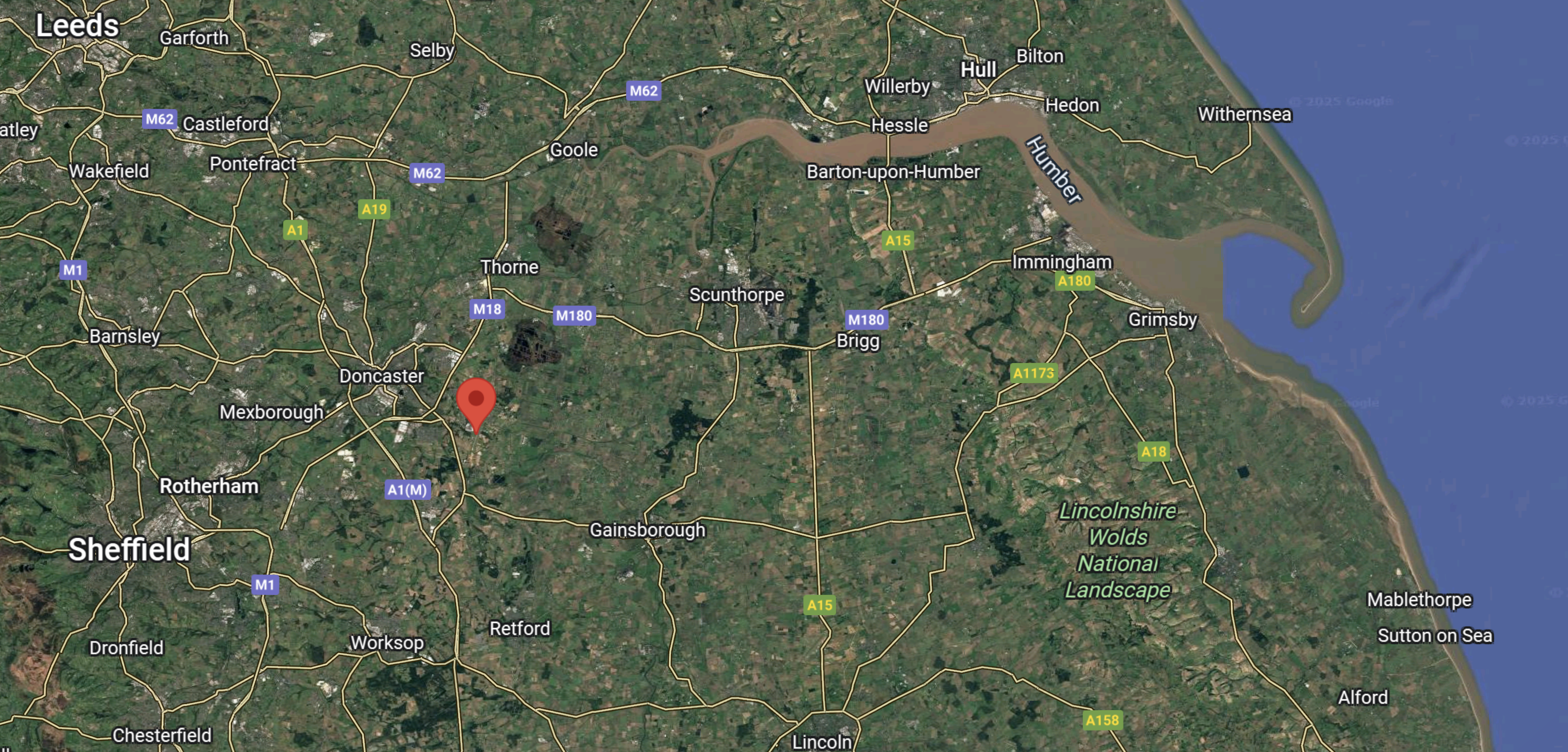
Note.
- The distinctive mouth of the River Humber can be picked out towards the North-East corner of the map.
- Hull and Grimsby sit in the mouth of the Humber.
- The red arrow indicates Doncaster Sheffield Airport.
- Leeds is in the North-West corner of the map.
- The towns and city of Doncaster, Rotherham and Sheffield can be picked out to the West of the airport.
This second Google Map shows a close-up of the airport.

On my visit to NASA in the 1980s, where an Artemis system was used to project manage the turnround of the Space Shuttle, I was asked questions by one of NASA’s support people about RAF Finningley. Nothing too technical, but things like what is Doncaster like.
When I asked why, they said there’s a high chance that a Space Shuttle could land at RAF Finningley, as it has one of the best runways for a very heavy aircraft in Europe.
Looking at the runway, it is a long and wide runway that was built for heavy RAF nuclear bombers like Valiants, Victors and Vulcans.
I believe that we will eventually see hydrogen- and/or nuclear-powered airliners flying very long routes across the globe, just as a nuclear-powered example, attempted to do in the first episode of the TV series Thunderbirds, which was called Trapped in the Sky and has this Wikipedia entry.
Just as the Space Shuttle did, these airliners and their air-cargo siblings will need a large runway.
Doncaster Sheffield Airport already has such a runway.
These hydrogen- and nuclear-powered aircraft will make Airbus A 380s look small and will need runways like the one at Finningley.
But I don’t think we’ll ever see nuclear-powered aircraft in the near future, so the aircraft will likely be hydrogen.
Other things in favour of making Doncaster Sheffield Airport, an airport for long range hydrogen aircraft include.
- The airport is close to the massive hydrogen production and storage facilities being developed on Humberside at Aldbrough and Rough.
- The airport could be connected to the Sheffield Supertram.
- The airport could be connected to the trains at Doncaster station, which has 173 express trains per day to all over the country.
- The airport would fit well with my thoughts on hydrogen-powered coaches, that I wrote about inFirstGroup Adds Leeds-based J&B Travel To Growing Coach Portfolio
- The airport might even be able to accept the next generation of supersonic aircraft.
- The airport could certainly accept the largest hydrogen-powered cargo aircraft.
- The Airport isn’t far from Doncaster iPort railfreight terminal.
Did I read too much science fiction?
I have some further thoughts.
Do Electric Aircraft Have A Future?
I asked Google AI this question and received this answer.
Yes, electric aircraft absolutely have a future, especially for short-haul, regional, and urban air mobility (UAM), promising quieter, zero-emission flights, but battery limitations mean long-haul flights will rely more on hydrogen-electric or Sustainable Aviation Fuels (SAF) for the foreseeable future. Expect to see battery-electric planes for shorter trips by the late 2020s, while hybrid or hydrogen solutions tackle longer distances, with a significant shift towards alternative propulsion by 2050.
That doesn’t seem very promising, so I asked Google AI what range can be elected from electric aircraft by 2035 and received this answer.
By 2035, fully electric aircraft ranges are expected to be around 200-400 km (125-250 miles) for small commuter planes, while hybrid-electric models could reach 800-1,000 km (500-620 miles), focusing on short-haul routes due to battery limitations; larger, long-range electric flight remains decades away, with hydrogen propulsion targeting 1,000-2,000 km ranges for that timeframe.
Note.
- I doubt that many prospective passengers would want to use small commuter planes for up to 250 miles from Doncaster Sheffield airport with hundreds of express trains per day going all over the UK mainland from Doncaster station.
- But Belfast City (212 miles), Dublin (215 miles) and Ostend (227 miles), Ronaldsway on the Isle of Man (154 miles) and Rotterdam(251 miles) and Schipol 340 miles) may be another matter, as there is water to cross.
It looks like it will be after 2035 before zero-carbon aircraft will be travelling further than 620 miles.
My bets would be on these aircraft being hydrogen hybrid aircraft.
What Will The Range Of Hydrogen-Powered Aircraft In 2040?
I asked Google AI this question and received this answer.
By 2040, hydrogen-powered commercial aircraft are projected to have a range that covers short- to medium-haul flights, likely up to 7,000 kilometers (approximately 3,780 nautical miles), with some models potentially achieving longer ranges as technology and infrastructure mature.
The range of these aircraft will vary depending on the specific technology used (hydrogen fuel cells versus hydrogen combustion in modified gas turbines) and aircraft size.
It looks like we’ll be getting there.
This Wikipedia entry is a list of large aircraft and there are some very large aircraft, like the Antonov An-225, which was destroyed in the Ukraine War.
A future long-range hydrogen-powered airline must be able to match the range of current aircraft that will need to be replaced.
I asked Google AI what airliner has the longest range and received this reply.
The longest-range airliner in service is the Airbus A350-900ULR (Ultra Long Range), specifically configured for airlines like Singapore Airlines to fly extremely long distances, reaching around 9,700 nautical miles (18,000 km) for routes like Singapore to New York. While the A350-900ULR holds records for current operations, the upcoming Boeing 777-8X aims to compete, and the Boeing 777-200LR was previously known for its exceptional range.
I believe that based on the technology of current successful aircraft, that an aircraft could be built, that would be able to have the required range and payload to be economic, with the first version probably being a high-capacity cargo version.
What Would An Ultra Long Range Hydrogen-Powered Airliner Look Like?
Whatever the aircraft looks like it will need to be powered. Rolls-Royce, appear to be destining a future turbofan for aircraft called the Ultrafan, which has this Wikipedia entry.
I asked Google AI, if Rolls-Royce will produce an Ultrafan for hydrogen and received this answer.
Rolls-Royce is actively developing the UltraFan architecture to be compatible with hydrogen fuel in the future, but the current UltraFan demonstrator runs on Sustainable Aviation Fuel (SAF). The company has a research program dedicated to developing hydrogen-powered engines for future aircraft, aiming for entry into service in the mid-2030s.
I asked Google AI, if Rolls-Royce have had major difficulties converting engines to hydrogen and received this answer.
Rolls-Royce has not encountered insurmountable difficulties but faces significant engineering and logistical challenges in converting engines to run on hydrogen. The company has made substantial progress in testing both stationary and aero engines using pure hydrogen, confirming its technical feasibility.
Given the company’s success in developing engines in the past, like the R Type, Merlin, RB 211, Pegasus, Trent, mtu 4000 and others, I suspect there’s a high chance of a successful hydrogen-powered Ultrafan.
If you look at a history of large passenger and cargo aircraft over the last sixty years, there has been a lot of the following.
- Conversion of one type of aircraft to a totally different type.
- Fitting new engines to a particular type.
- Fitting new avionics to a particular type.
Examples include.
- Fitting new CFM-56 engines to DC-8s.
- The first two Nimrods were converted from unsold Comet 4Cs.
- Converting Victor bombers to RAF tanker aircraft.
- Converting BA Tristars to RAF tanker aircraft.
- Converting DC-8s to cargo aircraft.
- Airbus converted five Airbus A 300-600 into Belugas, which have this Wikipedia entry.
- Airbus converted six Airbus A 330-200F into BelugaXLs, which have this Wikipedia entry.
- Converting two Boeing-747s to carry Space Shuttles ; one from American Airlines and one from Japan Airlines, which have this Wikipedia entry.
Note.
- Most of these examples have been successful.
- The last three examples have been very successful.
- Most of these applications do not have a human cargo.
This picture shows an Emirates Air Lines’s Airbus A 380 on finals at Heathrow.

Note.
- The aircraft was landing on Runway 27 L.
- The four engines and the vertical oval cross-section of the fuselage are clearly visible.
- The Wikipedia entry for the Airbus A 380 shows two floors across the fuselage; the upper floor with eight seats in 2-4-2 and the lower floor with ten seats in 3-4-3, and a pair of LD3 cargo containers in the basement.
I’d be interested to know, how much hydrogen could be put in the basement and how far it could take the plane with a full load of passengers!
This link to the Wikipedia entry, shows the cross section in detail.
Note
I wouldn’t be surprised that the first application of large hydrogen aircraft will be for cargo and it could be an Airbus Beluga or perhaps an Airbus A 380 freighter?
 The Anonymous Widower
