North-East-Based Turntide Receives Initial Battery Production Order From Hitachi Rail For Arriva’s Grand Central Intercity UK Battery Trains
The title of this post, is the same as that of this news item from Turntide Technologies.
This is the sub-heading.
New batteries to enable greener train operations to remove over 600 engines on existing trains, offering lower cost of operations, more range, and path to zero-emissions travel.
These are the initial three paragraphs, that add more detail.
Turntide Technologies (Turntide), a global leader in electrification and hybridisation solutions and a long-standing North East manufacturer, received its first order from Hitachi Rail to begin production of its next-generation modular battery system for the first U.K.-manufactured battery trains for Arriva’s Grand Central.
First announced on July 2, 2025, this partnership involved an R&D component and has officially moved into production with the potential to support either new battery trains or retrofitting over 600 engines on existing Hitachi Rail U.K. fleets.
This new battery system will allow for lower cost of operations, extended range, and a path to zero-emission travel, while reducing reliance on fossil fuels and improving air quality and noise pollution. Turntide’s bespoke batteries are designed to deliver even greater power density in the same footprint of a diesel engine. This battery production is an advanced manufacturing milestone for Arriva’s Grand Central new fleet, which is being built in Newton Aycliffe, County Durham by Hitachi Rail.
In Are Hitachi’s Tri-Mode Trains Exceeding Expectations?, I said this.
I asked Google AI, the question in the title of this post and received this answer.
Yes, Hitachi’s tri-mode (battery-hybrid) trains are exceeding expectations, particularly following successful trials in the UK in late 2024. Trials of the battery-equipped Class 802/2 demonstrated superior performance to initial forecasts, leading to a £300 million order for a new fleet to be delivered in 2028.
Key findings from trials and operational expectations:
Performance Exceeded: The trial, conducted with TransPennine Express and Angel Trains, showed fuel cost savings of 35%–50%, surpassing initial predictions of up to 30%.
Operational Capability: The battery technology enabled trains to reach speeds greater than 75 mph and provided enough range for zero-emission, silent running in and out of stations, significantly reducing noise and improving air quality.
Energy Efficiency: The battery matched the weight of a diesel engine, meaning no extra track degradation.
Future Impact: The success of the trial led to an order from Arriva Group for a new fleet for Grand Central services, which will increase seating capacity by 20% and are expected to significantly reduce carbon emissions.
These trains, designed to run on electric, battery, or diesel power, are part of a push to modernize rail services, with the technology allowing for the gradual elimination of diesel-only operation on certain routes.
In The Data Sheet For Hitachi Battery Electric Trains, I came to these conclusions.
- The battery pack has a capacity of 750 kWh.
- A five-car train needs three battery-packs to travel 100 miles.
- A nine-car train needs five battery-packs to travel 100 miles.
- The maximum range of a five-car train with three batteries is 117 miles.
- The maximum range of a nine-car train with five batteries is 121 miles.
Hitachi have seen my figures and told me they’re not far out.
As battery technology gets better, these distances will increase
What Battery Range Do Arriva Grand Central Trains Need?
Arriva Grand Central Trains currently run services to Bradford Interchange and Sunderland and hope of adding services to Cleethorpes.
All services would go between Doncaster and Kings Cross, with some stopping additionally at Peterborough.
The lengths of unelectrified track on each route is as follows.
- Bradford Interchange – Shaftholme junction and Bradford Interchange is not electrified – 47.8 miles
- Cleethorpes – Doncaster and Cleethorpes is not electrified – 52.1 miles
- Sunderland – Northallerton and Sunderland is not electrified – 47.4 miles
Note.
- Bradford Interchange station is on a tightly hemmed-in site and putting charging infrastructure in the station might be difficult.
- All Bradford Interchange services will soon be passing electrification at Mirfield station, so there may be scope for a quick charge and continue.
- Cleethorpes station is an open-air station with four platforms.
- I believe it is likely, that Cleethorpes station will also be a destination station for other battery-electric trains from LNER, Northern Trains and TransPennine, so I would suspect that charging facilities will be installed.
- Cleethorpes station could be an ideal location for one of Siemens’ Rail Charging Converters.
- Sunderland station is underground and has a unique layout where both platforms are electrified for the Metro. It is all explained in the Wikipedia entry for the station.
- The Wikipedia entry shows an open-air siding without electrification. One possibility would be for the Class 820 trains to park there and use their on-board diesel to top-up the batteries, so they could reach Northallerton.
- It appears that Grand Central visit Ryhope Grange Sidings between arriving and leaving for King’s Cross. The trains could have their batteries topped up there if needed.
It does look like a five-car train with a battery range of at least 105 miles would be able to handle these three routes.
The Arriva Grand Central Trains Fleet Are Now Class 820 trains
They have a Wikipedia entry.
The order was for nine trains of five cars.
- Wikipedia describes them as tri-mode trains.
- I believe they will have three battery packs and one diesel generator.
- Three battery packs should give a range of 117 miles.
- Google AI says that on one diesel generator, these trains can limp home at 60 miles per hour.
- Google AI says that the diesel generator will be able to charge the batteries at the destination station?
- From comments on the Internet, it appears that Hitachi have a very clever train control system, that ekes out the available power.
It looks to me that Hitachi have designed a train that can handle an unelectrified branch line of up to 60 miles or 120 miles if there are charging facilities at the destination station.
Did LNER And TransPennine Express Not Want To Be First With Battery-Electric Intercity Trains?
Consider.
- TransPennine and LNER are under government control.
- TransPennine provided the train for the testing, so they must know all the results and their drivers, who were probably involved certainly do.
- LNER must have the best initial route in King’s Cross and Lincoln, where only the last 16.6 miles, between Newark and Lincoln is not electrified.
- Surely, both companies should have been given at least one of the first batteries, so they could start training staff in how to use and service the batteries.
I have also totalled how many existing diesel power-packs are in existing Hitachi trains and it is 759.
This figure surprised me, as the sub-heading in the Turntide news item said the number of engines in existing trains was over 600. But then East Midlands Railway are still introducing their fleet of 33 x Class 810 trains, which have a total of 132 engines, and 627 could be described as over 600 engines.
How Much Would A Turntide Battery-Pack Cost?
Consider.
- This is a bespoke product for Hitachi.
- Hitachi have stated that the weight is the same as a diesel-pack, so that track-access rules and charges won’t change.
- As a Control Engineer, I wouldn’t be surprised, that the battery-pack is designed to tell the train control system, that it is a diesel power pack. So it acts just like one!
- In the 1960s, I was designing, building and installing transisterised control systems to replace electronic valve and relay equipment in a rolling mills. The two generations of control systems were interchangeable. Are diesel-packs and battery-packs the same?
- Why did Hitachi choose a small supplier in Gateshead, rather than one of a number of capable companies in Japan? You don’t go halfway around the world, if the quality is available locally.
- Deployment of these trains, will avoid the cost of scores of miles of overhead electrification.
- A lot of routes won’t even need chargers at the remote destination, as the range will be sufficient for an out and back journey from the current electrification.
- Fuel cost savings of 35%–50% were achieved in development testing.
- I have ridden in three battery-electric trains. All were mouse quiet. Will that increase ridership?
I believe these batteries are no ordinary batteries. So they won’t come cheap!
I wouldn’t be surprised that the cost of each battery-pack between a half-a-million pounds and a million pounds, with support.
Will These Trains Create Growth In The Economy?
I have ridden in all current variants of the Hitachi Intercity Express Trains, with the possible exception of the Class 805 train and as each version has been introduced, they are no worse, but often better than previous versions.
I have had two or maybe three return trips to Nottingham and Sheffield in the latest variant, which is East Midlands Railway’s Class 810 train.
This is without doubt the pick of the bunch.
I therefor believe that if this continuous improvement carries on, that the new Class 820 train, that has been ordered by Grand Central will be even better.
- My experience of battery-electric trains, says it will be quieter.
- The environment of stations will be improved.
- Train fuel costs will be reduced.
- I believe that ridership will be increased, as people will be intrigued by a 125 mph train running on batteries.
- The trains will have the ability to divert via Lincoln using the GNGE Diversion on the East Coast Main Line during engineering works.
- Because of their regenerative braking, the trains should be able to do very quick extra stops at intermediate stations.
- New routes will be developed.
- Less ugly electrification will be erected on scenic routes like Settle and Carlisle, and across the Highlands of Scotland.
I believe strongly, that at the end of the day, that battery-electric trains will increase the profits of operators and Network Rail, and reduce the cost to the taxpayers of the railways.
Grand Central’s New Trains Will Improve Services
All these stations will be served by the new Class 820 trains.
- Barnetby
- Bradford Interchange
- Brighouse
- Cleethorpes
- Doncaster
- Eaglescliffe
- Grimsby
- Habrough
- Halifax
- Hartlepool
- Low Moor
- Mirfield
- Northallerton
- Peterborough
- Pontefract Monkhill
- Scunthorpe
- Seaham
- Sunderland
- Thirsk
- Wakefield Kirkgate
- York
Passengers should notice the following from the new Grand Central trains.
- A quieter ride.
- Less vibration.
- Slightly faster services due to faster stops at stations.
- No diesel smoke and much less noise from trains in stations.
Note.
- Cross Country, Hull Trains, LNER, Lumo, TransPennine Express and other operators will come under pressure to follow suit.
- Batteries, will not have the power for freight trains, so will we see a new generation of hydrogen freight locomotives?
But will the improved services bring that exclusive growth to the economy?
Only time will tell!
Private And Public Operators
In the UK, we have.
- Private open access operators like Grand Central, Hull Trains and Lumo, who can buy trains on a loan from a leasing company.
- Public operators like LNER and TransPennine Express, who probably have to get sign off from the Treasury.
- Several companies like Great Western Railways and East Midlands Railway, who are soon to be taken over by Great British Railways, who are stuck in a sort of limbo.
My late friend ; David, who rose to the highest level in banking in the UK, would have come up with a solution.
He would probably have said, that there’s is very little difference between the groups of operators.
- The train services they offer vary only on destinations and prices.
- The ticketing system is now unified, so if you turn up at the last minute and want to go to Newcastle and Lumo and LNER both have tickets, you are offered a choice and you can pick the one that’s best for you.
- All services will soon be running similar battery-electric trains, fprobably from the same Hitachi factory in Newton Aycliffe.
- Food and beverage service is not competitive and could be improved.
- Staff are probably on similar employment agreements.
So why shouldn’t Great British Railways be able to lease trains and even battery packs from companies like Angel Trains, who are funding the trains for Grand Central?
It might get more battery trains running on tracks all over Great Britain sooner than it appears they will now!
Spain v France – I’m Looking Forward To The Match, But Not The Inane Adverts!
I have just watched the most inane, irrelevant and time-wasting adverts on ITV before the 2026 World Cup semi-final between France and Spain.
They’ve even started up again.
I want to watch football not adverts.
- I do hope some clever geek is devising a TV, that automatically cuts out adverts, using Artificial Intelligence!
- I would even pay extra to watch an advert-free feed.
If the second option made more money for FIFA, we might see that.
Poland Receives Its First Electricity from Offshore Wind As Baltic Power Starts Delivering
The title of this post, is the same as that of this article on offshoreWIND.biz.
This is the sub-heading.
Electricity generated by the Baltic Power offshore wind farm has entered Poland’s national power grid, marking the first time the electricity generated by offshore wind turbines is added to the country’s energy mix.
This first paragraph gives more details of the project.
54 of 76 turbines have already been installed at Poland’s first offshore wind farm, with the first now generating electricity. Construction is scheduled for completion this autumn, ORLEN and Northland Power, the owners of the project, said.
When complete, the Baltic Power wind farm will generate up to 1.2 GW.
How Much Offshore Wind Does Poland Have Planned?
I asked Google AI, the question in the title of this section and received this reply.
Poland has massive offshore wind plans in the Baltic Sea.
The country targets 5.9 GW by 2030 and 18 GW by 2040. To meet these goals, the government is pursuing two primary development phases to transition the national grid away from coal.
A breakdown of Poland’s offshore wind rollout includes:
Phase I (Advanced Projects): Includes 5.9 GW of capacity.
Baltic Power: Poland’s first offshore wind farm (1.2 GW), developed by Orlen and Northland Power, officially connected to the national grid in July 2026.
Bałtyk 2 & 3: Equinor and Polenergia have finalized financing for an additional 1.4 GW, slated for commercial operation around 2028.
Phase II (Auction-Backed): Poland recently allocated over 3.4 GW in new capacity through competitive offshore wind auctions, pushing development well into the next decade.
Long-Term Outlook: Industry groups estimate the total technical potential in Poland’s portion of the Baltic Sea could reach up to 33 GW.
Will Poland Be Welcoming Any Invading Germany Wind Farms?
In New Study Shows How North Sea Offshore Wind Can Yield More While Costing Less, I talked about how Germany doesn’t have enough sea in which to place the wind farms it needs to generate the green electricity and hydrogen it needs.
This map from Wikipedia shows Exclusive Economic Zones in the North Sea, but it also shows who has control of the sea in the Baltic.
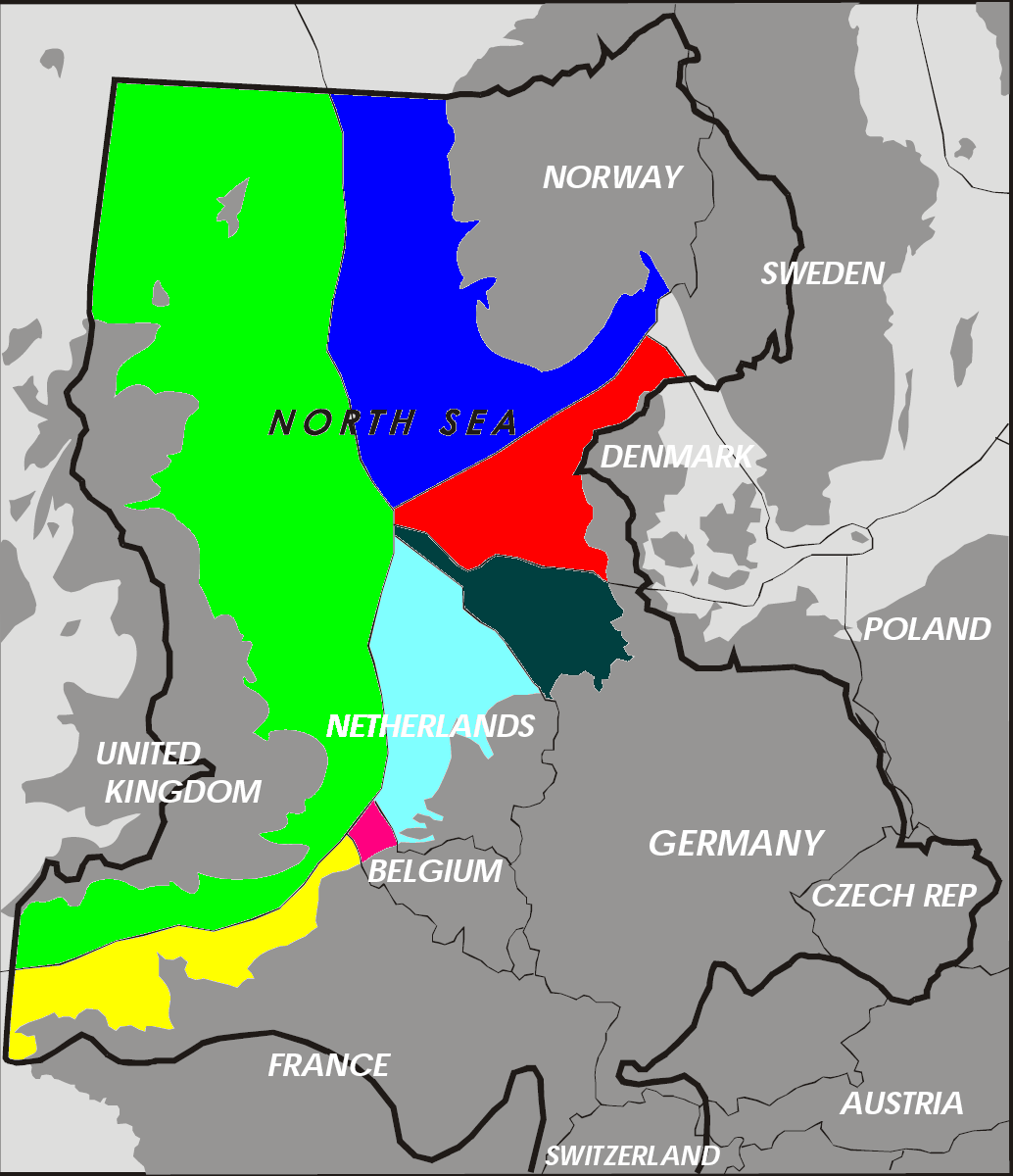
Note.
- Yellow is France.
- Mauve is Belgium, who drew the short straw.
- Light Blue is The Netherlands.
- Black is Germany, who despite their large land area, don’t have as much sea as the UK.
- Red is Denmark.
- Dark Blue is Norway.
- Green is The UK.
- Germany and Poland seen to share the Southern Baltic.
I wouldn’t be surprised to see Germany and Poland co-operating to maximize the wind power capacity of the Southern Baltic.
A Visit To Poland’s Coal Capital
On one of my trips to Poland, I went to Katowice, which is in Poland’s coal-mining region. I wrote about it in An Excursion In Katowice.
Google AI produced this snapshot of Katowice.
Katowice is historically known as the “Polish Coal Capital” and served as the absolute backbone of the region’s heavy industry. First transforming into an industrial powerhouse in the mid-19th century due to rich local coal and metal reserves, the city’s economy and rapid growth were entirely reliant on coal mining and steel.
While coal and heavy industry historically anchored its identity, the city of Katowice has aggressively transformed into a modern cultural, technological, and business hub. The wider Silesia region remains heavily tied to coal mining, but the municipality itself has shifted its focus to avoid reliance on it.
My visit to Katowice was an excellent pit-stop on a train ride between Krakow and Prague, when I did my Home Run From Krakow.
If you like your food and like me, you’re coeliac, I would certainly recommend Poland for a few days away.
Strangely, the language is not a problem, as if you get three Poles together, one will speak English better than what you do.
Will A Large Green German Elephant Get Involved In The Clacton By-Election?
Before I start I’ll ask a question.
What Does Farage Think Of Offshore Wind Farms?
Google AI gave me this reply.
Nigel Farage opposes offshore wind farms, viewing them as an unreliable energy source and arguing that they cause industrial decline and impose “intolerable costs” on households.
His specific stances include:
Taxation & Subsidies: He has pledged that his Reform UK party would eliminate subsidies for wind projects and impose a windfall levy on existing wind farms that have received subsidies.
Energy Alternatives: Farage advocates for abandoning “net zero dogma” and pushes instead for increased oil and gas drilling in the North Sea, along with the expansion of nuclear energy.
Environmental Impact: He has criticized both onshore and offshore wind infrastructure for “despoiling our landscapes and seascapes”. His opposition aligns with previously documented discussions with US President Donald Trump, who has lobbied him against wind turbines.
RWE Development In The Clacton Constituency
RWE or RWE-led consortia are developing three wind farms in the waters off the constiuency.
- 1.1 GW – Five Estuaries
- 504 MW – North Falls
- 353 MW – Galloper
Note:
- In total they are around 2 GW.
- The wind farms are around 30 km. offshore.
- RWE are a respected German company, who are one of our largest electricity generators.
I believe that RWE and their partners could receive a lot of opposition to an overhead power line across Essex to connect these wind farms to the National Grid, and 2 GW would not be a small set of pylons.
But although RWE are German, they may have a Plan B.
RWE have been building a big offshore electrolyser in The Netherlands called H2OpZee and I believe that similar technology could be used at Clacton.
- The electrolyser would be about 30 km from the shore and look like a typical wind farm substation.
- There would be connections to both the UK and Germany, and green hydrogen would be able to be sent either way.
- As Germany is decarbonising industry using hydrogen, I suspect that most green hydrogen would initially be exported.
- But it could attract businesses that needed a lot of green energy to the Clacton area.
- And Clacton certainly needs jobs.
How would Farage deal with something that would bring prosperity to his constituency, but was against his principles?
Has The Clacton Constituency Anything To Do With The Offshore Wind Industry?
I ask this question as Nigel Farage, who is the sitting MP has called a by-election.
Before I answer, the question in the title, I will ask Google AI if he supports wind farms.
I received this reply.
Nigel Farage does not support offshore wind farms. As the leader of Reform UK, he opposes them and has pledged to eliminate renewable energy subsidies, impose a windfall tax on wind developers, scrap net-zero targets, and prioritize the expansion of North Sea oil and gas extraction.
Put this alongside the answer to the question I put in the title of this post.
Yes, the Clacton constituency is directly connected to the offshore wind industry through both established infrastructure and future energy projects off its coastline.The constituency’s specific ties to the wind sector include:
Gunfleet Sands Offshore Wind Farm: Located just 7 kilometers (about 4 miles) off the coast of Clacton and Holland-on-Sea, this wind farm has been operating since 2010. It features 48 turbines and can be seen directly from the town’s beachfront.
Electrical Connection Points: The Gunfleet Sands Offshore Transmission Owner (OFTO) system connects this wind farm to the UK’s national grid via cables and onshore substations based in the local area.
Five Estuaries Offshore Wind Farm: The Clacton coastline falls within the proposed zone for this massive £1.5 billion project. Jointly developed by SSE Renewables and RWE, the project is projected to power over 400,000 homes, with onshore grid infrastructure and cabling proposed for the North Essex area.
If the right independent candidate stood againt Farage, this could be an interesting contest.
Meet The 6×6 Toyota Hilux Built To Tackle Electric Car Fires
The title of this post, is the same as that as this article on Select Car Leasing.
This is the sub-heading.
A car fire is never a good thing, and if the car is electric, the results could be even worse. If it all goes up in flames while the vehicle is in a multi-storey car park, then the consequences could be dire, with limited space available for fire services to control the situation.
This introductory paragraph adds some more details.
Such incidents happen — more than 1,000 cars were destroyed in a fire in Liverpool, while a multi-storey collapsed in Stavanger — so a UK company has converted a Toyota Hilux pickup into a six-wheel EV fire-fighting machine to keep us all safe.
A lot more details are given on the vehicle’s web site, which is called the 6 x 6 HILOAD.
I was alerted to the need for such a vehicle by this article in The Times, which is entitled How Scotland’s New £30k Fire Engines Left Crews Walking To Wildfires.
The pictures on the 6 x 6 HILOAD web site, show a vehicle with a Czechnia registration.
So, I typed “6 x 6 HILOAD Czechnia” into Google AI and received this answer.
The 6×6 Hiload (developed by Prospeed Motorsport) is a custom, six-wheeled conversion of the Toyota Hilux designed specifically for emergency response, particularly targeting electric vehicle (EV) battery fires.In Czechia, the 6×6 Hiload is undergoing trials with Czech Fire & Rescue Services (Hasiči) to test its capabilities in fast-response and confined environments. Key features of the vehicle in action include:
EV Firefighting: It utilizes specialized equipment like the Coldcut Cobra system, which pierces EV battery casings to extinguish fires directly with a minimal amount of water, reducing the risk of thermal runaway.
Low Profile: Standing at less than 1.9 metres tall, it can easily navigate low-clearance urban underground and multi-storey car parks that traditional, larger fire engines cannot access.
High Payload: The custom six-wheel chassis stretches the Hilux and increases its payload capacity to roughly 3,000kg, allowing it to carry heavy fire and rescue equipment without sacrificing off-road mobility.
This chassis will have more uses than a Swiss army knife.
I suspect the Ukrainians could find several uses.
How Is The Testing Of Babies In Italy For Coeliac Disease And Type 1 Diabetes Going?
I asked Google AI the question in the title of this post and received this reply.
Testing babies and children for coeliac disease and type 1 diabetes in Italy is progressing successfully, rooted in groundbreaking legislation. Italy is the first country to pass a national law (Law 130/2023) mandating mass screening for these conditions in children aged 1 to 17.
The pilot project, known as the D1Ce Screen, was rolled out in four key regions: Lombardia, Sardegna, Marche, and Campania. Testing is typically conducted at ages 2, 6, and 10.
Here is how the rollout is progressing based on interim data and reports:
Pilot Study Success: The screening involves a simple capillary (finger-prick) blood draw administered by primary care pediatricians. Participation in the initial phase was high, with over 75% of pediatricians and thousands of children successfully screened.
Higher-Than-Average Positivity Rates: Preliminary data revealed that approximately 2.8% to 2.9% of children tested positive for coeliac-specific antibodies—more than double the global average of 1% to 1.4%. Additionally, around 0.8% of children displayed markers for type 1 diabetes.
Early Detection: The pilot has proven highly effective at identifying asymptomatic or “silent” cases of both conditions early, which is vital for preventing acute complications like Diabetic Ketoacidosis (DKA) and avoiding the long-term impacts of undiagnosed coeliac disease.
High Public Acceptance: Surveys from the pilot regions indicate that more than 90% of parents are highly willing to have their children screened, though general public awareness of the national program is still being scaled up.
Following these successful pilot rollouts, the government continues to expand the screening program to ensure full, nationwide coverage to protect at-risk children before severe symptoms develop.
An Avenue Of Trees, Cheered Me Up Today
I was feeling a bit down, after the loss of my phone on a train yesterday, as I cam back from Cambridge South station.
After reporting its loss at Liverpool Street station this morning, I thought I might be able to get something I needed at Sainsbury’s in Walthamstow.
To get from Walthamstow Central station to Sainsbury’s I walked along this avenue of trees.








Note.
- It was lovely and cool on a hot day.
- There was a gentle breeze through the trees.
- Halfway along, I chatted to a guy with Indian heritage. He said he liked the trees at Chistmas, when the Council put lights on them.Now surely, that is multiculturalism.
I asked Google AI about the trees and got this reply.
The avenue of mature trees leading from Walthamstow Central Station towards the High Street consists of lime trees. Also locally referred to as Lime Tree Walk, these established trees are well known for soaking up pollution from the adjoining bus and transit areas.
Google AI estimates that the trees are at least a hundred years old.
I believe we should do things like this more often, as it is surely a scientifically-correct way to deal with the pollution of only a few vehicles emitting it.
Out of curiosity, I asked Google AI,”Are we doing research to increase the effectiveness of trees clearing pollution?” and received this reply.
Yes, there is extensive, ongoing scientific research dedicated to increasing the effectiveness of trees at clearing pollution. Studies focus on optimizing urban canopy cover, vegetative barrier design, and microbiome/soil enhancements to maximize both particulate matter (PM) capture and carbon sequestration.
Current research initiatives and findings include:
Vegetative Barriers & Species Traits: Research from the University of Surrey’s Global Centre for Clean Air Research (GCARE) has developed a plant selection framework. By evaluating traits like leaf hairs, canopy density, and seasonal leaf retention, they identify highly effective species (such as silver birch, elder, and yew) to act as physical green barriers that trap particulate matter and filter exhaust.
Tree Spacing & Dispersion: Studies on urban street canyons show that sparse or dense tree spacing can sometimes trap pollutants if the canopy blocks wind flow. However, “medium spacing” (where the gap between trees is roughly equal to the crown diameter) has been proven to optimize both airflow and particle reduction for pedestrians and cyclists.
Soil & Growth Interventions: Studies like the Glandwr Forest Carbon Study by Imperial College London and The Carbon Community are testing methods to boost young tree growth and carbon sequestration using enhanced rock weathering and microbial enrichment.
Cooling & Air Purification Pathways: Recent findings published in Landscape and Urban Planning highlight that trees reduce particulate pollution (PM10) not just by trapping it on leaves, but also through localized cooling. By mitigating extreme heat, trees promote the natural deposition of suspended particles.
It seems that the good citizens of Walthamstow and the nearby forest, probably achieved a result, that was very much in line with modern research.
One Of The Jobs I Did, That I’m Most Proud Of
In the early 1970s, I developed and attempted to market a simultaneous differential equation solving program called SPEED, which stood for Simple Program for the Efficient Evaluations of Differentials or something like that.
It wasn’t very successful, but two companies asked me to write some for them.
- For Time Sharing, I put the central algorithm into their simultaneous differential equation solver to move the program up to the next level.
- WS Atkins, asked me to install it on their computer.
SPEED had a few advantages over typical simultaneous differential equation solvers of the time like IBM/CSMP.
- IBM/CSMP needed at least an IBM 360/50 computer, which I ran it on at ICI in Welwyn Garden City, where I was a general mathematical dogsbody. But SPEED could run on a dial-up line to a time-shared computer like a PDP-10.
- The time-shared computers as used by Time Sharing and WS Atkins, gave the big advantage, that as the size of the computer increased, the size of the problem, that could be tackled in proportion.
- IBM/CSMP and SPEED both had a simple column-oriented report writer, which unsurprisingly ended up in Artemis, which I wrote a few years later.
- I can’t remember, who at ICI gave me the tip, but I used a sophisticated version of the Runga-Kutta algorithm, that everybody used and some probably still do today. The version, I used was called Runga-Kutta-England, where like me England, was a graduate of Liverpool University.
This summary by Google AI described the algorithm.
The England version of the Runge-Kutta method (developed by R. England) is a highly efficient 4th/5th order embedded numerical integration formula. By reusing intermediate slopes across two methods of differing orders, it provides a highly reliable built-in error estimate for adaptive step-size control.
Does anybody still use Runga-Kutta methods? I suspect not!
A breakthrough of sorts came, when WS Atkins asked me to produce a larger system of the SPEED software, that could handle several tens of thousands of equations.
- Atkin’s client was the Water Resources Board and they were modelling the water distribution system for a large part of the UK.
- Prominent in the project was a Dr. David A, Dimeloe and we became friends and had dinner with our wives a couple of times.
- But I never received a copy of the report, that was written or heard any more since about 1975.
- But judging by the fact, that we seem to have adequate supply of water in the UK and problems seem to be all about sewage, politics, management and finance, I feel that David and his team, must have done a good job.
- I was also never asked to fix any bugs in the software.
I did have some trouble getting the money I was owed from the intermediary in the deal, but I eventually retrieved it through the County Court without a solicitor.
Crown Estate’s Revenue From Existing Offshore Wind Farms 20 Pct Higher, Operating Profit Dips As Round 4 Projects Enter Construction Phase
The title of this post, is the same as that of this article on offshoreWIND.biz.
This is the sub-heading.
The Crown Estate reported a decline in annual operating profit to GBP 1.2 billion (approximately EUR 1.4 billion) from GBP 1.4 billion (approx. EUR 1.6 billion) in the previous year due to lower offshore wind Round 4 option fee income, as the Round 4 projects started entering the construction phase. Excluding the Round 4 option fees, operating profit rose 5 per cent to GBP 370 million (approx. EUR 435 million), while revenue from existing offshore wind farms increased 20 per cent to GBP 117 million (approx. EUR 138 million)
These four paragraphs add more details.
Over the year, the Crown Estate returned GBP 487 million (approx. EUR 573 million) to HM Treasury, bringing total contributions to GBP 5.1 billion (approx. EUR 6 billion) over the past decade, according to its financial report released on 25 June.
Alongside the financial results, the UK seabed manager highlighted that offshore wind capacity in its waters has reached 13 GW, up from 12 GW, with 36 wind farms now operating in its marine portfolio.
The pipeline of offshore wind capacity has increased to 56 GW, with an expanding offshore leasing and development programme as early Round 4 projects enter construction.
In the Offshore Wind Seabed Leasing Round 4, held in 2021, the Crown Estate selected six projects, which signed their Agreements for Lease in 2023, kicking off the three-year period during which the developers were paying annual option fees.
In Offshore Wind In 2030 – Calculated June 2026, I showed that the offshore wind capacity will have increased to 56 GW, sometime in 2031-2032.
How Much Income Will There Be In 2027-2032 from UK Wind Farms?
I asked Google AI the question in the title of this section and received this answer.
UK wind farm industry revenues are forecast to surpass £6 billion annually heading into 2027, driven by expanding capacity and inflation-adjusted contracts. Between 2027 and 2032, overall sector income will scale rapidly as capacity aims to double and up to £5 billion is pumped into the supply chain.
The economic landscape for UK wind generation features the following financial projections and parameters:
Industry Revenue & Growth: The UK wind power generation market is projected to expand at a Compound Annual Growth Rate (CAGR) of over 15% through 2031. The rapid expansion of both onshore and offshore capacity will push total market revenues well into the double-digit billions by 2032.
Contract for Difference (CfD) Revenues: Wind farms are heavily shielded from market volatility by index-linked strike prices. For instance, recent offshore projects have secured delivery rates as low as $37.35 per megawatt-hour (MWh). Conversely, older assets are transitioning out of initial subsidy schemes, moving into merchant wholesale pricing or new contracts by 2027.
Macroeconomic Contribution: Every additional gigawatt (GW) of offshore wind capacity adds an estimated £2 billion to £3 billion to the wider UK economy.
The Crown Estate Earnings: Acting as the UK seabed manager, The Crown Estate generates significant income from offshore wind leasing, having reported operating profits of over £1.2 billion and planning to retain up to 60% of its revenue to reinvest in the energy sector.
Landowner & Community Economics: For utility-scale farms, participating landowners generally earn between 5% and 6% of the annual turnover from wind farms, equating to around £40,000 per year for a single large turbine. Domestic turbines can earn up to £702 annually under the Smart Export Guarantee (SEG), depending on the specific supplier tariff.
I believe that with a similar growth of solar energy, the renewable energy produced in the UK in 2032 will be beyond our wildest dreams.

