Timber Freight Train Runs For First Time In 18 Years
The title of this post, is the same as that of this article on Rail Technology Magazine.

These are the first two paragraphs.
Network Rail has partnered with Colas Rail in a pilot project to run a timber freight train for the first time in 18 years.
A sawmill in Abergavenny has received the first rail-transported timber since 2004 which was transported 92 miles from Hackney Yard near Newton Abbot.
I do wonder how many other specialised freight trains like these could be run.
As it was only 320 tonnes on eight wagons, it was probably hauled by a diesel Class 66 or Class 70 locomotive.
If there were hydrogen-powered locomotives available, would this encourage more companies to switch from road to rail.
It also appears that for this movement, Network Rail had strengthened a bridge. Are there enough yards, where heavy trucks can access the railway?
Timber Imports
With the situation in Ukraine, I wondered if we imported any timber from Russia, that could perhaps be replaced by locally-grown timber.
I found this page on the Forest Research web site from the UK Government, which is entitled Origin Of Wood Imports.
Our biggest timber imports from Russia are wood pellets and plywood.
Wood pellets are an obvious import, as we also import large amounts from the United States and Canada and all three countries have extensive forests and I suspect they all produce large amounts of woody waste, that is only suitable for making into pellets.
Are we recycling scrap wood and woody waste, as best we can in the UK or are we just burning it on bonfires? The guy opposite lost a tree in the recent storms and a tree surgeon came with a special truck and a shredder to reduce it to small pieces of woody waste. Did that go to make pellets for Drax and other boilers that burn them?
It strikes me, that there may be opportunities For creating or enlarging our own wood pellet industry to cut imports.
Plywood comes mainly from China (37 %), Brazil (18 %), Finland (9 %) and Russia (8 %). Of these, I suspect only one has good environmental standards.
As this softwood plywood for lower-grade applications only needs wood from trees, that we can grow in this country, perhaps we should make a lot more in automated plants.
I’m sure Network Rail would be happy to arrange the transport.
“Game-Changing” Long-Duration Energy Storage Projects To Store Power In Hydrogen, Compressed Air And Next-Gen Batteries Win UK Government Backing
The title of this post, is the same as that of this press release from EDF.
These are the first two paragraphs.
EDF UK has received £2 million in funding from the Department for Business, Energy & Industrial Strategy (BEIS) to support four innovative methods of storing energy for longer periods of time.
The four longer-duration energy storage demonstration projects will help to achieve the UK’s plan for net zero by balancing the intermittency of renewable energy, creating more options for sustainable, low-cost energy storage in the UK.
These are the projects.
Tech Transfer And Modification Of Metal Hydride Storage Used In Fusion Sector For Hydrogen (Protium) Storage
The project is described like this in the press release.
The first project will store electricity as hydrogen in a chemical form using depleted uranium hydride (UH3). The project will utilise Urenco’s depleted uranium liability – a waste product from fuel production and reprocessed spent MOX fuel – to safely store hydrogen as UH3, which has approximately twice the volumetric energy density as liquid H2. The project will see EDF R&D lead a consortium combining expertise in engineering and materials from University of Bristol, operating metal hydride storage at UKAEA and handling depleted uranium from Urenco.
Sounds like a good project. Especially, as it finds a use for Urenco‘s depleted uranium.
Pivot Power
Pivot Power, part of EDF Renewables, will work on two projects.
- Delivering Power On Demand From Solar PV Using 40MWh Vanadium Flow Battery Storage System
- Accelerate Commercialisation Of Zinc-Based Battery Storage
The first project was described in Longer Duration Energy Storage Demonstration Programme, Stream 1 Phase 1: Details Of Successful Projects.
This is what EDF says about the two projects which are linked.
Pivot Power, part of EDF Renewables, will support the delivery of two demonstration projects. The first project, delivered in partnership with Invinity Energy Systems plc (AIM:IES), will establish the feasibility of developing one of the UK’s largest storage-enabled solar power resources. If selected, Phase Two of this project, which includes a utility-scale 10 MW / 40 MWh Invinity Vanadium Flow Battery, would receive funding under the programme.
Pivot Power will also work alongside e-Zinc, with support from Frontier Economics, to ‘metalize energy’, deploying breakthrough technology that stores energy in zinc, an inexpensive and widely available metal that has a high energy density.
I’m a believer in storing energy in zinc, until it is proven, it’s not a good method.
The final project was also described in Longer Duration Energy Storage Demonstration Programme, Stream 1 Phase 1: Details Of Successful Projects.
The EDF press release adds this.
The final project will explore how electricity, converted into compressed air, can be stored in EDF’s existing gas storage facilities, where EDF Thermal Generation and R&D will partner with io consulting and Hydrostor.
I have a good feeling about this project.
UK Government Awards Funding To Longer-Duration Energy Storage Tech Projects
The title of this post, is the same as that of this article on Energy Storage News.
The article gives a list of all the projects.
I looked at the Stream 1 projects in Longer Duration Energy Storage Demonstration Programme, Stream 1 Phase 1: Details Of Successful Projects.
I’ll put a link to Stream 2 projects here.
Energy3 – A Thermal Energy Storage System Providing Heating, Hot Water And Electricity
Energy3 – A Thermal Energy Storage System Providing Heating, Hot Water And Electricity
This article on Current News is entitled BEIS Unveils Nearly £7m Long Duration Energy Storage Funding.
One of the ideas, that has received funding is Energy3, which is an idea from the University of Edinburgh.
This is the introductory paragraph on the home page.
Renewable energy sourced from the sun, wind, waves, or tides is clean and secure. Unfortunately, the energy that can be extracted from renewables and the demand for it varies both temporally and spatially. To allow a household to be fully reliant on renewables or for grid operators to use a high proportion of renewable energy, storage is essential.
The University has developed a storage system based on heat, that is charged by using low-cost electricity. This heat can then be delivered during the day as heat, hot water and electricity.
Two sizes are available.
- mUHTS – A small cubic metre size, which is ideal for the average house.
- megaUHTS – A container sized system, which is aimed at a business.
They can also build bigger systems to replace thermal power stations.
This is a very interesting concept and I can see other similar systems being developed, by companies all over the world.
Longer Duration Energy Storage Demonstration Programme, Stream 1 Phase 1: Details Of Successful Projects
The title of this post, is the same as that of this document from the UK Government.
This is the introduction.
Stream 1 aims to accelerate commercialisation of innovative longer duration energy storage projects through to actual demonstrations. During Phase 1, projects will be expected to mobilise their proposed technologies to prepare for potential deployment on the UK energy system.
These are the projects.
Ballylumford Power-to-X
This is the description of this project in Northern Ireland.
B9 Energy Storage will receive £986,082 to mobilise a 20MW membrane free electrolyser green hydrogen project. Using otherwise curtailed wind power, hydrogen produced will be stored in local underground salt caverns for later use as a fuel in transport and electricity sectors, creating a full-cycle hydrogen economy (production, storage, distribution and usage) on site.
Note.
Ballylumford power station is a 600 MW gas-fired power station, that provides half of Northern Ireland’s electricity.
A 20 MW electrolyser will produce just under nine tonnes of hydrogen per day.
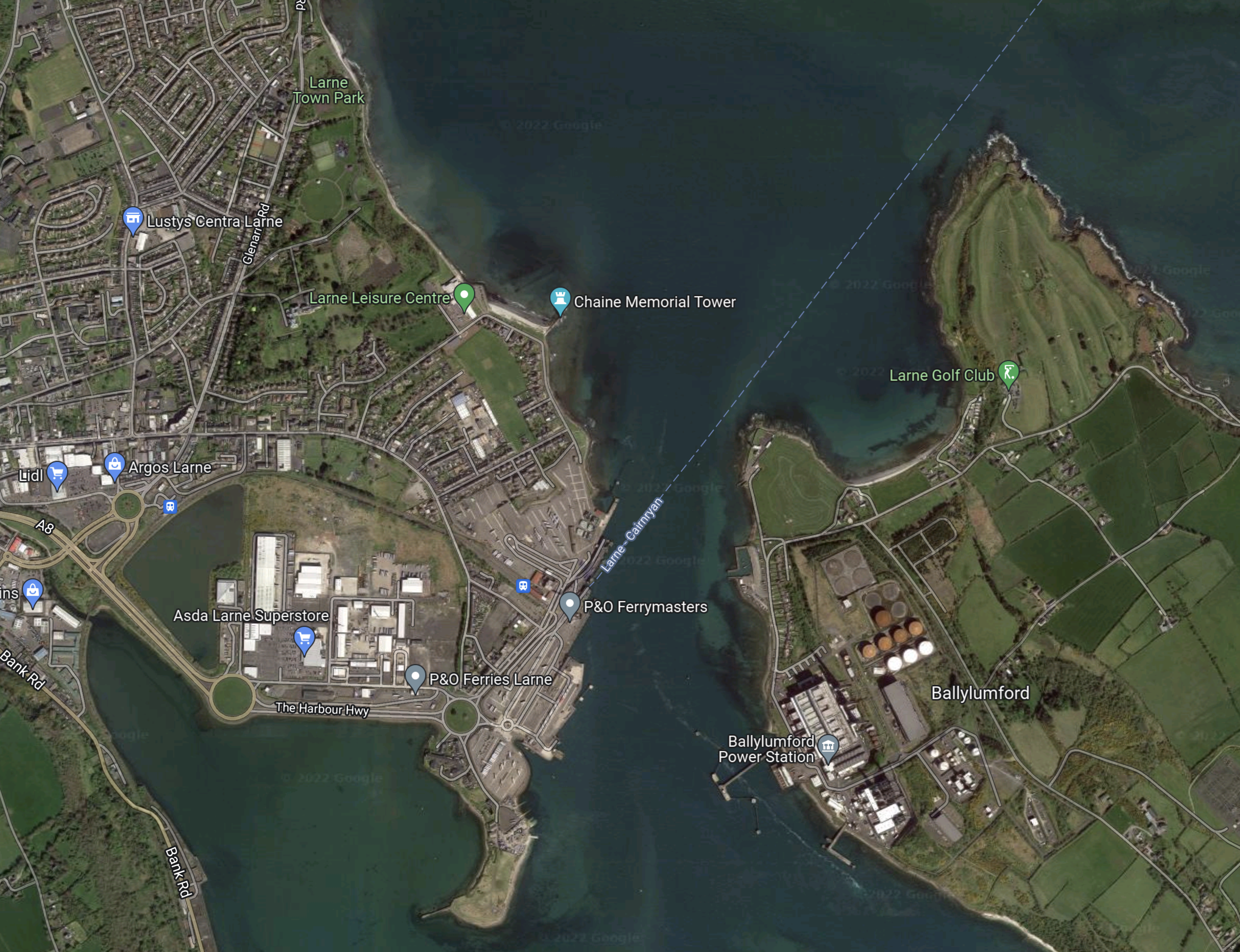
This Google Map shows the location of the power station opposite the port of Larne.
Note.
Ballylumford power station is clearly visible to the East of the channel towards the bottom of the map.
Ballylumford is also the Irish end of the HVDC Moyle interconnector from Scotland, which has a capacity of 500 MW.
Ballylumford would appear to have enough power for a large electrolyser.
Salt Beds In Northern Ireland
This document on the British Geological Survey web site is entitled Geological Storage In Northern Ireland.
The document discusses Irelands energy needs and gives a good description of using compressed air energy storage in salt caverns.
Then these two paragraphs describe the salt bed in Northern Ireland compare them to other deposits under Great Britain.
Thick halite deposits, found both onshore in Northern Ireland and immediately offshore in the North Channel, offer potential for salt cavern storage facilities. The salt deposits occur as bedded deposits with minor halokinesis (geological movement of salt) forming salt swells rather than pillows or domes so that the height of any cavern may be restricted by bed thickness. Pure salt beds tend to be thin (approximately 100-250 metres maximum thickness) compared to those used elsewhere and the presence of significant insoluble impurities and minor intrusive dolerite dykes or sills may reduce their suitability.
The Larne and Carrickfergus area of County Antrim is the only part of the whole island where thick salt beds occur. Elsewhere in the UK parts of Cheshire, Lancashire, Teesside, Humberside and Dorset have similar, or thicker, developments of salt beds and gas storage facilities are either in construction, or are already in operation.
It would appear that the thick salt beds in the Larne and Carrickfergus area could be suitable for gas storage.
Ballylumford might actually be on top of the salt beds, as Carrickfergus is a few miles to the South.
On a personal note, I used to work for ICI Mond Division and during that time and immediately afterwards, I met many people, who had been into the salt mines and worked with boreholes extracting the salt and the one thing everybody said about the salt mine, was that water must not get in.
Membrane-Free Electrolysis
I saw this in operation when I worked at ICI Mond. Most of their hydrogen and chlorine was produced using the main Castner-Kellner process at Castner-Kellner works in Runcorn. That is a nasty process that uses a lot of mercury, which got into the air and plant operators’ bodies.
But ICI also had a much smaller plant, where they used simple electrolysers, that had a metal cell, with a concrete top, with the anode and cathode going through the concrete into the brine. I seem to remember that its main purpose was to provide mercury-free hydrogen, chlorine and sodium hydroxide. I can remember seeing workers rebuilding the cells, as was done on a regular basis.
These were membrane free electrolysers and had been running successfully for many years.
Searching the Internet for “membrane free electrolyser” I found a company in Doncaster called CPH2.
The home page on their web site declares
Clean Power Hydrogen are the manufacturers of the unique Membrane-Free Electrolyser
Turning to the About page, this is said.
Being passionate about hydrogen as clean energy for the future, we wanted to find an alternative to PEM electrolysers as these had barriers to adoption. We realised that the cleanest way to produce hydrogen was by membrane-free water electrolysis, and in doing so, it would be a less expensive and more robust technology.
Dr. Nigel Williamson and Joe Scott established CPH2 (Ireland) in 2012 with the ambition to help clean up the environment for our children and future generations. Entering the green technology sector; a high growth and profitable market, they developed a Membrane-Free Electrolyser™ to produce hydrogen faster, more reliably, and more cost-effectively than other electrolysers.
They also have the ambition to be leading developer and manufacturer of green hydrogen technologies and an Irish connection.
My experience says that their technology will work. Especially, with the application of modern materials.
Have the Government backed the Ballylumford Power-to-X project, as they can back two promising technologies with one grant?
GraviSTORE
This is the description of this project.
Gravitricity Limited will receive £912,410.84 to design their multiweight energy store demonstrator project, which will store and discharge energy by lifting and lowering multiple weights in a vertical underground shaft.
Note.
- I like the Gravitricity concept and have invested through crowdfunding.
- The project will be based on a brownfield site in Northern England.
- Gravitricity’s current demonstrator in Edinburgh, which I wrote about in Gravitricity Celebrates Success Of 250kW Energy Storage Demonstrator, only uses a single weight, but this project talks about multiple weights.
According to other sources on the Internet, the demonstrator will have a storage capacity of 4 MWh and will be built on a brownfield site.
Will we see Gravitricity coming to a disused deep coal mine near you?
Long Duration Offshore Storage Bundle
This is the description of this project.
Subsea 7 Limited and FLASC B.V. will receive £471,760.00 to further develop the Long Duration Offshore Storage Bundle which will store energy as a combination of pressurised seawater and compressed air, using an innovative hydro-pneumatic technology.
Note.
- Subsea 7 Limited are a subsea engineering, construction and services company serving the offshore energy industry, domiciled in Luxembourg with headquarters in London.
- According to their web site, FLASC B.V. is a spin-off of the University of Malta, established in The Netherlands in 2019.
On the page on the FLASC web site, which is labelled The Technology, this is said.
FLASC is an energy storage device that can be integrated directly into a floating offshore platform. Energy is stored using a hydro-pneumatic liquid piston, driven by a reversible pump-turbine.
Charging Mode: electricity is used to pump water into a closed chamber containing pre-charged air.
Discharging Mode: the pressurised water is released through a hydraulic turbine to generate electricity.
FLASC leverages existing infrastructure and supply chains, along with the marine environment itself as a natural heatsink, resulting in a safe, reliable and cost-effective solution.
There is also this video.
The news page on the FLASC web site is a comforting read.
My knowledge of modelling vessel systems for chemical plants, tells my brain to like it.
Vanadium Flow Battery Longer Duration Energy Asset Demonstrator
This is the description of this project.
Invinity Energy Systems will receive £708,371 to demonstrate how a 40 MWh Vanadium Flow Battery could deliver long duration storage-enabled power on demand from UK-based solar generation.
Note.
- I wrote about Invinity Energy Systems in UK’s Pivot Power Sees First Battery On Line By 2021.
- Invinity Energy Systems was formed by a merger of RedT and Avalon Battery.
- The project appears to be located at Bathgate in Scotland.
This picture from EdF shows a large vanadian flow battery.
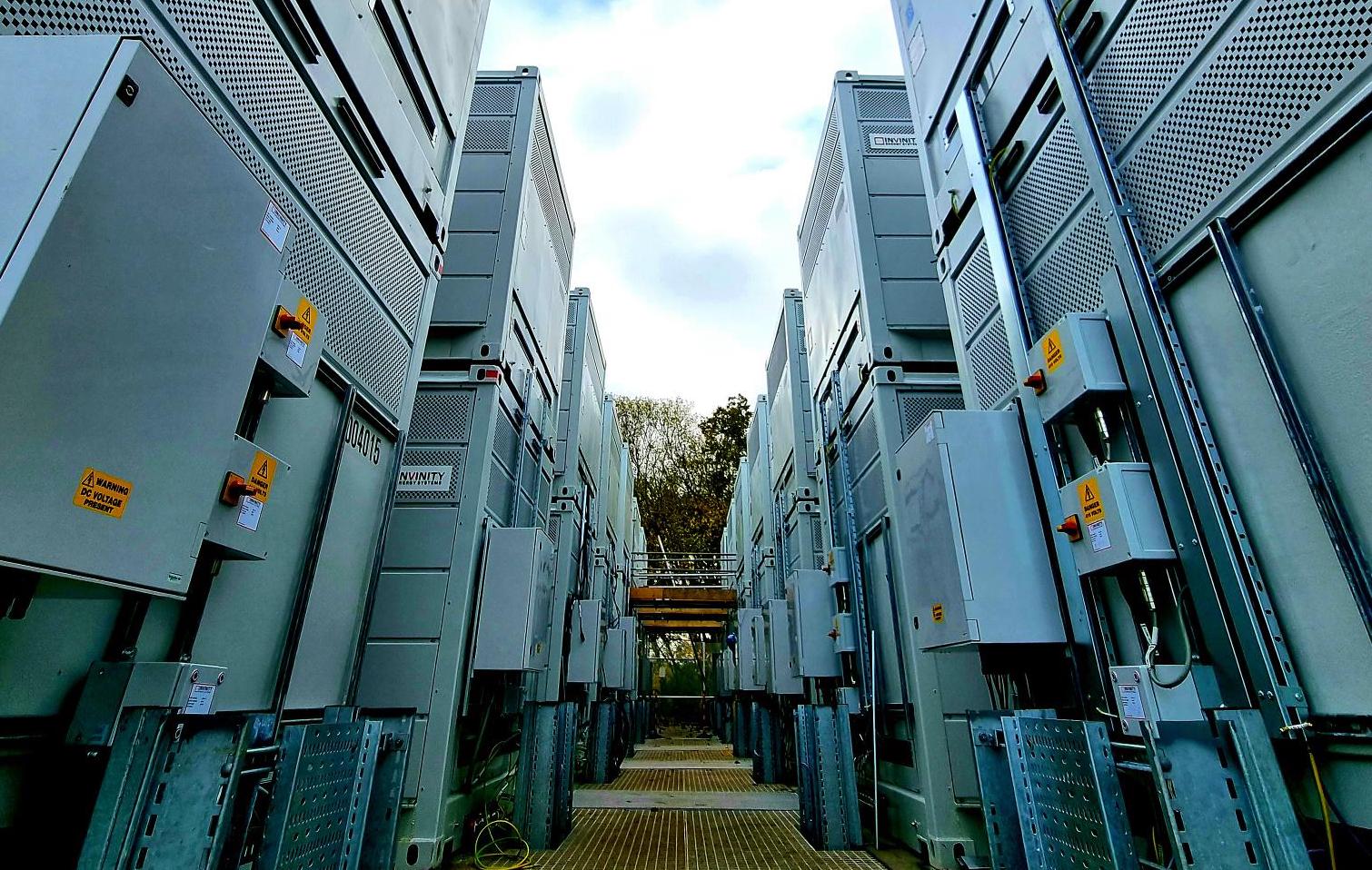
Invinity Energy Systems flow battery at Energy Superhub Oxford
If this project works out, vanadium flow batteries would be a good replacement for lithium-ion batteries.
Cheshire Energy Storage Centre
This is the description of this project.
io consulting will receive £1 million to enable its consortium to develop an electricity storage facility which could use mothballed EDF gas cavities in Cheshire utilising Hydrostor’s Advanced Compressed Air Energy Storage technology
Note.
- This is another project based on salt caverns.
- I wrote about Canadian company; Hydrostor in Gigawatt-Scale Compressed Air: World’s Largest Non-Hydro Energy-Storage Projects Announced.
- Hydrostor have received at least one large order for their system.
I have put Hydrostor on my list of tecnologies that should make it.
Conclusion
This is a well-balanced list of projects.
I would rate success as follows.
- Ballylumford Power-to-X – 60 %
- GraviSTORE – 80 %
- Long Duration Offshore Storage Bundle – 60 %
- Vanadium Flow Battery Longer Duration Energy Asset Demonstrator – 70 %
- Cheshire Energy Storage Centre – 80 %
But then all these projects are a bit of a gamble
Giant Batteries Will Provide Surge Of Electricity Storage
The title of this post, is the same as that of this article on The Times.
These are the first two paragraphs.
Britain’s capacity to store electricity in giant batteries is set to double after dozens of new projects won contracts through a government scheme to keep the lights on.
Developers of battery storage projects with a total output capacity of at least 3.3 gigawatts won contracts to operate from winter 2025-26 through the government’s “capacity market” auction, according to Cornwall Insight, the consultancy.
Note that Hinckley Point C is only 3.26 GW.
The biggest battery in these contracts is a giant that Intergen will be building at the London Gateway.
When the battery got planning permission in November 2020, Intergen published this press release, which is entitled InterGen Gains Consent To Build One Of The World’s Largest Battery Projects In Essex.
These are three bullet points at the head of the press release.
- Edinburgh-headquartered energy company InterGen has been granted planning consent to build the UK’s largest battery storage project at DP World London Gateway on the Thames Estuary.
- £200m project is set to provide at least 320MW/640MWh of capacity, with the potential to expand to 1.3GWh – more than ten times the size of the largest battery currently in operation in the UK and set to be one of the world’s largest.
- The battery will provide fast-reacting power and system balancing with an initial two-hour duration, and is a significant piece of infrastructure on the UK’s journey to net zero.
As Cilla might have said. “What a lorra lorra lot of lithium!”
But it’s not just lithium-ion batteries that are getting large.
In The Power Of Solar With A Large Battery, I talked about a Highview Power CRYOBattery with a capacity of 50MW/500MWh, that is being built in the Atacama desert in Chile.
The Essex battery is a giant battery and it’s bigger than the one in Chile, but I’m fairly sure Highview Power could build a battery bigger than the one InterGen are building. You just add more liquid air tanks and turbomachinery.
Wind Turbines On A Train
I was searching for something else and found this video.
I wonder, if we’ll ever see wind-turbine blades transferred by rail in the UK!
Probably not, as our railway gauge is too small.
The Big Beast In Your Electric Bus
This article on electrive.com is entitled BAE Systems Takes Orders For 340 Hybrid Drive Systems.
This is the first paragraph.
The Southeastern Pennsylvania Transportation Authority (SEPTA) has selected BAE Systems to supply up to 340 hybrid electric drive systems for its new fleet of low emission transit buses. BAE Systems will provide 220 electric drive systems to New Flyer of America, with an option for 120 additional systems, over the next three years.
The article also reveals that the company is working with AlexanderDennis.
The system appears to be hybrid, with a lot of intelligent choosing of when to use a polluting engine.
Repurposing The Great Glen Hydro-Electric Scheme
The Great Glen hydro-electric scheme was built in the 1950s and early 1960s, by the North of Scotland Hydroelectric Board.
- The scheme is now owned by SSE Renewables and has a page on their web site.
- There are six individual power stations; Ceannacroc, Livishie, Glenmoriston, Quoich, Invergarry and Mucomir.
- There are five dams; Cluanie, Loyne, Dundreggan, Quoich and Invergarry.
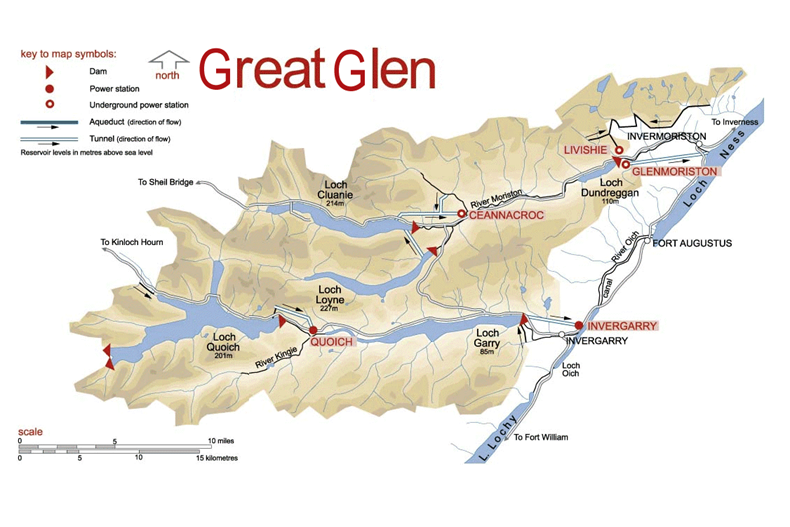
This map from the SSE Renewables web site shows the layout of the dams and power stations.
The sizes of the power stations in the scheme are as follows.
- Ceannacroc – 20 MW
- Livishie – 15 MW
- Glenmoriston- 37 MW
- Quoich – 18 MW
- Invergarry – 20 MW
- Mucomir – 1.7 MW
This gives a total power of 112.7 MW.
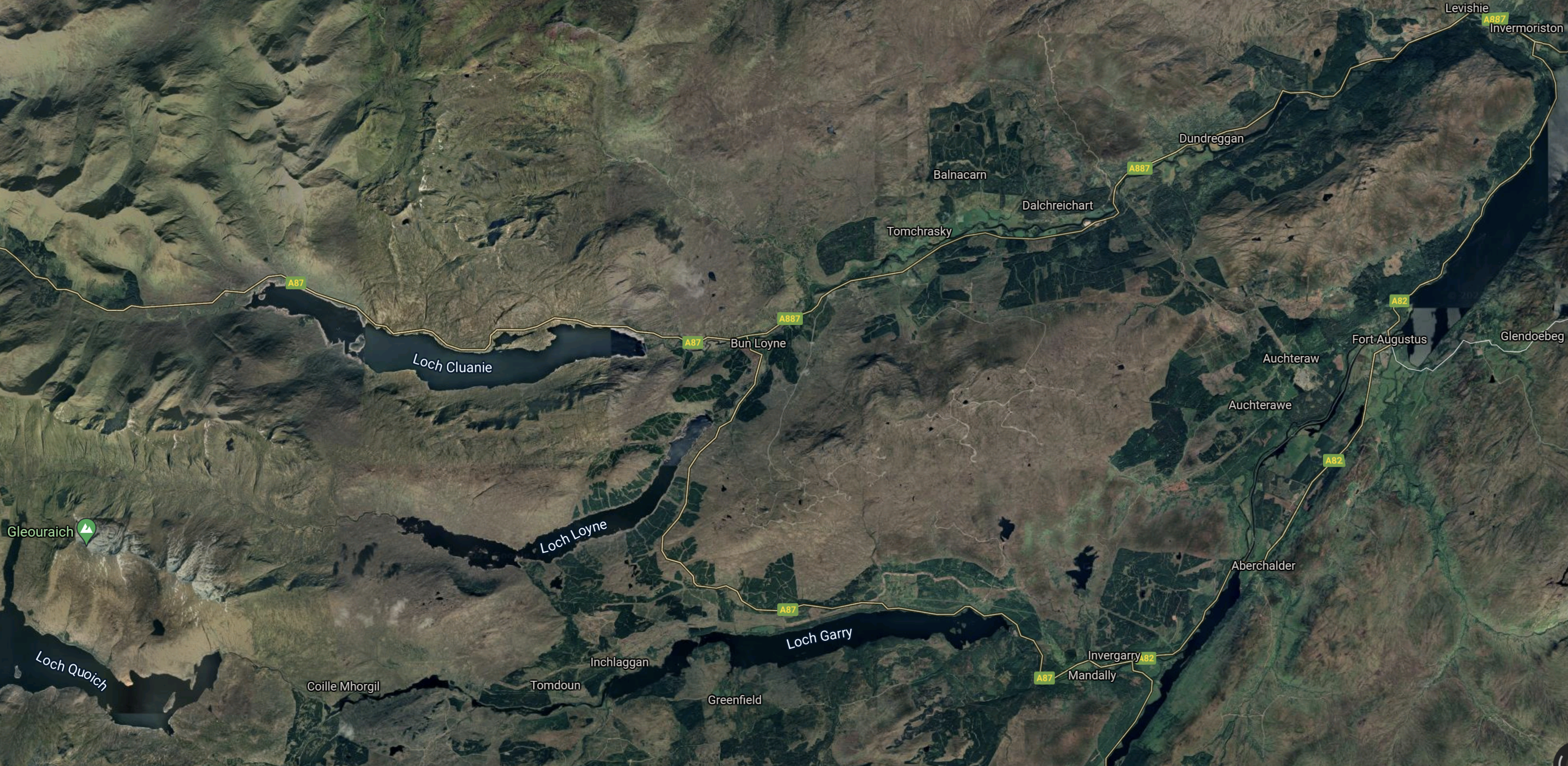
This Google Map shows the same area as the SSE Renewables Map.
Note.
- Loch Quoich is in the South-West corner.
- To the East of Loch Quoich is Loch Garry and to the North-East is Loch Loyne.
- Loch Cluanie is to the North.
- Invermoriston is in the North-East corner.
The scheme also includes three underground power stations and several miles of tunnels.
Strathclyde University And Pumped Storage Power For Scotland
This page on the Strathclyde University gives a list of the pumped storage potential for Scottish hydrogen-electric dams and power stations.
These figures are given for the dams and lochs in the Great Glen scheme.
- Invergarry – 22 GWh
- Glenmoriston- 41 GWh
- Quoich – 27 GWh
It would appear that based on research from Strathclyde University, that the Great Glen scheme could support up to 90 GWh of pumped storage.
Water Flows In The Great Glen Scheme
Looking at the SSE Renewables map of the Great Glen scheme, water flows appear to be as follows.
- Loch Quoich to Loch Garry via Quoich power station.
- Loch Garry to Loch Oich via Invergarry power station.
- Loch Loyne to Loch Dundreggan via River Moriston.
- Loch Cluanie to Loch Dundreggan via Ceannacroc power station and River Moriston.
- Loch Dundreggan to Loch Ness via Glenmoriston power station.
All the water eventually flows into the sea at Inverness.
Refurbishing And Repurposing The Great Glen Scheme
Perhaps as the power stations are now over fifty years old, one simple way to increase the generating capacity of the Great Glen scheme, might be to selectively replace the turbines, with modern turbines, that can generate electricity more efficiently.
I suspect that SSE Renewables have an ongoing program of improvements and replacements for all of their hydro-electric stations in Scotland. Some turbines at Sloy power station have already been replaced with larger ones.
Adding Pumped Storage To The Great Glen Scheme
I would assume that the water to pump uphill at night or when there is a surplus of electricity will come from Loch Oich or Loch Ness.
Some power stations like Glenmoriston and Invergarry might be updated to both generate electricity or pump water up hill, as is required.
Conclusion
There would appear to be up to three schemes, that could each add around 30 GWh of pumped storage.
One advantage is that the waters of Loch Ness can be used for the lower reservoir.
Repurposing The Affric/Beauly Hydro-Electric Scheme
The Affric/Beauly hydro-electric scheme was built in the 1950s and early 1960s, by the North of Scotland Hydroelectric Board.
- The scheme is now owned by SSE Renewables and has a page on their web site.
- There are six individual power stations; Mullardoch, Fasnakyle, Deanie, Culligran, Aigas and Kilmorack.
- There are seven dams; Mullardoch, Benevean, Monar, Loichel, Beannacharan, Aigas and Kilmorack.
This map from the SSE Renewables web site shows the layout of the dams and power stations.
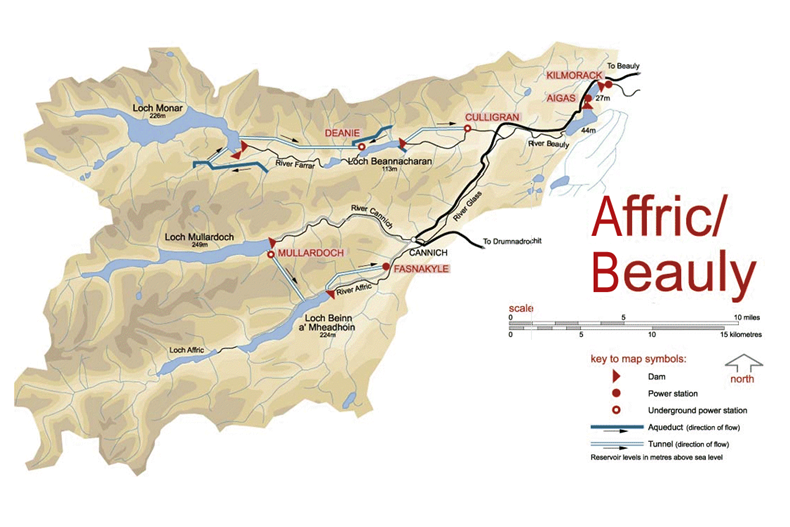
This description of the scheme is from Wikipedia.
The Affric / Beauly hydro-electric power scheme for the generation of hydro-electric power is located in the western Highlands of Scotland. It is based around Glen Strathfarrar, Glen Cannich and Glen Affric, and Strathglass further downstream.
The scheme was developed by the North of Scotland Hydro-Electric Board, with plans being approved in 1947.
The largest dam of the scheme is at Loch Mullardoch, at the head of Glen Cannich. From there, a tunnel takes water to Loch Beinn a’ Mheadhoinn (Loch Benevean) in Glen Affric, via a small underground power station near Mullardoch dam. Loch Benevean is also dammed, with a tunnel taking water to the main power station of Fasnakyle, near Cannich.
To the north in Glen Strathfarrar, Loch Monar is dammed, and a 9 km tunnel carries water to an underground power station at Deanie. Further down the glen, the River Farrar is dammed just below Loch Beannacharan, with a tunnel to take water to Culligran power station (also underground).
The River Farrar joins with the River Glass near Struy to form the River Beauly. Downstream on the River Beauly, dams and power stations have been built in gorges at Aigas and Kilmorack.
As the rivers in this scheme are important for Atlantic salmon, flow in the rivers is kept above agreed levels. The dams at Kilmorack, Aigas and Beannacharn contain Borland fish lifts to allow salmon to pass.
Note
- Culligran, Deanie and Mullardoch power stations are underground.
- Loch Beannacharan is the English name for Loch Beinn a’ Mheadhoin.
- The salmon impose a constraint on water levels.
The sizes of the power stations in the scheme are as follows.
- Mullardoch – 2.4 MW
- Fasnakyle – 69 MW
- Deanie – 38 MW
- Culligran – 19 MW
- Aigas – 20 MW
- Kilmorack – 20 MW
This gives a total power of 168.4 MW.
This Google Map shows the Western area of the SSE Renewables Map.
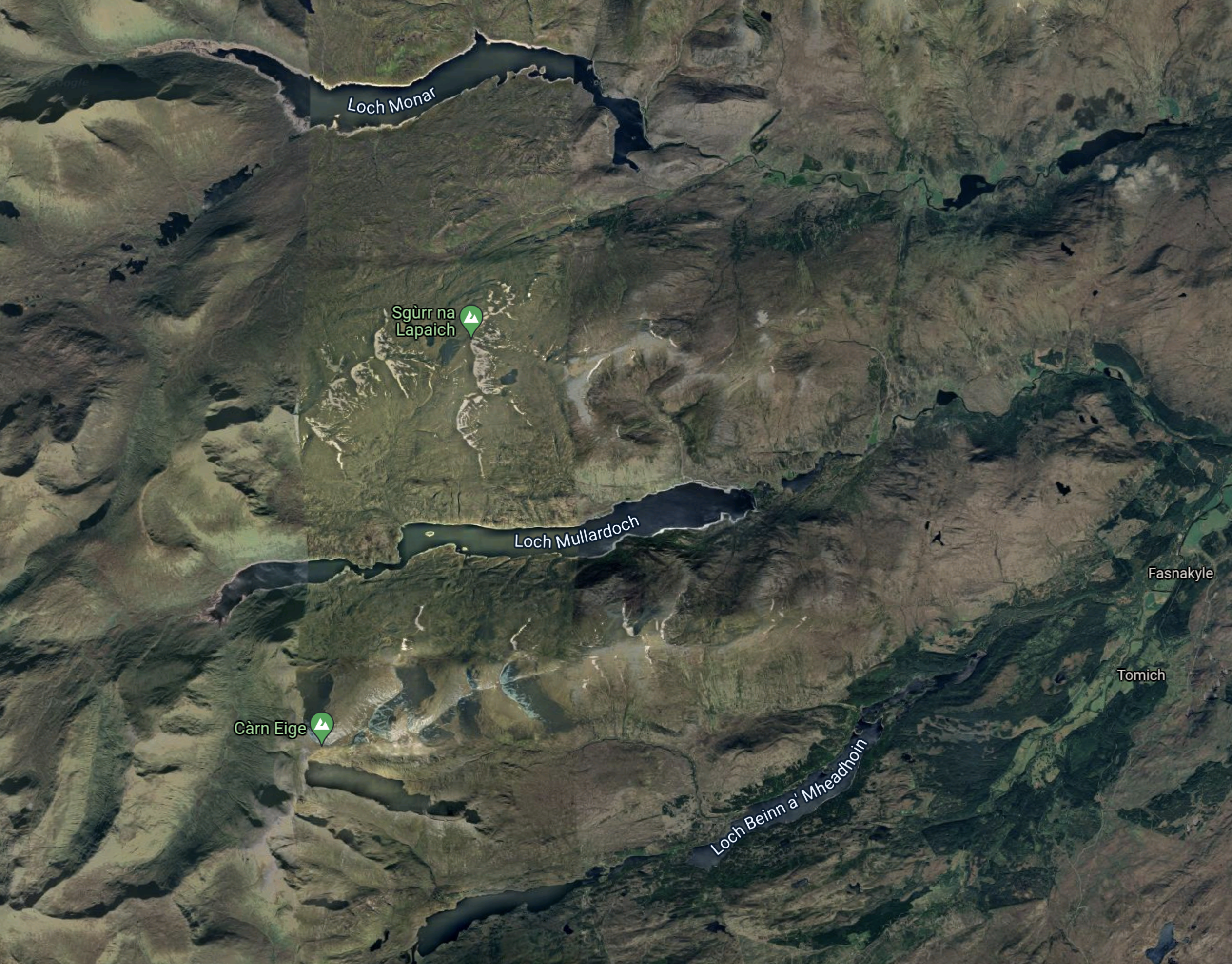
Note.
- The three lochs; Monar, Mullardoch and Beinn a’ Mheadhoin can be picked out on both maps.
- Fasnakyle, where the largest of the hydro-electric power stations in the Affric/Beauly scheme, is at the Eastern edge of the map about half-way up.
- The area doesn’t seem to have a large population.
This Google Map shows the location of Fasnakyle power station in more detail.
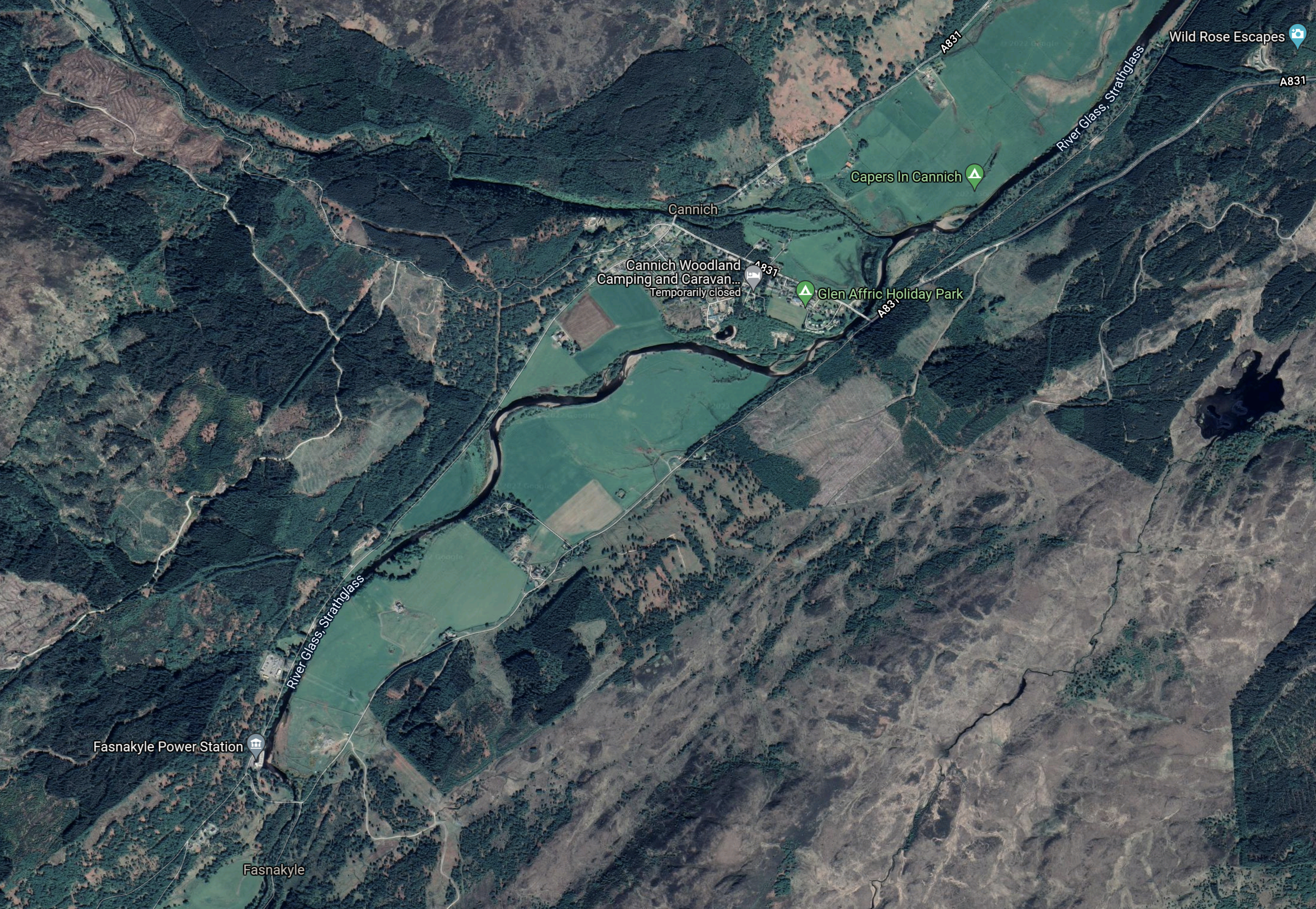
Note.
- Fasnakyle power station is in the South-West corner of the map. marked by a grey flag.
- It appears that all of the water that goes through the power station flows into the River Glass, Strathglass, which meanders its way towards Inverness on the bottom of what appears to be a broad valley.
This Google Map shows the next section of the river.
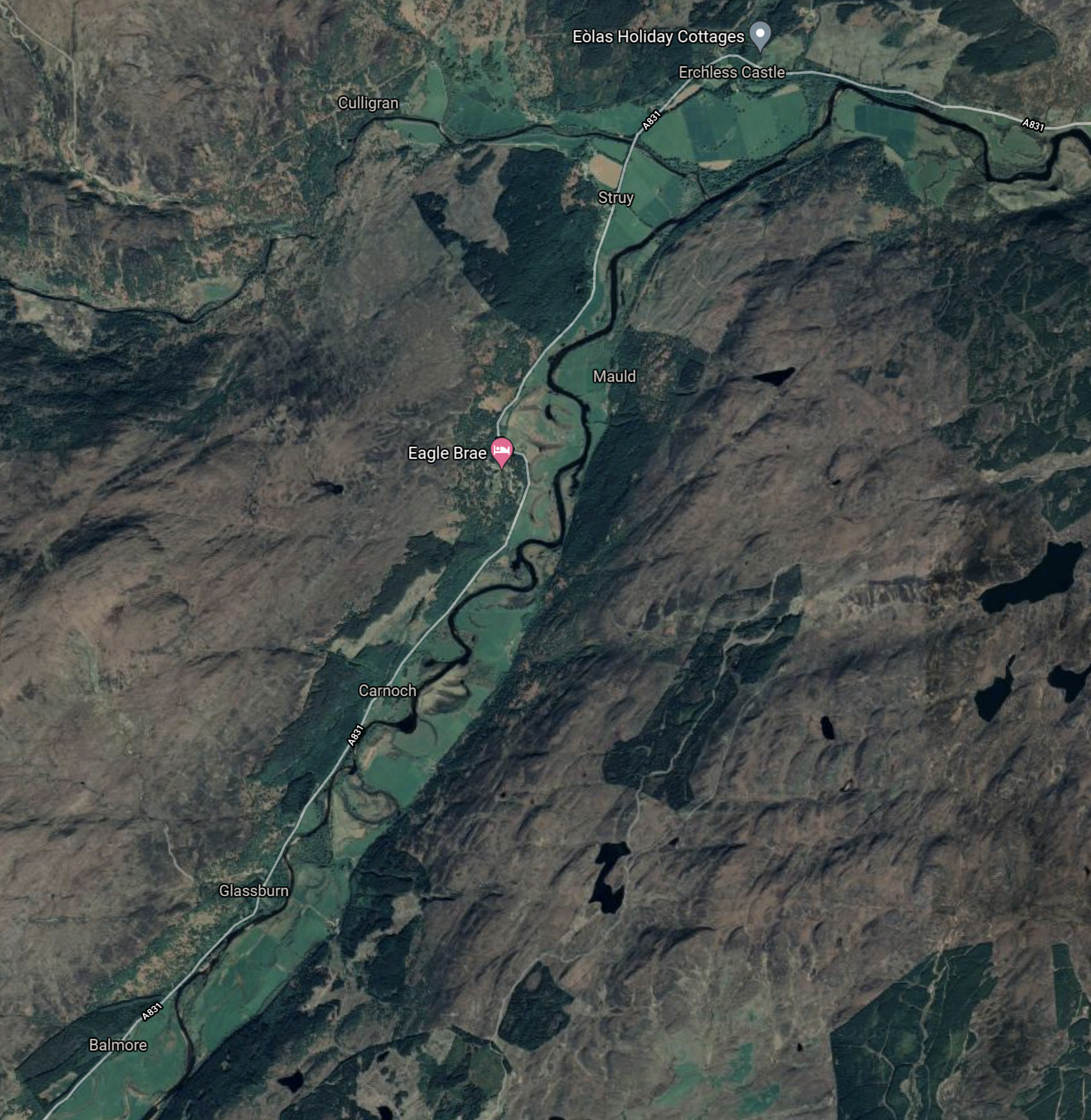
The River Glass, Strathglass joins the River Farrar near the top of the map an becomes the River Beauly.
This Google Map the River Beauly to Kilmorack.
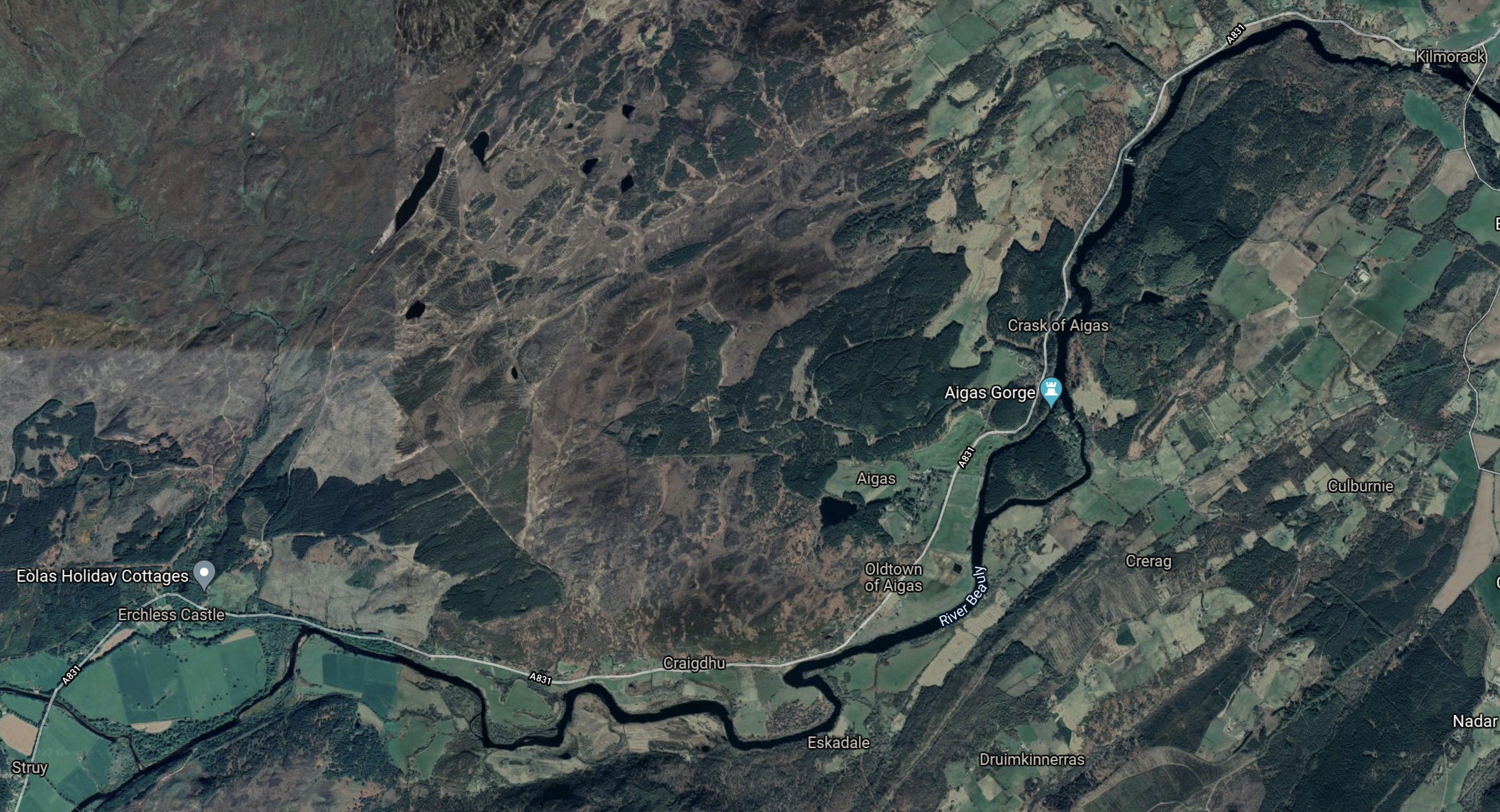
Wikipedia says this about this section of the River Beauly.
The river is part of the Affric-Beauly hydro-electric power scheme, with dams and power stations at Aigas and Kilmorack. Both have 20MW generators and include fish ladders to allow salmon to pass, the Aigas fish ladder is open to visitors in the summer.
This last Google Map shows the Beauly Firth.
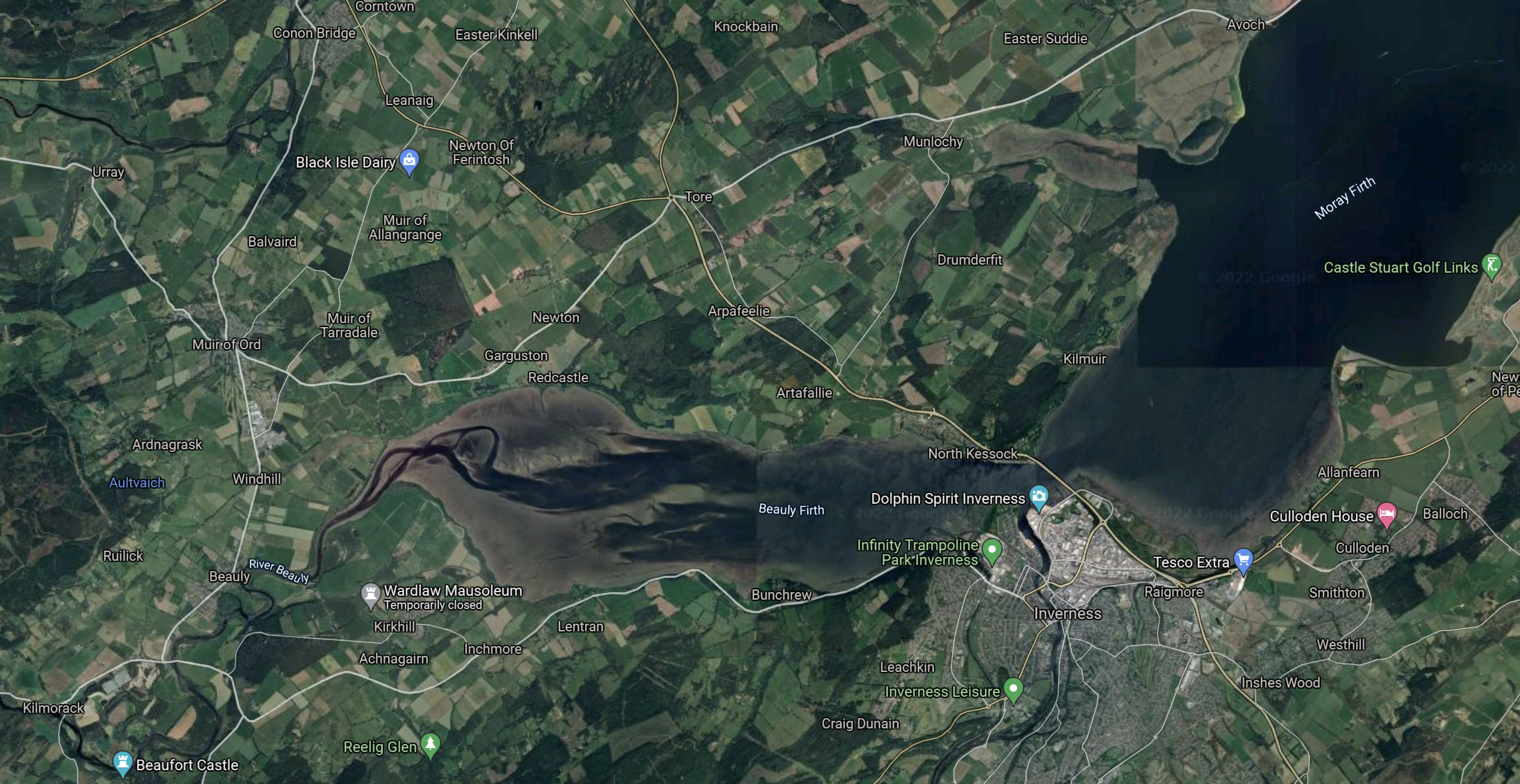
Note.
- Kilmorack is in the South-West corner of the map.
- The River Beauly flows into the Beauly Firth and ultimately out to see in the Moray Firth.
- The water flows past Inverness to the North.
It does strike me, that a lot of the water collected in the dams to the West of Fasnakyle, flows out to sea.
Strathclyde University And Pumped Storage Power For Scotland
This page on the Strathclyde University gives a list of the pumped storage potential for Scottish hydrogen-electric dams and power stations.
A figure is given for only one dam or power station in the Affric/Beauly scheme.
- Fasnakyle – 78 GWh
That would be a lot of pumped storage.
Water Flows In The Affric/Beauly Scheme
Looking at the SSE Renewables map of the Conon scheme, water flows appear to be as follows.
- Loch Monar to Loch Beannacharan via Deanie power station
- Loch Beannacharan to River Beauly via Culligran power station
- Lochs Mullardoch and Beinn a’ Mheadhoin both supply water to the Fasnakyle power station
- Fasnakyle power station to River Beauly via the River Glass, Strathglass.
- River Beauly to Beauly Firth via Aigas and Kilmorack power stations.
Note.
- Water from Loch Moray goes via Deanie , Culligran, Aigas and Kilmorack power stations on its journey to the sea.
- Water from Loch Mullardoch goes via Mullardoch , Fasnakyle, Aigas and Kilmorack power stations on its journey to the sea.
- Water from Loch Beinn a’ Mheadhoin goes via Fasnakyle, Aigas and Kilmorack power stations on its journey to the sea.
Fasnakyle, Aigas and Kilmorack power stations must work very hard.
Refurbishing And Repurposing The Affric/Beauly Scheme
Perhaps as the power stations are now over fifty years old, one simple way to increase the generating capacity of the Affric/Beauly scheme might be to selectively replace the turbines, with modern turbines, that can generate electricity more efficiently.
I suspect that SSE Renewables have an ongoing program of improvements and replacements for all of their hydro-electric stations in Scotland. Some turbines at Sloy power station have already been replaced with larger ones.
I also suspect that the whole scheme has a very sophisticated control system.
Consider.
- There is a need to control water levels to agreed minimum levels for the Atlantic salmon.
- Hydro-electric power stations have the ability to get to full power quickly, to cover sudden demands for more electricity.
- Electricity only needs to be generated if it can be used.
- Water might be held in Lochs Mullardoch and Beinn a’ Mheadhoin, as a reserve, as it goes through three or four power stations when it is released.
Over the years, SSE Renewables will have developed very sophisticated control philosophies.
Adding Pumped Storage To The Affric/Beauly Scheme
To do this a source of fresh-water must be pumped into Loch Mullardoch or Beinn a’ Mheadhoin, when there is a surplus of electricity.
It looks from Google Maps, that the river system between Fasnakyle and Aigas power stations has been effectively turned into a canal.
- I wonder, if it is deep enough to contain enough water to act as the lower level reservoir of a pumped-storage system.
- The higher level reservoir would be Loch Mullardoch.
- There would be a height difference of 200 metres.
- Calculations show around 1850 cubic metres of water would need to be pumped into Loch Mullardoch to store one MWh.
So long as enough water is left for the salmon, I suspect that if a way of pumping water from the River Glass to Loch Mullardoch, that an amount of pumped-storage can be added.
Conclusion
There would appear to be only one scheme, but if it was built it could add over 50 GWh of pumped storage.
 The Anonymous Widower