EDF Energy Targets Solar Homes With Discounted Battery Offer
The title of this post, is the same as that of this article on Solar Power Portal.
The title shows the way things are going. Although, I doubt, I would use EDF, as they are one of the companies who have ripped us off for a long time.
I have said that I will fit a battery in this house to go with the solar panels on my roof. I will also fit an electric car charging point in the garage, so that when I sell the house in a few years, the house will have more buyer appeal.
At around seven thousand pounds, the 8.2 kWh battery mentioned in the article, would be within my price range, but I suspect that price will decrease.
19MW Storage Capacity To Participate In Three UK Flexible Markets
The title of this post is the same as that of this article on Smart Energy.
in Batteries On The Boil As Fund Attracts Investors, I talked about energy storage funds, which are a way of investing in energy storage to add capabilities to electricity grids.
This article talks about how the Gore Street Energy Fund is investing in two energy storage facilities at the Port of Tilbury and Lower Road in Essex
I have also found this article on Solar Power Portal, which is entitled Gore Street Fund Makes New Battery Acquisitions With New 19MW Pair From Origami Energy.
The second article has a picture of a 4 MW/4.8 MWh Tesla battery at Cenin Renewables.
The link to Tesla gives a well-presented page of applications of these batteries.
One example given is Renewable Integration, where this is said.
Smooth and firm the output of a renewable power generation source such as wind or solar.
This will be a large application for these types of large batteries, as although we don’t have masses of sun, we do have a lot of wind.
Big financial institutions like Pension Funds and Insurance Companies need secure long term investment to place their money and these energy storage devices, would appear to offer a sensible return, that enables them to pay their investors, like anybody who has a pension. Traditionally,these financial institutions have invested in property and government bonds for example.
Lately, they have been investing in railway rolling stock, which have a life of up to forty years. These energy storage systems should offer a reasonable life, if well-maintained and updated.
As there will large numbers of energy storage systems installed in the UK in the next decades, I think they could be a big area for investment.
At an individual level, we will also see houses built or refurbished with solar panels and batteries.
We are at the start of an exciting revolution!
Batteries On The Boil As Fund Attracts Investors
The title of this post is the same as that of an article in the Business section of today’s Times.
This is the first two paragraph.
Investors have sunk £100million into a new listed company that aims to use shipping containers packed with lithium-ion batteries to buy, store and sell electricity.
Gresham House Energy Storage Fund claims that it will make a return of 15 per ceent a year by providing electricity when surges in demand coincide with periods when the wind is not blowing or the sun is not shining.
Gresham House Energy Storage Fund is the second listed energy storage fund in London, after Gore Street Energy Storage Fund , launched in May.
I think we’ll see more of these funds and use of the technology.
Suppose you were a farmer with a windy hill top farm, that had a heavy electricity bill.
Realistically, sized, priced and financed a wind-turbine and a container full of batteries, might be just what your finances wanted.
All you’d need now would be an electric Range-Rover and a fleet of electric tractors!
What Are Greater Anglia Going To Do With A Problem Like The Crouch Valley Line?
This post is effectively a series of sub-posts describing the problems of the Crouch Valley Line.
Platform 1 At Wickford Station
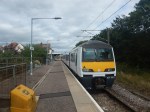
These pictures show Platform 1 at Wickford station, where services on the Crouch Valley Line terminate.
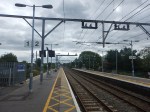

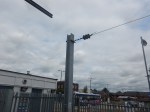
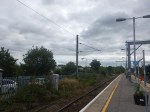
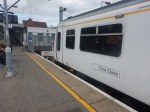
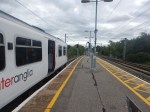
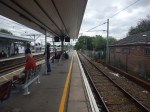

The train in the platform is a four-car Class 321 train, which is almost exactly eighty metres long.
After Greater Anglia has renewed the fleet, the shortest electric train they will have will be a five-car Class 720 train, which is over one hundred and twenty metres long.
I don’t think one of these shiny new trains will fit into the current platform.
Electrification
These pictures show the electrification at Burnham-on-Crouch station.
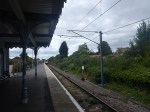
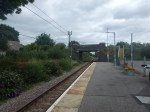
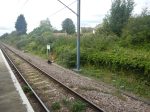
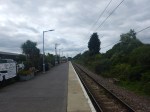
And these show Southminster station.
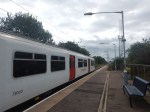
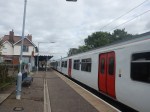
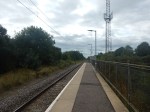
The overhead electrification on the Shenfield to Southend Line is being renewed and this section is supposedly finished. But it does look very similar to pictures I took in 2016, that are posted in Wickford Station. As the 25 KVAC overhead electrification was installed in 1979, when the line was converted from 6.25 KVAC, I do wonder about the age of some of the gantries.
On the trip, where I took these pictures staff were still complaining about the unreliability of the wires, as they have done before.
There doesn’t appear to have been any work done on the Crouch Valley Line, although the conductor did say that the route was being closed at times for work in the near future.
I do question, whether the overhead wires on the Crouch Valley Line are of a sufficient high and modern standard to be both reliable and easy and affordable to maintain.
Can the electrification handle regenerative braking?
The Timetable
The timetable East of Shenfield is as follows.
- Three trains per hour (tph) between Liverpool Street and Southend Victoria stations.
- A train every forty minutes between Wickford and Southminster stations.
- There are also some direct services between Southminster and Liverpool Street in the Peak.
Every time, I go use the line it seems, I always have a long wait at Wickford station.
Current services take thirty minutes between the two end stations with generous turnround times of about ten minutes at each end of the route.
Two trains are needed for the service, which are single-manned with a conductor checking and selling tickets appearing to float between the trains.
A New Nuclear Power Station At Bradwell
There is a possibility of building.of a new nuclear power station at Bradwell.
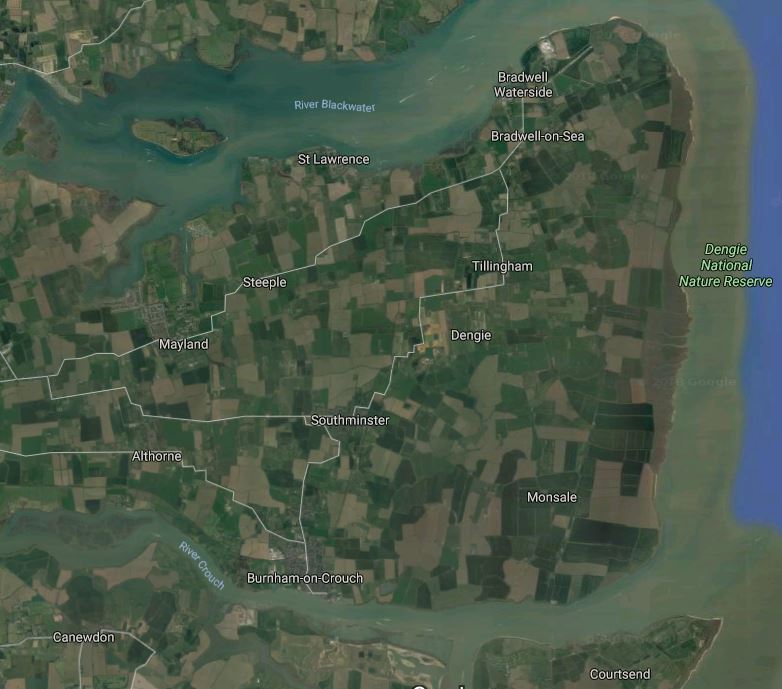
This Google Map shows the area.
Note.
- Burnham-on-Crouch is the large village on the North Bank of the River Crouch.
- Southminster is a couple of miles to the North of Burnham on Crouch.
- Bradwell is in the North-East corner of the map alongside the River Blackwater.
- You can just see the World War 2 airfield, which was the site of the original Bradwell nuclear power station.
If a new power station is built at Bradwell, I doubt that it will require rail freight access at Southminster, as did the original station.
Transport technology has moved on and heavy goods will surely be taken in and out by barge from the River Blackwater.
But a new station or more likely ; a cluster of small modular reactors will require transport for staff, contractors and visitors.
Although, on balance, with the growth of renewable energy, I don’t think that many more nuclear power stations will be built.
A Battery Storage Power Station At Bradwell
I also wouldn’t rule out the use of Bradwell for a battery storage power station for the electricity generated by wind farms like Gunfleet in the Northern section of the Thames Estuary.
The number and size of these wind farms will certainly increase in the coming years.
Battery storage power stations are ideal partners for wind farms, as they help turn the intermittent wind power into a constant flow of electricity.
Currently, the largest battery storage power station is a 300 MWh facility that was built in 2016, at Buzen in Japan.
Energy storage technology is moving on fast and I would not be surprised to see 2000 MWh units by the mid-2020s.
Bradwell could be an ideal place to put a battery storage power station.
Passenger Numbers
Passenger numbers on the line over the last few years seem to have been fairly level although there appears to have been a drop in the last year or so. But this drop has happened in lots of places!
Various factors will effect the passenger numbers on the Crouch Valley Line in the future.
- New housing along the route.
- A large energy-based development at Bradwell will atract passengers.
- New trains will attract passengers.
- Will the Internet and new working practices affect passenger numbers?
- A two tph clock-face service will attract passengers.
- Faster and more frequent services between Liverpool Street and Wickford will make the line easier to access.
There is also the possibility of more visitors and tourists to the area. The RSPB have spent a lot of money developing Wallasea Wetlands, which is opposite Burnham-on-Crouch.
In future years, how many people will reach Wallasea, by ferry from Burnham-on-Crouch?
Adding up all these factors, I come to two conclusions.
Predicting the number of passengers will be difficult..
There will always be passengers who need this rail service.
It looks to me that Greater Anglia will have to plan for all eventualities from very low numbers of passengers to a substantial increase.
New Trains
Shenfield-Southend services and those on the Crouch Valley Line will be run using new Class 720 trains.
Bettween Liverpool Street And Southend Victoria
Currently, this service on the route is as follows.
Trains have a frequency of three tph.
- Each train takes an hour for the journey.
- All trains stop at the seven stations between Shenfield and Southend Victotria, Shenfield and Stratford.
- One train in three has an extra stop at Romford.
The new trains have a faster acceleration of 1 metre per second², as opposed to the current trains which can only manage 0.55 metre per second².
This property and their modern design, probably means that the new trains, can do a complete round trip between Liverpool Street and Southend Victoria stations in under two hours.
- The journey time between the two stations will be around fifty minutes.
- A three tph frequency will need a fleet of six trains.
- A four tph frequency will need a fleet of eight trains.
This service will be faster than the fastest services between Fenchurch Street and Southend Central stations.
I can certainly see a time, when the frequency between Liverpool Street and Southend Victoria stations is increased to four tph.
Passenger numbers are rising strongly at Southend Victoria station.
Southend Airport have big expansion plans and would welcome a better rail service, to and from their very convenient station.
At present times to their London termini from various airports are as follows.
- Gatwick Airport – 31 minutes (Express)
- Luton Airport – 28 minutes
- Southend Airport – 53 minutes
- Stansted Airport – 46 minutes
I think that Southend Airport times with the new trains could be about 43 minutes or less, which because of the closeness of the station to the terminal building could allow Southend Airport to claim faster times to Liverpool Street than Stansted Airport.
If the service does go to four tph, there will be a massive increase in capacity.
There will be 1145 seats in the new trains, as opposed to 927 in the current Class 321 trains.
With four tph. this would mean an increase in capacity of 40%.
I don’t think anybody in Southend will be complaining.
Between Wickford And Southminster
As I said earlier, the new longer Class 720 trains will have difficulty running the current service, as they don’t fit into Platform 1 at Wickford station.
Working the same timetable the new trains with their 544 seats will offer a 76% increase in train capacity.
Trains take thirty minutes with five intermediate stations.
Given the better acceleration and modern nature of the new trains, I wonder, if they will be able to do a round trip in an hour.
If they can do this, then it would be possible to run a two tph service on the route.
But it will be a tough ask!
That still leaves the problem of turning back the trains at Wickford.
Currently, trains between Liverpool Street and Southend Victoria going in opposite directions, pass at Wickford station.
If this could be arranged with four tph, then there would be up to fifteen minute windows, where no train was passing through Wickford station.
Suppose the Liverpool Street and Southend services passes through at XX:00, XX:15. XX:30 and XX:45.
Would it be possible for the Southminster trains to leave Wickford at XX:10 and XX:40 and arrive back at XX:05 and XX:35, thus giving five minutes for the driver to get to the other end.
As I said, it would be a tough ask!
But I suspect there is a plan to get two tph between Wickford and Southminster.
- The track could be improved.
- Some level crossings could be closed.
- Operating speed could be faster.
- Better step-free access could probably be arranged at the intermediate stations.
- A step-free bridge could be built at Wickford.
If two tph can be achieved, then this would increase capacity on the route by 134 %.
The Passing Loop At North Fambridge Station
This Google Map shows the station and passing loop at North Fambridge station.

Measuring from the map, I estimate the following.
- The length of the platforms are 160 metres.
- The length of the passing loop is in around 400 metres.
I also suspect that to save money was the line was singled in the 1960s, British Rail made the passing loop as short as possible to cut costs.
The current loop can handle eight-car Class 321 trains, so it can certainly handle a five-car Class 720 trains.
I do wonder if the passing loop were to be lengthened, this would ease operation on the line.
There might even be a length, that enable a two tph service with the current four-car Class 321 trains.
Thoughts On Speed Limits
The speed limit on the line is 60 mph between Battlesbridge and North Fambridge stations and 50 mph at both ends of the line.
Summarising sections of the line, their length and speed limits give.
- Wickford and Battlesbridge – 2 miles 38 chains = 4356 yards = 3983 metres – 50 mph
- Battlesbridge and North Fambridge – – 5 miles 67 chains = 10274 yards = 9395 metres – 60 mph
- North Fambridge and Southminster – 8 miles 15 chains = 14410 yards = 13177 metres – 50 mph
This gives totals of 17160 metres with a 50 mph limit and 9395 metres with a 60 mph limit.
- At 50 mph, the train would cover the 17160 metres in 12.8 minutes
- At 60 mph, the train would cover the 17160 metres in 10.7 minutes
- At 75 mph, the train would cover the 17160 metres in 8.5 minutes
Increasing the speed limit to 60 mph would save two minutes.
Network Rail must have all the figures and costs, but this could be a cost-effective way to save a couple of minutes.
But it does seem if the operating speed of the line were to be increased, time saving could be achieved, that would make a two tph timetable a reality.,
Could Electrification Be Removed From The Crouch Valley Line?
If the track is going to be improved with respect to line speed, level crossings and passing loops, then there will have to be changes to the layout of the overhead electrification.
Most of the serious changes that could be carried out, would be to the East of North Fambridge station.
Would it be sensible if the Class 720 trains have a battery capability, to remove the electrification to the East of North Fambridge station?
- 13.2 km. of single-track would have the electrification removed.
- Some of this electrification will need replacing soon.
- Trains could swap between power sources in North Fambridge station.
- The batteries would be charged between Wickford and North Fambridge stations.
- Only 16 miles in each round trip would be on batteries.
Removing some electrification would cut the cost of any works.
Conclusion
I’m sure Greater Anglia have a solution and it’s probably better than my rambling.
Better Phone Battery Invented By Accident
The title of this post, is the same as that as an article in today’s copy of The Times.
Discussing phone batteries this is said.
Now researchers think they may have found a remedy – a new form of carbon that could double lithium battery capacity, increase the number of charging cycles and significantly reduce the risk of explosion.
Reading the article, it could be that the researchers at Lancaster University may have found the Holy Grail of battery technology.
The Times even gives OSPC-1, as they’ve called the carbon., a leading article.
There’s more on OSPC-1 in this news item on the Lancaster University web site, which is entitled New Carbon Could Signal Step-Change For The World’s Most Popular Batteries.
Huisman Weighs Into Storage
The title of this post is the same as thia article in RENews.
This is the first two paragraphs.
Edinburgh start-up Gravitricity is teaming up with Dutch lifting specialist Huisman to develop gravity-fed energy storage projects at the sites of disused mines in Scotland.
The partners plan to develop a 250kW demonstration project and test it early next year, and ultimately aim to scale up to 20MW commercial systems.
I think that this idea has a chance to be a success.
As an aside, one of my first experiences of industry was working at Enfield Rolling Mills. On one of their rolling mills, there was a ninety-three tonnes two-metre ring flywheel, which was attached to the mill. The flywheel was spun to 3000 rpm, before the copper wirebar was passed through the mill. You could see the flywheel slow, as it passed it’s energy to the mill, as it turned the wirebar into a thinner strand of copper, so that it could be drawn into electrical cable.
I think, that flywheel had an energy storage of over a MwH. Shimatovitch, the Chief Engineer reckoned that if had come of its mountings at full speed, it would have gone a mile before the houses stopped it.
Gravitricity Sets Sights On South Africa To Test Green Energy Tech
The title of this post, is the same as that of this article on ESI Africa, which describes itself as Africa’s Power Journal.
This is the first two paragraphs.
Disused mine shafts in South Africa have been identified as an ideal location to test UK-based energy start-up Gravitricity’s green energy technology.
The company announced plans to transform disused mine shafts into hi-tech green energy generation facilities through a system that uses gravity and massive weights.
This is surely a classic fit, as Africa has plenty of sun and some of the mine shafts in South Africa, like the TauTona mine are getting towards two miles deep.
A weight of 1,000 tonnes in a two mile deep shaft would store nearly nine MWh. By comparison, Dinorwig Power Station or Electric Mountain, has a capacity of 500 MWh.
But Electric Mountain was built in the 1970s, cost £425 million and took ten years to construct.
Funding Gives Weight To Idea For Storing Electricity
The title of this post, is the same as that of an article on Page 45 of today’s copy of The Times.
It talks of a company called Gravitricity, which has used the same principle as every weight-operated clock to store energy and especially energy generaed from intermittent sources like wind and solar power.
The company has just secured a £650,000 grant from Innovate UK.
In Solar Power Could Make Up “Significant Share” Of Railway’s Energy Demand, I looked at how solar farms and batteries could be used to power third-rail railway electrification.
Because of energy losses, third-rail electrification needs to be fed with power every three miles or so. This gives a problem, as connection of all these feeder points to the National Grid can be an expensive business.
A series of solar farms, wind turbines and batteries, controlled by an intelligent control system, is an alternative way of providing the power.
In an article in the October 2017 Edition of Modern Railways, which is entitled Celling England By The Pound, Ian Walmsley says this in relation to trains running on the Uckfield Branch.
A modern EMU needs between 3 and 5 kWh per vehicle mile for this sort of service.
If I assume that trains are five cars and will be efficient enough to need only 3 kWh per vehicle mile, then to power a train along a ten mile section of track will take 150 kWh.
As the control system, only powers the track, when a train needs it, the whole system can be very efficient.
So why will Gravitricity battery ideas be ideal in this application?
Appropriate Size
By choosing the right weight and depth for the Gravitricity battery , appropriate energy storage can be provided at different points on a line.
Some parts of a journey, like accelerating away from stations will need more electricity than others, where trains are cruising along level ground.
Supposing my five-car example train is travelling at 60 mph, then to cover ten miles will take 10 minutes, with 15 kW being supplied in every minute.
If the train weighs 200 tonnes, then accelerating the train to 60 mph will need about 20 kWh.
I’m sure that a Gravitricity battery could handle this.
I would suspect that batteries of the order of 100 kWh would store enough power for the average third-rail electrified line.
A proper dynamic simulation would need to be done. I could have done this calculation in the 1960s, but I don’t have the software now!
Response Time
For safety and energy-efficiency reasons, you don’t want lines to be switched on, when there is no train present.
I suspect that if there is energy in the battery, response would be fast enough.
Energy Efficiency
The system should have a high efficiency.
How Big Would A 100 kWh Gravitricity Battery Be?
A quick calculation shows the weight would be 400 tonnes and the depth would be 100 metres.
Installing the batteries
Each battery will need a 100 metre deep hole of an appropriate diameter.
This sequence of operations would be performed.
- A rail-mounted drilling rig would drill the hole.
- The heavy weight of the battery would arrive by train and would be lifted into position using a rail-mounted crane.
As the equipment will generally be heavy, doing all operations from the railway will be a great help.
Calculating Kinetic And Potential Energies
I used to be able to do this and convert the units, manually and easily, but now I use web calculators.
Kinetic Energy Calculation
I use this kinetic energy calculator from omni.
Suppose you have a nine-car Crossrail Class 345 train.
- It will weigh 328.40 tonnes, according to my detective work in Weight And Dimensions Of A Class 345 Train.
- There will be 1,500 passengers at 90 Kg. each or 135 tonnes.
- So there is a total weight of 463.4 yonnes.
- The train has a maximum speed of 90 mph.
Put this in the calculator and a full train going at maximum speed has a kinetic energy of 104.184 kWh.
The lithium-ion battery in a typical hybrid bus, like a New Routemaster has a capacity of 75 kWh.
So if a full Class 345 train, were to brake from maximum speed using regenerative braking, the energy generated by the traction motors could be stored in just two bus-sized batteries.
This stored energy can then be used to restart the train or power it iin an emergency.
Out of curiosity, these figures apply to an Inter City 125.
- Locomotive weight – 2 x 70.25 tonnes
- Carriage weight – 8 x 34 tonnes.
- Train weight – 412.5 tonnes
- Passengers – appromiximately 700 = 63 tonnes
- Speed – 125 mph
This gives a kinetic energy of 206.22 kWh
And then there’s Eurostar’s original Class 373 trains.
- Weight- 752 tonnes
- Speed 300 kph
This gives a kinetic energy of 725 kWh.
If a 75 kWh battery were to be put in each of the twenty cars, this would be more than adequate to handle all the regenerative braking energy for the train.
There would probably be enough stored energy in the batteries for a train to extricate itself from the Channel Tunnel in the case of a complete power failure.
Potential Energy Calculation
I use this potential energy calcultor from omni.
Suppose you have the typical cartoon scene, where a ten tonne weight is dropped on a poor mouse from perhaps five metres.
The energy of the weight is just 0.136 kWh.
I’ve used kWhs for the answers as these are easily visualised. One kWh is the energy used by a one-bar electric fire in an hour.
Rail Engineer On Hydrogen Trains
This article on Rail Engineer is entitled Hydrail Comes Of Age.
It is a serious look at hydrogen-powered trains.
This is typical information-packed paragraph.
Instead of diesel engines, the iLint has underframe-mounted traction motors driven by a traction inverter. Also mounted on the underframe is a lithium-ion battery pack supplied by Akasol and an auxiliary converter to power the train’s systems. On the roof is a Hydrogenics HD200-AT power pack which packages six HyPMTM HD30 fuel cells, with common manifolds and controls, and X-STORE hydrogen tanks supplied by Hexagon xperion which store 89kg of hydrogen on each car at 350 bar. These lightweight tanks have a polymer inner liner, covered with carbon fibres soaked in resin and wrapped in fibreglass.
They have interesting things to say about the trains and the production and delivery of the hydrogen, which can be what they call green hydrogen produced by electricity generated by wind power.
This is said about supplying the hydrogen.
It takes 15 minutes to refuel the iLint, which holds 178kg of hydrogen supplied at a pressure 350 bar. It consumes this at the rate of 0.3kg per kilometre. Thus, Lower Saxony’s fleet of 14 trains, covering, say, 600 kilometres a day, will require 2.5 tonnes of hydrogen per day. If this was produced by electrolysis, a wind farm of 10MW generating capacity would be required to power the required electrolysis plant with suitable back up. This, and sufficient hydrogen storage, will be required to ensure resilience of supply.
These are the concluding paragraphs.
With all these benefits, a long-term future in which all DMUs have been replaced by HMUs is a realistic goal. However, the replacement, or retrofitting, of 3,000 DMUs and the provision of the required hydrogen infrastructure would be a costly investment taking many years.
Germany has already taken its first steps towards this goal.
For myself, I am not sceptical about the technology that creates electricity from pure hydrogen, but I think there are design issues with hydrogen-powered trains in the UK.
The German trains, which are built by Alsthom and should start test runs in 2018, take advantage of the space above the train in the loading gauge to place the tanks for the hydrogen.
Our smaller loading gauge would probably preclude this and the tanks might need to take up some of the passenger space.
But in my view, we have another much more serious problem.
Over the last twenty years, a large number of high quality trains like electric Desiros, Electrostars and Junipers, and diesel Turbostars have been delivered and are still running on the UK network.
It could be that these trains couldn’t be converted to hydrogen, without perhaps devoting a carriage to the hydrogen tank, the electricity generator and the battery needed to support the hydrogen power.
It is for this reason, that I believe that if we use hydrogen power, it should be used with traditional electrification and virtually unmodified trains.
A Typical Modern Electric Train
Well! Perhaps not yet, but my view of what a typical electric multiple unit, will look like in ten years is as follows.
- Ability to work with 25 KVAC overhead or 750 VDC third-rail electrification or onboard battery power.
- Ability to switch power source automatically.
- Batteries would handle regenerative braking.
- Energy-efficient train design.
- Good aerodynamics.
- Most axles would be powered for fast acceleration and smooth braking.
- Efficient interior design to maximise passenger numbers that can be carried in comfort.
- A sophisticated computer with route and weather profiles, passenger numbers would optimise the train.
The battery would be sized, such that it gave a range, that was appropriate to the route.
In an article in the October 2017 Edition of Modern Railways, which is entitled Celling England By The Pound, Ian Walmsley says this in relation to trains running on the Uckfield Branch.
A modern EMU needs between 3 and 5 kWh per vehicle mile for this sort of service.
As I’m talking about a train that has taken energy efficiency to the ultimate, I think it would be reasonable to assume that 3 kWh per vehicle mile is attainable.
As I believe that most axles would be powered, I feel that it would be electrically efficient for a battery to be fitted into each car.
Suppose we had a five-car train with a 30 kWh battery in each car.
This would give a total installed battery capacity of 150 kWh. Divide by five and three and this gives a useful emergency range of ten miles.
These facts put the battery size into perspective.
- , 30 kWh is the size of the larger battery available for a Nissan Leaf.
- A New Routemaster bus has a battery of 75 kWh.
Where will improved battery technology take us in the next decade?
Use Of Hydrogen Power With 750 VDC Third-Rail Electrification
This extract from the Wikipedia entry for third-rail, explains the working of third-rail electrification.
The trains have metal contact blocks called shoes (or contact shoes or pickup shoes) which make contact with the conductor rail. The traction current is returned to the generating station through the running rails. The conductor rail is usually made of high conductivity steel, and the running rails are electrically connected using wire bonds or other devices, to minimize resistance in the electric circuit. Contact shoes can be positioned below, above, or beside the third rail, depending on the type of third rail used; these third rails are referred to as bottom-contact, top-contact, or side-contact, respectively.
If a line is powered by third-rail electrification, it needs to be fed with power every two miles or so, due to the losses incurred in electricity passing along the steel conductor rail.
I suspect that Network Rail and our world-leading rail manufacturers have done as much as they can to reduce electrical losses.
Or have they? Wikipedia says this.
One method for reducing current losses (and thus increase the spacing of feeder/sub stations, a major cost in third rail electrification) is to use a composite conductor rail of a hybrid aluminium/steel design. The aluminium is a better conductor of electricity, and a running face of stainless steel gives better wear.
Suppose instead of having continuous third-rail electrification, lengths of electrification with the following characteristic were to be installed.
- Hybrid aluminium/steel rails.
- Power is supplied at the middle.
- Power is only supplied when a train is in contact with the rail.
All trains would need to have batteries to run between electrified sections.
The length and frequency of the electrified sections would vary.
- If a section was centred on a station, then the length must be such, that a train accelerating away can use third-rail power to get to operating speed.
- Sections could be installed on uphill parts of the line.
- On long level sections of line without junctions, the electrified sections could be more widely spaced.
- Battery power could be used to take trains through complicated junctions and crossovers, to cut costs and the difficulties of electrification.
- Electrified section woulds generally be placed , where power was easy to provide.
So where does hydrogen-power come in?
Obtaining the power for the track will not always be easy, so some form of distributed power will be needed.
- A small solar farm could be used.
- A couple of wind turbines might be appropriate.
- In some places, small-scale hydro-electric power could even be used.
Hydrogen power and especially green hydrogen power could be a viable alternative.
- It would comprise a hydrogen tank, an electricity generator and a battery to store energy.
- The tank could be buried for safety reasons.
- The installation would be placed at trackside to allow easy replenishment by tanker-train.
- It could also be used in conjunction with intermittent solar and wind power.
The tanker-train would have these characteristics.
- It could be a converted electrical multiple unit like a four-car Class 319 train.
- Both 750 VDC and 25 KVAC operating capability would be retained.
- One car would have a large hydrogen tank.
- A hydrogen-powered electricity generator would be fitted to allow running on non-electrified lines and give a go-anywhere capability.
- A battery would probably be needed, to handle discontinuous electrification efficiently.
- It might even have facilities for a workshop, so checks could be performed on the trackside power system
Modern digital signalling, which is being installed across the UK, may will certainly have a part to play in the operation of the trackside power systems.
The position of all trains will be accurately known, so the trackside power system would switch itself on, as the train approached, if it was a train that could use the power.
Use Of Hydrogen Power With 25 KVAC Overhead |Electrification
The big difference between installation of 25 KVAC overhead electrification and 750 VDC third-rail electrification, is that the the overhead installation is more complicated.
- Installing the piling for the gantries seems to have a tremendous propensity to go wrong.
- Documentation of what lies around tracks installed in the Victorian Age can be scant.
- The Victorians used to like digging tunnels.
- Bridges and other structures need to be raised to give clearance for the overhead wires.
- There are also those, who don’t like the visual impact of overhead electrification.
On the plus side though, getting power to 25 KVAC overhead electrification often needs just a connection at one or both ends.
The electrification in the Crossrail tunnel for instance, is only fed with electricity from the ends.
So how could hydrogen help with overhead electrification?
Electrifying some routes like those through the Pennines are challenging to say the least.
- Long tunnels are common.
- There are stations like Hebden Bridge in remote locations, that are Listed Victorian gems.
- There are also those, who object to the wires and gantries.
- Some areas have severe weather in the winter that is capable of bringing down the wires.
In some ways, the Government’s decision not to electrify, but use bi-mode trains is not only a cost-saving one, but a prudent one too.
Bi-mode trains across the Pennines would have the advantage, that they could use short lengths of electrification to avoid the use of environmentally-unfriendly diesel.
I have read and lost an article, where Greater Anglia have said, that they would take advantage of short lengths of electrification with their new Class 755 trains.
Electrifying Tunnels
If there is one place, where Network Rail have not had any electrification problems, it is in tunnels, where Crossrail and the Severn Tunnel have been electrified without any major problems being reported.
Tunnels could be developed as islands of electrification, that allow the next generation of trains to run on electricity and charge their batteries.
But they would need to have a reliable power source.
As with third-rail electrification, wind and solar power, backed by hydrogen could be a reliable source of power.
Electrifying Stations With Third Rail
It should be noted, that the current generation of new trains like Aventra, Desiro Cities and Hitachi’s A-trains can all work on both 25 KVAC overhead or 750 VDC third-rail systems, when the appropriate methods of current collection are fitted.
Network Rail have shown recently over Christmas, where they installed several short lengths of new third-rail electrification South of London, that installing third-rail electrification, is not a challenging process, provided you can find the power.
If the power supply to the third-rail is intelligent and is only switched on, when a train is on top, the railway will be no more a safety risk, than a route run by diesel.
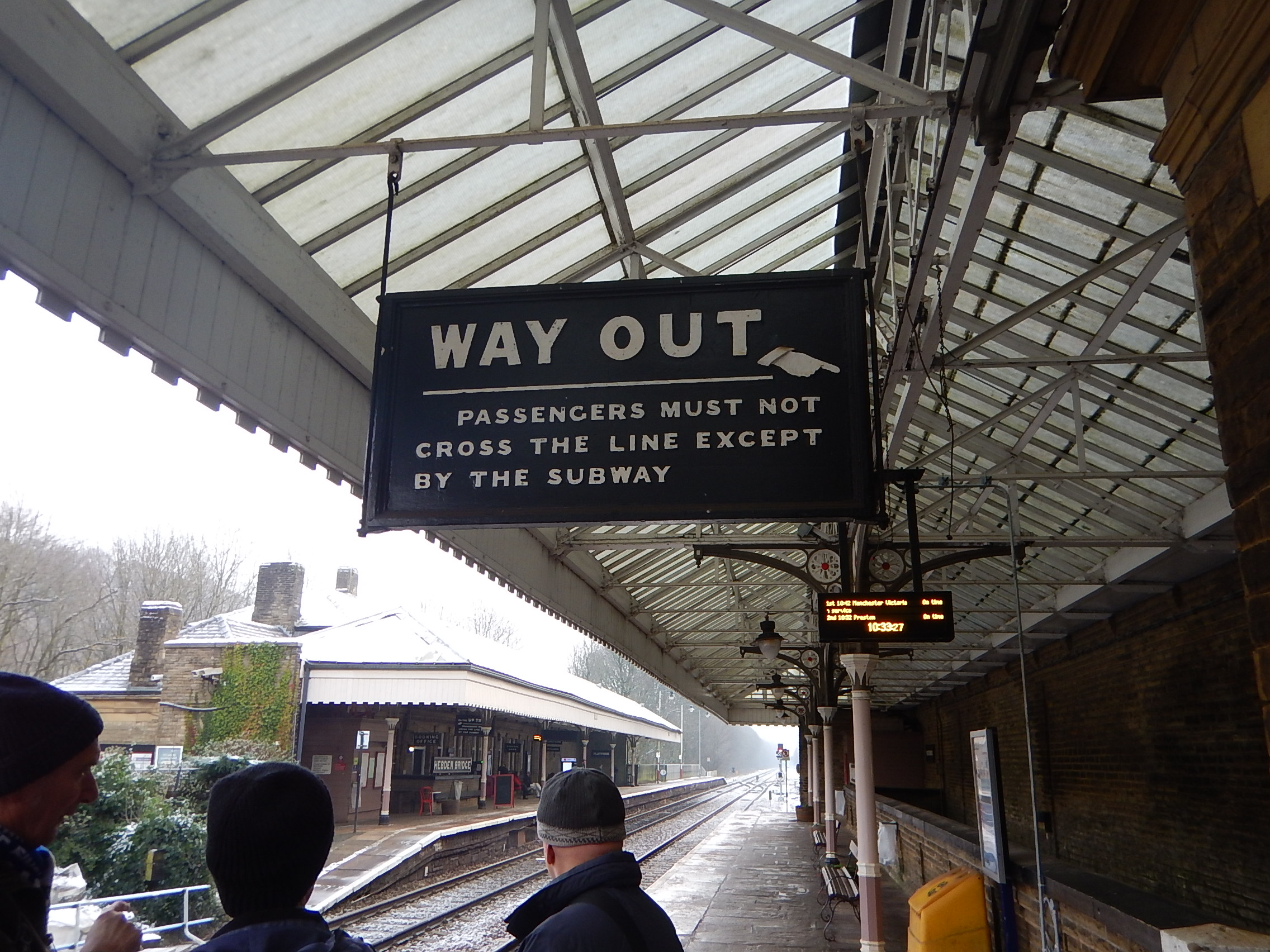
The picture shows the Grade II Listed Hebden Bridge station.
Third-rail electrification with an independent reliable power supply could be a way of speeding hybrid trains on their way.
Power Supply In Remote Places
Communications are essential to the modern railway.
Trains and train operators need to be able to have good radio connections to signalling and control systems.
Passengers want to access wi-fi and 4G mobile phone networks.
More base stations for communication networks will be needed in remote locations.
Wind, solar and hydrogen will all play their part.
I believe in the future, that remote routes in places like Wales, Scotland and parts of England, will see increasing numbers of trains and consequently passengers., many of whom will be walking in the countryside.
Could this lead to upgrading of remote stations and the need for reliable independent power supplies?
Conclusion
I am very much coming to the conclusion, that because of the small UK loading gauge, hydrogen-powered trains would only have limited applications in the UK. Unless the train manufacturers come up with a really special design.
But using hydrogen as an environmentally-friendly power source for UK railways to power electrification, perhaps in combination with wind and solar is a definite possibility!
.
 The Anonymous Widower