Energy / Sullom Voe Terminal To Be Connected To The Grid By The End Of Next Year
The title of this post, is the same as that of this article on Shetland News.
This is the sub-heading.
POWER supply to the Sullom Voe Terminal is set to be provided by two 43-kilometre underground power lines from the Gremista substation by the end of next year.
These four paragraphs outline some of EnQuest’s plans.
The on-site gas-fired power station, operated by Equans, is due to be switched off in the fourth quarter of 2025 as it no longer meets stringent carbon emission standards.
EnQuest, the operator of the terminal, gave an update on its plans for the 1,000-acre site during a Shetland suppliers forum held at Mareel on Wednesday morning.
The company was keen to present itself as one that is seeking collaborative working with the local businesses and the community as Sullom Voe transitions from an oil terminal to a green energy hub.
The company is in the middle of a “right-sizing” project that involves some significant decommissioning of equipment no longer needed to make space for long-term aspiration such as carbon capture and storage, green hydrogen production and offshore electrification.
Note.
- Two underground cables will be coming from Gremista to Sullom Voe.
- Up to seven wind turbines could fit on the site to produce power needed for green hydrogen production.
- Shetland is set to be connected to the UK national grid later this year thanks to a new 600MW HVDC subsea transmission link which will run to Caithness.
- The Sullom Voe power station, once switched off, could be “repurposed” to continue producing energy using clean fuels.
- EnQuest are certainly doing a comprehensive job on the transition.
- It looks to be a well-thought out plan to convert existing oil and gas infrastructure to a modern green asset.
This Google map shows Gremista to Sullom Voe.

Note.
- Sullum Voe is at the top of the map.
- Gremista is marked by the red arrow.
- It looks like the cable could take mainly a straight North-South route.
This second Google map shows Sullum Voe

Note.
- The Sullum Voe terminal is at the top of the map.
- Sullum Voe is a 1,000-acre site.
- In the South-West corner is the closed Scatsta airport.
This third Google map shows Lerwick.
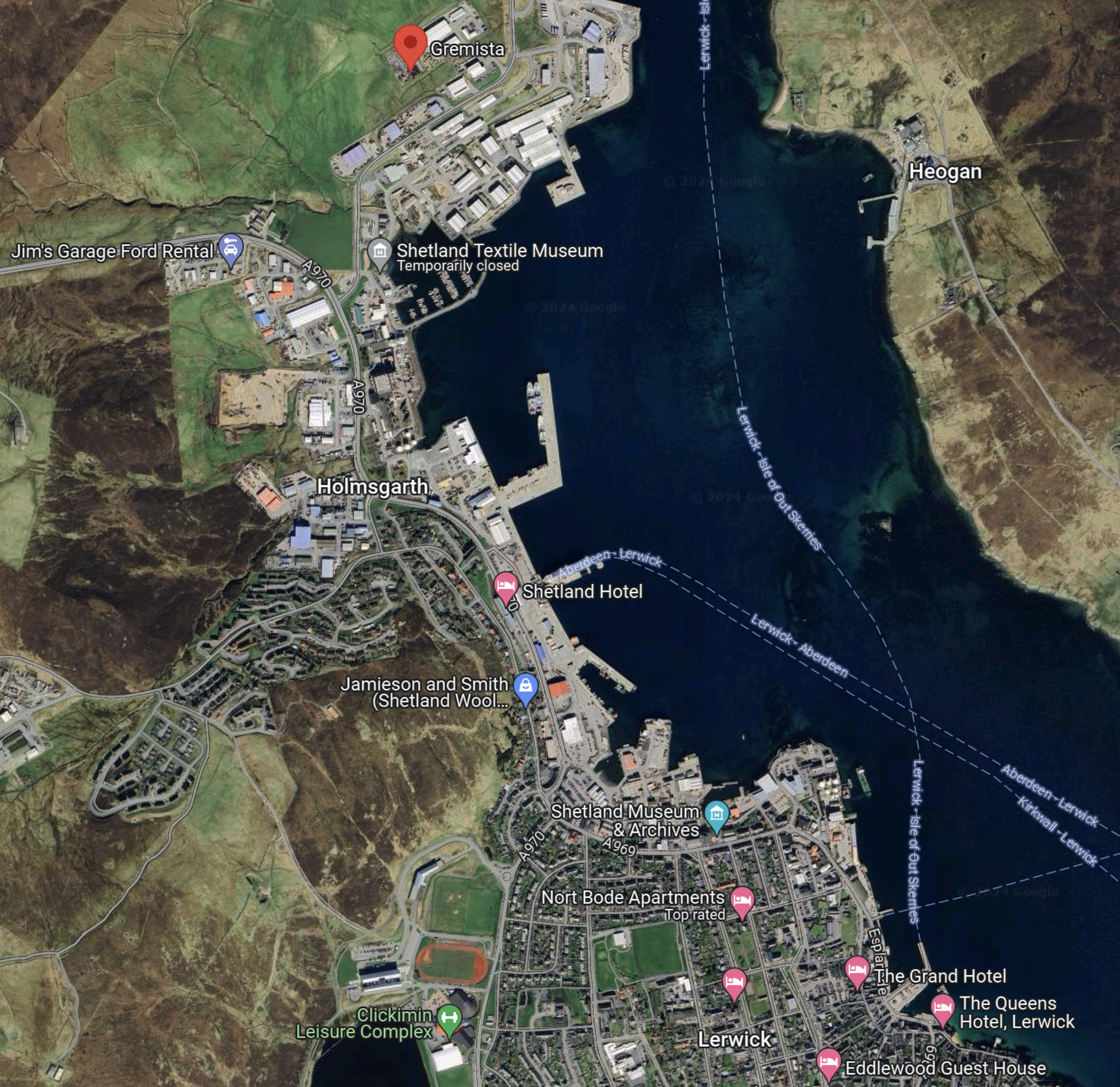
Gremista is marked by the red arrow.
I do have some thoughts.
Scatsta Airport
Consider.
- It takes takes over three hours on a bus between Lerwick and Sullum Voe
- Scatsta Airport only closed in 2020.
Is there an opportunity for an air taxi between Lerwick and Scatsta?
Energy Security Boost After Centrica And Repsol Agree LNG Supply Deal
The title of this post, is the same as that of this press release from Centrica.
This is the sub-heading.
Centrica Energy and Repsol today announced the signing of a deal that will improve the UK’s energy security in the coming years.
These two paragraphs give more details of the deal.
The deal will see Centrica purchase 1 million tonnes of Liquified Natural Gas (LNG) shipments between 2025 and 2027. All of these cargoes are expected to be delivered to the Grain LNG import terminal in Kent.
The deal marks an additional move by Centrica to build further resilience in the UK’s energy security. It follows a 15 year, $8bn deal with Delfin Midstream in July 2023, a three-year supply agreement with Equinor that will heat 4.5m UK homes through to 2024 and the reopening and expansion of the Rough gas storage facility in October 2022 and June 2023 respectively. Rough now provides half of the UK’s total gas storage capacity with the potential to store over 50 billion cubic feet (bcf) of gas, enough to heat almost 10% of UK homes throughout winter.
Centrica do seem to be keeping us supplied with gas.
Two days ago, National Grid published this press release, which is entitled Grain LNG Signs New Deal With Venture Global Further Strengthening The Security Of Supply Of LNG To The United Kingdom.
This is the sub-heading.
Today (5 February), Grain LNG and Venture Global have announced the execution of a binding long-term terminal use agreement (TUA) enabling the regasification and sale of LNG from all of Venture Global’s LNG terminals in Louisiana, including CP2 LNG, subject to obtaining necessary federal permits.
These two paragraphs give more details of the deal.
Under the agreement, Venture Global will have the ability to access 3 million tonnes per annum (3MTPA) of LNG storage and regasification capacity at the Isle of Grain LNG receiving terminal for sixteen years beginning in 2029, equivalent of up to 5% of average UK gas demand.
This is the second agreement from Grain LNG’s competitive auction process which was launched in September 2023. The successful outcome of the auction further secures the future of Europe’s largest LNG import terminal into the mid 2040s.
Two big deals in the same week is not to be sneezed at and must be good for the UK’s energy security.
Grain LNG
The Grain LNG web site, greets you with this message.
Welcome To Europe’s Largest Liquified Natural Gas Terminal, Grain LNG
Grain LNG is the gateway connecting worldwide LNG to the European energy market, making a genuine difference to people’s lives. Find out all about our cutting-edge operations – showcasing our leadership in powering the future – and why Grain LNG is at the forefront of energy as we move towards net zero.
There is also a video.
This Google Map shows the location of Grain LNG on the Isle of Grain.
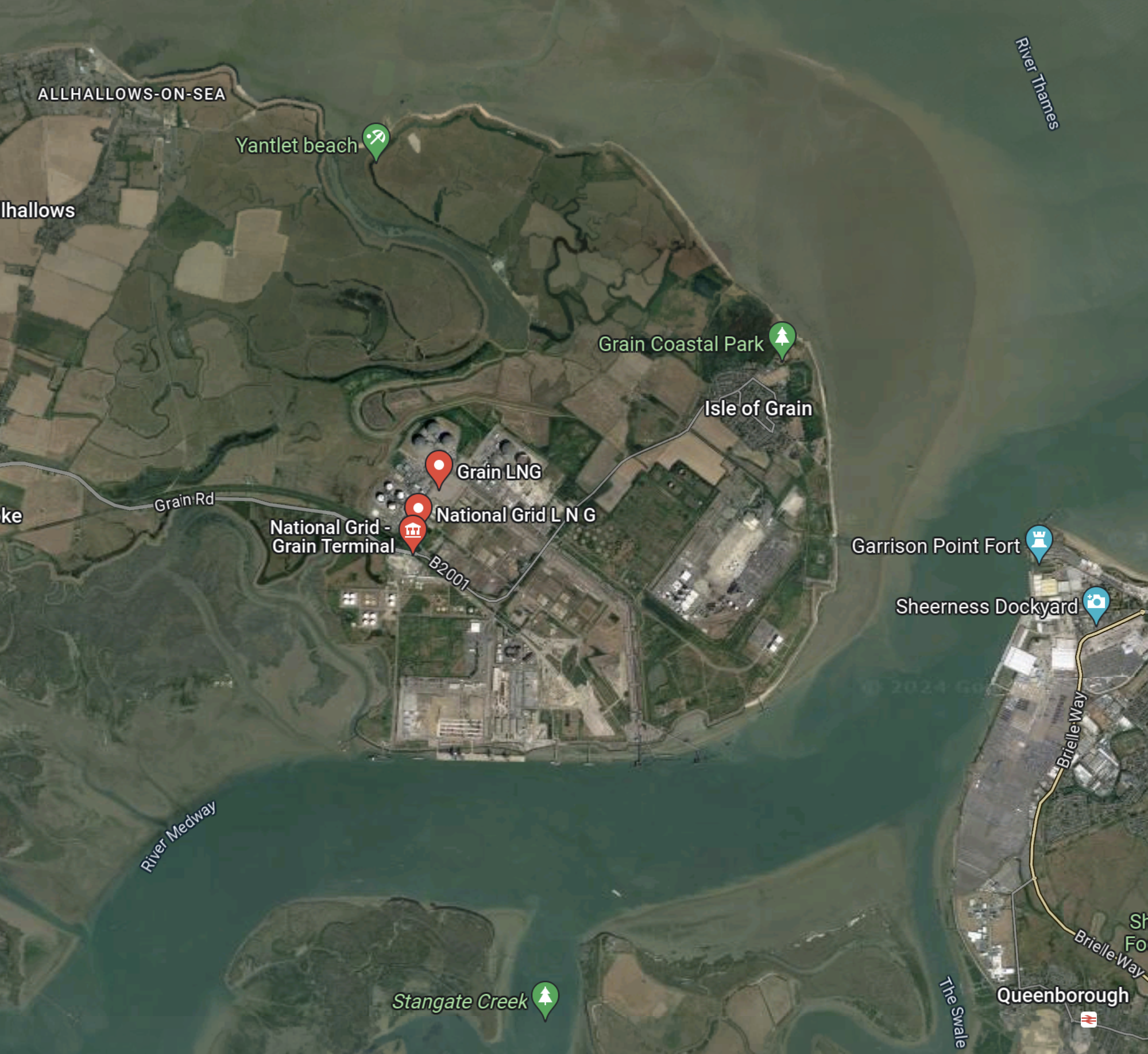
Note.
- The River Medway flows into the River Thames between the Isle of Grain on the left and the Isle of Sheppey on the right.
- From South to North, the red arrows indicate, the National Grid – Grain Terminal, National Grid L N G and Grain LNG.
There would appear to be space for expansion.
The Economic Case For Hydrogen In Domestic Heating
The title of this post, is the same as that of this article on The Chemical Engineer.
The Wikipedia entry for The Chemical Engineer has this introductory paragraph.
The Chemical Engineer is a monthly chemical engineering technical and news magazine published by the Institution of Chemical Engineers (IChemE). It has technical articles of interest to practitioners and educators, and also addresses current events in world of chemical engineering including research, international business news and government policy as it affects the chemical engineering community. The magazine is sent to all members of the IChemE and is included in the cost of membership. Some parts of the magazine are available free online, including recent news and a series of biographies “Chemical Engineers who Changed the World”, although the core and the archive magazine is available only with a subscription. The online magazine also has freely available podcasts.
It is a source on the Internet, where anything non-scientifically correct will be unlikely to appear.
The article has two introductory sub-headings.
Despite its thermodynamic disadvantages, global energy technology specialist Thomas Brewer believes hydrogen has an economic and efficient role in domestic heating. It forced him to deviate from his usual mantra of ‘efficiency above all else’ to get there, though
The work of decarbonisation by chemical engineers is about how we can cost effectively enable our organisations’ transition away from fossil fuels. This requires foresight. A decision chemical engineers make on a project with a 20-year lifespan will still be operational in 2045, when in most global locations, internal combustion engine (ICE) vehicles will probably be in the minority and grid electricity will be mostly renewable.
This is the first actual paragraph.
It is unsurprising, therefore, that chemical engineers are researching and debating the prospects of the future of energy availability from renewables, and the likely role and cost of hydrogen. There is much public noise surrounding the conversation about heat pumps vs hydrogen for domestic heating. I have noticed how few articles are written from an unbiased perspective, how very few reports talk about the whole solution, and authors avoid quantifying the financial impact of their proposed solution. I couldn’t find an unbiased study with any financial logic, so, I built a model to assess the options, for my own interests. I found the results so intriguing that I wanted to share them.
In other words, let the data do the talking and accept what it tells you.
These are some extracts from the article.
On Curtailment
The article says this on curtailment of wind energy, because you are generating too much.
Efficient electrical energy storage is expensive, which has traditionally led renewable system designers to include curtailment as a part of their design. Curtailment involves oversizing the wind supply to be higher than the grid connection to reduce the need for as much energy storage, and deliberately wasting the occasional electrical excess. The system design becomes an economical balance between oversizing the renewable generation and paying for additional electrical storage. Within the UK grid in 2023, curtailment is a small factor. As electrification and wind power become more mainstream, the financial decision between investing in excess wind vs electrical storage will lead curtailment to become a more significant factor.
Curtailment is to me a practice, that should be consigned to the dustbin of history.
To eliminate it, as much storage as is needed storage must be provided.
Eliminate Naked Flames In The Kitchen
The article says this about eliminating naked gas flames (natural gas or hydrogen) in the kitchen.
Figure 1 shows that the recommended standard of hydrogen gas installation if removing kitchen gas cooking would result in less injuries than the existing natural gas installation if cooking were converted to induction heating. Kitchen leaks are more likely than boiler leaks due to the number of valves and connections, regardless of the gas type. NOx emissions in the home because of naked flames in the kitchen are also of concern to the health of the occupants and hydrogen naked flames have a higher NOx emission than natural gas; another reason to eliminate naked flame cooking.
When I was financing the development of what became the Respimat inhaler, I did my due scientific diligence and found research from a Russell Group University, that naked flames (including smoking) were a cause of asthma, especially in children.
My recommendation is that, at an appropriate time in the near future, you replace your gas cooker with an electric one. My ginger-haired Glaswegian friend, who is a chef, who’s had Michelin stars would recommend an electric induction cooker.
Pumped Storage
The article says this about building more pumped storage.
The pumped storage assumption is based on the SSE proposal for Coire Glas, a 30 GWh £1.5bn storage system in Scotland which will more than double the UK’s current pumped storage capacity. The capital cost of this pumped storage system is about £50/kWh which will be delivered at about 80% efficiency. Pumped storage is a good balance between low cost and high efficiency. However, it requires natural resources. The Mott MacDonald report, Storage cost and technical assumptions for BEIS (Department for Business, Energy and Industrial Strategy) suggests the equivalent of four Coire Glas-scale installations in the UK by 2050. The model optimistically assumes that ten more similar additional Coire Glas-size pumped storage schemes could be installed.
This page on the Strathclyde University web site, gives these GWh figures for the possible amounts of pumped-storage that can be added to existing hydroelectric schemes.
Strathclyde’s total for extra storage is over 500 GWh.
Distributed Batteries
The article says this about distributed batteries.
A distributed battery assumption could be configured with multiple 10 kWh batteries which typically cost about £3,000 installed, near or in homes with a heat pump. This could be coupled with larger battery storage systems like the £30m Chapel Farm 99 MWh battery installation near Luton, commissioned in 2023. The small battery systems at each home are similar to the proposed virtual power plants using electric vehicle battery capacity to help balance the grid. Placing these batteries at locations with grid limitations could reduce the costs of upgrading the grid system. This is a more expensive energy storage scheme than pump storage and for the purposes of the model it is assumed that battery storage schemes are limitless. In both cases cited, the cost is £300/kWh. Battery efficiency varies significantly with temperature, and typically ranges from about 90% to 97%. As the system design needs to be focused on the coldest periods, the model is optimistically assuming 93% efficiency, which would require many of the batteries to be in a heated environment.
New lower-cost alternative batteries are also being developed.
Hydrogen Generation
The article says this about hydrogen generation.
Alternatively, the electricity generated from wind energy could be used in the electrolysis of water to produce hydrogen. While the fully installed electrolysis equipment costs about £2,100/kW, hydrogen storage in specially built cylinders is relatively cheap at about £23/kWh. The model, however, assumes salt mine storage which the US DoE in their report, Grid Energy Storage Technology Cost, calculate at a total system cost for hydrogen of $2/kWh. Electrolysis is the least efficient energy storage option, with a conversion efficiency of 75%, including compression. The waste heat from this conversion loss is useful for industrial heating, or in a district heating system. This has been ignored for simplicity.
Pumped storage, distributed batteries and hydrogen electrolysers distributed all over the UK, will mop up all the spare electricity and release it to heat pumps and for charging cars as necessary.
The hydrogen will be used for heating, to decarbonise difficult-to-decarbonise industries and provide fuel for hydrogen-powered vehicles, railways and shipping.
Curtailment will be a thing of the past.
The UK Offshore Wind Potential
The article says this about the UK offshore wind potential.
The UK government target for wind generation by 2030 is 50 GW. The UK offshore wind potential is reliable and available and has been estimated to be as high as 2,200 GW. There are, however, a few low wind periods that can last for several days.
I am not going to argue with 2,200 GW, but I will say that a lot of that will be used to generate hydrogen offshore.
Conclusions
This is the article’s main conclusion.
A wind-based supply for heating will mean that large quantities of potentially unused electricity will be available for more than 90% of the year, for potentially very low cost. While this could appear wasteful, it provides further synergistical opportunities for the decarbonisation of other interruptible energy duties, such as production of hydrogen for road transport or supplying heat via heat pumps for interruptible industries.
The sensitivity analysis shows that these conclusions are robust even with significant variation in the assumptions on equipment cost, efficiency, and other electricity source options.
This is also said about the most cost-effective solution.
A cost-effective national heat pump-only solution is about £500bn (50%) more expensive than a hydrogen-only boiler solution. The most cost-effective system is a combination of the two, £100bn cheaper than the hydrogen-only solution, and £600bn cheaper than the heat pump-only solution.
A cost-effective national heat pump-only solution has a system efficiency 40% lower than the hydrogen-only solution, requiring more than 750 GW of installed wind capacity. A hydrogen boiler solution requires less than 500 GW but the most efficient system, however, is a combination of the two.
The conclusions mean that everybody will be able to use the most appropriate solution for their circumstances for both heating their housing or powering their vehicles, as there will be massive supplies of affordable electricity and hydrogen.
How Will Everything Be Paid For?
Just as Germany and others built its industry on cheap Russian gas, it will now choose to use the plentiful and reliable UK electricity and hydrogen to rebuild its industry.
University Of Leeds Drills Test Boreholes For Geothermal Project To Heat Campus
The title of this post, is the same as that of this article on Ground Engineering.
This is the sub-heading.
A team of researchers at the University of Leeds has started to test the potential to use geothermal energy to heat buildings on campus in a bid to tackle its carbon emissions.
These three paragraphs outline the project.
The project involves drilling eight test boreholes into the ground at several locations on the campus at depths of between 150m to 250m. Work started last Monday (29 January) and will continue until May 2024.
Some of the holes will be water wells at around 50cm in diameter that will look for underground aquifers at the right temperature to use for geothermal heat. Other holes will be monitoring wells at around 15cm in diameter which the team will use to check what impact extracting heat from the ground has on the surrounding areas.
The geothermal project brings together the team responsible for the maintenance and development of the University estate and an academic team which includes professor of geo-energy engineering Fleur Loveridge, research fellow in geosolutions David Barns and lecturer in applied geophysics and structural geology Emma Bramham.
The Wikipedia entry for Geothermal Energy In The United Kingdom, is a very informing and ultimately surprising read.
This is the introductory paragraph.
The potential for exploiting geothermal energy in the United Kingdom on a commercial basis was initially examined by the Department of Energy in the wake of the 1973 oil crisis. Several regions of the country were identified, but interest in developing them was lost as petroleum prices fell. Although the UK is not actively volcanic, a large heat resource is potentially available via shallow geothermal ground source heat pumps, shallow aquifers and deep saline aquifers in the mesozoic basins of the UK. Geothermal energy is plentiful beneath the UK, although it is not readily accessible currently except in specific locations.
With more projects like that at the University of Leeds and the development of better technology, I am confident that over the next few years, we will extract more heat from beneath our feet.
Gravitricity Weighs Up One Of Europe’s Deepest Mines
The title of this post, is the same as that of this article on The Engineer.
This is the sub-heading.
Scotland’s Gravitricity is set to deploy its underground energy storage technology at Pyhäsalmi Mine in central Finland, Europe’s deepest zinc and copper mine.
These two paragraphs outline the scheme.
Located about 450km north of the Finnish capital Helsinki, the Pyhäsalmi Mine extends 1,444m below the Earth. With mine operations at Pyhäsalmi winding down, the local community set up a development company to explore redevelopment projects around the mine’s infrastructure, including energy storage.
Gravitricity is set to deploy its GraviStore energy storage technology in a 530m deep auxiliary shaft. GraviStore can utilise off-peak electricity by raising heavy weights in the mine shaft, releasing the energy back on to the grid during high demand by lowering the weights. It’s claimed the 2MW scheme at Pyhäsalmi will provide grid balancing services to the Finnish network.
There is also this quote from Martin Wright,who is Gravitricity’s executive chairman.
This project will demonstrate at full scale how our technology can offer reliable long life energy storage that can capture and store energy during periods of low demand and release it rapidly when required.
This full-scale project will provide a pathway to other commercial projects and allow our solution to be embedded into mine decommissioning activities, offering a potential future for mines approaching the end of their original service life.
Can it be that Gravitricity is finally on its way?
World’s First Semi-Submersible Floating Offshore Wind Farm Smashes Predictions
The title of this post, is the same as that of this article on offshoreWIND.biz.
This is the sub-heading.
WindFloat Atlantic, the world’s first semi-submersible floating offshore wind farm, has completed its third year in operation, closing in 2023 with an electricity production of 80 GWh.
These four paragraphs outline the performance of the wind farm.
Connected to the grid by the end of 2019 and fully commissioned in 2020, the floating offshore wind farm was developed by the Windplus consortium formed by Ocean Winds, a 50:50 joint venture between EDPR and ENGIE, Repsol, and Principle Power.
The pioneer wind farm consists of three platforms, each supporting one 8.4-MW Vestas turbine, which are anchored with chains to the seabed and connected to the onshore substation in the Portuguese municipality of Viana do Castelo through a 20-kilometre cable.
According to the project’s owners and operators, the 25 MW WindFloat Atlantic also closed in 2023 breaking more records with Storm Ciaran posing challenges with waves reaching a maximum height of 20 metres and wind gusts up to 139 kilometres per hour.
These conditions far surpassed the project’s previous records, demonstrating the readiness and robustness of the floating technology, even in extreme offshore conditions.
It would appear that this and the previous post; France’s First And Only Operational Floating Wind Turbine Gets Lifetime Extension, are not only indicating that floating wind power works, but that it works well in all types of conditions.
France’s First And Only Operational Floating Wind Turbine Gets Lifetime Extension
The title of this post, is the same as that of this article on offshoreWIND.biz.
This is the sub-heading.
Floatgen, the demonstration floating wind turbine installed at the SEM-REV offshore test site in France, has completed its planned five-year run but will operate for another five years as the demo project was decided to get a lifetime extension.
These are the first three paragraphs.
The floater, which consists of a 2 MW Vestas V80 wind turbine mounted on BW Ideol’s Damping Pool foundation, reached electricity production milestones several times since going into full operation in September 2018.
According to BW Ideol, Floatgen’s cumulated production has now surpassed 30 GWh, which the company ascribes to “the hydrodynamic properties and excellent sea-keeping capabilities” of its floating foundation.
Floatgen’s availability averaged 92.18 per cent between January 2021 and January 2024, with December 2023 standing out with a monthly production record of 922.026 MWh and a 61.96 per cent capacity factor, BW Ideol says.
Note.
- A three-year availability average of 92.18 % is surely very good.
- A 61.96 % capacity factor is better than most other floating wind farms, which are generally in the fifties.
With those figures, I suspect BW Ideol will be expecting, some orders soon.
This video shows a Floatgen being constructed.
A New Future Beckons For Scotland’s Historic Canals
The title of this post is the same as that as this article on The Herald.
This is the sub-heading.
Scotland’s canals, created for the industrial revolution but in recent times focused more on leisure than industry, are finding a new purpose as a different revolution, this time a green one, gets underway
The article was found by my Google Alert for the Coire Glas project, which is one of the UK’s largest green projects.
The article describes how Scotland’s canals are helping a green revolution and is well worth a read.
Are Londoners The Tunnel Kings?
I was born in 1947 and it was in the early 1960s, that I started to develop an interest in engineering, which eventually led me to study Electrical Engineering and Electronics at Liverpool University.
Like most Londoners, I was a frequent user of the Underground and for six or seven years, I took the Piccadilly Line many days between Oakwood and Southgate to go to Minchenden Grammar School. Often, after school, I would go on to my father’s print works near Word Green tube station.
But not memories of London’s tunnels were so memorable at that time. One day, we were driving to see my Uncle Bert in Broadstairs and we were held in the Blackwall Tunnel for an hour or so because of an accident.
Perhaps, this is why I can remember a black-and-white video of digging the Western Tunnel of the Dartford Crossing so vividly. But as Raymond Baxter probably explained to BBC viewers at the time, it dug using a Greathead shield under pressure to keep the water out. It was probably the last tunnel dug under the Thames using methods, that would have been familiar to Victorian engineers.
This British Pathe video shows some of the construction of the Western tunnel.
This paragraph from the Wikipedia entry for the Eastern Tunnel describes its construction.
Construction was approved in April 1971, with an initial expected opening date in 1976. Work was delayed due to a lack of funds, which was resolved by EEC funding granted in 1974. The second tunnel opened in May 1980, allowing each tunnel to handle one direction of traffic, by which time the joint capacity of the two tunnels had increased to 65,000 vehicles per day. Connection of the crossing to the M25 was completed on the northerly Essex side in September 1982 (Junction 31), and to the southerly Kent side in September 1986 (Junction 1a)
The tunnels may be inadequate in terms of capacity, but they have certainly done a reliable job for sixty and forty-three years respectively.
There are other tunnels under the Thames, that have been built in my lifetime.
- Thames Cable Tunnel – 1970 – National Grid’s 400 kV cable.
- High Speed One – 2007
- Dartford Tunnel (East) – 1980
- Dartford Tunnel (West) – 1963
- Dartford Cable Tunnel – 2004
- Docklands Light Railway Tunnel – 2009
- Elizabeth Line Tunnel – 2014
- Millennium Dome Cable Tunnel – 1999
- Jubilee Line Tunnels – 1999 – Planned by Artemis
- Blackwall Runnel (East) – 1967
- Isle of Dogs Jubilee Line Tunnels – 1999 – Planned by Artemis
- Docklands Light Railway Tunnel – 1999 – Planned by Artemis
- Deptford Cable Tunnel –
- Jubilee Line Tunnels – 1999 – Planned by Artemis
- Victoria Line Tunnel – 1971
- New Cross to Finsbury Market Cable Tunnel – 2017
- Wimbledon to Pimlico Cable Tunnel – 1996
- London Power Tunnels – 2018, 2011
There are also these tunnels, which don’t go under the Thames
Bank Station Expansion And New Southbound Northern Line Tunnel – 2022
- Elstree to St. John’s Wood Cable Tunnel – 2005
- Heathrow Rail Tunnels – 1998
- Lee Tunnel – 2016
- Limehouse Link Tunnel – 1993
- Lower Lea Valley Cable Tunnels – 2008
- Northern Line Extension To Battersea – 2021
- Piccadilly Line Extension To Heathrow – 1975-2008
- Thames Tideway Tunnel – Estimated completion in 2025 – Tunnelling ended in 2022.
- Thames Water Ring Main – 2010
Note.
- The date is the opening date.
- I am pleased to see that at least some projects were planned, with the software, I wrote in a Suffolk attic.
In my lifetime, at least 27 substantial tunnels have been completed, a very large proportion of which have been on time and on budget, with the possible exception of the Heathrow Rail Tunnels, which collapsed.
So Why Has London Got A Good Record On Tunnelling?
In Millicent And Ursula Prepare To Go Tunnelling, I describe my visit to the Tideway Open Day today to see the tunnel boring machines; Millicent and Ursula before they went tunnelling.
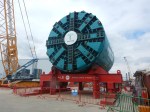
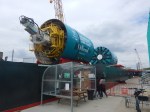
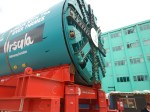
On that Sunday morning, I also chatted with the engineers and tunnelers.
- All had worked on at least one of London’s previous tunnels.
- One had worked on the Second Dartford Tunnel, the Channel Tunnel and Crossrail.
- A couple said, that after the Tideway finished, they would be off to High Speed Two.
Is London’s good record on delivering tunnels safely and on time and on budget, a case of lots of experience and practice makes perfect?
If it is, we should definitely think hard about how we handle large projects.
Wind Farms
Many have been constructed this way.
- The grid substation and connection to the grid is built.
- The foundations of the turbines are installed.
- The turbines are erected.
- All the turbines are commissioned.
This sequence or something like it can be applied to onshore and offshore wind farms.
- Most jobs are repeated many times by specialist teams using purpose-built cranes, ships and other equipment.
- Bigger wind farms, just need more repeated operations.
- All operations are generally in a small geographical area.
- I suspect specialist software has been built to project manage, the building of wind farms. If it hasn’t, I have my ideas.
Project management should be relatively easy.
Amazon Books Over Half Of Moray West Offshore Wind Capacity To Power UK Operations
The title of this post, is the same as that of this article on offshoreWIND.biz.
This is the sub-heading.
Amazon has signed a corporate power purchase agreement (CPPA) for a total of 473 MW of Moray West offshore wind farm’s generation capacity to help power its operations when the project becomes operational later this year.
These are the first two paragraphs.
The technology giant signed the CPPA with ENGIE, which owns the Moray West project through Ocean Winds, the 50-50 joint venture between ENGIE and EDP Renewables.
The 473 MW Amazon secured through the agreement is enough to power the equivalent of more than 650,000 UK homes annually and is more than half of the total installed capacity of the 882 MW Moray West offshore wind farm.
Note.
- In Google Buys Scottish Offshore Wind Power, I talked about how Google had signed a Corporate Power Purchase Agreement to buy 100 MW from the Moray West offshore wind farm.
- This would mean that there’s still 305 MW of capacity to allocate.
- I would assume you wouldn’t sell hundred percent of capacity to give yourself leeway.
But what do you do, if your wind farm isn’t producing the 573 MW you need to satisfy the CPPAs you’ve sold? I suspect you have to buy it on the market.
If And When Do Amazon Think About Batteries?
My twenty-five-year-old self could have developed methods to calculate the answer to that question, as it would have been a simple calculation for the analogue computer, that I was using at the time; a PACE-231-R.

They really were magnificent machines.
 The Anonymous Widower